




Abstract
Cross-cultural simultaneous tests of the effects of social bonding, differential association/social learning, and strain theories on adolescent alcohol use are very rare worldwide. The present study examined the effects of social bonding, differential association/social learning, and general strain theories on adolescent alcohol use using a sample of 1,710 high school students from central Ankara, the capital of Türkiye, in 2001. In the simultaneous test of the three theories, attachment to teachers and school involvement (i.e., social bonding variables) reduced the likelihood of adolescent alcohol use, whereas close friends’ alcohol use, father’s alcohol use, delinquent peers, criminal family members, and definitions favorable to alcohol use (i.e., differential association/social learning variables) increased it. However, the gap between educational aspiration and educational expectation and the gap between monetary aspiration and educational expectation (i.e., general strain theory variables) decreased the likelihood of adolescent alcohol use. Overall, the three theories are largely associated with alcohol use in the theoretically expected direction, except for some strain theory variables, which deviated from expectations only in the simultaneous test. Differential association/social learning theory plays the most important role in explaining adolescent alcohol use, followed by social bonding theory and general strain theory.
Keywords
Introduction
Studies have shown that alcohol use by adolescents has positive associations with more serious forms of deviance, such as illegal substance use, delinquency/crime (Kim et al., 2010; Thompson et al., 1982), suicidal ideation and attempts (Swahn, 2007), car accidents, school dropout, unintended pregnancy, and physical or cognitive harm due to overdose (Jonson et al., 2012).
According to the most recent report by the World Health Organization, 23.5% of current drinkers worldwide are aged 15–19. The total number of deaths attributable to alcohol use remains high, reaching 2.6 million in 2019. Alcohol use has serious health consequences. For example, it increases the risk of HIV transmission through unprotected intercourse and contributes to deaths from cardiovascular diseases and cancer. In addition, alcohol use leads to fatalities from injuries such as self-harm, traffic accidents, and interpersonal violence. 1 Death and morbidity rates due to alcohol use are highest in low-income nations, followed by lower-middle-income nations, and lowest in high-income nations (WHO, 2024).
According to The Health Statistics Yearbook of Türkiye, prevalance of alcohol use among the 15–24 aged youth (the nearest age group to the sample in the present study) was 9.3% in 2016, 11.4% in 2019, and 8.3% in 2022. Prevalance of alcohol use among the 25–34 aged individuals was 16.5% in 2016, 20.7% in 2019, and 17.5% in 2022. Prevalance of alcohol use among the 35–44 aged people was 15.9% in 2016, 19.8% in 2019, and 15.2% in 2022. Prevalance of alcohol use among the 45–54 aged individuals was 11.5% in 2016, 14.2% in 2019, and 12.2% in 2022. Prevalance of alcohol use among the 55-64 aged people was 11.6% in 2016, 12.5% in 2019, and 11.0% in 2022. Prevalance of alcohol use among the 65-74 aged individuals was 5.9% in 2016, 8.2% in 2019, and 6.7% in 2022. Prevalance of alcohol use among the 75+ aged people was 2.5% in 2016, 2.0% in 2019, and 3.6% in 2022 (The Minister of Health of Türkiye, 2023).
Literature on micro-level theories of substance use outside English-speaking countries is limited. For example, a review of micro theories of deviance (general strain, social control, and social learning theories) outside English-speaking countries found that social learning theory has rarely been tested (Antonaccio & Botchkovar, 2016). Similarly, Hwang and Akers (2003) called for additional cross-cultural tests of social learning theory in regions such as the Middle East, Eastern Europe, Africa, Latin America, and other areas.
Likewise, a quantitative literature review on criminological theories in Asia (N = 108 articles) indicated that the proportion of articles focusing on substance use or drug-related crime is very small (0.2%, n = 12) (Suzuki et al., 2018). To date, only three studies worldwide have tested social bonding theory, differential association/social learning theory, and general strain theory (Cooper et al., 2009; Jonson et al., 2012; White et al., 1986). Therefore, further research on this topic is needed, particularly in non-Western societies such as Türkiye, to enhance cross-cultural generalizability.
Similarly, very few studies have tested social bonding theory (Gurbuz et al., 2018) and strain theory (Gurbuz et al., 2018; Orak & Solakoglu, 2017; Solakoglu et al., 2018) in relation to adolescent alcohol use in Türkiye. Even more notably, no studies have tested differential association/social learning theory on adolescent alcohol use in the country. Relatedly, the existing literature on adolescent alcohol use in Türkiye has generally focused on prevalence or demographic correlates using descriptive statistics and has been largely atheoretical in nature (e.g., Alkan et al., 2021; Ogel et al., 2001; Ogel et al., 2004; Sen, 2010; Unlu et al., 2014).
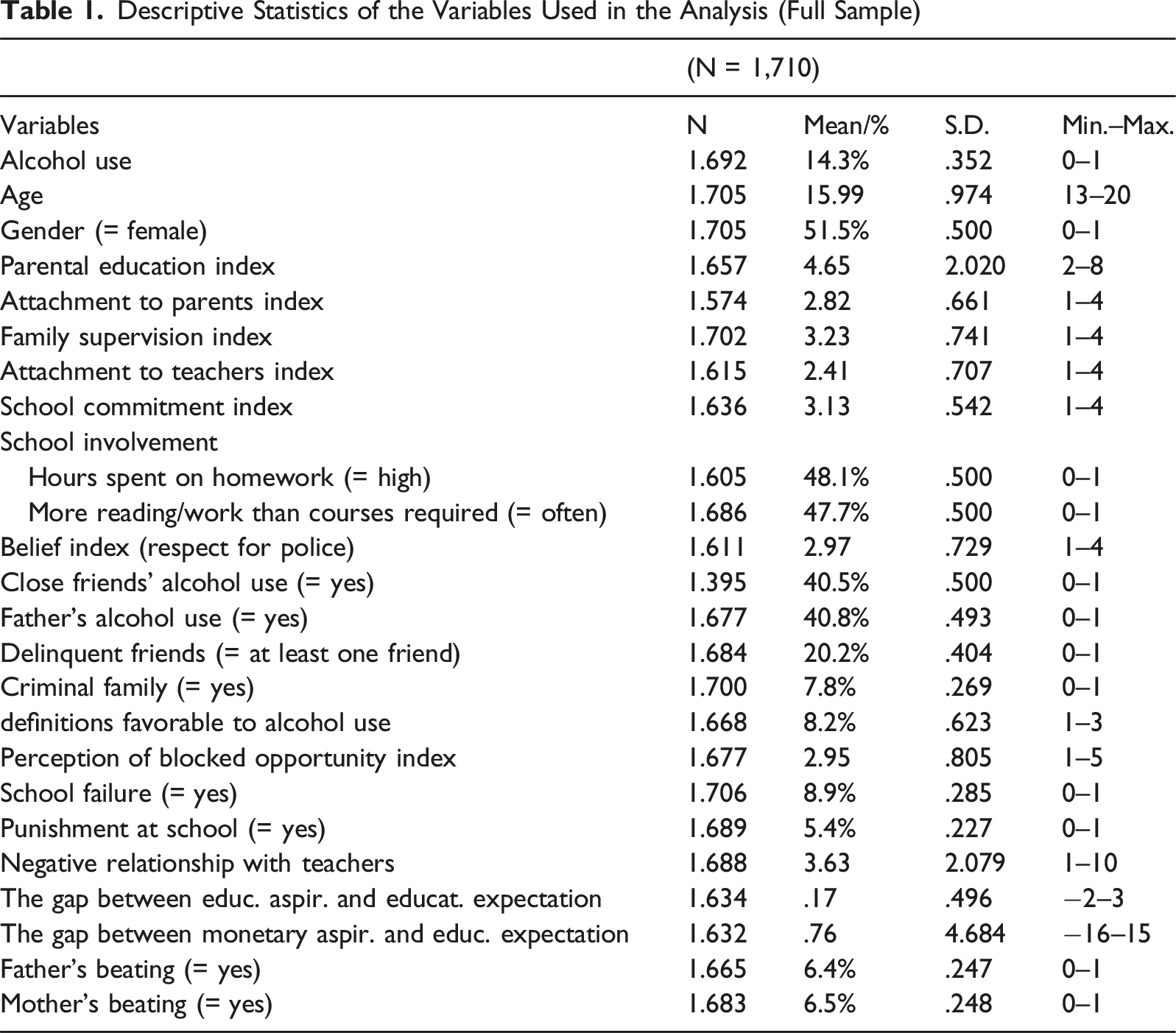
Turkish people believe in Sunni Islam. Islamic religion bans such substance use as alcohol, cocaine, hashish, heroin, marijuana, and similar substances. Turkish culture is a mixture of both Islamic rules/values and modern-secular rules/values (e.g., western laws). On the one hand, Islamic rules in Türkiye prohibit alcohol use; on the other hand, secular laws allow mature individuals to use alcohol. In this respect, unlike other Islamic countries, the Turkish case is unique (e.g., a gray area), and it will be interesting to know how much traditional theories of deviance/substance use play roles in alcohol use of the adolescents in the context of Türkiye. Relatedly, while the world-wide alcohol use prevalance was 23%, the prevalance of alcohol use in the present study was 14.3%. This percentage is lower than the global percentage but greater than percentages of Islamic countries. We believe this reflects the gray area position of Türkiye in the world which is a interesting case to explore.
To summarize, alcohol use is a serious problem due to its negative effects on health and deviance/crime, particularly for the individuals who use it, their loved ones, and society at large. Also, alcohol use pattern by adolescents appears to be a gray area which is a interesting case to investigate in a Turkish society where east (Islam) meets with west (secular western rules). Additionally, simultaneous tests of social bonding theory, differential association/social learning theory, and general strain theory have been extremely limited worldwide (e.g., only three studies). In today’s globalized world, it is important to test theories of substance use and deviance in diverse contexts to gain a better understanding of their generalizability.
Literature Review
The following literature review focuses on the relationships between three micro-level theories of substance use (social bonding theory, differential association/social learning theory, and general strain theory) specifically in relation to adolescent alcohol use. In other words, it does not address adolescent binge drinking, heavy alcohol use, or other legal and illegal types of substance use by adolescents. For a more comprehensive list of studies on these three theories and substance use or deviance globally and in Türkiye, see Ozbay et al. (2025). First, each theory and its empirical tests on adolescent alcohol use are reviewed individually. Second, simultaneous tests of the three micro-level theories on adolescent alcohol use are discussed at the end of this section.
Theories and Adolescent Alcohol Use
Social Bonding Theory and Adolescent Alcohol Use
The central thesis of social bonding theory is that when a juvenile has a stronger bond to society, they are less likely to engage in deviance, delinquency, or substance use. Specifically, when a juvenile demonstrates high commitment and involvement in conventional activities (e.g., achieving a high GPA or completing homework), strong attachment to family or teachers, and a strong belief in social norms, they are less likely to engage in delinquent behaviors such as alcohol use (Hirschi, 1969).
Most empirical tests of social bonding theory have supported its central elements, such as attachment to parents and school, commitment to long-term goals, and belief in social norms in relation to delinquency in English-speaking countries (Antonaccio & Botchkovar, 2016; Costello & Laub, 2020). These components of the theory have also received support in European countries. Furthermore, the theory has been supported with respect to parental attachment and control, school commitment, and belief in norms in some non-Western countries (Antonaccio & Botchkovar, 2016).
More importantly, only a handful of studies have examined the link between social bonding theory and adolescent alcohol use in the United States (Johnson, 1984; Parsai et al., 2010), South Korea (Han et al., 2015, 2016) and Türkiye (Gurbuz et al., 2018). The findings of these studies generally support social bonding theory. For example, in South Korea, Han et al. (2015) reported that greater attachment to teachers, higher academic aspiration (i.e., commitment), and stronger rule internalization (i.e., belief) were associated with a delayed onset of alcohol use among adolescents. However, involvement in educational extracurricular activities (i.e., involvement) was positively associated with the likelihood of alcohol use onset. In Türkiye, Gurbuz et al. (2018) found that while attachment to parents increased the likelihood of adolescent alcohol use, parental monitoring, time spent with family, and parents’ religiosity decreased it.
Differential Association/Social Learning Theory and Adolescent Alcohol Use
According to Akers’ social learning theory (1979; Akers et al., 2017), four core factors explain why adolescents become alcohol users: (1) differential associations with alcohol users, which include direct and indirect interactions with peers, family, teachers, or individuals and groups in mass/social media; (2) definitions of alcohol use, referring to norms, attitudes, and orientations that are positive, negative, or neutralizing toward deviant acts; (3) imitation or modeling of alcohol users, through observational learning of behaviors in primary groups and in social or mass media; and (4) differential reinforcement, meaning instrumental learning through rewards and punishments. In other words, adolescents are more likely to engage in substance use or other deviant behaviors when they associate with alcohol-using family members or peers, hold definitions favorable to alcohol use, are exposed to alcohol-drinking models, or receive intrinsic or social reinforcement for alcohol use.
The existing research on differential association/social learning theory and substance use, deviance, or delinquency has largely supported these theories (e.g., Akers et al., 2017; Akers & Jennings, 2009; Akers & Jennings, 2016; Akers & Jensen, 2009; Antonaccio & Botchkovar 2016; Kruis et al., 2020; Pratt et al., 2010). In their meta analysis, Pratt et al. (2010) found that while differential reinforcement and modeling/imitation have modest effects on deviance and crime, differential association and definitions (e.g., antisocial attitudes) have comparatively strong effects. Studies conducted in non-English-speaking countries, including some European and Asian nations, also support these theories. However, research on differential association/social learning theory remains relatively rare. In sum, tests of differential association/social learning variables suggest that they have significant and consistent effects on deviance and delinquency across various contexts (Antonaccio & Botchkovar 2016).
More importantly, existing research on the relationship between differential association/social learning theory and adolescent alcohol use has indicated significant associations (e.g., Akers et al., 1979; Beaver et al., 2016; Brenner et al., 2011; Gallupe & Bouchard, 2013; Johnson & Marcos, 1988; Kim et al., 2013; Lee et al., 2004; Miller et al., 2008; Sellers & Winfree, 1990; Winfree et al., 1989). For example, Kim et al. (2013) reported that variables derived from social learning theory had significant effects on adolescent alcohol use, with differential association variables exerting the strongest positive influence. Similarly, paternal alcohol use, an indicator of parental modeling, was associated with an increased likelihood of alcohol use among adolescent children.
General Strain Theory and Adolescent Alcohol Use
Classic strain theory was developed by Merton (1938), Cohen (1955), and Cloward and Ohlin (1960) within the field of deviance and criminology, focusing primarily on the inability to achieve financial success or middle-class status (Agnew, 2006). The central thesis of classic strain theory (Burton & Cullen, 1992; Merton, 1938) is that blocked goals create deviance-prone strain, regardless of conditions or context. The theory is typically operationalized through perceptions of blocked opportunities and the gap between aspirations and expectations (Burton & Cullen, 1992).
General strain theory (GST) extends this framework by proposing that strains or stressors produce negative emotions (e.g., frustration, anger), which in turn generate pressure to engage in corrective actions, including deviance or substance use (Agnew, 2001, 2006). Unlike classic strain theory, Agnew (1992, 2006) identifies three types of strain: (1) failure to achieve positively valued goals (similar to the strains identified in classic strain theory), (2) removal of positively valued stimuli (e.g., loss of money, property, or significant others), and (3) presentation of negatively valued stimuli (e.g., physical abuse, insults, or ridicule). Agnew (2006) also noted that not all strains lead to deviance; for example, individuals who fail to achieve educational or occupational goals may not engage in deviant acts.
Empirical support for classic strain theory has been mixed (e.g., Burton & Cullen, 1992; Ozbay & Ozcan, 2006a). In contrast, studies in North America have largely supported the central thesis of GST, demonstrating positive associations between strain, negative emotions, and various deviant behaviors (Agnew, 2006; Antonaccio & Botchkovar, 2016). Similarly, the core principles of GST have received support in some Western non-English-speaking countries and in certain non-Western contexts, although some inconsistent findings have been reported in parts of Asia (Antonaccio & Botchkovar, 2016, p. 477).
More importantly, few studies have examined the relationship between strain theory and adolescent alcohol use, and these studies have yielded varying levels of support (e.g., Aseltine & Gore 2000; Lowe et al., 2020; Miller et al., 2014; Ngo & Paternoster, 2014; Steele, 2016). For example, Steele (2016) found that among four strain variables, only physical victimization directly increased alcohol use, and this effect was observed only for certain ethnic groups in the United States. Additionally, the mediating role of fear was negative for some strain variables, contrary to expectations. In contrast, Aseltine and Gore (2000) reported that while peer conflict was not associated with alcohol use, parental conflict and negative life events were positively associated with adolescent alcohol use.
In Türkiye, as noted above, very few studies have examined the relationship between general strain theory and adolescent alcohol use (Gurbuz et al., 2018; Orak & Solakoglu, 2017; Solakoglu et al., 2018). Although some findings have been inconsistent or unexpected (Gurbuz et al., 2018; Orak & Solakoglu, 2017), support for general strain theory (GST) has also been reported (Solakoglu et al., 2018). For example, Orak and Solakoglu (2017) found that economic strain was inversely associated with adolescent alcohol use, and family strain was not significant. In contrast, Solakoglu et al. (2018) provided findings largely consistent with GST, showing that sexual abuse was positively associated with adolescent alcohol use. For a more comprehensive review of theoretical studies on substance use in Türkiye, see Ozbay et al. (2025).
Finally, only three studies have simultaneously tested social bonding, differential association/social learning, and general strain theories in relation to adolescent alcohol use (Cooper et al., 2009; Jonson et al., 2012; White et al., 1986). While Jonson et al. (2012) and White et al. (1986) provided partial support, Cooper et al. (2009) found support for all three theories. For example, White et al. (1986) reported that differential association theory played a more important role than social bonding and strain theories, with social bonding and strain variables contributing less to the explained variance. Specifically, alcohol use by friends and tolerance for alcohol use by friends (differential association variables) were the strongest predictors of adolescent alcohol use. In contrast, family-related variables had little effect. School commitment and religiosity (social bonding variables) decreased alcohol use, while stressful life events (strain theory variables) increased it.
Cooper et al. (2009) found that non-social reinforcement (e.g., risk-taking) was the strongest predictor among incarcerated juveniles, followed by having delinquent friends (differential association/social learning theory) and school attachment (social bonding theory). Perceptions of blocked opportunities (strain theory) did not significantly affect alcohol use, although they did influence poly-drug use.
In sum, only three relevant studies have been conducted, all in the United States, and their findings are not uniform. Given the limited research on simultaneous tests of social bonding (see also Suzuki et al., 2018), differential association/social learning, and strain theories, it is crucial to examine these three micro-level theories of deviance and delinquency in a culturally different context such as Türkiye. Such research would contribute to understanding the cross-cultural generalizability of these theories, as recommended by prominent criminologists (Antonaccio & Botchkovar 2016; Hwang & Akers, 2003).
Alcohol Use in Türkiye: Culture, Norms, Prevalence/Demographics, and Reasons for Use
Islam is one of the world’s most widely practiced religions. Türkiye represents a unique blend of secular and Islamic cultures and stands out among predominantly Islamic countries. The majority of the population in Türkiye adheres to Sunni Islam.
Islam prohibits various behaviors considered deviant, including the use of substances such as alcohol, marijuana, hashish, and heroin. In other words, alcohol consumption is forbidden (“haram”) under Islamic principles (Martı, 2020; Michalak & Trocki, 2006). However, Türkiye has also adopted a largely Western-oriented legal framework that governs many aspects of daily life, including education. According to high school regulations in Türkiye 2 , students are prohibited from using substances such as alcohol, cigarettes, or illegal drugs (e.g., marijuana, heroin, cocaine).
Worldwide, per capita alcohol consumption declined slightly from 5.7 L in 2010 to 5.5 L in 2019. According to the prevalence of current alcohol use among individuals aged 15–19 in 2000 by world region, the rates were as follows: Europe (45.5%), the Americas (41.4%), the Western Pacific region (32.4%), Africa (15.8%), South-East Asia (9.8%), the Eastern Mediterranean (1.2%), and the global average (23.4%). Based on the most recent data for 2019, the prevalence of current alcohol use among individuals aged 15–19 was 45.9% in Europe, 43.9% in the Americas, 39.2% in the Western Pacific region, 14.7% in Africa, 12.3% in South-East Asia, 1.2% in the Eastern Mediterranean region, and 23.5% worldwide (WHO, 2024). These figures suggest that alcohol use is relatively rare in regions where Islamic cultural norms are predominant, particularly in the Eastern Mediterranean region.
In the present study, the prevalence of alcohol use was 14.3% in 2001, when the data were collected. This rate was lower than the global average (approximately 23%) but higher than rates reported in many predominantly Islamic countries. This pattern may reflect Türkiye’s unique combination of secular and Islamic cultural influences. The relatively low prevalence of alcohol use may be attributable to several protective factors, such as strong social bonds (e.g., family, school, and non-delinquent peers) and prevailing values and norms (e.g., Islamic teachings and school regulations). At the same time, certain risk factors—such as strains related to family or school and social learning influences (e.g., delinquent peers and definitions favorable to deviance)—may increase the likelihood of alcohol use. In Türkiye, alcohol use (after cigarette use) is the second most common form of substance use, followed by illicit drug use (Unlu & Evcin, 2014; Yaman, 2021).
According to the Health Statistics Yearbook 2023 published by the Ministry of Health of Türkiye (2023); The Minister of Health of Türkiye (2023), the prevalence of alcohol use among individuals aged 15–24—the age group closest to the adolescent sample in the present study—was 9.3% in 2016, 11.4% in 2019, and 8.3% in 2022. For these years, the overall age pattern appears to follow a similar trend: alcohol use is relatively low among the 15–24 age group, increases to its highest levels among the 25–34 age group (and in some cases the 35–44 age group), and then gradually declines across older age groups (45–54, 55–64, 65–74, and 75+). Regarding gender differences, males reported higher levels of alcohol use than females in all three years (2016, 2019, and 2022). This pattern holds consistently across all age groups, including 15–24, 25–34, and 35–44.
According to the Health Statistics Yearbook (2023), the reported reasons for initiating alcohol use among individuals aged 15 and older in Türkiye were as follows. In 2016, the most frequently cited reason was “for fun” (29.4%), followed by “influence of friends” (23.6%), “curiosity/interest” (18.3%), “desire” (13.7%), “personal problems” (5.8%), and “family problems” (1.5%), while 6.6% reported “no special reason.” In 2019, “for fun” increased substantially to 52.3%, followed by “influence of friends” (16.8%), “curiosity/interest” (9.1%), “desire” (6.1%), “personal problems” (3.2%), and “family problems” (1.3%), with 11.2% reporting “no special reason.” Similarly, in 2022, “for fun” remained the most common reason (53.3%), followed by “influence of friends” (13.3%), “curiosity/interest” (11.3%), “desire” (6.7%), “personal problems” (3.1%), and “family problems” (1.1%), while 11.2% again reported “no special reason.” When interpreted in light of social bonding, differential association/social learning, and strain theories, these findings suggest that recreational motives (“for fun”) are the predominant explanation for alcohol initiation in Türkiye. This pattern may be conceptually related to self-control theory, although that framework is not examined in the present study due to data limitations. The second most common reason, “influence of friends,” aligns closely with differential association/social learning theory. Finally, reasons such as “personal problems” and “family problems” may be interpreted within the framework of general strain theory.
Materials and Methods
The data were collected from high school students residing in central Ankara, Türkiye, in 2001 (N = 1,710). Respondents were selected using a two-stage stratified cluster sampling design. High school students were included in the sample through both random procedures (to select low-, middle-, and high-socioeconomic-status districts and their corresponding school types) and non-random procedures (for the final selection of classrooms and their respective students). Based on the permissions of the school authorities, while some classrooms were randomly chosen, some others were not chosen by the researcher. In other words, not all classes were eligible. The response rate was around 99%. The number of juveniles that was intended to include in the study was 1,730. However, twenty juveniles were deleted from the data due primarily to non-responses to most of the survey items. The respondents were informed about the voluntary and confidential nature of the research. The questionnaires were administered during regular class periods.
Some portions of the dataset have previously been used to examine various forms of delinquent behavior (e.g., global delinquency, school delinquency, assault, and public disturbance; see Ozbay & Ozcan, 2006a; 2006b) as well as cigarette use (Ozbay et al., 2025) as primary dependent variables in other studies. The original data collection focused primarily on social bonding, differential association/social learning, and (classic) strain theories of delinquency, along with related issues. Although the data used in the present study were collected in 2001, they remain relevant to contemporary Türkiye due to enduring socio-cultural characteristics, such as the continued importance of family, friends, and religion—factors closely related to social bonding and differential association/social learning theories—as well as the ongoing emphasis on capitalist values relevant to (classic) strain theory. For example, according to the World Values Survey, the proportion of respondents in Türkiye who rated family as “very important” was 97.3% in 1999–2004 and 91.8% in 2017–2022 (World Values Survey, 2000; 2022) 3 , while those rating it as “rather important” increased from 2.1% to 7.4% across the same periods. Similar patterns are observed regarding the importance of friendship and religion. For example, in Türkiye, whereas 93.4% of the Turkish people saw religion “very/rather important” in 1999-2004, 88.4% of the people saw it “very/rather important” in 2017–2022. Although there has been a decrease in the importance of Islam (from 93.4% to 88.4%, a 5 point difference), we interpret that importance of Islam is still high. Therefore, socio-cultural and economic factors continue to play significant roles in explaining alcohol use among Turkish adolescents. Moreover, although the data are relatively dated, both secular/educational regulations and religious norms discouraging adolescent alcohol use remain in effect in Türkiye. Despite these restrictions, understanding how micro-level sociological factors (such as family, peers, school, and strain-related experiences within these institutions) influence adolescent alcohol behavior remains important in the Turkish context.
Measurements
Independent Variables
Social Bonding Variables
Attachment to parents, family supervision, attachment to teachers, school commitment, school involvement, and belief were included as indicators of social bonding theory. The survey items measuring social bonding constructs were adapted from Wiatrowski et al. (1981) and Gardner and Shoemaker (1989).
Attachment to parents (α = .83) was measured using a seven-item index. The items included: “I can share my thoughts and feelings with my parents,” “My parents explain why they feel the way they do,” “My parents and I discuss my future plans,” “My parents want to help me when I have problems,” “When my parents make a rule I do not understand, they explain the reason,” “My parents know what is best for me,” and “I would like to be the kind of person my parents are.” Response categories ranged from 1 (“never”) to 4 (“always”), with intermediate options of “sometimes” (2) and “generally” (3). An attachment-to-parents index was created by calculating the mean of the seven items, with higher scores indicating stronger attachment to parents.
Family supervision (α = .80) was measured using a two-item index. The items were: “My parents know where I am when I am away from home” and “My parents know who I am with when I am away from home.” Response categories ranged from 1 (“never”) to 4 (“always”), with intermediate options of “sometimes” (2) and “generally” (3). A family supervision index was created by calculating the mean of the two items, with higher scores indicating greater parental supervision.
Attachment to teachers (α = .80) was measured using a five-item index. The items included: “I would like to be the kind of person my teachers are,” “I can share my thoughts and feelings with my teachers,” “My teachers want to help me when I have problems,” “My friends respect their teachers,” and “My teachers know what is best for me.” Response categories ranged from 1 (“never”) to 4 (“always”), with intermediate options of “sometimes” (2) and “generally” (3). A mean attachment-to-teachers index was computed based on these five items, with higher scores indicating stronger attachment to teachers.
School commitment (α = .70) was measured using a five-item index. The items were: “The things I do in school seem worthwhile and meaningful to me,” “Getting good grades is important to me,” “I try hard in school,” “School attendance is important to me,” and “I dislike school” (reverse-coded). Consistent with the previous measures, a mean school commitment index was computed based on these five items, with higher scores indicating stronger school commitment.
School involvement was measured using two indicators. The first item asked, “How many hours do you spend in an average week on all your homework, including both in and out of school?” This variable was recoded into two categories based on the median value (7 hours): below the median and equal to or above the median. It was then dummy-coded as 0 = “low” schoolwork involvement (reference category) and 1 = “high” schoolwork involvement. The second item asked, “How often are you interested enough to do more reading or other work than required for your courses?” Response options ranged from 1 (“often”) to 4 (“not very often”). This variable was subsequently recoded and dummy-coded as 0 = “low” schoolwork involvement (e.g., “not very often,” reference category) and 1 = “high” schoolwork involvement (e.g., “often”).
Belief (α = .76) was measured using a four-item index reflecting respect for the police. The items included: “My parents respect the police,” “My close friends respect the police,” “I have a lot of respect for the local police,” and “Policemen try to give kids an even break.” Response categories ranged from 1 (“never”) to 4 (“always”), with intermediate options of “sometimes” (2) and “generally” (3). A respect-for-the-police index was created by calculating the mean of these four items, with higher scores indicating stronger belief in conventional norms. Li (1999) similarly used respect for the police as an indicator of belief in conventional norms within the social bonding-delinquency literature.
Differential Association/Social Learning Theory Variables
Close friends’ alcohol use, father’s alcohol use, delinquent friends, criminal family members, and definitions favorable to alcohol use were included as indicators of differential association/social learning theory. These variables were used to assess the impact of social learning processes on adolescent alcohol use.
Close friend’ alcohol use was measured with the following question: “In the last year, how many of your close friends have committed the acts listed below? [alcohol use].” The response categories were recoded into a dichotomous variable: “none” (coded as 0, the reference category) and “at least one friend” (coded as 1).
Father’s alcohol use was measured with the following question: “Does your father drink alcohol?” The response categories were “no” (0, the reference category) and “yes” (1).
Delinquent friends were measured with the question: “Have any of your close friends ever been picked up by the police?” The responses were coded as “none” (0, the reference category) and “at least one friend” (1).
Criminal family was measured by asking: “Has any member of your family ever been in prison?” The response categories were “no” (coded as 0, the reference category) and “yes” (coded as 1).
Definitions favorable to alcohol use were measured using the following item: “In the last year, what do you think about the acts listed below? [alcohol use].” The response categories were “highly negative” (1), “negative” (2), “no idea” (3), “positive” (4), and “highly positive” (5). For analytical purposes, the variable was recoded into three categories: “negative” (combining ‘highly negative’ and ‘negative,’ coded as 1, the reference category), “no idea” (coded as 2), and “positive” (combining ‘positive’ and ‘highly positive,’ coded as 3).
General Strain Theory Variables
Perception of blocked opportunity, school failure, punishment at school, negative relationships with teachers, the gap between educational aspirations and educational expectations, the gap between monetary aspirations and educational expectations, father’s physical punishment, and mother’s physical punishment were included as indicators of general strain theory. These variables were used to assess the effects of strain-related stressors on adolescent alcohol use.
Perception of blocked opportunity (α = .63) was measured using a four-item index. The items were: “Even with a good education, people like me will have to work harder to make a good living”; “I believe people like me are treated unfairly when it comes to getting a good job”; “No matter how hard I work, I will never be given the same opportunities as other kids”; and “Laws are passed to keep people like me from succeeding.” The original response categories ranged from “strongly agree” (1) to “strongly disagree” (5). A mean index was computed based on these four items, with higher scores indicating a stronger perception of blocked opportunities. The items were adapted from Vowell and May (2000) 4 .
School failure was measured by asking: “Have you ever failed a grade so far?” The response categories were coded as “no” (0, the reference category) and “yes” (1).
Punishment at school was measured with the question: “Have you ever received any punishment in school?” The response options were coded as “no” (0, the reference category) and “yes” (1).
Negative relationship with teachers was measured by asking: “How would you evaluate your relationship with your teachers?” Response categories ranged from “very good” (1) to “very bad” (10), with higher scores indicating a more negative relationship.
Educational aspirations were measured with the question: “What would be the highest level of education to which you aspire?” Educational expectations were measured by asking: “What is the highest level of education you think you will obtain?” Response categories for both measures were: “high school” (1), “two-year university” (2), “university” (3), and “master’s or doctoral degree” (4). The gap variable was computed by subtracting educational expectations from educational aspirations. Higher positive values indicated a larger discrepancy between aspirations and expectations.
Monetary aspirations were measured using the statement: “I want to make lots of money.” Response categories ranged from “strongly disagree” (1) to “strongly agree” (5). Educational expectations were measured as described above (four response categories). Because monetary aspirations had five response categories and educational expectations had four, both variables were rescaled to create a comparable metric. Specifically, educational expectation scores were multiplied by five and monetary aspiration scores were multiplied by four. After rescaling, monetary aspiration was subtracted from educational expectation to create the gap measure. These measures were adapted from Farnworth and Leiber (1989).
Father’s physical punishment was measured by asking: “Does your father beat you?” The response options were coded as “no” (0, the reference category) and “yes” (1). Mother’s physical punishment was measured by asking: “Does your mother beat you?” The response categories were coded as “no” (0, the reference category) and “yes” (1).
Control Variables
Descriptive Statistics of the Variables Used in the Analysis (Full Sample)
Analytic Strategy
Binary Logistic Regression Analysis of Adolescent alcohol use with Some Sociological Variables from Social Bonding Theory, Social Learning Theory, and Classic/General Strain Theory
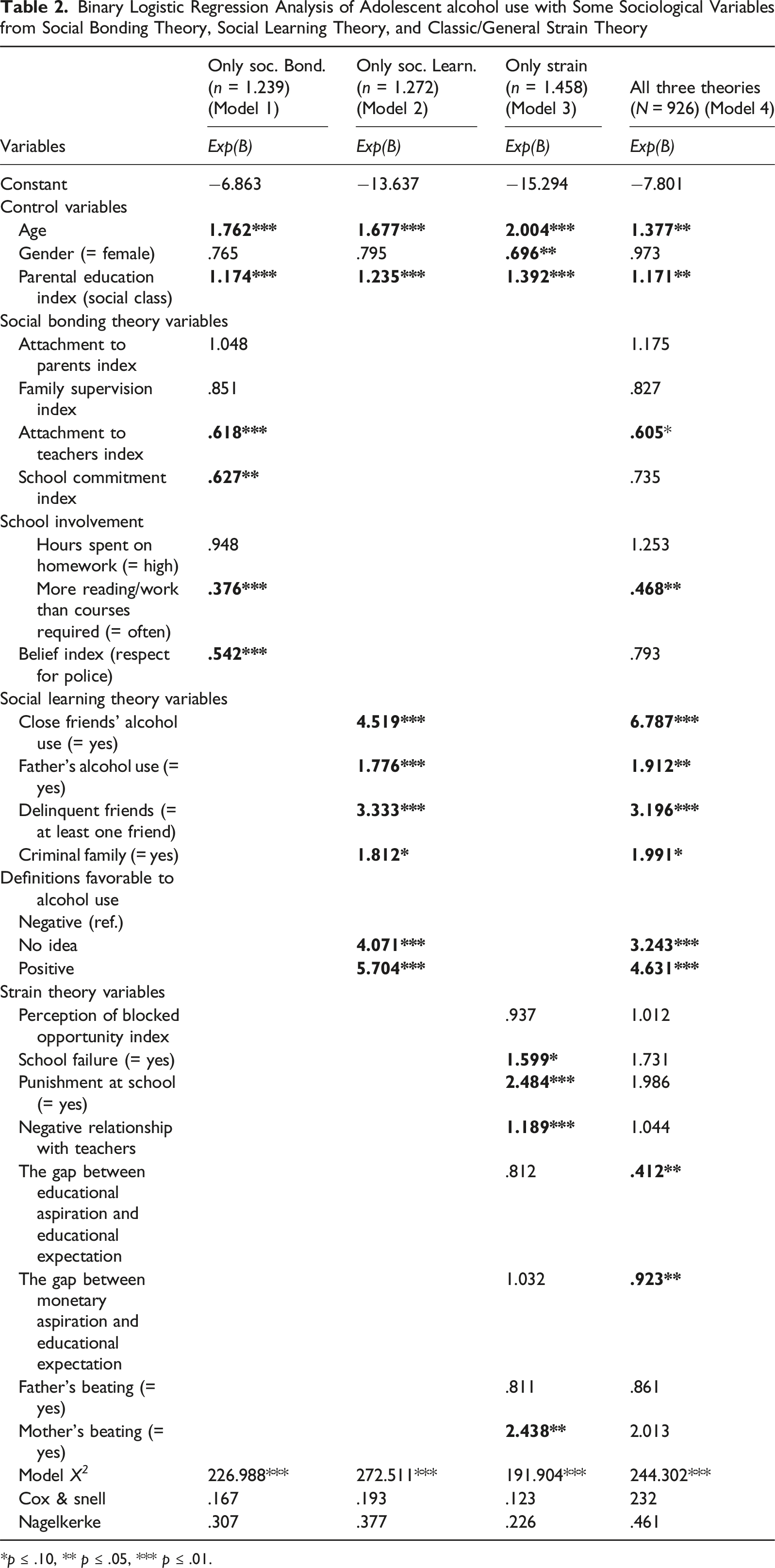
*p ≤ .10, ** p ≤ .05, *** p ≤ .01.
The main aim of the current study was to examine the directions of the effects of social bonding theory, differential association/social learning theory, and strain theory on adolescent alcohol use. Binary logistic regression analysis was employed because the dependent variable, alcohol use, was dichotomous: “using alcohol” (1) versus “not using alcohol” (0). Preliminary diagnostics indicated that there were no influential outliers, and no multicollinearity was detected among the independent variables (all correlations r < .60).
Results
Alcohol Use and Individual Theories: Social Bonding, Social Learning, and Strain Theories
Regarding social bonding variables, attachment to teachers, school commitment, school involvement, and belief were negatively associated with adolescent alcohol use, controlling for age, gender, and parental education (Model 1, Table 2). Specifically, a one-unit increase in attachment to teachers, school commitment, and belief was associated with a decrease in the likelihood of alcohol use by factors of 0.618, 0.627, and 0.542, respectively. Similarly, higher school involvement, measured as spending more hours on homework, was associated with a reduction in the odds of alcohol use by a factor of 0.376. In contrast, family-related variables, including attachment to parents and family supervision, were not statistically significant predictors of adolescent alcohol use.
With regards to differential association/social learning variables, close friends’ alcohol use, father’s alcohol use, delinquent friends, criminal family members, and definitions favorable to alcohol use were all significantly associated with increased adolescent alcohol use, independent of the control variables (Model 2, Table 2). Specifically, having close friends who consumed alcohol (compared to friends who did not), fathers who drank alcohol (compared to fathers who did not), delinquent friends (compared to none), criminal family members (compared to none), and “positive” definitions favorable to alcohol use (compared to “negative” or unfavorable definitions) increased the odds of adolescent alcohol use by factors of 4.519, 1.776, 3.333, 1.812, and 5.704, respectively.
Regarding strain variables, school failure, punishment at school, negative relationships with teachers, and mother’s beating were significantly associated with increased adolescent alcohol use, independent of the control variables (Model 3, Table 2). Specifically, school failure (compared to students who had not failed a grade), punishment at school (compared to students who had not been punished), a one-unit increase in negative relationships with teachers, and mother’s beating (compared to students whose mothers did not beat them) increased the odds of alcohol use by factors of 1.599, 2.484, 1.189, and 2.438, respectively.
However, perception of blocked opportunities, the gap between educational aspirations and expectations, the gap between monetary aspirations and educational expectations, and father’s beating were not significantly associated with adolescent alcohol use.
In summary, testing social bonding theory, differential association/social learning theory, and general strain theory on adolescent alcohol use showed that key variables from all three micro-sociological theories were largely supported among Turkish adolescents. The variance explained by each theory, as indicated by Cox and Snell R2 values, was approximately 19% for differential association/social learning theory, 17% for social bonding theory, and 12% for general strain theory.
Alcohol Use: Full Model
In this analysis, the effects of social bonding theory, differential association/social learning theory, and general strain theory variables on adolescent alcohol use were examined simultaneously, controlling for age, gender, and parental education (Model 4, Table 2).
Among the social bonding variables, attachment to teachers and school involvement (i.e., spending more time on reading or work beyond course requirements) were statistically significant. Specifically, a one-unit increase in attachment to teachers was associated with a decrease in the likelihood of alcohol use (Exp(B) = 0.605). Similarly, higher school involvement reduced the odds of alcohol use compared to lower involvement (Exp(B) = 0.468).
For differential association/social learning variables, close friends’ alcohol use, father’s alcohol use, delinquent friends, criminal family members, and definitions favorable to alcohol use were all positively associated with adolescent alcohol use. Having close friends who drank alcohol (compared to none), fathers who drank alcohol (compared to none), delinquent friends (compared to none), criminal family members (compared to none), and “positive” definitions favorable to alcohol use (compared to negative definitions) increased the odds of alcohol use by factors of 6.787, 1.912, 3.196, 1.991, and 4.631, respectively.
Among strain variables, the gap between educational aspirations and expectations and the gap between monetary aspirations and educational expectations were statistically significant, though unexpectedly negatively associated with alcohol use (Exp (B) = 0.412 and 0.923, respectively).
Regarding control variables, age and parental education were significant predictors. A one-year increase in age was associated with higher odds of alcohol use (Exp (B) = 1.377), and higher parental education also slightly increased the likelihood of alcohol use (Exp (B) = 1.171).
Overall, the simultaneous test indicated that differential association/social learning theory had the strongest role in explaining adolescent alcohol use, both in terms of the number of significant predictors and the variance accounted for, followed by social bonding theory and general strain theory.
Discussion
Researching theoretical correlates of adolescent alcohol use is important for several reasons, including the prevention of future illegal substance use (e.g., marijuana, heroin, cocaine) and other forms of deviance or delinquency (e.g., suicidal ideation or attempts, violence), serious health problems (e.g., mortality, morbidity, and physical or cognitive harm), and educational difficulties (e.g., school dropout). Equally important, there are very few studies worldwide that have simultaneously examined the effects of multiple micro-sociological theories, such as social bonding, differential association/social learning, and strain theories, on adolescent alcohol use, with only three such studies identified.
Regarding individual tests of these theories, most variables from the three micro-sociological perspectives were supported in line with theoretical expectations. Specifically, attachment to teachers, school commitment, school involvement, and belief (from social bonding theory); close friends’ alcohol use, father’s alcohol use, delinquent friends, criminal family members, and definitions favorable to alcohol use (from differential association/social learning theory); and school failure, punishment at school, negative relationships with teachers, and mother’s beating (from general strain theory) were all associated with adolescent alcohol use among Turkish youth as predicted. In other words, social bonding variables acted as protective factors by decreasing the likelihood of alcohol use, while differential association/social learning and strain variables acted as risk factors by increasing it. Overall, these findings suggest that micro-sociological theories of substance use and delinquency developed in Western contexts, such as the United States, are also applicable in Türkiye, providing support for their cross-cultural generalizability.
More importantly, regarding simultaneous tests of the theories (i.e., the full model), most of the micro-sociological theories received support, with some exceptions. Specifically, attachment to teachers (Jonson et al., 2012) and school involvement, as well as close friends’ alcohol use (White et al., 1986), father’s alcohol use, delinquent friends (Jonson et al., 2012), criminal family, and definitions favorable to alcohol use were all statistically significant and aligned with the theoretically predicted directions, consistent with social bonding and differential association/social learning theories.However, the gap between educational aspiration and educational expectation and the gap between monetary aspiration and educational expectation showed unexpected negative coefficients in relation to alcohol use (also see Ozbay, 2014). Agnew (2006, p. 56) argued that some strains, such as unmet educational or occupational goals, mild parental punishments, or peer unpopularity, do not necessarily increase deviance or delinquency. Educational and occupational goals, in particular, are often not perceived as unjust, and individuals may be blamed for failing to achieve them (Agnew, 2001). Consequently, failure to achieve monetary or educational expectations may not escalate the likelihood of alcohol use or other deviant behaviors. Additionally, even adolescents with weaker educational aims may refrain from alcohol use or delinquent acts if they possess high self-control, strong parental attachment, or connections with conventional peers (Ngo & Paternoster, 2014). In short, these findings indicate that differential association/social learning theory plays the most prominent role in explaining adolescent alcohol use, followed by social bonding theory. Variables from general strain theory exhibited unexpected negative effects in the multivariate analysis, likely due to the specific types of strain measured.
Nevertheless, no significant relationships were observed between perception of blocked opportunity and father’s beating (from general strain theory) or attachment to parents and family supervision (from social bonding theory) in relation to adolescent alcohol use. As noted earlier, some types of strain, such as unmet educational or occupational goals, may not lead to deviance or delinquency (Agnew, 2001, 2006). One possible explanation for the lack of association between family-related variables and alcohol use is that the influence of family diminishes as adolescents grow older, being partially replaced by school and educational experiences. Consistent with this interpretation, the significance of school-related variables in the present study, such as attachment to teachers and school commitment/involvement, highlights the growing role of educational contexts in shaping adolescents’ alcohol use (also see Orak & Solakoglu, 2017).
Overall, among the three micro-sociological theories of substance use and deviance, differential association/social learning theory appears to play the most important role (Cox and Snell R2 = .193), followed by social bonding theory (Cox and Snell R2 = .167) and general strain theory (Cox and Snell R2 = .123). This finding is consistent with previous studies (Cooper’s et al., 2009; Jonson et al., 2012; White et al., 1986). For example, in Jonson et al.’s (2012) study, the explained variance in substance use ranged from .129 to .299, including one additional variable from self-control theory. Moreover, when the three theories were considered together, the explained variance was slightly higher (Cox and Snell R2 = .232).
These relatively low explained variances suggest that the models may omit some important factors, such as self-control variables (e.g., risk seeking), negative emotions (e.g., anger), additional social learning constructs (e.g., differential reinforcement), deterrence factors (e.g., certainty of punishment), or labeling effects (e.g., negative labeling theory). Indeed, Weisburd and Piquero (2008) noted that low explained variance is common in tests of criminological theories, often leaving 80–90% of variance unexplained (also see Jonson et al., 2012).
The present study has several implications for crime prevention and public health policies. The findings suggest that prevention efforts should particularly target protective factors related to school, such as attachment to teachers and involvement in school activities, as well as key risk factors, including definitions favorable to alcohol use, close friends’ alcohol use, delinquent friends, punishment at school, and mother’s physical punishment in the context of Türkiye.
This study also has some limitations. First, because it is cross-sectional, previous offenses or behaviors of adolescents could not be controlled for. Second, some indicators from social learning theory, such as imitation and social or non-social reinforcements, were not included. Third, the data were collected only from high school students in the capital city of Ankara, which may limit the generalizability of the findings to all adolescents in Türkiye. Fourth, alcohol use was measured with a single general question (“Do you drink alcohol?”), which does not capture the frequency, intensity, or pattern of use (e.g., occasional, regular, or abusive consumption). Finally, the year of the data is 2001 which is about 25 years older and may not be valid in today’s Turkish society.
Despite these limitations, the study contributes to a limited body of research examining the relationship between social bonding theory, differential association/social learning theory, general strain theory, and adolescent alcohol use. Given that alcohol use is associated with serious health risks, illicit substance use, deviant behaviors, and educational problems, these findings may provide valuable guidance for public policies aimed at preventing alcohol use among adolescents in Türkiye.
Footnotes

Funding
The authors received no financial support for the research, authorship, and/or publication of this article.
Declaration of Conflicting Interests
The authors declared no potential conflicts of interest with respect to the research, authorship, and/or publication of this article.