



Abstract
Concurrent alcohol and marijuana use is common. Knowledge about whether adolescents differ in use frequency across single vs. concurrent use is limited. This study examined past 30-day use patterns by frequency (frequent [20+ occasions] vs. occasional [<20]) and type (single [alcohol or marijuana] vs. concurrent [both]), and tested associations with sociodemographic, psychological/individual, and social-environmental correlates. Data were from high school senior cohorts (2021-2022) from the Monitoring the Future study (n = 11,003). About 2.2% reported frequent single use, 21.9% occasional single, 3.8% frequent concurrent, 7.7% occasional concurrent, and 64.4% no use. Differences emerged by type and frequency among concurrent users. Frequent concurrent users were more likely to be male, to spend evenings out, to have lower grades, and to smoke cigarettes, but less likely to vape and to live with both parents (vs. occasional concurrent users). Findings reveal distinct correlates of use patterns and identify frequent concurrent users as an at-risk group.
Introduction
Alcohol and marijuana are two of the most widely used psychoactive substances among young people in the US (e.g., Miech et al., 2024; SAMHSA, 2024). Both substances are also commonly used concurrently (i.e., as defined in the current research, the use of both substances in a given timeframe, such as within the past 30 days) especially during the late adolescent years (e.g., Earleywine & Newcomb, 1997; Martin et al., 1992; Subbaraman & Kerr, 2015). Concurrent use is a broader simultaneous use, which is the use of more than one substance within a single episode (i.e., at the same time), so that their effects overlap (e.g., Lee et al., 2022; Patrick et al., 2018; Subbaraman & Kerr, 2015). Compared to single-substance users, individuals who use both alcohol and marijuana concurrently are at increased risk for negative outcomes including mental health adversities, use of other substance and/or substance use disorders, and social consequences such as job loss (e.g., Lee et al., 2022; Linden-Carmichael et al., 2021a; Subbaraman & Kerr, 2015; Waddell, 2023; Yurasek et al., 2017). However, it is less clear whether the adverse outcomes result from using more than one substance concurrently or using substances more frequently.
A recent review study on adolescent substance use patterns shows that the majority of adolescents reported low levels of substance use, and only single substance use (Halladay et al., 2020). The study also indicates that a small group of individuals who concurrently use multiple substances often have high levels of use for each substance and are at a higher risk for mental health symptomatology than any other group. Other studies have primarily identified covariates related to adolescent substance use without examining both type and frequency of use patterns simultaneously. Examples of covariates for single use include socio-demographic characteristics such as male sex, low socio-economic status, and ethnicity (e.g., Chen et al., 2017; Oldham et al., 2021). Correlates for frequent use include psychological/individual characteristics such as delinquent behavior and illegal substance use, among others (e.g., Boden et al., 2020; Shanahan et al., 2021; Terry-McElrath et al., 2014). Examples of covariates for any concurrent use include lower academic achievements (e.g., low high school grades) and social-environmental factors such as low parental involvement/unstructured leisure (e.g., Shillington & Clapp, 2001; Su et al., 2018). A few studies have analyzed different concurrent alcohol and marijuana use patterns and associated factors, yet they were often conducted with adult samples and focused strongly on substance use-specific covariates. One study of adults with heavy alcohol consumption found that heavier co-use of alcohol and marijuana was associated with higher numbers of drinking days, higher levels of alcohol craving, and seeking treatment for alcohol use disorder, compared with light-to-moderate and non-cannabis co-users (Venegas et al., 2022). It was also shown that higher frequency of alcohol and marijuana use within co-users was associated with an elevated risk for both alcohol and cannabis use disorder (Waddell, 2021). Additionally, a study by Harrington et al. (2012) found that concurrent daily use of alcohol and marijuana was linked to the highest risk of substance use-related risky behaviors, such as driving under the influence of both substances.
A more comprehensive understanding of how numerous factors – beyond those specific to substance use – relate to different adolescent alcohol and marijuana use patterns, including those within co-users, is needed. Indeed, understanding the factors that distinguish different adolescent use patterns, especially high-risk behavior like frequent concurrent use, may be crucial for the development of effective preventions and interventions. One study, which incorporated high school senior cohorts from 1976 to 2016 (Patrick et al., 2018), showed that concurrent alcohol and marijuana users had a higher likelihood of poorer grades, spending ≥3 evenings out per week, truancy, and any past year illicit substance use. In contrast, they had a lower likelihood of planning to graduate from college compared to adolescents with alcohol use only (Patrick et al., 2018). However, the study did not explicitly examine frequency within use patterns and did not include recent substance use data, that is, in the COVID-19 era.
The present study aims to contribute to the literature on adolescent alcohol and marijuana use patterns by using recent data from the COVID-19 era (2021-2022). Previous research on substance use during the COVID-19 pandemic indicates that substance use among adolescents mostly decreased during this time and then remained slightly lower than before the pandemic, reflecting, perhaps, lower rates of initiation (Miech et al., 2024). Other studies, however, show that among young adults who already used substances (e.g., alcohol), frequency of use increased during the pandemic (Patrick et al., 2022).
Using data from nationally representative samples of US high school seniors aged 18 in 2021 and 2022, we aimed to (1) examine the prevalence of different alcohol and marijuana use patterns (incorporating both frequency and type), and (2) explore the associations of these substance use patterns with sociodemographic, psychological/individual, and social-environmental factors. We hypothesize that, similar to the patterns before the pandemic, frequent concurrent adolescent alcohol and marijuana use is positively associated with male sex, White ethnicity, truancy, evenings out for fun/recreation, and past 30-day use of other substances (cigarette smoking, vaping nicotine or flavoring, and other substance use including stimulants, sedatives/barbiturates, tranquilizers, and opioids). We also expect frequent concurrent adolescent alcohol and marijuana use to be negatively associated with parental education, living with both parents, and psychological/individual characteristics including high school grades, and college plans.
Materials and Methods
Participants and Procedure
Data were drawn from the US-nationally representative samples from the Monitoring the Future (MTF) study. MTF is a large-scale ongoing study on substance use and related attitudes among adolescents and adults (Miech et al., 2024; Patrick et al., 2024a). Each year since 1975, data from ∼12,000 US high school seniors (modal age 18) in about ∼100 schools were collected for the cross-sectional MTF study; details on the MTF study design, samples, and survey procedures can be found in Miech et al. (2024), in Bachman et al. (2015) as well as on the MTF website (https://monitoringthefuture.org/). The MTF data collection received ethics clearance from the University of Michigan Institutional Review Board; the present study was also cleared by the Ethics Committee of the Faculty of Arts and Social Sciences at the University of Zurich (Switzerland). Per school policy, active (written) or passive informed consent was obtained for all participants (Miech et al., 2024).
The analytic sample used in the present study is comprised of cohorts of 12th graders in 2021 and 2022 (COVID-19 era), leading to 11,003 eligible cases with complete data on all variables for further statistical analysis.
Measures
Past 30-day Alcohol and Marijuana Use Patterns
Alcohol and marijuana use (i.e., marijuana/hashish) frequency over the past 30 days were each self-reported. The response options were: 1 = 0 occasions; 2 = 1-2 occasions; 3 = 3-5 occasions; 4 = 6-9 occasions; 5 = 10-19 occasions; 6 = 20-39 occasions; 7 = 40 or more. Consistent with previous studies using the MTF data (e.g., Patrick, 2025; Patrick et al., 2023, 2024b), frequent use was coded as 20+ occasions in the past 30 days; occasional use was coded as 1-19 occasions in the past 30 days. Concurrent use was defined as reporting of both substances in the last 30 days while single use was referred to as reporting either alcohol or marijuana use in the last 30 days. We created 5 groups for our outcome variable: frequent single use (i.e., report of frequent alcohol use but no marijuana use or report of frequent marijuana use but no alcohol use), occasional single use (i.e., report of occasional alcohol use but no marijuana use or report of occasional marijuana use but no alcohol use), frequent concurrent use (i.e., report of both frequent alcohol and frequent marijuana use or report of frequent alcohol and occasional marijuana use or report of occasional alcohol and frequent marijuana use), occasional concurrent use (i.e., report of both occasional alcohol and occasional marijuana use), and no use (i.e., neither alcohol nor marijuana use in the past 30 days).
Sociodemographic Characteristics
Self-reported sex was coded 1 = male and 0 = female. Race/ethnicity was coded White (reference category), Black, and Hispanic. Parental education was used for a proxy of socioeconomic status and assessed separately for each parent by asking the respondents: “What is the highest level of schooling your mother/father completed?” Response options ranged from grade-to graduate school. The maximum value was used to code a binary variable indicating 1 = some college education or higher vs. 0 = high school education or less. Region (school location) was coded by 4 Census regions: 1 = Northeast, 2 = Midwest, 3 = South (reference category), and 4 = West. To control potential cohort differences, the year of survey was included for the years 2021 and 2022, coded as 0 and 1 respectively.
Psychological/Individual Characteristics
To assess truancy, respondents were asked “during the last four weeks, how many whole days of school have you missed because you skipped or ‘cut’?” Response options ranged from none to 11 or more. Responses were then coded binary to indicate 1 = any skipping/cutting in the past month vs. 0 = no skipping/cutting. Cigarette smoking was assessed by asking “How frequently have you smoked cigarettes during the past 30 days?” A variable was coded with 1 = any, 0 = none. For vaping nicotine or flavoring, respondents were asked “On how many days (if any) during the last 30 days have you vaped nicotine?” with response options 1 = 0 days to 7 = 30 days. The same question was asked for vaping just flavoring and vaping marijuana. For the present analyses, a dichotomous variable was coded with the focus solely on vaping nicotine or flavoring (1 = any nicotine or flavoring but no marijuana vs. 0 = no use). Other substance use included cocaine (including crack and other forms of cocaine), amphetamines, sedatives/barbiturates, tranquilizers, heroin (including use with and without needle), and narcotics; a binary variable was created to indicate 1 = the use of at least one of the substances in the past 30 days and 0 = none. Average high school grade was coded 1 = B- or better vs. 0 = C+ or lower. For college intentions, we combined information from two variables on the likelihood of graduating from a 2- or 4-year college program after high school. A dichotomous measure was created, 1 = will graduate from a two- or four-year college vs. 0 = not.
Social-environmental factors included evenings out per week and living situation. Evenings out for fun and recreation were assessed by asking “During a typical week, on how many evenings do you go out for fun and recreation?” A dichotomized variable was coded to indicate 1 = three or more evenings out per week vs. 0 = fewer than three evenings out per week. A dichotomous variable for living with both parents was created to indicate whether the adolescent lived with both their mother and father or not (1 = yes; 0 = no).
Dichotomization of the used measures enhances interpretability and aligns with previous analyses using MTF data (e.g., Merline et al., 2008; Patrick et al., 2018; Schulenberg et al., 2015).
Statistical Analysis
First, descriptive statistics were calculated for all variables, including the prevalence of the past 30-day alcohol and marijuana use patterns (frequent single, occasional single, frequent concurrent, occasional concurrent, and non-use). Differences across the 5 groups of alcohol and marijuana use patterns were tested using Chi-square statistics. For the variable with an invalid Chi-Square test (one expected cell count was <5), the Fisher-Freeman-Halton exact test (Freeman & Halton, 1951) was used. Second, we used weighted multinomial regression analysis to examine associations between different alcohol and marijuana use patterns at age 18 and correlates including sociodemographic variables, psychological/individual characteristics, and social-environmental factors. An MTF survey weight was used to take into account the nationally representative sampling of MTF data. Descriptive statistics were calculated in SPSS 30.0. Multinomial regression models were estimated in R 4.2.2 (R Core Team, 2024) using the “nnet” package (Venables & Ripley, 2002) to obtain odds ratios (OR) and associated 95% confidence intervals (CI). We first used the “no use” group as a reference category in the multinomial regression models and then estimated the same set of regression models with other groups as the reference category. The baseline models included only the sociodemographic variables as predictors, while the full models included all correlates.
Results
Descriptive Statistics
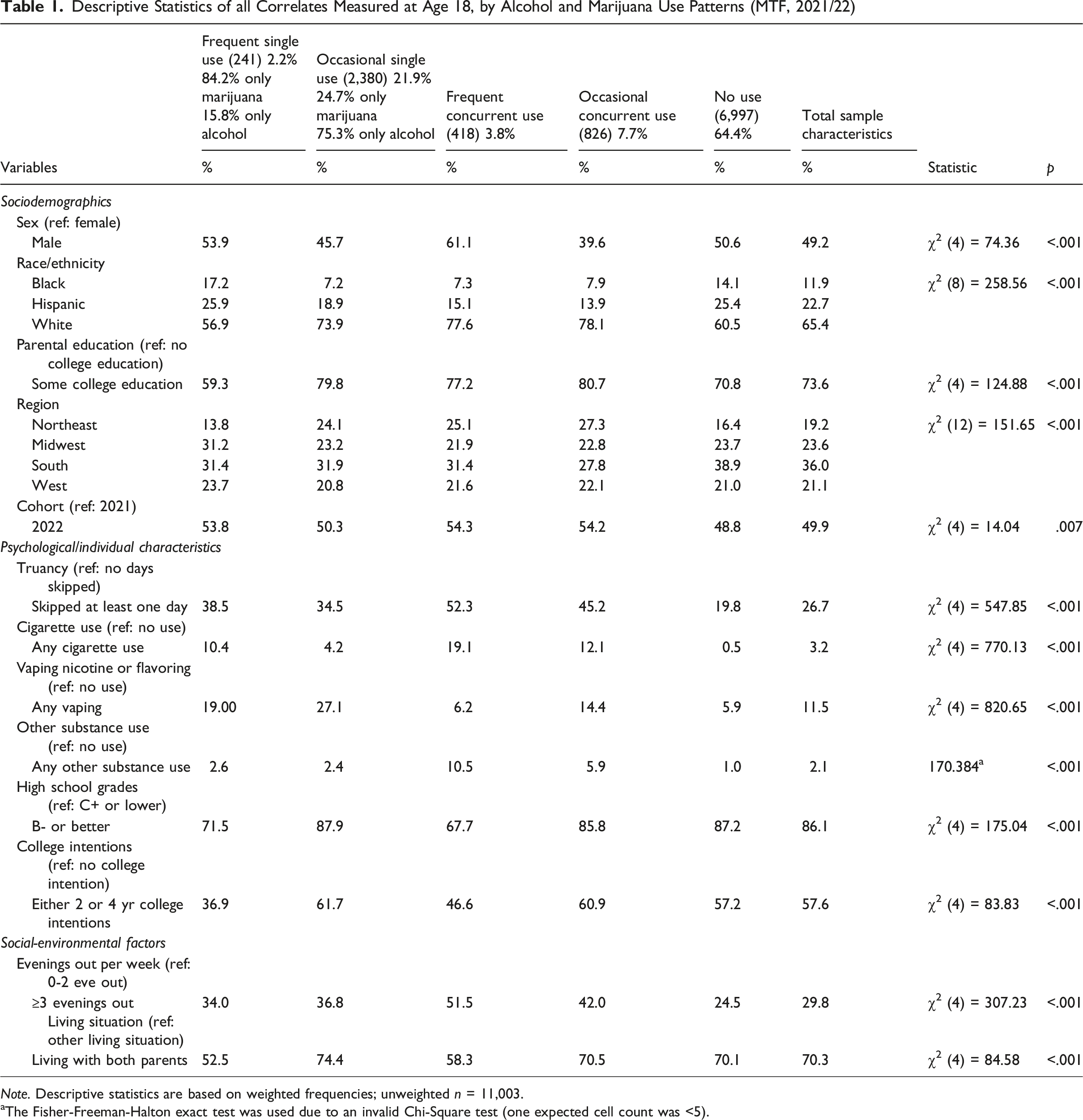
Descriptive Statistics of all Correlates Measured at Age 18, by Alcohol and Marijuana Use Patterns (MTF, 2021/22)
Note. Descriptive statistics are based on weighted frequencies; unweighted n = 11,003.
aThe Fisher-Freeman-Halton exact test was used due to an invalid Chi-Square test (one expected cell count was <5).
About 2.2% reported frequent single use of either alcohol or marijuana in the past month while 21.9% of the analytic sample reported occasional single use. Note that among the past month frequent single users, 84.2% reported only marijuana use and 15.8% reported only alcohol use. Among the past month occasional single users, 75.3% reported alcohol and 24.7% reported marijuana use. The 30-day prevalence of any concurrent alcohol and marijuana use was 11.5% (frequent concurrent use 3.8% and occasional concurrent use 7.7%), with a significant increase from 2021 to 2022 (10.6% vs 12.5%; χ2 (1) = 10.44, p = .001; not shown in Table). Nearly two-thirds of the sample (64.4%) reported no use of either alcohol or marijuana during the past month.
Chi-Square tests and the Fisher-Freeman-Halton exact test revealed significant differences across adolescent alcohol and marijuana use patterns regarding all analyzed correlates. Specifically, about 61.1% of those in the frequent concurrent use group were male while only 39.6% of those in the occasional concurrent use group were male. More than 70% of those in occasional single, frequent concurrent, and occasional concurrent use groups were White although about 57% and 61% of those in frequent single and non-use groups, respectively, were White. More than 80% of those in the occasional concurrent use group reported having a parent with some college education while only 59% reported it in the frequent single use group. Nearly 40% of those from the non-use group were from the South, while around 30% of those in the frequent single, occasional single, and frequent concurrent group were from the South.
More than half of those in the frequent concurrent use group reported truancy while only 19.8% did report it in the no-use group. Those in the frequent concurrent use group seem to engage in other substance use behaviors; 19.1% and 10.5% of frequent concurrent users reported past month cigarette use and any other substance use in the past month. However, about 19% of frequent single users and 27.1% of occasional single users reported vaping nicotine or flavoring in the past month. More than 87% of the adolescents in the occasional single use group reported high school grades B- or better whereas 67.7% of those in the frequent concurrent use group reported grades B- or better. A smaller proportion of frequent single users reported college intention (36.9%) compared to other groups (e.g., 61.7% for occasional single users). More than half of the frequent concurrent users (51.5%) reported 3 or more days of evenings out per week. Slightly more than half of those in frequent single use (52.5%) and in frequent concurrent use (58.3%) reported living with both parents while more than 70% of those in other groups reported it.
Regression Models
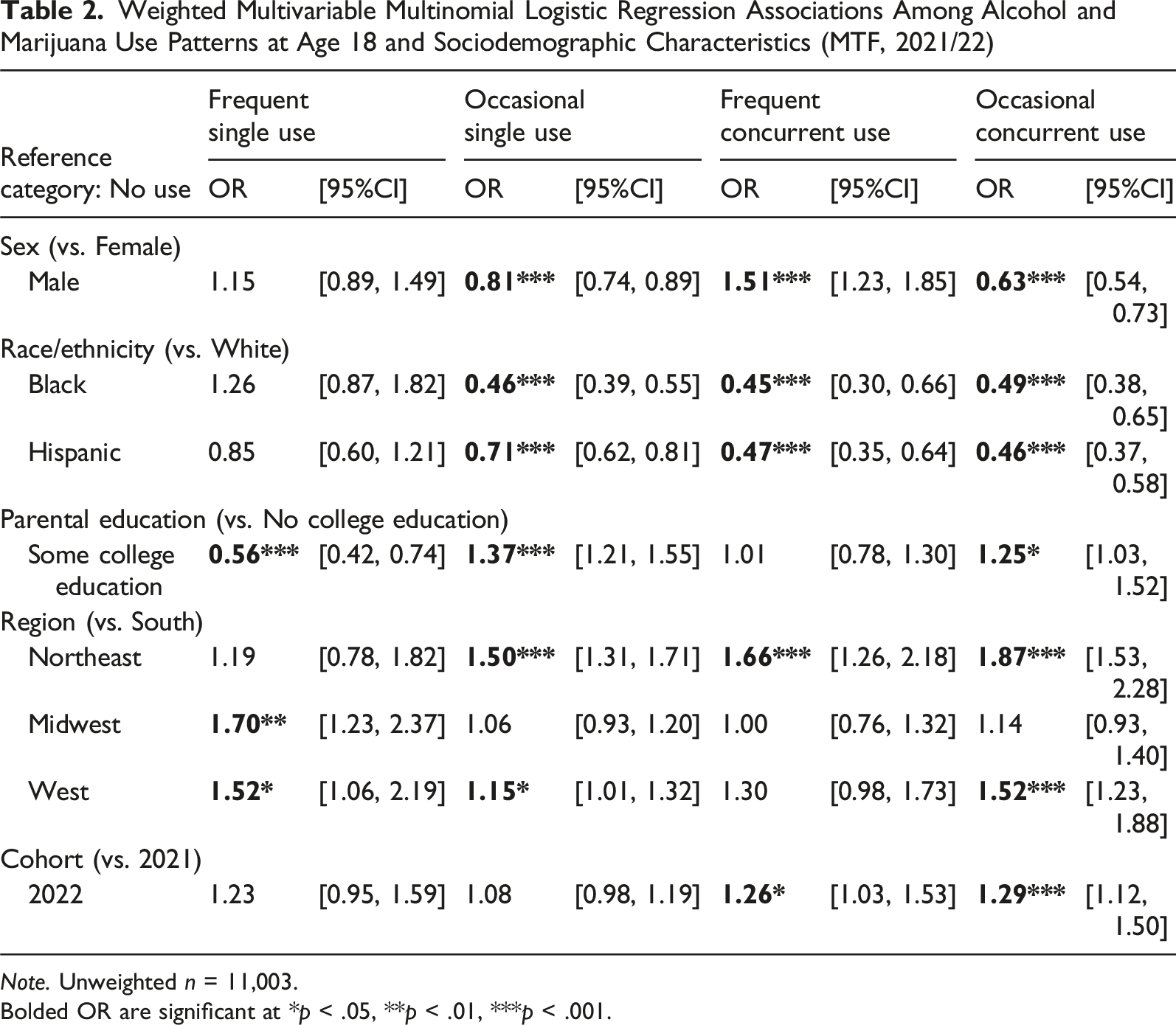
Weighted Multivariable Multinomial Logistic Regression Associations Among Alcohol and Marijuana Use Patterns at Age 18 and Sociodemographic Characteristics (MTF, 2021/22)
Note. Unweighted n = 11,003.
Bolded OR are significant at *p < .05, **p < .01, ***p < .001.
Findings from models with different reference categories can be found in the Online Supplement Tables S1 a-d. For example, differences among concurrent users were only noticeable in terms of sex, with males being more likely to engage in frequent concurrent use (OR = 2.41, p < .001) than occasional concurrent use (see Supplemental Table S1d).
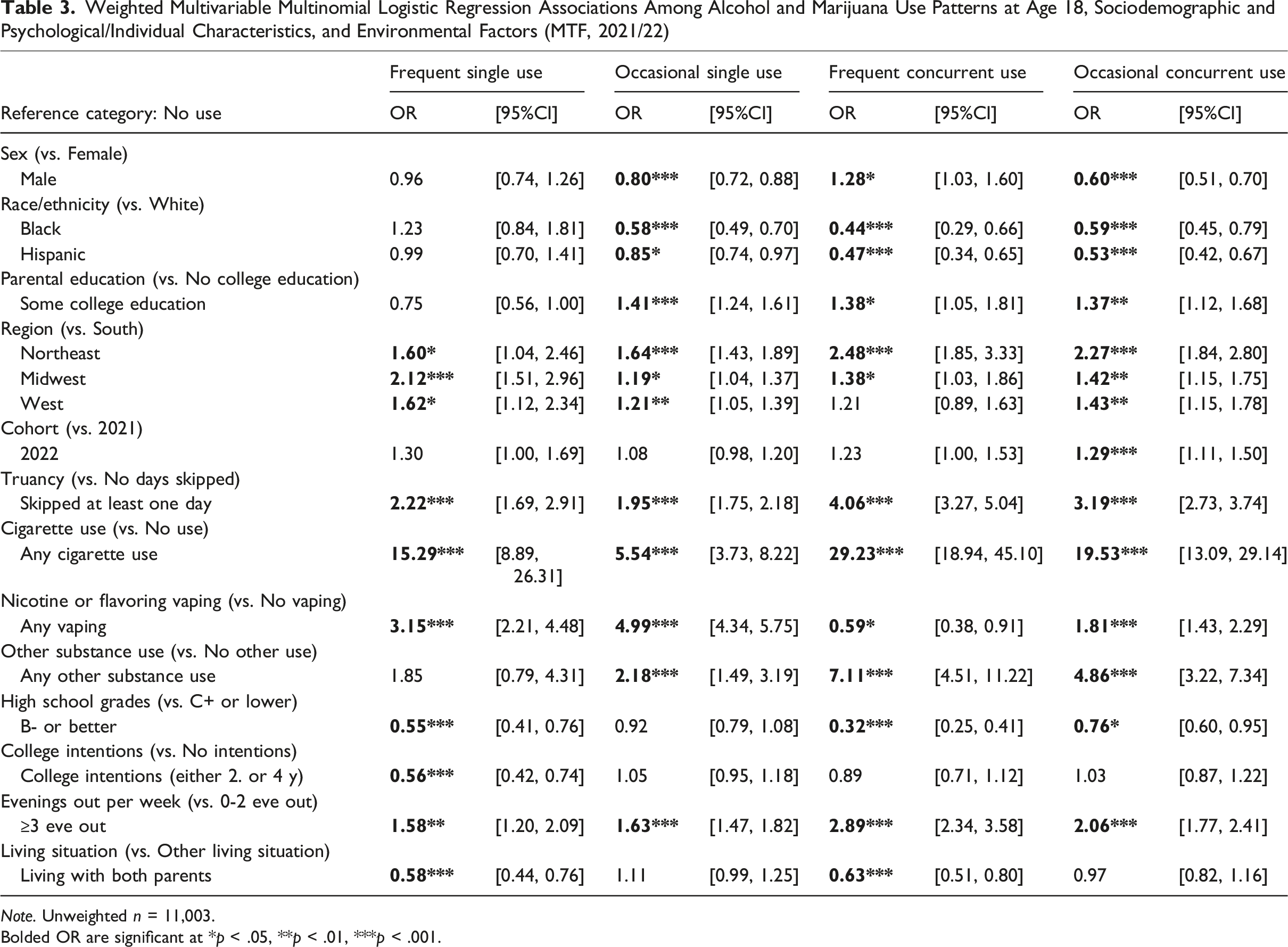
Weighted Multivariable Multinomial Logistic Regression Associations Among Alcohol and Marijuana Use Patterns at Age 18, Sociodemographic and Psychological/Individual Characteristics, and Environmental Factors (MTF, 2021/22)
Note. Unweighted n = 11,003.
Bolded OR are significant at *p < .05, **p < .01, ***p < .001.
Notable differences between frequent concurrent users and single substance users were also evident (see Supplemental Tables S2c). The association with vaping was especially noteworthy, as frequent concurrent users had a lower risk of vaping nicotine or flavoring compared to any single users. Indeed, adolescents in the frequent single and occasional single use groups were more than five times (OR = 5.36, p < .001) and more than eight times (OR = 8.51, p < .001) more likely to vape nicotine or flavoring, respectively. In contrast, other risky behaviors including cigarette and other substance use, truancy, and spending more evenings out per week were associated with a higher likelihood of engaging in frequent concurrent use compared to occasional single or frequent single use. No differences were found between frequent single and frequent concurrent users regarding sex, but frequent single users were less likely to have parents with some college education (OR = 0.54, p < .01) and to have their own college plans than frequent concurrent users (OR = 0.63, p < .05). However, the frequent concurrent group seems to have lower average grades compared to all other groups.
Differences between single substance users were also noticeable (see Supplemental Tables S2b). Adolescents engaging in frequent single use were more likely to identify as Black (OR = 2.11, p < .001), to be from the midwestern region (OR = 1.77, p < .01), and to use cigarettes (OR = 2.76, p < .001), but less likely to have higher grades (OR = 0.60, p < .01), to have parents with some college education (OR = 0.53, p < .001), to have their own college intentions (OR = 0.53, p < .001), to vape (0.63, p < .05), and to live with both parents (OR = 0.52, p < .001) compared to occasional single users.
Differences in the frequency of concurrent use also emerged (see Supplemental Tables S2d). Compared to occasional concurrent users, frequent concurrent users were more likely to be males (OR = 2.15, p < .001), to spend evenings out (OR = 1.40, p < .01), and to smoke cigarettes (OR = 1.50, p < .05), but less likely to vape (OR = 0.32, p < .001), to have better grades (OR = 0.42, p < .001) and to live with both parents (OR = 0.65, p < .01). Compared to individuals engaging in occasional concurrent use, either frequent single or occasional single users significantly differed on some sociodemographic variables (e.g., sex, race/ethnicity), and other variables such as truancy, college intention, living situation, and substance use.
Discussion
This paper examined the prevalence of different past 30-day alcohol and marijuana use patterns – considering both frequency and type of use – in a nationally-representative adolescent sample during the COVID-19 era and investigated associations between these use patterns and a wide array of potential risk factors. We found that over 10% of adolescents in the US reported using both substances in the past month (i.e., concurrent use), a pattern that may offer meaningful specificity in understanding the correlates of alcohol and marijuana use.
Adolescent past 30 days Alcohol and Marijuana Use Patterns in the COVID-19 Era
Our study revealed that one in nine participants reported any concurrent alcohol and marijuana use in the past 30 days at age 18. Differences in type and frequency of use patterns emerged. Nearly 4% had reported 30-day frequent concurrent use, making this use pattern more common than frequent single use, whereas more adolescents reported occasional single use (more than one in five) than occasional concurrent use (∼7%). Among those engaging in only single substance use, noticeable differences were found in the substances consumed; more adolescent marijuana users reported frequent single use while more adolescent alcohol users reported occasional single use.
Pre-COVID-19 data from a nationally representative survey of adolescents reported a similar concurrent use rate, although the measure included both past-12-month and past-30-day use (Patrick et al., 2018). However, in line with an overall rise in the co-use of both substances in recent years (e.g., Linden-Carmichael & Wardell, 2021b), we observed a significant increase in adolescent concurrent use from 2021 to 2022. This is of particular concern, given that brain development in this age group is still ongoing (e.g., Dahl, 2004; Sicher et al., 2022), and high-risk patterns such as frequent concurrent use of alcohol and marijuana may be especially harmful (e.g., Medina et al., 2007). Although evidence has been mixed on whether recreational marijuana use among adolescents increased following legalization in parts of the US (e.g., Mennis et al., 2023; Pawar et al., 2024), an effect on our prevalence rates cannot be ruled out.
Associations Among Alcohol and Marijuana Use Patterns and Risk Factors
Our findings show differences in various sociodemographic, psychological/individual and social-environmental factors, depending on the alcohol and marijuana use patterns in the COVID-19 era. Adolescents with any use pattern differed significantly from non-users, with the strongest associations observed among those in the frequent concurrent use group. Differences across use patterns also emerged. Single users of either alcohol or marijuana, for example, were less likely than concurrent users to engage in other risky behaviors, such as using additional substances and truancy—a known risk factor for future offending (Rocque et al., 2017). This is consistent with previous studies suggesting that concurrent use is linked to a greater risk for negative outcomes compared to single substance use (e.g., Lee et al., 2022; Linden-Carmichael & Wardell, 2021b; Yurasek et al., 2017). However, strong positive associations with vaping nicotine or flavoring were noticeable among single substance users, especially among those in the occasional group. E-cigarettes have become widely available as an appealing method of nicotine intake, particularly among young people, and can be highly addictive—partly because they often contain higher nicotine levels, as indicated by manufacturers (e.g., Appleton et al., 2022; Taylor et al., 2021). The high proportion of alcohol use among occasional single users could partly explain this finding, as e-cigarette use has been linked to alcohol use among young people (e.g., Evans & Alkan, 2024; Rothrock et al., 2020). Moreover, risk perception could also play an important role (e.g., Pepper et al., 2016), with adolescents who engage in moderate alcohol use potentially perceiving vaping less risky. Possible gateway effects of adolescent E-cigarette use towards other substances of abuse, such as alcohol or marijuana, have also been suggested; however, future research is needed (e.g., Chen et al., 2023). Moreover, differences in use patterns may also be attributable to differences in individual effects as well as to the availability of both substances (e.g., Lee et al., 2017; Sewell et al., 2009).
Further differences across use types were noticeable. Adolescents reporting frequent concurrent use were more likely than frequent single users to have parents with some college education and to plan on attending college themselves. These findings deviate from previous work on risk differences between alcohol-only and concurrent alcohol and marijuana use classes (e.g., Patrick et al., 2018). This distinction may be explained by our differentiation of both frequency and type of use. It may also reflect the predominance of adolescent marijuana users within the frequent single use group, as well as potential cohort changes, given that the time frame of the data in the paper by Patrick et al. (2018) spans from 1976 to 2016.
Differences in the use frequency within use types also emerged. Consistent with previous work, engaging in frequent single use was, compared to occasional single use, associated with a greater likelihood of adverse correlates such as smoking, poorer academic achievement, and having parents with a lower education background (e.g., Boden et al., 2020; Legleye et al., 2011; Shanahan et al., 2021).
Distinctions among concurrent users were as follows: frequent concurrent users were more likely than occasional concurrent users to be male and to spend evenings out per week. As adolescents approach the transition to adulthood, they experience numerous developmental changes (e.g., gaining autonomy), while peer influence becomes increasingly important (e.g., Meisel & Barnett, 2017). Frequent concurrent users may surround themselves with more substance using peers, thereby reinforcing their own behavior compared to those who engage in occasional concurrent use. Indeed, previous research has shown that both social contexts (e.g., Gunn et al., 2021) and having more peers who consume alcohol or marijuana are associated with an increased likelihood of using both substances together (e.g., Meisel et al., 2021). Although our analysis focused on concurrent use, it is likely to represent simultaneous use of both substances at the same time, so that their effects overlap, among those using both substances on a frequent basis (Patrick et al., 2018). Using substances simultaneously may have distinct implications for public health practice and education compared to frequent use of both substances without combining them in a single episode (e.g., Bravo et al., 2021; Lee et al., 2022; Subbaraman & Kerr, 2015).
Furthermore, those engaging in frequent concurrent use were more likely than occasional concurrent users to smoke cigarettes, but less likely to vape nicotine or flavoring. One possible explanation is that differences in use patterns may reflect differences in use motives (e.g., Espinosa et al., 2023; Patrick et al., 2019, 2020) and hence also in motives for the use of other substances such as vaping nicotine (e.g., Patrick et al., 2024c).
Adolescents from the frequent concurrent group were also more likely to have lower average high school grades than occasional concurrent users, an important finding, given that studies have linked poorer academic performance to negative future functional and social outcomes (e.g., Masten & Cicchetti, 2010; Zimmermann et al., 2013). Note, however, that reciprocal associations may also be possible. Moreover, adolescents engaging in frequent concurrent use were less likely to live with both parents than occasional concurrent users, suggesting the importance of parental monitoring in adolescent substance use (e.g., Pelham et al., 2024).
Consistent with our hypothesis, adolescents who engaged in frequent concurrent use during the COVID-19 era were more likely than other groups to spend multiple evenings out per week, smoking cigarettes, and having lower grades. Our findings suggest that differences in use frequency across different use types (single vs. concurrent) play a significant role and should be considered in future research, as well as in prevention and intervention. Programs targeting young people who engage in alcohol and marijuana use should account for different concurrent use patterns and their associated risk correlates.
Limitations
Our study includes limitations. First, the generalizability of our findings is limited to adolescents who have not dropped out of high school as MTF samples are drawn from students in schools. The link between high school dropout and an increased risk for substance use, however, is well-established (e.g., Maynard et al., 2015; Townsend et al., 2007). Second, adolescent substance use frequency was assessed via self-reports, potentially leading to under-(or over-) reporting and omitting information on the quantity of use (Janousch et al., 2024). Furthermore, by categorizing substance use frequency, the heterogeneity within the groups, particularly those in the occasional use group (reporting 1-19 occasions), may have been obscured. Future research using more granular categorization may help to better understand the heterogeneity within the same frequency groups.
Third, despite examining a wide array of correlates, indicators of mental health were not included, due to the limited availability of the measures in the used data. However, future research should consider including mental health measures, as a strong link between adolescent substance use and mental health has been suggested (e.g., De Geronimo et al., 2024; Hussong et al., 2011). Fourth, although all of our models were adjusted for the year of administration (cohort), results should be interpreted with caution, as cohort specific changes might still have occurred. Fifth, we only focused on past 30-day use in the analysis, thus our “no use” group may also include lifetime or past 12-month use. Finally, our results are limited to adolescent single/concurrent alcohol and marijuana patterns with no specific measure of simultaneous use included. Future research should consider differences in the frequency of simultaneous alcohol and marijuana consumption compared to single and concurrent use patterns, as simultaneous use appears to be associated with even more negative consequences than concurrent use (e.g., Bravo et al., 2021; Subbaraman & Kerr, 2015).
Conclusion
Our findings revealed insightful specificity in the correlates of alcohol and marijuana use patterns across type (single vs. concurrent) and frequency of use in the COVID-19 era. Adolescents reporting frequent concurrent use may represent a particularly vulnerable group, as they exhibit multiple risk factors. These findings have important implications for the development of effective prevention and intervention strategies, emphasizing the need to account for different concurrent use patterns and their associated risk factors, especially given that adolescent substance use is linked to future problematic use.
Supplemental Material
Supplemental Material - Concurrent Alcohol and Marijuana use Patterns Among High School Seniors in the United States
Supplemental Material for Concurrent Alcohol and Marijuana use Patterns Among High School Seniors in the United States by Michelle Loher, Joy Bohyun Jang, Boris B. Quednow, Lilly Shanahan, & Megan E. Patrick in Journal of Drug Issues.
Footnotes

Ethical Considerations
All procedures contributing to this work comply with the ethical standards of the relevant national and institutional committees on human experimentation and with the Helsinki Declaration of 1975, as revised in 2008. The MTF data collection received ethics clearance from the University Institutional Review Board; the present study also from the Faculty of Arts and Social Sciences of the University of Zurich (Switzerland; no: 24.02.05).
Consent to Participate
Per school policy, active (written) or passive informed consent was obtained for all participants.
Author Contributions
The manuscript’s concept was developed by ML, JBJ, and MEP. ML conducted the data analysis and drafted the manuscript with input from MEP, JBJ, LS, and BBQ. All coauthors critically revised the manuscript and contributed important content to this article. The submitted version was approved by all co-authors.
Funding
Data collection and work on this study were supported by the National Institute on Drug Abuse under Grant [No.: DA001411] and Grant [No.: DA016575]. ML is supported by the Swiss National Science Foundation under Grant [No.: P000PS_207264]. MEP and JBJ are supported by the National Institute on Drug Abuse under Grant [No.: DA001411] and Grant [No.: DA016575]. ML and LS work at the Jacobs Center for Productive Youth Development (JCPD), University of Zurich. MEP and JBJ work at the Institute for Social Research (ISR) at the University of Michigan, where the research presented was conducted. BBQ works at the Department of Adult Psychiatry and Psychotherapy (Experimental Pharmacopsychology and Psychological Addiction Research), University Hospital of Psychiatry Zurich, University of Zurich.
Declaration of Conflicting Interests
The authors declared no potential conflicts of interest with respect to the research, authorship, and/or publication of this article.
Supplemental Material
Supplemental Material for this article is available online.
Author Biographies
References
Supplementary Material
Please find the following supplemental material available below.
For Open Access articles published under a Creative Commons License, all supplemental material carries the same license as the article it is associated with.
For non-Open Access articles published, all supplemental material carries a non-exclusive license, and permission requests for re-use of supplemental material or any part of supplemental material shall be sent directly to the copyright owner as specified in the copyright notice associated with the article.
