



Abstract
Prescription stimulants like amphetamine salts and methylphenidate are prescribed for ADHD but are frequently used non-medically. While most qualitative research focuses on college students, less is known about use outside this group. We conducted a qualitative analysis of 878 Reddit threads across four subreddits (r/ADHD, r/Nootropics, r/Stims, r/Drugs) from May 2021 to July 2022. Two primary use patterns emerged: instrumental use (ranging from adherence to prescribed regimens to strategic, redditor-directed dosing adjustments) and recreational use (characterized by binges, high doses, and increased risks). Adverse effects, such as mood swings, sleep disruption, and psychosis, were reported in both prescribed and non-prescribed contexts. Redditors often framed their use in terms of personal goals, including functional improvement or pleasure-seeking. Adults with ADHD described flexible dosing strategies, suggesting clinical guidelines may not reflect real-world practices. These findings highlight the value of online forums in capturing diverse, patient-led experiences with stimulant use.
Introduction
Psychostimulants, such as amphetamine salts and methylphenidate, are commonly produced as prescription medication primarily for the treatment of attention deficit hyperactivity disorder (ADHD), due to their ability to reduce core symptoms of hyperactivity, impulsivity and inattention (Furman, 2005). They represent the primary pharmacological treatment for ADHD (Kooij et al., 2019), with an estimated 4.5% of the U.S. population using prescription stimulants medically (Compton et al., 2018). Recent data further suggest that this usage rate has risen (Board et al., 2020), particularly during and following the COVID-19 pandemic (Board et al., 2020; Chai et al., 2024).
Beyond this clinical context, psychostimulants are also popular for non-prescribed use. Often acquired via diversion from friends or family (Faraone et al., 2020), non-prescription use is especially prevalent among college students. U.S. research indicates that over 25% of college students have engaged in non-prescribed stimulant use at least once (Faraone et al., 2020). Qualitative inquiries show that these medications are frequently perceived as cognitive enhancers, improving memory, concentration, and learning performance (Jensen et al., 2016). Students also cite increased energy and motivation, enabling them to work for prolonged periods (Vrecko, 2013). This pattern of use has attracted considerable scholarly attention, generating numerous interview-based studies on motivations, experiences, and potential risks (Hupli et al., 2016; Monnet et al., 2022; Petersen et al., 2015; Vargo & Petróczi, 2016).
However, comparatively little research has examined non-prescribed stimulant use outside secondary or tertiary education settings (Mui et al., 2014; Zaami et al., 2020). The cognitive and energy-related benefits appealing to students are likely equally attractive to individuals in demanding occupational contexts, such as transportation workers (Girotto et al., 2014) and military personnel (Zaami et al., 2020), for whom wakefulness and alertness are crucial. Moreover, while prior research has emphasized cognitive enhancement, stimulants are also frequently used recreationally (Faraone et al., 2020; Vosburg et al., 2021), a dimension that has not been adequately explored in qualitative literature. Understanding how and why individuals use prescription stimulants non-prescribed is vital for assessing potential harms, given that these drugs can carry serious risks, including dependence (Kuczenski & Segal, 1997), cardiovascular complications, and, in rare instances, hallucinations (Clemow & Walker, 2014).
Few qualitative studies have examined how individuals with ADHD manage their prescribed stimulant regimens on a day-to-day basis (Meaux et al., 2006; Singh et al., 2010). However, a large body of evidence suggests that individuals with ADHD do not always adhere rigidly to daily medication schedules, indicating that they make deliberate decisions about their medication use (Cox et al., 2015; Darredeau et al., 2007; Safren et al., 2007; Schein et al., 2022). Understanding their motivations and decision-making processes is therefore important as it reveals how individuals with ADHD tailor their medication use to everyday demands. Additionally, understanding the ways in which individuals choose to implement their medication regimens may help us grasp the broader factors fuelling the rising demand for these medications (Monnet et al., 2022).
Overall, the range of experiences among people who use prescription stimulants remains insufficiently documented. To address this gap, we drew on social media data to collect unsolicited, community-generated content that offered a broader cross-section of individuals’ motivations and behaviours (Chi & Chen, 2023; Pandrekar et al., 2018). Among these platforms, Reddit stands out as one of the largest English-language online forum boards, hosting over 52 million daily visitors (Patel, 2020) (commonly known as redditors). It is composed of thousands of topic-specific “subreddits,” many of which contain discussions on prescription stimulants. These communities vary in their purpose and norms, offering distinct perspectives on usage. For instance, r/ADHD focuses on the experiences of those with an ADHD diagnosis, while r/drugs emphasize recreational use.
Accordingly, this study employed a multi-site qualitative analysis of Reddit posts to explore redditors’ motivations and experiences with prescription stimulants beyond the limited scope of university-focused research. By examining discussions from r/ADHD, r/drugs, r/stims, and r/nootropics, this study aimed to capture the multifaceted reasons for stimulant use, the perceived benefits, and the challenges redditors face, thereby contributing a broader understanding of prescription stimulant use across different contexts.
Methods
Site Selection
Our study drew from discussions on the subreddits r/ADHD, r/Nootropics, r/Stims and r/Drugs. The largest subreddit, r/ADHD (2 million redditors), discusses experiences with those who have ADHD. The subreddit provided a useful avenue for examining the experience of stimulant use among those prescribed the medication. Additionally, discussion of stimulants was included from the subreddit r/nootropics (1.1 million redditors), which focuses on cognitive enhancers. Posts from the subreddit r/drugs (916k redditors), which covers discussions on all substances, and r/stims (160k redditors), which is specific to stimulants, were also examined. This multi-site approach was designed to reveal the range of motivations, contexts, and experiences with prescription stimulants.
This research received an ethics exemption from the XXX Human Research Ethics Committee (2022/HE001469) because it did not include human participants and used publicly available data. Prior to examining the posts, moderators of each subreddit were contacted via mod mail and direct messages informing them of the research intentions. However, we received no response. This use was compliant with Reddit’s conditions of access at the time (July 2022) which stated permission is not required from Reddit to use their API for non-commercial use. To protect individuals’ identities, comments were obscured, via amendment of grammar, spelling errors and removing irrelevant sections. Reverse search checks were employed to verify deidentification.
Data Collection
Data were collected between 26 and 28 July 2022 using the subreddit-comments-dl tool (pistocop, 2022), which interfaces with the Pushshift. io service and the Python Reddit API Wrapper (PRAW) to retrieve the textual content of posts and associated comments. To ensure there was a representative sample of member discussion, a large number of posts from each subreddit were scraped: r/ADHD (n = 11,992), r/stims (n = 11,985), r/drugs (n = 11,997), r/nootropics (n = 11,984). These posts were collected chronologically and ranged between 15th May 2021 to 25th July 2022. Comments from these posts were also extracted.
To filter out irrelevant discussion, a list of keywords were developed to search for posts about prescription stimulant use. This list included both the generic and brand names of prescription stimulants. The terms were then manually searched on each subreddit to remove irrelevant results. The full list of keywords can be seen in Supplemental Appendix A.
We searched each subreddit independently using R. Posts were included if they contained relevant terms in either the title or body text. The number of posts included varied between subreddits. For r/ADHD, 9.15% (n = 1,097) contained keywords; for r/stims, 20.77% (n = 2,487), for drugs 6.26% (n = 751) and for r/nootropics 3.21% (n = 385).
Inclusion of Posts and Comments by Subreddit
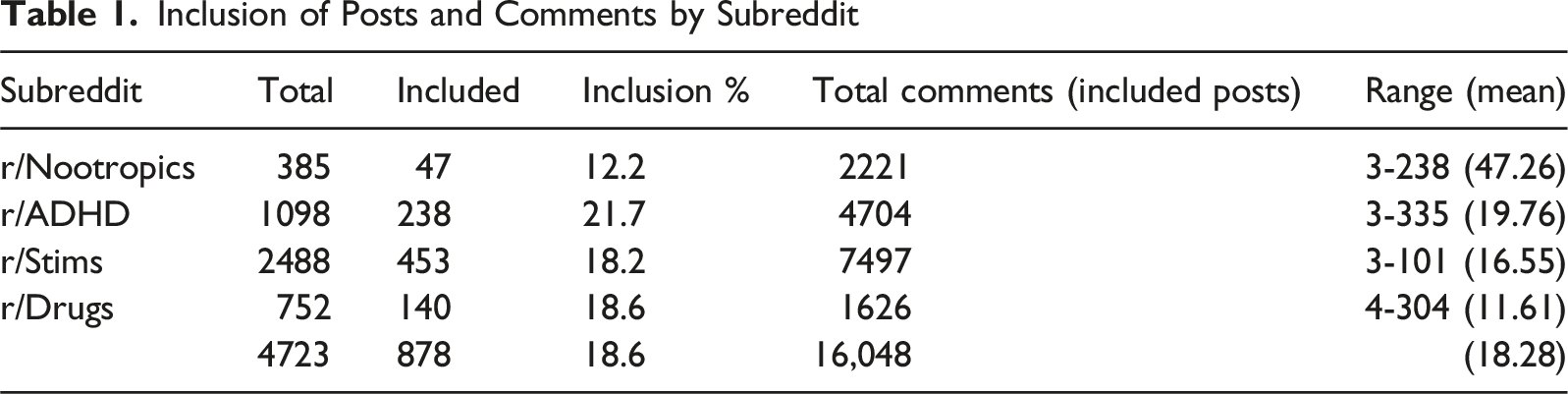
Prior qualitative work with online text indicates that 30–60 units of discussion per site are typically adequate for rich, multi-level coding while remaining feasible for double-coding and consensus meetings (Hennink & Kaiser, 2022). Therefore, we selected samples of 50 posts (47 for r/nootropics) from each subreddit for analysis. Posts were then merged with their associated comments. For highly replied threads, only the top 100 most upvoted were collected, to increase the likelihood of discourse being representative of the experience of other redditors. The final corpus was then converted into text files and imported into NVivo 12 for qualitative analysis.
Data Analysis
For analysis, we adapted guidelines from Jenkins and colleagues (Jenkins et al., 2018) on multisite qualitative analysis (MSQA). This framework proceeds in three main stages: (1) a separate, in-depth analysis of data within each subreddit; (2) a comparison of the identified themes across the different subreddits; and (3) a final within-site review to refine the thematic framework. This approach allows us to identify and consolidate variation in discussion between the subreddits.
First, each subreddit’s data was processed independently using the thematic analysis framework described by Braun and Clarke (Braun & Clarke, 2006). A single coder (B.J.) carried out the initial analysis by reading through each dataset and noting preliminary impressions. After becoming immersed in the data, open coding was conducted without predefined codes or themes, so that novel or unexpected insights could be captured. Once this initial phase was completed, codes were reviewed and refined to ensure alignment with the study’s research questions and aims. In collaboration with a second researcher (N.T.), the coded data were then grouped into preliminary themes according to conceptual similarity and relevance. Recurrent topics that held particular significance within the data were subsequently labelled and defined. This process was repeated for each of the subreddits.
We then conducted between-site analysis. In this stage, we contrasted the themes from each subreddit to identify how discussion varied and converged across online communities. This allowed us to identify patterns present across the entire dataset which informed the development of the overarching themes.
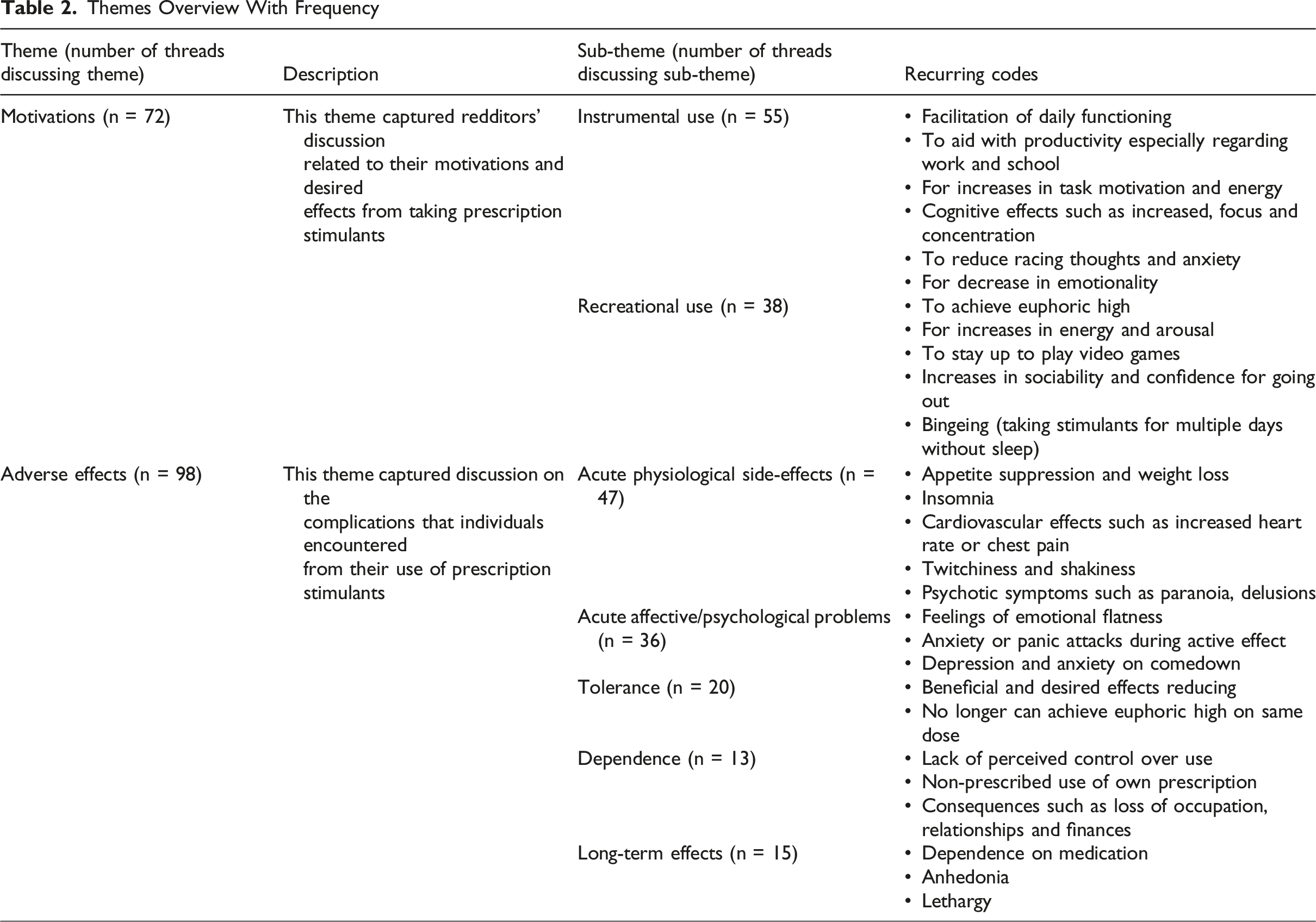
Themes Overview With Frequency
Results
Motivations
This theme captures both the underlying reasons individuals take prescription stimulants and the specific effects they intend to achieve. In other words, motivations encompass the “why” (e.g., the need to study, work, or manage symptoms) and the “what” (e.g., enhanced focus, energy, or euphoria) that redditors expect from the medication. These aspects are deeply intertwined, as the intended effects often directly support the practical goals behind use.
We defined two subtypes of motivation, being instrumental and recreational. Instrumental motivations involve using stimulants as tools to meet functional demands, such as managing ADHD symptoms or improving productivity. Recreational motivations focus on obtaining pleasurable, euphoric states. In these cases, the intended effects are pursued primarily for enjoyment rather than functional outcomes.
Instrumental Use
Across all four subreddits, the primary reason for stimulant use was instrumental. This theme was identified in 55 posts, spanning all four communities; however, the nature of instrumental use varied depending on the subreddit. The most common form involved individuals using stimulants prescribed to them to manage ADHD symptoms. This was most present on r/ADHD, where instrumental use was the sole motivation for prescription stimulant use described on that subreddit. Discussion of instrumental prescription stimulant use for ADHD was also described on r/Nootropics, but rarely mentioned on r/Stims or r/Drugs.
Despite all being prescribed stimulants to manage ADHD, individuals differed in how and why they used their medication. Most redditors who used prescription stimulants for ADHD saw them as essential tools for navigating daily life. These individuals often described following a consistent routine with their medication, taking the same dose at the same time each day, regardless of what their schedule looked like or how they were feeling. Their comments conveyed a sense that the medication wasn’t optional but foundational to their ability to function: I take it every day. I also drink water and eat food every day. They all help my brain function :). I could go one day without any of those things, but luckily I don’t have to. (r/ADHD)
To emphasize how indispensable stimulants were to them, some redditors drew analogies to disability aids, comparing it to wearing glasses for vision correction or needing insulin for diabetes: Stimulants for me are like eyeglasses for some people. They need glasses to see and I need stimulants to function properly. (r/ADHD)
On the other hand, many individuals prescribed stimulants for ADHD reported that they did not take the medication every day. These redditors sought similar improvements from stimulants as those who took it daily, however felt they only needed them in specific settings or contexts. Most of these individuals described taking stimulants exclusively for work or school purposes, skipping their dose on days off. This decision was typically self-directed and not described as being recommended by a doctor. I only take it when I work…I could take my meds every day, but I don't want to. I don't have a reason to take them when I'm playing video games on the couch on the weekend. (r/ADHD)
Perceived Benefits of Prescribed Use
Whether individuals who took prescription stimulants to manage their ADHD used them daily or situationally, they described receiving similar benefits from their medication. Most commonly, they reported increased motivation to complete tasks they would otherwise find difficult or unpleasant: My biggest reason for starting meds was lack of motivation… it’s definitely easier for me to do things now than it was before, and I find the process of doing things I don’t enjoy to be much more bearable. Before doing something like dishes would literally make me feel depressed. (r/ADHD)
These individuals also described reduced brain fog. This increased their ability to focus and concentrate on tasks. Many redditors reported this helped improve their work and school performance, and assisted with completion of day-to-day tasks and keeping consistent with routines: I wasn’t diagnosed until I was 45. I was NOT adulting well at all. Now I can totally hold a job, do my work, have a relationship, manage to do laundry and pay bills on time. (r/ADHD)
Redditors prescribed stimulants for ADHD also commonly reported a calming effect from stimulants. This reduced racing thoughts and improved their ability to stay in the moment. For many, this also saw significant reductions in their anxiety levels. I felt a difference with the first dose. anxiety was immediately gone. I no longer act impulsively… I can focus and think about one thing at a time. (r/ADHD)
r/ADHD redditors also reported that the calming effect of stimulants allowed them to be less emotionally reactive and to better handle stress. For example, one redditor reported: The biggest change for me [from stimulant use] was how I cope with difficult situations. I did not even realise this was happening until I had a medication break, and my wife and I got into an argument. When I am unmedicated, I cannot think through things properly, as the noise and fog in my head goes crackers when I’m stressed. (r/ADHD)
Non-Prescribed Instrumental Use
In contrast to r/ADHD and r/Nootropics, discussions of instrumental stimulant use on r/Stims and r/Drugs were markedly different. Posts in these subreddits more frequently described non-prescribed use, including acquiring medication without a prescription or taking doses exceeding therapeutic doses. Rather than treating a diagnosed condition, individuals often used stimulants to cope with intense academic or professional demands, aiming to maximise productivity in high-pressure situations. I have like 29 assignments to complete in like 14 days so my friend is giving me some focalin ir 5 mg tomorrow to try to get as much as possible done im getting 60 of them. (r/Stims) It was Mother's Day brunch of 2018 at the restaurant where I work, by far the busiest shift of the year. I hadn't slept a wink in 4 days and had taken roundsabout 600mg of adderall over those 4 days. (r/Drugs)
Extended use or elevated dosages were also frequently linked to high-stress, demanding life circumstances. In these cases, prescription stimulants appeared to function as a coping mechanism, as a means of managing the overwhelming pressures of work, family, or personal responsibilities: Wife and I just had a kid, work is kicking my ass, and yesterday got so hectic I know I took two 70 mg Vyvanse, can’t even remember how many IR. Needless to say I haven’t and have a TON of work to get done today…Any tips are appreciated. (r/Stims)
Recreational Use
Recreational use of prescription stimulants was described in 38 posts, primarily from r/Stims and r/Drugs. While r/ADHD largely focused on therapeutic use, these subreddits featured distinct accounts centred on pleasure and euphoria. Many redditors on these subreddits did not specify whether they had a prescription, whilst some described obtaining medication from friends or acquaintances. Their posts often emphasized experimentation with higher doses, specific formulations, and routes of administration to amplify their desired effects.
Desired Effects and Settings
A number of redditors noted that recreational stimulant use could involve effects similar to those found in instrumental contexts, such as heightened energy, focus, and drive. Indeed, a few explicitly toggled between using the medication for functional goals and using it for pleasure, adjusting their dosage depending on what outcome they wanted: Dexamphetamine is so amazing both therapeutic and recreational, I don't know how to explain it, it just releases dopamine in all the right parts of my brain. (r/Stims)
Ultimately, however, most redditors who used stimulants recreationally sought the rush of euphoria and mood elevation. One r/Stims contributor offered a vivid account: Tingles in the back of my neck, hyper focus, waves of euphoria from dopamine flooding. It's blissful. I dose 15 to 20 mg of pharma dexamphetamine and maybe sometimes do a 10 mg redose. The euphoria has not left. (r/Stims)
Whilst, most redditors didn’t disclose the settings they took stimulants recreationally, a few specifically described taking them for party or music festival environments, due to increased sociability or confidence. Adderall always my go to combo at music festival add that with shit ton of k[etamine] at night maybe some molly feeling good. your higher than alien riding a giraffe monkey. (r/Drugs)
Patterns of Use
Redditors highlighted how different stimulant brands or formulations influenced the intensity of their high. Different stimulant brands were perceived to yield distinct experiences: Concerta is great at what it does, a typical stimulant, using it for studying, energy, motivation, depression, it’s great and that’s the ceiling... however, sometimes a good dose of adderall feels psychedelic almost, pure bliss (r/Drugs)
Additionally, redditors preferred instant-release medication for recreational use as they enjoyed the rush they felt when taking them. As such, some of these redditors described methods they employed to navigate the time-release mechanisms of extended-release stimulants. Redditors also discussed varied routes of administration to potentiate the stimulant’s effect. Most commonly this included snorting, plugging and sublingual use. I like to hold the Concertas under my tongue for five minutes, the sublingual absorption of the white outer coating of methylphenidate can be quite euphoric at the right dose (r/Stims)
Individuals also described the dosages they would take to achieve their desired effects. Those seeking pleasurable effects often reported doses well higher than for instrumental use, with some individuals consuming an entire prescription in a matter of days. Some redditors reported that their recreational use had become a compulsive habit. These redditors described regularly using stimulants for their euphoric properties, routinely binging stimulants over consecutive days. As their tolerance increased, some redditors reported taking increasingly higher doses in order to achieve the intended effects. It was not uncommon for some redditors who had used prescription stimulants recreationally long-term to exceed 100 mg in a day. 30 mg xr was never euphoric for me. I’ve abused for years and if I had xr I’d have to take 90+mg to feel any euphoria. With IR I can get away with 40mg to feel euphoric if I have a good long break (2+ weeks) prior to dosing, otherwise I fiend and take 200 mg a day. (r/Stims)
Adverse Effects
Redditors frequently described a trade-off when using prescription stimulants: while many reported substantial benefits, nearly 100 posts also detailed a range of adverse outcomes. Some individuals found these issues tolerable, especially if they felt stimulants were critical for managing ADHD symptoms, whereas others found the side-effects severe enough to consider switching medication or discontinuing use entirely. Importantly, the intensity and frequency of complications often depended on whether stimulants were used as prescribed (as indicated on r/ADHD) or non-prescribed (primarily on r/Stims and r/Drugs).
Acute Physiological Effects
Acute physiological side-effects were described in 47 posts, while emotional or affective disturbances appeared in 36 posts.
Medical Use
Among those taking stimulants therapeutically for ADHD (commonly posting on r/ADHD), the most frequently mentioned physical side-effects were loss of appetite and insomnia. Although inconvenient, these were often deemed bearable if the medication effectively addressed ADHD symptoms. Many reported that issues like racing heart or jitteriness subsided after initial weeks of use: I’ve been on vyvance [sic] for a little over a week now… The racing heart and stomach knots have faded, but my face still feels twitchy and scalp tingles for several hours after I take it. (r/ADHD)
While redditors tolerated appetite or sleep disruptions, they were less willing to endure emotional disturbances. Low mood, anhedonia, and anxiety surfaced frequently as key triggers for switching medication or stopping entirely. Some observed a severe dip in mood specifically on “comedown,” whereas others felt persistently depressed or irritable while actively medicated: Whenever I take concerta, I just feel depressed… When I skip days of concerta, I feel amazing. I feel happy and I feel like my brain can think again. But when I'm on Concerta, I just feel sad and irritable. (r/ADHD)
Several posts on r/ADHD described feeling “flat,” “robotic,” or “zombie-like,” losing interest in social activities or hobbies. These experiences prompted many to reconsider whether stimulants’ benefits outweighed such emotional costs: I don’t know how they are now days but years ago dexies ruined 4 years of my freaking life… i had zombie mode, I couldn’t laugh I wasn’t fun i lost all sense of humour all i could do was study… (r/ADHD)
Non-Prescribed Use
In contrast, those who openly discussed non-prescribed or high-dose use on r/Stims and r/Drugs reported more extreme physiological burdens. Instead of moderate insomnia, some stayed awake for days, and cardiovascular effects (e.g., palpitations, profuse sweating) were significantly amplified: Heart racing. Pacing back and forth. Sporadic breathing. Sweating. Etc. For like 4 hours straight. (r/Stims)
Similar to redditors who took prescription stimulants medically, those who took stimulants non-prescribed also encountered mood disturbances, In some of these accounts, particularly those involving high doses, prolonged binges, or sleep deprivation, redditors described episodes of paranoia, and in a few cases, symptoms consistent with psychosis: I spent the whole shift in full blown psychosis complete with Hallucinations, Delusions, and Paranoia. One example is when I was back at the dish pit and I heard one of the servers say “Hey can you take this for me? Thanks boss” and then he put his hand on my shoulder so I turn around, and there's no one there. (r/Drugs)
Tolerance, Dependence and Long-Term Effects
After continuous use of prescription stimulants, some individuals described building a tolerance, with 20 posts highlighting a gradual need to increase dosage to achieve the same effects. While a few individuals with ADHD mentioned diminished therapeutic benefit, discussions of tolerance were more frequent on r/Drugs and r/Stims, where redditors described chasing euphoric effects that became harder to replicate. In these contexts, individuals described how the effects of stimulants diminished over time, requiring increasingly higher doses to reach the same level of euphoria: My dose has been creeping up now, to feel the same effects. I miss the days when I could just take a 20 mg and feel good. (r/Drugs)
Experiences of dependence were described in 13 posts. In these posts, redditors described a compulsive cycle in which they felt unable to stop despite mounting social, financial, or health repercussions. This was especially difficult for redditors, who felt they needed prescription stimulants to function. Several redditors posted warnings to caution others against following the same path: I just lost everything to addiction… Remember, literally everything will go to hell. Your health, your sleep, your relationships with anyone and everyone, your job, your financial independence (that one is tough)…I was right where you are, right now, about a year ago. (r/Stims)
Additionally, 15 posts discussed lingering psychological or physiological aftereffects that would last for weeks following periods of heavy or prolonged use. A few remarked that these aftereffects felt akin to chronic mental health concerns, with symptoms like paranoia and hallucinations: My days feel as if they were “dreams”, as if they didn't actually happen. I find myself unable to process what I do or say, it just happens. The other one is that when I take my meds now I get paranoid, I feel bugs crawling down my leg, when I'm walking alone I get really anxious because I here fast steps approaching me. (r/Stims)
Others emphasized the profound fatigue and “emotional numbness” that followed high-dose binges, noting how difficult it was to reacclimate to life without stimulants: After abusing adderall and Dexedrine in doses of up to 300 mg daily, when I last got sober I spent a full month sleeping 18 hours a day… Joy, happiness, all of the emotions that dopamine was responsible for still weren’t what I remember them being prior to abusing stims. (r/Stims)
Discussion
By examining discussions across Reddit forums, this study aimed to capture the multifaceted motivations for prescription stimulant use, the perceived benefits, and the challenges described by redditors, thereby contributing to a broader understanding of stimulant use across diverse contexts. To achieve our research objectives, we adopted a unique approach, adapting methods from multi-site studies examining substance use behaviours (Jenkins et al., 2017; Slemon et al., 2019), by instead treating subreddits as analogous to physical locations. This framework allowed us to assess a wide range of experiences with prescription stimulants. These online communities all had separate purposes and contained distinct norms and rules that served as the context in which discussion took place (Heitmayer & Schimmelpfennig, 2024; Ivaturi & Chua, 2019). This influenced the type of content present on each subreddit, with some experiences and motivations absent in some subreddits altogether. These differences highlight the importance of incorporating findings from multiple contexts, even online, when understanding a phenomenon comprehensively (LeCocq et al., 2020).
This study found individuals described taking prescription stimulants without a prescription to deal with work and general life demands, which are underexplored but regularly theorised motivations for non-prescribed use (Beddington et al., 2008; Robitaille & Collin, 2016). This study further revealed the presence and experiences of non-prescribed prescription stimulant use outside of academic contexts.
Motivations for non-prescribed use were consistent with research conducted in college settings, with academic and recreational purposes the most reported reasons for use (Faraone et al., 2020). The use of prescription stimulants in academic settings has received significant attention from both the media and the scientific community. Although prescription stimulant use is often discussed as a form of “neuroenhancement” that pushes cognitive performance beyond typical bounds (Daubner et al., 2021; Dees, 2007; Esposito et al., 2021; Nadler & Reiner, 2010; Wolff et al., 2014), our findings suggest that redditors also frequently characterized stimulants as a coping mechanism, a way to normalize their performance under demanding circumstances.
We also found considerable variety in how individuals with ADHD integrated their prescribed stimulants into their lives. While they all shared the overarching goal of symptom management, the specific benefits they described ranged from heightened emotional regulation and reduced anxiety to improved executive functioning. Some reported daily adherence, likening stimulants to essential aids such as eyeglasses, while others were more selective, choosing to medicate only on days they anticipated heightened mental or emotional demands. This variability aligns with a growing body of evidence that adults with ADHD do not always adhere rigidly to daily medication schedules.
Darredeau et al. (2007) and Safren et al. (2007) both found that even among individuals who used prescription stimulants medically, day-to-day adherence was inconsistent, with users often deviating from prescribed regimens. Schein et al. (2022) and Cox et al. (2015) similarly observed that individuals frequently made autonomous decisions to skip doses, most commonly reporting that they did not feel the need to medicate when not at work or school, or that they preferred to use stimulants only on an as-needed basis. These studies collectively highlight the variability in how ADHD medication is used in real-world settings, shaped by individual judgment rather than strict routine. This aligns with our findings that many redditors described making conscious, context-dependent decisions about their stimulant use, balancing perceived need, side-effects, and daily demands to guide when and how they took their medication.
Such patterns raise questions about the concept of non-adherence. Current ADHD treatment guidelines tend to favour consistent, daily stimulant dosing (Adamou, 2023; Kooij et al., 2019), often framing any deviation as noncompliant behaviour. The study’s findings, however, suggest that many adult redditors view occasional or situation-specific stimulant use as a pragmatic, self-regulated strategy to mitigate side-effects and maintain control over their treatment. In line with recent scholarship on shared decision-making in ADHD care (May et al., 2023), it may be more constructive to regard these choices as discretionary use rather than mere noncompliance. Integrating patient perspectives into prescribing and follow-up discussions could foster more flexible, personalized treatment plans. An ideal situation would be one where clinicians and patients work together to create a clear situational dosage plan that sets out when dose increases, pauses, or omissions are appropriate. This would normalise the discretionary patterns already common in real-world use and ensure a shared understanding of safety boundaries.
Redditors who opted to reduce or discontinue stimulant treatment often cited intolerable side-effects, particularly affective and psychological disruptions such as anxiety or severe mood swings (Gajria et al., 2014). While previous studies have identified adverse effects as a cause for discontinuation (Charach et al., 2004; Lohr et al., 2021), few specify the nature of these effects in detail. Many redditors reported experiencing affective issues, especially during the comedown phase, which they described as distressing and disruptive. This adds granularity to our understanding of why some individuals cease stimulant therapy even when they otherwise benefit from improved focus and executive functioning.
Tolerance also emerged as a consistent theme, with individuals describing either dose escalation to maintain euphoric effects (particularly in recreational contexts) or a perception that their usual therapeutic dose was no longer as effective for ADHD management (Handelman & Sumiya, 2022). Although literature on long-term tolerance to prescription stimulants remains sparse, our findings highlight a significant concern for redditors who perceive diminishing returns. This underscores the necessity for periodic clinical monitoring and potentially the exploration of adjunctive therapies or medication rotations to preserve efficacy. The feasibility of such monitoring may now be greater, as general practitioners in some regions are increasingly authorised to diagnose, prescribe, and manage ADHD medication, reducing the burden on specialist services (Burge, 2025).
Recreational use was characterized by binging, taking high doses over consecutive days, to sustain euphoria. Individuals often reported taking increasingly larger doses as tolerance built up (Faraone et al., 2020). This aligns with known patterns of substance use and dependence, where repeated attempts to re-experience, intense effects can escalate into damaging cycles. This study confirmed that high-dose binge behaviour can lead to serious negative outcomes, including psychosis, cardiovascular complications, and detrimental impacts on relationships and finances (Lakhan & Kirchgessner, 2012). Additionally, some redditors described incidences of adverse outcomes thanks to their prescription stimulant use, such as damage to their relationships, finances or employment. Given the documented patterns of consumption and the associated adverse health and social outcomes, there is a clear need for deeper research into the experiences and behaviours of recreational prescription stimulant use.
Limitations
As with all qualitative research relying on online sources, generalizability is constrained by the characteristics of Reddit’s member base. The platform tends to attract younger, tech-savvy individuals, (Pew Research Centre, 2019) thus our findings may not represent the experiences of older adults, non-English speakers, or those with limited internet access.
Additionally, redditors often omitted key contextual information (e.g., occupation, age) about themselves and the context which they took prescription stimulants, especially for recreational use. Thus, we have limited insight into the broader circumstances shaping individuals’ stimulant use. Understanding this would provide a clearer picture of how specific environments, such as workplaces, social settings, or high-pressure academic and professional contexts, shape dosing patterns, frequency of use, and decisions around when and why individuals take prescription stimulants. Future research should incorporate methods that capture these missing contextual details, such as surveys or interviews that directly explore the settings in which people use stimulants and how these contexts influence their consumption habits.
While this study identifies patterns of instrumental and recreational use, we acknowledge that these categories may oversimplify the complexity of redditors’ motivations. Due to the brief and fragmented nature of Reddit posts, and the lack of ability to track individual redditors’ narratives over time, our insight into the underlying “why” behind stimulant use was limited. As such, we were unable to explore deeper psychological or contextual drivers of use, and instead adopted a descriptive categorisation based on observable patterns in language and context. Future research using qualitative interviews or longitudinal tracking of Reddit accounts could provide richer insight into how and why individuals engage with prescription stimulants. This would enable more robust integration of theoretical frameworks such as self-medication theory, which considers substance use as a way to manage psychological distress, or rational choice theory, which frames use as a deliberate, goal-oriented decision shaped by perceived risks and rewards.
Conclusion
Our study underscores the value of online forums for investigating the daily realities of prescription stimulant use beyond traditional university settings. Reddit posts reveal a spectrum of motives, spanning from coping with ADHD-related impairments to managing work stress or seeking euphoria. Redditors’ willingness to discuss usage patterns, side-effects, and decision-making processes online offers a nuanced perspective often missing from quantitative surveys or clinical interviews. Future studies should broaden this line of inquiry by examining contextual factors, such as occupation, family roles, or comorbid conditions, that shape people’s choices about if, when, and how to use prescription stimulants. By appreciating the complex interplay between instrumental and recreational motivations, as well as the multitude of ways adults adapt their dosing to different life scenarios, clinicians and policymakers can craft more responsive, patient-centred interventions. Ultimately, recognizing this variability in experiences and preferences can improve both treatment outcomes and harm reduction efforts around prescription stimulant use.
Supplemental Material
Supplemental Material - Motivations and Experiences of Prescription Stimulant Use: An Analysis of Reddit Discussions
Supplemental Material for Motivations and Experiences of Prescription Stimulant Use: An Analysis of Reddit Discussions by Benjamin Johnson, Natalie Thomas, and Caroline Salom in Journal of Drug Issues
Footnotes

Ethical Considerations
This research received an ethics exemption from the University of Queensland Human Research Ethics Committee (2022/HE001469)
Author Contributions
Benjamin Johnson: Conceptualization, Methodology, Investigation, Formal Analysis, Data Curation, Writing – original draft preparation, Natalie Thomas: Conceptualization, Methodology, Formal Analysis, Writing – review and editing, Supervision. Caroline Salom: Supervision, Writing – review and editing.
Funding
The author(s) received no financial support for the research, authorship, and/or publication of this article.
Data Availability Statement
Data supporting the findings of this study are not publicly available due to ethical considerations.
Supplemental Material
Supplemental material for this article is available online.
Author Biographies
References
Supplementary Material
Please find the following supplemental material available below.
For Open Access articles published under a Creative Commons License, all supplemental material carries the same license as the article it is associated with.
For non-Open Access articles published, all supplemental material carries a non-exclusive license, and permission requests for re-use of supplemental material or any part of supplemental material shall be sent directly to the copyright owner as specified in the copyright notice associated with the article.
