



Abstract
We examined the use of nonmedical prescription stimulants (NPSs) among students (N = 1,208) at a large public university in southeastern United States. After students who had been prescribed stimulants had been removed from the sample, 202 of the remaining 1,067 students (i.e., 18.9%) reported having engaged in NPS use in their lifetime. NPS use was strongly associated with membership in Greek societies and with binge drinking behavior. NPS users overwhelmingly reported engagement in NPS use for academic rather than for recreational purposes, and as anticipated, NPS users with academic motives reported stronger academic benefits than NPS users with social/recreational motives. Reports of guilt were low, and frequent users reported less guilt than infrequent users. Implications for interventions are discussed.
The use of prescription stimulants for nonmedical pursuits, often referred to as nonmedical prescription stimulant (NPS) use, is a growing problem on college campuses, with reported prevalence rates increasing over the past two decades and exceeding 30% in some studies (DeSantis et al., 2008; McCabe et al., 2005; Pino et al., 2017). Such drugs include Adderall, Ritalin, and Dexedrine. NPS use is consistently present in undergraduate academic culture, yet universities often fail to raise awareness about the risks of taking prescribed stimulants without a doctor’s supervision. In the following sections, we discuss the prevalence and correlates of NPS use on college campuses; motivations underlying NPS use; evidence that NPS enhances mood, grade point average (GPA), and cognitive performance; and whether NPS users feel guilty about their use. Following these sections, we pose several hypotheses and research questions.
Prevalence and Correlates of Nonmedical Use of Stimulants
Recent studies that have measured NPS use on college campuses have documented rates ranging from 6.9% nationally to 34% at one large southeastern public university (Arria et al., 2018; DeSantis et al., 2008; McCabe et al., 2005; Norman & Ford, 2019; Pino et al., 2017; Teter et al., 2010). Although prevalence varies widely across studies, it tends to be higher at more competitive colleges (McCabe et al., 2005) and has most likely increased over the past two decades (Arria et al., 2018). A recent national study found that the reported annual prevalence of NPS use (i.e., use of Adderall or Ritalin without a prescription during the prior year) was 12.8% among college students (Schulenberg et al., 2019).
NPS usage varies based on student characteristics such as social group membership, academic standing, and substance use. Higher rates of NPS use have been found among members of fraternities and sororities than among non-Greek students (DeSantis et al., 2008; McCabe et al., 2005; Pino et al., 2017; Rabiner et al., 2010). This difference may be due to party culture among sororities and fraternities or greater access to supplies of prescription stimulants. Substance use (e.g., alcohol, cannabis) is also positively correlated with NPS use (Korn et al., 2019; Pino et al., 2017; Rabiner et al., 2010).
Students’ Motivations for NPS Use
Although some students use stimulants as party drugs, the prominence of improved academic performance as a motivation for NPS use has been present since early surveys of students’ use (Teter et al., 2006). In a large random sample of students from a Midwestern university, a majority of users reported academic motivations (Teter et al., 2006). In a more recent study, beliefs regarding academic benefits were significantly higher among students who had engaged in NPS use during the prior 6 months, indicating that students choose to engage in NPS use at least in part to improve their grades (Arria et al., 2018). In another recent study drawing from students at two universities, students who engaged in NPS reported higher expectations of cognitive enhancement than abstainers (Holt & Looby, 2018).
Executive functioning differs among students who engage in NPS use compared with abstainers, further suggesting that a desire to improve academic performance might motivate NPS use (Wilens et al., 2017). Wilens et al. (2017) found that students who reported NPS use showed greater dysfunction on measures of inhibition, self-monitoring, and initiation, implying difficulty with self-monitoring behaviors and resisting impulsive behaviors. Moreover, greater frequency of NPS was correlated with greater dysfunction on all executive functioning measures, suggesting that students who engage in NPS may be less equipped than their peers to focus on academic work. In summary, research has consistently shown that although some students use prescription stimulants as a party drug for social goals, NPS users’ primary motivation is to increase their academic performance and GPAs (Arria et al., 2018; Hanson et al., 2013; Ross et al., 2018; Teter et al., 2010).
Does NPS Improve Cognitive Performance?
Although students frequently report academic motivation for NPS use, most studies have not shown short-term cognitive or attentional benefits of NPSs. In an experimental study with Adderall and a placebo randomly assigned to healthy young adults, no performance improvements were found on 13 cognitive functioning tasks for those who took Adderall (Ilieva et al., 2013). However, those assigned to the Adderall condition perceived that their performance had improved, suggesting that the stimulating properties of the drug led to perceptions of improved performance that were not substantiated statistically.
Although it is possible that treatment effects did not emerge in Ilieva et al. (2013) because of inadequate statistical power (46 students were randomly assigned to two conditions), other studies similarly show few NPS use benefits on cognitive tasks. Among a sample of 128 college students, approximately half of whom reported using stimulants with no attention deficit hyperactivity disorder (ADHD) diagnosis, NPS users scored lower than controls on attention tasks, and also showed lower task motivation and poorer study habits (Ilieva & Farah, 2019). In a longitudinal study of nearly 1,000 undergraduate students who had not been diagnosed with ADHD, students were tracked over a 2-year period and four groups were compared: those who had never used prescription stimulants, those who used before enrollment in the study and continued to engage in NPS use, those who began NPS during the study, and those who initially were NPS users but who stopped during the study. Arria et al. (2017) found a modest but significant increase in GPA among students who had abstained from NPS throughout the study. In contrast, students who began or who persisted in NPS during the study had no significant change in their GPAs (Arria et al., 2017). In this study, we examine students’ motivations for engaging in NPS use and their reported experiences, anticipating that students who report cognitive or academic motivation would be more likely to report cognitive benefits than students who report social motivation.
Explaining Incongruence Between Motivation and Outcomes
Students’ reported motivation for NPS use—to improve their academic performance—and research results showing no improvement pose a conundrum: Why do students persist in reporting academic motivation if NPS use does not enhance performance? One purpose of this study was to examine the relation between NPS users’ reported motivation to engage in NPS use and their recalled experiences. Based on results of prior studies, we expected that students would report both academic and social goals for engaging in NPS use. Moreover, we anticipated that NPS users’ stated motivations would align with their recalled experiences for both social and academic goals. An alignment of motivations and NPS use experiences would create a positive feedback loop, leading students to engage in NPS use again because they remember the experience as having accomplished their goal. Two classic theories support these hypothesized relations between motives and reported experiences: cognitive dissonance theory and goal activation theory.
According to cognitive dissonance theory, a discrepancy between a person’s beliefs, attitudes, or values and his or her behavior causes psychological stress or discomfort (Elliot & Devine, 1994; Festinger, 1957). Because cognitive dissonance is a psychologically uncomfortable state, people are motivated to change either their beliefs or their behavior to make the two align. In this study, when NPS users were asked about their history of NPS use, their behavior had occurred in the past, so if they experienced cognitive dissonance, they only had the opportunity to change their beliefs. Thus, we hypothesized that NPS users who reported academic motives would be motivated to also report academic benefits of stimulant use, and those who reported social or recreational goals would report social benefits. NPS users who report academic motivations would report that NPS use helped them perform academically, such as helping them study for longer periods or focus. NPS users who report social motivations would report that NPS helped them in social situations, such as feeling more confident or happier when interacting with peers. By reporting experiences consistent with their stated goal for NPS use, NPS users would avoid the discomfort of cognitive dissonance.
Goal activation theory also predicts consistency across reported motives and experiences, but the primary explanatory mechanism is memory activation (Bargh, 1990; Förster et al., 2007). As illustrated in Bargh’s (1990) auto-motive model, unconscious goal priming can influence other cognitions and behavior. According to this theory, if a specific goal is primed, subsequent thoughts and behaviors are more likely to be consistent with that goal. In this study, goal activation would largely be a result of survey design: By asking students to report their goal for NPS use, we activated a specific goal for each participant. The explicit motivation question would act as a prime, activating goal-consistent concepts and memories. For example, a student who reports NPS use primarily for social reasons would be more likely to remember an incident at a party where, after NPS use, the student had a positive social encounter with an attractive peer. In contrast, students who select academic performance as their motive would be primed to activate academic goal-related concepts and memories, and therefore would be more likely to recall feeling alert when taking an exam after NPS use. Both of these theories—cognitive dissonance and goal activation—predict that naming a specific NPS goal will increase the likelihood that NPS users report experiences that are consistent with that goal, either to avoid psychological discomfort (cognitive dissonance) or because of memory priming (goal activation). Thus, we tested relations between users’ motivation and their reported experiences, hypothesizing that reported goals would be congruent with experiences. We also measured students’ reports of guilt.
Guilt Related to NPS
NPS users’ guilt about engaging in NPS use provides important information about NPS culture on college campuses, but research has not examined this topic thoroughly. Students who use Adderall or other prescription drugs without having a prescription might feel uneasy about the fact that they acquired the drug illegally. If guilt is reported by NPS users, evoking guilt could be an effective strategy for decreasing student NPS engagement.
Although few studies have addressed the topic, findings suggest that students do not experience guilt associated with NPS use. In qualitative interviews of NPS users, most students reported that they did not feel guilt regarding NPS use because they were not “getting high,” and because their goal was to enhance academic performance (DeSantis et al., 2008). Similar results were found using a sample of students who were considered at risk of NPS use: NPS engagers reported significantly lower guilt/dependence expectancies than abstainers (Holt & Looby, 2018). The lack of research about students’ guilt regarding NPS warrants further research, as targeting guilt may be a way to combat increasing NPS use prevalence on college campuses. Nonetheless, because individuals tend to rationalize the use of morally questionable behaviors to achieve positive goals (e.g., Brown et al., 2011), we anticipated that NPS would not be associated with reports of guilt.
The Present Study
NPS use is a problem at universities across the country. In this study, we used a sample from a large public university in southeastern United States to measure lifetime prevalence of NPS use, motivation for use, experiences, and guilt. Our hypotheses were as follows:
Method
Participants
Undergraduate students (N = 1,298) at a large public university in southeastern United States who were 18 years of age or older took the survey in fall 2019. Data from 36 respondents were deleted either because they were not undergraduate students or they did not respond to the question regarding student status. An additional 54 cases were deleted because the respondents did not answer the question regarding having a prescription (n = 45), or they reported no prescription but did not report whether they had used a stimulant (n = 5). The remaining 1,208 students comprised our base sample.
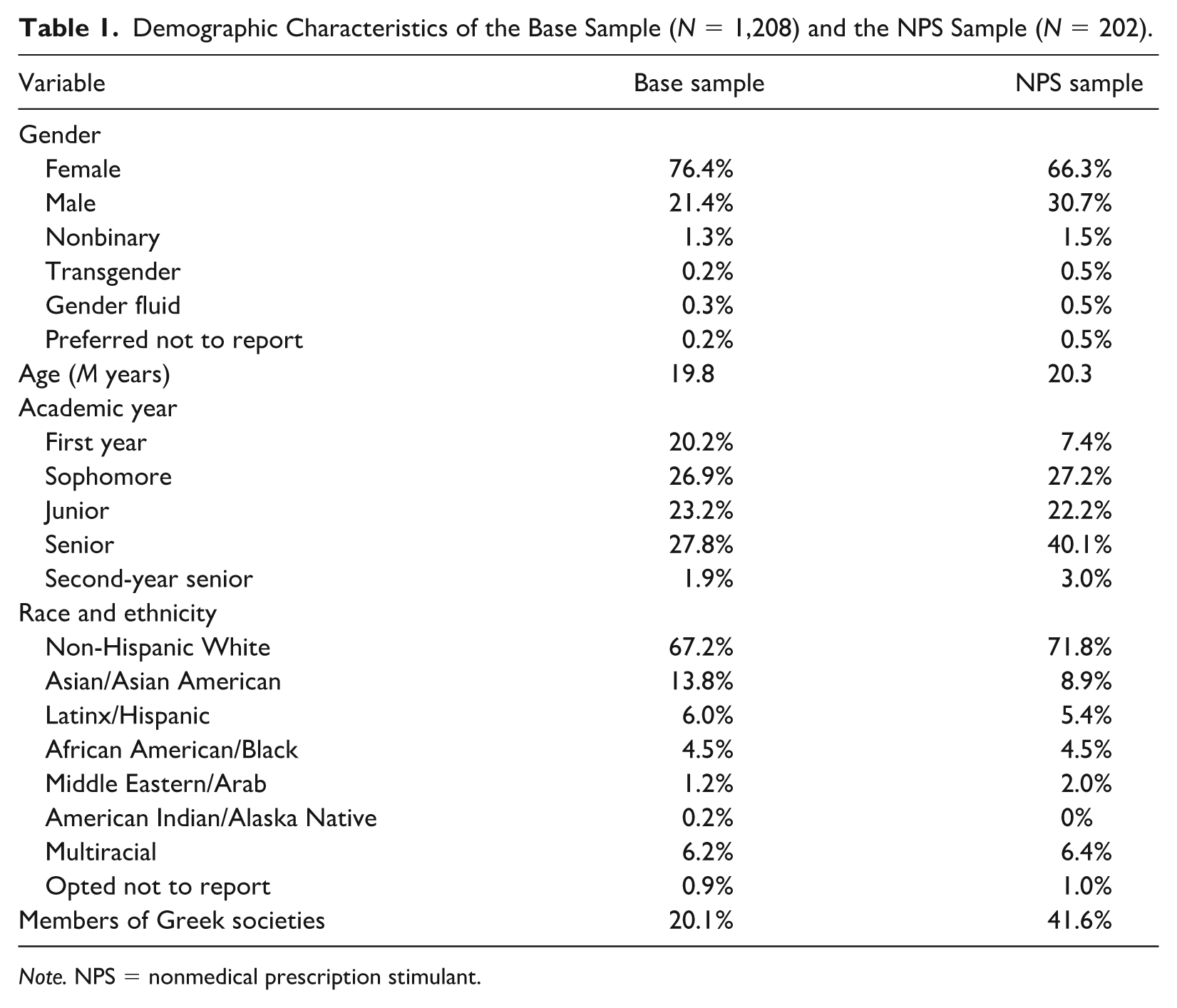
Among the 1,208 students with valid data, 141 (11.7%) reported that they had been prescribed stimulants by a doctor. Of the 1,067 without prescriptions, 202 (18.9%) reported having engaged in NPS use. Those students (N = 202) comprised the target NPS sample and completed other survey items. Gender, race, and other characteristics of the base sample and the target NPS sample appear in Table 1. As shown in the table, the NPS sample, in comparison with the base sample, tended to have higher percentages of men, seniors, Whites, and members of Greek societies.
Demographic Characteristics of the Base Sample (N = 1,208) and the NPS Sample (N = 202).
Note. NPS = nonmedical prescription stimulant.
Procedures
All survey and recruitment materials were approved by the local ethics board (protocol No. 19-2400), and all procedures were consistent with ethical standards of the American Psychological Association. Students were recruited through multiple methods, including email, paper flyers, social media, and word of mouth. Email was the primary mode of recruitment, and emails were distributed through listervs, such as college major listervs, as well as emails sent by instructors to classes. Recruitment scripts included information about the topic of the survey, the incentive, eligibility criteria, and a link or QR code to the survey.
Measures were administered via a Qualtrics survey. Students took the survey online at a time and location of their choice. No time limit was imposed. Participants were automatically routed through each section of the survey. First, students read a description of the study, including potential benefits and costs of taking the survey, and then indicated whether they gave their informed consent. If participants gave their consent, they were asked if they were a current undergraduate student at the participating university and their age. All ineligible participants (n = 36: those who were not currently undergraduates; those who were less than 18 years old) ended the survey without an opportunity to enter into the drawing. Eligible students proceeded to the demographic questions and then NPS questions. Students who reported that they had a medical prescription for a stimulant drug, and students who reported no prescription and also no NPS engagement were routed to the drawing registration page. Students who reported no prescription and who had used stimulant drugs completed additional survey measures (i.e., frequency of use, motives, experiences, guilt).
Every eligible participant (i.e., regardless of whether or not they had engaged in NPS) was routed to the drawing registration page at the end of their survey. This drawing registration page was a separate Qualtrics survey in which students entered their email addresses. The separation of the NPS and the drawing surveys allowed participants’ responses to remain anonymous, while enabling them to enter their email addresses into the drawing for a gift card. Four Amazon gift cards (1 × US$100, 3 × US$50) were awarded using Excel randomization to select the four drawing winners. Qualtrics software was coded to prevent students from participating and/or registering for the drawing multiple times.
Measures
Demographic and prescription measures
All eligible participants (i.e., the base sample; N = 1,208) answered demographic questions at the start of the survey. Students reported their ethnicity/race in a multiple-choice question that included the options Multiracial, African American/Black, Latinx/Hispanic, American Indian/Alaska Native, Asian/Asian American, European American/White, Middle Eastern/Arab, and prefer not to answer. Students identified their gender in a multiple-choice question that included the choices male, female, nonbinary, transgender, gender fluid, and prefer not to answer. Students indicated in a yes or no question whether they were a member of a Greek society. Year in the university was reported by selecting one of five options, the fifth of which was a second-year senior. Last, students indicated the number of times monthly that they consume four or more drinks in a single night. Possible choices were none, 1 to 2 times, 3 to 5 times, 6 to 8 times, and 9 or more times.
Next, after providing a definition of prescription stimulants, we asked participants to indicate if they had ever been prescribed a stimulant. If they answered yes, participants were routed to the drawing registration page. Students who had never been prescribed a stimulant were asked whether they had used a prescription stimulant. Those who had never used a prescription stimulant were routed to the drawing registration page. Students who reported that they had used such drugs (i.e., 202 NPS users, our target sample) were channeled to the main survey.
NPS use frequency and motivation
NPS users reported their frequency of lifetime use, selecting one of these five options: 1 to 3 times, 4 to 6 times, 7 to 10 times, 11 to 20 times, 21 or more times. NPS users also reported their motivations for use. Specifically, participants designated that they had engaged in NPS (a) as a study aid, (b) as a party drug, (c) about evenly split between study aid and party drug, or (d) other purpose. In addition, NPS users reported when they started NPS and which stimulants they had used. Adderall was reported as the most frequently used drug, with 174 of the 202 students (86.1%) reporting Adderall use, sometimes also naming an additional drug. Thirteen students (6.4%) did not name a drug, and the remaining 15 students (7.4%) named another drug (e.g., Vyvanse, Ritalin, and Concerta).
NPS experience
NPS users answered 10 questions about their subjective experiences while on the drug. This measure was developed for the present study. Using a 5-point rating scale (1 = strongly disagree to 5 = strongly agree), participants indicated agreement with statements about their subjective feelings (e.g., feeling energized, happier, confident in social/academic situations, more focused) when engaging in NPS use. Questions were phrased as, “When I take one of these drugs, I feel [more focused].” Items were entered into an exploratory factor analysis and alpha reliability analyses. Based on these analyses, one item (anxiety) was dropped, and the remaining item responses were aggregated into two subscales: a social benefit subscale and an academic benefit subscale. In the exploratory factor analysis, each of those items loaded on the appropriate scale with a loading of .65 or above, with loadings of less than .40 on the other scale. The social benefit subscale included the items happier, energized, excited, and confident in social situations (α = .86). The academic benefit subscale included five items: focused, motivated, able to study longer, able to perform better academically, and confident in academic situations (α = .90).
Guilt
In the final section of the survey, NPS users reported their experiences after the effects of the stimulants had worn off. Seven questions were adapted from the Guilt Inventory (Jones et al., 2000). We adapted the measure to specify NPS use (e.g., “I would have changed my decision to use the nonprescribed stimulant”). NPS users rated their agreement with each item (1 = strongly disagree to 5 = strongly agree). Item scores were averaged, with higher scores indicating greater guilt (α = .84).
Analyses
Descriptive analyses were conducted on frequency of NPS, then chi-square analyses were conducted to assess whether students in Greek societies were more likely than nonaffiliated students to report NPS use. For the chi-square analysis, we used the sample of 1,067 students (i.e., those who did not have a prescription), testing whether students in Greek societies were more likely than other students to report NPS use (H1a). A chi-square test was also used to test H1b, calculating the correspondence between NPS engagement (yes or no) and binge drinking behavior, again using the broader sample of 1,067 students.
Using the subsample of 202 NPS users, we conducted frequency counts to ascertain how many NPS users reported academic as compared with social motivation (H2). We then conducted analyses of variance (ANOVAs) using motivation category (academic, social) as the between-subjects variable and benefits scores as the dependent variable to test the hypothesis concerning students’ motivation for NPS use and their reported outcomes (H3). One ANOVA was conducted using academic benefits as the dependent variable, and a second was conducted using social benefits as the dependent variable. H4 (i.e., correspondence between reported frequency of NPS and guilt) was tested with an ANOVA with frequency of use categories as the between-subjects variable and guilt scores as the dependent variable.
Results
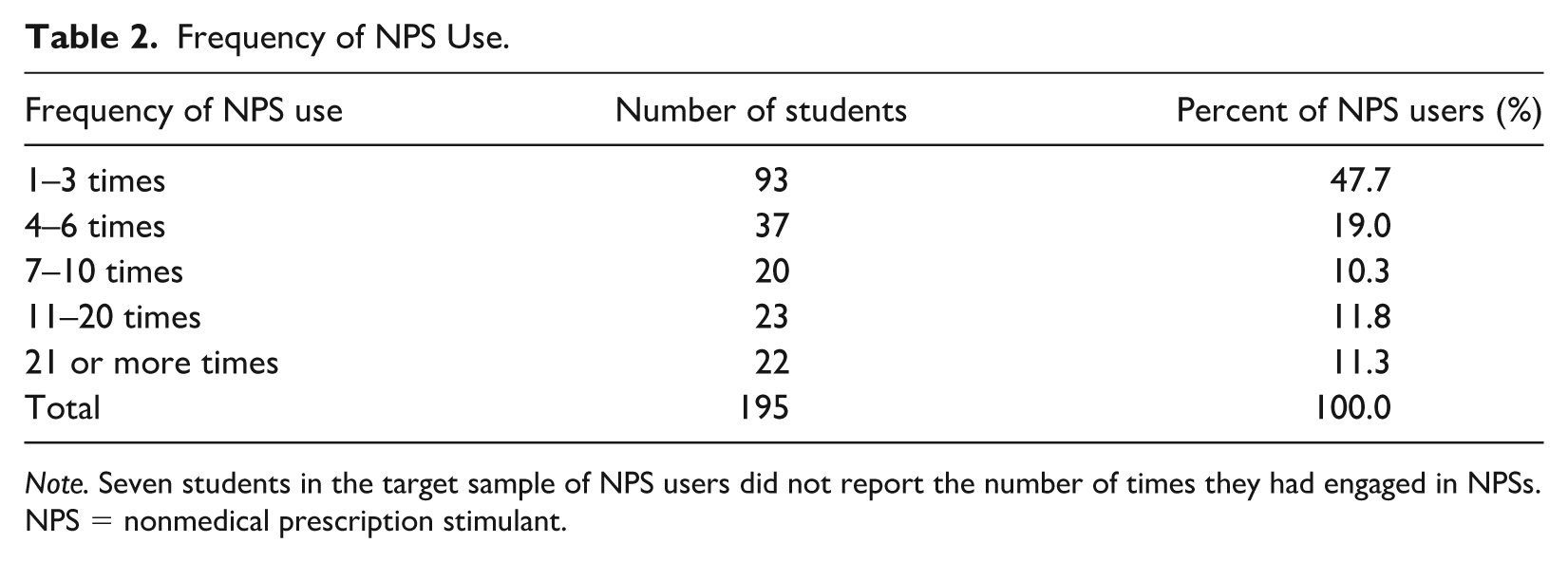
As stated above, 202 students, or 18.9% of nonprescribed participants, reported having used a prescription stimulant such as Adderall in their lifetime without holding a prescription for the drug. Most of those 202 students had used NPS 6 or fewer times. The majority of users reported that they engaged in NPS 1 to 3 times (47.7%) or 4 to 6 times (19.0%). Frequencies appear in Table 2.
Frequency of NPS Use.
Note. Seven students in the target sample of NPS users did not report the number of times they had engaged in NPSs. NPS = nonmedical prescription stimulant.
Greek Society Membership and Substance Use
According to H1a, students in social fraternities and sororities would be more likely to engage in NPS than non-Greek students. Because of the required comparison between users and abstainers, these analyses used the sample of 1,067 students who had never been prescribed a stimulant drug. A chi-square analysis comparing the frequencies of Greek-affiliated and non-Greek students who did and did not engage in NPS showed that a disproportionate number of students in a social fraternity or sorority also reported NPS use, χ2(1) = 79.21, p < .001. Members of Greek life were about 3 times more likely (40.8%) than their nonaffiliated peers (13.7%) to engage in NPS use. In addition, an ANOVA of Greek status and drinking behavior among the 202 NPS users showed that members of Greek life reported significantly more binge drinking than non-Greek users (MGreek = 3.5, SD = 1.04; Mnon-Greek = 2.6, SD = 1.06), F(1, 200) = 34.5, p < .001. Given the frequency categories used in this measure (1 = never, 2 = 1–2 times, 3 = 3–5 times, 4 = 6–8 times), average responses indicated that Greek life NPS users reported an average of between three and eight binge drinking episodes per month, whereas non-Greek peers reported an average of one to six episodes.
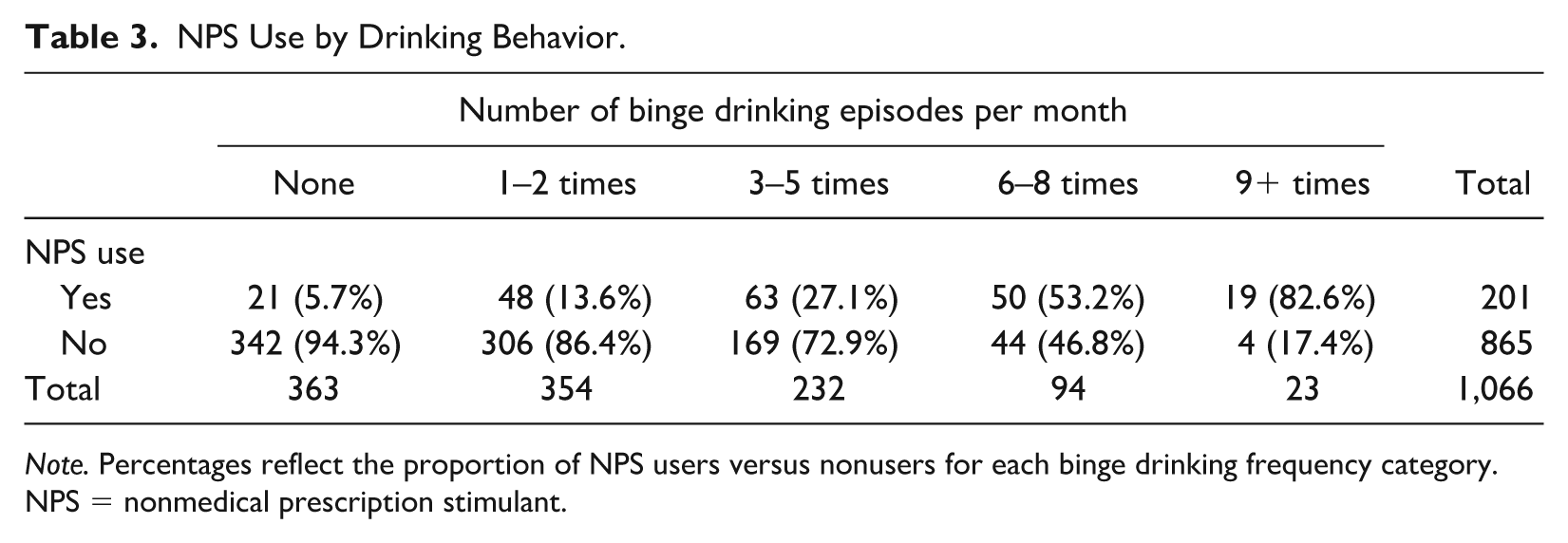
According to H1b, students who reported NPS would also report more frequent binge drinking. The hypothesis was supported: A chi-square analysis exploring the association between NPS use status (use; no use) and binge drinking (i.e., the number of times per month that students consumed four or more drinks) was significant, χ2(4) = 189.8, p < .001. As reported rates of binge drinking increased, the proportion of students reporting NPS also increased (see Table 3). For example, whereas only 5.7% of students who reported no binge drinking were NPS users, among the most-frequent binge drinkers (9 or more times per month), 82.6% also reported NPS use.
NPS Use by Drinking Behavior.
Note. Percentages reflect the proportion of NPS users versus nonusers for each binge drinking frequency category. NPS = nonmedical prescription stimulant.
Motivation for and Experiences Related to NPS Use
In H2, we predicted that a majority of NPS users would report academic goals and some would report social/recreational goals. Students overwhelmingly reported that they engaged in NPS use for academic purposes (77.9%, n = 152), rather than for recreational purposes (11.8%, n = 23), or for both reasons (8.7%, n = 17). A small percentage (1.5%, n = 3) of respondents reported that they engaged in NPS for “other” reason(s). Seven students did not respond to this question.
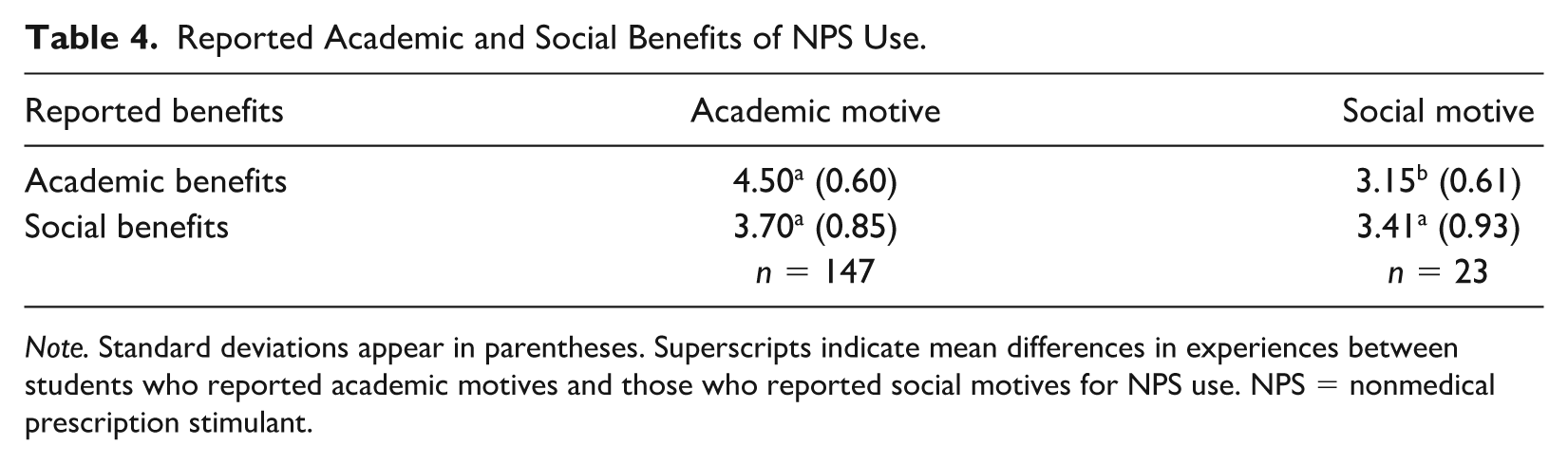
To examine motivation and reported NPS experiences, we conducted two ANOVAs comparing students who engaged in NPS use for academic versus recreational purposes, excluding respondents who selected “both” or “other” motivations. The between-subjects variable for these analyses was motive, comparing students who reported that they engaged in NPS primarily for academic benefits with students who reported recreational motives. The two groups were compared on reports of academic benefits in the first analysis, and their reports of social benefits were compared in the second. H3, that students’ motives would be related to their reported experiences, was partially supported. The two motivation groups differed in their ratings of the academic benefits, F(1, 167) = 97.0, p < .001. NPS users who reported that they engaged to enhance academic performance reported stronger agreement with academic benefits questions than NPS users who reported engaging for recreational purposes (see Table 4). 1 NPS users who reported academic motivation tended to agree or strongly agree that they experienced academic benefits associated with NPS use, whereas NPS users who reported recreational motives reported neutral beliefs regarding academic benefit items. However, the second ANOVA, which used social benefits as the dependent variable, was nonsignificant: Students who reported that they engaged in NPS for recreational purposes did not report social benefits at significantly higher rates than students who engaged in NPS use for academic purposes, F(1, 167) = 2.1, p > .05.
Reported Academic and Social Benefits of NPS Use.
Note. Standard deviations appear in parentheses. Superscripts indicate mean differences in experiences between students who reported academic motives and those who reported social motives for NPS use. NPS = nonmedical prescription stimulant.
Although the anxiety item was not included in either the academic or social benefit score, it offers insight into students’ experience while engaging in NPS use. Well over a third of students (38.9%) selected somewhat agree when asked whether they feel anxious when experiencing the effects of NPS use, and 11.9% selected strongly agree. Thus, more than half of our sample agreed that NPS use makes them feel anxious.
Guilt Among Frequent and Infrequent Users
In H4, we predicted that users who engaged in NPS use more frequently would report less guilt than users who reported infrequent use. To increase cell sizes, we combined students who reported having engaged in NPS use 4 to 6 times with those who reported 7 to 10 times, and we grouped those who reported 11 to 20 times with those who reported more than 20 experiences with NPS use. This procedure resulted in three groups: students who reported usage 1 to 3 times (n = 88), 4 to 10 times (n = 50), and 11 or more times (n = 43). An ANOVA comparing reported guilt of students in the three groups yielded a significant main effect, F(2, 178) = 7.15, p = .001. Although students tended to disagree, indicating little guilt, confidence intervals showed that frequent users disagreed more strongly with guilt items than students who reported NPS use 1 to 3 times (see Table 5).
Guilt by Frequency of NPS Use.
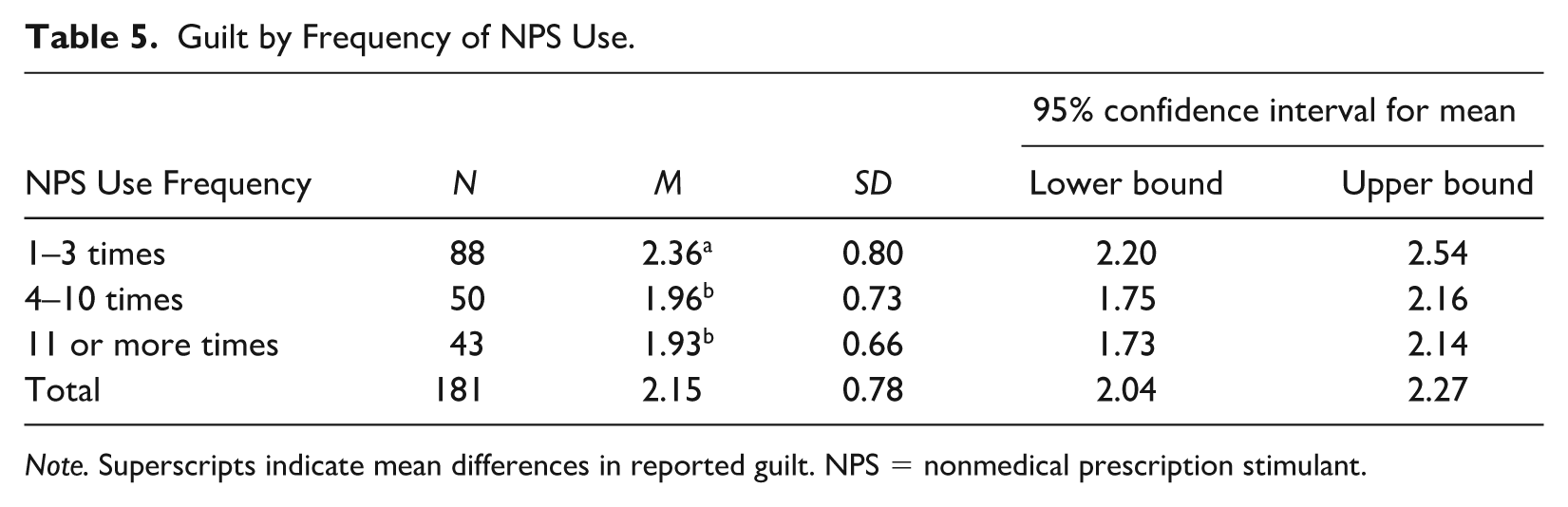
Note. Superscripts indicate mean differences in reported guilt. NPS = nonmedical prescription stimulant.
Discussion
Within our sample of 1,208 students on this public university campus, lifetime reported NPS use prevalence was 18.9% among students who had never been prescribed a stimulant. Reported NPS use was greater among members of Greek societies than among non-Greek affiliated students, and NPS use was positively related to binge drinking behavior. A majority of students reported academic motives for nonprescription stimulant use, and those students experienced cognitive benefits associated with use. Students generally reported low guilt regarding NPS use, and more frequent users reported less guilt than infrequent users. The positive relation between academic motivation and recalled experiences and the relation between frequency of use and guilt are novel findings that we hope will guide university administrators and health care officials in their responses to NPS on college campuses.
Prevalence and Frequency of NPS
Approximately 12% of the sample had been prescribed a stimulant medication, and of the remaining students with no prescription, 18.9% reported engaging in NPS use within their lifetime. Although this prevalence is higher than recently reported national rates, part of the discrepancy could be due to previous prevalence reports reflecting annual rather than lifetime use (Schulenberg et al., 2019). In this study, NPS use was not an addictive behavior for many students, as reported frequencies of use were generally low. More than 65% of NPS users reported engaging in NPS 6 or fewer times in their lifetimes, with 47.7% of students reporting using only 1 to 3 times.
Greek Affiliation and Substance Use in NPS Users
The analysis of the relation between Greek membership and NPS parallels past research showing that Greek members engage in NPS at higher rates than their nonaffiliated peers (DeSantis et al., 2008; McCabe et al., 2005; Rabiner et al., 2010). The relation between Greek membership and NPS was stronger in our sample than in previous research: At this southeastern university, students in Greek life were 3 times more likely to report NPS use than their nonaffiliated peers, whereas a geographically varied sample using 2001 data showed students in Greek life to be twice as likely to engage in NPS use (McCabe et al., 2005). Three possible explanations for why Greek members are more likely to engage in NPS use than nonaffiliated students are Greek social norms, access, and the drinking and party culture of Greek life.
Social norms in fraternities and sororities may normalize and promote NPS use, such that members of Greek institutions feel a pressure to conform to the use of prescription stimulants. Because of wider usage, there may be a decrease in the stigmatization of the illegal behavior among Greek members. This pressure to conform, combined with a decrease in stigmatization of the behavior, could lead students to engage in NPS use. Social norms are a powerful force for behavior change: Studies have shown that social norms are a contributing cause for substance use as well as a potential effective mechanism for institutions to combat it (Pino et al., 2017).
A second explanation is that Greek members may have greater access to the drugs than nonaffiliated students. Increased access for Greek members includes both physical proximity to the drug and financial freedom. Because a higher proportion of Greek members engage in NPS use, Greek members are more likely than nonaffiliated students to have physical access to the drugs. In addition, Greek fraternities and sororities typically require their members to pay financial dues every semester. Although some Greek members may be on scholarship, many Greek members may have more disposable income than nonaffiliated students, allowing them to purchase prescription stimulants without prescriptions.
Finally, the drinking and party culture of social sororities and fraternities likely influences NPS use. Among the total sample of 1,208 participants, on average, Greek members reported that they consumed four or more drinks in a single night nearly 3 to 6 times per month (M = 2.80), whereas non-Greek students reported an average of one to two binge drinking episodes per month (M = 1.93). Binge drinking rates were higher among the 202 students who engaged in NPS use. Our results are consistent with past findings that members of Greek societies binge drink more than their nonaffiliated peers (e.g., McCabe et al., 2018).
Past research has also shown that substance use is correlated with NPS use (Rabiner et al., 2010). This study extends previous research by showing the relation between frequency of binge drinking and NPS use behavior. In the present sample, only 5.8% of people who reported never binge drinking had engaged in NPS use, whereas 82.6% of people who reported binge drinking 9 times per month had engaged in NPS use. Thus, the “work hard, play hard” culture of social fraternities likely increases the prevalence of NPS use among Greek-affiliated students.
Academic Motivation for and Experience of NPS Use
Our results regarding students’ motivations for NPS use are consistent with past research, showing that students typically engage in NPS use to improve their academic performance (Arria et al., 2018; Hanson et al., 2013; Ross et al., 2018; Teter et al., 2010). Indeed, in one recent study, NPS use was most common among students who intended to pursue postgraduate education and who had experienced some academic impediments such as time on the internet interfering with studying (Norman & Ford, 2019). In this study, more than 75% of students reported that they used NPS for academic reasons, and only 11.9% reported that they used NPS primarily for recreational purposes. It is possible that our sample is skewed with academically motivated students because the public university in which participants were enrolled is a highly competitive institution. Future research should use geographically varied samples with universities of varying prestige to assess the external validity of this finding.
The analysis of the relation between reported motives and reported experiences supported our H3, showing that students’ reported experiences aligned with their stated goals. However, the relation was only significant for academic benefits, not social benefits. This relation between NPS motives and experience had not been explored in previous research, and it offers insight into a potential positive feedback loop that increases the likelihood of repeated use. Our data show that many students decided to engage in NPS use to improve academic performance, and when they reflected on their experience with NPS use, they recalled positive academic effects of drug use. Despite empirical evidence that NPS use has no cognitive benefits, the belief that NPS use has positive effects on academic performance probably positively reinforces students’ beliefs that their decision to use NPS was correct, creating a positive feedback loop.
Whether cognitive dissonance, goal activation, or a combination of the two led to the consistency between NPS use motives and reported experiences, this relation can create a positive feedback loop that could lead to students’ continued use of stimulants over time. Administrators who are attempting to decrease the prevalence of NPS use on their campuses should consider strategies to activate goal-inconsistent concepts and memories to decrease the perceived effectiveness of NPS use. For example, administrators could run an awareness campaign about the lack of effectiveness of NPS use for enhancing GPAs and general cognitive performance (Arria et al., 2017; I. Ilieva et al., 2013). Increases in students’ awareness that their perception of NPS use effectiveness may be inaccurate should lower their motivation to engage in NPS use.
Although the overwhelming majority of students reported academic benefits, because research has shown no gains in GPA for NPS users, an exploration of NPS as a crutch is warranted (Arria et al., 2017). NPS users report higher frequencies of binge drinking than abstainers, and therefore it is possible that users engage in NPSs to compensate for lost study time rather than to gain an academic edge. In other words, students may be using stimulants as study aids to prevent their GPAs from dropping, rather than to improve their GPAs. If so, students’ perceptions of the academic benefits of NPS use might be more accurate than we have previously stated. Rather than expecting academic improvement from NPS use, users may simply be hoping to maintain their GPAs. Arria et al. (2017) found no significant change in the GPAs of NPS users, which could illustrate students in that study who used NPS as a crutch accomplished their goals.
Social Benefits of NPS
Although students who reported academic motives for NPS use reported greater academic benefits than students who reported social motives, social benefits did not differ across the two groups. This result may have emerged because of limited statistical power: Only 23 students indicated that their primary motive for NPS use was recreation. It is also possible that if the student’s motive was recreation, experiences of NPS use could have been confounded with other recreational activities, including use of other substances such as marijuana and alcohol, or linked to settings such as parties and bars. These other substances or events could have decreased students’ attributions of NPS use as the sole contributor to the social experience.
Although the anxiety item was unrelated to the academic and social benefit scales, it still offers insight into students’ subjective experiences of NPS use. Half of the NPS users selected strongly agree or somewhat agree when asked if they felt anxious while engaging in NPS, and an additional 19.6% selected neither agree nor disagree. Thus, NPS use causes many users to feel anxious, likely adding to their existing anxiety about their academic goals. In a successful intervention program aimed to reduce NPS use on a college campus, LaBelle et al. (2020) included information that misuse of Adderall can lead to paranoia and hostile behavior. Increasing student awareness that NPS makes at least 50% of users feel anxious could dissuade students from using prescription stimulants, especially if this information is paired with the message that anxiety can impair academic performance.
Guilt Among NPS Users
As we predicted in H4, students generally reported that they did not feel guilty about engaging in NPS use, with the average response corresponding to somewhat disagree on questions about guilt (M = 2.15, SD = 0.78). Our data parallel the past findings about low guilt among NPS users (DeSantis et al., 2008) and suggest that activating feelings of guilt may not be a successful intervention for administrators. As also anticipated in H4, students who reported more frequent NPS use also reported less guilt. This finding extended previous research showing that students who engaged in NPS use had significantly lower guilt expectancies than abstaining students (Holt & Looby, 2018).
Similar to the congruence between students’ academic motivation and their reported academic benefits, the relation between guilt and NPS use frequency might be explained by cognitive dissonance theory. Students would experience cognitive dissonance, and therefore discomfort, if they engaged in NPS use frequently and also felt guilty about the drug use. Namely, users who feel highly guilty about engaging in NPS are less likely to continue use because of incongruence between attitudes and behavior. The negative relation between frequency of use and guilt could be driven either by prior behavior change (i.e., higher guilt discouraged use in the past) or belief change (users who have engaged in more frequent use are motivated to report a lack of guilt). Alternatively, students might feel little guilt because they have justified their NPS use to themselves through believing it enhances their academic performance, or for other reasons (e.g., “everyone does it”).
Study Limitations and Directions for Future Research
A significant limitation of this study is its external validity. The study sample was limited in its geographic generalizability because the sample was recruited from a single public university in southeastern United States. Members of racial minority groups were underrepresented in our sample and should be recruited in future research. In addition, the overwhelming majority of respondents identified as females (75.9%), and neither the racial representation nor the class years of students in the sample were representative of university students nationwide. Prior research has shown that men are more likely than women to engage in NPS use (e.g., Teter et al., 2005), and therefore rates in this study were most likely an underestimate of rates nationwide. The prevalence of NPS use in this study may also be underreported because we did not include students who have a stimulant prescription and misuse their prescription stimulants by taking stimulants more frequently or in larger doses than prescribed. In addition, the prevalence may be underreported because we did not include students who received a prescription during childhood and who use stimulants nonmedically in college.
A major limitation was the use of data collected at a single time point from single reporters. Longitudinal research would allow researchers and university administrators to understand how students’ NPS use, experiences, and affect change over time, and independent measures of students’ experiences would strengthen the validity of findings. Finally, future research should examine which cognitive process—dissonance reduction or memory activation—shapes the relation we found between motives and reported experiences. A better understanding of students’ experiences and the cognitive processes that lead them to NPS use could inform more precise and targeted mitigation strategies for university administrators.
Footnotes
Authors’ Note
Data collection was supported by a David Bray Peele Memorial Research Award from the Department of Psychology and Neuroscience, University of North Carolina at Chapel Hill, awarded to Carley Cook.
Declaration of Conflicting Interests
The author(s) declared no potential conflicts of interest with respect to the research, authorship, and/or publication of this article.
Funding
The author(s) received no financial support for the research, authorship, and/or publication of this article.
