



Abstract
Hallucinogenic new psychoactive substances have been rapidly emerging due to the increasing use of the Internet as a marketplace and source of information. This study explores hallucinogenic new psychoactive substances’ profile, effects and toxicity from the perspectives of e-psychonauts by conducting content analysis of online discussion forums. Qualitative content analysis was applied to threads extracted from online discussion forums. Each thread was coded carefully, and similar codes were grouped into sub-themes and themes respectively. The results showed four main themes related to users’ characteristics, hallucinogenic new psychoactive substances profile, effects and toxicity. The majority of users in this study were men in the age range of 18–25 years old. The main effects sought were stimulant/hallucinogenic effects; yet neurological and cardiovascular toxicity were frequently reported. The research found that online discussion forums offered a rich source of information as they provided a safe space for truthful experience reports without fear of legal consequence for e-psychonauts.
Keywords
Introduction
New psychoactive substances (NPS) comprise novel derivatives of classical drugs of abuse that impose a public health threat, and that are not controlled by the 1961 Single Convention on Narcotic Drugs or the 1971 Convention on Psychotropic Substances (Shafi et al., 2020). Classical drugs of abuse include the internationally controlled drugs e.g. amfetamine, cocaine and lysergic acid diethylamide (EMCDDA, 2022). Increase in prevalence of NPS has been linked to several factors including low purity of classical drugs and increased use of the Internet. According to the United Nations Office for Drugs and Crime (UNODC), 1230 NPS have been reported in 131 countries as of November 2023 (UNODC, 2023).
Hallucinogenic NPS (HNPS) are synthetically produced substances designed to mimic effects of classic hallucinogens, by interaction with the serotonergic, dopaminergic and adrenergic systems (Nikolaou et al., 2015). They are typically divided into three classes: lysergamides, tryptamines and phenethylamines (Baumeister et al., 2015); where phenethylamines as the most prevalent class (Mallaroni et al., 2022; Palamar et al., 2016; Palamar & Le, 2019). Phenethylamines have both stimulant and hallucinogenic properties (Cocchi et al., 2020; Miliano et al., 2016), and can present different effects based on their structural variations (Halberstadt, 2015; Nelson & Bryant, 2014). Their hallucinogenic action is the result of agonism on specific serotonin receptors (5-HT2A,B,C) (Eshleman et al., 2018; Herian et al., 2019).
2C series drugs are ring-substituted phenethylamines that exhibit affinity to serotonin receptors, and act as agonist or antagonists to receptor subtypes (Maurer, 2010; Villalobos et al., 2004). NBOMe and NBOH compounds are both N-benzylated derivatives of the 2C family, with NBOMe drugs bearing a methoxy group and NBOH drugs bearing a hydroxy group (de Barros et al., 2021; Potts et al., 2022; Herian et al., 2019). The addition of an N-benzyl group shows a significant increase affinity to 5-HT2A receptors (Eshleman et al., 2018; Herian et al., 2019, 2020), resulting in NBOMe and NBOH compounds being much more potent than their 2C counterparts.
Recently, Internet forums offered valuable information on individuals’ attitude and authentic experience of drugs (Coombs, 2023; Shah et al., 2020). Research have shown that people were more honest on social media and Internet forums where they could voice their opinion (Shah et al., 2020). This made online discussion forums an ideal place to evaluate HNPS use. Previous research has explored the factors surrounding the use of NPS by means of online discussion forums but on a broader scale of all classes of NPS (Rhumorbarbe et al., 2019; Van Hout & Hearne, 2017).
Consequently, this study builds on the findings of previous studies in determining the profile, effects and toxicity of HNPS from online discussion forums via qualitative content analysis. The study used four different online discussion forums to gain perspectives on uses, effects and toxicities linked to HNPS. It enabled gaining insights into e-psychonauts’ honest opinions and attitudes towards HNPS.
Methods
Study Design and Settings
The present study involved qualitative retrospective analysis of online discussion forums regarding e-psychonauts experience of hallucinogenic NPS. The retrospective approach enabled understanding the real views of e-psychonauts in non-intrusive settings minimising any ethical implications. Hence, extraction of data was made in a covert way with no intervention from the researcher. In addition, the qualitative analysis allowed in-depth understanding of e-psychonauts’ personal insights and perceptions of hallucinogens’ use (Moser & Korstjens, 2017). This allowed the researchers to have access to information regarding authentic experience of the population studies that would otherwise not be accessible due to legal issues surrounding NPS use and stigma against drug users (Soussan et al., 2018). Stigma against NPS users’ is consistent across countries regardless of NPS legal status and that also acts as a barrier for individuals sharing information about their drug use (Douglass et al., 2023).
Data Collection
Data were collected between November 2022 and November 2023 from four online discussion forums being: Drug Forum, Hip Forums, Bluelight and Erowid. The forums were open access and did not require membership to view their content. Hence no login was made to any of the forums to extract information.
Search terms used in these forums included: ‘e-psychonaut’ OR ‘e-psychonauts’ AND ‘synthetic hallucinogen’ OR ‘hallucinogen new psychoactive substance’ OR ‘hallucinogen novel psychoactive substance’ OR ‘2C’ OR ‘NBOME’ OR ‘NBOH’ AND ‘experience’.
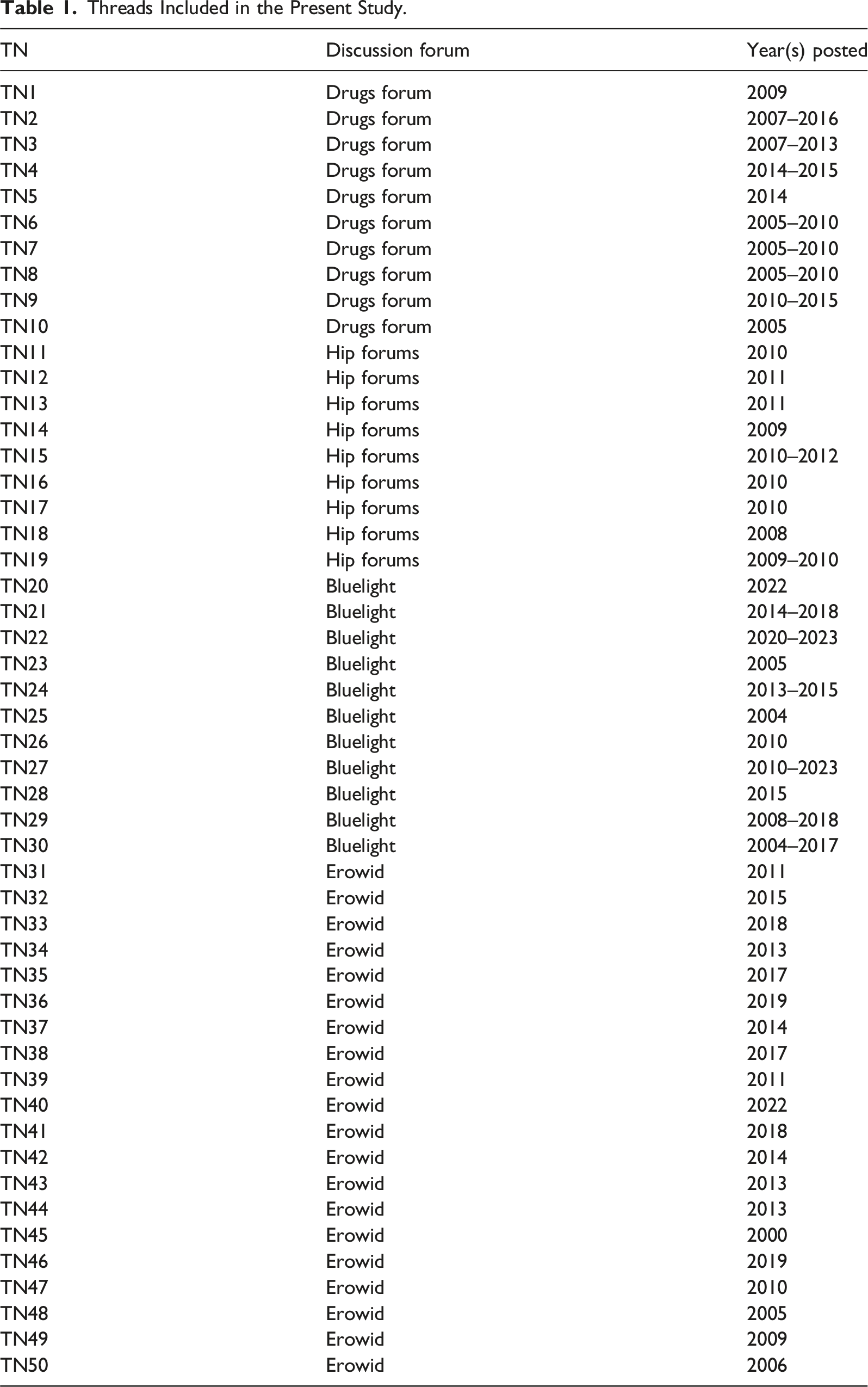
Threads Included in the Present Study.
Data Analysis
PDF files were imported into NVivo for Mac software where thematic content analysis was applied. Content analysis allowed to understand patterns and themes among the determined posts (Neuendorf, 2017). The standards for reporting qualitative research (SRQR) were applied (Appendix I). In this respect thread contents were carefully read and re-read by two independent researchers (RM and SA), explained then coded into subthemes. Related subthemes were then grouped into themes and the end point of the study was determined when no further themes emerged and thus saturation was reached. Then both researchers compared their coding, and any disagreement was resolved via discussion. Post analysis, themes, sub-themes and quotations were organised into four overarching themes related to users’ characteristics, hallucinogenic NPS profile, desired effects and toxicity. The threads that were coded under these themes were re-read several times to make sure nothing was missed. Then codes were summarised in tables for each subtheme.
Data Validation
For determining inter-rater reliability, threads were sent to a third researcher (AA) who evaluated them. High level of agreement was achieved with inter-rater rater reliability of 95%. The minor disagreement obtained (below 5%) was resolved by discussion among the three researchers. Moreover, the information in the threads were validated by matching the findings against clinical reviews on hallucinogenic NPS and that confirmed the accuracy of the findings.
Results
Thematic analysis yielded 50 relevant threads with 132 subthreads. These threads/subthreads were posted between 2000 and 2023. In this respect, 35 threads were posted over one year only, and 15 threads were posted over multiple years (Table 1). The latter 15 included threads published over two years (TN4 and TN19), three years (TN15), five years (TN21), six years (TN6, TN7, TN8 and TN9), seven years (TN3), 10 years (TN2), 11 years (TN29) and 14 years (TN27 and TN30). When the years subthreads posted were evaluated, the time frame of 2011–2015 (n = 49) had the highest number of posts followed by 2006–2010 (n = 44) (Figure 1). Yet this number decreased from 2016 onwards where 2016 was the year of introduction of the NPS Act. It is worthmentioning that this number expressed the degree e-psychonauts have posted on the evaluated discussion forum and did not reflect drug use among e-psychonauts. This could be linked to the stigma associated with using illegal drugs from 2016 onwards that held e-psychonauts from reported drug use. Number of subthreads posted between 2000 and 2023.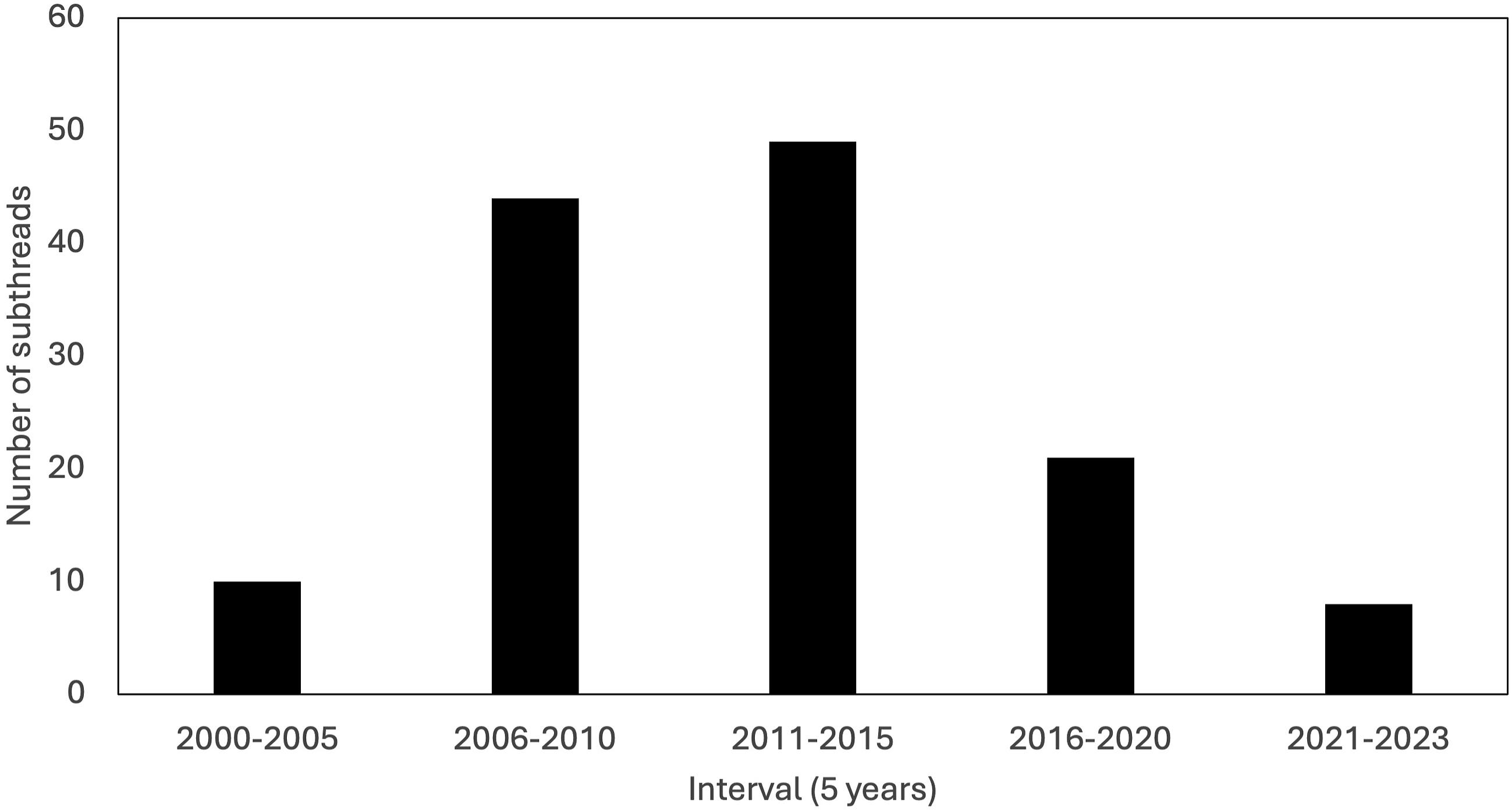
From these threads/subthreads, four main themes were reported by 837 e-psychonauts and included: HNPS prevalence; modalities of intake; pharmacological effects and toxicity.
Users’ Characteristics
Reported Characteristics of e-Psychonauts Included in the Study.
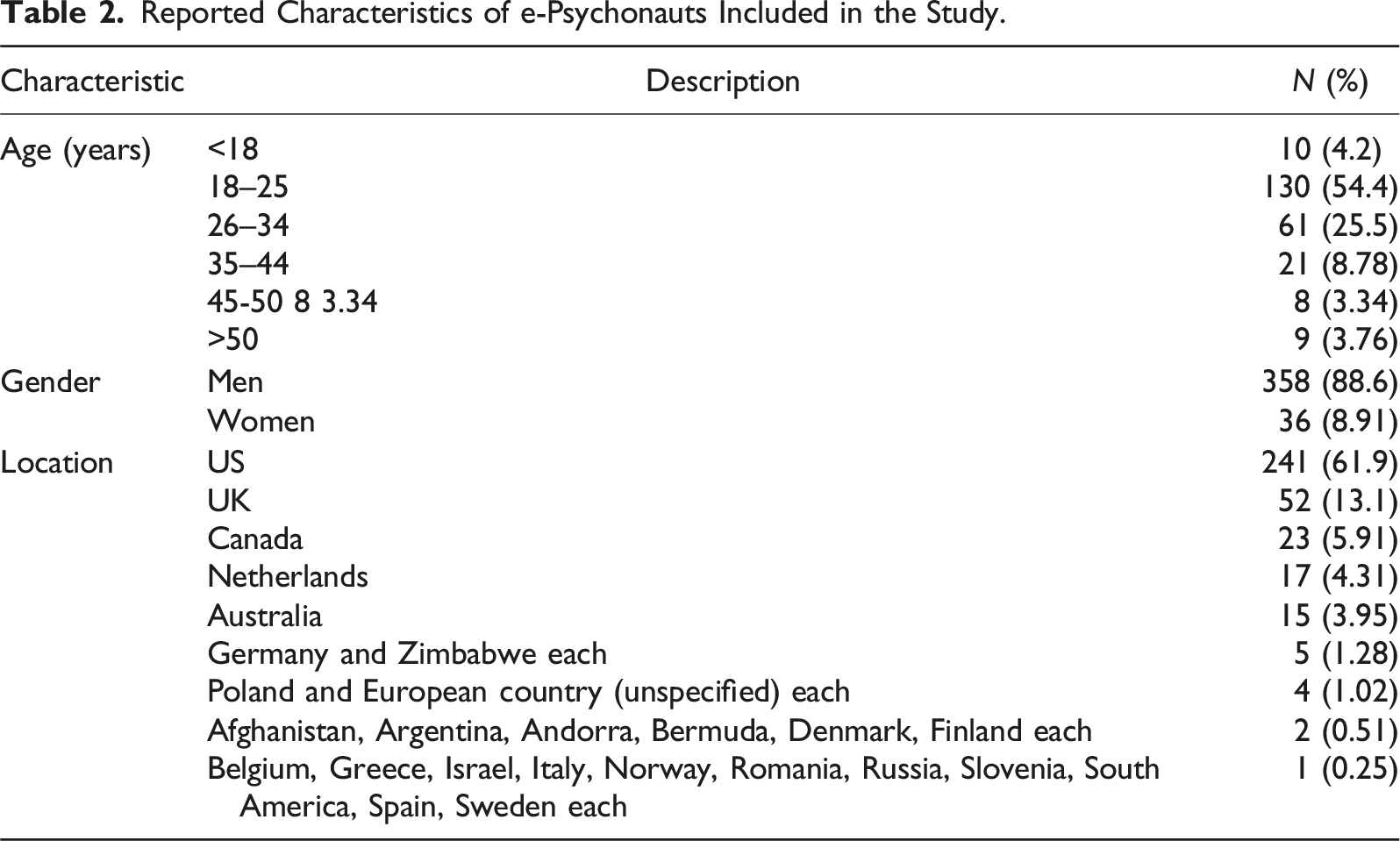
Regarding gender, 358 (90.9%) out of the 839 e-psychonauts reported their gender as men, 36 (9.13%) reported their gender as women and the remaining 475 (56.6%) did not report their gender. The median (IQR) age of the men and women who reported their gender were 25 (20–32) and 24 (21–27) respectively.
Regarding location, 389 (46.5%) of the 839 e-psychonauts reported their location with the US being the most reported location and was reported by 241 (61.9%) of e-psychonauts. This was followed by the UK, Canada, Netherland and Australia that were reported by 51 (13.1%), 23 (5.91%), 17 (4.37%) and 15 (3.86%) respectively. Only five (1.28%) individuals reported their location in each of Germany and Zimbabwe. Four were reported in each of Poland or Europe (unspecified country). In addition, two e-psychonauts were reported in each of Afghanistan, Argentina, Andorra, Bermuda, Denmark or Finland. Moreover, only one e-psychonaut was reported in each of the following countries: Belgium, Greece, Israel, Italy, Norway, Russia, Slovenia, South American, Spain and Sweden.
Profile of HNPS
HNPS reported were all phenethylamine derivatives and include three types of derivatives: 2C-series, NBOMe and NBOH derivatives. In this sense, four sub-themes emerged and were HNPS type, modality of intake, dose and multidrug use.
HNPS Derivatives Reported in the Study.
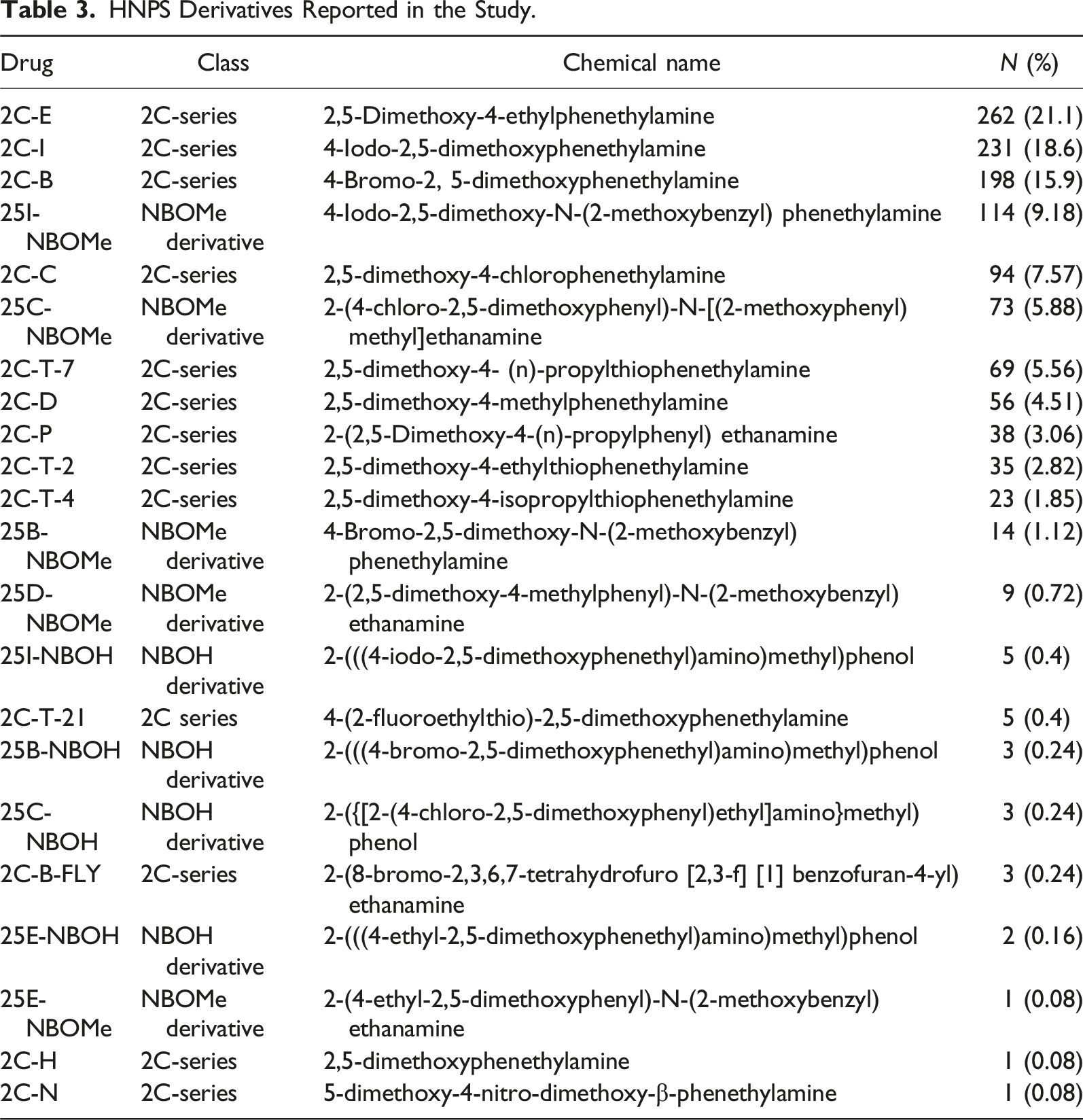
For 2C-series derivatives (n = 13), 2C-E was the most popular derivative reported on 262 (25.8%) occasions. This was followed by 2C-I, 2C-B and 2C-C that were reported by 231 (22.7%), 198 (19.5%) and 94 (9.25%) respectively. In addition, 2C-T-7 was stated on 69 (6.79%) occasions, followed by 2C-D (n = 56, 5.51%) and 2C-P (n = 38, 3.74%). Also, 35 (3.44%) reports were made of 2C-T-2 and 23 (2.26%) made of 2C-T-4.
Five NBOMe series derivatives were identified through 211 reports. 25I-NBOMe was the most prominent, with 114 (54.0%) mentions, followed by 25C-NBOMe (n = 73, 34.6%) and 25B-NBOMe (n = 14, 6.64%). In addition, 25D-NBOMe was mentioned nine times and 25E-NBOMe was only mentioned once.
Four NBOH series derivatives were reported on 13 occasions of which 25I-NBOH was reported by five (38.5%) individuals. 25B-NBOH and 25C-NBOH were both reported by three (23.1%) individuals, while only two (15.4%) reported 25E-NBOH.
For modality of intake, the main sub-themes that emerged were related to route of administration (n = 491), dosage (n = 913) and multi-drug use (n = 304). The route of administration was reported by 491 (58.7%) of the 837 e-psychonauts. Out of these 491, 166 (33.8%) reported insufflation, 150 (30.5%) reported oral intake and 56 (11.4%) reported rectal intake. Other routes of intake were less often reported. These included sublingual, buccal, smoking, intravenous and intramuscular, and were reported by 49 (9.97%), 31 (6.31%), 24 (4.88%), 11 (2.24%) and 4 (0.81%) respectively (Figure 2). Number of derivatives reported for each route of administration.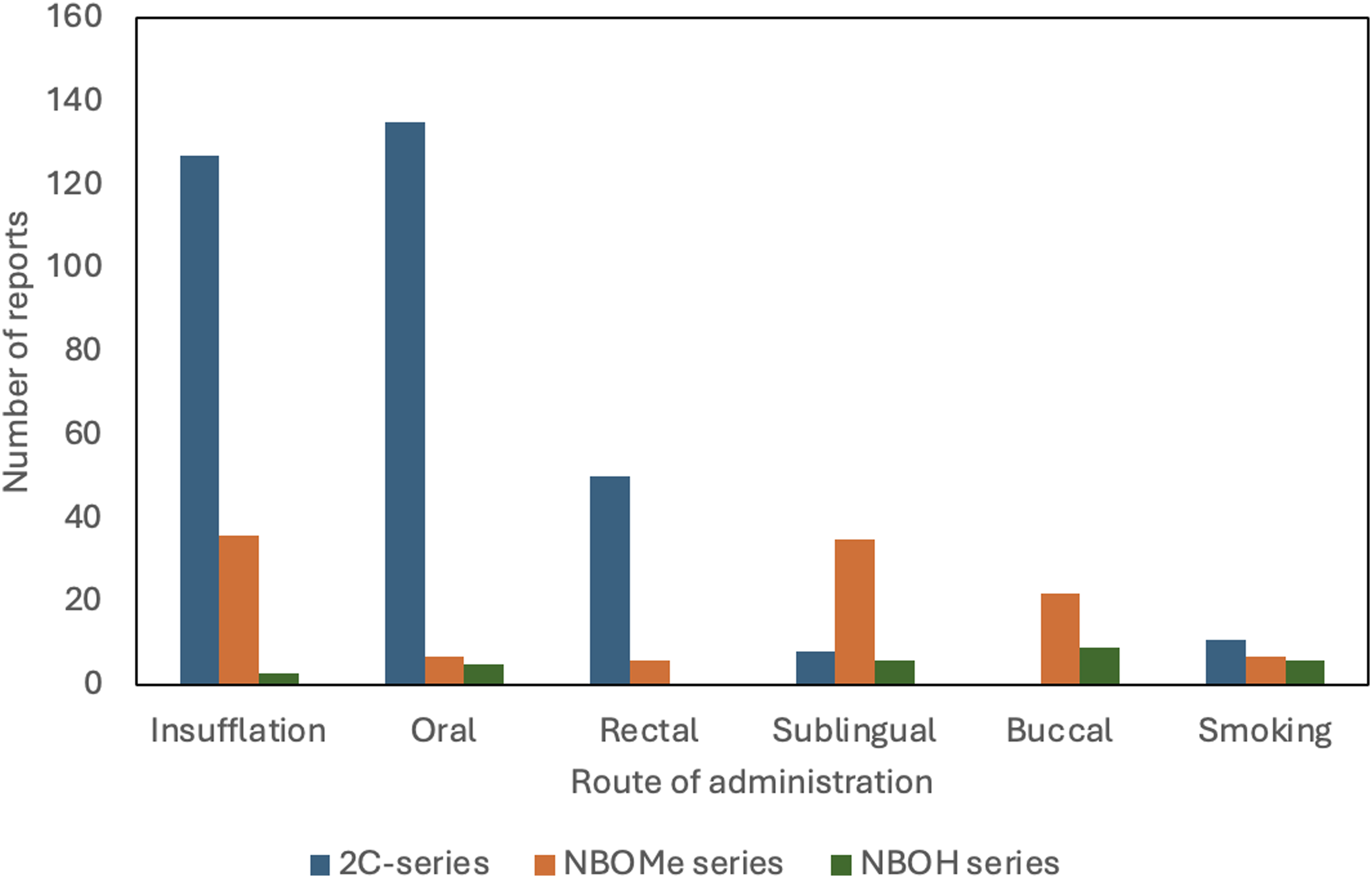
Insufflation was described as “snorting” or “sniffing” for liquids (in water or alcohol) and as “lines” or “bumps” for solids (powders). Insufflation was predominantly reported by users of 2C series of drugs (n = 123, 74.1%). In this respect, users have chosen this route as it gave faster onset and increased intensity of effects when compared to other routes of administration. One user reported: “Snorting it makes it hit you quicker and harder. The peak is way more intense than eating it.”
Likewise, the oral route was most commonly reported for 2C-series and less common for NBOMe and NBOH series. Oral route intake involved either dissolving the drug in liquid prior to intake, wrapping the drug in a paper prior to swallowing or direct swallowing of the capsule or tablet. 2C-E, 2C-D and 2C-I were the most popular drugs taken via rectal route and were reported by 30 users. Nonetheless, 25C-NBOMe (n = 18, 36.78%) and 25I-NBOMe (n = 14, 28.6%) were the most predominant drugs taken sublingually. Sublingual doses ranged from 200 μg to 2500 μg. In addition, inhalation/smoking was reported for 2C-E (n = 8, 33.3%) and 25E-NBOH that were inhaled using a pipe or foil or wrapped in cigarette paper prior to smoking. 25I-NBOMe (n = 5, 45.5%) and 2C-B (n = 4, 36.3%) were also stated as taken intravenously by users; however, only 2C-I was reported as take intramuscular.
Regarding the dosage of drugs reported, 913 doses were reported by 837 e-psychonauts and that indicated that certain e-psychonauts reported more than one dose of a drug. In this sense, 76 e-psychonauts reported multiple doses. For instance, one e-psychonaut reported different doses for 2C-series: “I’ve tried 30, 20, and 5 mg doses” (Thread 18 Page 2)
The most frequently reported doses were reported for 2C-series derivatives and were 20 mg (n = 74, 8.1%); followed by 25 mg (n = 59, 6.46%) and 10 mg (n = 55, 6.02%) respectively. Moreover, 15 mg and 30 mg doses were reported by 43 (4.7%) and 42 (4.6%) e-psychonauts using 2C-series. On the other hand, doses for NBOMe and NBOHe derivatives were under-reported and where reported around 0.1–0.3 mg were stated.
Multidrug use was reported when hallucinogenic NPS intake was combined with other drugs. The topic five drugs/drug classes used in combination with hallucinogenic NPS were cannabis/cannabinoids, alcohol, MDMA, ketamine and LSD, and were reported by 117 (38.7%), 32 (10.6%), 20 (6.62%), 13 (4.31%) and 11 (3.64%) respectively. All the remaining drugs were reported by less than 10% of e-psychonauts.
Desired Effects of Hallucinogenic NPS
Five sub-themes emerged under the desired effects of hallucinogenic NPS and included: hallucinogenic (n = 1169, 52%), stimulant (n = 536, 23.9%), psychological (n = 363, 16.2%), other effects (n = 278, 7.92%).
Reported hallucinogenic effects included open eye visuals (n = 794), closed eye visuals (n = 125), altered headspace (n = 108), colour enhancement (n = 80) and auditory hallucinations (n = 62). Auditory hallucinations changed users’ perceptions and were described as unique: “I call this the ‘life drug’. It’s quite hard to put into words, but it’s very unique. Everything is different. It makes me see the world in a different way, but I feel like it simply opens doors in your brain.” (Thread 18 Page 1)
Stimulant effects reported were not specified on 211 instances; but where specified the following effects were described: euphoria (n = 163), music appreciation (n = 121), increased sociability (n = 32) and increased creativity (n = 9).
Psychological effects reported were elevated mood (n = 119, 32.8%), introspection (n = 86, 23.7%), empathogenic qualities (n = 65, 17.9%), contentment (n = 36, 9.91), entheogen (n = 26, 7.16%), synthesesia (n = 22, 6.06%), confidence (n = 4, 1.1%), mysticism (n = 3, 0.82%) and hedonism (n = 2, 0.55%).
Other effects reported were enhanced sensory perception (n = 87, 31.3%), aphrodisiac (n = 74, 26.6%), afterglow (n = 8, 2.87%), sedation (n = 6, 2.16%), analgesia (n = 2, 0.72%) and coenesthesia (n = 1, 0.36%).
Toxicity Linked to Hallucinogenic NPS
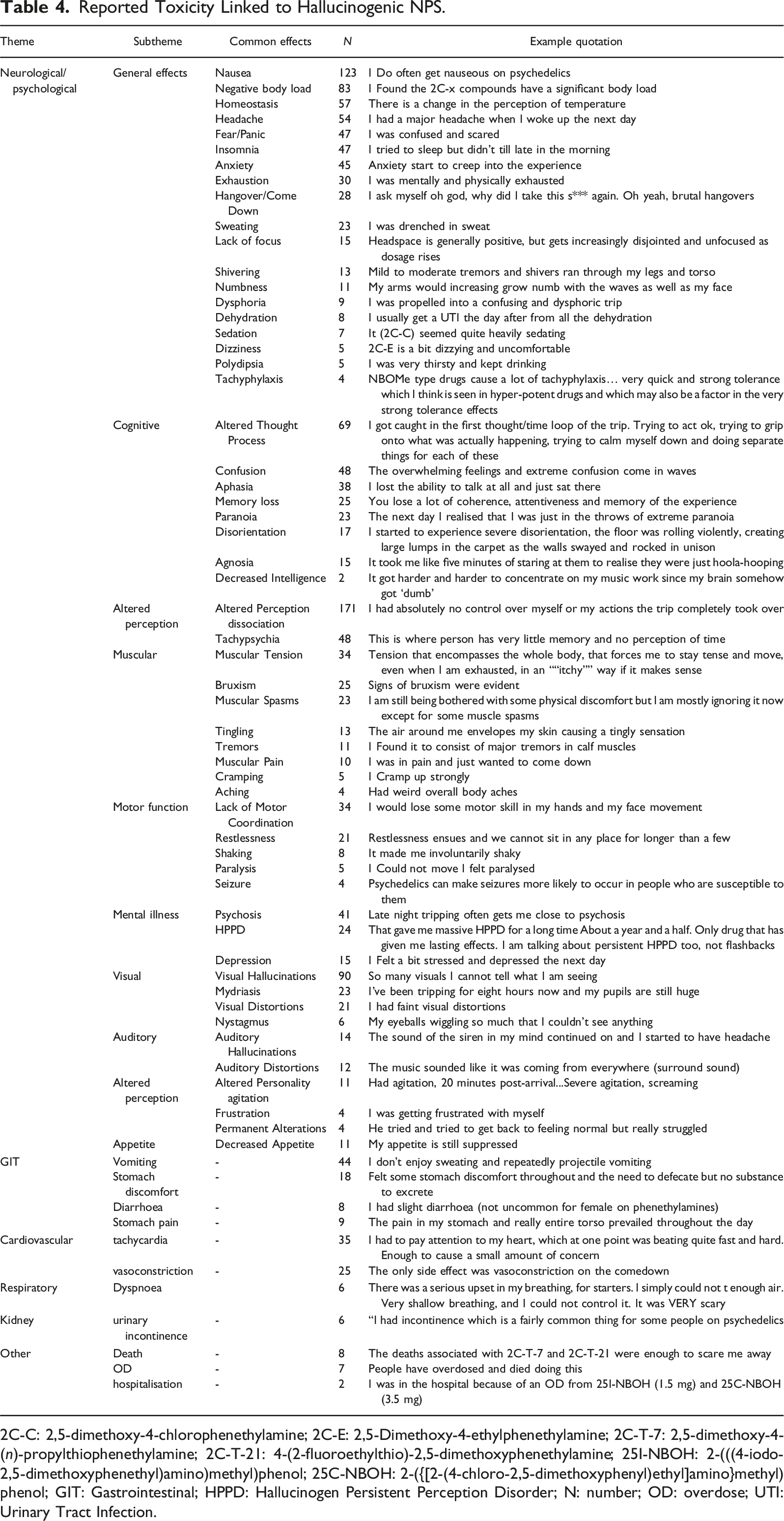
Reported Toxicity Linked to Hallucinogenic NPS.
2C-C: 2,5-dimethoxy-4-chlorophenethylamine; 2C-E: 2,5-Dimethoxy-4-ethylphenethylamine; 2C-T-7: 2,5-dimethoxy-4- (n)-propylthiophenethylamine; 2C-T-21: 4-(2-fluoroethylthio)-2,5-dimethoxyphenethylamine; 25I-NBOH: 2-(((4-iodo-2,5-dimethoxyphenethyl)amino)methyl)phenol; 25C-NBOH: 2-({[2-(4-chloro-2,5-dimethoxyphenyl)ethyl]amino}methyl)phenol; GIT: Gastrointestinal; HPPD: Hallucinogen Persistent Perception Disorder; N: number; OD: overdose; UTI: Urinary Tract Infection.
Neurological Effects
Neurological effects reported included general neurological effects (n = 618, 39.5%), cognitive effects (n = 201, 12.8%), altered perceptions (n = 223, 14.3%), muscular effects (n = 128, 8.18%), motor function (n = 73, 4.66%), mental illness (n = 83, 5.3%), visual effects (n = 141, 9.01%), auditory effects (n = 29, 1.85%), altered personality (n = 19, 1.21%) and appetite suppression (n = 11, 0.7%). The highest stated general neurological effect reported was nausea (n = 123, 19.9%) instances. This was followed by negative body load, homeostasis and headache that were reported by 83 (13.4%), 57 (9.22%) and 54 (8.74%) respectively. In addition, headache, fear/panic, insomnia, anxiety and exhausted were reported between 30-50 times. Neurological effects reported between 15 - 30 times hangover/come down, sweating and lack of focus. Neurological effects stated less than 15 times included shivering, numbness, dysphoria, dehydration, sedation, dizziness, polydipsia, tachyphylaxis, sialorrhoea, dry mouth and excessive yawning.
Cognitive effects were the second most common neurological toxicity, with 239 (15.2%) reports. Altered thoughts were discussed by 69 (28.9%) individuals, confusion by 48 (20.1%) and aphasia by 38 (15.9%). 25 reports were made of memory loss (10.5%), 23 of paranoia (9.62%), 17 of disorientation (7.11%) and 15 of agnosia (6.27%). Less frequented cognitive effects included decreased intelligence, ataxia and decreased libido.
The third type of neurological effects were cognitive effects of which the top five were altered thought process, confusion, aphasia, memory loss and paranoia, and were reported by 69 (28.9%), 48 (20.1%), 38 (15.9%), 25 (10.5%) and 23 (9.62%) respectively. The remaining cognitive effects were reported less than 20 times and included: disorientation, agnosia and decreased intelligence.
Muscular neurological effects were reported on 128 instances and included muscular tension (n = 34, 26.6%), bruxism (n = 25, 19.5%), muscular spasms (n = 23, 17.9%), tingling (n = 13, 10.2%) and tremors (n = 11, 8.6%). One user of 25I-NBOMe reported experiencing tension, bruxism and spasms simultaneously: “*** began gurning his f*****g face off. The most uncontrollable gurn that he has ever experienced in his life. This tension also occurred in the leg muscles and in the eyes. When I would tense any of these areas, they would uncontrollably spasm.” (Thread 37 Page 1)
Lack of motor coordination (n = 34, 46.6%) was the most frequent motor function effect (n = 73, 4.66%), followed by restlessness (n = 21, 28.8%). One user who reported restlessness also reported experiencing muscular effects and anxiety: “I started to get some muscle spasms and tremors, which were annoying as hell, and which also contributed to me having some anxiety. When I closed my eyes and tried to ignore them, I found I could not keep my legs still.” Thread 50 Page 1)
Less frequent effects included shaking (n = 8, 10.9%), paralysis (5, 6.84%), seizures (n = 4, 11.8%) and balance impairment (n = 1, 2.94%).
Seven variations of mental illnesses were stated on 85 (5.42%) occasions. Of these 85, 41 (48.2%) were reports of psychosis. The next most common mental illnesses were HPPD (n = 24, 27.9%) and depression (n = 15, 17.6%). 2 respondents (2.35%) stated that they faced problems with addiction, both of whom were consuming 2C-B. Mental breakdowns, schizophrenia, and serotonin syndrome were all discussed by one person each.
Furthermore, 29 reports were made for auditory effects, with 26 (89.7%) relating to auditory hallucinations (n = 14, 48.2%) or distortions (n = 12, 41.3%). Three reports were made for effects on ear pressure (10.3%). Agitation (n = 11, 57.9%) was the predominant subcategory under altered personality, which 19 respondents (1.21%) reported. Four people each (21.1%) stated that they experienced frustration or long lasting/permanent alterations to their personality. The least frequent neurological effect was a decreased appetite, which was only reported by 11 (0.70%) of users.
Gastrointestinal Effects
GIT effects were stated 89 (4.96%) times of which vomiting was the most frequent and was reported 44 (49.4%) times. Vomiting was described as potentiator of the visual effects (Thread 10 Page 5). Other GIT effects included stomach discomfort, diarrhoea, stomach pain, bloating, stomach cramps, heartburn, and indigestion.
Cardiovascular Effects
Cardiovascular effects were discussed on 74 (4.12%) different occasions. The most stated effects were tachycardia (n = 35, 47.3%) and vasoconstriction (n = 25, 33.8%). NBOMe and NBOH series drugs were indicated as the most likely to cause such effects, with one user of both 25I-NBOMe and 25C-NBOMe together reporting experiencing both: “Things led me to believe that the dangerous heart rate combined with limb coldness were the signs of a minor phenethylamine overdose (CNS overstimulation, vasoconstriction, and inability to think straight), which made me about 50% sure I was going to die.” (Thread 43 Page 1)
Less frequented effects included angina, arrhythmia, chest pain, circulation, dysrhythmia and hypertension.
Respiratory Effects
Adverse respiratory effects emerged on 7 (0.39%) occasions. Dyspnoea was reported six (85.7%) times and one (14.3%) report was made complaining of a sore throat.
Renal Effects
Kidney toxicity was narrated six times (0.33%). Two people each (33.3%) told of experiencing incontinence or increased urination, whilst one person each (16.6%) experienced discoloured urine or kidney pain: “My urine was also quite dark orange for a day or two after the trip.” (Thread 9 Page 3)
Other Effects
A total of 47 (2.62%) effects were not specific to any organ system or affected multiple organ systems. These included death, overdose, hospitalisation and multiple organ failure that were reported by 8 (17%), 7 (87.5%), 2 (4.26%) and 30 (63.8%) e-psychonauts respectively.
Discussion
This study determined e-psychonauts’ perspectives linked to using HNPS via online discussion forums. Online discussion forums allowed e-psychonauts to post their experience and drug issues in a blame free environment without worrying about legal consequences (Véliz, 2019). In this respect recent studies have reported understanding toxicity linked to NPS from online discussion forums (Coombs, 2023; Holm et al., 2023; Schifano et al., 2023; Shafi et al., 2020). Yet, these studies either included numerous NPS classes not specifying hallucinogenic NPS derivatives (Coombs, 2023; Schifano et al., 2023; Shafi et al., 2020), or have focused on hallucinogenic NPS derivatives in a single country (Holm et al., 2023).
Hence, this study complemented the previous studies by focusing on e-psychonaut experience from discussion forums with no limit on country or age group. In this respect, the present study highlighted the authentic experience of e-psychonauts in terms of the desired effects and toxicity encountered with classical phenethylamine hallucinogens and HNPS. Understanding authentic perspectives of e-psychonauts among healthcare practitioners is important in designing a harm reduction approach. The qualitative analysis in the study yielded four major themes linked to users’ characteristics, profile of HNPS, desired effects and toxicity.
For users’ characteristics, age, gender and location were reported, and the three characteristics confirmed the findings in previous literature. The median age was 24 years, which was close to median age reported by Soussan & Kjellgren (2016) and Carhart-Harris & Nutt (2010). This could be due to young adults having an increased rate of internet usage (Office for National Statistics, 2020). Above 90% of users in this study were men. This latter study agreed with other studies that stated men were more likely to engage in and discuss drug use openly than women (Chiauzzi et al., 2013; Deligianni et al., 2017; Soussan & Kjellgren, 2016). Most users reported locations as US, UK, Canada, Netherlands or Australia; and that supported previous findings (Soussan & Kjellgren, 2016; Wood et al., 2014). Yet, there were reports from other countries and that could be related to phenethylamine popularity globally (UNODC World Drug Report, 2023).
Regarding HNPS use, it is worthnoting that the NPS/drugs reported in this study were not all novel drug derivatives that emerged in the market post 2007 as per the UNODC. On the other hand, reported HNPS on the discussion forums included in the study comprised a mixture of classical hallucinogen and HNPS. For instance, 2C-series, that were classical hallucinogenic drugs, were the most reported derivatives and their use outweighed HNPS (that were NBOME and NBOH series) (Hondebrink et al., 2019; Palamar & Le, 2019). This could be related to NBOME and NBOH being newer derivatives than 2C-series. NBOME and NBOH derivatives did not gain popularity on the NPS drug market until 2013 (Halberstadt, 2017; Coelho Neto et al., 2017; Poklis et al., 2015; Yoon et al., 2022; Zuba et al., 2013). The most common routes of administration of HNPS were nasal insufflation followed by oral route that have been reported in previous literature (Musselman & Hampton, 2014). Insufflation was a preferred route in some instances due to having faster onset and more intense effects (Musselman & Hampton, 2014). Where used in combination with other drugs, cannabis/synthetic cannabinoids were the most frequent drugs taken with HNPS and this was seen in previous studies (Kuc et al., 2022). Such combinations have been claimed to maximise the desired effects and minimise adverse events (Kuc et al., 2022).
Desired effects of HNPS by users were hallucinogenic and stimulant effects that were correlated to psychoactive phenethylamines binding affinity to α-adrenergic and 5-HT2 receptors (Eshleman et al., 2018; Herian et al., 2019). Differences between effects seen by users of 2C series, NBOMe and NBOH drugs could be explained by the structural variations between them altering their pharmacological effects (Cocchi et al., 2020). Different 2C-series drugs have variable affinity at 5-HT2 receptor subtypes and that indicated that their pharmacological effects are dependent on the individual compound (Luethi & Liechti, 2020). NBOMe drugs’ prevalence over 2C-drugs for certain hallucinogenic effects could be explained due to the addition of N-benzyl groups to 2C-compounds leading to increased affinity to 5-HT2 receptors (Halberstadt, 2017).
Yet, the toxicity related to HNPS use outweighed its desired effects and was reported for multiple organ systems including neurological, GIT, CV, respiratory and renal systems. Main neurological toxicity symptoms were altered thoughts and perception that were also seen in previous literature (Zawilska et al., 2020). It is worthnoting that other studies additionally found prolonged mental illness and psychosis for NBOMe derivatives (Nikolaou et al., 2015); but this has not been identified in this study. GIT toxicity reported included nausea and vomiting and that could be attributed to the elevated level of serotonin in the gut (Calina et al., 2021). Reported CV toxicity included mainly tachycardia and vasoconstriction and that have been reported in previous studies (Shanks et al., 2015; Wood et al., 2015). Respiratory toxicity was less frequently reported than CV toxicity and included chest pain and dyspnoea that were often related to increased panic and anxiety related to increased panic and anxiety related to hallucinogenic effects rather than direct effects of the drug (Mowry et al., 2003). Moreover, overdoses, hospitalisation and lethal effects were stated mainly for NBOMe drugs that had more potency over 2C-series contributing to accidental overdose (Bersani et al., 2014).
Strengths and Limitations
This study demonstrated the benefits of using online discussion forums as a source of rich information regarding uses of HNPS. It contributed to the body of pre-existing knowledge on these drugs from users’ perspective in a blame free environment. Such environment prompts truthful, unrestricted experiences from users. This is beneficial for people working in the field, such as drug counsellors and doctors, as it provides further insight into how and why these drugs are used, as well as who they are predominantly used by and the effects that they cause.
As the study was retrospective, limitations arose with missing gaps in data due to certain information, such as age or location, being unobtainable. The information that was provided could not be verified through personal identifications or toxicological analysis. Furthermore, due to the anonymity of the discussion forums it was not possible to ask questions without breaching ethics. Moreover, there was no way to verify drug use by chemical means or other means. Hence, the HNPS reported included what e-psychonauts shared over discussion forums and did not necessarily reflect drug use among e-psychonauts. However, the discussion provided rich content and in-depth understanding of users’ experience until saturation was achieved.
Conclusion
This study provided in-depth understanding on the experiences of e-psychonauts with HNPS. The findings of the study contributed to the literature regarding HNPS use, effects and toxicity. In this respect, were predominantly used by men in the age range of 18–25 years old. Insufflation was the most frequent route of administration used, with 2C-derivatives being the most used. The desired effects of HNPS were mainly stimulant/hallucinogenic; however, many adverse events were encountered and were related to multiple organs. Future research would benefit from accessing other social media platforms to have better understanding from wider population and different demographics. Moreover, application of machine learning algorithms offers further insights regarding HNPS use.
Supplemental Material
Supplemental Material - Effects and Toxicity of Hallucinogenic New Psychoactive Substances From the Perspectives of e-Psychonauts
Supplemental Material for Effects and Toxicity of Hallucinogenic New Psychoactive Substances From the Perspectives of e-Psychonauts by Abdullah Al-Hamid, Rebecca McGuinness, Dhiya Al-Jumeily, and Sulaf Assi in Journal of Drug Issues.
Footnotes
Author Contributions
Abdullah Al Hamid: Conceptualisation, Methodology, Validation, Writing-Original Draft. Rebecca McGuinness: Conceptualisation, Methodology, Formal Analysis, Writing- Review and Edit. Dhiya Al-Jumeily OBE: Validation, Writing- Review and Edit. Sulaf Assi: Conceptualisation, Validation, Writing- Original Draft.
Declaration of Conflicting Interests
The author(s) declared no potential conflicts of interest with respect to the research, authorship, and/or publication of this article.
Funding
The author(s) received no financial support for the research, authorship, and/or publication of this article.
Ethical Statement

Data Availability Statement
Relevant data to the study have been included in the manuscript.
Supplemental Material
Supplemental material for this article is available online.
Author Biographies
References
Supplementary Material
Please find the following supplemental material available below.
For Open Access articles published under a Creative Commons License, all supplemental material carries the same license as the article it is associated with.
For non-Open Access articles published, all supplemental material carries a non-exclusive license, and permission requests for re-use of supplemental material or any part of supplemental material shall be sent directly to the copyright owner as specified in the copyright notice associated with the article.
