



Abstract
Personal motives drive and energize goal behavior. However, the relationships between distinct goal motives and subjective well-being (SWB) are not well understood. This study aimed to investigate how distinct goal motives related to SWB in a cross-national study. The sample comprised 197 participants (n = 95 Australians; n = 102 Singaporeans). Participants generated their two most important and meaningful idiographic goals that they were currently pursuing. They then completed an accompanying self-report goal motive questionnaire in relation to each listed personal goal, and a measure of SWB. Regression and moderation analyses were conducted. As predicted, relational autonomous motives were significantly positively associated with SWB, while controlled motives were significantly negatively associated with SWB, for all participants. Contrary to prediction, a positive relationship between personal autonomous motives and SWB was only partially supported, with a significant positive association found for Singaporeans, but not for Australians. Overall, findings support the theory that distinct goal motives are differentially related to SWB, irrespective of nationality. Longitudinal studies tracking goals and SWB over time now warrant investigation.
Keywords
Motivation is integral to the human condition. It typically provides a sense of personal meaning and directs much human behavior (Diener, 1984). Theorists and researchers posit that motivation is hierarchically organized (e.g., Elliot, 2006), such that personal goals are typically driven by underlying goal motives (e.g., Dickson & Moberly, 2013; Robson et al., 2023; Winch et al., 2015). Although several studies have shown a positive association between goal striving and subjective well-being (SWB) (e.g., Toth-Bos et al., 2020), far less research has investigated personal motives that drive and energize personal goal pursuit in relation to SWB. For example, the goal “to become fit” may be driven by an underlying motive ‘to improve one’s personal appearance,’ which may be linked to a person’s SWB. Hence, the main aim of the present study is to investigate distinct goal motives that underpin more surface-level idiographic goals that participants are currently pursuing, to better understand the relationship between SWB and distinct motives that drive personal goal pursuit.
Self-determination theory (SDT) posits intrinsic and extrinsic motives are the main driving forces that determine all human behavior (Deci & Ryan, 1985, 2000). These distinct motives energize and mobilize goal pursuit and represent the underlying reasons that give focus and purpose to goal pursuit (Klinger, 1977). Underlying motives are activated in response to intrinsic or extrinsic cues that in turn drive the attainment of potentially satisfying goals (Elliot et al., 2006). Intrinsic or autonomous motivation represents a person’s core values, interests, and sense of morality. In contrast, extrinsic or controlled motivation, is activated by external stimuli such as situational demands, rewards, accolades, or a sense of shame or guilt if the goal is not pursued (Deci & Ryan, 1985). Studies have shown that pursuing autonomously motivated goals are positively associated with SWB (e.g., Hope et al., 2018), sustained goal effort, and notably increased goal attainment (e.g., Bono & Judge, 2003; Dickson et al., 2023). In contrast, extrinsically motivated goal pursuit has been associated with avoidance motivation and increased anxiety (e.g., Winch et al., 2015). Even pursuing a desirable goal outcome (e.g., “to pass my final year exams”) for externally motivated reasons (e.g., “not to feel like a failure with my peers”) has been shown to exacerbate anxiety (e.g., Dickson & Moberly, 2013; Winch et al., 2015).
As a further development to autonomous versus controlled motives, researchers have distinguished “personal” versus “relational” motives. Personal reasons or motives for goal pursuit represent motivational driving forces that uphold the deeper interests of the individual, whereas relational reasons or motives for goal pursuit are motivated by the interests of close others (Markus & Kitayama, 2003). The interaction of “autonomous versus controlled” and “personal versus relational” goal motives creates a fourfold (2 x 2) conceptual classification system (Gore & Cross, 2006) that includes: Personal Autonomous Reasons (PARs), Relational Autonomous Reasons (RARs), Personal Controlled Reasons (PCRs), and Relational Controlled Reasons (RCRs). PARs represent the fulfillment of personal needs or desires (e.g., “it provides me with fun and enjoyment”). RARs represent the fulfillment of needs, wants and responsibilities within close relationships (e.g., “other people involved make it enjoyable”). PCRs represent the fulfillment of personal needs or desires, to avoid personally threatening outcomes, (e.g., “I would feel left out if I did not”). Finally, RCRs represent the fulfillment of needs, wants and responsibilities within close relationships, but are not the individual’s own values, and are motivated to avoid threat to relationships (e.g., “It is only important to someone close to me, but not to me”).
Scant research has investigated distinct underlying motives in relation to people’s self-generated personal goals (Dickson & Moberly, 2013; Winch et al., 2015), and this research has focused predominantly on autonomous versus controlled goal motives. Gore and colleagues’ fourfold classification framework of “personal versus relational” in combination with “autonomous versus controlled” motives afford an opportunity to take a more refined conceptual examination of distinct motivational impetuses that drive and energize everyday goal pursuit.
Motivational sensitivities may be informed and developed by perceived cultural and national sensitivities, beliefs, and values. For instance, Yi et al. (2014) found that relationally autonomous reasons predicted significant increases in SWB for Japanese people (but not for Americans), whereas personally autonomous reasons predicted significant increases in SWB for both Americans and Japanese. This is thought to be because autonomous reasons fit with an individual’s own values and beliefs and are in line with deeply held convictions (Bono & Judge, 2003). Overall, much research has found autonomy to be a universally beneficial construct across cultures in promoting SWB (e.g., Yu et al., 2017). In contrast to autonomy, studies have shown that goals motivated by the needs of others or due to environmental demands (i.e., controlled motives) did not show increases in SWB, even when progress was made (e.g., Sheldon et al., 2004). Thus, controlled motives do not appear to fulfill the same need for autonomy as autonomous motives (Ryan & Deci, 2000).
Other studies however have produced mixed results regarding controlled motives for goal pursuit. For instance, controlled reasons for pursuing goals have been associated with increased anxiety (Dickson & Moberly, 2013), whereas controlled goal motives have predicted increased SWB in the Japanese culture, and pursuing goals for autonomous reasons was not related to increases in SWB for Asian American or Japanese people (Oishi & Diener, 2001). Diener and colleagues (1999) posit that while personal goals are motivated by basic human needs that are common across cultures, certain aspects of culture and/or nationality may reflect motivational differences. Markus and Kitayama (2003) also contend that the quality of interconnectedness in predominantly interdependent cultures led to group goals becoming accepted and internalized as an individual’s personal goals. More recently, Kachanoff and colleagues (2019) found that group autonomy impacted on personal autonomy, such that when group autonomy was threatened, there was a reduction in personal autonomy.
Overall, empirical findings suggest that distinct goal motives either enhance or diminish SWB. Based on the motivational literature, and for conceptual reasons, we aimed to examine whether the fourfold motives classification, when applied to participants’ self-generated idiographic goals they were currently pursuing, differentially predicted SWB. We hypothesized that both personal and relational autonomous motives would predict increased SWB, whereas both controlled motives would predict a decrease in SWB (while examining if there is an interaction between goal motivation and nationality). Moreover, as differences in goal motives have emerged in past cross-national research, albeit with little consistency, we also examine if self-defined nationality moderated the relationship between distinct motives and SWB. Theoretically, the relationships between distinct goal motives and SWB should hold, irrespective of one’s nationality, culture, or other demographic and socio-economic variables. However, this theoretical contention needs to be examined empirically. We therefore hypothesized that nationality would not moderate the relationships between distinct motives for goal pursuit and SWB.
Method
Participants
The total sample comprised 197 participants (50 males, 144 females, 3 reported other) who volunteered to participate in the study. Participants ranged in age from 18 to 70 years (Mage = 33.98 years; SD = 10.79). The sample comprised Australian (n = 95) and Singaporean (n = 102) participants. The Australian sample comprised 20 males, 72 females and 3 participants who reported other, with ages ranging from 18 to 66 years (Mage = 33.37 years, SD = 12.61). The Singaporean sample comprised 30 males, 72 females, with ages ranging from 23 to 70 years (Mage = 34.55 years, SD = 8.78). Although the mean age and proportion of men and women did not differ significantly across the two countries, the Australian sample was drawn from a community and undergraduate sample. Based on a priori power calculations using G*Power 3, the sample size was adequate to detect medium effects at a power of .80 with an alpha of p < .05 (Cohen, 1988).
Participants were sampled from Australia and Singapore. English is the primary language in both countries and therefore identical questionnaire measures could be administered to both sets of participants. Australia and Singapore are both highly urbanized English-speaking multi-ethnic countries, with significant proportions of their populations not native-born. Both countries have similar ratings on the Human Development Index (HDI) and Gini coefficient. The HDI is the United Nation’s composite measure of life expectancy, education, and per capita income indicators, and is scored from 0 to 1 with higher scores indicating greater lifespan, population education levels, and per capita incomes. Australia and Singapore are both classified as having “very high” HDIs (defined as HDIs > 0.8). The Gini coefficient is a measure of income inequality and is scored from 0 to 1 with 0 indicating perfect equality and 1 indicating maximal inequality. Australia and Singapore are both classified as having “weak to average” Gini coefficients (defined as 0.251–0.500).
Measures
Goal Task
Participants listed their two most important and meaningful personal goals that they were currently striving toward (adapted from Dickson & Moberly, 2010). The prompt to elicit their first goal was, “In a few words, the most important goal I am trying to achieve right now is . . .,” and the prompt to list their second goal was, “In a few words, another important goal I am trying to achieve right now is . . .” Previous research using similar methods has been shown to be effective in identifying personally relevant goals (e.g., Dickson & Moberly, 2010). The goal task has shown good face validity and concurrent validity (e.g., Dickson & Moberly, 2010; Dickson & Moberly, 2013).
Goal Motives
The Goal Motives questionnaire comprises 13 item statements to assess motives for pursuing goals (Gore & Cross, 2006). In the present study, these items were rated in response to participants two listed self-generated goals. The Goal Motives questionnaire comprises four subscales. The PARs (e.g., “It provides me with fun and enjoyment”) and RARs (e.g., “The other people involved make it enjoyable”), each include four items. The PCRs subscale comprises three items (e.g., “The situation demands it”) and the RCRs subscale comprises two items (e.g., “It is only important to someone close to me, but not to me”). Each goal motive statement is rated on a 5-point scale, ranging from 1 (strongly disagree) to 5 (strongly agree). Total subscale scores (PAR, RAR, PCR, RCR) are summed. Possible scores range from 4 to 20 on the PAR and the RAR, from 3 to 15 on the PCR, and from 2 to 10 on the RCR. Past research has shown these goal motives to be reliable measures (α = .79–.83; Gore et al., 2009). Present internal reliabilities are reported in Table 1.
Total Sample, Descriptive Statistics for Main Study Variables.
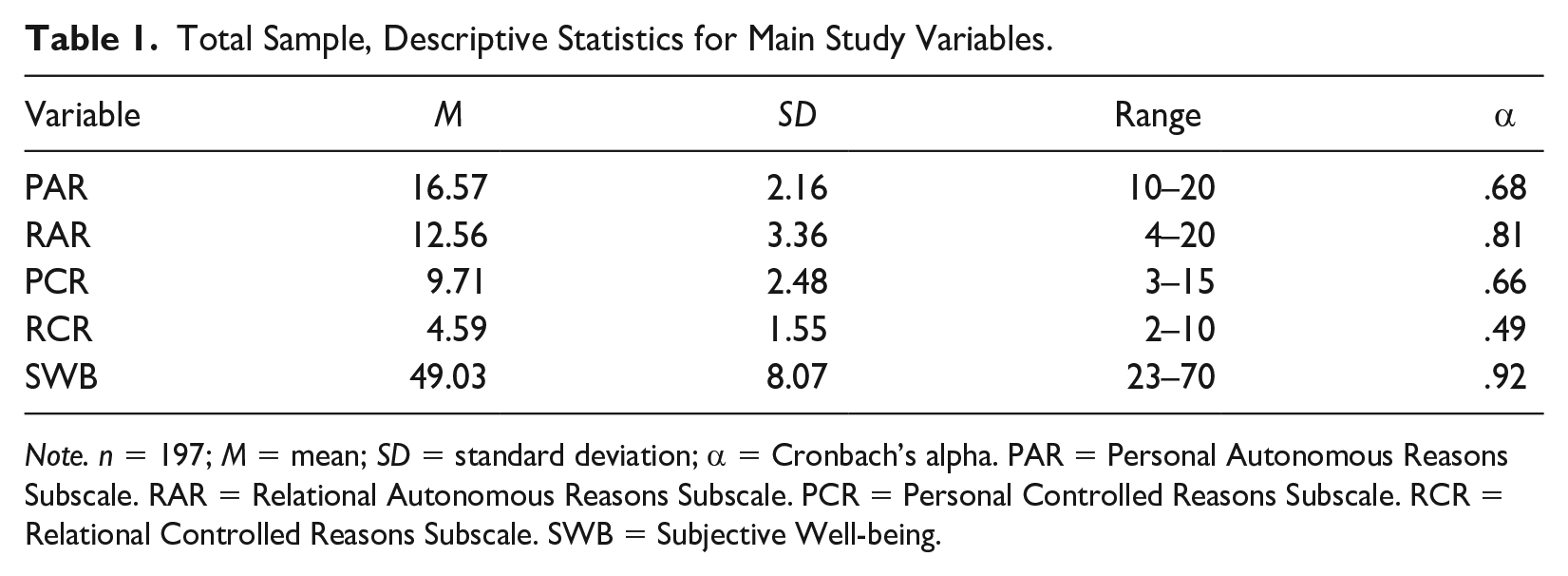
Note. n = 197; M = mean; SD = standard deviation; α = Cronbach’s alpha. PAR = Personal Autonomous Reasons Subscale. RAR = Relational Autonomous Reasons Subscale. PCR = Personal Controlled Reasons Subscale. RCR = Relational Controlled Reasons Subscale. SWB = Subjective Well-being.
Warwick–Edinburgh Mental Well-being Scale (WEMWBS)
The WEMWBS is a widely used, valid and reliable measure to assess subjective mental well-being (Tennant et al., 2007). Participants rate 14 item statements on a 5-point scale ranging from 1 (none of the time) to 5 (all of the time), according to how often they experienced feelings and thoughts in response to each item statement (e.g., “I’ve had energy to spare,” “I’ve been feeling loved”) over the last 2 weeks. The 14 items are summed to create a total score for subjective mental well-being (SWB) score, with possible scores ranging from 14 to 70. The WEMWBS has been shown to be a valid and reliable measure of subjective well-being (α = .91; Tennant et al., 2007). Present internal reliability is reported in Table 1.
Procedure
The project was granted ethics approval by Edith Cowan University’s (ECU) Human Research Ethics Committee (REMS: 2020-01101-TAN). Participants were informed about the purpose of the research and what participation required. All participants provided informed consent before participating in the study. Participants were recruited through advertisements placed on social media platforms and through the ECU Undergraduate Research Participation Scheme (SONA). No monetary reward or vouchers were awarded. The student sample received credit points for participation in the survey. Advertisements provided a link to the online survey that was hosted on the Qualtrics platform.
Following consent, participants provided demographic information such as age and self-identified gender and nationality. Participants then listed their first goal and rated their reasons for pursuing this goal and then listed their second goal and rated their reasons for pursuing this goal. Finally, participants completed the SWB measure (WEMWBS). The survey took approximately 15 to 20 minutes for participants to complete. Written instructions accompanied all measures.
Results
Data Screening
Data screening showed that parametric assumptions were met. Seven cases (3%) with substantial and nonrandom missing data (three Australian, four Singaporeans) were excluded from the total sample as responses for the second goal and subsequent measures had over 50% missing data. Complete case analysis is suitable when the proportion of missing data is less than 5% (Jakobsen et al., 2017).
Descriptive Statistics
Means, standard deviations, score ranges, internal consistency indices for the main study variables for the total sample are presented in Table 1.
As can be seen in Table 1, all the main study variables showed acceptable internal reliabilities, except for the relational controlled reasons subscale. The poor reliability for this subscale may be due to the limited number of items (n = 2). Therefore, the subscales for personal controlled and relational controlled reasons were combined, and the internal reliability analysis was reperformed. Combining the five items for the two controlled reasons subscales improved the internal reliability for the total sample to an acceptable level (α = .71). Therefore, for methodological reasons the two controlled subscales were collapsed for subsequent analyses.
Means, standard deviations, score ranges, and internal consistency indices for the main study variables, for the Australian and Singaporean samples, are shown in Table 2. The study variables showed acceptable internal reliabilities.
Descriptive Statistics for Main Study Variables Across Australian and Singaporean Samples.
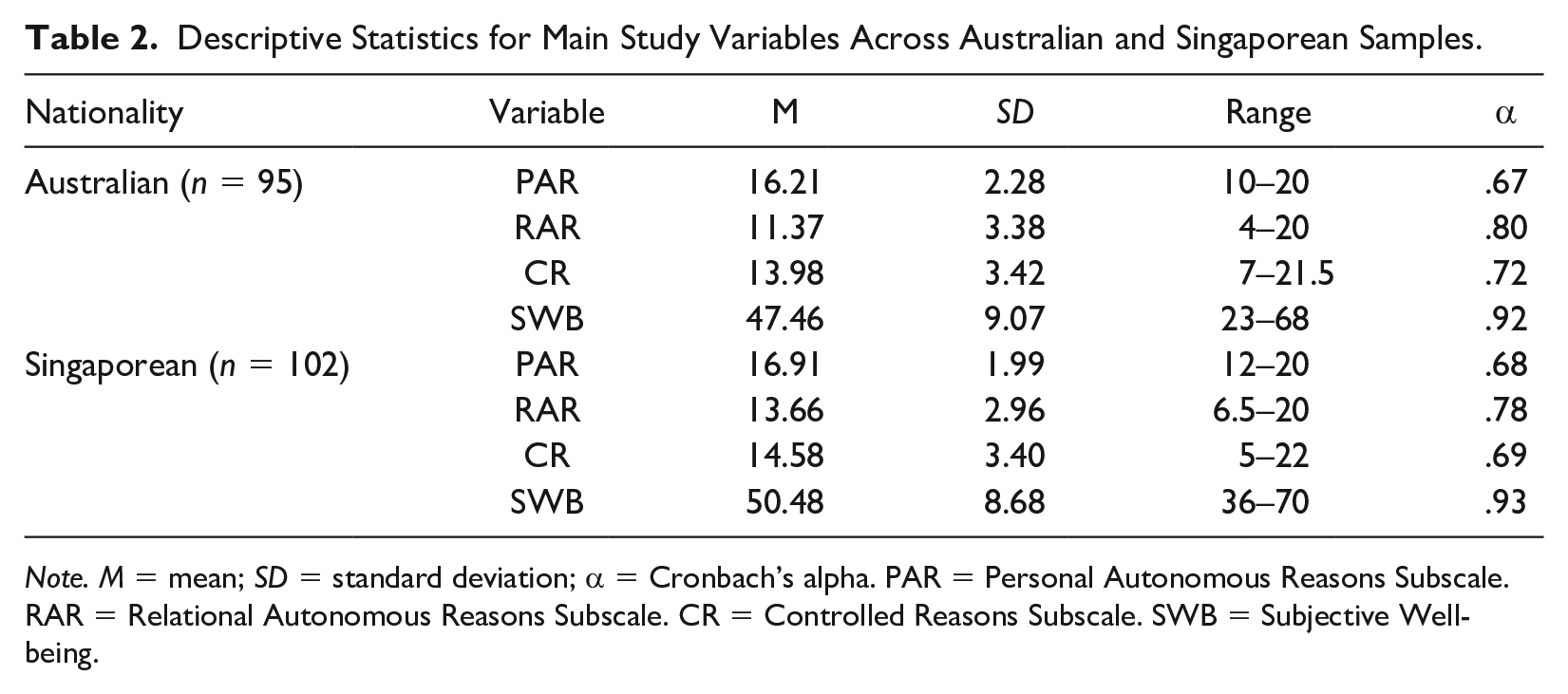
Note. M = mean; SD = standard deviation; α = Cronbach’s alpha. PAR = Personal Autonomous Reasons Subscale. RAR = Relational Autonomous Reasons Subscale. CR = Controlled Reasons Subscale. SWB = Subjective Well-being.
There was no significant difference in the proportion of men and women across the Australian (male = 20; female = 72) and Singaporean (male = 30; female = 72) groups (X2(1) = 1.49, p = .222). There were no significant age differences between the Australian and Singaporean samples (t(195) = −0.767, p = .444). Based on the whole sample, independent t-tests found females reported significantly lower RARs than males (t(192) = 2.29, p = .023), but no significant gender differences across the other variables were found.
Preliminary Analyses
Pearson’s correlations among the main study variables are presented in Table 3. Correlations for the Australian sample are reported below the diagonal and above the diagonal for the Singaporean sample.
Correlations Among the Main Study Variables, for Australian (n = 95, Below the Diagonal) and Singaporean (n =102, Above the Diagonal) Samples.
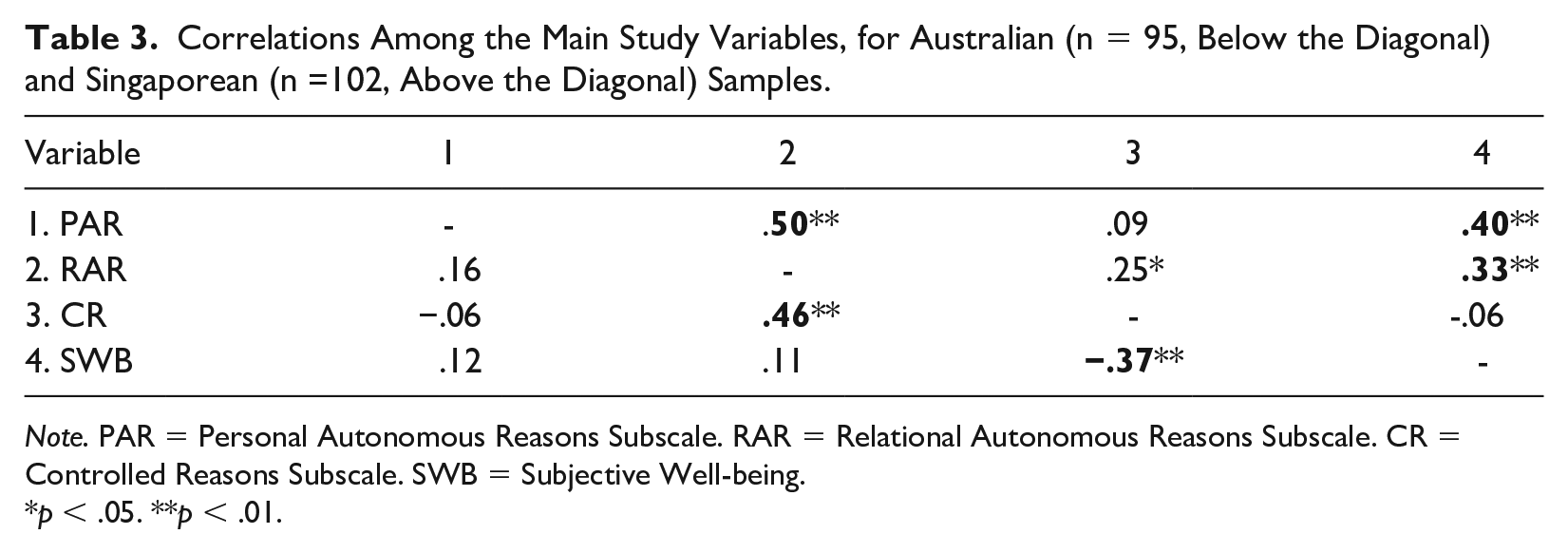
Note. PAR = Personal Autonomous Reasons Subscale. RAR = Relational Autonomous Reasons Subscale. CR = Controlled Reasons Subscale. SWB = Subjective Well-being.
p < .05. **p < .01.
As can be seen in Table 3, correlations showed controlled reasons for goal pursuit were significantly negatively correlated with SWB for the Australian sample, but not the Singaporean sample. On the other hand, personally autonomous and relationally autonomous reasons for goal pursuit were significantly positively correlated with SWB for the Singaporean sample, but not for the Australian sample. We also examined if age was significantly correlated with any of the main study variables, finding it was significantly positively correlated with SWB (r = .46, p < .001) but not with any other study variable.
Independent t-tests showed that Singaporean participants (M = 16.91, SD = 1.99), relative to Australian participants (M = 16.21, SD = 2.28), reported significantly higher levels of personally autonomous reasons for personal goal pursuit (t(195) = 2.32, p < .05). Singaporean participants (M = 13.66, SD = 2.96), compared to Australian participants (M = 11.37, SD = 3.38), also reported significantly higher levels of relationally autonomous reasons for personal goal pursuit (t(195) = 5.05, p < .001). Results showed no significant group difference in the level of controlled reasons for personal goal pursuit, t(195) = −1.23, p = .220).
Does Nationality Moderate the Relationship Between Distinct Goal Motives and SWB?
As self-identified nationality was related to key study variables, and there were differences in scores between the two samples, subsequent analyses included nationality as a moderator variable when examining the relationships between distinct goal motives (PARs, RARs, and CRs) and SWB. Age was significantly correlated with SWB, and gender differences were significantly associated with relational autonomous reasons, so we controlled for these demographic variables in our analyses.
Model 1 of PROCESS v3.5 was used to examine these moderated relationships in relation to each goal motive and SWB, while controlling for the other two motives. To obtain robust estimations, bootstrapping techniques were used (based on 5,000 samples). Results from the analyses are reported below.
The Relationship Between Personal Autonomous Reasons for Goal Pursuit and SWB
First, we examined the relationship between personal autonomous reasons and SWB, while controlling for relational autonomous reasons, controlled reasons, and the demographic variables age and gender. Contrary to prediction, personal autonomous reasons were not significantly associated with SWB. We also examined if nationality moderated the relationship between personal autonomous reasons and SWB. The moderator effect was significant (b = 1.05, p < .05), as can be seen in Table 4.
The Relationship Between Personally Autonomous Reasons (PAR) and Subjective Well-being.
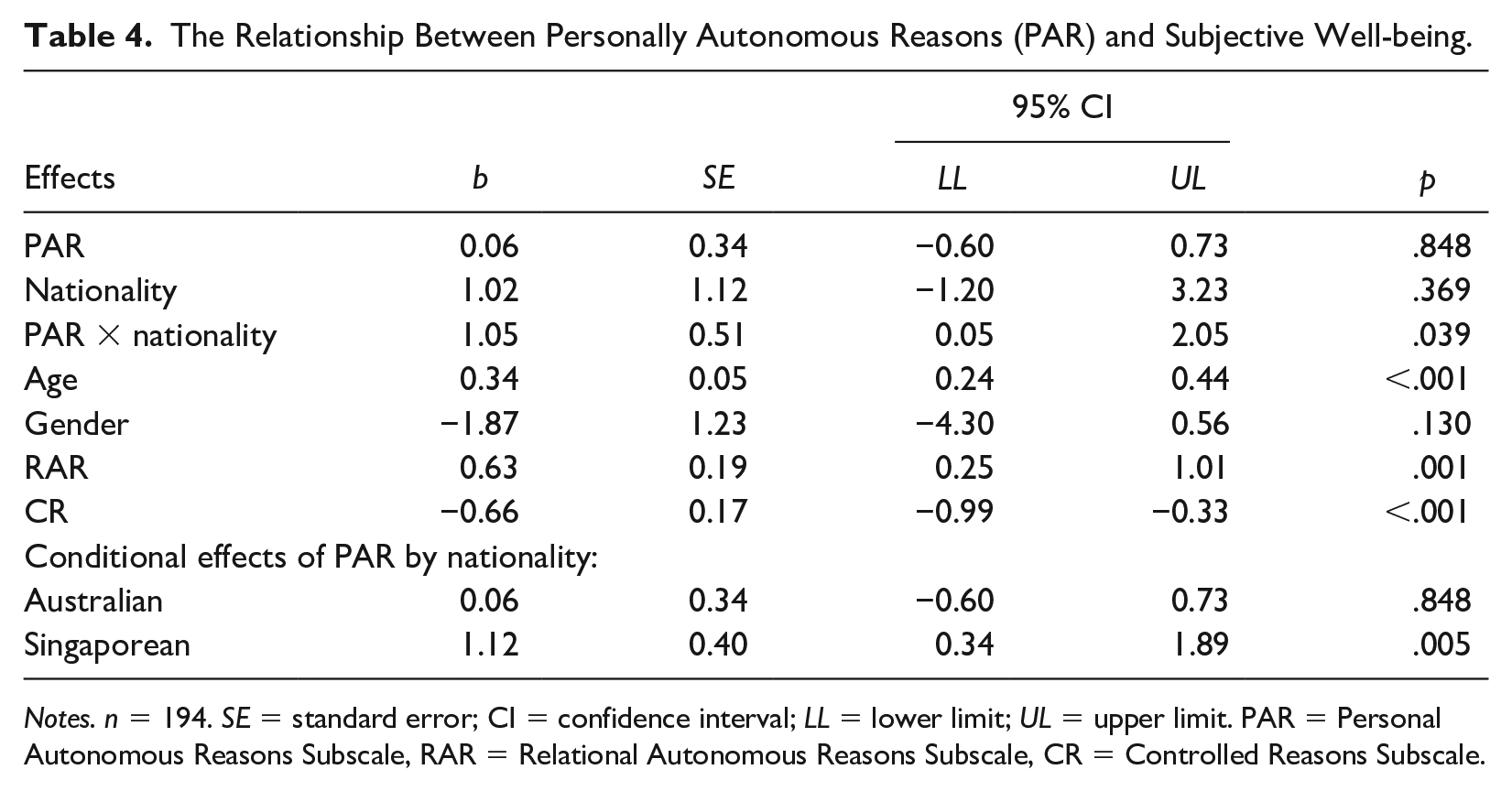
Notes. n = 194. SE = standard error; CI = confidence interval; LL = lower limit; UL = upper limit. PAR = Personal Autonomous Reasons Subscale, RAR = Relational Autonomous Reasons Subscale, CR = Controlled Reasons Subscale.
Examination of the conditional effect of personal autonomous reasons on SWB showed a significant positive relationship for Singaporean participants but not for Australian participants. Results of the conditional effects are illustrated in Figure 1 below.
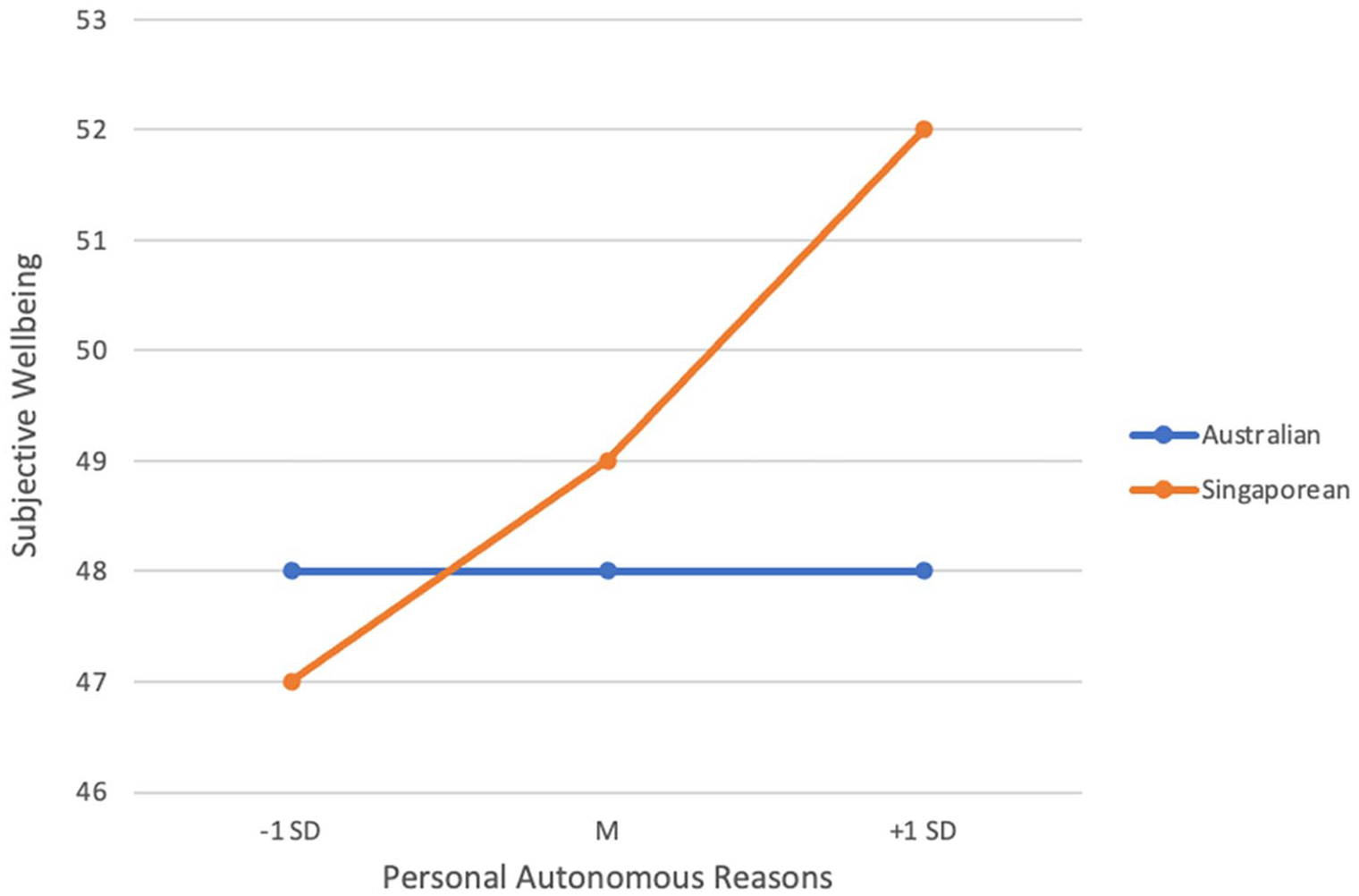
The Moderating Effect of Nationality on Personal Autonomous Reasons for Goal Pursuit in Relation to Subjective Well-being
The Relationship Between Relational Autonomous Reasons for Goal Pursuit and SWB
Next, we examined the relationship between relational autonomous reasons and SWB, while controlling for personal autonomous reasons and controlled reasons, age and gender. As predicted, there was a significant positive relationship between relational autonomous reasons and SWB (b = 0.69, p < .05). Nationality had no significant moderating effect (b = 0.02, ns). Results are presented in Table 5.
The Relationship Between Relationally Autonomous Reasons (RAR) and Subjective Well-being.
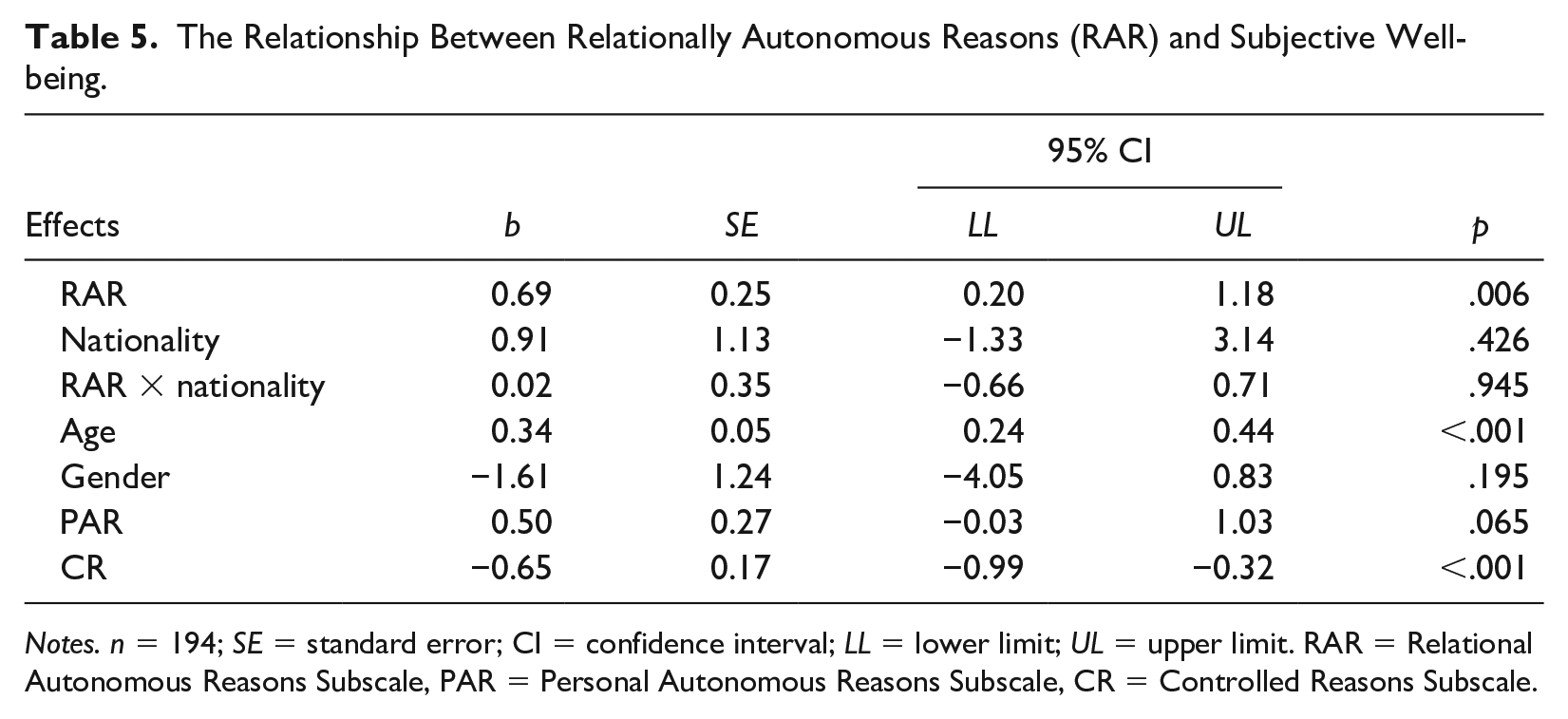
Notes. n = 194; SE = standard error; CI = confidence interval; LL = lower limit; UL = upper limit. RAR = Relational Autonomous Reasons Subscale, PAR = Personal Autonomous Reasons Subscale, CR = Controlled Reasons Subscale.
The Relationship Between Controlled Reasons for Goal Pursuit and SWB
Finally, we examined the relationship between controlled reasons and SWB, while controlling for personal autonomous reasons and relational autonomous reasons. As predicted, there was a significant negative relationship between controlled reasons and SWB (b = −0.87, p < .001). Nationality did not moderate the relationships between controlled motives and SWB (b = 0.38, ns), as can be seen in Table 6.
The Relationship Between Controlled Reasons (CR) and Subjective Well-being.
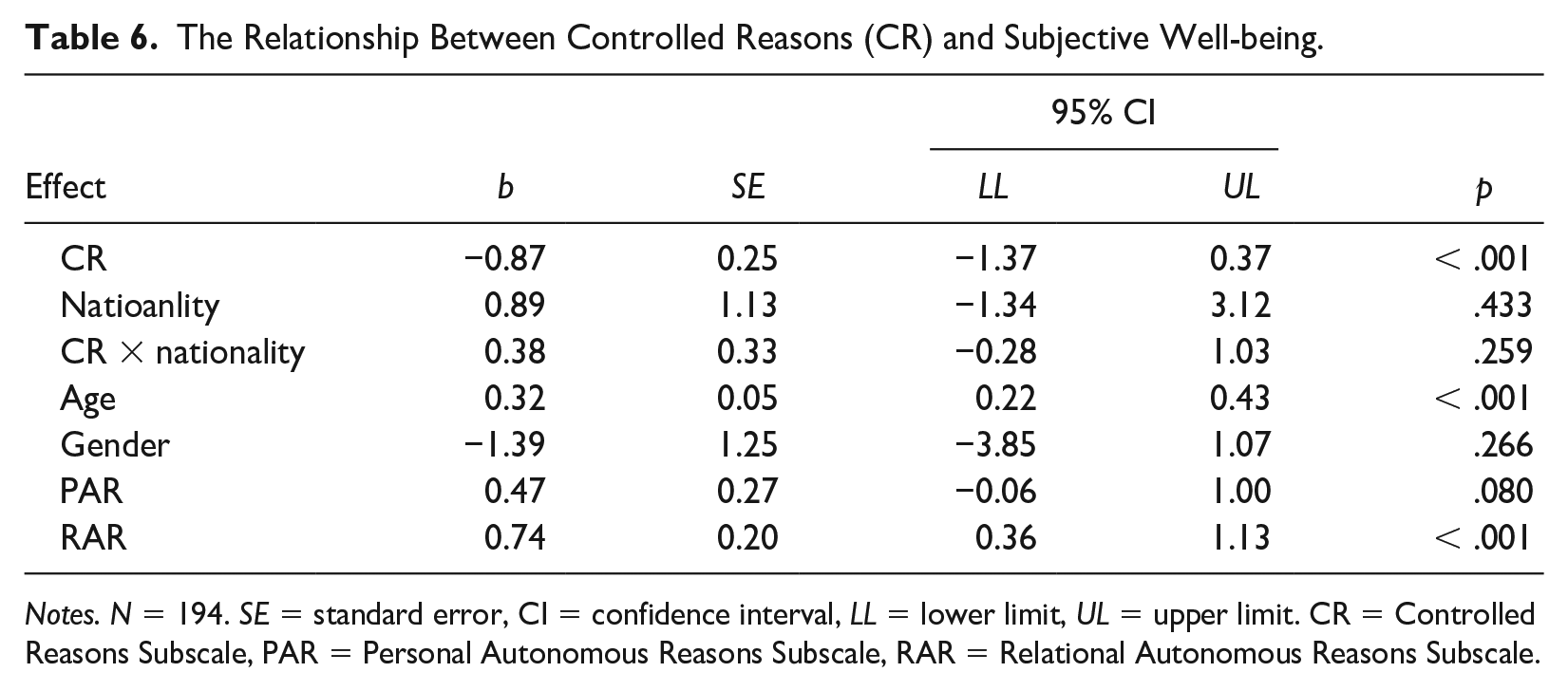
Notes. N = 194. SE = standard error, CI = confidence interval, LL = lower limit, UL = upper limit. CR = Controlled Reasons Subscale, PAR = Personal Autonomous Reasons Subscale, RAR = Relational Autonomous Reasons Subscale.
Discussion
We aimed to examine whether distinct motives that drive idiographic goal pursuit differentially predicted SWB. As predicted, there was a significant positive relationship between relational autonomous reasons for goal pursuit and SWB, and a significant negative relationship between controlled motives and SWB, for all participants, irrespective of nationality. Counter to prediction, there was only partial support for the relationship between personal autonomous reasons for goal pursuit and SWB, with a significant positive relationship for Singaporean participants, but not for Australian participants. For the most part, the findings support the predictions, for all participants, irrespective of nationality.
Analyses showed a significant positive relationship between relational autonomous reasons and SWB and a significant negative relationship between controlled motives and SWB for all participants, supporting the theoretically informed predictions. It could be argued that relational autonomy has benefits through meaningful social connectedness and affiliation which in turn enhances SWB. Within close relationships the internalization of needs, goals, and responsibilities, may result in enhancing relational autonomous goal pursuit. Past research indicates that relationally autonomous motives predict goal effort, even when controlling for personally autonomous motives (Gore & Cross, 2006). In accord with theory (Sheldon & Elliot, 1999), increased controlled motives for goal pursuit had a detrimental association with SWB for all participants. In contrast to autonomy, the results support the view that controlled motives focused predominantly on pursuing goals for external reasons, or because the situation demands it, has a negative impact on SWB. Pursuing personal goals because one should or because of a sense of shame or guilt if a person did not pursue a particular goal is apt to take a personal toll and diminish SWB. Furthermore, controlled motives which are geared toward avoiding potential negative consequences may feed into cognitive and behavioral avoidance, which is a well-established marker of poor mental well-being. Notably, our moderation results challenge oversimplistic national stereotypes concerning motivational orientations and sensitivities in relation to SWB (e.g., Voronov & Singer, 2002).
Self Determination Theory and past research posit that autonomous motivation, concordant with the inner self, reflects an individual’s core values, interest and sense of morality, which is universally beneficial for one’s well-being (Deci & Ryan, 2000). However, the present study found that the significant positive relationship between personlly autonmous reasons for goal pursuit and SWB applied for Singaporean participants (but not Australian participants). This finding is counter to previous research that has found no significant difference in the relationships between personally autonomous motives and well-being for people from specific Western and Asian countries (Gore et al., 2009; Yi et al., 2014). Hence, it is difficult to explain this finding. Speculatively, one possible explanation may be that Singapore’s economy is highly focused on technology and finance in which autonomy is considered greatly prized for career success, which may accentuate the need for personal autonomy (Omar & Noordin, 2016, Rehman, 2020).
Some key methodological limitations deserve comment. Due to the cross-sectional design, it is not possible to infer causality. The present study focused on studying the relationship between distinct goal motives and SWB. However, future longitudinal studies designed to explicitly assess other relevant variables, such as degree of goal effort and perceived goal progress when pursuing personal goals may further inform the relationship between distinct goal motives and SWB. Although we collected demographic data for participant age, gender, and nationality, future research would benefit from collecting further demographic information (e.g., socio-economic status). As previously noted, the fourfold motives classification was used for conceptual reasons. However, the personal and relational controlled motives were collapsed into a single controlled motive variable for methodological reasons. Conceptual development of these distinct two controlled motives, however, could further advance this field of research, as it would seem plausible that conceptual differences between “personally” (e.g., “I must stay healthy to avoid heart problems”) and “relationally” (e.g., “I need to look good for my partner”) controlled motives may exist. To do so would require the development of a new reliable and valid measure to assess these distinct constructs. Future research may also benefit from the use of other measures to assess goal motives (e.g., Gore et al., 2018). Finally, the present study recruited samples from two countries. Replication of the findings in other countries would offer a further validation of the theoretically informed hypotheses and check on the stability of the proposed relationships across nationalities, cultures, and other socio-economic and demographic variables.
In summary, our research highlights that distinct motives underpinning personal goal pursuit are differentially implicated in a person’s SWB. Consistent with theory, relational autonomous reasons for pursuing personal goals enhanced SWB, while controlled reasons for pursuing personal goals diminished SWB. Notably, the findings, for the most part, supported the theoretically informed predictions for all participants, irrespective of nationality. Our findings clearly identified distinct goal motives that have significant implications for enhancing or diminishing SWB. Motivation is fundamental to human experience and well-being. As such, psychological interventions may be enhanced by exploring people’s underlying goal motives and align targets and activities consistent with these to achieve most benefits for SWB.
Footnotes
Declaration of Conflicting Interests
The author(s) declared no potential conflicts of interest with respect to the research, authorship, and/or publication of this article.
Funding
The author(s) received no financial support for the research, authorship, and/or publication of this article.
