




Abstract
In September 2017, Hurricane Maria decimated Puerto Rico and resulted in the deaths of thousands of people, the destruction of thousands of homes, and the mass migration of hundreds of thousands of Puerto Ricans to the U.S. mainland. Because of these events, Puerto Rican Hurricane Maria survivors on the U.S. mainland are at risk for depressive symptomatology. The purpose of this study was to examine sources of protection against depressive symptoms in this population, with a focus on identifying protective assets and how such assets are differentially distributed across subsets of survivors. A sample of 319 Puerto Rican Hurricane Maria survivors (Mage = 38.5 years, 77% women) completed surveys of intrapersonal, cultural, and community assets, as well as a measure of depressive symptoms. Results showed that optimism and religiosity at the intrapersonal level, and collective efficacy and community safety at the community level, emerged as significant protective assets against depression. Results from a latent profile analysis revealed four classes of survivors based on their degree and type of protection: High Protection, Safe Community, Moderate Protection, and Low Protection. The High Protection class reported fewer depressive symptoms compared with the Moderate and Low Protection classes but reported similar levels of depressive symptoms as the Safe Community class. Findings suggest that intrapersonal cognitive factors, and community efficacy and safety factors may represent salient assets among hurricane survivors on the U.S. mainland. Findings also illustrate that subsets of Puerto Rican Hurricane Maria survivors vary in their degree and type of protective assets.
In September 2017, Hurricane Maria devastated the island of Puerto Rico and resulted in the migration of hundreds of thousands of Puerto Ricans to the U.S. mainland. In the aftermath of the storm, Puerto Rican Hurricane Maria survivors faced a plethora of psychosocial and migration-related stressors that increased their risk for experiencing depressive symptoms. These stressors include high mortality and morbidity, discrimination, financial strain, social isolation, and the substantial financial, social, and emotional losses associated with leaving one’s homeland (Scaramutti et al., 2019; Schwartz et al., 2022). It is estimated that Hurricane Maria was responsible for the death of over 3,000 people, the destruction of over 250,000 homes, and the loss of power and clean water for over a million people (Fischbach et al., 2020). Tens of thousands of these hurricane survivors subsequently migrated to the U.S. mainland to rebuild their lives. From a social determinants of mental health perspective, depressive symptomatology develops within social ecologies where persistent ecological stressors disparately impact mental health (Allen et al., 2014). Given the myriad social-contextual stressors that Puerto Rican Hurricane Maria survivor migrants face, including pre- (e.g., government corruption, decaying infrastructure, declining energy sector), during- (trauma, migration-related loss), and postmigration (discrimination, negative context of reception, language barriers) stressors, they represent a high-risk group for developing depressive symptoms (e.g., Andrade et al., 2023; O’Neill-Carrillo & Rivera-Quiñones, 2018; Villanueva, 2019; Zorrilla, 2017).
Nevertheless, the degree to which a person experiences depressive symptomatology depends, at least in part, on the presence of protective assets that one can utilize to buffer against stress caused by adverse events (Ettman et al., 2020; Werner, 2000). To date, psychological research on Puerto Rican Hurricane Maria survivor migrants to the U.S. mainland has centered almost exclusively on the ways in which cultural and disaster-related stressors may influence mental health (e.g., Montero-Zamora et al., 2023; Scaramutti et al., 2019; Schwartz et al., 2022). Although this body of work has greatly informed the literature, no published research has considered sources of protection among this vulnerable population, despite the important role that protective assets can play in buffering against symptoms of depression. Moreover, most studies on Puerto Rican hurricane survivor migrants have employed variable-centered approaches that assume homogeneous patterns of protection. That is, variable-centered approaches assume that risk and protective assets are uniformly distributed across the Puerto Rican hurricane survivor migrant population (Collins & Lanza, 2009). However, like other groups, Puerto Ricans are heterogeneous, and person-centered approaches are needed to pinpoint more homogeneous subgroups of Puerto Rican hurricane survivor migrants (e.g., high vs. low protection) based on similar outcome response patterns. The ability to detect homogeneous subgroups in a diverse population will help to identify which groups are more protected versus those that need intervention (Lanza & Rhoades, 2013). Such approaches will also inform etiological and prevention work for Puerto Rican Hurricane Maria survivors in the United States.
In this study, using a person-centered approach (i.e., latent profile analysis), we seek to identify homogeneous classes of Puerto Rican Hurricane Maria survivors according to their protective asset profiles. Such profiles are based on participants who respond similarly to measures of intrapersonal, cultural, and community protective assets. Once classes have been identified, we then assess how these subgroups differ in their depressive symptoms while controlling for salient covariates. We begin by situating the present study within the context of Puerto Rican crisis migration in the aftermath of Hurricane Maria, followed by discussion of intrapersonal, cultural, and community protective assets that may buffer against depression.
Puerto Ricans, Hurricane Maria, and Crisis Migration
Crisis migration refers to individuals and families who migrate, usually in mass, across national borders following human and natural disasters (Vos et al., 2021). Because Puerto Ricans are U.S. citizens and their migration to the United States is internal rather than international, the crisis migration framework has rarely been applied to this population (Schwartz et al., 2022). However, Puerto Rico maintains a distinct culture and language from that present on the U.S. mainland. As a result, in contrast to most forms of internal migration, Puerto Ricans who migrate to the U.S. mainland must adapt to different linguistic and cultural patterns, and thus experience similar challenges as immigrants from other Spanish-speaking countries. Given that Puerto Rican hurricane survivors fled to the U.S. mainland to escape a natural disaster, and given the nature of Puerto Rican migration, we conceptualize Puerto Rican hurricane survivors as crisis migrants (see Salas-Wright et al., 2021, for further discussion).
The damage inflicted on Puerto Rico by Hurricane Maria was particularly severe as it occurred at a time when the island’s infrastructure was weak. Two weeks prior to Hurricane Maria, Hurricane Irma passed along the north side of the island and left over 1 million people without power. In the months following Hurricane Maria, nearly 300,000 Puerto Ricans fled to the U.S. mainland in search of housing, employment, health care, and family reunification (Martin et al., 2020). Hurricane Maria compounded many of the stressors already faced by many Puerto Ricans such as government corruption, deteriorating infrastructure, and a struggling economy (Andrade et al., 2023; Villanueva, 2019; Zorrilla, 2017). The combination of preexisting problems in Puerto Rico and the havoc caused by Hurricane Maria served to displace many Puerto Ricans to the U.S. mainland.
During relocation to the U.S. mainland, many Puerto Ricans experienced myriad stressors such as financial strain, poor physical and psychological health, loss of family, and inadequate access to quality health care (Andrade et al., 2023). In addition, many Puerto Ricans witnessed the destruction of their homes as well as the pain and deaths of close family members and friends. Compounding these stressors, the mass relocation of Puerto Ricans to the U.S. mainland resulted in perceived threat by many individuals in the destination communities and states. That is, many individuals on the U.S. mainland feared that Puerto Ricans—whom they perceived to be dissimilar in culture—would overrun their way of life as the dominant group in society. Together, Puerto Rican hurricane survivors experienced considerable stress associated with the migration and adjustment process that increased their risk for depressive symptoms, and there is a need to identify health promotive assets that can offset this risk.
Intrapersonal, Cultural, and Community Protective Assets
Protective assets represent psychosocial resources that can be internal or external to the individual and that buffer against adverse outcomes such as depression. Protective assets occur across multiple levels (e.g., intrapersonal, cultural, community), and individuals vary in the degree to which they possess each of these assets. To gain a more holistic view of protection among Puerto Rican Hurricane Maria survivors, it is important to consider multiple levels of protective assets among this population as well as the ways in which individuals with higher versus lower levels of these assets are more versus less protected.
At the intrapersonal level, optimism is an important individual difference variable referring to the extent to which people hold positive beliefs about the future (Carver et al., 2010). A sense of optimism provides individuals with cognitive coping resources that affect the ways in which people respond to stressful life events (Taylor et al., 2012). Optimism is negatively associated with known correlates of depression, such as stress and hopelessness (Carver et al., 2010), and the ability to think positively about the future is particularly salient for Puerto Rican hurricane survivors who have experienced considerable loss and who face an uncertain future. Religiosity and religious service attendance represent another intrapersonal protective asset, especially among Latin American descent populations. Religiosity is largely internal and refers to the degree to which one’s spiritual faith is important to one’s sense of self and everyday life (Plante, 2021). Religiosity is an important asset to consider given that about 56% of Puerto Ricans on the island identified as Christian and 33% as Protestant (Krogstad et al., 2017). Research on Puerto Rican adults has found that higher degrees of religiosity (e.g., trust in God/faith, prayer, trusting God during suffering, forgiveness) was negatively associated with depressive symptoms (Pagán-Torres & González-Rivera, 2019; Rodríguez-Galán & Falcón, 2018; Toussaint et al., 2023). Moreover, in a sample of clinically depressed patients (Mosqueiro et al., 2015), religiosity was associated with quality of life, resilience, and fewer suicide attempts. Religious attendance, a correlate of religiosity, provides individuals with a sense of community and support network that can help to buffer against symptoms of depression. There is evidence that religious attendance is linked to lower likelihood of developing a mood disorder and can offset the effects of risk factors linked to depression (e.g., parental depression; see Bonelli et al., 2012; Braam & Koenig, 2019).
At the cultural level, ethnic identity, familismo, and English language fluency represent three protective assets that may buffer against depression. Ethnic identity—the degree to which one takes pride in belonging to an ethnic group—represents a long-standing cultural asset that can protect against depression (e.g., Neblett et al., 2012; Umana-Taylor, 2011), particularly when ethnicity-related stressors such as discrimination or hostile contexts of reception are among the drivers of depression. As noted earlier, many individuals in the U.S. mainland perceived the mass migration of Puerto Ricans into their communities as a threat to their way of life, despite the fact that Puerto Ricans are U.S. citizens. Thus, maintaining a strong sense of ethnic identity in the face of stressful life events, especially when one’s ethnicity is threatened, represents an important protective asset that buffers against depression and facilitates self-esteem (e.g., López, 2008). Similarly, familismo—strong interdependence and commitment to the family among collectively oriented groups—is a protective asset that is salient for Puerto Rican hurricane survivors given that they experienced considerable loss from Hurricane Maria and, in many cases, migrated to the U.S. mainland reunite with family. Moreover, a strong sense of “togetherness” that characterizes familismo is important during periods of loss given that family members can serve as critical coping resources in times of need (e.g., social support, financial support, sense of connectedness; Valdivieso-Mora et al., 2016). English language fluency may be an important protective asset for Puerto Rican hurricane survivors. Although it is not uncommon for many Puerto Ricans to speak English, most (93%) endorse Spanish as their primary language, and approximately 74% reported not speaking English “very well” (U.S. Census Bureau, 2019). English fluency is protective because it can increase one’s ability to communicate with monolingual English speakers on the U.S. mainland, broaden social networks, provide greater access to social resources, and potentially reduce the sense of threat that is often perceived among members of the receiving community (Bekteshi & Kang, 2020; Capielo Rosario et al., 2019).
At the community level, collective efficacy, community safety, and child neighborhood safety represent three protective assets. Collective efficacy refers to “social cohesion among neighbors combined with their willingness to intervene on behalf of the common good” (Butel & Braun, 2019, p. 8). Collective efficacy is protective during times of loss because it can increase one’s sense of personal agency as well as provide a sense of security that undergirds cohesive neighborhoods and communities (Sampson, 2017). The sense of community agency provided by collective efficacy is particularly salient as Puerto Rican hurricane survivors adjust to communities that are vastly different from their heritage communities and where there is considerable uncertainty regarding their futures. Similarly, community safety is a critical protective asset for psychological adjustment among Puerto Rican hurricane survivors. Indeed, as noted earlier, many Puerto Ricans fled to the United States not only because of Hurricane Maria, but also due to the plethora of preexisting problems in Puerto Rico (e.g., government corruption, gang violence). Crisis migrants, by definition, are leaving their home countries due to traumatic events. Thus, a sense of community safety is critical for security and well-being, especially given that many Puerto Ricans were fleeing from unsafe environments. Child neighborhood safety—the perceived safety of one’s neighborhood growing up—is also important as it influences the norms and expectations that parents have for their families. That is, parents who grew up in unsafe neighborhoods as children may be more likely to seek out safer social environments for their children as adults. Furthermore, low neighborhood safety (i.e., social disorder) as a child likely influences the likelihood of developing depression early in life that can persist into adulthood (Kim, 2008).
Although research has established the aforementioned intrapersonal, cultural, and community factors as protective assets, rarely do protective assets occur in isolation. Little to no work has considered the extent to which individuals who hold various combinations of these assets may differentially experience depressive symptomatology. Understanding how protective assets are differentially distributed among Puerto Rican hurricane survivors, including these various combinations of protective assets might relate to depression, will constitute an important advancement that will inform both etiological and intervention efforts. Furthermore, given the exacerbation of climate-related emergencies such as hurricanes, heat waves, droughts, earthquakes, wildfires, and floods in recent years, climate migration to the United States and other Global North countries is likely to increase during the coming years and decades. The current findings may help us to promote wellness and prevent depressive symptomatology among such future climate migrants.
The Present Study
In the present study, we sought to identify the ways in which multiple protective assets are distributed among Puerto Rican Hurricane Maria survivors. Using latent profile analysis, we sought to (a) identify and classify homogeneous groups of Puerto Rican hurricane survivors according to their protective asset profiles and (b) assess differences in depressive symptomatology between these classes and identify which classes of protective assets might be most protective against depression. Although it is difficult to advance a priori predictions regarding the number of classes that will emerge from the data, we can hypothesize that multiple classes will each emerge with a distinct protection profile. We also hypothesized that classes with more protective assets would report fewer depressive symptoms.
Method
Participants
Data were collected from 319 Puerto Rican Hurricane Maria survivors who were 18 years or older and resided on the U.S. mainland at the time of data collection. The majority (75%) of study participants resided in Central Florida, specifically Orlando and Kissimmee. Texas accounted for 6% of participants, whereas the New England area, Illinois, Delaware, and South Carolina each represented 4%, 3%, 2%, and 2% of the sample, respectively. The remaining 8% of participants resided in other locations across the United States. Seventy one percent of participants were women, and the average participant age was 38.5 years (SD = 12.0, range 18–77 years). Less than one-third (27%) of individuals in the sample had completed college at the time of data collection.
Procedures
Because newly arrived, hard-to-reach populations are difficult to recruit through random or stratified sampling, study participants were recruited using respondent-driven sampling techniques (Heckathorn, 2002). Initial seed participants were referred to investigators by, and in partnership with, community partner organizations that support migrant populations in Central Florida (which has become a major Puerto Rican enclave; Silver, 2020). Participants were encouraged to refer up to five additional participants to the study and received US$30 in compensation for each successful referral (i.e., where the referred individual was eligible and enrolled in the study). Study participants who provided informed consent completed a 60-minute survey online and received US$100 as compensation. Data collection occurred between August 2020 and October 2021. Because of the COVID-19 pandemic, all data collection activities occurred online using Qualtrics software. Ethical approval for all procedures was obtained from the institutional review board at the university that was responsible for data collection.
Inclusion criteria were that participants be (a) 18 or older at the time of enrollment, (b) had lived in Puerto Rico during Hurricane Maria, (c) arrived in the U.S. mainland between 2017 and 2020 (89% of participants relocated to the United States in 2017 or in 2018), and (d) had no plans of moving back to Puerto Rico for at least the next 6 months. To ensure linguistic accuracy, all research measures were translated and back-translated by bilingual Spanish speakers who were well-versed in the nuances of Puerto Rican Spanish. In turn, cognitive interviews were conducted with Puerto Rican individuals to identify any items that may have caused confusion.
Measures
Depression
Using the 10-item Center for Epidemiological Studies Depression Scale (CES-D-10; Andresen et al., 1994; Grzywacz et al., 2006), we examined symptoms associated with depression experienced during the week prior to the survey date. The CES-D-10 scale measures both positive (e.g., “I was happy,” “I enjoyed life”) and negative (e.g., “I felt sad” “I did not feel like doing anything”) symptoms with response options including 1 = rarely or never, 2 = sometimes or a few times, 3 = frequently or often, and 4 = almost always. After reverse coding positive items, a mean score was computed to create an index score with higher values indicating greater depressive symptoms (M = 1.78, SD = 0.56). Cronbach’s α was .84, suggesting good internal consistency.
Intrapersonal, Cultural, and Community Assets
To better understand hurricane survivors’ extent of assets in various life domains, we examined nine intrapersonal, cultural, and community assets. The interpersonal assets included optimism, intrinsic religiosity, and religious service attendance. Optimism (α = .69) was assessed using The Revised Life Orientation test (LOT-R; Scheier et al., 1994). The LOT-R contains 10-items (three items worded positively, three items worded negatively [reversed items], and four items serve as fillers). Sample items include “In uncertain times, I usually expect the best” and “It’s easy for me to relax.” Respondents rated each item on a 5-point scale ranging from 1 = strongly disagree to 5 = strongly agree. Intrinsic religiosity (Cronbach’s α = .89) was measured using the 5-item brief form of the Santa Clara Strength of Religious Faith Questionnaire (Plante, 2021). The items included “I look to my faith as a source of inspiration” and “My faith impacts many of my decisions,” with response options from 1 = strongly disagree to 4 = strongly agree. Higher scores reflect greater religiosity. Religious service attendance was measured based on the number of times a respondent attended religious services in the past 12 months. The response options included 1 = never, 2 = sometimes/two or three times per year, 3= monthly, 4 = several times monthly, and 5 = weekly or more. This item was adapted from a measure included in the National Survey on Drug Use and Health (see Salas-Wright et al., 2017).
Cultural assets included ethnic identity, familismo, and English-speaking fluency. Ethnic identity (α = .94) was assessed using an adapted version of the 12-item Multigroup Ethnic Identity Measure (Phinney, 1992). Sample items include “I have a lot of pride in Puerto Rico” and “I feel good about being Puerto Rican” with response options ranging from 1 = strongly agree to 5 = strongly disagree. Higher scores reflect a stronger ethnic identity. We used the 18-item Lugo Steidel Familism Scale to assess familismo (Steidel & Contreras, 2003; α = .89). Respondents rated items on a 5-point scale ranging from 1 = strongly disagree to 5 = strongly agree. Sample items include “Aging parents should live with their relatives” and “A person should rely on his or her family if the need arises.” Higher scores reflect greater familismo values. English fluency was measured using the prompt: “How well do you speak English?” with response options from 1 = very poorly to 4 = very well. Higher scores reflect greater English fluency.
Community assets included collective efficacy, community safety, and childhood neighborhood safety. Collective efficacy (α = .92) was measured using the 10-item Collective Efficacy Scale (Sampson et al., 1997). Items include “My neighbors would get involved if children were showing disrespect to an adult” and “My neighbors would get involved if a fight broke out in front of their house” with response options from 1 = strongly agree to 5 = strongly disagree. Higher scores represent a stronger sense of collective efficacy. We used four items from the physical and social disorder scales from the Project on Human Development in Chicago Neighborhoods Community Survey (Earls et al., 1994; α = .84). Respondents rated each item on a 6-point scale ranging from 1 = not at all to 6 = a serious problem. Sample items include “How much of a problem are drugs in your neighborhood?” and “How much of a problem is violent crime in your neighborhood?” This scale was reverse coded such that higher scores indicate lower levels of disorder or greater safety. Childhood neighborhood safety was measured using the following prompt, adapted from the adverse childhood experience scale, “While you were growing up, did you feel safe in your neighborhood?” with response options from 1 = None of the time to 4 = All of the time (Evans et al., 2013). Higher scores reflect greater childhood neighborhood safety.
Sociodemographic Controls
Sociodemographic factors included age, sex (man or woman), and educational attainment (less than high school, high school, some college/associate degree, or bachelor’s degree or higher).
Analytic Strategy
Statistical analyses were conducted in three steps. First, we tested cross-sectional associations of interpersonal, cultural, and community assets with depressive symptoms using linear regression. Second, we employed a latent profile analysis (LPA) to identify distinct subgroups based on the nine intrapersonal, cultural, and community assets using Latent Gold® 5.1 software (Vermunt & Magidson, 2016). Starting with a one-class model, we estimated a series of latent profile models by sequentially increasing the number of classes until the best-fitting model was obtained. The optimal number of classes was determined based on (a) four fit indices (loglikelihood [LL], Akaike information criterion [AIC], Bayesian information criterion [BIC], and sample size-adjusted BIC), (b) entropy, and (c) conceptual interpretability of the classification (Jung & Wickrama, 2008). The model with the highest LL values and lowest AIC, BIC, and sample-size-adjusted BIC (i.e., indicating better model fit) and entropy closest to 1 (reflecting greater accuracy of group classification) was prioritized over other models (Celeux & Soromenho, 1996). Finally, class memberships were saved to the data set, and linear regression was conducted using Stata 17 MP to examine the association between class membership and depressive symptoms while controlling for sociodemographic controls.
Results
Preliminary Analysis
Table 1 shows bivariate correlations for the primary study variables and showed that most assets were small to moderately correlated. Missing data for key constructs was low (CESD = 3.4%, optimism = 4.0%, intrinsic religiosity = 3.4%, religious service attendance = 1.9%, ethnic identity = 6.2%, familismo = 6.8%, English-speaking fluency = 1.2%, collective efficacy =1.6%, community safety = 0.9%, and childhood neighborhood safety = 1.6%; Little & Rubin, 2019). As less than 2% of total data were missing, and we handled missing data using listwise deletion.
Bivariate Correlations of Primary Study Variables.
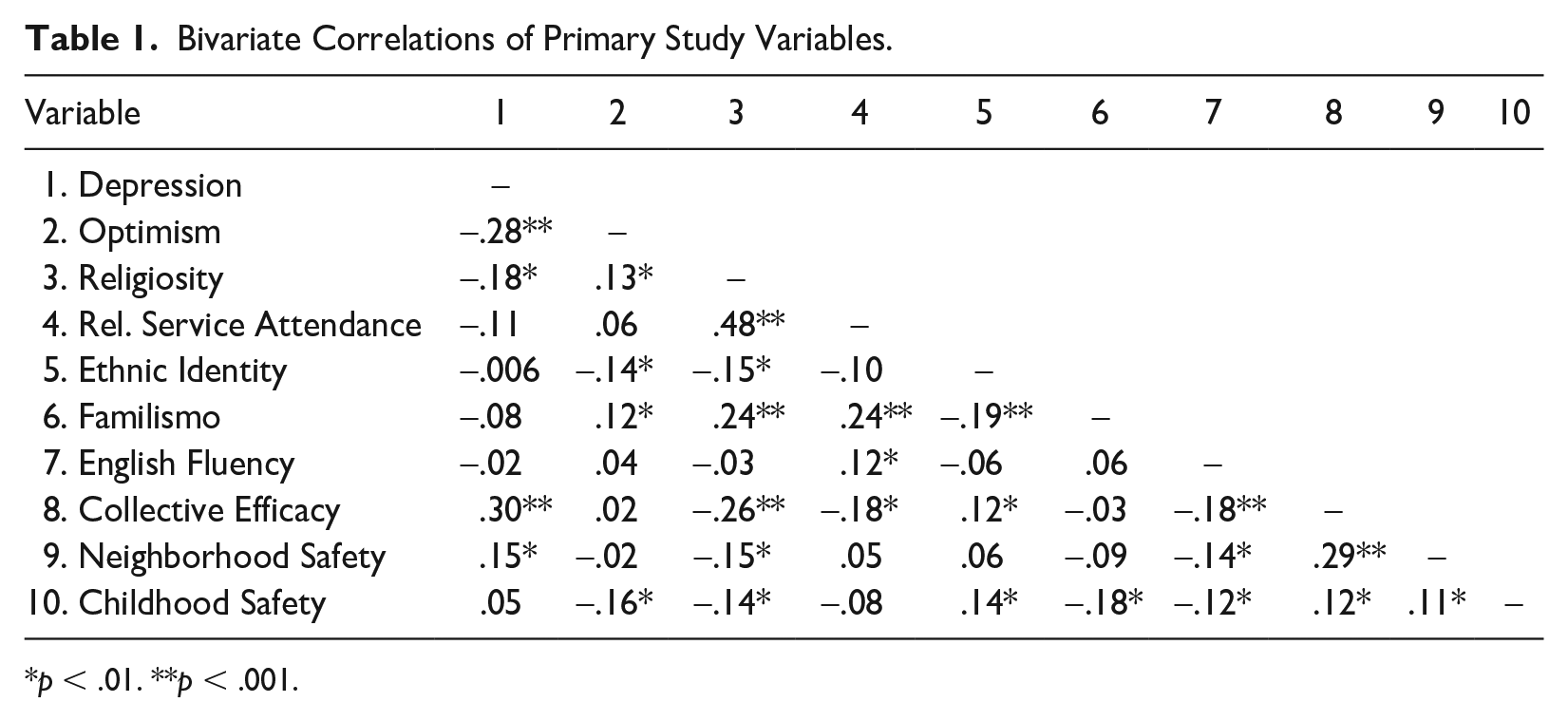
p < .01. **p < .001.
Associations Between Intrapersonal, Cultural, Community Assets and Depression
Table 2 presents the associations of each intrapersonal, cultural, and community asset variable with symptoms of depression. According to the estimated linear regression coefficients, optimism (β = −.28, p < .01) and intrinsic religiosity (β = −.17, p < .01) at the intrapersonal level, as well as collective efficacy (β = −.30, p < .001) and community safety (β = −.17, p < .01) at the community level, were significantly and negatively associated with depressive symptoms. Results indicated that all other assets except for ethnic identity, though not statistically significant, provided negative regression coefficients as expected.
Association Between Intrapersonal, Cultural, and Community Assets With Depression.
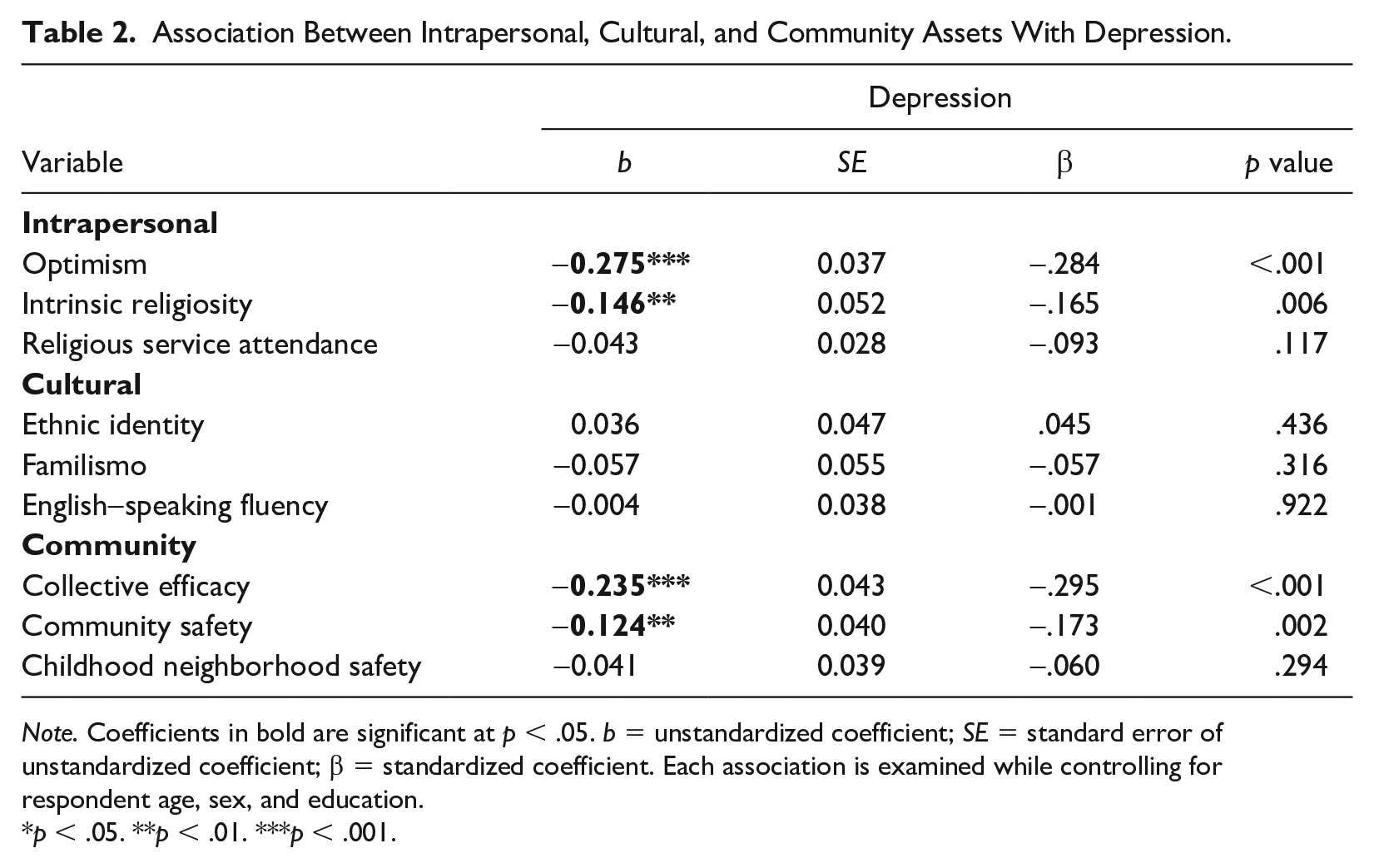
Note. Coefficients in bold are significant at p < .05. b = unstandardized coefficient; SE = standard error of unstandardized coefficient; β = standardized coefficient. Each association is examined while controlling for respondent age, sex, and education.
p < .05. **p < .01. ***p < .001.
In addition to the associations examined in Table 2, we conducted a supplemental multivariate model using items that were statistically significant at the multivariable level (i.e., controlling for demographics; optimism, intrinsic religiosity, collective efficacy, and community safety). We observed that optimism (β = −.29, p < .001) and collective efficacy (β = −.25, p < .001) were significantly related with depressive symptoms, but no significant associations emerged for religiosity or community safety.
Identification and Characteristics of the Latent Classes
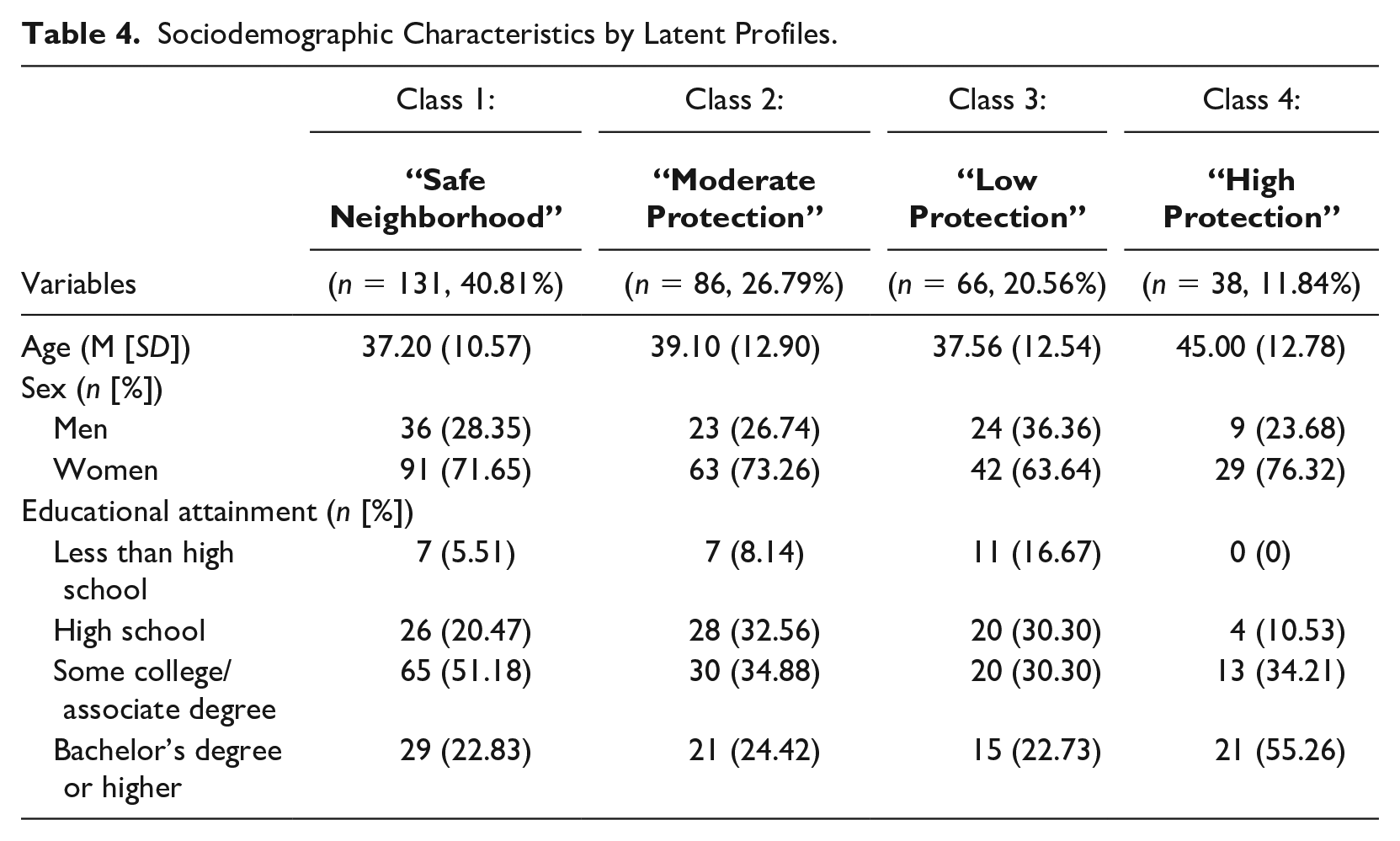
Fit indices and classification accuracy supported a four-class solution (Table 3). Although fit indices for the five-class model were slightly superior to those of the four-class model, the accelerated flattening of the values starting with the four-class solution suggests that the inclusion of additional classes would not be parsimonious. Parsimony is an important consideration in determining the number of classes as fit indices such as the AIC and BIC will often improve slightly by adding additional classes. Still, such minor increases in fit do not necessarily suggest that models with additional classes better represent the heterogeneity within a given sample, and it is important to balance fit statistics with theoretical interpretability and model clarity (Weller et al., 2020). The entropy values (identical to that of the five-class model) indicate that sufficient levels of classification accuracy are obtained with the four-class solution. Therefore, a four-class model was considered the optimal solution: Class 1 (“Safe Neighborhood,” n = 131[40.81%]), Class 2 (“Moderate Protection,” n = 86 [26.79%]), Class 3 (“Low Protection,” n = 66 [20.56%]), and Class 4 (“High Protection,” n = 38 [11.84%]).
Goodness-of-Fit Indices of Intrapersonal, Cultural, and Community Protective Assets Among Hurricane Maria Survivors Relocated to the U.S. Mainland.
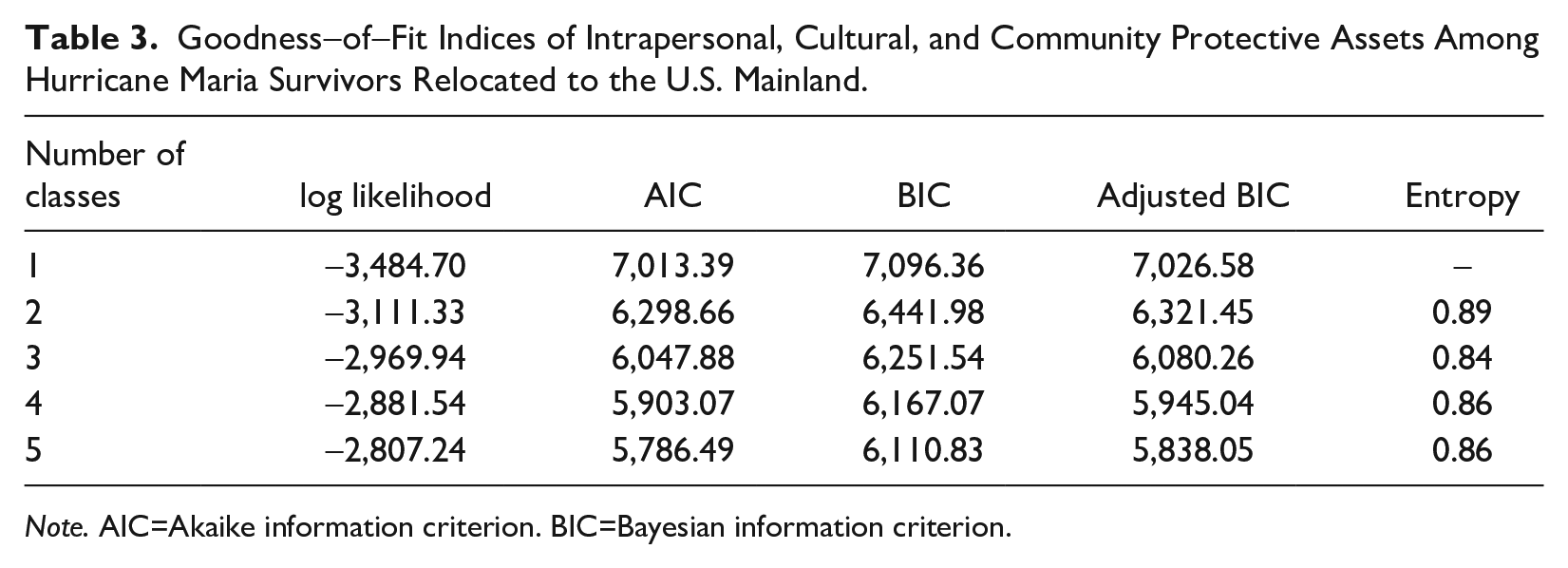
Note. AIC=Akaike information criterion. BIC=Bayesian information criterion.
Figure 1 and Table 4 present standardized scores for each asset and sociodemographic characteristics by class membership. Importantly, based on the way that classes were extracted based on their degree of protective assets, we named each class according to their respective levels of protective assets. For example, Class 1 (“Safe Neighborhood”), represented by younger individuals with some college/associate degree, represents the largest group within the sample. Participants in the Safe Neighborhood class reported higher neighborhood safety scores, whereas all other assets were generally closer to their respective mean values. Class 2 (Moderate Protection) members reported lower levels of protective assets than the High Protection class but higher levels of assets than the Low Protection class. Class 3 (“Low Protection”), members of which are generally younger with an even distribution across educational attainment, reported relatively low scores for most assets including neighborhood safety, familismo, and religiosity. However, Class 4 (“High Protection”), comprised of relatively older individuals with higher levels of education, reported high scores on almost every asset category, including religious service attendance, ethnic identity, and neighborhood collective efficacy.
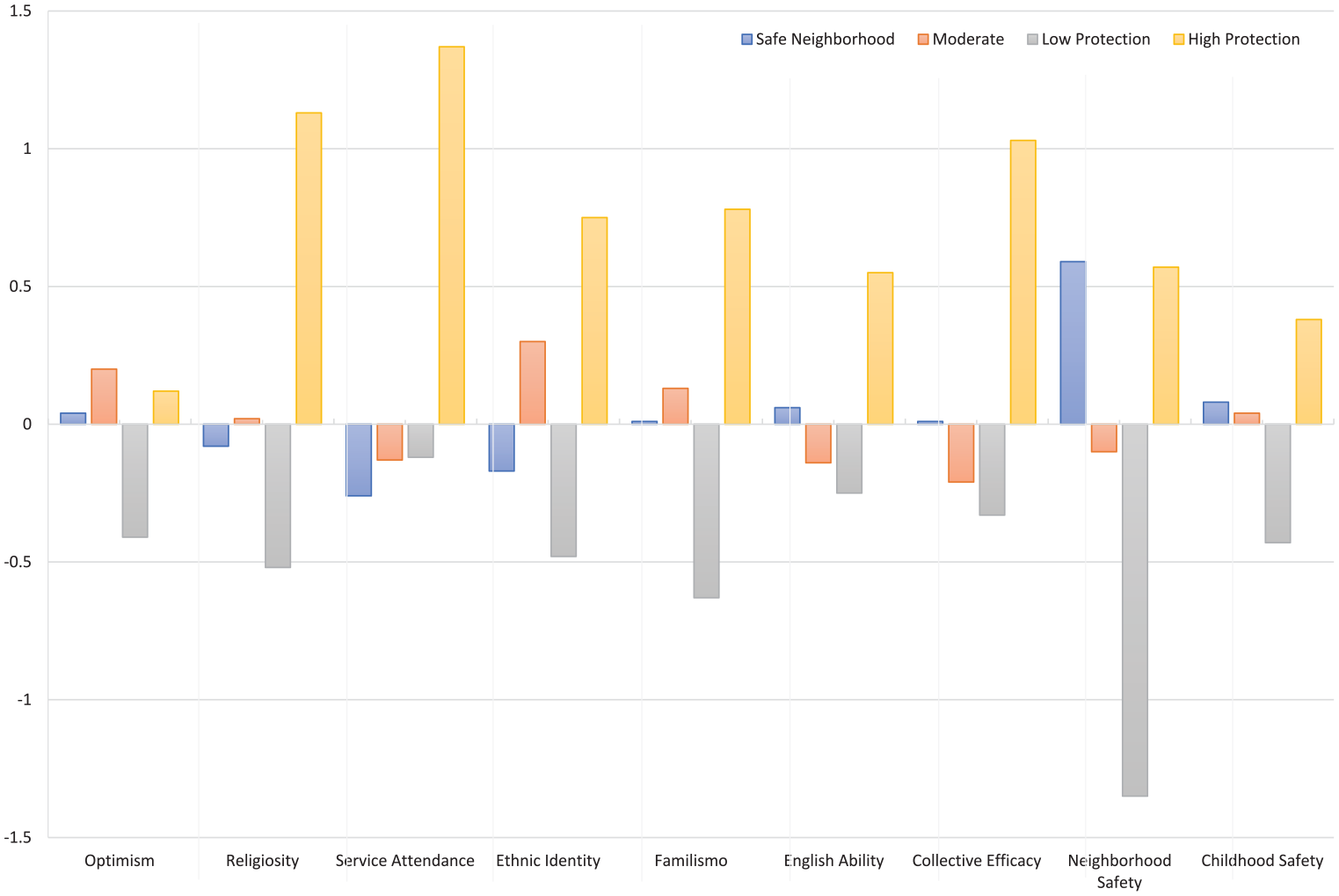
Standardized Means Intrapersonal, Cultural, and Community Assets Among Hurricane Maria Survivors, by Latent Profiles.
Sociodemographic Characteristics by Latent Profiles.
The Association Between Class Membership and Depressive Symptoms
Table 5 presents multiple linear regression results examining associations between class membership and depressive symptoms. Using Class 4 (“High Protection”) as the reference group (because they reported higher levels of most assets), Class 2 (“Moderate Protection”) and Class 3 (“Low Protection”) are likely to have higher depression scores by 0.376 (p < .01) and 0.523 (p < .001), respectively. Class 1 (“Safe Neighborhood”), who reported mean values on most asset categories with higher neighborhood safety, did not appear to be at higher risk for experiencing depressive symptoms compared with Class 4 (“High Protection”). Overall, results are in line with expectations such that classes with higher levels of protective assets reported lower depression scores compared with classes with fewer assets. The one exception is that the class with average levels of protective assets but high levels of neighborhood safety (Class 1) reported similar depression scores as Class 4 with higher levels of most assets.
Linear Regressions of Depression on Class Membership.
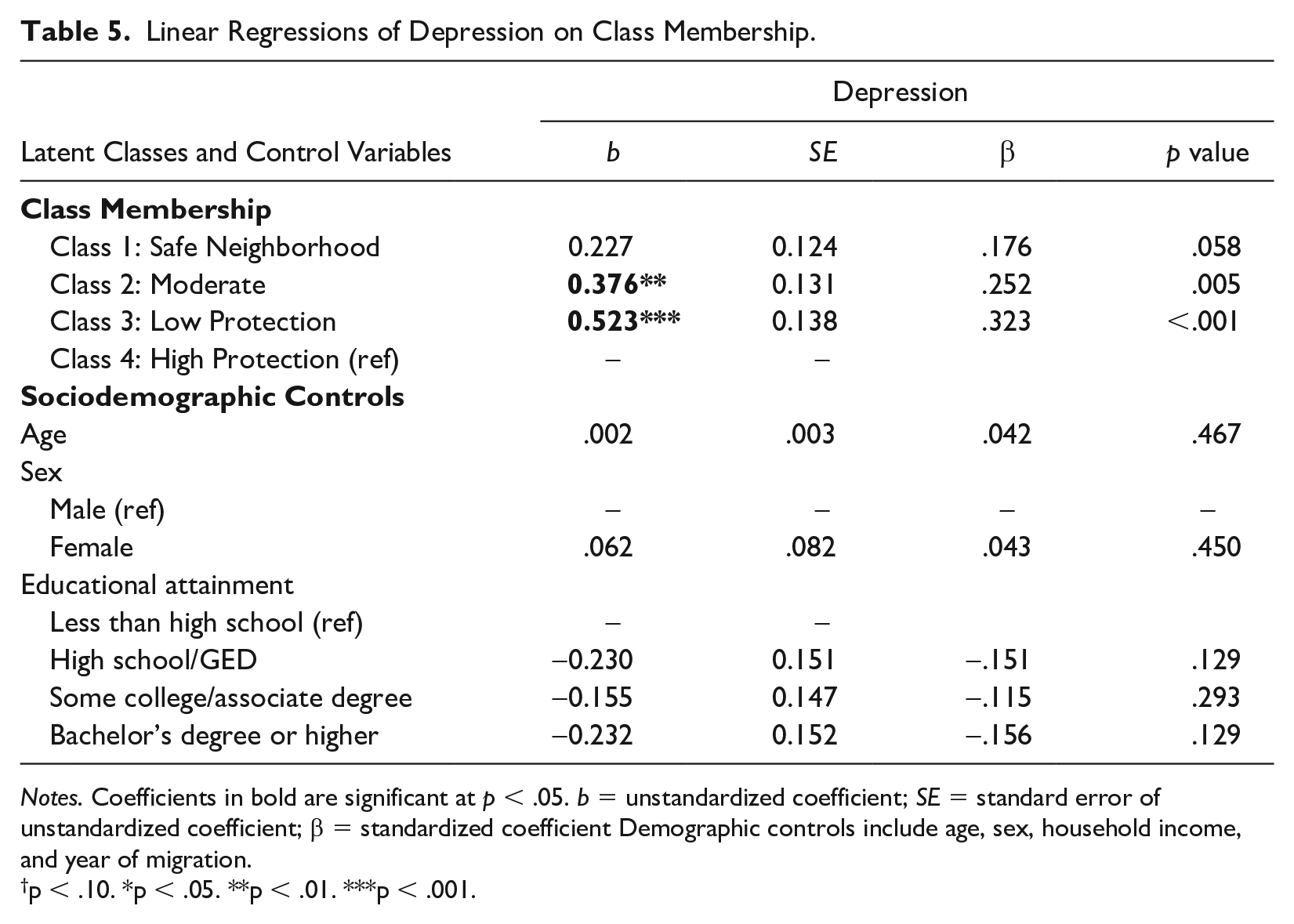
Notes. Coefficients in bold are significant at p < .05. b = unstandardized coefficient; SE = standard error of unstandardized coefficient; β = standardized coefficient Demographic controls include age, sex, household income, and year of migration.
p < .10. *p < .05. **p < .01. ***p < .001.
Discussion
We sought to identify homogeneous classes of Puerto Rican Hurricane Maria survivors based on their protective asset profiles. We assessed whether classes with varying degrees of protective assets would differ in terms of depressive symptomatology. We identified four classes of participants differing in their extent of protective assets and in their self-reported depressive symptoms. Whereas the high protection and safe neighborhood classes reported similar levels of depressive symptoms, the moderate and low protection classes reported higher levels of depressive symptoms compared with the high protection class.
First, we found that optimism and intrinsic religiosity at the intrapersonal level, and collective self-efficacy and community safety at the community level, were significantly associated with fewer depressive symptoms. Moreover, although not statistically significant, other protective assets (religious service attendance, familismo, English fluency, childhood neighborhood safety), except for ethnic identity, were associated with depressive symptoms in the expected negative direction. These findings corroborate prior work suggesting that these variables may represent protective assets that can buffer against depression among Puerto Rican Hurricane Maria survivor migrants to the U.S. mainland (Carver et al., 2010; Pagán-Torres & González-Rivera, 2019; Plante, 2021; Rodríguez-Galán & Falcón, 2018; Sampson, 2017; Toussaint et al., 2023).
The finding that optimism, religiosity, collective efficacy, and community safety emerged as the only significant correlates of depressive symptoms is noteworthy. First, these results help to identify which protective assets might be most salient for Puerto Rican hurricane survivor migrants. Indeed, Hurricane Maria survivors are a unique population: They are different from other Puerto Ricans migrating to the U.S. mainland because they were relocating to escape a major natural disaster—many of them arrived in the U.S. mainland with posttraumatic stress symptoms (Scaramutti et al., 2019). They are also different from other hurricane survivors such as those who experienced the devastating effects of Hurricane Katrina. For example, although many African Americans relocated from New Orleans to Houston during the aftermath of Katrina, they likely did not experience large cultural differences in terms of being able to speak or understand the local language (Schwartz et al., 2022). Puerto Ricans also frequently encounter discrimination and treatment as second-class citizens by many in the U.S. mainland (Silver, 2020). Thus, the migration of Hurricane Maria survivors to the U.S. mainland represents a rare opportunity to study and identify protective assets that may help to offset risk for developing symptoms of depression among U.S. citizen climate migrants.
At the intrapersonal level, optimism and religiosity emerged as two assets that negatively correlated with symptoms of depression. As noted by Carver et al. (2010), optimism buffers against depression because, by definition, depression entails a sense of hopelessness about the future whereas optimism reflects a positive outlook about the future. This finding aligns with prior work among Hispanic populations in Arizona and Florida suggesting an inverse relationship between optimism and depressive symptoms (Cobb et al., 2020). The likelihood of Puerto Rican hurricane survivors maintaining a positive outlook on the future, as opposed to a hopeless outlook, illustrates the resilience that appears to characterize many members of this population. Similarly, religiosity emerged as a protective asset linked with fewer depressive symptoms. The ability to find meaning in suffering and trust in a higher power during difficult times has been identified as a common coping strategy among many Hispanic populations. For example, research on undocumented Hispanics in Houston found that they frequently used religious coping to manage difficult life circumstances (Cobb et al., 2016), and such coping strategies were negatively associated with depressive symptoms. In addition, research on Puerto Ricans has linked religiosity with decreased depressive symptomatology (Pagán-Torres & González-Rivera, 2019; Rodríguez-Galán & Falcón, 2018; Toussaint et al., 2023). These findings suggest that intrapersonal cognitive factors, such as positive beliefs about the future and stronger religious beliefs, may represent important assets for Puerto Rican survivors on the U.S. mainland.
At the community level, collective efficacy and community safety were two assets that negatively correlated with depressive symptoms. As Puerto Rican hurricane survivors migrated to the U.S. mainland, they did so having experienced great loss. The loss accrued from Hurricane Maria included loss of home, social networks on the island, finances, and even a sense of personal agency due to feelings of hopelessness. Thus, collective efficacy offers protection during such periods of loss because it provides survivors with a sense of “togetherness,” and thus greater personal agency, during the process of adjustment to the U.S. mainland (Sampson, 2017). It is well known that residing in cohesive communities serves as an important determinant of health, and the importance of residing in such communities is likely amplified among Maria survivors because of the trauma they experienced. Furthermore, community safety is likely protective because Hurricane Maria survivors are, by definition, fleeing an unsafe environment. Indeed, along with the devastation inflicted by Hurricane Maria, many survivors have long dealt with government corruption, gang violence, and lack of access to quality health care on the island (e.g., Andrade et al., 2023; O’Neill-Carrillo & Rivera-Quiñones, 2018; Villanueva, 2019; Zorrilla, 2017). Thus, a key task for many survivors migrating to the U.S. homeland is to identify safe communities for themselves and for their families. Moreover, the ability to identify and reside in a safe community may offset feelings of hopelessness associated with depression.
Although it is unclear why other protective assets were nonsignificant, one reason may be that such assets are less salient during periods of highly acute and severe stress associated with Hurricane Maria. For example, although English fluency, ethnic identity, familismo, and religious service attendance may be protective in general, for Hurricane Maria survivors, the need to maintain a positive outlook on life and to lean on their religious faith during extreme life circumstances may be more salient for this population during acute periods of stress. Similarly, with the loss of housing and finances, identifying a cohesive community where social networks are present and residing in a safe neighborhood likely represent more immediate needs for many Puerto Rican hurricane survivor migrants. In other words, the nonsignificant findings for other protective assets should not be taken to mean that these assets are unimportant. Rather, whether something is protective depends on one’s resources to meet the need at hand, and safe and cohesive communities, as well as a sense of hope during adversity, likely represent needs that are more immediate for this population. Finally, our relatively small sample size may have contributed to lack of statistical significance among study findings, and future research may consider replicating our findings within a larger sample of Hurricane Maria survivors.
Second, and in line with expectations, we identified distinct classes of survivors based on their protective asset profiles. In contrast to variable-centered approaches that assume protective assets are uniformly distributed across heterogeneous populations, we employed a person-centered approach that enabled us to detect unique classes of survivors varying in their degree and type of protection (Lanza & Rhoades, 2013). The emergence of multiple classes of survivors illustrates the heterogeneity of the Puerto Rican hurricane survivor migrant population and underscores the importance of person-centered approaches that can capture such heterogeneity through the identification of unique classes. The identification of distinct classes of survivors also runs contrary to the general practice of assessing risk and protection using a single set of parameters, for example, assuming that a single parameter adequately characterizes the relationship between a protective asset and outcome within a heterogeneous population. The present study thus takes a step toward accounting for the vast heterogeneity that comprises the Puerto Rican population and has the potential to inform intervention work by identifying groups based on their protection profiles.
Third, we found that classes with greater amounts of protection reported fewer depressive symptoms compared with those with lower amounts of protection. Specifically, the High Protection class reporting higher levels of all protective assets reported fewer depressive symptoms than did the Moderate and Low Protection classes. One interesting finding, however, is that the Safe Community class did not differ from the High Protection class in terms of depressive symptoms. Although it is difficult to ascertain the specific reason for the absence of significant differences between these two classes, two potential explanations come to mind. One reason is that, for a certain subset of Hurricane Maria survivors, the most pressing need following the storm was to identify a safe community for themselves and their families. As noted earlier, Hurricane Maria destroyed thousands of homes and compounded the already unsafe environments in which many Puerto Rican survivors resided. In this sense, although other protective assets are also important, for this subset of individuals, finding a safe community in which to live following the storm may have been the most salient need and thus the most protective asset. Another potential explanation is that, although the High Protection class reported the greatest levels of protective assets in general, community safety may represent the primary asset underlying the effects in this group. More research is needed to identify the ways in which certain protective assets may emerge as more versus less salient during critical life advents, as well as the ways in which these assets might relate differentially to depressive symptomatology.
Practical Implications
Findings from this study have several potential implications for intervention and policy development. First, and aligning with prior research, results showed that optimism and religiosity at the intraindividual level and collective efficacy and community safety at the interpersonal level were protective assets against depression for this population. Intervention and policy focused on the psychological health of Hurricane Maria survivors may consider building in programming that harnesses religiousness as an important asset to offset risk for depression. Moreover, the future may appear bleak for many Hurricane Maria survivors, and intervention and policy efforts may identify ways to provide this population with reasons to be optimistic about their future—whether through the ongoing provision of needed resources, employment assistance, and locating stable family housing. Because safe neighborhood and a sense of community togetherness were important assets in the present study, ideally, holistic intervention and policy programming should incorporate strategies to provide family and community housing in stable and safe areas while capitalizing on values of religiousness and optimism. Finally, our findings indicate that Hurricane Maria survivors vary in their degree of protective assets, both in terms of their levels of assets and which are most salient for them (e.g., safe neighborhood class only vs. high protection assets). Thus, intervention and policy efforts may reconsider “one size fits all” approaches and identify which subsets of survivors are most at risk for developing mental health challenges versus those who are more protected. Identifying which survivors are at higher risk and who lack protective assets will help to provide more tailored intervention and policy initiatives.
Limitations and Future Directions
The present results should be interpreted considering several limitations. First, the data used in this study were cross-sectional, and we cannot establish longitudinal or causal effects of protective assets vis-à-vis depressive symptoms. Second, data were obtained via self-report measures, which are vulnerable to issues involving memory, recollection, and social desirability. Third, it is known that latent profile analysis may produce different numbers of classes depending on the sample size. Although our sample size was adequate to identify and classify four unique classes of protection, studies with larger sample sizes may produce different results, in terms of both the number of classes that emerge as well as their effects on intended outcomes of interest. Future research should replicate our findings among a larger sample of hurricane survivor migrants. Fourth, data were collected using community partner referrals and subsequent participant referrals. Although this approach is recommended for hard-to-reach populations (Goel & Salganik, 2010), the degree of sampling or selection bias in the sample is unknown. Fifth, data were collected during the COVID-19 pandemic, which may have impacted participant responses, including those related to depression, optimism, religiosity, and other constructs. It is well-known that one’s immediate context can influence participant responses, and the COVID-19 pandemic likely made experiences of depressive symptoms—including the way that individuals may cope with these symptoms (i.e., optimism, religiosity)—more salient. However, our data do not allow us to assess the influence of the pandemic on these factors, and study findings should be interpreted considering this broader context. Finally, most of our sample was women and middle-aged individuals, and findings may not generalize to the same degree among men and older age populations. Future research should consider the ways in which protective assets and risk for depressive symptomatology varies across diverse gender and age groups.
In conclusion, and despite these and other limitations, the present study is the first to examine multiple levels of protective assets among Puerto Rican Hurricane Maria survivor migrants and is the first to identify distinct classes of survivors based on their protective asset profiles. This population is unique and incredibly vulnerable, and researchers have only begun to study their psychosocial experiences empirically. Extant studies among this population center almost exclusively on the ways in which psychosocial stressors may compromise their mental and physical health. We took an important step forward by identifying, among subsets of hurricane survivor migrants, sources of protection that can be harnessed as levers for intervention. Our hope is that scholars will build upon this work and will identify protective assets that can be used to develop much-needed interventions for this population.
Footnotes
Declaration of Conflicting Interests
The author(s) declared no potential conflicts of interest with respect to the research, authorship, and/or publication of this article.
Funding
The author(s) disclosed receipt of the following financial support for the research, authorship, and/or publication of this article: National Institute on Minority Health and health Disparities (PIs: Seth J. Schwartz, Christopher P. Salas-Wright, & Eric Brown; MD014694).
