




Abstract
Migrants and members of cultural minorities must negotiate their identification with multiple cultural groups. Many studies have investigated associations between general questionnaire–based cultural identity patterns and psychological adjustment. Research on situational cultural identity patterns—context-bound, momentary identification with a given cultural group—is scarcer. Furthermore, we know little about how variability in identification across contexts and situations may be associated with psychological adjustment. This study addresses these issues by (a) comparing the relative ability of general questionnaire–based and situational diary–based cultural identity patterns in statistically predicting psychological adjustment among Maghrebi migrants to Canada, and (b) introducing and testing cultural identity entropy, a novel approach to characterizing variability in a person’s multiple cultural identities during daily interactions. Drawing on concepts in thermodynamics and information theory, cultural identity entropy indexes greater balance in one’s multiple identifications during an interaction and reflects greater flexibility in cultural ways in that moment. Participants were 93 Maghrebi migrants to Canada who completed baseline questionnaires and daily diaries on situational identification during interactions for 7 days. Results show that situational diary–based cultural identity patterns accounted for substantial variance in psychological adjustment, above and beyond general questionnaire–based patterns, and that greater entropy in heritage cultural contexts was associated with greater psychological adjustment. These results underscore the importance of going beyond general characterizations of multicultural identity by investigating the shifting and contextual ways in which migrants mobilize and negotiate their cultural identities in daily life.
Picture Amira, a Moroccan immigrant to Canada. After 10 years in her new country, she identifies with both Moroccan and Canadian cultural groups. Traditional cultural identity research might investigate how she handles her cultural identities by asking her to fill out questionnaires measuring, for example, how strongly she identifies with either or how compatible she feels these identities are. This foundational body of work has yielded invaluable insights, but researchers are increasingly interested in daily situational fluctuations in cultural identities to better understand their dynamic nature. In the present work, we use daily diaries to investigate three situational cultural identity patterns, including cultural identity entropy, a novel measure which we will describe in detail later on. We also compare the relative ability of these three situational patterns (strength of mainstream and heritage situational identification, latent classes of situational identification configurations, and cultural identity entropy) and traditional questionnaire–based general cultural identity patterns in statistically predicting psychological adjustment in a sample of Maghrebi migrants to Canada.
Cultural Identity Patterns and Psychological Adjustment
Migrants and members of cultural minorities must position themselves with respect to multiple ethnocultural groups and negotiate their belonging to these various groups. For example, Amira may identify equally strongly with the mainstream Canadian cultural group and her heritage Moroccan group. In contrast, a member of a First Nation in Quebec may find her Mi’qmaq identity incompatible with the mainstream Quebec identity and have little sense of belonging to the Quebec society. In yet another case, a person born in Canada to Chinese and Korean parents may have merged her various cultural identities into a single Asian-Canadian identity that she strongly endorses. These various ways of managing one’s cultural identities—which we call here cultural identity patterns—have differential implications for people’s psychological adjustment. Many studies have investigated these associations among immigrants and cultural minorities.
Three research axes are prominent, all typically focusing on mainstream (e.g., Canadian for Amira) and heritage 1 (e.g., Moroccan) cultural identities. A first axis has looked at identification strength, or how strongly people identify with mainstream and heritage cultural groups (Phinney et al., 2001). For example, in a landmark study of more than 7,000 immigrant youth living in 13 settlement countries, Berry and colleagues (2006) found that stronger mainstream and heritage identification combined were related to greater psychological adaptation. Similarly, a meta-analysis reported a positive association between ethnic identity strength and personal well-being among non-White people in North America (Smith & Silva, 2011).
A second axis revolves around bicultural identity integration (BII), building on Benet-Martinez and colleagues’ seminal work (Benet-Martìnez & Haritatos, 2005; Huynh et al., 2011). This framework characterizes the extent to which people’s cultural identities are overlapping (blendedness) and compatible (harmony). Several studies have documented a positive association between BII and psychological adjustment (e.g., Chen et al., 2008; Repke, Benet-Martínez, 2018), including longitudinally (Ferrari et al., 2015).
A third axis encompasses several theoretical frameworks (e.g., Amiot et al., 2007; LaFromboise et al., 1993; Ward et al., 2018)—with different names and important nuances—converging on two main ways of managing one’s cultural identities: compartmentalization (or alternation) versus integration (or fusion, or hybridity). In the former, cultural identities are context-bound and people shift between them depending on the situation. For example, Amira may feel Canadian at work, at the gym, and with some friends but feel Moroccan at home and with other friends. In integration, people combine their various cultural identities into one coherent whole that they use in all situations, like our previous Asian-Canadian example.
These three research axes have uncovered important implications for psychological adjustment, but they also have limitations. The neglect of the dynamic and contextual nature of cultural identities is a crucial one. The three above axes focus on people’s global perception of their identity patterns (using self-report questionnaires) but do not address how these identities are used and experienced in daily situations. Global identity perceptions no doubt contribute to adjustment, but situational identity patterns also matter when accounting for differences in psychological adjustment. A small but growing body of research, to which we now turn, supports this idea.
Situational Cultural Identity Patterns and Psychological Adjustment
Cultural identification is not static: people switch back and forth among the cultural identities that are relevant to them depending on contextual characteristics. In previous research, we have shown that throughout the day, immigrants differentially endorsed a mainstream, heritage, or mainstream–heritage hybrid identity depending on the cultural background of their interlocutor, where they were in the moment, or the kind of activity they were engaging in a given situation (Doucerain et al., 2013, 2023). Similarly, work on situated identity has demonstrated that people identify more or less strongly with their heritage and mainstream groups in different situations (Clément & Noels, 1992). We refer to this context-bound, momentary identification with a given cultural group as situational cultural identification. Just as in the case of its global counterpart reviewed earlier, situational cultural identification has psychological adjustment implications. A research program lead by Yip and colleagues and using daily diary methodologies has shown that greater salience of one’s ethnic identity is associated with greater daily psychological well-being and less psychological distress (Yip, 2005; Yip & Fuligni, 2002; see also Meca et al., 2021 for similar results). Furthermore, having mainstream and heritage identities simultaneously salient during a situation—a form of situational identity integration—was associated with more positive mood during that situation. This suggests that the configuration of situational cultural identities may be associated with situational well-being. We consider both strength and configuration of situational identification in the present research.
To assess configurations, we rely on latent class analysis (LCA). This model-based procedure detects patterns of association among observed variables to identify unobservable subgroups (latent classes) within a population (McCutcheon, 1987). Individuals are then classified into these empirically derived classes. Several authors have suggested that this person-centered approach is ideally suited for multifaceted cultural phenomena (Bámaca-Colbert & Gayles, 2010) and preferable over computing configurations using predefined arbitrary cut points and combinations (Schwartz & Zamboanga, 2008).
Beyond stronger or weaker situational identification, variability in identification across contexts and situations may also be associated with psychological adjustment. Ferguson and colleagues (2017) set forth that people can “play up” or “play down” various cultural self-aspects such that a given cultural identity has more or less influence in a given situation. For example, Amira may emphasize her Moroccan ways of being when interacting with Moroccan friends but de-emphasize them at work with White Canadian colleagues. Different people calibrate their cultural identities to a greater or lesser degree, and Ferguson and colleagues (2017) found that greater cultural identity variability—adjusting identities to a greater extent—is associated with higher quality family interactions. Similarly, Noels and Clément (2015) found that greater variability in strength of heritage identification across life domains was associated with fewer outgroup hassles among first-generation immigrants to Canada. In the present work, we draw on the above findings and investigate associations between situational identity patterns—identity strength, configurations, and variability—and general psychological adjustment. We rely on a novel way to conceptualize and measure situational identity variability, namely, entropy.
Entropy and Situational Cultural Identity
The concept of entropy originated in physics to measure a system’s state of disorder or randomness. A system is a complex entity comprising multiple interacting elements that produces phenomena not explainable by the functioning of the individual elements. Ecosystems or the human body are typical system examples. The concept of entropy has since been adapted in information theory to index information uncertainty (Shannon, 1948) and is now used in a variety of fields (Haynes et al., 2021), such as urban planning (Batty, 2007), economics (Alvarez-Ramirez & Rodriguez, 2011), ecology (Zurlini et al., 2015), neuroscience (Fagerholm et al., 2023), bilingualism research (Gullifer & Titone, 2019), and, fairly recently, in the psychology of attitudes (Dalege et al., 2018) and uncertainty (Hirsh et al., 2012). In very simple terms, in information theory, entropy generally characterizes the ability to predict the next state of a system—a conceptualization that influenced applications in other social science contexts. The next state prediction relies on what we know about the context, creating an informational framework about what is going to happen next. If we can predict with great certainty what happens next—that is, the next state is highly predictable—the entropy is considered low. In contrast, if we cannot build solid expectations and the next state comes as a surprise, entropy is considered high. In psychological terms, Hirsh and colleagues (2012) contend that “low psychological entropy occurs during situations in which there is a high probability of employing a particular . . . perceptual frame,” whereas “high psychological entropy occurs during situations in which there are multiple competing frames . . ., none of which is clearly more strongly activated than the others” (p. 307). Cultural identity is a powerful frame influencing how a situation is perceived and interpreted and how a person will act in that situation (Benet-Martínez et al., 2002; Ferguson et al., 2017; Gallois & Giles, 2015; Pavlenko & Blackledge, 2004). This makes the conceptualization of psychological entropy directly translatable to the case of cultural identity. Figure 1 illustrates this translation. Picture Amira and Fatima, two Moroccan immigrants to Canada with four relevant cultural identities—Moroccan, Canadian, Muslim, and Arab-Canadian—acting as frames that can influence how a given situation will unfold. In the situation depicted in Panel B of Figure 1, Fatima identifies very strongly with the Moroccan cultural group but hardly at all with her other cultural identities. In such a situation-system, the probability of Fatima’s Moroccan identity to guide her way of being and acting during the situation is high. We can build solid expectations that what happens next—the system’s next state—will reflect Moroccan influence. This system’s entropy is therefore low. In the situation depicted in Panel C of Figure 1, Amira endorses all four of her cultural identities fairly equally. In such a situation-system with a flatter probability distribution, no cultural outcome is clearly more likely than the others. What happens next may reflect any combination of cultural influences and so we cannot form strong expectations about the system’s next state. Thus, this system’s entropy is high. Looking at both distributions in Figure 1, it follows that higher cultural entropy reflects greater balance or diversity in the strength of relevant situational identifications.
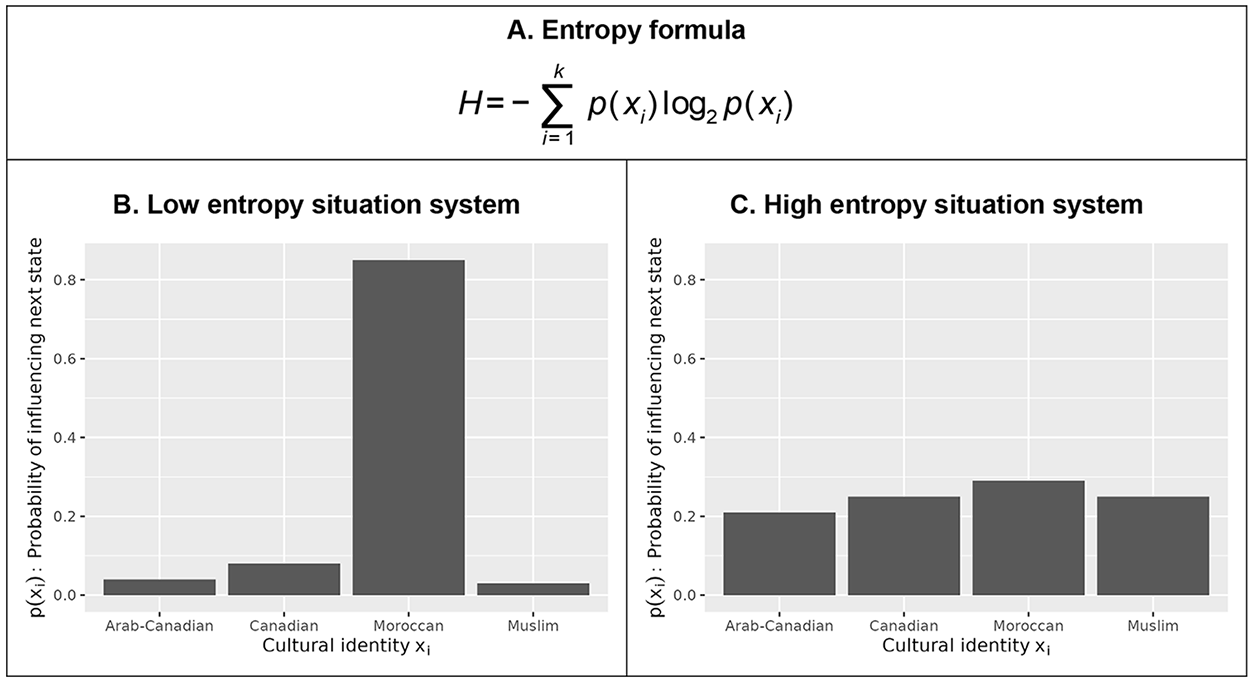
Cultural Identity Entropy: (A) Entropy Formula, (B) Low-Entropy Situation System, and (C) High-Entropy Situation System
Thus, we conceptualize cultural identity entropy (H) as a measure of balance in situational cultural identification strength. H is computed as shown in Panel A of Figure 1, where k is the number of cultural identities considered (here, 4) and p(xi) is the “proportion” of identification strength attributed to that identity in a given situation. Let us take the case of Amira in the situation depicted in Panel C of Figure 1. She rated how strongly she identified with her different cultures in that situation on a 1 to 9 Likert-type scale. She reported a strength of 7 for Arab-Canadian, 8 for Canadian, 9 for Moroccan, and 8 for Muslim. These scores are first converted to proportions (.21, .25, .29, and .25, respectively). Cultural identity entropy in that situation is equal to 1.99. H is continuous and can range from 0 to log(k).
We have reason to believe that higher cultural identity entropy may be associated with positive psychological adjustment. High entropy indicates that all relevant cultural identities are salient and activated to similar degrees, meaning that they are equally likely to be mobilized to frame the situation and influence one’s way of being and acting in that situation. As such, high entropy may reflect a form of identity flexibility that could help meet the demands of complex social situations. More broadly, psychological flexibility is considered a fundamental aspect of health and is positively associated with psychological adjustment (Kashdan & Rottenberg, 2010). Furthermore, simultaneous activation of one’s cultural identities is consistent with an integration configuration, which is also positively associated with psychological adjustment (Amiot et al., 2007). More distally, high entropy in living systems—reflecting high uncertainty in the system—can trigger creativity and move the living system to increase its internal complexity (Mavrofides et al., 2011). This is typically an adaptive process fostering greater adjustment between the living system and its environment. Thus, we would expect cultural identity entropy in daily social interactions to be positively associated with psychological adjustment.
The Present Study
We investigate whether situational identification patterns in daily social interactions aggregated over time are associated with general psychological adjustment, rather than daily adjustment or well-being, like in the diary studies reviewed earlier. Using daily diaries, we focus on three situational identification patterns: (a) strength of mainstream and heritage situational identification; (b) configurations of mainstream and heritage situational identification, using LCA to obtain emerging configurations rather than predefined ones; and (c) cultural identity entropy. We compare the predictive ability of these three situational patterns to that of general cultural identity patterns (the three axes discussed first), with the general expectation that situational patterns account for appreciable variance in psychological adjustment, above that explained by general patterns (H0). Based on previous research, we hypothesize that greater psychological adjustment will be associated with higher mainstream (H1a) and heritage (H1b) situational identification; belonging to latent classes reflecting cultural identity integration elements compared with belonging to other classes (H2); and greater cultural identity entropy (H3).
Furthermore, past research—including our own (Doucerain et al., 2013, 2023)—has established that cultural identification shifts in context-dependent ways (Clément & Noels, 1992). This is also consistent with conceptualizations of acculturation as a dynamic and contextually grounded process (Doucerain, 2018; Ward & Geeraert, 2016). Therefore, in addition to analyses with general situational patterns, we also consider each of the three situational identity patterns in mainstream, heritage, and other cultural contexts. “Other” cultural contexts include situations where immigrants interact with individuals who belong neither to the mainstream nor to the heritage group. For our hypothetical immigrant Amira, this would include interactions with her Colombia-born friend or her multicultural colleagues. In other research, we have shown that such ‘‘other-culture’’ contexts play an important role in immigrants’ acculturation (Doucerain et al., in press). The simultaneous consideration of three situational identity patterns in three different cultural contexts is a novel feature of the present research. Given the paucity of research considering cultural contexts separately, we do not form specific context-bound hypotheses.
Our goal is threefold. First, we compare the relative predictive ability of general identity questionnaires and diary-based situational identity indices. Existing studies typically focus on one or the other approach, but do not compare them head-to-head in a single study. In doing so, we also seek to promote daily diaries as a valuable methodological tool to study contextual and situated dimensions of cultural identities. Second, we present cultural identity entropy as a useful concept to investigate situational cultural identities. We provide a proof of concept by focusing on the simple case of two cultural identities: mainstream and heritage (rather than four like in the earlier example). Third, using these tools, we aim to generate novel insights on associations between cultural identity patterns and psychological adjustment in a sample of an understudied and often marginalized population—Maghrebi immigrants.
Method
Participants and Procedure
Participants were 118 Maghrebi migrants living in Montreal, QC, Canada, recruited via classifieds and posters in the community. They had to be sufficiently fluent in French to take part in the study, given that all materials and interactions were in French. Twenty-five participants did not provide any diary data, leaving 93 participants for analyses (52 women; Mage = 31.45; SDage = 8.54). Most participants were born in Morocco (55, or 59.1%), 32 in Algeria (34.4%), and six in Tunisia (6.5%). On average, participants had been living in Canada for 7.1 years (SD = 7.06). Most participants had completed at least postsecondary education (83; 89%), and 64 of them had completed a bachelor’s degree or above (69%). This is superior to the national average, with 53% of landed immigrants holding a university degree in 2021 (Statistics Canada, 2022).
Participants completed a computerized battery of questionnaires during a laboratory visit which lasted around 75 min. This study was part of a larger project including physiological measures reported elsewhere (Doucerain et al., 2022). Demographic data were collected online prior to the visit to assess eligibility criteria and minimize time spent in the lab. At the end of their laboratory visit, participants received a set of seven diary paper sheets and a prepaid return envelope. A research assistant instructed them to fill out one diary sheet every evening and to mail all diaries once completed. We chose pen and paper over digital diaries for the sake of greater accessibility. A limitation of this approach is that participants do not receive daily reminders to fill out a diary. Trained research assistants then entered diary responses digitally. This project received approval from the university’s ethical review board and participants provided informed consent. They received $20 Canadian as compensation for their time in the lab and $20 Canadian for filling out daily diaries.
Materials
In-Lab Baseline Questionnaires
Mainstream and Heritage Identification Strength
The Ingroup Identification Scale (IIS; Tropp & Wright, 2001) measures the degree to which a social group is included in the self by presenting participants with pairs of circles ranging in overlap from 1 (no overlap) to 7 (almost complete overlap). Participants chose the pair best representing their level of identification with Canadians (mainstream) and their cultural group of origin (Moroccan, Algerian, or Tunisian; heritage). What constitutes the mainstream cultural group in Quebec is debatable. Both “Canadian” and “Quebecer” could be valid options. However, given that immigrants from racialized groups report a deficit of belonging to Quebec relative to Canada (a deficit that has increased in recent years; Bilodeau & Turgeon, 2023), we opted for “Canadian” as the mainstream identity in this study.
Bicultural Identity Integration
The Bicultural Identity Integration Scale (BII; Benet-Martìnez & Haritatos, 2005; Huynh et al., 2011) measures the perceived degree of blending and compatibility between two cultural identities. The blendedness subscale (nine items; Cronbach’s α = .81) was used to represent the extent to which participants perceived their identities (Maghrebi and Canadian) as blendable rather than seeing them as dissociated (e.g., “I find it difficult to combine my different cultures,” reversed scored). The harmony subscale (11 items; Cronbach’s α = .88) indicated the perceived degree of compatibility rather than conflict between participants’ cultural identities (e.g., “I find it easy to harmonize my different cultures”). All items were rated on a 7-point Likert-type scale: 1 = not at all to 7 = absolutely. The BII has been used among immigrants to Canada in past research (Yampolsky et al., 2016).
Multicultural Identity Integration
The Multicultural Identity Integration Scale (MULTIIS; Yampolsky et al., 2016) is based on the cognitive-developmental model of social identity integration (CDMSII; Amiot et al., 2007) and measures how multicultural individuals organize and configure their multicultural identities within their self-concept. We used the compartmentalization and integration subscales. Compartmentalization (nine items; Cronbach’s α = .84) refers to keeping one’s multiple identities in their own separate compartments within the self-concept. People identify with only one cultural group at a time, depending on the context (e.g., “I keep my cultural identities separate from each other”). Integration (eight items; Cronbach’s α = .80) is characterized by a perception of cohesion and connection between one’s multicultural identities within the self. In this case, an individual identifies with these multiple identities simultaneously across contexts (e.g., “my cultural identities complement each other”). All items were rated on a 7-point Likert-type scale: 1 = not at all to 7 = absolutely. The MULTIIS was developed and tested among immigrants to Canada.
Psychological Adjustment
The Brief Psychological Adjustment Scale (BPAS; Demes & Geeraert, 2014) was used to assess participants’ psychological adaptation to Canada. Items represented participants’ level of felt happiness and comfort within their new society and the extent to which they felt anxious and disoriented in their new country. All eight items (Cronbach’s α = .84) were rated on a 7-point Likert-type scale ranging from 1 = never to 7 = always. The BPAS has been used among migrants to Canada in past research (Rapaport & Doucerain 2021).
Total Score Computation
Participants regularly have missing scores on one or more items of a given scale. In such cases, researchers typically compute prorated scale scores (Mazza et al., 2015) as total scores. Namely, they average the available item responses. For example, if a participant answers nine out of 10 items, the prorated scale score is the average of the nine responses. This approach is equivalent to imputing each missing item response with the mean of available scores for that scale, which results in bias even under a missing completely at random (MCAR) mechanism (Mazza et al., 2015). In contrast, item-level imputation uses other observed item responses to predict the missing ones. This second approach is preferable because it increases power and precision (Gottschall et al., 2012). Therefore, we used it here before computing total scores.
Daily Diaries
For 7 days, participants reported on the five most relevant social interactions they had during the day. For each interaction, they indicated the cultural background of their interlocutor (coded mainstream, heritage, other), how strong their mainstream and heritage cultural identifications were during that interaction on a 7-point Likert-type scale, and how positive that interaction was, also on a 7-point Likert-type scale. Participants could report up to 35 interactions (29.54 interactions reported on average), for a total of 2,747 interactions. We used average interaction positivity and diversity in cultural contexts as covariates in all analyses. Diversity in cultural contexts was computed using Agresti’s index of qualitative variation (Doucerain et al., 2021), a measure of variability for categorical variables. Including these covariates helps ensure that the regression coefficients of interest do not reflect the influence of having interactions that are typically more or less positive and of having culturally more or less diverse interactions.
For each participant, we then computed five sets of situational cultural identity patterns. Figure 2 provides a visual description of these indices. Sets 1 and 2, called diary overall, were computed across all interactions, regardless of their cultural context. In Set 1, we computed the average strength of situational mainstream and heritage cultural identification across all interactions, yielding two indices: (a) overall mainstream situational identification and (b) overall heritage situational identification. In Set 2, we computed the average cultural identity entropy across all interactions, or overall entropy.
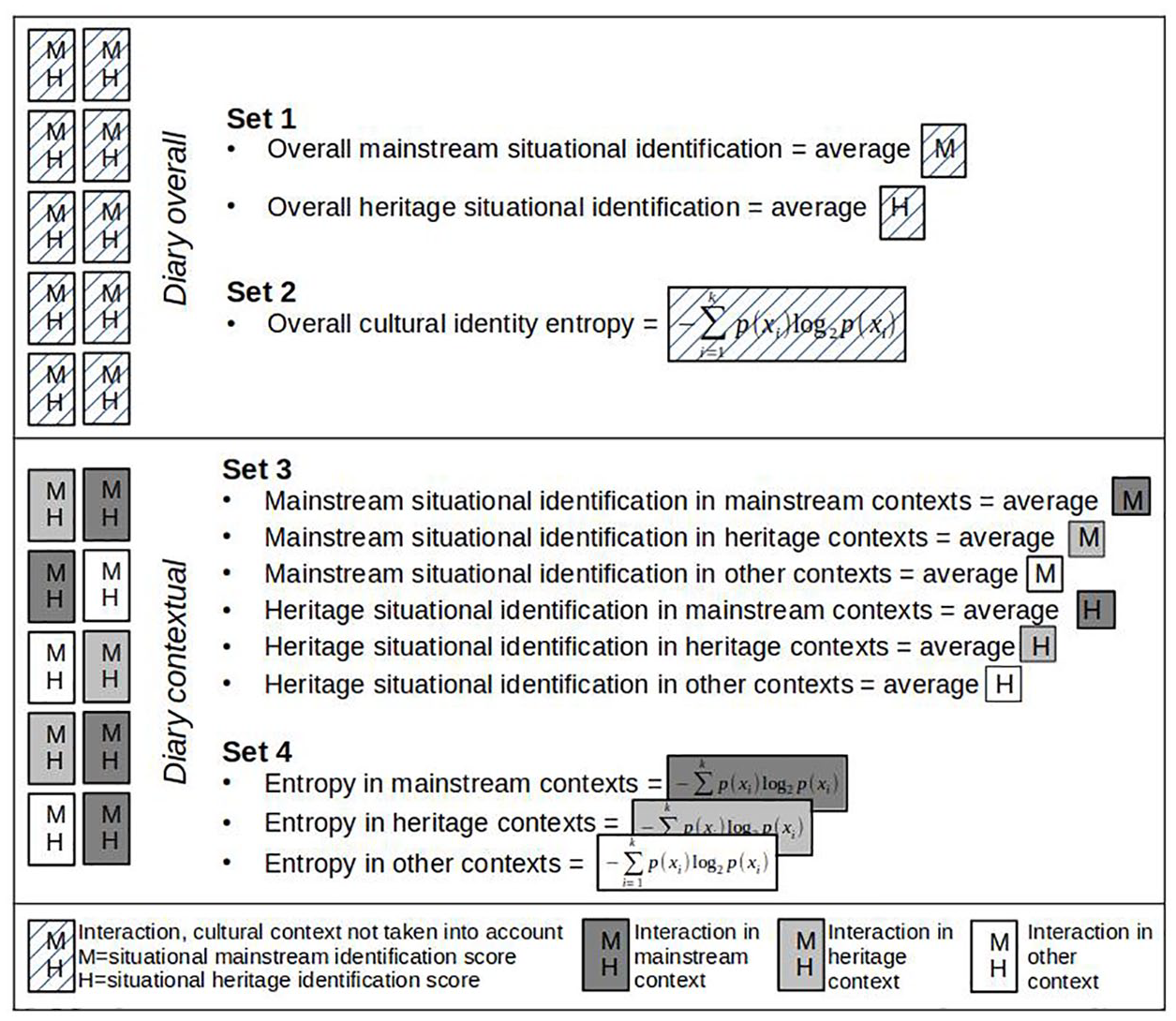
Description of Sets 1 To 4 of Situational Cultural Identity Patterns Computed
Sets 3 and 4, called diary contextual, were computed split up by cultural contexts, as indicated by interlocutors’ cultural background. For example, if a participant reported interacting with a mainstream person, this interaction was coded as taking place in a mainstream context. In Set 3, we computed the average strength of situational mainstream identification in mainstream contexts, in heritage contexts, and in other cultural contexts (with the same principle applying to heritage identification), yielding six indices: (a) mainstream situational identification in mainstream contexts, (b) mainstream situational identification in heritage contexts, (c) mainstream situational identification in other contexts, (d) heritage situational identification in mainstream contexts, (e) heritage situational identification in heritage contexts, and (f) and heritage situational identification in other contexts. These six indices were also used to estimate latent classes (Set 5), as will be described later. In Set 4, we computed the average cultural identity entropy in each type of cultural context, yielding three indices: entropy in mainstream contexts, entropy in heritage contexts, and entropy in other contexts.
Data Analysis
A power analysis showed that for a medium effect size involving six predictors (the largest set of diary variables) in a regression, 97 participants would be necessary for a power of .80. With 93 participants, power was considered fairly adequate. Missing data were minimal (0.15% of baseline data and 1.21% of daily diary data). We imputed them using expectation maximization to preserve power, which was critical given our limited sample size. Past research has shown that this approach is preferable over alternative imputation techniques (Musil et al., 2002). Univariate outliers were winsorized, whereby extreme values outside three standard deviations around the mean (0.40% of observations) were brought within that interval. We detected two multivariate outliers using Mahalanobis distances evaluated at a stringent level of p < .001 in daily diary data. However, Mahalanobis distances for these observations were just beyond the critical value and not visually separate from the rest of the distribution, so they were left untouched.
Latent Classes
We used the six diary contextual situational identification variables (Set 3) to derive latent identification profiles (Set 5) with the R package tidyLPA (Rosenberg et al., 2018). We determined the optimal number of classes by comparing fit indices for two- to five-class solutions. We looked for the solution with lowest Akaike information criterion (AIC) and Bayes information criterion (BIC) values, highest relative entropy (≥.70 to be acceptable), highest posterior class membership probabilities (≥.70 to be acceptable), class sizes including at least 15% of the sample, and statistically significant bootstrapped likelihood ratio tests (BLRT) comparing k with k-1 classes (Nylund et al., 2007).
Multiple Regressions
We ran multiple regressions with BPAS scores (psychological adjustment) as the dependent variable. Predictors were entered hierarchically with age, sex, length of stay in Canada, average positivity of interactions across diaries, and cultural variability of interlocutors in a first step; baseline questionnaire variables in a second step; and diary variables in a third step. The various diary variable sets (Sets 1–5) could not be entered simultaneously because of multicollinearity issues (variance inflation factors [VIFs] >5.0) and were therefore entered in separate models. Even so, VIFs for three variables in the diary contextual situational identification set (Set 3) hovered around 5.0 (5.0, 5.73, and 5.76). We kept this variable set in a single model for the sake of conceptual coherence but take note of this issue. Statistical assumptions of normality, linearity, homoscedasticity, and non-multicollinearity were verified using the R package performance (Lüdecke et al., 2021). No issues were detected except for the multicollinearity aspect just mentioned.
Results
Descriptive Results
Table 1 displays descriptive statistics and correlations among numeric variables. At baseline, participants identified fairly strongly with both mainstream and heritage cultural groups (IIS scores), with no statistical difference between the two, t(183) = 1.4, p = .2. Harmony and blendedness dimensions of BII were also scored fairly high, as was multicultural identity integration (MULTIIS-I). In contrast, compartmentalization (MULTIIS-C) was fairly low and significantly lower than integration, t(178) = 11, p < .001. Questionnaire-based mainstream and heritage cultural identification scores (IIS) were positively correlated with their diary counterparts. Diary overall mainstream situational identification was also positively associated with baseline identity blendedness (BII) and integration (MULTIIS-I). At the daily level, participants interacted primarily with heritage interlocutors (42% of interactions), followed by mainstream (32%) and other (26%) interlocutors. On the whole, interactions were fairly positive. Across diaries, participants identified fairly strongly with their heritage group and moderately strongly with the mainstream group. This difference was statistically significant, t(184) = 4.5, p < .001. Correlations involving our dependent variable, psychological adjustment, were consistent with the extant literature and our hypotheses. BPAS scores were associated negatively with baseline compartmentalization but positively with baseline mainstream identification, blendedness, harmony, integration, and diary overall mainstream situational identification and entropy.
Descriptive Statistics and Correlations
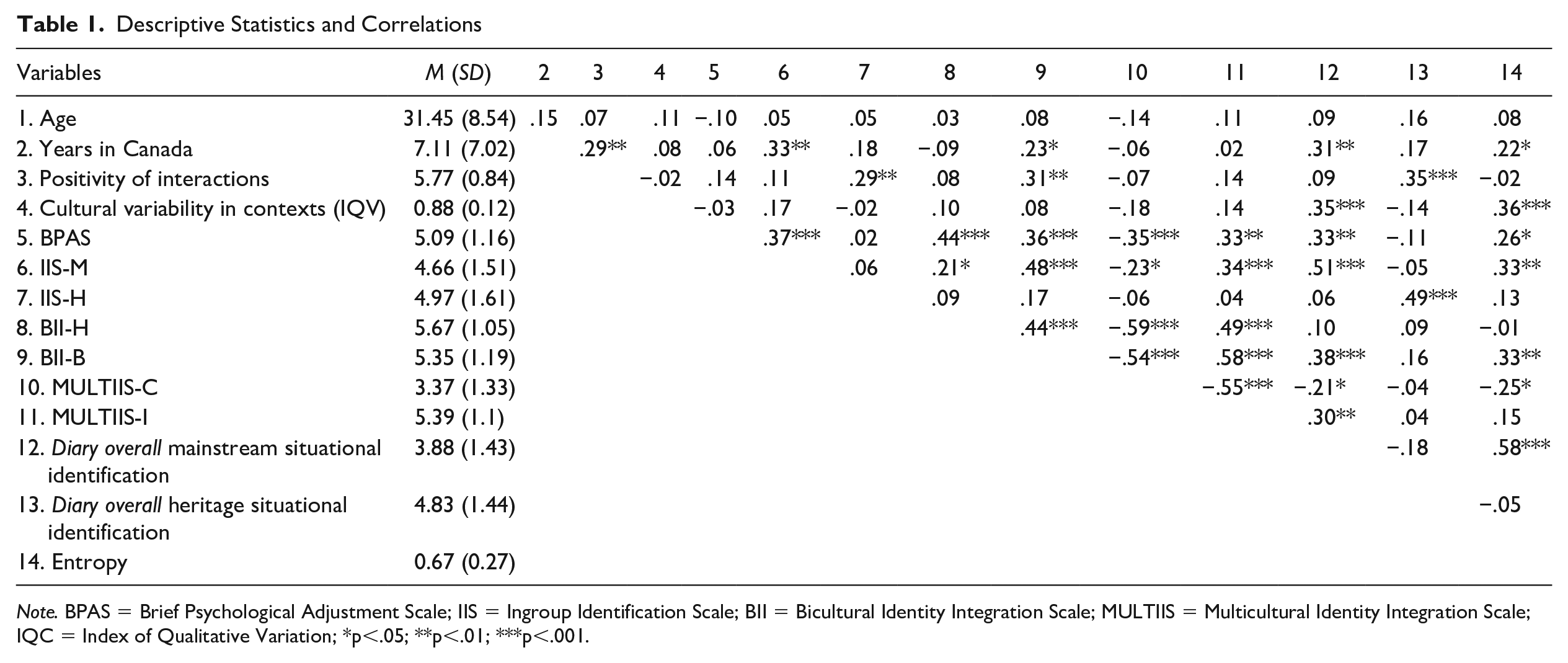
Note. BPAS = Brief Psychological Adjustment Scale; IIS = Ingroup Identification Scale; BII = Bicultural Identity Integration Scale; MULTIIS = Multicultural Identity Integration Scale; IQC = Index of Qualitative Variation; *p<.05; **p<.01; ***p<.001.
Diary Contextual Situational Identification Latent Classes (Set 5)
Table 2 shows fit indices for all solutions tested. Class sizes, BIC, and BLRT indices ruled out the five-class solution and class size ruled out the four-class solution. AIC, BIC and entropy were best with three classes, so we retained the three-class solution. Figure 3 shows daily situational identification profiles for these three classes. In Class 1, representing 28% of the sample, participants identified strongly with their heritage group and weakly with the mainstream group across cultural contexts. This pattern is consistent with Amiot et al.’s (2007) categorization, so we named this class “Daily categorization.” In Class 2, which included 54% of the sample, participants displayed high congruence between cultural identification and context. They identified strongly with the mainstream group but weakly with their heritage group in mainstream contexts and vice versa for heritage contexts. In other cultural contexts, mainstream identification was higher than heritage identification. This pattern is consistent with Amiot et al.’s (2007) compartmentalization and Ward et al.’s (2018) alternation, whereby cultural identities are kept separate and tied to specific cultural contexts. Therefore, we named this class “Daily compartmentalization.” In Class 3, counting 18% of participants, mainstream and heritage identification were strong in all contexts. Mainstream identification was lower in heritage contexts than all other identification levels for that class, but it was still higher than in other classes. This pattern is consistent with Amiot et al.’s (2007) integration and Ward et al.’s (2018) fusion. Therefore, we named this class “Daily integration.”
Model Fit Indices for Three-, Four-, and Five-Class Solutions.
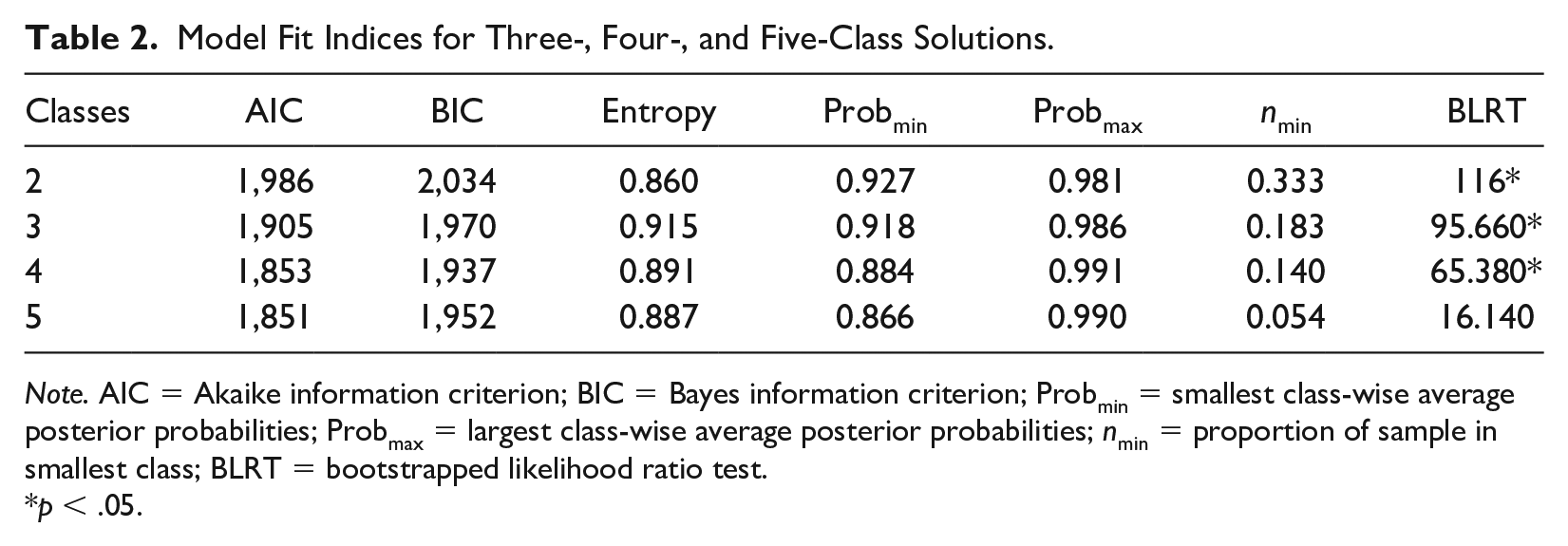
Note. AIC = Akaike information criterion; BIC = Bayes information criterion; Probmin = smallest class-wise average posterior probabilities; Probmax = largest class-wise average posterior probabilities; nmin = proportion of sample in smallest class; BLRT = bootstrapped likelihood ratio test.
p < .05.
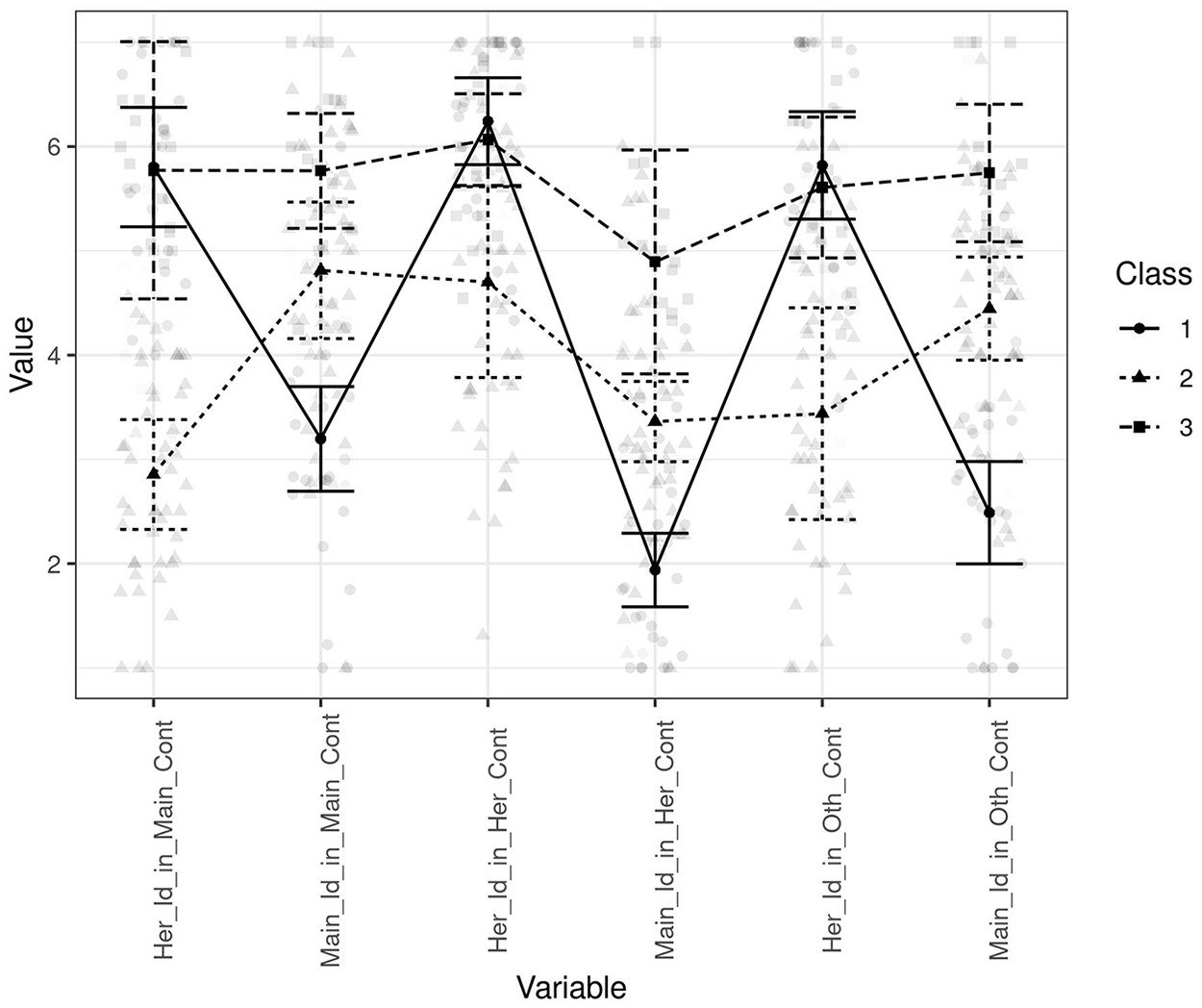
Latent Profiles for the Three-Class Solution
Baseline Regressions
Table 3 shows the results of regressions with baseline predictors. None of the covariates included in Model 0 were statistically significantly associated with BPAS scores (psychological adjustment). Their introduction accounted for 3% of variance, a nonstatistically significant improvement, F(5, 87) = 0.59, p = .71. The addition of baseline identity questionnaires in Model 1 increased R2 by .29, which is statistically significant, F(6, 81) = 5.75, p<.001. Coefficients for IIS-M and BII-H were positive and significant, β(SE)=.29(.11), t = 2.53, p = .01 and β(SE) = .32(.12), t = 2.62, p = .01. This indicates that identifying more strongly with the mainstream group and perceiving one’s cultural identities as more harmonious was associated with greater psychological adjustment, with moderate effect sizes.
Results of Regressions With Baseline Predictors.
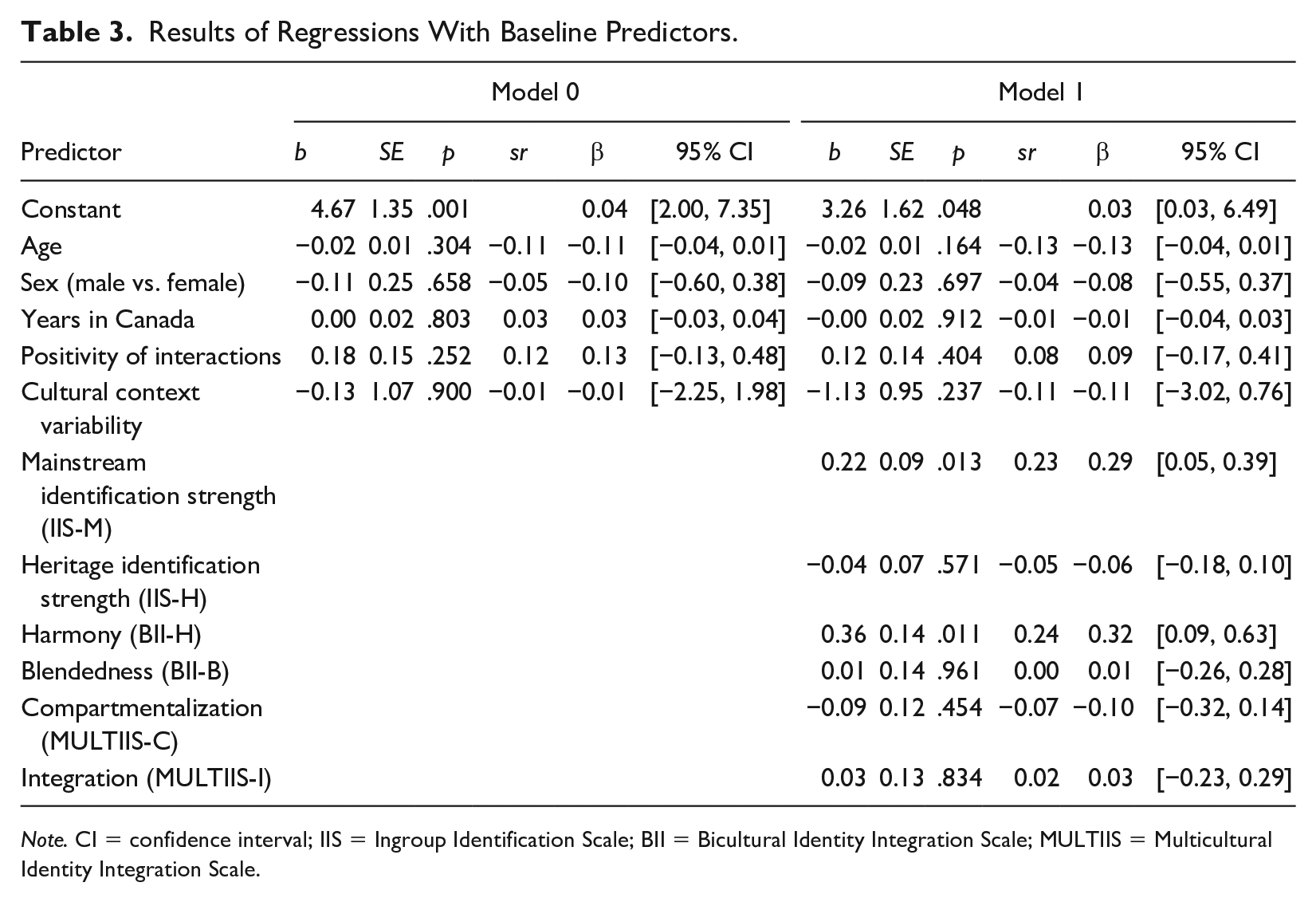
Note. CI = confidence interval; IIS = Ingroup Identification Scale; BII = Bicultural Identity Integration Scale; MULTIIS = Multicultural Identity Integration Scale.
Regressions With Diary Overall Variable Sets (Sets 1 and 2)
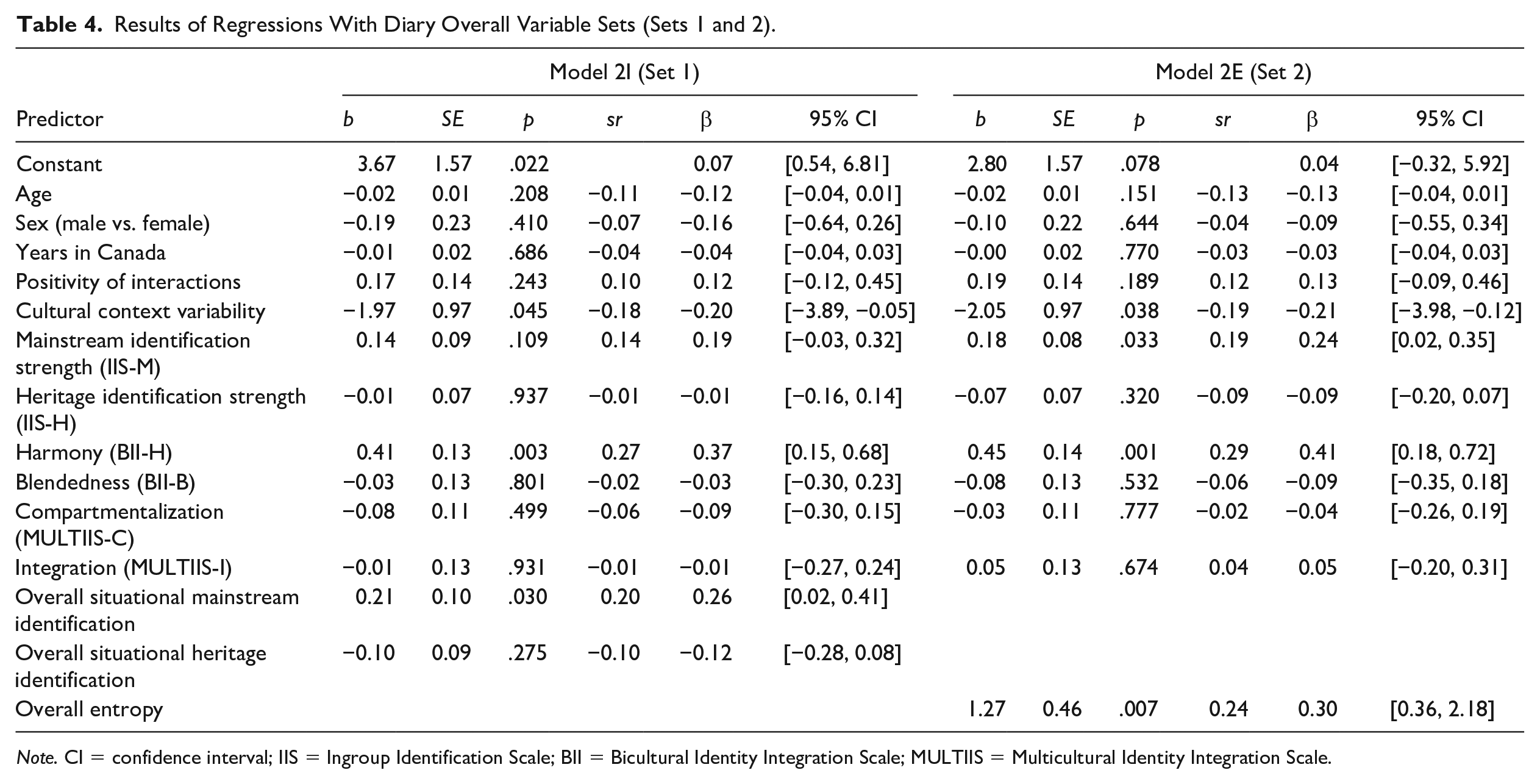
Table 4 displays the results of regressions with diary indices computed across all interactions. The introduction of diary overall situational identification variables (Set 1) in Model 2I increased R2 to .38, a significant improvement over Model 1, F(2, 79) = 7.58, p = .02. Only the mainstream coefficient was significant in this model, β(SE) = .26(.12), t = 2.21, p = .03, indicating that identifying more strongly with the mainstream group throughout the day is associated with greater psychological adjustment, with a medium effect size and controlling for other predictors. This is consistent with H1a. Notably, in Model 2I, the coefficient for IIS-M (baseline mainstream identification strength) was no longer statistically significant, indicating that mainstream situational identification is a better statistical predictor of psychological adjustment than mainstream general identification at baseline.
Results of Regressions With Diary Overall Variable Sets (Sets 1 and 2).
Note. CI = confidence interval; IIS = Ingroup Identification Scale; BII = Bicultural Identity Integration Scale; MULTIIS = Multicultural Identity Integration Scale.
The introduction of overall cultural identity entropy (Set 2) in Model 3E increased R2 to .38, a significant improvement over Model 1, F(1, 80) = 7.38, p = .007. Greater entropy was associated with higher BPAS scores, β(SE) = .30(.11), t = 2.78, p = .01, which supports H3. This indicates that greater balance in the strength of situational mainstream and heritage identification is related to greater psychological adjustment, with a moderate effect size.
Regressions With Diary Contextual Variable Sets (Sets 3-5)
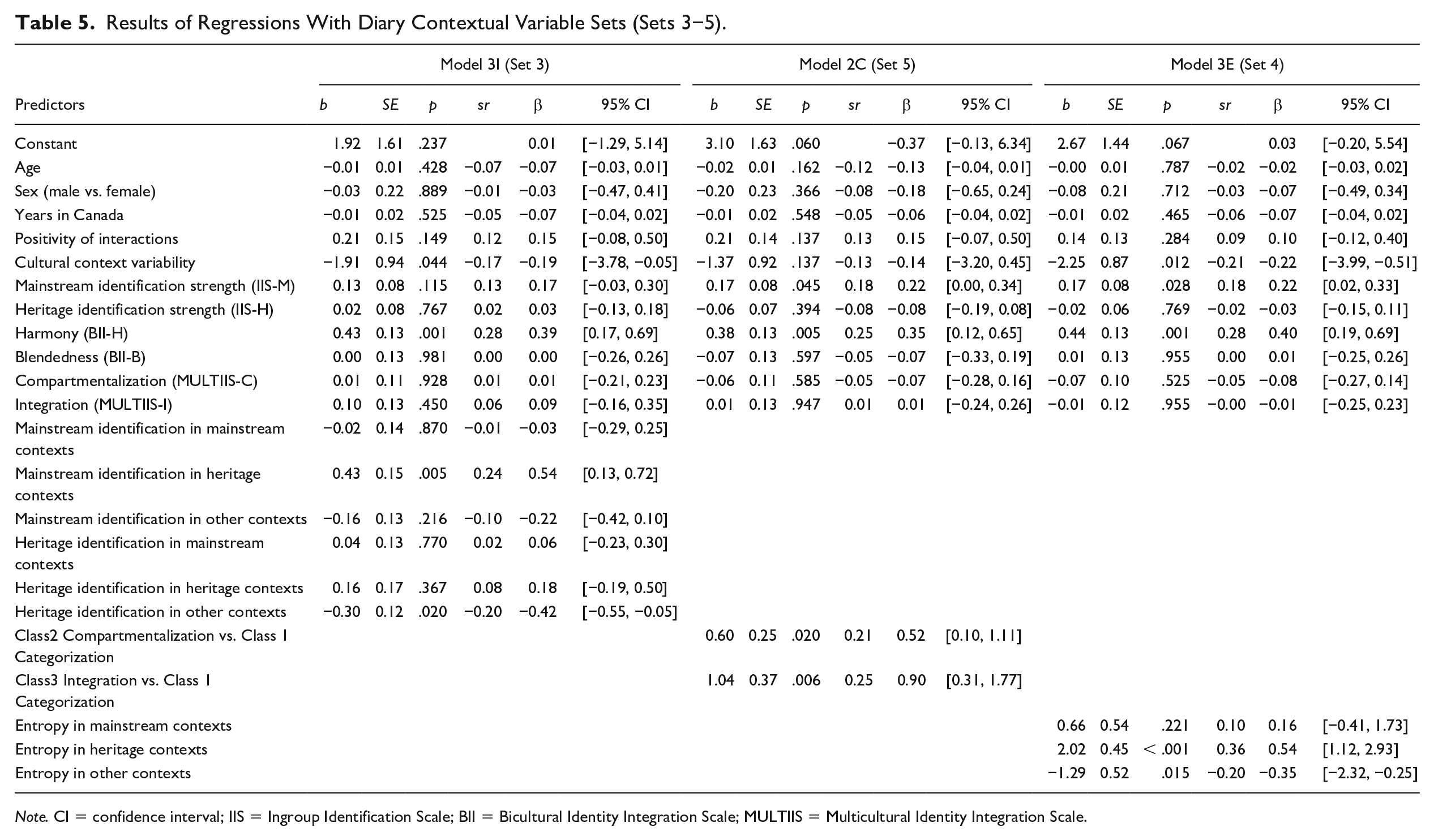
Table 5 displays the results of regressions with diary indices computed separately in different cultural contexts. In Model 3I, the introduction of contextual situational identification (Set 3) accounted for 15% additional variance in BPAS scores compared with Model 1. This is a significant improvement, F(6, 75) = 18.5, p = .003. Identifying more strongly with the mainstream group when interacting with heritage interlocutors and identifying less strongly with the heritage group in other contexts (neither mainstream nor heritage) was associated with greater psychological adjustment, with large effect sizes, β(SE) = .54(.19), t = 2.89, p = .01 and β(SE) = −.42(.18), t = −2.39, p = .02, respectively.
Results of Regressions With Diary Contextual Variable Sets (Sets 3−5).
Note. CI = confidence interval; IIS = Ingroup Identification Scale; BII = Bicultural Identity Integration Scale; MULTIIS = Multicultural Identity Integration Scale.
In Model 3C, the introduction of class membership (Set 5) accounted for 7% additional outcome variance compared with Model 1, which is statistically significant, F(2, 79) = 8.7, p = .01. Compared with belonging to Class 1, Daily Categorization, belonging to Class 2, Daily Compartmentalization, or to Class 3, Daily Integration, was associated with significantly greater psychological adjustment, as indexed by higher BPAS scores. An additional contrast showed that belonging to Class 3 versus belonging to Classes 1 and 2 grouped together was not associated with BPAS scores. These results provide partial support for H2.
The introduction of contextual entropy (Set 4) in Model 3E increased R2 by .17 compared with Model 1, a statistically significant difference, F(3, 78) = 21.2, p < .001. Greater balance in situational identification in heritage contexts (higher entropy) was associated with greater psychological adjustment (higher BPAS scores), with a large effect size, β(SE) = .54(.12), t = 4.46, p < .001. Conversely, lower balance in situational identification in other-culture contexts (as indexed by lower entropy) was associated with higher psychological adjustment, with a moderate effect size, β(SE) = −.35(.14), t = −2.48, p = .02.
Regressions With Best Diary Variables
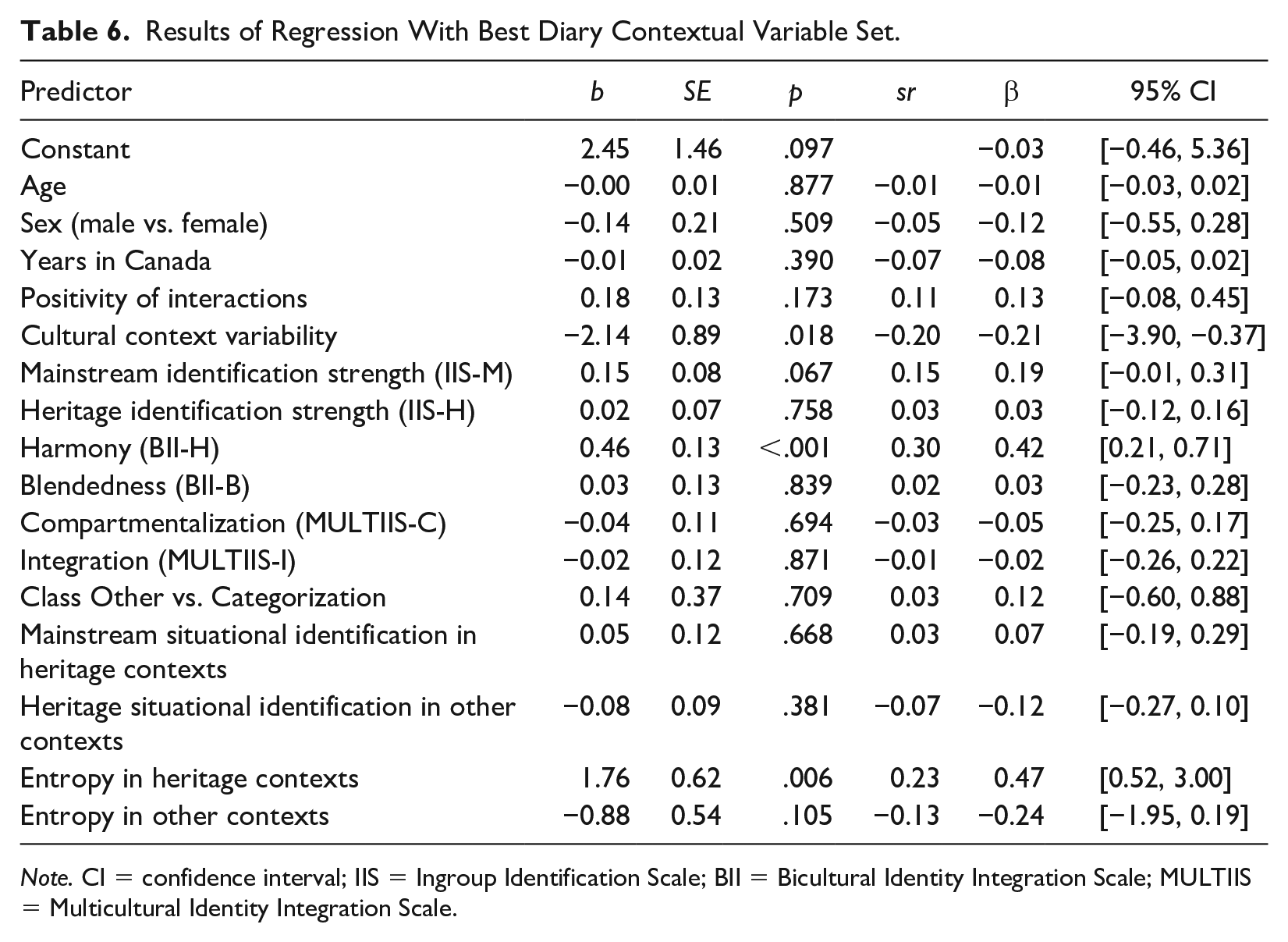
Multicollinearity prevented us from entering all diary variables at once but we were still interested in comparing the relative predictive ability of variables with statistically significant coefficients. We did so in a final step, with the following considerations. First, the preceding results showed that diary contextual and latent class variable sets (Sets 3−5) accounted for substantially more variance in BPAS scores than diary overall variable sets (Sets 1 and 2). Therefore, we included significant predictors from the former sets rather than the latter ones: namely, situational mainstream identification in heritage contexts, situational heritage identification in other-culture contexts, entropy in heritage contexts, entropy in other-culture contexts, and class membership. Second, results showed that Class 1 differed from Classes 2 and 3, which did not differ from each other, as far as predicting BPAS scores is concerned. Therefore, we recoded class membership to estimate the contrast between belonging to Class 1 versus belonging to Class 2 or 3 (both lumped together). The results of these final analyses are displayed in Table 6. VIFs for this final model were all <5, boosting our confidence in the reliability of these results.
Results of Regression With Best Diary Contextual Variable Set.
Note. CI = confidence interval; IIS = Ingroup Identification Scale; BII = Bicultural Identity Integration Scale; MULTIIS = Multicultural Identity Integration Scale.
Model 4 accounted for half the variance in BPAS scores, as indicated by an R2 of .50. Among all identity variables, only two had statistically significant—and positive—coefficients: BII-H and entropy in heritage contexts. Perceiving greater harmony between one’s cultural identities and greater balance in situational identification in heritage cultural contexts throughout the day was associated with greater psychological adjustment, β(SE) = .42(.11), t = 3.65, p < .001 and β(SE) = .47(.17), t = 2.83, p = .01, respectively. Effect sizes were fairly large. Furthermore, a linear hypothesis test showed that the entropy coefficient was statistically significantly larger than the BII-H coefficient, F(1, 76) = 3.51, p = .04. This indicates that entropy in heritage contexts is a better statistical predictor of psychological adjustment than the harmony between one’s cultural identities. This is in line with H3.
Discussion
The present work compared the relative ability of general and situational cultural identity patterns in statistically predicting psychological adjustment among Maghrebi migrants to Canada. It also introduced and tested the usefulness of cultural identity entropy, a novel approach to characterizing a person’s multiple cultural identification during interactions. Overall, the results largely supported our hypotheses regarding these two goals.
Noteworthy findings
Diary-based situational cultural identity patterns accounted for substantial variance in psychological adjustment, over and beyond that explained by questionnaire-based general patterns. In addition, effect sizes for situational indices were moderate to large. Both results support the importance of taking into account situational characteristics of cultural identification and not just relying on global patterns. Managing one’s multiple cultural identities is a complex and contextual process, an ongoing negotiation between one’s self-positioning and sociocultural environment (Pavlenko & Blackledge, 2004). Such a perspective is not new in cross-cultural psychology, but traditional research still largely focuses on general patterns in a fairly static way. We argue that research should attend to that complex reality more often and more comprehensively. Daily diaries are ideally suited for such investigations. Unfortunately, as they are still rarely used, their potential remains fairly untapped, even though they have become much easier and cheaper to use. A variety of general purpose survey software (e.g., Qualtrics) can be used to collect data daily at specific hours. Widespread use of cell phones also facilitates diary data collection. In short, it is no longer necessary to rely on expensive equipment such as Palm Pilots and specialized software or on more cumbersome mail-in paper diaries. Given the importance of situational cultural identity patterns in statistically predicting psychological adjustment, we hope that daily diary studies will become more common in the future.
Three classes representing different situational identification patterns emerged from daily diary data. The very close alignment between these patterns and multicultural identity configurations posited in Amiot and colleagues’ 2007 model was noteworthy. To our knowledge, the present study is the first to demonstrate that these general multicultural identity configurations (typically measured with the MULTIIS, a general self-report questionnaire) could actually be detected situationally in daily life. This verification provides additional empirical support for the validity of Amiot and colleagues’ model and is an important contribution of the present study.
At the same time, a head-to-head comparison of general questionnaire−based versus situational diary−based identity patterns highlighted interesting discrepancies between the two approaches. First, general mainstream and heritage identification strength did not differ from one another, whereas situational mainstream identification was significantly lower than heritage identification when measured with daily diaries. Daily diaries afford more precise measurement that is less subject to recall biases. As such, the daily difference between mainstream and heritage situational identification may be closer to participants’ actual identification than the questionnaire-based equal levels, which may represent a wished-for integration ideal more than a lived reality. Second, diary-based identity compartmentalization and integration classes did not differ in terms of psychological adjustment. They usually do so in studies using general questionnaires like the MULTIIS. Integration (or fusion) is typically positively associated with adjustment, whereas the association is negative for compartmentalization (or alternation; Amiot et al., 2007; Ward et al., 2018; Yampolsky et al., 2016). Thus, having a general representation of one’s identities as context-bound may be detrimental, whereas actually shifting identities contextually may be adaptive to meet a variety of cultural demands. Supporting this idea, the majority of our fairly well-adjusted sample belonged to the compartmentalization class, suggesting that this situational identity pattern is a common way to manage one’s multiple identities. Future research should elucidate further consistencies and discrepancies between general questionnaire−based and diary-based situational identity measures.
With respect to our second goal, our results clearly demonstrated the usefulness of entropy as a tool in cultural identity researchers’ toolbox, even more so when applied contextually. Overall and contextual cultural identity entropies were significantly associated with psychological adjustment when controlling for other predictors. Moreover, entropy in heritage contexts was one of the two significant cultural identity patterns in our “best-of” model. Entropy indexes balance in situational cultural identification data. In contrast to traditional psychological research where a large part of variation is typically considered as noise (Yan & Fischer, 2002), entropy reflects a shift toward thinking of variability as an information source. This perspective is proving useful in fields such as microdevelopment (Yan & Fischer, 2002) or skill learning (Sternad, 2018), and we propose that cross-cultural psychology could also benefit from more fully exploring it. Other indices characterizing variability in cultural identity measures may also be useful, and investigating this possibility is an interesting future avenue of research. In the meantime, entropy has some advantages. It yields a numeric continuous index, it can easily be computed from commonly used measures, and it can accommodate any number of cultural identities. We focused here on two identities as a first investigation of entropy’s usefulness, but future research could easily include additional ones such as hybrid (e.g., Arab-Canadian), religious (e.g., Muslim), or local (e.g., Montreal) identities.
In the present research, entropy indices generated interesting insights into what kind of situational cultural identity patterns are associated with most psychological adjustment. Specifically, we found that greater entropy in heritage contexts—greater balance in one’s identification when speaking with people sharing the same ethnocultural background—was most beneficial. The idea that heritage cultural contexts can be double-edged swords for migrants could provide a plausible explanation. On one hand, heritage contexts can provide emotional support and a sense of connection and continuity with one’s cultural origins. On the other hand, migrants can face strong expectations from heritage social ties (Ryan et al., 2008)—such as the expectation to maintain loyalty to the heritage group (Padilla & Perez, 2003)—which can be perceived as a burden. In such multifaceted contexts, it may be advantageous to have a more balanced identification pattern, reflecting greater flexibility in one’s cultural repertoire. Another possibility is that greater entropy (balance) in heritage contexts reflects a form of “acculturation penetration.” The acculturation penetration hypothesis posits that the adoption of mainstream ways of being and acting begins in more public domains with ample opportunities for intercultural contact. Over time, with greater intercultural exposure across life domains, this adoption penetrates more private domains, where heritage cultural influences are typically dominant (Noels & Clément, 2015). Given that heritage identity typically remains strong in heritage contexts (Doucerain et al., 2013; Noels & Clément, 2015; Yip & Fuligni, 2002), greater entropy in such contexts likely reflects an increase in mainstream identification to reach similar levels to heritage identification. And given that heritage contexts are typically more private (i.e., family, friends), greater entropy may indicate a penetration of mainstream identity in more private domains. This balance in cultural identities likely reflects flexibility and ease with both cultural streams, which should be related to greater psychological adjustment.
Limitations
The use of a diary methodology in a community sample and the head-to-head comparison of general versus situational cultural identity patterns were strengths of the present work. At the same time, several limitations are noteworthy. First, our study design was cross-sectional, precluding any conclusions regarding the directionality of effects. Our choice of dependent variable implied a direction from cultural identity patterns to adjustment, in keeping with dominant theorizing in acculturation and cultural identity research. However, the reverse direction is just as likely. Balancing cultural identities and influences in a given situation (i.e., greater entropy) is mentally costly (Doucerain, 2019). As such, it stands to reason that being better adjusted psychologically could foster greater cultural identity entropy. Studying entropy using longitudinal designs will be necessary to disentangle temporal precedence.
Second, we focused on only two situational identities, mainstream and heritage. In other work (Doucerain et al., 2013), we have argued that this traditional mainstream/heritage dichotomy is insufficient to adequately reflect the cultural complexity of most migrants’ reality, especially in superdiverse cities like the one where this study was conducted. We decided to focus on these two identities for the sake of simplicity and diary brevity (participant burden and retention are a real concern in diary studies) but we are aware that this decision can only be provisional and that it limits the conclusions we can draw from our results.
Third, our operationalization of cultural context based on interlocutors’ cultural background was cursory. Again, we made this decision to keep diaries as short and simple as possible, but a fuller characterization of contexts would be desirable. Ideally, such a characterization would take into account interactions’ location as well as the presence of other cultural cues in the environment. For example, in the present study, interactions with a Maghrebi person were coded as indexing a heritage context, whether they took place at home or in the workplace. Yet, important nuances might differentiate how they are culturally perceived.
Finally, we demonstrated the usefulness of combining daily diaries and entropy in a sample of Maghrebi migrants to Canada. Whether the findings would generalize to other populations and settings is an open question that future research will need to consider.
Conclusion
This study investigated associations between first-generation migrants’ psychological adjustment and how they manage their multiple cultural identities by comparing general questionnaire−based and situational diary−based cultural identity patterns, and by introducing and testing cultural identity entropy, a novel approach to characterizing variability in cultural identities during daily interactions. We found that situational patterns accounted for substantial variance in psychological adjustment, above and beyond general patterns, and that greater entropy—indexing greater identity balance and reflecting greater flexibility in cultural ways—in heritage cultural contexts were associated with greater psychological adjustment. These results underscore the importance of going beyond global characterizations of multicultural identity by investigating the shifting and contextual ways in which migrants navigate cultural identification daily. In large superdiverse cities such as Toronto, Sidney, or Auckland, more than 40% of the population is foreign-born, making such investigations timely and relevant for a substantial proportion of the population worldwide.
Footnotes
Acknowledgements
The authors thank Fella Lahrèche for her help with data collection.
Declaration of Conflicting Interests
The author(s) declared no potential conflicts of interest with respect to the research, authorship, and/or publication of this article.
Funding
The author(s) disclosed receipt of the following financial support for the research, authorship, and/or publication of this article: This work was funded by a research grant (2018-NP-207321) from the Fonds de Recherche du Québec—Société et Culture to the first author.
