




Abstract
A defining feature of biculturalism is the experience of switching back and forth between different cultural ways of being and acting in the world. This work investigates antecedents of this switching process using a cultural adaptation of the Day Reconstruction Method, in which participants divide the previous day into episodes and then rate these episodes on various criteria. We hypothesized that episode characteristics (specifically, language used) and stable personal dispositions (specifically, mainstream and heritage cultural orientations) would independently and interactively predict migrants’ cultural identification during an episode. We examined three types of identification among Russian-speaking migrants to Canada (N = 109): mainstream (“Canadian”); heritage (“Russian”); and mainstream–heritage hybrid (“Russian-Canadian”). Results of multilevel regression analyses supported our hypotheses overall. A more positive orientation to a given cultural group and the use of that group’s language(s) were associated with stronger identification with that group during an episode. Language Use × Cultural Orientation interactions were evident for heritage and hybrid situational identification. The positive association between heritage orientation and situational heritage identification was stronger during episodes when the heritage language was not used than when it was used. A positive heritage orientation was associated with greater situational hybrid identification only during episodes when a mainstream language was used. The results are consistent with the perspective that acculturation is a multifaceted, contextual, and dynamic process whereby people acquire and flexibly use multiple cultural repertoires to meet both their general goals and the cultural demands of specific situations.
Keywords
A substantial proportion of the world’s population must navigate at least two cultural contexts in their daily life, including not only 258 million international migrants (Department of Economic and Social Affairs, Population Division, 2017) but also second-generation migrants and members of long-standing cultural minorities. For example, a Russian migrant to Canada must negotiate the extent to which she engages with at least two sets of cultural meanings and practices, Russian and Canadian. Most migrants handle this issue by becoming bicultural, maintaining sustained engagement with both cultural streams (Berry, 1997, 2003; Van de Vijver et al., 1999; Van Oudenhoven et al., 1998; Yu & Wang, 2011)—an approach or “strategy” also referred to as integration in the dominant acculturation theoretical framework (Berry, 2003).
In parallel, there is growing recognition that acculturation is not a purely intra-individual process (as it has traditionally been studied). Rather, it is heavily shaped by the nested layers of context in which it takes place (Ward & Geeraert, 2016). An increasing number of studies are taking this idea into account (Doucerain, 2018; Schachner et al., 2017) but they remain scarce and rarely address interactions between contextual influences and personal dispositions. Furthermore, echoing the polycultural psychology perspective (Morris et al., 2015), some researchers argue that people mix and match, or hybridize, elements from their cultural repertoires. Accordingly, they question the usefulness of tidy heritage versus mainstream dichotomies in acculturation research (Hermans & Kempen, 1998; Ward et al., 2018; West et al., 2017). This work is situated at the nexus of these ongoing questions on switching, contextual influences, and hybridity. Specifically, we examine how the interplay of contextual characteristics and migrants’ general stance toward their cultural groups shape the cultural identifications—mainstream, heritage, and hybrid—they experience in daily situations.
Switching and Situational Identification
Cultural frame switching can be defined as changes in bicultural individuals’ mindsets triggered by contextual cultural cues (Benet-Martínez et al., 2002; Hong et al., 1997, 2001). Studies exploring cultural frame switching have found contextual shifts in biculturals’ emotions, behaviors, and self-perceptions (Dewaele, 2016; Koven, 2001; Panicacci & Dewaele, 2017, 2018). Language is the most commonly studied contextual cue, and arguably the most potent one. For example, Koven (1998) has demonstrated that telling the same story in different languages changed the way the story was told, potentially by allowing access to different cultural identities of the storyteller. Similarly, Dewaele and Nakano (2013) showed that speaking different languages activated different emotional repertoires in participants.
Language is very effective at “switching on” a particular cultural identity, but cultural switching experiences are not limited to language primes. Biculturals can switch their behavioral repertoire in response to a range of contextual cultural characteristics (LaFromboise et al., 1993; McKenzie, 2018; Verkuyten & Pouliasi, 2006). Former U.S. president Barack Obama offered a widely publicized example of this type of switching when he offered a conventional handshake to a White basketball team assistant coach, right before giving dap to a Black team player and greeting him with “My man!.” The situated ethnic identity framework (Clément & Noels, 1992), which explores social and contextual factors underlying situation-specific identification, also supports this view. It underlines the importance of contextual factors beyond language, such as the nature of the setting, the relationship between interlocutors, and the purpose of the interaction (Noels & Clement, 2015).
In short, there is considerable evidence that biculturals adapt to the changing cultural demands of daily situations by switching back and forth between the “cultural ways” that are available to them, and often do so automatically and implicitly. We focus here on fluctuations in situational cultural identification, referring to a subjective feeling of belonging to a cultural group in a given moment, salient enough to prompt reflections such as “I’m feeling pretty Canadian right now.”
Dispositional Antecedents of Situational Cultural Identification
Mainstream and heritage cultural orientations refer to the extent to which migrants and their descendents adapt to the meanings and practices of the local cultural context and maintain those meanings and practices from their pre-migration cultural, stream, respectively (Bourhis et al., 1997; Snauwaert et al., 2003). These orientations reflect migrants’ general dispositions toward these cultural groups and are at the heart of acculturation research (Doucerain et al., 2017). They have been studied extensively as predictors of a wide range of social and health outcomes, including intergroup contact, language proficiency, alcohol use, interpersonal conflict, identity crises, internalizing symptoms, depressive symptoms, self-esteem, and cognitive performance (Anhalt et al., 2020; Doucerain, 2017; Guler & Berman, 2019; Kim & Omizo, 2005; Pham & Lui, 2020).
The cultural orientations migrants have when they arrive in the new country shape how and whether they will socially interact with members of mainstream and heritage cultural groups over time (Doucerain, Deschênes et al., 2017), which may in turn influence how they identify with these groups. Previous research suggests that acculturation in various life domains results in changing identification with heritage and mainstream cultural groups (Arends-Tóth & van de Vijver, 2007; Dere et al., 2010). At the daily level, we found that migrants’ mainstream and heritage cultural orientations were associated with situational cultural identification (Doucerain et al., 2013). We seek to replicate these associations in this study.
Contextual Antecedents of Situational Cultural Identification
Language is routinely used as a cue to induce cultural frame switching. Among biculturals, using heritage versus mainstream language activated different personality profiles (Chen & Bond, 2010), self-esteem levels (Chen & Bond, 2007), self-construals (Kemmelmeier & Cheng, 2004), self-enhancement patterns (Lee et al., 2010), and types of behavior in a prisoner dilemma task (Akkermans et al., 2010). Biculturals also use a situation’s linguistic characteristics to engage in cultural identity negotiations, claiming or contesting how they culturally position themselves in the moment (Pavlenko & Blackledge, 2004).
Communication accommodation theory (CAT; Gallois & Giles, 2015) describes how people use language during social interactions to express their attitudes toward one another and to negotiate the social category memberships—such as cultural identities (Sachdev et al., 2013)—that are salient in the moment. People modulate their communicative behaviors (including a wide range of linguistic, paralinguistic, and nonverbal features such as speech rate, pauses, or gazing) so that their communication style converges with, or diverges from, that of their interlocutor. For example, bilinguals’ motives to converge predicted their use of the same language as their outgroup interlocutor, an accommodative behavior that indexes a positive and affiliative intergroup stance (Gasiorek & Vincze, 2016). Thus, the language used in a situation seems to be a key driver of one’s cultural identification during that situation (Grosjean, 2015).
Context × Disposition Interactions
From a situated identity perspective, situational identification is an interactive function of one’s dispositional cultural orientation and contextual characteristics, with the goal to preserve a positive self-image, in line with social identity theory (Clément & Noels, 1992). Accordingly, language used in a situation—a potent contextual characteristic—may moderate associations between cultural orientations and cultural identification during that situation. Research focusing specifically on interactions between language used and cultural orientations is unfortunately virtually absent, but the literature on language priming in biculturals may provide useful insights.
On one hand, language priming studies show that using a given language activates corresponding cultural schemas and identification among biculturals, regardless of their personal dispositions (such as cultural orientations). For example, Ramírez-Esparza et al. (2006) showed that Spanish–English bilingual participants switched between their two cultural identities depending on language primes: e.g., they identified themselves as more attuned to American values when answering in English. Rodríguez-Arauz et al. (2017) found similar results using both qualitative-inductive and quantitative approaches among Spanish–English biculturals: English activated typical American cultural self-schemas (e.g., proactive behavior, leadership, and assertiveness), whether or not they were positively oriented toward the American cultural stream.
On the other hand, culture priming studies (i.e., using primes other than language) suggest that biculturals’ dispositions can influence their situational identification in addition to contextual cultural cues (e.g., Benet-Martínez et al., 2002; Ng et al., 2016; Ye & Ng, 2019; Zou et al., 2008). For example, Benet-Martínez et al. (2002) found that among Chinese American biculturals, when exposed to Chinese cultural primes, greater bicultural identity integration was associated with greater likelihood of making external attributions (a typically Chinese cultural style). In contrast, bicultural identity integration was negatively associated with external attributions when exposed to American primes. In a similar vein, Ng et al. (2016) reported that cultural primes resulted in expected alignment effects toward the primed culture (e.g., aligning with Chinese values in response to Chinese cultural primes) only for some of their bicultural participants. For others, cultural primes induced a “contrasting” pattern (e.g., aligning with Chinese values in the presence of Western primes).
In summary, contextual cues—language in particular—are powerful drivers of cultural identification in a given situation. At times, however, general dispositions such as cultural orientations also exert leverage on situational cultural identification, despite contextual influences. These contrasting results underscore the necessity of further probing interactions between language used (as a contextual characteristic) and cultural orientations (as a general disposition) in predicting situational cultural identification.
Language priming studies suggest that the language used in a situation is a powerful driver of situational identification. As such, we would expect using, for example, Russian language to be positively associated with feeling Russian in that situation, above and beyond the role of one’s general Russian cultural orientation. However, when this powerful contextual characteristic is not salient—for example, when using another language—a person’s situational Russian identification may reflect her general Russian cultural orientation to a greater extent. A mirror pattern would then be expected for mainstream language and identification. Mainstream cultural orientation may be more strongly associated with mainstream situational identity in the absence of mainstream language use as a salient contextual characteristic than when this language cue is present. To use an analogy, an employee’s outfit might reflect her personal style (equivalent to cultural orientation) to a larger degree on “casual Fridays” when corporate expectations are less salient (equivalent to absence of language cue) and therefore less of a key driver of her clothing choices. In contrast, the influence of her personal style on her outfit might be more muted on other days.
Cultural Mixing and Hybrid Identities
The vast majority of research on cultural switching—across cognitive, behavioral, and identity domains—has focused on biculturals alternating between mainstream and heritage cultural patterns. However, as highlighted by the polycultural psychology perspective (Morris et al., 2015), the notion of water-tight, separate, and compartmentalized cultural traditions is illusory at best. As soon as cultural groups come into contact, processes of cultural mixing and cross-fertilization lead to new hybrid cultural practices and identities (Hermans & Kempen, 1998). Conceptual and empirical work both support this notion of hybridity in the domain of cultural identities (Benet-Martínez & Haritatos, 2005; Martin & Shao, 2016; Phinney & Devich-Navarro, 1997; Ward et al., 2018; West et al., 2017) and its prevalence among biculturals (Bhatia & Ram, 2004; Liu, 2015; Ward, 2013)—under different names. For example, Benet-Martinez and colleagues call this perception of belonging a “hyphenated culture” or an emerging “third culture” blendedness (Benet,-Martínez & Haritatos, 2005), whereas LaFromboise and colleagues refer to it as fusion (LaFromboise et al., 1993), Suárez-Orozco and Suárez-Orozco (2003) as transcultural identities, and Ward and colleagues (2018) as a hybrid identity style.
We focus here on the mainstream–heritage hybrid cultural identity, which, following Ward and colleagues’ (2018) conceptualization, reflects “picking and choosing desirable elements of two or more cultures and blending them in a way that suits the acculturating individual.” How exactly this hybrid identity is represented and organized within the self is outside the scope of the present paper. Rather, we focus on the extent to which a person might feel “I am a “mélange” of Canadian and Russian” in a given situation (example taken from the Hybrid Identity Scale developed by Ward et al., 2018). In other words, rather than asking what the “Russian-Canadian” identity means for a person, we seek to understand what predicts whether someone will self-categorize as a “Russian-Canadian” or not in a situation. Past research has shown that immigrants frequently and spontaneously use the mainstream–heritage hybrid identity label to describe themselves (Mahli et al., 2009). As such, questions regarding identification with that cultural stream should feel as natural to migrants as the usual questions on heritage and mainstream identification.
What prompts people to adopt this hybrid identity in daily situations is an open question. As reviewed above, situational characteristics and general dispositions such as cultural orientations predict situational mainstream and heritage identification (Doucerain et al., 2013; Yip, 2005; Yip & Fuligni, 2002). Considering that situational hybrid identification is a form of self-categorization—just like mainstream or heritage identification—we expect that both language used in the moment and cultural orientations will also be associated with situational hybrid identification.
Some research suggests that interactions between contextual characteristics and general dispositions toward cultural groups may also play a role in triggering hybrid identification. Ward and colleagues (2018) describe the hybrid identity style mentioned above as a dynamic way to negotiate elements of different cultures within the self and to adjust to contextual demands. Schwartz et al. (2019) demonstrated that hybrid identification is positively related to switching between cultural frames and that this relation can be context-dependent: people tend to develop hybrid identities in contexts that favor their beliefs about compatibility of their different cultural identities. Furthermore, hybrid cultural identities have been described as one of the ways in which people claim, contest, and resist having ethnic identities ascribed to them during social interactions (Giampapa, 2004; Mahli et al., 2009). Therefore, we anticipate interactive effects between cultural orientations and language used in the moment in the prediction of situational hybrid identification. These interactive effects may be particularly pronounced between noncorresponding cultural orientations and languages used (e.g., heritage Russian orientation and mainstream English language), since such combinations provide cultural elements from both cultures included in the hybrid identity.
The Present Study
This study has three goals. First, we seek to replicate our previous findings on associations between situational cultural identification and contextual characteristics as well as migrants’ dispositions (Doucerain et al., 2013). We expect that (Hypothesis 1) cultural orientations and language used in a situation will both independently predict situational heritage and mainstream cultural identification. Specifically, a more positive heritage cultural orientation and using the heritage language in a situation will be associated with greater situational heritage cultural identification (with mirror associations for mainstream variables).
Second, we examine interactive effects of dispositional and contextual characteristics on situational cultural identification. We expect (Hypothesis 2) that heritage orientation will be more strongly positively related to heritage situational identification when the heritage language is absent (e.g., when speaking English) than when the heritage language is present (i.e., speaking Russian). We expect a mirror pattern for mainstream situational identification.
Third, we examine additive and interactive associations between contextual and dispositional characteristics, and situational mainstream–heritage hybrid identification—a novel aspect of this research. We expect that (Hypothesis 3) cultural orientations and language used will both independently and interactively predict situational hybrid identification. Given the paucity of research on antecedents of hybrid situational identification, there is not enough evidence to build more specific hypotheses in that respect. This latter goal is therefore exploratory in nature. Furthermore, it is reasonable to expect situational hybrid identification to be related to certain combinations of heritage and mainstream cultural orientations. As such, situational language use may also moderate the joint effect of heritage and mainstream cultural orientations. Because of power limitations associated with our sample, we do not include three-way interactions in our main analyses but report exploratory results with these additional interactions in the Supplementary Materials.
The above hypotheses are tested controlling for the distinction between private (i.e., home) and public settings (e.g., work), which is an important contextual characteristic to consider in acculturation research (Arends-Tóth & van de Vijver, 2004).
Regarding our first replication goal, this study features several changes (compared to Doucerain et al., 2013) that aim to increase the robustness and generalizability of the findings. First, acknowledging that cultural identification is not categorical and that several identities can be differentially activated at the same time, we measure situational cultural identification with three continuous variables (mainstream, heritage, and hybrid) rather than a single categorical one. Second, we also use a different cultural orientation measure to show that findings are not sensitive to the scale used. Third, this study relies on a culturally homogeneous community sample rather than on multicultural students. We focus on Russian-speaking migrants from the Former Soviet Union (FSU) to Canada for two reasons. First, although culturally more distant from the mainstream Canadian group than European migrants, they are not a visible minority (in comparison to, for example, East Asian migrants). As such, they typically face fewer discrimination issues than other culturally distant groups. In turn, this poses fewer obstacles to social interactions in the mainstream group. Second, Russian/FSU migrants represent a large and growing minority in the local area where the study was conducted. This ensured that participants would have numerous opportunities for social interactions in their heritage language (Russian), thus maximizing variability in our key predictor variable.
This study contributes to a small but growing body of acculturation research that focuses on the role of contextual factors, examines situational aspects of daily life, and attempts to move beyond the mainstream versus heritage dichotomy. This study also contributes to research on switching phenomena among biculturals by focusing on the identity domain in naturalistic settings. A lot of the work on cultural frame switching has taken place in controlled laboratory settings; here we consider how such phenomena play out “on the street,” in biculturals’ daily life.
Method
Participants
Participants were Russian-speaking first-generation immigrants living in Montreal, Canada. We recruited potential participants mainly through online communities (e.g., Razgovory) and social media groups (e.g., Russian Montreal on Facebook), and using snowball sampling. The inclusion criteria were as follows: (a) born in Russia or one of the other post-Soviet republics; (b) completed at least high school in the Russian language; (c) both parents speak Russian, and communication with parents possible in Russian; and (d) at least an intermediate level of self-reported English proficiency (to be able to take part in the study). Regarding criterion (a), we expanded recruitment beyond people born and raised in Russia because of the dispersion of ethnic Russians across the former Soviet republics. Although the degree of Russian cultural influence in culturally distant republics (e.g., in Central Asia) is debatable, we followed the rationale that these republics share a common Soviet past. Since the standards of Soviet homogenization were largely based on and conveyed through Russian language and culture and had been imposed for more than 70 years, we estimated that our language and education criteria indicated sufficient exposure to shared Russian cultural contexts. Regarding criterion (d), it is important to note that Montreal is a bilingual city with both French and English as dominant languages. However, the neighborhoods with larger concentrations of Russian-speaking immigrants tend to be more Anglophone and conducting the study in only one language addressed potential issues of measurement invariance across languages.
Our initial sample comprised 112 participants. Three were excluded due to having 67% or more items missing on any of the composite scales used in this study. The final sample included 109 Russian-speakers (75 women, 34 men, Mage = 37.47 years, SDage = 9.10, range = 20–60 years) who had been living in Montreal for 6.58 years on average (SD = 6.41, range = 0–19). About one-third of the participants (30.1%) reported being born in Russia. The remaining two thirds were born in other states of the FSU: Ukraine (23.8%); Moldova (8.3%); Kazakhstan (7.3%); Belarus (7.3%); Kyrgyzstan (5.5%); Uzbekistan (2.8%); Turkmenistan (1.8%); Georgia (0.9%); Azerbaijan (0.9%); and Armenia (0.9%). Interestingly, 10.1% of the sample reported the FSU as their country of birth without specifying any republic. Despite such geographical variability, Russian was the first language of the vast majority (89.9%) of our sample; the remainder reported it as their second language.
Procedure
Participants completed the study at either one of the corresponding authors’ universities, depending on what was most convenient to them. All communication and instructions were in English or Russian, depending on research assistants’ background and participants’ preferences. Each session lasted 2 to 3 hours. Upon full completion of all questionnaires (a number of them were outside the scope of this work), participants were thanked and financially compensated for their time. This study received ethical approval from both universities and participants provided informed consent at the beginning of the study.
Materials
Cultural Orientations
The Brief Acculturation Orientation Scale (BAOS; Demes & Geeraert, 2014) is a bidimensional measure assessing people’s orientations toward mainstream and heritage cultural contexts, that is, the subjective valuing of cultural friendships, traditions, characteristics, and behaviors. Participants rate their agreement with four statements that target these four major acculturation domains on a 7-point Likert-type scale (1 = Strongly disagree, 7 = Strongly agree). These four statements are presented twice, for Russian and Canadian cultural contexts. An example statement is “It is important for me to take part in Russian traditions.” The subscales showed good reliability: Cronbach’s α = .79 for the mainstream orientation (BAOS-M); α = .87 for the heritage orientation (BAOS-H).
Situational Language Used and Cultural Identification
The Cultural Day Reconstruction Method (C-DRM; Doucerain et al., 2013) is a daily diary instrument adapted for cultural research from the original Day Reconstruction Method (Kahneman et al., 2004). Participants are first asked to think of their previous day as a continuous series of scenes or episodes in a film. Then, they list these episodes, providing a brief descriptive name (e.g., “cooking,” or “hot yoga with friend”), as well as beginning and end times (e.g., 8 a.m. to 8:30 a.m.). Given that episodes describe situations with subjective unity and meaning, participants report different numbers of episodes, with maximum number imposed. For each entry, participants also answer the following question: “did you feel connected to a particular culture during the episode that you just identified?” For episodes receiving a “yes” in response to that screening question, participants then provide more detailed information with regard to place, language used, and cultural identification.
Focusing on the previous day minimizes recall bias, similar to experience sampling methodologies. However, the DRM is less resource-intensive and intrusive than the latter. Also, experience sampling methodologies capture unusual events only by chance, thus limiting information about potentially important experiences. In contrast, the DRM allows participants to report on all experiences they deem important. The DRM has been successfully validated and evaluated as a promising alternative to both experience sampling and global measures (e.g., Anusic et al., 2017; Hudson et al., 2017 for a more detailed description of the validity of the DRM; and Ayuso-Mateos et al., 2013 for a cross-cultural validation). For each culturally relevant episode, participants provided the following information.
Location
Participants indicated where each episode took place, by choosing among the following options: “at home,” “at work,” “at school,” and “elsewhere, specify.” Given the important distinction between private versus public domains in acculturation (Arends-Tóth & van de Vijver, 2004), location was recoded as a binary variable with “Home” and “Other” levels.
Language Used
Participants specified the language used during that episode, if applicable. Response options were: “My heritage language”; “English”; “French”; “Other, specify.” We recoded language used with two binary dummy variables: (a) mainstream (French or English) use versus not, and (b) heritage (Russian) use versus not. For the purposes of this study, other languages were not included in the analysis.
Cultural Identification
Participants rated “to what extent [they] identified with each and every one of [the listed cultural streams] during this episode” on a Likert-type scale ranging from 1 = Not at all to 7 = Very much. Listed cultural identities were “Russian,” “Canadian,” and “Russian-Canadian.” Free space was left to add any other cultural identity of participants’ choosing, but we did not consider this option in the current analyses.
Analysis
We inspected the data for outliers and missing data and found no variables with randomly missing data exceeding 5% (Schafer, 1999). We found univariate outliers for situational cultural identifications (76 values, 14.29%) and general cultural orientations (six values, 5.5%). They were winsorised by bringing extreme values outside three median absolute deviations around the median within that interval for each variable (Leys et al., 2013). We detected no multivariate outliers based on Mahalanobis distances evaluated at p < .001.
Given the nested structure of our data—several episodes (Level 1) nested within participants (Level 2)—we used multilevel modeling to account for interdependence among observations within participants (Peugh, 2010). We tested separate models predicting situational mainstream, heritage, and hybrid identification, using R (R Core Team, 2020) packages lme4 (Bates et al., 2015) and lmerTest (Kuznetsova et al., 2017) and restricted maximum-likelihood (REML) estimation. All models included random intercepts only. As preliminary analyses, we tested whether language of instruction (Russian vs. English) and day of the week reported were associated with situational cultural identification. Neither were statistically significant predictors in any model. Length of stay in Canada, age, and sex were also initially included as covariates. However, none of them were statistically significantly associated with any of the dependent variables. The pattern of results was the same whether or not they were included. Therefore, for the sake of parsimony, we did not retain any of these covariates in the final analyses.
We entered predictors hierarchically: first, Level 1 situational predictors (episode location and language used); second, Level 2 dispositional predictors (mainstream and heritage cultural orientations); and third, cross-level interactions between language used and cultural orientation. Mean scores for cultural orientations were centered around the grand mean to avoid possible biases in response patterns such as acquiescence (Moeller, 2015) and for ease of interpretation (Field et al., 2012). At each step, we assessed change in model fit by computing likelihood ratio tests and computed reduction in intercept and residual variances as effect size measures. These provide R2-type measures typically recommended for multilevel analysis (Singer & Willett, 2003). For each outcome variable, the distribution of residuals in the final model was also visually checked for normality and linearity.
Results
Descriptive Results
On average, participants reported 4.88 cultural episodes during the day (SD = 3.14), for a total of 532 episodes in the analyses. Russian was used in 41% of episodes, a mainstream language (French or English) in 18%, and a combination of two languages in 13%. No language was used in the remaining 28%. Throughout the day, participants reported greater situational heritage (M = 5.26, SD = 2.01) than mainstream (M = 3.91, SD = 2.17) or hybrid (M = 3.92, SD = 2.17) cultural identification. Differences were significant in both cases: heritage versus mainstream t(1015) = 10.00, p < .001 and heritage versus hybrid t(1014) = 10.00, p < .001. Participants scored fairly high on both mainstream (BAOS-M: M = 4.93, SD = 1.14) and heritage (BAOS-H: M = 4.70, SD = 1.53) dispositional cultural orientations, with no statistically significant difference between them, t(200) = 1.30, p = .20.
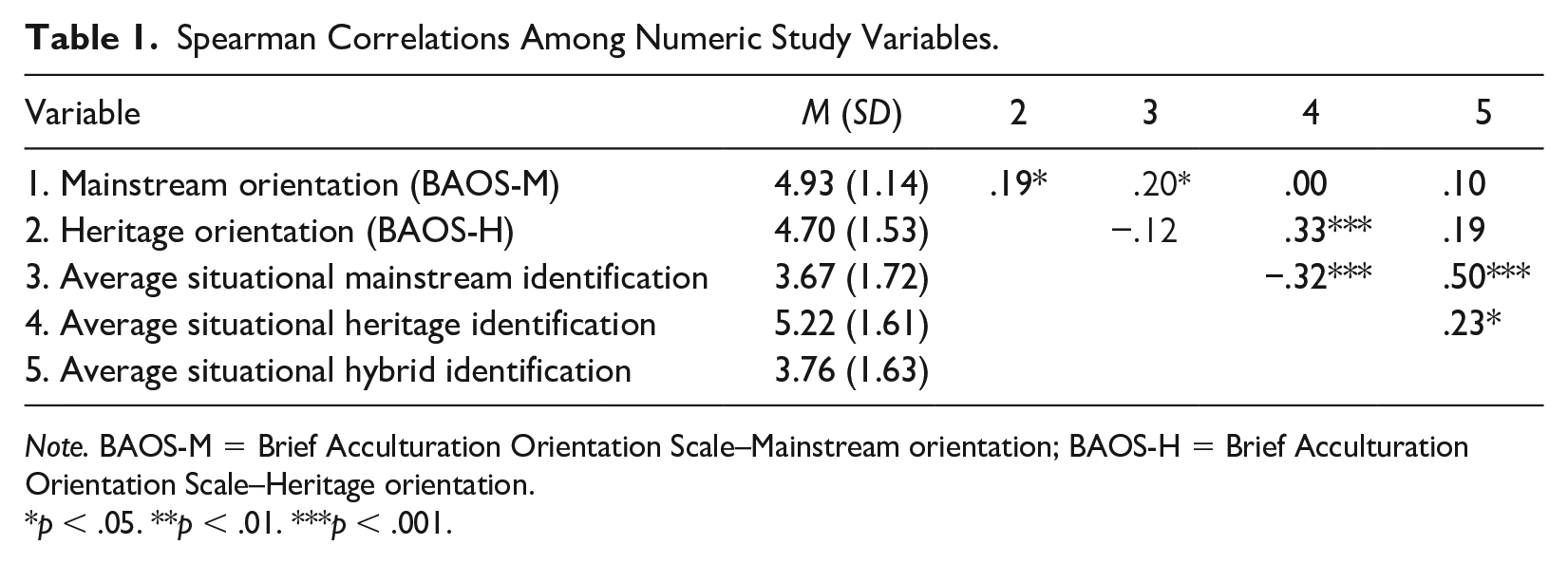
Table 1 shows Spearman correlations among continuous variables. All correlations were in expected directions. Situational identification with the mainstream cultural group was positively correlated with cultural orientation toward that group (BAOS-M). Situational identification with the heritage cultural group was positively correlated with cultural orientation toward that group (BAOS-H), but negatively with mainstream cultural orientation. Average situational mainstream and heritage identification scores were negatively related, indicating that participants were unlikely to experience these identities simultaneously. However, situational hybrid identification was positively correlated with both situational mainstream and heritage cultural identification. These correlations are small to moderate in size, suggesting that situational hybrid cultural identification is related to but distinct from situational heritage and mainstream identification.
Spearman Correlations Among Numeric Study Variables.
Note. BAOS-M = Brief Acculturation Orientation Scale–Mainstream orientation; BAOS-H = Brief Acculturation Orientation Scale–Heritage orientation.
p < .05. **p < .01. ***p < .001.
Predicting Situational Mainstream Identification
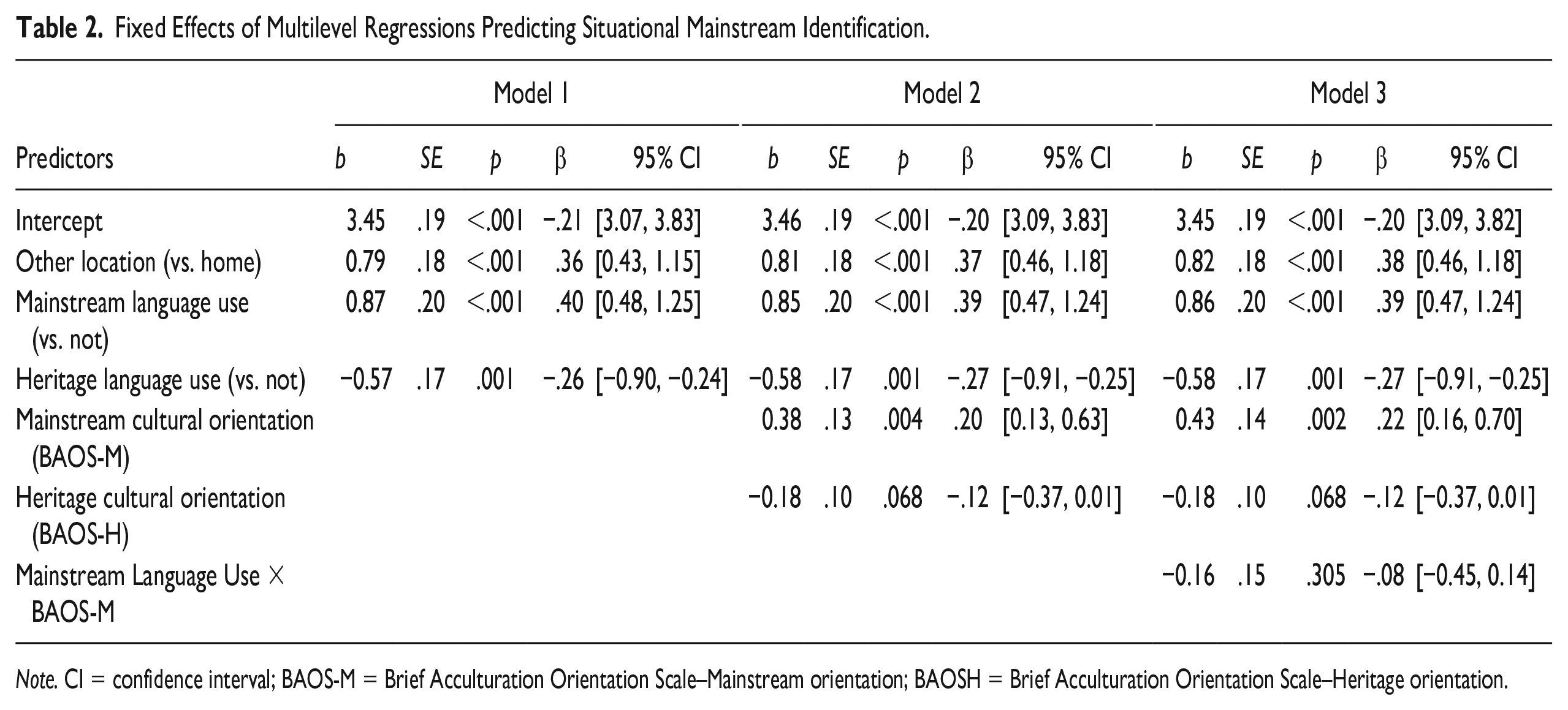
Table 2 shows the results of multilevel regressions with situational mainstream identification as the dependent variable.
Fixed Effects of Multilevel Regressions Predicting Situational Mainstream Identification.
Note. CI = confidence interval; BAOS-M = Brief Acculturation Orientation Scale–Mainstream orientation; BAOSH = Brief Acculturation Orientation Scale–Heritage orientation.
Situational Predictors
Model 1 results show that people identified statistically significantly more with the mainstream cultural group when they were outside the home, rather than at home. Consistent with H1, participants reported significantly greater situational mainstream identification when using English or French (mainstream languages) than when not using these languages. Using the heritage language (vs. not) was also significantly related to lower situational mainstream identification. Introducing situational predictors significantly improved model fit, χ2(3) = 80.75, p < .001, and reduced intercept and residual variances by 16% and 14%, respectively.
Dispositional Predictors
In Model 2, a more positive mainstream cultural orientation (BAOS-M) was associated with a significantly stronger situational identification with that cultural stream, supporting H1. A marginally significant opposite relation emerged for the heritage cultural orientation, with lower BAOS-H scores predicting marginally higher situational mainstream identification. Adding dispositional variables significantly improved model fit, χ2(2) = 10.41, p = .006, and reduced intercept variance by an additional 9%.
Cross-Level Interactions
Contrary to H2, Model 3 results revealed no significant interaction between mainstream cultural orientation and mainstream language use in the moment. Including this interaction did not improve model fit, χ2(1) = 1.07, p = .30. Importantly, the main effects identified above remained statistically significant upon inclusion of the interaction term, thus maintaining support for H1. Please note that results of an exploratory three-way interaction including BAOS-H scores are available in Supplementary Materials (none of the additional interaction terms were statistically significant).
Predicting Situational Heritage Identification
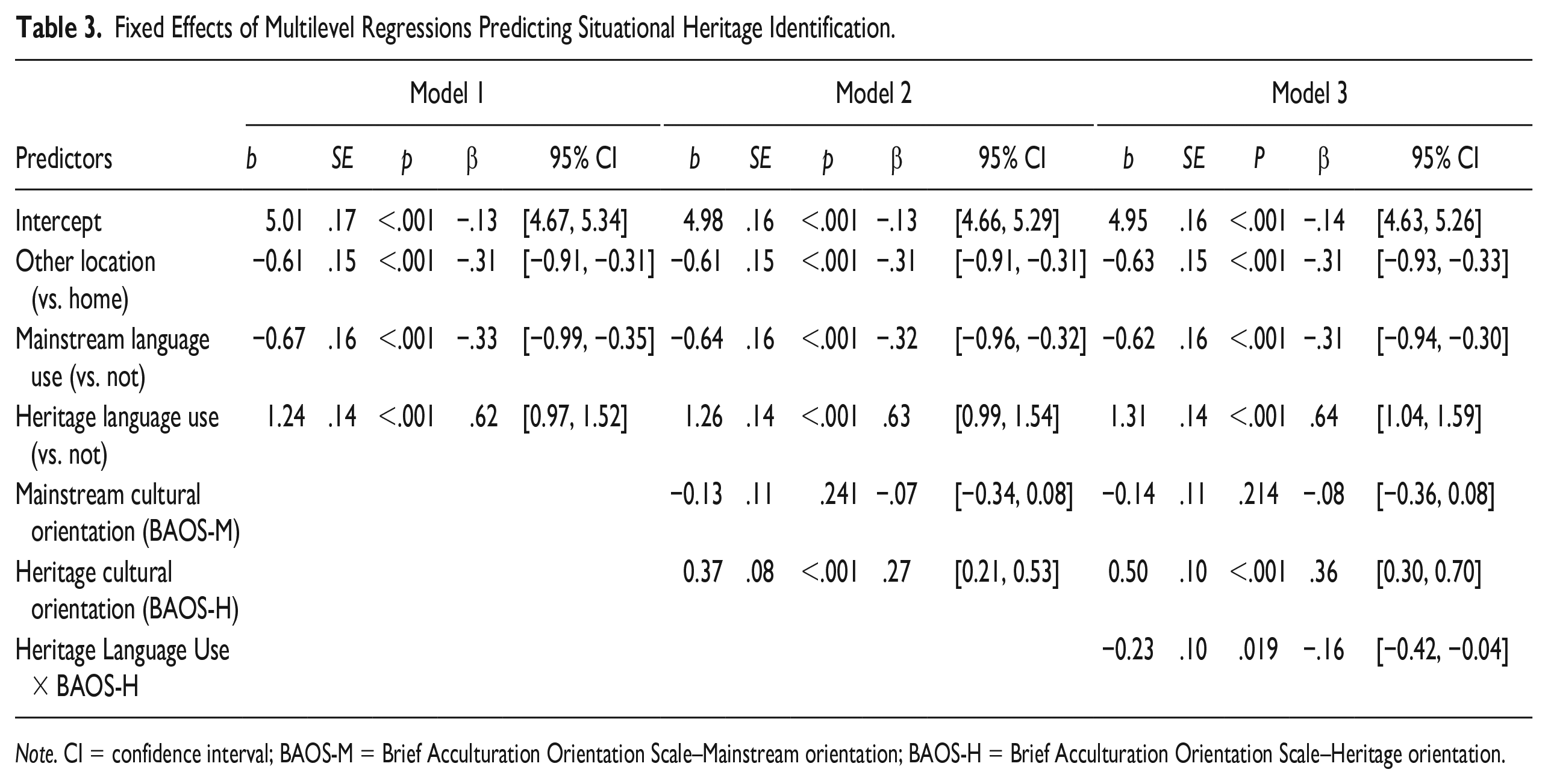
Table 3 shows the results of multilevel regressions with situational heritage identification as the dependent variable.
Fixed Effects of Multilevel Regressions Predicting Situational Heritage Identification.
Note. CI = confidence interval; BAOS-M = Brief Acculturation Orientation Scale–Mainstream orientation; BAOS-H = Brief Acculturation Orientation Scale–Heritage orientation.
Situational Predictors
In Model 1, participants reported feeling significantly greater situational heritage identification when they were at home compared with other locations. Supporting H1, they also reported greater situational heritage identification when using their heritage language (vs. not). In contrast, they reported significantly lower situational heritage identification when using a mainstream language (vs. not). The inclusion of these situational characteristics significantly improved model fit, χ2(3) = 141.05, p < .001, and reduced intercept variance by 20% and residual variance by 24%.
Dispositional Predictors
In Model 2, a more positive heritage cultural orientation (BAOS-H) was associated with significantly stronger situational identification with that cultural stream, in line with H1. The inclusion of dispositional variables resulted in significant model fit improvement, χ2(2) = 18.54, p < .001, and accounted for an additional 18% in intercept variance.
Cross-Level Interactions
Consistent with H2, introducing a cross-level interaction in Model 3 significantly improved model fit, χ2(1) = 5.41, p = .02, and accounted for an additional 2% of the residual variance. Using the heritage language during an episode significantly moderated the relation between heritage cultural orientation and situational heritage identification, as illustrated in Figure 1. When participants did not use their heritage language, their situational heritage identification was strongly and positively associated with their heritage cultural orientation (simple slope b = 0.50, SE = .10, p < .001). When using their heritage language, participants’ orientation toward the heritage cultural stream was more weakly related to situational heritage identification: the effect was almost twice as less strong than in the absence of the heritage language (simple slope b = 0.27, SE = 0.09, p < .001). This interaction supports H2. Importantly, the main effects described earlier remained statistically significant upon inclusion of the interaction term, thus maintaining support for H1. Please note that results of an exploratory three-way interaction including BAOS-M scores are available in Supplementary Materials (none of the additional interaction terms were statistically significant).
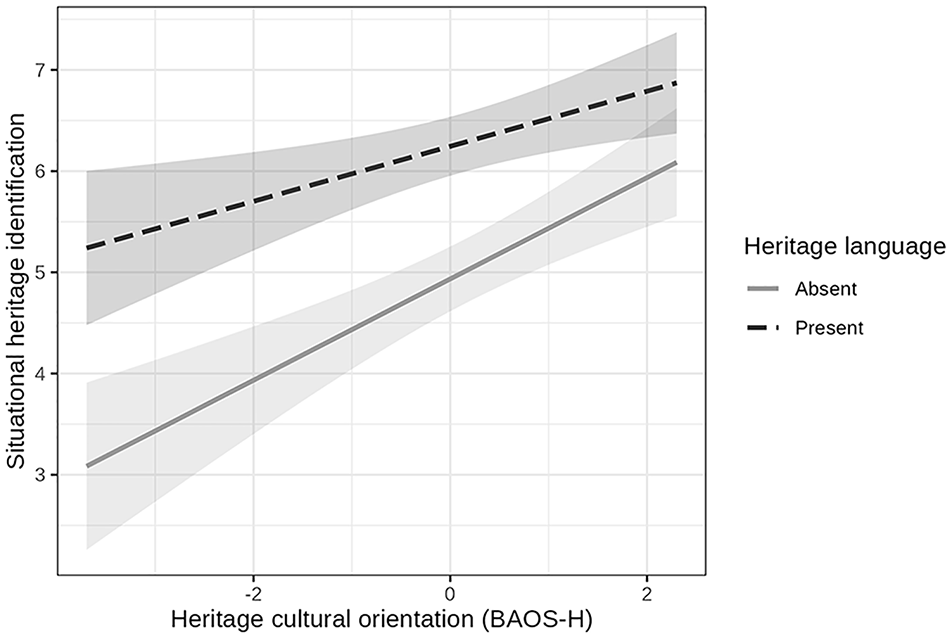
Situational Heritage Identification
Predicting Situational Hybrid Identification
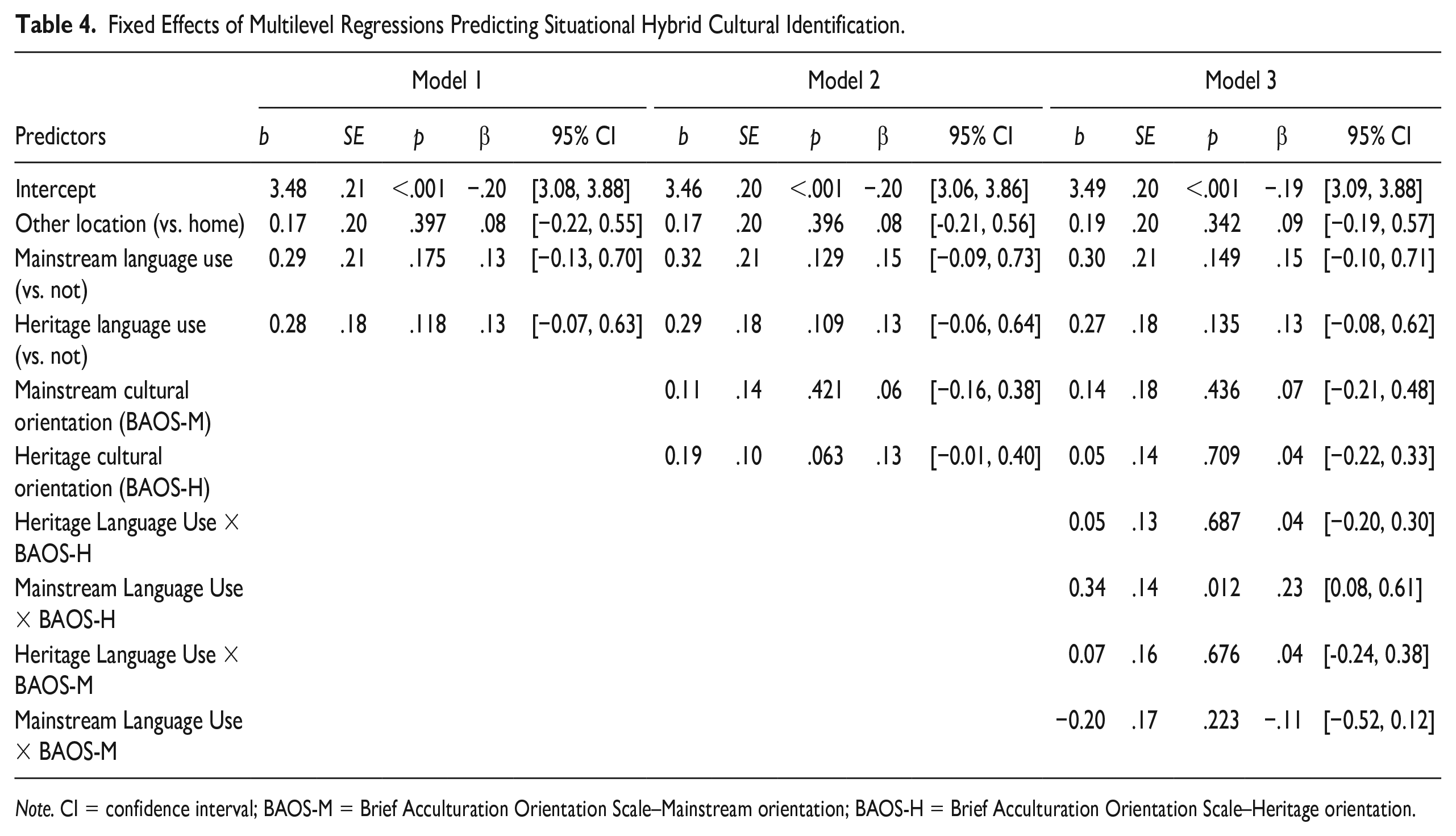
Table 4 shows the results of multilevel regressions with situational hybrid identification as the dependent variable.
Fixed Effects of Multilevel Regressions Predicting Situational Hybrid Cultural Identification.
Note. CI = confidence interval; BAOS-M = Brief Acculturation Orientation Scale–Mainstream orientation; BAOS-H = Brief Acculturation Orientation Scale–Heritage orientation.
Situational Predictors
Contrary to H3, Model 1 shows that neither episode location nor language used during an episode significantly predicted hybrid identification during that episode. Introducing these variables did not statistically significantly improve model fit, χ2(3) = 5.36, p = .15, and reduced intercept variance only by 1% and residual variance by 0.4%.
Dispositional Predictors
In Model 2, neither heritage nor mainstream cultural orientations were significantly related to situational hybrid identification, although heritage cultural orientation was marginally so, in the positive direction. Adding these variables accounted for 3% additional intercept variance and resulted in a statistically marginal improvement in model fit, χ2(2) = 4.79, p = .09. These results are inconsistent with H3.
Cross-Level Interactions
Introducing cross-level interactions (Model 3) marginally improved model fit, χ2(4) = 8.28, p = .08, and accounted for an additional 3% in intercept variance and 0.4% in residual variance. As partial support for H3, the interaction between mainstream language use and heritage cultural orientation (BAOS-H) was significant. As shown in Figure 2, when participants used mainstream languages, their heritage cultural orientation was positively associated with situational hybrid identification (simple slope b = 0.42, SE = 0.14, p < .001). In contrast, when they did not use mainstream languages, their heritage cultural orientation was unrelated to their situational hybrid identification (simple slope b = 0.08, SE = 0.11, p = .48). Please note that results of exploratory three-way interactions including both BAOS-H and BAOS-M scores are available as Supplementary Materials (none of the additional interaction terms were statistically significant).
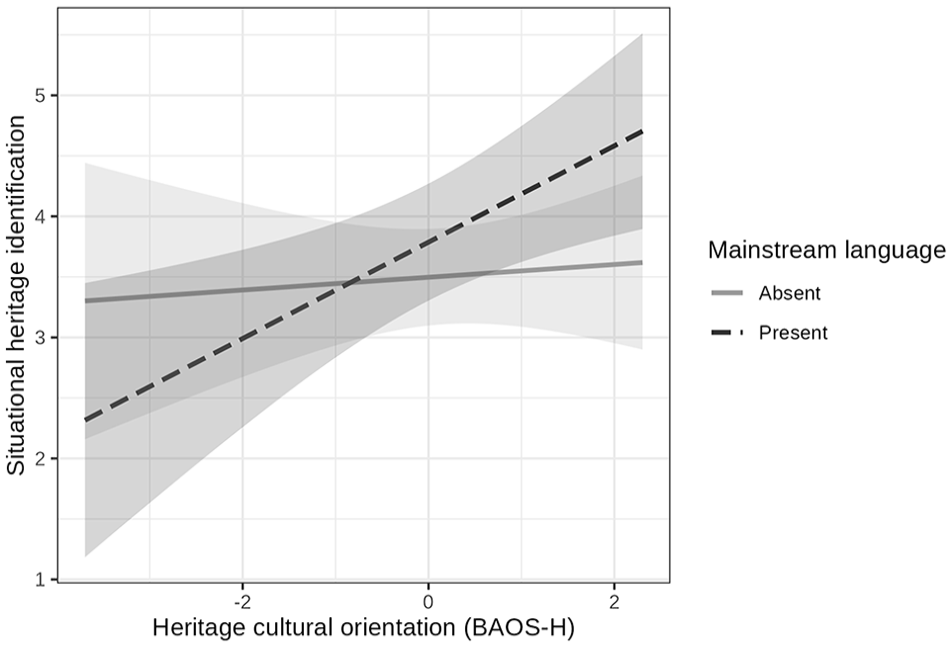
Situational Hybrid Identification
Discussion
This study examined the joint contribution of situational (language used in the moment) and dispositional (cultural orientations) characteristics in predicting situational mainstream, heritage, and hybrid cultural identification among Russian-speaking migrants to Canada. We expected that both sets of characteristics would be associated with situational identification, both independently and interactively. The results, which we summarize and discuss in the following three points, supported our hypotheses overall.
General Cultural Orientations, Contextual Characteristics, and Situational Identification
A more positive general orientation toward the mainstream Canadian cultural tradition and speaking English or French during an episode were independently associated with stronger situational mainstream identification. We obtained mirror results for situational heritage identification. These results replicate our past findings (Doucerain et al., 2013), attesting to the robustness of these disposition/context-situational identification patterns across demographic groups (students vs. community sample), cultural origins (multicultural vs. culturally homogeneous sample), cultural orientation scales (VIA vs. BAOS), and measurement formats (dichotomous vs. continuous identification items). They also echo long-standing debates in psychology about the relative importance of dispositional versus situational factors in explaining behaviors or outcomes of interest. Historically, this debate has perhaps been most prominent between trait theorists and situationists in personality (Murtha et al., 1996), but it exists in many other domains in psychology. To some extent, this study extends this question to the field of acculturation, with the verdict that both are necessary to predict people’s situational cultural identification—just as researchers generally concluded that person and situation both matter to personality (Fleeson, 2001).
Disposition × Context Interactions
Unexpectedly, there was no interaction between using a mainstream language and mainstream cultural orientation in predicting situational mainstream identification. Both predictors were associated with situational mainstream identification, but only through main effects. English and French are second language for our participants. One possible explanation is that, as such, these languages do not have the same power as a first language (here, Russian) to boost the corresponding situational cultural identification on their own. On average, participants have been living in Canada for 6.4 years. This may be insufficient for mainstream languages to become strong and automatic cues of mainstream situational identification overruling the influence of mainstream cultural orientation, like Russian is for heritage situational identification. Thus, a positive mainstream orientation activates mainstream situational identification with equal strength, whether or not a mainstream language is present. Consistent with this, in final models, the mainstream language use coefficient (b = 0.86 in Table 2) was about 1.5 times weaker than that of the heritage language use (b = 1.31 in Table 3). Furthermore, as salient markers of the mainstream context, English or French may also serve as reminders of this context’s “otherness” and participants’ own status as newcomers. This may dampen the positive association of mainstream language use on situational mainstream identification, leaving space for a positive mainstream orientation to drive situational mainstream identification at all times.
In the case of situational heritage identification, interactive effects of dispositional and contextual predictors were present. Using Russian seemed to overrule one’s heritage orientation in prompting situational heritage identification, such that identification was more weakly related to heritage orientation when that language was present. In the absence of this heritage contextual driver, migrants’ cultural orientation toward the heritage cultural group took over in predicting situational heritage identification, with a more strongly positive association. This result is consistent with literature demonstrating strong links between heritage identity and language (see Mu, 2015 for a meta-analysis). Heritage language is an important element of collective consciousness (Safran, 2005) and heritage identity formation (Cho, 2000). It is also a representation of this identity (Hurtado & Gurin, 1995). As such, situational heritage identification may reflect one’s general orientation toward the heritage culture to a greater extent in situations when this powerful contextual cue (heritage language) is absent.
Whether this interactive effect would remain for migrants who have lived in the new country for much longer than participants in our sample is an open question. With time and/or more extensive immersion in the mainstream environment, heritage language proficiency may decline and with it the salience of the heritage culture (Safran, 2005). Situational heritage identity may weaken in favor of mainstream or hybrid identities. The findings of Karpava’s (2019) study on Russian-speaking migrants in Cyprus support this idea. Participants from same-culture marriages (i.e., lower mainstream exposure) reported identification with Russian language and culture whereas participants from mixed marriages (i.e., greater mainstream exposure) reported identification with hybrid (Russian–Cypriot) cultures. Longitudinal research will be necessary to determine whether the roles of dispositional and contextual characteristics in predicting situational cultural identification change over time. In addition, we only considered three-way interactions between language use and mainstream and heritage cultural orientations in exploratory supplementary analyses. None were significant but this may reflect power limitations. Future studies with larger samples should probe these interactions more fully.
Situational Hybrid Identification
Contrary to our hypotheses, neither language use nor cultural orientations predicted situational hybrid cultural identification on their own. They did so only in interaction, whereby heritage cultural orientation was positively associated with situational hybrid identification only when participants used a mainstream language. We see three possible explanations for this pattern, all suggesting that situational hybrid identification may represent a way to strike a compromise between the mainstream cultural demands of a situation and one’s heritage cultural disposition.
First, immigrants generally favor integrating in the mainstream society while keeping ties with their own cultural group (e.g., for review see Van Oudenhoven et al., 2006). This dual engagement is challenging. Fulfilling one’s need to belong to the mainstream cultural group may feel like “betraying” one’s heritage cultural group and raise fears of being rejected by one’s heritage group (i.e., intragroup marginalization; Castillo et al., 2007). Somehow, migrants need to find a way to affiliate with the mainstream group while not betraying their heritage group. Situational hybrid identification may help them do so. In contexts with mainstream cultural demands (e.g., needing to behave “Canadian” in the workplace), mainstream language use may encourage identification with the mainstream group. In parallel, a positive heritage general orientation may reflect “faithfulness” to one’s heritage group and encourage identifying with this group in the moment. Situational hybrid cultural identification may reflect both influences and satisfy the desire to endorse the mainstream culture without threatening one’s heritage cultural identity.
Alternatively, situational identification with a mainstream–heritage hybrid cultural stream may provide a way to affirm one’s distinctiveness and positive orientation toward one’s heritage cultural stream in settings that strongly call for mainstream cultural ways. According to Communication Accommodation Theory, speaking English or French in contexts that call for these languages is a form of behavioral accommodation. Affirming one’s positive orientation toward the heritage cultural stream by adopting a hybrid situational identity may represent a way to psychologically not fully accommodate—or even resist—mainstream settings, while converging behaviourally. Thus, hybrid identification may signal a potential mismatch between linguistic and psychological accommodation (Gallois et al., 2005; Thakerar et al., 1982).
A third explanation is plausible. Migrants may want to converge toward mainstream interlocutors behaviourally and psychologically, but affirming a mainstream identity may not feel like a viable option. First-generation migrants (and cultural minorities more generally) often face identity denial. They may self-identify as “Canadian” but not be acknowledged as such by mainstream interlocutors (Cheryan & Monin, 2005). Endorsing a hybrid identity may be a way to still claim identification with the mainstream cultural group, while at the same time protecting oneself from the “perpetual foreigner stereotype” (Tuan, 1999). Situational hybrid identification may plausibly reflect any—or several—of these mechanisms. Future research should probe these alternatives.
In any case, our findings suggest that hybrid identification emerges in specific conditions that are distinct from those fostering simple situational mainstream or heritage identification. They also underscore the essential role of language in acculturation processes. Acculturation researchers have acknowledged language as a central component of acculturation (Kang, 2006), but what is emphasized is typically language proficiency or frequency of use in different life domains (e.g., media and friendship). In contrast, studies in socio-/applied linguistics commonly focus on the complex ways in which language serves as a tool for negotiating one’s position or identity in social settings (e.g., Myers-Scotton, 2000; Pavlenko & Blackledge, 2004)—often with qualitative methods such as conversation analysis less typically used in acculturation research. There is ample room for cross-fertilization between these two fields, and future research will hopefully take advantage of this potential (Doucerain, 2017).
Limitations and Future Directions
The present results replicated past findings and yielded novel insights into how contextual and dispositional acculturation variables interact in predicting migrants’ situational cultural identification. In spite of these strengths, several limitations should be noted. First, we collected daily diaries for one day only, giving us access to a limited sample of situations. It would be desirable to follow people throughout one week at least, to take into account day to day and weekend versus week-day variations in the cultural make-up of people’s lives.
Second, we recorded languages used during episodes, but not the quality of interactions in these languages. It is very likely that for a Russian migrant, speaking English with a sullen government official or with a supportive colleague may have differing implications for situational cultural identification. In future research, it would be important to characterize social interactions more exhaustively.
Third, recording migrants’ cultural identification and language use in naturalistic settings was a strength of this study, but this methodological choice also had drawbacks. For example, we were not able to control the intensity or distribution of cultural/language use across situations, conversation content, or any other setting characteristics—all of which may have impacted the results. Also, the choice of relevant situations and experienced feelings was completely dependent on participants’ decisions and memories. Although this method has an advantage in terms of ecological validity as participants likely recalled the most salient and meaningful situations, it still may be subject to recall bias.
Fourth, our cross-sectional design precludes any conclusions regarding the directionality of effects. Does having a particular stance toward Russians/Canadians lead to identifying a certain way in the moment, or does chronically identifying a certain way in daily life crystallize into a more stable stance toward one’s cultural groups over time? Does using a given language in the moment activate certain cultural identities, or does one’s cultural identification pattern orient what type of linguistic settings to engage in? All causal effects seem plausible, and in truth, we would expect all of them to play out in migrants’ acculturation journey, through feedback loops repeated over time (Doucerain et al., 2017). It would be necessary for future research to document how situational variation and more stable dispositions evolve and mutually influence one another over time. Work on microdevelopment (Granott & Parziale, 2002) could provide fruitful sources of inspiration for such an endeavor.
Finally, we asked participants to report their level of situational hybrid mainstream–heritage identification, but without clearly probing what this identity really includes or contains. The meaning of “Russian-Canadian” could very well have differed across participants. One difficulty in providing clarifications to our participants is that concepts of cultural hybridity and hybrid cultural identification are still elusive in acculturation research. Different flavors of hybridity transpire from different theoretical models, but we are not aware of a single unifying framework clearly defining and characterizing hybrid cultural identities. Establishing the nomological network of hybrid cultural identities would be an exciting direction for future research.
Conclusion
Over the years, our understanding of acculturation has evolved from “trait-like” preferences (or strategies) regarding how people handle multiple cultural streams in their life to a multifaceted, contextual, and dynamic process whereby people acquire and flexibly use multiple cultural repertoires to meet their goals and varied situational cultural demands (Ryder et al., 2021). This research is grounded in the latter perspective and aimed at better understanding antecedents of how migrants culturally identify in the moment, with particular attention to hybrid cultural identification. To do so, we used traditional questionnaires, but also focused on cultural and linguistic features of migrants’ daily activities, as they commute to work, feed their children, or chat with friends. We believe that this emphasis on how migrants go about the business of daily life is essential to further our understanding of acculturation. Only then will we be able to characterize how the complexity, contradictions, and general messiness of one’s lived experience translate into the stable psychological tendencies or dispositions that help us define a person.
Supplemental Material
sj-pdf-1-jcc-10.1177_00220221231193148 – Supplemental material for Who Are You—Right Now? Cultural Orientations and Language Used as Antecedents of Situational Cultural Identification
Supplemental material, sj-pdf-1-jcc-10.1177_00220221231193148 for Who Are You—Right Now? Cultural Orientations and Language Used as Antecedents of Situational Cultural Identification by Anna Medvetskaya, Marina M. Doucerain, Diana Moldoveanu and Andrew G. Ryder in Journal of Cross-Cultural Psychology
Footnotes
Declaration of Conflicting Interests
The author(s) declared no potential conflicts of interest with respect to the research, authorship, and/or publication of this article.
Funding
The author(s) disclosed receipt of the following financial support for the research, authorship, and/or publication of this article: This research was supported by a research grant from the Fonds de Recherche du Québec—Société et Culture to the second author and a Concordia University seed grant to the fourth author.

Supplemental Material
Supplemental material for this article is available online.
References
Supplementary Material
Please find the following supplemental material available below.
For Open Access articles published under a Creative Commons License, all supplemental material carries the same license as the article it is associated with.
For non-Open Access articles published, all supplemental material carries a non-exclusive license, and permission requests for re-use of supplemental material or any part of supplemental material shall be sent directly to the copyright owner as specified in the copyright notice associated with the article.
