



Abstract
Gratitude significantly affects employees’ positive psychology and behavior, and how to cultivate workplace gratitude has become an important practical issue. This article selected a Chinese company for field research and employed a grounded theory approach to investigate how Confucian culture shapes gratitude in the workplace. The findings indicated that Confucian culture influenced employees’ inward and benevolent attributional tendencies in the continuous interaction among the organization, employees, and their families. This prompted employees to engage in positive benefit appraisals and ultimately be grateful. The findings contribute to a Confucian cultural shaping process model of gratitude in the workplace and demonstrate distinct advantages over currently prevalent gratitude interventions or cultivation methods. This not only enriches the theory of workplace gratitude cultivation and cultural construction of emotions but also provides a clear pathway for organizational implementation. More specifically, we highlight that workplace emotion research needs to focus on the shaping processes of different social cultures, which can serve as a valuable corporate resource.
Introduction
Over the past several decades, evidence has suggested that gratitude plays a vital role in the workplace (Fehr et al., 2017; Sawyer et al., 2022). Gratitude is associated with a variety of physical and psychological benefits, such as relieving employees’ perceived stress (Lee et al., 2018) as well as increasing individual well-being (Nezlek et al., 2017) and self-efficacy (Komase et al., 2019). Accordingly, gratitude is increasingly regarded as a “valuable property” by companies (Fehr et al., 2017). Researchers also identified various methods to develop gratitude in the workplace, including providing more organizational support at work (e.g., interactional justice, appreciation programs, beneficiary contact, and developmental feedback; Fehr et al., 2017; Ford et al., 2018), supervisor support (e.g., superior compassionate love expression, supervisor’s helping and interactional justice; Belkin & Kong, 2022; Ford et al., 2018), as well as implementing gratitude interventions (e.g., regularly recording gratitude events, recalling gratitude experiences, and expressing gratitude; Kaplan et al., 2014; Komase et al., 2019; Locklear et al., 2021). However, other important factors, especially social culture, were unfortunately overlooked by extant research. Culture is tacit yet highly powerful in shaping psychological processes and mechanisms underlying them (Kitayama & Park, 2007). A large body of cross-cultural psychology research on gratitude has yielded significant evidence that types/expressions/reasons for gratitude vary significantly across different sociocultural contexts (Chang & Algoe, 2020; Mendonça et al., 2018; Merçon-Vargas et al., 2018; Merçon-Vargas & Tudge, 2021; Naito et al., 2005; Shen et al., 2011; Shin et al., 2020). For example, compared with Anglo-Americans who wrote about their gratitude toward a benefactor and thus felt positive, Indians who completed the same task experienced positive and negative emotions, reporting higher sadness and guilt than their Western counterparts (Titova et al., 2017). There were also differences in gratitude demonstrations in the United States and Taiwan. Americans tended to add bodily contact to their gratitude demonstration toolkit, whereas the Taiwanese added self-improvement instead (Chang & Algoe, 2020). Therefore, organizations need to pay attention to the role of social culture when cultivating gratitude in the workplace.
The existing body of knowledge within cross-cultural psychology greatly aids our comprehension of the cultural differences organizations confront while fostering gratitude. However, it has certain limitations as well. First, current research on gratitude primarily focuses on North American participants (Chang & Algoe, 2020; Mendonça et al., 2018; Merçon-Vargas et al., 2018), and there is a lack of research in the context of Eastern culture, especially Confucian culture. Confucian culture has been observed as one of the strongest cultural influences in Asia management (Leong et al., 2014; Oh, 1991). Furthermore, Confucian culture attaches great importance to filial piety, that is, everyone’s gratitude to their parents, which plays a vital role in cultivating gratitude in East Asian society. Second, the majority of research has revolved around comparing variations in expressions of gratitude across distinct cultural contexts. This body of work substantiates the notion that culture plays a pivotal role in shaping expressions of gratitude. Nonetheless, there has been a conspicuous lack of emphasis on scrutinizing the intricate processes through which culture influences the cultivation of gratitude. According to the cultural construction theory of emotions (Mesquita et al., 2016), in addition to emphasizing gratitude in the cultural products that people participate in, a more critical way is to promote gratitude through typical social interactions (Boiger & Mesquita, 2012). People learn normative values from interactions (Tudge et al., 2015). Hence, only when we understand the whole interaction process of shaping employees’ gratitude can the organization better turn social culture into a valuable resource. Given its popularity, it deserves to be explored. Thus, the research questions of this article are as following:
In the past 10 years, we have visited dozens of companies in China. Based on the research questions, this study finally selected one from the companies’ pool-NSET company (NSET is not the company’s real name). It has been advocating Confucian culture in the organization since 2013. It has taken measures based on Confucian values, such as filial piety and benevolence in the workplace, causing many positive changes in the company. The most significant one was that the entire organization had formed an intense atmosphere of gratitude. For example, in the preliminary interviews, about 80% of the interviewed employees expressed their gratitude to their parents, bosses, organizations, and everything in the world. With strong research enthusiasm, we conducted eight field research in the past 7 years and obtained a large amount of valid data. We finally constructed a process model illustrating how Confucian culture shapes workplace gratitude. To be more specific, it showed how the organization integrated Confucian culture into management and how it influenced employees’ gratitude through attributional tendencies. The research findings greatly enrich workplace gratitude and cultural construction of emotions literature and provide a different path for organizations that want to cultivate gratitude. It also inspires organizations to tap domestic or local cultural resources, which may be adequate to cultivate gratitude in the workplace. Moreover, although this article focuses on gratitude, researchers can also extend research into cultivating other workplace emotions.
Theoretical Background
To explore the process of how Confucian culture shapes gratitude in the workplace. We first reviewed the relevant research on cultural differences between gratitude in Confucianism and other cultures, and the core connotations of Confucianism. Then, we focused on how culture constructs emotion and the relevant measures for organizations to implement cultural change. These existing studies provided a helpful guideline to explore how Confucian culture was integrated into the workplace and the shaping process of gratitude.
Cultural Differences in Gratitude
Gratitude is regarded as a cognitive-emotional response when a person realizes that he is the beneficiary of the goodwill of others (McCullough et al., 2002). Social culture is the fundamental factor that affects emotional cognition (Sperber & Hirschfeld, 2004). People unconsciously acquire implicit motivational dispositions that are compatible with cultural expectations when actively striving to adapt to the environment shaped by cultural expectations, which affect the individual’s emotional experience (Kitayama & Park, 2007). The current study on cultural differences in gratitude, spanning various disciplines including psychology, sociology, and anthropology, reveals a complex and nuanced understanding of how gratitude is expressed, perceived, and intervened across different cultures.
Research within cross-cultural psychology has often focused on comparing gratitude experiences and expressions across different societies. For example, the extent to which different types of gratitude are expressed varies across societies; children in Asia are more likely to express connective gratitude (China and South Korea), followed by children in Eastern Europe (Russia and Turkey). In contrast, children in the Americas (the United States, Guatemala, and Brazil) are less likely to express connective gratitude (Mendonça et al., 2018). People in Confucian cultures would use self-improvement (i.e., cultivating personal skills and living up to social roles) to communicate gratitude. In contrast, people in individualist cultures would use bodily contact (Chang & Algoe, 2020). Sociological research reveals the broader societal structures and relations that influence the experience of gratitude. For example, studies in Western cultures found that people expected to feel more gratitude when they received benefits from distant relationship partners than from close relationship partners (Bar-Tal et al., 1977; Rotkirch et al., 2014). However, a recent study with Canadians and Chinese subjects found that when the helper was set as an unfamiliar person, Chinese subjects were more likely than Canadian subjects to believe that the other people’s helping behavior was utilitarian. Thus, less gratitude was induced (Shen et al., 2011). Hu et al. (2012) also found in their research on Chinese subjects that help from close relatives is kinder and more likely to inspire gratitude than help from distant relatives (Hu et al., 2012). Anthropological investigations delve into gratitude’s historical and cultural roots, offering insights into how diverse societies have understood and practiced gratitude over time. For example, in Western culture, people attach great importance to gratitude to God (Emmons & Crumpler, 2000; Krause et al., 2015), while in East Asian culture, people place more emphasis on gratitude to parents (Hwang, 1999). Different cultural histories shape people’s different gratitude experiences.
In summary, previous studies from psychology, cross-cultural studies, sociology, and even anthropology thought have noted cross-cultural differences in gratitude (Chang & Algoe, 2020; Emmons & Crumpler, 2000; Hu et al., 2012; Mendonça et al., 2018; Merçon-Vargas & Tudge, 2021; Rotkirch et al., 2014; Shen et al., 2011), but management scholars paid less attention to cultural differences in the cultivation of workplace gratitude. Therefore, it is necessary to pay attention to how specific local social cultures uniquely shape workplace gratitude.
Confucian Culture
To explore how Confucian culture cultivates workplace gratitude, it is necessary to understand its core proposition. The essence of Confucian culture is ethics (Zhu, 2015). The core of Confucian ethics is benevolence. Confucians endorse a hierarchical order of benevolence. Namely, one must first love their parents, then love everyone, as they believe this is consistent with human nature and essential for social order (Li, 2020). Confucian culture advocates that people should pay back to their parents. That is to say, the source of benevolence is filial piety. For Confucians, the family is not only a social institution that provides nurture, care, and protection for the young and the old but also a place where particular ethical practices are conducted (Q. Wang, 2016). The feelings between father and son, brother and sister can be further generalized to friends and other close groups in social life, forming an outer level of benevolence, and finally realizing a harmonious society full of love. Confucianists believe that all people can be benevolent and benevolent people would be “paid back” (Hwang, 2001). Based on this, Confucian culture attaches great importance to education, and Confucius is considered the most excellent educator and the most brilliant man in Chinese history. He was the first person to introduce the concept of education, popularize education, and make teaching a profession in China (Louie, 1984). Summing up, Confucian culture takes “benevolence” as the core and “filial piety” as the origin of “benevolence,” which is the main content of ancient Confucian moral education. Therefore, in this article, the term “Confucian culture” is defined as a cultural framework that places significant emphasis on the embodiment of Confucian ethics, which is mainly centered around the fundamental principles of “benevolence” and “filial piety.” How these core propositions affect employees’ gratitude in the workplace remains to be further explored.
The Process of Culture Shaping Emotions
In the social context, cultural construction happens throughout life and is not restricted to early socialization (Boiger & Mesquita, 2012). Mesquita et al. (2016) explored the process of the cultural construction of emotion at the collective and individual levels. At the collective level, one way that collectives promote normative emotional states is to emphasize them in cultural products in which people engage. Another way is that culture promotes (or avoids) certain emotional states in social interactions. At the individual level, the primary way culture shapes emotion is through attribution and evaluation (Mason & Morris, 2010). When faced with similar situations, people in different cultures also attribute and appraise these situations in ways that help them accomplish their cultural tasks (Mesquita et al., 2016). In organizations, training and leading by example can serve as effective methodologies for promoting cultural awareness and bringing about cultural change in organizations (Schraeder et al., 2005). This provided a precious reference for us to explore how Confucian culture shapes gratitude in the workplace.
Methods and Data
Based on the above literature review, this article aims to clarify the process of how Confucian culture influences the development of employee gratitude. Process theory differs from variance theory. Variance theory conceptualizes and theorizes how variables relate to one another, while process theory is a conceptualization and theorizes how phenomena emerge, evolve, and cease over time (Mohr, 1982). Moreover, variance theorization operates under the assumption of deterministic outcomes, whereas process theorization accentuates the presence of multiple potential outcomes. The grounded theory does not have theoretical presuppositions and gradually aggregates from all data, allowing researchers to observe as many phenomena as possible in the organization and the development process of these phenomena, especially the internal psychological and emotional changes of employees (Glaser & Strauss, 2010). Therefore, we adopted a grounded theory approach to investigate this process (Gioia et al., 2013).
It is worth noting that our study takes on the characteristics of weak process analysis. Of the varying degrees of adherence to process ontology among researchers, process research can be categorized into two distinct types: strong process research and weak process research (Cloutier & Langley, 2020). The weak process theory leans toward the vantage point of entity ontology. While it incorporates notions of temporal progression and evolution, it perceives the process as transpiring within a specific entity. In contrast, a strong process aligns with an unadulterated process ontology, emphasizing that everything we perceive manifests a process occurring in a specific time and space. The core of the weak process paradigm centers around the “entity” focusing on the evolution of a specific entity over time. In contrast, the strong process paradigm emphasizes the “process” highlighting that each instant contributes to an ever-evolving reality.
Research Context and Sample
The revival of Confucian culture in the Chinese workplace gave us an excellent opportunity to explore this process. Although Confucian culture has been influential in China for thousands of years, it was criticized in the May 4th movement in China in 1919. It was discarded and attacked during the Chinese Cultural Revolution (1966–1976) more harshly than ever before. Therefore, over the past century, the influence of Confucian culture in China has gradually weakened. Nevertheless, as China’s top leaders attached great importance to the value of traditional culture since 2012, Confucian culture seems to have returned (C. Wang & Billioud, 2022). More and more Chinese cultural scholars are invited to give public lectures in universities and on television programs on Confucian classics (Shek et al., 2013). Subsequently, there are a large number of companies trying to use traditional Chinese culture for management. This background provides an excellent opportunity to observe how Confucian culture shapes gratitude in the workplace.
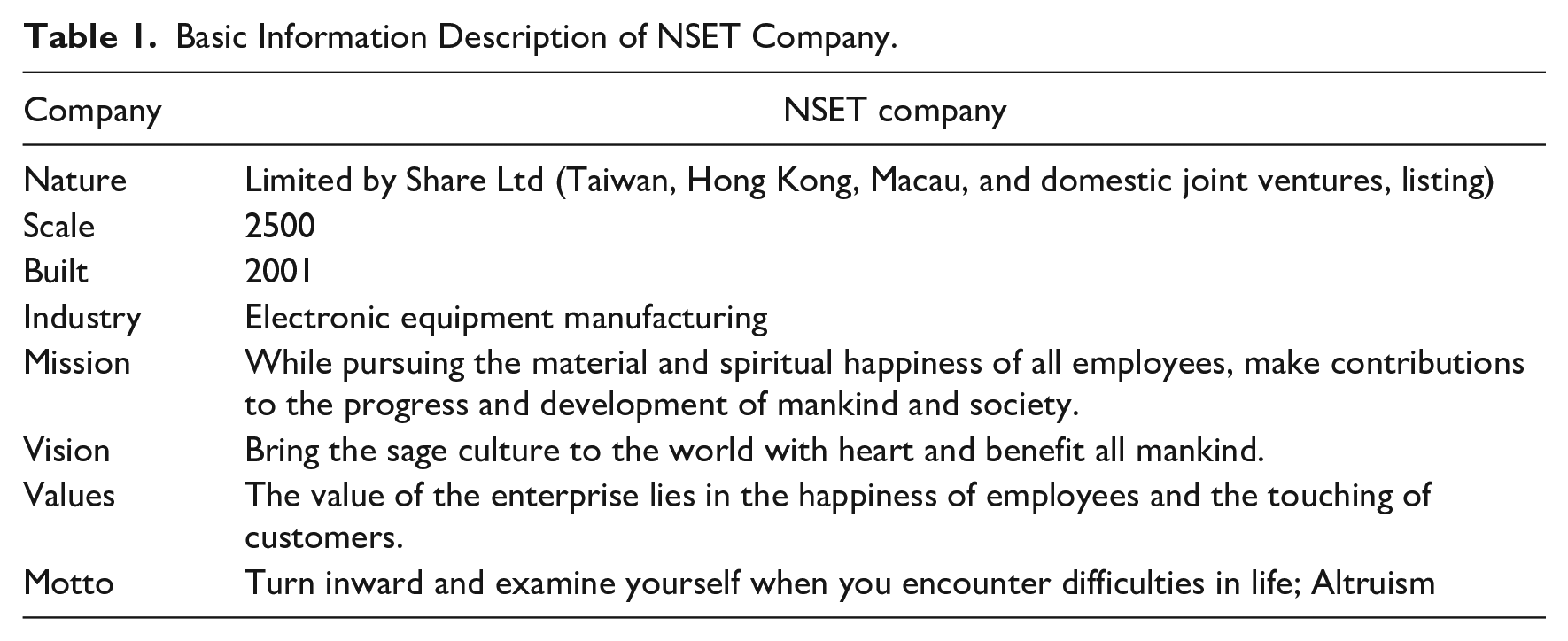
The NSET company in China was established in 2001 and went public in 2018. The basic information about the NSET company is shown in Table 1. It is a typical case suitable for the research question of this article. The reasons are as follows: First, there was a clear process that showed how the NSET company had integrated Confucian culture into the organization. Until 2013, the NSET operated entirely under Western management principles and theories. This clear dividing line allowed us to explore how they integrated Confucian culture into the organization.
Basic Information Description of NSET Company.
Second, there was a noticeable change in employee gratitude after integrating Confucian culture into the organization. During the field research, the authors found that from the managers to employees, they all strongly expressed gratitude to their parents, bosses, organizations, and even everything. Third, the NSET company had enough fresh and multilevel information. The NSET company decided to introduce Confucian culture in 2013, and the executives who promoted this process had not yet retired and were still in the company. When we first visited the company in 2015, the organization’s integration into the traditional culture was still in its infancy. Much information was still active, which allowed us to obtain sufficient information on this research topic and avoid retrospective bias. Finally, from 2015 to 2021, the research team went to the NSET company every year without interruption to track this process. Therefore, we had access to many interviews, observations, and secondary data, which benefited our research.
Data Collection
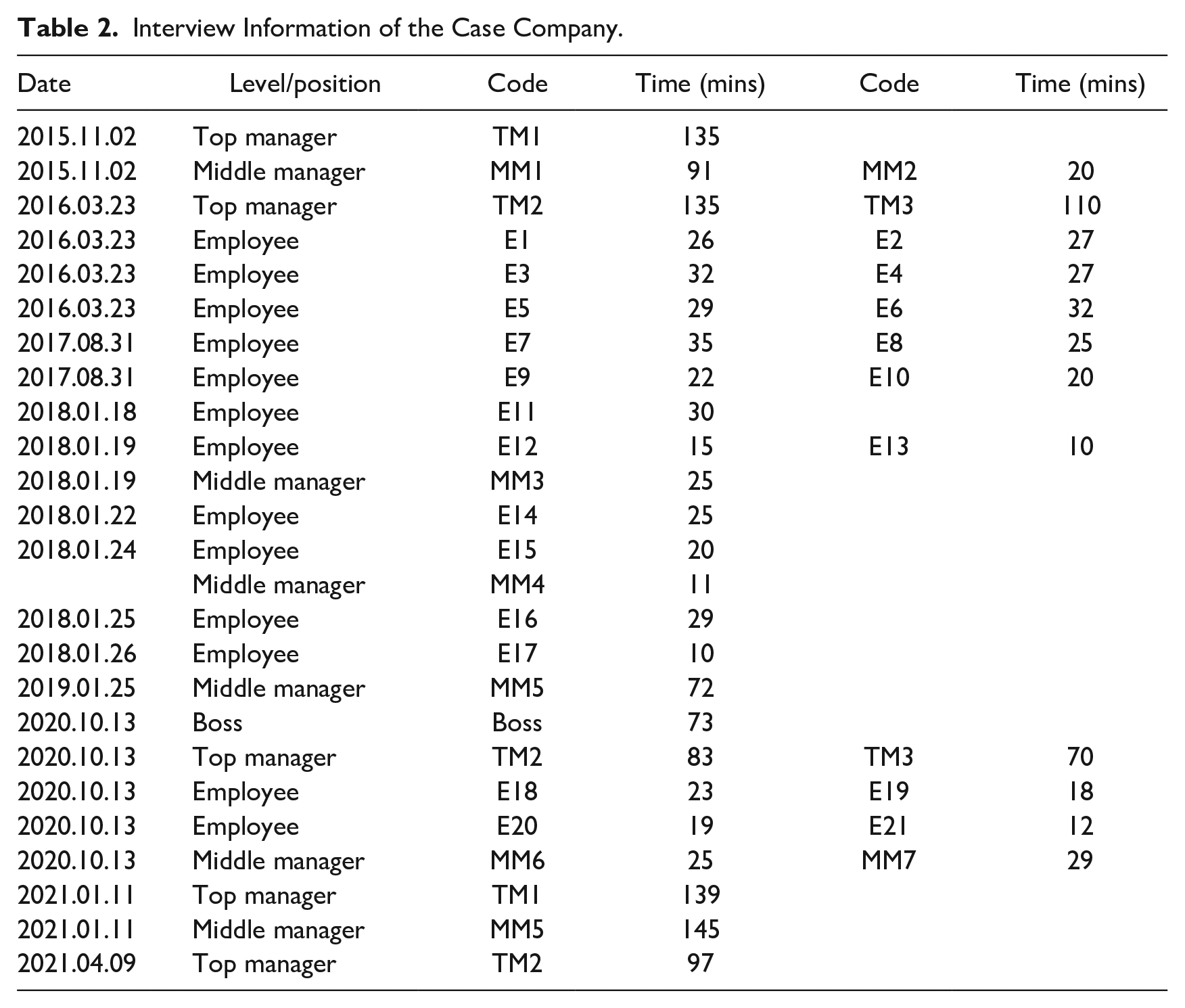
The primary data source was the formal interview with 32 interviewees (see Table 2). The interviews ranged from 10 to 147 mins, lasted 44 mins on average, and were audio-recorded. The interviewees included the chairman, executives, middle managers, and many front-line employees. Semi-structured interviews were adopted, and the outline was constantly updated with the research progress because the rigid use of the initial questions in the research process would hinder the discovery (Strauss & Corbin, 1998).
Interview Information of the Case Company.
In addition, this study designed different interview outlines for different interviewees. Some contents of the interview outline are as follows: (a) For managers, the interview focuses on the organizational level. The specific questions include the following: “What did the organization do to integrate Confucian culture into the organization? Please give some examples.” “Does Confucian culture influence employees?” “How do employees show gratitude?” (b) For front-line employees, the interview mainly focuses on the micro-level. The questions include the following: “What do you think of Confucian culture?” “What activities have affected you? Please give some examples.” For those employees who express their gratitude to the organization, their parents, and all things, continue to ask “Why are you grateful?”
During the interview, we always asked the interviewees to give examples, because of the elusive nature of emotions which is difficult to investigate. Using exploratory questions on actual events encouraged participants to re-experience the situation as intensely as possible and fully exchange their thinking, feelings, and behavioral experiences. This provided us with rich insights into interaction and their feelings about events, including their action motivation and understanding of themselves. This is a valuable way to gain emotion (O’Brien & Linehan, 2019).
More specifically, the first author had done experiential work in the case company for more than a month, so she understood the living environment of front-line employees. In addition to the interviews, a large number of observation diaries were also kept during the fieldwork. She recorded everything she saw, heard, and felt in the company, and took a lot of photos. It helped us to verify the information obtained in the interviews. While the on-site observation phase had concluded, we maintained periodic engagement with the company’s progress by actively monitoring updates shared on the Company’s WeChat public account. When we find something interesting, we often communicate with managers or employees by telephone or instant messaging app, updating our understanding of the company.
Finally, we strictly followed the grounded theory sampling method and deliberately abstained from predefining the sample size during the initial stages of data collection. Throughout data collection, we engaged in simultaneous data analysis. This method entailed carefully analyzing the collected data, subsequently guiding our decision of suitable subjects and quantities for theoretical sampling in the following phases. This iterative approach was diligently upheld until achieving a state of theoretical saturation, upon which we concluded further data collection. Our research endeavors commenced in 2015, involving a comprehensive series of eight interview rounds. In the coding of employee data, spanning until October 13, 2020, no novel themes emerged from this analysis, thereby corroborating our judgment that employee data had substantially reached a state of saturation. After this phase, we conducted two additional interview rounds with managers on January 11 and April 9, 2021. We definitively confirmed the absence of new insights through a coding process applied to the data collected from these interviews. Consequently, we assert that the themes developed in response to our research question have attained a provisional state of saturation.
Data Analysis
The formal analysis of our qualitative data took place concurrently with the continued observation and interviews described above. We followed Gioia’s method of analyzing data (Gioia et al., 2013) and adopted the method of manual coding. The first author began first-order coding by reviewing interview transcripts and archival data and identifying “thought units” words, lines, or passages representing a fundamental idea or concept (Patvardhan et al., 2015). She selected, categorized, and labeled direct statements (i.e., first-order, informant-centric codes) that other authors could assemble into more theoretical perceptions (second-order, researcher-centric themes), and which all authors later could condense into more general theoretical concepts (Aggregate dimensions). When there were conflicting concepts and categories with incomplete connotations and unclear logic in data analysis, all authors jointly examined them through repeated comparison, continuous discussion, or recollecting data. After the coding, all authors checked the consistency between the coding results and the original data to ensure the accuracy of the coding results. We extracted more than 400 labels in nearly 300 pages of raw data successively, which were very close to the language used by the interviewees (Maanen, 1979). Remaining at this level of meaning that is close to the data allowed the researcher to remain open to all relevant ideas that emerge (Charmaz, 2006). Then, we gathered the labels that seem to be related to the same phenomenon into a category by continuous comparison. In this process, we also continued to collect new data to enrich existing categories or discover new categories. Until all the data we continued to collect could be summarized in the existing categories, and no new categories appeared, we stopped data collection. Finally, we identified 52 first-order codes.
The second-order analyses involved axial coding (Strauss & Corbin, 1998)—synthesizing and clustering first-order codes into higher-order themes. Axial coding is a process of linking the main category and subcategory according to this relationship chain (Strauss & Corbin, 1998). Every author used constant comparative methods again and compared data over time and across codes. Every time the coding was over, all authors discussed the similarities and differences of the coding together, and codes demonstrating alignment were promptly affirmed through unanimous consensus, while divergent codes underwent a thorough and rigorous examination. All authors would return to the raw data to check whether these codes reflect reality and whether they are important. The final second-order themes were agreed upon by all authors. This stringent procedure was iteratively employed after each successive phase of data collection. As the final data collection phase reached its culmination, an all-encompassing synthesis and discussion occurred, culminating in the ultimate refinement of our coding outcomes. We finally aggregated the 52 first-order codes into 18 second-order themes that were level-specific (Patvardhan et al., 2015). The final phase, theoretical coding (Glaser & Strauss, 2010), involved assessing the semantic relationships among these themes, generating eight aggregate dimensions (see Figure 1).
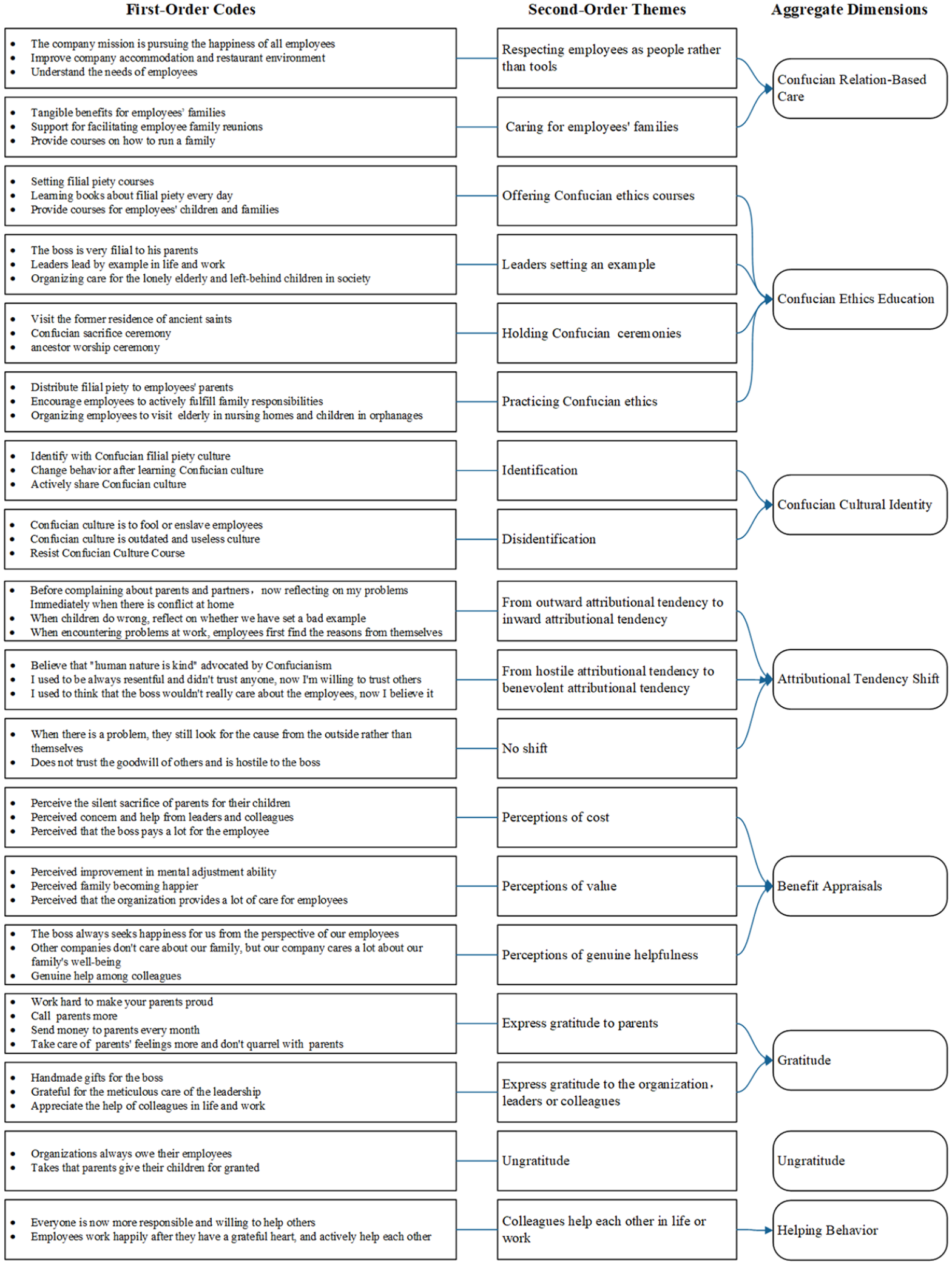
Example of Coding
To affirm our findings, after the initial establishment of the model, some interviewees were specially invited to comment to test whether the final story was in line with their situation. Finally, the coding results were further adjusted according to their feedback. In terms of validity, this article collected data from multiple sources and methods (including firsthand interviews and on-site observation, secondhand company data, and public data). For the same event, evidence was collected from different interviewees’ perspectives and verified by combining secondhand data to ensure consistency between coding content (Eury et al., 2018).
Findings
Based on the systematic coding, finally, we arrived at the grounded theory model by segregating the organization-level and individual-level dimensions and tracing sequential and interactive relationships among them, thereby transforming the previously static and standalone dimensions into a dynamic, integrated, theoretical process model (see Figure 2). To show a clear understanding of this process, these results were arranged based on the timeline: At first, the case company tried to integrate Confucian culture into the organization, then the process of how it influenced employees’ attributional tendencies, and finally, there were the results of the previous process: the gratitude and helping behavior of employees, and the positive feedback of these positive resulted to the previous process. Thus, the findings were divided into three themes to describe this process, shown as follows.
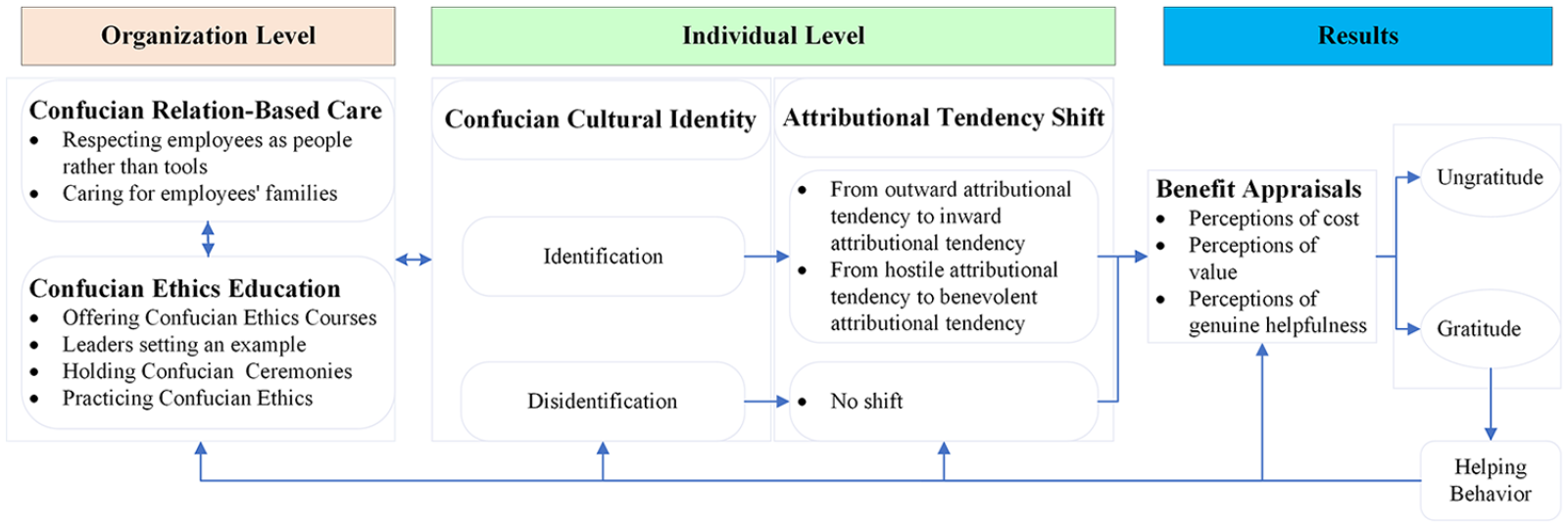
Theoretic Framework
Theme 1: How Did the Company Integrate Confucian Culture Into the Organization?
The NSET company had taken two primary measures, Confucian relation–based care and Confucian ethics education, to integrate Confucian culture into the organizational values system.
Confucian Relation–Based Care
The “employee care” and “employee welfare” that are usually studied in management only focus on the employee himself/herself (Saks, 2022). Although it sometimes involves the parents and children of the employee, for example, family-friendly practices (Garg & Agrawal, 2020) and caregiver-friendly practices (Lorenz et al., 2021), it does not care about the family conflicts of the employee. The case company broke through this limitation. It not only cared about employees and their families from the material level but also focused on their happiness and family harmony. This kind of care is related to the Confucian claim of valuing family harmony, and we named it “Confucian relation–based care.”
This form of caring with unique Confucian characteristics was not predesigned but developed in the process of organizational exploration. TM2 shared, “The company initially extended an array of benefits to its employees from the organization’s perspective. Nonetheless, subsequent revelations have highlighted a disparity between these benefits and the genuine preferences and aspirations of the employees.” The company began to reflect on its attitude toward employees. TM1 shared his thoughts: Employees are not passive recipients, a soulless production tool. They have their thoughts and emotions. Caring for employees means treating them as independent people and respecting their needs and emotions. Our company now is at least a company that respects people and considers everyone’s life. Fair to say, in the early days, the work requirements were very strict, and we hardly cared about everyone’s life. Now, we have a fraternity meeting, which is held regularly once a month. After hard work, we get together for dinner and exchange family information.
The boss also said, True respect for employees cannot be limited to words, but must be reflected in actions. What is more important than respect is to make employees feel respected. That is, employees must be able to feel that they are valued both in life and at work. Communication and welfare benefits are fair and equitable. When employees have difficulties, does the boss solve the problem with the employee as the center?
Hence, the company initiated a monthly communication meeting to facilitate open dialogue between leaders and employees, primarily aiming to comprehend employees’ authentic requisites. After the meeting, the general manager actively engaged with pertinent departments to devise and implement solutions. MM1 told us, “The evaluation of the general manager’s performance encompasses the efficacy and expeditiousness exhibited in resolving issues arising from these interactions.”
After an extensive and in-depth investigation, leaders discovered that in addition to employees’ concerns about the company’s living environment, a key point was pursuing a harmonious and happy family life. TM3 shared his views: Owing to prevailing economic pressures, employees often find themselves compelled to leave their children in their hometowns’ rural areas, giving rise to profound concerns about the well-being of their elderly family members and their children. This prolonged separation inevitably fosters many familial challenges, including marital disputes, adolescent rebellion, and discord between mothers-in-law and daughters-in-law, among other issues.
In response to the discerned needs of its employees, the case company embarked on a contemplative journey to address familial challenges. The organization recognized that these concerns transcended the individual sphere, intertwining with the organization’s development. As aptly articulated by TM2, Should familial conflicts encumber an employee, the ramifications invariably extend to their professional efficacy within the company. The stress of familial affairs can impede their focus on work. Hence, this realization prompted a profound awakening, compelling us to acknowledge the imperative of nurturing familial happiness among our employees.
Consequently, the organization has proactively instituted a range of Confucian relation–based care initiatives to help employees care for their parents and children and run a harmonious and happy family, as illustrated through exemplars in Table 3.
Representative Quotes of Confucian Relation–Based Care.
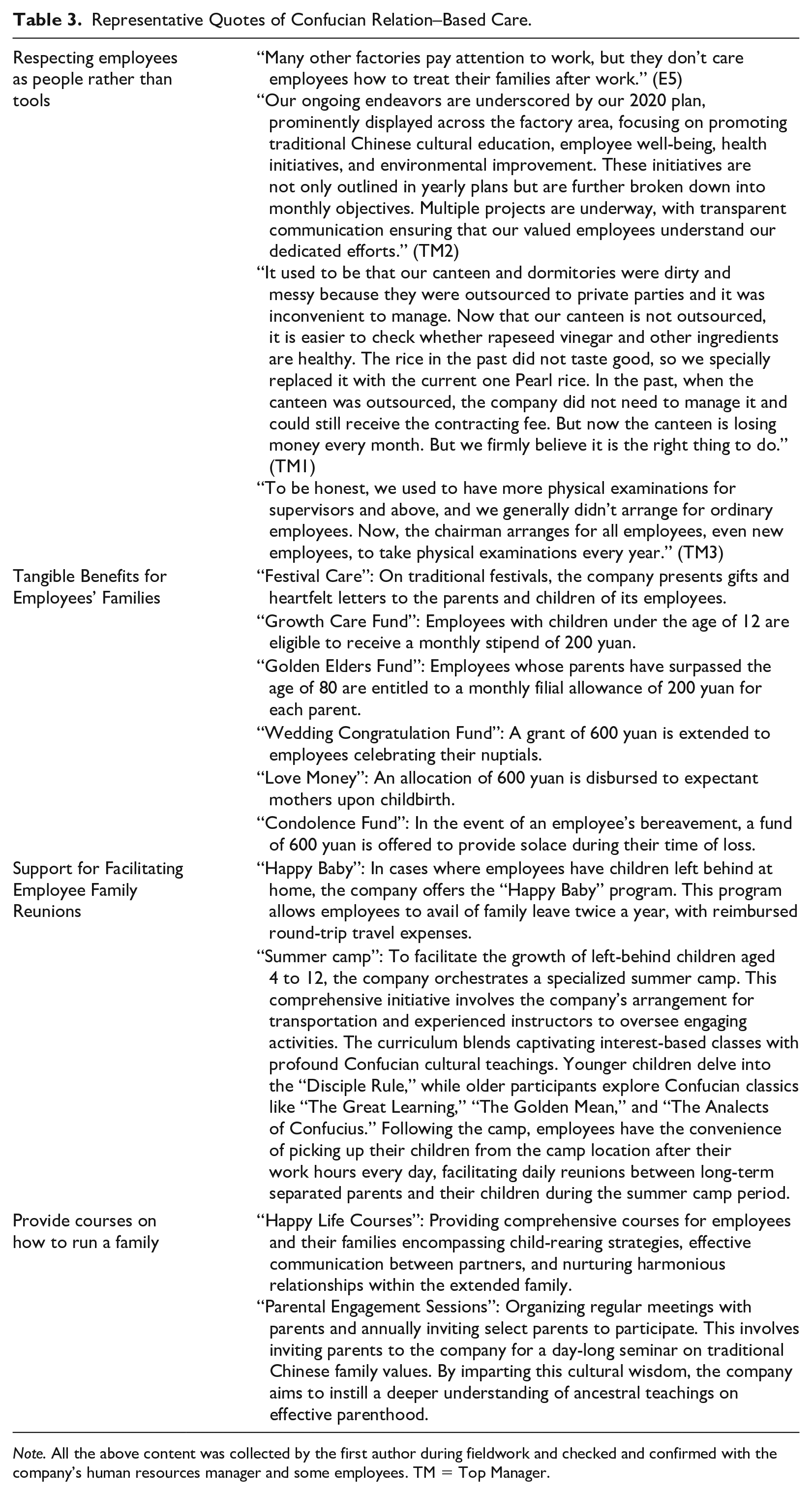
Note. All the above content was collected by the first author during fieldwork and checked and confirmed with the company’s human resources manager and some employees. TM = Top Manager.
Confucian Ethics Education
The second step in integrating Confucian culture into an organization is education. The core of Confucian culture is ethics. The main content of Confucian ethics education focuses on filial piety, teaching people how to deal with various interpersonal relationships (Hwang, 1999). Therefore, since 2013, the case company has been educating its employees about Confucian ethics, with filial piety as the core.
The case company divides education into teaching by words (offering Confucian ethics courses), teaching by example (leaders setting an example), teaching by the rituals (holding Confucian ceremonies), and teaching by action (practicing Confucian ethics). Through these measures, the company tries to help the employees understand how to be filial to their parents, teach their children, and communicate with their partners and colleagues. The General Manager (TM1) said, “From 2013 till now, all company employees have regularly studied Confucian ethics courses in batches. This course teaches people to live happy lives with virtue and filial piety.” In addition to the courses, from the chairman to the manager, they all lead by example. For example, before taking the Confucian ethics course, the board chairman often quarreled and even wanted to divorce his wife. However, after the course, he began to reflect and correct his behavior and finally re-established a good relationship with his wife. He sets an excellent example for the employees. In addition, the case company holds a ceremony to worship Confucius at every Qingming Festival to show their respect and gratitude to Confucius and educate employees to respect teachers.
Last but not least, the Vice President (TM2) said, “The love in your heart can only be born when you act.” Therefore, the organization takes action firmly and spares no effort to encourage employees to take action. The company encourages employees to call their parents and children more often, go home to visit their parents more often, do more housework for their families at home, remember the pain their mothers have been through on their birthdays, and so on.
Theme 2: How Did Confucian Culture in the Workplace Shape Employees’ Identity and Attributional Tendency?
The dynamic construction theory of culture argues that cultural theories are not static dispositions. Only an individual’s cultural identity is activated; cultural theories of social organization can affect the individual’s consciousness (Hong et al., 2001). Our data also show that Confucian relation–based care and Confucian ethics education influence employees’ Confucian cultural identity.
Confucian Cultural Identity
After the case company implemented Confucian relation–based caring and Confucian ethics education for a long time, employees are influenced by the organization. Caring deeply touched employees’ hearts, and education deepened their understanding of Confucian culture. As the employee (E1) said, The organization cares about our parents and children. These things touched me. After a long period of Confucian education, I also realized that my understanding of filial piety was not enough. I used to think that I was a person who had filial piety to my parents, but after the Confucian ethics course, I found that I did not do enough and cared too little for my parents and family.
However, there are still very few people who have yet to be touched and are very resistant to Confucian culture. According to the data, employees’ identification with Confucian culture can be divided into three situations: identification, disidentification, and from disidentification to identification. More than half of the employees mentioned that Confucian culture brings people positive influences, such as quitting smoking and alcohol and having better attitudes toward family members. They even take the initiative to share Confucian culture with their parents and children.
Of course, not all employees identified with Confucian culture. Less than half of the employees believed that Confucian culture constrains people’s freedom. All it wants is to make employees work harder. They thought Confucian ethics education was similar to “brainwashing” (field notes). Examples of indirect expressions are as follows: Some employees think that the leaders are here to deceive us to work harder. When the Confucian culture was first introduced, there was much resistance, and less than half of the employees did not accept it, or just accepted it superficially.
The diverse array of employee reactions prompted the employer and senior management to engage in introspection. Following extensive conversations with the workforce, they came to a profound realization: Many of these employees occupy the lowest echelons within the organizational hierarchy. Over an extended period, across various workplaces, they have often encountered marginalization and, at times, even mistreatment. Their spirits have been profoundly wounded. Irrespective of the organization’s initiatives, they have come to perceive these efforts as veiled attempts to extract more labor while providing inadequate compensation—a situation detrimental to their well-being. (TM2)
Consequently, the employee’s lack of identification with the Confucian ethos fundamentally emanated from a deeply ingrained distrust of the organization. The founder and top-tier managers of the case company exhibited a lucid comprehension that achieving a transformation from distrust to trust within the organization is not an endeavor of immediate resolution. However, by consistently demonstrating care and facilitating education for the employees, the organization can gradually foster a sense of trust toward the organization. True belief in the organization and cultural identification would follow suit, driven by the actual benefits employees accrue. (Boss)
As articulated by TM3, “Initially, perhaps for a month or two, skepticism lingered. Yet, our unwavering commitment, spanning years, eventually resonated with our employees. They recognized that our actions were not mere slogans but a genuine embodiment of our advocacy.”
The fact is indeed so developed, as the organization continues its dedicated commitment to Confucian relation–based care and ethical education, notable positive transformations have taken place within its framework. Leaders have transitioned from authoritative management styles to exemplary leadership, prioritizing not only performance but also the overall well-being of employees. Colleagues, once distant and uninvolved, have transitioned to a culture of mutual understanding and support. A compelling illustration of the organization’s enduring efforts can be found in TM2’s account: Our journey begins with the essential care of our employees, encompassing their daily needs such as housing and nutrition. Over the past eight years, we have consistently invested substantial resources, annually dedicating millions to enhance the dining and living conditions of our workforce. We take ownership of sourcing healthy ingredients, meticulously curating the canteen experience, and organizing comprehensive employee health assessments, along with numerous initiatives supporting employees’ families. The collective healing process, after years of emotional strain, cannot be hastened within a mere year or two. Our ongoing endeavors are underscored by our 2020 campaign, prominently displayed across the factory area, focusing on the promotion of traditional Chinese cultural education, employee well-being, health initiatives, and environmental stewardship. These initiatives are not only outlined in yearly plans but are further broken down into monthly objectives. Multiple projects are currently underway, with transparent communication ensuring that our dedicated efforts are well understood by our valued employees.
This exemplary instance serves as a testament to the organization’s unwavering dedication year after year, a commitment that goes beyond superficial changes to address deeply rooted concerns and nourish a culture of trust and alignment with Confucian values. These transformative shifts have cultivated an environment where employees genuinely feel valued and nurtured, thereby fostering a deepening sense of identification with the organization’s Confucian values, and more and more employees have slowly changed. The production department manager (MM2) said, “Employees slowly accept the Confucian culture. At first, some people thought it was a very old-fashioned and funny thing, but after a long time, they slowly understood it and accepted it.” The employee (E18) said, “Identification forming needs a long time, and it is a process. When I first joined the company, I thought it was annoying to learn about the Confucian culture. But now I think it is a pretty good harvesting process.” The top manager (TM3) also said, “For a short time, employees think it is a show, but for a long time, employees slowly believe it.” Therefore, based on the data, some employees went through a transformation process, and then their attitude toward Confucian culture gradually turned from disidentification to identification.
At the same time, the Confucian cultural identification of employees exerts a discernible influence on organizational-level interventions. This influence manifests primarily in two distinct dimensions: First, these managerial tiers themselves have undergone a transformative impact engendered by the organization’s Confucian relation–based care and Confucian ethics education initiatives. The resonance with Confucian values has facilitated the seamless implementation of these measures. As articulated by MM5, Participating in the “Happy Life” course for the first time deeply moved me. My values strongly align with Confucian principles. In my role as a managerial proponent of organizational culture, I am actively championing the dissemination of Confucian ethics education, aspiring to extend its benefits to a wider spectrum of employees.
Second, the divergence in some employees identified with Confucian culture has prompted a rigorous introspection among decision-makers and managers within the organization. This introspection delves into the underlying reasons for employees’ dissent. Is the disidentification attributed to individual idiosyncrasies, leadership dynamics, or inherent organizational disparities? These considerations have incited adaptive approaches in care and education, rooted in the insights gleaned from employee feedback. An exemplary manifestation of this adaptive approach lies in the organization’s transition from an organizational perspective to addressing employee needs—a hallmark exemplified by the implementation of Confucian relation–based care.
The Shift of Attributional Tendency
Based on the data, we can see that the learning of Confucian culture gradually changed the attributional tendency of employees. The first change is from the outward attributional tendency to the inward attributional tendency. This change of attributional tendency stems from Mencius’s statement that “A person should first examine himself if his actions fail to achieve the intended purpose or effect” (Mencius et al., 2009). The essence of ethics education is to teach people to pay more attention to their obligations than to the responsibilities of others in their relationships with others and teach people to change their attributional tendencies so that people learn to reflect on themselves instead of blaming others when they encounter problems. The case company even uses it as a corporate “instruction.” For this, we have ample evidence from the corpus of respondents. The example is as follows: My wife and I complained to each other a lot before. After learning about Confucian culture, I realized that the root of all these problems was in me, and I began to make changes. I found that if I changed a little, she changed a little. Slowly, when both sides have changed, there is no problem. (E1) I always resented the leaders before. I worked so hard, why the leaders cannot see it? Why didn’t I get a promotion for [working in this company] for so many years? Later, after studying Confucian culture, I understood ‘Turn inward and examine myself when I encounter difficulties in life. I realized that I didn’t get promoted mainly because my ability didn’t improve. It’s wrong always to resent others. (E8)
The second change is from the hostile attributional tendency to the benevolent attributional tendency. These are the two attributional tendencies of employees that we found in the data. After comparing them with the existing literature, we did not find a suitable definition. We finally define these two concepts based on the concept of hostile attribution bias (De Castro et al., 2002). Hostile attributional tendency means the tendency to interpret ambiguous behavior of others as hostile. Benevolent attributional tendency means the tendency to interpret ambiguous behavior of others as benevolent.
In the initial stages, just as the general manager (TM1) said, “China is now a very utilitarian society. Employees have materialized and accumulated a lot of negative energy, especially employees in the workplace, most are on guard against the boss.” However, with the integration of Confucian culture into the organization, employees slowly changed. Their attributional tendencies toward organizations, bosses, and others slowly shift from hostile attributional tendency to benevolent attributional tendency. The example is as follows: I used to see more evil people in my eyes. Now I realize that it is because my heart is full of malice. Before I was on the defensive with the others and I did not trust people to be nice to me. Now I have changed and see more good people in my eyes. (E13) Confucian culture has made a person kind. In society, it is easy to trust others. When encountering things, they always think of others from the good side. (E10) I think the biggest change is from resentment of mother-in-law to understanding mother-in-law. My husband has three brothers, and because we are the eldest, my mother-in-law often fails to care for us. So, there is some resentment in my heart. After studying Confucian culture, I knew that she also had difficulties. So, I gradually eliminated this resentment. I began to understand her behavior with kindness. (E17)
Witnessing these changes in the organization, the vice president (TM2) concluded, “Good and evil are two wolves in a person’s heart, whichever side is fed, it grows. You stimulate people’s kindness, there will be more and more kindness. The environment inspires evil in people, and they are even more evil. Western management mainly emphasizes restraining people’s evil as much as possible. But Confucian management mainly emphasizes inspiring goodness in people’s hearts. Confucian culture advocates filial piety. In the process of filial piety to parents, kindness gradually emerges and increases.”
Of course, there are also a few employees who do not identify with the Confucian culture and have not undergone any transformation. As an employee (E7) said, “Some people have not changed, and some are even worse than before. Confucian culture has not touched their hearts, and they always think of these things as brainwashing. So, they do not reflect and change.” The human resources manager (MM5) also said, When some employees are late or violate the regulations, they want us to erase the record. When we reject, they accuse us of not conforming to Confucian benevolence. They still blame others and don’t reflect on themselves. What they have learned is always asking others to be kind to them, but not to give back to others.
Theme 3: What Results From the Positive Interaction Process Between the Organization and Employees?
Benefit Appraisals and Gratitude
Gratitude is an attribution-dependent emotion, and when people receive gifts or help from others, the social environment provides the information they can use to form attributions about the event. People who experience gratitude in a given situation are affected by the helper’s intention, the cost to the helper, and the value of the benefits. These attributions are summarized to form a benefit appraisal (Tesser et al., 1968; Wood et al., 2008). Thus, attributions are central to gratitude (McCullough et al., 2002). Whether the helper’s intention is goodwill or utilitarian greatly affects the gratitude of the beneficiary (Tsang, 2006). We found the shift of attributional tendency ultimately makes employees more likely to be grateful by influencing the benefit appraisal process.
First, inward attributional tendency makes employees easily perceive the cost to others and the benefits to themselves. For example, although employees usually have a benevolent attributional tendency toward their parents, the outward attributional tendency can lead to employees’ attitudes toward parents showing more blame rather than gratitude. It is the inward attributional tendency that promotes employees’ gratitude to their parents. Just as an employee (E5) said, I used to ask parents to help take care of the children. If there was any problem with the children, I always blamed the parents. Now I understand that the children behave badly because I did not set a good example for them. Now, I am even more grateful to the parents for their help.
Employee 3 also shared, In fact, before I thought the company was unfair. I don’t understand why other people who joined the company at the same time as me have been promoted to higher positions, and I didn’t get promoted, I worked hard. Until I understood the traditional Chinese culture of “Turn inward and examine yourself when you encounter difficulties in life,” I finally figured it out. I have to find the reason for not being promoted, rather than resenting the company or others. After thinking this way, my whole world seems to have changed. I remember that when I joined the company, I didn’t know anything. My education was very low and I was able to be a grassroots leader. The company actually gave me a lot of space and opportunities for growth. I should be grateful instead of resentful. My personality and abilities are the most suitable for my current position.
Second, the benevolent attributional tendency is mainly reflected in the gratitude of employees to the organization or the boss and strangers. The benevolent attributional tendency prompts employees to perceive help from organizations, bosses, or strangers as genuine help, and to perceive the cost to others and the benefits to themselves. Security Guard (E11) said, Other bosses care about profits, our boss cares more about our happiness, and he teaches us how to be filial to our parents and educate our children. I’m just a security guard, our boss also let me take courses like ‘Lectures on Happy Life,’ which is impossible in other companies. He loves employees.
Especially, Employee (E13) said, I was seldom grateful before. Because I think everyone is selfish. Now I have changed, and I believe there are good people in the world who selflessly help. So, I can feel the help of others to be more, and I am very grateful.
In the data, the majority of employees expressed that they have gained much; if they were in other organizations, the boss would not care about the employees’ families as much. Manager (MM6) shared, “I have never seen a boss like him. Other companies only let you work, but don’t care about your family’s happiness. My family really benefited a lot and I am grateful to our company.” Employees (E1, E4, and E10) also said, “The company encourages us to quit smoking, and the company even provides benefits if we successfully quit smoking.” “In our company, our life philosophy can be changed, that is, we can earn a salary and learn a lot in this factory.” “The company actually spent a lot of money on this thing. By watching some videos . . . (noise) . . . Many people have changed themselves.”
However, there still were a few employees whose attributional tendencies did not have any shift. They still viewed the behavior of the organization and the boss from the perspective of hostile attribution. They thought, “The boss does all this to make the employees work more. The company owes us everything, why should I be grateful?” It can be seen that facing the same situation does not necessarily bring the same gratitude.
In short, we have seen that most employees with inward attributional tendency and benevolent attributional tendency are more likely to feel genuine intentions, the cost of helping from the organization, their bosses, and colleagues, as well as their benefits, and ultimately feel grateful.
Helping Behavior and Its Positive Feedback to the Organization
Employees’ gratitude for each other makes employees more willing to help each other, both in life and at work. For example, the general manager (TM1) said, “From the sales department to the production and quality department, we all learn the Confucian culture, and we are grateful. Everyone can respect and help each other.” Employee (E15) shared a similar feeling, “In our company, you don’t need to ask for help. Everyone is happy to help you actively.” Top manager (TM3) also said, “Employees open their hearts, and are willing to give some help and care in the workplace.” For example, many employees of the case company were migrant workers. When going home during the Spring Festival, some employees sometimes need to take a train in the middle of the night or early in the morning, and buses do not work at this time. The company appealed to organize a Love convoy, and some employees with private cars willing to help their colleagues can volunteer to sign up. After employees who needed a car filled out the application form, employees of the Love convoy would drive their private cars to take them directly to the train station. In winter, such actions made many employees feel very warm. In addition, the company’s security guards often helped other colleagues repair dormitory appliances, and so on, and there were many cases. In general, colleagues actively cooperate with each other’s work, and when encountering difficulties, everyone comes to help solve them actively. Leaders, in particular, are very concerned about the lives and work of their subordinates and take the initiative to help them solve problems they encounter in work and life.
The extensive helping behavior in the organization enabled the managers of the organization to see the effectiveness of the Confucian culture, prompting the organization to further adhere to the integration of Confucian culture into the organization, and promote the implementation of Confucian relation–based care and Confucian ethics education. Just as the general manager (TM1) said, When the employees are grateful and help each other, we are also reflecting on whether we do less before. Because the management in the past was something in the time of industrialization, that is a lot of inhumanity, which was very stiff. But, when we call up our conscience and reflect on it, many traditional good things have infinite power. In the past, the integration of Confucian culture in an organization depended on the belief of the boss, but now our entire management team is very convinced. The gratitude behavior of employees makes us reflect, and it also makes us more and more determined that this path is right.
The behavior of helping each other also further promoted employees to identify with the Confucian culture. Employees appreciate the warm atmosphere of helping each other within the organization. Most of them attributed it to the fact that everyone learned Confucian culture, so it deepened their identification with Confucian culture. As an employee (E2) said, Now the relationship between our staff is better. some work communication and coordination among departments, as well as the upper and lower levels, are much better than before. Both the organizational atmosphere and the mentality of employees have indeed improved. This is the power of Confucian culture.
In addition, the organizational atmosphere of helping each other further promoted the shifts in employees’ attributional tendencies, especially the tendency to benevolent attribution. The help of colleagues and leaders can make employees’ hearts turn from cold to warm, remove their hostile attributional tendency, slowly learn to accept the kindness around them, and turn to benevolent attributional tendency. An employee (E13) said, The longer our company’s employees stay in the organization, the more kind they would become, and they lose their guard against others. Just like when you came to our company for research, we also tell the truth, I won’t be wary of you.
Finally, and most importantly, extensive helping behavior prompted employees to continuously enter the benefits appraisal process, thus generating gratitude frequently, which in turn triggered employees’ gratitude emotional icons, making employees more likely to be grateful. Moreover, gratitude is contagious, which is especially evident in the data. Both top managers (TM1, TM2, and TM3) and employees (E6, E14, and E18) all mentioned the process of employees sharing gratitude after taking the Confucian ethics courses. As the employee (E14) said, “The employees who have finished learning Confucian culture come back to share with us, and we are also much touched. They share their gratitude to their parents, which also triggers our feelings for parents.” Taken together, the data showed that a wide range of helping behaviors within the organization fosters positive interactions within the organization and forms a positive cycle.
Discussion
We now discuss the article’s main contributions, limitations, and additional future research and provide some concluding thoughts.
Theoretical Contributions
This article adopted a cultural shaping view to understand the cultivating process involved in employees’ gratitude. The findings show that Confucian culture shapes employees’ gratitude in the continuous interaction among organizations, employees, and their families. Specifically, implementing Confucian relation–based care and Confucian ethics education by the organization leads to positive changes in employees’ attributional tendencies and behavior. Then, employees’ positive behaviors (for example, helping behaviors) make the organization continue to implement the above care and education. This positive interaction runs through the entire process of Confucian culture shaping workplace gratitude. Many employees gradually accepted and identified Confucian culture through continuous interactions with the organization, colleagues, and families.
Our study contributes to the gratitude cultivation literature in three ways. First, several commonly employed gratitude interventions, such as daily gratitude journaling, recalling grateful experiences, and expressing gratitude activities (Kaplan et al., 2014; Komase et al., 2019; Locklear et al., 2021; Lomas et al., 2014), require employee’s enduring and active participation. Previous research has indicated that some people may not feel comfortable writing or sharing gratitude journaling and, therefore, did not receive the same benefits from such activities (O’Connell et al., 2018). Some people even kept a gratitude journal with the mind-set of getting things done. Therefore, unless forced by the organization, it is difficult for some employees to persist in participating in the above intervention method for a long time. This may be why we often see gratitude interventions lasting several weeks, spanning 2 to 8 weeks (Bartlett & Arpin, 2019; Froh et al., 2008; Kaplan et al., 2014; Schache et al., 2020), they require a high degree of cooperation from the subjects. These methods make it difficult for employees to stick with them for long, and companies, especially in the West, find it difficult or impossible to force employees to do something other than their job for long. A fundamental departure from prevailing short-term interventions lies in the enduring nature of Confucian gratitude cultivation, in stark contrast to prevalent short-term interventions. Within the context of the case company, gratitude cultivation does not last in mere weeks but spans years. This is not only because culture affects people slowly and subconsciously within a long process (Xia, 2009), but also because organizations embed the influence of culture into the interactions between leaders and subordinates, people and the environment, and the organization’s care for employees. This intervention method does not require employees to pay too much and makes employees more comfortable and easier to accept. Moreover, although it involves interaction between the organization and employees, continuity depends primarily on the organization rather than the employees. In contrast, while short-term gratitude interventions undoubtedly yield noteworthy immediate outcomes, their effects are inherently ephemeral (Rash et al., 2011). In relative terms, the impact trajectory of gratitude cultivation rooted in Confucian cultural tenets unfolds gradually, yet its enduring effects stretch long.
Second, a departure from preceding gratitude promotion methodologies that solely emphasized organizational support, this article underscores the dual significance of support and education. Empirical investigations have evidenced that organizational support like superior compassionate love expression, supervisor’s helping, and interactional justice (Belkin & Kong, 2022; Ford et al., 2018) can indeed foster employee gratitude. Nonetheless, it has also emerged that the work environment operates as an arena of achievement, where bestowed benefits or care (such as appreciation and rewards) from the organization frequently carry an implicit association with the beneficiary’s work contributions. In such scenarios, employees may not perceive these organizational provisions as grounds for gratitude. Moreover, findings suggest that increased assistance does not necessarily translate to heightened gratitude. Gratitude hinges upon the divergence between the help currently received and the assistance that one is accustomed to (Wood et al., 2011). Thus, while the multitude of organizational support or care might evoke a transient state of gratitude in employees, sustaining consistent gratitude may prove challenging. This stems from the employees’ acclimatization to their enhanced benefits, leading them to perceive this support or care as the new norm, thereby diminishing the sense of gratitude toward the organization. Differing from conventional perspectives, the approach to gratitude cultivation rooted in Confucian principles, as introduced in this study, not only accentuates the element of care but also seamlessly integrates educational components that shape employees’ cognitive and thought processes. Together, these factors shift employees’ attribution tendencies, leading to more positive benefit appraisals and, consequently, a heightened frequency of experiencing gratitude emotions. The uniqueness of this method lies in its organic fusion of care and cognitive intervention, which transcends the mere provision of support, care, or benefits. This method can potentially prevent employees from succumbing to a constant adaptation to expanding benefits, thus avoiding the erosion of their sense of gratitude.
Furthermore, the case company adopted various educational methods for Confucian ethics education, in addition to traditional teaching or training (such as Confucian ethics courses), but included various forms such as leaders’ exemplification, attending rituals, and taking actions. This all-around and consistent education embedded in rituals, words, and actions interacted with employees’ emotions all the time, subtly affecting employees’ cognition and behaviors. Perhaps a certain form of education was ineffective for some employees, but most were ultimately attracted to and influenced by different forms of education. Of course, such education can be effective (at least partly) and, more importantly, because the content aligns with (most of) the employees’ long-held cultural values. Thus, strictly speaking, the role of education played by the organization is “activated and reinforced” rather than “education from scratch.” The education that the case company applied focused more on the interaction between the company and its employees, and its scope was relatively wide and even can go deep into the employee’s family. Instead of traditional preaching, it closely related this matter to employees’ private lives, influencing their cognition, emotion, and behavior through environmental/situational strength. Therefore, the effect of this kind of activation and strengthening would be better. The effectiveness of this diverse form of education is not limited to gratitude cultivation, nor is it limited to Confucian culture, and deserves more attention from future researchers on organizational moral education.
Third, our findings show a unique feature of the interactive process in the Confucian cultural background: the expansion of the interactive scene. Most research on workplace gratitude all takes the workplace as the main place for cultivation (Fehr et al., 2017; Nourpanah, 2021; Sawyer et al., 2022). However, this research found that in a society dominated by Confucian culture, the cultivation of workplace gratitude can be extended to employees’ families. The gratitude cultivation and intervention methods established in the European and American cultural backgrounds emphasize an independent self that is free from others, autonomous, and unique (Boiger & Mesquita, 2012). Therefore, organizations rarely interfere in the personal life of employees. Even organizations in European and American contexts implement many family-friendly practices (Garg & Agrawal, 2020; Lorenz et al., 2021) but do not interfere with employees’ family relationships. However, Confucian ethics rejects the clear division between the private and the public spheres and asserts that social relations must be modeled on domestic ones (Pang-White, 2011). Under the influence of Confucian culture, Chinese employees expect organizations to show concern for their work and care about other aspects, such as their personal feelings and families (Mak et al., 2014). They are willing to accept that the organization considers the family in cultivating gratitude. Furthermore, the concept of family harmony (in Chinese, it can be called “Qijia”) is of great significance to Chinese people (Xi et al., 2012). Therefore, the organization’s Confucian relation–based care and Confucian ethics education for employees can help employees’ family harmony, which is very consistent with the needs of employees. Cultivating gratitude in the family could avoid employees’ utilitarian attribution because Chinese people make less utilitarian attribution for the help of close relatives (Hu et al., 2012). Consequently, the gratitude cultivation method proposed in this article may be better suited for organizations. This study also supports that the more effective way for organizations to cultivate workplace gratitude is based on the local culture rather than copying gratitude interventions based on assumptions from other cultures. And it can be extended to the cultivation of more workplace emotions. In addition, the cultivation of positive emotions in the workplace can expand the interactive scene to a wider field, not just limited to the workplace. Of course, this expansion is also based on culture to judge whether employees accept it.
Our study contributes to the role of culture in gratitude cultivation in three ways. First, although previous studies have noted the role of culture in the construction of gratitude (Boiger & Mesquita, 2012; Mendonça et al., 2018; Mesquita et al., 2016), the discussions remain at the conceptual level. This study constructs a specific process model of Confucian culture shaping gratitude in the workplace, which not only further develops the theory of cultural construction of emotions but also provides empirical support for this theory at the organizational level. The theory of culturally constructed emotions explains how culture constructs human emotions at the collective and individual levels by citing many examples of the differences in emotions in different cultures: At the collective level, human emotions are constructed through cultural products and social interactions; at the individual level, culture shapes people’s emotions by influencing situation selection and appraisal. While this theory provides a broader understanding, it lacks specific insights into the intricacies of emotion construction within a particular social culture, likely due to the challenges of conducting comprehensive societal empirical research. Our research narrows this focus to organizational contexts, utilizing grounded theory to illuminate the micro-level process of gratitude construction within a social culture, thus enhancing the theoretical explanatory power of the broader theory.
Second, current research explores the influence of social culture on gratitude from a psychological perspective, mainly highlighting the restriction and regulation of social culture on gratitude, and presupposing social culture as a powerful uncontrollable force. Our research transfers the discussion of social culture from the whole social background to an organization in the workplace and discusses how the organization can strengthen the core content of social culture, affect employees’ attribution tendency, benefit the appraisal process, and finally promote employee gratitude. Our empirical findings substantiate the notion that organizations can judiciously enhance specific facets of social culture while also modulating the developmental trajectory of social culture’s sway over emotional responses. In essence, our research introduces a novel lens through which to contemplate nurturing gratitude within workplace contexts—repositioning social culture as a valuable cultural resource that organizations can adroitly harness. However, our data also shows that the process by which such resources are brought to bear in organizations is very challenging. Although Confucian culture has influenced Chinese people for thousands of years, many cultural factors have invaded people’s lives. However, people are cognitively unaware of it. Many of the organization’s unique practices still aroused some employees’ doubt at first. Only after the organization persisted for a long time did these employees gradually trust the organization and identify with the Confucian culture. There are even some employees in the company who disidentified with the interventions and did not show any change throughout the process. We hope that our findings can attract more organizations to realize the importance of sociocultural resources, but we also hope that these organizations will not only see the optimistic picture of culture-based gratitude interventions but ignore these complexities and challenges.
Third, our research has found that Confucian culture can affect people’s formation of inward attributional and benevolent attributional tendencies, and the transformation of personal attributional tendencies is the most important juncture in the process of Confucian culture shaping employee gratitude. The inward attributional and benevolent attributional tendencies prompt employees to make positive benefit appraisals and are more likely to generate gratitude. Current researchers have paid much attention to the negative impact of hostile attributional bias in the workplace (Lyu et al., 2016; Qi et al., 2020; Wu et al., 2014), but until recent years they have begun to recognize the role of benevolent attribution (Fehr et al., 2017). The workplace is full of competition, and when situational cues are ambiguous, people have an increased tendency to attribute hostile intentions to the actions of others (Osgood et al., 2021). However, our findings show that even in highly competitive workplaces, people’s hostile attributional tendencies can slowly change into benevolent attributional tendencies under the influence of Confucian culture. Confucian culture advocates virtue and self-reflection. Studies have shown that increased reflective thinking and salience of nonaggressive concepts can reduce hostile attributional tendency (Osgood et al., 2021). Furthermore, Melanie Klein argued that to experience gratitude one needs to have a benign outlook on others and even on life itself (Klein, 1975). Our findings support the idea that employees shifting from a hostile attributional tendency to a benevolent attributional tendency are shifting from a negative to a benign view of others and life; thus, they are more likely to feel gratitude rather than other negative emotions.
Inward attributional tendency originated from the idea of Mencius: “A person should first examine himself if his actions fail to achieve the intended purpose” (Mencius et al., 2009). This concept has some similarities with the concept of self-blame, both involving a process of cognitive appraisal or attribution (Duncan & Cacciatore, 2015). Self-blame was originally regarded as a positive psychological mechanism—derives primarily from the implications of this attribution for a belief in personal control over one’s outcomes. Unfortunately, researchers later found that when the cause of self-blame tends toward uncontrollable, stable internal characteristics, it transforms into a maladaptive, a correlate of depression, and a reflection of psychological problems (Janoff-Bulman, 1979). Different from self-blame, the inward attributional tendency that Confucian culture advocates does not believe that the inherent characteristics of an individual are uncontrollable or unchangeable; rather, it emphasizes a kind of personal initiative and unlimited possibilities, and everyone can continuously improve themselves, which is consistent with the self-cultivation and self-reflection emphasized by Confucian culture, which motivates a person to change themselves rather than try to change others actively. Moreover, the inward attributional tendency emphasizes the attribution of causality and responsibility and does not advocate blame on the self to make people feel bad or depressed. The attribution of personal responsibility itself does not cause depression, which is consistent with the findings of past research on the role of personal responsibility in the experience of gratitude (Chow & Lowery, 2010). When a person encounters a problem and first examines himself, he would realize his responsibility, be blameless on others, and be more able to feel the contribution of others, thus generating gratitude. Previous studies have also pointed out that a habituation effect may have prevented participants from experiencing gratitude toward their parents (Ghosh & Deb, 2017). The findings of this article have proved that the inward attribution tendency can break people’s inertial thinking and make people more aware of their parents’ costs and their benefits. In conclusion, we proposed two attributional tendencies under the influence of Confucian culture, which deserve more attention in the future.
Limitations and Additional Future Research
Even as we refine this research, it inevitably has some limitations. One is that it presents a change process for the vast majority of the interviewees. However, a small number of employees in the same environment still do not identify with or even resist Confucian culture. Why they have such a reaction remains to be further explored. Future research can also focus on why employees are not grateful. Understanding the barriers to gratitude is also essential to cultivating gratitude in the workplace. Next, the data about the gratitude process in this study are solely derived from employee interviews. Future research could enhance the study’s persuasiveness by integrating methods such as quasi-experimental designs and questionnaire surveys. Employing these techniques to measure employees’ gratitude states at multiple time points longitudinally would facilitate a quantitative evaluation of gratitude among company employees, thereby bolstering the research’s overall persuasiveness. Third, this study underscores the complementary role of Confucian culture in nurturing employee gratitude at both societal and organizational levels. Subsequent research could employ interdisciplinary research methodologies to explore the cultural shaping process at the societal level.
Furthermore, delving into the disparities in the impact of Confucian culture between societal and organizational realms would contribute to a deeper understanding of how to cultivate gratitude in the workplace through Confucian cultural principles effectively. Fourth, this study solely delves into shaping workplace gratitude through Confucian culture. Future research endeavors could delve deeper into the specific processes through which other influential societal or religious cultures mold individual gratitude. This would offer valuable insights into comprehending the nuances of gratitude across distinct societal and cultural milieus. Finally, concerning the concepts of benevolent attribution and internal attribution tendencies, further exploration is warranted to expound upon their definitions, dimensions, characteristics, and the extent to which they influence individual emotions and behaviors.
Conclusion
This article explores the process that illustrates how the Confucian culture shapes employees’ gratitude in the workplace. Drawing on a grounded theory research of the NSET company in China, we have shown that the organization can promote employees’ identification with Confucian culture through Confucian relation–based care and Confucian ethics education, and then during the continuous interaction, employees’ attributional tendencies gradually change. The inward attributional and benevolent attributional tendencies prompted employees to make positive benefit appraisals and were more likely to generate gratitude. More importantly, we provide a new idea for workplace gratitude practice: to pay attention to the shaping role of local social culture. This finding encourages organizations to flexibly adjust how they cultivate gratitude based on the social culture in the future.
Footnotes
Declaration of Conflicting Interests
The author(s) declared no potential conflicts of interest with respect to the research, authorship, and/or publication of this article.
Funding
The author(s) disclosed receipt of the following financial support for the research, authorship, and/or publication of this article: This work was supported by the National Natural Science Foundation of China (grant number 72072061).
