



Abstract
Gratitude plays a significant role in nurturing holistic health and wellbeing in adolescent. However, cultivating the mindset of gratitude is associated with several factors, in particular, culture and religion. Therefore, an opportunity exists for studies to be undertaken, exploring gratitude specifically within the Thai culture. This grounded theory study aimed to understand how Thai adolescents cultivated a mindset of gratitude. Data were gathered from 27 participants, aged 15 to 19 years. Purposeful and theoretical sampling techniques were used to select participants. Data were collected through in-depth interviews, written stories, and drawn pictures. Data analysis was guided by Strauss and Corbin’s grounded theory. The core category of “Achieving Fulfilment in Life”—reflecting the process of cultivating the mindset of gratitude among Thai adolescents—comprised three categories: (a) condition: appreciating the value of oneself and others; (b) strategies: committing to live life on a positive life path; and (c) consequence: attaining true happiness. The findings illustrated the processes involved in cultivating the mindset of gratitude, highlighting how this may help in the development of a holistic health promotion program using the concept of gratitude to enhance the health and wellbeing of adolescents.
Background and Purpose
Adolescence is a time to establish holistic health characteristics. However, in a changing and uncertain world, adolescents face a multitude of influences that are comparatively new to their generation. They encounter many challenges in their developmental trajectories that may cause physical, psychological, and spiritual problems. Globally, as of 2016, approximately half of the mental illnesses start by the age of 14, but most cases go undetected or untreated. Suicide is one of the common causes of death among adolescents (World Health Organization, 2018).
Gratitude may be a key for enabling adolescents to escape from the negative influences in the modern world, where there is often an over-emphasis on materialism and wealth (Froh et al., 2011). Raising awareness of gratitude may shift the focus from a preoccupation with oneself to a greater awareness of the needs of others and what others do for them. The cultivation of gratitude can be a life asset or a personal resource (Duprey et al., 2020) that might be an effective mechanism to promote holistic wellbeing and nurture healthy adolescents (Wood et al., 2010). Holistic wellbeing is having an awareness of all the different dimensions of oneself: physical, psychological, social, and spiritual. This awareness is important because it may enable the cultivation of behaviors that can maintain health and wellbeing, such as healthy eating, taking regular exercise, and avoiding risk-taking behaviors.
Gratitude motivates moral behavior and has a positive association with a sense of pleasure, social relationships, and interconnectedness (Emmons, 2010, 2012; Wood et al., 2010), optimism, life satisfaction (Froh et al., 2008), self-esteem (Emmons, 2010, 2012), self-value (Rash et al., 2011), positive behavior (Noor et al., 2018), and life satisfaction (Duprey et al., 2020). Gratitude may help mitigate materialism, risk-taking behavior, health problems, and psychological distress (Noor et al., 2018; Wood et al., 2008). Fostering gratitude is an excellent strategy for enhancing generosity (Chaplin et al., 2019), wellbeing (Balthip, Petchruschatachart, Piriyakoontorn, & Liamputtong, 2017; Emmons, 2012; Sansone & Sansone, 2010; Wood et al., 2008), purpose in life and spirituality (Balthip, McSherry, & Nilmanat, 2017). Although a feeling of indebtedness may arouse both positive and negative feelings, positive indebtedness is clearly related to the enhancement of prosocial behaviors and motivation (Naito et al., 2005).
Gratitude may be a universal feeling that is positively regarded in all cultures, and gratitude has played an important role in major religions, including Buddhism, Christianity, and Islam (Naito & Washizu, 2015). Although gratitude is a fundamental aspect of the human being and is expressed in most religions, in some cultures and societies there are cultural differences in the effects of emotions, (particularly the effect of negative emotions) on prosocial judgments, and gratitude may be perceived and defined differently. Sansone and Sansone (2010) defined gratitude as “the appreciation of what is valuable and meaningful to oneself; it is a general state of thankfulness and/or appreciation” (p. 18). Chinese Buddhists use the concept of pao, meaning to return or to repay, reflecting what is considered the basis of social relations related to gratitude (Naito & Washizu, 2015). In Japanese culture, gratitude sometimes refers to both “thank you” and “sorry” (Naito et al., 2005).
Naito et al. (2005) surveyed 212 university students in Japan and 284 university students in Thailand, using a multi-aspect questionnaire that was designed to investigate cultural similarities and differences in gratitude. The research found that feelings of indebtedness were reported more strongly by Japanese students compared with Thai students. In both Japanese and Thai students, positive feelings were correlated with facial and verbal expressions of gratitude and increased prosocial motivation (Naito et al., 2005).
A study comparing the gratitude scores of Malaysians with those from known collectivist (China, Japan) and individualist (the U.K. and the U.S.) cultures found that the mean gratitude score of Malaysians was lower than the U.S. and the U.K. samples (Noor et al., 2018). The authors argued that people in the U.S. and the U.K. represented the individualist culture and have been encouraged to develop an independent view of themselves, which could be the reason why their gratitude score is higher than in collectivist societies (Noor et al., 2018). A collectivist society is defined by interdependence between its members, with the goal of maintaining harmony in one’s relationships. A Malay is socialized to be attentive to negative information about oneself, as a method to improve oneself to meet the expectations of a situation or a relationship as well as to fulfill one’s proper place.
Like Malaysia, Thailand is located in Southeast Asia and is a collectivist society, but the ways of life and the parenting style of adolescents are different from Malaysia and other countries. Unlike U.S. adolescents, who tend to describe their relationship to family as one of receiving support (Moran et al., 2012), Thai adolescents focus on contributing to the family as much as feeling supported by it. The perception of gratitude in Thailand is influenced by and originates from, Buddhism. In Buddhism, feelings of gratitude are important, because they indicate an understanding that all humans and other entities in the universe are interdependent (Naito & Washizu, 2015). Thai Buddhism has evolved to accommodate and emphasize the state of thankfulness and/or appreciation rather than the negative feeling of indebtedness coupled with gratitude. In Thailand, this approach is congruent with the ancient Buddhist traditions of India, where “repaying” had little theoretical significance (Naito & Washizu, 2015). The feeling of thankfulness or gratitude is verbalized using “kob kun,” an expression of appreciation for a person’s support.
Gratitude is an important part of Thai culture. Thais cultivate gratitude and an obligation to care for benefactors with sincere love (Tongprateep, 2000). Societal values in Thailand tend to be more collectivist and religiously secular than in other Southeast Asian cultures that have undergone influences from western colonization (von Feigenblatt, 2009). Specifically, Buddhism influences Thais’ perspective on life by highlighting spiritual wellbeing and compassionate action for oneself and others (Weaver et al., 2008). Thai traditions such as Songkran, and Loi Krathong, which involve making merit and dedicating charity to the deceased, inculcate gratitude in every aspect of Thai life (Anonymous, 2020).
However, traditional ways of nurturing adolescents are changing. In the past, Thai education included the teaching of morals, ethics, and religion within primary level education. “Morals” refers to the values of the elite such as respect for authority, seniority, and filial piety (Mulder, 2000). Nowadays, teaching morals, ethics, and religion in schools have been reduced. Fewer adolescents believe in the law of Karma that stresses the consequences of one’s deeds (Ramajitti Institute, 2012).
Influenced by the different cultures, ways of living, and philosophical reasoning of other countries, Thailand is transitioning from a traditional to modern and technological society. The approach used to promote gratitude within Thailand may differ when compared with other countries. This paper describes the process involved in cultivating the mindset of gratitude among Thai adolescents, using grounded theory. The cultivation of gratitude may be particularly helpful to adolescents in developing a sense of fulfillment in life in an ever-changing society. This is important because it may enable them to appreciate that life is not just about themselves but about developing positive relationships with others and the society, world in which they live.
Therefore, this study is important because it sheds light on how Thai adolescents understand what is meant by “gratitude” and how they may use this within the context of their everyday lives and relationships. These insights will demonstrate whether the notion of gratitude still has relevance to Thai adolescents and how this may be changing in response to the “homogenization” of cultures.
Methods and Procedures
Study Design
This study was conducted based on Straussian grounded theory (Strauss & Corbin, 1998) to describe the process of cultivating the mindset of gratitude among Thai adolescents. Grounded theory methodology is a qualitative design that plays an important role in areas in which little previous work has been done (Chenitz & Swanson, 1986). In conducting grounded theory, the researcher looks for processes that are going on in the social scene and is interested in patterns of interaction among several types of social units (Stern, 1994). Therefore, an inductive approach is involved to generate new knowledge while exploring the process of cultivating the mindset of gratitude among Thai adolescents.
Setting and Participants
Data were gathered from 27 participants enrolled in two government schools, one government technical college, and one private vocational college, located in a large city in Southern Thailand. All four schools are situated in an urban area.
Recruitment of students from the four schools was based on the heterogeneous nature of the students in terms of their living area, social status, and family relationship. In the initial stage of data collection, purposive sampling was used. Criteria for inclusion were that participants were Thai nationals, aged 15 to 19 years, studied in high school or equivalent, were able to communicate in the Thai language, and were willing to participate in this study.
Ethical Considerations
The ethics review committee for research on human subjects at the Centre for Social and Behavioural Sciences Institutional Review Board, Prince of Songkla University granted approval for the study (Ref. no: NREC 2017_002, 24 January 2017). A signed consent form was obtained from each participant, or from the participant’s parent/guardian if they were under 18 years of age. Each received a detailed explanation verbally and in writing outlining the research aims and processes, participant involvement, data collection methods, assurance about confidentiality, and the right to withdraw from the study at any time. Identifying information would be removed. Every effort in building trust and rapport was made to ensure students felt comfortable with the researchers. For instance, when we met them, we greeted them with a smile and said: “Sawasdee” (Hello). We prepared snacks for them. We expressed our appreciation that they were willing to participate in this study. We also told them some of our own stories when appropriate. We used our nickname rather than our formal name. The data were stored anonymously in a safe place and pseudonyms were used for the participants to protect their identity and maintain confidentiality. Participants received 50 baht (approximately US$1.50) for their participation.
Data Collection
Prior to the process of data collection, participants were contacted by teachers who explained to them the objectives of the study. Afterward, the researchers gave the participants further details regarding the study. The main data gathering comprised in-depth interviews with each of the 27 adolescents. As described above, before commencing the interview general conversation was used to make the participant feel comfortable and to establish rapport. Once the participant was comfortable and relaxed the interview commenced and the four main questions were asked: Please describe how you would define gratitude? How important is it for you? How do you develop your own sense of gratitude? What do you perceive are the consequences of having gratitude in life?
During this and subsequent in-depth interviews, the questions became more focused and specific and were modified according to the answers received at the earlier interview. For example: “You state some people love themselves. Could you please explain how these particular individuals express these feelings of self-love?”
The duration of in-depth interviews generally ranged from 40 to 60 minutes. Multiple interviews were carried out with 20 of 27 participants to strengthen data analysis. Initially, purposeful sampling was used in the recruitment of participants but as the interviews progressed sampling was driven by theory development as theoretical sampling meant recruitment became more focused for exampling interviewing participants with specific characteristics such as age, gender, type of school. During and after the first interview, researchers asked participants to write stories or draw pictures to express their ideas and feelings and their understanding of gratitude. Examples are shown in Pictures 1 and 2. Both stories and pictures were integrated and used to probe further during follow-up interviews.

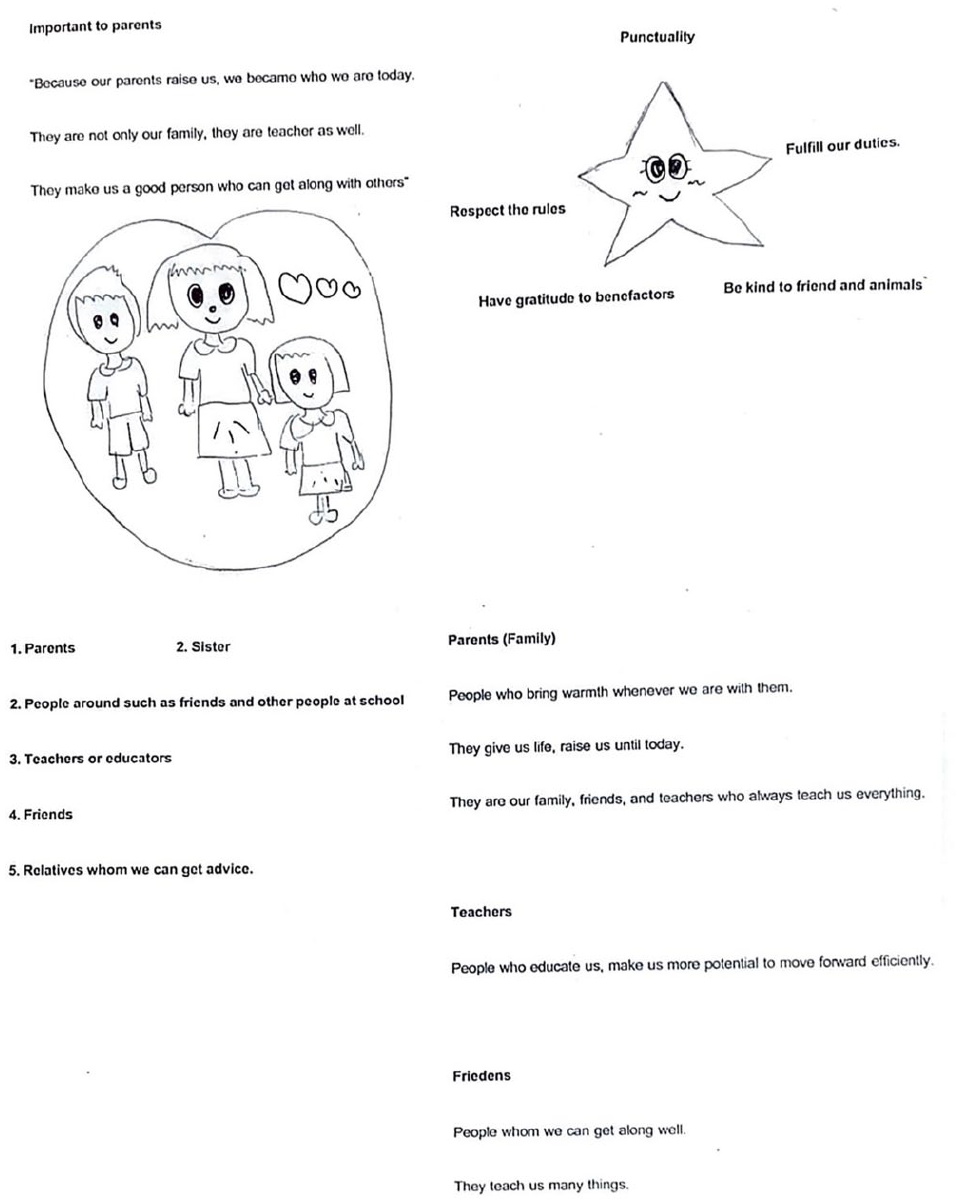
Data collection was undertaken over an 8-month period in 2017. Data collection was initiated at one of the government schools with a lot of students in order to obtain rich information from the participants. The first participant was interviewed and drew a picture, and the researcher analyzed the data. As guided by grounded theory, the process of sampling, data collection and data analysis occurred simultaneously while the study progressed. Some information that emerged in the first interview often was used to inform subsequent interviews. For example, the first participant mentioned: “My parents have given me so much love (kwarm-ruk), and care ever since I was young, I know I cannot find love like this anywhere else, it fills me with respect for them. . .” (Orn—Female participant). The quote reflected the realization of the grace of parents and was used to guide the search for information from the next participant who lived with their parents. This process, called theoretical sampling, was employed to probe subsequent participants according to the emerging data to find out how their information was similar to or different from the first participant. The sampling was continued until category saturation was reached, which was when the participants were saying nothing new about the concepts being explored, and no new codes emerged during coding (Cutcliffe, 2000; Speziale & Carpenter, 2003).
Data Analysis
Straussian grounded theory is based on the concept-indicator model and was employed to analyze the data. Data collection and data analysis were undertaken in parallel, with both processes moving back and forth among three kinds of coding (open, axial, and selective) until the category emerged. An example is shown in Table 1.
Process of Data Analysis.

Trustworthiness
Four criteria for establishing trustworthiness based on Lincoln and Guba (1999) were employed. Credibility was established by prolonged engagement, data triangulation, multiple settings (two government schools, one government technical college, and one private vocational college), and member checking. Dependability was presented by researcher triangulation (peers debriefing). Confirmability was accomplished through the inquiry audit of the process and the findings of the research. Transferability was established by providing rich descriptions from 27 participants.
Results
Participant Demographics
The 27 participants consisted of 10 females and 17 males aged 15 to 19 years. Twenty-two participants were Buddhist and five were Muslim. While all the participants indicated that they had a belief this demographic was not explored in any depth in the analysis. Fourteen participants were studying at the government junior high school or government high school. Eight participants were studying at the government technical college and five were studying at the private vocational college. Although they were attending a school located in an urban area, some of them lived in rural areas, and they had different backgrounds. Family members of the participants ranged from two to six persons and comprised parents, grandparents, aunts, and siblings. One of the participants lived with his girlfriend. Some participants lived only with their mother as a nuclear family. By contrast, some lived with several members as extended families. One main reason for living in the extended family was to save money. However, some participants lived in an extended family setting because their parents had separated or were deceased so they moved in with their grandparents.
All participants were receiving between 50 and 250 baht/day (approximately US$ 1.5–8.0 dollars/day) from their parents or relatives or through working. Knowing this information was important because it provided the researchers with some insights into the potential socio-economic background of the individual participants, demonstrating that the researchers had selected participants from a variety of social statuses. The participants received their daily allowance differently. Most of their money was spent on food, bus fares, petrol, mobile phone top-ups, games, and other personal things. No participants reported any serious health or social problem, including the eight participants studying at the government technical college, who had more unsupervised time than those participants who were studying at the government junior high school or government high school. The aim of recruitment was to ensure a heterogeneous group of participants from a wide range of social backgrounds including the type of school attended and program, education received. This was also important when using theoretical sampling to recruit participants. Unlike the regular schools, which operate from 8 a.m. to 4 p.m., the technical college sometimes ends in the late evening. There is a perception in Thai culture that those attending technical colleges are thought to be troublemakers. This is because sometimes these students get into fights after late classes. However, in this study, the eight participants that attended the government technical college had never been involved in a fight. The reason was that they did not want to get into trouble and cause their parents to worry about them.
Achieving Fulfillment in Life: Cultivating the Mindset of Gratitude Among Thai Adolescents
The core category of cultivating the mindset of gratitude among Thai adolescents, called “Achieving fulfillment in life,” emerges from a circular process of appreciating the value of oneself and others, committing to live life on a positive life path, and attaining true happiness. When the participants were happy to perceive the virtue of self and others and did good things in return, they had an intention to continue to do so, as in a circular pattern.
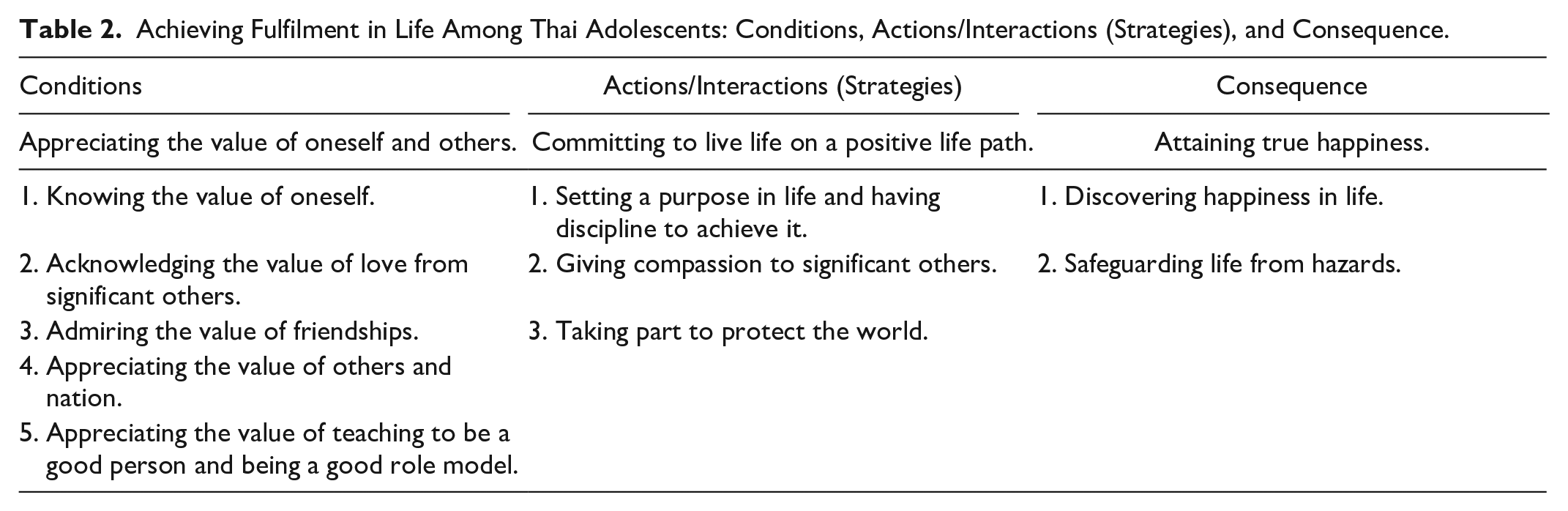
The “Achieving Fulfilment in Life” core category was composed of three categories: (a) condition: appreciating the value of oneself and others; (b) strategy: committing to live life on a positive life path; and (c) consequence: Attaining true happiness (Table 2).
Achieving Fulfilment in Life Among Thai Adolescents: Conditions, Actions/Interactions (Strategies), and Consequence.
Conditions: Appreciating the Value of Oneself and Others
This category, called “appreciating the value of oneself and others,” illustrated the condition of the core category “Achieving fulfilment in life.” Some participants stated that their gratitude developed when they recognized the value of themselves and others around them, which motivated them to show gratitude and to behave in an altruistic manner. The five conditions (values) were identified in relation to the “appreciating the value of oneself and others” category.
Knowing the value of oneself
Some participants stated that human beings must realize that their life is important. Being born as a human was valuable and only those who had merit would have an opportunity to be born as a human. The value of one’s life included the value to self, family, and country. They were responsible for creating a better and happier life for themselves and others, as three participants described: Our life is valuable. Being born as a human being is not easy. We have to have merit to be born in human life. . . We should stay conscious, do not live carelessly. Look at people around us who have their lives change as a course of what they do both in good and bad terms, then take it as a warning sign to not doing such so. . . Our lives depend on what we do, we must choose to do good things. (Mew—Female participant) Self is the most important thing. No matter what we do, we are the most important. We must know ourselves, understand, and be patient to reach the goal we set. (Milk—Female participant) We are important people to our family and others in society because we can help other humans, more or less. We can help physically and financially as much as we can. (Sao—Female participant)
Acknowledging the value of love from significant others
All participants affirmed the value of their parents and significant others for taking care of them with love and creating a loving, connected, and warm environment that made them feel safe, secure, and happy. This perception creates a sense of thankfulness and helps them realize that showing gratitude to their parents or significant others is very important and should be carried out with love and respect. As three participants described: Receiving such complete love (kwarm-ruk) from my parents makes me feel like sharing my love with others. I think love is so important. They’ve taken care of me from birth. They have always treated me as an important person in their lives. Because they gave me so much love, it makes me feel happy and I want to show my gratitude by giving my love and by taking care of them. (Ning—Female participant) My parents have given me so much love (kwarm-ruk), and care ever since I was young, I know I cannot find love like this anywhere else, it fills me with respect for them. I want to take care of them and to try to make my life as successful as I can to make them feel proud of me. (Orn—Female participant) Happiness (kwarm-suk) in life comes from the warmth of the family. Although my family may not have a lot of money, I feel good to be born in this family. If we do not have the warmth from a good relationship within the family, we won’t have true happiness. (Ton—Male participant)
Admiring the value of friendships
Some participants admired the value of friendships and support from friends as an important aspect for living successfully and creating happiness in this world. Sharing and supporting among friends in both direct and indirect ways is particularly significant among adolescents. This feeling makes them want to, in turn, support others. As two participants described: Someone said that for adolescents, friends are important. If we have good friends, then we are very fortunate. . . A warm feeling comes from friends, and good friends bring happiness to life. (Mike—Male participant) Before I get there (success in life), I need to have friends to share my life path, they provide support and give encouragement. I believe my friends will be pleased to see me achieve success, I feel the same about them. (Nid—Female participant)
Appreciating the value of others and the nation
Some participants mentioned the significance of other things, such as other people (beyond family and friends) and the nation, that help them to be able to live in this world. Therefore, they feel that supporting or protecting will contribute to the growth of others and the development of the community in which they live and the country as a whole.
We cannot live alone in this world. What we have and consume today are what previous generation made for us. When we wake up in the morning, our front yard is clean, that’s because our housekeeper cleans for us. When others do something for us, we must do for others as well. (Jenni—Female participant) I feel proud of being Thai. . . We have our own land. We have the best king. So, I have to protect my country. . . As a Thai adolescent, I have duties to do good things for my society. I have to have the knowledge to develop my nation. (Nut—Male participant)
Appreciating the value of teaching to be a good person and being a good role model
Some participants mentioned that their sense of thankfulness or appreciation emerges when seeing other people express their gratitude to others through caring and many forms of helping. They stated that their gratitude was amplified when they began to have a deeper appreciation of their parents, other family members, or others. They acknowledged the value of the guidance given, and moral values taught by them. Especially for some participants, when they witnessed their parents showing gratitude to their grandparents, they saw their grandparents’ joy in feeling appreciated and seeing this inspired them to do the same for their parents. As Bua, a female participant who admired her mother very much for being such a good role model said: My whole family is my role model for showing gratitude. My mother always transfers money to my grandmother and aunt. Although sometimes she has little money left, she transfers every month regardless of this. . . She calls my grandmother nearly every day to check if she is ok. During long weekends, she goes to visit my grandmother.
In addition, some participants said that their parents purposefully taught them the importance of being a grateful person toward family members and others and taught them to help others which reinforced in them that having an opportunity to help others is a good thing and everyone should do. As described by Pip, a male participant: (Some occasions) Helping others is a good thing that we should do, and we can do. As I am a man, I feel stronger than others, so I feel happy to help others who are weaker than me when I can. . . I think the feeling of helping others comes from my family. They taught me to think of others before I think of myself.
Strategies: Committing to Live Life on a Positive Life Path
This category, labeled “committing to live life on a positive life path,” helps to illustrate and explain the strategies that form part of the core category “Achieving fulfillment in life.” Once the participants appreciate their own self-value and the value of others, it encourages a sense of self-love and love for others and stimulates them to make a better life both for themselves and others. Three main strategies were identified in relation to this category.
Setting a purpose in life and having the discipline to achieve it
The participants realized that one of the best things they can do to show gratitude is to create a successful life aimed at securing a good occupation. They believed that achieving a good education brings improved living conditions for themselves and their significant others and will make their parents feel proud. Therefore, several of them set their purpose to have a good career and engage in the necessary activities to make their life purpose come true. They know that effort is the only thing that makes the purpose in life come true. As three participants described: Self is important to lead us to the goal we set. . . When we intend to do something, we will never give up. We will do the best, be patient, use all efforts we have, and try my best. . . Find the way to improve myself, follow my dream that I set as a goal, and must do as I intend (this is me). (Pin—Female participant). People who love themselves will have the commitment to do good things in life, not from a sense of duty but because they really want to. They pay attention to the things that will bring positivity to their life. (Mike—Male participant). I want success in life because I want to take care of my grandmother, aunt, and mother. . . My father passed away when I was young. My grandmother, aunt, and mother raised me. I want to repay them. I want to care for them. If I don’t take care of them, no one will do it because I am the only child. . . This is why I want to be a successful person. This thought inspires me to study hard. (Yod—Male participant). I study hard right now both for myself and my parents. . . My parents spend most of the money they earn; this is for my education. Every time I ask them for money, I hesitate. So, I have told my parents that “at the moment both of you give money to me, but when I graduate bachelor’s degree and I can earn money, I will give most of my money to you.” If I have a good job (being an air hostess), my parents are the first persons I think of. I will take care of them. (Mint—female participant).
Giving compassion to significant others
Appreciating the dedication of others, especially parents and significant others, encouraged participants to show their gratitude by providing care for them in several ways. This care is based on the act of giving with loving benevolence. As Earth, a male participant, said: “I have to take care of my mother.”
This study found that another kind of love and care is expressed by some participants in trying not to become a burden to parents or significant others in any respect, such as a financial or social burden. As Pun, a male participant who was studying at the technical college, said, he tried not to fail in any subject because if he did fail, his parents would have to pay extra money: For me, at the moment, one of the most important things I must do is not to fail in any subject (I must not get F grade) including the English subject, which I find difficult. I don’t want my parents to have more problems. If I fail or get F, my parents have to pay extra money.
Oil, another girl participant, said with a strong voice that her main focus now was her education. She does not behave badly because she does not want to make her parents feel disappointed in her. As she said: If my parents give money to me and I don’t use that money for study or I don’t pay attention on study, it’s not good. I should not do it. I should not get involved in negative behavior because if I do bad things, my parents will feel embarrassed. The neighbor may say “that family has a bad daughter.” My parents will lose face. . . I should make them feel proud of me.
Taking part to protect the world
Some participants had a commitment to safeguarding the environment, community, nation, and the world. They recognized the value of others and had an awareness of their own responsibility toward the wider world through a sense of altruism.
I often come back home by myself on the minibus. When I do that, my mother does not need to worry about me. She does not have to fetch me and so she can save petrol and reduce the emissions of toxic gas from the car engine to the environment. As young people, we can do so many good things to save energy. (Rose—Female participant).
Min, another girl participant, wants to be a teacher and, in turn, help children become better educated. It is another way to show gratitude to society by helping build a better world. As she explained: I have set my purpose. I want to gain entrance to study at the Faculty of Liberal Art or Faculty of Education. After I graduate, I want to become a teacher. I want to teach children to become smart children. Having an educated and smart child is good for our society.
Consequence: Attaining True Happiness
This category, called “attaining true happiness,” explains the consequence of the core category “Achieving fulfillment in life.” Attaining true happiness is a consequence of appreciating the value of oneself and others and committing to a positive life path. Several participants believed that having gratitude and being a thankful person brings true happiness to their life through performing altruistic behaviors. Two consequences were identified in relation to the “attaining true happiness” category.
Discovering happiness in life
The participants mentioned that a consequence of doing a good thing for oneself and others is to bring and communicate happiness into their life. Happiness is an essential characteristic of being a human being. They said they try to inspire others to do the same, and so create happiness within themselves as an individual and society as a whole, reflecting the circular process of being a grateful person. As two participants said: My parents have always taught me to help others since I was young. Helping each other is a good thing we have to do. It makes me want to help others and it helps me live with happiness in our society. (Bow—Female participant). I think gratitude to our significant others is a good thing. If we are grateful people, we will receive support from others that helps us have a good life. Other people will love us and want to support us. Then, we will have happiness in life. (Joe—Male participant).
Safeguarding life from hazards
This study found that a consequence of acknowledging their own self-value is reflecting the sense of self-love. They tried to do a good thing for themselves and others. It can prevent them from being coerced by peer pressure and becoming involved in hazardous behaviors, such as riding motorcycles at speed without helmets. As one participant said: People have an eagerness to do things, to make a good life when they love themselves. They try to do their best and inspire themselves to achieve their life purpose. (Pare—Female participant).
Fai, a male participant, was a technical college student. Although sometimes students from a technical college may fight with each other, he never joined in this type of threatening situation. Because he knew the value of himself he tried to be very careful in avoiding situations that may threaten his own personal security and safety.
The most important person is ourselves. It depends upon our own mind, friends cannot pull our hands to make us do things, it all depends on us. I know I am important to my mother. I never want her to feel regret and I never join in any risky behaviors.
Discussion
This paper describes the process of cultivating the mindset of gratitude of Thai adolescents, as shown by the core category called “Achieving fulfillment in life.” Gratitude is an interpersonal exchange between people and non-human intentional agents resulting in a positive feeling in the receiver (Noor et al., 2018). Accordingly, the present study illustrated the process of gratitude development, describing how this arises from the interpersonal exchange between the participants and significant others, or things, based on the sense of value and respect. The categories that emerged from the data highlight important foundations for gratitude development based on the adolescents’ subjective perspectives.
The process of developing gratitude leading to participants’ life happiness began when the participant saw the value of self to others as well as the value of others to self. This starting point gave them an intention to live a good life, to do good things to themselves, and to repay thanks to their benefactors and society as a whole. When one realizes and has an experience of living a good life it leads to true happiness in their life, encouraging the participants to continue to live a life guided by gratitude and good things. They have an intention to share their experience with others as they had once received.
This study found that appreciating the value of oneself and others is a condition of cultivating gratitude. Participants who acknowledge their own value will develop a sense of pride in themselves. They have a sense that they are important to others (Emmons, 2010), which produces positive behaviors and personal dignity that can support wellbeing (Balthip et al., 2021; Bronk et al., 2010; Hill et al., 2010). Thai adolescents in this study perceived that receiving unconditional love in a caring manner from significant persons in their life is of the highest value and increases their sense of gratitude.
Gratitude is the important point of connectedness for a younger person, inspiring in them a sense of duty to care for older people and a feeling of gratitude toward them. Gratitude to and caring for parents or older people is an important task that is embedded in Thai culture. Thai adolescents have cultivated a culture in which it is crucial to care for their parents or significant persons with sincere love, which is expressed through caring behaviors (Tongprateep, 2000). Thai adolescents did feel supported, and gratitude is an important part of the Thai culture (Balthip, McSherry, Petchruschatachart, Piriyakoontorn, & Liamputtong, 2017). For many participants, their connectedness with parents or the older generation reflects gratitude, giving them the motivation to find their self-worth which is reflected in their value for others and in finding purpose in life. This finding may also suggest that having a sense of belonging and connectedness with older generations who represent “Thai tradition” may in some way combat the perceived risks and negativity directed toward modernity. However, this potential for bridging the gap or counterbalance between traditional and modern will need to be further explored in future research.
These findings are therefore consistent with a previous study which found that parents, family, and significant others were essential in nurturing the adolescent’s sense of gratitude and that these play an essential role in enhancing the wellbeing of adolescents and their growth and safety (Göcen, 2016).
Friends are other important persons mentioned by participants. When the participants value their friends, they acknowledge that friends and the support received from friends are important. Friendships play an important role in their future development and are a source of happiness. An appreciation of the value of friendships will cultivate a sense of gratitude in the participants and may enhance positive youth development that could support others at a global level (Wood et al., 2008).
This study highlighted that one of the important conditions of enhancing gratitude is having a good role model. Important persons associated with children and adolescents, such as parents, guardians, and teachers, should pay attention to being a good role model, teaching and guiding them about gratitude, or integrating the principles and values of gratitude into the curriculum. This finding supports the previous evidence that was summarized in the literature on gratitude in non-Western and Western countries by Naito and Washizu (2015) and illustrates the universal nature of gratitude. The findings affirm that gratitude is affected by its antecedent variables, including gains of the beneficiary, the cost to the benefactor, and the altruistic motivations of the benefactor and that gratitude includes positive feelings such as attachment and respect for the benefactor, and a wish to repay the benefactor (Naito & Washizu, 2015). This current study illustrates that there are three strategies essential for articulating and nurturing gratitude that contribute to the growing literature on cultivating gratitude among adolescents. The participants in this study experienced that an expression of gratitude can be present through setting a purpose in life and having the discipline to achieve it and having discipline to achieve it, showing compassion to significant others, and taking part to protect the world. All of which arise from knowing their own value and acknowledging the value of love from others. This is supported by the notion of gratitude is that gratitude is a general state of thankfulness or appreciation of the things that has valuable and meaningful to oneself that increase prosocial motivation (Naito et al., 2005; Sansone & Sansone, 2010). These strategies are characteristic of people who have the capacity to make a better life for themselves and others (Noor et al., 2018). In particular, most participants realized that one of the best ways to show gratitude is to create a successful life by setting a positive PIL. The value of PIL is allied with adolescent flourishing (Liang et al., 2017) and nurtures a sense of altruism, spiritual health and wellness (Balthip et al., 2021) that guides adolescents to positive life paths. The participants who committed to live on a positive life path felt empowered to be more altruistic with significant others, their community, and society as a whole (Liang et al., 2017). These findings contribute to the previous research that found that some strategies can nurture the sense of gratitude and that these are beneficial to adolescents, such as participating in the three good things listing exercise (Noor et al., 2018).
Thai adolescents in our study have a strong sense of connectedness to their parents who provide love and support to them. It seems that adolescents value the repayment to what they can see or is presented to them. Therefore, enhancing gratitude can be done by their parents, family, teachers, or others by providing an opportunity for adolescents to take care of their parents, family members, or society in various ways. This study found that family members are important to the learning and development of interpersonal relationships that important to the development of social adjustment, respect, self-worth, nurturance, and wellbeing.
Consequently, cultivating gratitude for adolescents can bring wellbeing and optimism on the part of the individual, family, society, and nation. A grateful heart is essential and always brings assets such as peace of mind, love, and prosperity into one’s life (Emmons, 2012). Demonstrating kindness toward others can increase wellbeing and involves a social component (Otake et al., 2006). The established contribution of social relations to adults’ and adolescents’ wellbeing and confirms that gratitude is “the key that opens all doors, that which unlocks the fullness of life” (Emmons, 2012, p. 49). Therefore, by developing gratitude, adolescents will in turn show gratitude to others and the wider society through their direct and indirect actions. It is important for the nation—indeed, the global community as a whole—to promote the cultivation of gratitude in its adolescents. This finding supports the previous knowledge that gratitude leads to several positive behaviors including expression of thanks to the benefactor, generalized repayment, prosocial behaviors, and wellbeing (Naito & Washizu, 2015).
It was interesting to note that some Thai participants said they felt happy to be asked the questions that were put to them at the in-depth interview. It seems not all of them had previously been asked questions like this. Being asked these questions gave them a chance to think deeply about what is important to them and gave them an opportunity to contemplate the gratitude they showed to themselves, significant others, and beyond. So, it seems that stimulating contemplation of gratitude is not difficult in real life; it merely requires a simple set of the right questions to be asked of the adolescent. Therefore, all stakeholders such as school nurses and teachers should do their best to ensure adolescents understand the full meaning of showing gratitude in their life.
Conclusion
The core category describing the process of cultivating the mindset of gratitude among Thai adolescents, called “Achieving fulfillment in life,” develops significantly once the participants recognize the value of themselves and of others. This in turn leads them to commit to living life along a more positive path by making better life choices. Adoption of this mindset seems to embed the behavioral characteristic of showing gratitude to themselves, significant others, and the wider world. As a consequence, they obtain true happiness, which helps bring peace to the community and the world in general, and they live life in a more altruistic manner.
Implication for Practice and Research
This study illuminates the conditions, strategies, and consequences of the core category “Achieving fulfillment in life” in the process of cultivating the mindset of gratitude. It showed that the principle of gratitude will help in the advancement of happiness among adolescents. The current study with Thai adolescents illustrated that the participants had a desire to reciprocate altruistic behavior to their significant others, community, and society in general, engendered by feelings of love and compassion developed from the inner self. The findings from this study guide the way in promoting a sense of gratitude that can be initiated through helping adolescents to recognize the value of themselves and others. This can be followed by encouraging them to express their gratitude through several ways such as taking care of benefactors and doing good for society, in order to bring happiness in life.
Limitations and Recommendations
As the study and its findings are unique to Thai adolescents, its usability is limited. One area that requires greater exploration is how religious belief and practice may inform adolescents’ understanding and attitudes toward gratitude. This is important given that all the participants in this study identified as Buddhist or Muslim, but this demographic was not really taken into consideration during the analysis.
However, some concepts such as giving compassion to others are general concepts that people in all parts of the world can understand. Therefore, the process of cultivating the mindset of gratitude, which is developed from the grounded theory, can be advanced if tested in other contexts within different cultures, and the similarities or differences that emerge can be compared.
Footnotes
Declaration of Conflicting Interests
The author(s) declared no potential conflicts of interest with respect to the research, authorship, and/or publication of this article.
Funding
The author(s) disclosed receipt of the following financial support for the research, authorship, and/or publication of this article: This work was supported by Prince of Songkla University [grant NUR600478S].
