



Abstract
This study examined the experiences of immigrant parents seeking asylum in the United States after recently fleeing the Northern Triangle region of Central America, attending both to the traumatic events and the strengths that mitigate this experience. The study employs a convergent parallel mixed-methods design to describe the experiences of 51 parents after being processed by U.S. immigration officials for seeking asylum. Quantitative analyses measured trauma exposure and psychological distress and posttraumatic stress symptoms, as well as religiosity, dispositional optimism, and perceived quality of life. Qualitative analyses examined migratory experiences more deeply. Quantitative findings suggest that participants displayed high levels of resilience as evidenced by the low endorsement of mental health symptoms associated with trauma despite high violence and trauma exposure. Qualitative analyses revealed two themes underscoring strengths that mitigated the compounded trauma experienced by participants, including: (a) protective factors, and (b) plans for the future. In addition, several subthemes emerged within each of these broader themes. Qualitative findings highlight that asylum seekers come to the United States for the sake of their families, especially their children. Participants shared their desire to ensure the safety of their family and children and their hope of being better able to take care of them. These desires and hopes common among participants in our study not only motivated them to leave their home countries but also helped them to press forward in their journeys. Study results show that religiosity, hope, and optimism also played important roles in sustaining these immigrant parents during their journeys.
As crime and violence in Central America, in Honduras and El Salvador in particular, reached unprecedented levels over the past decade, migration from this region to the United States increased as well (Hiskey et al., 2014). Since 2011, the United States has experienced a significant increase in the number of children and families arriving from El Salvador, Honduras, and Guatemala; countries collectively referred to as the Northern Triangle region of Central America, (O’Connor et al., 2019). Further, a rising proportion of those arriving at the Southern border are requesting asylum, whether at official ports of entry or after crossing into the U.S. “without inspection” between U.S. ports of entry (O’Connor et al., 2019). Now, according to the Pew Research Center, the number of encounters with migrants along the U.S.-Mexico border has reached a level unseen in 21 years as migration from more nations other than Mexico and Central American countries has increased as well in last couple of years (Gramlich, 2021).
Migration-Related Trauma
Every day, families from the Northern Triangle region of Central America make the difficult decision to leave their homes in search of safety and a better life despite the many risks associated with migrating (Schmidt & Buechler, 2017; UNICEF USA, 2019). These families are severely affected by the excessive violence in their countries of origin and exposure to other forms of trauma and loss (Mercado, Venta, et al., 2021). It is also evident that this population faces significant adversity not only prior to leaving their home country, but also during and after their migratory journey (e.g., Cuneo et al., 2021; Keller et al., 2017; Mercado, Garcini, et al., 2021; Mercado, Venta, et al., 2022; Peña-Sullivan, 2020). Migration itself poses the risk of further trauma exposure. The migratory journey from Central America to the United States is known to be very dangerous, involving crossing multiple borders and taking almost two months to accomplish (e.g., Leyva-Flores et al., 2019; Soria-Escalante et al., 2022). While in transit asylum, seekers are exposed to multiple threats, including assaults, extortion, exploitation, kidnapping, and sexual violence (e.g., Keller et al., 2017; Leyva-Flores et al., 2019; Soria-Escalante et al., 2022).
Extensive research has shown the detrimental effects of cumulative adversity on mental health (e.g., Kleber, 2019; Magruder et al., 2017; Turner & Lloyd, 1995). Likewise, exposure to violence and other traumatic events have both been clearly identified as risk factors for the development of posttraumatic stress disorder (PTSD). Immigrants disproportionately undergo these kinds of negative experiences which means that trauma-related symptoms are likely on the rise among recent waves of Hispanic immigrant youth and families (e.g., Cuneo et al., 2021; Keller et al., 2017; Venta & Mercado, 2019). Indeed, data from recent waves of migrants from Central America and Mexico indicate that trauma exposure is prevalent in this population; thus, posttraumatic distress is a pressing public health matter among this population (Venta, 2019). For instance, a recent study conducted with adult immigrants from the Northern Triangle migrating through south Texas found that 70% of participants reported experiencing crime-related trauma and almost half endorsed experiencing physical or sexual trauma (46%) prior to or during migration (Mercado, Venta, et al., 2021). To sum up, almost without exception the recently immigrated participants experienced some type of traumatic event.
Strengths and Resilience Among Immigrants
Then again, in spite of considerable exposure to significant adversity and trauma, immigrants are capable of demonstrating striking strengths and resilience (Lusk & Chavez-Baray, 2018; Lusk et al., 2021; Lusk & Galindo, 2017). Drawing attention to the many adversities faced by this population and resulting high levels of posttraumatic stress (PTS) is crucial. Nevertheless, it is also essential to highlight the strengths possessed by immigrant families arriving to the Unites States. Hispanic immigrants living in the United States generally experience better mental and even physical health compared with non-Hispanic White individuals (e.g., Gallo et al., 2009; Ruiz et al., 2016; Singh et al., 2013). This health advantage is commonly referred to as the Hispanic health paradox (Markides & Coreil, 1986). Undeniably, the Hispanic immigrant community displays an array of strengths and capabilities that allows them to successfully overcome considerable hardship and to bounce back from great suffering. Nonetheless, there is a dearth of research examining protective factors and strengths that may safeguard immigrants from traumatic experiences associated with the migration experience (Kirchner & Patiño, 2010; Lusk & Chavez-Baray, 2018; Lusk & Galindo, 2017; Riosema & Jochem, 2012).
Traditionally, mental health models have emphasized disease, impairment, and dysfunction (Swaine, 2011). This approach has led many mental health professionals to focus on attempting to fix the individuals they serve without recognizing the strengths already present in them (Cowger, 1994). In contrast, the strength-based approach to mental health emphasizes the importance of considering not only individuals’ characteristics, but also the environment they live in and the multiple contexts that impact their lives (Smith, 2013). Thus, rather than focusing on their deficits, strengths-based approaches focus on individuals’ strengths, which include personal and social strengths (Smith, 2013). In this context, resilience refers to the capacity to adapt and cope with adversity or challenges which stems from the different sources an individual can draw upon to preserve their well-being (Masten, 2014).
The theory behind strength-based approaches to mental health is that life presents some type of suffering or ordeal for each person and through it, people are able to discover their inner strengths (Smith, 2013) that encompass strategies and personal attributes used to cope in the face of adversity (Padesky & Mooney, 2012) and that protect individuals from deleterious psychological outcomes during stressful times. The strength perspective postulates that even the most troubling life stories reveal examples of strengths used by individuals in their grapple with hardship (Smith, 2013). Thus, the role of the clinician is to help individuals to discover their strengths and to apply them to their current situation (Smith, 2013).
In the recent years, a small number of studies with immigrant populations have started to evaluate specific protective factors present in individuals and immigrant communities that may help mitigate the adverse consequences of exposure to significant hardship (Lusk & Chavez-Baray, 2018; Lusk et al., 2021; Lusk & Galindo, 2017; Riosema & Jochem, 2012). This research has revealed certain cultural elements, such as comunidad (community), respeto (respect), and familia (family), as important in fostering resilience and promoting an optimistic outlook among immigrants (Lusk et al., 2021). Moreover, research documenting the lived experiences of immigrants in their journeys has captured their reflections and stories which are infused with meaning derived from faith, family, and strength (la fe, la familia y la fuerza) (Barral-Arellano, 2009; Lusk & Chaparro, 2019). Indeed, faith, family, and strength appear to be key in sustaining individuals through their migratory journey (Lusk & Chaparro, 2019).
Abundant research has linked faith, spirituality, and religious involvement with a range of positive health and mental health outcomes (Riosema & Jochem, 2012; Weber & Pargament, 2014), and with higher quality of life (Weber & Pargament, 2014). In addition, the extant literature reveals that faith, spirituality, and religious involvement can serve as protective factors against mental health issues (Kornreich & Aubin, 2012). In particular, a meta-analysis of studies investigating enablers of psychological well-being for refugees and asylum seekers determined that aspects related to faith, religion, spirituality, and culture are important for well-being (Posselt et al., 2019).
In the case of immigrants from Latin America, religiosity, faith, and spiritual fulfillment have been identified as protective factors from stress (Barral-Arellano, 2009; Kirchner & Patiño, 2010). Consistent with this finding, using a sample of 30 immigrants, Lusk and coauthors (2021) found that faith was key to the persistence and hope of the participants through their migration journey. Of the 30 interviewees, 25 identified prayer as a source of comfort and indicated that they stopped at churches along their way on occasion. Interviewees in this study expressed that they were reminded of their faith through each stage of their journey and the challenges and adversity encountered increased their faith. Lusk et al. (2021) convey that in one way or another, all of the 30 participants expressed that God accompanied and protected them along their perilous journey. Similarly, Soria-Escalante et al. (2022) found that Latin American women shared a strong belief in God which they believed allowed them to endure and survive their migratory journeys through Mexico.
Another identified major source of resilience for immigrants is the importance of family, especially their children (Barral-Arellano, 2009; Lusk & Chaparro, 2019; Lusk & Chavez-Baray, 2018; Lusk et al., 2021). Countless immigrants report that their decision to leave their home country was influenced by their desire to ensure the safety of their family and children (Barral-Arellano, 2009; Lusk & Chaparro, 2019). For example, immigrant parents interviewed by Lusk and Chaparro (2019) shared their desire to raise their children in a safe environment, free of suffering, danger, hunger, and violence. In similar studies, immigrant parents have also highlighted the possibility of providing a better opportunities and future to their children (Lemus-Way & Johansson, 2020; Lusk & Chaparro, 2019; Lusk et al., 2021). In addition, strength (la fuerza), personal fortitude, courage, and tenacity have all been endorsed by immigrants as sources of resilience in their journey (Lusk & Chaparro, 2019). Without question, time and time again, immigrants, men and women, have shown remarkable willpower and determination to successfully accomplish their journey in spite of all potential and considerable perils (Barral-Arellano, 2009; Lusk & Chaparro, 2019).
The Present Study
To date, most of the relevant research conducted with immigrant populations has primarily focused on trauma and the serious adverse mental health consequences associated to trauma (e.g., Keller et al., 2017; Mercado, Venta, et al., 2021; Venta & Mercado, 2019). Indisputably, the countless stories of violence, rape, extortion, kidnapping, hunger, and hardship endured by immigrants in their journey to the United States merit much attention and action. However, their stories are incomplete when their remarkable perseverance, strength, faith, and hope are overlooked. Interviews with immigrants in the United States have revealed that their journeys are not propelled solely by desperation and fear, but also by hope, faith, and deep love for their families (Lusk & Chaparro, 2019; Lusk & Chavez-Baray, 2018; Lusk et al., 2021).
In addition, most published research with migrant populations has relied on quantitative methodologies without including qualitative data to enhance our knowledge through the use of migrants’ narratives (e.g., Keller et al., 2017; Mercado, Venta, et al., 2021; Venta & Mercado, 2019). Although qualitative methods tend to pose particular challenges, they offer certain benefits of much value when trying to deepen understanding of relatively new areas of research. Qualitative data have the potential to offer greater depth and breadth of understanding of a phenomenon being studied (Almalki, 2016). Qualitative methodologies allow for more flexibility and encourage the exploration of emerging themes which might not have been initially considered by researchers at the outset of their study. Furthermore, qualitative methodology aligns with the Latin American tradition of passing on stories or cuentos orally (Lusk & Galindo, 2017). This tradition has allowed the disempowered to record their discourse from their own perspective. Thus, a growing number of social scientists are choosing to incorporate qualitative methods into their research with immigrant populations (Lemus-Way & Johansson, 2020; Lusk & Chaparro, 2019; Lusk et al., 2021; Muller et al., 2020).
The primary aim of this study is to examine strengths that mitigate the compounded trauma experience of migrants who have recently fled the Northern Triangle region of Central America. The study employs a convergent parallel mixed-methods design to describe the experiences of 51 recently immigrated individuals primarily from the Northern Triangle region of Central America which encompasses the countries of Guatemala, Honduras, and El Salvador (one participant reported Nicaraguan origin and another participant reported being from Mexico). Quantitative analyses measured trauma exposure and psychological distress and PTS symptoms, as well as religiosity, dispositional optimism, and perceived quality of life. Qualitative analyses of semi-structured interviews allowed to examine migratory experiences more deeply, to determine the nuances within participants’ lived experiences. A key feature of this study is the recency of the detailed experiences as the families were interviewed within 24 hr of being processed by U.S. immigration officials for seeking asylum, making their experiences quite recent. Furthermore, the present study attempted to address the identified methodological challenges in research with immigrants (e.g., linguistic limitations, personality factors) by incorporating the qualitative component and by only including research assistants who are fluent in Spanish and who self-identify as Hispanic or Latinx in the data collection process.
In particular, the present study seeks to underscore the strengths and tremendous capacity for resilience among recent immigrants from the Northern Triangle. Specifically, we examined the factors associated with resilience among this population. For this purpose, we operationalize resilience as the capacity of individuals to draw from psychological, social, and cultural resources that sustain their well-being in the face of adversity (Ungar, 2014). The following questions guided this research: (1) What variables are predictive of overall quality of life? and (2) What fosters resilience among immigrants from the Northern Triangle despite significant exposure to hardship?
The authors hypothesized religiosity and optimism would significantly predict overall perceived quality of life among immigrants, reflected in higher scores in the quality of life index. The authors also hypothesized that the qualitative portion of this study will deepen the current insight into migration-related trauma and resilience of asylum seekers.
Method
Participants
The method of “venue-based application of time-space sampling” was used for participant recruitment. This is a convenience sample strategy using known venues where members of hidden populations gather safely (Muhib et al., 2001). The site identified for this study is a humanitarian respite center for recently arrived immigrants, including asylum seekers, after being processed by U.S. immigration officials for seeking asylum (i.e., those who have spent less than 24 hr within the borders of the United States) in a border town of South Texas.
Families who receive services at the respite center have been apprehended by U.S. Customs and Border Protection (USCBP, 2022) and released from custody pending their court hearing to determine whether they have a credible fear of returning to their native country. The respite center provides families and immigrants in general with basic needs, including food, clothing, and medical resources, short-term housing, and information regarding the bus transportation system. Families and other immigrants spend varying amounts of time at the respite center, generally ranging from a couple of hours to a couple of days.
The total sample consisted of 51 adult asylum seekers. Participants arrived at the center with their families or as single parents with their children. The sample included 15 males and 36 females ranging from 18 to 51 years of age (M = 28.02, SD = 7.193). The countries of origin for the participants included Honduras (32, 62.7%), Guatemala (13, 25.5%), El Salvador (4, 7.8%), Nicaragua (1, 2%), and Mexico (1, 2%). Within the sample, living common law was the most commonly reported marital status, and it was endorsed by 20 participants; this was followed by 14 participants who reported being married and 14 participants who reported being single (never married), two additional participants reported being divorced or separated, while only one participant reported being widowed. All participants identified as parents, and had from 1 to 6 children. The children’s ages ranged from 4 months to 27 years. Participants’ education ranged from second grade to college degree. Inclusion criteria for participants consisted of voluntary arrival at the respite center, age 18+, and Spanish fluency. Participants were excluded from this study if having previously lived in the United States.
Measures
Psychological Distress Symptoms
Participants completed the Spanish version of the Brief Symptom Inventory (BSI-18) to assess for psychological distress symptoms (Derogatis, 2001). Respondents are asked to identify their level of distress experienced over the previous 7 days using a 5-point Likert-type scale ranging from 0 (not at all) to 4 (extremely). The BSI-18 comprises three symptom scales: somatization, depression, and anxiety, each containing six items. The BSI-18 uses raw scores to calculate each of the three symptom scales by adding items for each scale together, with scores ranging from 0 to 24. The sum of the scores yields a global severity index (GSI) of distress, which ranges from 0 to 72 with higher scores indicating higher psychological distress. The internal consistency reliability estimates for the different dimensions of the BSI-18 have been satisfactory, ranging from .74 to .89 (Derogatis, 2001). For this study, the computed Cronbach’s alpha of the GSI was .902. The BSI-18 has been previously used with the target population (Garcini et al., 2017).
Trauma Exposure and Symptoms
Participants completed a Spanish translation of the Harvard Trauma Questionnaire-Revised (HTQ-R) to measure exposure to traumatic events as well as symptoms of PTS (Mollica et al., 2004). The HTQ-R is a checklist that asks respondents to indicate whether they have experienced a variety of trauma events by answering yes or no. The HTQ-R also includes 40 items inquiring about emotional symptoms considered to be uniquely associated with trauma. Respondents indicate how much each symptom has bothered them in the past week using a 5-point Likert-type scale, ranging from 0 (not at all) to 4 (extremely). For this study, the Cronbach’s alpha for the HTQ-Total was .936. The HTQ-R has been previously used with the target population (Garcini et al., 2017).
Religiosity
Participants answered three questions pertaining to their religious involvement which have been previously used in research conducted with Latin American immigrant samples (Hovey, 1999, 2000). These questions intend to assess respondents’ level of religiosity, the perceived influence of religion in their lives, and church attendance (Hovey, 1999, 2000). For each question, respondents are asked to provide an answer on a 4-point Likert-type scale. Higher scores indicate higher levels of religious involvement.
Dispositional Optimism
Participants also completed the Spanish version of Life Orientation Test-Revised (LOT-R) (Otero et al., 1998) to assess dispositional optimism. This instrument comprises 10 items; three items for optimism, three for pessimism, and four filler items included to mask the aim of the measure. Respondents are asked to rate the extent to which they agree with each statement on a 5-point Likert-type scale. Scores for the optimism and pessimism subscales are calculated by adding up the scores of their corresponding items (Otero et al., 1998).
Perceived Quality of Life
Participants completed a previously validated Spanish translation of the Quality of Life Index (QLI-Sp; Indice de Calidad de Vida) to measure perceived quality of life (Mezzich et al., 2000). The QLI-Sp is a 10-item multidimensional, efficient and culturally informed instrument that measures global well-being, encompassing emotional well-being, interpersonal functioning, and spiritual well-being. For each item, a brief clarification of its meaning is provided, allowing respondents for a culture-informed and subjective interpretation and rating of each item. The QLI-Sp final score is computed by averaging the item ratings. The test–retest reliability of the QLI-Sp has been satisfactory with a mean score of .89 (Mezzich et al., 2000). For this study, the computed Cronbach’s alpha of the QLI-Sp was .892.
Interview Protocol
Participants provided semi-structured interviews, with set questions, while allowing for follow-up questions or clarification as needed. The goal of the semi-structured interviews was to gather information about the experiences of immigrants, particularly those experiences that could be considered as potentially traumatic but also experiences of resilience. Overall, the interview protocol was designed with the intention of capturing the perspective on migration from the standpoint of the immigrants themselves. Accordingly, the semi-structured interview mainly contained open-ended questions, which aimed to encourage participants to engage in deep reflections on their migration experience.
Interview questions were written in English at a fifth-grade reading level to maximize comprehension within our sample which included participants with low literacy and translated into Spanish utilizing a back-translation procedure (Sutrisno et al., 2014). The interview included questions tapping into their reasons for leaving their home country, violence and trauma experienced in their home country, experiences related to their journey to the United States, and protective factors as sources of strength and resilience that sustained them throughout the journey (see Table 1). The focus of the study presented here was on identifying protective factors and strengths. In this study, protective factors were operationalized as situations, contexts, or personality characteristics that helped participants overcome hardship in their migratory journey (Rutter, 1985). Interviews were audio recorded and ranged from approximately 10 to 60 min in duration.
Semi-Structured Interview Questionnaire.
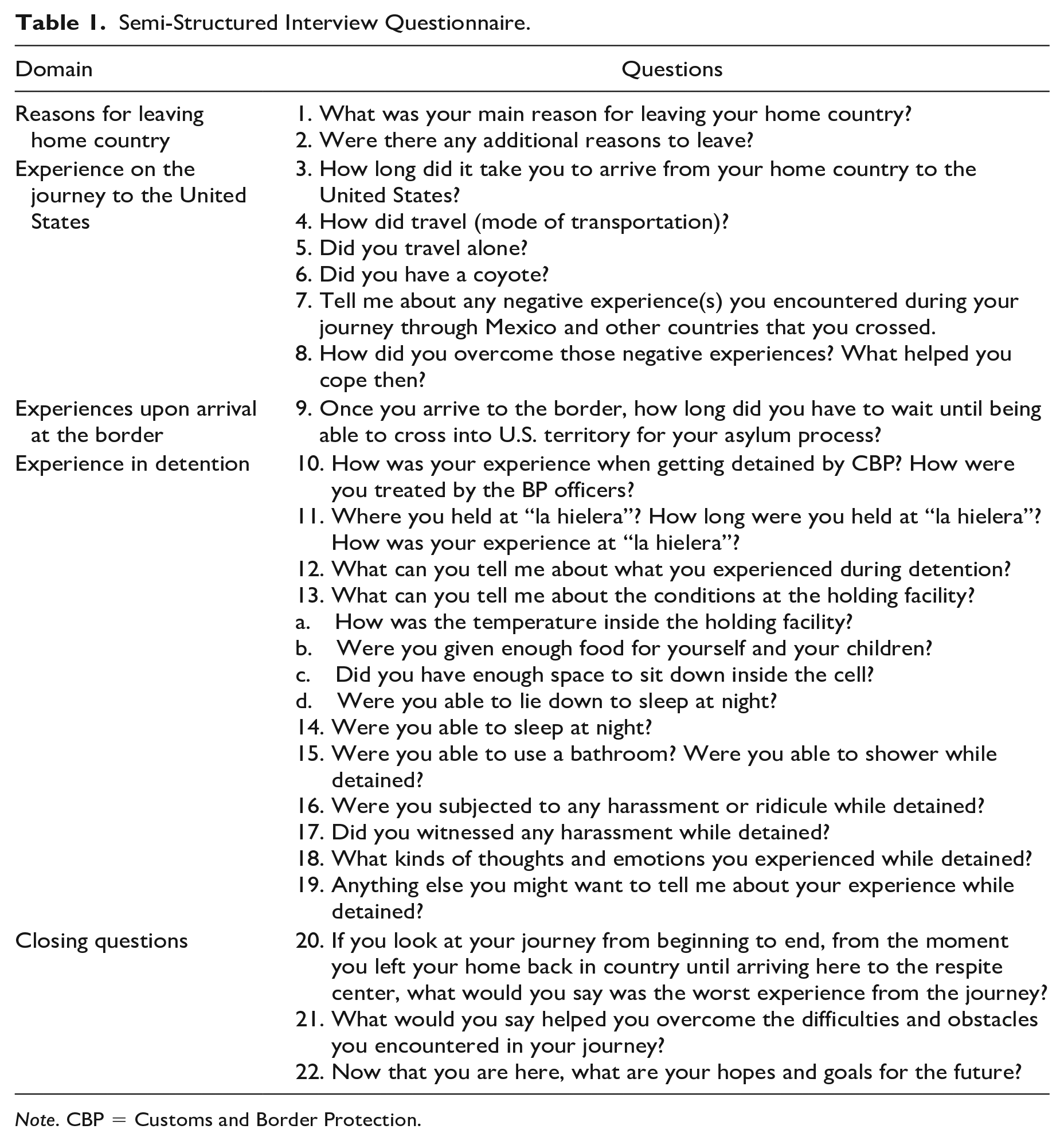
Note. CBP = Customs and Border Protection.
Procedure
Approvals from the Institutional Review Board of our university and the respite center were obtained prior to data collection, which took place in March 2021. All members of the research team in charge of data collection were bilingual and self-identified as Hispanic. Attention to demographic characteristics among interviewers was important to address linguistic barriers and issues related to researchers’ characteristics and interpersonal dynamics, which have been identified as methodological challenges in research conducted with immigrants (Pernice, 1994).
Prospective participants were informed that their involvement in this study was entirely voluntary, and that choosing not to participate would not impact the services they receive at the respite center or from Catholic Charities. All information was provided orally in Spanish before informed consent was requested and obtained. Each participant was compensated for their time with a US$20.00 gift card. Participants had the option to terminate their participation at any time.
Adhering to convergent parallel mixed-methods design (Patel et al., 2016), both quantitative and qualitative data were collected on the same day, they were analyzed simultaneously, and results were combined after analyses were completed. Quantitative self-report data were collected first. Participants completed the BSI-18 to assess for psychological distress symptoms along with the HTQ-R to measure exposure to traumatic events and symptoms of PTSD. Participants also answered questions measuring their religiosity and completed the LOT-R to assess dispositional optimism along with the QLI-Sp to measure perceived quality of life. In addition to these measures, participants also filled a demographic information brief survey. All of the questionnaires were administered in their Spanish versions. All questionnaires were administered orally in Spanish. Following completion of the questionnaires, qualitative data were collected through individual interviews of participants using a semi-structured interview protocol. All interviews were conducted in Spanish and recorded using a digital audio recording device. To ensure the privacy and confidentiality of participants, all data were collected in private areas at the center as much as possible.
Quantitative Analyses
Descriptive statistics were generated for sex, age, country of origin, number of children, education level, and occupation in country of origin via IBM SPSS Statistics, version 27.0 (IBM Corp., Armonk, NY, USA). Quantitative analyses measured exposure and psychological distress and PTS symptoms. Frequencies of traumatic events were used to assess the prevalence of traumatic events in the sample. Scores were generated for the Brief Symptom Inventory-18 scales, the Harvard Trauma Questionnaire–Revised Total, religiosity, the Quality of Life Index, and the Life Orientation Test-Revised. In addition, multiple regression analysis was used to test whether the religiosity and optimism significantly predicted participants’ ratings of quality of life.
Qualitative Analyses
Of the 51 qualitative interviews audio recorded, one interview audio was corrupted; thus, only 50 interviews were used for qualitative analyses. Audio-recorded qualitative interviews were transcribed verbatim in Spanish by a team of bilingual research assistants. To screen for errors, an independent researcher re-listened to the recordings to clarify what was uttered by the participant and how it was transcribed. For the protection and privacy of participants, data were de-identified. Given the nature of the existing literature around the topic of migration as previously mentioned, the researchers decided to utilize inductive content analysis with the aim of describing and understanding migration as a personal experience (Vears & Gillam, 2022). The 50 interviews were read by three independent researchers—all 50 by one, the first half by a second, and the other half by a third—to familiarize themselves with the content. Next, the researchers discussed the patterns of responses they had noticed in their respective sets of interviews to create and operationalize specific content categories that had appeared across all interviews. The researchers examined the broad categories further to identify more specific subcategories. Once these content categories and subcategories were agreed upon, the data were reviewed again by the same independent researchers to code all responses into their respective categories and subcategories to refine and substantiate the categories themselves. Once all data were coded, coding decisions were compared for interrater agreement. The data were then synthesized through the strengths-based approach to mental health (Rutter, 1985; Ungar, 2014) with the purpose of highlighting the culturally bound protective factors and resilience of this population.
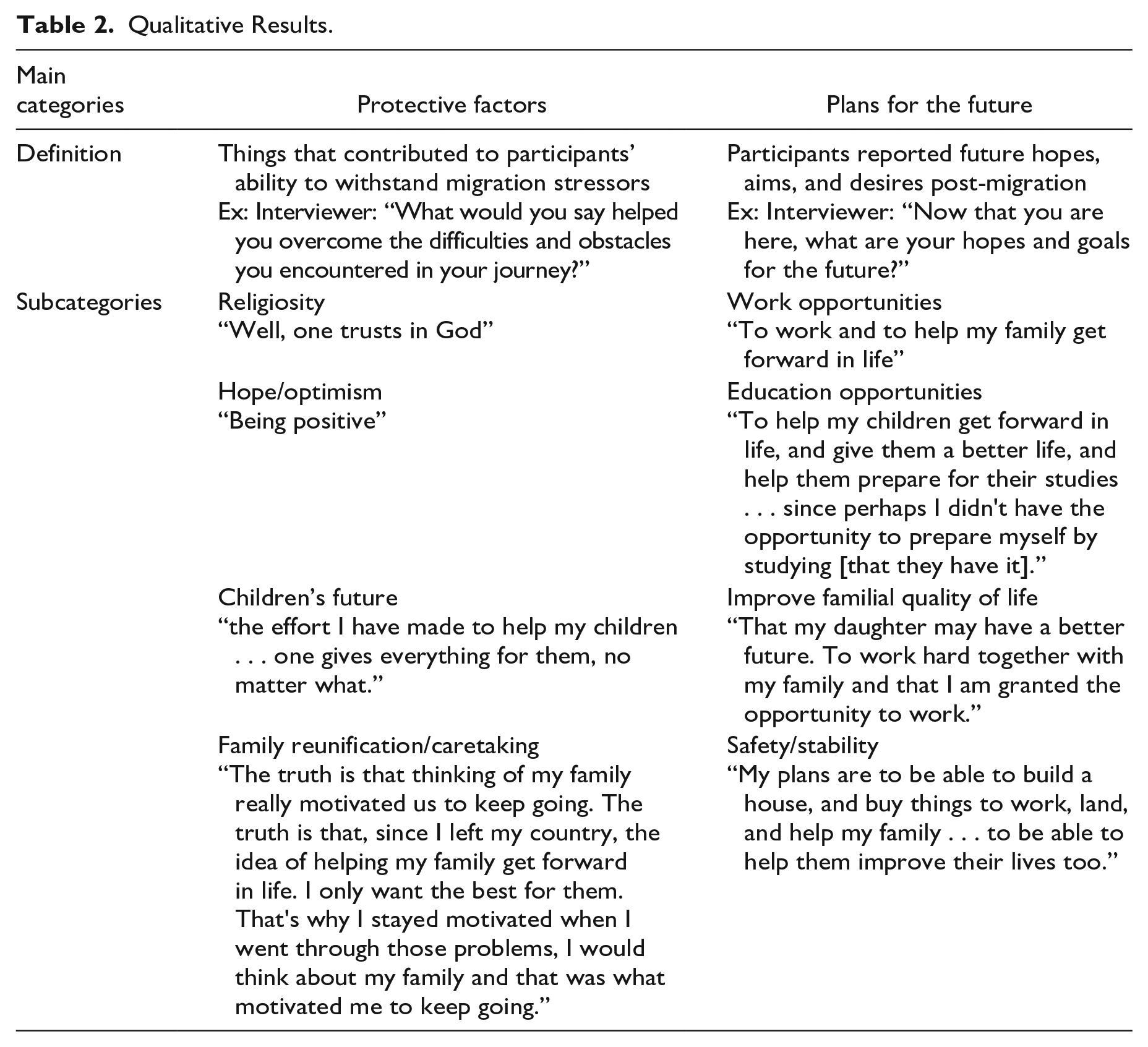
Totals within each theme and subtheme were tallied and illustrations are provided to deepen the understanding of each domain (Table 2). Hardship and adversity present in their narratives are discussed but most importantly, the analysis emphasizes the ways in which immigrants experienced and interpreted their journeys. The main focus of the analysis is on expounding the emergent themes from their narratives that provide insight into how these individuals coped and overcame hardship through personal and cultural strengths.
Qualitative Results.
Results
Quantitative Findings
Traumatic Events
We examined the frequency of traumatic events to evaluate the level of trauma experienced by the participants. Most of the participants experienced some form of traumatic event either in the country of origin, during the travel through Mexico, and/or in a detention center. The most reported traumatic event was “felt afraid/in danger” which was endorsed by 74% of participants. The most traumatic events experienced by a single participant were 18 of the 27 traumatic events. On average, the participants reported experiencing approximately 8 traumatic events (M = 8.19, SD = 4.24).
Posttraumatic Stress Symptoms
The average HTQ-Total score was M = 1.71, SD = .44. Overall, only two of the 51 participants reported clinically significant symptoms of PTS.
Brief Symptoms Inventory Findings
The average BSI-GSI score was M = 55.27, SD = 9.48. Overall, 11 of 51 participants met criteria for clinically significant distress, with anxiety and depression symptoms being the most common symptoms of distress.
Religiosity
The average religiosity score was M = 11.08, SD = 2.40, indicating high religiosity endorsement among participants.
Quality of Life Index
The average QLI-Sp score was M = 82.18, SD = 15.93, which reveals that most participants perceived a high quality of life.
Life Orientation Test-Revised
The average LOT-R score was M = 15.26, SD = 3.55. The majority of the sample (60% of participants) endorsed moderate optimism, while 22% of participants endorsed low optimism and 18% of participants endorsed high optimism.
Inferential Statistical Analyses
Multiple regression analysis was used to test whether the religiosity and optimism significantly predicted participants’ ratings of quality of life. A significant regression equation was found, F(2, 45) = 6.80, p = .003, with an R2 of .232. The analysis shows that religiosity did not significantly predict quality of life (β = −.963, p = .26). However, optimism did significantly predict participants’ ratings of quality of life (β = 2.64, p = .002).
Qualitative Findings
Asylum seekers interviewed spoke about their reasons for leaving their home country, their experience on the journey to the United States, their experience while detained before being processed and released in addition to talking about the difficult emotions and experiences they endured during their migratory journey. The participants also discussed protective factors and their plans for the future. Several subthemes emerged within each of these broader migration-related themes (see Table 2).
Protective Factors
Four subthemes emerged: religiosity, family reunification or caretaking, children’s future, and hope or optimism. Nearly all participants, that is, 48 (96%) participants, alluded to things that contributed to their ability to withstand migration stressors along their journeys which are known to be dangerous and difficult. The first subtheme which corresponded to religiosity was described by 30 (60%) interviewees. Participants shared that their faith in God’s favor sustained them throughout the course of their journey through Mexico to the United States. Interviewees related they would regularly pray every day and even multiple times throughout the day asking for God’s protection. For instance, when asked about what helped him overcome migration-related hardship, a 30-year-old father from Honduras said,
Just help from God. Asking him for help to endure all the difficulties in life.
Second, most than half of the participants, that is, 28 (56%) participants, shared that thinking about family reunification or caretaking was a source of strength for them. For some interviewees, this meant meeting with their spouse or other family already residing in the United States. For other participants, the hope of being better able to take care of their family was what propelled them through their journey. These asylum seekers expressed believing that providing for their families would be easier in the United States compared with their home countries. For example, a 40-year-old father from Honduras explained,
My wife has lived here for two years and she was with my little daughter and I want to be with my family. And make an effort and strive for them because I think it’s worth it. And also to be able to come and improve myself, because it would be a lie to tell you that I would not like to improve myself in my economic situation, to be able to help my family.
Third, half of the participants, that is, 25 (50%) participants, identified their children’s future as a source of strength for them. Parents described putting themselves through complicated situations so that their children could have a better future than the one they could aspire for them in their home countries. For instance, a 22-year-old mother from Honduras said that thinking about her children’s future motivated her through her journey:
Always thinking positively about the future of our children, always.
Finally, almost half of participants, that is, 24 (48%) participants, characterized their hope or optimism as a protective factor that helped them withstand stressor they encountered in their journey. For example, a 19-year-old father from Honduras reflected on how hope and optimism helped him to keep pushing forward:
The hope to have it better. To have a better life for my daughter mainly. And give her the best. Already being in the last step, the feeling of the two of us was mainly very optimistic, because we were already achieving the goal, and thank God we are here now. I felt more optimistic and with faith in God that everything was going to turn out well. Only positive thoughts. Go ahead and let nothing bad try to stop you.
Plans for Future
Four subthemes emerged: Improve family’s quality of life, work opportunities, education opportunities, and safety or stability. Most interviewees, that is, 46 (92%) of interviewees, talked about to their future hopes, aims, and desires post-migration. The most common subtheme alluded to improving the familial quality of life and was described by 36 (72%) participants. Participants shared they expected that migrating to the United States would result in an improvement in the quality of life for their families, characterized by happiness and better life opportunities. For instance, when asked about her plans and hopes for the future, a 35-year-old mother from Honduras expressed,
My thoughts are that my children be happy. If they are happy, I can be happy. And if they are not well, then we are not well as parents. See them grow. For them to become adults and meet my grandchildren. But above all is that they get a good education and always be able to help our families in our home country because, as I am telling you, the circumstances are very difficult over there in Honduras. The minimum wage is very low. You work more and earn less.
The second most common subtheme corresponded to work opportunities and was mentioned by 29 (58%) of interviewees. These participants explained how finding a job in their countries of origin was not easy, and even when people were gainfully employed, what they earned was not enough to sustain their families. For example, when asked about her plans for the future, a 26-year-old mother from El Salvador mentioned,
To work to give my children a better life, always fight for the three of them because there are opportunities here, unlike over there.
Third, 14 (28%) participants discussed planning to pursue education opportunities for their children or themselves. For example, a 29-year-old father from Guatemala stated wanting to focus on his daughter’s education:
That my daughter gets the best education she can.
Fourth and last, seven (14%) interviewees described their hope for safety and stability as part of their future in the United States. Immigrant parents interviewed shared their hope to raise their children in the United States which to them represents a safe environment, free of danger and violence in sharp contrast to their home countries. For example, a 33-year-old mother from Honduras reflected on her plans for her family’s future:
As my husband is already here, to establish myself, he has a job for me. He already spoke to his boss and I already have a job that I think will be stable. I want to have a job and be able to support my children. Give them a better education. And that they may be safe. That they may be good people. Because it is very difficult there. At school there are people who harass them so that they get into bad things.
Qualitative results underscore the remarkable strengths and capacity for resilience exhibited by these asylum seekers as well as their plans and hopes for the future of their families.
Discussion
The main objective of the study presented here was to examine strengths and psychological factors fostering resilience in recently arrived asylum seekers fleeing Central America. Quantitative analyses revealed that every participant interviewed identified experiencing a high prevalence of trauma during their migration. The observed high frequency of traumatic events endorsed by the participants supports previous findings that adults migrating from Central America and Mexico are experiencing alarmingly stressful and traumatic events during migration (Chavez-Dueñas et al., 2014; Hiskey et al., 2018; Keller et al., 2017; Lusk & Chaparro, 2019; Mercado, Garcini, et al., 2021; Mercado, Venta, et al., 2021, 2022; Venta, 2019; Venta & Mercado, 2019). However, the quantitative results suggest that majority of individuals are not symptomatic for PTSD as it could be expected given that most individuals experienced multiple traumatic events during the migration process. The lacking correspondence between trauma exposure scores and psychological symptoms reported highlights the presence of protective factors and strengths in this immigrant and recently arrived population as originally hypothesized.
The low endorsement of stress-related symptoms in our study sample aligns with the well-studied epidemiological phenomenon known as the Hispanic health paradox first identified three decades ago by Markides and Coreil (1986). The Hispanic health paradox consists of equal or better health outcomes among Hispanics living in the United States compared with non-Hispanic White people despite the substantial adversities and stressors faced by Hispanic groups. Since first observed, this health advantage trend has been confirmed by numerous research studies. For example, Ruiz and coauthors (2016) synthesized recent research works and found that lower acculturation to U.S. culture and foreign-born nativity were reliably associated with a wide range of mental and physical health advantages and even life expectancy. Presumably, cultural values and practices and family support contribute to the health advantage observed (e.g., Gallo et al., 2009). Yet, at present there is a scarcity of studies directly examining the role of specific cultural values in the outcomes associated with the Hispanics health paradox.
Nevertheless, contrary to the study’s initial hypotheses regarding the role of religion and optimism as protective factors, religiosity was not a significant predictor of quality of life. However, optimism did significantly predict perceived quality of life among participants. It is worth noting that the study sample was relatively small limiting the study’s power to capture the potential role of religion and optimism as protective factors. The use of qualitative methodology proved more revealing through narratives that expand the understanding of the phenomena through the use of immigrants’ voices.
Qualitative results examined the ways in which immigrants experienced and interpreted their migratory journeys to reveal their reasons for leaving their home country, their experience on the journey to the United States, as well as their sources of strength and resilience. Qualitative analyses underscored that immigrant families come to the United States for the sake of their family, especially their children. Many participants reported that their decision to leave their home country was influenced by their desire to ensure the safety of their family and children which echoes accounts captured in prior qualitative studies (Barral-Arellano, 2009; Lusk & Chaparro, 2019). Immigrant parents interviewed shared their desire to raise their children in a safe environment, free of suffering, danger, hunger, and violence. These common hopes among participants in our study not only motivated them to leave their home countries but also helped them to press forward in their journey and are similar to the desires expressed by many immigrant parents coming to the United States with their families as reported by previous research (Lemus-Way & Johansson, 2020; Lusk & Chaparro, 2019; Lusk et al., 2021).
Furthermore, qualitative findings show that religiosity also played an important role in sustaining these immigrant families during their journey to the United States. More than half of the participants stated that their fate in God was key to their persistence in their migration journey. In their narratives, it can be seen how they believed that God was at their side throughout their journey. Many participants explicitly expressed that it was God who enabled them and their families to make it across the border. Similarly, they mentioned that even though they went through difficult times, God supported them and helped them to overcome the challenges they encountered. This finding matches with those of previous studies which have identified religiosity and faith as protective factors among immigrants from Latin America (Barral-Arellano, 2009; Kirchner & Patiño, 2010; Lusk et al., 2021). Likewise, Gallo and coauthors (2009) surmise that the religious involvement typically observed among Hispanics may protect them against negative mental health outcomes, even in adverse circumstances.
Participants also identified their family and their duties to their family as a major source of resilience in the face of adversity. For these immigrant parents, the hope of being better able to provide for their families once in the United States served as a protective factor for them. In the same way, the importance of family and especially children has been reported as a source of strength for immigrants in previous studies (Barral-Arellano, 2009; Lusk & Chaparro, 2019; Lusk & Chavez-Baray, 2018; Lusk et al., 2021). Likewise, participants in our study highlighted the future of their children as an important source of motivation to persevere despite hardships encountered. Consistent with these findings, others have also documented the possibility of providing better opportunities and a better future to their children as a driving force for immigrant parents (Lemus-Way & Johansson, 2020; Lusk & Chaparro, 2019; Lusk et al., 2021). Finally, participants in our sample endorsed hope and optimism as additional sources of resilience in their journey which both have been previously cited as personal strengths in immigrant samples (Lemus-Way & Johansson, 2020; Lusk & Chaparro, 2019).
Time after time, immigrant families have and continue to demonstrate extraordinary strength and resilience, overcoming the many adversities and challenges they routinely encounter along their migratory journey to the United States (Barral-Arellano, 2009; Lusk & Chaparro, 2019). These types of findings align well with the theory posited by strength-based approaches to mental health which highlight that people are able to discover their inner strengths when confronted by adversity and suffering (Smith, 2013). The present study deepens our understanding of the relationship between migration-related trauma and resilience among immigrant families from Central America and Mexico. Findings suggest that Central American and Mexican immigrants seeking asylum in the U.S. border displayed high levels of resilience as evidenced by the low endorsement of mental health symptoms associated with trauma despite high violence and trauma exposure reported.
Limitations
No study is without limitations. First, because immigrant families only stay for a short period of time in the Humanitarian Respite Center, it was only possible to be with them for a restricted amount of time which presented a limitation when establishing rapport with them before their research participation. Second, the size of our sample was too small for quantitative analyses, which decreased the power of the study. Similarly, it is possible that our sample may have been biased. This is, those parents who chose to participate in the study may differ from those who opted out in significant ways; thus, results may not be generalizable to the entire immigrant population from Central America. Another limitation to this study is the potential bias in self-report due to socially desirable responding. Although there is no evidence of this, it is quite possible that some participants could have consciously or unconsciously underreported mental health symptoms while overreporting strengths and resilience. Last, while the findings presented here speak to the experience of this group of recently arrived immigrant parents from Central America and Mexico, they do not necessarily draw upon the experiences of immigrants who may have immigrated to the United States at a different point in time and under different circumstances.
Conclusion
This article sheds light on the recent experiences and mental health needs and strengths of asylum seekers, using a comprehensive approach, presenting quantitative and qualitative data to describe the experiences of immigrant parents who had recently arrived to the United States, an understudied population. The use of a mixed-methods approach proved more revealing by complementing quantitative data with participants’ narratives enhancing in this way the understanding of the phenomena. Another notable strength of this study is that the data were collected within 24 hr of participants’ arrival in the United States, filling in a gap in the extant research with immigrant populations, which has been primarily conducted with immigrants long after they have settled in the United States. In addition, all members of the research team in charge of data collection were bilingual addressing linguistic barriers which have been identified as methodological challenges in research conducted with immigrants (Pernice, 1994).
Psychologists and other mental health professionals have an ethical duty to promote the psychological well-being of migrant families and their children. For this purpose, it is essential that the mental health community gains insight not only into migration-related trauma but also into their unique strengths. Therefore, a goal of this study was to give these individuals a voice and record their stories to reveal not only the many hardships they have overcome but also their sources of strength and resilience. Psychologists and other mental health providers can better support the immigrant population when they consider their characteristics and circumstances (Cadenas et al., 2022; Garcini et al., 2022; Peña-Sullivan, 2020). Mental health professionals could use the knowledge derived from this study to provide culturally appropriate mental health services that address immigrants’ distinct needs while acknowledging their remarkable strengths and capacity for resilience (Robles et al., 2020). Similarly, it is critical that psychologists take into account the influence of cultural and contextual factors when conducting psychological assessment with this population (Mercado, Antuna, et al., 2022; Mercado, Morales, et al., 2022; Silva et al., 2022).
Footnotes
Declaration of Conflicting Interests
The author(s) declared no potential conflicts of interest with respect to the research, authorship, and/or publication of this article.
Funding
The author(s) disclosed receipt of the following financial support for the research, authorship, and/or publication of this article: This research was funded by UTRGV Office of Global Engagement (Global Research Grant; PI: Mercado).
