



Abstract
Differing theoretical indications suggest that immigrant adolescents’ perceptions of family support will either be lower or higher than those of their non-immigrant peers. To unravel this inconsistency, current cross-national study examines family support differences between first- and second-generation immigrant and non-immigrant adolescents. It also investigates how these differences vary based on restrictive integration policies, anti-immigrant attitudes, and immigrant density in the receiving country, the obedience orientation of the origin country, and the cultural distance in obedience orientation between the origin- and receiving country. Cross-classified multilevel regression analyses were conducted on data from the 2017 to 2018 Health Behavior in School-aged Children survey with a national representative sample of adolescents from 178 origin countries in 30 receiving countries across Europe, Central Asia, and in Israel. Results revealed the variance in family support was small at the level of the origin country (0.73%) and the community (1.24%), while modest at the receiving country level (10.91%). Family support was slightly lower for adolescents of both immigrant generations compared with non-immigrant adolescents, with greater differences for first-than for second-generation immigrants (respectively d = .16 and d = .02). Differences in family support were unrelated to restrictive integration policies, anti-immigrant attitudes, immigrant density, or obedience orientation. However, family support for second-generation immigrant adolescents decreased more compared with non-immigrants when their cultural distance was greater. Concluding, immigrant adolescents’ lower family support, may reflect their exposure to more stressors than non-immigrants. Cultural distance can amplify these stressors, thereby affecting family support for some immigrants more than others.
Keywords
Introduction
Family support, including being able to talk about concerns with family members, perceiving (emotional) help, as well as guidance in decision-making, is critical to adolescents’ well-being and functioning (Zimet et al., 1988). Especially during adolescence, a time characterized by turmoil and conflicts with parents, this support can protect against emotional and behavioral difficulties while promoting overall well-being, emotional development, and identity formation (Zimmer-Gembeck, & Collins, 2008). Although some existing evidence indicates that family support levels may vary depending on whether or not adolescents are immigrants, few studies have examined this association, and the findings that are there tend to be inconsistent (Almeida et al., 2009; Kalmijn, 2019). There is much reason to assume that such an association, as well as the inconsistencies in findings, could be understood within a risk and resilience framework (Berry et al., 2006; Coll et al., 2012), which takes into account variables on the individual, community, and national contextual levels. Although a risk framework presupposes lower levels of family support in adolescents with an immigration background compared with those without an immigration background, a resilience framework presupposes the opposite.
As will be detailed below, the current study rests on the assumption that whether the risk or the resilience perspective dominates for immigrant populations, may depend largely on the specificities of the immigrant populations and the particular context in which they live. This study adopts an integrative framework and draws on Ungar’s research on resilience in cultural contexts, to examine both the effect of the individual, examining the generational status of immigrants, and various characteristics of their environment. Specifically, this research will consider the impact of characteristics of the receiving country, the country of origin, and the community of immigrants of a particular origin in a receiving country (Motti-Stefanidi, 2019; Ungar, 2008). Disentangling the influence of these characteristics by applying multilevel modeling is relatively new in immigration research (Dronkers & de Heus, 2009). Moreover, to our knowledge, it has not been applied to the topic of family support. As immigrant populations are highly heterogeneous, it is vital to gain insight into the characteristics that may make them vulnerable or resilient.
Therefore, the purpose of this study is to address the gaps in the literature by examining differences in family support among first- and second-generation immigrant and non-immigrant adolescents across multiple receiving and origin countries using large-scale, cross-nationally representative data. This will expand previous studies, which were often limited to single countries. By doing so, the study aims to provide a better understanding of the associations between immigration background and family support across countries that are diverse in terms of immigrant population size and the cultural and social contexts represented. Specifically, it will test how differences in family support vary according to factors such as the receiving country’s integration policies, anti-immigrant attitudes, and immigrant density, the origin country’s obedience orientation, and the cultural distance regarding obedience orientation between the receiving and origin countries.
Risk and Resilience: Understanding Differences in Family Support Between Immigrant and Non-Immigrant Adolescents
A risk and resilience framework is relevant for understanding differences between immigrant and non-immigrant adolescents in family support (Coll et al., 2012)—referring to the ability to communicate about problems with family members, perceiving decision-making guidance, overall as well as emotional help, and support from family members (Zimet et al., 1988). Both the risk and resilience perspectives recognize the difficulties associated with the migration and post-migration processes, including (but not limited to) socio-economic, occupational, and discriminatory stressors. The risk perspective emphasizes the inevitability of these stressors entering family life and the likely negative impact on family relationships. Family bonds may be damaged as family members—especially parents—exhibit psychological challenges or relationship issues because of these stressors (Masarik & Conger, 2017). Consequently, within immigrant families, parent–child relationships may be generally more conflictive than in non-immigrant families (Foner & Dreby, 2011; Kwak, 2003). Adolescents and parents with an immigration background may also experience acculturation-based conflicts, that is, conflicts that result from parent–child discrepancies in values, behaviors, or expectations that are different in the cultures of the origin- and receiving country (Kwak, 2003).
In contrast, resilience is characterized by positive outcomes in the face of adversity (Cardoso & Thompson, 2010). The resilience perspective emphasizes that immigrant families are cohesive, close-knit, and prioritize family obligations; therefore, they can be a protective factor that aids them in overcoming stressors (Mood et al., 2017; Portes & Zhou, 1993). Following this reasoning, immigrant families may be more supportive than non-immigrant families. This is also fueled in part by the optimistic belief that immigration is a shared family journey in which all family members support each other in their pursuit of success in the new country (Fuligni, 2012). It is assumed that the resilience perspective, that is, the notion of immigrants experiencing higher levels of family support than non-immigrants, is more likely for first-generation immigrant adolescents than for second-generation immigrant adolescents, at least in the United States (Coll et al., 2012). In contrast, the risk perspective has particularly been linked to second-generation immigrant adolescents. Central to this perspective is the acculturation gap between immigrant parents and their children, which is associated with frequent and disruptive intergenerational conflicts (Fernández-Reino & González-Ferrer, 2019). As it has been hypothesized that the acculturation gap between first-generation immigrant parents and their second-generation immigrant children is greater than when the children are also first-generation (Harris & Chen, 2022), particularly second-generation immigrant adolescents may experience lower family support than non-immigrant adolescents.
The empirical literature has yet to clarify when a risk or resilience perspective is dominant and the extent to which this varies across immigrant generations. In fact, research on differences in family support between immigrant and non-immigrant populations has long been overlooked (Fernández-Reino & González-Ferrer, 2019). There is some empirical evidence on differences between immigrants and non-immigrants in family support and family-support related constructs, such as family conflict, connectedness, and emotional closeness or cohesion, that proposes a risk perspective. This evidence primarily comes from European and Israeli studies, but also from the United States. The evidence suggests that adolescents with an immigration background generally report lower levels of family support compared with non-immigrant adolescents, and among immigrant generations, the first generation usually reports the lowest levels. Specifically, studies in Italy, Switzerland, and Israel have shown this trend (Canale et al., 2017; Vazsonyi et al., 2006; Walsh et al., 2021). Finally, a study in the United States found that adolescents of Chinese origin reported less family cohesion and more family conflict compared with their non-immigrant peers (Qin et al., 2012).
There are also studies that reject the risk perspective. These studies suggest that family relationships among immigrant adolescents are more supportive in some respects and similar to or less supportive than those among non-immigrants in other respects. As such, these results may—at least partly—confirm the resilience perspective. Harker (2001) found that immigrant adolescents in the United States reported fewer conflicts with their parents than non-immigrant adolescents, and that first-generation immigrant adolescents had fewer conflicts than second-generation immigrant adolescents. However, emotional closeness to parents was the lowest among first-generation, followed by second-generation immigrants and then non-immigrant adolescents. The latter finding was in line with the results of Hardway and Fuligni (2006), who showed that immigrant adolescents reported lower closeness than non-immigrants, but only with their fathers. Similarly, in Spain, Latino immigrant adolescents did not report more conflict with their mothers than native adolescents but did report less emotional closeness (Fernández-Reino & González-Ferrer, 2019). Finally, Fuligni (1998) reported similar levels of conflict and emotional closeness among American adolescents from immigrant and non-immigrant families. Given the empirical evidence presented above, which generally supports the risk perspective in European countries, comprising the majority of receiving countries in this study:
Hypothesis 1 (H1): It is reasonable to assume that having an immigration background is associated with lower family support.
The scarcity of studies distinguishing between first- and second-generation immigrant adolescents refrains us from formulating expectations based on generational differences.
Exploring the Influence of the Receiving Country’s Integration Policies, Anti-Immigrant Attitudes, and Immigrant Density on the Family-Support Gap Between Immigrants and Non-Immigrants
The applicability of the risk and resilience perspective must be considered within a broader cultural context in accordance with the integrative framework (e.g., Motti-Stefanidi, 2014, 2018, 2019; Suárez-Orozco et al., 2018) and Ungar’s research on adolescents’ resilience across cultures (e.g., Theron et al., 2011; Ungar, 2008; Ungar et al., 2005). The integrative framework, which is largely based on developmental systems theory (Bronfenbrenner & Morris, 2006), highlights the complex interplay between immigrant adolescents and the society they live in (Motti-Stefanidi, 2019). Factors such as the political and social climate of the receiving country can influence the way immigrants are received. If the reception is negative, it indirectly harms adolescents by affecting their immediate environment (Suárez-Orozco et al., 2018), including their family life. Ungar’s research emphasizes the role of the cultural context and social support in promoting resilience. The scholar argues that resilience can be nurtured by recognizing and building on the cultural strengths and resources that individuals and communities possess, including their cultures, values, traditions, and social networks (Ungar, 2008).
According to these notions, differences in family support between immigrant and non-immigrant adolescents are suggested to vary across different receiving countries, as they may depend on the political and socio-economic factors that shape the reception of immigrants in these countries (Albertini et al., 2019). If the reception in the receiving country is accompanied by daily- and long-term stressors due to immigrant-excluding country conditions, immigrants may face more psychological distress (Borrell et al., 2015). In turn, this distress may damage the quality of the family environment, which will have a negative influence on immigrant adolescents’ perceptions of family support (Wills & Shinar, 2000). However, when immigrants receive assistance with settling in the receiving country, it may have a positive impact on family life, with potential benefits for family support. Integration policies, anti-immigrant attitudes, and immigrant density are among the key factors affecting the reception of immigrants in the receiving country (Bécares et al., 2018; Ikram et al., 2015).
Integration policies refer to all the regulations that define the conditions for immigrants to reside in the country and the rights they are granted (Ikram et al., 2015). In countries with restrictive policies, obtaining citizenship and full political rights can be difficult for immigrants. Rules on long-term residency or family reunification are strict, and there are limited initiatives to combat discrimination, creating undesirable socioeconomic contexts for immigrants (e.g., unemployment and poor housing conditions; Ikram et al., 2015; Malmusi, 2014). An exclusive environment in the receiving country that arises from anti-immigrant attitudes may be closely related to prejudice and discrimination (Coll et al., 1996). Together, anti-immigrant attitudes and restrictive integration policies may evoke psychological distress, negatively affecting immigrants’ mental health (Marks et al., 2014). In turn, when immigrant parents experience high levels of stress and poor mental health, this can be associated with unsupportive parenting practices and hostile behavior toward their children (Masarik & Conger, 2017). Conceivably, in these strained households, immigrant adolescents’ perception of family support can be lower. Furthermore, it may also be lower due to the lack of emotional, cultural, informational, and material resources available to immigrant families created by living in receiving countries with low immigrant density (Pan & Carpiano, 2013). Conversely, living in a country with a high immigrant density may help immigrant families establish a social safety net as well as a sense of community through neighborhood centers, immigrant assistance organizations, formal services, and broader networks—thereby mitigating stressors and promoting their mental well-being (Bécares et al., 2018).
There is a lack of large-scale international comparative studies as to the extent to which the association between having an immigration background and family support is moderated by the three key receiving country factors described above. Yet, there is some research to provide evidence that restrictive integration policies, anti-immigrant attitudes, and immigrant density affect the well-being and family life of immigrants. To start with the former, Hadjar and Backes (2013) found that immigrants’ subjective well-being is lower than that of non-immigrants in countries with more restrictive integration policies, whereas Haagsman et al. (2015) showed that more restrictive family reunification policies—one of the integration policies—were associated with a less positive parent-child relationship among immigrant families. Next, Murry et al. (2002) found that discrimination, which may be closely related to anti-immigrant attitudes, was associated with psychological distress that lowered the quality of the relationship among families of 10- to 11-year-olds. Riina and McHale (2010) found that discrimination was related to negative family relationship characteristics, as it predicted parent-adolescent conflicts, co-parenting conflicts, as well as marital conflict. Finally, studies, including those by Stafford et al. (2011), have demonstrated that immigrant density is beneficial for the well-being of immigrants. There is a wealth of data from studies examining ethnic density, which focuses on the concentration of individuals, often immigrants, from the same ethnic group. Bécares et al. (2018) conducted a meta-analysis and found across several receiving counties that ethnic density protects against various mental health outcomes, such as psychotic experiences. To the best of our knowledge, there is no research on the association between ethnic density and adolescents’ family relationships. However, Tseng et al. (2021) found among Chinese immigrant adults in the United States that high ethnic density was associated with high family support, including the feeling of family standing by them and family promoting their self-worth. It is conceivable that the positive effects of high ethnic density can also be observed in countries with high immigrant density. Based on the above, it is assumed that:
Hypotheses 2, 3, and 4 (H2, H3, and H4): The expected gap in family support between immigrant and non-immigrant adolescents increases when adolescents reside in countries with restrictive integration policies (H2) and anti-immigrant attitudes (H3), but decreases when they live in countries with high immigrant density (H4).
The Role of the Origin Country’s Obedience Orientation in Buffering the Relationship Between Immigration Background and Family Support
Immigrant families maintain many of their country of origin’s values while residing in the receiving country (De Valk & Schans, 2008), including some related to family values, parenting practices, and child rearing (Arends-Tóth & van de Vijver, 2008; Yaman et al., 2010). One of the cultural values that is frequently upheld by immigrant families worldwide is the importance of obedience in children. This value is linked to notions of family harmony, close hierarchical relationships, respect, and reduced conflict (Park & Lau, 2016). It is often considered part of collectivism, as it places emphasis on conformity and respect for authority, particularly in the context of parent–child relationships. The strong familial bonds that result from this emphasis on obedience can provide high levels of family support (Kwak, 2003; Wellman & Wortley, 1990). The opposite of obedience orientation is independence orientation. Independence orientation is viewed as part of individualism where, unlike collectivism, there is an emphasis on autonomy and self-reliance (Park & Lau, 2016; Triandis, 1995). Because of the emphasis on independence, family ties can be weaker, and family support levels may be lower (Kagitcibasi, 2005).
The empirical research on the relationship between obedience and family support in immigrant families is limited. However, Bermúdez et al. (2010) provided some insights into this relationship, as they found that immigrants who place a high value on obedience tend to have close and supportive family networks. More support for this theoretical rationale can be found in studies that indicate that immigrants from collectivistic cultures, compared with individualistic cultures, have closer, less conflictive family relationships (e.g., Dmitrieva et al., 2004). Following the above line of reasoning, originating from obedience-oriented rather than independence-oriented countries may protect immigrants from perceiving lower family support. Hence, we expect that:
Hypothesis 5 (H5): The difference in family support between immigrant and non-immigrant adolescents becomes smaller when adolescents come from more obedience-oriented countries.
Investigating the Link Between Receiving- and Origin Countries’ Cultural Distance and Family Support Differences Between Immigrant and Non-Immigrant Adolescents
The gap in family support between immigrant and non-immigrant adolescents may also depend on the cultural difference between the origin- and receiving country. In general, the cultural distance hypothesis states that the greater the difference between two cultures, the greater the challenge of adaptation (Demes & Geeraert, 2014). Immigrants who encounter a culture that is very different from their own may experience a culture shock. This refers to the disorienting experience of the unforeseen discovery of well-known perspectives and actions that were common in the country of origin but different in the society in which they currently reside (Ward et al., 2020). This may occur when immigrants come from countries where obedience is valued over independence but live in receiving countries where the opposite is valued. Both cultural distance and culture shock are associated with psychological distress and mental health problems, which relate to the family being neither helpful nor available to provide adolescents with a caring and supportive environment (Shaw et al., 2004). In addition, immigrant adolescents living in societies with greater cultural distance may develop a greater cultural distance from their parents. As immigrant children generally adapt to the receiving country’s culture more quickly than their parents, increased cultural distance may result in lower family support (Rosenthal, 1996).
Research testing the cultural distance hypothesis is very scarce, especially with regard to family support. However, a review of research on family relations between immigrant adolescents and their parents (Kwak, 2003) indicates that cultural distance can threaten the harmony of immigrant family relations. These unharmonious relationships may be associated with lower levels of family support. Following this:
Hypothesis 6 (H6): The expected family support gap between immigrants and non-immigrants will increase when cultural distance is greater.
Method
Participants and Procedure
Individual level data were obtained from the 2017 to 2018 Health Behavior in School-Aged Children (HBSC) survey. The HBSC survey is a large cross-sectional, school-based survey about health behaviors, well-being, and the social environment of adolescents that has been conducted in collaboration with the WHO every 4 years since 1983. The 2017 to 2018 survey contained nationally representative data on 236,691 11-, 13-, and 15-year-old adolescents from 47 countries, including European countries, Canada, Israel, and countries in Central Asia. Cluster sampling was used in each country to assign schools and classes to collect the data. All participating countries adhered to a standardized international research protocol to ensure continuity in survey methods, measures, data collection, and procedures. Data were collected in classroom settings using self-administered anonymous questionnaires. Country-specific ethical standards were met, either using active or passive informed consent from parents and active informed consent from adolescents. The study’s approach to privacy, anonymity, and the voluntary nature was explained to adolescents and their parents in an age-appropriate manner (see Inchley et al., (2020) for additional details of the study; Zimet et al., 1988). In addition, for country-level indicators, publicly accessible data sources were used (i.e., the Migrant Integration Policy Index, the European Value Study, the United Nations dataset, and the World Value Survey).
As 17 countries/regions (N = 72,879) did not ask about the country of origin of adolescents’ mothers and fathers, the data from these countries were omitted. As such, analyses were based on a sample of 146,335 adolescents, residing in 30 countries, from 178 origin countries, forming 1,208 communities. For 3.54% of adolescents, there were missing data on family support (N = 5,461), 0.99% on immigration background (N = 1,530), and 0.64% on age (N = 994). Introducing family socioeconomic status (SES) and family structure eliminated 3.18% and 4.52% of the adolescents, respectively. Azerbaijan, as a receiving country, was excluded from analyses that included family structure, because this country missed data on that variable. Due to missing data on Kazakhstan’s integration policies and Israel’s anti-immigrant attitudes, these countries were left out of analyses in which integration policies and anti-immigrant attitudes were included. Israel, like Belgium, Luxembourg, and Malta, also lacked data on obedience and independence, which was required to create the variables obedience orientation and cultural distance.
Measurements
Family Support
Family support was assessed using a subscale from the Multidimensional Scale of Perceived Social Support (Zimet et al., 1988). The following family support items were included: “My family really tries to help me,” “I get the emotional help and support I need from my family,” “I can talk about my problems with my family,” and “My family is willing to help me to make decisions.” The items ranged on a 7-point scale (1 = strongly disagree, 7 = strongly agree). In Denmark, family support was measured using the same items but on a 5-point scale (1 = strongly agree, 5 = strongly disagree). The Danish scores were reverse coded, with higher values indicating greater family support, and the original 7-point scale was transformed into a 5-point scale to match the Danish scores. An average score was computed for family support if data for at least one item was available (Cronbach’s α = 0.93).
Immigration Background
Adolescents were asked where they, their mother, and father were born. Adolescents were considered immigrants if they were born abroad and at least one parent was too, but also if they were born in the receiving country while at least one of their parents was born abroad. Adolescents were considered non-immigrant if both themselves and their parents were born in the country of residence, or if the adolescent was born abroad but both parents were born in the country of residence. As some countries historically used to be conjoined, this was taken into account. Adolescents in Denmark were considered non-immigrant if their parents were born in Greenland; adolescents in the Republic of Ireland were considered non-immigrant if their parents were born in Northern Ireland; and adolescents in former Yugoslav countries (i.e., Croatia and Serbia) were considered non-immigrant if their parents were born in one of the former Yugoslav countries.
The receiving country was determined by the country in which the survey was conducted.
Restrictive Integration Policies
Restrictive integration policies were assessed relying on country-level data from the 2014 Migrant Integration Policy Index (MIPEX, 2014). The MIPEX measures the extent to which immigrants and non-immigrants are legally entitled to equal rights; the support immigrants receive to enjoy comparable opportunities as non-immigrants; and immigrants’ prospects for long-term settlement and security in the receiving country using 167 policy indicators across eight policy areas. The policy areas were labor market mobility, education, political participation, access to nationality, family reunion, health, permanent residence, and anti-discrimination. Scores ranged from 0 to 100 and were reverse coded, so higher scores represented more restrictive integration policies.
Anti-Immigrant Attitudes
Anti-immigrant attitudes were measured using data on three items from the 2017 European Values Study (EVS) related to the impact of immigrants on job opportunities, crime, and the welfare system (EVS, 2022). If data from 2017 were unavailable (as was the case for Belgium, Greece, Luxembourg, Malta, Slovenia, and Ukraine), data from the 2008 edition of the EVS were used (EVS, 2010). EVS is a cross-national European survey on values regarding family, work, religion, politics, and society. The item about job opportunity, one of the three items, reads: “Immigrants take away jobs from [nationality]” and could be answered on a 10-point scale (1 = take away, 10 = do not take away). Items were aggregated at the country level and reverse coded, so higher scores indicated more anti-immigrant attitudes. An average score was computed for anti-immigrant attitudes if data on at least one item were available (Cronbach’s α = 0.78).
Immigrant Density
Immigrant density was measured using international migration stock data from the United Nations Department of Economic and Social Affairs. It included the number of immigrants as a percentage of the total population in each receiving country in 2017 (United Nations Department of Economic and Social Affairs, 2017a). These data were derived primarily from population censuses. The UN also used population registers, nationally representative surveys, and data on refugees reported by the Office of the United Nations High Commissioner for Refugees and the United Nations Relief and Works Agency for Palestine Refugees in the Near East if countries did not include refugees in their reported statistics on the stock of migrants (United Nations Department of Economic and Social Affairs, 2017b).
The country of origin was defined in accordance with previous HBSC studies as adolescents’ own country of birth when born abroad. The mother’s country of birth was used if both parents were born abroad and the adolescent was born in the country of residence (e.g., Delaruelle et al., 2021). When data on the mother’s country of birth were unavailable or the mother’s country of birth was identical to the country of residence, the father’s country of birth was used to predict the adolescents’ country of origin.
Obedience Orientation
Obedience orientation was measured using data from the 2017 to 2022 World Value Survey (Wave 7). The question asked was: “Here is a list of qualities that children can be encouraged to learn at home. Which, if any, do you consider to be especially important?” (Haerpfer et al., 2022). This study examined two qualities: obedience and independence. The response options were important (1) and not mentioned (0). WVS provided aggregated data on the proportion of respondents who considered obedience to be important or who did not mention it. The same holds for independence. From this, a variable was created in which a greater number indicated that obedience was deemed important, but independence was not.
The community was determined by combining the receiving- and origin countries.
Cultural Distance
Cultural distance was obtained by calculating the distance between the obedience-orientation variable for all origin countries available in WVS and the same variable for all available receiving countries. Each adolescent was given the obedience value of that person’s respective origin- and receiving country. Kogut-Singh Cultural Distance Index formula was then used to calculate the cultural distance score (Kogut & Singh ,1988), which can be written algebraically as:
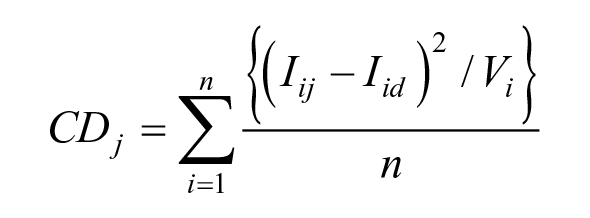
CDj is the cultural difference between the origin- and receiving countries j and d on the cultural dimension i. Iij represents the index for the origin country j’s score on the i’s cultural dimension. V i is the variance of the index of the i’s cultural dimension, and n the total number of cultural dimensions, which is one in this case (Kogut & Singh, 1988). An open-ended score was created that started with 0 implying no cultural distance on obedience orientation, and a higher score indicated greater cultural distance.
Control Variables
Age
Age was measured by asking the birth month and year.
Gender
Adolescents were asked whether they were a boy (0) or a girl (1).
Family SES
Family socioeconomic status (family SES) was measured by the Family Affluence Scale (FAS-III) (Torsheim et al., 2016). FAS-III consists of six items on the material assets of the family, given the known difficulties of asking adolescents to provide accurate information about their parents’ occupation or family income (Currie et al., 2008). The scale includes “Does your family own a car, van, or truck?” (0 = no, 1 = yes, 2 = two or more) and the number of holiday trips taken in the previous year (0 = not at all, 1 = once, 2 = twice or more). Item scores were summed if respondents had no missing data for any of the items, which was then converted into a cumulative rank probability (ridit score; Inchley et al., 2018). A higher score indicated a higher family SES (Cronbach’s α = 0.61).
Family Structure
Family structure was assessed by asking adolescents with whom they lived most of the time (e.g., mother, father, stepmother, or someone else). For this study, answers were recoded into the binary variable family structure, with non-mother– father family (non-FMF) (0) representing a single-parent family, stepfamily, or non-parental family, and mother– father family (FMF) (1) representing a two-parent family.
Income Inequality
Income inequality was assessed with the Gini index obtained from the most recent World Development Indicators online database (The World Bank, n.d.-b). The Gini index measured the degree of inequality in a distribution, with 0 indicating absolute income equality and 100 indicating absolute income inequality at the national level.
Economic Development
Economic development was measured using the World Bank’s GDP per capita for each receiving country in 2018 (The World Bank, n.d.-a). A higher GDP per capita was indicative of greater economic development.
Measurement Invariance
Mplus version 8.8 was used to examine the measurement invariance of the four items comprising the family support variable to be able to make valid comparisons between first- and second-generation immigrant and non-immigrant adolescents (see the online Supplementary File).
Statistical Analyses
Cross-classified multilevel regression analyses were conducted as the receiving countries, origin countries, and communities were not hierarchically nested in each other, while individuals were clustered into three separate higher-level classifications. Moreover, this technique adequately addressed the estimation of standard errors for the receiving, origin, and community effects, which would otherwise be ignored if clustered multilevel analyses were used (Snijders & Bosker, 2011). IBM SPSS Statistics 27.0 was used for data handling and the retrieval of descriptive results. Multilevel models were estimated in R (version 1.4.1106) using the packages lme4 (version 1.1-26) and lmerTest (version 3.1-3). Models were fitted with Restricted Maximum Likelihood, and continuous variables were grand mean centered.
Model 1 examined the relationship between immigration background and family support, controlling for age and gender. In Model 2, family SES and family structure were added. In Model 3, the same variables were included as well as receiving-country-level control variables (cf. H1). In Model 4, a random slope for immigration background was included to determine whether the strength of the relationship varied across receiving countries, origin countries, and communities. Before combining the random slopes on the three levels into one model, they were estimated separately. Tests for the random slopes were obtained through ANOVA-like tables for random effects (ranova). The variables at the receiving-, origin-, and community levels were added in Model 5. Model 6 included all cross-level interactions to determine whether restrictive integration policies, anti-immigrant attitudes, immigrant density, obedience orientation, and cultural distance moderated the relationship between immigration background and family support (cf. H2-H6). Moreover, the cross-level interactions between immigration background and the indicators at the three levels were added one-by-one to the model. The statistical significance was set at an alpha level of .05.
Results
Descriptive Results
Overall, adolescents reported high levels of family support (M = 4.19, SD = 1.25), compared with the neutral midpoint of the scale (3), t(148,703) = 367.37, p < .001. Yet, first-generation (t(6,093.16) = 11.14, p < .001) and second-generation (t(23,242.17) = 2.16, p < .001) immigrant adolescents showed lower family support (respectively, M = 4.00, SD = 1.37, and M = 4.19, SD = 1.22) when compared with non-immigrants (M = 4.21, SD = 1.25). Also, first-generation immigrant adolescents reported lower levels of family support than second-generation immigrant adolescents, t(8,722.73) = 9.08, p <.001. However, the effect size was small when comparing first- and second generation immigrants to non-immigrants (respectively, d =.16, and d = .02), as well as when comparing the family support levels between the first- and second-generation immigrant adolescents (d =.15).
Table 1 provides an overview of the differences in family support between first- and second-generation immigrant and non-immigrant adolescents for each receiving country separately (see the online Supplementary File for the descriptive statistics of the other variables). In 18 out of 30 receiving countries, first-generation immigrant adolescents showed lower family support than non-immigrants. For second-generation immigrants, this was the case in 14 countries. In seven countries, there was a significant negative difference between first- and second-generation immigrant adolescents. In Israel, although small, second-generation immigrant adolescents reported higher family support levels than non-immigrants.
Results of the Independent Samples t-Test: Comparing Family Support Among First- and Second-Generation Immigrant and Non-Immigrant Adolescents.
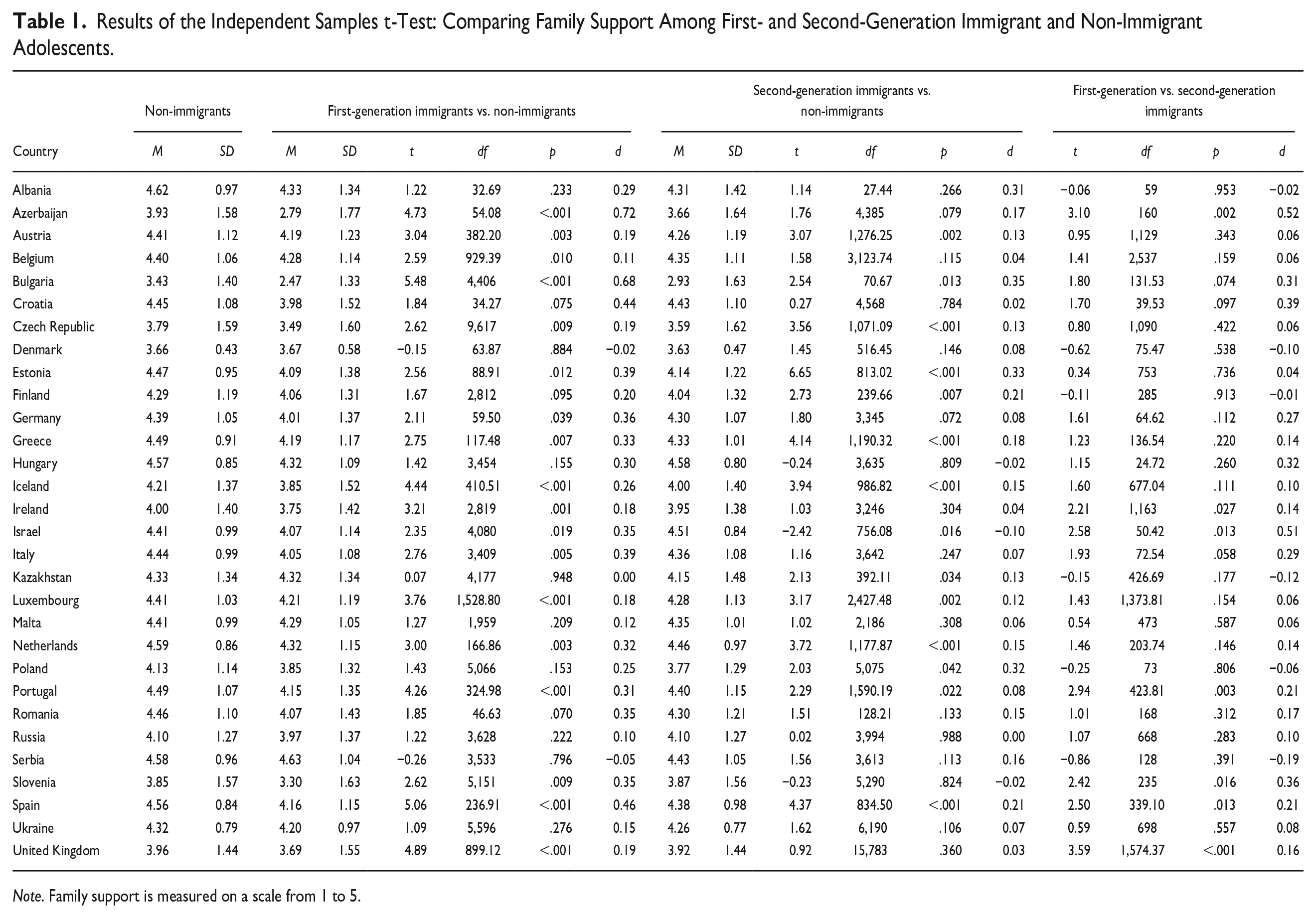
Note. Family support is measured on a scale from 1 to 5.
Correlations between variables at the individual and country levels are shown in Table 2. Being an immigrant, both first- and second generation, was associated with lower family support. In addition, lower levels of family support were associated with being older, a girl, having a non-intact family, and having a lower family SES. Restrictive integration policies were positively associated with anti-immigrant attitudes, obedience orientation, and income inequality, while they were negatively associated with immigrant density and economic development. Anti-immigrant attitudes were positively correlated with obedience orientation, while they were negatively correlated with immigrant density, income inequality, and economic development.
Correlations Between Individual- and Country-Level Variables.
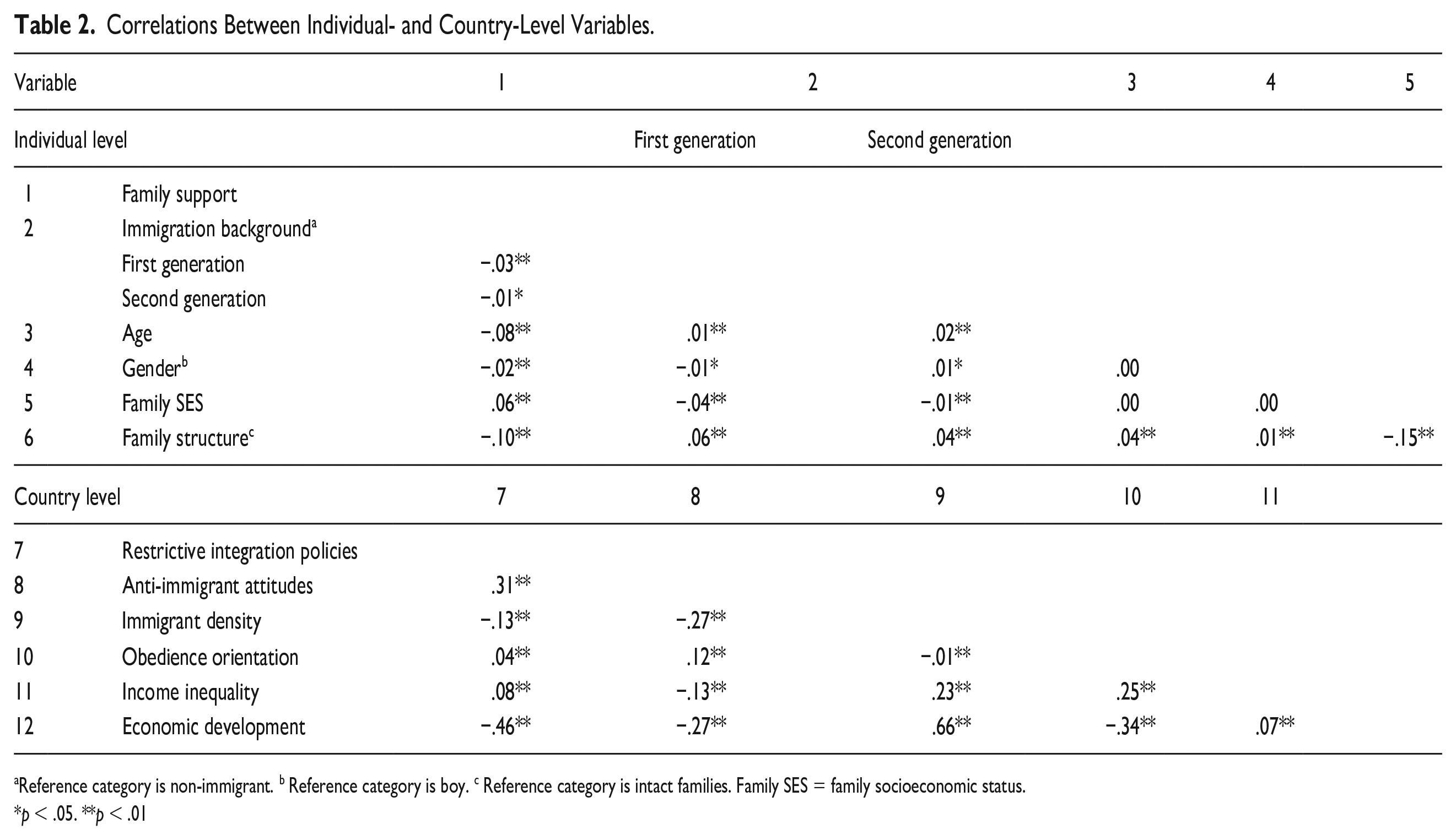
Reference category is non-immigrant. b Reference category is boy. c Reference category is intact families. Family SES = family socioeconomic status.
p < .05. **p < .01
Test of Hypotheses
Table 3 reports the results from the cross-classified multilevel regression analyses. The ICC in the random intercept model (not presented in the Table) demonstrated that the variance of family support beyond the individual level (87.12%, p < .001) was small to modest and primarily located at the level of receiving countries (10.91%, p < .001) and, to a much lesser extent, at the level of the country of origin (0.73%, p = .031) and the community (1.24%, p < .001).
Cross-Classified Multilevel Model Results of the Association Between Immigration Background and Family Support and the Moderating Role of Receiving-, Origin-, and Community-Level Characteristics.
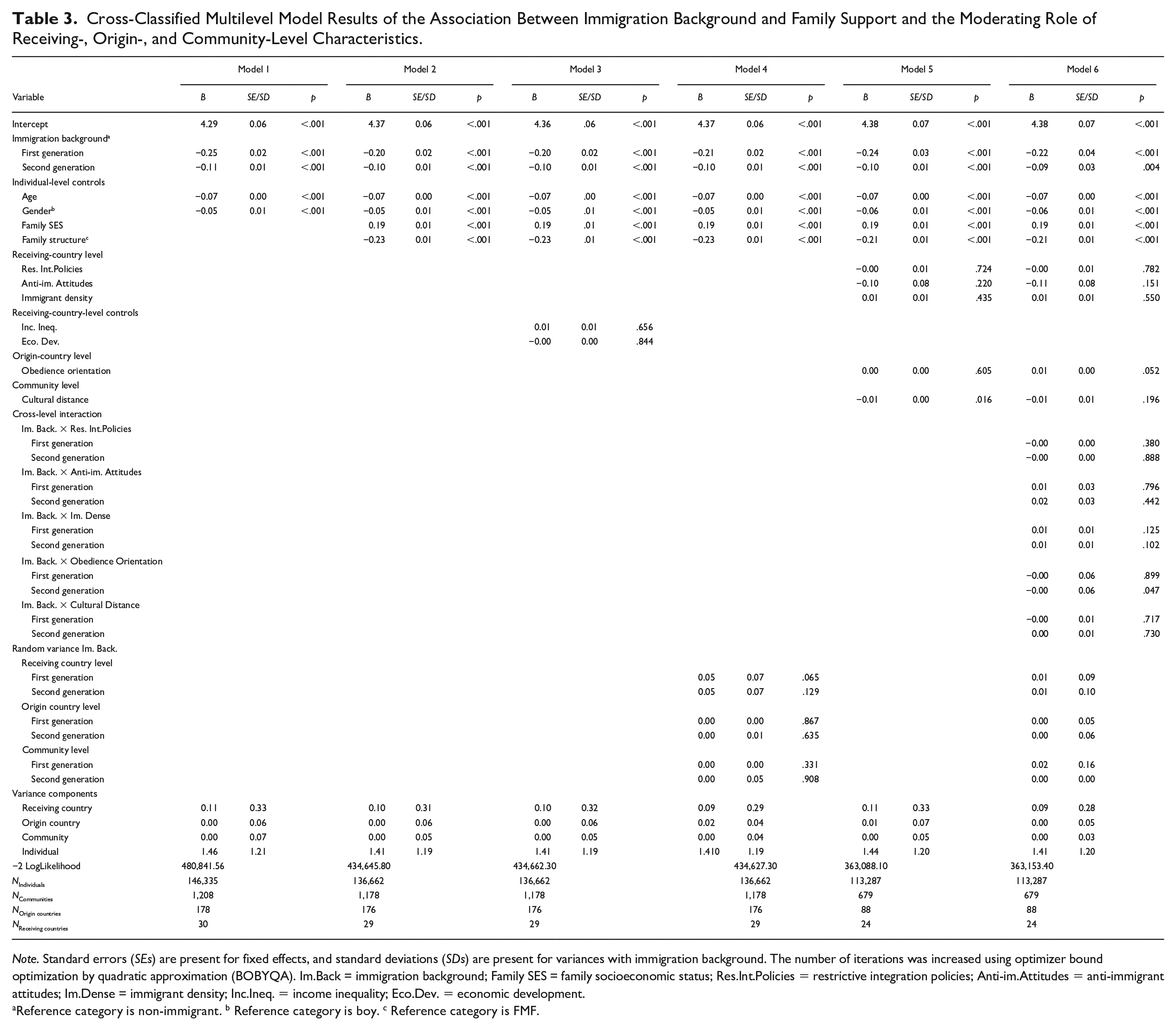
Note. Standard errors (SEs) are present for fixed effects, and standard deviations (SDs) are present for variances with immigration background. The number of iterations was increased using optimizer bound optimization by quadratic approximation (BOBYQA). Im.Back = immigration background; Family SES = family socioeconomic status; Res.Int.Policies = restrictive integration policies; Anti-im.Attitudes = anti-immigrant attitudes; Im.Dense = immigrant density; Inc.Ineq. = income inequality; Eco.Dev. = economic development.
Reference category is non-immigrant. b Reference category is boy. c Reference category is FMF.
First- and second-generation immigrant adolescents showed lower levels of family support than their non-immigrant peers when controlling for age and gender, with the first generation perceiving the least family support (Table 3, Model 1). This effect was small and decreased after adding the control variables family SES and family structure, particularly for the comparison between first-generation immigrant and non-immigrant adolescents (Table 3, Model 2). Income inequality and economic development were not significantly related to family support and worsened the fit of the model (Table 3, Model 3). Both were removed from further analysis.
When random slopes for immigration background were estimated separately at the receiving-, origin-, and community level, some were found to be significant (receiving: country first generation B = 0.01, SE = 0.08, p = .008; second generation B = 0.01, SE = 0.07, p = .003, origin country: first generation: B = 0.00, SE = 0.00, p = non-converge, second generation B = 0.01, SE = 0.08, p = .015, and community: first generation B = 0.02, SE = 0.13, p = .544; second generation B = 0.02, SE = 0.07, p = .110). Estimating the random slopes together yielded a marginally significant effect (p = .065) only at the receiving-country level for first-generation immigrant adolescents, indicating that the association between immigration background and family support differed for them across receiving countries (Table 3, Model 4).
Main effects indicated that originating from countries that are obedience-oriented, residing in countries with restrictive integration policies, and anti-immigrant attitudes were not significantly related to family support. In contrast, greater cultural distance between the receiving- and origin country regarding obedience orientation was related to lower family support (Table 3, Model 5). Non-immigrants did not have cultural distance, as their receiving- and origin country were the same. Thus, the findings indicated that, for the combined groups of immigrants, greater cultural distance was associated with lower family support.
Subsequently, the predictors at the receiving-country level were introduced as interaction terms with immigration background for both the first- and second generations. Furthermore, even though no significant random slopes for origin country and community were found when all slopes were estimated together, interactions with predictors at the origin-country and community level were added to the model as well (Table 3, Model 6). Among all the interaction terms, only the interaction between immigration background and cultural distance demonstrated a small but significant effect, but only for the comparison between second-generation immigrants and non-immigrants. This finding indicates that when there is a greater cultural distance between the receiving country and the country of origin in terms of obedience and independence, the gap in family support between second-generation immigrants and non-immigrants increases. Notably, the other interaction terms, even when entered into the model separately, did not reach significance. Thus, these results indicate that differences in family support between adolescents with an immigration background (either first or second generation) and their non-immigrant counterparts were not dependent upon restrictive integration policies, anti-immigrant attitudes, immigrant density, or originating from an obedience-oriented country.
Discussion
The current study examined the differences in family support between immigrant and non-immigrant adolescents across multiple receiving and origin countries, as well as the extent to which these differences vary according to whether the receiving country had restrictive integration policies and anti-immigrant attitudes, as well as the immigrant density of the receiving country. It also examined whether differences varied based on the origin country’s obedience orientation, and the cultural distance between the obedience and independence orientations of the receiving- and origin country. Results indicated that family support varied primarily at the level of the individual and was modest at the level of the receiving country, but small at the level of the country of origin and the community. First- and second-generation immigrant adolescents showed slightly lower levels of family support than their non-immigrant peers, with first-generation immigrants having the lowest levels.
Differences in family support between immigrants and non-immigrants varied by receiving country only for the comparison between first-generation immigrant and non-immigrant adolescents, while no such variation was found for either the country of origin or the community level. These differences in family support did not vary with the receiving country’s integration policies, anti-immigrant attitudes, or the density of immigrants in the receiving country. The same accounted for the obedience orientation of the origin country. Yet, differences in family support between second-generation immigrant and non-immigrant adolescents were larger when the cultural distance in obedience orientation between the receiving- and origin country was larger.
In line with the risk perspective, the findings showed that first- and second-generation immigrant adolescents reported lower family support than non-immigrants overall as well as in respectively 18 and 14 out of 30 receiving countries. Across these 30 countries, family support levels of first-generation immigrants were not found to be higher than second-generation family support levels. However, in seven countries, family support was reported lower among first-generation than second-generation immigrant adolescents. These findings are consistent with studies conducted in Europe and Israel on the linkage between family support and immigration (Canale et al., 2017; Fernández-Reino & González-Ferrer, 2019 ; Vazsonyi et al., 2006; Walsh et al., 2021). Nonetheless, it is as important to stress that differences in family support between immigrants of the two generations and non-immigrants were small, and family SES and family structure mitigated the effect. Also, all groups reported rather high levels of family support.
Only in Israel, immigrant adolescents of the second generation reported higher family support than non-immigrants. Yet, it should be noted that this difference was small and may be perceived as negligible. Taken together, the results do not show evidence for the resilience perspective, which hypothesizes that immigrant adolescents, especially first-generation immigrant adolescents rather than second-generation, perceive higher family support than non-immigrants, despite the adversity they may face. Moreover, our research was inconsistent with the aspect of the resilience perspective claiming that first-generation immigrants may be relatively well-off. Instead, our results indicated that first-generation immigrant adolescents perceive their families as the least supportive, followed by the second generation and then non-immigrant adolescents.
Our study revealed that while wider cultural and environmental factors that surround adolescents may have some influence on adolescents’ perceptions of family support, the impact is limited. This finding was noteworthy because it challenged the assumptions of integrative frameworks, suggesting that the reception of immigrants in their receiving society affects adolescents through their immediate environment (Suárez-Orozco et al., 2018). In addition, Ungar’s concept of cultural resilience suggested that having specific cultural resources or social support networks can foster resilience, but our research found no evidence to support this (Ungar, 2008).
Immigrant-excluding conditions in the receiving country were assumed to contribute to daily and long-term psychological stress on immigrant families, which has been linked to depression and other psychological disorders. Theoretically, relationship issues could be anticipated in stressful situations, resulting in less positive family relations (Masarik & Conger, 2017). Contrary to expectations, exclusive conditions in the receiving country, defined by restrictive integration policies and anti-immigrant attitudes, were not associated with a greater difference in family support between immigrants and non-immigrants. These results may indicate that integration policies and national-level attitudes toward immigrants may not have the ability to affect the family bonds of immigrant families. In addition, policies could maybe widen the gap if they were more directed at the family situation. According to a previous study, stricter family reunification policies resulted in a negative parent-child relationship among immigrant families (Haagsman et al., 2015). Children may be affected more directly by missing relatives because of family reunification restrictions, but they may be affected less by policies that primarily affect immigrant adults.
Also contrary to our expectations, the immigrant density of the receiving country did not influence differences in family support between immigrant and non-immigrant adolescents. Possibly, the social safety net hypothesized to be accompanied by higher immigrant density in the receiving country may only be present for the density of the own ethnic group and not for immigrants in general. In addition, high levels of immigrant density may conceal other, more negative, influencing factors, such as living in neighborhoods with a low SES or neighborhoods with inadequate resources, which can counteract the hypothesized positive effects of immigrant density.
Cultures of the origin country that are obedience rather than independence oriented are classified as collectivistic and highly value closeness, relatedness, and strong familial ties (Kwak, 2003). We hypothesized that originating from such a culture, instead of a more independence-oriented individualistic culture would help reduce the gap in family support between immigrants and non-immigrants. Nevertheless, there was no variation in differences between immigrants and non-immigrants by country of origin, and there was no evidence of a moderating effect of the origin country’s obedience orientation on differences in family support between immigrant and non-immigrant adolescents. These results may suggest that, despite underlying cultural differences, some important universals regarding family support exist in both collectivistic and individualistic cultures. Researchers have discovered several commonalities in family relationship goals across cultures, particularly within the nuclear family (e.g., Georgas et al., 2001). Both collectivistic and individualistic parents believe in similar family values such as family piety, cohesion, and obligation, which they strive to promote to sustain family relationships (Kwak, 2003). Another reason why this element of collectivistic culture did not make a positive contribution to reducing the family support gap between non-immigrants and immigrants may be that there has been inconsistency regarding collectivism’s beneficial role in family support. Collectivist cultures do emphasize discipline and authoritarian parenting styles, which may explain why perceived family support among adherents of these cultures can be lower. In line with this, Wink et al. (1997) found that adolescents from collectivistic cultures reported less warmth in their relationships with their parents and had a more difficult time asking for help from their parents than peers from individualistic cultures.
According to the cultural distance hypothesis, families, particularly parents, with greater cultural distance are more likely to experience (mental) health problems (Ward et al., 2020). This, in turn, relates to emotional absence and child care difficulties (Shaw et al., 2004). Also, children can develop a greater estrangement from their parents as they adapt to the receiving country’s culture more quickly than their parents. This may strengthen the acculturation gap (Kwak, 2003). Both factors have the potential to weaken family support. This study found, in line with the aforementioned, that immigrant adolescents with greater cultural distance perceived lower family support. Greater cultural distance also increased the difference in family support between second-generation immigrant and non-immigrant adolescents. The intergenerational acculturation gap may provide an explanation for this outcome. Second-generation immigrants may experience a greater acculturation gap than their first-generation counterparts, which can result in miscommunications and conflicts between parents and children (Kwak, 2003). When there is a greater cultural distance between the dominant culture of the receiving country and the immigrant family’s culture of origin, the negative consequences of the acculturation gap may be more pronounced, and family relationships can become more strained.
Limitations
This study has some drawbacks, some of which may be addressed in future research. Family support was assessed using only four items, which can be improved in the future through the inclusion of more detailed measures. In addition, family support can take many forms, one of which is emotional support, as explored in this study. A measure that encompasses various forms of family support (e.g., material or financial support) might be important for future research, as it has been suggested that the impact of immigration background varies according to the type of family support (e.g., Du Plooy et al., 2019). Furthermore, family support differences between first-generation immigrants and non-immigrants, but not second-generation immigrants, may indicate the impact of socialization in the country of origin. It was impossible in the current study to determine whether first-generation immigrant adolescents were socialized in the receiving country or in their country of origin due to a lack of data on the length of residency in the receiving country. Next, our model primarily draws upon data obtained in European receiving countries and their respective immigrant populations. As such, although this study was conducted among numerous receiving countries in Europe and Central Asia, with a large variety of the origins of immigrants in these countries, our results cannot be generalized to other contexts. Finally, approximately 17% of respondents were dropped due to list-wise deletion. Given that the data were not missing completely at random, more advanced techniques such as multiple imputations may be used in future research to adequately account for the missing data.
Conclusion
As immigrant adolescents of both the first-and second generation perceive less family support, they may be, compared with non-immigrants, subjected to more stressors that are consequential to the family sphere. Family support is a significant determinant of adolescent well-being and functioning. Therefore, it is crucial to acknowledge that first- and second-generation immigrants in around half of the receiving countries perceive less family support than their non-immigrant counterparts. Still, both immigrants and non-immigrants report relatively high levels of family support, which is encouraging given the importance of family support for optimal flourishing. The differences in family support between the two generations of immigrant adolescents and non-immigrant adolescents were minimally influenced by factors of either the receiving country or the country of origin. However, there was evidence that the cultural distance between the receiving country and the country of origin in terms of obedience orientation affected the family support of immigrant adolescents. It emphasizes the importance of getting a better understanding of the family dynamics that can disrupt the lives of immigrant adolescents growing up with greater cultural distance.
Supplemental Material
sj-pdf-1-jcc-10.1177_00220221231169234 – Supplemental material for Family Support Differences Between Immigrant and Non-Immigrant Adolescents Across 30 Countries: Examining the Moderating Role of Cultural Distance, Culture of Origin, and Reception in Receiving Societies
Supplemental material, sj-pdf-1-jcc-10.1177_00220221231169234 for Family Support Differences Between Immigrant and Non-Immigrant Adolescents Across 30 Countries: Examining the Moderating Role of Cultural Distance, Culture of Origin, and Reception in Receiving Societies by Ouissam Abattouy, Gonneke W. J. M. Stevens, Sophie D. Walsh and Colleen M. Davison in Journal of Cross-Cultural Psychology
Footnotes
Declaration of Conflicting Interests
The author(s) declared no potential conflicts of interest with respect to the research, authorship, and/or publication of this article.
Funding
The author(s) received no financial support for the research, authorship, and/or publication of this article.

Supplemental Material
Supplemental material for this article is available online.
References
Supplementary Material
Please find the following supplemental material available below.
For Open Access articles published under a Creative Commons License, all supplemental material carries the same license as the article it is associated with.
For non-Open Access articles published, all supplemental material carries a non-exclusive license, and permission requests for re-use of supplemental material or any part of supplemental material shall be sent directly to the copyright owner as specified in the copyright notice associated with the article.
