




Abstract
How does chronic terrorism affect support for democracy in fragile states? While most research examines isolated attacks in stable democracies, little is known about persistent violence in insecure, weakly institutionalised contexts. This paper addresses that gap by analysing Africa, where terrorism is widespread and democratic transitions remain incomplete. Using Afrobarometer survey data matched with terrorism events, we employ an entropy balancing strategy within an unexpected-event-during-survey (UESD) design to estimate causal effects. We find that terrorism consistently undermines democratic support – especially in countries with stronger liberal institutions and lower development. Younger and older citizens are particularly susceptible to attitudinal shifts. These findings highlight how terrorism’s political impact hinges not just on exposure, but also on broader structural vulnerabilities shaped by institutions, development, and demography. The study advances theories of authoritarian reflex and threat perception, offering new insights into sustaining democracy amid chronic insecurity.
Introduction
In recent years, Africa has become the epicentre of global terrorism. According to the 2023 Global Terrorism Index, groups affiliated with al-Qaida and ISIS have launched widespread attacks targeting civilians, officials, humanitarian workers, and security forces (Institute for Economics and Peace, 2024). This surge in violence has coincided with a wave of military coups and the rise of authoritarian regimes in countries such as Mali, Burkina Faso, and Niger. Fragile democratic institutions have collapsed under pressure, giving way to juntas that curtail civil liberties and repress dissent. These developments reflect a broader pattern: As terrorism escalates, democracy erodes. Research shows that existential threats can shift public preferences toward authoritarianism – the authoritarian reflex (Marsh 2023; Merolla and Zechmeister 2009) – highlighting the pivotal role of citizen attitudes in shaping the trajectory of democratic consolidation in high-risk contexts (Claassen 2020).
Despite growing interest in terrorism’s political effects, three key gaps remain. First, geographic bias: Most studies focus on Western or Middle East and North African (MENA) countries, leaving Africa understudied, despite its distinct institutional contexts. Second, focus on isolated events: Existing research largely examines single attacks, whereas many African states face chronic terrorism with potentially different political consequences (Spilerman and Stecklov 2009). Third, limited attention to moderators: Few studies explore how regime type, development, and individual traits such as age or gender shape responses to terrorism.
This study addresses these critical gaps by applying an unexpected-event-during-survey (UESD) causal inference method (Muñoz, Falcó-Gimeno, and Hernández 2020) to observational data drawn from a diverse set of African countries, capturing varying levels of economic development and democratic consolidation. Using Afrobarometer Round 9 (2021/2023) survey data and subnational terrorism event records from the Armed Conflict Location and Event Data (ACLED) Project (Raleigh, Linke, Hegre, and Karlsen 2010) and the START (2022) Global Terrorism Database, and employing entropy balancing to correct for selection bias (Hainmueller 2012), the study investigates whether and how exposure to terrorism influences democratic attitudes in the affected countries.
The findings show that exposure to terrorism significantly reduces support for democracy and lowers citizens’ evaluations of their country’s democratic quality. Notably, the democratic costs of terrorism are amplified in countries with higher levels of liberal democracy, lower levels of human development, and greater terrorist fatality counts. These patterns suggest that both institutional and material conditions shape the extent to which terrorism erodes democratic support. Contrary to expectations from some prior research, the effect of terrorism on the explicit rejection of authoritarian alternatives is more limited and context-dependent.
At the individual level, the analysis reveals that age significantly moderates the impact of terrorism on democratic attitudes: Youth and elderly citizens are more susceptible to authoritarian reflexes, reflecting their heightened vulnerability to insecurity due to economic precarity and/or physical risk. In contrast, the study finds no significant gender differences in responses to terrorism, despite prior research indicating that women may experience stronger emotional distress and fear following terrorist attacks (DiMaggio and Galea 2006; Nellis 2009). This suggests that in the African contexts analysed, the authoritarian reflex induced by terrorism transcends gender distinctions and reflects broader societal responses to chronic insecurity.
This research contributes to the literature in several important ways. First, it integrates African contexts into the global debate on terrorism and democracy, addressing a notable gap in comparative politics and conflict studies. Second, it advances our understanding of how chronic terrorism – defined by sustained and recurring attacks – affects political attitudes, extending our knowledge from the isolated, low-probability events typically studied in Western democracies (Spilerman and Stecklov 2009). Third, by examining how the intensity of violence, institutional quality, economic development, and individual vulnerabilities jointly shape democratic attitudes, the study provides a more comprehensive and context-sensitive account of the terrorism-democracy relationship.
This research underscores the need for a global, comparative research agenda that captures both universal patterns and context-specific dynamics in the political consequences of terrorism. In doing so, the study places the African experience at the centre of scholarly discussions on the resilience and fragility of democracy under threat.
Terrorism and Democratic Support: Theoretical Expectations
Terrorism and the Authoritarian Reflex
The 1990s ushered in the so-called “third wave” of democratisation as many countries embraced democracy with hopes of fostering peace and global stability (Huntington 1991). In Africa, these shifts challenged entrenched one-party regimes – especially those born from independence movements – as well as military governments. While some countries made genuine progress, democratisation was uneven and often fragile, with setbacks in several African states, Latin America, and Russia (Cheeseman 2024). Democratic openings frequently faltered under internal and external pressures. Today, concerns about democracy’s resilience have intensified as backsliding is observed not only in fragile new democracies but also in long-established Western ones (Foa and Mounk 2016; Luhrmann and Lindberg 2019). This global erosion alarms advocates who see democracy as essential for peace, conflict resolution, and inclusive participation – principles at the heart of the democratic peace theory (Gleditsch and Hegre 1997).
Scholars have identified various factors responsible for democratic backsliding and deconsolidation, among which conflict features prominently (Laustsen and Petersen 2017). Terrorism stands out as a central factor here. Exposure to terrorism is widely associated with rising support for authoritarian policies, stronger right-wing political preferences, and an inclination toward restrictive security measures (Merolla and Zechmeister 2009, 2019; Robison 2009). Research has shown that terrorism increases authoritarian attitudes in the United States (Hetherington and Suhay 2011), reinforces support for authoritarian policies in France (Vasilopoulos, Marcus, and Foucault 2018), and decreases support for democracy in Egypt (Hatab 2020) and Pakistan (Rehman and Vanin 2017). Likewise, it has been found to erode democratic optimism and heighten scepticism regarding democracy’s viability in Tunisia (Andersen and Brym 2017).
Why does terrorism have such a negative effect on individuals’ attitudes that are key to sustaining democracies (Claassen 2020)? At its core, terrorism is the use of violence to achieve political objectives. Its strategy is to shape public opinion by generating fear and anxiety about the prevailing regime and the broader political environment. 1 This atmosphere of insecurity often produces an urgent demand for immediate solutions, thereby creating a security-democracy trade-off. In such contexts, citizens may sacrifice certain freedoms in exchange for greater security and order (Merolla and Zechmeister 2019).
Existing research identifies two main mechanisms linking terrorism to declining support for democracy: a cognitive route grounded in strategic calculation and an emotional route rooted in psychological vulnerability. Both reflect the broader “need” and “vulnerability” hypotheses, which posit that exposure to threat heightens demands for security, order, and strong leadership. Taken together, these cognitive and emotional pathways suggest that terrorism undermines democratic support both by encouraging strategic reassessments of regime effectiveness and by activating deep-seated psychological needs for protection and aggressive response.
The cognitive route focuses on the perceived strategic advantage of autocracies in providing protection and restoring order. Hetherington and Suhay (2011) argue that personal threats heighten the demand for security, leading even pro-democratic individuals to shift toward authoritarian preferences in times of danger. Similarly, Laustsen and Petersen (2017) and Laustsen (2021) find that liberals, when confronted with conflict, may prefer authoritarian leaders – not merely for their capacity to impose order, but also for their perceived readiness to respond aggressively. Davis and Silver (2004) show that a heightened sense of threat cognitively shapes individuals’ willingness to trade civil liberties for security. Perhaps most strikingly, liberals who traditionally support and defend civil liberties converge towards conservative positions, a dynamic Laustsen (2021) describes as “adaptive followership psychology”. Brouard, Vasilopoulos, and Foucault (2018) support a Bayesian Update Theory (BUT) rather than a generalised shift theory, suggesting that attitudinal change is concentrated on issues perceived as relevant to the overwhelming new information – in this case, the threat to security. Threat thus leads to cognitive updating, where citizens shift towards the right, with this shift more pronounced among non-right-wing respondents. Drawing on a meta-analysis, Godefroidt (2023) confirms this emerging consensus, showing that terrorism is associated with increased out-group hostility and political conservatism. Terrorism is therefore argued to function at a cognitive level by priming the inevitability of death and triggering the perception that individuals and their country are in danger, thereby challenging basic assumptions about the world as predictable and safe.
Although democracies often outperform autocracies in combating terrorism (Magen 2018), the belief in an “autocratic advantage” remains persistent when populations face acute threats. 2 This route suggests that, over time, people develop the belief that strong, autocratic, and dominant leadership – along with aggressive responses to threats – are better suited to managing inter-group conflicts. Such strong leadership is often associated with authoritarian regimes. This perception is crucial because it implies that promoting democracy requires challenging the assumed autocratic advantage. For example, Yameogo, Neundorf, and Oztürk (2025) find that when the democratic advantage in combating terrorism is explicitly emphasised, individuals are more likely to support democracy, even in contexts marked by terrorism and high levels of authoritarianism.
The emotional route, which complement the cognitive one, is linked to mortality salience and the vulnerability hypothesis (Greenberg and Arndt 2012; Pyszczynski, Greenberg, and Solomon 1999). Exposure to terrorism evokes fear, anxiety, and anger, which in turn shape political preferences towards strong leaders and restrictive policies (Vasilopoulos, Marcus, and Foucault 2018; Vasilopoulos et al. 2019). Heightened perceptions of threat shift public priorities, placing security above civil liberties (Merolla and Zechmeister 2019), and civilians exposed to violence tend to prioritise personal safety over ideological commitments (Tellez 2019). In this perspective, mortality salience following a terrorist attack evokes psychological needs to manage death anxiety and system threat, often producing a conservative shift (Bonanno and Jost 2006), such that populations exposed to terrorism move towards right-leaning positions and authoritarian thinking when they perceive grave threats to their security (Hetherington and Suhay 2011; Huddy et al. 2005).
However, the evidence is not entirely one-sided. Castano et al. (2011) find that mortality salience can also reinforce prior beliefs, with liberals becoming more liberal and conservatives more conservative. Likewise, Agerberg and Sohlberg (2021) show that mortality salience in a vivid, real-world scenario does not necessarily generate stronger emotional responses or substantial attitude change. Thus, although thoughts of death may drive a shift towards conservatism, one should remain open to alternative outcomes. This calls for close attention to the specific context of each study, the types of outcomes under examination, and, crucially, the distinction between fear of death and death-related anxiety (Agerberg and Sohlberg 2021), which may shape individuals’ reactions in different ways.
Although extensive research has documented democratic backsliding in the context of terrorism, particularly in the aftermath of the September 11, 2001 attacks in the United States, most of this work focuses on the Western world. This imbalance is concerning. According to the Global Terrorism Index (Institute for Economics and Peace, 2024). the countries most affected by terrorism are largely located in Africa and the Middle East. It is therefore crucial to expand research efforts to these regions, where the democratic implications of terrorism may be especially profound. Africa, and more specifically the Central Sahel, comprising Burkina Faso, Mali, and Niger, warrants particular attention. In recent years, the escalation of terrorist violence has fuelled political instability and triggered a series of coups d’état. In these cases, military juntas have seized power and established autocratic regimes characterised by repressive and restrictive governance. These developments have significantly undermined the fragile democratic progress previously achieved in the region.
Building on the existing literature and taking into account the democratic backlash observed in Africa amid rising terrorism, this study therefore anticipates that exposure to terrorism will have a negative effect on democratic attitudes across the continent (
Conditional Effects
The literature suggests that terrorism undermines democratic support and tolerance for authoritarianism through two mechanisms: (1) belief in an “autocratic advantage” – the perception that strong regimes are better at restoring order; and (2) mortality salience, which heightens psychological needs for protection and aggression. Contexts that intensify these needs – whether institutional or individual – amplify authoritarian reflexes and weaken democratic attitudes.
Firstly, we will examine whether the effects of terrorism vary with exposure intensity. Using the number of fatalities as a proxy, we hypothesise that high-intensity exposure will amplify the impact on democratic attitudes (Kantorowicz, Kantorowicz-Reznichenko, and de Vries 2023). Drawing on the “need” hypothesis and terror management theory (Pyszczynski, Greenberg, and Solomon 1999), we argue that heightened mortality salience increases anxiety and the demand for security, leading to greater support for strong, centralised authority. Such preferences may weaken commitment to democratic norms, often viewed as less decisive than authoritarian alternatives.
Moreover, it is important to consider the contexts in which terrorism influences democratic attitudes. In countries affected by terrorism, understanding where and when its impact is greatest can help guide more effective efforts to promote democracy (Neundorf et al. 2025).
In this study, we explore how both national and individual factors shape the impact of terrorism on democratic attitudes. At the national level, we focus on the degree of democratic development (Coppedge et al. 2024) and economic development (United Nations Development Programme 2024). At the individual level, we consider characteristics such as age and gender.
Liberal Democracy and the Terrorism-Democracy Support Nexus
The negative impact of terrorism on democratic attitudes is expected to be more pronounced in countries with high levels of democracy (
This shift is particularly evident among less authoritarian individuals, who otherwise endorse democratic norms in times of threat. At the same time, those already high in authoritarianism maintain hawkish, anti-democratic views irrespective of immediate threats (Hetherington and Suhay 2011; Laustsen 2021), partly due to a floor effect. Moreover, the visibility and politicisation of terrorism within liberal democracies can amplify these effects, particularly in media environments prone to sensationalism and among politicians who benefit from exaggerating threats (Hetherington and Suhay 2011; Li 2019).
In contrast, in much of the developing and less democratic world – where threats to physical security are more frequent – support for authoritarian forms of rule is already high (Hetherington and Suhay 2011; Laustsen and Petersen 2017). Consequently, in less-democratic contexts, terrorism tends to reinforce an existing baseline of authoritarian thinking rather than provoke significant shifts in political attitudes, with the impact largely depending on the magnitude of the threat.
Economic Development and the Terrorism-Democracy Support Nexus
Hypothesis 2b posits that the negative effect of terrorism on democratic support is more pronounced in countries with low levels of economic development, measured using the Human Development Index (HDI). Economic development – through income, education, industrialisation, and urbanisation – provides the structural foundations that sustain democratic attitudes by fostering civic values, strengthening state institutions, and reducing susceptibility to extremist appeals (Lipset 1959; Przeworski 2000; Treisman 2020).
Where these foundations are weak, two mechanisms jointly reinforce the erosion of democratic support under terrorism. First, state fragility in low-HDI contexts limits the institutional capacity to prevent or manage security threats, such as terrorism, due to weak intelligence, coercive apparatus, and governance infrastructure (Drakos and Gofas 2006; Fukuyama 2005; Krasner 2005). This incapacity fuels the perception that democracies are ineffective at providing order and protection, reinforcing the belief in an “autocratic advantage” – the cognitive pathway whereby citizens infer that authoritarian regimes are better suited to restore stability in times of crisis (Hetherington and Suhay 2011; Laustsen 2021; Laustsen and Petersen 2017).
Second, low economic development creates structural conditions of poverty and deprivation that shape individual motivations by anchoring political preferences in immediate material needs and physical security rather than in abstract democratic ideals (Maslow 1958; Treisman 2020). Poverty and deprivation leave individuals more exposed and less able to protect themselves against the consequences of terrorist violence, making personal safety a dominant concern. This structural vulnerability not only heightens insecurity but also intensifies the psychological impact of terrorism, triggering fear, anxiety, and anger – emotions closely associated with authoritarian preferences in times of threat (Pyszczynski, Greenberg, and Solomon 1999; Tellez 2019; Vasilopoulos, Marcus, and Foucault 2018, 2019).
These cognitive and emotional mechanisms help explain why we expect that terrorism more strongly erodes democratic support in low-development contexts. Perceived state weakness and psychological vulnerability make citizens more receptive to authoritarian solutions. As economic development declines, the negative impact of terrorism on democratic attitudes intensifies.
Individual-Level Moderators
Building on the vulnerability hypothesis, this study accounts for individual-level heterogeneity, recognising that vulnerability to terrorism may influence political attitudes differently across social groups. There is evidence that women are more likely to experience heightened emotional distress (DiMaggio and Galea 2006) and exhibit stronger fear responses (Nellis 2009) following terrorist attacks. This increased vulnerability is partly due to the greater likelihood of women being targeted (Amusan, Adeyeye, and Oyewole 2019), as exemplified by the 2014 abduction of more than 300 schoolgirls by Boko Haram in Nigeria (Holpuch 2018). These gendered differences in both the experience and emotional impact of terrorism are expected to lead to a stronger perceived need for security among women. In turn, this may translate into greater support for strong, centralised leadership and, consequently, a rejection of democratic norms among women (
Similarly, we expect that youth and the elderly will experience higher levels of psychological distress and feelings of helplessness following terrorist events than other age groups (Akinsola and Ojo 2015). Young people, in particular, are often targeted for recruitment by terrorist groups, taking on roles that range from support tasks to active combat (Darden 2019). Recent evidence from Ghana suggests that jihadist organisations are exploiting social inequalities, marginalisation, and high youth unemployment to recruit young people (Kaledzi 2025). Combining economic and physical vulnerabilities, youth are therefore more likely to be victimised in chronic terrorism contexts, where armed groups depend on continuous recruitment for their survival. Moreover, studies conducted in the aftermath of the 9/11 attacks in the United States show that younger people reported higher levels of anxiety than older people (Huddy et al. 2005). For older people, Davis and Silver (2004) argue, under the “vulnerability in the elderly” perspective, that reactions to terrorist attacks stem from a general sense of vulnerability to threatening events, compounded by the conservative shift associated with ageing. Older adults are also more likely to experience loneliness following terrorism, which in turn exacerbates psychological distress (Faran, Bergman, and Klonover 2024). Both age groups – youth and the elderly – are therefore particularly exposed to fear/anxiety and insecurity in contexts of terrorism. We thus expect them to exhibit a stronger negative association between exposure to terrorism and support for democratic values (
Data and Methods
Case Selection: Africa
We test our hypotheses in Africa, a region affected by chronic terrorism. The 2023 Global Terrorism Index report (Institute for Economics and Peace 2024) highlights that terrorist groups affiliated with al-Qaida and ISIS carried out attacks across Africa over the past decade, targeting civilians, state officials, humanitarian workers, and security forces (US Department of State 2023). These attacks resulted in deaths, injuries, abductions, and significant property damage while also exploiting local grievances and inter-communal tensions to build support. Terrorists continued to strike military outposts, government personnel, religious sites, politicians, and foreign nationals.
In East Africa, Somali forces and their allies increased pressure on al-Shabab (UK Government 2024), although the group retained the capacity to conduct coordinated and deadly attacks. In Central Africa, ISIS-affiliated factions targeted both civilians and security forces in the Democratic Republic of Congo. In the Lake Chad basin, Boko Haram and ISIS-West Africa remained active, with recurrent attacks in Nigeria, Chad, Cameroon, and Niger.
The Sahel region continued to experience growing instability, aggravated by the withdrawal of the United Nations peacekeeping mission in Mali (MINUSMA) and the military coup in Niger – both of which were exploited by armed groups. Organisations such as Jama’at Nusrat al-Islam wal-Muslimin (JNIM) and ISIS-Sahel expanded their operations across Burkina Faso, Mali, Niger, and into coastal West Africa, including Benin and Togo (Al Jazeera 2022). More recently, evidence has emerged of jihadist recruitment efforts in Ghana, where groups are exploiting social inequalities, marginalisation, and high youth unemployment (Kaledzi 2025).
In summary, terrorism in Africa poses a serious and growing threat to civilian lives, democratic institutions, and human rights (Human Rights Watch 2024a). Africa has become the epicentre of global terrorism, as armed groups capitalise on state fragility, socioeconomic inequality, and local grievances to entrench their influence. Moreover, counterterrorism responses by states often raise serious human-rights concerns (Human Rights Watch 2024b), further alienating affected communities and heightening their vulnerability to extremist narratives. At the same time, many governments across the continent lack the financial and institutional capabilities to mount effective responses, even with support from international partners. Terrorism is therefore likely to remain a major source of instability in the region, with long-term consequences for state legitimacy and public attitudes toward democracy, human rights, and authoritarian alternatives.
Our study addresses a critical gap in the literature on the political consequences of terrorism by focusing on Africa, a region often overlooked in research on terrorism and democratic attitudes. Our study contributes empirically by applying causal-inference methods across diverse national contexts. To allow for generalised inference, we draw on up to 31 African countries (see Table A1 in Online Appendix A), while the main analyses focus on 13 countries with consistent terrorism exposure and survey overlap (see Table A2 in Online Appendix A). As Figure 1 demonstrates, these cases vary substantially in terms of political and economic development. Countries by Liberal Democracy Index and Human Development Index. LDI: maximum observed value = 0.564; HDI: average for 2021–2023. Sources: Graph constructed by the authors using data from V-Dem and UNDP.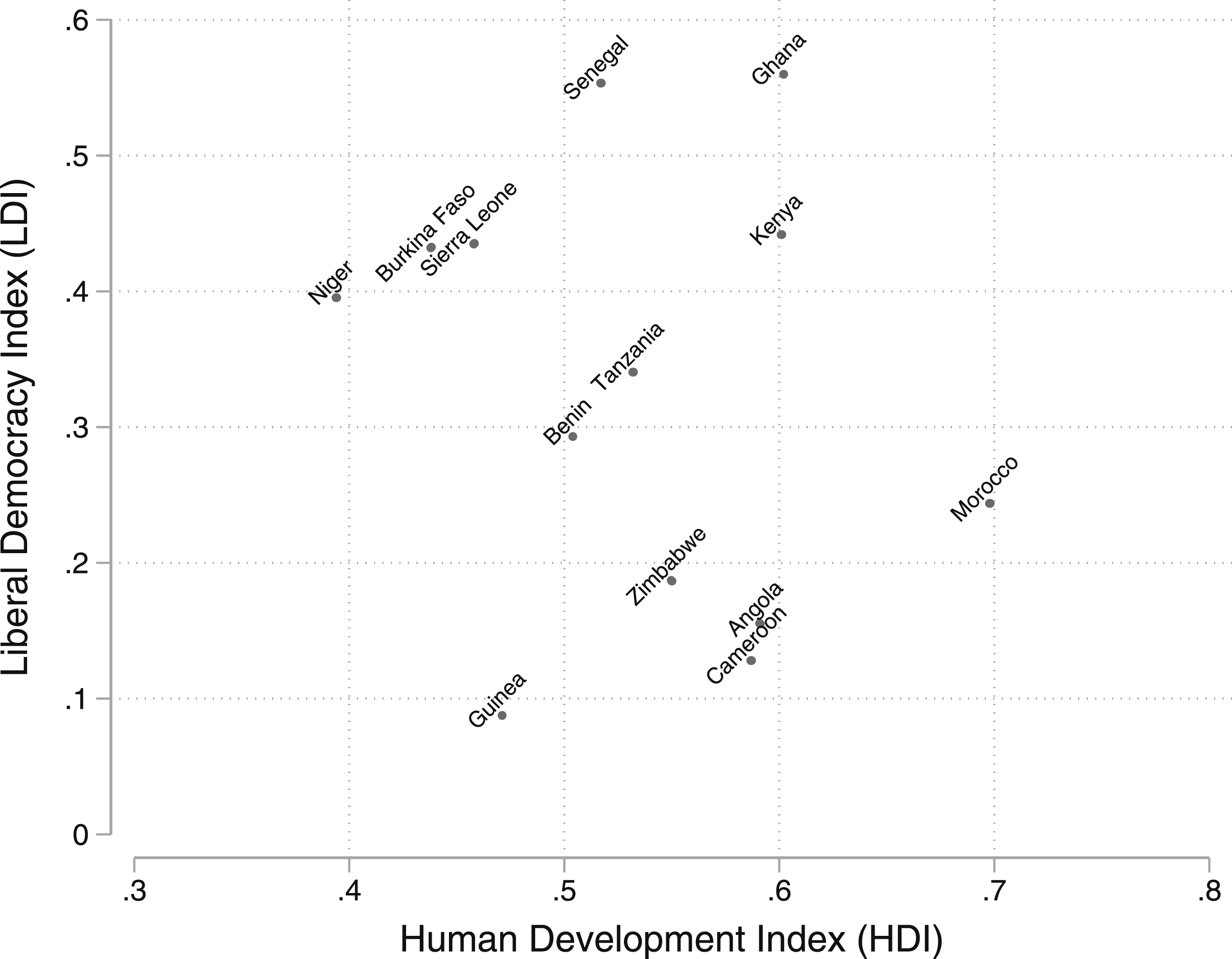
Data
Individual-Level Data
This research draws on data from all countries included in Round 9 of the Afrobarometer (2023) survey to measure public attitudes and socio-demographic characteristics. Although individual countries were surveyed at different points between 31 October 2021 and 17 July 2023, the full fieldwork period was considered in the analysis to account for potential cross-border effects of violent events 3 . The process of merging Afrobarometer data with terrorist events that took place within the Afrobarometer fieldwork period yielded a final sample of 20,463 individual-level observations across 31 African countries (see Table A1 in the Online Appendix A). We use this full data set as a robustness check.
For the main analysis, we focus on a subset of 10,201 respondents from 13 countries (see Table A2 in the Online Appendix A) where at least one terrorist attack occurred within the Afrobarometer fieldwork period. This selection ensures that respondents were surveyed in national contexts directly affected by terrorism.
Outcome variables
Following Mattes and Bratton (2007), we measure democratic support using three items grouped into two dimensions: democratic demand, which captures regime preference through support for democracy and rejection of authoritarian alternatives, and democratic supply, which reflects regime performance through the perception of how democratic the country is.
The first outcome variable measured using the Afrobarometer data is self-reported support for democracy, reporting responses to the questions: “Which of these three statements is closest to your own opinion? Statement 1: Democracy is preferable to any other kind of government. Statement 2: In some circumstances, a non-democratic government can be preferable. Statement 3: For someone like me, it doesn’t matter what kind of government we have.” Second, we measure rejection of authoritarian rule using an index (the row mean) that combines respondents’ opposition to military rule, one-party rule, and strongman rule. Finally, democratic supply is captured by how respondents rate the level of democracy in their country: “In your opinion, how much of a democracy is [country] today?”
All outcome variables are standardised to range from 0 to 1 to facilitate the interpretation and comparability of coefficient estimates. There is a clear baseline of democratic support across Africa (see Table A3 in the Online Appendix B). For example, 72 percent of respondents express a preference for democracy over other forms of governance, 78 percent reject authoritarian rule, and 52 percent consider their country to be a democracy. Details of the outcome variables are presented in the Online Appendix B.
Measuring Terrorism Exposure
Terrorism data are obtained from both the Armed Conflict Location and Event Data Project (ACLED) (Raleigh et al. 2010) and the Global Terrorism Database (GTD) (START 2022), ensuring robustness through triangulation.
Building on ACLED’s conflict-exposure framework, 4 we constructed a terrorism-exposure measure using two data sets. ACLED provides high-frequency subnational data on political violence – including battles, remote attacks, and violence against civilians – but does not label events as terrorism. The GTD, by contrast, applies a strict definitional threshold for terrorism but is only available through 2021. Given our use of Afrobarometer Round 9 (2023), ACLED is our primary source, while GTD is used for robustness checks with Afrobarometer Round 8 data.
To extract terrorism-related events from ACLED, we followed a two-step coding procedure. First, we selected four event types commonly associated with terrorist violence: (1) battles, (2) explosions/remote violence, (3) violence against civilians, and (4) strategic developments. Events were retained only if they involved non-state actors, including designated terrorist groups, communal or ethnic militias, political party militias, and unidentified armed groups. Second, we applied an actor-level filter. Using the actor1 and assoc_actor_1 variables, we retained only events perpetrated by actors cross-referenced with GTD’s perpetrator group list or commonly recognised as terrorist entities (e.g. Boko Haram, JNIM, IS affiliates). In cases where the actor was ambiguous – such as “Unidentified armed group” – we examined the event notes (“Notes” field in ACLED) for keywords indicating terrorist tactics (e.g. suicide bombing, IED, abduction, execution, targeting of civilians). If the tactics or targets aligned with the GTD’s operational definition of terrorism, the event was included. This process yielded a harmonised data set consistent with GTD criteria: non-state political violence directed at civilian or symbolic state targets and motivated by ideological or strategic objectives. 5
Geographic matching
ACLED data are reported at the village or locality level, whereas the Afrobarometer survey data operate at the first administrative (Admin1) level, such as provinces or regions. 6 To enable linkage between the two data sets, we aggregated the ACLED data to the province or region level. Events were matched by administrative name, and only those occurring within the Afrobarometer fieldwork period were considered. We acknowledge that the use of ACLED data at the Admin1 level might introduce substantial measurement error, especially in large regions where proximity to violence varies significantly. However, prior research suggests that the effects of terrorism are not strictly localised; threat perceptions often diffuse beyond the immediate site of violence and can even cross national borders (Finseraas and Listhaug 2013; Metcalfe, Powdthavee, and Dolan 2011). This broader psychological and social diffusion mitigates the risk of substantial measurement error from spatial aggregation, as individuals may adjust their political attitudes in response to regional insecurity even without direct exposure.
Exposure variable
After merging the Afrobarometer survey data with the terrorism data set, we constructed two continuous time variables: one capturing the timeline of survey interviews and the other marking the dates of terrorist attacks. Then, for each respondent, we calculated the difference in days between the date of their interview and the date of the nearest terrorist event they had been matched to. This resulted in a continuous time variable for which negative values indicate that the interview occurred before the attack and positive values indicate that it occurred after. Based on this, we created a binary exposure variable: Respondents interviewed before the attack (negative values) were coded as 0 (“not exposed”), while those interviewed after the attack (positive values) were coded as 1 (“exposed”).
Measuring Country-Level Conditional Factors
Level of Democracy
We use the Liberal Democracy Index from the Varieties of Democracy (V-Dem) data set (Coppedge et al. 2024) to measure a country’s democratic quality.
This index captures the liberal principle of democracy, which emphasises the protection of individual and minority rights against the tyranny of the state and the majority. It evaluates the constraints placed on executive power through constitutionally protected civil liberties, strong rule of law, an independent judiciary, and effective checks and balances. The index also incorporates the level of electoral democracy, providing a comprehensive measure of democratic quality. Scores range from 0 (least democratic) to 1 (most democratic).
Economic Development
We use the United Nations’ Human Development Index (HDI) as a proxy for economic development (United Nations Development Programme 2024). The HDI combines life expectancy, education, and gross national income into a single score ranging from 0 (low) to 1 (high) to reflect overall human development.
Estimation Strategy
Muñoz, Falcó-Gimeno, and Hernández (2020) introduce and evaluate the unexpected-event-during-survey (UESD) design as a strategy for identifying causal effects in observational survey data. This approach rests on key assumptions – most importantly, that the timing of interviews is as good as random with respect to outcomes (ignorability) and that any change in responses can be attributed solely to the unexpected event, not to other collateral or simultaneous events (excludability). In practice, these assumptions can be threatened if the event alters survey timelines, triggers attrition, or is anticipated by respondents. This study builds on their approach by applying it across multiple countries and multiple terrorist incidents in Africa, rather than a single event.
The regression model used to estimate the relationship between terrorism exposure and democratic attitudes is specified as follows:

The coefficient β1 captures the average marginal effect of terrorism exposure on democratic attitudes. We expect this coefficient to be negative across all outcomes, indicating that exposure to terrorism is associated with a decline in democratic support and a corresponding increase in receptiveness to authoritarian alternatives. X′ represents a vector of individual- and country-level control variables, including age, gender, race, religion, ethnicity, urban or rural residence, and employment status. We also include measures of safety concerns and fear of crime, which capture baseline threat sensitivity, as well as voting status and frequency of political discussions, which reflect prior democratic engagement. These variables help ensure that the estimated effects of terrorism are not confounded by pre-existing differences in security perceptions or political involvement. In addition, contextual indicators such as the presence of a police station, military or army presence, and access to piped water in the respondent’s town or village account for regional disparities in public-goods provision and exposure to conflict. Finally, γ c and δ t represent country and year fixed effects.
Balancing Method and weighting strategy
We employed entropy balancing in combination with the svyset command in Stata to adjust for potential covariate imbalances between the treatment and control groups. Entropy balancing assigns weights to individual observations to ensure that the distributions of key covariates (for example, age, gender, education, ethnicity) are similar across groups, thereby minimising bias in treatment-effect estimates while accounting for survey-design features such as clustering and stratification (Hainmueller 2012; Muñoz, Falcó-Gimeno, and Hernández 2020). Figure A1 and Table A4 in Online Appendix C report the balance diagnostics and display the effectiveness of the entropy balancing procedure in reducing observable differences between groups.
Results
Main Effects of Terrorism Exposure
Effect of terrorism exposure on democratic support
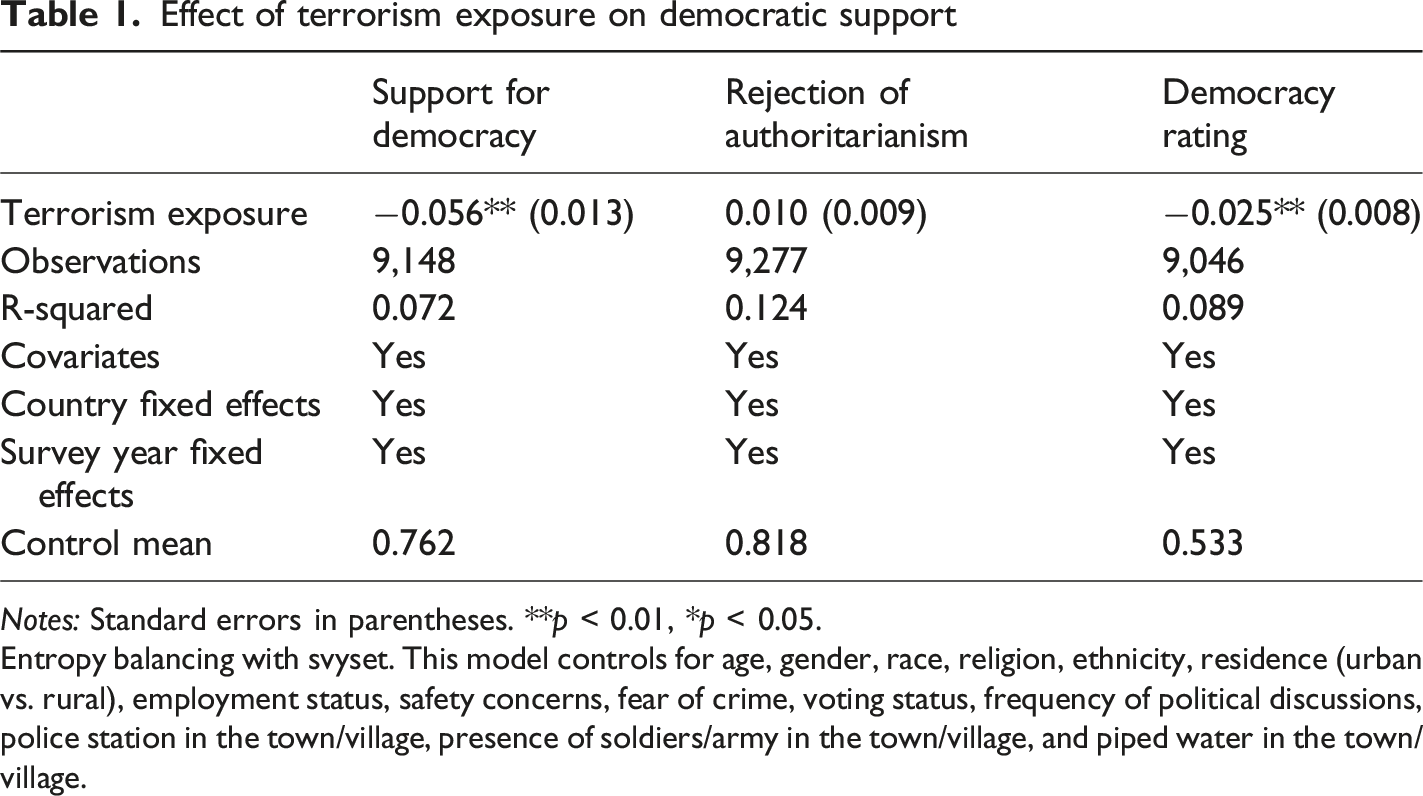
Notes: Standard errors in parentheses. **p < 0.01, *p < 0.05.
Entropy balancing with svyset. This model controls for age, gender, race, religion, ethnicity, residence (urban vs. rural), employment status, safety concerns, fear of crime, voting status, frequency of political discussions, police station in the town/village, presence of soldiers/army in the town/village, and piped water in the town/village.
As a robustness check, we rerun the analysis using the GTD data and the full Afrobarometer sample, including all countries in the data set. This allows us to account for possible cross-border effects of terrorism. The results are consistent with the main findings (see Online Appendix D, Table A5): Individuals exposed to terrorism are 5.2% points less likely to support democracy and 1.9% points less likely to rate their country as democratic (respectively, decreases of 7.2% points and 3.78% points relative to those not exposed). There is no evidence of a significant shift in attitudes toward authoritarianism.
We further test the reliability of our results by replicating the analysis using the GTD data and Round 8 of Afrobarometer. These additional checks, presented in Online Appendix E, confirm the overall pattern: Respondents surveyed after a terrorist event are 5.1% points less likely to support democracy and 4.5% points less likely to reject authoritarian alternatives (respectively, decreases of 7% points and 5.5% points relative to the control group).
Figure 2 shows that the marginal effect of terrorism exposure (H1) on democratic support and the rejection of authoritarianism is negative and becomes more pronounced in countries with higher levels of terrorism-related fatalities. While the pattern resembles an inverted U-shape, with stronger effects at both low and high levels of fatalities and weaker effects in the mid-range, the most substantial negative impact is observed in contexts with the highest fatality counts. Marginal effect of terrorism exposure by fatalities. Notes: Entropy balancing with svyset. This model controls for age, gender, race, religion, ethnicity, residence (urban vs. rural), employment status, safety concerns, fear of crime, voting status, frequency of political discussions, police station in the town/village, presence of soldiers/army in the town/village, and piped water in the town/village.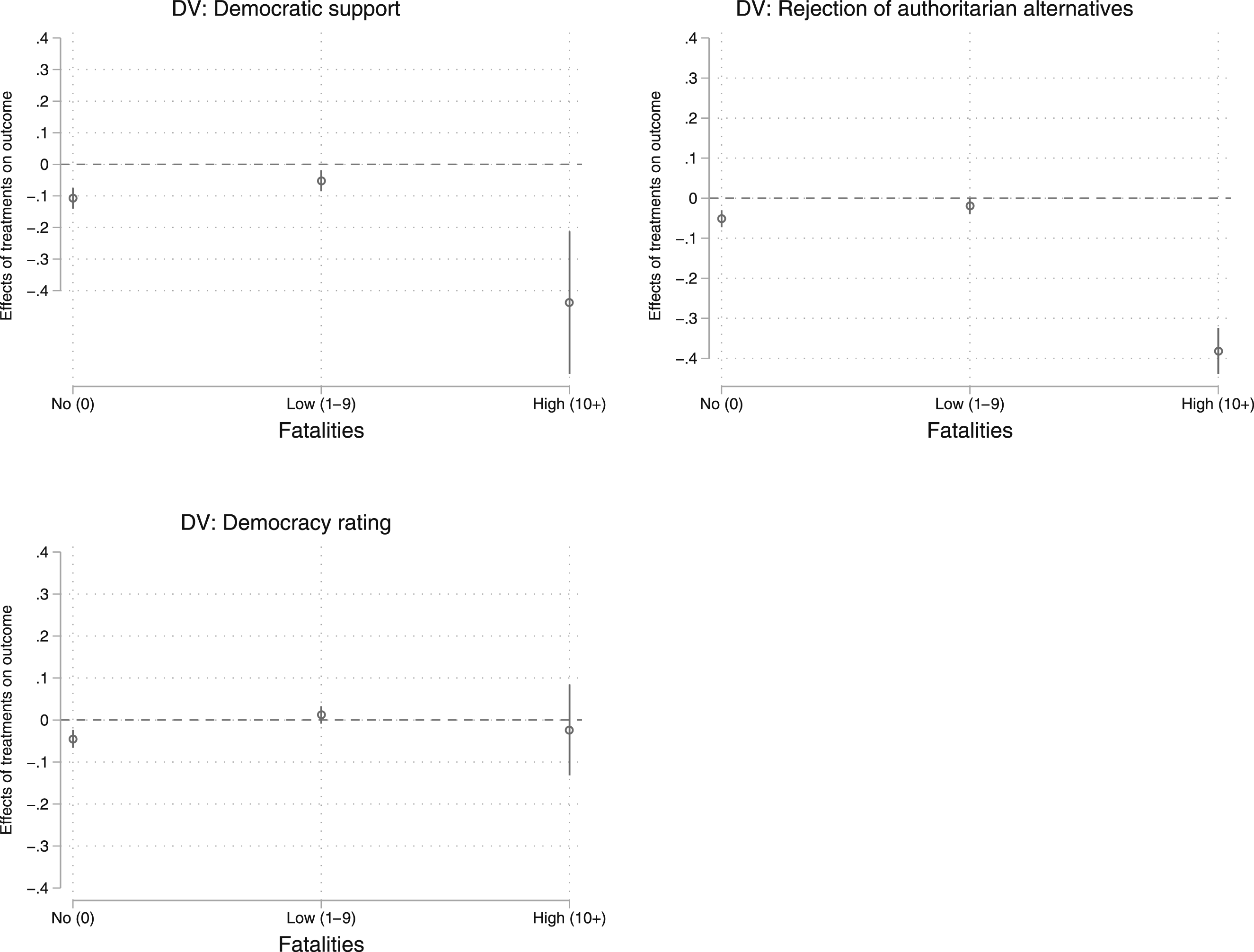
Contextual Moderation
Marginal Effects by Country Context
The results presented in Figure 3 demonstrate a consistent relationship between terrorism exposure and political attitudes, contingent on a country’s level of liberal democratic development. As the liberal-democracy score increases, individuals exposed to terrorism become less likely to support democracy and less likely to reject authoritarianism, providing support for H2a. While the effect on democracy ratings is negative, the pattern is less consistent and does not follow a clear trend. Marginal effect of terrorism exposure by level of liberal democracy. Notes: (Entropy balancing with svyset. This model controls for age, gender, race, religion, ethnicity, residence (urban vs. rural), employment status, safety concerns, fear of crime, voting status, frequency of political discussions, police station in the town/village, presence of soldiers/army in the town/village, and piped water in the town/village.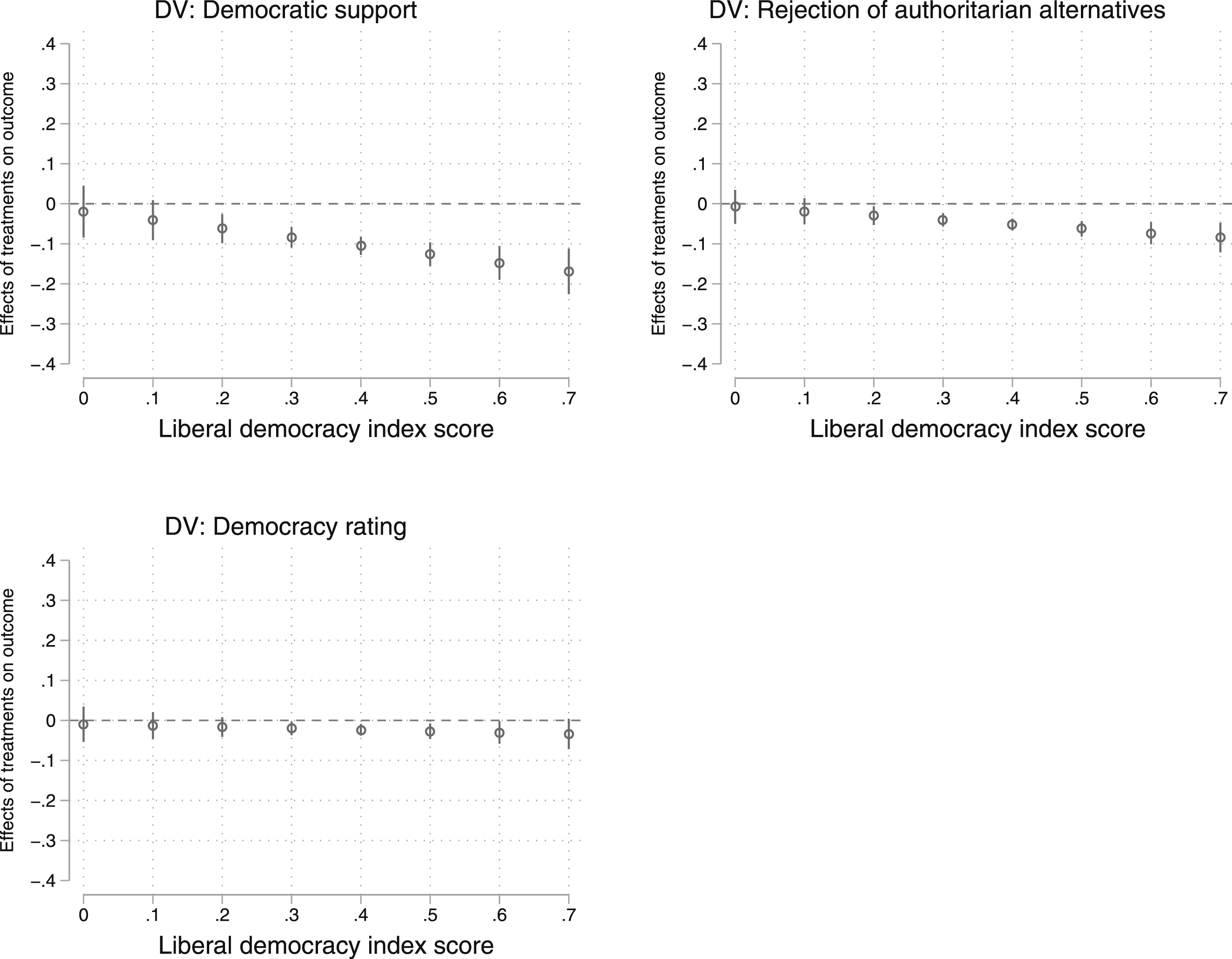
Figure 4 explores how exposure to terrorism influences political attitudes – support for democracy, rejection of authoritarianism, and perceptions of democratic governance – at varying levels of human development (HDI). The results are broadly consistent across all three outcomes. The negative effect of terrorism exposure is most pronounced in low-HDI countries, where it significantly erodes democratic attitudes, supporting H2b. In contrast, in high-HDI contexts, the negative impact on democratic support is weaker, and there is no statistically significant effect on either the rejection of authoritarianism or democracy ratings. We do not include country fixed effects in models with macro-level moderators, as these variables are constant within countries and would be perfectly collinear with the fixed effects. Marginal effect of terrorism exposure by level of human development. Notes: Eentropy balancing method with svyset. This model controls for age, gender, race, religion, ethnicity, residence (urban vs. rural), employment status, safety concerns, fear of crime, voting status, frequency of political discussions, police station in the town/village, presence of soldiers/army in the town/village, and piped water in the town/village.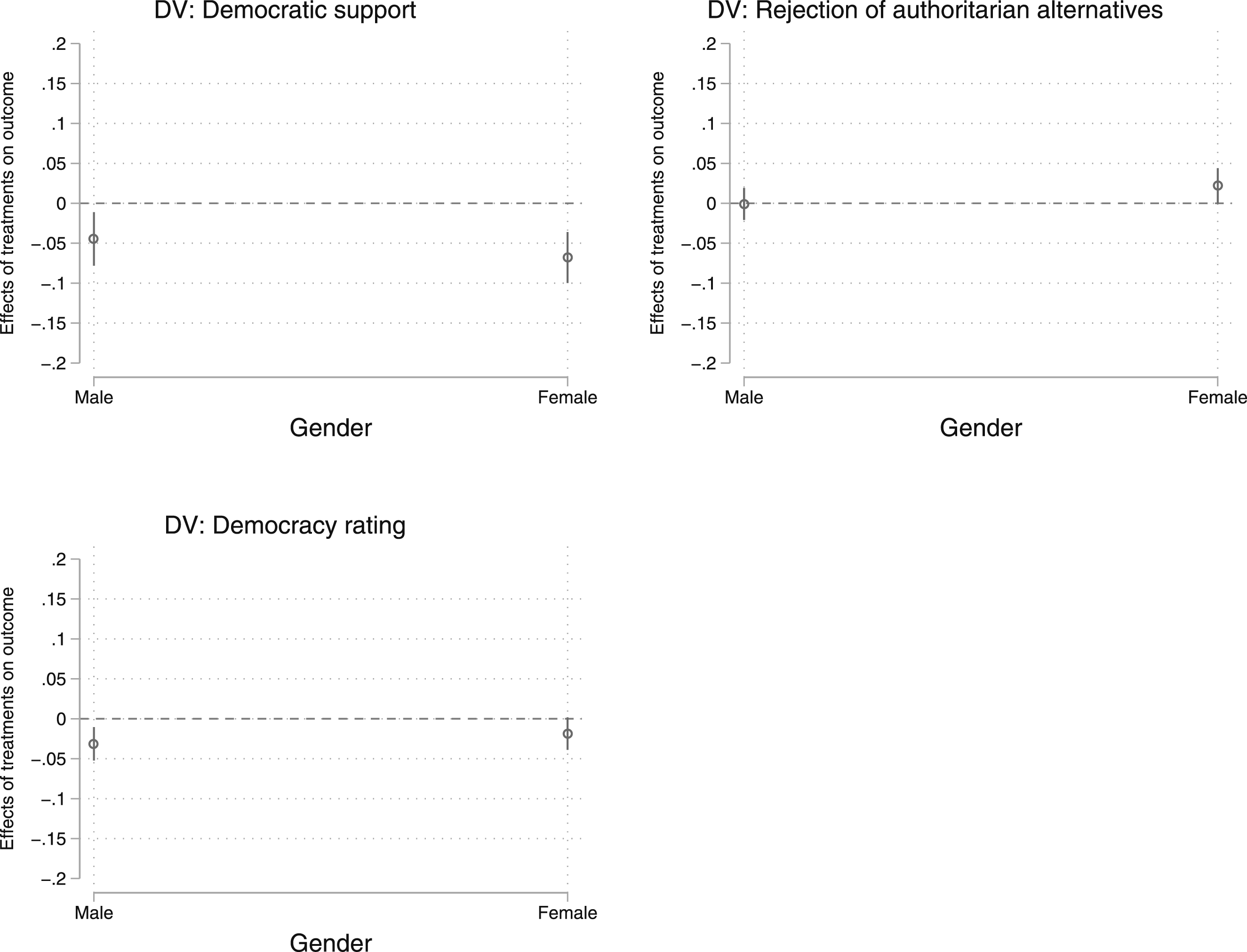
Taken together, these findings underscore the moderating role of human development. Higher levels of development appear to buffer the detrimental impact of terrorism on public support for democratic norms and institutions.
Individual-Level Moderation
Figure 5 shows a negative effect of terrorism exposure (H1) on democratic attitudes for both men and women. However, there is no significant difference between genders in the magnitude of the effect. As such, the results provide no evidence in support of H3a. Individual differences in marginal effects of terrorism exposure by gender. Note: Entropy balancing with svyset. This model controls for age, race, religion, ethnicity, residence (urban vs. rural), employment status, safety concerns, fear of crime, voting status, frequency of political discussions, police station in the town/village, presence of soldiers/army in the town/village, and piped water in the town/village.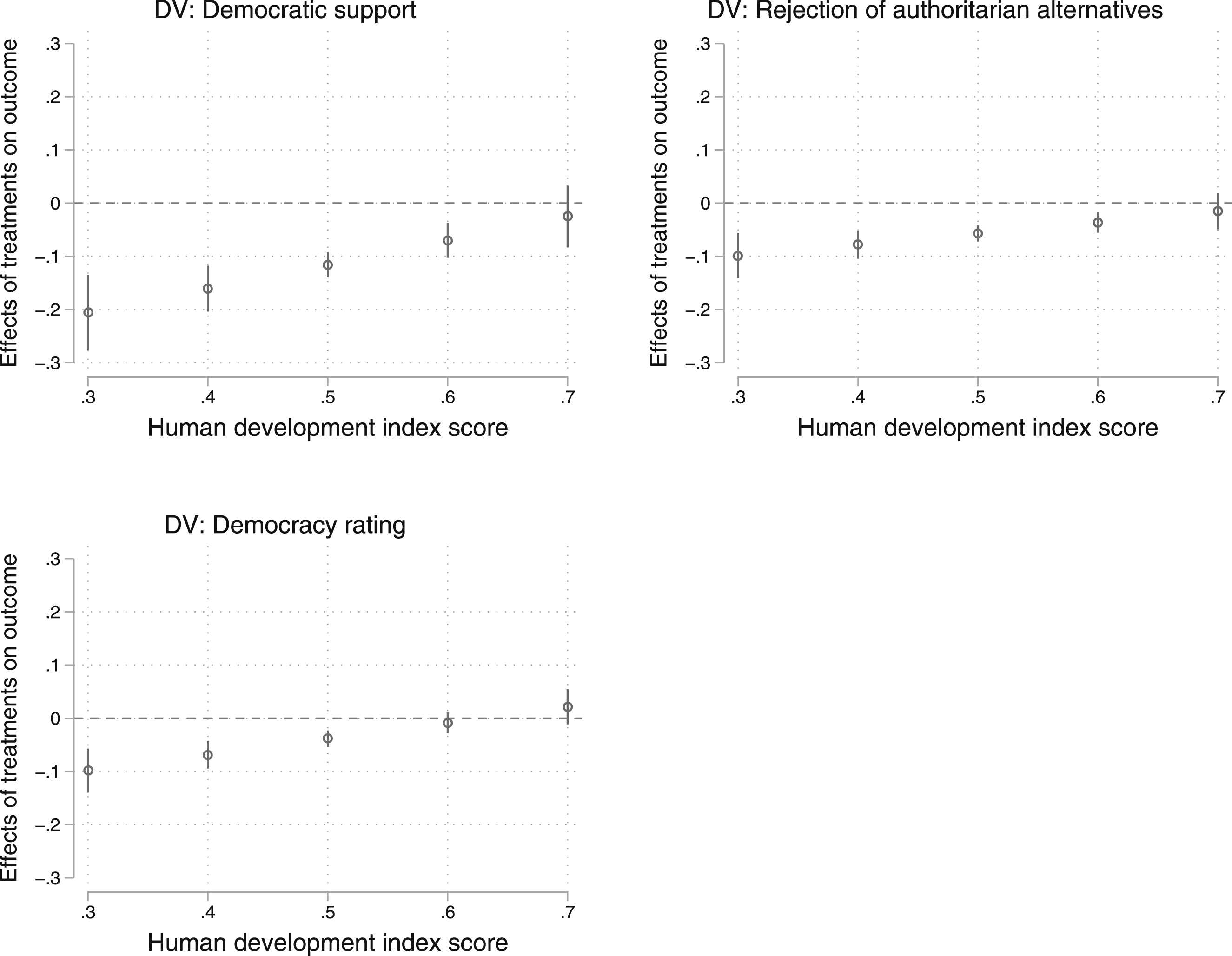
Figure 6 shows that the negative effect of terrorism exposure (H1) is statistically significant for democratic support but less consistent across the other outcomes. For democratic support and democracy ratings, significant effects appear among younger (18–34) and older (45+) respondents, while the middle-aged group shows no significant change. For rejection of authoritarianism, the estimated effect is largest in the middle age group but does not reach statistical significance. Taken together, these patterns provide only partial support for H3b and suggest that younger and older groups may be more politically vulnerable to insecurity. All models include country fixed effects to account for unobserved national-level heterogeneity. Individual difference in marginal effects of terrorism exposure by age. Notes: Entropy balancing with svyset. This model controls for gender, race, religion, ethnicity, residence (urban vs. rural), employment status, safety concerns, fear of crime, voting status, frequency of political discussions, police station in the town/village, presence of soldiers/army in the town/village, and piped water in the town/village.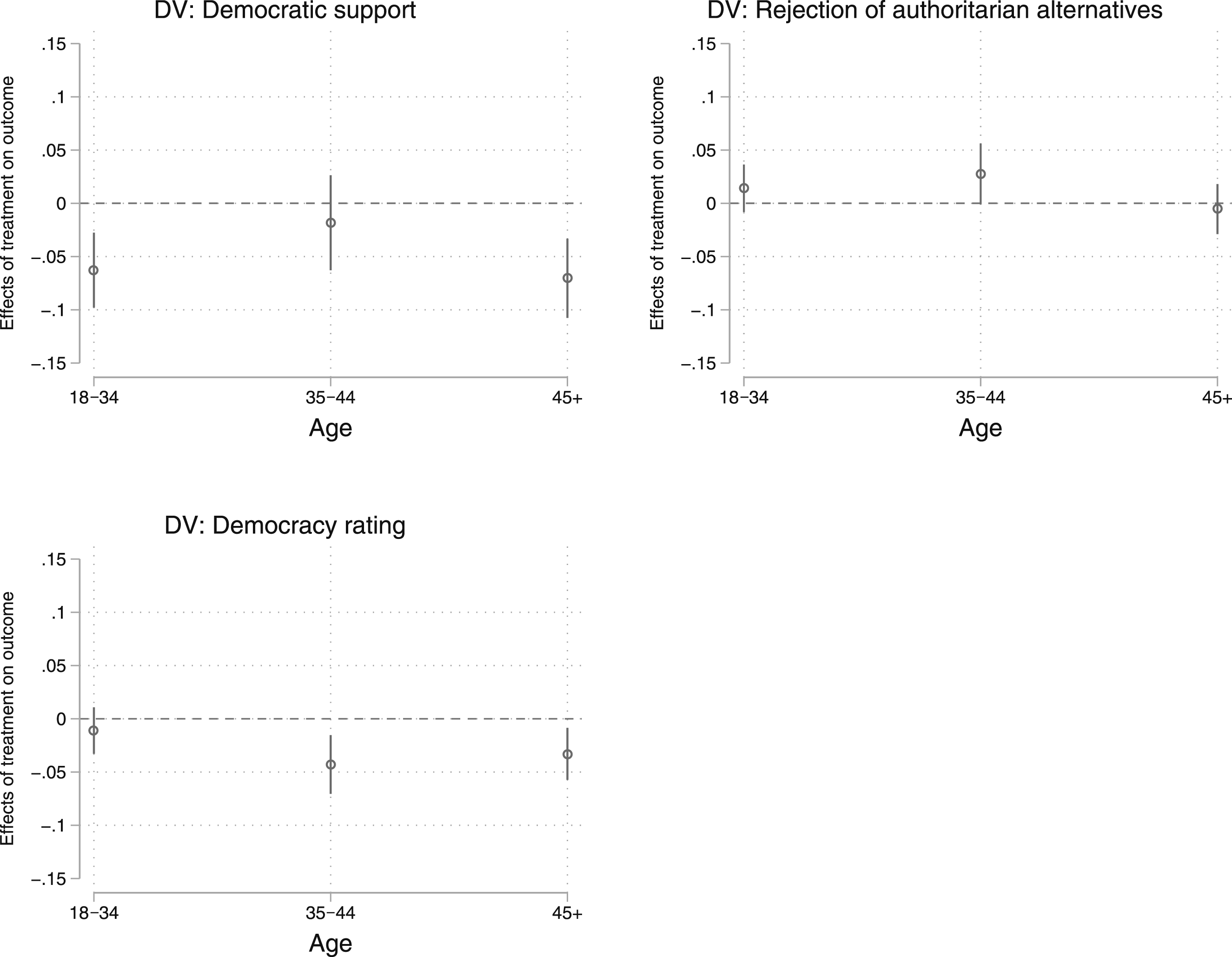
Taken together, the findings show that terrorism exposure negatively affects public support for democracy and the rejection of authoritarian alternatives. This effect is particularly pronounced in the most democratic African countries. At the same time, the least developed countries appear more vulnerable to broader democratic backsliding and rising tolerance for authoritarian forms of rule. At the individual level, terrorism significantly reduces democratic support and democracy ratings among younger and older respondents, while no significant effects are found for middle-aged individuals. For rejection of authoritarianism, the estimated effect is largest in the middle group but not statistically significant.
Cross-Country Variation in the Democratic Cost of Terrorism
Next, we assess whether the patterns identified in the continent-level analysis are replicated at the country level. Figure 7 presents a cross-country analysis limited to African countries that experienced at least one terrorist incident between 31 October 2021 and 17 July 2023 (the full fieldwork period for Afrobarometer Round 9). The effects of terrorism on democratic attitudes vary considerably across countries, reflecting the moderating role of national-level institutional and developmental contexts. Cross-country regression – Afrobarometer Round 9 and ACLED 2021–2023 **p < 0.01, *p < 0.05. Notes: Entropy balancing with svyset. This model controls for age, gender, race, religion, ethnicity, residence (urban vs. rural), employment status, safety concerns, fear of crime, voting status, frequency of political discussions, police station in the town/village, presence of soldiers/army in the town/village, and piped water in the town/village.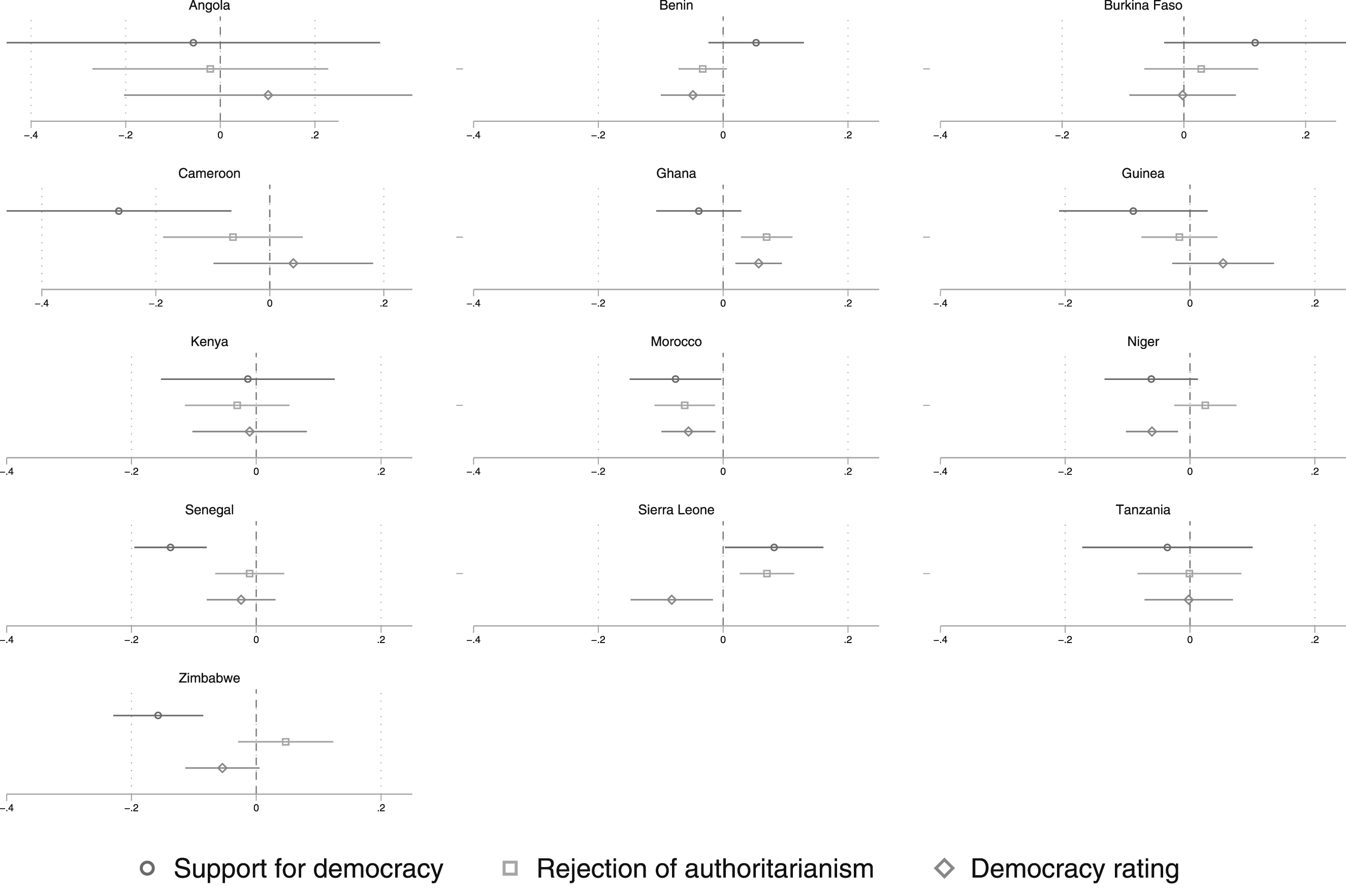
In Angola, Benin, Burkina Faso, Guinea, Kenya, Morocco, Niger, and Tanzania, exposure to terrorism does not significantly affect support for democracy. All eight countries rank low on both the LDI and the HDI (see Figure 1). In these contexts of weak states and underdeveloped democratic institutions, citizens may already hold low expectations of political efficacy. The null effects may reflect baseline disillusionment or fatalism, where terrorism adds little to existing cynicism about democracy.
In Cameroon, Senegal, and Zimbabwe, terrorism exposure significantly reduces support for democracy but has no consistent effect on rejection of authoritarianism or democracy ratings. While Cameroon and Zimbabwe share institutional weaknesses with other low-performing states, Senegal stands out as one of the more democratic cases. This aligns with the “democratic paradox” in our framework: More democratic states may face greater political costs from terrorism. Citizens with stronger democratic commitments and higher expectations may become disillusioned when institutions fail to ensure security.
In Ghana, which scores high on both the HDI and LDI, terrorism exposure does not reduce support for democracy but increases both rejection of authoritarian alternatives and positive evaluations of democratic performance. These results suggest that strong institutional development and higher state capacity may buffer the cognitive and emotional impacts of terrorism, sustaining democratic resilience under threat.
The case of Sierra Leone reveals a more complex pattern: Terrorism exposure increases support for democracy and rejection of authoritarianism, yet correlates with lower evaluations of democratic performance. This divergence may reflect its post-conflict setting and low HDI and LDI scores. Citizens, shaped by past trauma, may value democratic ideals and reject authoritarianism while expressing frustration with the regime’s limited capacity to govern effectively. This disjunction between normative democratic commitment and perceived performance aligns with insights from post-conflict democratisation literature (Cheeseman, Collord, and Reyntjens 2018; Fukuyama 2005; Krasner 2005). Evidence from the Global Terrorism Database (Online Appendix E, Figure A4) further underscores this heterogeneity.
These country-level results highlight the conditional nature of terrorism’s political effects. As theorised, impact depends not only on intensity but also on structural context. In low-HDI states, insecurity may reinforce apathy or pragmatic acceptance of autocracy; in more democratic settings, it may foster disillusionment with institutions perceived as ineffective. Recognising this heterogeneity is key to designing context-specific democracy-support and counterterrorism strategies.
Discussion
This study set out to examine how terrorism shapes support for democracy in Africa, starting from the normative premise that democracy remains the most legitimate and effective framework for sustaining peace, stability, and the protection of rights. Drawing on cross-national data and observational causal inference, the research was guided by two premises: first, that terrorism has significant political effects on democratic support among the affected populations, and second, that these effects are likely to be conditioned by national institutional configurations, levels of economic development, and individual characteristics.
Our results reveal that exposure to terrorism significantly weakens individual support for democracy and increases tolerance for authoritarian alternatives. This pattern is robust across multiple specifications and confirms that Africa is not an exception to the global trend: As in established democracies, terrorism induces a shift in public attitudes that favours strong, dominant leadership, even at the expense of democratic norms (Hetherington and Suhay 2011; Merolla and Zechmeister 2009, 2019; Robison 2009; Vasilopoulos, Marcus, and Foucault 2018).
These findings align with established theories on the cognitive and emotional effects of threat exposure. The cognitive pathway suggests that terrorism prompts strategic reassessments of regime effectiveness: In the face of insecurity, citizens may perceive authoritarian regimes as better equipped to provide order and security (Hetherington and Suhay 2011; Laustsen and Petersen 2017). Simultaneously, the emotional pathway underscores how terrorism heightens fear, anxiety, and anger, all of which bias preferences toward strong leaders and restrictive policies (Pyszczynski, Greenberg, and Solomon 1999; Tellez 2019; Vasilopoulos, Marcus, and Foucault 2018). These dynamics demonstrate that, even in African contexts, terrorism exploits both rational calculations and psychological vulnerabilities to undermine democratic commitments.
Beyond the overall effect of terrorism, our analysis reveals important variations shaped by the intensity of violence, regime type, economic development, and individual characteristics. First, we find that the negative impact of terrorism on democratic support intensifies with higher numbers of fatalities. This is consistent with research showing that more lethal violence amplifies perceptions of insecurity and existential threat, escalating both emotional and cognitive responses that drive authoritarian preferences (Merolla and Zechmeister 2009; Vasilopoulos, Marcus, and Foucault 2018, 2019). Second, regime type matters. The erosion of democratic attitudes is particularly pronounced in more liberal democracies. While liberal democracies benefit from judicial independence, media freedom, and constraints on executive power, these same features can magnify public perceptions of state weakness when security is threatened (Li 2019). This dynamic reinforces the perceived “autocratic advantage,” where citizens view authoritarian governance as better equipped to restore order under threat (Hetherington and Suhay 2011). Third, economic development moderates the political consequences of terrorism. Our findings show that the negative effect on democratic support is strongest in low-HDI contexts, where material deprivation and weak institutional capacity prevail. As Lipset (1959) and Treisman (2020) argue, low-development conditions prioritise immediate material and security concerns over democratic ideals, intensifying both emotional vulnerability and strategic reassessment of regime competence.
At the individual level, we find that age shapes responses to terrorism, with the negative effects on democratic support being most pronounced among younger and older citizens. This is consistent with prior research indicating that these groups are particularly vulnerable – youth due to socioeconomic precarity and marginalisation and greater likelihood of being targeted by insurgent groups, and the elderly due to heightened concerns about personal security (Akinsola and Ojo 2015; Darden 2019). Although prior studies suggest that women are generally more prone than men to emotional distress and stronger fear responses following terrorist attacks (DiMaggio and Galea 2006; Nellis 2009), and may therefore be more inclined to support protective and authoritarian policies under threat (Huddy et al. 2005; Huddy and Feldman 2011), our findings do not reveal significant gender differences in democratic attitudes in response to terrorism. This suggests that, in the African contexts analysed, the authoritarian reflex induced by terrorism is not gendered but reflects a broader societal reaction to insecurity that transcends gender distinctions.
This study provides a significant empirical contribution by presenting one of the first causal analyses of how exposure to terrorism shapes citizens’ democratic attitudes in Africa. Leveraging cross-national survey data matched with terrorism event locations and employing entropy balancing to enhance causal inference, it rigorously isolates terrorism’s political effects. Theoretically, the paper extends the authoritarian-reflex and threat-perception frameworks – traditionally tested in established democracies – to fragile and unconsolidated democratic contexts. Additionally, the study uncovers how macro-level conditions, including democracy levels and human development indicators, as well as micro-level characteristics such as age and gender, moderate responses to terrorist threats. From a policy standpoint, it highlights the necessity of developing resilience strategies that carefully balance security imperatives and democratic protections, particularly in a high-risk environment. By situating African contexts at the core of the terrorism-democracy research agenda, this study also addresses a notable gap in global scholarly debates.
Conclusion
In fragile states, terrorism does not merely generate fear – it reshapes the very foundations of political belief. Our study shows that the effects of terrorism on democratic attitudes are conditioned by a multi-scalar vulnerability structure: At the national level, stronger democratic institutions paradoxically magnify disillusionment when the state appears unable to guarantee security; at the individual level, demographic groups with heightened economic or existential insecurity – particularly the young and the elderly – are more likely to abandon democratic commitments. These findings challenge the assumption that democratisation alone builds resilience to violence. Instead, they suggest that without material development, institutional responsiveness, and psychological support, democratic regimes may be perceived as ill-equipped to confront insecurity. Efforts to promote democracy in violence-affected regions must therefore engage not only with elections and formal institutions, but also with the deeper social and emotional conditions that sustain democratic belief under threat.
Future research should combine longitudinal and qualitative methods to better capture the immediate psychological effects of terrorism and the longer-term shifts in democratic attitudes. A deeper understanding of these dynamics is essential for building durable democratic institutions in regions where violence remains entrenched and democratic consolidation is still in progress.
Supplemental Material
Supplemental Material - The Impact of Terrorism on Democratic Support in Africa
Supplemental Material for The Impact of Terrorism on Democratic Support in Africa by Souleymane Yameogo, and Anja Neundorf in Journal of Conflict Resolution.
Supplemental Material
Supplemental Material - The Impact of Terrorism on Democratic Support in Africa
Supplemental Material for The Impact of Terrorism on Democratic Support in Africa by Souleymane Yameogo, and Anja Neundorf in Journal of Conflict Resolution.
Footnotes
Acknowledgements
Funding
The authors disclosed receipt of the following financial support for the research, authorship, and/or publication of this article: The research of this project is generously funded by a European Research Council Consolidator Grant “Democracy under Threat: How Education can Save it” (DEMED) (Grant number: 865305, award grantee: Anja Neundorf). The preprint can be accessed  .
.
Declaration of Conflicting Interests
The authors declared no potential conflicts of interest with respect to the research, authorship, and/or publication of this article.
Data Availability Statement
Data for this study for replication are available to the lead author’s Harvard dataverse: https://doi.org/10.7910/DVN/VFVUVT in .
Supplemental Material
Supplemental material for this article is available online.
Notes
References
Supplementary Material
Please find the following supplemental material available below.
For Open Access articles published under a Creative Commons License, all supplemental material carries the same license as the article it is associated with.
For non-Open Access articles published, all supplemental material carries a non-exclusive license, and permission requests for re-use of supplemental material or any part of supplemental material shall be sent directly to the copyright owner as specified in the copyright notice associated with the article.
