




Abstract
There is a scarcity of systematic data regarding the military equipment of rebel groups engaged in intrastate conflicts. This empirical gap has impeded the rigorous evaluation of (formal) theories concerning militarized interactions between governments and rebel groups. To address this deficiency, we have developed the Rebels' Armament Dataset (RAD). This dataset provides detailed information on the military arsenals of 270 groups over the period from 1989 to 2020, categorizing 15 different types of small arms, light weapons, explosives, and major weapons. In this article, we introduce RAD, compare it with existing datasets, elucidate the data collection process, present an initial overview of the information contained in it, and apply the data to examine civilian suffering in civil wars. Although this dataset is merely an initial step that can be expanded as additional public information becomes available, RAD offers the first organized compilation of data on the armament levels of rebels.
Introduction
Contemporary conflict research effectively employs increasingly disaggregated information to elucidate and forecast political violence. Nonetheless, a glaring deficit persists in the available data, which has emerged as a consistent impediment for numerous empirical studies: there is a paucity of systematic data concerning the military equipment of rebel groups. This constitutes a substantial issue as the armaments utilized by both governmental and rebel forces play a pivotal role in the onset of conflicts, their intensity, duration, and outcomes. Furthermore, the types of arms held by non-state actors, their origins, and the factors influencing their acquisition are of considerable interest to both researchers and policymakers.
While scholars have demonstrated that rebels typically begin the acquisition of arms prior to the onset of hostilities (Jackson 2010; Sislin and Pearson 2006), the armaments procured during a conflict very likely influence its dynamics and establish the groundwork for subsequent violence (Bourne 2007). Research on intra-state conflicts frequently approximate the military capabilities of governments through an evaluation of their arms imports. 1 However, these studies often either overlook rebel arsenals or depend on ordinal assessments of rebels’ relative capacities derived from extant sources such as the Non-State Actors dataset (Cunningham, Gleditsch, and Salehyan 2013). It should be noted that these data sources lack detailed information regarding the types and volumes of arms accessible to these groups.
The absence of precise data has greatly impeded scholarly inquiry into the role of military technologies in insurgencies, counter-insurgencies, and the dynamics of military engagements within civil conflicts. For instance, there is a prevailing conjecture in the literature suggesting that the availability of small arms may have contributed to the escalation of intrastate violence since the 1990s (Boutwell and Klare 1998; Wezeman 2003). Additionally, a critical strand of research has sought to determine whether the increased mechanization of state militaries has diminished or enhanced the efficacy of counter-insurgencies (Caverley and Sechser 2017; Lyall and Wilson 2009). This empirically driven research has, metaphorically speaking, operated with one arm constrained, due to its inability to adequately account for the armament levels of rebel forces. Another urgent question pertinent to policymakers concerns the impact of various weapon types, when possessed by rebel groups, on civilian suffering.
Despite the prominent role of military technologies being explored in seminal works like Kalyvas and Balcells (2010) and Balcells and Kalyvas (2014) which discuss rebellion technologies, or in case studies such as Sislin and Pearson (2006) regarding the Tamil Tigers in Sri Lanka, these analyses could not utilize precise information regarding the weaponry of rebel organizations. Researchers therefore had to depend on expert opinions, evidence specific to particular cases, or very broad qualitative assessments of rebel military capabilities. This reliance has compelled scholars to draw conclusions on rebel groups’ material resources from a restricted set of observations, which at times may be inconsistent. For instance, while Bourne (2007, 25) argues that the acquisition of advanced weapons like MANPADS by non-state actors is ‘comparatively rare’, Schroeder (2007) highlights numerous instances of non-state actors deploying MANPADS to down aircraft. To date, a comprehensive and quantitative appraisal of these perspectives has not been feasible.
We developed the Rebels’ Armament Dataset (RAD) to address these limitations. By utilizing evidence from publicly available sources, we present the first systematic evaluation of the military arsenals of rebel groups. Our dataset encompasses 15 categories of weaponry, spanning from small arms and light weapons, including rifles, machine guns, and missile launchers, to major conventional weapons such as tanks and aircraft. This dataset provides comprehensive information on the levels of armament and the composition of arsenals held by rebel groups. Our data collection was restricted to those groups that engaged in intra-state conflict between 1991 and 2018. For other groups documented in the Ethnic Power Relations dataset (Vogt et al. 2015) or the minority at risk dataset (MAR 2009), we were unable to obtain substantial information regarding military equipment. Consequently, our initial sample comprised 345 rebel groups. Detailed information was collected for 270 of these groups for the period spanning from 1989 to 2020.
In order to compile this data, we utilized a wide range of publicly available sources. These encompassed resources from the UCDP Conflict Encyclopedia and other conflict-related databases, as well as the document archive of the Norwegian Initiative on Small Arms Transfers (NISAT), and the broader scientific literature. Furthermore, we conducted a systematic content analysis of press reports employing standard search engines and the Nexis database. This endeavor resulted in the collection of 10,665 entries of observations or accounts pertaining to specific arms types or categories in use or possession, for which we meticulously coded additional information, including the provenance of the evidence.
The resulting dataset provides detailed information for each of the 270 groups on the total quantity of arms evidenced, along with their categorization into small arms, explosives, light, and major weapons. Furthermore, we have constructed a time-series dataset that offers temporal insights into the armament levels of these groups. These two datasets constitute the first comprehensive account of rebel groups’ armaments by specific weapon types and, in our assessment, serve as an invaluable resource for non-state actors engaged in intrastate conflicts. We illustrate their utility by examining the relationship between rebel armament levels and civilian fatalities in intra-state conflicts. The results of our two-stage hurdle models affirm the significance of various ‘technologies of rebellion’ (Kalyvas and Balcells 2010). Our findings also indicate that certain conclusions within the recent literature on force mechanization and civilian victimization may be contingent upon the level of armament among rebels, suggesting that a more nuanced understanding is required.
In the subsequent section, we elucidate the necessity of this data. In addition, it includes a comprehensive overview of the data that exists on the military capabilities of rebel groups. The third section elucidates the data collection methodology and how the information was synthesized. We then provide an analysis of the data and quantify the existing evidence. The subsequent part highlights how RAD is related to other datasets. This is succeeded by an application of the dataset to examine civilian victimization in civil conflicts. The penultimate section addresses the limitations of the data, potential biases, and strategies to mitigate these challenges. The final section concludes and investigates potential future trajectories for data collection endeavors.
Why We Need Data on Rebel Armaments
Rebel Armaments and Conflict Research
State-based intrastate conflicts represent strategic interactions between governmental entities and one or more rebel groups. The theoretical literature frequently employs contest success functions (Hirshleifer 1989) to highlight the significance of the military capabilities of the conflicting parties. From this viewpoint, the likelihood of prevailing in a militarized contest is critically dependent on the armament levels of all involved factions. Additionally, military capabilities influence conflict strategies and bargaining positions (Fearon 1995). Much of the prior conflict literature has either completely disregarded the distribution of military technologies or has concentrated solely on the governmental side by evaluating their arms imports (e.g., Magesan and Swee 2018; Mehltretter 2022; Pamp et al. 2018) or degree of mechanization (e.g., Caverley and Sechser 2017). The absence of data regarding the military armaments of rebel groups has consequently led to an emphasis on governmental capabilities, with the rebel side being overlooked or, at best, accounted for by considering the sizes of rebel troops or relative strength measures (e.g., Cunningham, Gleditsch, and Salehyan 2009; Mehrl and Thurner 2020).
Nevertheless, the capabilities of rebels not only determine the outcome of the conflict but also raise several pivotal issues that warrant empirical investigation with thorough data on rebel arsenals. Consider the following questions: What types of weapons do rebels possess? When and by what means do they decide to arm themselves? How do their military technologies evolve over the course of the conflict? In what manner do different weapons influence the progression, dynamics, intensity, and duration of the conflict? What are the sources of their weapons and how are these procured? Are periods of peace between conflicts shorter if groups possessed substantial arms in the preceding conflict, thereby potentially lowering the cost of initiating new conflicts? Which counterinsurgency measures are effective considering the rebels’ weaponry? How effective are disarmament processes given specific levels and types of armaments? This array of questions highlights that rebel armaments can serve as both an independent and a dependent variable.
Furthermore, the unique military capabilities of rebel groups can act as an important confounding variable, affecting a variety of outcomes, including the onset, intensity, duration, outcomes, and recurrence of conflicts. Rebel capabilities are also interconnected with critical factors such as ethnic discrimination, the capacity to secure economic resources for insurgency financing, and gaining external support. Hence, it could be posited that the levels of armament should be integrated into quantitative research investigating other causal determinants. Whether the bias introduced by omitting the military capabilities of conflicting parties is substantial or negligible remains an issue that future research will have to address.
Beyond quantitative conflict studies, it is evidently of high policy relevance to acquire more accurate knowledge regarding the capabilities of non-state actors. The ramifications of arming rebels with various types of military technologies on the dynamics and outcomes of intrastate conflicts constitute a critical foreign policy concern. Furthermore, possessing detailed information on the military arsenals of rebel groups is of great value for qualitative research, case studies, and policy papers. Such information can provide substantial benefits. As will be demonstrated subsequently, existing datasets are either limited in scope or lack granular detail, underscoring why RAD constitutes a substantial empirical advancement.
Related Datasets
A first effort to quantify the arming of non-state actors was made by Sislin et al. (1998). This study gathered evidence on the possession of weapons in 49 ethnic conflicts during the 1990s, using openly accessible information from media sources, academia, and non-governmental organizations. For each ethnic group, the investigation classified armament into two types: small arms and light weapons, defined as weapon systems operable by a single individual or a small team, and major conventional weapons. In 37 of these conflicts, ethnic groups were found to have small arms and light weapons, while evidence of major conventional weapons was identified in 11 conflicts.
Regarding the trade of arms between states, the Stockholm International Peace Research Institute (SIPRI) offers the most exhaustive data, encompassing all publicly known transfers of major conventional weapons since 1950. Regrettably, transfers to non-state actors constitute only a minor fraction of the dataset. Specifically, the 2022 iteration of the data includes merely 205 instances of arms transfers. These 205 transfers are distributed among 54 groups, with only a few, such as Hezbollah (66 entries) and the Mujahedin in Afghanistan (28 entries), having a significant number of transfers. When comparing SIPRI-recorded transfers from the 1990s with cases from Sislin et al. (1998), some overlap would be anticipated. However, none of the groups of Sislin et al. (1998) have documented transfers by SIPRI during the relevant period, and certain cases that appear in the SIPRI dataset, such as LTTE in Sri Lanka, are not classified in Sislin et al. as possessing major weapons. Given that SIPRI relies primarily on official reports, it does not purport to provide an accurate representation of transfers to non-state groups. Consequently, the data are not suitable for the empirical analysis of rebel capabilities in civil conflict and, to our knowledge, have only been utilized in this context by Moore (2012).
The Non-State Actors (NSA) dataset (Cunningham, Gleditsch, and Salehyan 2013) offers a more comprehensive overview, encompassing information on 462 non-state organizations engaged in civil wars. Pertaining to military capabilities, the dataset employs an ordinal scale—‘low,’ ‘moderate,’ and ‘high’—to indicate ‘arms procurement’ and ‘fighting capacities,’ alongside the ‘strength’ of groups in comparison to government forces. Specifically, for 289 (286) groups, the ability to acquire arms (numbers for relative fighting capacity in brackets) is classified as low, moderate for 144 (149) groups, and high for a mere 15 (21) groups. 2 Consequently, while the NSA dataset evaluates a greater number of groups, it provides limited detail and lacks specific information regarding overall levels of armament and the composition of arsenals.
Most rebel groups need external support to build up their military capabilities. The Uppsala Conflict Data Program (UCDP) offers some information indicating whether these factions receive military support from international sources. The UCDP External Support data set delivers binary data on the nature of foreign military aid received by rebel groups for the period between 1975 and2017 3 (Meier et al. 2023). However, it does not specify the types of weaponry transferred or provide quantitative metrics concerning the magnitude of the assistance.
In addition to these datasets, there are a few other sources that are rather limited. The Military Balance Plus database by the International Institute for Strategic Studies provides information on major weapons possessions of around a dozen groups in 2005–2007 and three groups for 2014 and later. Beyond these data, there are several country-specific case studies by the non-governmental ’Small Arms Survey’ (https://www.smallarmssurvey.org/) and Conflict Armament Research (2017) on the diffusion and trade of small arms, but no systematic collection of data for a comprehensive list of group exists so far.
How RAD Was Created
Creating RAD was made financially possible through a project generously funded by the German Foundation for Peace Research (DSF). A team of researchers and research assistants worked on the data collection process for more than 2 years. They used a common framework that made the process from finding information and analyzing its content to coding and transferring it to the raw dataset systematic, transparent, and easy to follow.
Finding Relevant Evidence on Rebel Armaments
To gain insight into the military capabilities of rebel groups, we had to combine information from many different sources. Although official records of states’ military capabilities and armament processes exist, information on rebel groups’ arms possession only surfaces under specific circumstances. Acquisition usually takes illicit paths, from importation, ‘ant trade’, stockpile leakage, or battlefield captures (Bourne 2007; Jackson 2010). Information about rebel arms is usually only recorded when groups lose their weapons due to arms seizures by government security forces or when they are observed on the battlefield.
Our preliminary examination of specific data corpora indicated that no individual source possesses adequate information to formulate a coherent assessment of armament levels across different categories. Although nongovernmental organizations such as Conflict Armament Research and the Small Arms Survey provide valuable information on particular regions, groups, or types of arms, their contributions necessitate supplementation from a multitude of additional sources.
A high concentration of valuable information was identified in the document library of the Norwegian Initiative of Small Arms Transfers (NISAT). NISAT provides aggregated news items and reports from various sources, encompassing specific data on arms transfers, seizures, and the black market. Additionally, web searches were employed to gather information from both websites and scientific literature. While these web searches frequently yielded useful information, the coverage of military capabilities in specific conflicts was limited in the literature. Utilizing a select number of test groups revealed a substantial variance in the retrievability of information. Although extensive data were found for groups engaged in prolonged conflicts or those with higher casualty numbers, in several other instances, information remained elusive despite extensive source examination. Consequently, content searches of extensive news databases were also conducted. These searches often produced a high amount of useful information, albeit with a low signal-to-noise ratio.
Collecting and Assembling the Data
We devised a comprehensive, multi-stage methodology for systematically gathering information from diverse sources. Each data point was documented as an individual entry within a raw data table. Consequently, if the acquired evidence included sufficient detail, an entry comprised the type of arms, the recorded quantity of that arms type, the year of observation, and the type of evidence provided in the source. For the classification of the various evidence categories, we applied the categorizations from ‘Conflict Armament Research’ alongside the categories from Markowski et al. (2008) and Jackson (2010), which include battlefield capture, leakage from state stockpiles, transfers, seizure by authorities, usage in battle, or, in the absence of specific background information, a “general statement”.
The methodology for each group was executed in accordance with the transparent procedures illustrated in the flowchart in Figure 1. Initially, recognized sources of conflict-related information, such as the UCDP Conflict Encyclopedia, were consulted. These sources occasionally provided insights into the military capabilities of the groups. Subsequently, documents from the NISAT document library were reviewed and categorized into pertinent sections like “Armed Groups and Small Arms”, “Black Market”, and “Stockpiles”. Given that the documents in the NISAT library are organized by country, this examination was performed once per country for all relevant groups. The third step entailed conducting web searches using the Google search engine, employing standardized queries that included the group’s name and acronym, and, when necessary, the country’s name. These queries also encompassed twenty different armament types and categories such as “arms”, “gun”, “cannon”, “MANPADS”, and “tank”. Preliminary assessments revealed that more specific queries did not enhance the results and tended to yield irrelevant hits. Following this, identical search queries were applied in Google Scholar to locate scholarly articles and books with a detailed examination of the specified groups. In the fifth and final step, the Nexis research database was interrogated using similar queries. Given the low hit rate of useful information from less relevant sources, the Nexis search was confined to sources from news agencies, specifically BBC, Associated Press, and Agence France-Press (Daxecker, Amicarelli, and Jung 2019). Flowchart data collection process.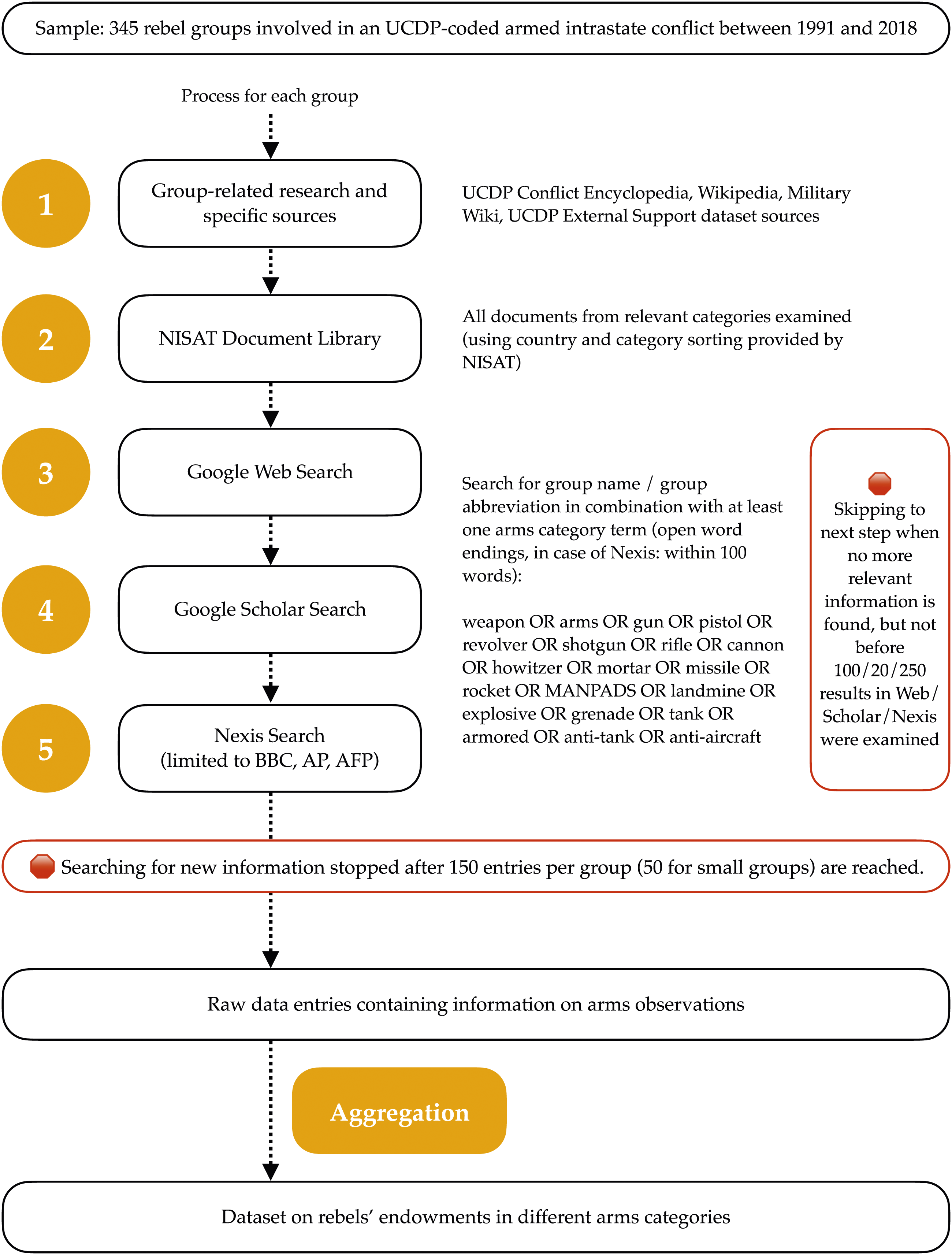
To carry out the data collection process for all 345 groups within the constraints of our available resources, it was necessary to limit the number of search results. Given that searches on platforms such as Google or Nexis can yield tens of thousands of hits, we ceased reviewing results when their relevance diminished significantly. However, we meticulously examined at least the first 100 results for Google and the first 250 results for Nexis. For larger groups, after evaluating 150 entries, only substantially new information was considered, such as large reported quantities or previously unrecorded types of arms. Although this approach leads to a conservative estimate of the military capabilities of larger groups, it enables a more comprehensive overview of all pertinent sample groups, which would not have been feasible within our resource limitations. All information found in the NISAT documents was invariably included, forming the foundational corpus supplemented by evidence from these additional sources.
Aggregating the Raw Data to Monadic Group and Group-year Datasets
We have established a standardized methodology to amalgamate all entries for a specific group and arms category in order to generate an ordinal ranking of their comprehensive armament. Initially, we categorized approximately 2,400 distinct types of arms or denotations into 15 discrete categories, such as rifles, mortars, tanks, or aircraft, following the classifications of arms stipulated by NISAT and SIPRI. This approach to aggregated data allows for an examination of the types of arms that are particularly prominent within the military arsenals of rebel groups. For the sake of clarity, these 15 categories were further consolidated into broader classifications of small arms, light weapons, major weapons, and explosives. A detailed overview of all these variables, including the specific types of weapons encompassed by these 15 categories, is available in our Codebook (Mehltretter et al. 2023).
The aggregation of information was not merely a process of summing all data entries. In 57 percent of the entries, the sources provided information on arms volumes. However, these volumes were not consistently presented with precision; they were often described qualitatively, for instance, as ‘a few’ or ‘hundreds.’ To integrate these qualitative descriptions with quantitative data, ordinal values were assigned: ‘a few’ was coded as 1, ‘dozens’ as 2, ‘hundreds’ as 3, and ‘thousands’ as 4. This method facilitated the combination of both types of entries (for details see Mehltretter et al. 2023, 10-11). For entries lacking volume information, we assumed they represented amounts similar to the mean volume reported by the more precise sources within each category. Estimating overall armament numbers across different weapon categories necessitated the integration of these varying levels of precision. Consequently, we established a 5-level ordinal scale to denote different ranges of quantities: 0 for no arms, 1 for 1–9, 2 for 10–99, 3 for 100–999, and 4 for 1,000+.
For example, consider a group with three entries for rifles: one precisely quantified as 90, one described as “several,” and another as “dozens.” The term “several” is represented as 1 and “dozens” as 2 on an ordinal scale. Subsequently, we transform the ordinal value 1 into its numerical counterpart as 2 and the ordinal value 2 as 30. The values 2 and 30 are determined on the basis of the mean of entries with explicitly stated quantities within the corresponding ordinal category. Specifically, 30 represents the average value of all rifle entries with numerically specified amounts ranging from 10 to 99. These computed numerical values are then summed, 90 + 2 + 30 = 122, and converted back into an ordinal value using the previously outlined orders-of-magnitude scale. Consequently, this methodology yields an ordinal rifle armament value of 3 for the three rifle entries.
The utilization of ordinal scales enabled the incorporation of a broader array of sources. Recognizing potential concerns with assumptions pertaining to imprecise volumetric data, RAD encompasses lower-bound estimations for all armament variables. These estimations are derived exclusively from data entries with exact volume measurements. Given that these lower bounds omit a substantial quantity of sources, they may inadvertently underestimate the actual armament levels for certain groups.
In addition to the group version of the dataset, a group-year time-series version is also provided, which offers a temporal perspective for a provisional analysis of potential developments over time. However, this posed two crucial challenges: first, it was frequently challenging to assign the evidence to a precise year, and second, substantial assumptions regarding the longevity of these arms had to be made.
Regarding the first challenge, we sought to infer temporal information from the content of the sources wherever feasible. When reports specified a particular year of observation, we included this information as the relevant year. In cases where no date was provided, we utilized the date of the source. For information presented as a general statement about a group, we attributed the evidence to all the years the group was in conflict. Concerning the second challenge, our objective was to achieve a comprehensive assessment of the groups’ armament over time. Limiting the data to just the year in which it was recorded would result in many groups having armament measurements only at specific time points, whereas in reality they possessed these arms before and after the reported evidence. To avoid rigid cut-off points, we expanded the conventional 5-year window used for moving averages of final data to a shifting five-year time window based on the type of evidence. For reports of seizures by authorities or disarmament processes, it is evident that the group could possess only these arms before the reported event. Consequently, we considered the reported year as the year of possession and included the four preceding years. For transfers, leakages from stockpiles/state collapse, and battlefield captures, the group could only be credited with possessing these weapons following the reported event, so the evidence was applied to the recorded year and the subsequent 4 years. For observations of possession or use of arms on the battlefield, it is plausible that possession occurred both before and after the event, hence we adjusted the time window to 2 years before and 2 years after the year for which the evidence was reported. To illustrate this procedure, if a source provided evidence that a group possessed 500 assault rifles in year t, this figure was extended to include years t − 1, t − 2, t + 1, and t + 2. If additional evidence in year t + 1 reported that the group captured 120 assault rifles from government troops, the aggregate count for years t + 1 and t + 2 would be 620. 4 It should be noted that we assumed that the cessation of a conflict does not necessarily imply immediate disarmament of rebels, except where evidence explicitly indicates otherwise. In sum, this iteration of the data should not be construed as providing exact annual observations but rather as a smoothed time series that elucidates temporal trends.
Reliability and Transparency
We employed a human-centered methodology in our data collection efforts, ensuring that each data point could be traced back to its origin. Consequently, we meticulously documented the precise references of each data entry source and conducted an evaluation of the source’s reliability. This rigorous process facilitated extensive cross-validation, with significant staff hours dedicated to verifying that each data entry was validated by a minimum of two coders. Furthermore, this process involved verifying whether different sources reported identical events to prevent instances of double counting. 5 In scenarios where coders encountered ambiguity with respect to information from a source, such as uncertainty about the classification of a reported weapon system, the data entry was flagged. This approach enabled project leaders to maintain oversight of problematic cases at each stage, allowing for clarification and adjustment of the rule book and classification system.
To ensure the utmost transparency in our processes of data collection and aggregation, we provide a ‘data source file’. This file comprises, for each data entry, a source identifier, source pages, the pertinent source text, the type of evidence, the country of origin of an arms transfer (where applicable), search terms, the reported volumes of weapons, the types of arms, the name of the adversarial government, and additional relevant information. Furthermore, we provide an assessment regarding the reliability of the observations or statements cited in the sources, discerning whether they are credible or merely hearsay. We also identify sources that are based on interviews with rebel group members.
Overview of RAD
Group-based Data
We analyzed evidence concerning armaments for 345 non-state groups engaged in conflict from 1991 to 2018, as per the UCDP definition, and subsequently extended the investigation to the period from 1989 to 2020. Groups emerging after 2018 or prior to 1991 were excluded from this analysis. In total, we successfully documented 10,665 data entries. Information on armaments was not available for 75 groups. Upon closer examination, these groups were found to be involved in relatively minor conflicts with low casualty numbers. Furthermore, the UCDP External Support dataset indicated that these groups rarely received external support. Although this implies that many of these groups may possess some arms, we did not assign them a score of zero or one on our 5-point ordinal scales. Selective media reporting bias, which has been documented to influence conflict event data (Weidmann 2016), could present an issue in this context. However, it should be noted that RAD relies on multiple sources beyond the media reports. These marginal groups are included in RAD without specific data entries to preserve transparency, allowing researchers to address potential selective reporting bias.
For the 270 groups with adequate reliable information, an average of 40 entries was recorded. The distribution, illustrated in Figure 2, exhibits a right-skewed pattern, with a substantial number of groups possessing fewer entries. This skewness can be attributed to search algorithms prioritizing results according to query relevance, rather than researchers ceasing their search prematurely, suggesting an absence of additional pertinent information for these groups. Distribution of number of entries per group, excluding groups without any entries and outlier groups.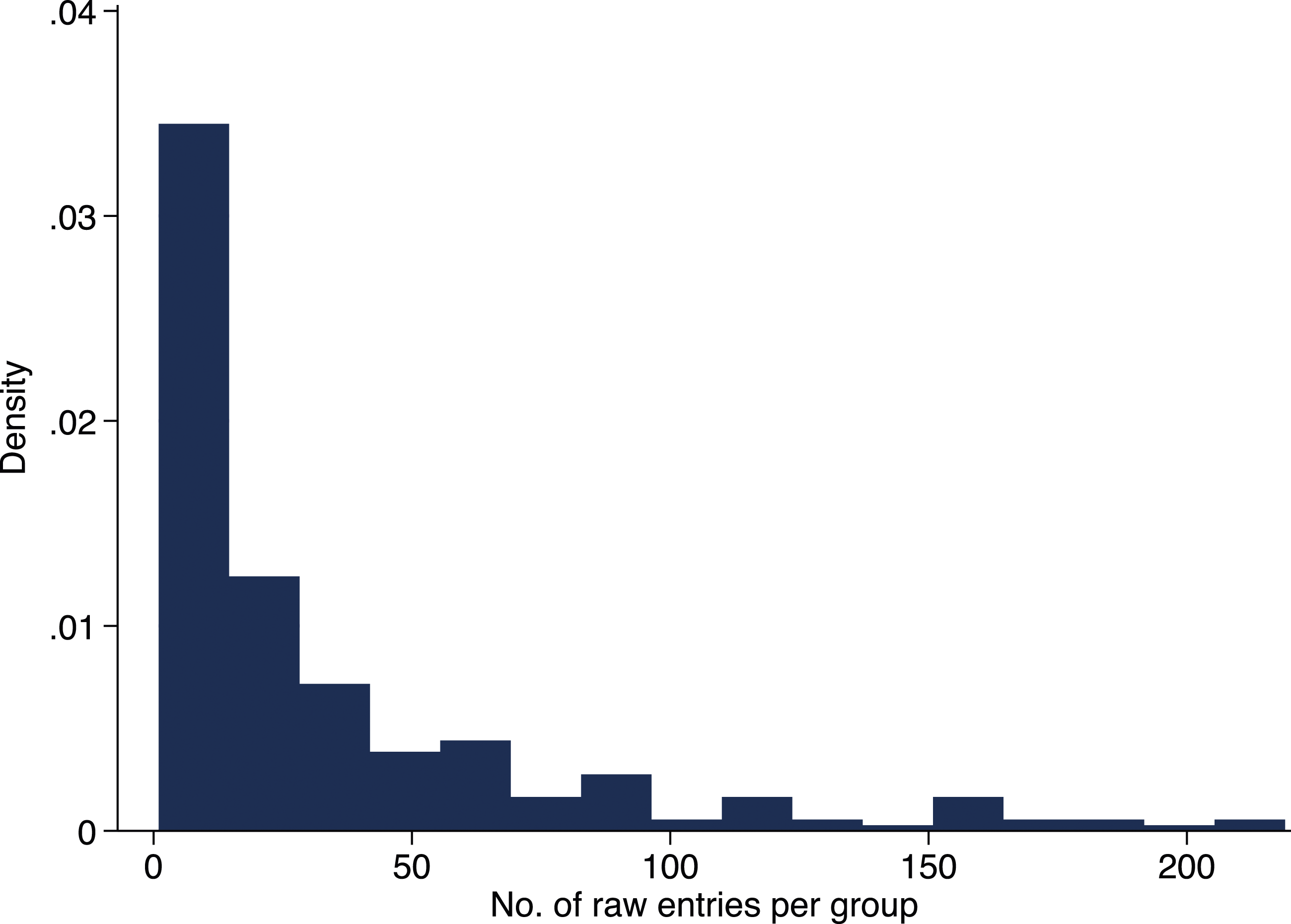
To assess the prevalence of various types of arms, Figure 3(a) presents an overview of the number of entries documented for each of the 15 categories of specific arms. Small arms have long been posited as the main cause of fatalities in civil conflicts (cf. Wille and Krause 2005), and the data confirm their ubiquity: most entries, almost 25 percent, fall into the category of “rifles and shotguns”. In contrast, the category ‘missiles, rockets, and grenade launchers’ constitutes the second largest share, accounting for approximately 20 percent of all entries. Interestingly, MANPADS are distributed among numerous groups, indicating their commonality among rebel forces. The category with the third highest number of entries is explosives. A high number of entries were also recorded for major weapons, notably tanks, armored vehicles, and aircraft. In contrast, only 10 instances of boats and ships with military applications were identified, making it the category with the fewest entries. Entries per group and per type of evidence. (a) Number of entries per arms category, (b) number of entries per type of evidence.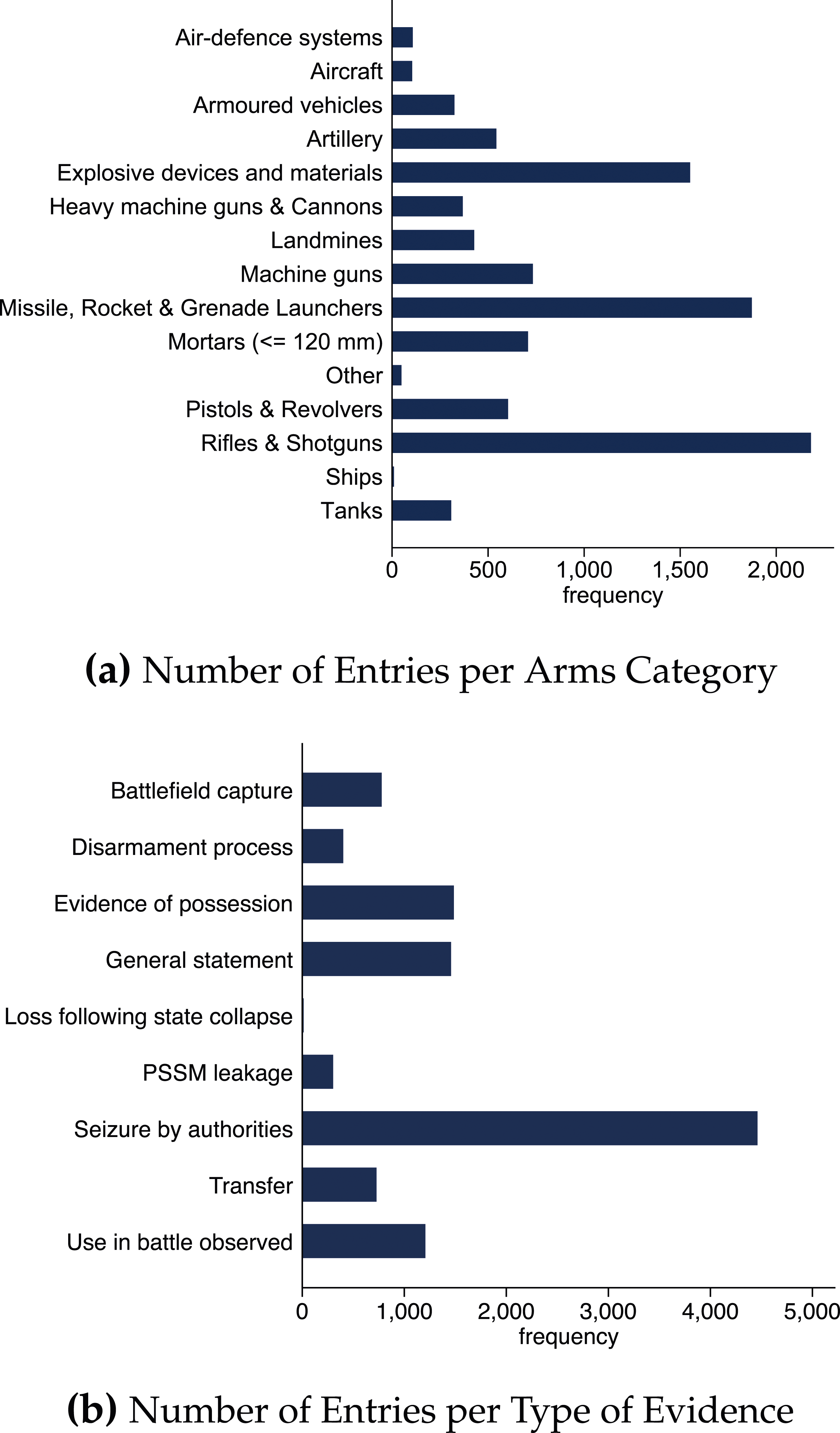
Figure 3(b) illustrates the distribution of entries across various types of evidence. Notably, over 40 percent of all entries are derived from seizures conducted by authorities. This predominance is attributable to the fact that data collection is confined to reported evidence, and security forces tend to publicly disclose the outcomes of police or military operations targeting rebel armaments. Consequently, seizures have emerged as the most important source of information, supplemented by data on the possession of specific types of arms, general statements lacking specific evidence, and battlefield usage reported or observed by state forces. Importantly, only 5.3 percent of all cases pertain to arms transfers. 6 This finding corroborates our hypothesis that exclusive reliance on arms transfer data would offer limited insights into the military capabilities of rebels. Nevertheless, when available, such information was incorporated into the dataset as a potential source of a group’s weaponry.
A comprehensive evaluation of each group’s military arsenal would be beyond the scope of this article. Figure 4 shows the distribution of the average levels of armament in all groups, classified into four primary types: small arms, light weapons, explosives, and major weapons. The median value is 1.625, and the 75th percentile is 2.25. Notably, 43 groups exhibit an average score of 3 or higher. Thirty-eight groups achieve at least a score of 2 in each of these categories, while 16 groups attain a score of at least 3. Nevertheless, these averages mask the reality that far fewer groups possess high levels of major weapons, with only 26 groups scoring a ‘3’ and 10 groups achieving a ‘4’. Distribution of average values for the main arms categories (only groups with at least one entry).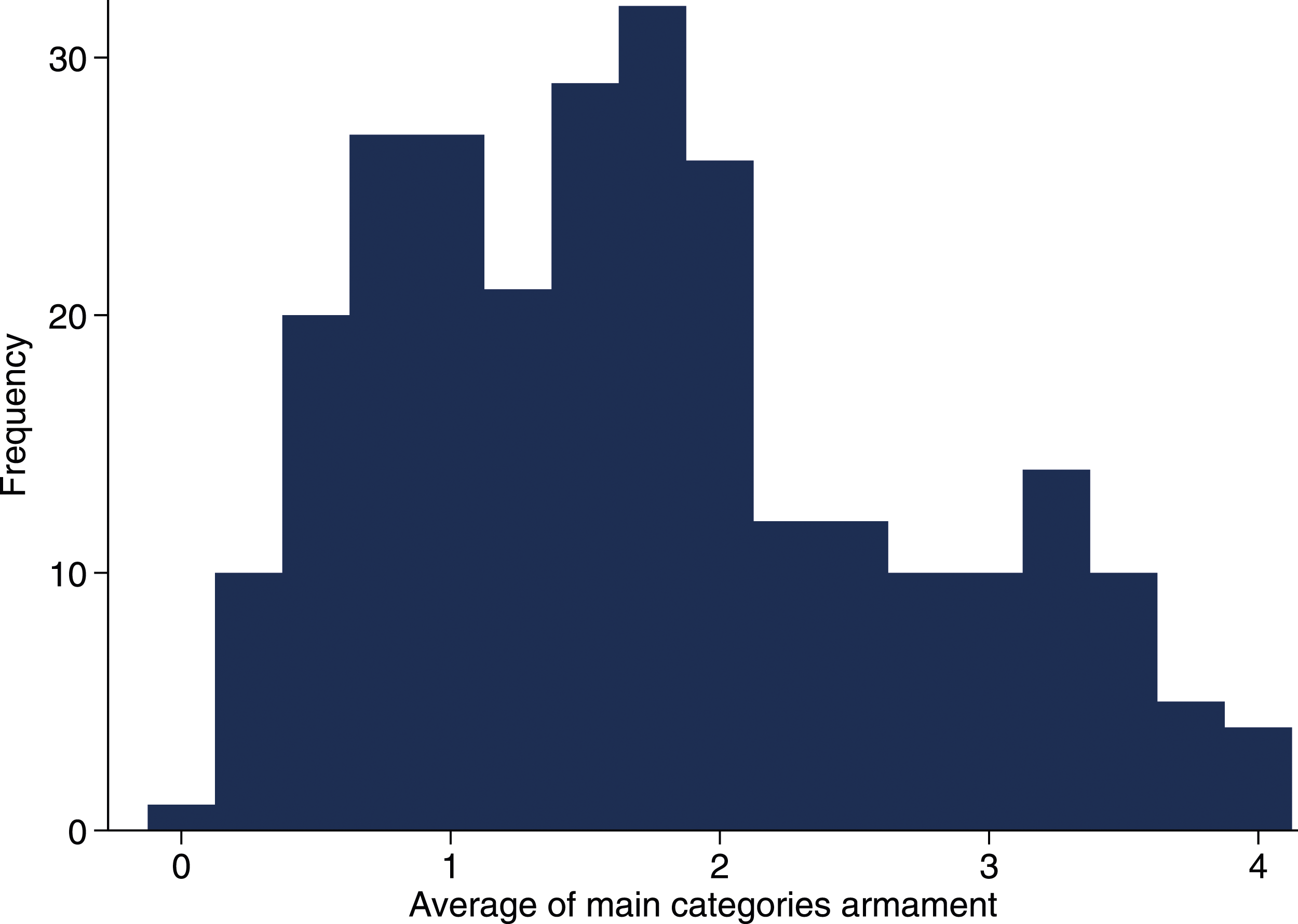
In stark contrast to other categories, major conventional weapons, such as tanks or aircraft, are documented for only a limited number of groups, with more than 140 groups lacking any recorded major weapons. Ten groups exhibit the highest levels of possession. The primary type of major conventional weapons acquired and utilized by rebel groups comprises artillery, which predominantly includes howitzers and anti-tank guns, alongside missile systems.
Spearman Rank Correlations Between the Four Arms Categories.
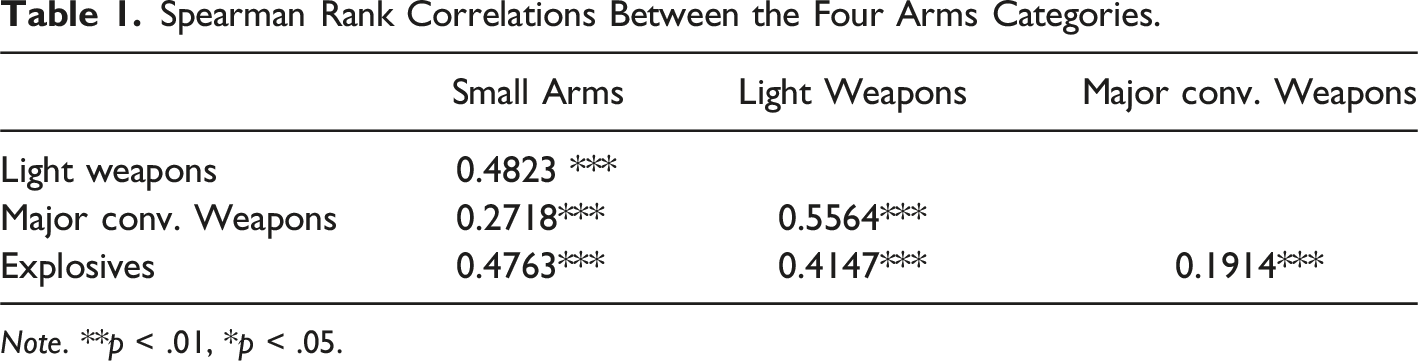
Note. **p < .01, *p < .05.
Group-year Data
For the time-series iteration of the dataset, an effort was made to allocate the collected evidence to specific years. Figure 5(a) illustrates the averages of armaments across all groups in the four main categories from 1989 to 2020. These averages remained constant over this period. Notably, the armament of major weapons initially decreased but saw an increase in the 2010s, while evidence for explosives showed an increase during the 1990s followed by a slight decline post-2016. It is promising that there are no upward trends within these time series, indicating that the data collection and aggregation process has not led to a temporal accumulation of evidence on armaments. Implementing a five-year time-shift window according to the type of evidence ensures that arms no longer available to rebels are excluded from future counts. It is crucial to acknowledge that the stability of average armament levels conceals the variability over time for numerous groups. For illustrative purposes, Figure 5(b) presents the time series of four heavily armed groups. Some groups, such as Hezbollah, display consistently high armament levels, whereas others, including FARC, LTTE, or UNITA, exhibit much higher variations over time. Groups’ armament levels over time. (a) Time-series of armament averages (only groups with at least one entry) (b) Examples of groups’ armament averages time-series.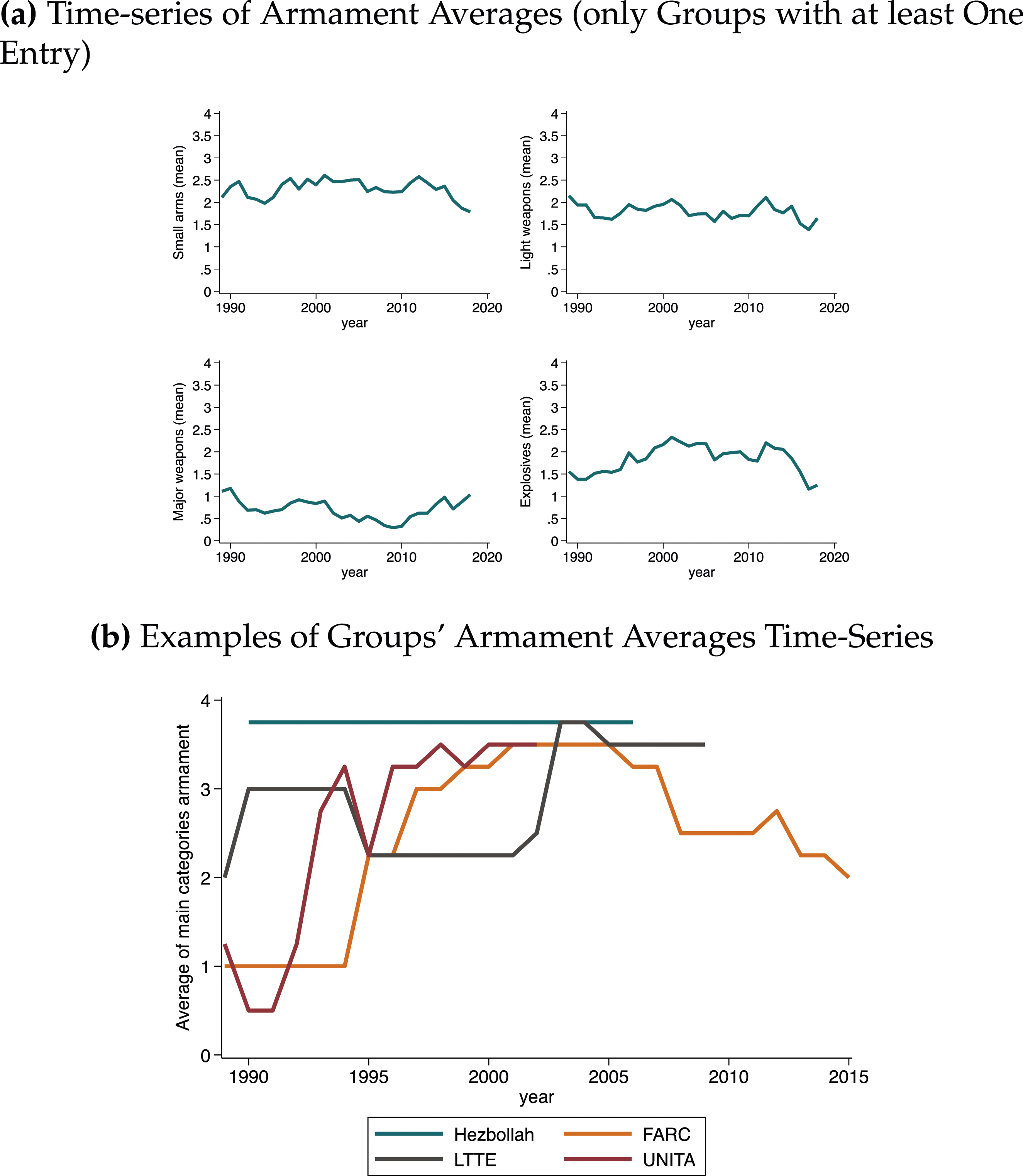
Comparing RAD with the NSA Dataset
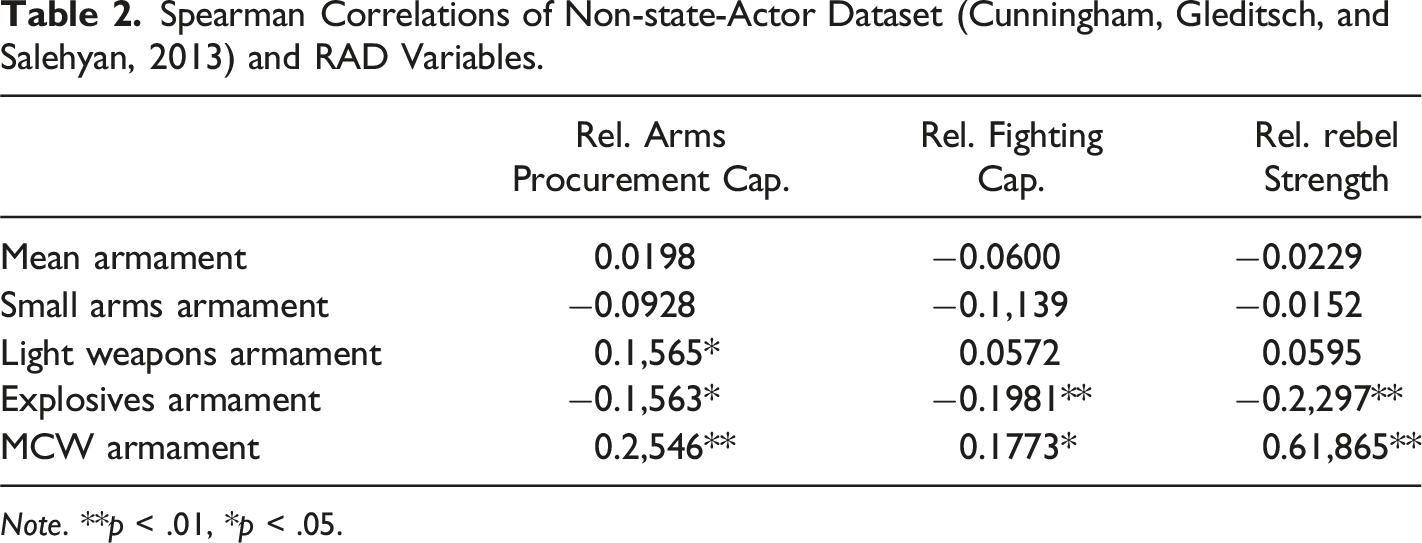
As mentioned previously, the dataset provided by (Cunningham, Gleditsch, and Salehyan 2013) includes information on the armament capacities of rebel groups, covering 462 non-state actors involved in civil conflicts from 1945 to 2011. In comparison, our dataset extends from 1989 to 2020, with an overlap of 196 groups represented in both datasets, for which we acquired reliable armament data.
Spearman Correlations of Non-state-Actor Dataset (Cunningham, Gleditsch, and Salehyan, 2013) and RAD Variables.
Note. **p < .01, *p < .05.
Concurrently, explosives exhibit a significant correlation negatively. Although this observation may appear counterintuitive, it does suggest an endogeneity of military capabilities and combat strategies. Groups with limited access to conventional warfare weapons often resort to guerrilla and potentially terrorist tactics (cf. Kalyvas and Balcells 2010). Consequently, the possession of large quantities of explosives is partly attributable to what the NSA dataset classifies as low “rebel strength”.
It is not unexpected that these correlations are low. An examination of the NSA’s case description notes for each rebel group (see https://ksgleditsch.com/data/NSAEX_casedesc.pdf) reveals that the assessment of relative rebel strength is predominantly based on the number of rebel troops rather than on their armaments. Moreover, estimates for many groups are derived from a limited number of sources, which provide scant information on armaments. In contrast, RAD employs a multitude of sources, including numerous media reports. Consequently, the two datasets encapsulate distinct concepts. The NSA dataset evaluates the relative capabilities of rebel groups primarily through the lens of troop numbers, whereas RAD offers a comprehensive portrayal of the armaments at the disposal of these groups.
An Empirical Analysis of Rebel Armaments and Civilian Suffering in Civil Wars
As discussed above, there are many possible applications for RAD. We demonstrate its use by empirically analyzing the implications of different levels of armament on civilian suffering in intrastate conflicts. We chose this example for two reasons: first, it uses rebel armaments as an independent variable of interest, which we expect will be a very common application of our data. Second, it relates to two important strands of research. One focuses on the role of military technologies in insurgencies, and the other examines the effects of government force mechanization.
An important contribution to the former was made by (Kalyvas and Balcells 2010) who introduced the concept of “technologies of rebellion”, which captures “both the relative military capacity of states and rebels and their interaction” (Balcells and Kalyvas 2014: 1391). They distinguish between four potential technologies of rebellion: conventional, irregular, and symmetric non-conventional (SNC) warfare as well as coups. In irregular warfare, the military technologies of the state significantly surpass those of only lightly armed rebels. Conventional warfare involves the use of a large number of conventional weapons on both sides and is characterized by direct military confrontations. Symmetric non-conventional warfare is characterized by low levels of MCW armaments on both sides. 7 Due to the unavailability of rebel data, they had to rely on qualitative studies and the judgments of country experts to code whether rebels or governments “relied on military technology predominantly characterized by the use (a) of heavy armor and weaponry or (b) light weaponry” (Kalyvas and Balcells 2010, Appendix, 1). Hence, they could not measure rebel armament levels directly and simply observed what type of fighting occurred (conventional, irregular, non-conventional). RAD allows us to directly measure the types and volumes of military technologies available to rebel groups.
Research investigating the impact of government force mechanization on counterinsurgency effectiveness (Caverley and Sechser 2017; Lyall and Wilson 2009; Van Wie and Walden 2023) and civilian suffering (Mehrl 2023) provides a different perspective. ’Mechanization’ is defined as the proportion of tanks and armored vehicles to troop levels that governments are capable of deploying. This body of work posits that the degree of government mechanization affects the military strategies employed by both government and rebel forces, which may have detrimental effects on civilian populations. To date, this research has exclusively considered the mechanization of government troops. RAD, however, also allows for explicit consideration of armament levels and thus mechanization of rebel forces.
These two strands of research not only investigate civilian killings as a dependent variable, but also analyze other important aspects, such as the duration and outcomes of conflicts. Civilian suffering was selected as the outcome variable due to its prominence in the literature on conflict and its political significance. While Balcells and Kalyvas (2014) and Mehrl (2023) focus on the intentional targeting of civilians, we explore the impact of rebel and government armaments on non-targeted civilian casualties, a dimension not previously examined within this context.
Dependent and Independent Variables
We measure civilian suffering by the number of civilian fatalities due to the fighting between state and rebel forces. We use the UCDP Georeferenced Event Dataset (GED) Global version 23.1 (Davies, Pettersson, and Öberg 2023; Sundberg and Melander 2013) and aggregated the number of civilian casualties in the rebel-government conflict dyad-year. 8
For the selection of our independent variables, we initially reconstructed the dummy variables as used by Kalyvas and Balcells (2010). We utilize RAD to quantify the levels of armament of the rebel groups. The armament levels of opposing governments are assessed using the Distribution of Military Capabilities Dataset (rDMC) (Gannon 2023) and the Military Balance Plus database from the Institute of International Strategic Studies (IISS), which provides detailed information on the composition of military capabilities of states. Military technologies that are extraneous to intrastate warfare (e.g., intercontinental and medium-range ballistic missiles) have been excluded from consideration. This dataset exclusively captures major conventional weapons, including tanks, armored vehicles, artillery, aircraft, and ships, thus serving also as an indicator of the mechanization of government forces. We utilized this dataset to reconstitute the dummy variables ’technology of conflict’ referenced in Balcells and Kalyvas (2014). An ordinal score of at least 2 serves as a threshold (correlating to numerical quantities of 10 or more units of weaponry) to denote access to major conventional weapons. Should both conflicting parties exceed this threshold, we classify the conflict-year as conventional warfare, whereas if only the government surpasses this threshold, the conflict is classified as irregular (symmetric non-conventional) warfare. To ensure the robustness of our findings, a higher threshold of 100 major conventional weapons (MCW score of 3) possessed by each conflict party is also implemented.
Given that our dataset provides much more detailed information than binary dummy variables, we also employ models utilizing ordinal variables to represent rebels’ armament levels for major conventional weapons (MCW), light weapons (LW), small arms (SA), and explosives. Although it is outside the purview of this article to further disaggregate the analysis and investigate the impact of the 14 distinct weapon categories on civilian casualties, RAD undeniably facilitates more granular analyses to be conducted in future research.
The selection of control variables is closely aligned with the framework established by Balcells and Kalyvas (2014), with slight modifications. The variables included are the Polity IV index (Marshall and Gurr 2020), the logarithm of GDP per capita (Bolt et al. 2018), the share of oil rents in GDP (World Bank Group 2023), the proportion of discriminated populations (Girardin et al. 2015), and the share of mountainous terrain (as an extension of Fearon and Laitin 2003), along with dummy variables representing the region (Davies, Pettersson, and Öberg 2023). The unit of observation is the conflict dyad-year, encompassing data from 1990 to 2017. This analysis includes 117 conflicts involving 195 rebel groups and 63 governments, totaling 220 dyads.
Empirical Results
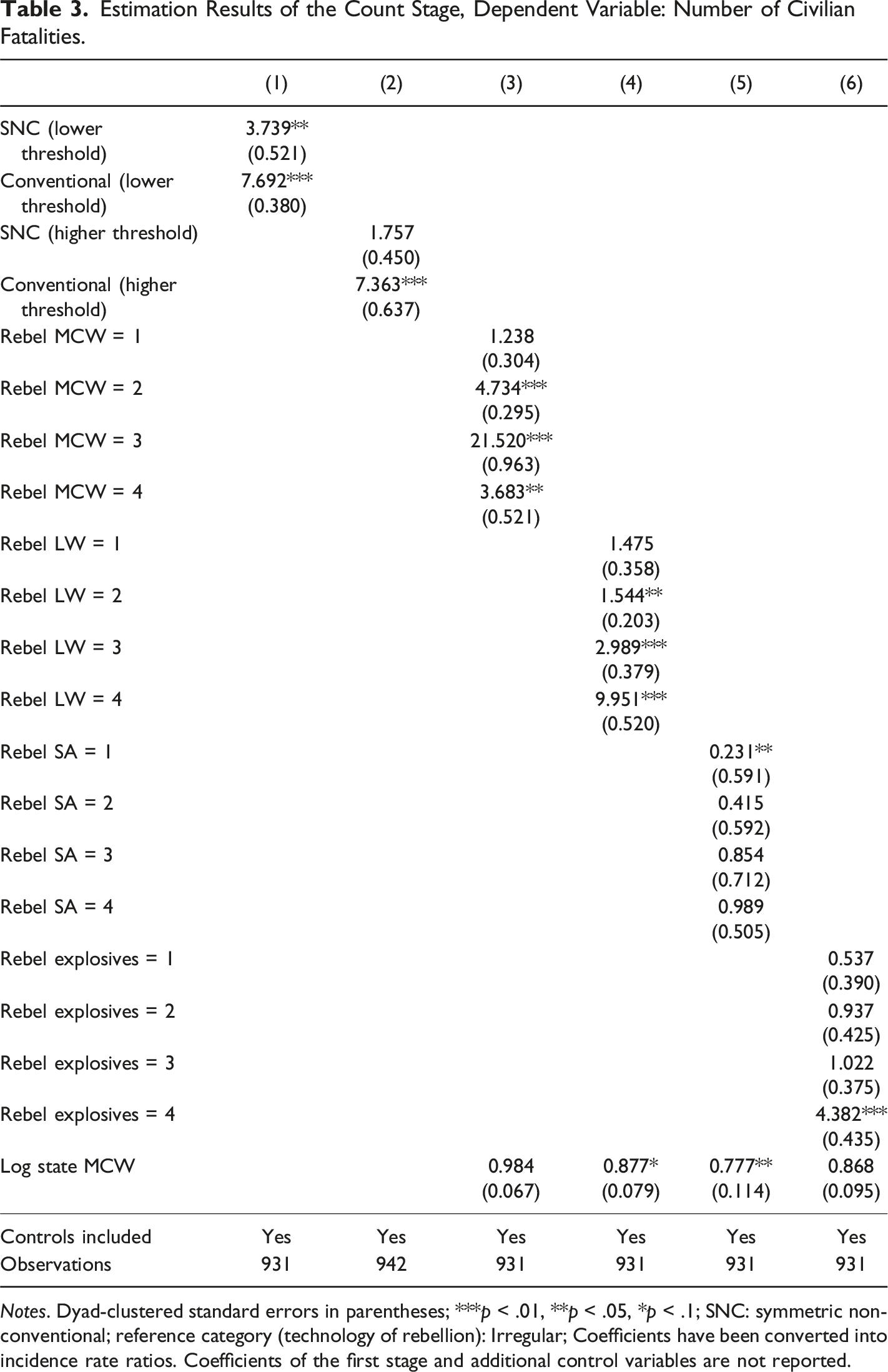
Estimation Results of the Count Stage, Dependent Variable: Number of Civilian Fatalities.
Notes. Dyad-clustered standard errors in parentheses; ***p < .01, **p < .05, *p < .1; SNC: symmetric non-conventional; reference category (technology of rebellion): Irregular; Coefficients have been converted into incidence rate ratios. Coefficients of the first stage and additional control variables are not reported.
Regarding the ‘technologies of rebellion’ indicators, we find a statistically significant and positive impact of conventional civil wars on battle-related civilian casualties, irrespective of the coding rules concerning the minimum MCW threshold. The findings suggest that conventionally conducted civil wars result in fatalities that are seven and a half times greater than those occurring in conflicts characterized by irregular engagement. This observation is consistent with the understanding that conventional warfare typically involves a higher frequency of large-scale engagements between opposing forces, leading to an increased number of civilian deaths. Additionally, the results demonstrate a higher mortality rate in symmetric non-conventional conflicts than in irregular ones. However, this finding lacks statistical significance under a more stringent definition of conventional warfare (i.e., a higher MCW threshold).
An examination of the ordinal variables reveals some noteworthy findings. A higher quantity of major conventional weapons correlates with an increased magnitude of battle-related civilian casualties. Conflicts in which rebel groups achieve a score of 3 exhibit, on average, 21 times more casualties compared to conflicts in which rebels lack any major weapons. 9 This is plausible, as the increased and often more indiscriminate firepower inherent in these weapons results in greater collateral damage, thereby increasing civilian casualties. A similar pattern is observed with light weapons, which possess significantly greater firepower than small arms. Rebel groups with a light weapons score of 4 are typically engaged in conflicts that result in nearly ten times more civilian deaths compared to groups lacking any light weapons. In contrast, a high presence of small arms does not correlate with a higher number of civilian casualties. Regarding explosives, only the highest ordinal category (‘4’) shows a significant incidence rate ratio exceeding one. Explosives primarily consist of improvised explosive devices (IEDs) and mines, which tend to escalate fatalities when deployed extensively.
Notably, the possession of major weapons by governments is generally associated with a reduction in battle-related civilian casualties and often does not reach statistical significance. This observation is consistent with the findings of Mehrl (2023) and Van Wie and Walden (2023). Van Wie and Walden (2023) examine micro-data from U.S. counterinsurgency operations in Iraq and find evidence of what they refer to as ‘armored restraint.’ Mehrl (2023) conducts analyses on a large sample to determine whether the level of mechanization in the governmental forces influences the targeting of civilians by both the government and the rebel forces. He concludes that higher levels of force mechanization do not significantly impact intentional civilian deaths caused by government armies, but are associated with increased deaths perpetrated by rebel forces. This pattern is attributed to changes in rebel behavior in response to increased levels of government force mechanization. Due to data limitations, he was unable to account for the armament levels of rebel groups. Our study not only corroborates the observed patterns, albeit focusing on battle-related fatalities, but also indicates that these outcomes are likely influenced by the amount of major conventional and light weapons possessed by rebel groups. Only those groups with sizable armament capabilities are equipped to inflict a considerable number of civilian casualties. This further implies that higher levels of government force mechanization may not be causally independent of the armament levels of rebels, as they may partially represent a response to actual or anticipated rebel armaments and capabilities.
We conducted robustness checks on our results using several approaches. Given that rebel armament levels may be influenced by external military support, which could concurrently affect civilian casualties, we incorporated external support for both governments and rebels as additional control variables. This inclusion did not fundamentally alter our conclusions (see Table 3 in the Online Appendix). To ensure that our findings are not contingent on the assumptions used in the construction of the time-series version of RAD, we re-estimated all our models using group-specific variables that exclude temporal variations in armament levels. This approach resulted in only minor differences and did not alter our conclusions (see Table 2 in the Online Appendix). Lastly, we considered the potential for post-treatment bias in Model 3 (see Table 3 in the Online Appendix). As government stockpiles and battlefield captures are vital sources for rebel groups, the impact of state MCW on civilian fatalities could be mediated by rebel MCW levels. When Rebel MCW is excluded from the specification, the negative effect of State MCW remains, albeit with increased statistical significance.
It is imperative to recognize two important caveats when comparing our findings with prior studies. First, our dependent variable captures battle-related civilian fatalities instead of intentional civilian killing. Secondly, although our dataset begins in 1989, Balcells and Kalyvas (2014) while the earlier literature on force mechanization (e.g., Caverley and Sechser 2017; Lyall and Wilson 2009) span extended periods, including the Cold War. Consequently, our application cannot and should not be regarded as a replication study that controls for rebel armaments. Taking into account these differences, several insights emerge from our empirical application. Firstly, we can ascertain that the ‘technologies of rebellion’ are indeed very important. Conventional warfare results in a higher number of battle-related civilian fatalities compared to irregular conflicts. It should be noted that Balcells and Kalyvas (2014) reported negative effects for both conventional and non-symmetric non-conventional warfare; however, their analysis focused on the intentional targeting of civilians. In addition, they observed an increase in military deaths associated with conventional warfare. Secondly, higher levels of light and heavy weaponry among rebel groups correlate with increased civilian suffering, although this pattern does not extend to small arms. Third, increased government MCW levels are not associated with an escalation in civilian fatalities but rather contribute to their reduction. This finding is consistent with the “armored restraint” hypothesis within the literature, which posits that more heavily armored government forces exercise greater restraint towards civilian populations. However, the expectation within this literature that rebels will respond with increased civilian targeting may not be entirely accurate, as this response is contingent upon the types of arms available to them. Furthermore, the assumption of Mehrl (2023) and others that rebels alter their behavior in response to the increased mechanization of government forces may represent only a partial explanation. Instead, higher government MCW levels might inadvertently augment rebel MCW arsenals, thereby enabling greater intensity of violence. These findings suggest that research on the effectiveness and consequences of government force mechanization should consider the armament levels of rebel groups to avoid potential omitted variable bias. Thankfully, RAD provides the necessary data to incorporate this critical dimension in future studies.
Data Limitations and Biases
RAD provides a wide array of valuable information pertinent to quantitative, qualitative, and policy-oriented research. However, users need to recognize the limitations and potential biases arising from the data collection process. First, there exists a potential reporting bias as evidence could only be collected when it was publicly accessible. Rebels predominantly utilize illicit acquisition channels, the usage of specific types of weapons in conflicts is frequently under-documented, transfers of externally supplied weapons often occur without official recognition, and governments sometimes endeavor to conceal losses from their stockpiles. This phenomenon elucidates why more than 40 percent of the data entries are based on seizures by authorities. Nonetheless, a substantial amount of evidence was found, particularly for larger groups engaged in more severe conflicts. The 270 groups for which information on their armaments was recorded were involved in conflicts with an average of 3,154 battle-related (military) fatalities. In contrast, the 75 groups without recorded information engaged in conflicts with an average of only 485 deaths. An examination of sources revealed that the number of civilian deaths did not significantly influence the likelihood of reporting on rebel armaments. Thus, when interpreting the data and the statistical results derived from it, users of RAD should consider that the missingness is non-random and that there was a lower probability of obtaining comprehensive evidence on armaments for very small groups engaged in less intense conflicts.
Relying exclusively on public information introduces potential language bias, which may impede the acquisition of evidence for certain groups. However, the NISAT document library, a primary source of information for RAD, includes translated reports in various languages, including Spanish and French. Despite this, web searches and additional sourcing were conducted primarily in English, thus risking the omission of evidence available in other languages. Moreover, the national affiliation of a news organization may skew the reporting toward conflicts or groups deemed politically or geographically salient. However, we posit that our extensive use of multiple sources (see Figure 1) has probably mitigated this problem.
It should be noted that there is considerable variance in the number of data entries between different groups (see Figure 2). It is inherently challenging to establish an a priori threshold for what constitutes a sufficient number of entries. This determination depends on the longevity of the groups and the informational content of individual pieces of evidence. In instances where the number of entries is minimal, our data should be interpreted as a conservative estimation of the potential armaments of the respective group. RAD enumerates the data entries for each group. By utilizing the information contained within the data source file, users can assess the quantity and reliability of information available for each group. This allows for the construction of confidence measures and various reliability thresholds.
When using rebel armaments as an independent variable, it is important to recognize that rebels obtain some of their weaponry from government sources through looting, leakage, and battlefield captures. Thus, rebel armaments are partially determined by government armaments. 10 Therefore, researchers must always consider government capabilities. This can be accomplished by employing the MCW equipment data from Gannon (2023) and the Military Balance Plus database of the IISS, as utilized in our analysis. Although these datasets are limited to MCW, they are highly detailed and, in our opinion, superior to cruder measures of state capacities. In addition, these datasets can be combined with RAD to develop relative indices of military capabilities. As outlined in our earlier empirical application, post-treatment bias might occur due to this endogeneity, depending on the research question and econometric strategy. Researchers should account for this in their empirical designs and result interpretations. Dworschak (2023) offers an in-depth discussion on this issue in conflict research and suggests mitigation strategies.
Finally, with regard to the time-series version of the dataset, it is crucial to acknowledge the inherent challenges in capturing the temporal possession of arms by rebel groups. The critical questions include: for what duration did the group possess the weapon prior to and following its use in a battle? How long after its acquisition from a government stockpile was it retained? Addressing the temporal dimension necessitates a trade-off. Including only data for which the source material specifies explicit temporal existence (typically a specific year) minimizes the necessity to make strong assumptions but results in a somewhat incomplete and discontinuous time series. Furthermore, the temporal depiction would be inaccurate due to the erroneous average assumption that these arms are only in possession within a single year. Alternatively, incorporating additional assumptions regarding temporal variation yields a more accurate overall representation. The methodology used to utilize shifting 5-year time windows, although not providing precise annual observations, generates a smoothed time series that more effectively captures temporal dynamics compared to disparate individual observations. Given the availability of the source data file, users who question our approach can reconstruct these time series using different assumptions and techniques. It remains imperative for researchers to understand how the time-series data were constructed and to validate the robustness of their findings using the group-specific, non-time-series version of the data, conflict spells as opposed to yearly data, or by experimenting with various moving multiple-year averages.
Conclusion
The Rebels Armament Dataset represents the first systematic assessment of the weaponry and technological capabilities held by rebel groups. This greatly enhances our insight into the availability of various military technologies to these non-state actors. It is the starting point of an ongoing initiative to create an exhaustive data source that evaluates the military strengths of rebel organizations around the world. When merged with data on governmental military forces from the SIPRI and IISS Military Balance Plus databases, researchers will be able to more accurately gauge the armament levels and thus the military power of all factions in civil conflicts. In addition, our examination of the effects of rebel armaments on civilian casualties within intrastate conflicts highlights the considerable potential that RAD offers for empirical research.
Regarding future data collection, while reliance on historical data presents greater challenges than acquiring new evidence on current events, it is crucial to establish a persistent effort to integrate diverse data types to develop a more comprehensive understanding of rebel armament in the future. Besides the manual analysis of textual information, recently developed large language models present an opportunity to manage the vast amounts of data generated daily on the web and in print. An even greater potential for discovering pertinent evidence on rebel groups’ armament lies in the examination of image and video materials; modern technology, through rapidly advancing machine learning techniques, can facilitate the identification of patterns—such as specific types of weapons—in social media evidence. Integrating automated information analysis and extending it to visual media would enhance the quality of data on rebel armament. Nevertheless, the inherently clandestine nature of illicit armament and the situational complexities of battlefields will perpetually pose a formidable challenge to researchers striving for a deeper understanding of rebels’ military capabilities.
Supplemental Material
Supplemental Material - Introducing the Rebels’ Armament Dataset (RAD): Empirical Evidence on Rebel Military Capabilities
Supplemental Material for Introducing the Rebels’ Armament Dataset (RAD): Empirical Evidence on Rebel Military Capabilities by Oliver Pamp, Andreas Mehltretter, Paul Binder and Paul W. Thurner in Journal of Conflict Resolution
Supplemental Material
Supplemental Material - Introducing the Rebels’ Armament Dataset (RAD): Empirical Evidence on Rebel Military Capabilities
Supplemental Material for Introducing the Rebels’ Armament Dataset (RAD): Empirical Evidence on Rebel Military Capabilities by Oliver Pamp, Andreas Mehltretter, Paul Binder and Paul W. Thurner in Journal of Conflict Resolution
Footnotes
Declaration of Conflicting Interests
The author(s) declared no potential conflicts of interest with respect to the research, authorship, and/or publication of this article.
Funding
The author(s) disclosed receipt of the following financial support for the research, authorship, and/or publication of this article: Deutsche Stiftung Friedensforschung (FP 08/16-SP 08/12-2015).
Data Availability Statement
Both versions of the dataset and an accompanying Codebook are available at https://www.en.gsi.uni-muenchen.de/chairs/analysis/research/armstrade_intrastate/index.html. Replication files:  .
.
Supplemental Material
Supplemental material for this article is available online.
Notes
References
Supplementary Material
Please find the following supplemental material available below.
For Open Access articles published under a Creative Commons License, all supplemental material carries the same license as the article it is associated with.
For non-Open Access articles published, all supplemental material carries a non-exclusive license, and permission requests for re-use of supplemental material or any part of supplemental material shall be sent directly to the copyright owner as specified in the copyright notice associated with the article.
