



Abstract
This paper exploits the sharp escalation of violence in Colombia in the 1980s associated with the emergence of drug cartels to provide novel evidence on the long-run effects of violence exposure throughout the life-course, on children’s educational attainment and academic achievement using administrative data. I find that, a higher homicide rate in early-childhood is associated with a higher probability of school dropout and conditional on completing high school, lower scores on a national end-of-high school exam. Results are robust to several falsification tests, and analyses of potential sources of selection bias. I provide supportive evidence that changes in fetal, child, and adolescent health outcomes are important potential mechanisms.
Introduction
With recent demonstrations of violence and terrorism across the world, more attention has been focused on the adverse effects of violence. Unicef (2016, 2019) reported that one out of nine children is born and raised in countries affected by repeated cycles of criminal violence. While there is growing evidence documenting the contemporaneous effects of violence, there is little empirical evidence on the long-term cumulative impacts of these shocks and how they affect different dimensions of human capital. This gap in the literature is particularly important given the large body of research showing that adult outcomes are shaped by conditions experienced in early life (Almond et al. 2018).
This paper provides new evidence on the cumulative impacts of violence exposure over the life-course on long-term educational attainment and academic achievement using Colombian administrative data. I exploit a large and unprecedented rise in homicide rates during the 1980s, which was associated with the surge in drug trafficking (see Figure 1) triggered by a shift in the international demand for cocaine. Over the course of one decade, the homicide rate went from 0.3 homicides per 1,000 inhabitants to more than 0.8.
1
The escalation of crime was accompanied by a sharp spatial concentration of violence, with the urban, wealthiest, and more economically developed regions experiencing a dramatic ten-fold increase in homicide rates and with little change in violence in other places (see Appendix Figures 1 and 2). Homicide rate, 1962-2009 (homicides per 1,000 inhabitants). Sources: National Police Department (Colombia), National Institute of Statistics and Geography, INEGI (Mexico), Bureau of Justice Statistics (US).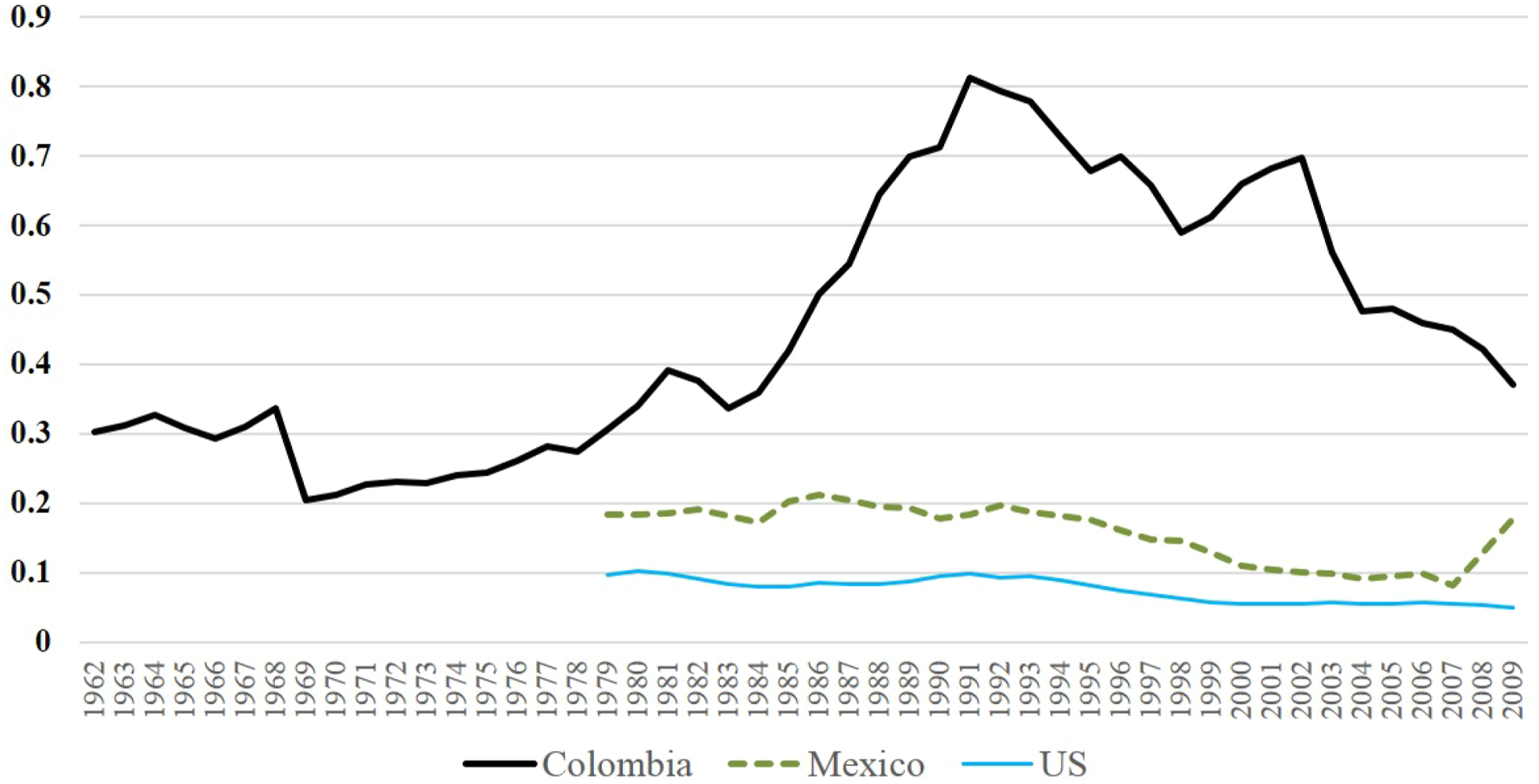
Linking students in public schools to the universe of the end-of-high school exam takers and to the universe of poor households in Colombia, allows me to observe long-term outcomes linked to location and exact date of birth for almost 430,000 individuals born in Colombia in the 1980s. The richness of the micro- and violence data enables me to measure violence exposures from in-utero up to adolescence. I focus on educational outcomes such as high school completion and end-of-high school national standardized test scores (as well as the separate math and language components of the exam) that broadly capture persistent health, cognitive, and non-cognitive impacts caused by early-life exposure to violence, as well as any potential compensatory and reinforcing parental or school investments.
To estimate the effects of violence on children’s education, the paper exploits the temporal and geographic variation in homicide rates across municipalities-months-years using a difference-in-difference framework that compares the outcomes of children born in different regions and years, thereby differentially exposed to the shock. The administrative data also allows me to identify a child’s siblings, so as a robustness check, I use an alternative specification which is a mother fixed-effect model that helps disentangle the effect of violence from other types of socioeconomic disadvantage that may correlate with educational outcomes.
Results suggest that, an increase of one standard deviation (SD) in homicide rates in childhood – which is equivalent to an increase in violence from the 25th- to the 75th-percentile in violence – is associated with a 15.0% increase in the probability of dropping out of high school (HS) and conditional on finishing HS, a 0.5 SD decline in the end-of-high school exam (Icfes). Analyses by subject show that the math and language components of the Icfes exam fall by 0.20 SD and 0.25 SD, respectively. These findings are robust to an extensive set of falsification tests and analyses of potential sources of selection bias such as migration, fertility, and survival.
Using household survey data, I then study potential mechanisms. Motivated by the child development literature (Almond et al. 2018), I focus on changes in child’s health and nutrition, as well as on parental investments before and after birth. I find that higher homicide rates negatively affect health at birth and early childhood health outcomes: a one SD increase in homicide rates during pregnancy leads to a higher probability of low birth weight (a 60% with respect to the outcome mean) and a significant decline in child’s height-for-age Z-scores (HAZ) (of 0.56 SD), a widely used indicator of child’s nutritional and health status. The decline in child’s height persists on to adulthood. Children exposed to high violence while in-utero and in childhood are significally shorter as adults, which is consistent with the idea that cognitive ability and height share similar inputs in the production function (Case et al. 2005; Case and Paxson 2008; Currie and Vogl 2013; Vogl 2014) and with previous research showing that adults’ height is mostly explained by conditions experienced in the first years of life (Victora et al. 2010) and in adolescence (Bundy et al. 2018).
In terms of family inputs, results show some supportive evidence that mothers are less likely to adopt compensatory behaviors such as breastfeeding and children are more likely to enter first grade “over-age” and to repeat a school grade. Results also show that children exposed to high homicide rates are more likely to live in households experiencing domestic violence and to witness this type of violence themselves. The findings suggest little evidence that violence affects the probability that a mother receives prenatal care or gets tetanus vaccination while pregnant; in fact, mothers are more likely to give birth at a clinic or hospital (as opposed to at home), suggesting that changes in access to healthcare may not be the primary mechanism explaining long-term declines in education.
This paper contributes to the body of research on the effects of violence on individual outcomes through the use of linked administrative data. This novel resource, which is often unavailable in studies focusing on developing countries, allows me to explore the long-run effects of violence on rich outcomes such as student’s test scores, which not only capture inputs into the production of human capital, but serve as a proxy for an individual’s future socioeconomic success (Currie and Thomas 2001; Ebenstein et al. 2016). In that sense, my results complement a small but growing literature providing empirical evidence on the short-term violence impacts on students’ learning (Brück, Di Maio and Miaari 2019; Monteiro and Rocha 2017; Rodriguez and Sánchez 2012; Haugan and Santos 2016).
This paper is also related to Leon (2012) and Galdo (2013) documenting how early-life exposure to Peru’s civil conflict affects education and wages. In addition to the use of richer data and more comprehensive outcomes, my paper adds to this literature by examining a context where the dynamics of violence was a more urban phenomenon resulting from the illegal activity of drug cartels rather than from guerrila groups, thus potentially informing future trends in countries experiencing similar types of shocks associated with drug trafficking and related organized crime (e.g., Mexico or countries in Central America). 2
While the paper focuses on a specific form of violence - criminal violence -, the empirical findings help inform the broad literature on civil and interstate wars and its effects on child development and education in at least three dimensions. First, while both forms of violence have pervasive effects on human capital, the mechanisms through which they operate may be different. For instance, it is well documented that during wars and conflicts, there is a profound disruption of the economic activity and social networks, infrastructure is destroyed, and families are forced to move. These channels are not necessarily associated with high urban crime, thereby the effects of violence resulting from this particular threat may likely operate through other (demand side-driven) channels such as biological, household economic factors, and/or behavioural responses (e.g., stress, changes in nutrition, changes in the home environment, changes in behaviour, etc.) rather than through changes in supply-side factors (e.g., destruction of schools and hospitals) (Akbulut-Yuksel 2014; Akresh and De Walque 2008; Chamarbagwala and Morán 2011; Shemyakina 2011; Galdo 2013; Akresh, Bagby, De Walque and Kazianga 2012). In that sense, the findings from this research can help inform the audience examining the effects on civil wars and interstate conflicts by isolating some of the potential pathways related to the shock.
Second, the strategic landscape of violence across the world is changing. Traditionally, conflicts have been associated with “inter-” or “intra-state” wars (Collier 2000; Kalyvas 2001, 2015; Gutiérrez-Sanín 2004); however, this new landscape involves a mix of local and cross-border organised criminal agents, socio-economic exclusion, and other threats. The United Nations reported that in 2017 more than 460,000 people around the world were killed in homicides — far more than the 89,000 people killed in armed conflicts that same year. Thus, analyzing the effects of criminal violence on child development contributes to our understanding on how current conflicts are and will continue to influence human development.
Third, there is a growing interest in the conflict literature to the eruptions of “criminal violence” that have reached war-like levels such as in Mexico. 3 The empirical setting of this study, which focuses on a massive escalation of urban violence, provides a unique opportunity to investigate the long-run effects of these types of shocks on human capital (see, for instance, Vargas and Caruso (2014)). Of note is, however, that by relying on the Census of the poor and other linked admin records, the data used in this paper is representative of the low-income population in Colombia and so the results should be interpreted accordingly.
The remainder of the paper is organized as follows. Section 2 introduces a theoretical framework that lays out the arguments and testable propositions that I empirically test later in the paper. Section 3 briefly describes the historical elements associated with the rise of violence in Colombia in the 1980s. Sections 4 and 5 present the different sources of microdata and the empirical strategy, and Section 6 shows the findings of the effects of violence on education using the difference-in-difference specification as well as the family fixed effects model, and provides some suggestive evidence on potential mechanisms. Lastly, Section 7 performs some robustness tests to show that the results can be interpreted as lower-bound estimates of the impact of violence on education and Section 8 concludes.
Theoretical Framework
In this section, I construct a theoretical framework to analyze how violence shocks affect children’s education, serving as a guide for the empirical results discussed later in the paper. I consider a model of optimal educational choice, which builds on standard human capital accumulation models (Becker 1964; Card 1999, 2001; Cunha and Heckman 2007). Individuals weigh the future returns from higher human capital accumulation against the opportunity cost of not working while attending school. I show that if violence affects human capital formation through reducing an individual’s initial stock of skills, violence exposure lowers the optimal educational attainment of affected individuals.
Model Setup
Time is discrete and lasts forever. The economy is populated by overlapping generations, each with a mass one of individuals indexed by i and by their birth period t ≥ 0, and who live for three periods, j = 0, 1, 2. Period j = 0 captures an initial stage (e.g., in-utero and childhood) in which an individual is exposed to a level of violence denoted v t . 4 Period j = 1 is a stage in which individuals accumulate human capital or work in the labor market (e.g., adolescence and/or young adulthood). At this stage, the individual is endowed with one unit of time that can be dedicated to attend school and accumulate human capital or to work in the labor market and earn a wage. Accumulating human capital leads to a higher wage in period j = 2 of their lives. Period j = 2 represents adulthood, in which all individuals are endowed with time and work.
Individuals have the following preferences:

In period 1, individuals can choose to study and accumulate human capital or to work and earn a wage. Their consumption is given by:


I assume that individuals arrive to period 1 with an endowed stock of skills

The central assumption of the model is that, the level of violence experienced by an individual in period 0 negatively affects the skills with which an individual arrives to period 1. That is

The problem of an individual is then to choose si,t ∈ {0, 1} to maximize (1) subject to the budget constraints (2)-(3), and the human capital accumulation constraint (4), taking as given {v
t
, ϵi,t, Xi,t}. Denote by
Optimal Schooling Decisions and Violence
In period 1, individuals make their school choice by comparing the value of attending school with that of not attending school:



From (6) and (7) one can show that individuals that attend school are those with idiosyncratic skills, ϵi,t, above a threshold, which depends on the level of violence experienced by the individual in period 0 and parental characteristics:
Given v
t
and X
it
, the individual attends school (i.e.,
See Appendix A. Lemma 1 implies that violence makes individuals less prone to attend school. As violence affects the ability of individuals to learn in school, the higher the level of violence, the lower the level of human capital that an individual accumulates at school, and the lower the wage they would earn if they would attend school. Therefore, individuals that experience higher violence require a higher idiosyncratic ability to be willing to give up to the wage they would earn would they work rather than attend school. Using this result, it is simple to characterize the effect of violence on the conditional expectation of the education of a cohort,
The conditional expectation function
See Appendix A. Consistent with this result, Section 6 provide evidence that as violence increases, the probability of high school graduation declines.
6
Moreover, the empirical results provide evidence on this pathway: As violence increases, test scores decline, suggesting that individuals who do not drop out but continue studying (i.e., complete high school) and who are exposed to violence, accumulate less human capital (i.e., lower test scores).
Literature on Potential Mechanisms
One of the model’s key assumptions is that violence affects individual’s abilities (∂g(v)/∂v < 0). In this subsection, I discuss some of the potential pathways through which violence could affect child development as documented in previous empirical research.
First, violence is a major source of stress and stress could have both a direct biological effect on the child (i.e., during pregnancy) as well as an indirect effect (after the child is born) through changes in maternal nutrition, family income, quality of the home environment, parenting ability, and health behaviors. Maternal stress during pregnancy can be particularly detrimental for fetal and newborn health and cognitive outcomes through its effects on the immune and behavioral systems. Research has shown that these types of “insults” can lead to permanent alterations in the body’s systems (Dunckel-Schetter 2011; Gluckman 2005) and the normal development of the brain, which in turn diminish the mental skills of infants (Huizink et al. 2003). In fact, some studies have associated maternal stress in pregnancy with lower schooling attainment and verbal IQ scores, and with higher incidence of chronic health conditions at age 7 (Aizer and Currie 2014) and later in life (Thompson 2012). In conjunction with prenatal stress, changes in prenatal nutrition and other health behaviors (e.g., limited healthcare access) have been linked to changes in children’s height (Stein and Lumey 2000; Kramer 1987; Victora et al. 2010; Bundy et al. 2018), a result that has been documented in the violence and human capital literature (Akresh et al. 2012; Duque 2017).
Second, stress (due to violence) may compromise the family environment by affecting parental mental health and family relationships, weakening parenting quality that in turn may hinder human capital development (Campbell 1991; Repetti et al. 2002). Sharkey et al. (2012), for example, found that local violence is positively associated with higher parental distress, suggesting that parental responses may be a likely pathway by which local violence affects young children. Lastly, violence could also limit the amount and quality of resources in the local community (supply-side mechanisms). For instance, it can disrupt the economy (i.e., reduce household economic resources), destroy infrastructure (e.g., hospitals, schools), reduce the quality of public services (e.g., exodus of skilled medical doctors, teachers), and limit investments (e.g., resources may be crowded away from education and healthcare to military spending), all of which affect human capital. 7
Using various household surveys and other auxiliary data, I examine some of these potential mechanisms including child’s health and nutrition, and household resources. Unfortunately, I am not able to directly measure stress due to a lack of data sources on biomarkers such as cortisol. Results on these potential pathways are shown in Section 6.5.
Background for Empirical Strategy
According to previous studies, police reports, and newspaper articles, there were three key main factors associated with the rise in violence in Colombia in the 1980s (Castillo 1987). 8 I summarize these below.
First, there was a dramatic increase in the international demand for cocaine in the early-1980s (United Nations 2012). This increase coincided with the introduction of crack cocaine in the U.S. markets – a cheap, addictive, and potent form of cocaine–, which represented an important technological change that lowered the price of illicit substances (i.e., cocaine) and expanded the market to a wider range of consumers (Fryer Jr et al. 2013). 9
Second, following the shift in the demand for cocaine (mainly from the U.S.), there was a rapid response in the supply of cocaine. Colombian traffickers of cannabis who by the late 1970s and early 1980s were smuggling small quantities of marijuana to the U.S., found enormous economic incentives in the “cocaine boom” of the mid 1980s (United Nations 2012; Castillo 1987; Thoumi 2002; Restrepo, Spagat and Vargas 2006).
Three elements were crucial to understand the rapid transition of Colombian marijuana traffickers to the cocaine industry: i) they already knew potential transportation routes to move drugs from South America to the U.S.; ii) they already had access to important distribution networks in some of the largest U.S. cities (e.g., Miami, NYC, and LA); and iii) they were strategically close to coca-leaf producing markets such as Bolivia and Peru.
Colombia only became a major coca leaf producer by the end of the 1980s (Sánchez 2007), so in the early 1980s, these trafficking organizations outsourced the coca paste from neighboring Andean countries that had historically produced it by its indigenous groups. The paste was later processed into pure cocaine in local laboratories and then transported to the U.S. (the main destination) and Europe (Castillo 1987; Thoumi 2002). The business grew so fast that by 1991, more than 80% of the cocaine that reached the United States had been produced in Colombia (Borrell 1988; Gaviria 2000; The Economist 1994; El Espectador 1986). Both the enormous profits derived from the drug industry and the attempts made by drug organizations to enforce their ‘property rights’, converted these small traffickers into powerful and violent drug cartels. One example was the infamous Medellin cartel, led by the drug lord Pablo Escobar.
A third factor associated with the rise of violence in the 1980s was the rapid transfer of criminal knowledge and criminal technology from drug traffickers to local criminals (Gaviria 2000). 10 One noteworthy characteristic of the rise of violence during this period was that not all regions in the country experienced the same intensity in violence (see Appendix Figure 1). For instance, while Medellin and Cali, the country’s second and third most important cities, faced an increase in homicide rates of 700% (going from 0.5 to 4 homicides per 1,000 inhabitants in 1980-91) and 300% (going from 0.3 to 1.2 homicides per 1,000 inhabitants in 1980-91), respectively, other important cities such as Tunja or Neiva experienced a smaller change. The concentration of homicide rates in large and wealthy areas was primarily explained by the fact that the cocaine industry was headquartered in these areas (Gaviria 2000) (see Appendix Figure 1).
In sum, the combination of these factors with an increasing tension between drug cartels and the Colombian authorities 11 , resulted in the massive rise in homicide rates observed in the 1980s (see Figure 1). 12 , 13
In this paper, I exploit the monthly-year-municipality level variation in homicide rates associated with the drug boom that started in the early 1980s and ended with the dismantle of the drug cartels in the early 1990s, to examine the effects of violence exposure over the life-curse on long-run educational outcomes.
Data
Microdata
I use several sources of large-scale administrative data that are described below.
The Universe of Students in Colombia’s Public Schools
This is the Ministry of Education student-level dataset that include information on all public-school students in Colombia since 2005. The data includes the first year a child entered a public school (e.g., first grade) up to high school graduation (or dropout). A unique advantage of using these data, is that it is the only data source that includes information on the exact municipality of birth for each student. In this paper, I use the data from 2005 to 2012.
The End-of-High School Exam: The Icfes
The Icfes is the Colombian HS-exit exam that all HS seniors take regardless of whether they intend to apply to college. It includes separate tests on math, Spanish, social studies, sciences, and an elective subject. For those who transition onto college, the Icfes score determines college and major entrance. I use information on all students who took this exam from 2000 to 2009.
The “Universe of the Poor”: The Sisben
The Sisben, offen referred to as the “census of the poor”, is a proxy means test used as a targeting mechanism for social programs in Colombia. This dataset include demographic and socioeconomic information on 33 million people, or 60% of the total population, providing the family background information on all students. While linking the education data to the Sisben may restrict the analysis to two thirds of the population, it is necessary to do so in order to identify a student’s family background. 14
I use restricted information on students’ and their parents’ full names (first and middle names and fathers’ and mothers’ maiden names), birth dates (day, month, year), and national identifications (type of ID document and number) to link individuals (and their families) across datasets.
Of note is that by restricting the sample to those individuals found in the Census of the poor, the analytic sample used in this paper is representative of the low-income population in Colombia and thus the results should be interpreted accordingly. 15
Sample of Interest
I focus on individuals between 17 and 24 years of age (i.e., those who were born in the 1980s in Colombia). I restrict the sample to these ages because these are the oldest cohorts in my sample and for whom I can observe their high school completion as well as their test scores at age 18. As shown in Appendix Table 1, this means that, the youngest cohort in my sample (that was born in 1989) will be 17 years of age in 2005 (the first year for which the administrative data are available), and 24 years of age in 2012 (the last data year). Similarly, the oldest cohort in my sample (that was born in 1980) will be 25 years old in 2005 and 29 years old in 2012. 16 I also restrict the sample to individuals with exact date and municipality of birth. The sample of interest in this paper includes 426,831 individuals (of which 262,123 are siblings).
Appendix Table 2 shows how the analytic sample was constructed. First, I selected individuals between ages 17 and 24 years of age (born in the 1980s) from the universe of students in public schools, a sample of 1.3 million individuals. After selecting those with complete information on municipality and exact date of birth, the sample reduces by 10%. I then merge these individuals to the “census of the poor”, which leads to 53% individuals being successfully matched. Of these, 100% have complete information on all individual and family covariates. Finally, I merge the sample to the violence data which leads to 98.7% being match (i.e., some municipalities do not have complete homicide information). Finally, I merge the sample to the Icfes data, leading to a final sample of 426,831 individuals.
Outcome Variables
The following list describes the outcomes of interest: (i) High school graduation, a dummy variable that takes the value of one when an individual has finished 11th grade and zero otherwise. (ii) End of high school test score (Icfes score), a continuous variable that ranges from 0 to 100 indicating the Icfes test score. The icfes includes separate modules on math, language (Spanish), and other subjects.
Appendix Table 3 shows summary statistics on the sample of young adults and their families in both the full sample as well as the mother FE sample. As a reference, columns 3 and 4 shows statistics using Census of 2005. Column 1 indicates that mothers in my sample are 45 years of age on average and the vast majority has primary education or less. Almost 40% are married, families have 5.7 members, 75% live in urban areas, and 73% have access to water and sewage. Column 1 also shows that mothers in the full sample exhibit higher levels of human capital and are more likely to be married than those in the MFE sample as shown in column 2. Compared to Census data (column 3), families in my sample are a more disadvantaged group, which is unsurprising given the fact that the administrative sample is representative of Colombia’s low-income population. Lastly, the bottom rows show outcome means. Only 42% graduate from high school (compared to 50% in the Census), and the average Icfes score is 43.0 points with SD 4.3 (the average math and language components are 44.4 and 46.2, with SD 7.3 and 7.0, respectively).
Data on Violence: Homicide Rates
Data on violence come from the National Police Department that provide information on homicides per municipality-year since 1979. I construct homicide rates by dividing this number by the total municipality-year population and multiplying it by 1,000. These measures are linked to the administrative data at the birth municipality, birth month-year level.
Exposure to Violence During Critical Stages of Human Capital Formation
Homicide Rates (Homicides Per 1,000 Inhabitants).
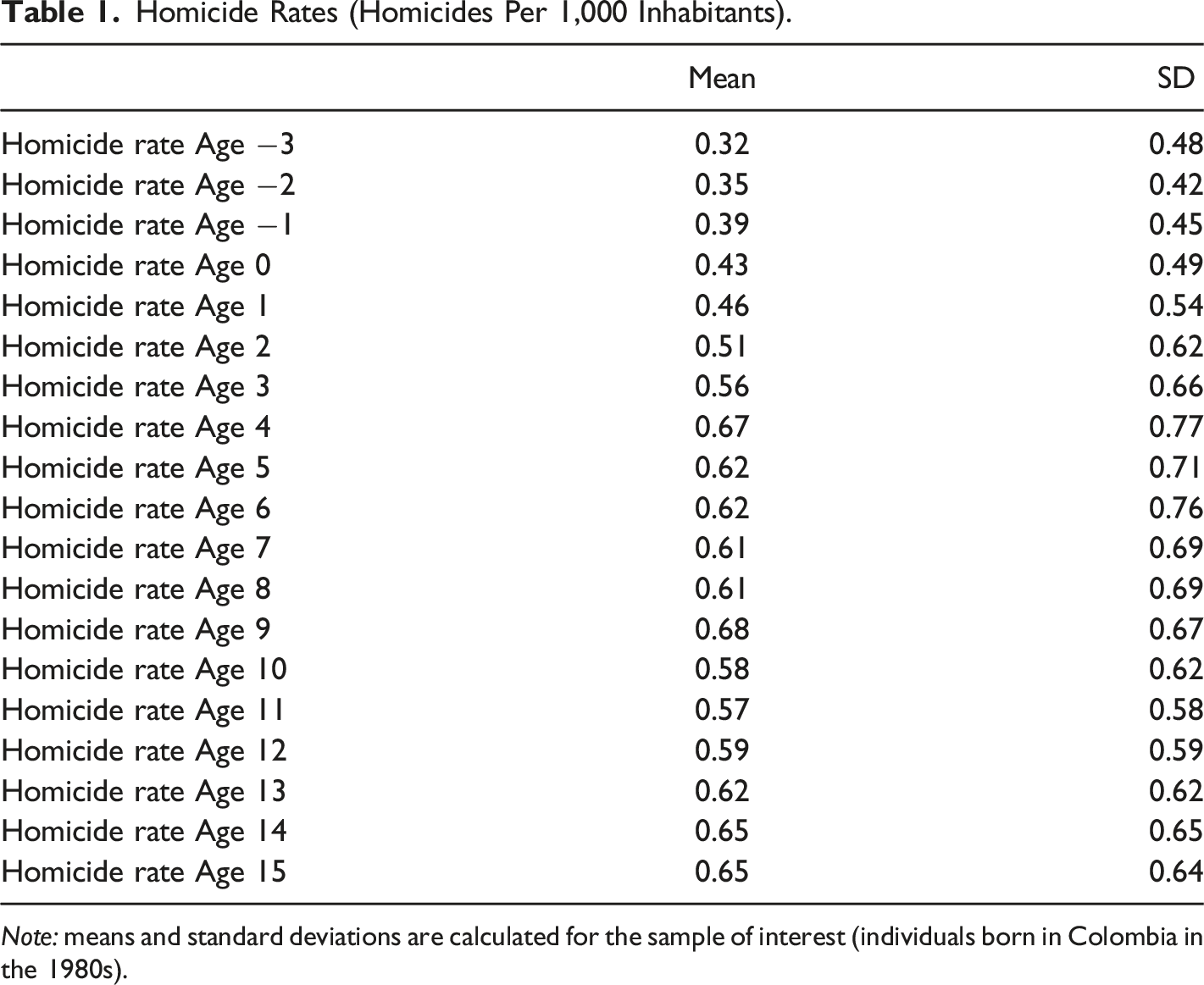
Note: means and standard deviations are calculated for the sample of interest (individuals born in Colombia in the 1980s).
Methods
I estimate the effects of violence over the life-course on educational outcomes using the following difference-in-difference model:
Alternative Identification Strategy
While the main identification strategy takes advantage of the large administrative sample and exploits the substantial geographic and temporal variation in violence, I also estimate a second regression model that controls for family fixed effects (FE), leveraging variation in violence exposure across siblings. This model allows me to control for observed and unobserved time-invariant characteristics of the mother (and family), which may be correlated with both the probability of residing in a municipality with high violence and with accumulating low levels of education. For instance, if a family belongs to a demographic group that is more likely to be impacted by violence, the family may also be less inclined to invest in their children’s human capital. Hence, the identification would come from differences in violence exposure across siblings, from the prenatal period up to age 15. Of note is that this model is only estimated among the sample of mothers with at least two children, therefore, the analytic sample employed here is smaller and according to Appendix Table 2, is also more disadvantaged.
Equation (9) describes the FE model:
The only covariates included in this equation are child’s sex and age in year dummies, birth order, and mother’s age, municipality, year, and month of a child’s birth dummies, and department-specific linear time trends as defined above. The term μ f indexes families.
Results
Household Characteristics and Violence Exposure
The Association Between Violence and Mothers’ Characteristics.
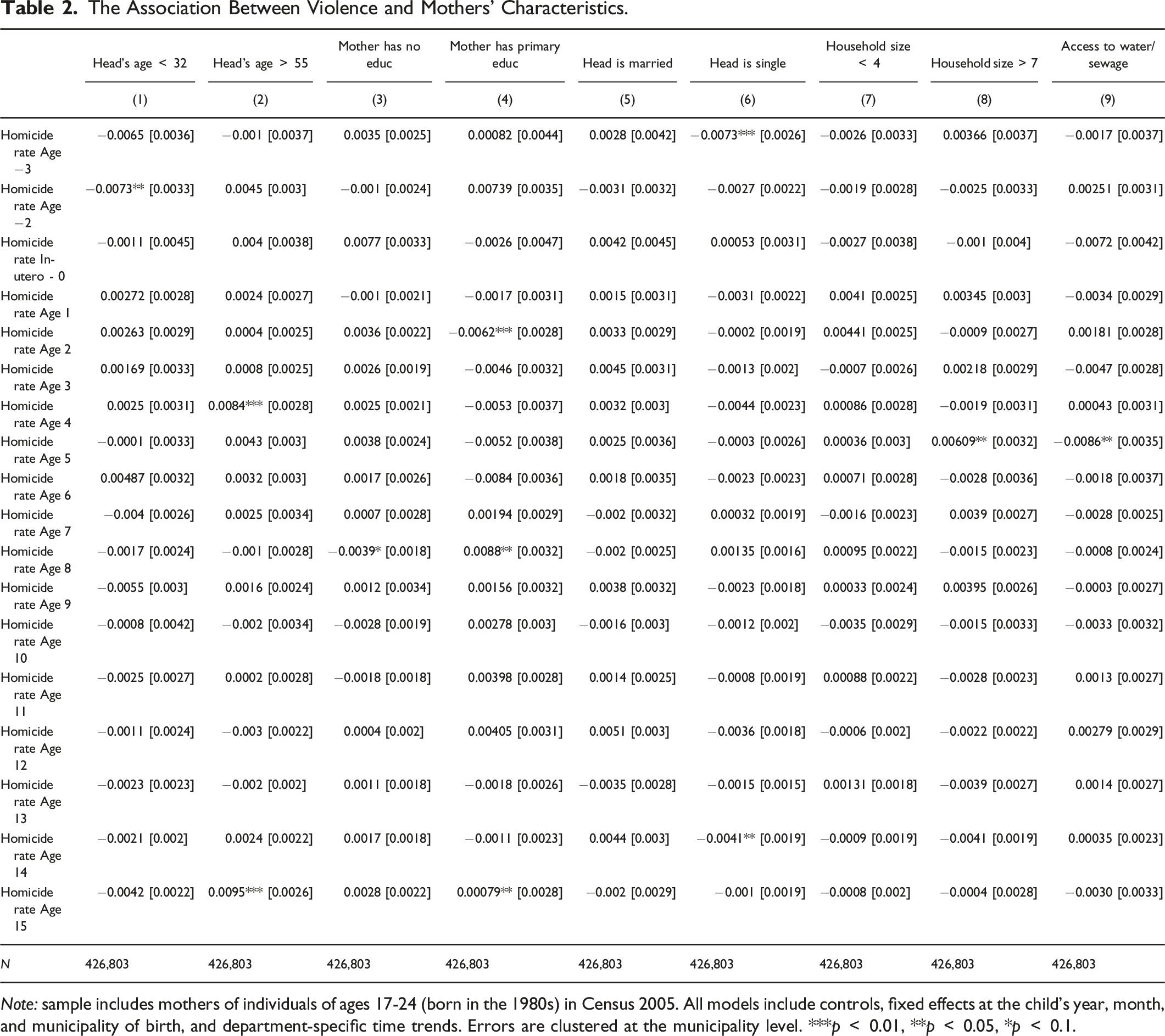
Note: sample includes mothers of individuals of ages 17-24 (born in the 1980s) in Census 2005. All models include controls, fixed effects at the child’s year, month, and municipality of birth, and department-specific time trends. Errors are clustered at the municipality level. ***p
High School Graduation
Figure 2 shows the effects of violence on the probability of HS graduation. Recent research suggests that early exposure to adverse shocks is worse for human capital than later shocks (Heckman 2007; Almond and Currie 2011), however, neither economics nor medicine offers sharp definitions about when these early stages end, except for the specific case of the in utero period. I find that exposure to high homicide rates from birth up to age 6 significantly reduces HS completion, while exposures at later stages do not. The magnitude of these early exposures could be interpreted as follows: an increase of an SD in homicide rates at the year of birth– which is equivalent to an increase in violence from the 25th percentile to the 75th percentile during the 1980s – reduces the outcome by 2.5%,
18
and if we consider that violence systematically increased during the period of interest (as shown in Figure 1 and in Table 1), the average child observed in the data is likely to have been exposed to a persistent level of violence (i.e., for approximately 6 years) resulting in an overall decline of 15% in the probability of finishing HS. The effects of violence on high school completion. Note: Sample includes individuals 17 to 24 (born in the 1980s) observed in the administrative data. All models include controls for sex, birth order, age, mother’s education, age, marital status, household size, household’s poverty level, access to water/sewage, urban/rural status, fixed effects at the child’s year, month, and municipality of birth, and department linear time trends. Errors are clustered at the municipality level. Dashed lines represent confidence intervals at the 95% level.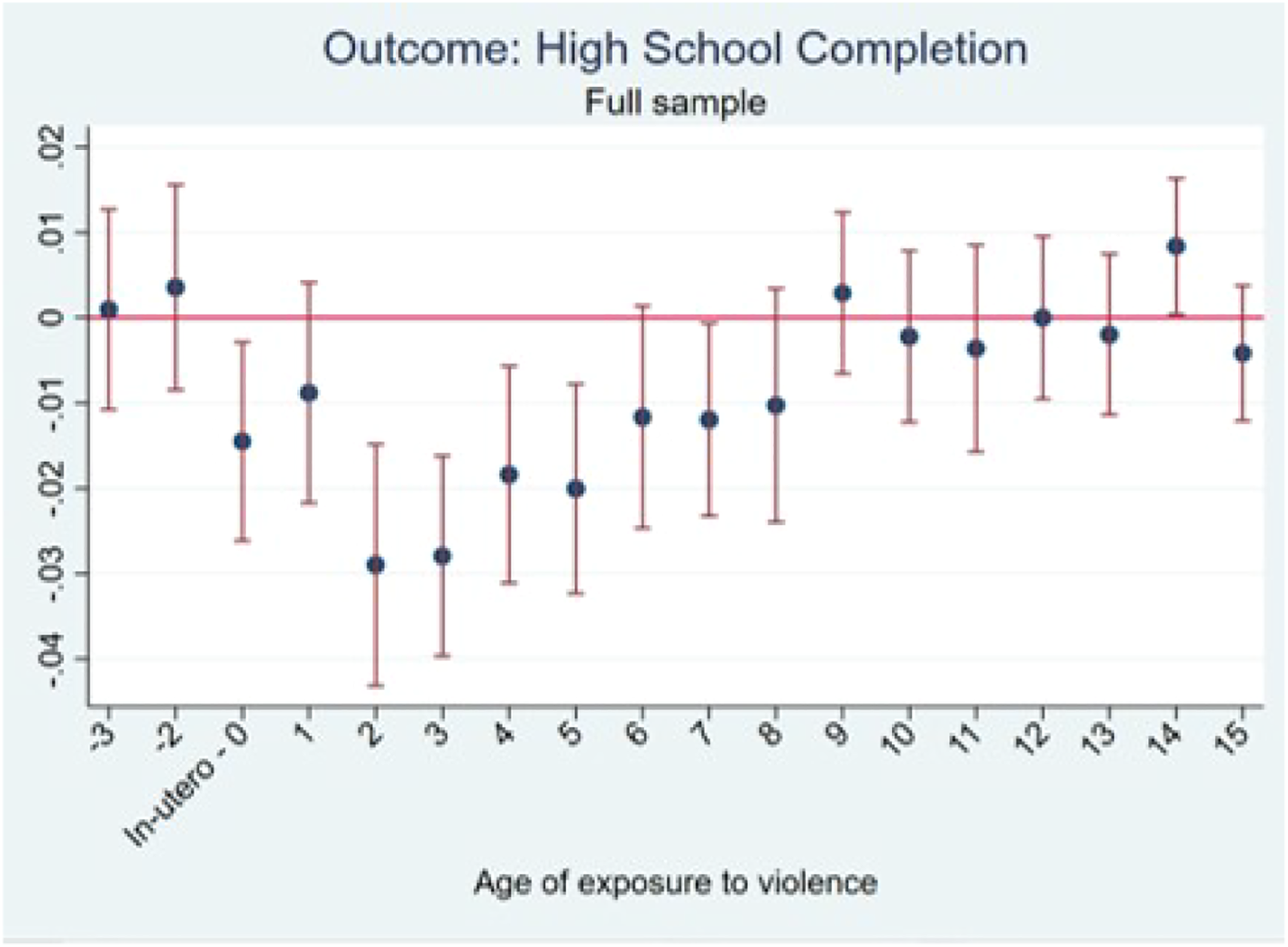
The figure also shows little evidence on differential trends prior to conception, which is given by the null effect of homicide rates two and 3 years prior to birth, providing support for the identification strategy.
Educational Achievement
Figure 3 presents results on the Icfes test score. I find that exposure to high homicide rates from in-utero up to age 7 leads to significant declines on academic achievement at age 18. For each year of exposure to a one SD increase in homicide rates, the Icfes falls by 0.42 points (i.e., coeff*1SD in hom rates = −0.6*0.7), which is equivalent to a 0.10 SD decline. Conditional on continuous exposure to violence in early childhood, these effects imply an overall decline of 0.5 SD Considering that violence significantly reduces HS graduation, it is likely that the effects on the Icfes test score may reflect a lower bound of the overall impact if children who drop out from school are the least able. Unfortunately, I am unable to test this hypothesis since the administrative data do not contain information on students’ test scores prior to age 18. The effects of violence on the icfes score. Note: See Figure 2 notes. Models on Icfes also include dummies for the age and calendar year at which a student took the Icfes exam, and for school schedule.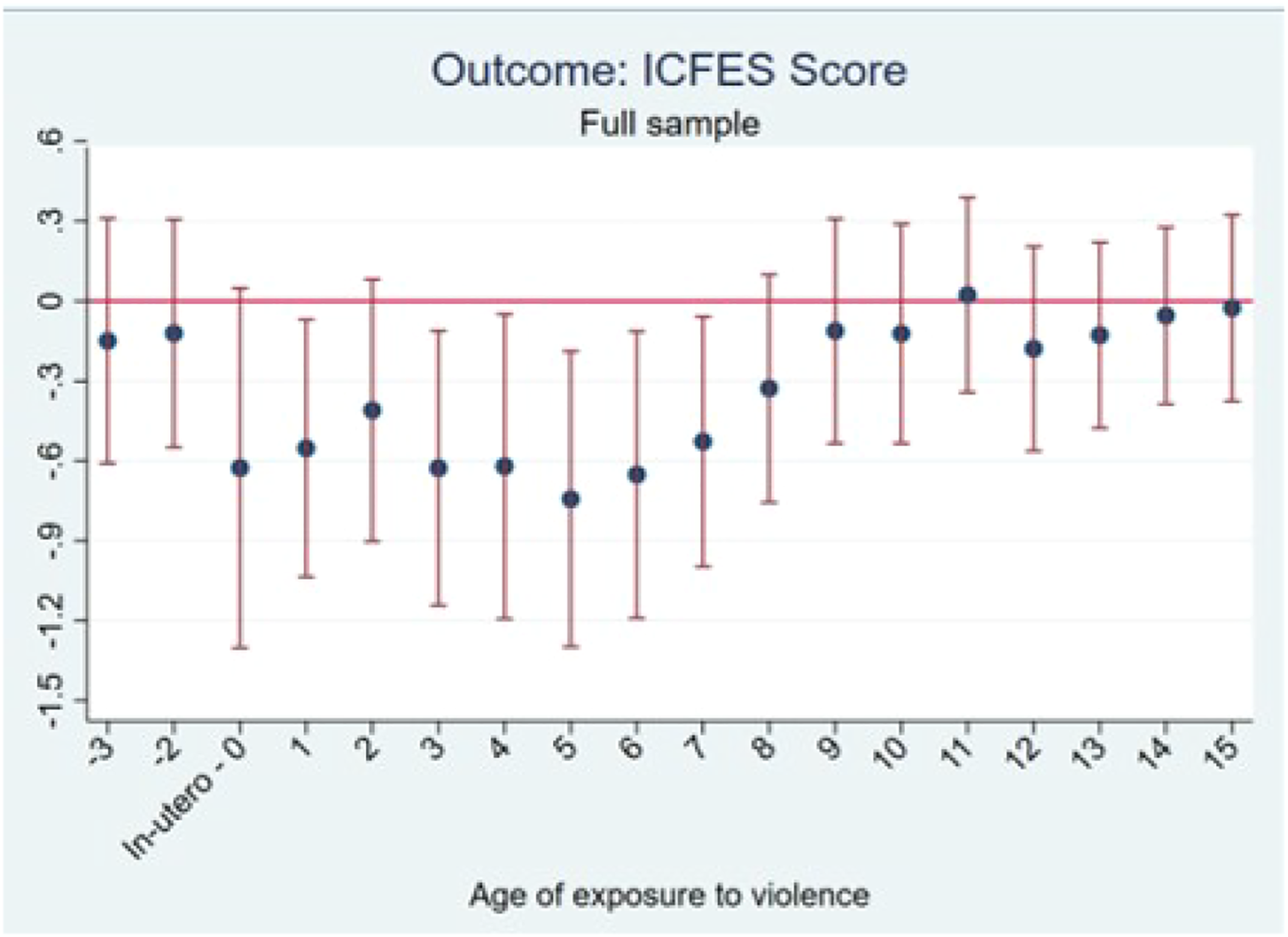
Figures Appendix 3 and 4 present results on the math and language components of the test. Although estimates are noisy and less precise than the overall score, they both suggest a similar pattern: early-life violence exposure is negatively associated with changes in these individual exams. For each year of high homicide rates exposure, the math and language score fall by 0.02 SD and 0.03 SD respectively; and conditional on continuous exposure to violence in childhood, the decline would be approximately 0.20 and 0.25 SD, respectively.
How do these estimates compare to those in the literature? In terms of the magnitude of the effects, I find that my estimates are in the range of those found in previous studies on the effects of violence on educational attainment. Because most of this research focuses on years of schooling as the main outcome, I convert my HS estimates to years of schooling using the population Census of 2005. I find that a decline of 15% in HS graduation is equivalent to a 0.25 decline in years of schooling. Among the studies examining effects of war, Akresh and De Walque (2008) found that children exposed to Rwanda’s 1994 genocide achieved 0.5 fewer years of schooling as adults; Shemyakina (2011) found effects of 0.6 years for the case of Tajikistan’s civil conflict; Rodriguez and Sánchez (2012) focusing on Colombia’s armed conflict during the 1990s, found effects of 0.2 years; and Chamarbagwala and Morán (2011) using data on Guatemala’s conflict, found a decline between 0.12 and 1.09 years. The fact that my estimates are smaller than those previously documented could be due to the fact that most of previous studies have focused on massive and more disruptive violence such as inter-state wars and civil conflicts, 19 which have mostly affected rural areas more likely to be economically deprived.
Fewer studies have focused on prenatal or early childhood exposures. To my knowledge, this is the first paper to show that violence in early-life can lead to persistent declines in test scores measured decades later. While previous research has shown short-term impacts on cognitive tests, it is unclear whether these effects would persist over time. 20
Mother Fixed-Effects
In this section I use mother FE as an alternative specification to the difference-in-difference (DD) model. Figures 4 and 5 show that controlling for a mother’s FE reduces high school graduation and Icfes score, respectively, which is consistent with the pattern previously shown on Figures 2 and 3 that use the main specification. There are, however, a couple of differences across these two sets of results that are worth highlighting
21
: (i) the effect on the in utero period is much larger after accounting for a mother’s FE. This is observed on both HS graduation and Icfes score. For instance, while an increase of one SD in homicide rates in the prenatal period reduces HS completion by 2.5% in the main specification, in the mother FE model this effect is 3.3%. A similar pattern is observed on the Icfes score: In the difference-in-difference model, exposure to violence prior to birth is associated with a 0.6 point decline in the Icfes, while in the mother FE model this effect is 0.9 points. Both estimates are statistically significant at the 0.95 level. (ii) The effects of violence in the postnatal period are a little less pronounced in the FE model than in the linear specification. The magnitudes of the effects tend to be smaller and there are fewer years of a child’s life in which violence has a statistically significant effect on the outcome.
22
Mother Fixed-Effects Estimates of Violence on High School Completion. Note: The family fixed effects include controls for sex, birth order, age, mother’s age, fixed effects at the child’s year, month, and municipality of birth, and department linear time trends. Errors are clustered at the municipality level. Vertical lines represent confidence intervals at the 95% level. Mother fixed-effects estimates of violence on the icfes score. Note: See Figure 4 notes.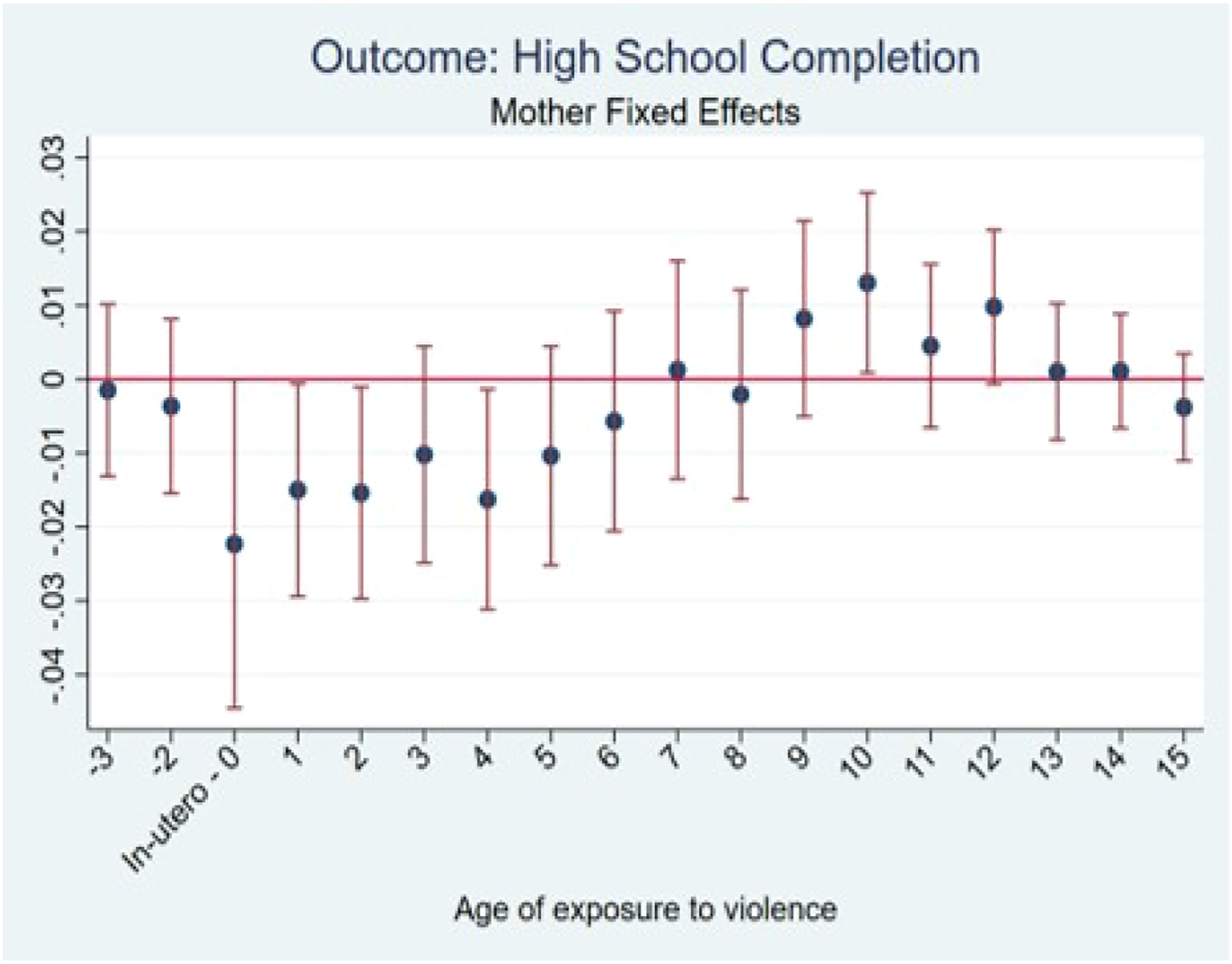
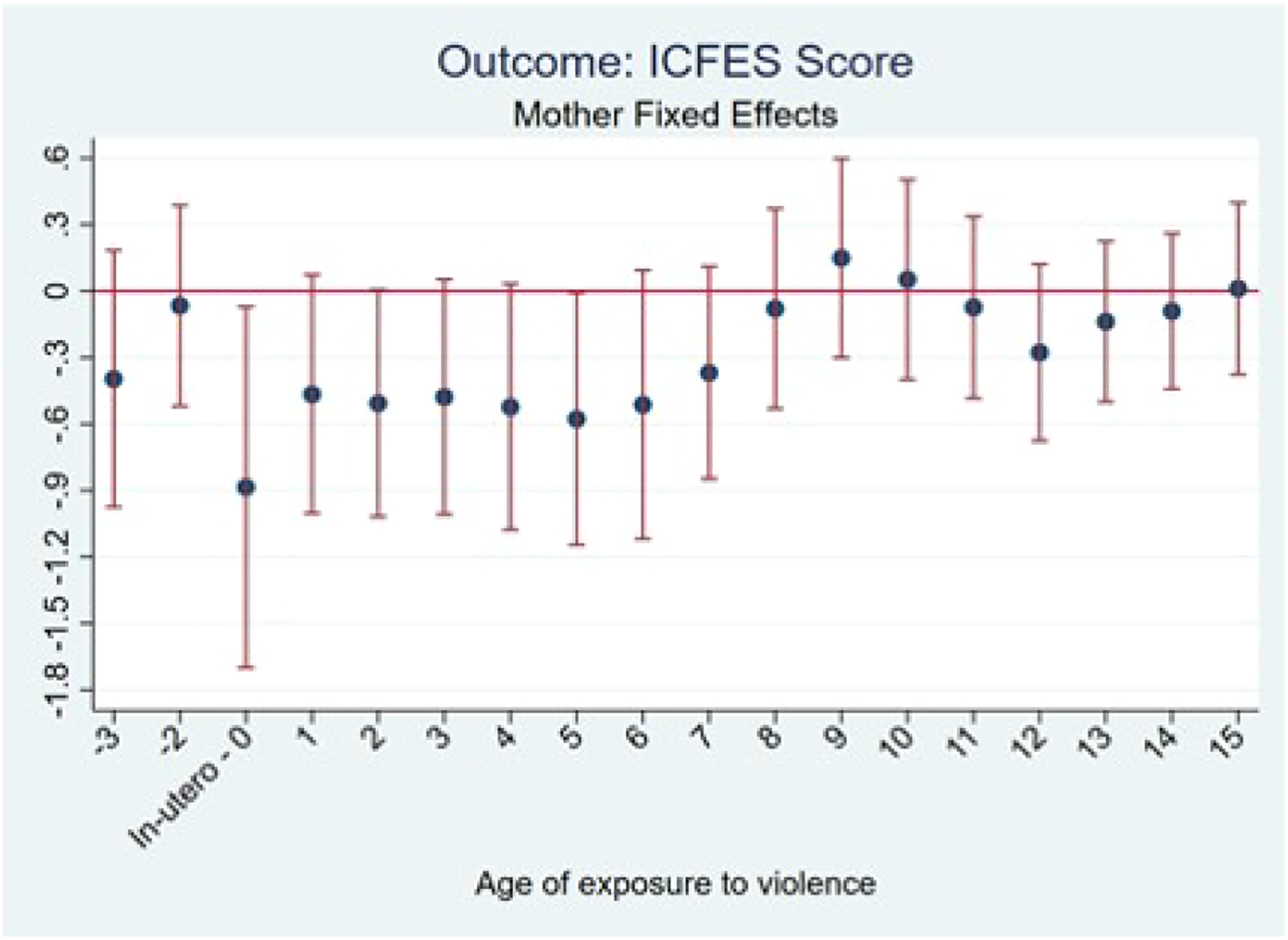
Lastly, I compare the point estimates across models and I find that while the in utero effects are statistically different across specifications, I am unable to reject the hypothesis that those in the early childhood period are different across models.
In sum, while the mother FE is a useful strategy that helps account for family time-invariant characteristics, the fact that the samples were different to begin with (as shown in Appendix Table 3), helps explain the differences in the results (i.e., in utero) and thus, the mother FE should be considered as an alternative specification that provides further supportive evidence with respect to the main results.
Potential Mechanisms
I attempt to provide suggestive empirical evidence on some of these potential mechanisms using auxiliary data that include National Health and Nutrition Survey (ENSIN) and the Demography and Health Survey (DHS). 23 As outcomes of interest in the DHS, I consider birth weight, low birth weight, whether a birth is premature, and HAZ up to age 5; measures of maternal investments during pregnancy include whether a mother received prenatal care, whether the birth occurred at a hospital, breastfeeding duration (months), and whether a mother received tetanus vaccination in pregnancy; and in the ENSIN, I focus on young adults’ height using the World Health Organization (WHO) child growth charts for appropriate reference groups.
Fetal, Child, and Adolescent Health
The Effects of Violence on Child’s Health Using DHS Data
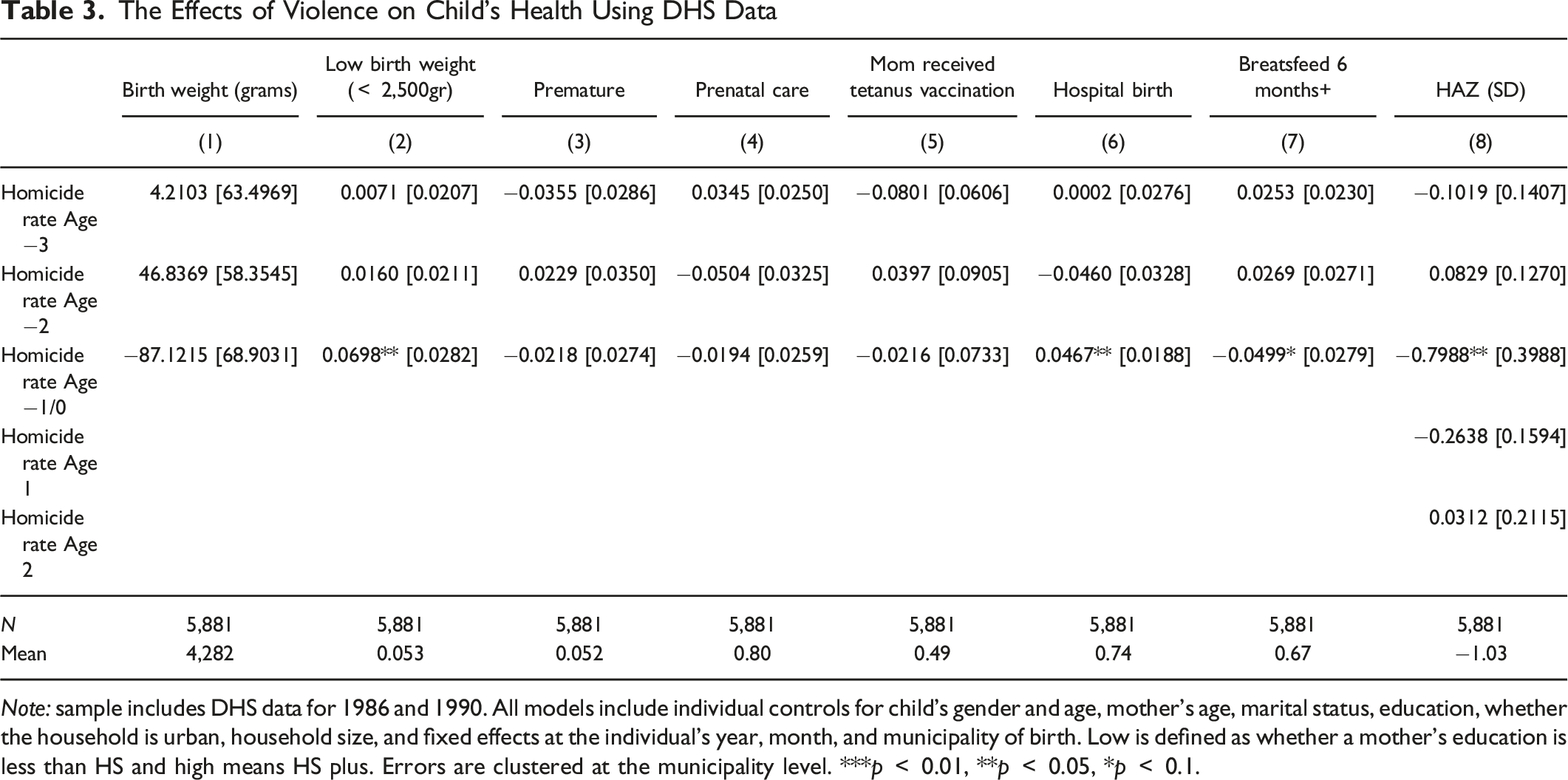
Note: sample includes DHS data for 1986 and 1990. All models include individual controls for child’s gender and age, mother’s age, marital status, education, whether the household is urban, household size, and fixed effects at the individual’s year, month, and municipality of birth. Low is defined as whether a mother’s education is less than HS and high means HS plus. Errors are clustered at the municipality level. ***p
Using an independent indicator of long-run health, height, affirm that childhood exposure to violence negatively affects young adults’ health. Figure 6 plots estimates for the standardized height and results show that, exposure to violence from in-utero up to age 6 significantly reduce the outcome by 0.1 SD per year of high violence exposure. Linear pre-trends are again flat. The effects of violence on height (SD). Note: Sample includes individuals 17 to 24 (born in the 1980s) observed in ENSIN data. All models include controls for sex, age, education, urban/rural status, fixed effects at the child’s year, month, and municipality of birth, and department linear time trends. The outcome is measured as a height-for-age indicator in standard deviations using the WHO reference groups. Errors are clustered at the municipality level. Vertical lines represent confidence intervals at the 95% level.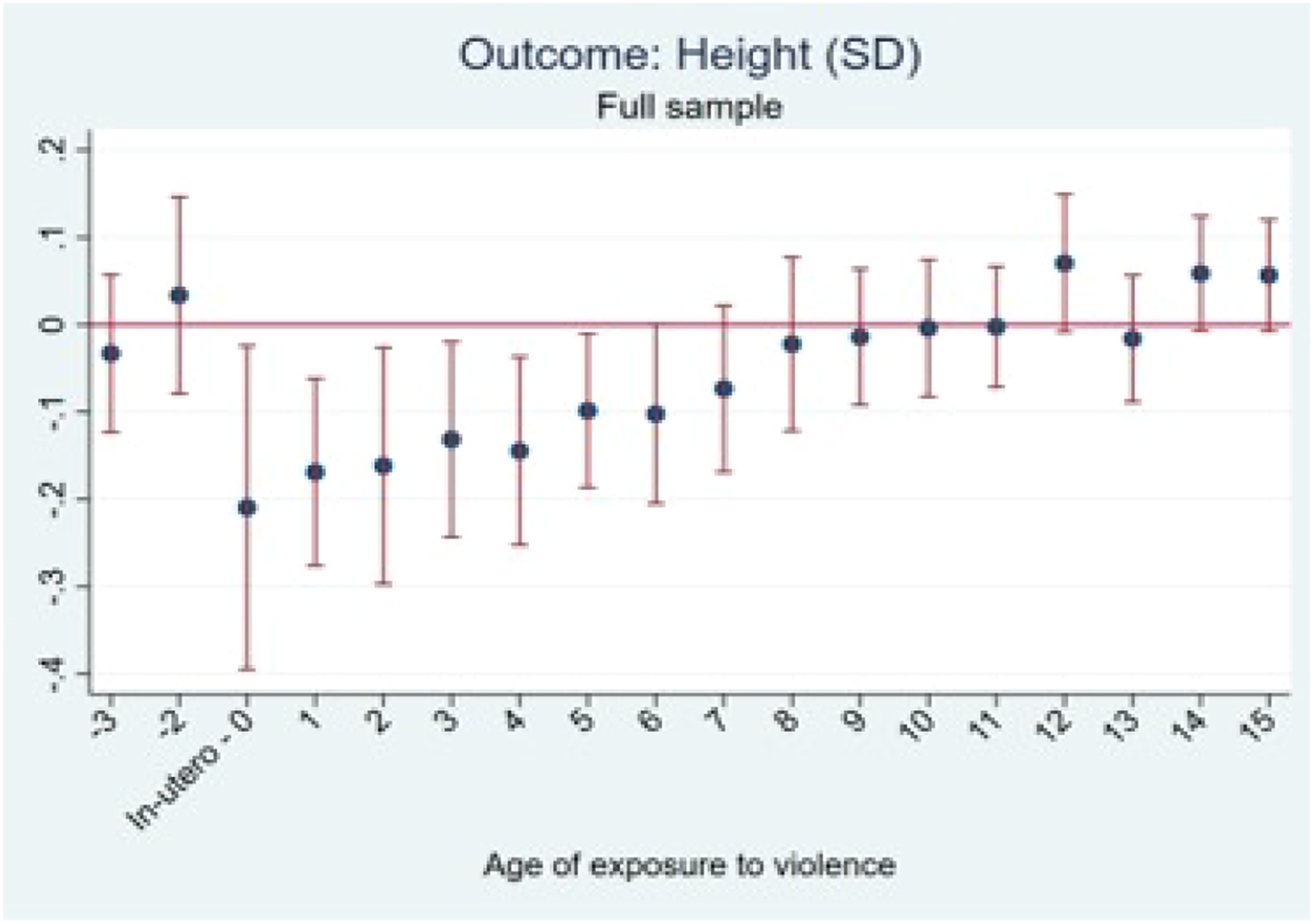
While a large literature in medicine and epidemiology suggests that child height can be particularly sensitive to nutritional deprivation in late pregnancy– the period in which the mother gains more weight (Stein and Lumey 2000)– and to conditions experienced during the first years of life (e.g., nutrition, infectious diseases, access to medical services) (Victora et al. 2010), more recent medical and public health studies have shown that height can also be influenced by shocks in late childhood or in adolescence (Bundy et al. 2018). Part of the theoretical explanation for this longer window of exposure is that late childhood and adolescence are stages when a “second growth spurt” occurs, with growth velocities by age 10 in girls and age 14 in boys reaching the equivalent to those of children age 2 (Bundy et al. 2018). These findings are consistent with the impacts of violence shown in Table 3 column 8 and suggest that gaps in child’s height emerge early in life.
Parental Investments
Estimates of Violence on the Exposure to Domestic Violence and the Probability of Being “Over-age” for First Grade.
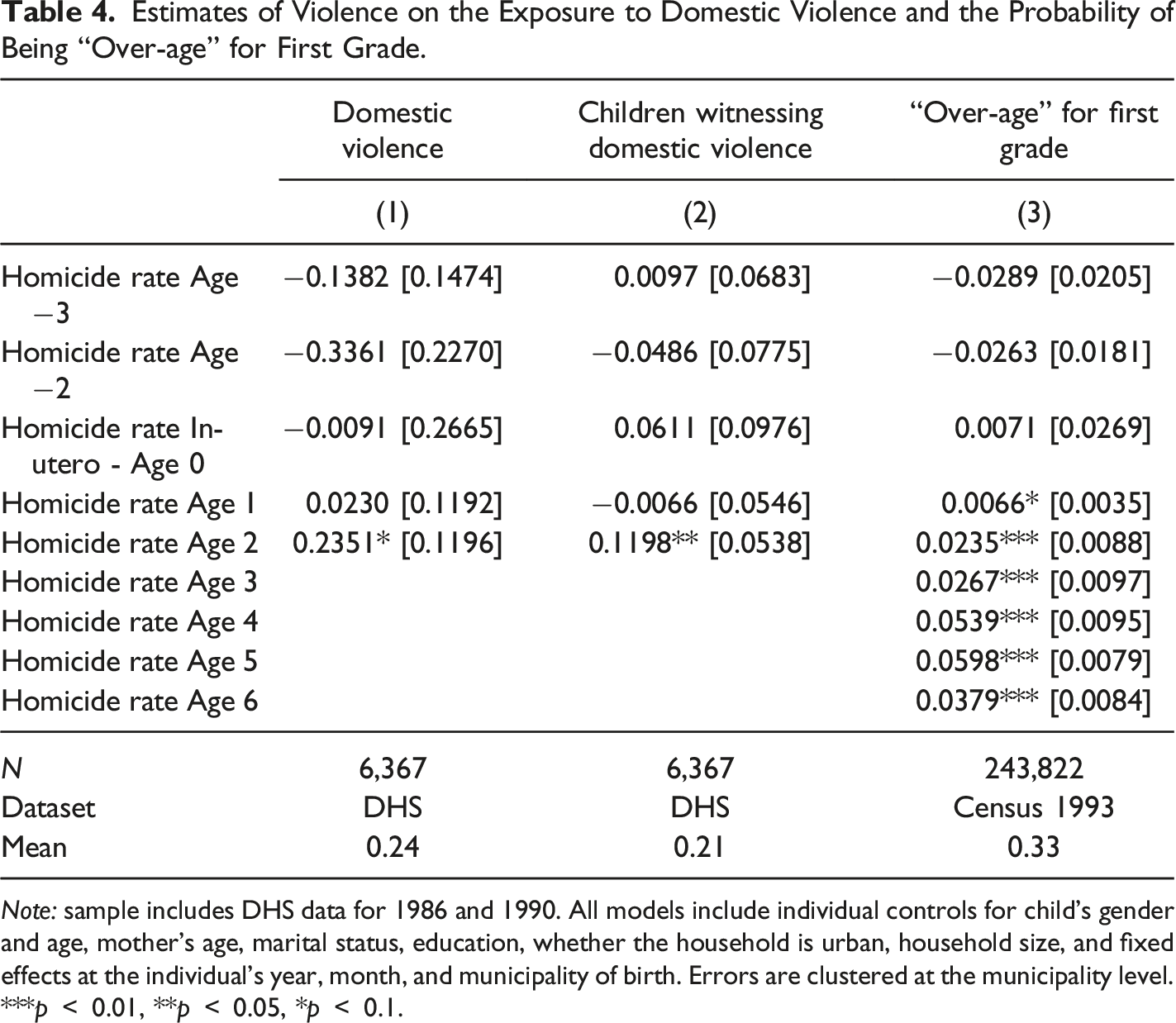
Note: sample includes DHS data for 1986 and 1990. All models include individual controls for child’s gender and age, mother’s age, marital status, education, whether the household is urban, household size, and fixed effects at the individual’s year, month, and municipality of birth. Errors are clustered at the municipality level. ***p
Overall, these results provide some supportive evidence that declines in child’s health and nutrition, and household resources (including the ability to manage stress) may be some of the potential channels through which violence affects future educational outcomes.
Robustness Checks
Below, I conduct a placebo test, analyze potential sources of selection bias such as fertility, mobility, and survival, and examine possible hetergeneous effects by urban versus rural areas.
Placebo Test
Previous results show that exposure to violence in the early-years but not at later stages is negatively associated with educational outcomes. A possible excercise that further tests this pattern focuses on cohorts that were “relatively old” at the beginning of the 1980s – i.e., those born in the early 1970s– and who were therefore exposed to violence at later stages compared to those for whom I find significant effects.
Appendix Figure 8 shows that for this “older” group, violence has little impact on their probability of graduating from high school nor on their test scores; the point estimates are close to 0 and the confidence intervals are large (partly due to the smaller sample sizes). This result suggests that the effects of violence documented earlier in the paper are consistent with the idea that violence exposure in the early years of life is particularly harmful for children’s long-run education.
Potential Sources of Selection Bias
Fertility
Violence could affect a woman’s fertility decisions by either influencing her desired number of children or by delaying her decision to become pregnant. If violence affects some women more than others based on their observable characteristics, this could potentially lead to a biased estimate.
To test for the presence of selective fertility, I examine the association between violence and a mother’s total fertility after a (focal) child (i.e., the number of children she has after her first child born in the 1980s) and the association between violence and the timing of fertility (i.e., the time between two subsequent births). Results shown in Appendix Table 6 suggest there is little evidence on this potential source of bias; most of the coefficients on violence are small and statistically insignificant.
Mobility
Endogenous migration in response to (or in expectation of) high violence could also induce (an upward) bias in my estimates of violence on education, if households who migrate due to an increase in homicide rates are different to those who don’t migrate, in dimensions that could affect a child’s education (e.g., if migrant families are wealthier or more educated than those who stay).
To asses the importance of selective migration, I first examine the proportion of migrants in the data and I find that 25% of the sample reports having been born in a different municipality to where they were interviewed in the Sisben data. 24 Second, to empirically examine how endogenous migration affects my estimates, I examine whether the effects of violence in the full sample differ to those in the sample of non-movers. Appendix Figure 9 shows estimates of violence on education for these two groups, which indicate that the negative effects of violence tend to be larger in the sample of non-migrants than in the full sample, although these differences are not statistically different according to the overlap in the confidence intervals. The fact that this paper uses the municipality of birth to assign violence exposure (instead of the violence experienced at the place of residence), helps reduce this potential source of bias.
A third step in the analysis of endogenous migration focuses on the potential effects of the internal forced displacement (IFD) on my estimates. The IFD has been one of the most dramatic consequences of the recent armed conflict in Colombia, where more than 3.5 million people have been forced to migrate since 1997 (around 8% of the total population) (United Nations 2012). 25 Appendix Figure 5 shows the number of forced migrants since 1979 in Colombia. As the figure illustrates, forced displacement is a relatively recent phenomenon in the country (i.e., late 1990s and early 2000s) and as such, I assume that it did not directly affect the early lives of the cohorts who were born in the 1980s in the country. 26
I conclude that there is little evidence that could suggest that endogenous migration due to violence could be driving the estimates of homicide rates on long-term educational outcomes.
Survival
Last, I analyze selective survival that occurs when, violence increases the probability of mortality among the frailer fetuses or children, leading to healthier babies or children surviving.
To do so, I explore whether changes in violence are associated with changes in the sex ratio or in the cohort size. Several studies have shown that boys are biologically weaker and more susceptible to diseases and premature death than girls (Waldron 1985), and that they are more vulnerable to environmental factors in early-life (Pongou 2013). Therefore, focusing on these two measures could be informative to understand potential demographic imbalances linked to violence.
I assess the importance of selective survival by regressing, at the municipality-year level, the sex ratio and cohort size of the cohorts of interest, on the violence that they experienced over the life course. Results shown in Appendix Table 7 show that although coefficients associated with violence are negative, overall their magnitudes are small and not statistically significant. Column 2 shows associations between violence and the cohort size, which again, do not seem to indicate a significant change in population size due to higher homicide rates.
As an additional test, I examine the link between violence and child’s sex and child mortality using the DHS data. 27 28 Appendix Table 8 shows no significant association between changes in prenatal violence and child’s sex (consistent with the results shown in Appendix Table 7), but the findings do suggest that child mortality increases as violence increases. This change represents an increase of a third with respect to the outcome mean. While these are not negligible effect sizes, this type of selection bias will likely result in estimates of violence that represent a lower bound if one way that violence affects human capital is through an increase in the probability of child mortality. 29
Heterogeneous Effects Across Urban Versus Rural Areas
While one of the most salient characteristics about the 1980s spike in violence was that increases in homicide rates were primarily concentrated in large and wealthy places, there was still substantial variation across regions. In this section, I analyze how these regional dynamics in violence affected children’s educational outcomes.
Unfortunately, because the census and administrative data only have information on someone’s municipality of birth but not whether he/she was born in the urban versus rural segment of a municipality – i.e., the exact area of residence within a municipality is only available at the moment of interview (starting in 2005)–, splitting the sample by urban/rural can lead to endogenous estimates. A potential (and partial) solution to this issue could be to focus on the sample of non-movers. Assuming that people who currently reside in the same municipality where they were born (i.e., the “non-movers”) also reside in the same segment (i.e., rural/urban), then, analyzing the effects of violence on these two groups could provide some evidence on whether violence had a more pronounced educational impact on children in one area versus the other.
Appendix Figures 10 and 11 show these results, which suggest that violence has a more pronounced impact on high school graduation in rural areas than in urban areas, and a more pronounced effect on the Icfes score in urban areas (and less so in rural areas). While these results seem, a priori, to contradict the claim that violence in the 1980s was a more urban phenomenon, it is also true that: i) the level of violence in the country has been, on average, very high (see Figure 1); ii) while homicide rates spiked in the three largest cities in the 1980s, there was still large variation in violence across other regions (e.g., smaller cities like Cucuta also experienced a considerable increase in the number of deaths per capita as shown Appendix Figure 1); and iii), drop-out rates in rural areas have always been higher than in urban areas, thus a small change in violence in rural areas can lead to a much larger percent change on this outcome in remote places than in wealthier and more connected areas.
Conclusions
This paper contributes to the literature on the effects of violence on human capital by providing new evidence on the long reach of early-life violence exposure on human capital outcomes. It does so by using a large and representative data set that link school records with census data and with information on the place and date of birth for the universe of low income students in Colombia. The paper exploits the temporal and geographic variation in crime and violence associated with the proliferation of drug cartels in the 1980s, which was greatly influenced by the huge increase in the international demand for cocaine in the 1980s.
Results show that early-life exposure to homicide rate increases the probability of HS dropout by 15% and reduces the end-of-HS exam score by 0.5 SD I conclude that violence had persistent effects on the long-term outcomes of disadvantaged cohorts born in Colombia, a result that may have disturbing implications for their future labor market prospects as well as for their own children’s outcomes, considering the strong intergenerational transmission of human capital (Aizer and Currie 2014; Black et al. 2005).
Supplemental Material
Supplemental Material - Violence and Children’s Education: Evidence From Administrative Data
Supplemental Material for Violence and Children’s Education: Evidence From Administrative Data by Valentina Duque in Journal of Conflict Resolution
Supplemental Material
Supplemental Material - Violence and Children’s Education: Evidence From Administrative Data
Supplemental Material for Violence and Children’s Education: Evidence From Administrative Data by Valentina Duque in Journal of Conflict Resolution
Footnotes
Acknowledgments
I would like to thank Doug Almond, Janet Currie, Fabio Sanchez, James Heckman, Pablo Ottonello, Paul Huth, Maria Rosales, Richard Akresh, Javier Baez, Juan Vargas, Adriana Camacho, Julien Teitler, Jane Waldfogel, Aaron Chalfin, Rebecca Taylor, Florencia Torche, an anonymous referee, and the participants of various seminars and conferences for very useful feedback and suggestions. Funding for this project was generously provided by the Hewlett Foundation Dissertation Fellowship and the Population Studies Center at the University of Michigan. All errors are my own.
Declaration of Conflicting Interests
The author(s) declared no potential conflicts of interest with respect to the research, authorship, and/or publication of this article.
Funding
The author(s) received no financial support for the research, authorship, and/or publication of this article.

Supplemental material
Supplemental material for this article is available online.
Notes
References
Supplementary Material
Please find the following supplemental material available below.
For Open Access articles published under a Creative Commons License, all supplemental material carries the same license as the article it is associated with.
For non-Open Access articles published, all supplemental material carries a non-exclusive license, and permission requests for re-use of supplemental material or any part of supplemental material shall be sent directly to the copyright owner as specified in the copyright notice associated with the article.
