




Abstract
We investigate whether the threat of recruitment by rebel groups spurs domestic and international migration. The existing literature on wartime displacement has largely focused on potential victims of violence. We argue that alongside potential victims, we should expect to see the out-migration of individuals who are attractive to the rebels as potential recruits. To test this hypothesis, we draw on original survey data collected in the context of the MFDC insurgency in southern Senegal. Causal identification stems from instrumenting recruitment threat with the density of the local forest canopy cover. Analyzing data from 3,200 respondents and over 24,000 family members, we show that individuals who fit the recruitment profiles of rebel groups are more likely to leave and be sent away by their families. Our paper contributes micro-evidence for a mechanism linking violent conflict to migration, which so far has received scant attention, and provides a deeper understanding of the composition of refugee flows.
Introduction
There can be no doubt that violence uproots people. According to the UNHCR, at the end of 2018 no fewer than 71 million people had been forced from their homes by violent conflict (UNHCR 2019). While most of these movements take place within countries, substantial numbers of people also cross borders. However, the micro-dynamics underlying the decision to leave one’s home in response to violence—or not—are still poorly understood. Even in the midst of the most vicious civil wars, an estimated half of the population typically remain where they are (Engel and Ibáñez 2007). In other words, the questions “Who leaves, who stays, and why?” are yet to be fully explored, as emphasized by the literature promoting the use of micro-evidence to study the consequences of violence (Kalyvas 2008; Verwimp et al. 2009). This paper contributes to the debate by describing in detail a mechanism that has received little attention up to now: The threat of recruitment by rebel groups as a cause of displacement, especially among young males. The literature so far has focused almost exclusively on individuals who have to flee due to fear of being targeted by armed groups, often because they oppose them. Our theoretical claim is that along with the stream of these refugees, some of those moving out of conflict-affected areas are individuals who are particularly appealing to rebel groups as potential recruits.
We study the case of Senegal’s Casamance region, the site of the conflict between the rebels of the MFDC (Mouvement des Forces Démocratiques de Casamance) and the Senegalese government, one of Africa’s longest-standing armed rebellions. Ongoing since 1982, the conflict has claimed up to 5,000 lives and led to the displacement of tens of thousands. The case of the Casamance is especially interesting for scholars studying the threat of recruitment, because rebel activity here is highly localized, allowing us to compare affected areas with non-affected areas on the local level. Drawing on an original representative survey implemented in 2019 (n = 3,270), we analyze the extent to which migration from affected areas is driven by the fear of recruitment. We demonstrate strong effects on individual migration plans and the desire of families for their male youths to leave, with rates up to two times the base level. The analysis of past migration decisions of the respondents’ family members and friends (n = 24,600) allows us to demonstrate substitution effects within families and between types of migration. In comparison to migrants from areas unaffected by the rebellion, migrants from families threatened by recruitment tend to be young and male and tend to migrate domestically rather than internationally.
Causal identification relies on an instrumental variable strategy. Rebels depend on shelter from the dense forests and mangroves that are common in some parts of the Casamance but not others. This means that we can use the local canopy cover as an objective measure for the threat of rebel recruitment. Our estimates confirm the causal nature of our findings. Our setting is unique in that it allows us to address one of the most vexing methodological problems in the study of displacement: The fact that rigorous empirical work often is not possible for security reasons. This is particularly true of ongoing conflicts. Most of the insights we have are therefore based on retrospective assessments. Our setting allows us to overcome this problem. The conflict in the Casamance is shaped by intermittent levels of violence that make it possible to study a case of an ongoing insurgency and to conduct fieldwork in the affected areas.
We contribute to the still limited literature on micro-level studies of migration and displacement in the context of violence (Adhikari 2013; Engel and Ibáñez 2007; Lundquist and Massey 2005; Steele 2009, 2018). Building on the work of other scholars, we use a disaggregated approach in which we look at a single factor—the threat of recruitment—and analyze it in detail (see Kalyvas, 2008; Verwimp et al., 2009). We closely link our theory to the literature on rebel recruitment (Blattman and Annan, 2016; Gates, 2011; Humphreys and Weinstein, 2008). Intriguingly, most of the factors that predict rebel recruitment also play a role in the migration plans and decisions we are observing, especially those made by our subjects, vindicating our theoretical claim.
The insights from this investigation will help us to observe conflict-driven displacement where it is not visible to the more global gaze. Violence-induced displacement is ongoing in the shadow of widespread migration for other purposes, such as labor migration or family reunion. We show that “migration rates” from the conflict-affected regions do not strongly differ from those in non-affected regions. Instead of strongly modifying the overall volume of migration, what is mostly affected is the composition of migration flows. The threat of recruitment shifts migration patterns towards the younger, male population. Families feel compelled by the insurgency to send their young male family members away. Without a theoretical understanding and causal identification of the effect, these migratory moves could be interpreted as non-conflict-induced migration —while in reality they should be counted as wartime displacement.
Theory and Hypotheses
In developing our hypotheses, we connect two strands of research that have hitherto been pursued separately: Research on displacement, and on rebel recruitment. Despite much progress, the micro-dynamics underlying decisions to leave one’s home in response to violence are yet to be fully understood. In a pioneering study, Engel and Ibáñez (2007) investigated the determinants of internal displacement in Colombia. 1 They demonstrated that even in a violent context, classic migration drivers such as the economic differential between regions of origin and destination and the existence of networks remain relevant. Nevertheless, the threat of violence changes the importance of certain factors. For example, while higher land holdings are associated with lower levels of mobility during times of peace, during conflicts, these can make people susceptible to violence by rebel groups and hence more likely to leave. Other scholars have corroborated these findings with studies on Indonesia (Czaika and Kis-Katos 2009), Central America (Lundquist and Massey 2005), and Nepal (Adhikari 2013; Bohra-Mishra and Massey 2011). The approach taken in these studies is to define an exhaustive list of violence-related and non-violence-related drivers of migration and to correlate them with the decision to move.
While this work has provided valuable insights, it has some limitations. Factors used to explain migration decisions are often correlated with each other, meaning that the influence of individual factors is difficult to discern. Moreover, concepts are regularly measured after the “treatment” (exposure to violence) occurred. Many of the results are therefore likely affected by post-treatment bias, and the causal status of the different explanatory variables remains dubious. Most importantly, the inclusion of various explanatory factors means that little space is available to investigate and theoretically conceptualize these factors in more detail. In most analyses, all forms of violence are lumped together and used as a single predictor variable, although there are different types of violence (collective, targeted) and different effects of violence (bodily harm, property loss), as analyzed, for example, by Kalyvas (2006).
When studies take a more nuanced look, they tend to find important differences. For instance, Lundquist and Massey (2005) and Bohra-Mishra and Massey (2011) highlight that individual victimization is more likely to induce long-distance migration, whereas conflict-induced property losses are more likely to trigger short-distance migration. These findings resonate with an argument made by Abbey Steele (2009, 2018): she argues that patterns of flight observed during conflict are shaped by the mode of targeting faced by civilians. While individuals who are targeted based on group-specific attributes (e.g. their ethnicity) might stay in the conflict-affected area and seek safety in numbers, those targeted individually will usually leave the area, i.e. migrate farther. Closely related work has pointed out that ideology also matters in who is targeted by armed groups and who is therefore forced to flee. Presenting evidence from both Colombia and Spain, Balcells and Steele (2016) and Balcells (2018) demonstrate that those who are ideologically opposed to a particular warring party are targeted at higher rates, which, in turn, prompts them to seek safety and to cluster elsewhere.
Rebel Recruitment and Migration
We make a divergent yet ultimately complementary argument: We argue that alongside potential victims, we should expect to see the out-migration of individuals who are attractive to rebels as potential recruits. To make this argument, we draw on the extensive literature on rebel recruitment and especially the recruitment of children and young people. To the best of our knowledge, we are the first to connect it to micro-level work on conflict-induced displacement.
Rebel groups enlist recruits and maintain allegiance through coercion, pecuniary and non-pecuniary incentives, and by changing recruits’ preferences through socialization (Gates 2011; Humphreys and Weinstein 2008). Most rebel groups pursue a mixed strategy of forced and voluntary recruitment, with typically 70 or 80% being volunteers, although in some cases (such as the Lord’s Resistance Army in Uganda), forced recruits outnumber voluntary ones (Gates 2011, 36-37). Material incentives often play an important role—so much so that offering potential recruits small amounts of money to counter the recruitment strategy of rebel groups and can reduce recruits’ willingness to join a rebellion (Blattman and Annan 2016). Youths from poor families in particular are easier to incentivize because they have lower opportunity costs (Urdal 2006).
Classic comparative work on rebellion has stressed ideological and class differences as major motivators for participation. These factors are especially potent when individuals feel relatively deprived in comparison to other members of society (Gurr 1970). In rural contexts, a lack of access to land appears to be a particularly powerful predictor and motivator (Wickham-Crowley 1992), although some scholars have argued that a certain level of wealth is necessary to be susceptible to ideology (Wolf 1969). Micro-level research among former rebels has further challenged the notion that ideology is relevant, arguing instead that rebels and opposing paramilitaries often show very similar patterns of ideologies and desires for a better life (Arjona and Kalyvas 2012; Humphreys and Weinstein 2008). Young people may also join rebel groups in search of higher social status, freedom from authority, and protection for family members, as shown by ethnographic research. Soldiering gives young people power in their local communities and frees them from the control by traditional authorities (Utas 2003). The same literature has also pointed to migration and flight as a way—and sometimes the only way—to avoid recruitment (Podder 2011).
Hypotheses
Under what conditions would we expect individuals to migrate in response to the threat of rebel recruitment—and their families to support such a move? Our starting point is the rational choice perspective commonly used to explain both participation in rebellion and migration decision-making (Gates 2002; Stark 1991; Todaro 1980; Weinstein 2007). In such a model, individuals compare the monetary and non-monetary costs and benefits of migrating with those of staying, which includes the potential costs and benefits of joining the rebels.
The utility of migration depends on a complex amalgam of factors. These include the cost of the journey, its riskiness, and the emotional cost of being separated from loved ones, which have to be weighed against the present value of the expected income in the destination minus that of staying put (De Jong and Gardner 1981; Grogger and Hanson 2011). The threat of rebel recruitment modifies the value of the staying option. On the one hand, recruitment threat will make staying less attractive. This is especially the case when the rebel group forcibly recruits, pays its members poorly, and exposes them to a high likelihood of being injured or killed. Many individuals will also object to joining a rebel group for personal reasons because they refuse to engage in illegal activities or to cause harm to others. On the other hand, rebel groups may also provide a tempting outside option for those struggling in the local labor market. This may be the case where groups pay their members well and provide safety to their members and their families, as is common where groups have access to profitable income sources and have established proto-governments (Arjona 2017; Humphreys and Weinstein 2008).
When rebel groups can provide attractive incentives and relative safety, recruitment threat will lower migration rates, while in a context of a recruitment threat by a resource-poor rebel group faced with high rates of death and injury among their members, migration will be more common. Important, the actual recruitment probability is not equal for all individuals but depends on how attractive an individual is to a given rebel group. As discussed, gender and age will be of preeminent importance, with young men typically being the prime recruitment target. The recruitment probability will also depend on logistics and geographical proximity, i.e. how practically feasible it is for a rebel group to approach an individual and convince him or her to join (Arjona and Kalyvas 2012; Gates 2002).
The (positive or negative) effect of recruitment threat on migration should be strongest among the preferred target group of the rebels, and in areas where rebels have easy access to potential recruits. The migration literature often conceives of the migration-decision not as an individual-level but as a family-decision: Families decide which of their members to send away to diversify income sources and spread risks (Stark 1991). Families’ resources are limited, however, and in a scenario of rebel threat, such budget constraints can lead to substitution effects whereby the migration of potential recruits is favored at the expense of the migration other family members.
Rebel recruitment threat leads families to prioritize the migration of potential recruits, and to postpone the migration of other family members. As income plays a role in almost all dimensions of the decision-situation, rebel recruitment will overall have a stronger effect on migration decision-making in resource-constrained contexts. For the remainder of the paper, we turn to one such context, Senegal’s Casamance region, to test our hypotheses.
Violence and migration in the Casamance
Located in the very south of Senegal, the Casamance has been affected by insurgency since 1982. The conflict, in which the rebels of Mouvement des Forces Démocratiques de Casamance (MFDC) confront the Senegalese national government in Dakar, has its roots in pre-independence Senegalese politics, when the MFDC, then a regional party, tried to win concessions from the government of the newly formed Senegalese state. Tensions escalated in response to the violent suppression of several demonstrations for independence in the early 1980’s. In reaction, the MFDC formed its armed Attika wing that retreated into the forests and mangroves to begin military training (Humphreys and Mohamed 2005).
The ambition for independence—and the feasibility of the insurgency—are driven to a large degree by geography. The Casamance is isolated from the rest of Senegal by The Gambia, and can only be reached by arduous overland journeys, sea-borne travel along the Atlantic coast, or by air. Based on the region’s physical isolation, its somewhat divergent colonial history, and its unique cultural traditions, the MFDC leadership derives a claim to form an independent nation. The MFDC leaders also often cite the lack of investment into the region as one of the root causes of the rebellion, even though the parts of the Casamance where the insurgency is most intense compare favorably to other rural parts of the country (Humphreys and Mohamed 2005). The vast forests and mangroves of the Casamance play an important role in the conflict in several ways. Among the Jola ethnic group in particular, the region’s forests are considered sacred and are the site of mask-dancing and initiation rites embraced by the rebels (Lambert 1998). It is here, under the protective cover of the trees and mangroves, that the insurgency established its bases. Individuals are only allowed into the forest after having gone through cleansing rituals, and violation of this rule by the military has occasionally led to violent clashes (Ndiaye 2003).
Beginning in the mid-1980’s, the rebels started a campaign of guerilla warfare against military personnel and civilians suspected of collaborating with the Senegalese forces. The Senegalese army responded with a heavy-handed approach, at times clearing entire villages. Evidence for the torture of presumed rebels that was published by human rights organizations further fueled the conflict. Repeated peace initiatives had limited success. Disagreement over negotiations with the government in Dakar led to the split of the armed Attika wing into a northern and a southern front. The northern front, with their bases near the city of Bignona, officially renounced armed struggle, but have retained their arms and reportedly moved into illegal timber trading and cannabis production instead (Evans 2004). In contrast, the southern front, based south of the Casamance river along the border with Guinea-Bissau, expanded their activities to the Casamance’s eastern Kolda region, and increased their militancy, resulting in some of the fiercest fighting of the conflict during the late 1990’s. Estimates of the total death toll range from 3,000 to 5,000 (Humphreys and Mohamed 2005). These casualty numbers have to be interpreted in relation to the Casamance’s small population of around 1.6 million in 2019. What is more, the conflict has proven remarkably persistent. After a lull in violence during the early 2000’s, fighting flared up again shortly after, with intense battles taking place in 2006, renewed clashes with dozens of fatalities between 2010 and 2013, and the latest round of fighting being reported in summer 2020 (Gueye 2020).
A frequently cited motive for the insurgency in the Casamance is widespread poverty, which lowers the opportunity costs of joining the rebellion (Humphreys and Mohamed 2005). In addition, a sense of alienation from the central state and a sense of denigration when interacting with “northerners”—individuals belonging to ethnic groups that hail from Senegal’s northern regions—have been stated as motives (Evans 2004). The people of the Casamance, or Casamançais, complain that they are often characterized as backward forest people by people from Senegal’s more urbanized northern regions, but also stress and take pride in their distinctiveness (Tandia 2013). The MFDC is often seen as being dominated by the Jola ethnic group, and is centered around Jola mythology, including the important role of sacred forests. That said, the MFDC explicitly defines itself as a nationalist, non-ethnic movement, and some of its most important leaders originate from other local ethnic groups such as the Mandinka. What is certain is that the rebellion is driven by southerners, while members of groups that immigrated from the north, such as the Wolof or Serer, have often been the target of attacks (Diouf 2004; Evans 2004).
The MFDC reportedly finances itself through donations, cannabis sales, robberies, and timber smuggling. Unlike other rebel groups on the continent it lacks access to a highly profitable source of income such as diamonds or valuable minerals, however (Evans 2004). In the early days of the rebellion, the rebels relies on voluntary monetary or in-kind contributions for the sustenance. As recounted by Marut (2010, 115-116), they “could move in the population like fish in the water: They mixed with the locals, took public transport, walked on the streets of Ziguinchor, and took part in the everyday life of the communities.” Rebels also typically tried to cover their own needs by hunting, cultivating crops, and (illicit) trade across borders. Over time, popular support has declined somewhat as civilians were repeatedly caught in the crossfire, and rebels resorted to banditry targeting travelers to add to their meager incomes, thereby alienating local businesspeople. Despite of this, the rebels still appear to move freely within communities.
The close link with the population sets the MFDC apart from other rebel movements in West Africa, where leaders strived to separate and isolate their—often very young—fighters from the local population in order to increase internal coherence (Peters 2011). Such situations are known to trigger higher levels of violence, as rebels have to resort to indiscriminate punishment of communities that they suspect of conspiring against them (Kalyvas 1999, 2006). In contrast, the MFDC rebels, due to the close oversight provided by living among the local population, are usually able to target their retaliation at specific individuals. They have thereby successfully managed to avoid alienating the local population—arguably a key factor in explaining the longevity of the rebellion (Marut 2010).
The insurgency recruits its members from among the local youth, especially in rural regions. Only young men are recruited as fighters and are typically only recruited once they have reached adulthood. No cases of explicit child soldiering—a common phenomenon in other conflicts in West Africa—have been reported, even though children have reportedly been employed for transportation and other supply jobs (Evans 2004). Women take on support roles, such as the provision of food, supplies, and spiritual support, and are active in the civilian arm of the MFDC, but have not been observed in combat roles (Stam 2009; Wood 2019). This does not mean that joining the insurgency is fully voluntary. In regions where rebels have strongholds, intense social pressure is often exerted on young men to join the rebellion (Diédhiou 2011). These facts are important with view to our first hypothesis. Given the relatively unattractive offer the MFDC provides to potential recruits and their families, we expect MFDC recruitment threat to make staying less attractive, i.e. induce immigration from areas where the rebels are active.
Data and identification
With the help of local partners, we implemented a large-scale representative survey of young women and men in the Casamance in 2019. Respondent recruitment was based on a stratified random sample of census districts, coupled with simple random selection of households within these areas and weighted random selection of household members. Before commencing with the interviews, in line with regional customs enumerators sought approval of the local community chief. Since our survey focused on potential migrants, selection at the household level favored individuals with demographics prevalent among migrants from the region. Concretely, we only recruited young people aged 15-35 and oversampled male subjects (67% of the sample). 2 Young males are also the favored recruits of the MFDC rebels, allowing us to study in detail the interaction between the threat of recruitment and migration.
Our starting population is the entire population of the Casamance according to the 2013 census, a total of 1,572,936 individuals living in 2,045 census districts, which served as our primary sampling unit (PSU). To ensure a good geographic spread, we stratified our sample along six strata, one for each of the rural and urban zones in the three regions of the Casamance: Ziguinchor, Sédhiou, and Kolda. Within each stratum, we randomly selected a number of PSUs proportionally to the population. Within each selected PSU, we aimed to collect responses from either 12 or 24 individuals. This number was fixed for practical reasons—to justify the trip into often remote small towns or villages. Two PSUs had to be replaced because the security situation deteriorated and did not allow for fieldwork to take place. Interviews lasted an average of 70 min each, and in total we collected 3,263 complete responses out of 3,388 contact attempts, yielding a response rate of 96%.
Measurement of migration plans and decisions
Our survey allows us to measure migration plans and past migration at the individual and family level. We asked each respondent if they would consider migrating and, if so, if they had made concrete plans to leave their place of residence in the following year to live in another country. About one in six (15%) of our respondents had already made such plans. This high share—three times the percentage for West Africa as a whole (Tjaden et al. 2019)—is likely related to the fact that we specifically targeted the young population, but may also be due to conflict dynamics. 3
Second, we asked whether the respondent’s family would want the respondent to migrate. This second question pays tribute to the fact that migration decisions are rarely made by an individual alone, but rather collectively by the family. This may be especially true in the context of an ongoing insurgency, where families—as we hypothesize—might prioritize the migration of potential recruits. The importance of the family in migration decision-making can also be quantified. We asked respondents to rate, on a scale from 0 to 100, the relative importance of different family members, including themselves, in deciding whether or not they should migrate. Rather than deciding purely on their own (which would correspond to assigning themselves a value of 100 and everyone else a 0), respondents place high importance on the opinions of other family members, first and foremost their parents. Specifically, respondents assigned a weight of 71 to themselves, a weight of 57 to their mother, and 55 to their father in the decision to migrate.
Related to this item, our survey included a question asking respondents whether in general, their families might support the migration of a—no further specified—family member. This was followed up with a question as to why they might support such a move. Answering options included the items “The person will add to the family income,” and “It would allow the family member to pursue a better life,” but also the item “It would prevent that the family member would go to the maquis.” The last item is a widely understood but indirect way for saying to ‘join the rebels.’ This question was formulated in close cooperation with our local partners as a subtle way to allow people to speak about links between the rebellion and migration.
Analyzing these items is somewhat complicated because the question was posed to a subsample only, and because it relies on respondents indirectly inferring motives of their family members. This said, the answers can give us a feeling for how the motive of preventing individuals to join the rebellion compares to other motives. Of the 62% of respondents who said that their families were in favor of migration, no less than 94% said that this would allow the migrant to add to the family income, and 93% said that this would allow the migrant her-/himself to live a better life. In comparison, 76% agreed that one motive would be that migration may potentially prevent a family member to join the rebels. Thus, while inferred motives for family support for migration clearly include the improvement of the migrants’ and his/her family’s livelihood, preventing rebel recruitment nevertheless appears to be a very widespread motive.
As a third source of migration data, we collected information on the whereabouts of all members of our respondents’ immediate family. This included the respondents’ parents, spouse or spouses, siblings, half-siblings, and their partners. We also collected data on the respondents’ three closest friends. Not least because polygyny is fairly common in the Casamance (15% of our respondents’ fathers had more than one wife), families tend to be relatively large: We recorded details for families with 2-34 members, with an average size of 8, and a total sample size of n = 24,630. For each family member or friend, we know if he or she lives in the same household, lives nearby, migrated domestically to another part of Senegal, or lives abroad. While we lack many of the details on these individuals that we are able to bring to bear in the analysis of the respondents’ migration plans, these data have the advantage that they allow us to look at actual migration behavior.
Measuring the fear of rebel recruitment
Measuring the fear of recruitment by rebels is a challenge, especially so in the context of an ongoing conflict. We pursued a direct and an indirect approach to address this challenge. For the direct measure, we simply asked respondents how concerned they were about rebel activity in their area, how worried they were about rebels recruiting local youths, and whether they or someone they knew personally had suffered from violence involving the MFDC.
4
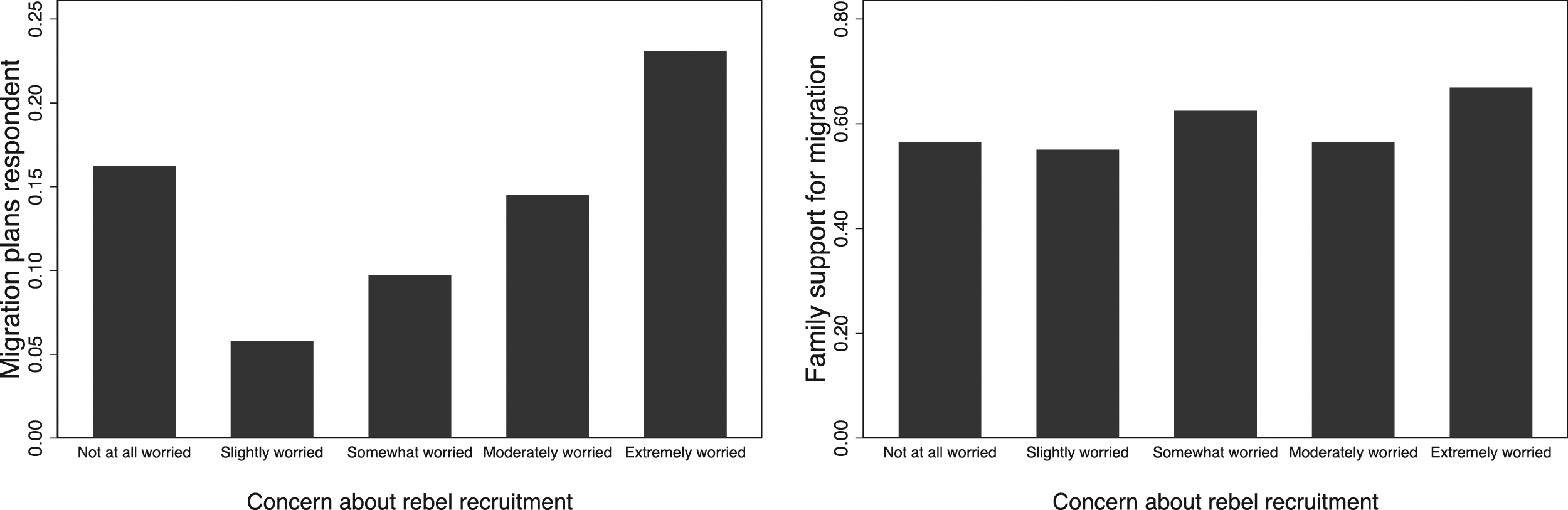
As shown in Figure 1, about 50% of respondents were moderately or extremely worried about rebel activities in general and about recruitment in particular. Also, 32% of respondents report that individuals in their close social circle had personally suffered from violence involving the MFDC. What is more, Figure 2 indicates a clear association between the fear of recruitment on the one hand, and migration plans and family support for migration on the other. The more concerned with rebel recruitment respondents are, the more likely they are to report migration plans (with the exception of those who are not concerned at all but nevertheless report concrete migration plans) and the more likely their families are to support their migration. These results also hold in a regression controlling for demographic characteristics of our respondents (see Table 5 in the Appendix). However, direct questions about sensitive topics such as local rebel activity are not free of concern. For instance, if respondents feared repercussions by rebels who may become aware, they would prefer not to answer. Together with our local partners we decided to field the question nonetheless but encouraged enumerators to remind respondents about the possibility not to answer those questions. Asking about this and similarly sensitive topics also was an integral part of the enumerator training together with our own researcher team on the ground. As a consequence of this proactive approach to avoid safety-risks for respondents at any cost, only 695 respondents replied to the questions about rebel activity, while as many as 78% refused to answer. Concern about MFDC activities and experiences of violence. The figure shows the answers to the direct questions about rebel activities, concern about recruitment, and experiences of violence. Percentage shares calculated based on the answers from 698 individuals (21% of total sample) who chose to answer to the questions. 2,446 respondents (72%) refused to answer. Answers missing for 233 respondents (7%). Concern about rebel recruitment and migration outcomes. The figure plots the average migration plans and average level of support by the respondents’ families against the concern with rebel recruitment (direct measure). Percentage shares calculated based on the answers from 698 individuals who chose to answer to the questions.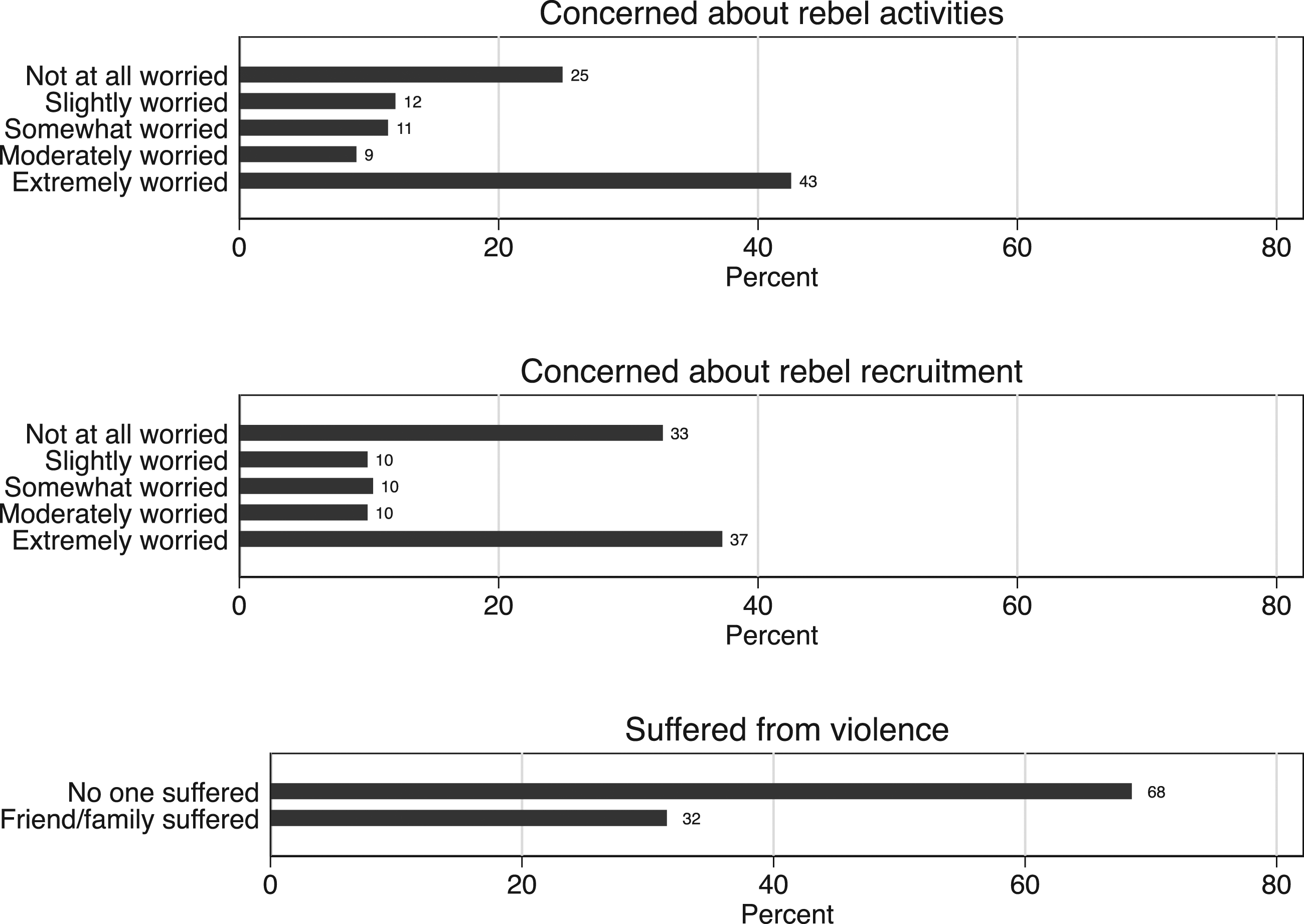
The high refusal rate testifies to the high levels of discomfort still present in the Casamance when speaking about the rebellion. From a methodological perspective this leaves us with a highly selective sample, since those who dare to answer are probably not comparable to those who refuse. We address this problem by using the estimated location of rebel bases as an indirect measure. Ideally, we would have information on the location of all rebel bases and then use the distance from these bases as a measure for recruitment threat. This measure would have the added advantage that it would be more objective, and would not be affected by incomplete recall or fear of reporting as in the case of the direct measure. The problem is that the location of active rebel bases naturally is not known.
As a second-best solution, we therefore use the distance from destroyed rebel bases as a measure for recruitment threat. The Senegalese army has repeatedly attacked and destroyed rebel hideouts, and information on this is included in the conflict events dataset used here. The location of these erstwhile bases is shown in Figure 3. While this is not an ideal measure, since destroyed bases by themselves do not pose a recruitment threat, it is unlikely that all rebels have been killed and captured in a given attack, meaning that they can still regroup. What is more, rebels typically rely on civilian support networks which are expensive to build and difficult to maintain (Weinstein 2007). It is therefore reasonable to assume that rebels, once they have established themselves in an area, will seek to stay in the same area even after a tactical defeat in order to not to lose this support. The plausibility of this measure is demonstrated in Figure 8 in the appendix, which shows how current concern with both rebel recruitment—as measured among the 698 people who answered to this question—varies with distance to former bases. The further the distance between an interview location and a former rebel base, the lower the level of concern. Locations of interviews and destroyed MFDC bases in the Casamance. Map showing the locations of interviews conducted in Senegal’s Casamance region in 2019, the location of destroyed MFDC rebel bases according to ACLED data (Raleigh et al. 2010), and the locations of interviews conducted in The Gambia in late 2018 for the out-of-sample test. Map compiled by authors.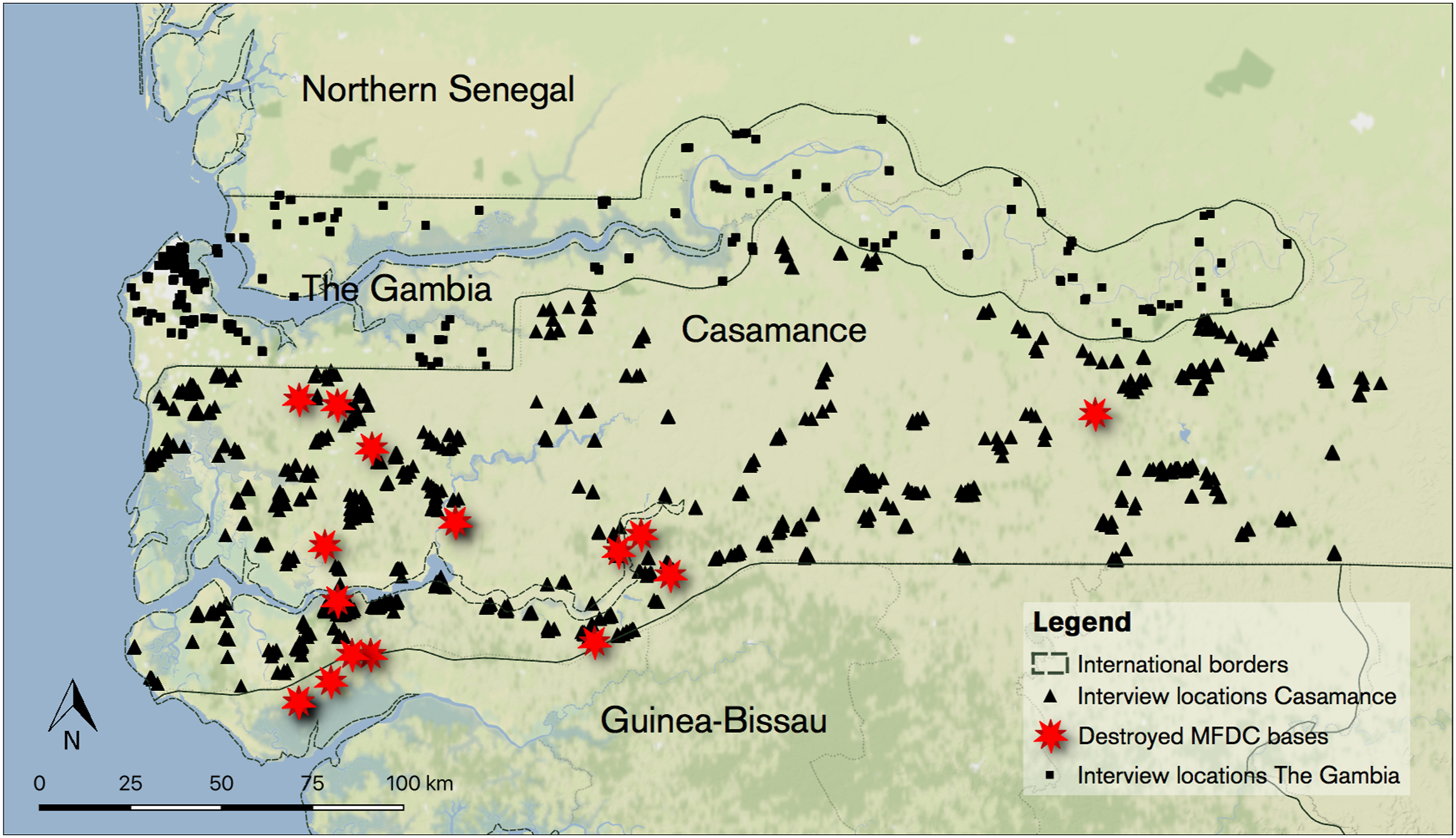
Canopy cover as an instrument for recruitment threat
As a further step to reduce measurement error, we implement an instrumental variable strategy. We instrument the threat of rebel recruitment as captured by the distance from destroyed rebel bases with local canopy cover. Canopy cover has been described as an “unambiguous indicator” for terrain favorable to rebels (Collier and Hoeffler 2004, 569). In the case of the MFDC insurgency, forests serve the rebels not only as hiding places and points of retreat, but also as a spiritual point of reference that is central to their ideology. For these reasons, we should expect dense canopy cover to co-vary with rebel presence.
As mentioned above, it is unlikely that we have captured the full universe of rebel bases, since only bases that have been discovered and attacked are included in the data. What is more, the distance to rebel bases might be correlated with hard-to-observe attributes such as the social composition of local communities, which might predict both the establishment of rebel bases and higher levels of migration. We address these two issues by using canopy cover as an instrument both in reduced-form regressions (to address measurement bias) and two-stage least square regressions (to reduce the threat of confounding).
Figure 4 shows satellite images of forested and non-forested areas in the Casamance. The figure makes it intuitively clear why forest canopy is necessary for rebel presence. While the thick forests and mangroves shown in Figure 4A provide ample cover, the barren landscape shown in Figure 4B makes the rebels immediately susceptible to aerial reconnaissance. Canopy cover therefore can serve as an objective measure for potential rebel presence. Our data come from the European Space Agency (2016), which provides land cover data for Africa on a 20 m grid. Our instrument of potential rebel presence is the percentage of the area within a 10 km radius of an interview location that is covered by trees and mangroves. Figure 4C shows an excerpt of the raster data, and Figure 4D demonstrates the close connection between rebel presence and canopy cover by plotting the average distance between an interview location and the three closest conflict events against our instrument. Canopy cover and conflict events in the Casamance. (A) Dense forest cover near Bignona. (B) Sparse canopy cover near Bounkiling. (C) ESA 20 m tree/mangrove cover raster. (D) Distance to the conflict events/canopy cover. Figures (A) and (B) show satellite images of areas with varying degrees of canopy cover. Imagery from Earthexplorer of the U.S. Geological Survey. Figure (C) provides and excerpt of the raster data from the European Space Agency (ESA 2016) used for calculating local canopy cover. Figure (D) plots the distance to the closest destroyed MFDC rebel base against the share of an area covered by forest or mangroves. Markers (dots) are values for individual interview locations. The line shows the linear fit.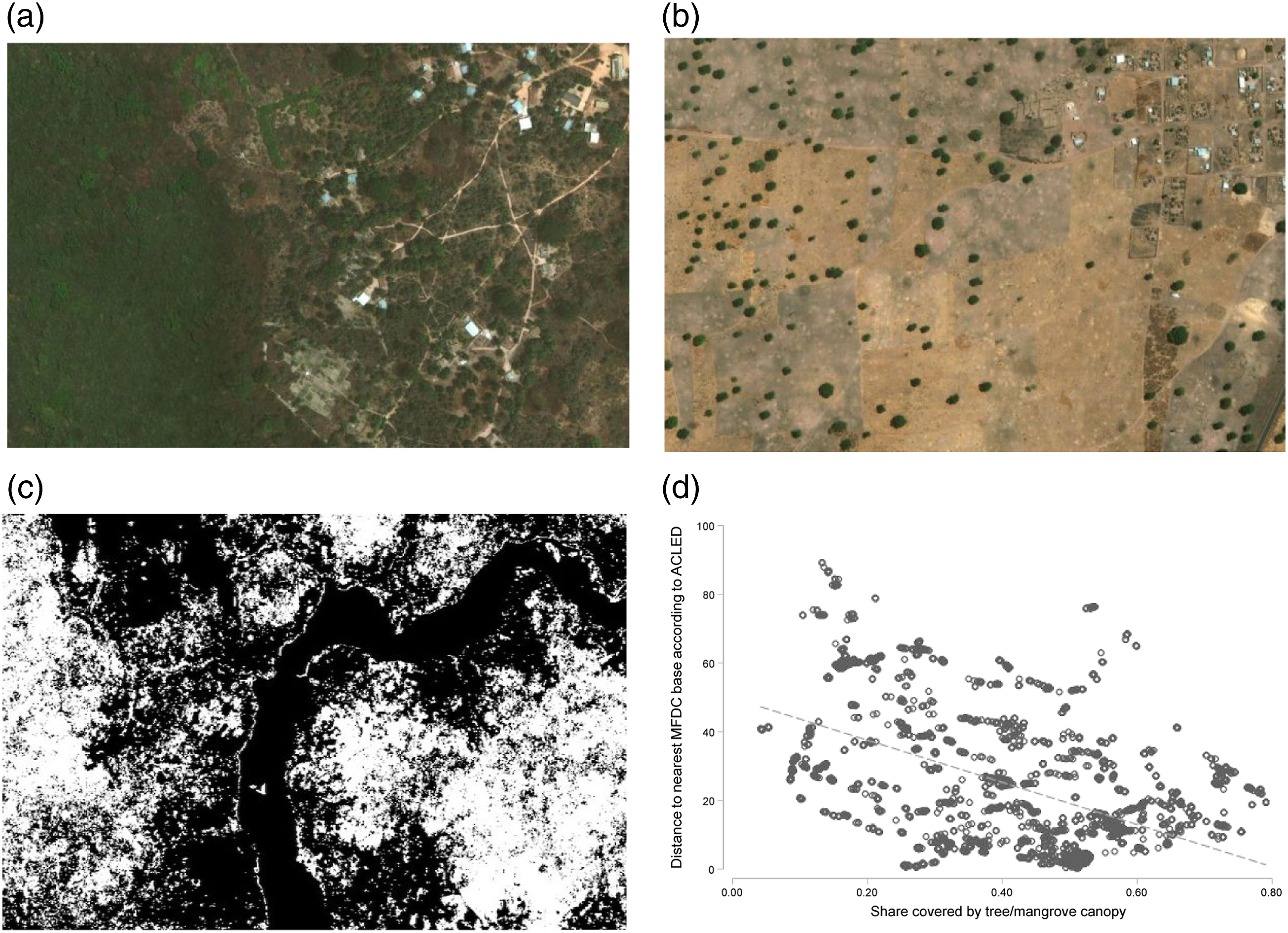
Conflict prevalence
Another challenge is to disentangle the effect of the threat of MFDC recruitment from that of the fear of violence involving the rebels. As outlined below, we take several steps to address this point, including making our analysis conditional on the level of violence experienced locally. In order to measure localized violence, we rely on the Armed Conflict Location and Event Data (ACLED) dataset (Raleigh et al. 2010). ACLED includes a comprehensive list of conflict events since 1997. 5 The dataset includes different types of conflict events, including battles, violence against civilians, and agreements between warring parties. We keep all events that explicitly involved violence in the dataset. This leaves us with 331 conflict events between 1997 and August 2019, the month before our survey went into the field. We use the total number of fatalities that occurred due to fighting or massacres involving the MFDC within a 10 km radius of our interview location as our measures of exposure to violence. In Table 6 in the Appendix, we show that our results are robust to other specifications such as the average distance from conflict events and when restricting the data to more recent events only.
Results
We start by addressing our first hypothesis. Given the poor finances of the MFDC, we expect recruitment threat to increase migration plans and family support for migration. We test the hypothesis by means of a regression model of the outcomes on our measure for the fear of recruitment, i.e., the distance from destroyed rebel bases measured in units of 10 km. Our basic specification controls for the respondent’s age, gender, and ethnicity, plus his or her father’s and mother’s highest level of education—variables that cannot plausibly have been influenced by the dynamics of the rebellion. This is followed by more fully controlled and fixed effects regression models, plus the results of our instrumental variable strategy. At each step, we present two results, one for the respondent’s own migration plans, and one for the respondent’s family’s desire for him or her to migrate. We estimate linear probability models using OLS, meaning that our coefficients can be interpreted as the increase in probability of having migration plans or of the family wanting the respondent to migrate given a 10km increase in the distance from a destroyed rebel base.
Effect of recruitment threat on migration plans and family support for migration.
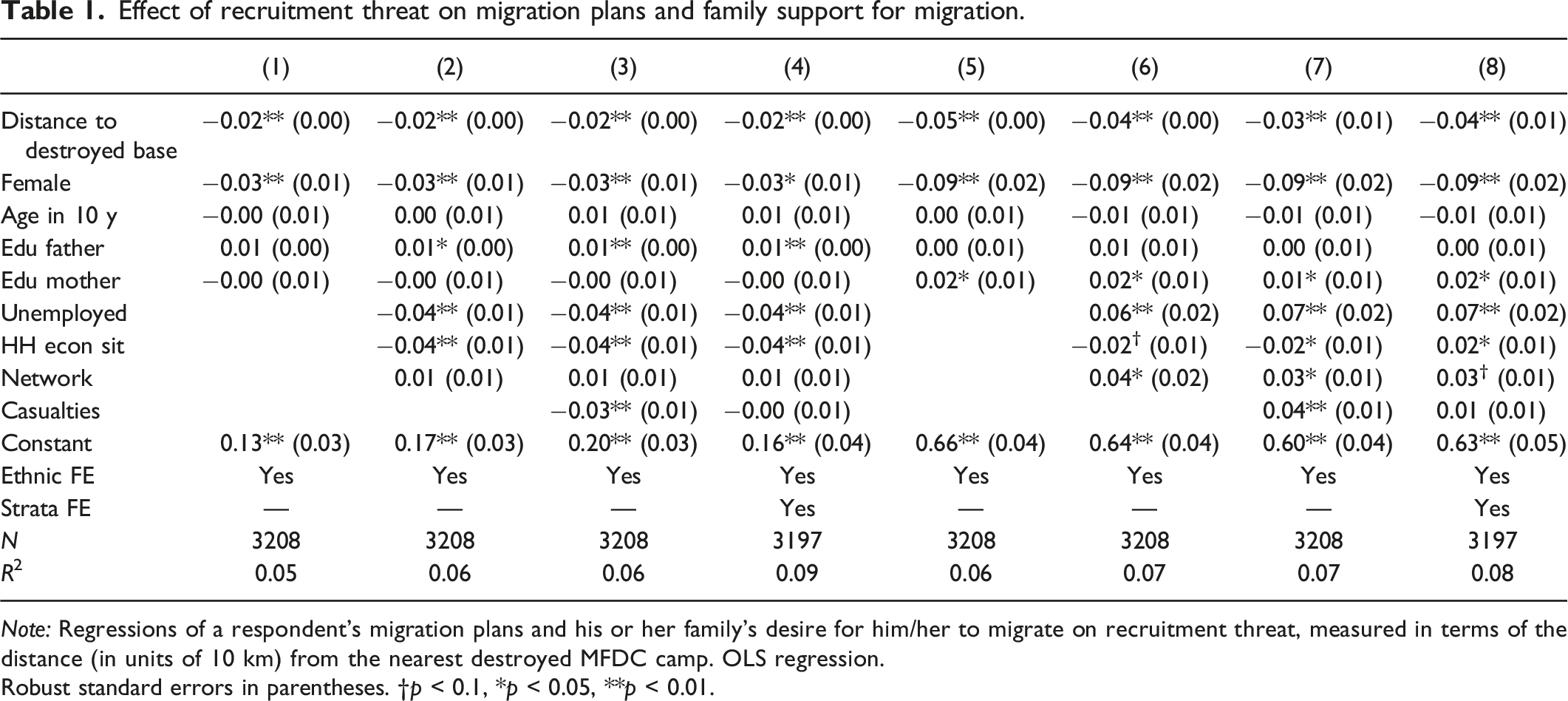
Note: Regressions of a respondent’s migration plans and his or her family’s desire for him/her to migrate on recruitment threat, measured in terms of the distance (in units of 10 km) from the nearest destroyed MFDC camp. OLS regression.
Robust standard errors in parentheses. †p < 0.1, *p < 0.05, **p < 0.01.
Panels 2 and 6 add measures for classic drivers of migration: A dummy coding whether a respondent is unemployed, an indicator for his or her household’s economic situation, and an item where we asked respondents about the number of contacts abroad whom they could ask for help if they wanted to migrate. We note that all of these factors could be affected by the dynamics of the rebellion and could potentially bias our estimates. We include them here to make our results comparable to previous work in the literature. As can be seen, poverty at the household level tends to be associated with lower migration rates, 6 while having an international support network tend to increase them. Unemployment has a negative effect on individual migration plans but increases families’ desires to have their youth migrate. Yet most important for the present analysis, the inclusion of these variables leaves the coefficients for the fear of recruitment largely unchanged.
One challenge is to disentangle the fear of recruitment from the fear of victimization. We address this problem in several ways (as further outlined below). As a first test, we include the number of victims that the MFDC rebellion has claimed in the immediate surroundings (within a 10 km radius) of our respondents’ homes. The idea is that this figure should be strongly correlated with the fear of victimization (which we do not directly measure) and should hence help to “filter out” this motive from our estimates. As can be seen in Panels 3 and 7, this indicator has significant but contrasting effects. While the number of conflict fatalities is associated with lower migration plans among individuals, it positively predicts the families’ desires for our respondents to migrate. This suggests that fear of victimization, a motive that has been emphasized by existing work in the conflict and displacement literature, is clearly also present among our respondents and increases families’ desires for their youth to leave. Yet again, the indicator for the fear of recruitment is not diminished. We also might worry that the effects are driven by peculiarities of where our respondents live—whether they live in the city versus in rural areas, for example, or how their communities are organized. In order to avoid such confounding factors, our next models introduce fixed effects for the six strata constituted by the rural and urban areas within the three regions of the Casamance. As shown in Panels 4 and 8, our estimates for the recruitment threat hardly change upon the inclusion of these indicators.
Instrumental variable results
Instrumental variable regressions.
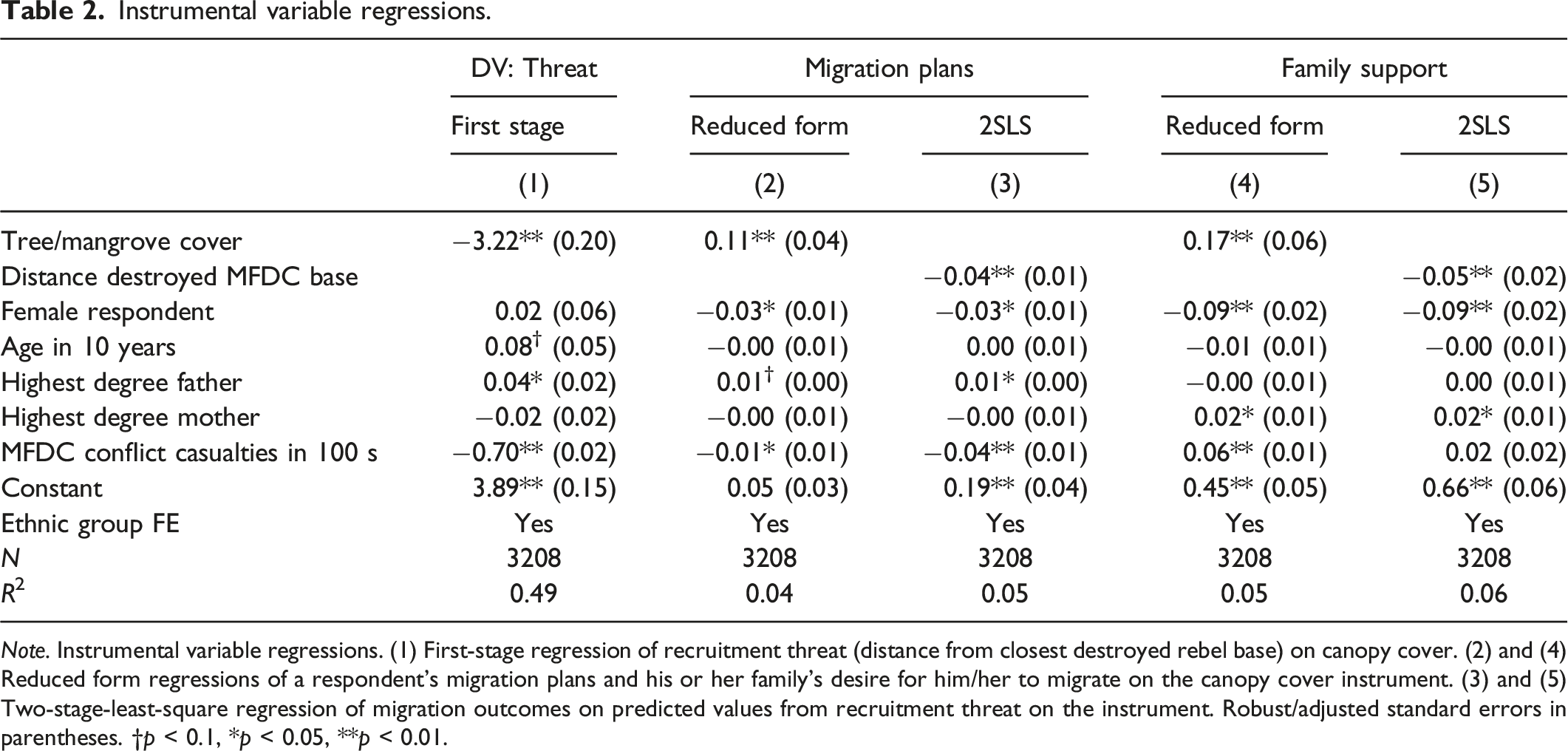
Note. Instrumental variable regressions. (1) First-stage regression of recruitment threat (distance from closest destroyed rebel base) on canopy cover. (2) and (4) Reduced form regressions of a respondent’s migration plans and his or her family’s desire for him/her to migrate on the canopy cover instrument. (3) and (5) Two-stage-least-square regression of migration outcomes on predicted values from recruitment threat on the instrument. Robust/adjusted standard errors in parentheses. †p < 0.1, *p < 0.05, **p < 0.01.
The validity of the instrumental variable results relies on the exclusion restriction, which stipulates that the only channel through which canopy cover has an impact on migration is by increasing the risk of recruitment. We support this assumption with a counterfactual out-of-sample test using data from an identical survey conducted simultaneously in the neighboring country of The Gambia, which shares many of the geographical features of the Casamance. Yet, crucially, The Gambia has seen no rebellion, so canopy cover should not predict migration outcomes. As shown in Table 8 in the Appendix, in The Gambia, canopy cover has no relation to migration plans whatsoever, while for family support, the correlation is negative (i.e. in contrast to that observed in the Casamance). Second, we show that among “northerners,” recruitment threat has no effect. The logic of the test is that northerners, if anything, may be targets of the rebels (as explained above), but do not qualify as potential recruits. The effect of recruitment threat on out-migration is therefore likely to be restricted to ethnic groups that are considered indigenous to the Casamance. As shown in Table 7 in the Appendix, this is indeed the case.
Current family migrants
Up to this stage, we have looked at migration plans and desires. The following analysis allows us to look at actual migration behavior. As explained, we collected information on the whereabouts of our respondents’ family members and friends (n = 24,630) that allows us to identify domestic and international migrants. While we lack information as to whether the family feared the recruitment of a particular family member in the past, we can use our canopy-cover instrument to assess migratory responses to the threat of recruitment. In anticipation of the analysis on the susceptibility to recruitment below, we conduct the analysis separately for men and women, show separate results for different age groups, and differentiate between domestic and international migration.
Figure 5 shows the relative probability of family members being domestic or international migrants depending on the density of the canopy cover. The depicted coefficients are marginal effects from a multinomial logistic regression with “no migrant” as the baseline outcome. To account for interdependencies in the migration decision within families, we fit a multilevel model with family-level random effects. Several observations stand out. Overall, the effect of the threat of recruitment on family migration is statistically different from zero for domestic migration only. This finding masks important heterogeneity along the dimensions of gender and age. While the threat of recruitment seems to spur the domestic migration of male family members, no such effect is visible for female family members. This suggests that families in areas that potentially hide rebels prioritize the migration of their young males at the expense of females, lending support to our second and third hypotheses. Effect of recruitment threat on family migration. The figures show the marginal effects from a multilevel multinomial logistic regression for family migration on the instrument for recruitment threat (canopy cover) for various demographic groups. The outcome variable takes the three values “no migrant” (the reference category), “domestic migrant,” and “international migrant.” To account for the fact that decisions about migration and non-migration are nested within families, intercepts are allowed to vary by family. Markers are point estimates; horizontal lines are 95% confidence intervals.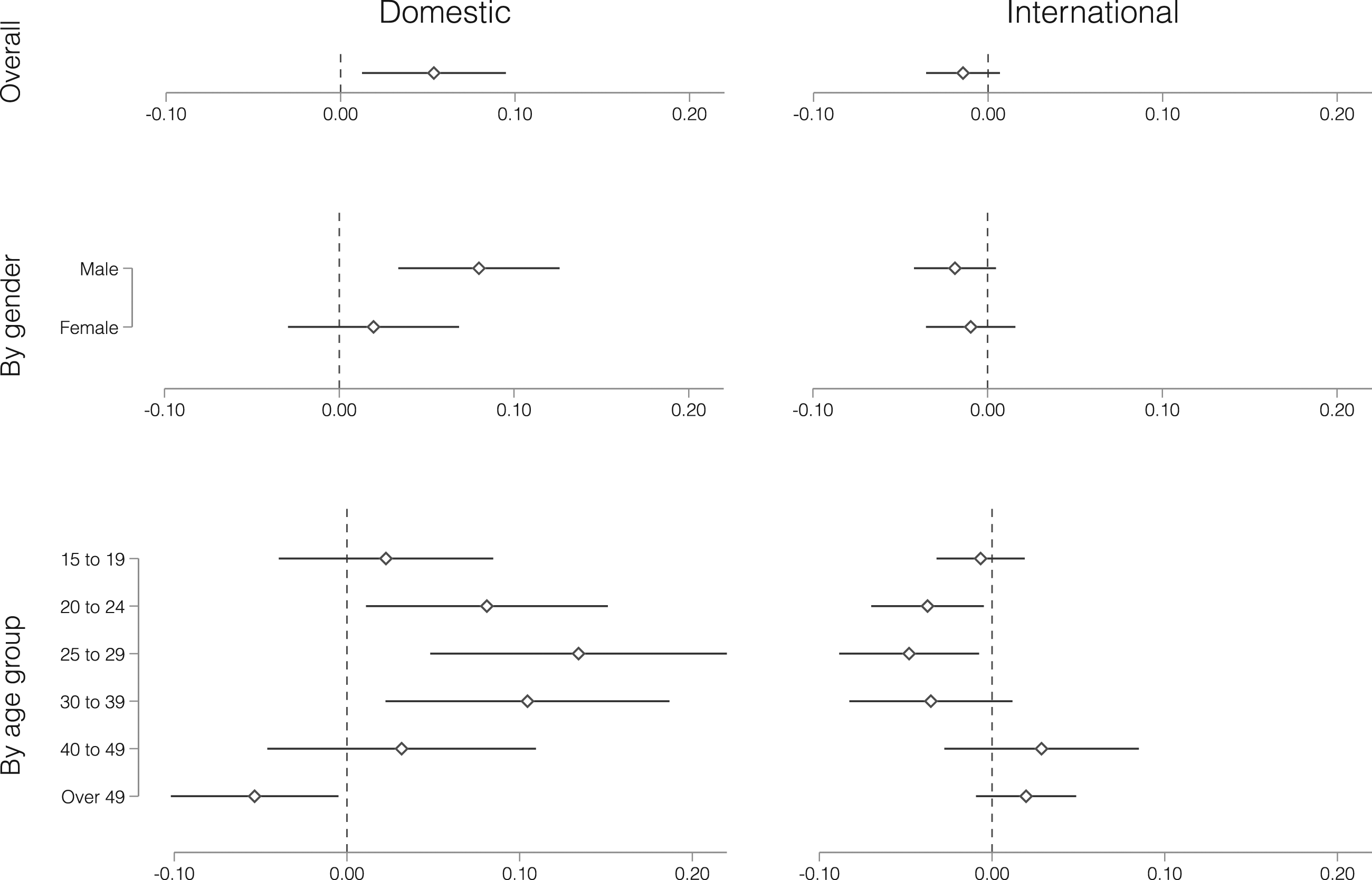
It also appears that there is a substitution effect between domestic and international migration. In line with our theory, the threat of recruitment causes the domestic migration of young male individuals. At the same time, recruitment threat has a limited negative effect on international migration. Faced with the threat of recruitment, it seems, families make sure that their young males leave the area, even though this may mean forfeiting the goal of having them migrate internationally—the more profitable, but also more costly option. 8 Further analyses show that recruitment threat not only drives people to leave, but also affects the return of migrants. 9 In Figure 7 in the Appendix, we show that families living in areas affected by rebel recruitment see fewer of their members return once they are abroad. Again, this effect is particularly pronounced for male family members, the main recruitment target of the rebels.
Heterogeneous responses to recruitment threat
The analysis of past family migration above already provides us with indications that the threat of rebel recruitment differs between men and women, and affects younger more than older individuals—as expected for migration that is driven by the threat of recruitment. As a final step in our analysis, we explore this idea in more detail. Using the individual-level data, we test whether individuals who fit the “recruitment profile” of rebel groups are particularly likely to have family support for their intended move (our Hypothesis 2).
In order to do so, we calculate heterogeneous treatment effects for factors identified by the literature to increase the likelihood of joining or being forcefully recruited by rebels. We draw on our discussion of the Casamance insurgency and a list of factors identified by Humphreys and Weinstein (2008) that put people at risk of recruitment. Based on a review of the literature, Humphreys and Weinstein (2008) argue that individuals are more likely to join a rebel group if they are (i) economically deprived, (ii) marginalized from political decision making, (iii) alienated from mainstream political processes, (iv) hope to receive (material) incentives for joining, (v) believe that they would be safer inside the rebel group than outside of it, (vi) have members of their community who are part of the group, and whose community is characterized by strong social structures. These factors, especially (i) and (iii), resonate closely with our discussion of the case, which showed that poverty and a sense of denigration and alienation seem to be important motivations for the insurgents.
Our survey allows us to measure all factors except for the ideas that individuals join out of safety concerns or because they personally know a member of the rebel group. We measure economic deprivation with an item on satisfaction with the state of the economy, marginalization, and alienation with an item of how warm respondents feel towards Senegal, the potential importance of material incentives with a measure for landlessness, and the strength of community ties with the size of our respondents’ social network. The logic of these tests is the following: If the threat of recruitment is an important motivator for migration, the effect of our instrument should be stronger among the subgroup of people who are particularly susceptible to rebel recruitment. To make our results easier to compare, we standardize all variables along which we assess heterogeneity by subtracting the mean and dividing by the standard deviation. We then interact our instrumental variable with these indicators.
Figure 6 shows the marginal effect of our instrument along the range of the interacted factor for male and female respondents separately. As expected from the discussion above, we observe statistically significant effects mainly for males, reflecting their higher susceptibility to recruitment. Among males, all factors that make rebel recruitment more likely also predict a stronger effect of the instrument on family support for migration. This is true for deprivation, alienation, poverty, and social embeddedness. The analysis therefore provides yet more evidence that the threat of recruitment directly causes (domestic) migration. Heterogeneous effect of threat of rebel recruitment. The figure shows the effect of the threat of rebel recruitment as captured by the density of the local canopy cover along the range of values for several indicators of interest. Marginal effects after OLS regression. Shaded areas are 95% confidence intervals.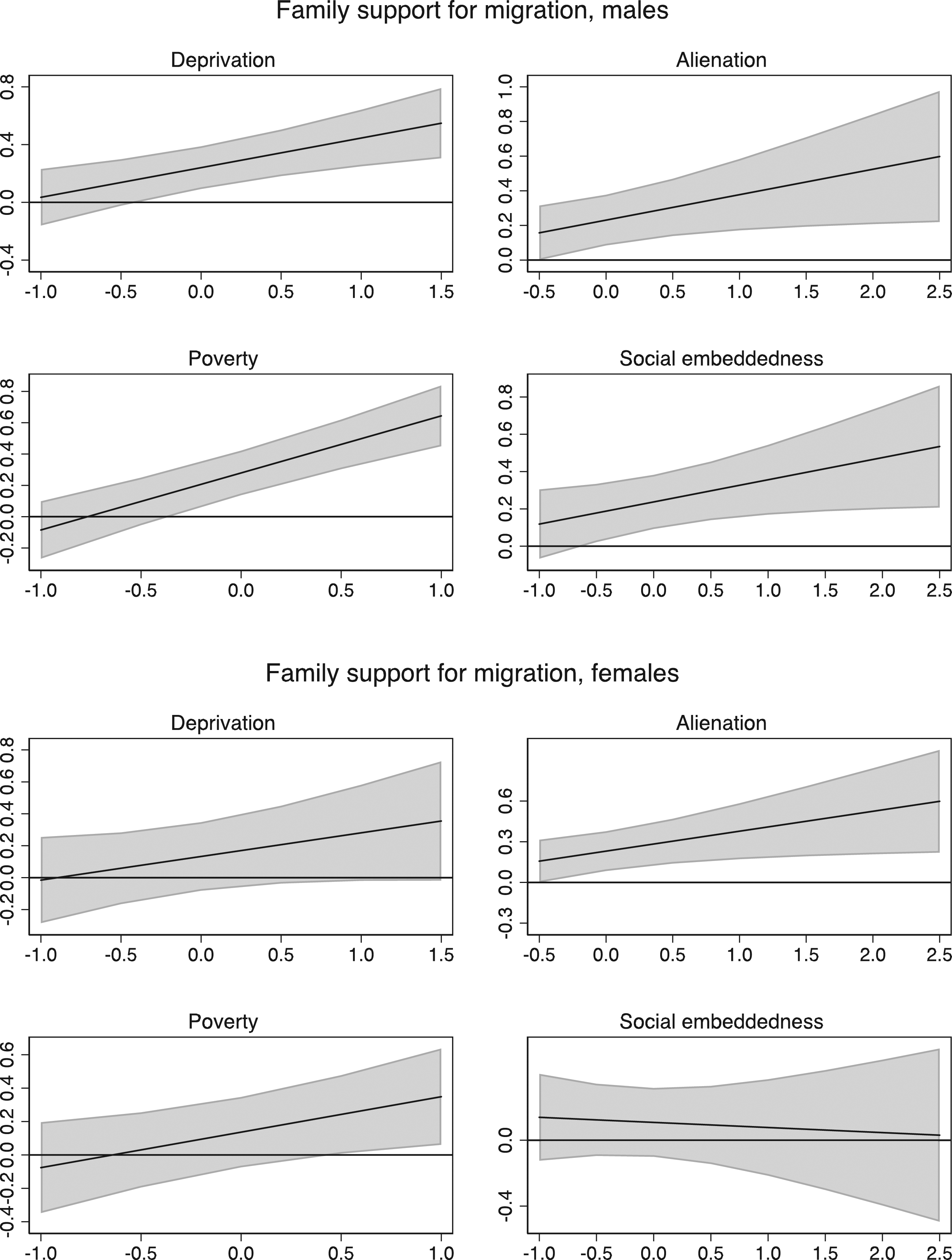
Conclusion
In this paper we demonstrated that in the context of an ongoing insurgency, the threat of recruitment has a significant causal influence on migration plans and decisions. In particular, young men alienated from the central state are prioritized by their families to leave. That is, along with the migration of individuals who are opposed to the local armed actors or fear victimization, we also observe the migration of individuals who are potentially aligned with them and fit their recruitment profile. The threat of recruitment only increases domestic migration, which appears to serve as a putatively low-cost substitute for international migration. These displacement processes occur in the context of widespread migration for economic reasons and may go unnoticed without the kind of detailed, disaggregated analyses presented here. Our paper therefore demonstrates the merit and value of such an approach, echoing the call for more micro-level studies on the dynamics of violence and displacement.
Our findings have several implications, both conceptual and concrete. One is for the vulnerability of women. Faced with the threat of recruitment, families prioritize the migration of male family members. Yet this limits the options for female family members. Hence, reducing the risk for male family members implicitly increases the risk for female members, exposing them to conflict dynamics in which they would likely otherwise have been sent away. Second, the paper underlines, from a quantitative perspective, the difficulty of distinguishing between forced and regular migration (Bakewell 2008). We demonstrate that the motive of seeking safety from recruitment co-exists with other migration drivers, such as economic improvement. Such multiple motives exist both within families and even within individuals. The often-cited dichotomy of economic migrants versus refugees fails to capture the situation of the young men leaving the Casamance. Our findings also contribute to explaining why emigration from conflict regions tends to be predominantly male. While males are often seen as the vanguard sent to clear the way for their families, we show that men also migrate for reasons independent of this motive, and somewhat specific to their gender. This explains why not all men seek to bring their families to their destination context once they have migrated, as is often assumed in the political discourse.
Finally, our findings may also help to inform and refine models used by the UNHCR and others for predicting refugee flows (Alburez-Gutierrez and Segura 2018; Suleimenova, Bell, and Groen 2017). We show that not only should we be on the lookout for movements of people fearing violence, but also for movements of people who are attractive recruits, either because they fit the demographic profile of typical recruits and/or because they are ideologically aligned. In applying the insights of this paper to make predictions, it is crucial to take into consideration the nature of the underlying insurgency. Not all rebels restrict themselves to recruiting adult males; indeed some also target children and women (Beber and Blattman 2013; Wood 2019). In such contexts, we should see families prioritizing the migration of these groups as well. However, the general point made in this paper should continue to hold: By knowing the recruitment profile of a particular armed actor, we will have a better idea of who will migrate to avoid recruitment.
Supplemental Material
Supplemental Material - Rebel Recruitment and Migration: Theory and Evidence From Southern Senegal
Supplemental Material for Rebel Recruitment and Migration: Theory and Evidence From Southern Senegal by Max Schaub and Daniel Auer in Journal of Conflict Resolution
Footnotes
Acknowledgments
We would like to thank Tamara Bogatzki, Paul Diédhiou, Ibrahima Dione, Laurent Goetschel, Doudou Dièye Gueye, Patricia Justino, Tobias Korn, Daniel Meierrieks, Enzo Nussio, Seraina Ruegger, Melanie Sauter, Guy Schvitz, Julia Stier, Philip Verwimp, and Nina von Uexkull for discussions and feedback. We are also indebted to the staff of ANSD Senegal for their professional implementation of the survey and their advice. Jasper Jansen and Aaron Lauterbach provided excellent research assistance.
Declaration of Conflicting Interests
The author(s) declared no potential conflicts of interest with respect to the research, authorship, and/or publication of this article.
Funding
The author(s) disclosed receipt of the following financial support for the research, authorship, and/or publication of this article: This work was supported by the Federal Ministry for Family Affairs, Senior Citizens, Women and Youth (Germany).

Supplemental Material
Supplemental material for this article is available online.
Notes
References
Supplementary Material
Please find the following supplemental material available below.
For Open Access articles published under a Creative Commons License, all supplemental material carries the same license as the article it is associated with.
For non-Open Access articles published, all supplemental material carries a non-exclusive license, and permission requests for re-use of supplemental material or any part of supplemental material shall be sent directly to the copyright owner as specified in the copyright notice associated with the article.
