




Abstract
Non-uniform microwave heating remains a major limitation in processing natural fiber-reinforced thermoplastics, since most previous studies have focused mainly on dielectric characterization or on microwave heating behavior as a function of fiber content alone, without considering fiber morphology or its combined effect on heating uniformity. This study examines the influence of wood-fiber morphology and content on the microwave dielectric heating behavior of polypropylene (PP) biocomposites reinforced with Canadian maple wood-fibers. Composite sheets were fabricated with different lengths and fiber contents. Differential scanning calorimetry measurements conducted over a temperature range of 22–100°C showed that increasing fiber content reduces the specific heat capacity of the composites by approximately 15%, thereby facilitating a faster temperature rise during heating. Dielectric spectroscopy performed at 2.45 GHz revealed that incorporating fibers increases the dielectric constant from 1.45 for PP to a maximum of 1.69 for 15% content, while the loss tangent varies with fiber length and concentration. These combined changes in dielectric properties modulate the dielectric loss factor, which governs microwave energy absorption and directly influences the heating rate, volumetric heating efficiency, and temperature uniformity. Experimentally measured dielectric and thermophysical properties were implemented in a three-dimensional finite element model based on the enthalpy method and Crank–Nicolson time integration. Numerical results demonstrate that, the composites reach higher temperatures than PP and exhibit improved volumetric heating with reduced through-thickness temperature gradients. The combined experimental–numerical findings highlight the critical role of fiber morphology in tailoring microwave heating efficiency and demonstrate the strong potential of these biocomposites for microwave-assisted thermoforming.
Keywords
Introduction
The growing demand for sustainable materials in manufacturing has driven significant interest in biocomposites, which combine renewable plant-based reinforcements with thermoplastic polymers like polypropylene (PP).1,2 In biocomposites, natural fibers like wood, 3 flax, 4 hemp, 5 jute,6,7 kenaf, 8 sisal 9 and etc. 10 are used as reinforcements for polymer matrices.11,12 These materials offer advantages over conventional composites, including reduced environmental impact, lower density, and enhanced recyclability.13,14 They can also improve the mechanical, thermal, and dielectric properties of the neat polymer matrix.15,16 The adhesion between hydrophilic lignocellulosic fibers and hydrophobic polymer matrices significantly affects their mechanical17,18 and dielectric 19 properties. Studies have demonstrated that chemical treatments and fiber size modifications can enhance stress transfer at the interface of fiber and matrix, improving tensile strength and stiffness.20,21,22
Despite the advantages of biocomposites over their conventional counterparts, their adoption in industrial processes such as thermoforming remains limited due to challenges in achieving uniform heating during the forming stage. 23 Thermoforming is a technique widely used in automotive, packaging, and consumer goods.24,25 In this process, the material’s shape is created based on differences in pressure. First, the material is heated, and then it is shaped by using vacuum, pneumatic pressure, or mechanical force to match the mold. 26 Traditional heating methods, including convection and infrared radiation, often result in uneven temperature distributions, particularly in thicker sections, leading to defects like warping or incomplete forming. 27 In these methods, heating happens mainly on the surface of the material and then slowly moves inward to the inner parts. During heating, the polymer matrix must reach a viscoelastic state to allow deformation, but uneven heat distribution can cause localized overheating or insufficient softening. For instance, convection heating suffers from low thermal efficiency, while infrared radiation produces surface-dominated temperature gradients, particularly in materials with non-uniform thicknesses. 28 These limitations underscore the need for advanced heating techniques that ensure uniform energy delivery.
Microwave dielectric heating has emerged as a promising alternative, enabling volumetric heating through direct interaction with the material’s dielectric properties.
29
In this method, plastics or polymer composites are exposed to high-frequency electromagnetic radiation, usually in the microwave range corresponding to wavelengths between 1 m and 1 mm (Figure 1(a)).
30
If the material is dielectric (meaning an electric field can polarize its molecules), the field makes these molecules vibrate, which produces heat evenly throughout the material.
31
The dissipated energy, quantified by the loss tangent (tan δ = ϵ′′/ϵ′), generates heat volumetrically, bypassing the thermal conductivity limitations of traditional methods.
32
The advantages of microwave heating include fast and even heating throughout the whole material, shorter production times, the ability to process temperature-sensitive materials, and more efficient energy use compared to traditional heating methods. However, microwave heating is generally not suitable for processing nonpolar polymers such as PP because these materials have low dielectric loss and do not absorb microwave energy effectively.
33
Nonpolar polymers lack dipolar moments, so their molecules do not oscillate in response to the microwave electric field, resulting in poor heating. In contrast, polar polymers with dipoles heat well under microwaves due to dipolar polarization.
34
A sustainable way to heat nonpolar polymers like PP is to add polar natural fibers such as wood, creating wood-plastic composites (WPCs). These fibers absorb microwaves frequencies and convert them into heat. Research has shown that adding these fibers can enhance the dielectric characteristics of the polymers effectively.
35
Porebska et al.
36
found that adding cellulose fibers to wood-plastic composites raises both the dielectric constant and the loss tangent. (a) Electromagnetic spectrum highlighting the microwave frequency range and (b) Schematic representation of the microwave wave with the electric field oriented along the z-axis and the magnetic field along the x-axis, illustrating normal incidence on the composite sheet.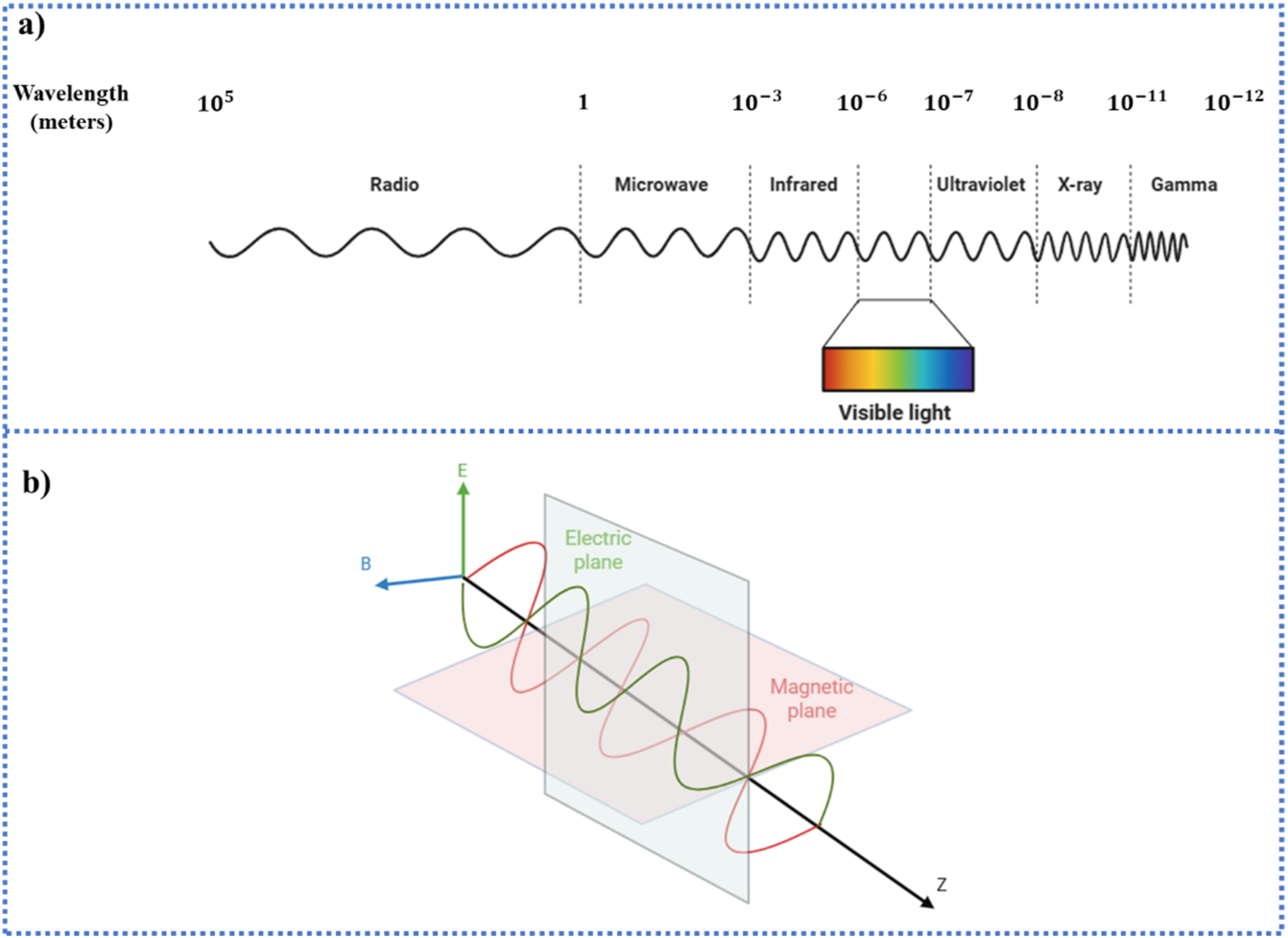
Wood, especially hardwoods such as maple, consists of cellulose, hemicellulose, and lignin, which are natural polymers containing –OH (hydroxyl) groups. 37 These groups are highly polar and respond to alternating electric fields, such as microwaves, by oscillating and generating heat. 38 In addition, wood fibers naturally retain moisture, and since water molecules are among the most polar substances and exhibit high dielectric loss (ε″), they significantly enhance the material’s ability to absorb microwave energy. 39 When maple fibers are added to a PP matrix, the resulting composite gains a polar, heat-generating component, increasing its overall dielectric loss coefficient. This allows the composite to heat more efficiently, even though PP itself does not absorb microwaves well. Because the wood fibers are dispersed throughout the PP matrix, heating occurs volumetrically rather than only at the surface, leading to faster and more uniform temperature distribution. 40 Furthermore, by strategically controlling the distribution or orientation of wood fibers within the composite, it becomes possible to engineer localized heating zones, an advantage that can be especially beneficial in applications like thermoforming, where precise thermal control is critical. 41 Highly microwave-responsive composites based on conductive fillers such as carbon black, carbon nanotubes, graphene, or graphene oxide have been extensively reported in the literature.42,43
These systems exhibit very high dielectric loss and rapid microwave heating rates. However, the incorporation of conductive fillers often results in increased electrical conductivity, non-uniform field distribution, processing challenges, and elevated material costs, which limit their suitability for thermoforming and large-scale industrial manufacturing.
The dielectric characteristics of WPCs depend on various parameters, including the frequency of the applied field, the type of polymer matrix, the species of wood fiber used, and the amount of wood reinforcement mixed into the polymer. 44 Changes in these factors affect how the composites respond to electromagnetic fields, with higher fiber content and cellulose levels generally increasing dielectric properties, especially at lower frequencies. 45 The elevation of the dielectric constant with increased wood fiber content is attributed to the hygroscopic polar groups present in cellulose. 46 This unique feature can be used to tailor the microwave heating behavior of biocomposites based on fiber morphology. In this regard, Erchiqui et al. 23 used numerical simulations to compare microwave and infrared heating for thermoforming WPCs made from polypropylene with 30% wood reinforcements of various sizes and thicknesses. They found that microwave heating produced a more uniform temperature distribution and, for certain reinforcement sizes, heated the composites faster than infrared. The results suggest that microwaves are a promising and efficient heating method for processing WPCs. Dielectric parameters in microwave processing directly control process performance. The dielectric loss factor (ε″ = ε′ tan δ) governs the heating rate, while the spatial distribution of ε′ and ε″ dictates temperature gradients within the sheet. Materials with balanced dielectric losses reach the thermoforming window faster and more uniformly, ensuring stable forming conditions. Therefore, variations in fiber length and content are not only microstructural factors but also practical levers for controlling heating uniformity and efficiency.
From a dielectric and electromagnetic perspective, fiber length influences microwave heating not as an isolated geometrical parameter, but through its effect on composite microstructure and polarization behavior. Increasing fiber length modifies the effective aspect ratio of the reinforcement, which alters the density and spatial distribution of fiber–matrix interfaces within the polymer. At microwave frequencies (2.45 GHz), these interfaces constrain the dipolar relaxation of polar groups in the wood constituents and affect the effective permittivity of the composite, as described by effective medium and homogenization theories. Longer fibers can promote partial alignment and continuity of polar domains, increasing electric energy storage (ε′), while shorter fibers increase interfacial area density, enhancing interfacial constraints and local field distortions that influence dielectric loss. Consequently, fiber length affects the dielectric loss factor (ε″ = ε′ tan δ) indirectly by governing dipole mobility, interfacial polarization density, and electric field distribution within the composite, thereby impacting microwave absorption and heating efficiency.47,48
Numerical methods such as finite element method (FEM) have always been useful for simulating real-world manufacturing processes, reducing the need for expensive experimental tests. 49 These methods can be effectively used to predict microwave heating in biocomposite polymer sheets during manufacturing processes. 50 Previous work by Erchiqui et al. 51 established finite element models to simulate microwave heating in polymer sheets, revealing that material-specific parameters like dielectric constant (ϵ′) and thermal conductivity govern temperature profiles. These models typically treat composites as homogeneous materials and focus on bulk dielectric properties, without explicitly accounting for fiber-length–dependent microstructural effects such as aspect ratio and interfacial area density, which can influence dielectric response and microwave heating behavior. The dielectric behavior of wood-PP composites is intrinsically linked to fiber characteristics. Research by Zhu 52 showed that homogenization models could predict the effective thermal conductivity of composites based on fiber volume fractions, but such studies often neglect the role of fiber length. Longer fibers create more continuous pathways for heat transfer, while shorter fibers increase interfacial areas, enhancing dielectric loss through interfacial polarization. Despite progress in modeling microwave heating, few studies have systematically evaluated how fiber length and content jointly affect dielectric heating performance. Existing literature focuses on isolated parameters, such as fiber loading’s impact on mechanical properties or dielectric constants, 35 without integrating these factors into a comprehensive framework for thermoforming optimization.
This study addresses a critical gap in the existing literature by systematically examining how wood fiber morphology and content jointly influence the dielectric heating behavior of Canadian maple wood fiber–polypropylene biocomposites under microwave irradiation. Unlike previous studies that focus on isolated parameters, such as fiber loading effects on mechanical or dielectric properties, or numerical simulations based on assumed material constants, this work integrates experimental dielectric and thermophysical measurements with a three-dimensional finite element microwave heating model. Specifically, it evaluates the combined effects of fiber length (50–100 µm) and fiber content (5–15%) on dielectric characteristics, heating rate, and temperature uniformity at 2.45 GHz. By linking composite microstructure to volumetric heating performance and process efficiency, this research provides new design guidelines for tailoring wood–PP biocomposites for microwave-assisted thermoforming, thereby advancing both the scientific understanding and industrial applicability of sustainable polymer composites.
Materials and methods
This study is divided into two primary parts. The first part focuses on experimentally measuring the thermal and dielectric properties of the developed WPCs. These properties are important for the numerical modeling section. The second part involves the numerical modeling of microwave heating of the samples.
Experimental procedures
Materials
Hardwood fibers, mainly maple, were obtained from ARAUCO, a global wood product manufacturer located in New Brunswick, Canada. ARAUCO sources its wood from areas within a 250-km radius of its factory. Homopolymer polypropylene (PP) pellets were supplied by CTMP in Thetford Mines, Quebec. The PP has a density of 0.9 g/cm3 with a melting temperature of 165°C. Polypropylene-graft-maleic anhydride (MAPP; Aldrich 427845) was used as a coupling agent. MAPP has a weight-average molecular weight of 9100 (Mw = 9100) and a number-average molecular weight of 3900 (Mn = 3900), with 8–10 % maleic anhydride by weight.
MAPP was added as a coupling agent at a fixed content of 3% by volume in all samples. The maleic anhydride groups in MAPP can react with hydroxyl (−OH) groups on the cellulose surface of maple fibers via esterification, while the polypropylene backbone of MAPP entangles with the PP matrix. This creates covalent bridges that improve interfacial adhesion, reduce moisture absorption, and enhance stress transfer between the hydrophilic fiber and the hydrophobic polymer.
Sample preparation
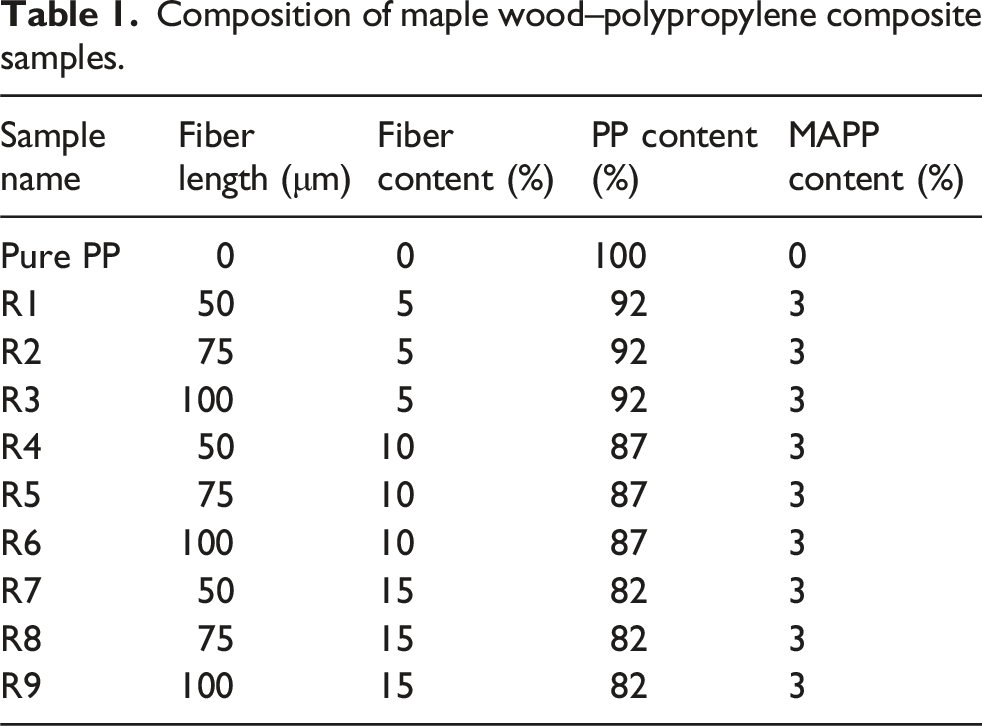
Initially, maple hardwood fibers were dried at 70°C in a laboratory oven until their moisture content was reduced from approximately 65% to below 6%. The fibers were then classified into three size categories: short fibers (50 μm), medium fibers (75 μm), and long fibers (100 μm) using standard ASTM E11 sieves. The distribution process adhered to the ASTM E11 standard, utilizing mesh sizes of 53, 75, and 106 μm through the use of standard testing sieves. Fibers that passed through the 106 µm mesh but not the 75 µm mesh were classified as “long,” while those that passed through the 75 μm mesh but not the 53 μm mesh received the label “medium.” Fibers that passed through the 53 μm mesh were designated as “short.”
Composition of maple wood–polypropylene composite samples.
The PP, MAPP, and fibers were pre-mixed for 10 min to ensure uniform distribution before extrusion. The mixture was then compounded in a twin-screw type of extruder (Thermo Haake) at 180°C and 50 rpm. The extruded material was pelletized and dried at 105°C for 24 h. Finally, composite sheets with a thickness of 1.0 mm and dimensions of 250 mm × 250 mm were produced by thermocompression molding using a Carver 30 Ton Compression Press. The molding parameters followed ASTM D4703 standards, including preheating and compression at 170°C for 300 s under a compression load of 13,607 kg, followed by controlled cooling and demolding at 50°C.
The processing parameters were selected to ensure consistent fiber dispersion, low residual moisture, and stable interfacial bonding across all samples. The extrusion temperature (180°C) and compression molding temperature (170°C) were sufficiently high to fully melt the polypropylene matrix and activate the maleic anhydride groups in MAPP, promoting interfacial adhesion with the hydroxyl groups of wood fibers, while avoiding thermal degradation of the fibers. The applied compression pressure (13,607 kg) facilitated uniform fiber distribution and reduced void formation. Controlled cooling to 50°C prior to demolding minimized residual stresses and prevented moisture reabsorption, ensuring that differences in microwave heating behavior could be primarily attributed to fiber length and content rather than processing-induced variability.
Differential scanning calorimetry
The thermal behavior of the samples was studied to determine their specific heat capacity (Cp) for both pure polypropylene and composites with different filler amounts. This was performed using differential scanning calorimetry (DSC) with a DSC-Q20 device from TA Instruments (New Castle, United States of America), in accordance with ASTM D3416 standards. The test covered a temperature range from 22°C to 100°C, including one full heating and cooling cycle at a rate of 10°C/min, under a nitrogen flow of 50 mL/min. Samples weighing 10 to 15 mg were placed in sealed aluminum pans for the measurements.
Dielectric spectroscopy
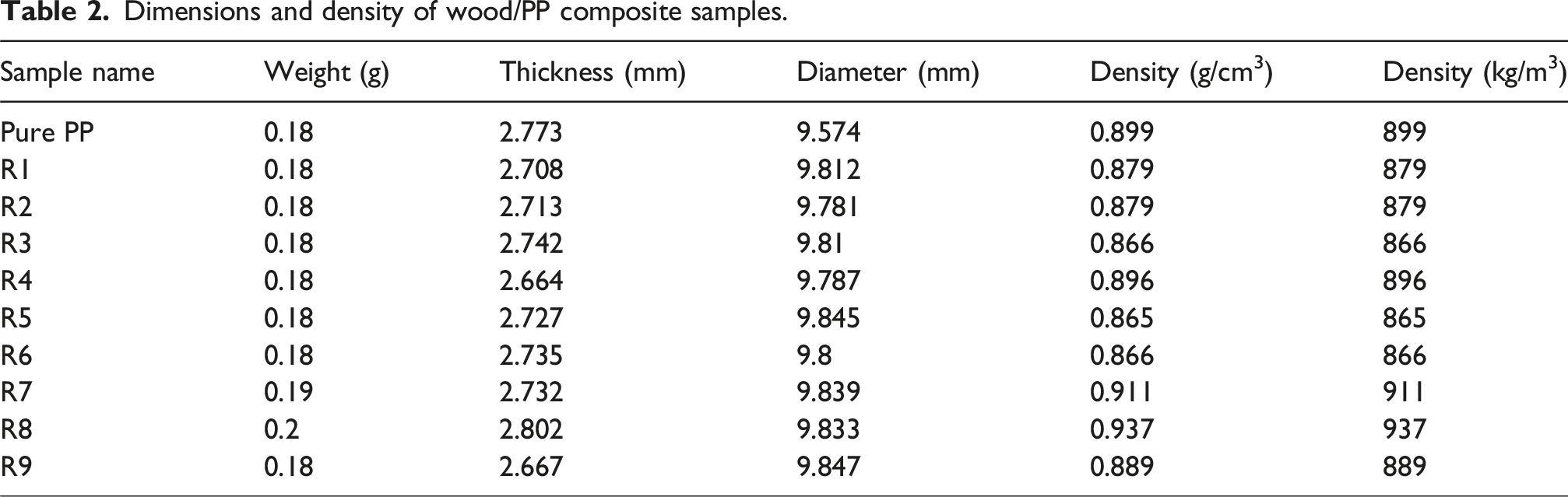
Dimensions and density of wood/PP composite samples.
To ensure reliable results, each measurement was repeated three times. The dielectric spectroscopy measured key parameters: the dielectric constant (ε′), which shows the electrical energy storage capacity of the material; loss tangent (tan δ), which quantifies the material’s ability to convert absorbed electromagnetic energy into heat, indicating the efficiency of energy dissipation within the substance when subjected to an alternating electric field such as microwaves. These properties are important for understanding how the composites interact with microwave energy at 2.45 GHz.
Theoretical framework and finite element method
Enthalpy model for heat conduction
For analyzing heat conduction, we use a method based on volumetric enthalpy or H(T) and the Kirchhoff transform or θ(T), as explained by Erchiqui
51
:
Here, Qwave represents the internal heat generated by microwave energy. The zero point of enthalpy is set at the saturated solid temperature. Using enthalpy instead of temperature simplifies the problem by avoiding the need to solve two separate energy equations as well as the Stefan boundary conditions. We use the following boundary condition to solve the equation:
In this equation, the radiative heat flux striking the surface is denoted by q [W/m2], the outward normal vector to the surface is denoted by n, the convectional heat transfer coefficient is denoted by h [W/m2/°C], and the ambient air temperature is denoted by T∞. The heat gained or lost through convection between the substance and its surroundings is denoted by the symbol h (T–T∝). The location of the material and the configuration of the heat source determine the value of the incident heat flux q.
Finite element analysis
To solve the heat conduction equation (equation (1)) over the spatial domain, we use the Galerkin method, which is part of the weighted residuals approach. A finite number of elements make up the domain Ω. To determine the volumetric enthalpy, nodal points are defined within each element. The algebraic system that results from this operation is as follows:
Implicit time integration scheme for transient algorithms
The original heat conduction problem (equation (1)) is approximated in continuous time by equation (3). To track how temperature changes over time accurately and stably, a time-stepping method is needed. For this, we use a first-order implicit integration method called the Crank–Nicolson scheme to solve the algebraic system in equation (3).
For more details on this numerical method, see Erchiqui.
51
Using this approach, equation (3) is transformed into:
Power dissipated by microwave in material sheet
Herein, it is assumed that microwaves normally strike the sheet on opposing faces. The microwave has an electric field that points only in the z-direction and a magnetic field that points only in the x-direction (Figure 1(b)), both of which vary with the position along the y-axis. The analytical formula for the electrical power loss in the material is given by Erchiqui
51
:
It should be noted that microwave power dissipation depends on the dielectric loss factor ε″ rather than on the loss tangent tan δ alone, where ε″ = ε′ tan δ.
Equation (5a) includes exponential decay terms that follow Lambert’s law. When the sheet is in free space and subjected to microwave field traveling from right to left, the power dissipated in the material can be found by replacing the variable y in equation (5a) with L-y:
Results and discussion
Differential scanning calorimetry
To determine the specific heat capacity (Cp) of samples R1 to R9, a DSC test was performed. When a sample and a reference are heated or cooled in accordance with a regulated temperature schedule, DSC calculates the differential in heat flow between them. Specific heat capacity, represented by Cp, indicates the amount of heat needed to increase the temperature of one unit of mass of a material by one K. It is mathematically defined as follows:

Thermophysical properties of pure PP and wood-PP composite.
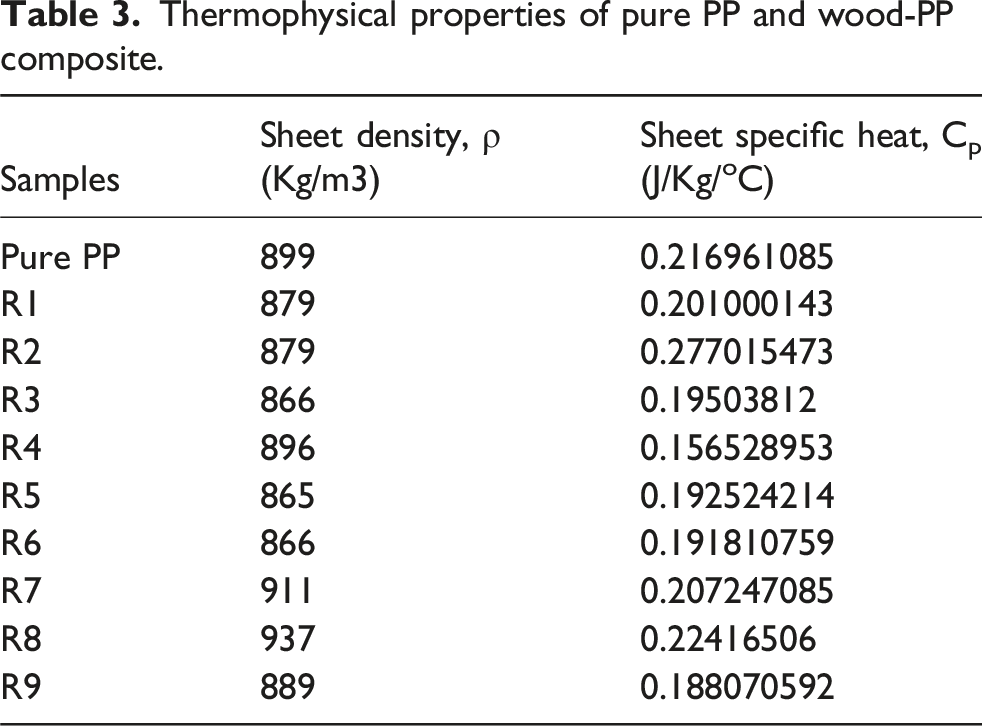
Figure 2 shows the specific heat capacity (Cp) of pure polypropylene and composites with different wood filler contents (5%, 10%, and 15%) as a function of temperature. All values were obtained from DSC data in the temperature range of 22°C to 100°C. As seen in Figure 2, increasing the filler content decreases Cp at all temperatures. This happens because wood fillers usually have a lower heat capacity than the polymer matrix. When wood filler is added, it replaces a portion of the polypropylene and reduces the polymer content in the composite, which in turn lowers the overall heat capacity of the composite. Additionally, the filler limits the movement of the polymer chains, which further reduces the PP-wood composite’s ability to absorb heat and energy, thus slightly contributing to the lower Cp.54,55 These data will be used in numerical models of microwave heating during the heating process. Specific heat capacity (Cp) of pure polypropylene and its composites at different filler contents.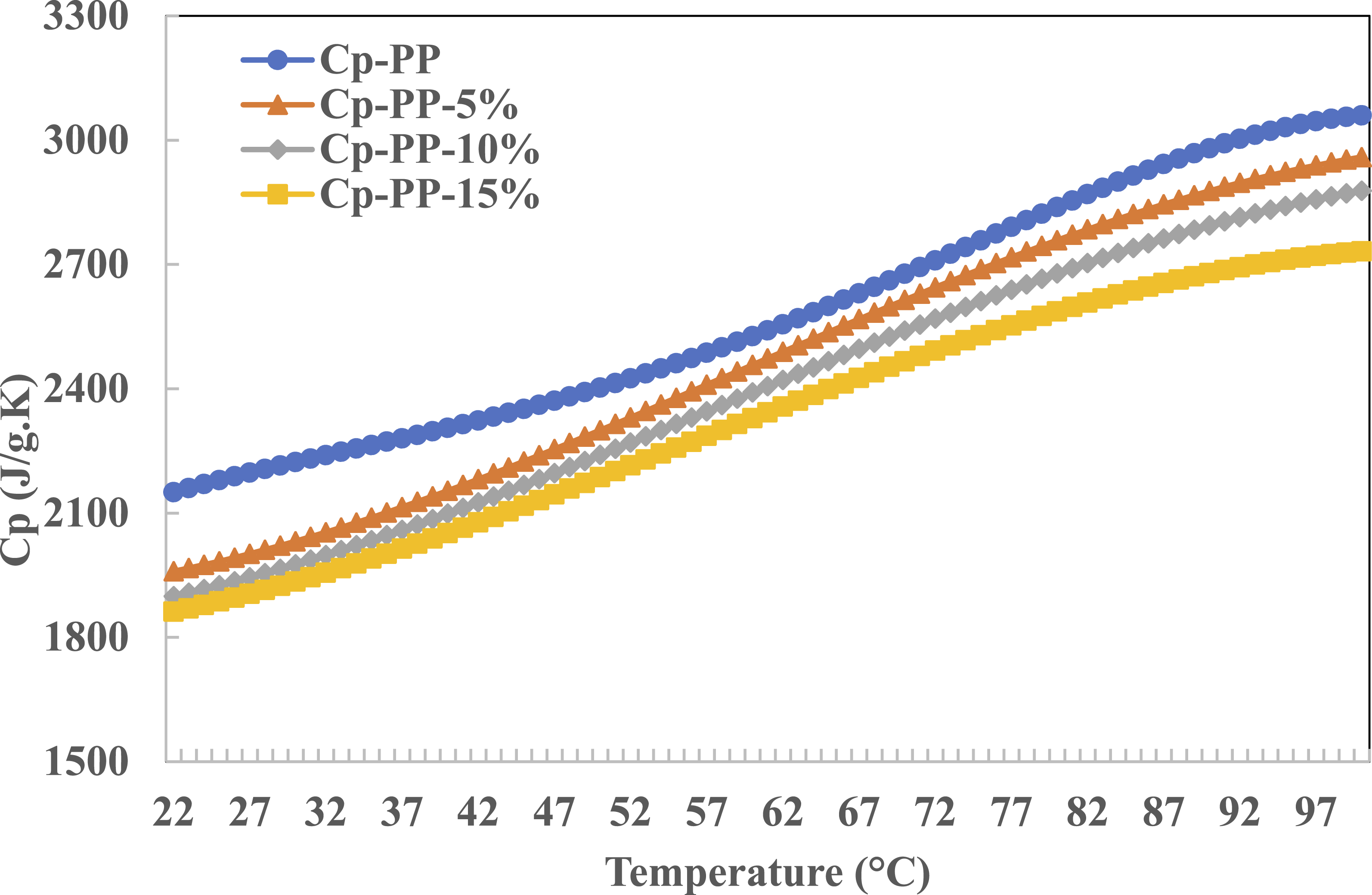
Dielectric spectroscopy
Complex dielectric characteristics of pure PP and composite at 2.45 GHz.
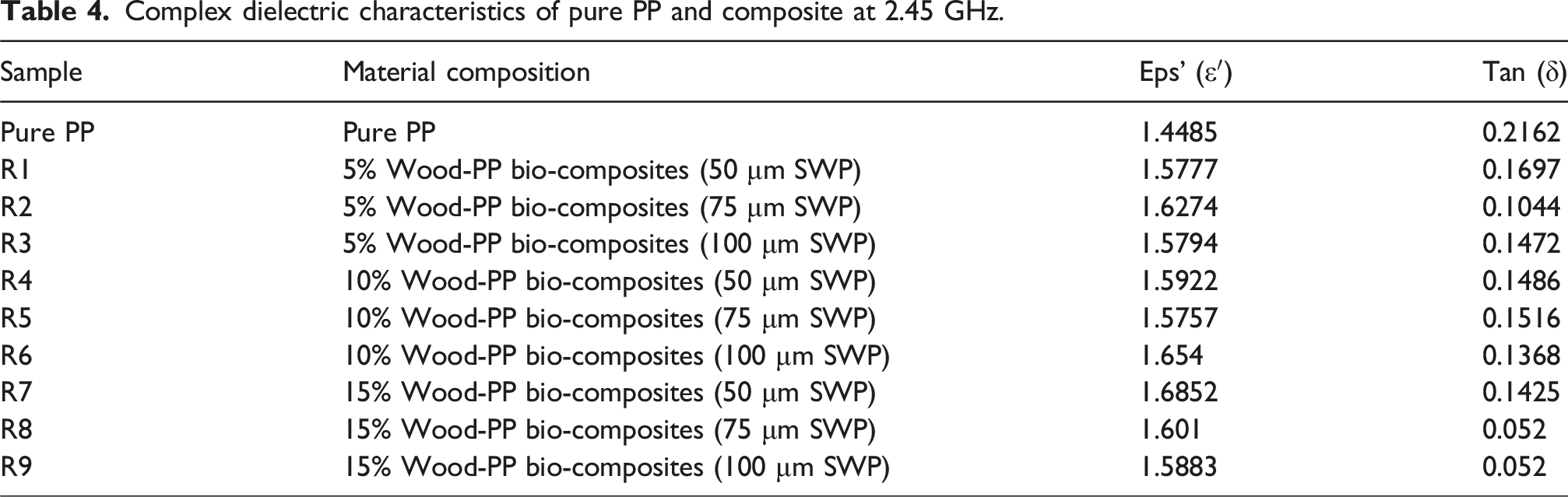
Although the loss tangent (tan δ) of the composites decreases compared to pure PP, the dielectric constant (ε′) increases substantially with the addition of wood fibers. As a result, the dielectric loss factor ε″ (=ε′ tan δ), which governs microwave energy dissipation, does not decrease proportionally and can increase overall. Therefore, the enhanced microwave heating observed in the wood-PP composites is primarily driven by the increase in ε′ and the resulting ε″, rather than by tan δ alone.
The differences in dielectric behavior caused by varying fiber length are presented in Figure 3. Figure 3(a) presents the complex dielectric characteristics of samples containing 5% wood fiber (samples R1, R2, and R3) as well as pure PP. In these samples, as the fiber length increases, the dielectric constant also increases. Although shorter fibers provide higher interfacial area per unit volume, longer fibers exhibit higher aspect ratios that can promote more continuous dipole alignment and enhanced interfacial polarization efficiency, contributing to modest increases in the dielectric constant. The polar groups in wood fibers, such as hydroxyl groups, contribute to dielectric polarization. Longer fibers provide more continuous paths for dipole orientation and charge storage, which raises the dielectric constant. Additionally, longer fibers create more uniform and stable interfaces within the polymer matrix. This stability reduces the movement of charge carriers that cause dielectric losses, leading to lower energy dissipation and a lower loss tangent (tan δ). Complex dielectric properties of: (a) 5% wood-PP composites (50, 75, and 100 μm and pure PP), (b) 10% wood-PP composites (50, 75, and 100 μm and pure PP), and (c) 15% wood-PP composites (50, 75, and 100 μm and pure PP).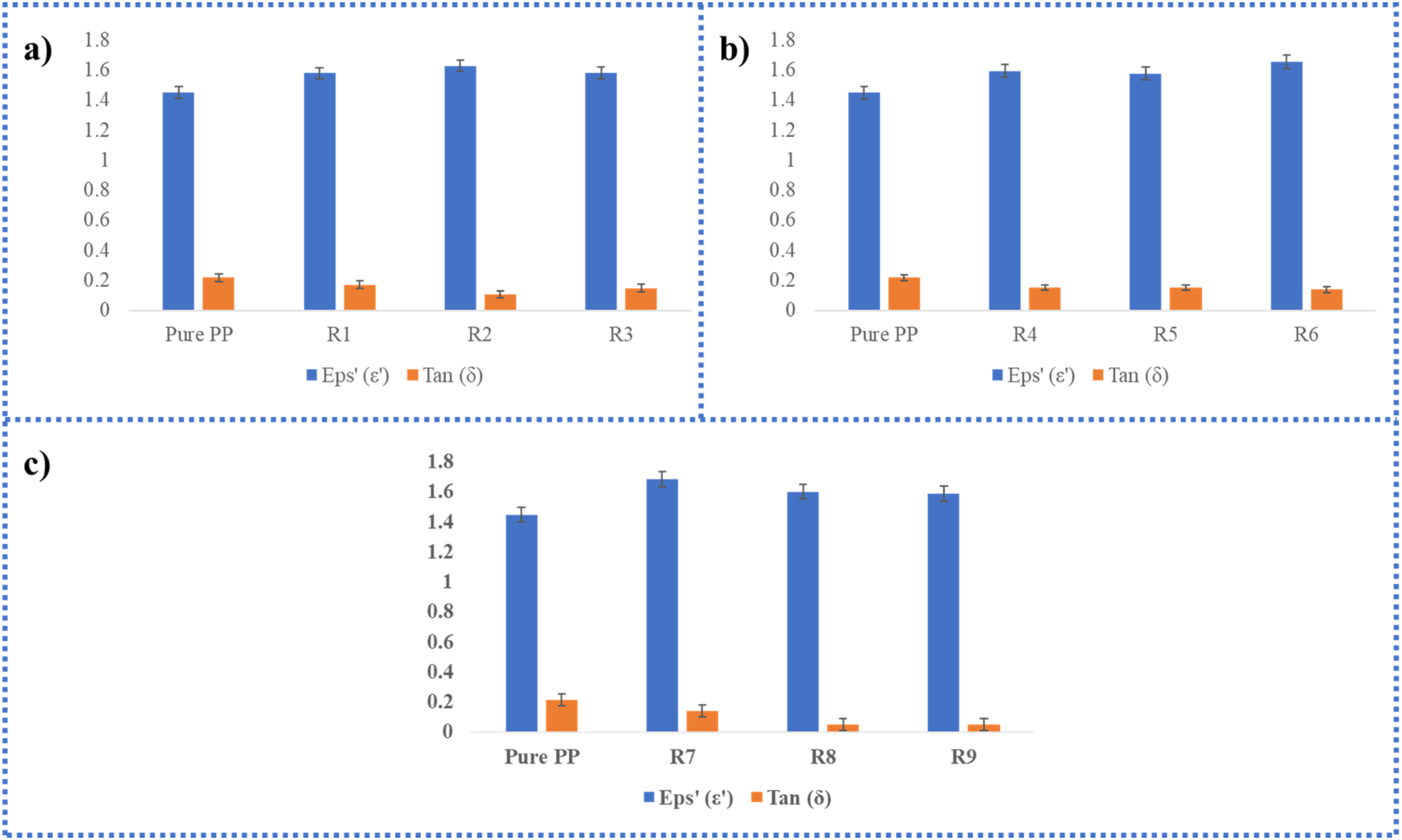
The increase in dielectric constant is more noticeable when comparing pure PP to the composites than when comparing composites with different fiber lengths. Similar trends appear in Figure 3(b) and (c), which show samples with 10% and 15% wood fiber, respectively. This happens because the fibers introduce polar groups and interfaces that increase the material’s ability to store electric energy (dielectric constant). While longer fibers may slightly enhance this effect, the main change comes from adding fibers in general, regardless of their length.
It should be noted that processing conditions can influence dielectric properties through their effects on fiber dispersion, interfacial polarization, and residual moisture. In the present study, identical processing temperatures, pressures, and cooling rates were applied to all formulations to limit such effects. Consequently, the observed variations in dielectric constant and loss behavior are attributed mainly to differences in fiber morphology and concentration rather than to differences in processing history.
Adittionally, it should be mentioned that dielectric measurements in this study were performed at the fixed industrial microwave frequency of 2.45 GHz, as the objective was to evaluate process-relevant heating behavior rather than to resolve frequency-dependent relaxation spectra.
Microwave heating analysis
The dynamic FEM was used in ‘ThermoForm’, a general-purpose finite-element software that can simulate thermal processes. Using dynamic FEM in this study allows accurate modeling of temperature changes and energy absorption in materials during microwave heating. All calculations were done using single precision (32-bit floating-point numbers) on a personal computer. The sheets studied were square, measuring 25.0 cm on each side, with their side faces assumed to be adiabatic. This assumption simplifies the model by focusing heat transfer and microwave absorption only on the top and bottom faces, which are exposed to microwave radiation. The target time for heating the exteriors of the sheets was 90 s. For the 3D FEM modeling, the sheet was meshed into similar hexahedral elements, each with eight nodes, resulting in 2744 elements and 3375 nodes. Throughout the analysis, the same transmitted power flow or energy density of 25 kW/m2 was used for microwave heating.
Figure 4 shows the power received by the sheets (PP and composites R1 to R9) as a function of dimensionless thickness when subjected to microwave from the left and right sides at a frequency of 2.45 GHz. The PP sheet absorbs the least microwave energy among all the sheets. This is because PP has a lower dielectric loss at 2.45 GHz, meaning it converts less microwave energy into heat, resulting in lower energy absorption compared to the composites. The highest energy absorption occurs in the composite containing 15% wood fibers with a fiber length of 100 μm. Adding wood fibers increases the effective dielectric loss factor (ε″ = ε′ tan δ), which enhances microwave energy absorption, even though the loss tangent (tan δ) alone may decrease. Distribution of temperature across sheet thickness at the end of the dielectric heating cycle for different cases: (a) 5% wood fiber content with fiber lengths of 50, 75, and 100 μm, and pure PP, (b) 10% wood fiber content with fiber lengths of 50, 75, and 100 μm, and pure PP, and (c) 15% wood fiber content with fiber lengths of 50, 75, and 100 μm, and pure PP.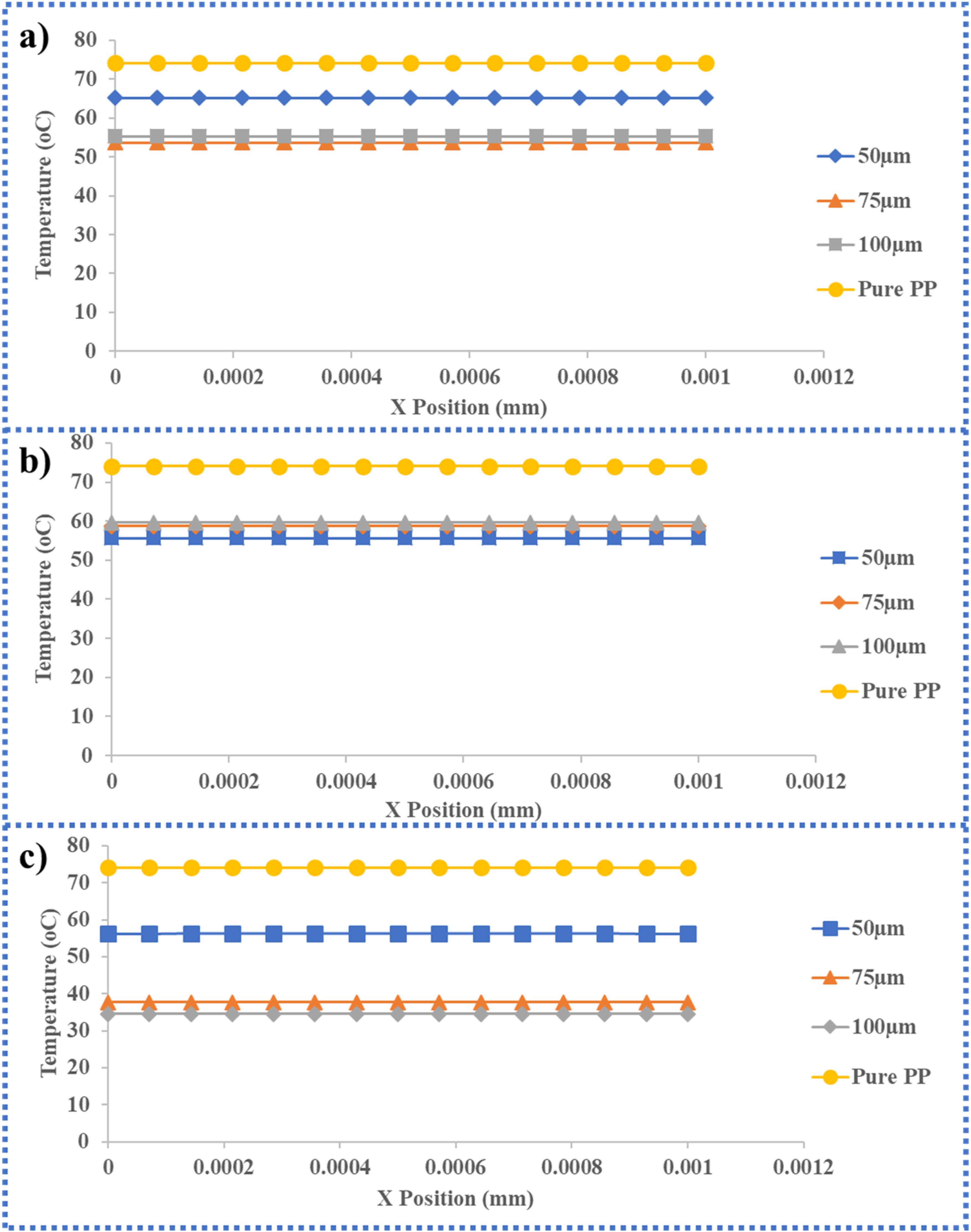
Figure 5 presents the distribution of temperature across the center thickness of the material sheets (PP and composites R1 to R19) at different conditions. The greatest temperature difference is observed in the composite with 5% wood fibers and 50 μm fiber length. At a lower fiber content of 5% and shorter fiber length (50 μm), the distribution of fibers may be less uniform, causing localized heating and larger temperature gradients across the thickness. Temperature distribution along the middle line of the sheet for different cases: (a) 5% wood fibers, including pure PP and fiber lengths of 50, 75, and 100 μm, (b) 10% wood fibers, including pure PP and fiber lengths of 50, 75, and 100 μm, and (c) 15% wood fibers, including pure PP and fiber lengths of 50, 75, and 100 μm.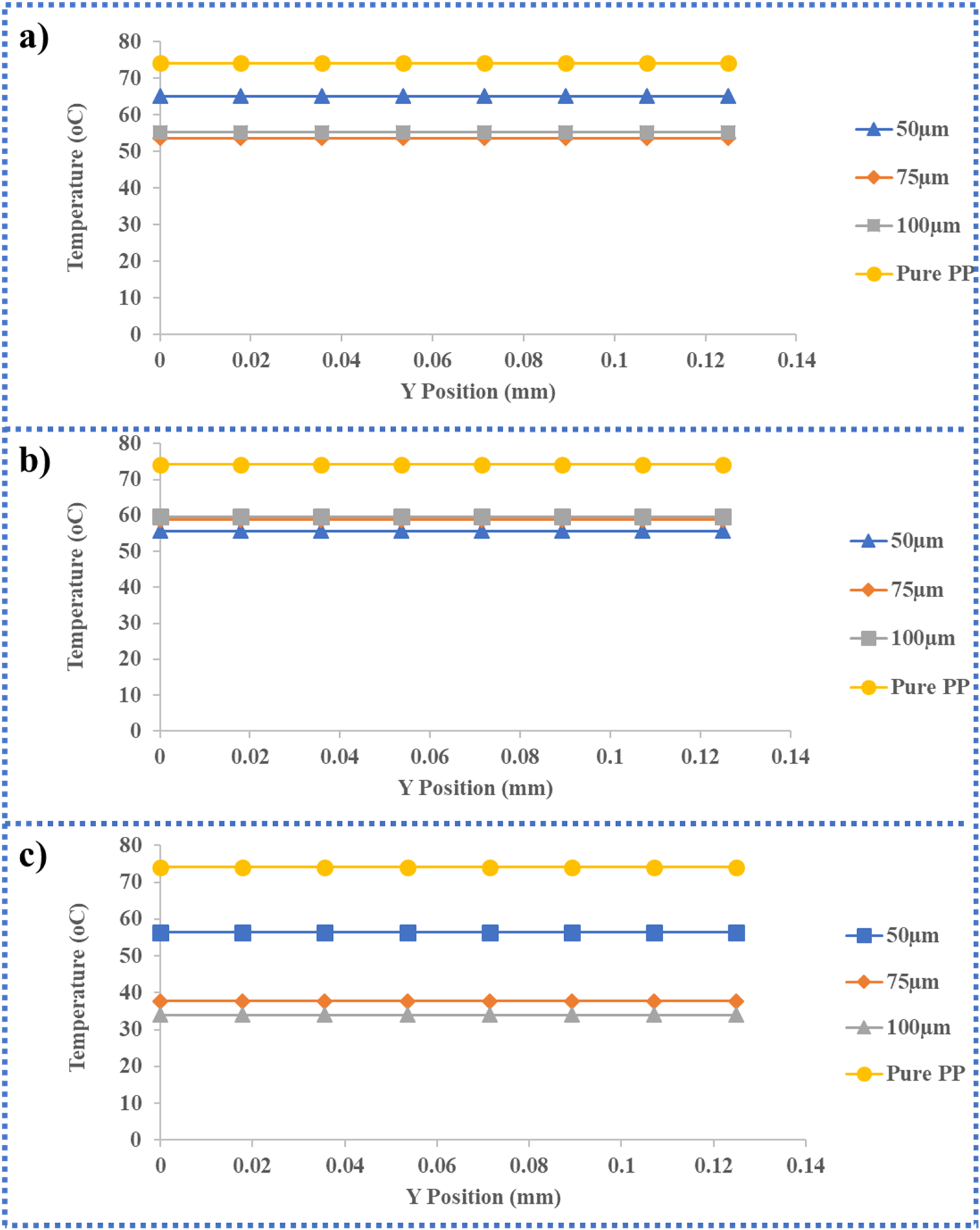
In contrast, higher fiber contents or longer fibers tend to create a more uniform microwave absorption, leading to a more even temperature distribution. The pure PP sheet, having the lowest dielectric loss, absorbs the least microwave energy and shows the smallest temperature difference across its thickness. Understanding these temperature profiles is important for optimizing the microwave heating process to ensure uniform heating, which is critical for material performance and quality in thermoforming applications.
Figure 6 shows how wood fiber length (50, 75, and 100 μm) and fiber content (5%, 10%, and 15%) affect the dielectric heating time at the middle layer of the sheets. The results are shown for different composite types, grouped into three categories based on fiber length. These results emphasize how both the shape and amount of fibers influence the effectiveness of microwave heating in wood-plastic composites. Effect of fiber length on dielectric heating time: (a) case of 5% wood fibers (including pure PP), (b) case of 10% wood fibers (including pure PP), and (c) (a) case of 15% wood fibers (including pure PP).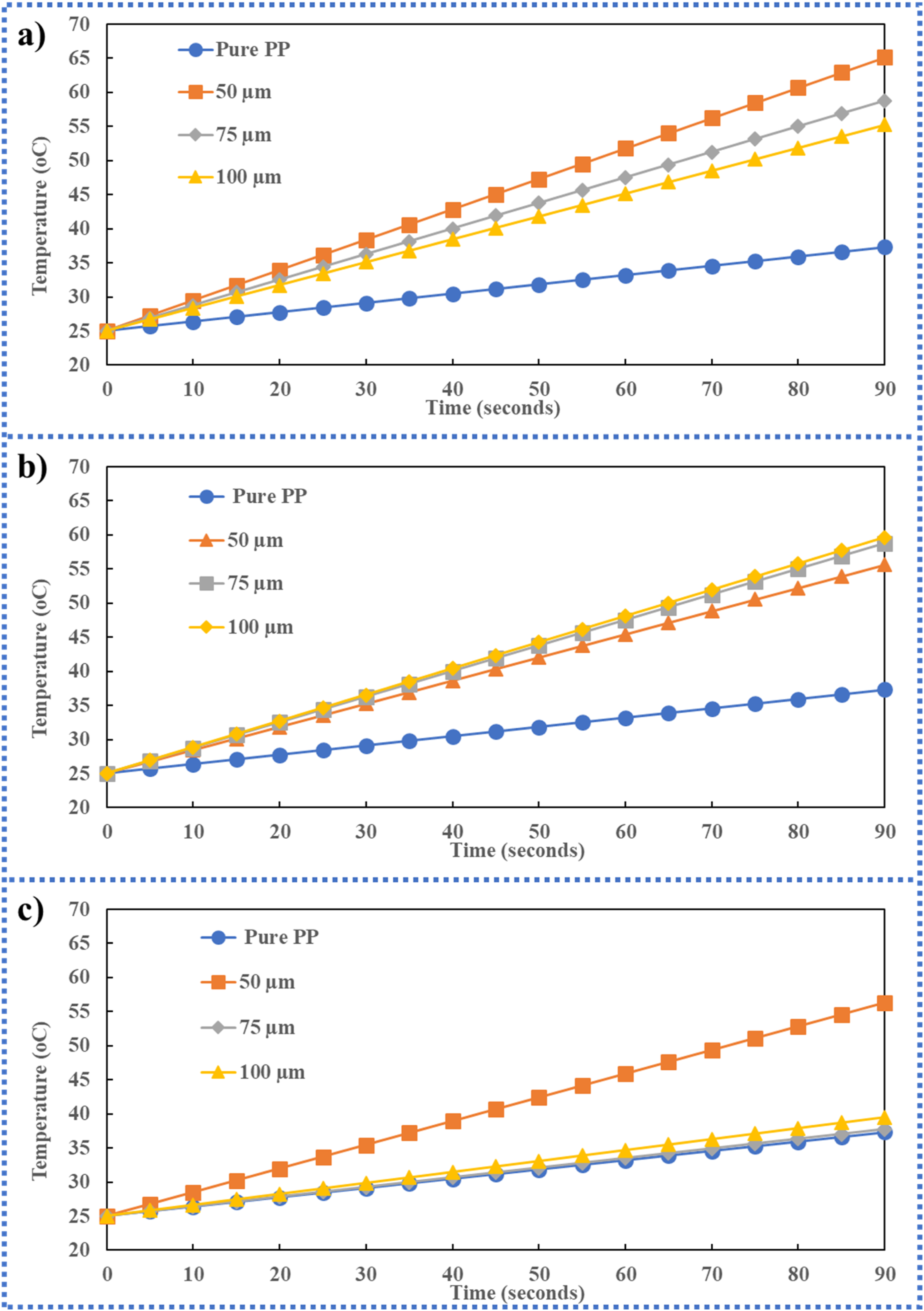
As shown in Figure 6, the relationship between heating time and temperature is linear. Pure PP has the lowest heating rate under microwave heating, which means it absorbs less microwave energy and heats up more slowly. At the same time, the temperature reached in the composite samples is much higher than in pure PP. As described previously, pure PP absorbs less microwave energy because it has a low dielectric loss factor at 2.45 GHz, meaning it converts less microwave energy into heat. As a result, PP heats more slowly and reaches lower temperatures under the same microwave power. In contrast, wood fibers have higher dielectric loss factors, so composites with wood fibers absorb more microwave energy, leading to faster and higher heating.
In Figure 6(a), for samples containing 5% wood fiber, the sample with 50 μm fiber length heats faster than those with 75 and 100 μm fiber lengths. However, all these samples heat significantly faster than pure PP. In Figure 6(b), for composites with 10% wood fiber, the sample with 100 μm fiber length shows the best heating performance. Still, all the composite samples have very similar heating profiles, and all heat much faster than pure PP. In Figure 6(c), for samples containing 15% wood fiber, the samples with 75 and 100 μm fiber lengths show only a small difference compared to pure PP. However, the sample with 50 μm fiber length performs significantly better than the other samples. It seems that the 50 μm fibers consistently result in greater heating efficiency across all samples, likely as a result of their greater surface area-to-volume ratio. This increased surface interaction enhances microwave energy absorption and promotes stronger interfacial polarization within the composite structure.
Various perspectives of the temperature distribution in the composite sheet with 1 mm thickness after microwave heating are displayed in Figure 7. The views include the symmetry half-planes of the sheet (XY, YZ, and XZ) as well as a global 3D view. The temperature difference caused by the microwave heating within the sheet is very small, indicating a nearly uniform temperature through the thickness and across the surfaces. This uniformity happens because the microwaves strike the sheet in a planar wave pattern, coming straight onto the surface (normal incidence). As a result, the temperature remains almost constant across the YZ plane, meaning there is no temperature change or gradient in that direction. This is expected because the microwave energy is distributed evenly along that plane, causing uniform heating. Such even temperature distribution is important in composite processing because it helps avoid hotspots and uneven curing or heating, which can lead to defects or weak spots in the material. The small temperature gradients also show that the microwave energy penetrates effectively through the 1 mm thickness, heating the material uniformly rather than only heating the surface. This behavior aligns with findings from other studies, which show that microwave heating can produce faster and more uniform temperature distributions in comparison with conventional heating approaches. The uniform heating is due to volumetric energy absorption inside the material rather than surface conduction, which reduces processing time and improves product quality. Illustration of the temperature distribution of wood-PP and sheet in microwave heating: (a) 3D view, (b) Symmetry half-plane YZ, (c) Symmetry half-plane XY, and (d) Symmetry half-plane XZ.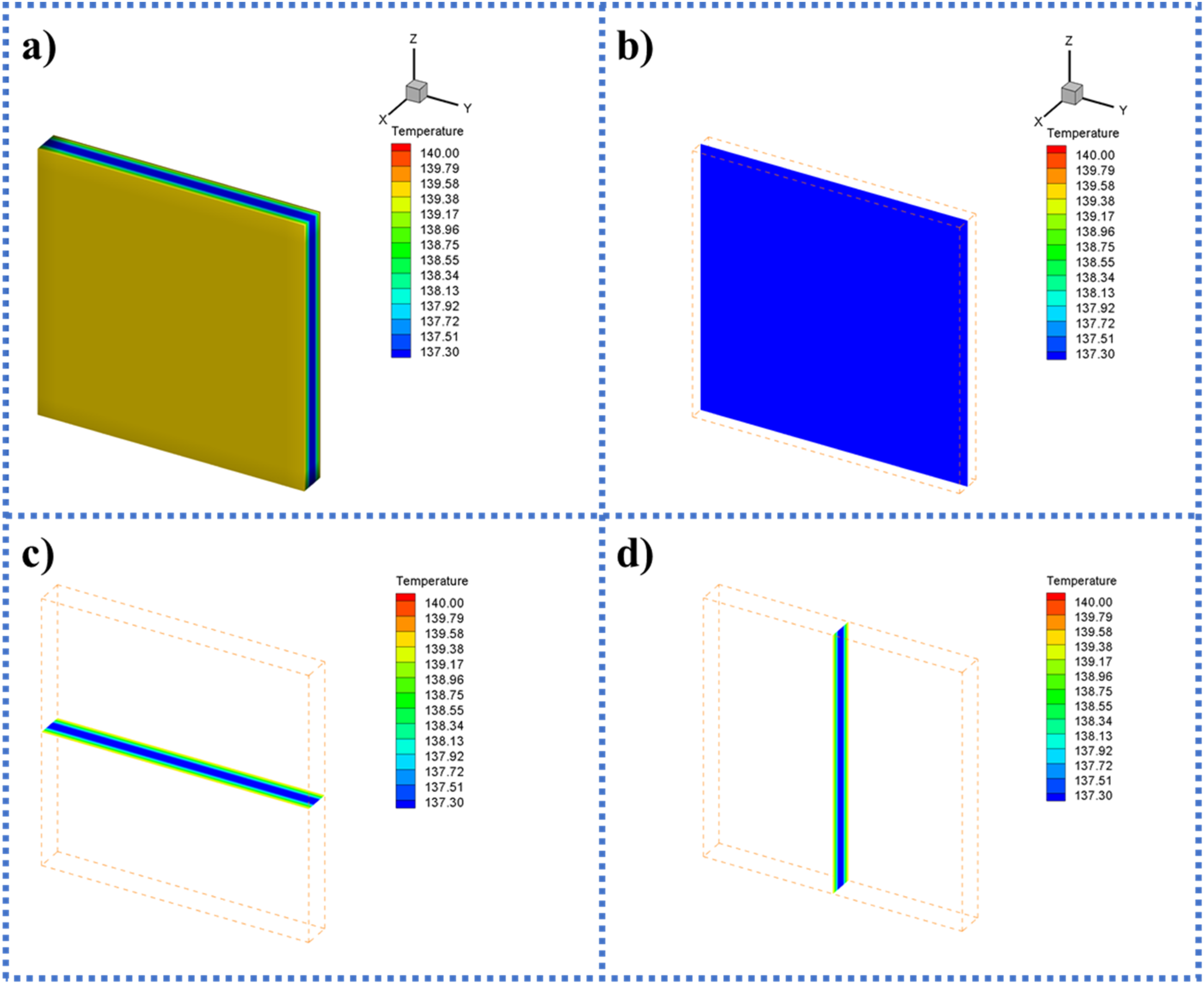
Comparative analysis of microwave heating
Figure 8 shows a histogram of the microwave heating temperatures after 90 s of heating for different sheets. These sheets include pure PP and composites containing 5%, 10%, and 15% wood fibers. The wood fibers have three different lengths: 50 μm, 75 μm, and 100 μm. As shown in Figure 8, all composite samples reached higher temperatures after 90 s of heating compared to pure PP, which reached 37.30°C. This increase is mainly because wood fibers are polar, while PP is nonpolar. The presence of MAPP also increases the polarity of the composites, due to CO and OH bonds, which helps absorb more microwave energy. This figure confirms that adding wood fibers to the PP matrix not only improves environmental friendliness but also enhances performance during microwave heating. However, samples with higher fiber content show lower final temperatures. This happens because at higher concentrations, fibers may cluster or be unevenly distributed. Also, longer fibers can settle in the sample in an unorganized way or form networks that block microwaves from reaching the center of the sample. Final temperature after 90 s of microwave heating process (pure PP and composites with length of (50, 75, and 100 μm) and fiber content (5%, 10%, and 15%)).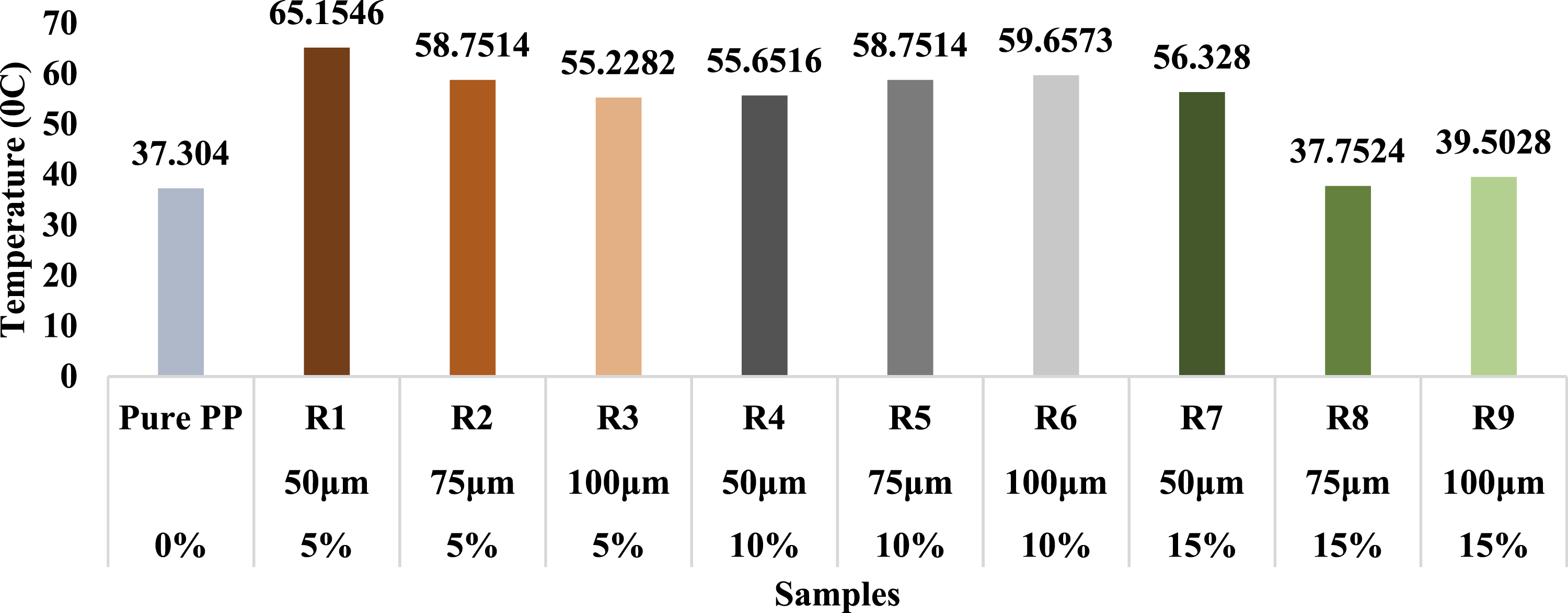
Conclusion
This study investigates how the length (50–100 µm) and content (5–15%) of Canadian maple wood fibers affect the dielectric heating behavior of polypropylene (PP) biocomposites during microwave-assisted heating. Using experimental measurements of dielectric and thermal properties combined with a 3D finite element model, the research simulates temperature profiles to evaluate heating uniformity and efficiency. The main findings of this study are as follows: • DSC tests revealed that increasing wood filler content in PP composites decreases the specific heat capacity (Cp) across the temperature range of 22°C to 100°C, which is attributed to the lower heat capacity of wood compared to PP and the restriction of polymer chain movement by the filler. • Adding wood fibers to PP increases the dielectric constant (ε′) because of the polarity of wood components, while decreasing the loss tangent (tan δ) because the fibers introduce interfaces that restrict charge carrier movement and reduce energy dissipation. • Longer fiber lengths further enhance dielectric constant slightly by providing more aligned molecular structures and stable interfaces, improving the composite’s ability to store electric energy during microwave exposure at 2.45 GHz. • The dynamic FEM simulation showed that PP sheets absorb the least microwave energy due to their low dielectric loss, while wood-PP composites, especially those with 15% wood fiber content and 100 μm fiber length, exhibit significantly higher microwave energy absorption, enhancing heating efficiency during thermoforming at 2.45 GHz. • Temperature distribution analysis revealed that composites with low fiber content (5%) and short fiber length (50 μm) exhibit the largest temperature gradients due to uneven fiber dispersion and localized heating, while higher fiber contents and longer fibers promote more uniform microwave absorption and temperature profiles; pure polypropylene shows the smallest temperature variation because of its low microwave energy absorption. • Both wood fiber length and content significantly affect microwave heating time in wood-PP composites: pure PP heats slowest due to low dielectric loss, while composites heat faster with increasing fiber content; at 5% fiber content, shorter fibers (50 μm) heat fastest, at 10% content longer fibers (100 μm) perform best, and at 15% content, 50 μm fibers again show superior heating, highlighting the complex interplay between fiber size and amount on heating efficiency. • The temperature distribution analysis of the 1 mm thick composite sheet after microwave heating showed nearly uniform heating throughout the thickness and surfaces, with minimal temperature gradients due to planar wave microwave incidence; this uniform volumetric heating reduces hotspots and improves processing quality by ensuring consistent temperature and faster heating compared to conventional methods.
Footnotes
Acknowledgments
“The authors express their gratitude to the Fondation J.A. DeSève and the Fondation de l’UQAT for their financial support.”

Funding
The authors received no financial support for the research, authorship, and/or publication of this article.
Declaration of conflicting interests
The authors declared no potential conflicts of interest with respect to the research, authorship, and/or publication of this article.
Data Availability Statement
Data sharing not applicable to this article as no datasets were generated or analyzed during the current study.