




Abstract
We investigated the ageing of carbon fibre-reinforced polymers (CFRPs) subject to hygro-thermal-salt conditions. Firstly, we manufactured a series of uni-directional (UD) CFRP specimens and exposed them to various hygro-thermal-salt conditions containing elevated temperatures and salinities in aqueous environments for a length of three and 6 months. Following this, we characterised the performance of the UD CFRP under tensile, compression and shear loadings in both longitudinal and transverse fibre directions. Additionally, we manufactured epoxy polymer samples and exposed them to the same environmental conditions as those of CFRPs to evaluate their response under tensile loading and to better understand the degradation of the polymer constituent and its role in the performance of CFRPs subject to hygro-thermal-salt ageing conditions. Following this experimental campaign, we performed MD simulations on the monolithic epoxy polymer to obtain more insights into ageing and possibly explain mechanisms of the performance degradation that are difficult to explain solely by experiments. The experimental results demonstrate that over a 6-month period, the presence and combination of water, heat and salt can reduce: the tensile strength and Young modulus of the monolithic epoxy polymer by 31% and 17%, respectively; the longitudinal tensile strength and Young modulus of CFRPs by 15% and 3%, respectively; and the transverse tensile strength and Young modulus of CFRPs by 50% and 6%, respectively. MD simulations reveal that the presence of water reduced the glass transition temperature of the epoxy polymer.
Keywords
Introduction
Fibre-reinforced polymer (FRP) composites are being increasingly used in various industries, such as marine and renewable energy, due to their high performance-to-weight ratios.1–3 The demand for FRP composites is substantial and continues to expand significantly in the decades to come. In this regard, the market was worth approximately $20 billion in 2021 and is projected to grow to $30 billion by the end of this decade. 4
The pressing need to reduce greenhouse gas emissions has led to an increase in the installation of offshore and tidal turbines.5–8 Nowadays, tidal and offshore wind turbine blades are made of FRP composites.9–11 FRP composites are susceptible to harsh environments such as offshore or marine. The ageing of FRP composites coupled with humidity, water ingress and high temperatures is a common problem that results in performance degradation, reduced service life and premature failure of FRP structures. Thus, great care should be taken into account when designing and manufacturing FRP composites to be used in applications subject to hygro-thermal-salt environments. FRP composites subject to humidity or aqueous environments can absorb water molecules, which can promote their ageing and adversely affect their mechanical, physical and chemical properties.12–15
At the macro-scale, the absorption of water molecules within a polymer follows Fick’s law,16,17 which initially increases with exposure time and then reaches a saturation level, which is a very slow process. Sharma et al. 18 demonstrated that the Fickian diffusion model could be used to capture the moisture transport behaviour of polyamide 6. The absorption of water within the polymer of FRPs promotes plasticisation, reducing the effectiveness of load transfer between the matrix and fibres, and thus impairing the strength of an FRP composite structure.1,19 Plasticisation also decreases the polymer glass transition temperature (Tg) 20 and finally, may result in hydrolytic degradation. 21 Moreover, water ingress increases the possibility of osmosis and blistering, which can induce internal stresses and thus promote delamination in FRP composites. In addition to water ingress, temperature also plays an important role in the performance of FRP composites. At high temperatures especially above Tg, the durability and mechanical performance of composites can be severely affected. 21
Among FRPs, carbon fibre-reinforced polymers (CFRPs) with thermosetting polymers (such as epoxy or polyester) are being considered as a replacement for glass-based FRPs for the blade industry, since CFRPs provide a better performance-to-weight ratio for upscaled turbine blades for harvesting more energy, and also they provide better longevity under severe environmental conditions. 1 Additionally, it has been reported in the literature that CFRPs are more resistant to corrosion cracking than glass fibre- or aramid fibre-reinforced counterparts. 22
Several studies have attempted to experimentally characterise the ageing and degradation performance of CFRPs under harsh ocean and offshore conditions.23,24 In some of these studies, heat was applied as a means to accelerate ageing, called hygrothermal ageing. Kehrer et al.25–27 used experimental and modelling methods to analyze the effects of hydrothermal ageing on the mechanical properties of polyamide 6 and its discontinuous long carbon fibre-reinforced composites. However, the ageing of polymers in water (or humidity) is a very slow process that can take months and years to happen. Moreover, chemical interactions that naturally occur within the polymer during the (slow) ageing process at lower temperatures do not occur at accelerated hygrothermal ageing. Therefore, accelerated seawater ageing tests may not be able to produce reliable results for real scenarios. 28 Additionally, in previously performed experimental studies, the mechanisms behind the ageing and degradation of polymers as well as CFRPs were not comprehensively addressed, since such mechanisms are difficult to explain through solely experimental investigations.
As a result, in the presented research, firstly, we carried out an experimental campaign to characterise the degradation performance of CFRPs under various hygro-thermal-salt conditions. To this end, we fabricated several CFRP specimens to age them under various aqueous environments made of fresh and salty water at room and elevated temperatures to investigate their mechanical response under tensile, compression and shear loadings. In addition, we manufactured epoxy polymer samples and degraded them at the same environmental conditions as those of CFRP specimens and characterised the response in tensile loading, since the polymer constituent in CFRPs is more susceptible to degradation compared to carbon fibre reinforcement. 29 Following this, we performed molecular dynamics (MD) simulations to evaluate the response of the polymer under selected environmental conditions. In particular, the MD simulations investigated the molecular-scale effects of water absorption on the epoxy matrix, particularly how different crosslinking rates affect the glass transition temperature (Tg) and the material’s molecular structure. By integrating the experimental findings with the molecular dynamics simulations, we aimed to gain a deeper understanding of how macroscopic property changes relate to molecular-level phenomena, offering a more holistic perspective on the composite material’s performance under ageing conditions.
Experimental campaign
Experimental procedure
Materials and manufacturing
Material properties of the Epolam matrix and the carbon fabric.

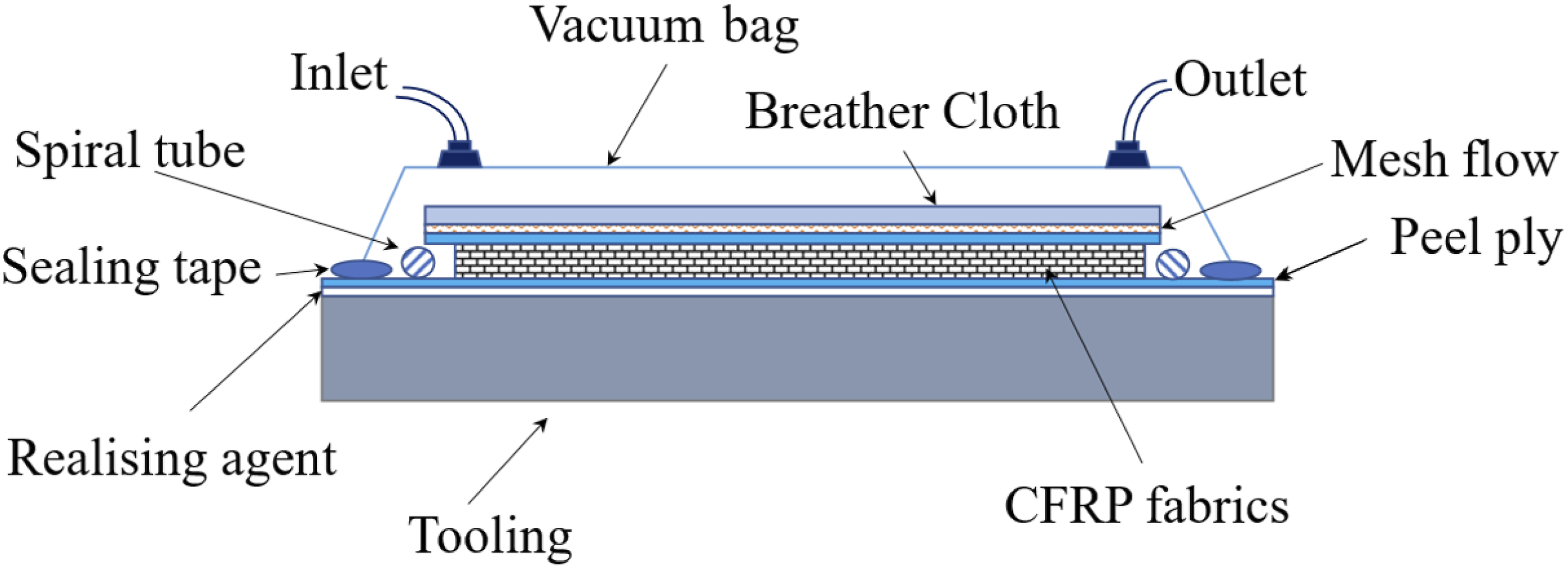
We used the vacuum-assisted resin infusion (VARI) method to manufacture CFRP specimens, see Figure 1. Based on the size of the VARI tooling and setup, we first cut the dry carbon fabrics. Following this, we washed the fabrics in an ultrasonicator machine with distilled water to remove any dirt or contamination that may have been deposited onto the surface of the fibres during storage. Next, we dried the washed fabrics in a fan oven for 48 h at 50°C and then kept them in a dry cabinet until manufacturing. We laid down 8 carbon fabrics to manufacture CFRP panels. After preparing the layup and sealing the VARI setup, we prepared the matrix, degassed and infused it into the layup. After infusion, we cured the panels on a curing table for 8 h at 80°C. Following curing, we cut specimens based on the ASTM D3039 for tensile,
32
ASTM D6641 for compressive
33
and ASTM D5379 for shear
34
tests both in longitudinal ([0]8) and transverse ([90]8) directions. The manufactured CFRP and polymer specimens resulted in an average thickness of 2.35 mm and 4.0 mm, respectively. We fabricated 5 samples for each test for repeatability and accuracy of the test results. The vacuum-assisted resin infusion (VARI) method for manufacturing CFRPs
2
.
Volume fractions of the components in CFRP



Component volume fractions of the CFRP fabricated in this work.

Ageing of the polymer and the CFRP specimens
To age the polymer and CFRP specimens, we applied various environmental conditions. To reproduce the seawater conditions, we devised two environmental chambers to degrade the epoxy polymer as well as CFRP specimens under different conditions, see Figure 2. In the first environmental chamber, we set the temperature to 30°C (the average temperature of Hong Kong sea waters through its summer) and devised multiple glass containers to degrade CFRP and polymer specimens separately with different salinities of 0% and 5%. We used the second environmental chamber at temperatures of 70°C with the same salinities as those of the first environmental chamber to degrade the epoxy polymer and CFRP specimens at higher temperatures. We should emphasise that every day, we measured and recorded the temperature and salinity in each glass container and each environmental chamber. Moreover, every week, we measured the weight of the specimens and replaced the water in glass containers containing the specimens with fresh water at specific temperatures and salinities to make sure the samples were maintained under relatively constant ageing conditions. We aged 5 samples for each of the hygro-thermal-salt conditions. An environmental chamber for degrading CFRP and polymer specimens.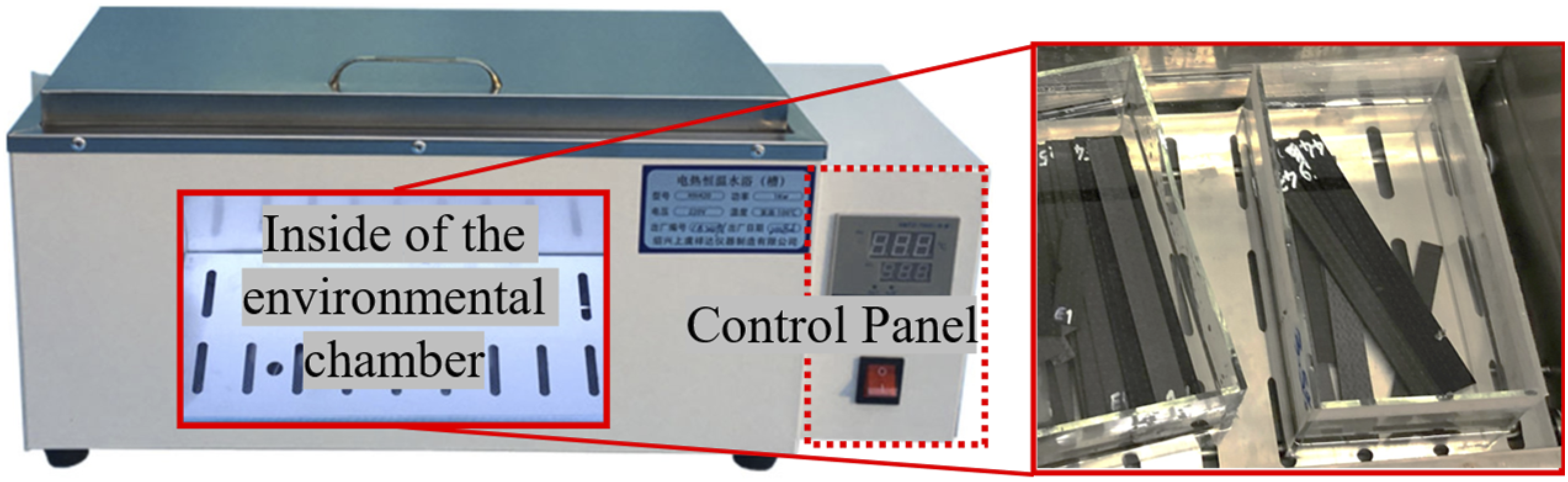
Previous studies set the ambient temperature of hydrothermal or hygrothermal conditions to be lower than the glass transition temperature (Tg) of the resin matrix so that the thermal setting could only accelerate the aqueous degradation of specimens without additional deterioration.35,36 Additionally, the ambient temperature above Tg will induce higher degradation rates and non-Fickian behaviour of polymer resin, which are different from the observation for polymer resin in aqueous environments at room temperature.
40
As a result, we obtained the Tg of 82°C for the crosslinked Epolam 5015 after the post-curing thermal process, which was verified as well from the material datasheet of Epolam 5015 from Axson Technologies.
30
Given that this work aims to aid the application of epoxy-based CFRP in marine engineering, the thermal setting with temperatures above the Tg is not included in this study. Therefore, the highest ambient temperature was set at 70°C to ensure no additional influence on the mechanical properties from the chemical oxidation.
1
To demonstrate the results for the mildest and extreme conditions, we present the results in 3 ageing scenarios, that is, T30S0 (30°C with 0% salinity), T70S0 (70°C with 0% salinity) and T70S5 (70°C with 5% salinity). We measured the water ingress of the aged specimens following the ASTM D5229.
41
The water content, M
t
can be defined as follows:
Mechanical testing of the aged polymer and CFRP specimens
To test the unaged and aged CFRP specimens under tensile, compression and shear loadings, we followed ASTM D3039,
32
ASTM D6641
33
and ASTM D5379
34
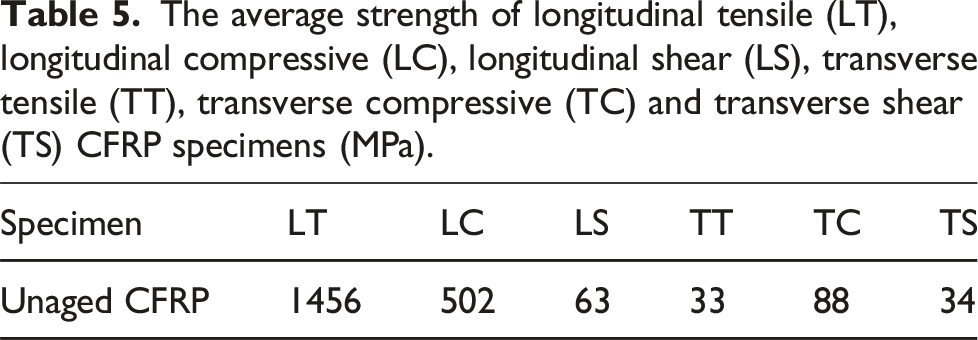
tests, respectively, see Figure 3. Thus, we characterised 6 sets of CFRPs based on the mechanical tests and fibre direction, that is, LT (longitudinal tensile), TT (transverse tensile), LC (longitudinal compressive), TC (transverse compressive), LS (longitudinal shear) and TS (transverse shear). Mechanical tests to investigate the (a) tensile, (b) compression and (c) shear response of the CFRP specimens.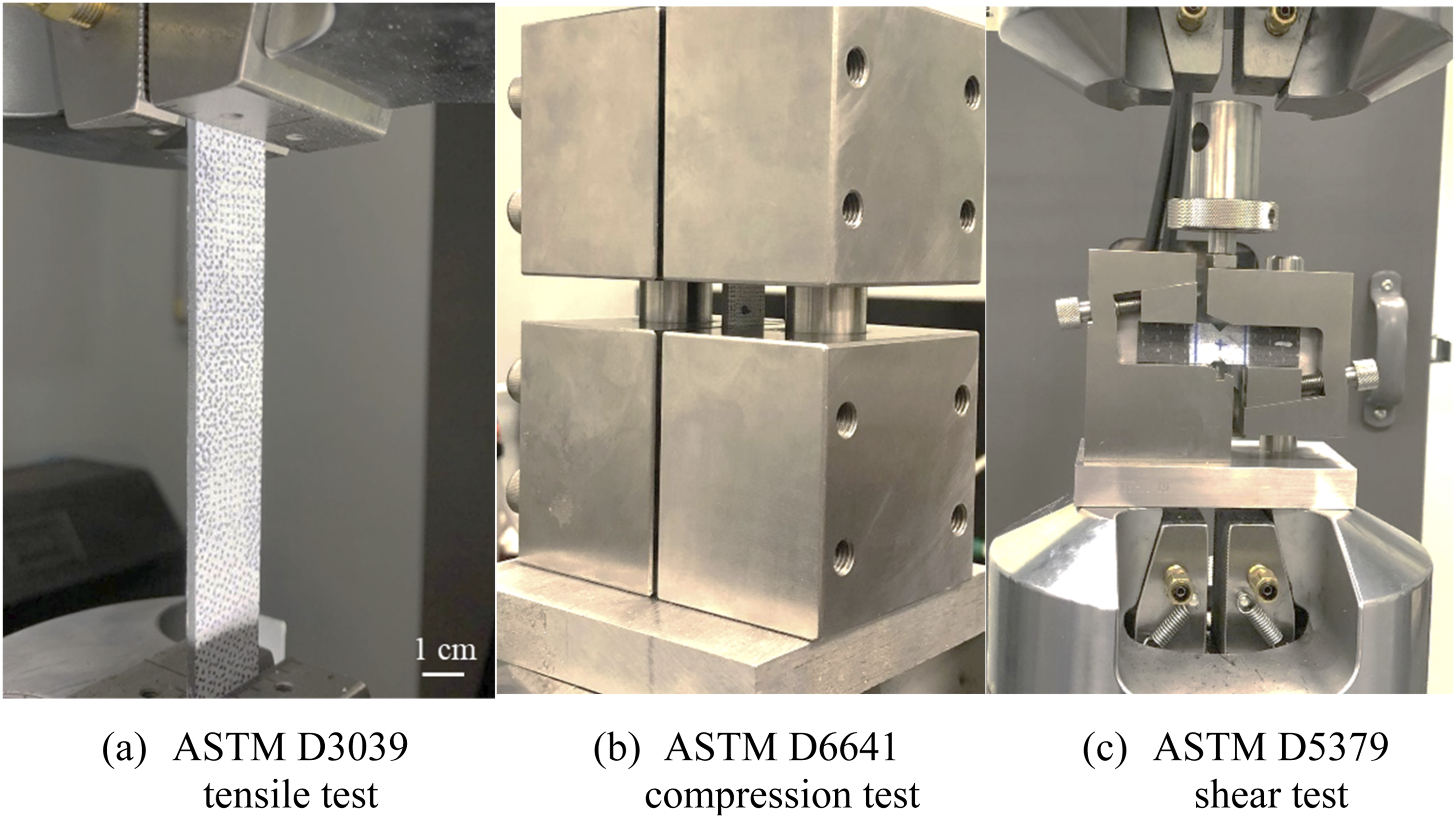
To perform mechanical tests, we used a universal testing machine (UTM) and measured the strain by digital image correlation (DIC) technique. The UTM used in this study is driven by hydraulic power with adjustable jaws, meeting the requirements of different mechanical tests. We used DIC to implement the strain analysis by capturing the displacement of the speckles, which were dispersed on the surface of the specimens just before carrying out the tests. In addition to CFRP specimens, we investigated the mechanical performance of the unaged and aged Epolam epoxy polymer specimens under tensile loading following the ASTM D638.
Experimental results and discussion
Water absorption of the polymer and CFRPs
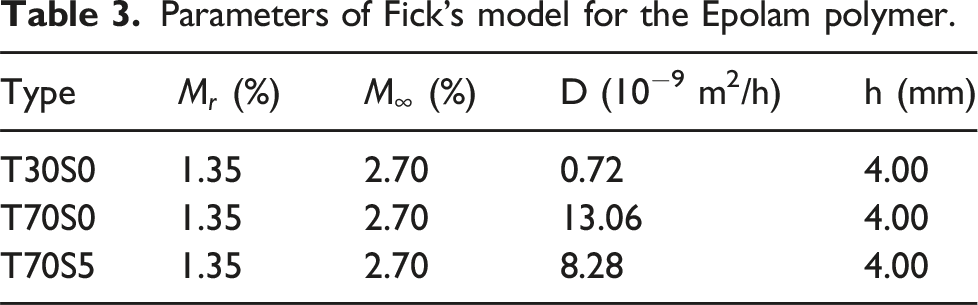
The scattered points provided in Figure 4 show the absorbed water content in the polymer specimens measured at different ageing conditions and calculated using equation (1). The experimental data show that water absorption at different ageing conditions followed different trends. At the highest temperature, initially, the water ingress increased at a high rate and reached saturation levels fast. However, at the lowest temperature, after 6 months, the water ingress still did not reach its saturation level. This shows that in real scenarios such as the average temperature of South China Sea waters (around 30°C), it can take a much longer time, which can be years, for the water absorption to reach the saturation level, and the presence of heat accelerates this process. Figure 4 shows that the presence of salt slowed down the water diffusion process, which is possibly caused by the osmotic pressure difference between the aged material and the environment.
42
As the polymer matrix contained less concentration of salt ions compared to its aqueous environment, a salinity gradient was created between the specimens and the environment, leading to osmotic pressure, which could have limited water absorption in the CFRP specimens.
42
Water absorption of the polymer specimens obtained experimentally and presented following Fick’s model law at different ageing conditions, including T30S0 (30°C with 0% salinity), T70S0 (70°C with 0% salinity) and T70S5 (70°C with 5% salinity).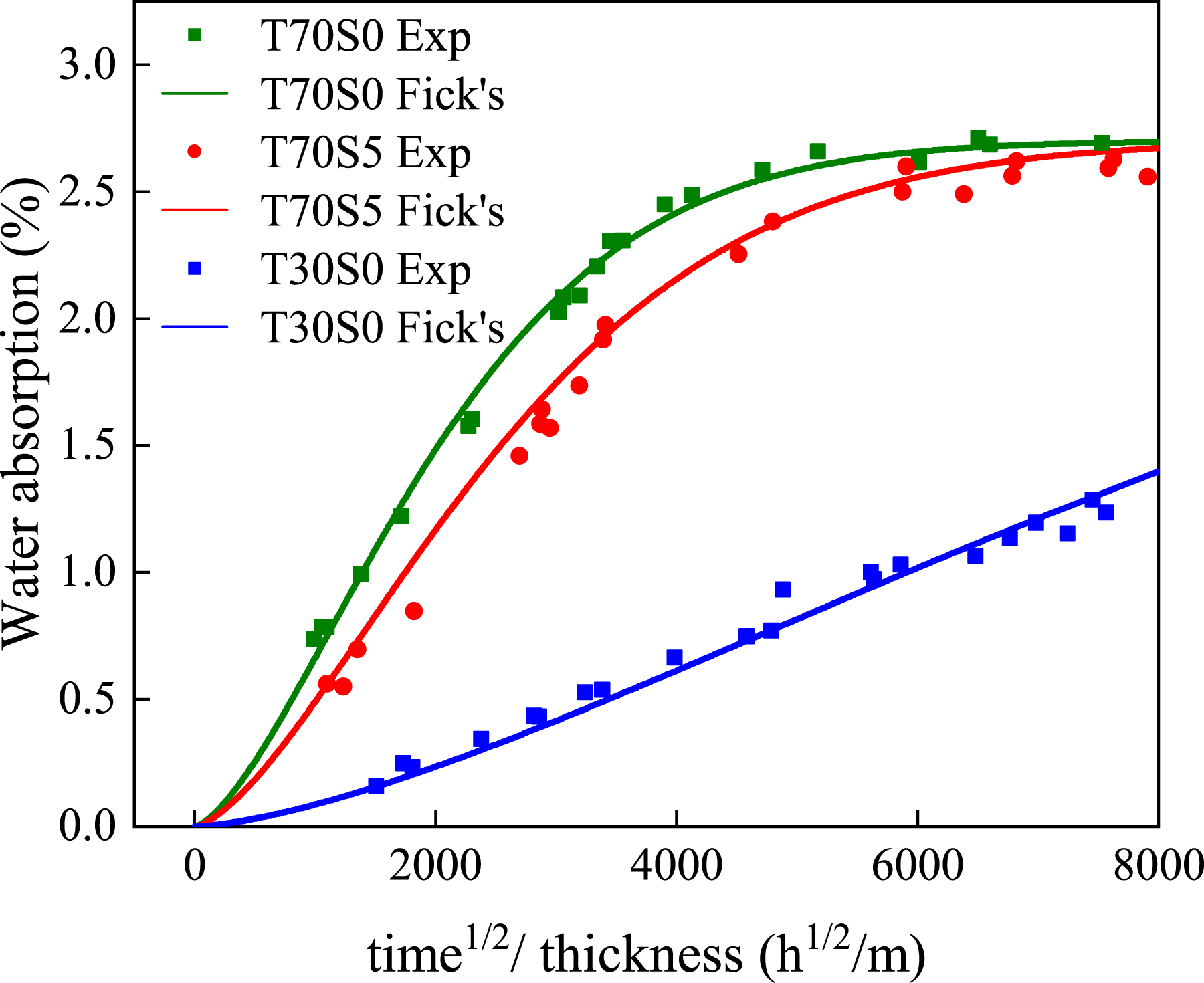
A simplified mathematical model based on the Fick’s second law
43
can be applied to simulate the water uptake behaviour of the epoxy polymer, as illustrated in Figure 4. The water content M
t
could be calculated by equation (5)
44
:


Parameters of Fick’s model for the Epolam polymer.
Average water content of the polymer and CFRP specimens after 6 months of ageing.
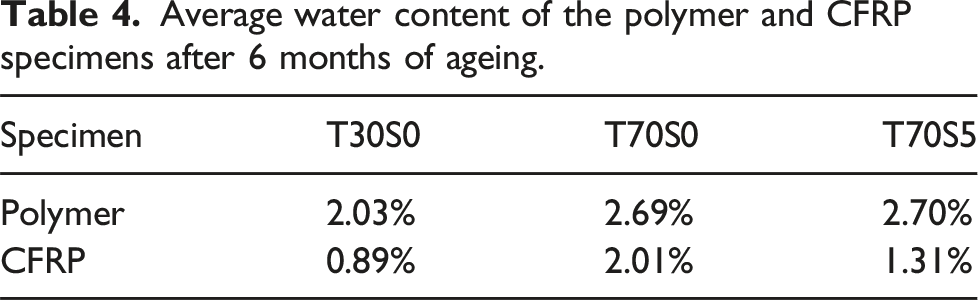
Table 4 shows that while the average water content of the polymer samples is similar in the fresh water and salty water environments at 70°C, the CFRP specimens at T70S0 absorbed more water compared to those at T70S5 (with salinity). However, the CFRP specimens in the T70S0 (freshwater) condition absorbed more water compared to those in the T70S5 (saline) condition. For the T70S5 CFRP specimens, after degradation, we placed them in a glass container and used an ultrasonic cleaner at 60°C for 2 h. No detectable salinity was found in the container, indicating an osmotic pressure difference between the interior of the specimens and the surrounding saline environment. This suggests that the presence of ambient salt ions hindered the diffusion of water molecules into the polymer matrix, limiting water absorption once the polymer had reached saturation. Moreover, as the temperature increased, the number of voids resulting from interfacial debonding and matrix cracking also increased, providing additional space for further water uptake in the CFRP after the polymer matrix had become saturated. 45 SEM analysis in Section 2.2.4 provides the experimental validation for the further water absorption behaviour due to the interfacial debonding of CFRPs.
Mechanical properties of the aged polymer specimens
Figure 5(a) and (b) illustrate the effects of hygro-thermal-salt ageing on the strength and Young’s modulus of the polymer specimens. The tensile strength of the aged polymer samples at T30S0 dropped by 23.4% while Young’s modulus decreased by only 2.7%, demonstrating that the ageing by water is detrimental to the strength but not much to the stiffness of the epoxy polymer. As more amount of water molecules diffused into the polymer, the mechanical properties degraded further. After the polymer was saturated with water, no further decrease occurred in both the strength and modulus based on the comparison between T70S0 and T70S5 specimens. Therefore, the final strength and stiffness reductions of the long-term aged polymer are measured at about 31% and 17%, respectively. Additionally, we do not observe notable degradation effects caused by salt on the polymer response, as shown in Figure 5(a) and (b). As a result, we can conclude that the epoxy polymer is stable in the saltwater environment after the saturation point/level. Values of the (a) strength and (b) Young’s modulus of the polymer specimens after 6 months under different environmental conditions.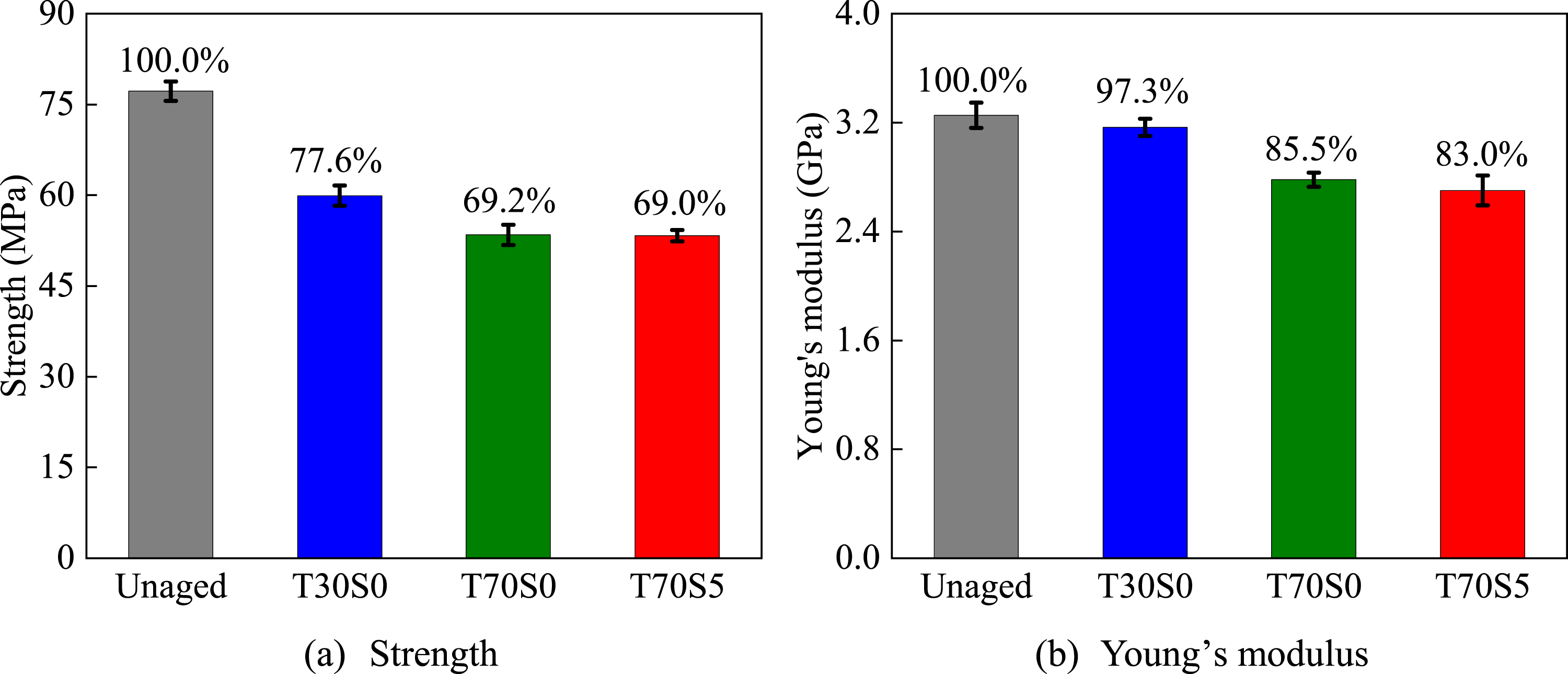
Mechanical properties of the aged CFRP specimens
Figure 6 illustrates the effects of hygro-thermal-salt ageing on the longitudinal and transverse stiffness of CFRP specimens. We found that Young’s modulus of the aged CFRPs at T70S0 degraded by about 1.5% in the longitudinal direction after 6 months. However, the effect of ageing is significant in the CFRPs in the transverse direction compared to the CFRPs tested in the longitudinal direction as the carbon fibres are quite resistant towards harsh environmental conditions compared to the polymer constituent.
29
Although the effect of hygro-thermal-salt ageing on the TT modulus is more significant than the LT modulus, the degradation is still very low in the CFRPs compared to that in the epoxy polymer. Particularly, the TT stiffness of CFRPs at T70S0 decreased by about 5.5% after 6 months, as illustrated in Figure 6. The effect of hygro-thermal-salt ageing on Young’s modulus of the polymer matrix could be the main reason for this decrease in the TT stiffness of the CFRPs since the carbon fibres were not affected, and the polymer modulus was severely affected. Given that we observed a 17% decrease in the stiffness of the polymer at T70S0 and there was negligible degradation in the stiffness of carbon fibres, the hygrothermal ageing effect on the stiffness of CFRPs is very limited in both longitudinal and transverse loadings. Minimal increases are observed in the longitudinal tensile (LT) and transverse tensile (TT) modulus of the CFRP specimens under T30S0, compared to the unaged specimens. Since carbon fibres predominantly contribute to the modulus of CFRP, the LT and TT modulus should remain nearly unchanged, as the carbon fibres are stable under aqueous conditions. Therefore, these minimal increases are likely attributed to experimental variations, such as fabrication or testing biases. The longitudinal tensile (LT) and transverse tensile (TT) stiffness of the CFRP specimens after 6 months under different ageing conditions.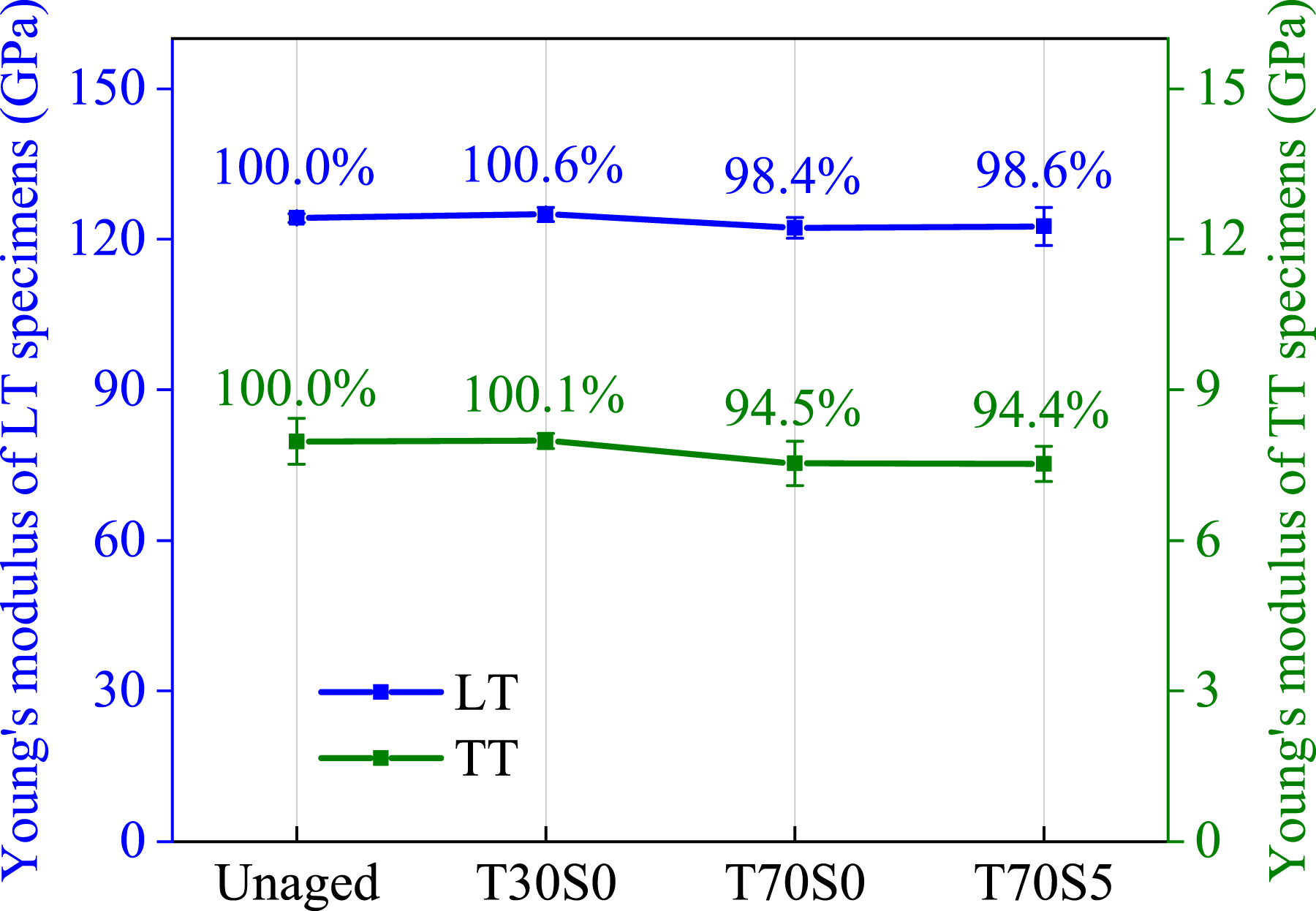
The average strength of longitudinal tensile (LT), longitudinal compressive (LC), longitudinal shear (LS), transverse tensile (TT), transverse compressive (TC) and transverse shear (TS) CFRP specimens (MPa).
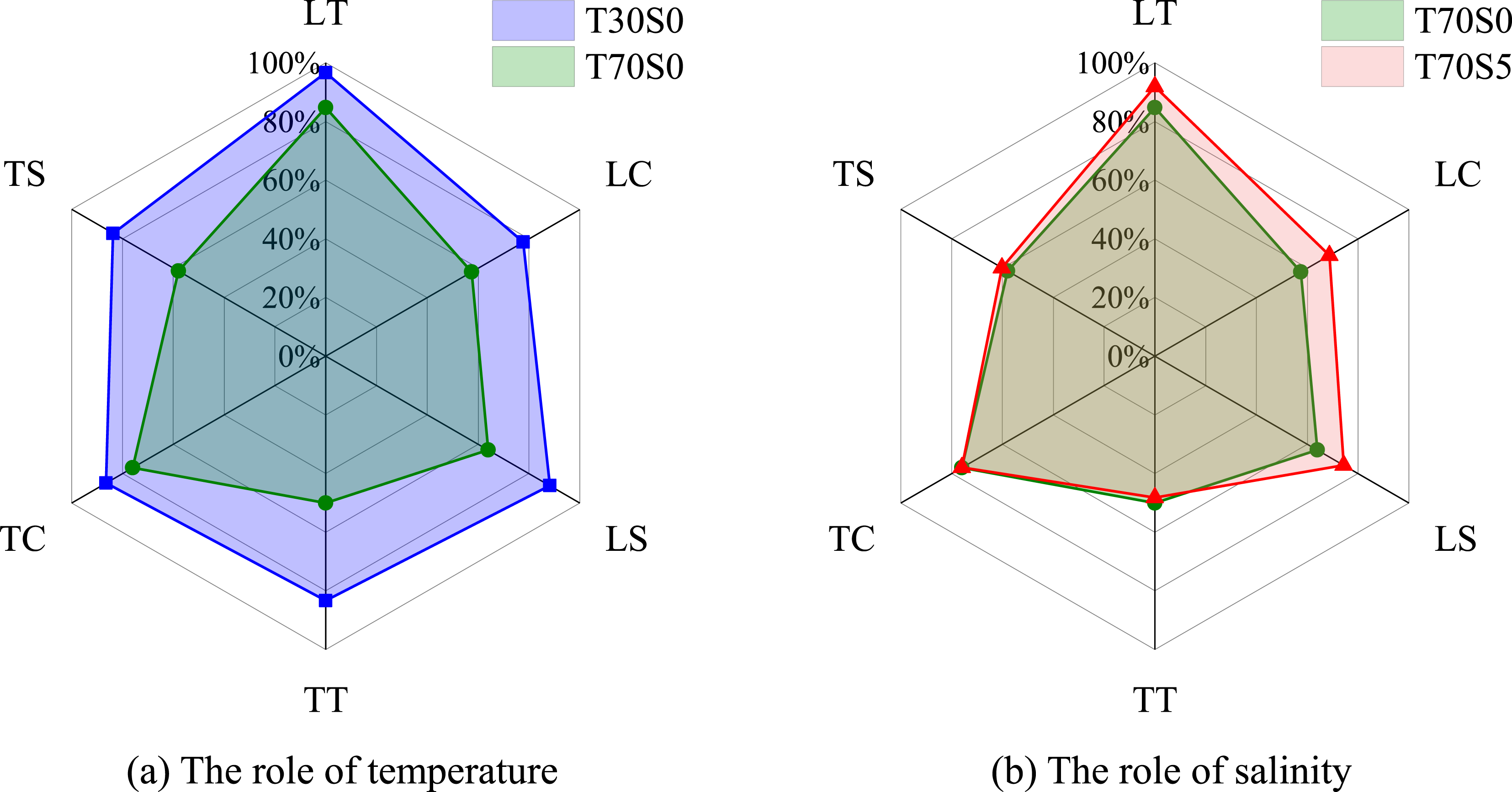
The comparison of average strengths of the longitudinal tensile (LT), longitudinal compressive (LC), longitudinal shear (LS), transverse tensile (TT), transverse compressive (TC) and transverse shear (TS) CFRP specimens under different ageing environments.
Figure 7(a) shows the role of temperature on the degradation mechanical performance of the CFRP specimens in water without salinity after 6 months. It can be seen that the LT strength at T30S0 reduces by about 3.5% compared to the unaged specimen, indicating negligible degradation. The primary reason behind this is that the mechanical performance of the uni-directional CFRPs along the LT loading direction is dominated by the carbon fibres, 46 which are very resistant to water absorption and hygro-thermal-salt ageing. 29
However, the TT strength reduction for the CFRP specimens at T30S0 varied between 10% and 20%, as these strengths are highly related to the mechanical performance of the polymer constituent and the fibre-matrix interface, which are shown vulnerable to hygro-thermal-salt ageing. In other words, the diffusion of water molecules into the CFRPs degrades its matrix and fibre-matrix interface, resulting in a reduction in the LT strength.
By increasing the temperature to 70°C, still with freshwater (T70S0), the average strength of the CFRP specimens decreased by about 50% for the TT specimens and about 15% for the LT specimens after 6 months, as demonstrated in Figure 7(a). Although the strength of the LT specimen remains the least affected, the decrease of 15% is still quite substantial. The interfacial debonding and matrix cracking not only provided the voids for further water uptake but also resulted in a weakened interfacial stress transfer capability, further affecting the LT strength.
Figure 7(b) shows the influence of adding salinity on the performance degradation of the CFRP specimens at the same temperatures after 6 months. The similarity in transverse strengths can be explained by the similar retention of mechanical properties of the polymer matrix, which governs the mechanical performance of CFRPs in the transverse direction. Apart from transverse strength, the longitudinal strength also highly relies on this stress transfer capability, especially near the clamping regions during tests, causing the longitudinal strength of T70S0 CFRP specimens to be lower than that of the T70S5 CFRP specimens due to higher water ingress.
SEM analysis for the hygro-thermal-slat ageing of CFRP
After conducting the transverse tensile tests, the representative CFRP specimens were further analysed using scanning electron microscopy (SEM) to investigate the effects of hygro-thermal-salt ageing on the fibre-matrix interface. The SEM results, shown in Figure 8, highlight the degradation of the fibre-matrix interface as the water content in the specimens increases under different ageing conditions. For example, Figure 8(a) clearly shows that the carbon fibres are well-embedded in the matrix, demonstrating strong interfacial adhesion in the unaged CFRP. However, as seen in Figure 8(b)–(d), there is a noticeable increase in exposed fibres and areas of interfacial debonding for CFRP specimens aged under T30S0, T70S5, and T70S0 conditions. This suggests that the fibre-matrix interface degrades progressively as water content increases. This observed deterioration supports the findings in Section 2.2.1, which describes the relationship between fibre-matrix interfacial debonding and the enhanced water absorption behaviour of CFRPs. SEM analysis of (a) unaged, (b) T30S0, (c) T70S5 and (d) T70S0 specimens.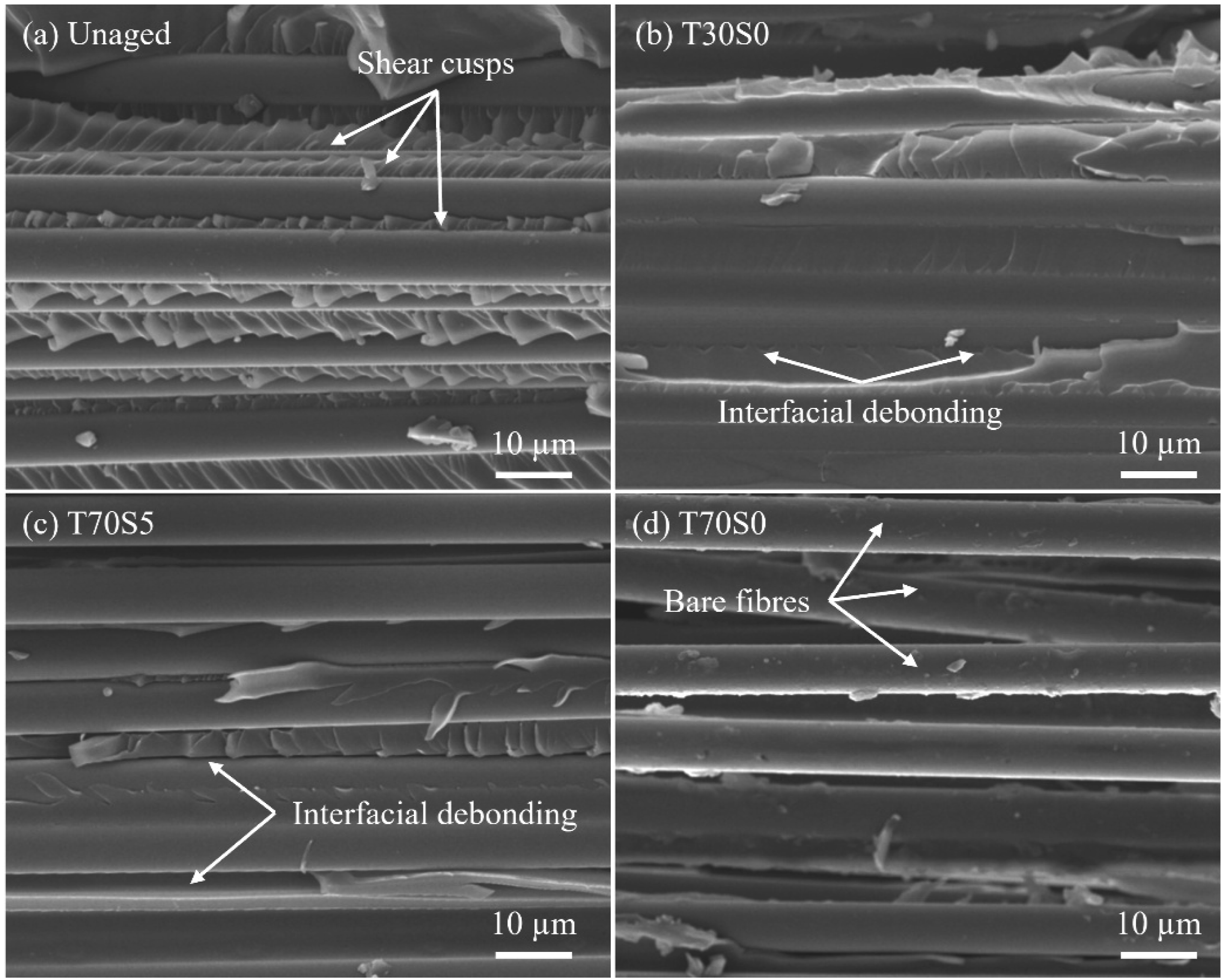
Molecular dynamics (MD) simulation
MD simulations of the epoxy Epolam polymer
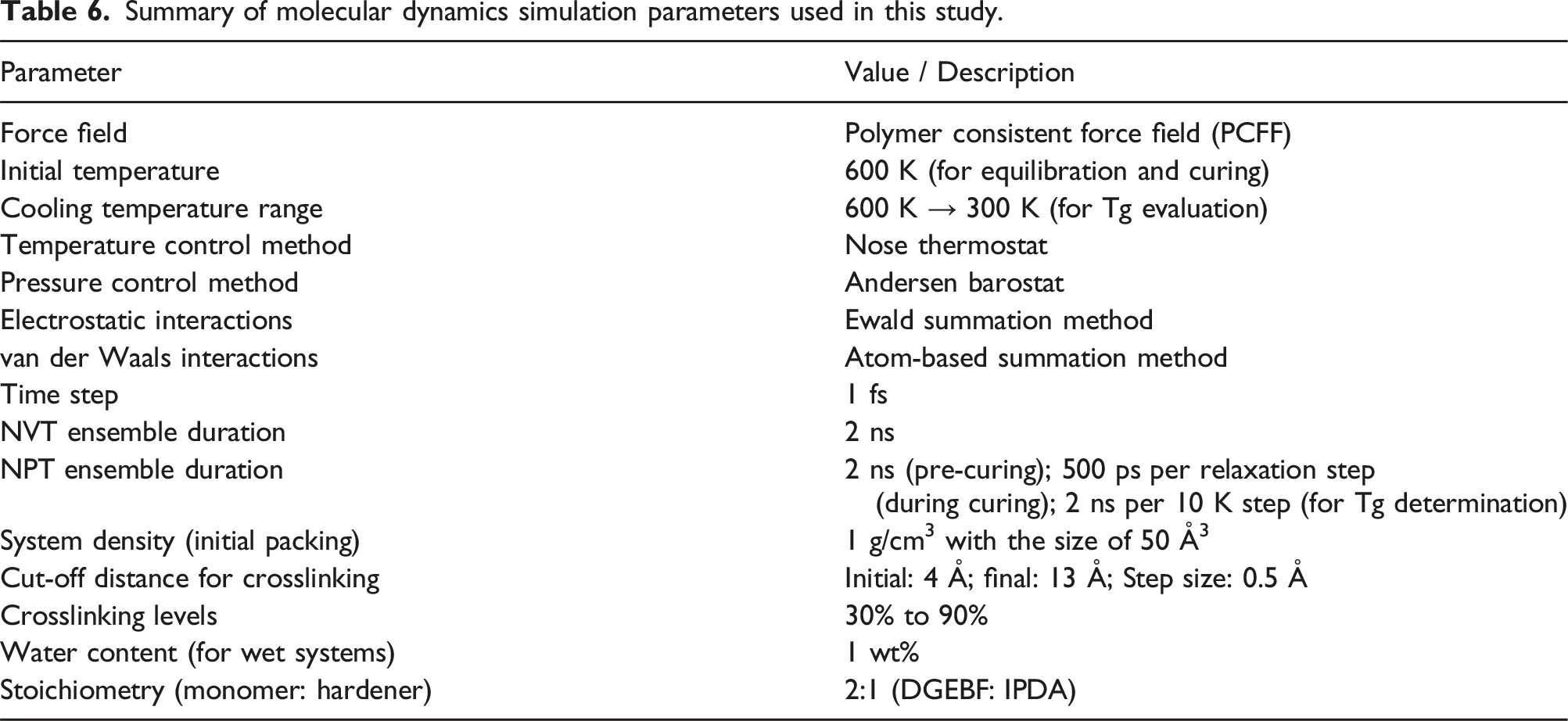
To explain the degradation mechanisms of the polymer under hygro-thermal-salty conditions, we carried out multiple molecular dynamics (MD) simulations. We investigated the role of the degree of crosslink (curing rate) on the glass transition temperature (Tg) using Materials Studio.
47
The total potential energy of the system is calculated using the Polymer Consistent Force Field (PCFF),
48
which accounts for various interactions between atoms, including bonded and non-bonded forces. The energy expression encompasses terms for bond stretching, angle bending, torsional potential, and nonbonded interactions, such as van der Waals and electrostatic forces. These components collectively describe the molecular interactions and the stability of the polymeric system under simulated conditions;
The molecular models of the monomer (Diglycidyl Ether of Bisphenol F, DGEBF) and hardener (Isophorone diamine, IPDA) of Epolam 5015/5015 polymer are respectively shown in Figure 9(a) and (b). To construct the bulk model, we packed a cubic cell of 50 Å3 with a density of 1 g/cm3 with a stoichiometry ratio of (monomer to harder) 2:1 using the amorphous cell module of Materials Studio, see Figure 9(c). The molecular structures of (a) monomer and (b) hardener of Epolam 5015/5015 epoxy, and (c) a unit cell packed with the monomer and hardener molecules (grey: carbon; red: oxygen, blue: nitrogen; and white: hydrogen atoms).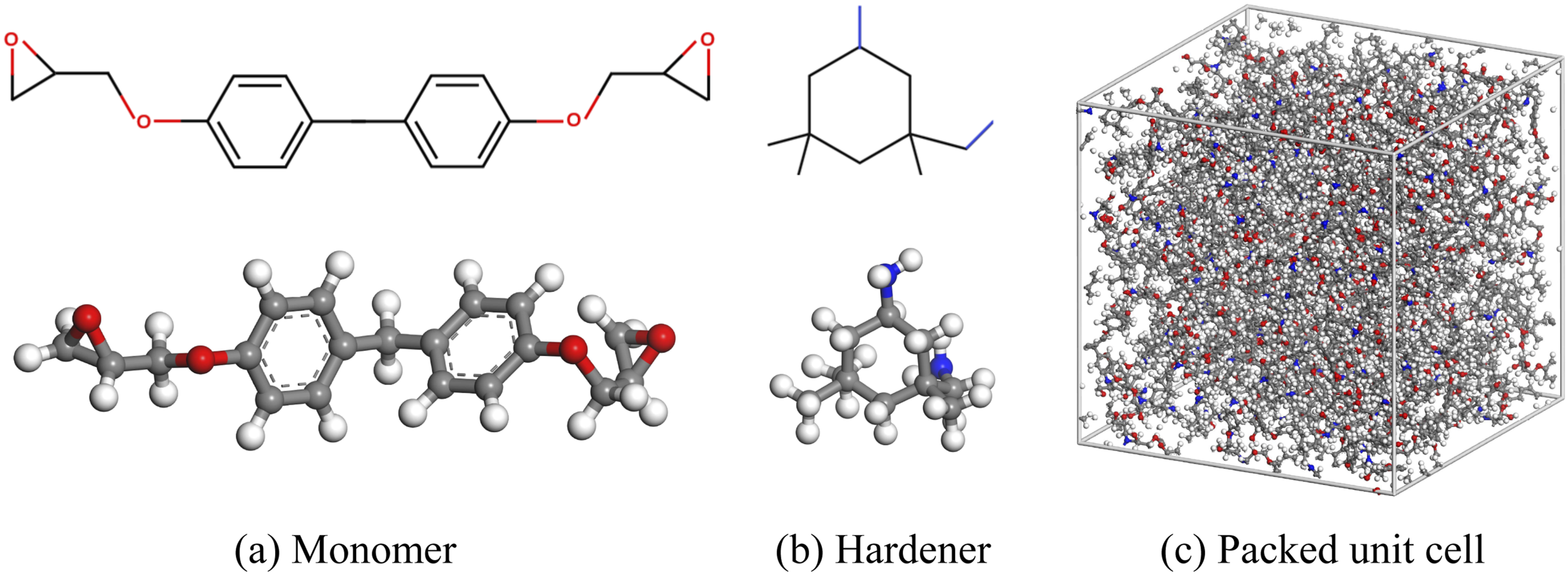
To equilibrate the system, we first applied energy minimisation through the conjugate gradients method accompanied by MD simulations under canonical (NVT) ensemble at 600 K for 2 ns. To describe the forces between the atoms, we employed the polymer consistent force field (PCFF). 48 Regarding dynamics parameters, we used the Nose control method for temperature. 49 For energy parameters, we used the Ewald summation method for electrostatic 50 and the atom-based summation method for the van der Waals forces. 51 Following this, we performed the second MD simulation under an isothermal and isobaric (NPT) ensemble for 2 ns at atmospheric pressure. We used the Nose temperature and the Aderson pressure control methods for the simulation. 52 More information regarding carrying out an NPT ensemble can be found in a previous study. 53
Summary of molecular dynamics simulation parameters used in this study.
After completing the crosslinking, we heated the system to 600 K and cooled it down to room temperature to obtain the Tgs at various curing ratios. We cooled down the system from 600 K with the temperature steps of 10 K, and at each step, we performed a 2 ns NPT simulation at atmospheric conditions. Figure 10(a) shows the density versus temperature of the system with different crosslink rates when the system is cooled down from 600 K to 300 K. Afterwards, we obtained the slope changing points of the curves, which represent Tgs, by using segmented regressions. Our MD simulations demonstrate that when the crosslinking increased from 30% to 90%, the Tg increased by about 23 K. The Tg of the Epolam 5015/5015 polymer obtained by MD simulations matches well with the experimental Tg value of 82°C, as provided in Table 1. Figure 10(b) shows that by introducing 1 wt% of water molecules into the system, the Tg of the system decreases at various crosslinking rates. The glass transition temperatures (Tg) at different crosslinking rates in the (a) dry (unaged) and (b) wet systems.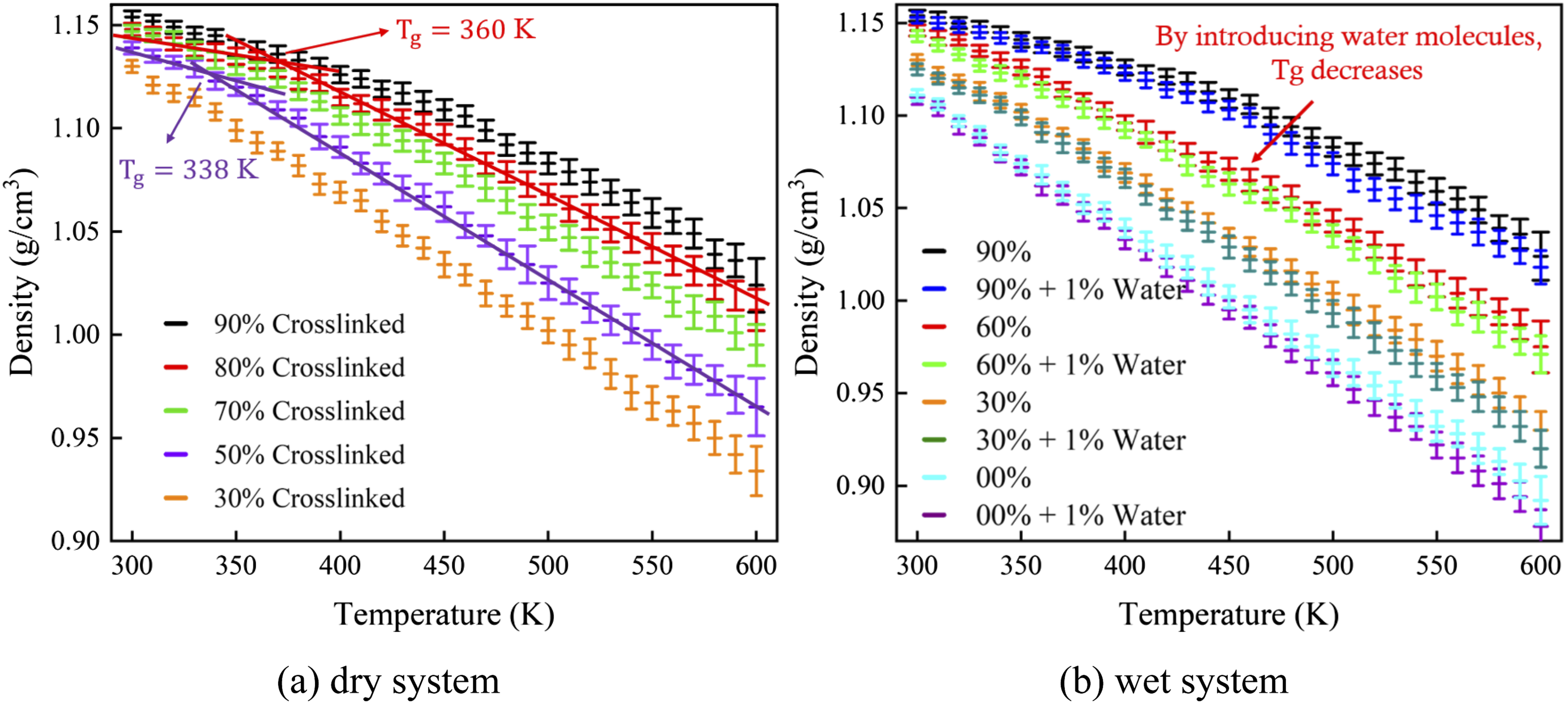
Conclusions
We manufactured CFRP composite specimens using uni-directional (UD) carbon fabric and epoxy polymer and degraded them over 6 months in the presence of water with salinities of 0% to 5% with temperatures ranging from 30°C to 70°C. We tested unaged (dry) and degraded CFRP specimens in tensile, compression and shear tests, both in longitudinal and transverse directions; we also tested unaged and aged epoxy polymer specimens under tensile loading. We found that: • with a saturated water content of around 2.7%, the water diffusion behaviour of the (Epolam) epoxy polymer can be described by using Fick’s model; experimental results show that the tensile strength and Young’s modulus reduction for the monolithic epoxy polymer is 31% and 17% after 6 months, respectively; • the effect of ageing is more significant in the CFRPs along the transverse direction compared to CFRPs along the longitudinal direction as the carbon fibres are more resistant towards harsh environmental conditions than the polymer constituent; in this regard, at 70°C in freshwater without salinity, the average strength of the CFRP specimens decreased by about 50% for the transverse tensile specimens and about 15% for the longitudinal tensile specimens after 6 months; Young’s modulus in these specimens was affected by less than 6%; • the CFRP specimens absorbed water even after their matrix constituent saturated; this is possibly due to the initiation and propagation of micro-cracks in the matrix as well as at the delamination at the interface between fibres and the matrix, creating voids for further water uptake in the CFRPs, reducing the stress transfer capability in the CFRPs; • the water absorption rate in CFRPs and their matrix constituent can be accelerated by increasing the ambient temperature; however, the process of water diffusion into the specimens can be hindered by salt in the seawater due to the osmotic pressure difference between the material and the environment; and finally, • the analysis of the MD results suggests that the introduction of water molecules to the matrix molecules, even as low as 1%, reduces the glass transition temperature (Tg) of the epoxy at various cross-linking rates. • The molecular dynamics simulation results, showing a reduction in the Tg of the epoxy resin with increasing water content, offer a crucial link to the experimental observations. In fibre-reinforced polymers like CFRPs, the Tg of the matrix plays a key role in determining the composite’s mechanical performance, especially under environmental ageing. While the presence of carbon fibres may locally influence the Tg through interfacial interactions and constraint effects, the dominant mechanism observed in this study is the water-induced plasticisation of the polymer network. This molecular-scale change helps explain the degradation in tensile, compressive and shear properties recorded experimentally, as a lower Tg corresponds to reduced matrix stiffness, diminished load transfer, and increased susceptibility to damage under stress. By connecting these molecular and macroscopic insights, the study provides a comprehensive understanding of the ageing behaviour of CFRP composites.
Footnotes
Declaration of conflicting interests
The author(s) declared no potential conflicts of interest with respect to the research, authorship, and/or publication of this article.
Funding
The author(s) disclosed receipt of the following financial support for the research, authorship, and/or publication of this article: The work described in this paper was supported by grants from the Shun Hing Institute of Advanced Engineering at The Chinese University of Hong Kong (Project No. RNE-p2-20), and the Innovation and Technology Fund of the Hong Kong Special Administrative Region, China (Project No. ITS/134/20)

Data Availability Statement
The raw data required to reproduce these findings are available upon request.