




Abstract
This study investigated the time-dependent mechanical properties, with a focus on the viscoelastic behavior, of industrially processed hemp fiber using Atomic Force Microscopy (AFM). Viscoelastic parameters were derived directly from force versus displacement curves using the Lee-Radok’s solution for viscoelastic contacts. Transient indentation techniques were employed, and viscoelastic models, including Power-Law Rheology and Maxwell models, were applied to extract time-dependent relaxation parameters. The results indicated that hemp displays primarily solid like behavior, with distinctive viscoelastic characteristics affected by indentation speed: it demonstrates regular behavior at lower speeds and shear-thinning behavior at higher speeds. These findings highlight the potential of hemp as a reinforcement material in composite matrices, emphasizing its robust structural integrity and superior damping properties.
Keywords
Introduction
Hemp (Cannabis Sativa L.) is a natural fiber with significant environmental benefits. 1 Due to its environmentally useful qualities and compatibility with sustainability goals, industrially processed hemp fiber is gaining more increasing recognition for its wide range of applications across various industries. This sustainable natural fiber, derived from the hemp plant, is utilized in textiles, 2 composites, 3 and biodegradable plastics. 4 With the global market for hemp textiles projected to reach $63.04 billion by 2029, the consumers’ interest in sustainability continues to propel its adoption. 5 Hemp composites and biodegradable plastics further extend the material’s potential into engineering, construction, and automotive applications, demonstrating its multifunctionality and environmental advantages.6,7
The time-dependent mechanical properties of hemp fibers, particularly their viscoelastic behavior, are critical for understanding their performance in structural design applications. Direct shear tests revealed that hemp fiber and the core exhibit distinct mechanical properties, with the fiber showing a lower friction coefficient (0.2) compared to the core. 8 Hemp fibers demonstrated logarithmic creep behavior, with an initial rapid strain rate (primary stage) followed by a stabilized, slower strain rate (secondary stage). Three distinct creep types, concave, linear, and convex, occurred under varying loads and environmental conditions. 9 Environmental factors, such as temperature, humidity, and stress levels, significantly affect the viscoelasticity of hemp, with higher stresses and extreme conditions exacerbating creep and impairing full recovery during unloading. 10 Dynamic mechanical analysis has shown that increasing hemp fiber content enhances composite stiffness but reduces damping capacity at higher temperatures, affecting energy dissipation. 11 Although models incorporating anisotropic constitutive laws and finite element simulations have enhanced the understanding of nonlinear tensile behavior — accounting for mechanisms such as cellulose microfibril reorientation and crystallization under strain — variations in fiber behavior and environmental sensitivity complicate predictions. 12
Most of the studies above have focused on the viscoelastic properties of hemp at a larger scale. To eliminate the influence of foreign particles and gain a deeper understanding of its time-dependent mechanical behavior, nano/micro-scale characterization is essential. Atomic Force Microscopy (AFM) is a versatile tool for analyzing the time-dependent mechanical behavior of materials. AFM nanoindentation has been commonly used to investigate the nanoscale mechanical properties of natural fibers, uncovering depth-dependent fluctuations in elastic modulus, hardness, and viscoelastic characteristics. Investigations into flax and hemp fibers reveal their anisotropic mechanical properties, characterized by reduced transverse stiffness compared to axial stiffness, which affects fiber-matrix interactions in composites. 13 Wood pulp fibers demonstrate pronounced moisture-dependent viscoelasticity, with a substantial reduction in stiffness under humid condition. 14 Nanoindentation were also performed on collagen fibrils to determine their elastic modulus. 15 AFM nanoindentation force-displacement curves can be used to assess viscous and elastic responses, capturing creep and relaxation under both dynamic and static conditions. Viscoelastic models, such as Kelvin-Voigt-Maxwell and Generalized Maxwell, can be integrated into AFM data to describe these phenomena.14,16 Transient indentation techniques in AFM allow for precise measurement of stress relaxation and strain creep, incorporating adhesion effects for refined characterization. 17 Unlike techniques such as Acoustic Force Microrheology, which uses micron-sized particles to measure viscoelastic responses over a wide frequency and force range, 18 or Thermal Noise Analysis, which captures polymer viscoelasticity under near-equilibrium conditions, 19 force versus displacement (F-Z) curve analysis from transient indentations provides a straightforward setup without the need for additional assumptions. Similarly, it complements stress relaxation experiments that employ models like the Maxwell five-element model to fit time-dependent deformation data. 20 While challenges such as energy dissipation in bimodal AFM 21 and sensitivity issues in multi-harmonic AFM persist, 22 the simplicity and efficiency of F-Z curve analysis make it particularly suitable for soft and heterogeneous biological samples. Numerous publications have attempted to assess viscoelastic qualities directly from force curves by evaluating approach-retraction hysteresis23–25 or by investigating the dependence of the apparent elastic modulus on indentation rate.26,27 But the parameters in these publications are not complete viscoelastic solutions and thus known as ‘apparent’. 28 In this research, using Lee-Radok’s solution we get the complete viscoelastic parameters.
The objective of this study is to investigate the viscoelastic properties and the time-dependent mechanical behavior of industrially processed hemp fiber using AFM. The properties of hemp fiber are measured in the radial direction. Understanding the radial elastic properties is crucial for accurate material modeling. Additionally, nano/micro-scale characterization of hemp will provide valuable insights for its use as reinforcement in composite matrices.
Materials and methods
Materials
Industrial hemp from Germany was studied. After bleaching, the hemp turned light golden with reduced hemicellulose and lignin content. As a result, while bleaching enhances processing properties, it deteriorates fiber integrity, especially for structural applications, the bleached fibers exhibit lower mechanical strength and flexibility compared to raw hemp.
29
Figure 1(a) shows the hemp bundles, and Figure 1(b) presents an optical image of a single fiber. (a) Industrial hemp bundles, (b) A single hemp fiber under optical Microscope.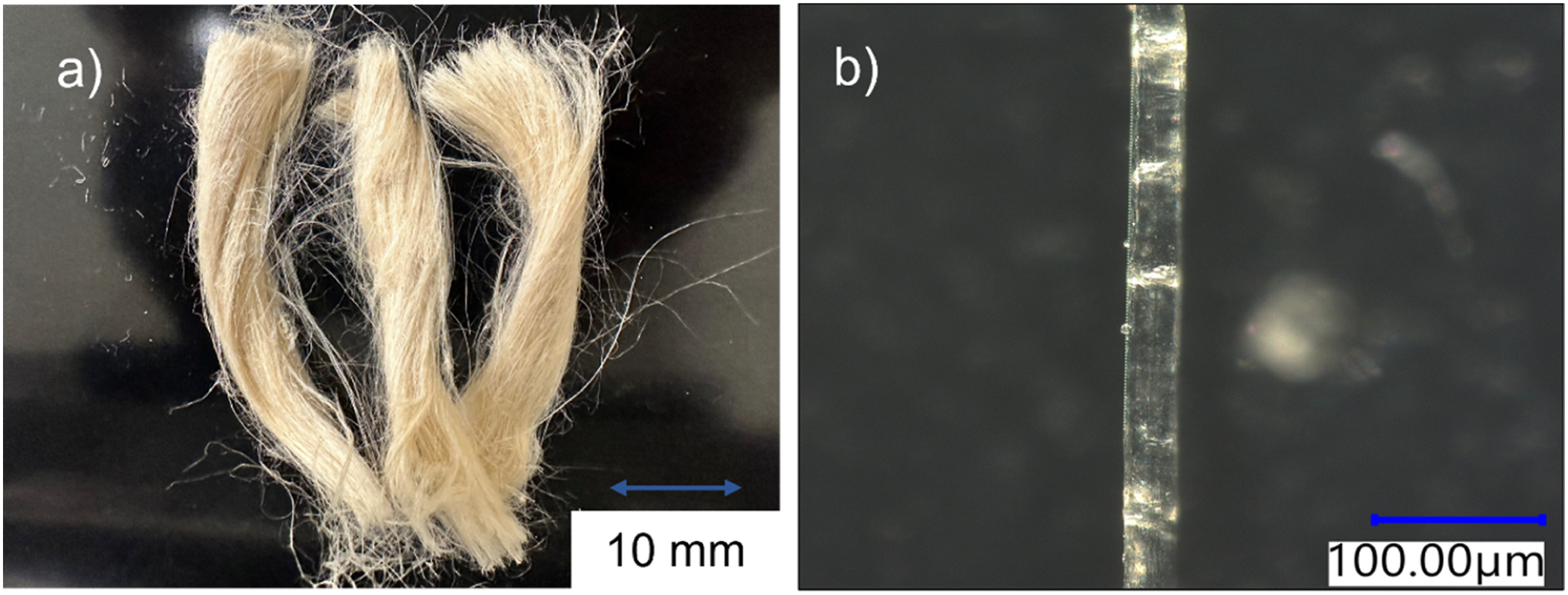
Sample peparation for imaging and nanoindentation
Hemp fibers were cut into lengths of 3–6 mm for AFM (D3100, Veeco) imaging and nanoindentation. To minimize the residual stresses effects from cutting, scanning and indentation were conducted away from the fiber ends. The fibers were affixed to a glass slide using a reactive resin (LeapTech, HuntsmanTM Araldite GY 6010), mixed in a 2:1 resin-to-hardener ratio, and heated to 45°C to enhance reactivity. After manual stirring, a thin mixture layer was applied to the glass slide. After an hour, the short fibers were then gently placed on the resin and pressed using a clean glass slide to avoid contamination of the fiber surfaces by the epoxy, the resin mixture solidified after 12 hours, ensuring proper adhesion for subsequent imaging and testing.
SEM to detect resin contamination
To verify that the resin did not affect the top surface of the hemp fibers, scanning electron microscopy (SEM) was performed on AFM-indented hemp samples. For SEM imaging, glass slides with hemp fibers embedded in epoxy were affixed to cylindrical aluminum mounts using conductive tape. The mounted slides were then coated with a conductive gold layer using a Cressington Sputter Coater 108Auto (Ted Pella, Redding, California, USA). Images were captured using a JEOL JSM-6490LV SEM (JEOL USA, Inc., Peabody, Massachusetts, USA) operated at 15 kV. As shown in Figure 2, the scan confirmed that there was no detectable resin contamination on the top surface of the fibers where the indentations were made. SEM scan of prepared sample surfaces for AFM.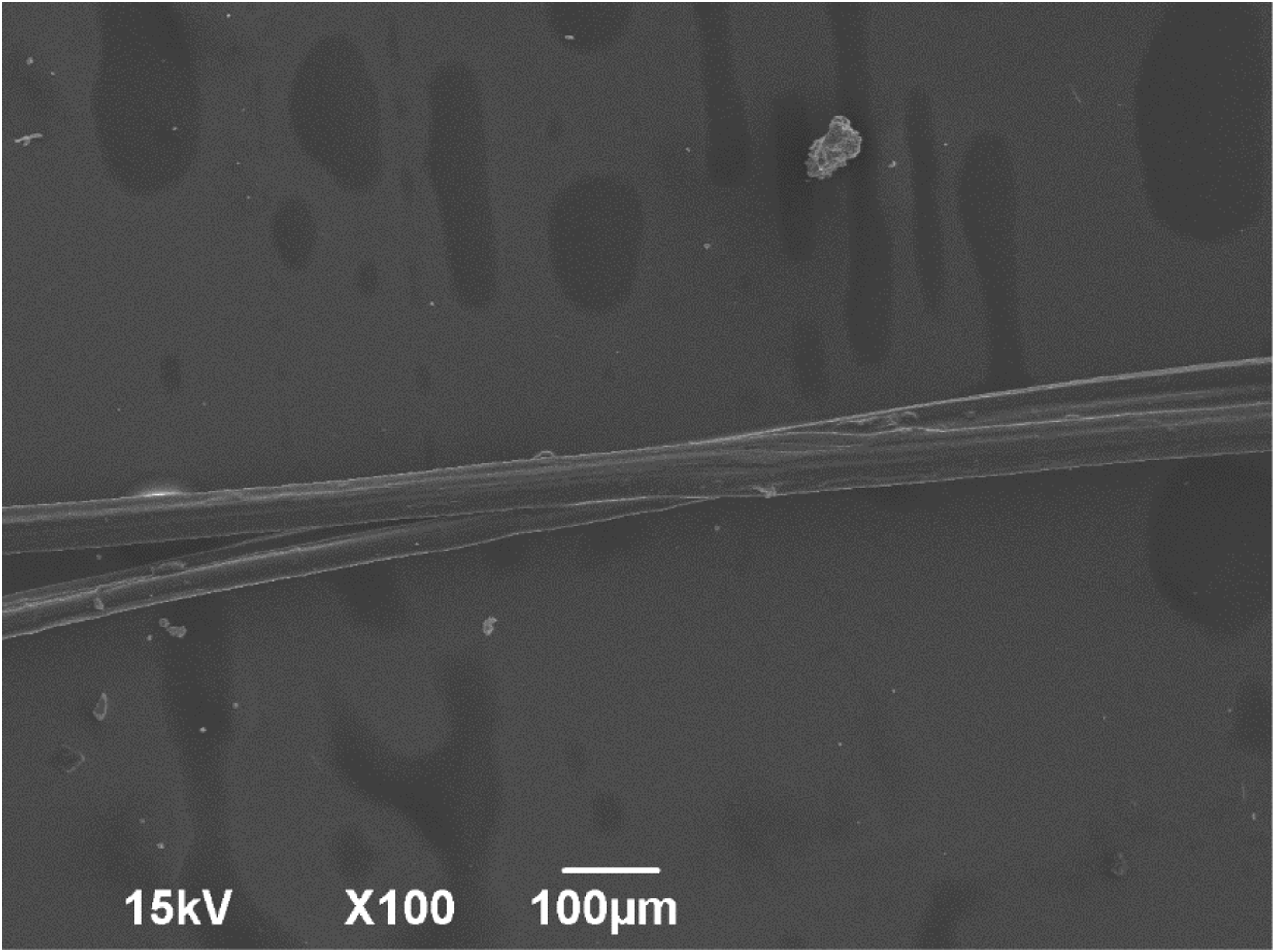
Material testing
AFM imaging was performed using a tapping mode diamond-coated probe (DT-NCHR, Nanosensors), with a scanning area of 5 μm × 5 μm and a scanning rate of 0.256 Hz. After surface scanning and identifying a flat region, nanoindentations were made in areas free from surface irregularities. Figure 3 shows the 3D surface image of the industrial hemp surface, which indicates that at the nanoscale, it is easier to identify a flat region on the hemp surface suitable for indentation. To minimize piezo hysteresis, the scan size was gradually reduced to 1 nm × 1 nm prior to nanoindentation. The indentation voltage was set to 0.5 V, and the indentation speed was varied during the process, with six indentations performed at each speed at six different samples. To prevent interference from neighboring indents and reduce the effects of piezo hysteresis, a spacing of 200 nm was maintained between each indentation. The extend curve from each indentation was used to analyze the time-dependent behavior of the fiber at different indentation speeds. 3D AFM surface image of hemp fiber.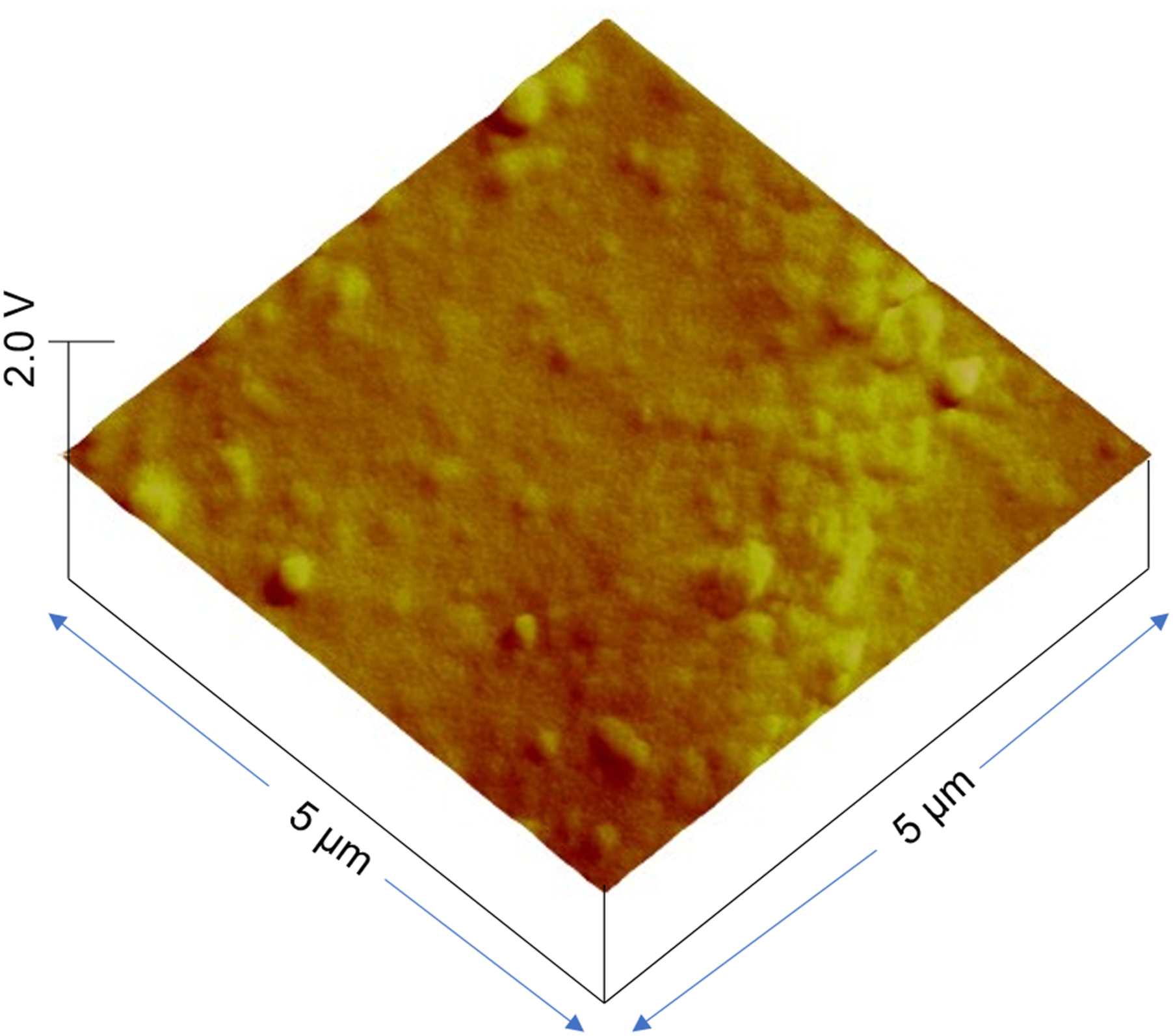
Nanoindentation data conversion
The three parameters of the extension data, that is, indentation time (s), calculated Z (nm) or displacement of the piezo and deflection V (volts) were converted to deflection


For the later part of the analysis, data corresponding to the contact region between the AFM tip and the sample were required. To identify the contact point, the force versus sample deflection curve was analyzed. Initially, a portion of the data was excluded due to noise during initialization. A 15-point moving average was then applied to smooth the remaining data using: Data processing of indentation force versus sample deflection curve.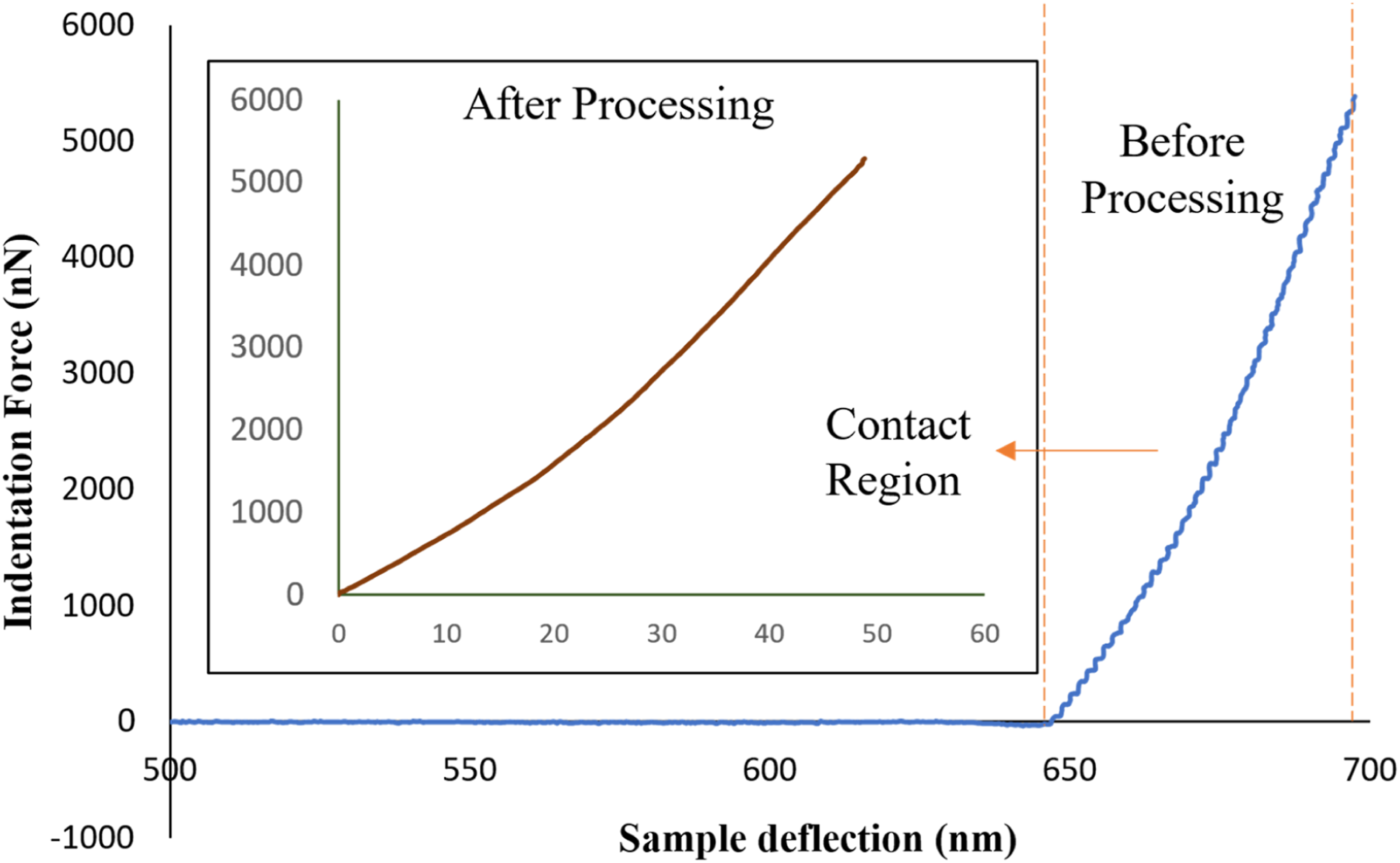

Determination of elastic modulus in radial direction
Sneddon’s model for a paraboloid shaped tip geometry was applied in this case30–32 to determine the elastic modulus, assuming the material behaves as a linear elastic flat material. This model provides a more accurate estimation of the instantaneous modulus, as it eliminates viscoelastic effect.33,34 The equation used for calculation force using Sneddon’s model is as follows:

Adaptation of Lee-Radok’s solution
Lee and Radok utilized the elastic-viscoelastic correspondence principle to derive a solution for the indentation of viscoelastic materials with a time-dependent contact area. 35 This principle states that once the elastic solution is obtained, the viscoelastic solution can be derived by replacing the elastic modulus with a hereditary integral operator that accounts for the material’s time-dependent behavior, thereby extending the elastic solutions to viscoelastic contexts. 28
The indentation extension curve was selected and converted for curve fitting because Lee-Radok’s solution only works where contact area increases over time. The equation used here is
36
:


Since the radius of the tip is very small compared to the radius of the sample,
E (t) was found using the popular viscoelastic models. For, PLR model (shown in Figure 5(a)), the equation for time dependent relaxation modulus is: (a) Infinite number of spring and dashpot in parallel (PLR Model) (b) Nanoindentation on a sample having properties similar to a Maxwell five-element model.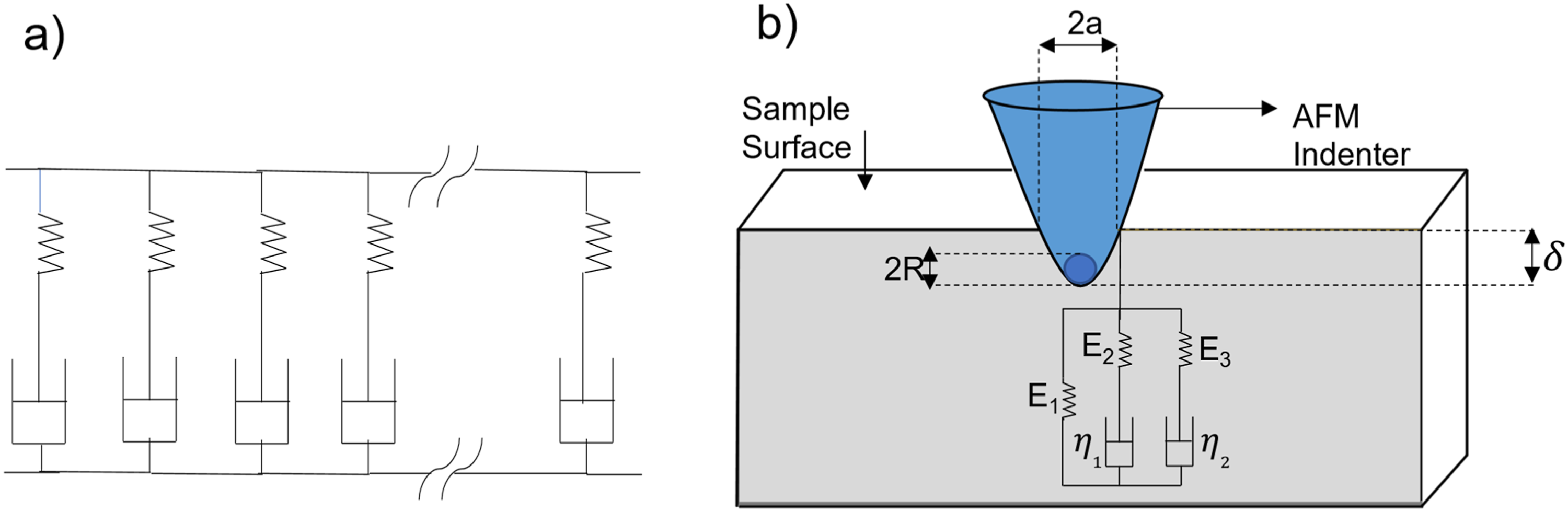

A simpler version of equation (7) in literature
38
was used for this study:

Maxwell five-element model was also used to characterize the time dependent properties of hemp. This model, shown in Figure 5(b), has one spring element, one spring and dashpot in series and another spring and dashpot in series all in a parallel combination. The relaxation modulus can be found using the following equation:




Equation (12) was used to find out the time-dependent relaxation modulus.
To calculate the force using Lee-Radok’s solution, the derivatives Flowchart of adapting Lee-Radok’s solution.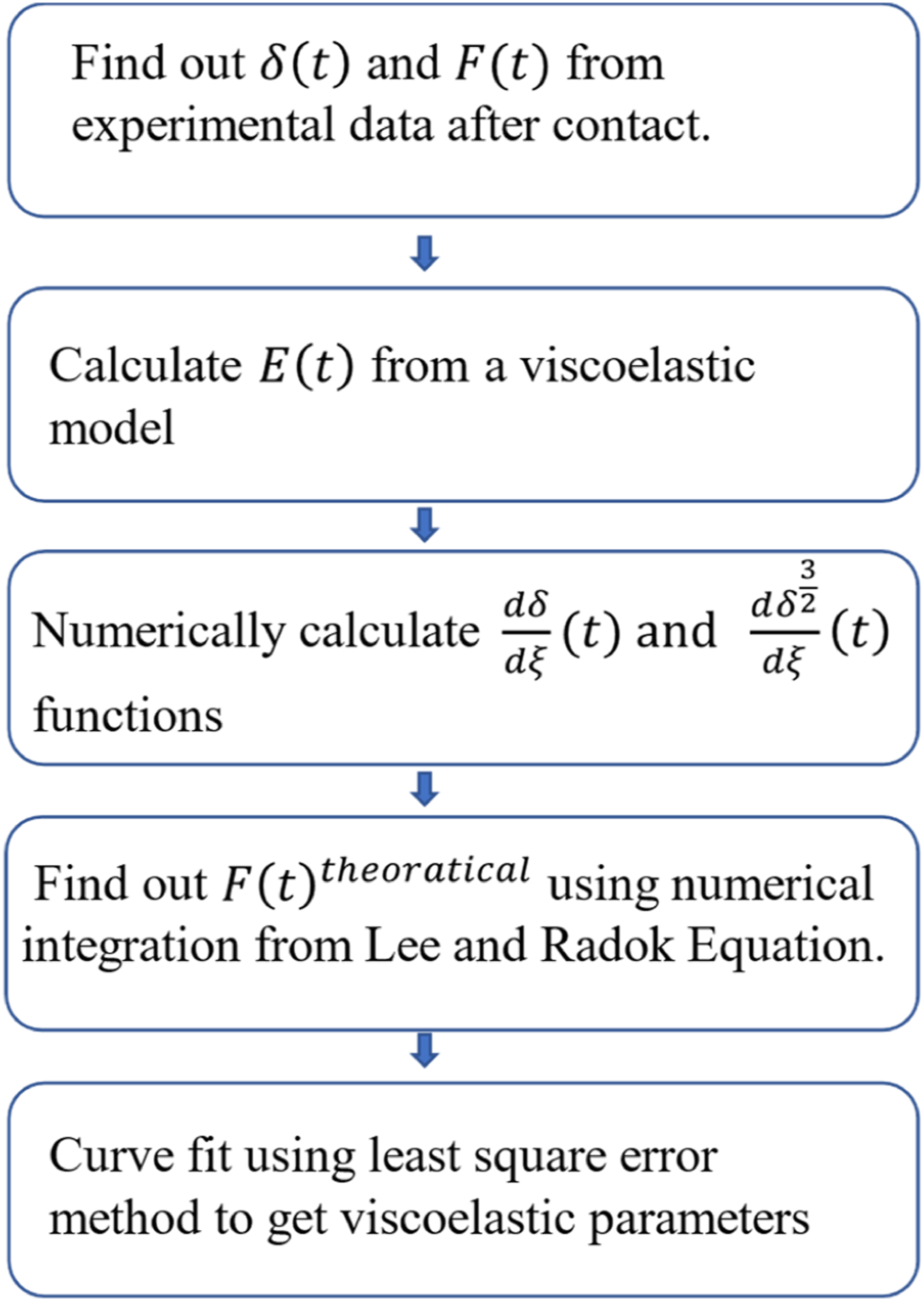

Result and discussion
The time-dependent behavior of Lee-Radok’s solution time was analyzed using AFM. Figure 7 illustrates this force versus sample deflection plot, clearly showing that the force changes at different rates depending on the indentation speed. Indentation force versus time plot for different indentation speeds. Higher speed indentations show higher shear rate and higher strain rate.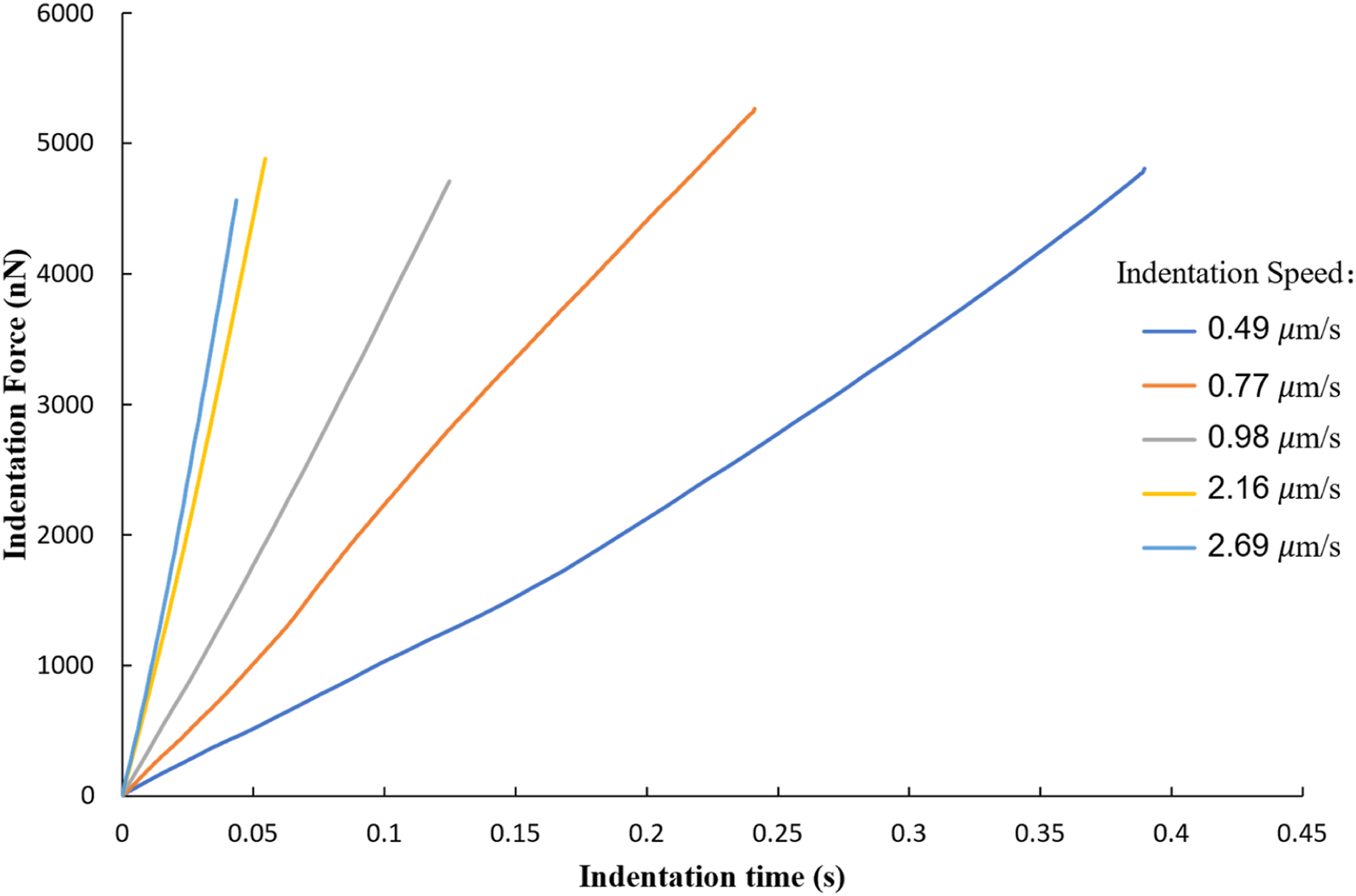
The change in indentation rates leads to differing shear rate for each indentation speed. Shear rate refers to the rate at which a material deforms due to a velocity gradient, indicating the velocity at which adjacent fluid layers traverse in relation to one another. It is typically measured in reciprocal seconds (s −1 ). There is also a variation in strain rate when a larger amount of force is applied in a short period of time. In general, due to the change in strain rate, a material shows different elastic and viscoelastic properties. The temperature is also affected by changing the rate at which force is applied. By increasing the amount of force in a limited amount of time, there is a possibility that the temperature may increase, resulting in changed properties for different materials. The force applied by AFM, however, is too small, the temperature change is neglected.
Curve fitting using PLR model
The viscoelastic parameter for hemp fiber is calculated by applying equation (12) of PLR model and incorporating it in equation (5). The parameters Variation of (a) instantaneous modulus and (b) 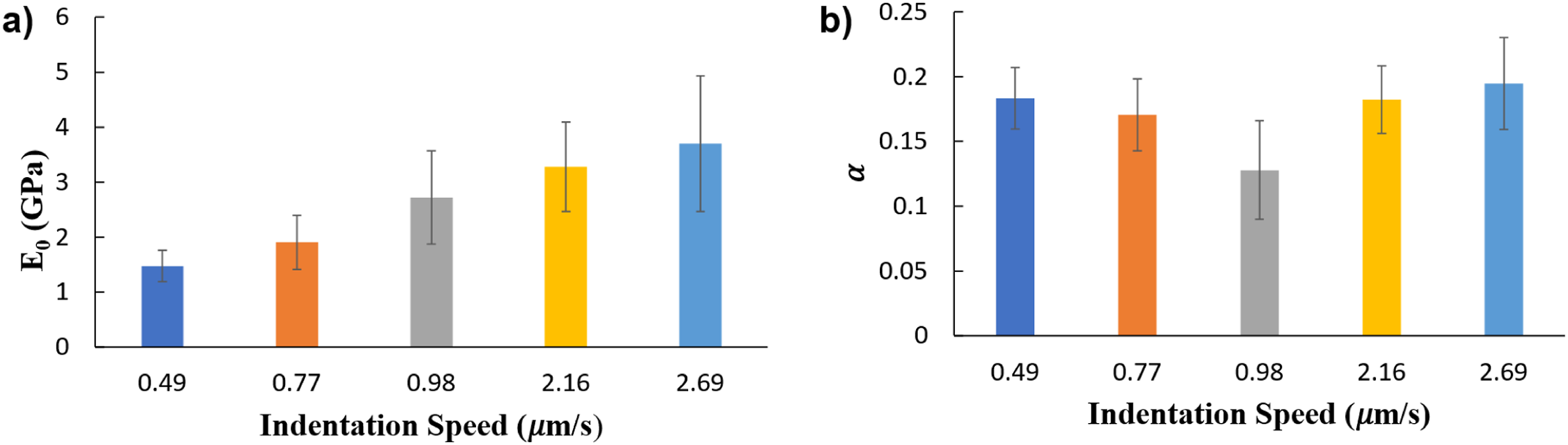
In PLR model,
Figure 8(b) shows the
The bar chart in Figure 8(b) shows initially for increased indentation speed, more specifically up to a speed of
At much higher speed the trend is different. It can be seen for the hemp fiber to have increased
It can be hypothesized that another reason for such behavior is that, at higher shear rate the industrial hemp fiber start to show shear thinning property. Shear thinning is a phenomenon in which a fluid’s viscosity decreases as the shear rate increases, resulting in accelerated flow under identical pressure differentials. This is a prevalent form of non-Newtonian behavior, indicating that the fluid’s viscosity fluctuates according to the applied shear rate or shear stress. The industrial hemp fiber is composed of cellulose, pectin, and other components. During AFM nanoindentation, the material’s composition may change due to the interaction of these components under the applied forces. When the AFM tip starts to penetrate at a higher speed the binding component of hemp fiber, hemicellulose gets affected due to destruction of the aggregates that forms the adhesion and thus results in showing more viscosity. Therefore, there is a possibility that the hemp sample exhibits shear thinning properties at higher shear rates, leading to increased viscous behavior and a higher α value.
Curve fitting with Maxwell five-element model
The results of fitting the Maxwell five-element model are shown in Figure 9(a). Variation of (a) E1, E2, E3 and (b) η1, η2 in Maxwell five-element model of industrial hemp fiber with different indentation speeds. Elastic modulus of all the elements increases with indentation speed. Viscosity of one element decreases while viscosity of other decreases with indentation speed.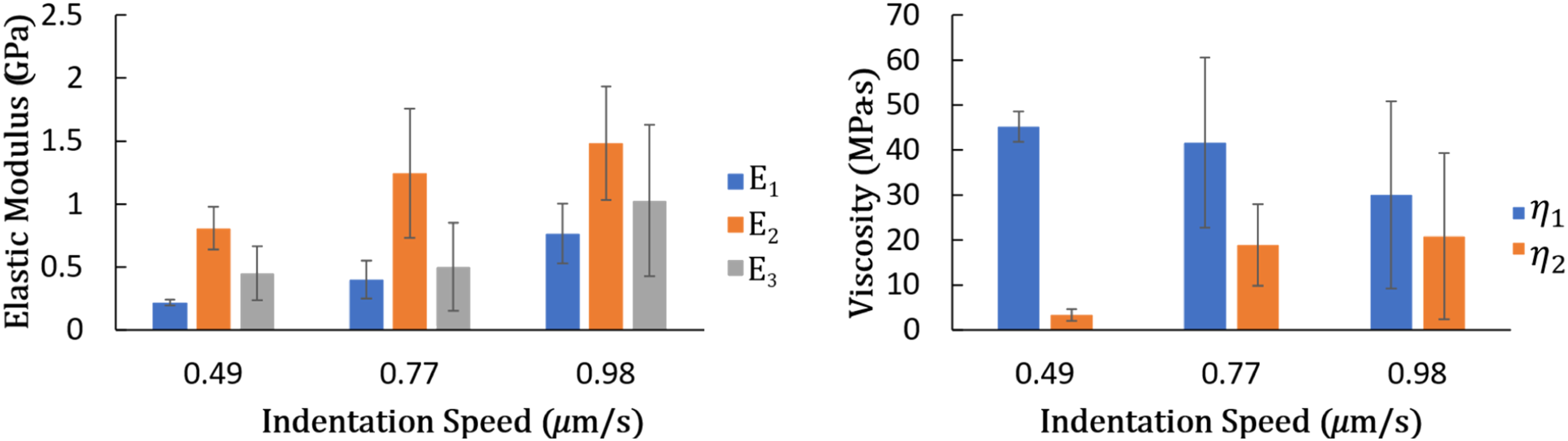
This model was fitted specifically for lower speeds as it produced inconsistent results at higher speeds. Here,
In case of viscosity, Figure 9(b) shows
The PLR and Maxwell five-element model were used in this case because of their vast application in characterizing viscoelastic properties for biological and natural samples. The PLR model captures hemp fiber’s continuous relaxation with a non-exponential decay, aligning well with experimental data. The Maxwell five-element model distinguishes between short- and long-term elastic and viscous responses for a more structured representation. However, other viscoelastic models like fractional viscoelastic model or Prony series may be explored in future studies to find a more suitable fit which also helps with the Lee-Radok solution limitation. A nonlinear constitutive model may also be options which might be able to incorporate microstructural orientation at higher speeds at provide more accurate picture.
From our study, it can be hypothesized that, under slow-loading conditions, elastic-dominant behavior is primarily exhibited by hemp fibers, confirming structural rigidity. However, under rapid-loading conditions, increased viscous contributions and the shear-thinning effect indicate that energy dissipation mechanisms become more active, which could be beneficial for damping and impact resistance in composite applications, especially in the automotive and aerospace industries, where both structural integrity and impact resistance need to be considered. It can also be hypothesized that this represents the true response of hemp fibers rather than an experimental artifact. In a previous study, it was found that different viscoelastic properties are exhibited by hemp fiber-reinforced composites under different stress levels, 10 which is believed to solidify this hypothesis.
The fluid like behavior due to shear thinning observed can have both positive and negative impacts. Under high impact conditions hemp composites can act as very good shock absorbents. Also, progressive softening might affect the longtime durability. In case of AFM there is localized force in short time scale which may be much higher than typical composite applications. But in case of higher impact load this experimental setup can be very much comparable. Also, this study assumed that hemp fiber exhibits uniform features throughout its depth. However, hemp typically shows significant variations in structure and material composition at different depths, which influences its mechanical properties. Factors such as variations in microfibrillar angle, cell wall composition, and density can alter throughout the fiber’s depth, resulting in heterogeneous characteristics across layers. 32 Consequently, depth-dependent variability can affect the fiber’s behavior under mechanical stress, hence influencing the accuracy of results when uniform qualities are assumed. This may also cause the results to be different from a broader analysis like DMA where a whole fiber is considered. Also, while in real world composites fibers experience tensile or shear forces longitudinally, transverse viscoelastic properties will be very important to get an idea about the fiber matrix interaction over time. Since, transverse properties gives us idea about failure modes, bonding responses etc., 41 this will help designing the composite which will be very reliable.
Conclusion
This study underscores the significant potential of AFM for examining the time-dependent mechanical properties of industrially processed hemp fibers at the nanoscale. The viscoelastic characteristics from the force-displacement curves were obtained using AFM nanoindentation, utilizing existing models like PLR and the Maxwell five-element model. The findings indicated that hemp fibers exhibit viscoelastic properties that are dependent on time and significantly affected by the rate of indentation. At reduced velocities, the fibers demonstrate characteristics like an elastic solid, exhibiting elevated instantaneous modulus values. This behavior shifts to a more fluid-like reaction at higher speeds, perhaps attributable to shear-thinning processes. These findings offer critical insights into the response of hemp fibers to mechanical pressures over different time scales and underscore their appropriateness for applications requiring strong structural integrity and dampening. The work further shown that the radial viscoelastic characteristics of hemp can be accurately characterized using AFM, which is essential for forecasting critical instability conditions, failure modes, and effective moduli in composite materials. The evaluation of hemp’s viscoelastic properties, including its rapid relaxation time and significant damping abilities, highlights its potential for engineering applications that necessitate swift stress dissipation and stiffness. Nonetheless, the research also uncovered inherent problems. The depth-dependent heterogeneity in hemp fiber composition, resulting from differences in microfibrillar angle, cell wall density, and other structural parameters, influences its mechanical properties. Although AFM offers comprehensive insights into transverse viscoelastic properties, these results may inadequately reflect the fiber’s performance under longitudinal pressures, which are essential for practical tensile applications. Furthermore, at higher indentation speeds, the reliability of the employed models, including Lee-Radok’s solution, diminishes, perhaps resulting in errors in the recorded viscous response. This study lays the groundwork for subsequent research to investigate the viscoelastic properties of hemp fibers.
Footnotes
Declaration of conflicting interests
The author(s) declared no potential conflicts of interest with respect to the research, authorship, and/or publication of this article.
Funding
The author(s) disclosed receipt of the following financial support for the research, authorship, and/or publication of this article: This material is based upon work supported by the National Science Foundation under Grant No. 0619098. Any opinions, findings, and conclusions or recommendations expressed in this material are those of the author(s) and do not necessarily reflect the views of the National Science Foundation.

Data Availability Statement
Data sharing not applicable to this article as no datasets were generated or analyzed during the current study.