




Abstract
Hemp and its composites are becoming increasingly popular for their environmental benefits and mechanical strength, making them critical in the development of sustainable materials. This study investigated the nanomechanical properties of industrial hemp fibers through the application of Atomic Force Microscopy (AFM). An AFM-based examination of individual fibers allows for the accurate assessment of nanoscale characteristics without interference from extraneous particles, providing a clear insight into individual fiber features. Using Sneddon’s analytical model for a paraboloid shape AFM tip geometry, the elastic moduli of the hemp fiber were calculated at different indentation depths. The maximum elastic modulus of
Introduction
Fibers are thread-like structures that can be derived from natural or synthetic sources and used as reinforcement materials in composite products. 1 They have been widely used in various applications including their utilization in building materials, 2 particle and insulation boards, automotive parts, 3 medicine, 4 human food, animal feed, 5 cement composites, 6 and for other biopolymers. 7 Despite their advantages such as improved strength and durability, synthetic fibers can cause problems for the environment since they are not biodegradable, require a lot of energy to produce, and leak microplastic particles over their lifetime. Their productions also have higher energy emissions and can have harmful effects on human health.8–10 On the other hand, natural fibers can be sourced from plants or animals. 11 High degrees of processing flexibility, thermal stability, renewability, acoustic insulation, low specific weight that results in high specific strength, and stiffness are only a few of their characteristics.12–14 Moreover, they are eco-friendly and biodegradable which makes them even more valuable in the present world.
Hemp is an example of natural fibers that fits into the categories of both bast and core fibers, noted for its environmental advantages.
15
Naturally, hemp is the oldest and most environmentally beneficial material. While known for its psychoactive tetrahydrocannabinol (THC) content in marijuana and hashish, industrial hemp with less than 0.2% THC is not narcotic.
16
Figure 1 shows an image of industrial hemp (Cannabis sativa L.). Advancements in modifying lignin in hemp fiber-based composites have greatly improved their capacity to be designed for specific structures, have several functions, and perform well mechanically.17 As a result, they are well-suited for use in construction and soundproofing. Furthermore, hemp fibers are increasingly recognized for their structural applications in sectors such as automotive,
18
aerospace, and construction, where they are utilized in natural fiber-reinforced polymer composites and engineered composites for sustainable, lightweight, and mechanically strong alternatives to synthetic materials. Moreover, hemp’s environmental sustainability is improved by its capacity to absorb heavy metals, act as a carbon sink, and prevent the growth of weeds. Due to its versatility hemp fiber is getting popular as green and sustainable material in many industries.19–21 Despite the advantages, it is often difficult for hemp fiber composites to match synthetic counterparts in mechanical strength. For instance, after being exposed to the weather, its tensile strength may drastically decrease. It is possible for the mechanical qualities of hemp ropes to noticeably deteriorate due to aging factors such as moisture and UV radiation.22,23 Bunch of industrial hemp fiber from europe.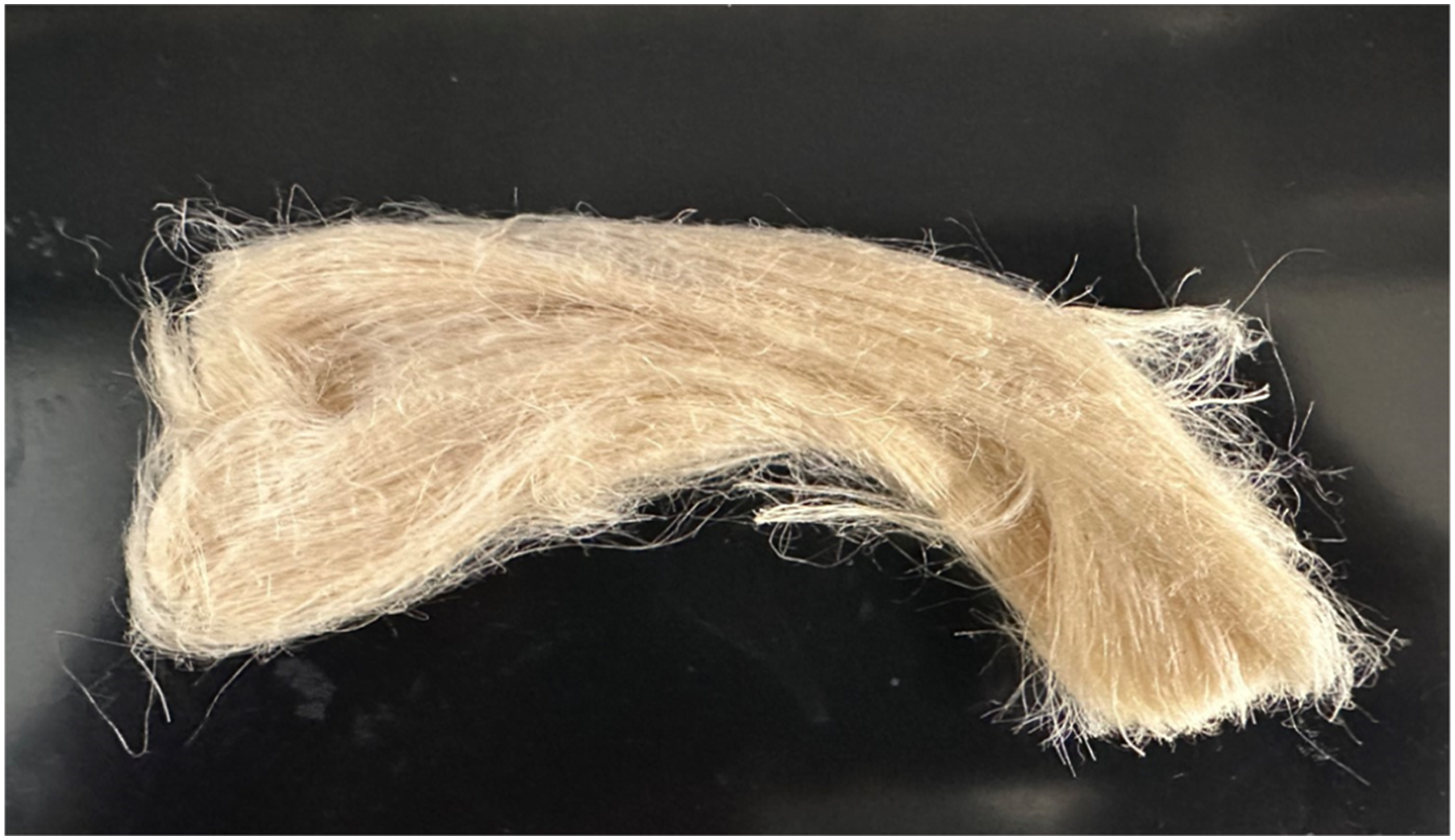
The chemical composition of hemp mainly includes different cellulose, hemicellulose, pectin and lignin.16,24 Due to the nature and versatility of hemp’s chemical composition, in situ lignin modification is necessary for structural applications of hemp fiber composites.
17
There are a number of factors that affect the properties of hemp. These encompass macroscopic features like fineness, porosity, size, and form of the lumen in addition to microscopic ones like crystallinity, microfibril angle, and crystal alterations. Another significant consideration is also the historical background of the fibers, which includes their age, retting and separating circumstances, geographic origin, and rainfall during growth. Furthermore, tensile speed, gauge length, moisture content, temperature, and the different cross-sections of the fibers at different locations all have a major impact on the mechanical properties under measurement.
25
The tensile modulus of a bundle of hemp fiber is found to be 20-70 GPa by researchers and the fracture toughness to be 270-900 MPa.
26
Shahzad
27
investigated the tensile properties of a single hemp fiber and the tensile modulus was found to be
Due to its high strength, hemp is considered as a powerful addition in composite matrices by researchers. Hemp fiber-reinforced composites (HFRCs) are crafted by combining hemp fibers with a matrix material, which enhances the mechanical properties of the final composite through fiber reinforcement. The matrix material’s composition plays a crucial role in determining the mechanical properties of HFRCs. According to studies, performance can be greatly impacted by the kind of matrix that is employed. For instance, compared to hemp composites employing cellulose acetate or glass fiber-reinforced polymer matrices, those using a vinyl ester matrix exhibit better tensile and flexural strengths. 28 Studies reveal that hemp fibers are more elongated and have a higher ultimate strength than synthetic fibers, which improves the tensile and flexural properties of composite materials. These composites, which have been utilized for over a millennium, are witnessing a resurgence in interest due to their low cost, environmental benefits, and potential to substitute synthetic fibers in various applications.29–32 Since hemp fiber shows so much promises, the macro-nanoscale characterization of a single hemp fiber is indispensable. The macro and nanoscale characterization helps eliminate the influence of foreign particles. One way to find out the nanoscale properties is Atomic Force Microscopy (AFM). AFM-based methods can both measure a broad range of mechanical properties in living and non-living organisms and apply precise mechanical forces to them. 33 Owing to its nanometer-scale probe tips, exceptional force sensitivity, and high translational precision, AFM has been an optimal instrument for conducting nanoindentation experiments on a diverse range of nanoscale structures in recent years. 34 AFM also provides sample surface information in nanometer scale. AFM-based nanoindentation provides a force versus sample deflection data that can be analyzed and used to measure the local elastic modulus of the samples. 26 Furthermore, hemp fiber is heterogenous and its mechanical properties are anisotropic. Accurate model and design efforts for hemp fiber structures require the elastic properties of these fibers in the radial direction. According to the best knowledge of the authors, there were no particular studies found in literature emphasizing on the AFM based nanomechanical properties of hemp fiber. In this article, AFM was used to characterize the elastic properties of industrial hemp fiber in its radial direction. Sneddon’s model for paraboloid sized tip was used to measure the elastic modulus of the hemp fiber.
Materials and experimental procedure
Materials
Industrial hemp from Europe (Country of origin: Germany) was used as the test material. The bleached hemp had a light golden color. Bleached hemp fibers exhibit reduced mechanical strength and elasticity compared to raw hemp due to the removal of hemicellulose and lignin during bleaching. Although bleaching enhances processing characteristics, it compromises fiber integrity, particularly in structural applications.
35
10 individual hemp fibers were separated from the bunch and the diameter was measured at five locations for each fiber using a digital optical microscope (Keyence, model: VHX, Osaka, Japan) at 21°C and
Sample preparation
For AFM (D3100, Veeco) imaging and nanoindentation, several hemp fibers were cut at 3-6 mm lengths. To avoid impact of any residual stresses generated from cutting force, the scanning and indentation were conducted at the locations far away from the fiber ends. Reactive resin (LeapTech, model: HuntsmanTM Araldite GY 6010, Charleston, SC, USA) was utilized for keeping the hemp fiber rigidly attached to a glass slide. The resin and hardener (LeapTech, Charleston, SC) were taken in a 2:1 ratio in separate containers first. Both the containers were heated up to Scan of prepared sample surfaces for AFM (a) SEM scan (b) 3D optical microscopic scan.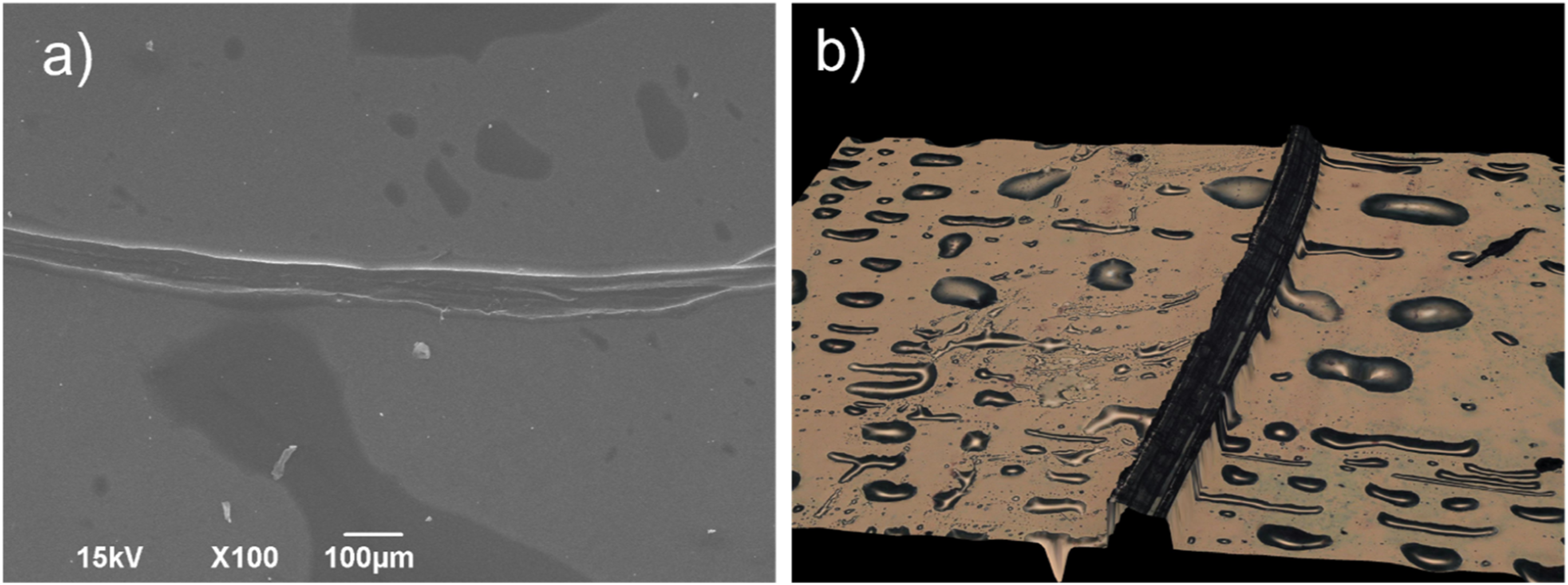
Testing
Figure 3(a) shows the picture of AFM equipment and 3(b) depicts a schematic of the AFM used for this experiment. The AFM imaging was done using a tapping mode probe (PPP-NCHR-20, Nanosensors). The scanning size was (a) Veeco D3100 AFM (b) Schematic of Atomic Force Microscopy.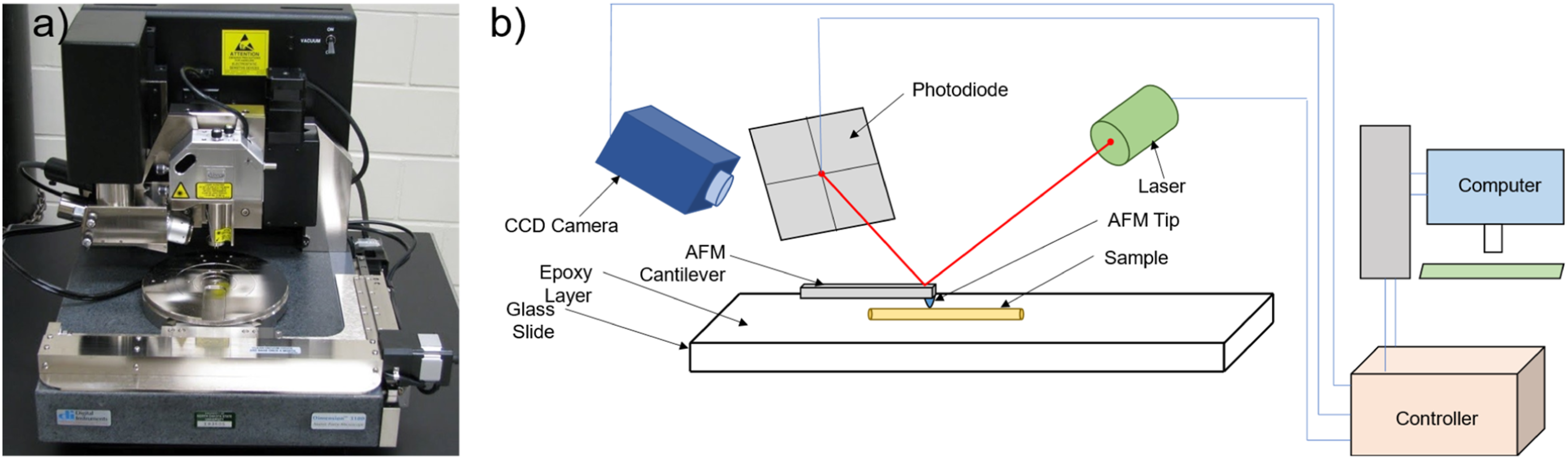
Theoretical background and analysis
Different methods have been established to set up mathematical models which can analyze the force-sample deflection data found from AFM nanoindentations. The Hertz model is widely used because it is simple and effective for analyzing soft biological samples. 36 The Sneddon model, which treats the sample as a linearly elastic half-space, is another method used in AFM experiments to assess mechanical properties. 37 The PLR model, which is based on finite element modeling, provides information on the mechanical properties of samples under various loading conditions in AFM indentation tests. 38 The DMT model takes surface tension effects into account and focuses on adhesive contact behavior, particularly for soft materials.39,40 Furthermore, adhesive contact reactions in AFM studies are analyzed using the JKR model, which offers the theoretical foundations for precise analysis. 41 Every model provides a different perspective on the mechanical characteristics of samples and is essential for comprehending the behavior of indentation in AFM studies.
Sneddon’s model was applied to extract the elastic modulus by assuming a paraboloid indenter in this case. It examines how a firm, symmetrical indenter presses into a flexible material (visually interpreted in Figure 4), using a mathematical formula that includes the elastic modulus.
42
The Sneddon elastic model is also useful for investigating contacts other than basic spheres, as it can accommodate more complicated geometries.
43
Schematics of a rigid punch pressing against an elastic material with modulus E in an axisymmetric manner.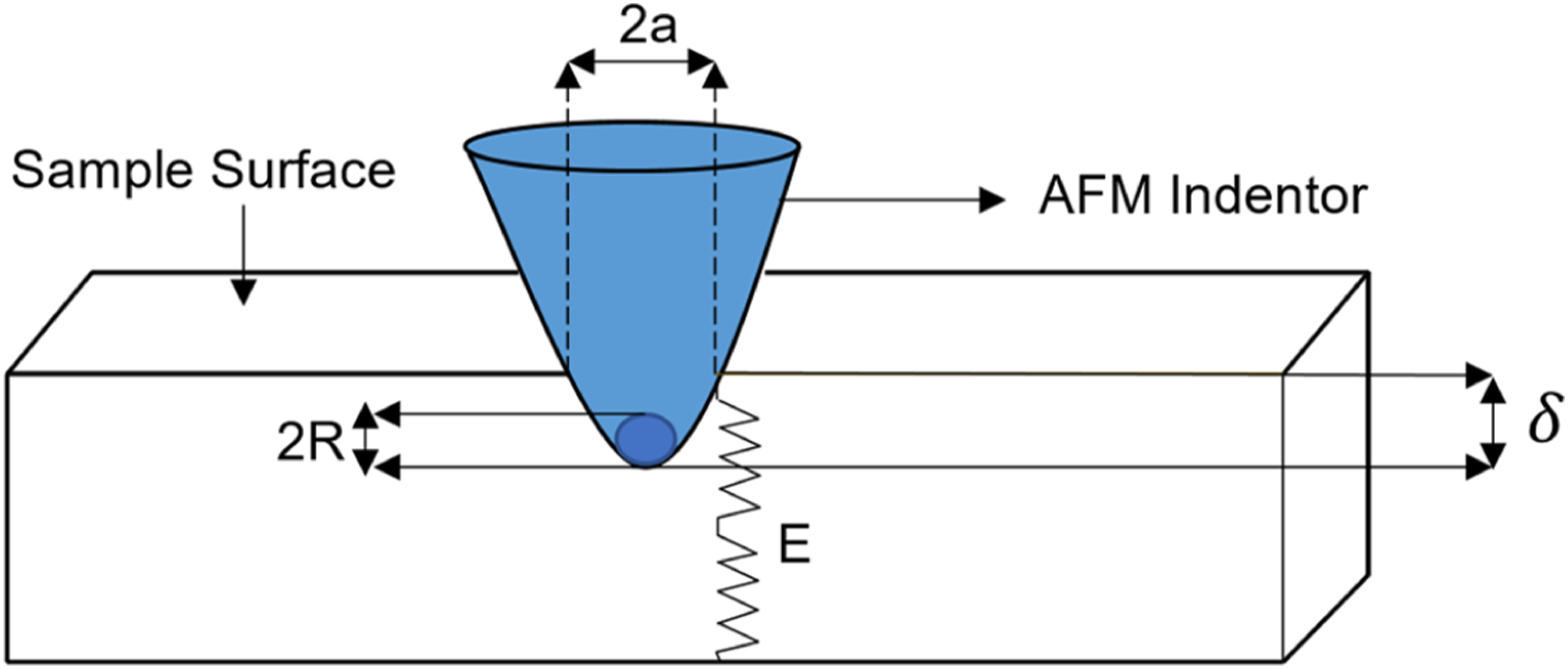
Sneddon’s
44
analytical model uses integrals describing a contact between a plane surface of the sample and an axisymmetric tip.
45
The model led to following integrals
42
:


To find the indentation force and sample deflection, the spring constant


The force
The apex of the tip was considered as a paraboloid structure for this research. The relations for a paraboloid geometry can be interpreted into the following equations:



Rewriting equation (5) as the following:


Using the above equation, the elastic modulus was calculated for different nanoindentation depths. The nanoindentation depth was considered after the contact between the sample and the AFM tip.
Result and discussion
Figure 5 shows the profile of the AFM nanoindenter tip. The tip had a three-sided pyramid structure and a paraboloid structure at the apex region. By doing image analysis by pixel calculation the apex of the tip was found to have a diameter of around Optical Microscope image of the nanoindenter tip.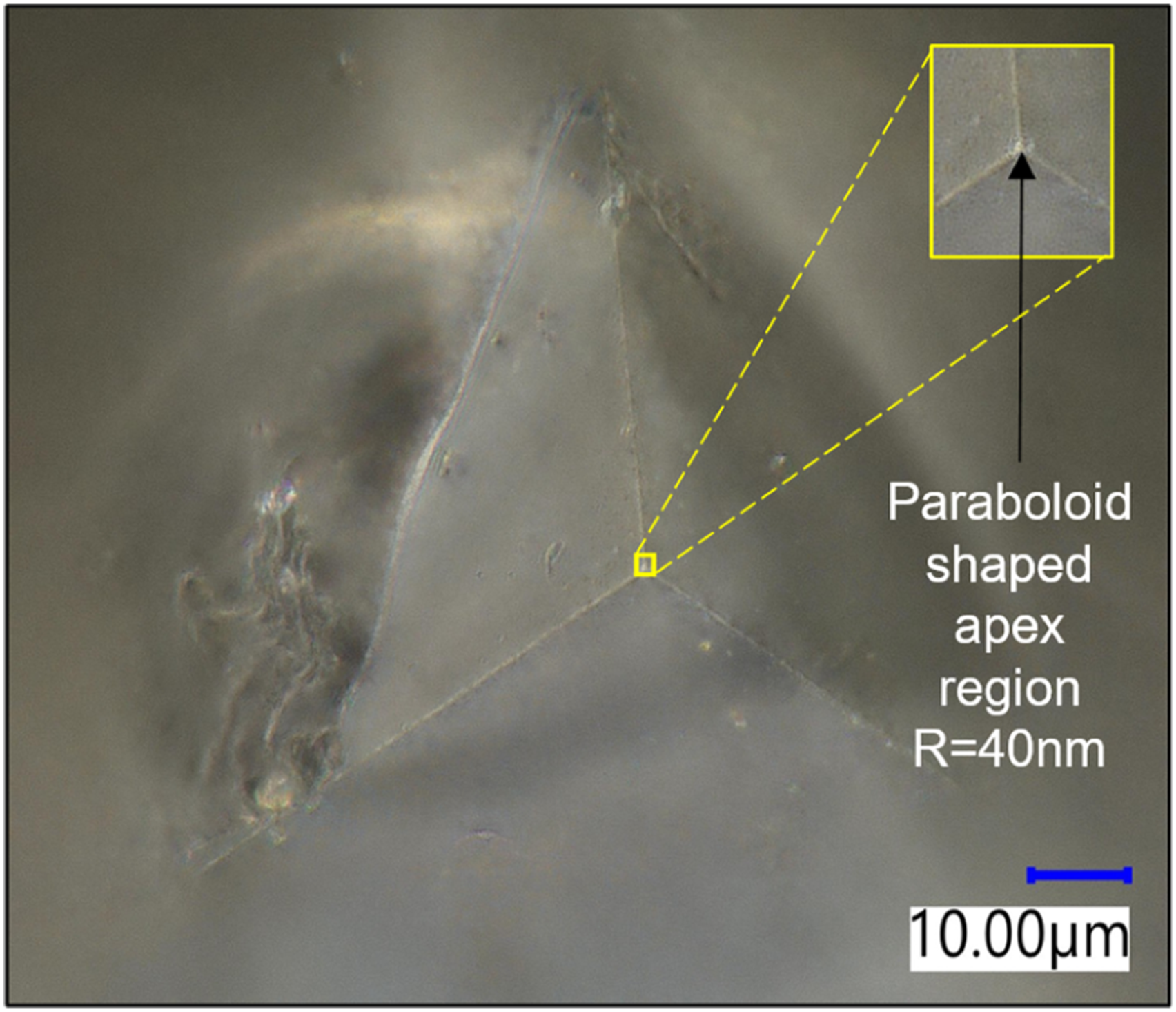
A representative optical image of a fiber is shown in Figure 6(a), the average diameter was measured as (a) Determination of diameter of fiber by Optical Microscope; (b) AFM height image a of fiber surface.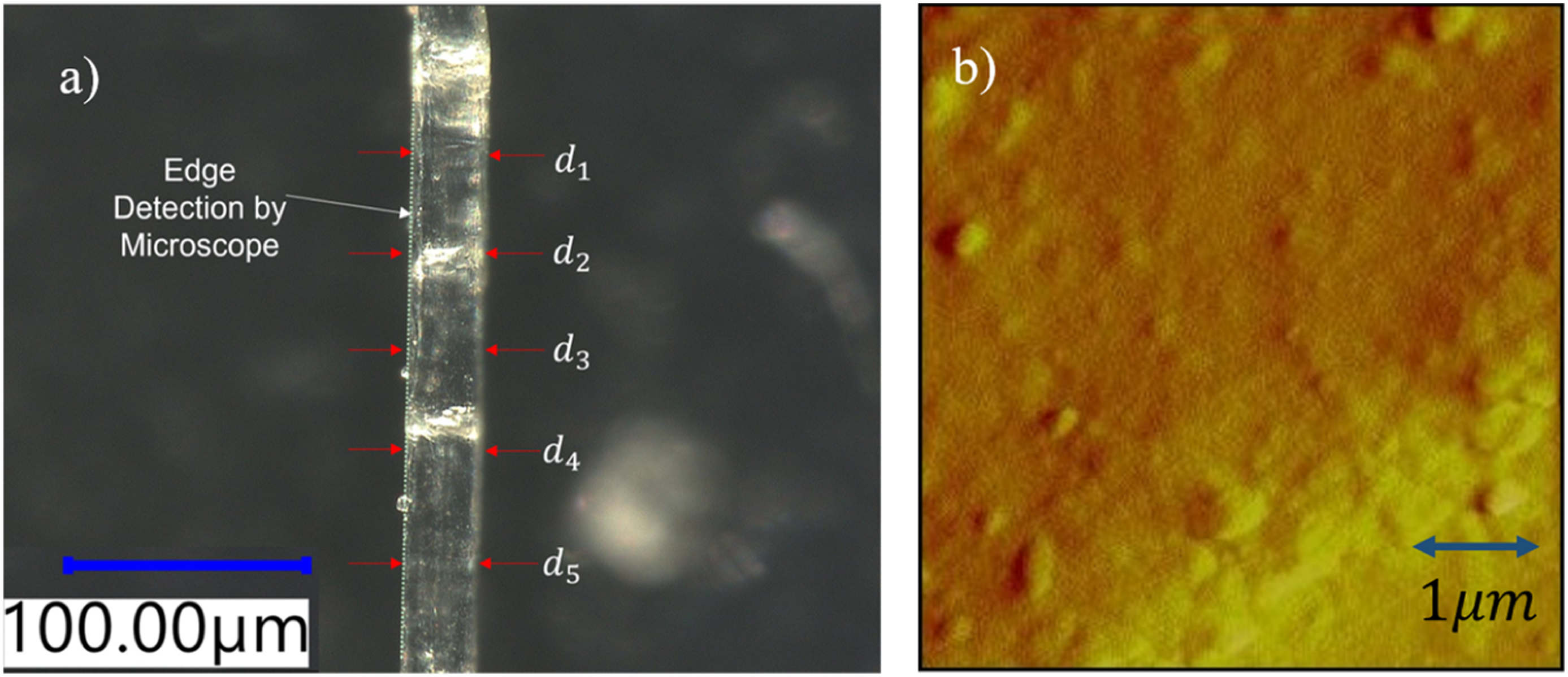
The retract curves for all 30 indentations are shown in Figure 7. The negative deflection region in the plot is the region of contact between the tip and the fiber. The flat region along the horizontal axis in the plot is the region before the tip is in contact with the surface. AFM 30 nanoindentation retract curves interpreted into Force versus Sample Deflection.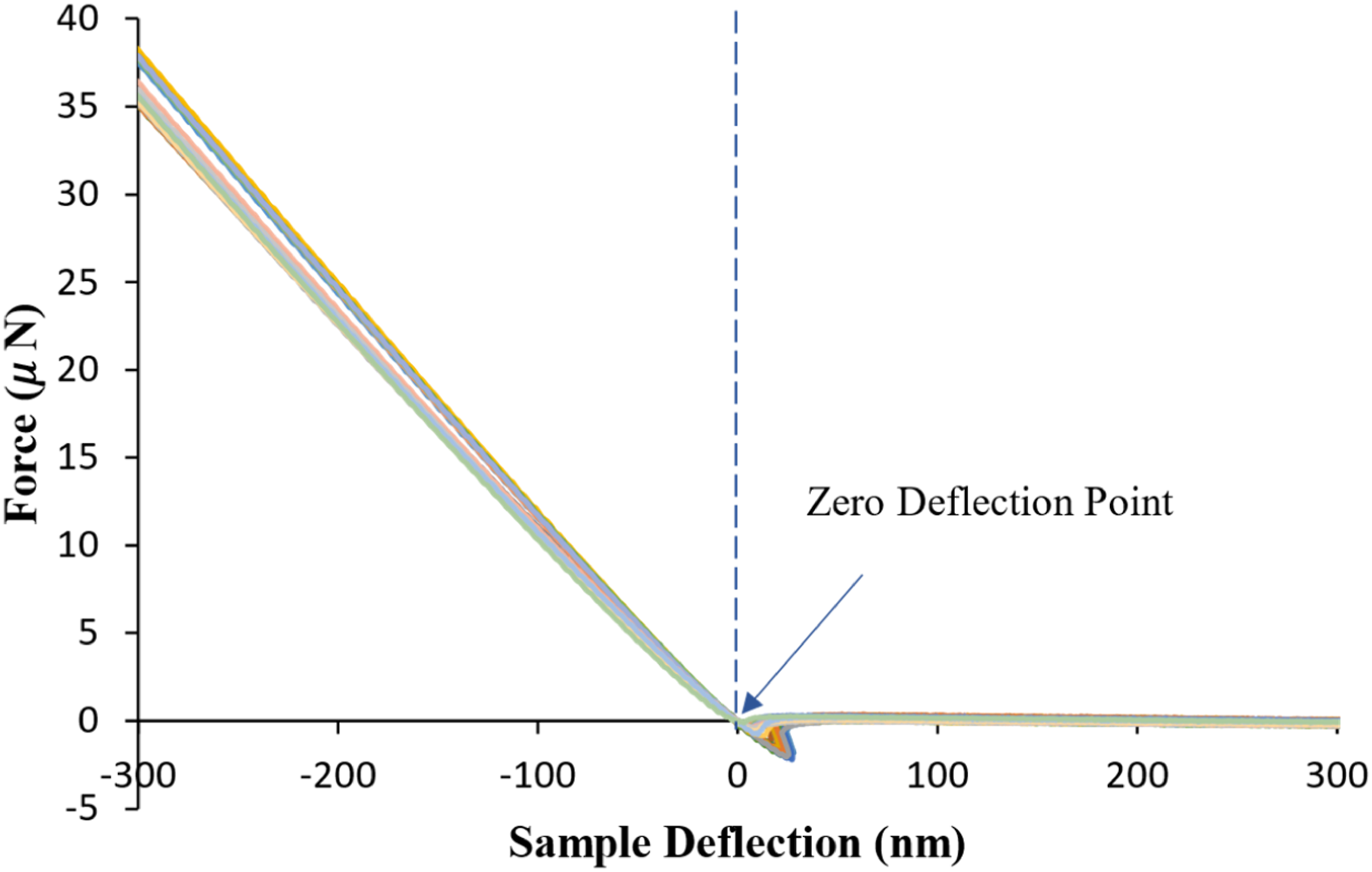

Summary of elastic modulus calculated in different indentation depth.
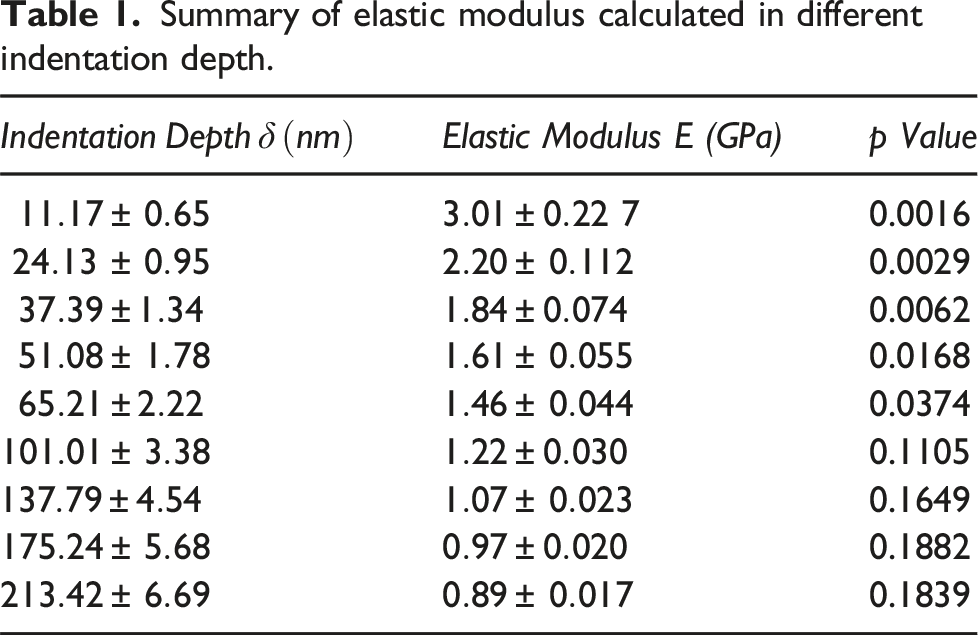
Figure 8 shows the elastic modulus versus indentation depth plot. The trend in the plot is matched with the plots for other materials in literature.49,50 It can be seen that the elastic modulus gets lower as the indentation depth increases. The initial decrease of the elastic modulus with respect to the indentation depth or the slope is much higher than the latter portion. Also, it is seen that in lower indentation depths the elastic modulus varies more in 30 different indentations than in higher indentation depth. This variation could be due to the environmental effects on the surface in the peripheral region. Additionally, the declining trend of elastic modulus with increasing indentation could be a result of multiple effects. Firstly, the AFM tip’s cross sectional size increases and shape of the change from a paraboloid shape to three-sided pyramid shape as the indentation depth increases. In Figure 8 two distinct slopes (dashed lines) for changing elastic modulus could be identified with varying indentation depth. The tangent of the two sections of elastic modulus curves intersects at ∼ 40 nm which is also the radius of the paraboloid section of the tip. This supports that the transition from paraboloid to pyramid shape of indented profile could be a contributor to this transition of rates of elastic modulus change. Secondly the material composition of the hemp fiber is different at different indentation depths. Thirdly, when the indenter starts penetrating the lamellae and fibrils starts moving causing a relative movement among the fibrils which is different for indentation depth. Hemp fibers have a microfibrillar angle that varies between Variation of elastic modulus with respect to indentation depth.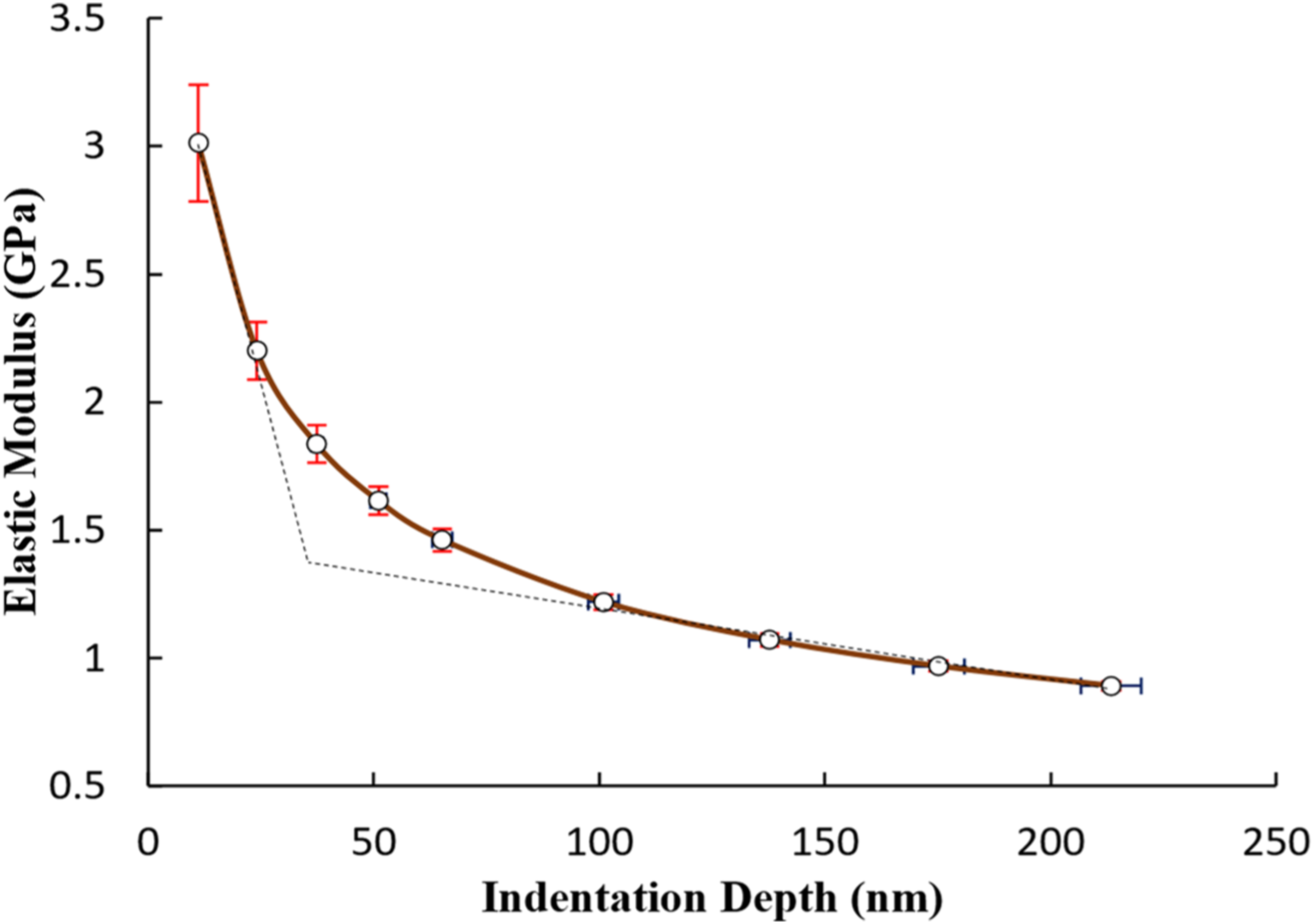
As hemp fiber is heterogenous and its properties can vary significantly with variation of location and selection of fiber, elastic moduli measured from different fiber were analyzed statistically. Statistical significance of difference of elastic moduli calculated from each fiber was analyzed with single factor ANOVA at 95% confidence level. The p-values of this statistical analysis at each indentation depth are shown in Table 1. A trend of increasing p-values with increasing indentation depth can be observed in this p-value distribution. The calculated mean elastic moduli statistically significantly different among different fibers at indentation depths up to 65.21 nm. In contrast, elastic moduli at mean indentations ≥101.01 nm, showed no statistically significant difference among measurements form different fibers. This implies that elastic moduli calculations are more consistent when the indentation is deeper than 101.01 nm.
The elastic moduli of hemp, found in this study for all indentation depths, are much lower than what is previously reported in the literature because they were all measured in longitudinal direction. The elastic modulus in the longitudinal direction was previously reported as
Conclusion
This study effectively used AFM to describe the nanomechanical properties of industrial hemp fibers, providing important insights into their nanoscale structural behavior. Sneddon’s model for axisymmetric indenter and plane surface was used to predict the elastic modulus of the single hemp fibers. The study demonstrated the variation in elastic modulus of hemp fibers with respect to indentation depth using multiple AFM nanoindentations and the Sneddon’s analytical model for paraboloid geometries. The results highlight the unique mechanical properties of hemp fibers when examined in the radial direction, as opposed to the longitudinal metrics commonly described in the literature. This radial elastic modulus is a significant information for modeling and predicting the anisotropic behavior of hemp fiber structures. Elastic modulus was found to be in the range of
Footnotes
Acknowledgments
This material is based upon work supported by the National Science Foundation under Grant No. 0619098. Any opinions, findings, and conclusions or recommendations expressed in this material are those of the author(s) and do not necessarily reflect the views of the National Science Foundation.
Declaration of Conflicting Interests
The author(s) declared no potential conflicts of interest with respect to the research, authorship, and/or publication of this article.
Funding
The author(s) disclosed receipt of the following financial support for the research, authorship, and/or publication of this article: This work was supported by the National Science Foundation; 0619098.

Data availability statement
Data sharing not applicable to this article as no datasets were generated or analyzed during the current study.*