




Abstract
This paper deals with quasi-static and transient-dynamic crush testing of carbon composite material at close-to-cryogenic temperatures. Self-supported crush specimens of trapezoidal shape were fabricated from Cycom 6k HTA 5 HS carbon fabric material infiltrated with HexFlow RTM6 resin. Crush tests were performed at the temperatures T1 ≈ 20°C, T2 = −55°C, and T3 = −170°C, as well as at loading rates of 20 mm/min and 2 m/s. A new test setup was used that enabled precise temperature control at close-to-cryogenic conditions in particular for high strain-rate testing. The steady-state crush stress (SSCS) and mass-specific energy absorption (SEA) are determined and compared for varying loading rates and temperatures. Main objective of this study is to obtain a first insight in trends for transient-dynamic crush performance at low temperatures which is why only two tests per configuration were performed. The test results indicate SSCS and SEA reduction for increasing loading rate and decreasing temperature. Strain-rate dependency showed twice the SSCS and SEA reduction at low temperatures compared to room temperature. Concerning the crash-relevant dynamic loading, the SSCS and SEA values are reduced by −15% from T1 ≈ 20°C to T2 = −55°C while the reduction is −19% from T1 ≈ 20°C to T3 = −170°C. Summarized, compared to quasi-static test data at room temperature, the total reduction for crush loading at −170°C and 2 m/s is −28% for SSCS and SEA. As a novel aspect, this result was experimentally determined under precisely controlled close-to-cryogenic temperatures during high-speed testing.
Keywords
Introduction
The aviation industry sector is actively working on innovative solutions to decrease CO2 emissions and to introduce new technologies for climate-friendly aircraft concepts. One considered approach is replacing kerosene fuel by hydrogen, either for direct combustion of the hydrogen in next generation jet engines or to supply an electric drive train based on fuel cells. 1 In particular in the transport category airplane sector, high effort is taken to develop new airplane concepts based on hydrogen (H2) as energy carrier. Outcomes of research and development indicate that, due to the energy density and hence required tank volume, hydrogen should be stored in liquid form under cryogenic condition in a transport airplane. 2 With cryogenic hydrogen (LH2) storage at approx. T = −253°C tank insulation will be a key and different insulation techniques such as foam or vacuum insulation are currently considered and evaluated. 3 Large LH2 tanks installed in a transport airplane require the development of crashworthy tank integration concepts, which are currently under development. 4 In this context, a combination of crashworthy tank integration in the airframe structure, for example by load limiting tank mount struts, and in addition a crashworthy design for the LH2 tanks are proposed. Hence, the LH2 tank itself should provide a certain level of crashworthiness to prevent tank leakage in case of an emergency crash landing. For the tank structure, metallic as well as carbon composite solutions are considered. 1
Crashworthy LH2 tanks fabricated from carbon composites may be equipped with crushable composite parts, installed in the insulation space between inner tank and outer tank jacket, to provide crash load attenuation and hence to prevent any tank leakage in case of crash. Those crushable parts, integrated in the tank structure, are exposed to close-to-cryogenic temperatures. In this context, it is of high interest to understand the crush energy absorption characteristics of carbon composite material under close-to-cryogenic temperature.
Main objective of this presented research study is to obtain a first insight in the mass-specific energy absorption (SEA) and steady-state crush stress (SSCS) of carbon composite at low temperatures clearly beyond T = −55°C combined with transient-dynamic loading rate. The results shall support an understanding of the significance of SEA respectively SSCS changes at combinations of low temperature and high strainrate, and to plan further research on the crush characterisation of carbon composite at close-to-cryogenic temperatures. Focus of this paper is the SEA/SSCS characterisation of one selected carbon composite material under transient-dynamic crush loading at temperatures ranging from room temperature to −170°C.
Various literature can be found on the axial crush characterisation of carbon composites discussing the effects of different composite materials and lay-ups,5–9 loading rates,9–11 specimen geometries12–16 and test setups. 17 Temperature effects on the progressive crushing response of composite structures are less discussed in literature, in particular tests at low temperatures. Thornton 7 reported on axial crush tests of carbon, aramid and glass fibre composite tubes with temperature and strain rate as parameters. However, both parameters were not combined and tests at cold temperatures were performed only quasi-statically. Cold tests at −196°C were performed in liquid nitrogen or Freon cooled by liquid nitrogen. For quasi-static testing, the specific energy absorption at −196°C is increased for the glass fibre composite but decreased for the carbon fibre composite, compared to the values determined at room temperature. The changes in specific energy absorption at cold temperatures are clearly less than the changes obtain for hot temperatures (up to 200°C). At hot temperatures, significant reduction of the specific energy absorption for both fibre materials is reported.
Fontana 18 presented research work on speed and temperature effects of axially crushed composite tubes fabricated from glass fibres with epoxy as well as polyester matrix. Transient-dynamic crush tests at 10 m/s were performed with a sled-driven crash rig while the crush specimen was cooled down by liquid nitrogen immersion at −196°C prior to testing, leading to true test temperatures which were assumed in the range of −150°C. For the tested glass fibre crush tubes, the results show the specific crush stress of both epoxy and polyester resin matrix decreasing with increasing temperature. Even for tests at 10 m/s the specific crush stress at −150°C was determined higher than at room temperature. Also, an increase of specific crush stress was observed with increasing test speed.
The findings from 18 correlate with the outcomes from 7 with regard to glass fibre composites revealing an increase of crush stress respectively energy absorption for cold temperatures. Concerning carbon fibre composites an opposite trend is indicated by 7 although this outcome is limited to quasi-static crush loading. The combination of transient-dynamic crush loading of carbon composites with low test temperatures was not considered.
Main shortcoming of research work presented in literature is the lack of combinations of transient-dynamic crush testing of carbon composite material with close-to-cryogenic temperature conditions. While quasi-static testing can simply be performed by immersing the crush specimens in liquid nitrogen during testing, this test condition is not suitable for transient-dynamic testing as fluid dynamics would significantly falsify the test results. Alternative test method solutions from literature considered liquid nitrogen immersion prior to testing while the test itself was performed without further temperature control. With regard to close-to-cryogenic temperatures the test specimen experiences a high temperature gradient over time after removing the specimen from the liquid nitrogen. Dependent on the test procedure and required time between specimen removal from liquid nitrogen and start of crush test, this can result in a large scatter of specimen temperature during testing. As a consequence, the experimentally determined material data are not based on precise temperature control. This scatter in temperature can affect the mean variation of determined material crush performance data.
The intent of this presented research work is the determination of transient-dynamic crush performance parameters of a composite material at precisely controlled temperature. With the aim to provide reliable crush performance data for a combination of transient-dynamic loading and close-to-cryogenic temperatures, shortcomings identified in literature shall be resolved.
The main contribution of this research work is twofold and comprises of (a) specific transient-dynamic crush test data of carbon composite material measured under precisely controlled close-to-cryogenic conditions, and (b) a suitable test setup for transient-dynamic crush testing at controlled close-to-cryogenic conditions. While the main focus of this paper is on the experimental study and the crush test data, some aspects of the experimental characterisation method are also discussed.
Test campaign
For this test campaign, the carbon fabric material Cycom 6k HTA 5 HS with a surface weight of 370 g/m2 was selected and infiltrated with the HexFlow RTM6 epoxy resin. A fabric lay-up of [0/45/0/45/0] was defined for the crush coupon specimens resulting in a mean laminate thickness of t = 2.20 mm.
There are different test methods to determine the crush mechanisms at the coupon level which can be divided in fixture-supported and self-supported specimen approaches.
17
Fixture-supported specimen approaches use flat specimens which are installed in anti-buckling test fixtures to ensure local crushing. The fixture design can affect the specimen failure behaviour and hence the test results. An example is the distance between crush plate and specimen fixture, which describes the unsupported specimen length, that can show significant influence on the crush failure mode and energy absorption.
19
With regard to the present research study, fixture-supported specimens typically require complex and heavy fixtures that can be unsuitable for transient-dynamic testing and that may be disadvantageous for an installation in a temperature chamber due to its geometrical dimensions as well as its heat capacity. In contrast, self-supported specimens provide minimal fixture complexity and can easily be clamped in a simple test fixture. Self-supported crush specimens of omega or trapezoidal cross-sectional shape have often been used in past research.15,17,20,21 The trapezoidal crush specimen was selected here, which provides self-supporting capability and hence prevents any further influence of fixture-support parameters. In contrast to the omega crush specimen, the trapezoidal specimen provides portions of flat geometry which tend to more pronounced local buckling and inter-ply delamination than the continuously curved omega specimen. Due to the flat geometry portions with the tendency to more extended delamination, potential temperature effects of resin-driven failure mechanisms may be more represented. The specimen geometry is depicted in Figure 1. The specimens are equipped with a 10° geometrical trigger to initiate progressive crushing. Trapezoidal crush specimen, nominal dimensions in mm.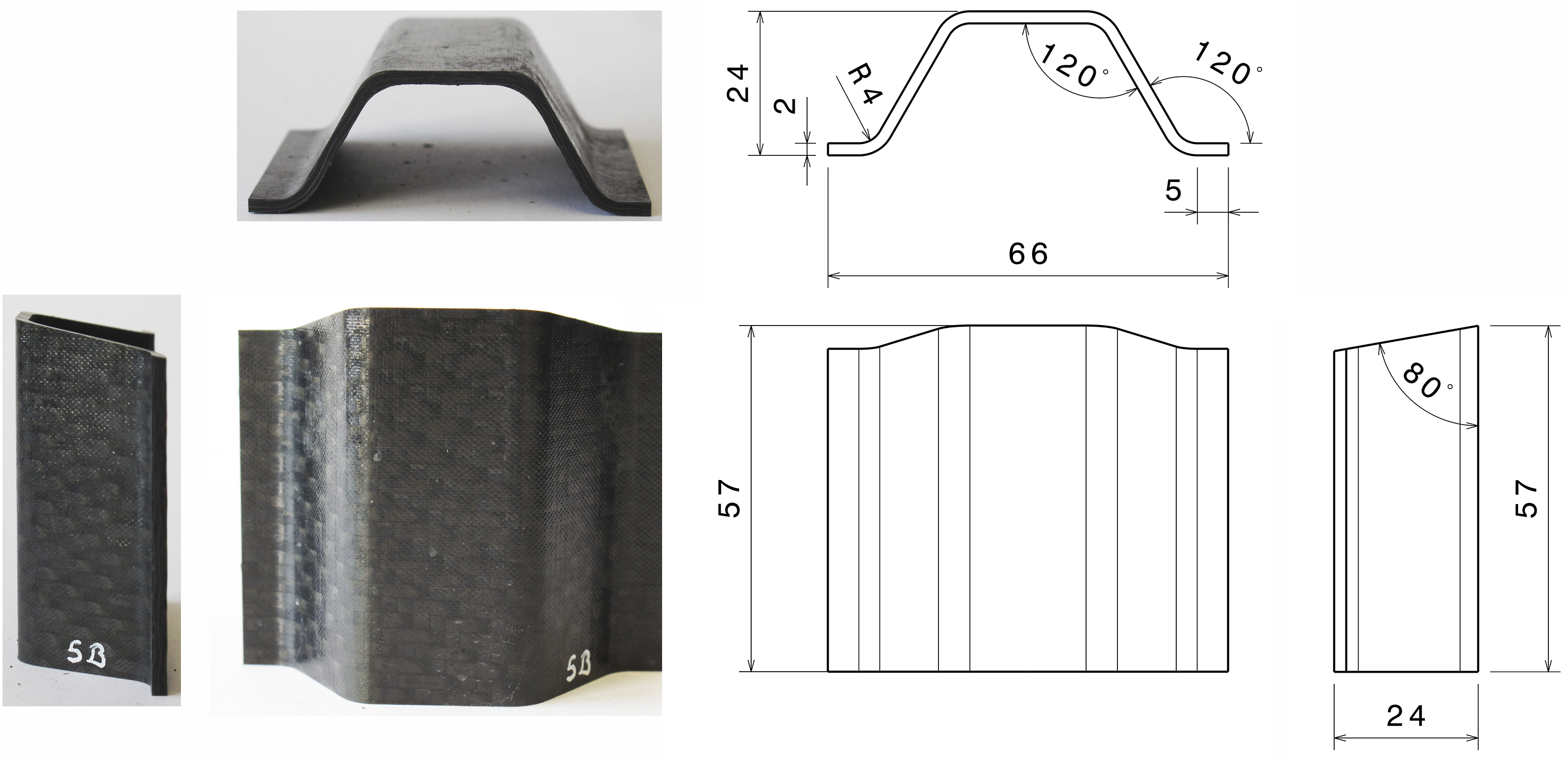
Test matrix of coupon crush test campaign.
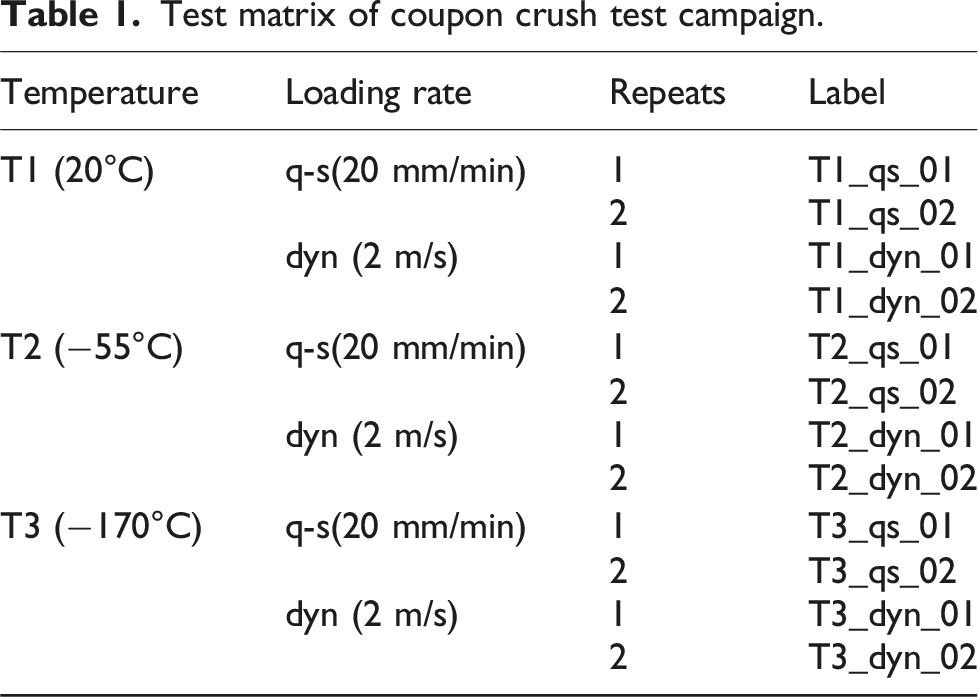
The intend of this research study was to experimentally characterise the mass-specific energy absorption (SEA) and steady-state crush stress (SSCS) at low temperatures while keeping the efforts within reasonable limits. Performing dynamic crush tests at cryogenic temperatures of less than T = −250°C would require immense cost and efforts for each single test, with potential further drawbacks in the transient-dynamic performance and quality of the test setup due to complex insulation and cooling techniques. A compromise was found in performing the crush tests at close-to-cryogenic temperatures of T = −170°C, which supports the main objective of this study to obtain a first insight in the transient-dynamic crush performance of carbon composite at low temperatures clearly beyond T = −55°C. The temperature T = −55°C is often defined as the coldest design service temperature in airplane applications and was selected in this study for this reason. 22 The selection of T = −170°C as a close-to-cryogenic temperature for the test campaign can be argued by the installation conditions of the considered crushable parts, integrated in the double-walled LH2 tank structure. In this vacuum installation space, the temperature ranges from T = −253°C at the inner tank side to T ≈ 20°C at the outer tank jacket. Hence, the crushable parts are not entirely exposed to liquid hydrogen temperature conditions of T = −253°C.
In cooperation with the test machine manufacturer, a new experimental test setup was developed capable to perform transient-dynamic crush testing at low temperatures beyond T = −55°C. The high-speed testing machine Zwick HTM 16020 was equipped with a new temperature chamber connected to a liquid nitrogen feed that enables controlled temperature conditions. With a boiling temperature of T = −196°C under standard pressure, feeding the liquid nitrogen directly in the temperature chamber resulted in stable test conditions of T = −170°C.
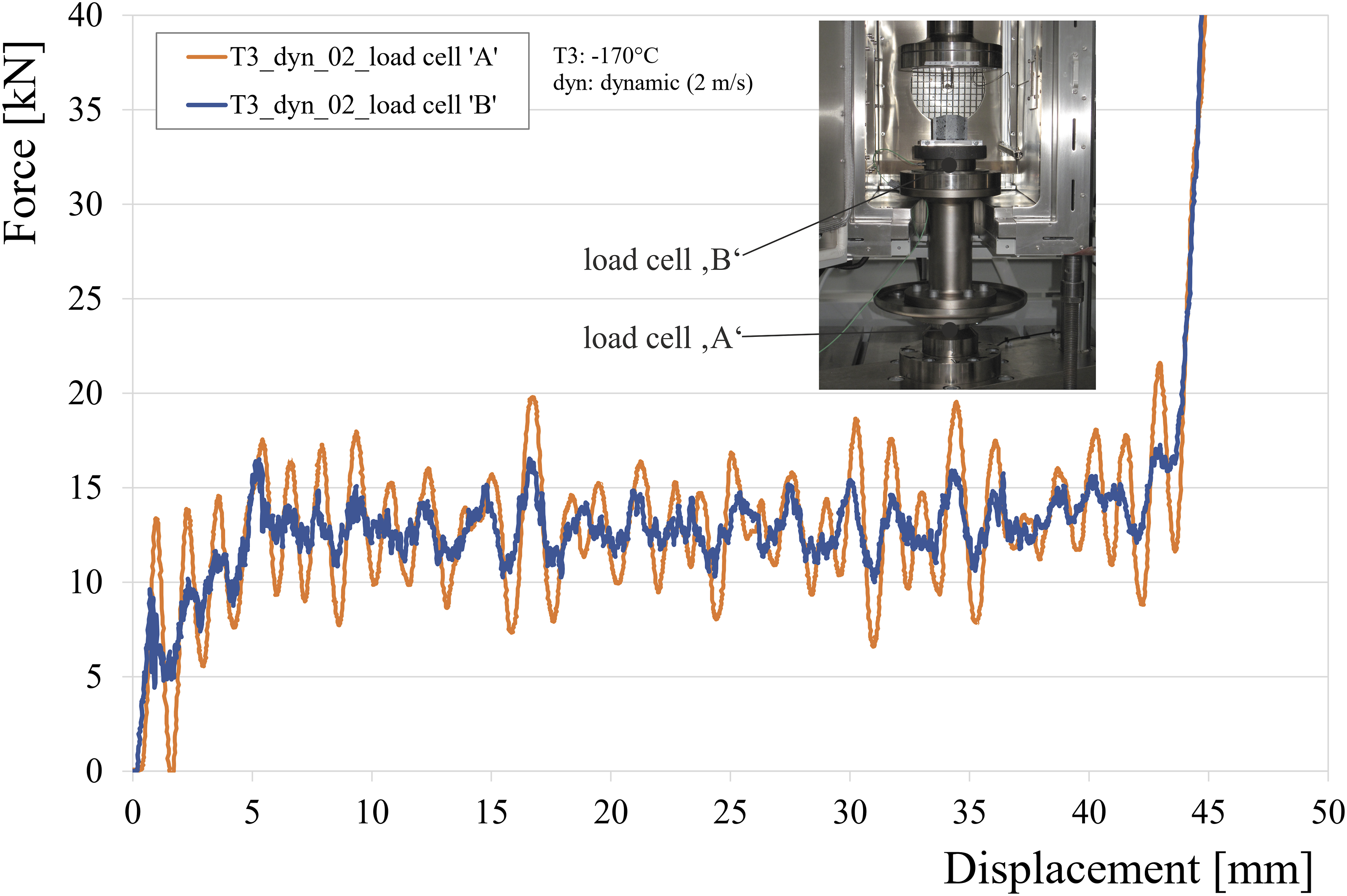
Figure 2 shows the test setup. The crush test fixture is placed inside the temperature chamber, with the coupon specimen mounted on top of the fixed lower loading plate. The upper loading plate is attached to the piston and moves inside the temperature chamber for the entire piston stroke. The entire mechanical test system is decoupled from the test chamber to prevent any mechanical effects caused by the temperature chamber installation. The crush force is measured using a piezo-electric load cell ‘A’ (Kistler Type 9071C) which is installed outside the temperature chamber for operating at room temperature. With this approach, the load cell operates under valid temperature conditions but is distant from the test specimen which may result in oscillations in the measured force signal caused by the dynamic response of the setup between load cell and test specimen. For this reason, the test setup was enhanced by another piezo-electric load cell ‘B’ (Kistler Type 9081B) positioned directly underneath the test specimen fixture. This load cell is exposed to the cold temperatures which may affect the measurements. However, significantly improved dynamic measurement quality is expected for load cell ‘B’ due to less mass and stiffness between test specimen and load cell compared to load cell ‘A’. Potential errors for load cell ‘B’ due to the cold temperatures were checked for each test by a direct comparison of the measured signals from both load cells. Figure 3 shows a plot of force-displacement curves of a dynamic crush test at T = −170°C comparing the measurements of load cell ‘A’ versus ‘B’, the signals are unfiltered. The influence of the test setup as a dynamic system is obvious when comparing both signals, with load cell ‘B’ showing less oscillating force signal and with that a higher quality. More important, the comparison shows no affect of the cold temperatures on the force measurements in load cell ‘B’, a signal shift or other errors could not be identified. Test setup. Comparison of force measurements at load cells ‘A’ versus ‘B’.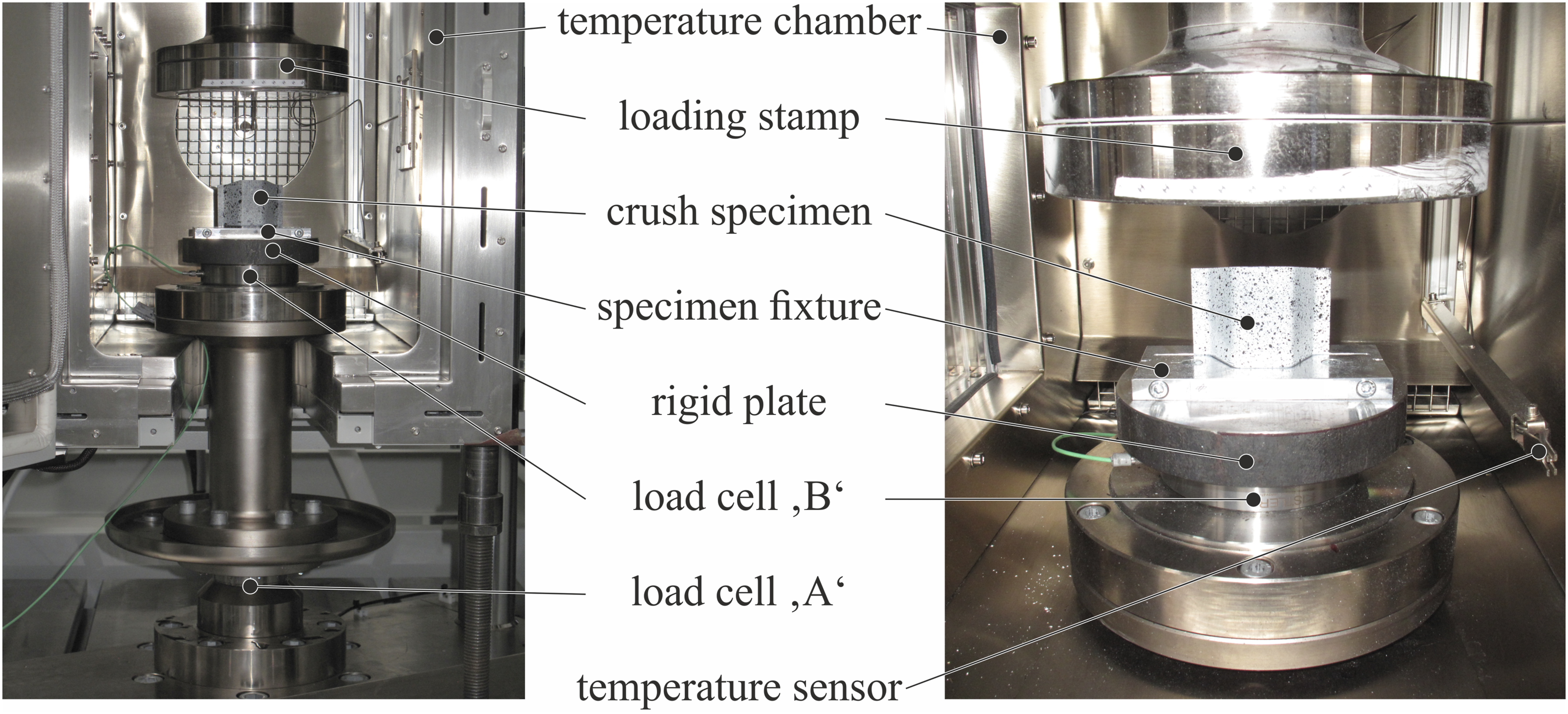
The crush displacement was measured using the piston path signal. Digital image correlation (DIC) for displacement measurement was not applied for two reasons. First, video records in proper quality for DIC applications are costly when performing low temperature testing with a temperature chamber that may introduce optical errors. Second, the SEA respectively SSCS values are determined based on the steady-state crushing phase for which minor effects of test setup compliance can be neglected. The temperature was measured close to the specimen. After cooling down and prior to testing, the targeted temperature was maintained for at least 10 minutes with high convection in the chamber. The lights were switched on shortly before testing to avoid thermal radiation on the specimen.
High-speed videos were recorded through a window in the temperature chamber using a FASTCAM SA-Z camera with a frame rate of 50 Hz and 20 kHz for quasi-static respectively dynamic testing. Partly, icing and misting at the window was a challenge despite the use of nitrogen flushing technology, as exemplarily shown in Figure 4. Exemplary high-speed video records showing portions of a crush sequence for transient-dynamic loading (2 m/s) and T = −170°C; icing respectively misting of the temperature chamber window is clearly visible.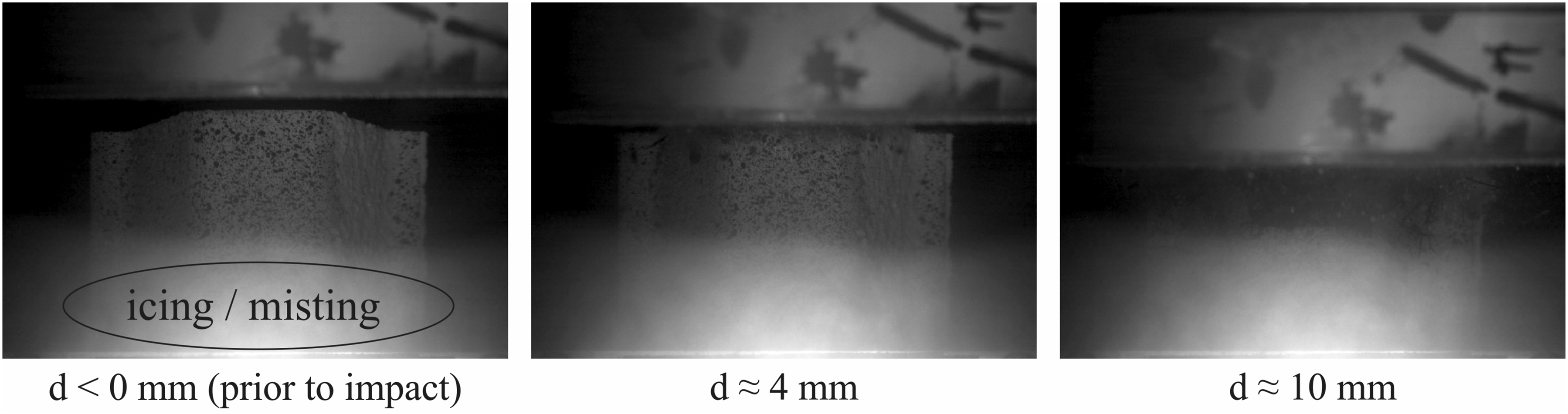
The trapezoidal crush specimens were positioned on top of a rigid plate and clamped using a contoured fixture of 10 mm height.
The force and piston path signals were recorded using a NI-DAQ data acquisition system and a sampling rate of 50 Hz for quasi-static testing as well as 20 kHz for dynamic testing. All results presented in this paper are unfiltered data.
The test setup in pre- and post-test condition is shown in Figure 5. Test setup, (a) pre test, (b) post test.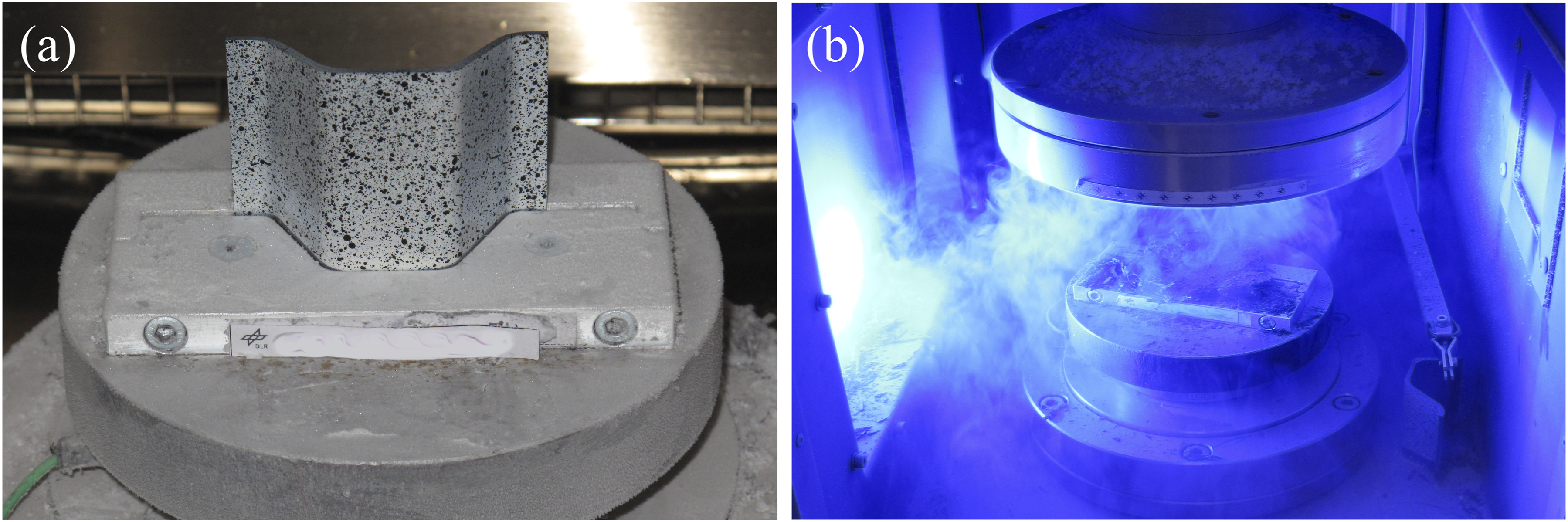
Results
A crush sequence of a representative dynamic test at room temperature (T1 ≈ 20°C) is shown in Figure 6 and can be compared with the plots of force-displacement curves of dynamic testing at T1 ≈ 20°C in Figure 7. As desired, local crush failure initiated at the top of the specimen according to the geometrical trigger and the crush front expanded with progressing crush displacement up to the full specimen cross section (Figure 6). This crush initiation phase corresponds to the first 6 mm of absolute displacement in Figure 7, where the force increases in two slopes up to a steady-state load level. The initial steep slope (phase (I)) corresponds to specimen loading up to triggering of crush failure. The second, less steep slope (phase (II)), represents the geometrical trigger with increasing crush involvement of the specimen cross-sectional area. Once the entire cross section is involved, at a displacement of approx. 6 mm, steady-state crushing is evolved (phase (III)) and continues until specimen compaction (phase (IV)) resulting in a steep force increase after a displacement of approx. 35 mm. Crush sequence of a dynamic test (2 m/s) at T1 ≈ 20°C. Plot of force-displacement curves for quasi-static versus dynamic loading at T1 ≈ 20°C. Plot of force-displacement curves for quasi-static versus dynamic loading at T2 = −55°C.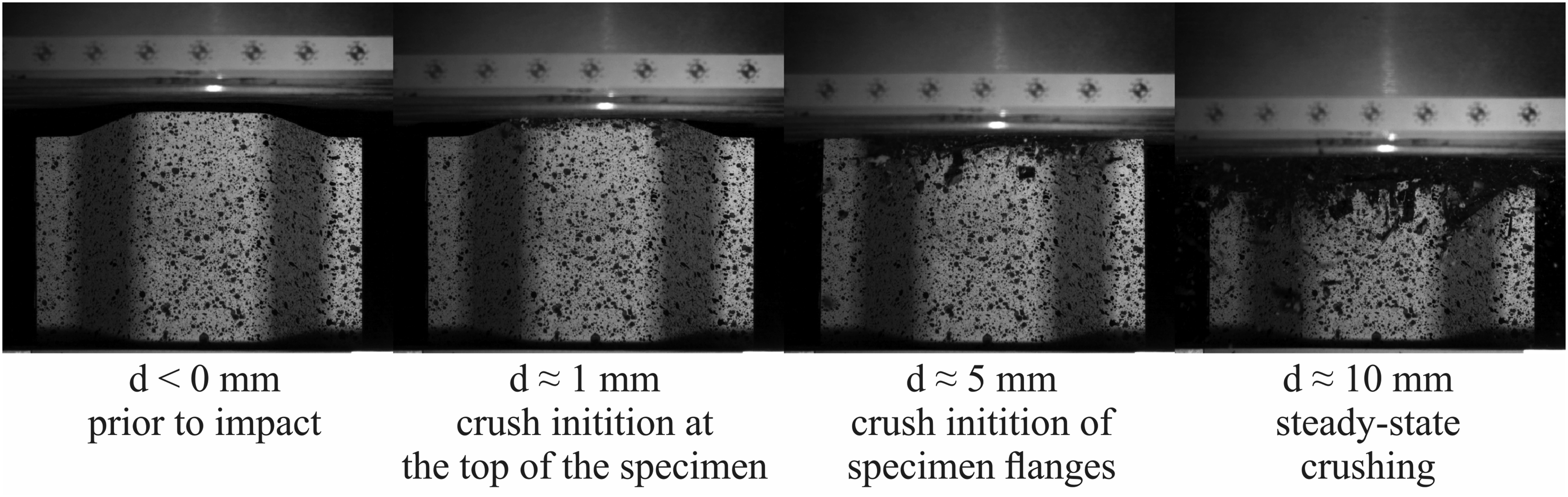
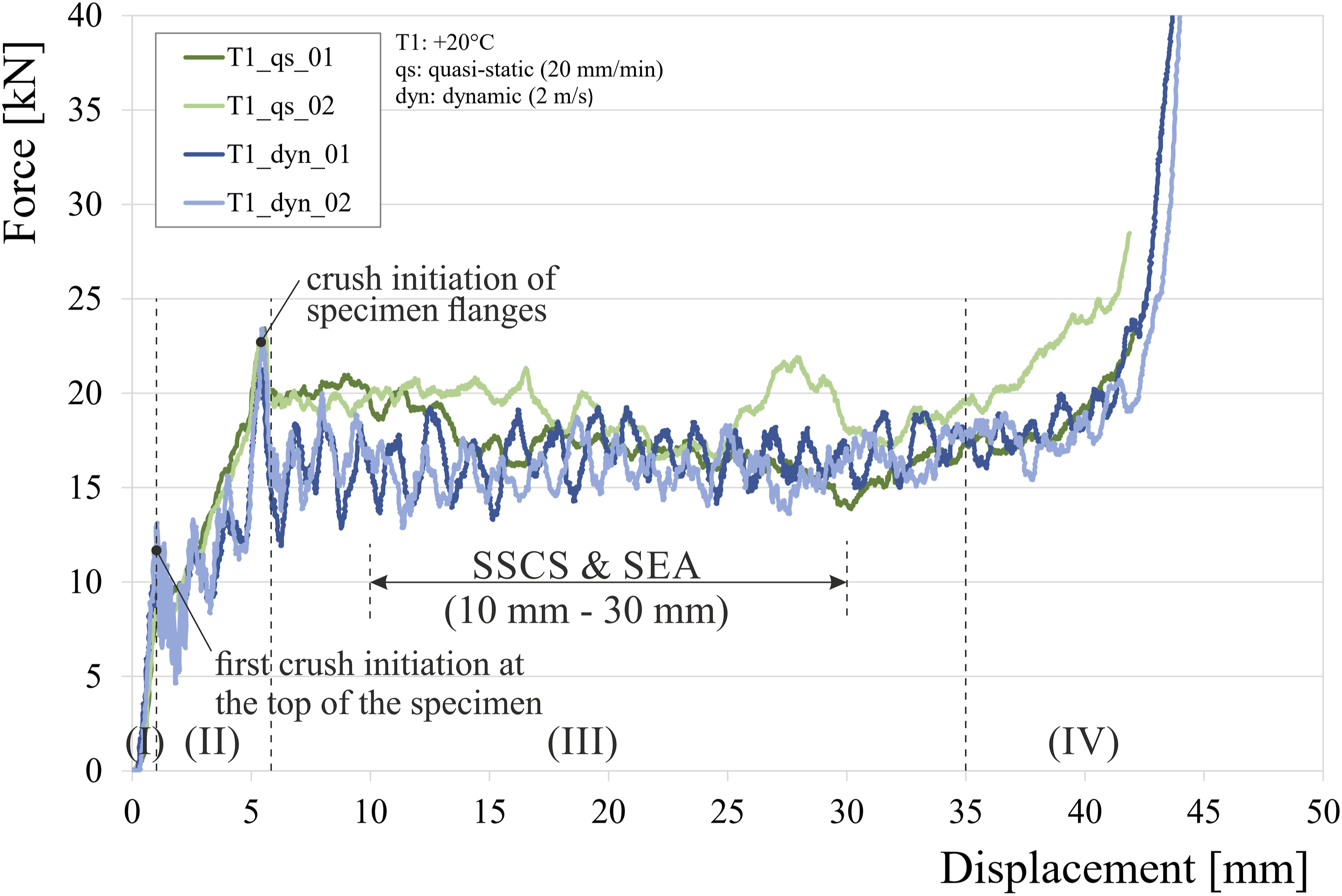
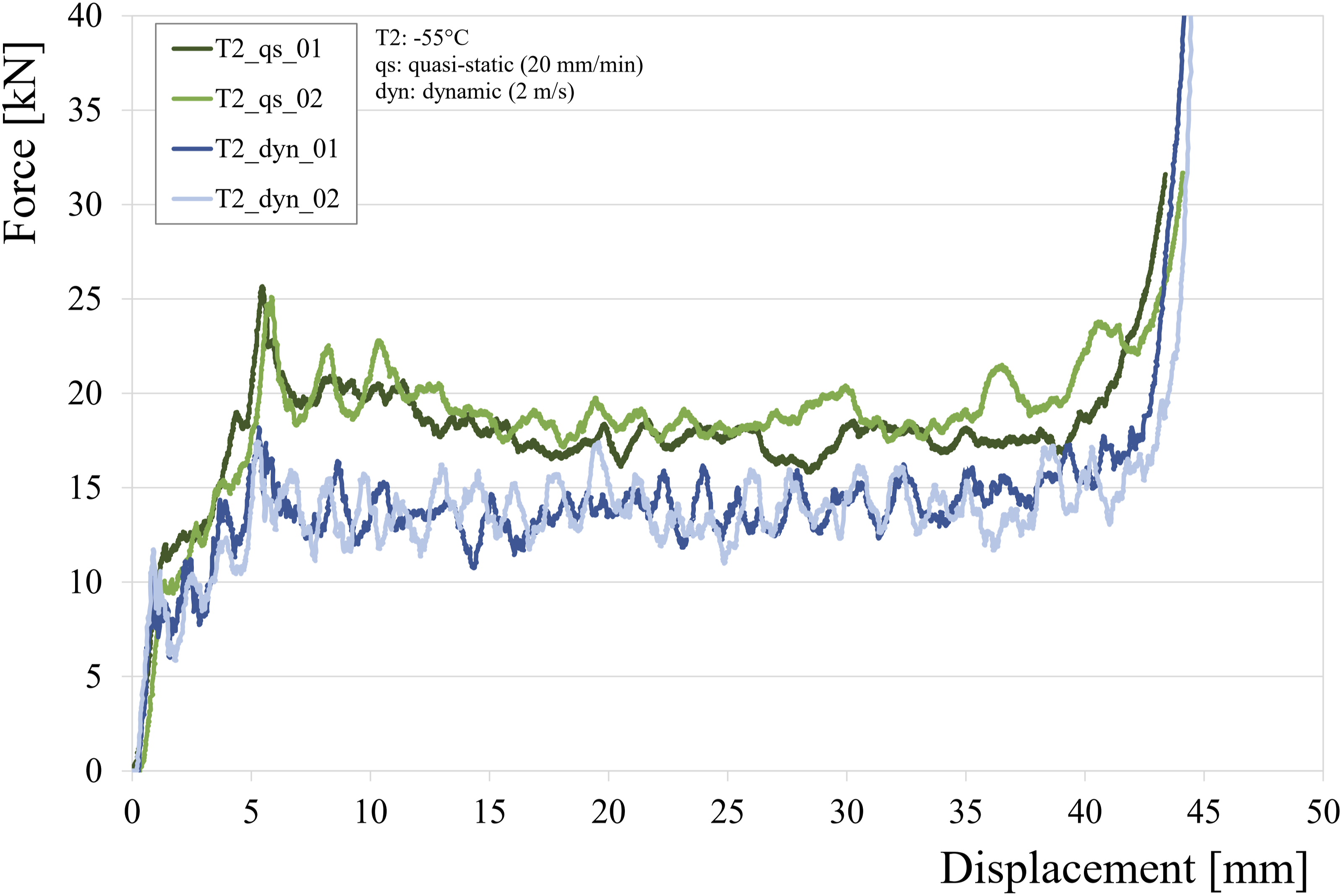
Plots of force-displacement curves comparing quasi-static versus dynamic crush loading separately for the three tested temperatures are presented in Figure 7, Figure 8, and Figure 9. For all temperatures, comparably small scatter can be seen for the repeat tests within reasonable ranges. As known from literature related to room temperature testing, the crush forces for dynamic loading are reduced compared to quasi-static loading, for carbon composite epoxy material and self-supported specimen geometry.8,11,21 This strain-rate dependency is observable in the plots of force-displacement curves for all three tested temperatures. Plot of force-displacement curves for quasi-static versus dynamic loading at T3 = −170°C.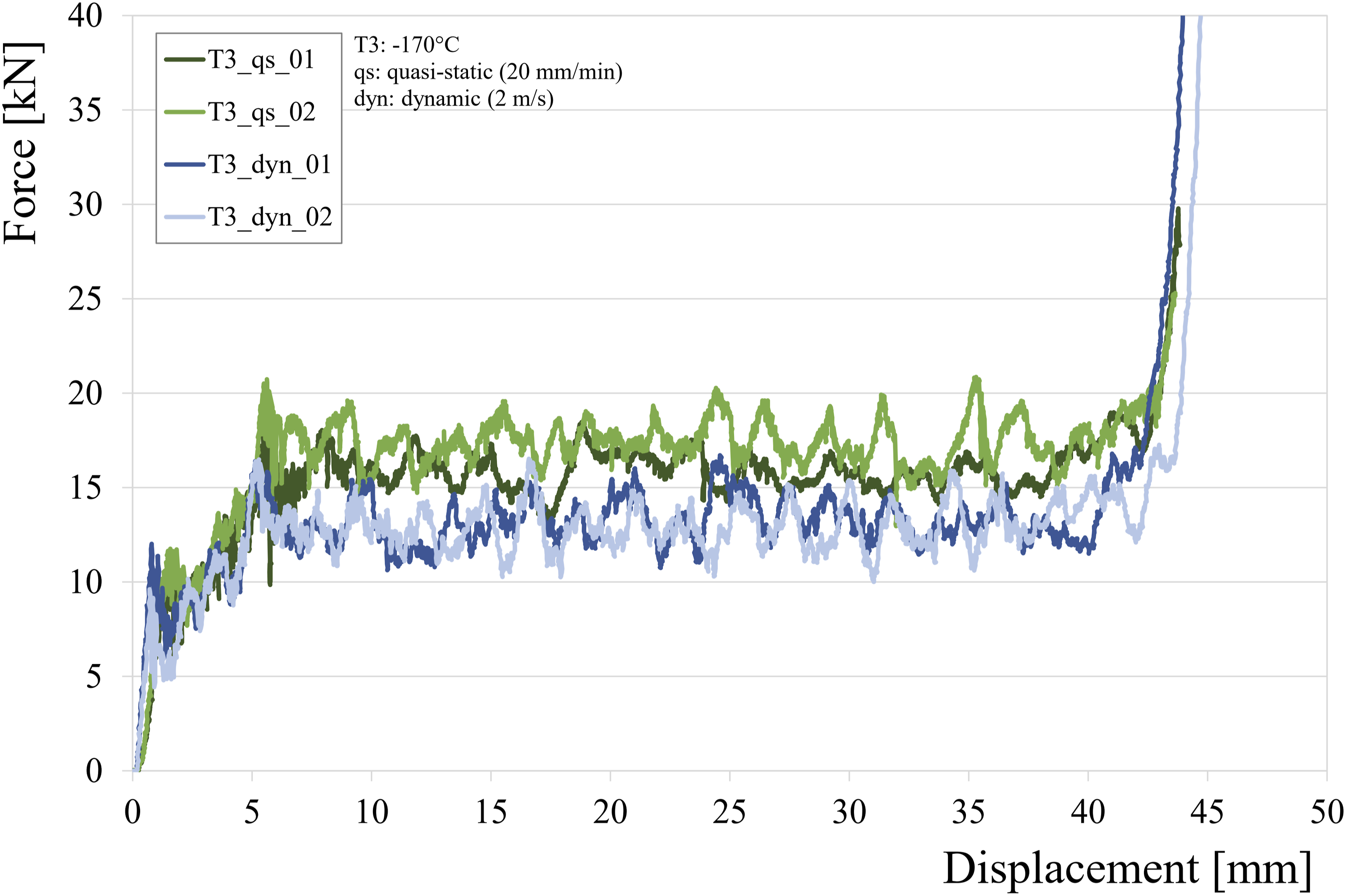
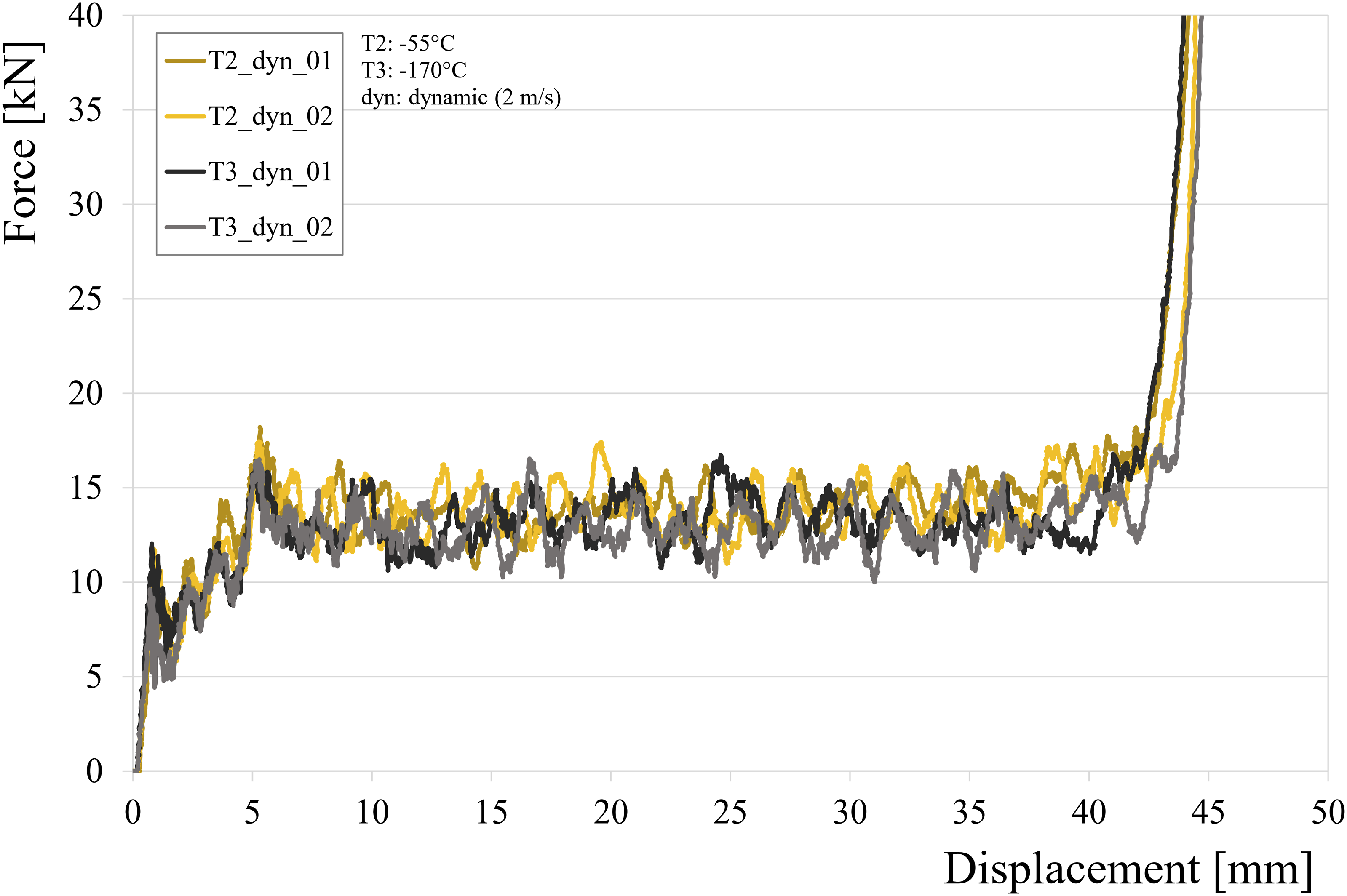
With the focus on the crash-relevant dynamic loading, Figures 10 and 11 present plots of force-displacement curves comparing dynamic crush loading at different temperatures. A comparison of dynamic crush tests at T1 ≈ 20°C versus T3 = −170°C is presented in Figure 10. A noticeable reduction of the steady-state crush force can be seen for the cold temperature compared to room temperature. Comparing the dynamic crush tests at T2 = −55°C versus T3 = −170°C (Figure 11) shows less difference, which indicates stronger temperature dependency between T1 ≈ 20°C and T2 = −55°C compared to the range of T2 = −55°C and T3 = −170°C. Plot of force-displacement curves for dynamic loading and T1 ≈ 20°C versus T3 = −170°C. Plot of force-displacement curves for dynamic loading and T2 = −55°C versus T3 = −170°C.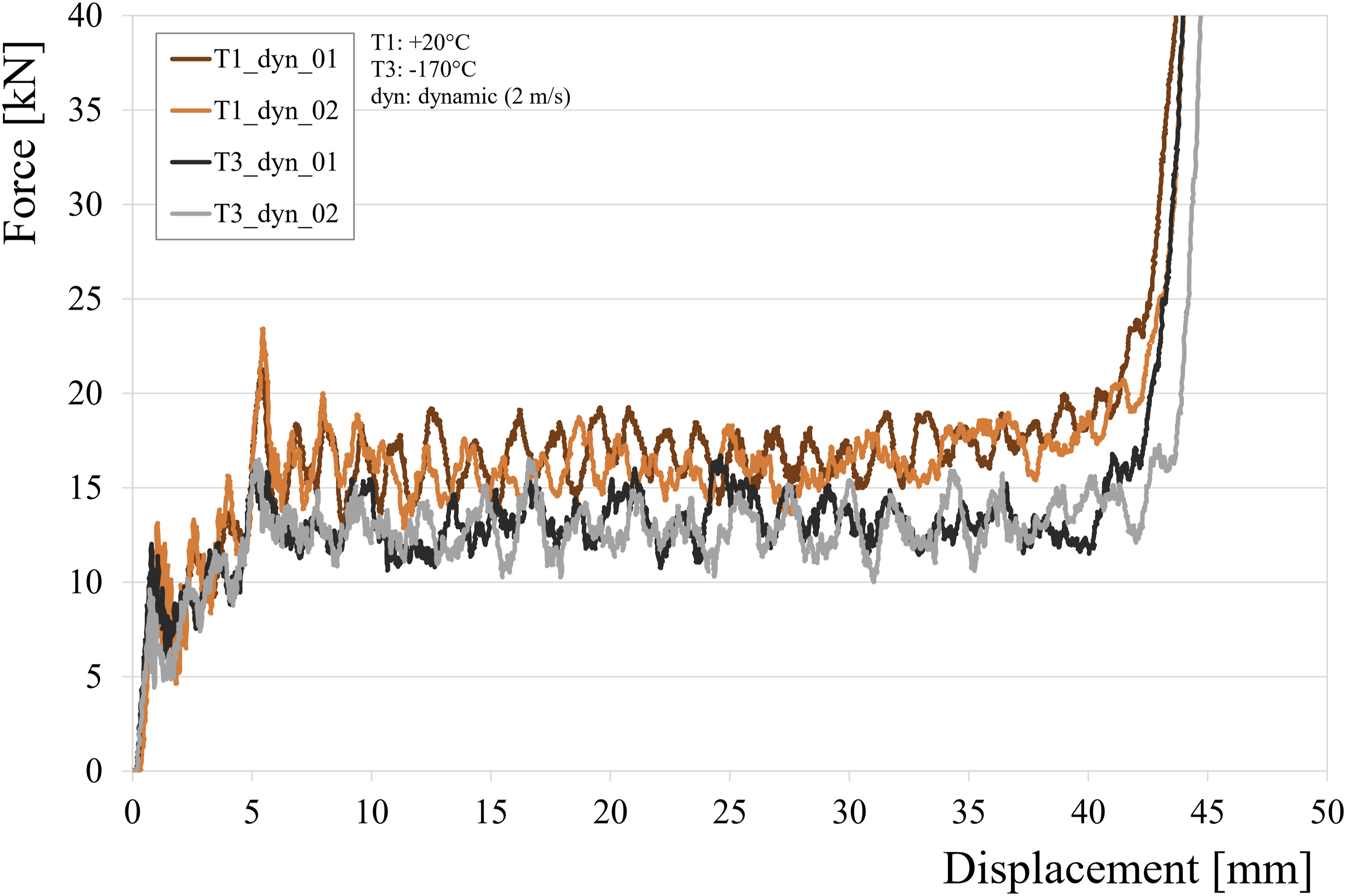
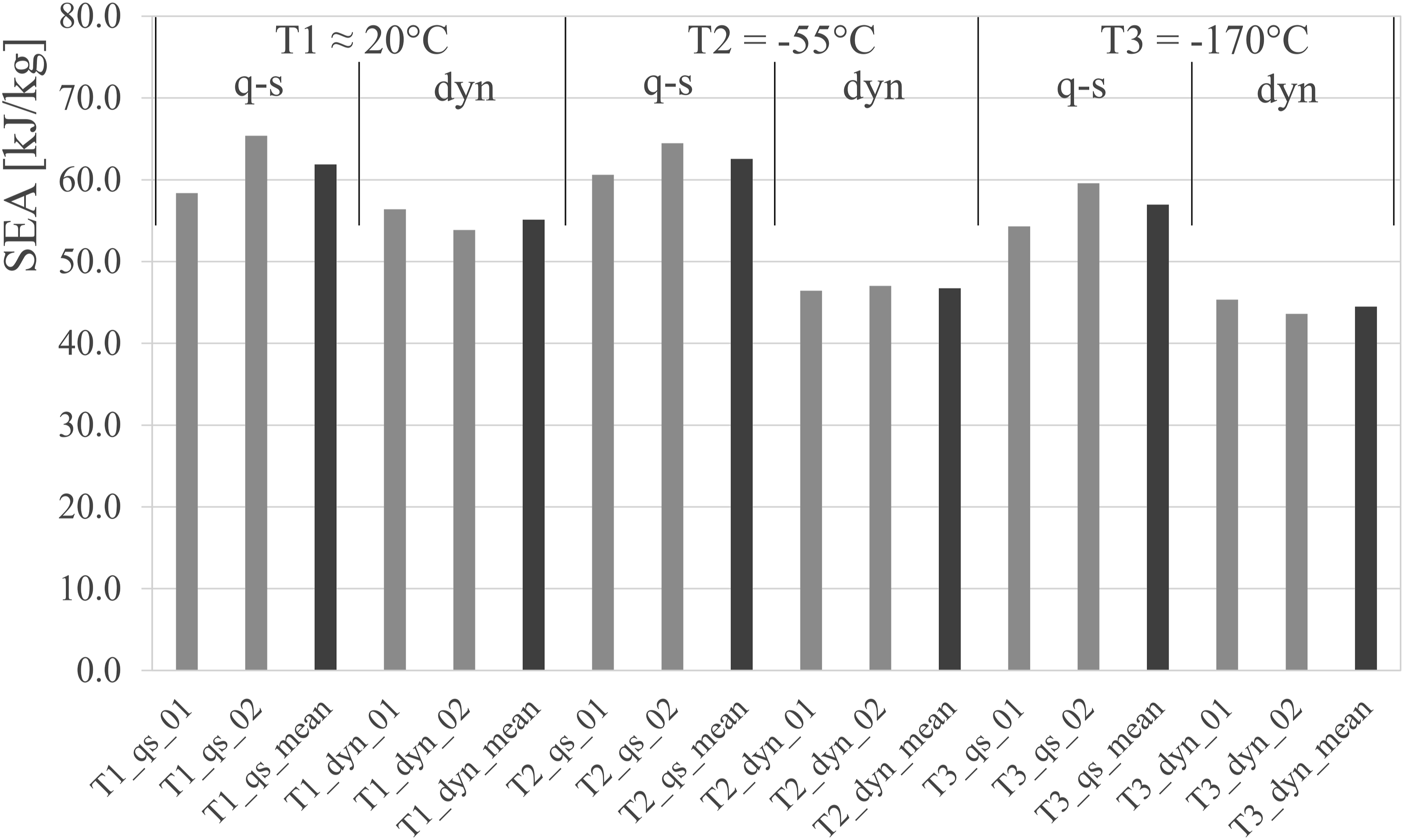
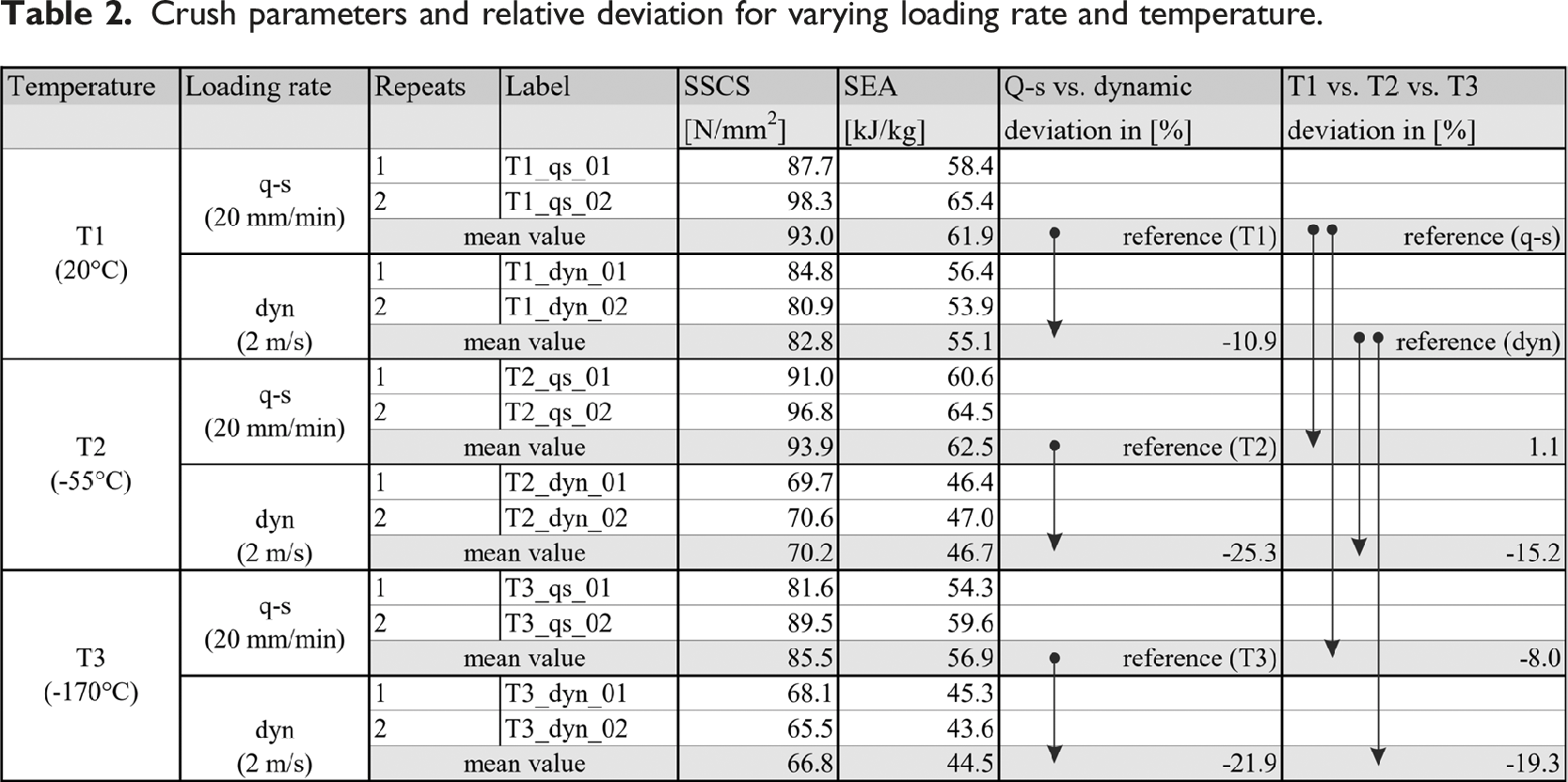
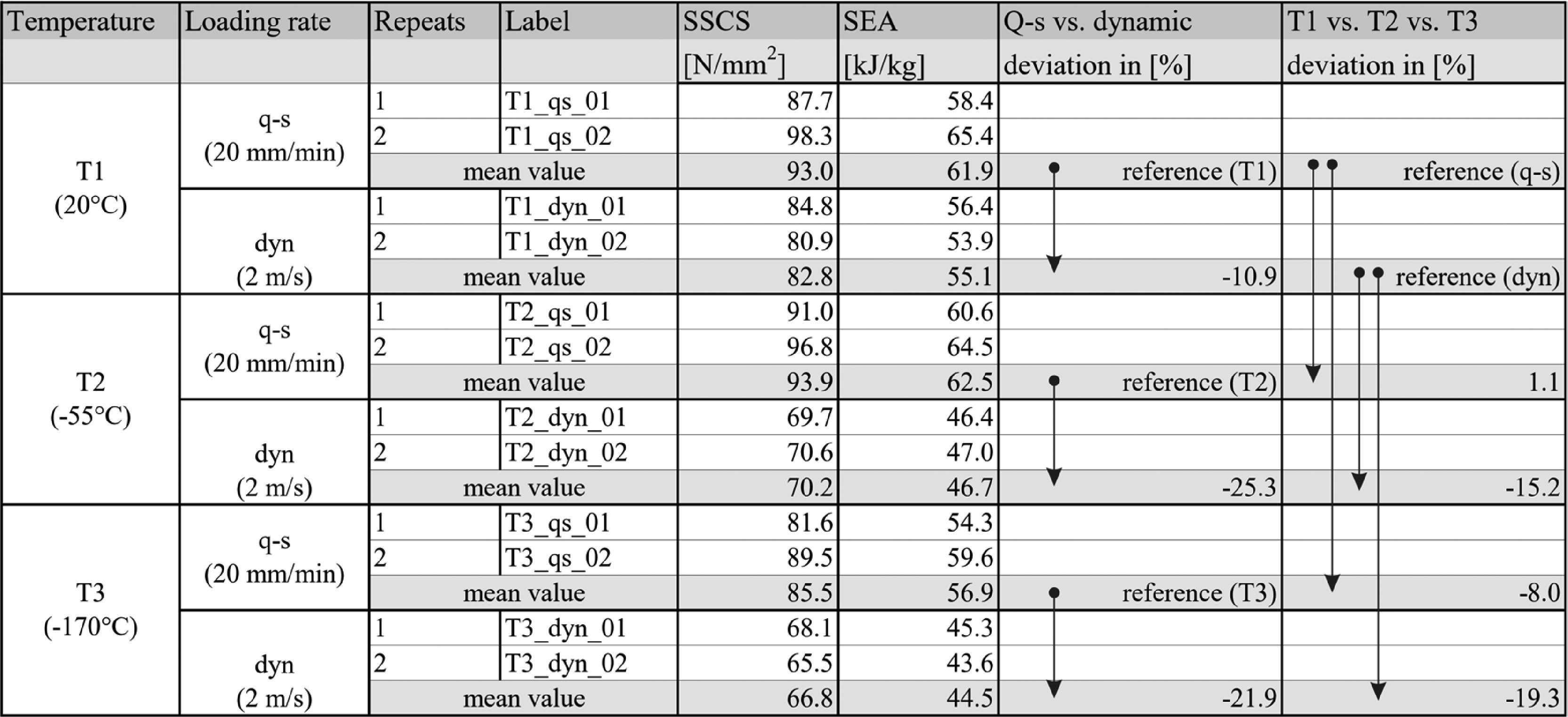
Following this qualitative discussion of force-displacement trends for varying loading rates and temperatures, a quantitative comparison is presented based on the crush parameters steady-state crush stress (SSCS) and mass-specific energy absorption (SEA). These crush parameters were analysed in the steady-state range of total displacements between 10 mm and 30 mm. SSCS was calculated based on mean values of specimen width and thickness measurements to determine the cross-section area, which is Amean = 195.6 mm2. SEA was calculated based on the fractional specimen mass involved in crushing for a displacement between 10 mm and 30 mm, which was determined as mf_mean = 5.9 g while the entire specimen mass was ms_mean = 16.3 g. The plot of SSCS values is given in Figure 12, the SEA values are presented in Figure 13. The specific values for SSCS and SEA are summarized in Table 2 together with the relative deviation for varying loading rates and temperatures. Comparing the mean values of SSCS and SEA, the loading rate with dynamic versus quasi-static loading shows −10.9% for T1 ≈ 20°C, −25.3% for T2 = −55°C, and −21.9% for T3 = −170°C. The temperature effect between T1 ≈ 20°C and T2 = −55°C shows +1.1% for quasi-static loading and −15.2% for dynamic loading; between T1 ≈ 20°C and T3 = −170°C the effect shows −8.0% for quasi-static loading and −19.3% for dynamic loading. Steady-state crush stress (SSCS) for the displacement range of 10 mm–30 mm. Mass-specific energy absorption (SEA) for the displacement range of 10 mm–30 mm. Crush parameters and relative deviation for varying loading rate and temperature.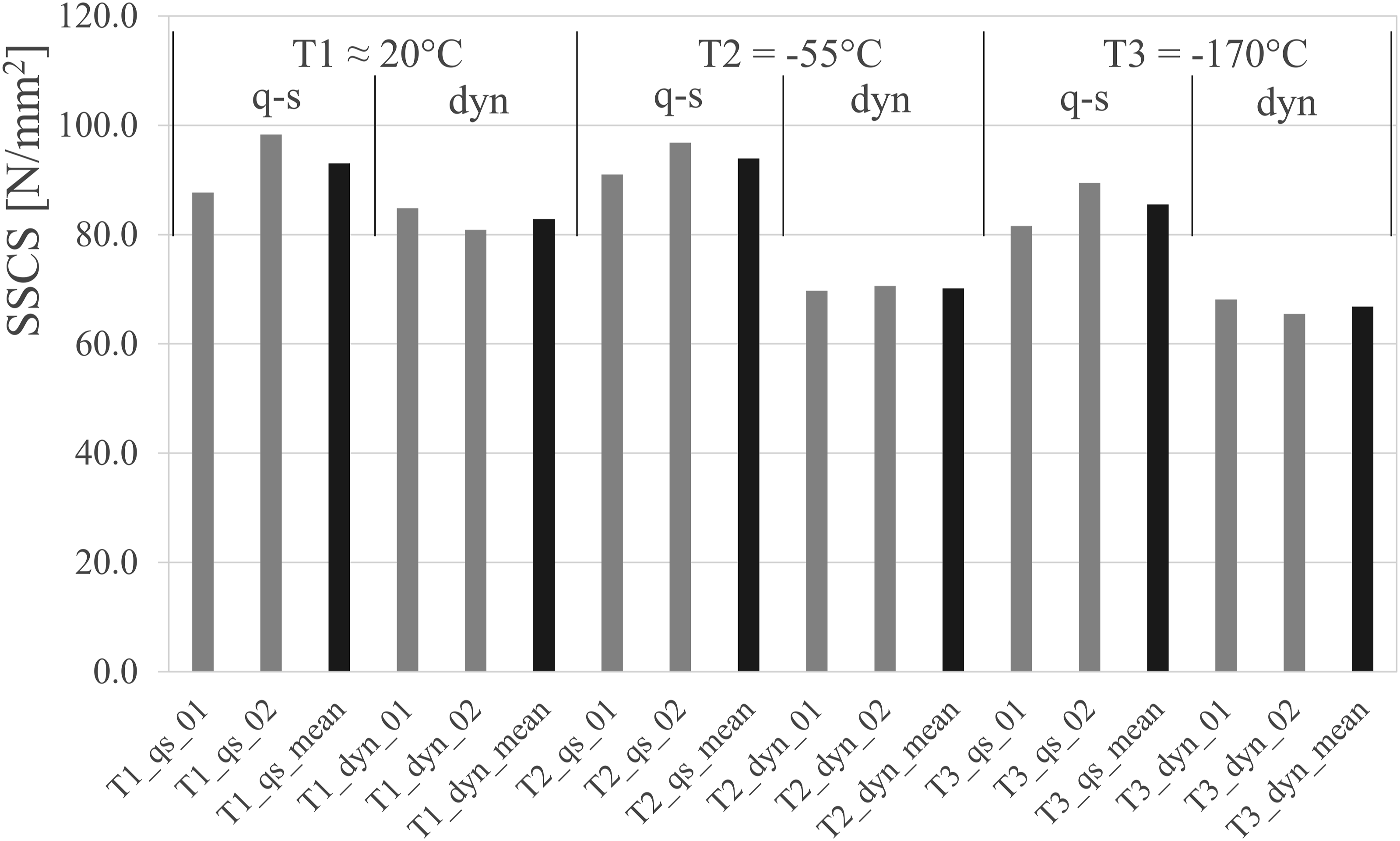
Post-test pictures of the crush specimens, shown in Figure 14, indicate more brittle failure for increasing loading rate and decreasing temperature. While the specimens tested at room temperature and quasi-static loading show a distinct splaying mode with fronds,
5
brittle failure is more dominant for dynamic loading respectively cold temperatures, with extreme fragmentation observed for the combination of transient-dynamic testing at cold temperature T3 = −170°C. Post-test pictures of tested crush specimens.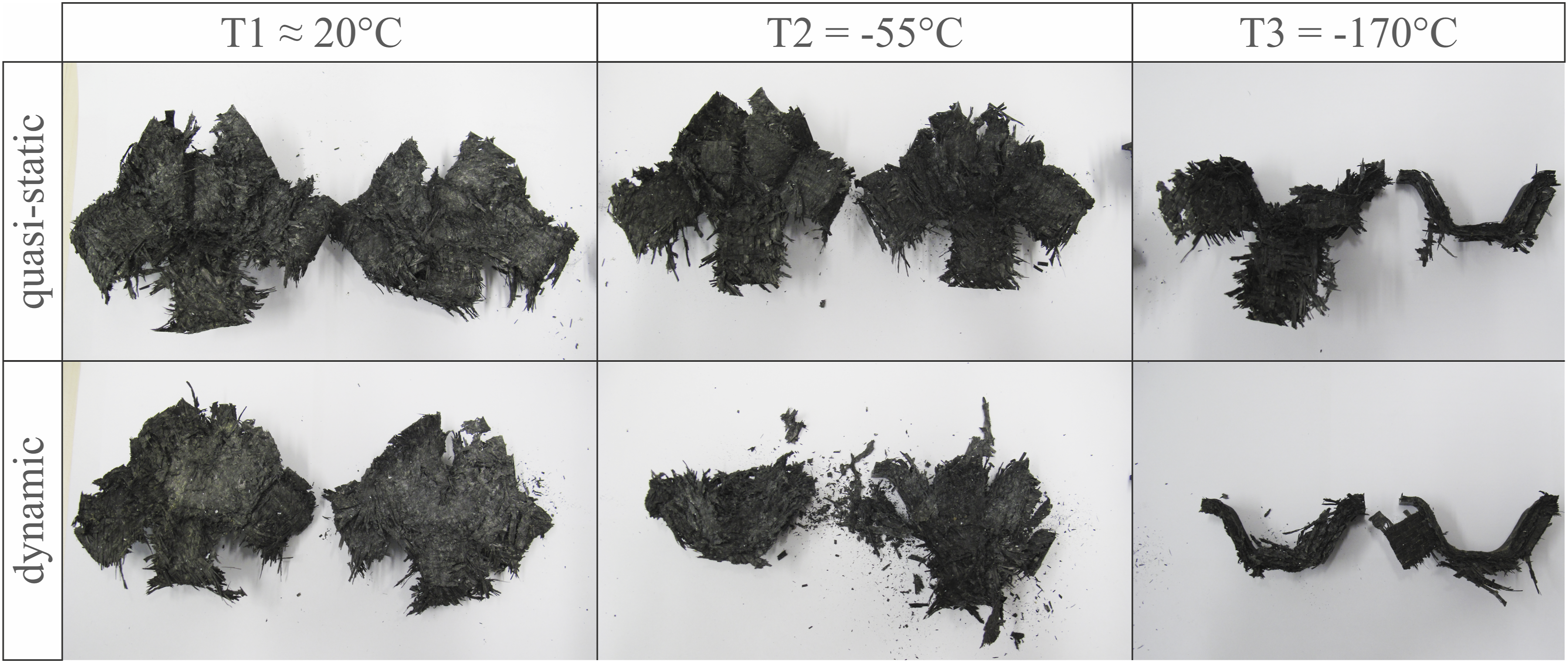
Conclusions
This research study provided a first insight in the mass-specific energy absorption (SEA) and steady-state crush stress (SSCS) of carbon composite subjected to transient-dynamic crush loading at low temperatures clearly beyond T = −55°C. From this study the following conclusions can be drawn: • The newly developed test setup for performing transient-dynamic crush tests at close-to-cryogenic temperatures could be confirmed, with an adequate dynamic performance despite increased setup complexity. With that test setup, the effective advancements and novelty are the determination of transient-dynamic composite crush performance parameters at controlled close-to-cryogenic temperatures combined with high-quality force measurements. The temperature chamber based on liquid nitrogen feed demonstrated favourable performance in terms of a precise temperature control during high-speed testing. The force measurement inside the temperature chamber showed suitable transient-dynamic signal quality. The piezo-electric load cell ‘B’, which operated under cold temperatures, showed no malfunction or noticeable errors. These findings indicate the feasibility to completely eliminate the load cell ‘A’ outside the chamber, making the test setup structure much stiffer and the measurements less prone to oscillations. Further improvements may also consider enhanced nitrogen flushing for the temperature chamber window to improve the anti-icing function. • Taking a compromise between targeted cryogenic temperature and complexity as well as feasibility for transient-dynamic testing can be seen as a good approach to identify trends and even material data for designing crash structures which are exposed to extreme low temperatures. The approach to perform transient-dynamic tests at close-to-cryogenic conditions could be confirmed for the considered objectives. • Taking only one repeat test may be a limitation of this study and is related to limited resources of this research project. The main objective was to identify trends, with the aim to accelerate further research in this field. For complete material characterisation, more repeats per variant are recommended for statistical reasons. • The test results revealed the following main conclusions: ○ The general force-displacement characteristics are the same showing a steady-state crush force plateau due to progressive crushing, for quasi-static versus dynamic loading as well as for the varying tested temperatures. Main differences can be found in the force level as well as in differently distinct force variations relative to the steady-state mean force which is caused by increasingly brittle failure behaviour for increasing loading rate and decreasing temperature. ○ Strain-rate dependent steady-state crush force, and hence SEA and SSCS, could be observed for all tested temperatures; showing a reduction for increasing strain rate. At low temperatures of T2 = −55°C and T3 = −170°C the strain-rate dependent reduction was twice the reduction observed at room temperature T1 ≈ 20°C. ○ Temperature-dependent steady-state crush force, and hence SEA and SSCS, could be observed, showing a reduction for decreasing temperature; which generally correlates with literature data on quasi-static testing.
7
For quasi-static testing the SEA and SSCS reduction is more dominant in the range between T2 = −55°C and T3 = −170°C while for transient-dynamic testing the reduction is more dominant in the range between T1 ≈ 20°C and T2 = −55°C. Further testing is required to confirm this trend on a statistical basis. ○ Concerning the crash-relevant dynamic loading, the SSCS and SEA values are reduced by −15% from T1 ≈ 20°C to T2 = −55°C while the reduction is −19% from T1 ≈ 20°C to T3 = −170°C. Hence, beyond cold temperatures of −55°C the characteristic crush parameters further reduce although less distinct. • The test results indicate the need to consider the true SSCS and SEA values if applications at close-to-cryogenic temperatures are considered. With regard to the investigated carbon composite material and crush specimen geometry, a total reduction of −28% must be considered for SSCS and SEA if quasi-static values at room temperature are taken for the design of crashworthy LH2 tank structures for which high strain rates and close-to-cryogenic temperatures apply. • Finally, this research study confirmed the need for further research and experimental material characterisation at crash-related strain rates and temperatures close to cryogenic conditions. Future research may consider temperature-dependent analogies between quasi-static and dynamic loading rates. With that, the extreme efforts for testing under cryogenic conditions at −250°C may be limited to quasi-static testing with the identified trends to be applied on dynamic characteristics. In this context, transient-dynamic tests at close-to-cryogenic temperatures may serve as a validation basis for such analogy approaches.
Potential next steps of research work in the near future may consider the effect of varying composite material and lay-up on the strain-rate dependency at close-to-cryogenic conditions. Physical reasons for the obtained trend in this present study are primarily seen in the matrix material behaviour, which could be confirmed by the proposed near future research work.
Footnotes
Acknowledgments
Parts of this work have received funding from the German Federal Ministry of Economic Affairs and Climate Action under grant agreement ID 20M2268, as part of the UpLift project.
Author contributions
Matthias Waimer: Conceptualization, Methodology, Investigation, Data Curation, Formal analysis, Writing – Original draft, Writing – Review & Editing. Tobias Behling: Conceptualization, Methodology, Investigation, Writing – Review & Editing. Alexander Cords: Investigation, Writing – Review & Editing. Nathalie Toso: Funding acquisition, Project administration.
Declaration of conflicting interests
The author(s) declared no potential conflicts of interest with respect to the research, authorship, and/or publication of this article.
Funding
The author(s) disclosed receipt of the following financial support for the research, authorship, and/or publication of this article: this work was supported by the Bundesministerium für Wirtschaft und Klimaschutz: 20M2268.

Data availability statement
The raw/processed data required to reproduce these findings cannot be shared at this time as the data also forms part of an ongoing study.