



Abstract
Auxetic laminates, i.e. with a negative Poisson’s ratio (NPR), show great engineering promise, with enhancements in shear resistance, fracture toughness, energy absorption, and delamination and damage extension limitation. This study focuses on the tensile properties of in-plane (IP) NPR fibre-reinforced polymer (FRP) laminates, namely carbon/epoxy (C/E) and carbon-glass/epoxy (C-G/E) laminates, with lay-up sequences which maximised the effect. An analytical study was conducted to achieve maximum NPR sequences. Laminates were manufactured via hand lay-up and hot compression moulding techniques. Poisson’s ratios of −0.33 and −0.18 were achieved for C/E and C-G/E IP auxetic lay-ups, respectively. A 72% reduction in longitudinal stiffness between the maximum IP NPR and a unidirectional (UD) lay-up sequence was verified, with a further reduction of 24% from the C/E to the C-G/E auxetic configurations due to less anisotropy from G/E plies. Regarding longitudinal strength, maximum IP NPR sequences showed low failure strengths, with a reduction from 1213 MPa in the UD case, to 209 MPa in the studied C/E laminates. An alternative design sequence was studied analytically with the incorporation of 0° layers in the auxetic sequences, which improved stiffness, albeit at a reduction of IP auxeticity. Further research is recommended to explore alternative auxetic lay-up sequences to study the influence on stiffness, strength, and auxetic enhancements.
Introduction
Composite materials have long been a feature among the highest levels of engineering, especially with the continuous maturation of associated characterisation, manufacturing and certification technologies and systems. Their excellent specific properties - namely stiffness and strength 1 - enable the reduction of weight of a given structure, a factor of particular importance in the mobility sector, as weight saving allows for a decreased need of energy resources.
One of the most commonly used types of composite materials refers to the laminate form, in which several fibre fabric plies are bonded by a matrix. Fibre-reinforced polymers (FRP), such as carbon/epoxy (C/E), glass/epoxy (G/E) or aramid/epoxy (A/E), are widely applied in high-end engineering components, such as in the case of the aeronautic and aerospace sectors. Albeit their desirable specific strength and stiffness, two main issues taint FRP laminate performance: their low thermal resistance, and their low out-of-plane (OOP) properties due to the absence of reinforcement in the thickness direction. The latter remains a problem for the industry, as such laminates offer sub-optimal low-velocity impact (LVI) resistance, leading to increased susceptibility for the initiation and propagation of barely visible impact damage (BVID), under the form of delamination, i.e. the separation of two bonded plies of distinct fibre orientation, that is hard to detect and that can amount to up to 50% reductions in the laminate’s strength. For reference, LVI is a very common occurrence within the aerospace industry, pertaining impacts usually under 10 m/s which are not dominated by stress wave propagation through the material, but rather by elastic energy absorption. 2 Such impacts can occur during manufacturing - for example, due to tool drops or component mishandling - transportation, storage, installation, and in operation - hailstone strikes, low-velocity bird strikes, runway debris, and belly-landing operations of fixed-wing rotor unmanned aerial vehicles (UAVs).2–7
The area of metamaterials (MMs), i.e. synthetic composite materials/structures that dispose of properties rarely found in nature, has grown in recent times, with the development of interesting solutions for engineering problems relating to thermal, acoustic, electromagnetic and mechanical cases.8,9 A disruptive section within mechanical metamaterials (MMMs) relates to auxetic mechanical metamaterials (AuxMMMs). Auxetics present a unique capacity of synchronous orthogonal compression or dilation - negative Poisson’s ratio (NPR) - that translates in property enhancements on shear stiffness, fracture toughness, indentation and impact resistance. 10 AuxMMMs can be further divided into three main groups, with the first concerning lattice structures with specific stiff material patterns capable of auxetic behaviour under loading.11–15 The second group refers to the inclusion of an inherently auxetic element - either matrix, fibre or both - in the metamaterial.16,17 The intersection between AuxMMMs and composite laminates results in auxetic laminates, the final category within AuxMMMs, that includes auxetic composite laminates constituted by conventional, i.e. positive Poisson’s ratio, fibre(s) and matrix.
Auxetic behaviour is mainly a function of the structural arrangement of plies in a given composite lay-up. Unidirectional (UD) fibre laminae are key for the definition of an auxetic lay-up sequence. Nevertheless, material properties, namely anisotropy - E
x
/E
y
and E
x
/G
xy
ratios, with E and G as the Young’s and shear moduli, respectively, following the axis system set in Figure 1 - unlocks this behaviour and allows for the achievement of larger NPR. The adopted designation for local lamina (x1-x2-x3, or 1-2-3, with x1 as the fibre direction) and global laminate axis system for this text is depicted in Figure 1. Adopted direction notation.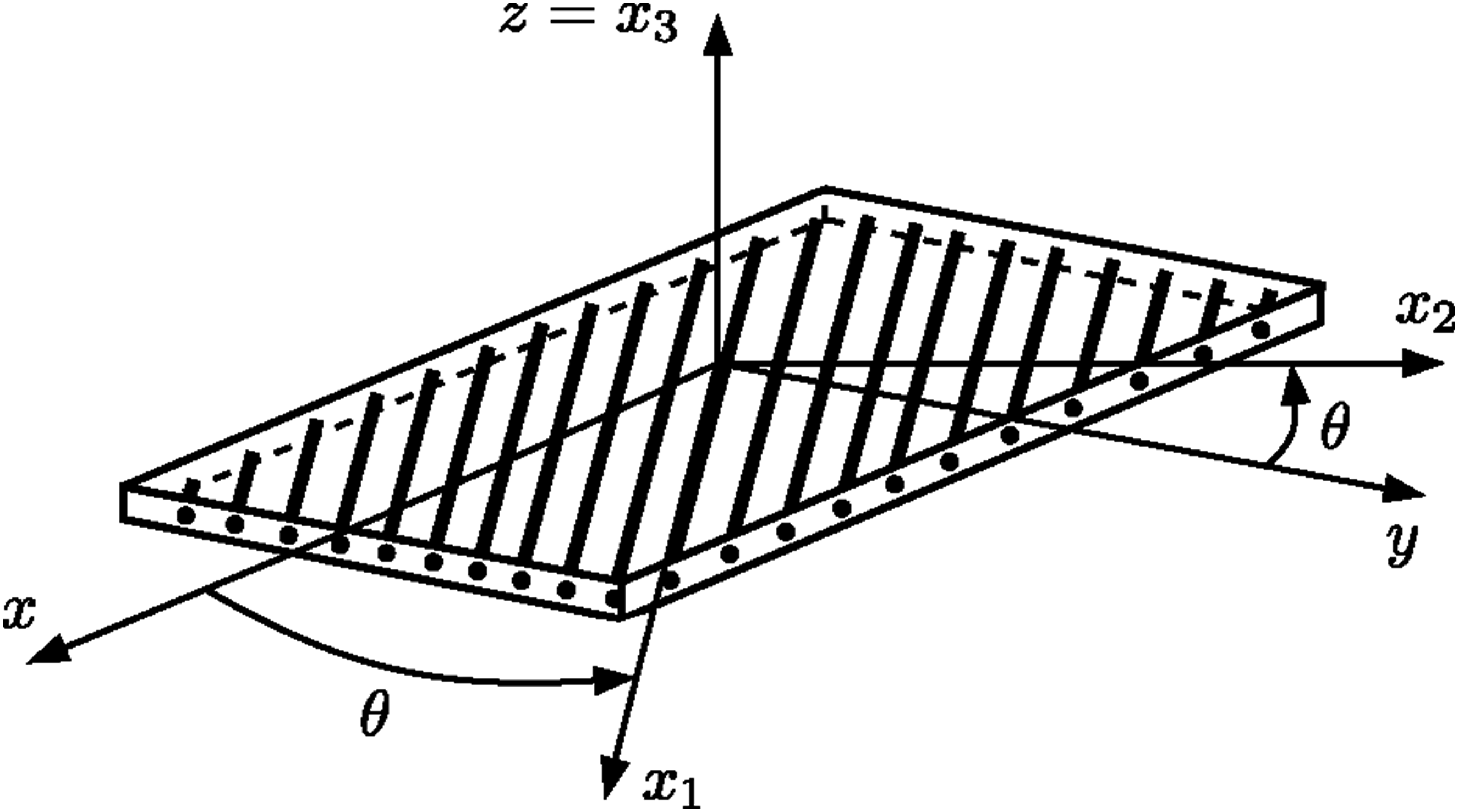
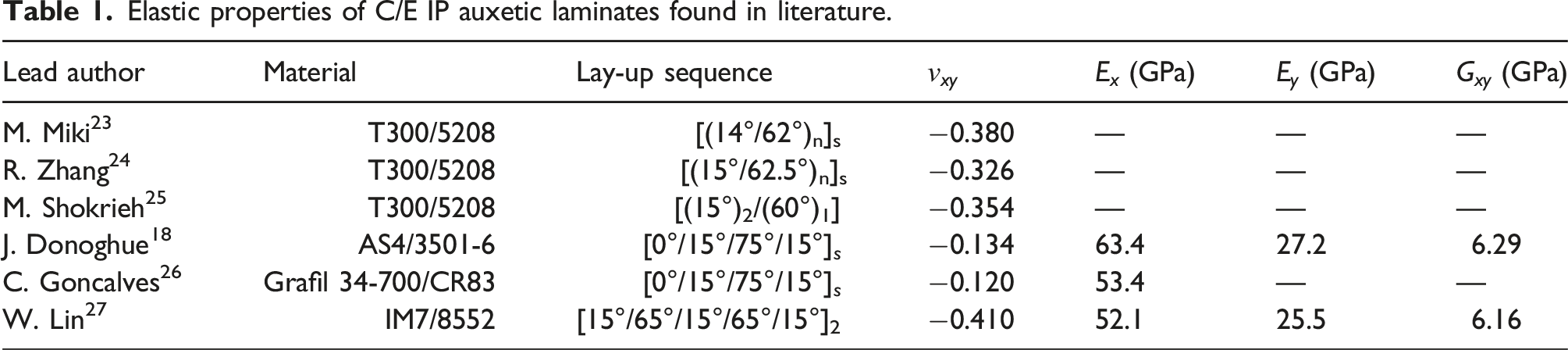
Auxetic laminates are categorized, in accordance to the NPR plane, as in-plane (IP) - for NPR on the face plane of the laminate (ν xy ) - or through-the-thickness (TTT) - for NPR along the thickness plane (ν xz and ν yz ). These laminates dispose of an intrinsic deformation mechanism, due to their NPR and driven by extension-shear coupling, in which, during impact, a local material densification occurs directly under the impacted area as the material flows towards it. Due to these mechanisms, the literature in the area reports improved impact, shear and fatigue resistance in these laminates.7,17–22
Elastic properties of C/E IP auxetic laminates found in literature.
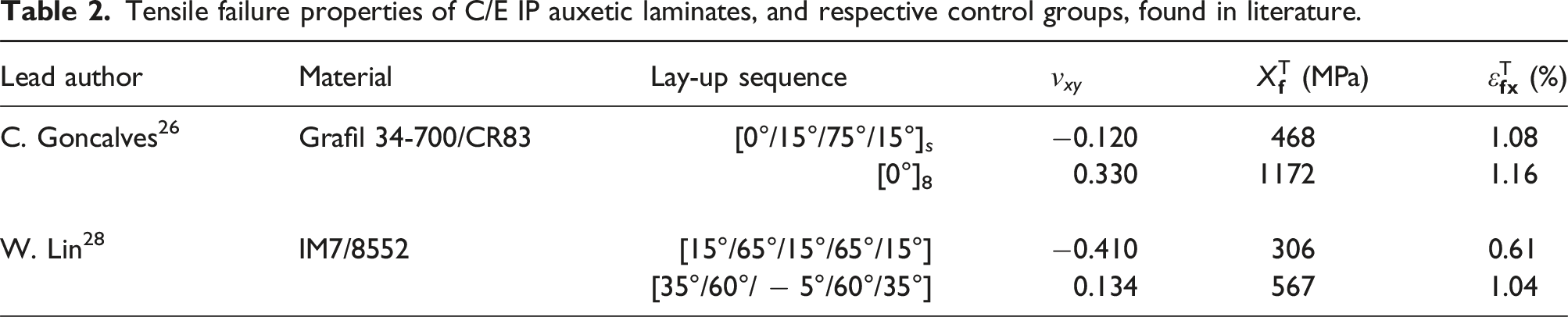
Tensile failure properties of C/E IP auxetic laminates, and respective control groups, found in literature.
In this paper, the elastic and failure tensile properties of C/E and carbon-glass/epoxy (C-G/E) IP auxetic lay-ups have been analysed. This evaluation is an important step for the application of IP auxetic sequences in components which sustain LVI and are prone to delamination damage, as the understanding of the tensile properties is relevant with regards to stiffness, strength and other aspects of mechanical design beyond impact resistance. The largest NPR yielding C/E and C-G/E - constituted by T300 carbon and E-glass fibres, and SR8500 epoxy resin - lay-up sequences were selected from a pool of analytically studied bidirectional
Two reference groups, with respect to UD C/E and G/E laminates, were selected for comparison and for validation the selected properties for fibres and resin, based on literature. As for the IP NPR groups, a C/E group was inferred as a direct comparison to the C/E control group. The hybrid C-G/E IP NPR group presents a direct comparison against the C/E auxetic group, to verify the effect of the insertion of G/E plies in the laminates. Moreover, to this point, no literature has experimentally verified the effect of hybridisation in auxeticity of laminates. Carbon and glass hybridisation is commonly applied and is relevant in the engineering world, thus its merge with the auxetic domain could prove beneficial.
Tensile tests were conducted according to the ISO 527-4 standard at a velocity of 2 mm/min, using videoextensometry techniques for the assertion of strains ɛ
x
and ɛ
y
. An evaluation of elastic longitudinal and transverse properties, and concurrently, of longitudinal and tranverse tensile strengths,
This study intends to provide, thus, an overview into the tensile behaviour of C/E and C-G/E bidirectional laminates with maximum IP NPR, and to analyse any possible drawbacks inherent to this auxetic design strategy.
Methodology
The methodology employed for this study can be divided in material selection, definition of composite lay-up architecture, the analytical inference on the maximization of IP NPR, composite lay-up production and discretization of tensile test parameters. Each of these topics is described in the subsequent subsections.
Material selection
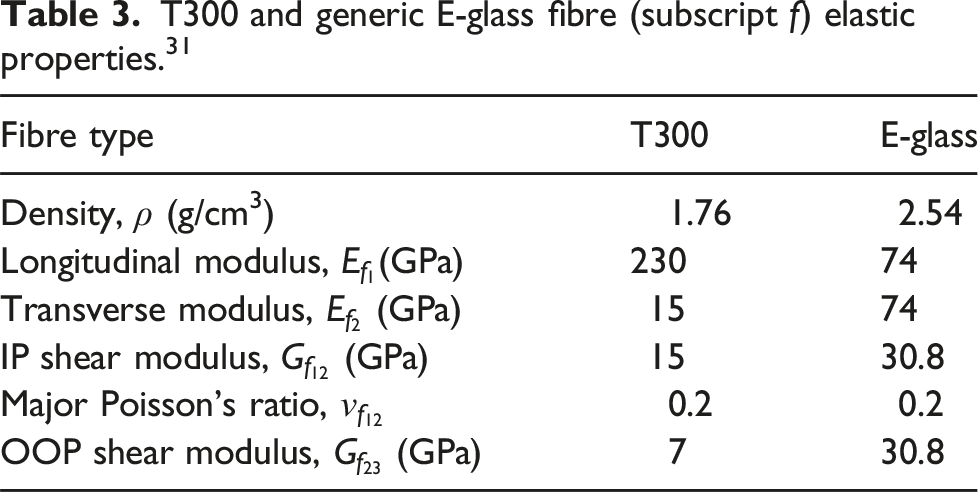
T300 and generic E-glass fibre (subscript f) elastic properties. 31
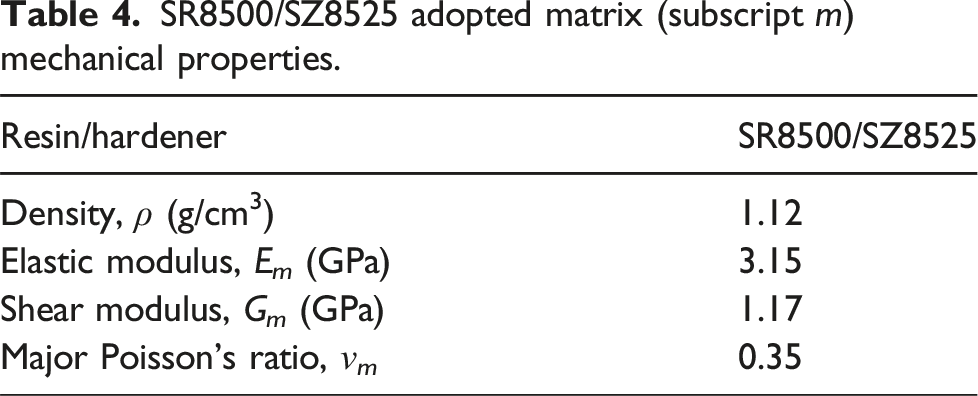
SR8500/SZ8525 adopted matrix (subscript m) mechanical properties.
Definition of composite lay-up architecture
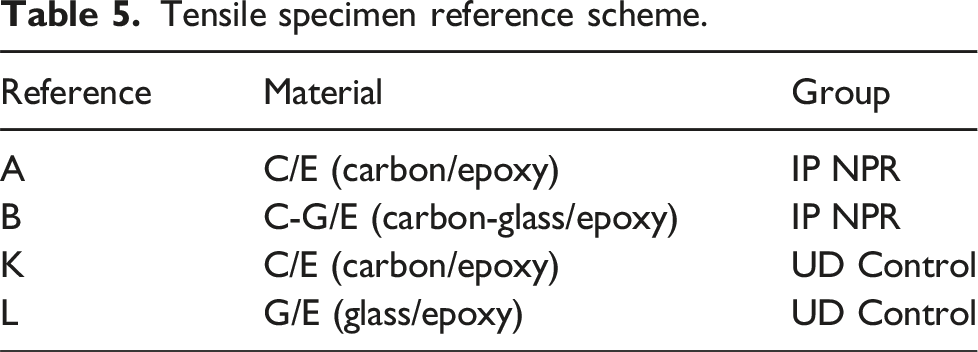
Tensile specimen reference scheme.
The fibre volume fraction,
The lay-up sequence was specified as bidirectional, in accordance to the aforementioned literature on the topic which indicated that this sequence yields the maximum NPR effect.
22
The following subsection describes the employed analytical methodology to assert the most auxetic sequences for C/E and C-G/E specimens with the referenced fibres and resin system, based on the possible domain of bidirectional symmetric lay-ups -
Additionally, for the case of hybrid sequences, not only the fibre angle of each ply has to be defined, but also the respective material. The total number of laminae, N
L
, was restricted to a multiple of 8 in order to allow for a correct match between angle and hybrid material lay-up sequences. The number of plies for NPR references was set as 16 accordingly, and a material configuration of Adopted hybrid lay-up angle and material scheme.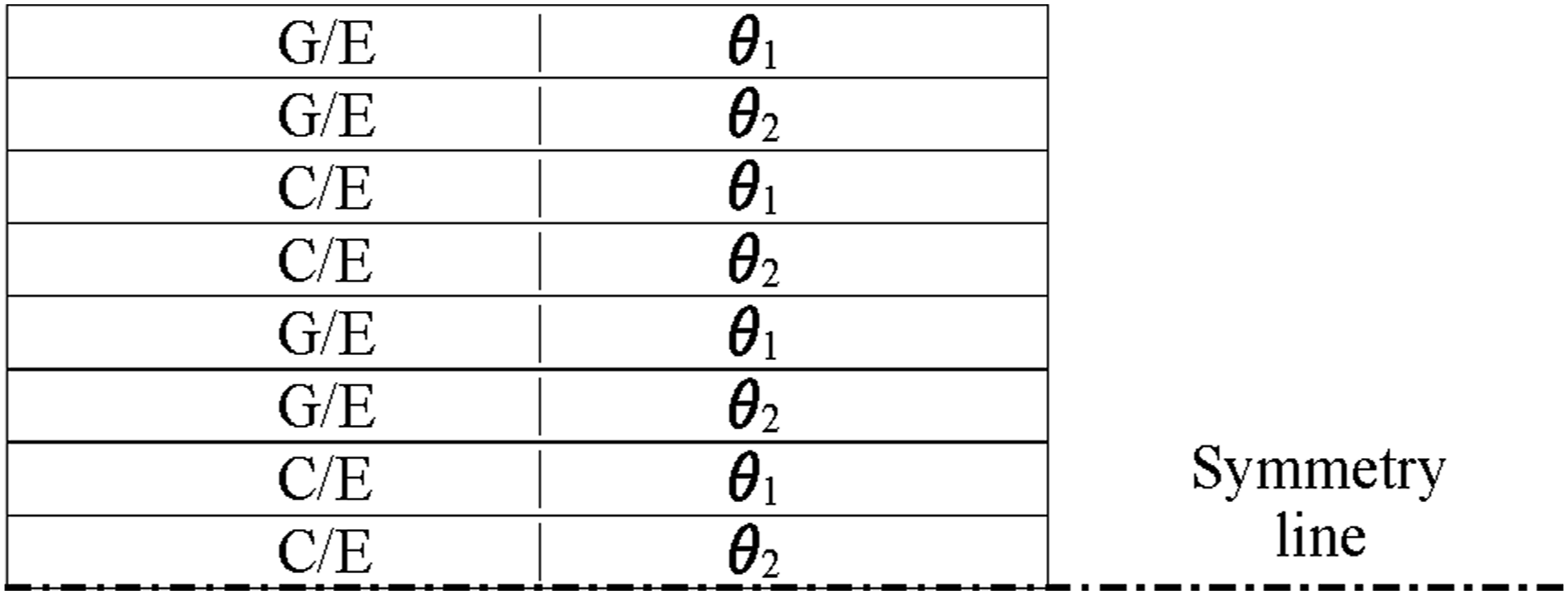
Analytical elastic constant prediction
A preliminary evaluation of auxetic behaviour in C/E T300/8500, G/E E-glass/8500 and C-G/E T300+E-glass/8500
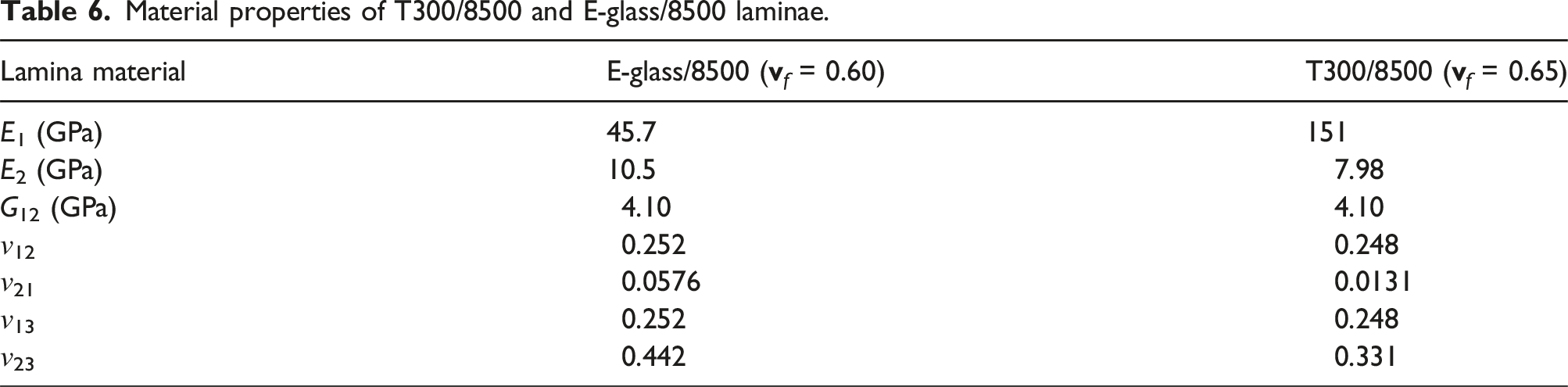
Material properties of T300/8500 and E-glass/8500 laminae.
Largest IP NPR yielding configurations for T300/8500 C/E and T300+E-glass/8500 C-G/E bidirectional symmetric

Furthermore, and comparing IP C/E NPR laminates with the UD case previously presented in Table 6, there is a decrease in E x and increase of G xy due to the necessary orientation ply angles for the maximization of IP NPR.

Composite lay-up production
The four indicated references shown in Table 5 were manufactured in the form of plates using hand lay-up and hot compression moulding techniques. The overall process consisted on the hand lay-up placement and impregnation of angled plies - according to each lay-up sequence - using the SR8500/SZ8525 resin/hardener system at a 4:1 weight ratio. In the case of control references, these were used mainly for property control, and thus 8 plies were utilised in order to promote failure at lower tensile loads, given maximum load limitations in the used tensile test machine (detailed in the subsequent section). For IP NPR groups, 16 plies were applied to each laminate.
Each of these plates was later cured by hot compression moulding at a temperature of 110°C during 10 min, in a Fontjine LabManual 300 press. Pressure was controlled in order to achieve the aforementioned 65% fibre volume fraction value for the laminates - beside the 60% target for the G/E laminate. This target was not achieved - values were slightly lower, see Table 8 - however this did not compromise the remainder of the study, as no large discrepancies to the target and between references were verified, and as the corresponding adjusted elastic properties were calculated from the analytical algorithm.
Plates were cut to specimen size in accordance with the ISO 527-4 standard (250 mm × 25 mm). For IP NPR references, additional specimens were cut in the transverse direction for measurement of transverse laminate properties. [0°/90°]3 G/E unbeveled end tabs were applied after surface sanding, with a length of 75 mm, in order to prevent slipping during tensile testing. For this, the matrix/hardener combination SR Greenpoxy 33/SZ 8525 was applied, with similar properties to the SR8500 resin but with a room temperature curing process of approximately 7 h.
Tensile test parameters
Tensile experiments were conducted on a MTS Exceed E45 tensile testing machine prepared to carry out measurements using videoextensometry techniques with an MTS AVX-205 camera, with a resolution of 0.25 μm and a maximum capture rate of 30 Hz (Figure 3). As aforementioned, the standard ISO 527-4 was employed, with a testing velocity of 2 mm/min. A load cell of 100 kN was used, with an accuracy of ± 0.5% of applied force. For IP NPR references, two distinct tensile tests were conducted in the axial and transverse directions. For each reference and specimen orientation, a total of five specimens were tested. The nomenclature, fibre volume fraction, and thickness (t
L
, with subscript L referring to the laminate) for the tested specimen groups is presented in Table 5. MTS Exceed E45 tensile testing machine with AVX-205 camera.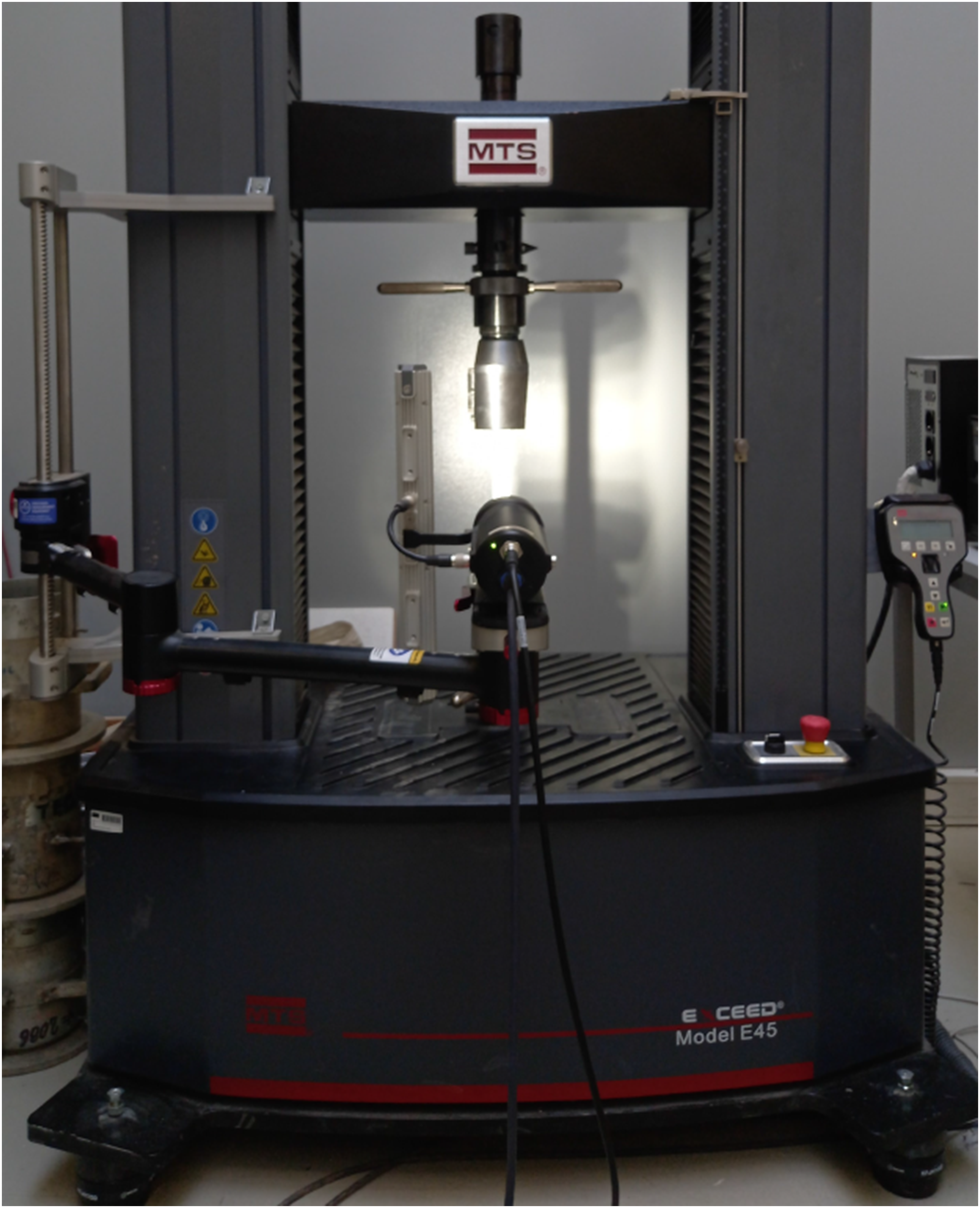
Videoextensometry-related preparations included coating the specimens with matte spray, and the marking of two points x and y directions, each at an 8 mm distance to the centreline, totaling a 16 mm gauge length for the virtual extensometers.
Force data was read every on a 5 Hz frequency, while ɛ
x
and ɛ
y
were measured with a 20 Hz frequency. Data was re-sampled in order to accommodate this discrepancy, to the lowest data reading frequency in the system (force). σ
x
-ɛ
x
, σ
y
-ɛ
y
and ν
xy
-σ
x
relationships,
E x and E y were retrieved from a linear curve fit in the elastic loading portion of the respective σ x - ɛ x and σ y - ɛ y specimen graphs.
As for ν xy predictions, the presented experimental values were calculated taking into account the average within a selected region of the elastic domain, as there was, in some cases, a considerable variation of ν xy with the increase of σ x , as previously denoted in a study by Zhang et al. 33 . Although in this study a 100 MPa baseline for ν measurement was defined, the averaged method was preferred for this study given the variation of this property, in order to provide a reliable value, in accordance with the ν xy - σ x behaviour.
Moreover, the initial phase of the elastic domain was neglected for the calculation of the average ν xy due to an unreasonable amount of noise data. This initial variation can be attributed to the accommodation of the G/E end tab interface to the machine’s grips. Due to operational limits, the full specimen’s end tab length could not be gripped, leading to the non-gripped length eventually “opening up” and separating from the specimen during the trials, which caused initial instability in the data. Nevertheless, the remaining gripped length remained bonded and prevented slippage.
Results
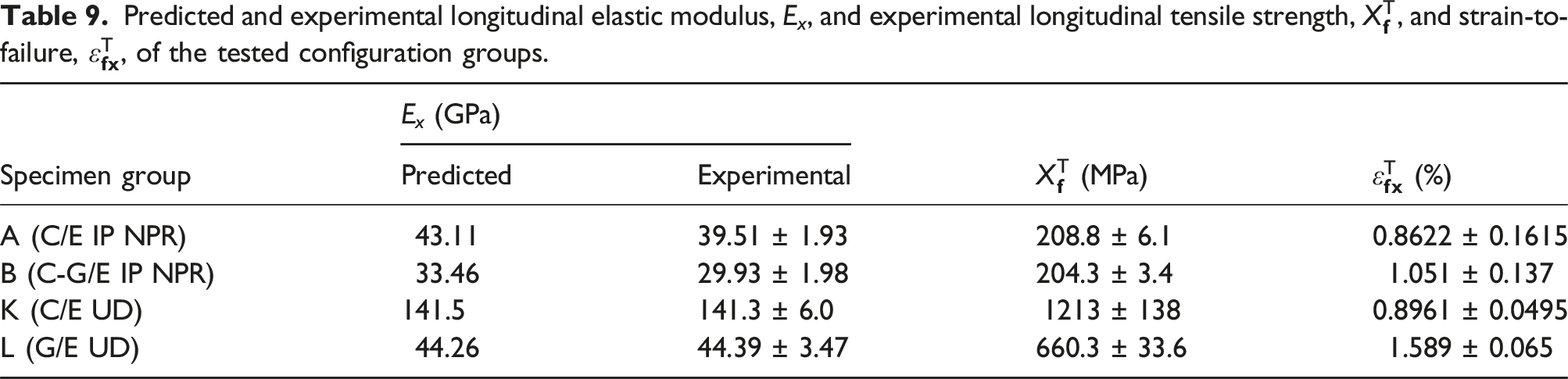
Predicted and experimental longitudinal elastic modulus, E
x
, and experimental longitudinal tensile strength,
Predicted and experimental transverse elastic modulus, E
y
, and experimental transverse tensile strength,

UD control groups K and L presented very good agreement with predicted E x values. With regards to IP NPR groups A and B, an overestimation of longitudinal stiffness was evidenced by the experimental results, a trend repeated in the transverse analysis for E y .
Figure 4 portrays a bar chart of E
x
for the tested groups. Figures 5 and 6 represent the stress-strain behaviour in the longitudinal and transverse directions, respectively. Comparing groups K and A, there is a reduction in the longitudinal stiffness of auxetic C/E IP specimens comparing to the UD case of 72%, from 141 GPa to 39 GPa, justified by the C/E ply orientations - at 14° and 64° - required to maximise the auxetic effect, which promotes said reduction. Although the transverse stiffness, E
y
, was not measured experimentally for control groups, it is expected to increase in the C/E IP NPR group compared to the UD case (as observed by the predictions indicated in Tables 6 and 7). Moreover, as expected, a reduction in E
x
of 24% was verified from the C/E to the C-G/E IP NPR groups A and B, from 39 GPa to 30 GPa, due to the inclusion of less stiff G/E plies, when compared to C/E ones. Experimental longitudinal elastic modulus, E
x
, bar charts for groups A (C/E IP NPR), B (C-G/E IP NPR), K (C/E UD) and L (G/E UD). Longitudinal stress–strain curves for groups A (C/E IP NPR), B (C-G/E IP NPR), K (C/E UD) and L (G/E UD). Transverse stress–strain curves for groups A (C/E IP NPR) and B (C-G/E IP NPR).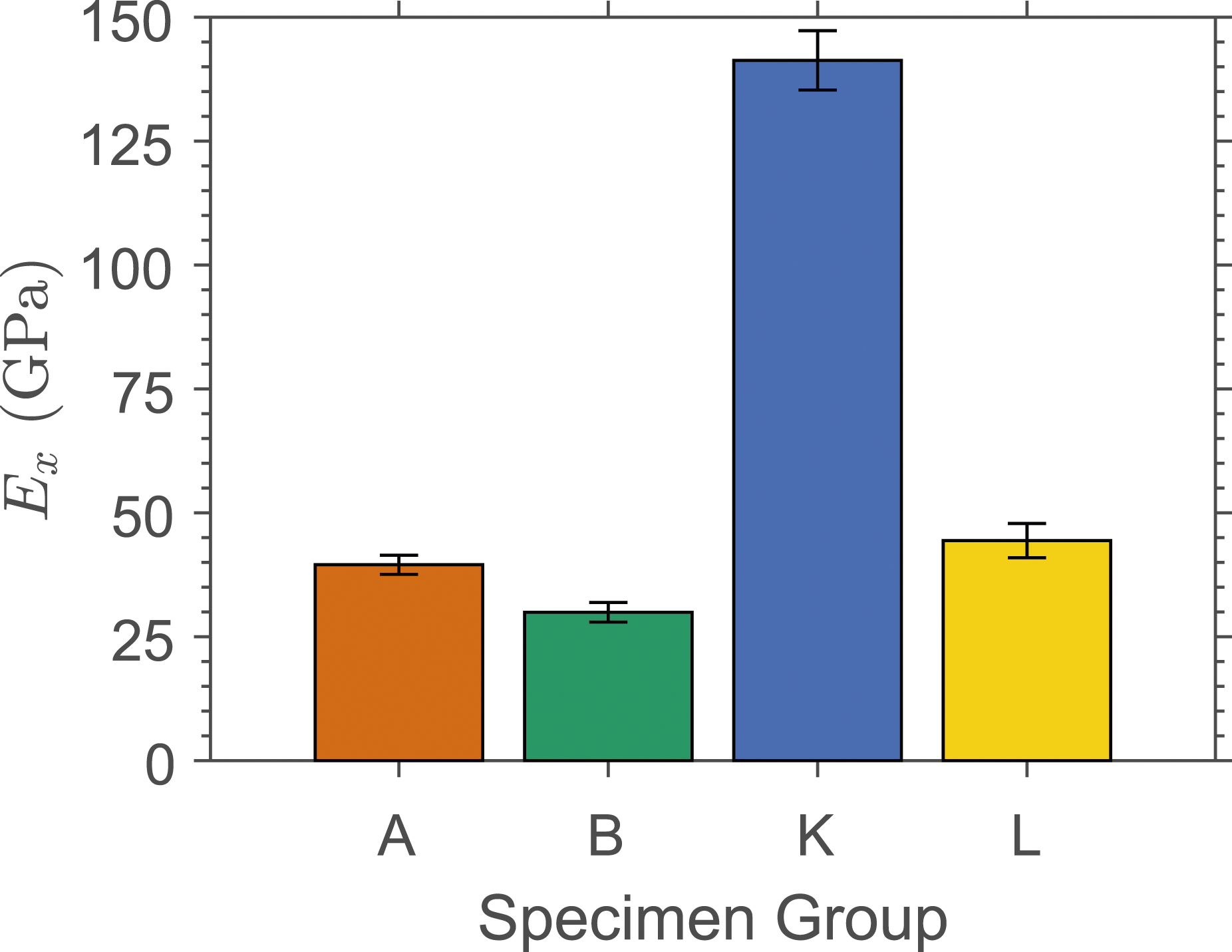
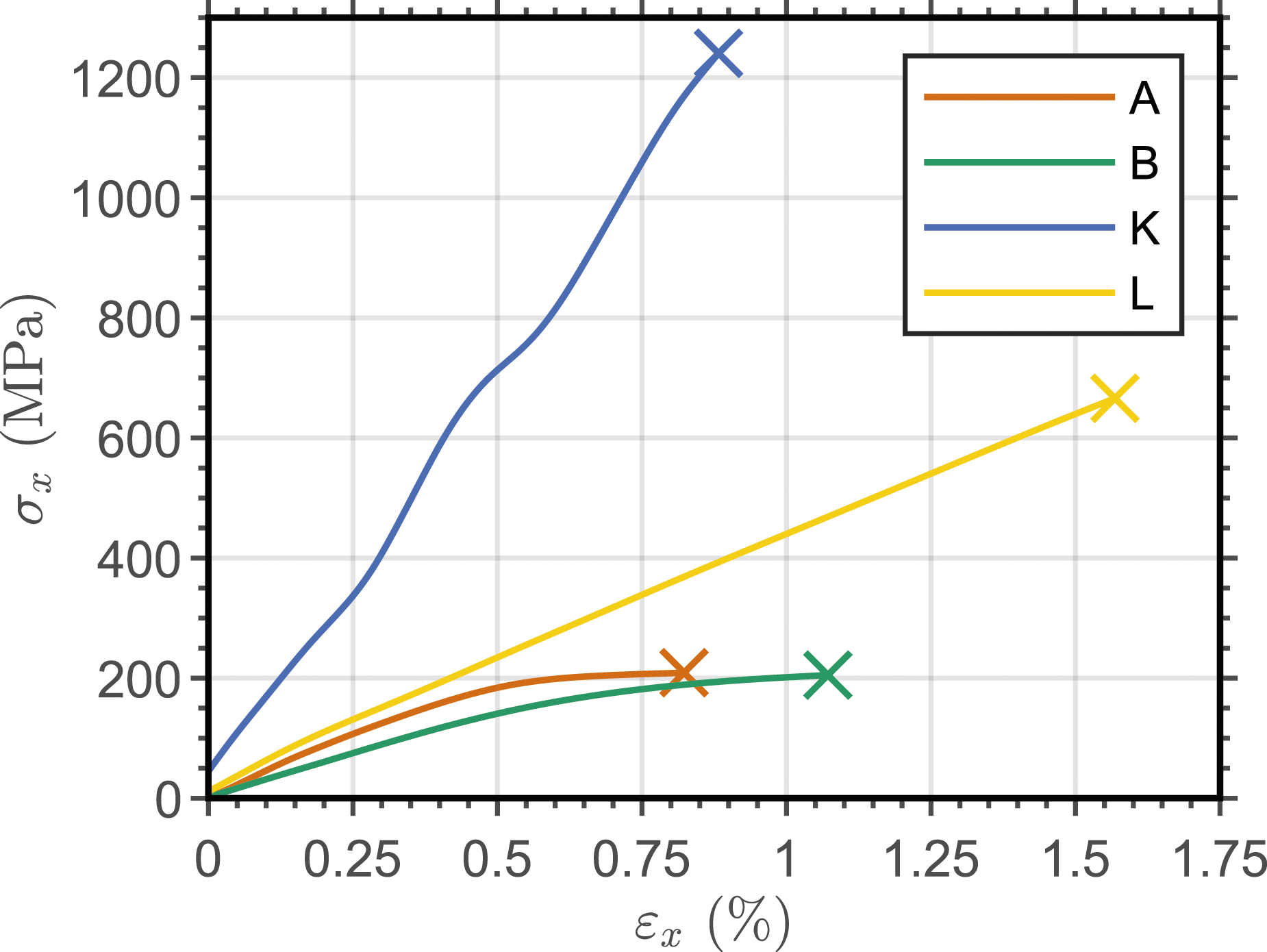
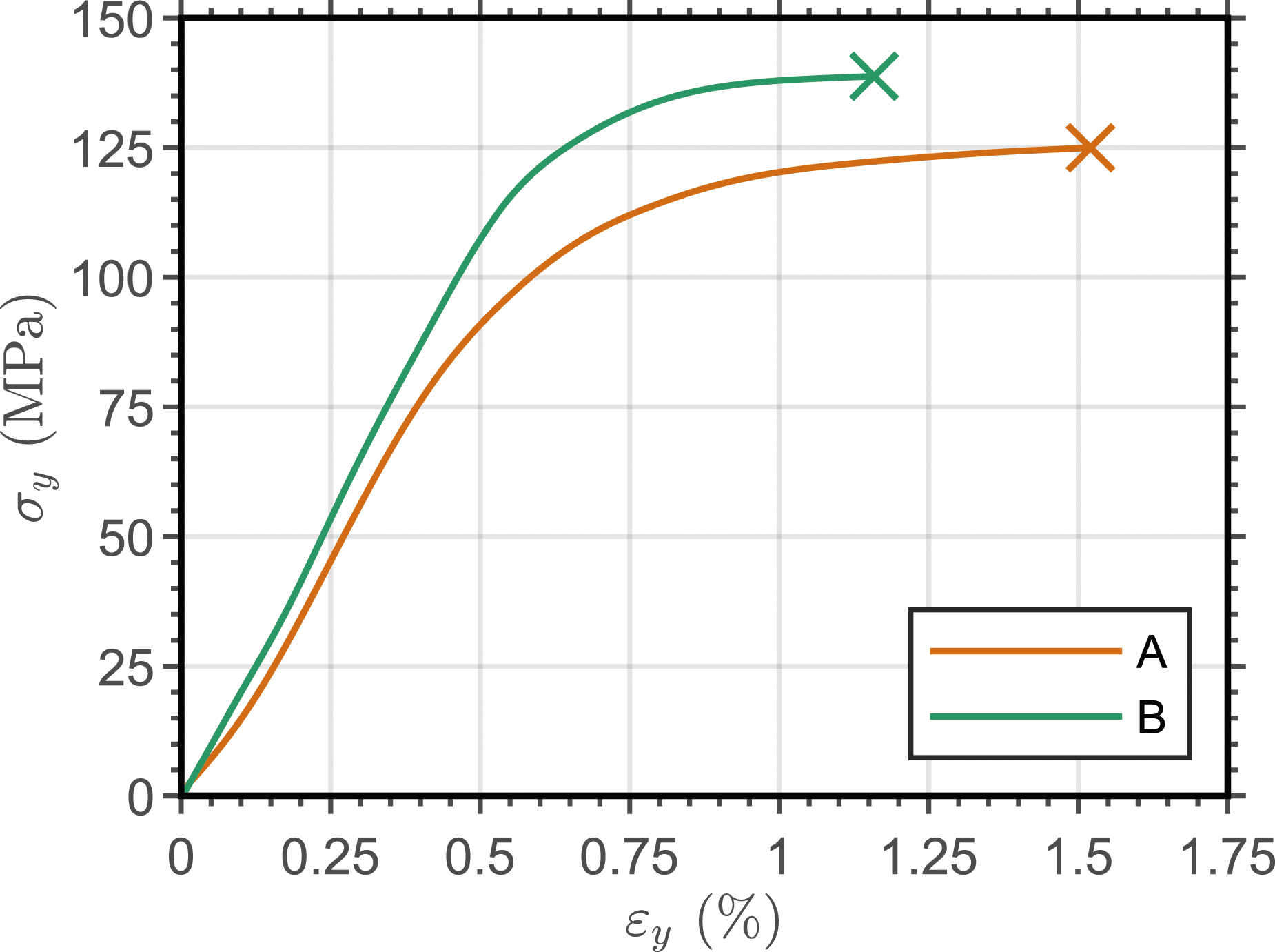
Regarding longitudinal tensile strength,
These findings corroborate with those of the limited research on the area. A recent study conducted by Lin and Wang, in which an IP auxetic configuration was compared against a non-auxetic variant with matched elastic moduli, also verified low strength properties in IM7/977-3 C/E IP auxetic laminates. 28 The authors compared an IP auxetic lay-up sequence - [15°/65°/15°/65°/15°], with a ν xy of −0.410 - to a matched-moduli sequence with a positive IP Poisson’s ratio (see Table 2). A decrease in the ultimate tensile strength of IP NPR specimens was confirmed, from 567 MPa to 306 MPa, coupled with lower strain-to-failure values (1.04% vs 0.61%, respectively, both representing a reduction to a 1.61% failure strain in the UD case). Another study by Goncalves et al., using Grafil 34-700/CR83 C/E laminates, compared the tensile properties of an IP auxetic configuration, [0°/15°/75°/15°] s , to an UD counterpart (Table 2). Both the ultimate longitudinal tensile strength, and the strain-to-ratio, were lower in the IP NPR lay-up, at 468 MPa versus 1172 MPa, and at 1.08% versus 1.16 %, respectively. Thus, the lay-up configuration required for the maximisation of IP auxeticity affects its longitudinal tensile strength capabilities negatively.
Figure 7 shows the post-mortem samples of each group. For specimens in which failure occurred, the failure plane followed fibre direction, as weak resin-rich planes are developed in between fibre bundles with the increasing elongation of the specimen, hence enabling the development of failure planes in such areas. In UD C/E and G/E specimens of group K and L, 0° orientation cracks are visible, with internal delamination. For the control C-G/E group, severe fibre breakage of the top G/E plies was verified. For IP NPR specimens, a crack is observable along the angle of the top ply. Failure planes of tested specimen configurations A (C/E IP NPR), B (C-G/E IP NPR), K (C/E UD) and L (G/E UD).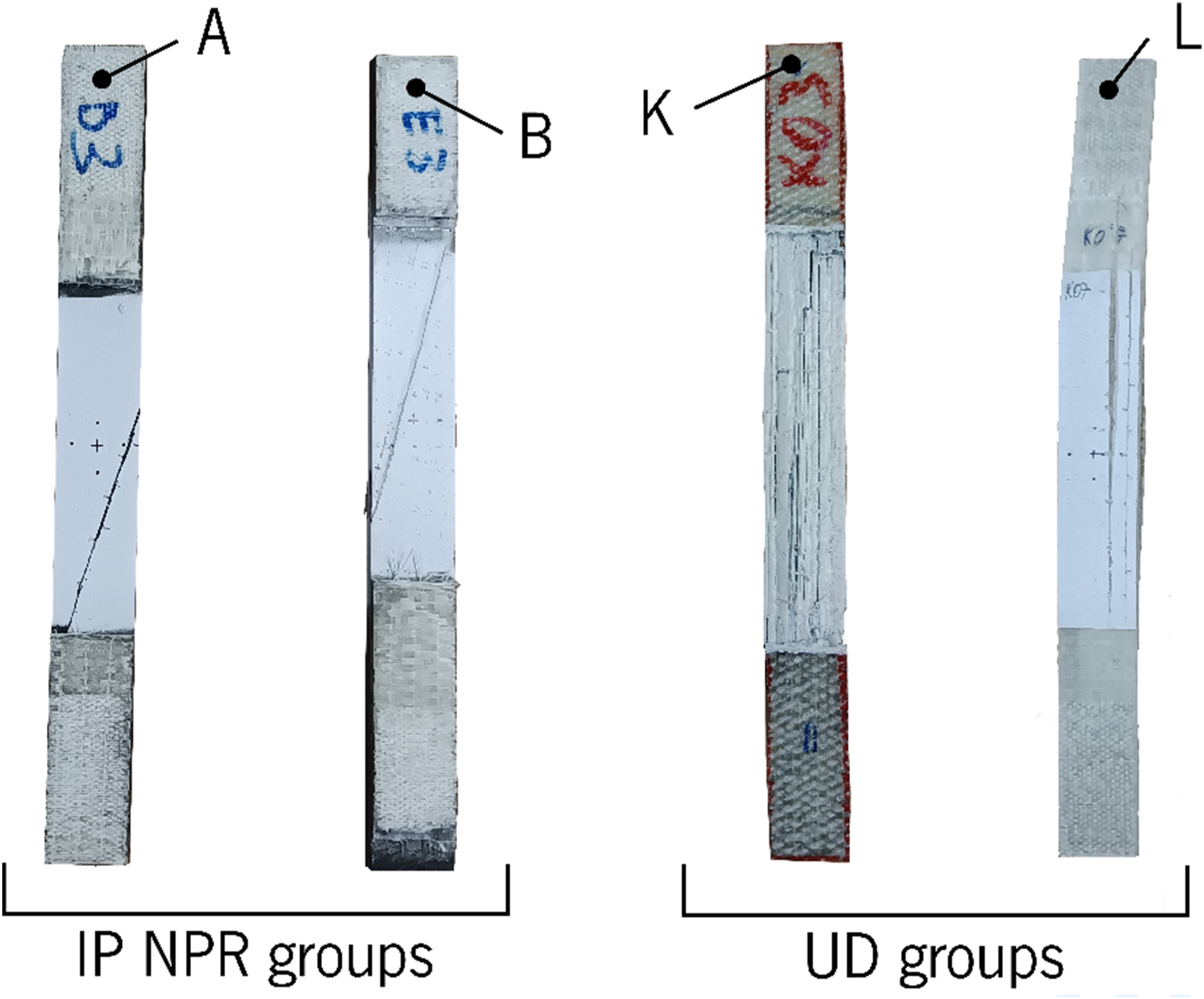
It should also be noted that the nature of the T300 carbon and E-glass fabric fixation - with evenly spaced weft yarns - creates a prelude condition for the formation of failure planes: as various carbon or glass bundles are grouped by such weft yarns, a small gap between such bundles can become more evident with fabric handling, and can be solely filled by resin during impregnation, creating a local weak point that favours the development of failure planes and that can affect strength properties, especially in laminates that do not possess 0° - to better sustain the applied load in the axial direction - or 90° layers.
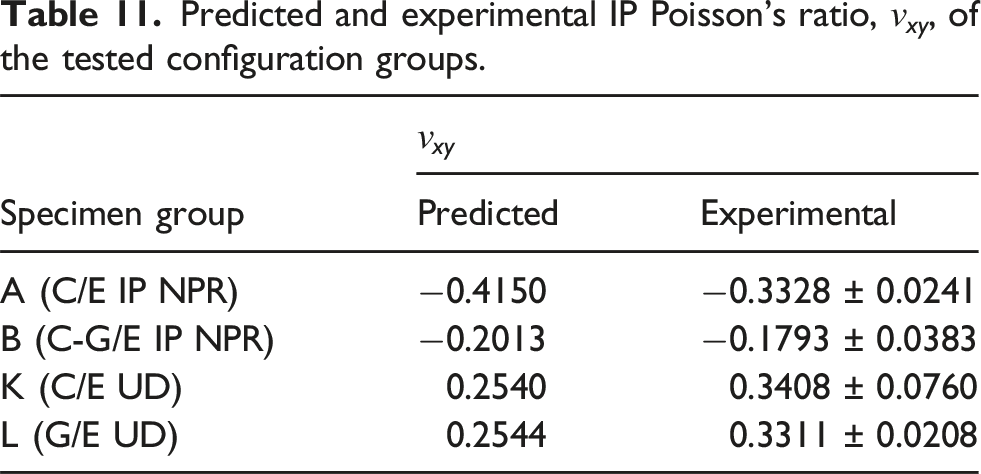
Predicted and experimental IP Poisson’s ratio, ν xy , of the tested configuration groups.
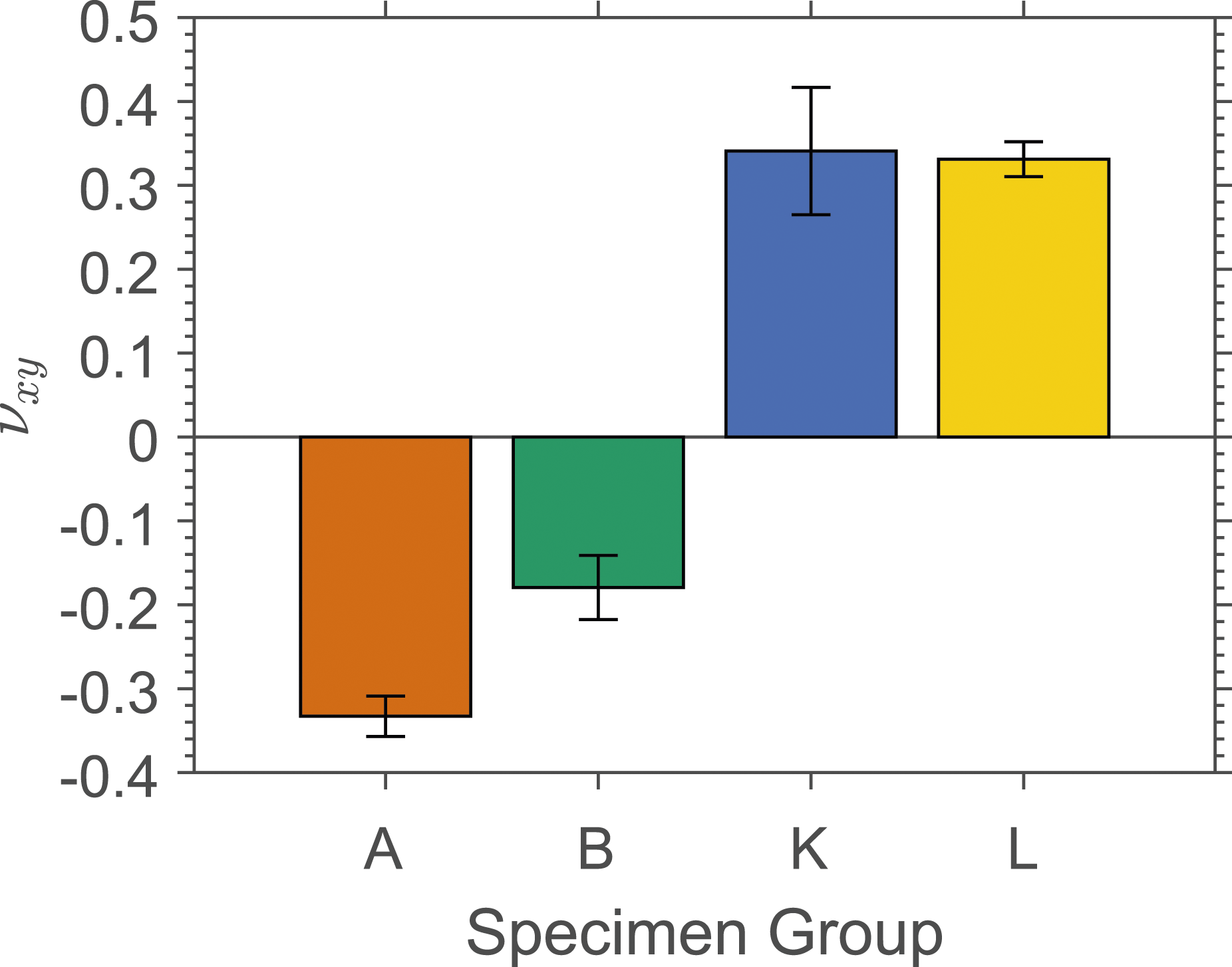
Experimental IP Poisson’s ratio, ν xy , bar charts for the A (C/E IP NPR), B (C-G/E IP NPR), K (C/E UD) and L (G/E UD) groups.
Data evidences a larger discrepancy be predicted and experimental values for ν xy , when compared to the previous E x analysis. The predictions for UD specimens present a considerable deviation to the experimentally obtained values. This trend was also verified for group A, with the closest prediction relating to the one for group B. Moreover, IP auxeticity was overestimated with the predicted values.
Nevertheless, auxeticity was experimentally achieved for both IP NPR groups, as visible in Figure 9, portraying the stable domain for the ν
xy
- σ
x
relationship of groups A and B. A slight increase in auxeticity was verified for IP NPR groups with increasing σ
x
in the elastic region: as the specimens were continuously stretched in the longitudinal tensile direction, an increase in transverse deformation ensued, enabled by the movement of the fabric plies within the ductile matrix caused by the extension-shear coupling effect characteristic of such laminates. Additionally, and as expected, IP auxeticity reduces in magnitude with the insertion of G/E plies, due to their low anisotropy. IP Poisson’s ratio-stress curves for groups A (C/E IP NPR) and B (C-G/E IP NPR).
Figure 9, displaying the stable domain for the ν
xy
- σ
x
relationship of UD groups K and L, evidences an increase of ν
xy
with increasing σ
x
in UD C/E specimens, especially post the 300 MPa mark, with the relationship remaining almost constant in the case of UD G/E specimens (Figure 10). IP Poisson’s ratio-stress curves for groups K (C/E UD) and L (G/E UD).
Given the larger discrepancy between predicted and experimental values in the case of ν xy when compared to E x and E y , one should note that the scattered nature of captured strain data, coupled with the aforementioned selection of a stable sub-domain within a variable set of data for the calculation of the average ν xy , have inevitably interfered with the assertion of experimental values and contributed for this discrepancy.
Further factors that might have affected the results include misalignments along the T300 carbon and E-glass fabric’s width, as its weft fixation yarn did not fully compact the UD fiber bundles due to fabric stretching in the transverse direction. Furthermore, the utilised manufacturing techniques - hand lay-up and hot compression moulding - facilitated the development of air bubbles during the resin and hardener mixing stage, which could generate weak points for crack initiation and propagation. Additionally, any misalignments during the fabric cutting, impregnation, and compression stages, as well as during specimen cutting from the hot compressed laminate plates, and specimen fixation for tensile testing, could also contribute to these weak points, and to a misalignment between the direction of tensile load application and the longitudinal direction of the specimens. Although it is true that most of the aforementioned factors have, at worst, induced marginal error in the experimental readings, as they were controlled, the addition of such errors might also aid the explanation for the discrepancies verified.
Alternative design strategies
A key point verified from these results has been the inherent decrease longitudinal tensile strength and elastic modulus in IP auxetic laminates with lay-up sequences which maximise this effect. One consideration that could be taken into account for this problem could be the insertion of 0° plies. Donoghue et al. 18 have worked on an IP auxetic C/E lay-up sequence - [0°/15°/75°/15°] s , with a ν xy of −0.134, and an E x of 63.4 GPa.
Largest IP NPR yielding configurations for T300/8500 C/E and T300+E-glass/8500 C-G/E bidirectional symmetric
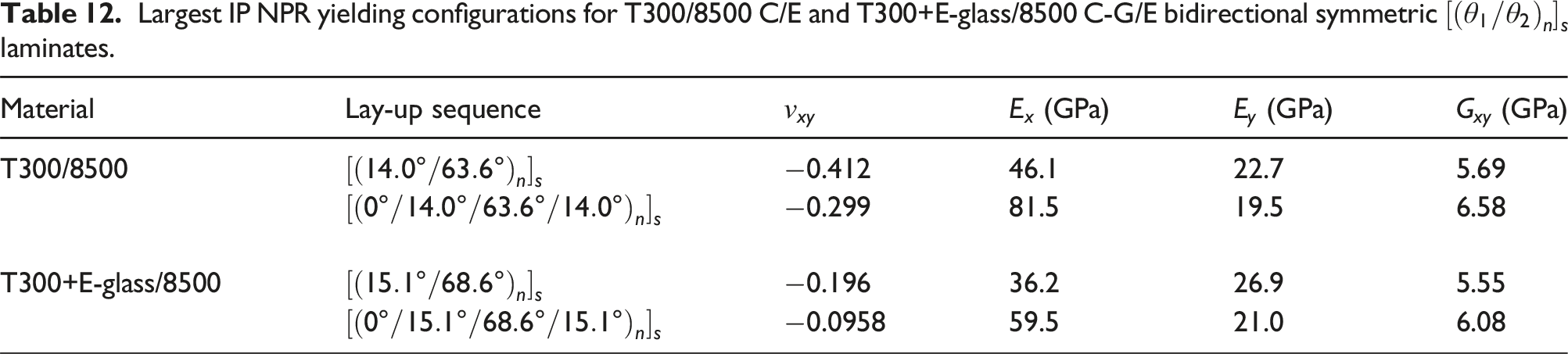
This inclusion would invariably translate in a decrease of auxetic magnitude, however maintaining auxetic behaviour - residually in the case of the studied C-G/E lay-up sequence. While there is a clear increase in E x with respect to the maximum NPR sequences, which would improve tensile behaviour, this reduction in ν xy could lead to larger decreases in the associated auxetic enhancements, especially as for the case of low velocity impact resistance and delamination suppression.
As for strength, the inclusion of 0° could promote better distribution of tensile stress, with this orientation angle presenting optimal resistance to this type of mechanical solicitation. Nevertheless, more studies are required, not only on the tensile domain but also under low-velocity impact, to further study the influence of distinct auxetic sequences on the overall strength of the laminate, in order to obtain the best balance between auxeticity and strength. Moreover, the employment of a fabric with a distinct weft fixation technique might prevent the early formation of local weak points, and avoid premature failure in IP NPR laminates.
Conclusion
In this work, the tensile properties of IP auxetic laminates, under the AuxMMMs umbrella, have been evaluated. Tensile tests, according the the ISO 527-4 standard, using videoextensometry techniques, were performed to UD C/E and G/E specimens, namely T300/8500 and E-glass/8500 laminates, and to C/E and C-G/E IP NPR laminates constituted by the same materials, with lay-up sequences of
E
x
results correlated well with analytical predictions, especially in the UD cases, with an overestimation of this property for the IP NPR groups, with similar results for E
y
. Given the necessary ply orientations in order to achieve maximum auxeticity, a reduction of E
x
was verified in the auxetic specimens, when compared to the UD cases. For C/E specimens, E
x
was reduced from 141 GPa in the UD case, to 39 GPa in the IP NPR case. The inclusion of G/E plies further reduced E
x
amongst the IP NPR cases, as expected given the lower anisotropy of glass fibre, from 39 GPa in C/E specimens to 30 GPa in the hybrid case. This same factor also induced larger
As for
Concerning ν xy results, larger discrepancies between predicted and experimental data were verified, coupled with a overestimation of the magnitude of ν xy in the IP NPR cases. Auxeticity was experimentally observed, with a ν xy of −0.333 and −0.180 for the C/E and C-G/E tested groups, respectively. When comparing these values to UD C/E and G/E readings, with averages at 0.341 and 0.331, respectively, it becomes evident that auxeticity is a structural property that arises, mainly, from the lay-up configuration of a given laminates. Even so, material anisotropy still plays a key role for the development and maximization of auxeticity, as evidenced by the reduction in IP NPR magnitude from the C/E to the C-G/E group, due to the inclusion of less anisotropic glass fibres.
From this study, it is evident that the lay-up sequences required for maximisation of IP auxeticity lead do significant decreases of stiffness and strength from the UD case. An alternative design was analysed analytically, with the insertion of 0° plies in IP NPR specimens. Analytical elastic results show an increase of E x from 46 GPa to 81 GPa in C/E, and 36 GPa to 59 GPa C-G/E lay-up sequences, between the maximum NPR configurations and the alternative. This comes with a decrease of auxetic capacity - from −0.4 to −0.3 in the C/E case, and from −0.2 to −0.1 in the hybrid sequences.
Thus, IP auxeticity has been verified experimentally for C/E and C-G/E laminates. The maximisation of NPR is accompanied by reductions in stiffness and strength, which can be improved with the utilisation of alternative auxetic lay-up sequences. Yet, more research on novel auxetic sequences is necessary - not restricted to bidirectional lay-up sequences - to manage an equilibrium between the stiffness and strength, and auxetic enhancements, especially regarding LVI enhancements, with the final intent of the widespread application of these metamaterials in components for improved LVI resistance and reduced delamination propagation.
Footnotes
Declaration of conflicting interests
The author declared no potential conflicts of interest with respect to the research, authorship, and/or publication of this article.
Funding
The author(s) disclosed receipt of the following financial support for the research, authorship, and/or publication of this article: This research had financial support from the Interface program (“Project Fibrenamics/CTI”) - base program under the Recovery and Resilience Plan approved in the terms of the Call for Proposals (AAC) No. 03/C05-i02/2022.

Data availability statement
Data sharing not applicable to this article as no datasets were generated or analyzed during the current study.