




Abstract
Auxetic laminates are part of a fascinating branch of materials denominated as auxetics, which display a NPR (Negative Poisson’s Ratio), an uncommon property in the engineering world. Auxeticity is at the root of enhancements in shear and indentation resistance, fracture toughness and energy absorption, making the design of NPR a desirable feat in structural engineering. In composite laminates made of conventional, i.e. positive Poissons ratio, materials, auxeticity is a result of the combination between particular angular configurations and anisotropic materials. Such laminates can be used in a wide array of engineering applications, especially those which require high energy absorption capacity, including aerospace, personal defense and sports industries. This review focuses on particular property enhancements reported in the scientific world brought about by the design and application of IP (In-plane) and TTT (Through-the-thickness) NPR fibre-reinforced polymer laminates under QSI (Quasi-static indentation), LVI (Low-velocity impact) and fatigue solicitations. Furthermore, some insight is given on some possible future paths for further investigation of this topic.
Introduction
Auxetic materials have been of increasing importance in the engineering world. Their unique mechanical behavior, due to a NPR (Negative Poissons Ratio) i.e., a synchronous orthogonal compression or dilation, can generate structural property enhancements on shear stiffness, fracture toughness, indentation and impact resistance. 1 Generally, auxetics have foam or composite origin. The former takes advantage of the variation of internal voiding with load application. Regarding the latter, the current focus of the area falls on lattice structures with specific stiff material patterns, incorporated in a ductile matrix, which induce auxeticity under loading. The inclusion of an auxetic element in composite laminates - either the fibre or matrix - has also been studied, with reports of a four-fold increase in fibre pull-out resistance with auxetic fibres against conventional ones.2,3
A further method concerns prompting auxetic behaviour in fibre-reinforced composite laminates made of conventional, i.e. positive Poissons ratio, materials, namely C/E (Carbon/epoxy), G/E (Glass/epoxy), K/E (Kevlar/epoxy) and C/P (Carbon/thermoplastic). Auxeticity in such laminates is a function of material (anisotropy) and structural (ply orientation) properties. UD (Unidirectional) fibre laminas are applied in this type of laminates. A distinction on the auxeticity plane must be defined based on the orthotropic behavior of laminates: IP (In-plane) auxeticity refers to NPR on the face plane of the laminate (ν
xy
, ν
yx
); TTT (Through-the-thickness) auxeticity implies NPR along the thickness plane (ν
xz
, ν
zx
, ν
yz
, ν
zy
). The adopted designation for local lamina (x1-x2-x3, or 1-2-3, with x1 as the fibre direction) and global laminate axis system for this text is depicted in Figure 1. The angle θ between a given UD lamina and the global axis system quantifies ply orientation. Important to note that the results discussed in this review concern major Poisson’s ratios, i.e. ν
xy
, ν
xz
and ν
yz
. Adopted direction notation.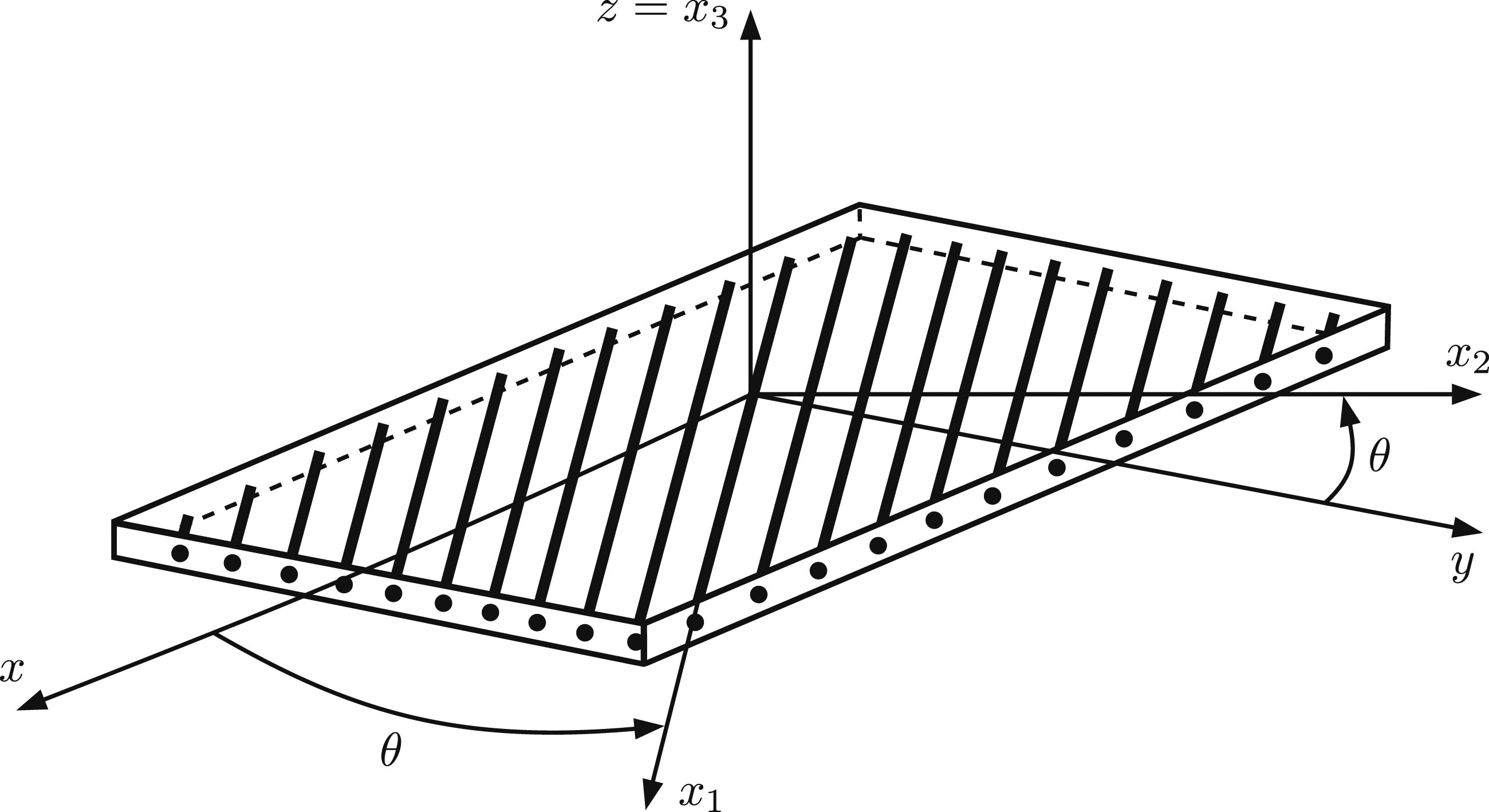
Furthermore, regarding the angular notation subsequently represented, the subscripts n, S and T are referent to the number of repetitions of a given set of angles, symmetric and total laminate angle stacking sequences or configurations, respectively.
Auxetic laminates display desirable properties for structural applications, as in the case of the aerospace industry. It is believed they have a beneficial effect on the poor inherent laminate’s LVI (Low-velocity impact) resistance, a deficiency that is very damaging to the industry as a simple tool drop during installation can induce internal delamination. 4 Moreover, these laminates can be exploited in mechanical joints to replace typical connectors. 5
This review focuses on the enhancements in shear, fracture, QSI (Quasi-static indentation) and LVI resistance prompted by auxeticity in conventional base-material composite laminates, and on the prior work of design and optimization of NPR in both the IP and TTT planes. The literature on the topic, presented in the following sections, focused, on an initial stage, on the design of the best combination of structural, i.e. largest NPR ply orientations, and material properties, chasing the highest anisotropy - inferred by IP moduli E x /E y and E x /G xy ratios (with E and G as the Young’s and shear modulus, respectively) - possible. Upon the achievement of such combinations, the scientific community turned their attention into the isolation of the auxetic effect and validation of their inherent enhancements. Hence, this review is subdivided into IP and TTT auxeticity design studies, and subsequent work performed to validate indentation, impact and fatigue resistance enhancements.
In-plane auxeticity design
Relevant bibliographic publications regarding IP NPR detection in laminates (Types: Analytical (A); Numerical (N); Experimental (E)).
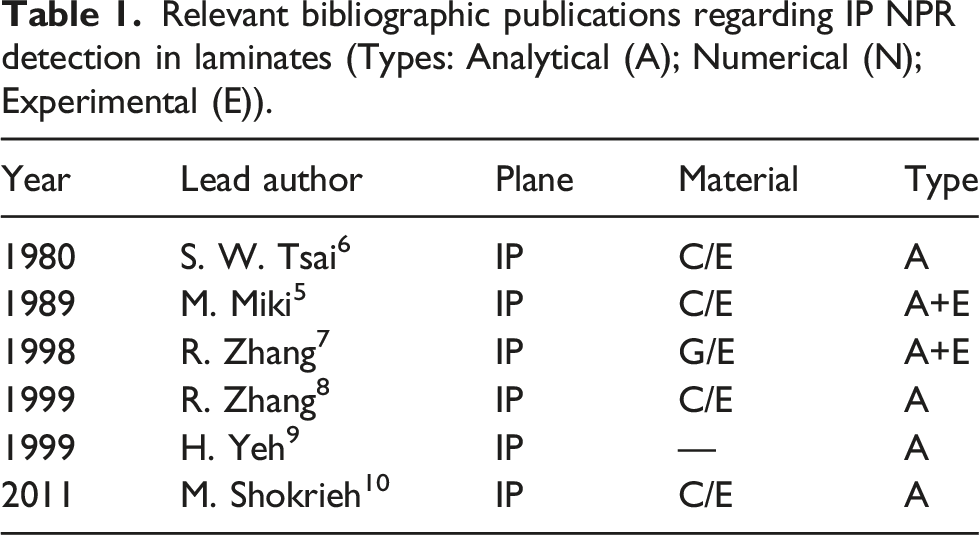
A subsequent study conducted in 1989 by Miki and Murotsu further solidified the idea of superiority of bidirectional configurations, by creating an iterative numerical method based on multidimensional nonlinear programming techniques.
5
The authors defined a set of initial angles for 6, 10 and 20-ply T300/5208 C/E laminates, and the solution converged towards unbalanced bidirectional laminates, in which final ply ratios and extreme values of ν
xy
depend on the initial conditions. Consequently, by adopting an heuristic approach restricting the number of orientations to two, the minimization of ν
xy
became independent from initial conditions, yielding a value of -0.380 for unbalanced ν
xy
vs ply ratio (p1 = N
n
/N
m
) in bidirectional C/E laminates.
5
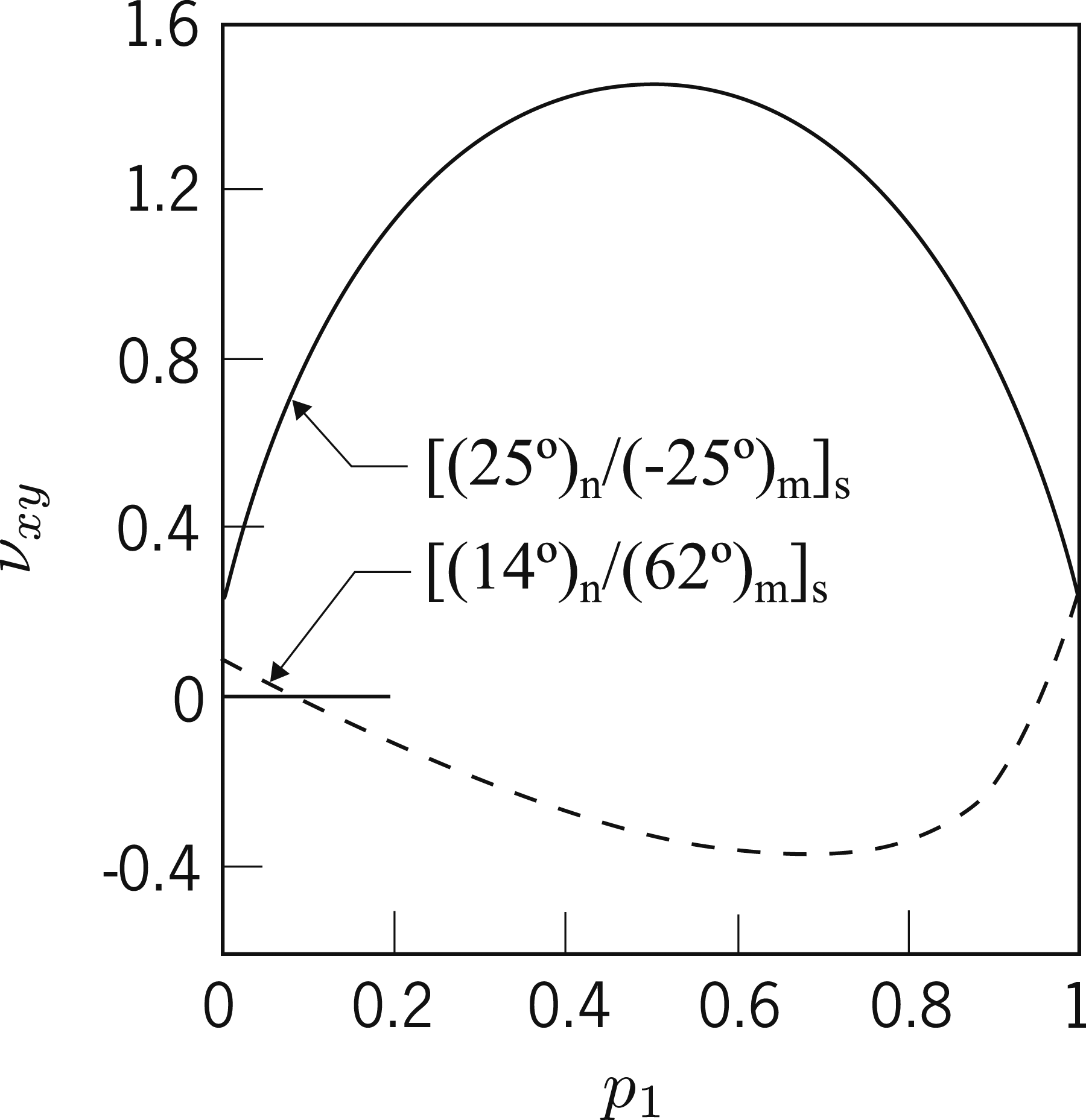
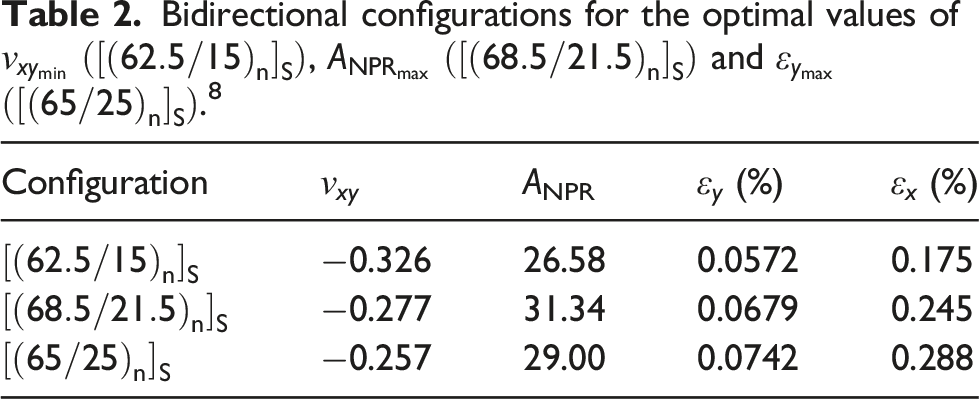
Bidirectional configurations for the optimal values of
Additional work from these authors on auxeticity in randomly orientated quasi-isotropic composite laminates reported that the decrease of E y /E x , increase of G xy /E x and decrease of ν xy produce the largest values of IP NPR. 9
Shokrieh and Assadi developed an optimization algorithm based on thickness ratios (design variable) and thickness normalization of T300/5208 C/E laminates to calculate the minimum major Poisson’s ratio in xy. A ν
xy
of −0.3536 was reached in unbalanced
Although the present work does not focus on auxeticity in laminates of elastomer-based matrices, it should be mentioned that these type of laminates can achieve very large IP NPR values. An honourable mention should be given to the work of Peel in the study of the behaviour of fibre-reinforced elastomer laminates, and later with the findings of improved damping on laminates with ν xy in the region of −6.11,12 Another possible application for this type of laminate was studied by Chen et al., who also explored the effect of IP NPR in carbon fibre-reinforced elastomer laminates on the design, manufacturing, characterization and parametric modelling of auxetic flexible skins for aircraft wings. 13
Through-the-thickness auxeticity design
Relevant bibliographic publications regarding TTT NPR detection in laminates.
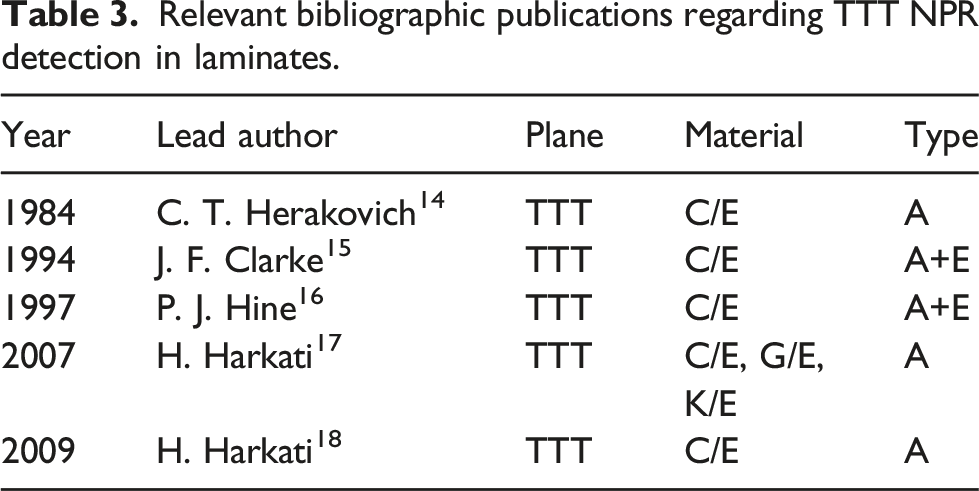
The first analytical publication dates to 1984, when Herakovich reported the possibility of TTT auxeticity in ν
xz
and ν
yz
for 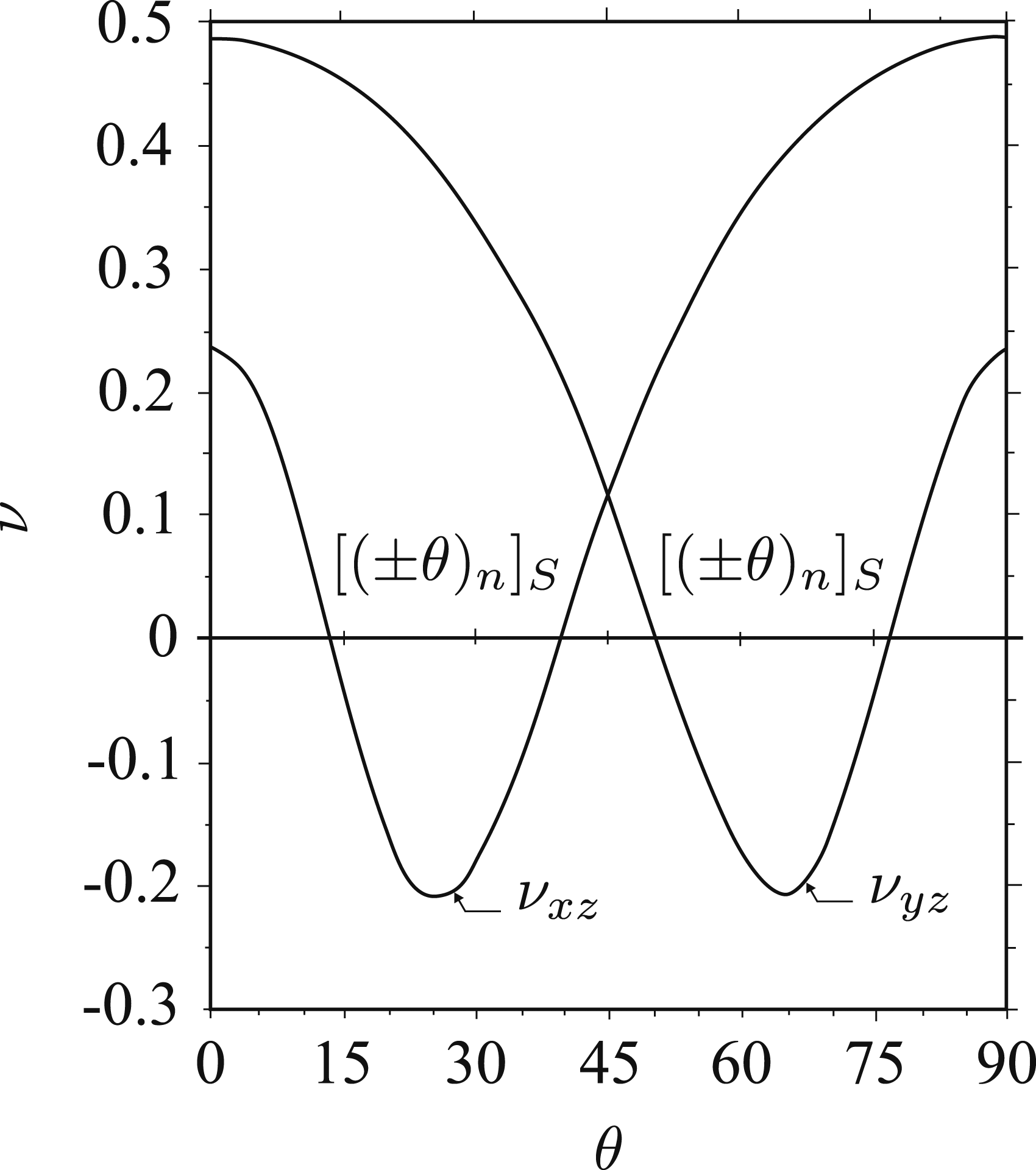
Experiments by Clarke et al. in 1994 proved the existence of TTT NPR in
This work was further developed by Hine et al. in 1997.
16
Maintaining the same operational conditions from the previous work, with the exception of the usage of a high-modulus Courtaulds HM370 carbon fibre (E1= 350 GPa) in order to increase the material’s anisotropy, for
Harkati et al. further developed the topic analytically, by modelling the influence of orientation and fibre reinforcement on TTT Poison’s ratio in C/E, G/E and K/E eight-ply laminates with a
A subsequent publication by the same lead author focused on the influence of carbon fibre and resin type, and fibre volume fraction on the xz TTT Poisson’s ratio on Variation of E
x
/Ey with 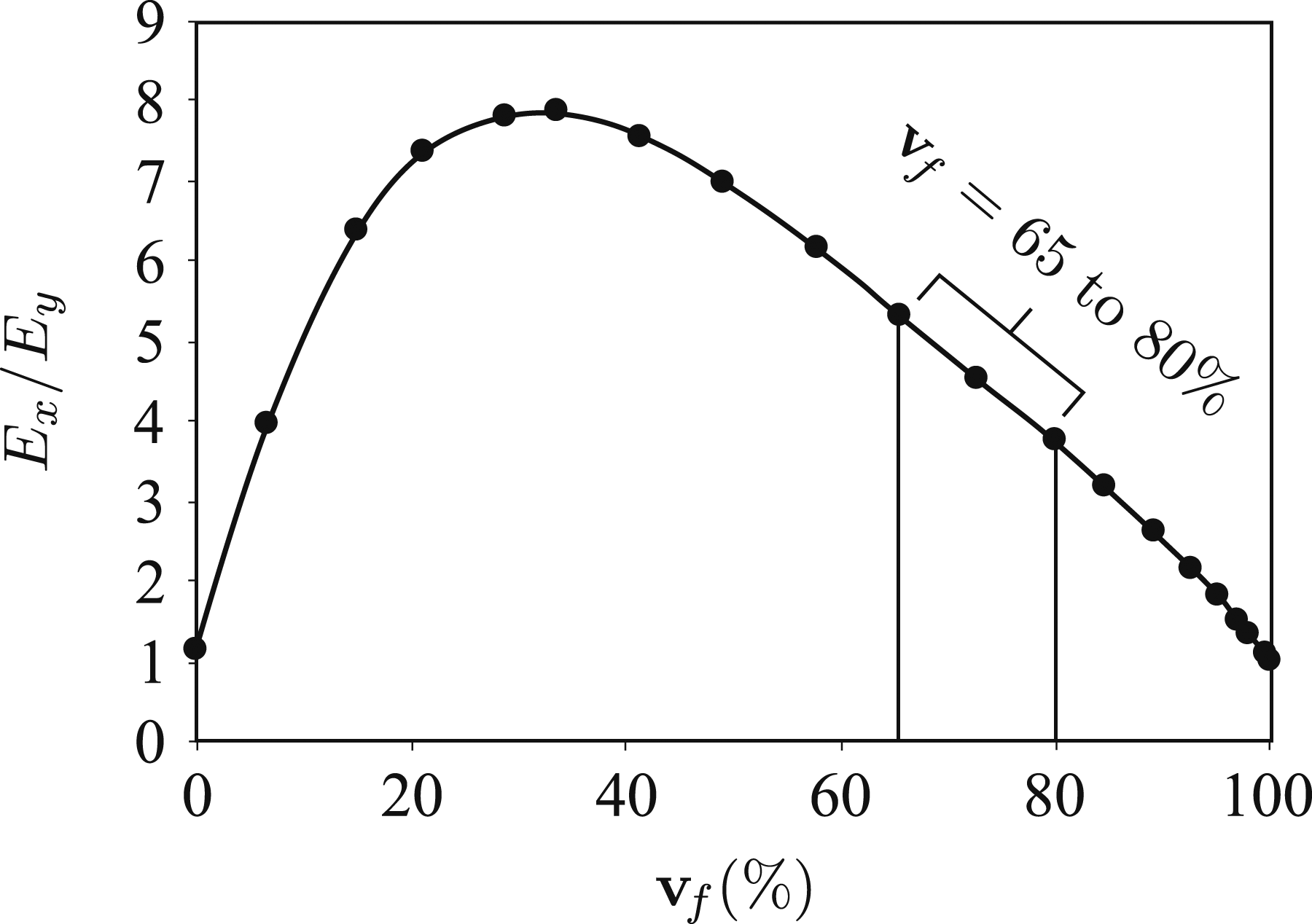
Quasi-static indentation and impact resistance enhancements
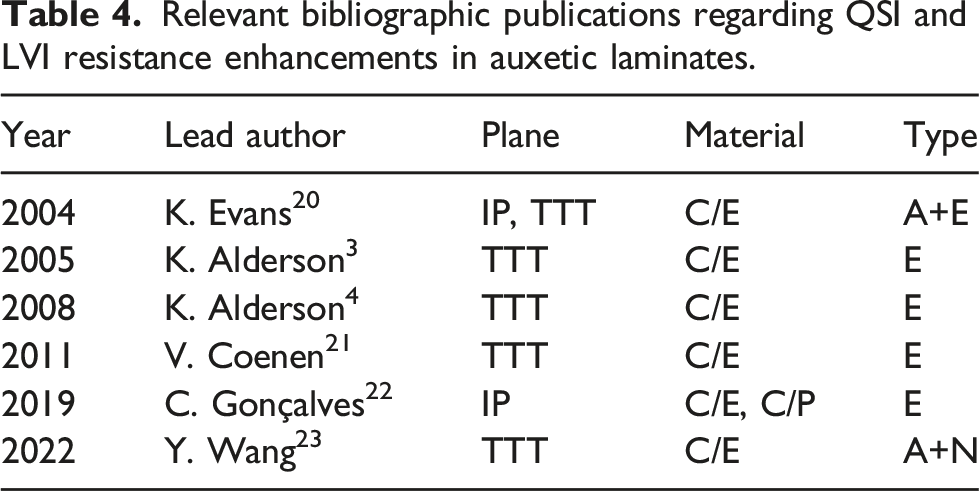
Relevant bibliographic publications regarding QSI and LVI resistance enhancements in auxetic laminates.
Predicted elastic constants for AS4/3501-6 C/E laminates with negative ([0/15/75/15]S, NPR) and positive ([0/− 70/10/25]S, PPR) ν xy . 24
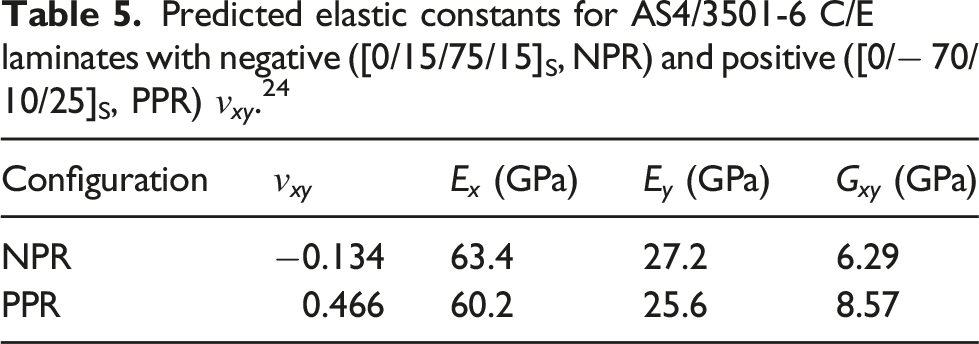
Predicted elastic constants for AS4/3501-6 C/E laminates with negative (
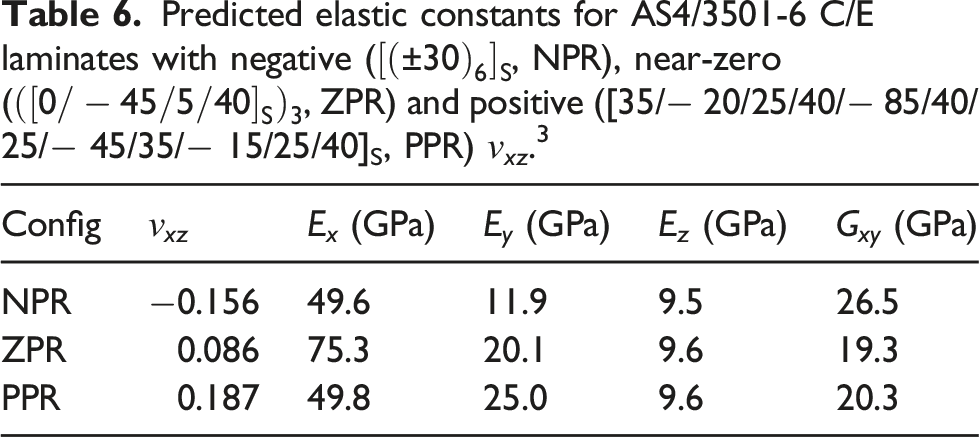
In the aftermath of the definition of aforementioned control groups, three papers from the authors K. L. Alderson, A. Alderson and V. L. Coenen, amongst others, were published on the topic, concerning experimental impact testing on 80×80×3 mm 24-ply vacuum bagged IM7/5882 C/E pre-preg panels, for the TTT case, subjected to flexural QSI and LVI tests under similar constraint conditions.3,4,21 Results indicated that the level of auxetic enhancements is a function of the failure mechanism(s) and the level of impact energy.
Preliminary QSI tests conducted with a 12.7 mm diameter hemispherical nose indenter, with 1.76 kg, showed higher sustained load and energy absorption to first failure (Table 7) and peak load on auxetic specimens. A fractography analysis of the damaged samples showed very localized fibre breakage and few delaminations on the TTT auxetic plates, and larger delaminations on the control laminates. The enhancements verified were originated via two damage limitation mechanisms:
3
• • Energy absorbed by IM7/5882 C/E TTT plane laminates in QSI tests to first failure.
21
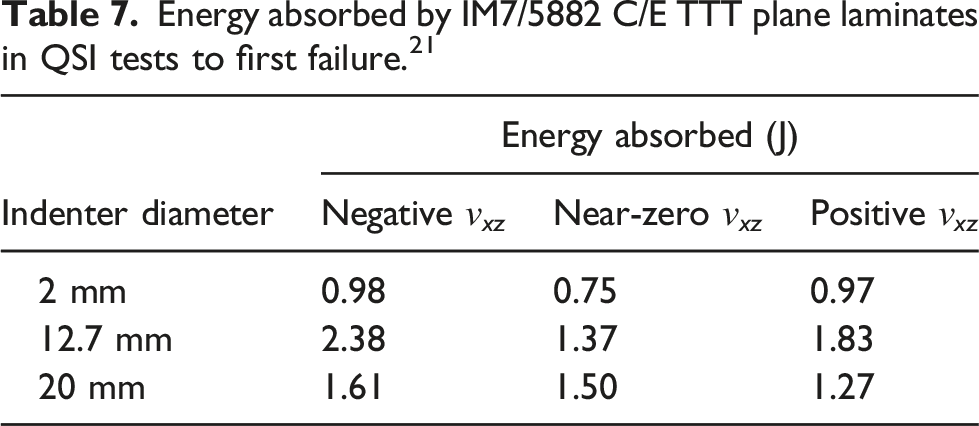
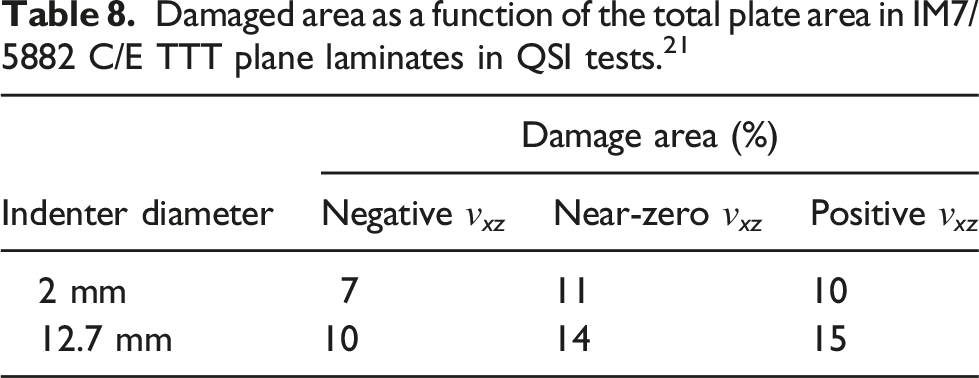
A follow-up study assessed the damage mechanisms induced by QSI using three distinct indenter nose diameters: 2 mm (with full specimen penetration), 12.7 mm (5 mm penetration) and 20 mm (up to catastrophic failure). Fractography and C-scans revealed a reduction in internal damaged area (Table 8) and extension of damage with the 2 mm and 12.7 mm diameter indenters in the auxetic specimens. However, enhancements in load sustained and energy absorbed in first and full failure were only observed with the roundest, or largest, indenters (12.7 mm and 20 mm), and decrease with the increase of nose diameter.
21
Through the results of this TTT study it could be concluded that: • Delamination is the dominant failure mechanism with rounder indenter noses - the delamination load onset threshold in auxetic specimens is increased due to their previously mentioned limitation mechanisms, hence when delamination is induced, its propagation will be truncated; • Fibre breakage is the dominant failure mechanism with sharper indenter noses - once the fibre breakage onset threshold is reached, there is no suppression for it as in the former. Although delamination is still constrained, due to the aforementioned damage limitation mechanisms, there is a bias towards fibre breakage, coupled with a higher concentration of force (due to the reduced area of load application) that will target fibres in a more catastrophic way without a limitation mechanism, auxetic enhancements are reduced or nonexistent. Damaged area as a function of the total plate area in IM7/5882 C/E TTT plane laminates in QSI tests.
21
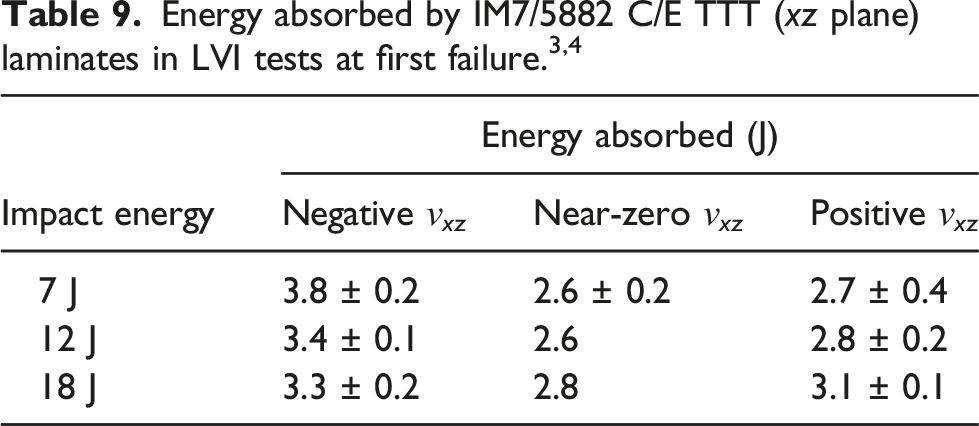
These findings highlight an energetic rate sensitivity of auxetic laminates, as energy absorption enhancements degrade with the increase of loading, specially after first failure - a trend only verified for auxetic samples. The significance of this impact event, allied with a more localized damaged area, is further denounced by the lesser residual properties in these specimens in response to a follow-up impact on the damaged area of 7 and 12 J impacted specimens. 4 Yet, this localization of damage is a plus for aerospace applications, as damaged areas are smaller, which makes them easier and cheaper to repair, simplifying maintenance operations. 25
Laminate configurations for xz auxetic ([252/− 252/252/− 252/252]) and matched-moduli positive ν xz laminates (Configuration 1 (C1): [502/02/502/02/502]; Configuration 2 (C2): [202/102/52/102/202]). 23
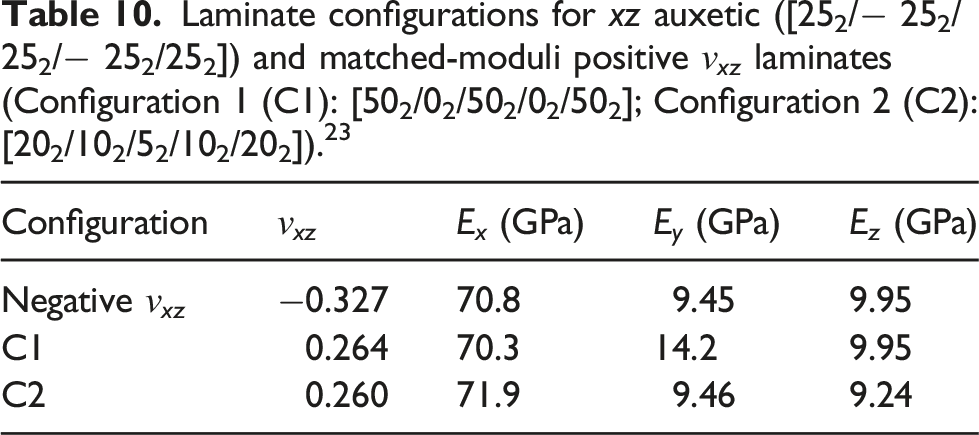
Important to note that the maximum energy level on this study (8 J) is close to the first failure energy level from Alderson and Coenen’s study (7 J), where a reduction in enhancements with increasing energy levels was verified specially beyond 7 J4. As this numerical study did not use larger energy levels, it should not be expected that the trend of enhancement escalation with increasing impact energy would persist as it would then oppose experimental observations, with consideration for the distinct indentation, configuration and material conditions.
Damaged area evaluation showed a two-fold increase of delamination in auxetic samples compared to Configuration 2 - a problem that worsens with increasing impact energy - with potentiated longitudinal growth and restricted transverse growth. Matrix compressive damage (often negligible) was also larger. The energy enhancements emerged from significant reductions in matrix (40%) and fibre (42% on average) tensile damaged areas, which are more sensitive to TTT NPR than to higher moduli: the synchronized orthogonal contraction during impact contracts the laminate in the x direction, reducing tensile damage. 23 It should be noted that an experimental recreation of this study could prove difficult due to the singularization of each one of the addressed damage mechanisms, although this numerical analysis provides a relevant insight into the problem at hand.
LVI influence on IP NPR laminates was analysed by Gonçalves et al. with eight-ply [0/15/75/15]S and
Fatigue and fracture enhancements
Relevant bibliographic publications regarding enhancements in fatigue and fracture toughness of auxetic laminates.
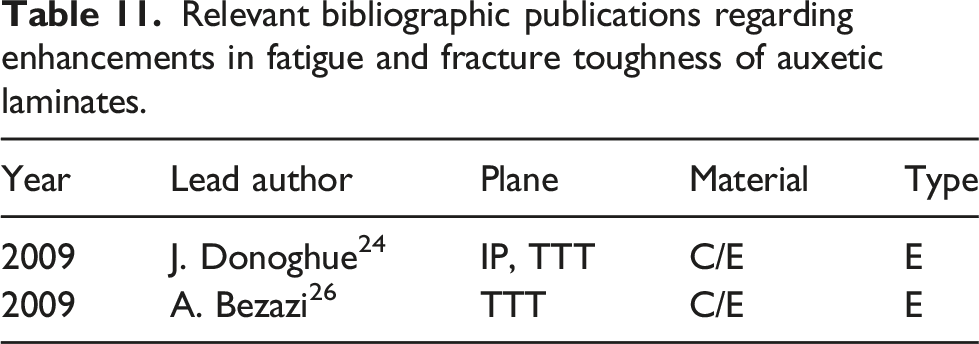
Donoghue et al. explored fracture behaviour on 16-ply AS4/3501-6 C/E pre-preg vacuum bagged laminates manufactured with double edge notched DEN specimens. The configurations shown in Tables 5 and 6 were used except for a near-zero
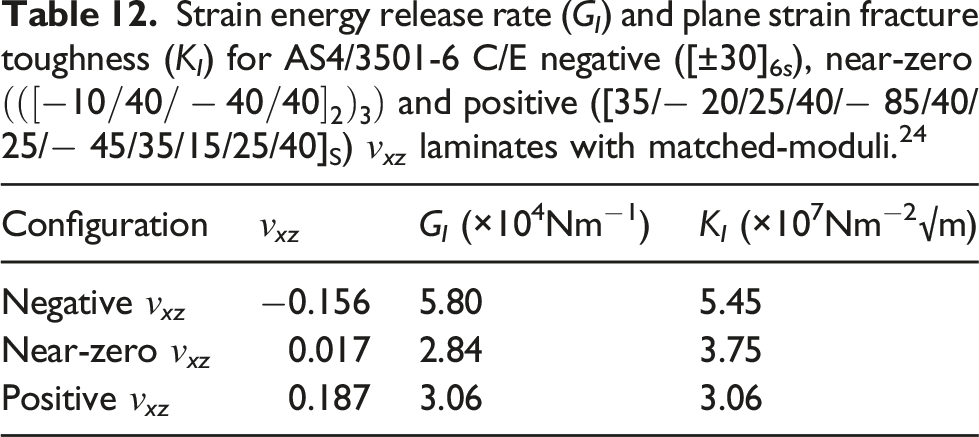
Larger values of compliance and a steeper rise of its value with increasing notch length were reported in TTT auxetic samples, indicating higher strain energy release rate and fracture toughness: the increased thickness and reduced width of auxetic samples, under tensile loading, distributes stress concentration at the crack tip over a wider area, reducing stress concentration and the probability of crack propagation onset. Furthermore, their balanced angular mismatch limits delamination (Table 12).
24
Variation of critical stress intensity parameter (K
Ic
) with notch length for AS4/3501-6 C/E [0/15/75/15]S and [0/− 70/10/25]S laminates.
24
Strain energy release rate (G
I
) and plane strain fracture toughness (K
I
) for AS4/3501-6 C/E negative ([±30]6s), near-zero 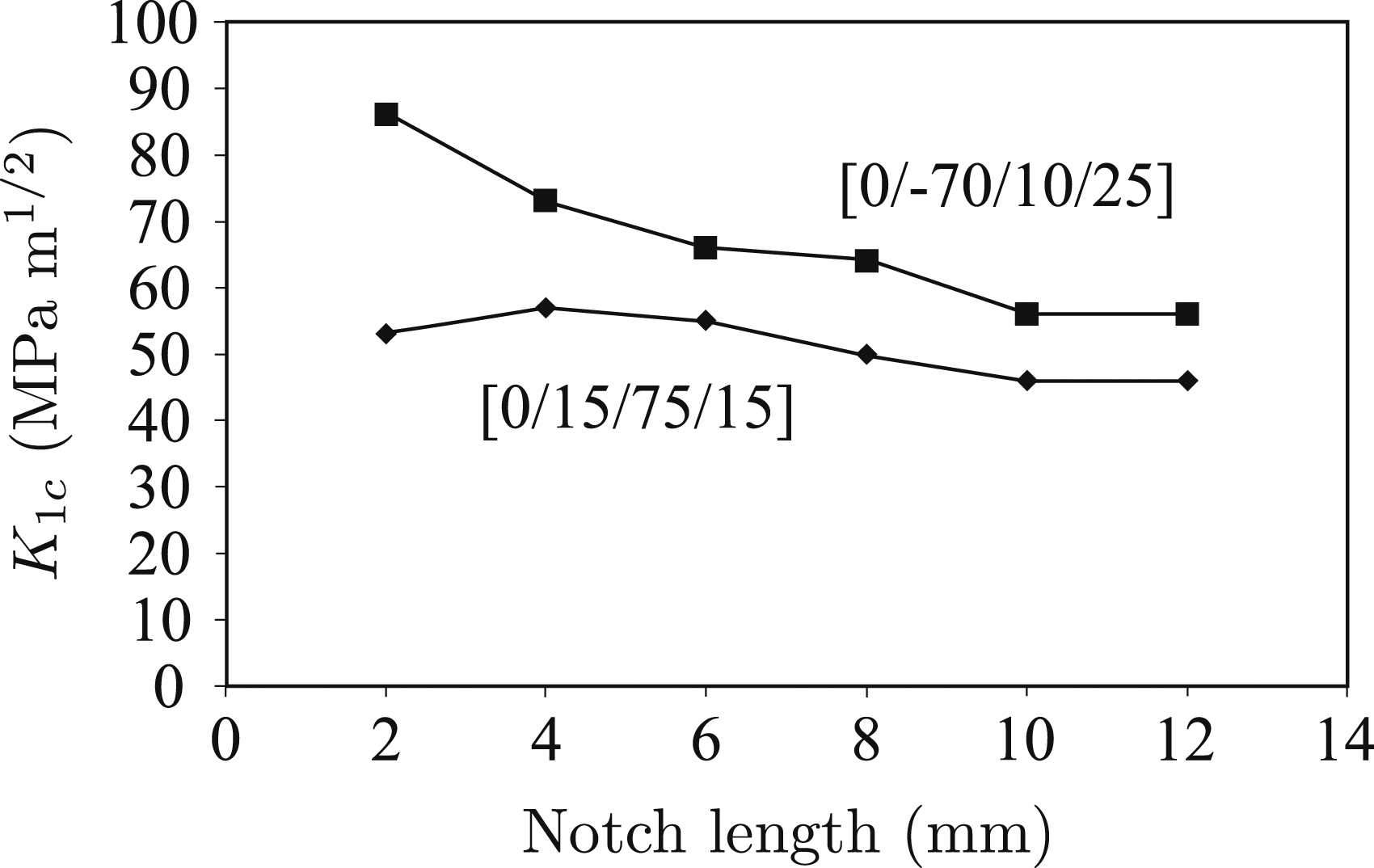
Bezazi et al. analysed eight-ply T300/914 C/E laminates with TTT auxetic configurations (
Discussion
Auxetic laminates occupy an interesting position in the scientific and industrial world, as their mechanical enhancements seem to display structural enhancements, specially in shear, indentation resistance and fatigue and fracture, with consequential improved energy absorption, that can be positively exploited in mechanical design of composite laminate parts subjected to low-velocity impact and cyclic loading.
More studies are necessary in the area to provide more knowledge regarding the limitations of auxetic laminates, i.e. up to what threshold of impact conditions is it beneficial to apply an auxetic configuration. It is proven that in laminates with similar IP stiffness, auxeticity leads to improved performance,3,4 however a reduction of elastic moduli is to be expected in such stack-up sequences which can negatively affect the property enhancements achieved by auxeticity. Furthermore, there seems to be an impact energy limit from which impact resistance and damage extension in auxetic laminates becomes close to the one of its positive counterpart in configurations with similar IP stiffness. 4 Further studies in this area are necessary to delineate the full range of impact capabilities of auxetic laminates.
Moreover, the efficiency of auxetic enhancements varies with the geometry of a given impactor - that can prompt a dominance of a certain damage mechanism. 21 Auxetic laminates proved to be effective on delamination-dominant cases, but not under penetration impacts that generate large fibre-breakage phenomena. An experimental approach to this question is rather complex, hence more numerical studies - such as the one by Wang 23 - could be developed, specially in order to better analyze and correlate different impactor geometries and induced damage mechanisms, and to explore larger levels of energy in order to make a bridge with the already performed experimental work, particularly in order to numerically validate the evolution of the delamination suppression mechanism.
With regards to the analysis of fracture enhancements, as mentioned by Donoghue et al., 24 new approaches of property matching are necessary, as investigating fracture toughness with respect to strength measurements method is perhaps not the most appropriate manner to assess NPR enhancements.
The effectiveness of conventional auxetic laminates should also be explored in more areas of structural mechanics, for example, for dynamic purposes, such as in the case of vibration damping, for which auxetic fibre-reinforced elastomers have already yielded positive results. 12
Nevertheless, the field of auxetic laminates has a lot of potential. Although it might not have the reach of lattice auxetic structures, it still does tap into the domain of composite laminates, vastly used in the industrial world. Overall, the study of auxetic materials is still relatively recent, and the development of this domain in the upcoming years is certainly a space to watch closely within the scientific community.
Footnotes
Declaration of conflicting interests
The author(s) declared no potential conflicts of interest with respect to the research, authorship, and/or publication of this article.
Funding
The author(s) received no financial support for the research, authorship, and/or publication of this article.
