




Abstract
This study is dedicated to conducting a comprehensive examination, both experimentally and numerically, to characterize the mechanical properties of a composite material composed of Alfa fibres and unsaturated polyester resin. In pursuit of this objective, we diligently prepared composite specimens in accordance with the ASTM D3379-75 standardization. The Alfa fibres used were prepares using a purely natural-based extraction technique, which retains approximately 78% of the composite's performance achieved through chemical treatment. The resulting composite consists of polyester resin reinforced with varying weight fractions of fibres, ranging from 0 to 18%.The test results of the manufactured bio-composite show that specimens with an 18% weight fraction offer a tensile strength of 49.749 MPa, whereas specimens with a 10% weight fraction exhibit a strength of 44.312 MPa. Additionally, the specimens with 18% fibre reinforcement exhibit a net increase in Young's modulus by 46% compared to the fibre-free composite, with Young's modulus ranging from 1469.66 MPa to 2726 MPa. When compared with composites based on fibre glass, the introduced bio-composite with 18% Alfa fibres exhibits similar stiffness to that of glass fibres. Additionally, the outcomes from the Finite Element Model (FEM) reveal a remarkable agreement with the experimental data, underscoring the practical applicability of the proposed methodology and tools for accurately simulating tensile tests in composite structures.
Keywords
Introduction
In the last few years, the use of natural fibres as reinforcement in composites is gaining increasing popularity due to their good properties such as lightweight, low cost, high mechanical properties, low environmental impact, high mechanical properties (strength and stiffness), and renewability. However, the mechanical properties of these composites can vary depending on the type of natural fibres used, their alignment, and the matrix material. 1 Those properties attract industrial manufacturers to more study and analyse those fibres as well as consider them as substitution to the existent synthetic fibres such as fibre glass and Kevlar. The composite based natural fibres properties confirm that they can be merged in various fields such as automotive and the buildings industry.2–4 Many studies focused on offering different methods and treatments procedure of natural fibres in order to use them as reinforcement in composite materials. Many researchers studied the effect of chemical treatment using the maleic anhydride, 5 with styrene, 6 with acrylic acid, 7 and the acetic anhydride, 8 to extract Alfa fibres and to reinforce unsaturated polyester resin. They found that the treatment with styrene increases the hydrophobic property and decreases the roughness. Alix et al., 9 studied the water adsorption properties of flax fibres treated chemically using Silane and styrene. The authors show that the resistance to the humidity of the reinforced composite increased. Many other recent studies have examined unsaturated polyester composites reinforced with mixed natural fibres such as abaca-sisal, abaca-linen, and sisal-jute.10–14 They have shown that the bending and tensile strengths of bio-composites increase with increasing fibres volume fraction. Some other researchers have investigated the mechanical, thermal, and thermo-mechanical behaviour of hybrid composites after the recycling process. They have also explored the impact of introducing reinforcement from sisal fibres into the recycled of fly ash/polypropylene hybrid composite15–17 and. 18 However, almost all studies focus only on the type of treatment often overlooks the most crucial factor in composite manufacturing, which is the weight fraction.
Research is being conducted to study the possibility of exploiting and using composite materials based on natural fibres in a wide range of applications. The challenge is to extract fibres with mechanical and physical properties that can compete with other synthetic fibres. Researchers19,20 demonstrated that the mechanical properties of certain fibres such as sisal and hemp exceed the properties of class E glass fibres when the extraction process was optimized. This discovery serves as an incentive for their application in diverse fields. The technological advancements in emerging bio-based plastics are truly remarkable and reflect their rapid expansion in the market. From 2003 to 2007, the average annual growth rate on a global scale reached 38%. Europe, during the same period, experienced an even higher annual growth rate of 48%. Projections indicate that the global capacity of bio-based plastics will rise from 0.36 million metric tons in 2007 to 2.33 million metric tons by 2013 and further to 3.45 million metric tons in 2020. Starch-based plastics, PLA, and PHA are expected to be the primary products in terms of production volumes. 21
In this work, Alfa fibres reinforcing unsaturated polyester resin were investigated. The composite is reinforced with different weight fractions of Alfa fibres and the mechanical properties in the tensile test were studied to identify the best weight fraction that offers a highest resistance. First, the fibres are extracted naturally with the retting process, this process is more eco-friendly than the extraction with a chemical process. In our earlier investigation of the mechanical characteristics of fibers extracted through distinct processes (chemical and natural), we observed that naturally extracted fibers exhibit commendable tensile strength, measuring 628 MPa, and a Young's modulus of 41,828 MPa. These values represent approximately 64.34% of the tensile strength and 78.64% of the Young's modulus compared to the superior results achieved through chemical treatment with NaOH, which yielded 976 MPa and 41,828 MPa for tensile strength and Young's modulus, respectively. 22 It should be noted that increasing in NaOH concentration results in increasing of strength of the extracted fibres but interestingly, this conclusion doesn’t apply to the composite as 9% NaOH concentration gives better results in compare to the case of 10% NaOH concentration. 23
To the best of the authors' knowledge, there have been no previous studies that compare composite reinforced with Alfa fibres to those reinforced with existent synthetic Glass fibres. And, due to the complex structures of natural fibres, there have been relatively few Finite Element Method (FEM) studies on composites reinforced with natural fibres. Among these studies, the Representative Volume Element (RVE) method has emerged as one of the most efficient homogenization-based multiscale finite element models. This method is capable of representing the key characteristics of natural fibres within a uniform microstructure, making it a valuable approach for simulating such composites.24,25
Hence this study meant to close this gap. Moreover, the present study, the effect of naturally extracted fibres weight ratio on the mechanical properties of a bio composite is investigated. To serve the purpose of the present work the paper is divided into three main sections. The first section presents a detailed description of the Alfa fibres extraction. The second section provides a comprehensive discussion of the results obtained from the tensile tests conducted on the prepared composite. The final section summarizes the key findings of the paper, compares them to the Finite Element Model (FEM) created, and concludes the study.
Materials and methods
Alfa fibres and treatment protocols
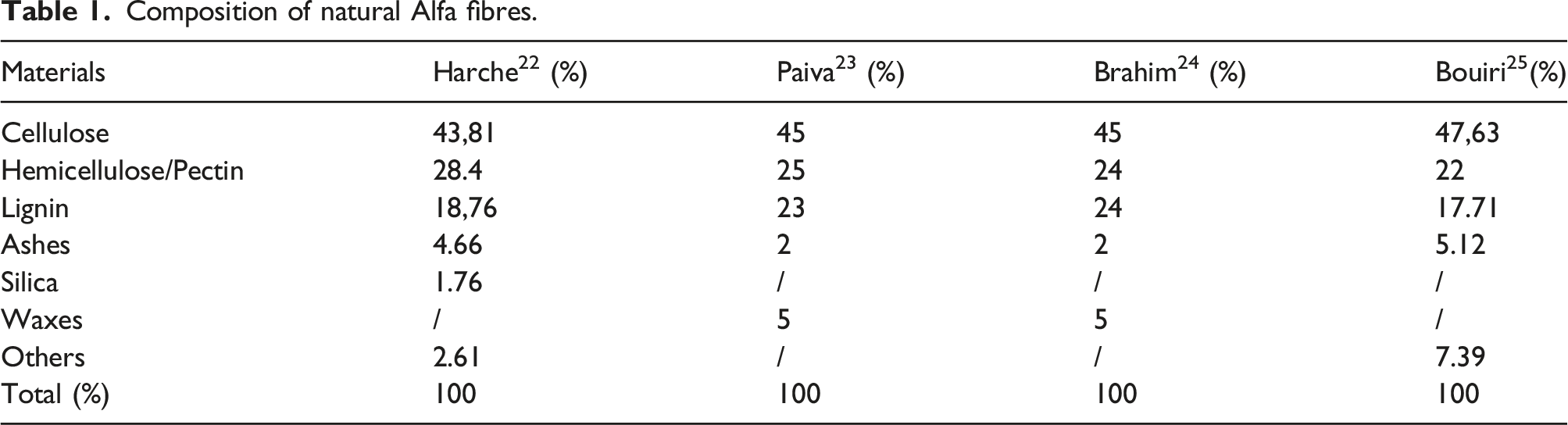
In this study, a treatment procedure was carried out using natural process with the help of normal water. The treatment protocol is a retting process which is a heritage technique used for the pre-extraction of flax fibres. It is mainly based on using fresh water (river water) to create a microorganisms (fungi and bacteria) swells the inner cells bursting the outermost layer. Thus, increasing absorption of both moisture and decay-producing bacteria, dissolving mainly cuticles, ashes and waxes that protect leaf against unfavourable environmental conditions and insects, which is a kind of enzymatic process.26–28
Composition of natural Alfa fibres.
The fibres extraction starts by harvesting the Alfa leaves from southwest of Algeria in the summer period following by a selection procedure which ensure that the only green fresh ones are chosen. Then, the retained Alfa leaves are washed and cut from their boundary extremities to insure a median homogenic size, which is characterized by a constant diameter of 2 mm (see Figure 1(a)). From optical observation of the leaf longitudinal and transversal cut as shown in Figure 1(b), the leaf are constituted of many bundles of micro-fibres with different diameter and the shape is almost circular, gathered with wax, lignin, pectin and protected with cuticle. (a) Alfa leaves, (b) Optical observation of the Alfa leaf.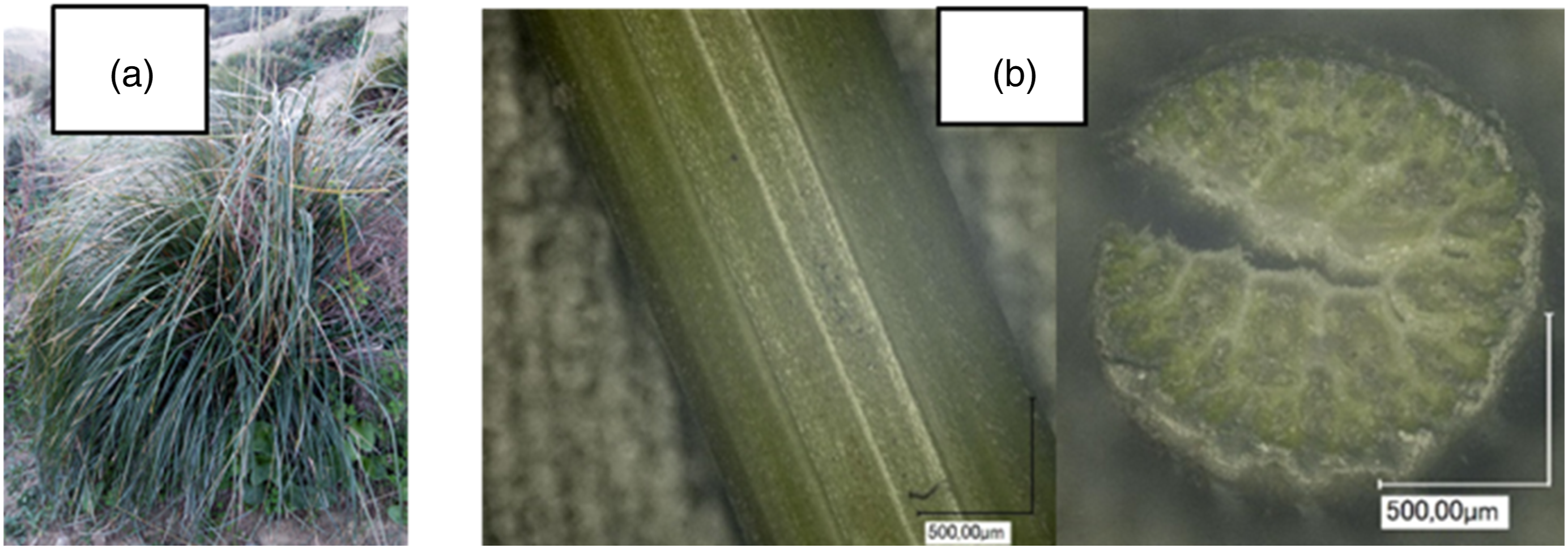
The Alfa leaves are submerged in a water tank for 3 weeks period, which is the required time to increase microorganisms that partially separate the bundles of fibres from each other as shown in Figure 2(a). Later on, the leaves are cleaned with distilled water to neutralize the PH. Finally, the leaves are dried and the fibres bundles are extracted using mechanical extraction mechanism (see Figure 2(b)). (a) The bundles of fibres partially separated, (b) extracted Alfa fibres.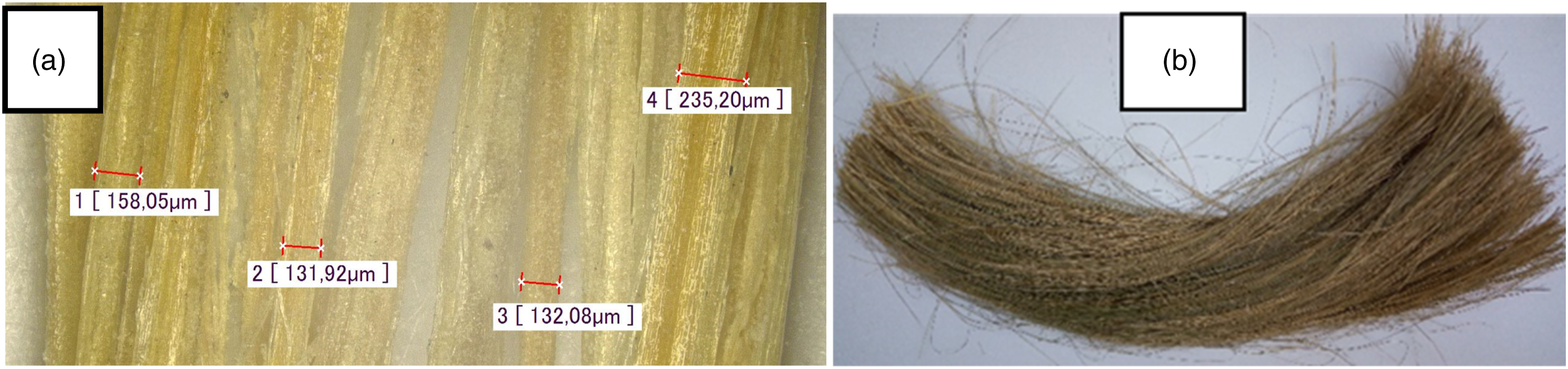
Unsaturated polyester resin
Unsaturated polyester resins are the most used resin in composite materials. It can be found in different fields such as naval, pipes construction, tanks, and some of the electrical components. They are also commonly used in the automotive and construction industries, as well as, in the production of industrial adhesives. 34 One of the main advantages of polyester thermoset resins is their resistance to moisture, impact, heat, and chemical agents, making them ideal for use in harsh environments. They are also relatively lightweight, which makes them easier to handle and transport.
The resin used in this work is unsaturated polyester resin, they are made from a combination of polyester and a catalyst (curing agent) and are characterized by their high strength and durability. Many recent studies in this field developed polyester composite reinforced with abaca-sisal, abaca, Flax and sisal-jute12,35,36
Preparation of the mould and Alfa fibres cloth
The preparation of a mould is a mandatory step in the manufacturing process of the composite. To this end, a simple rectangle shape mould is constructed using wood sheets. Then, demoulding agent is applied as thin layer along the mould length. This step helps to facilitate later on the demoulding of composite. The second step is to prepare the unidirectional cloths of long Alfa fibres, the fibres are fixed on both ends using two faces tape on the mould as shown in Figure 3(a) it is worthy to be mentioned here that the weight fraction is the main factor that characterizes the number of layer of fibresFig.3(b). Finally, the appropriate mixture, consisting of 98% of resin and 2% catalyst (curing agent) is evenly spread along the mould. As a final touch, a roller is applied to the composite to get rid of the air bubbles. Preparation of the unidirectional cloths.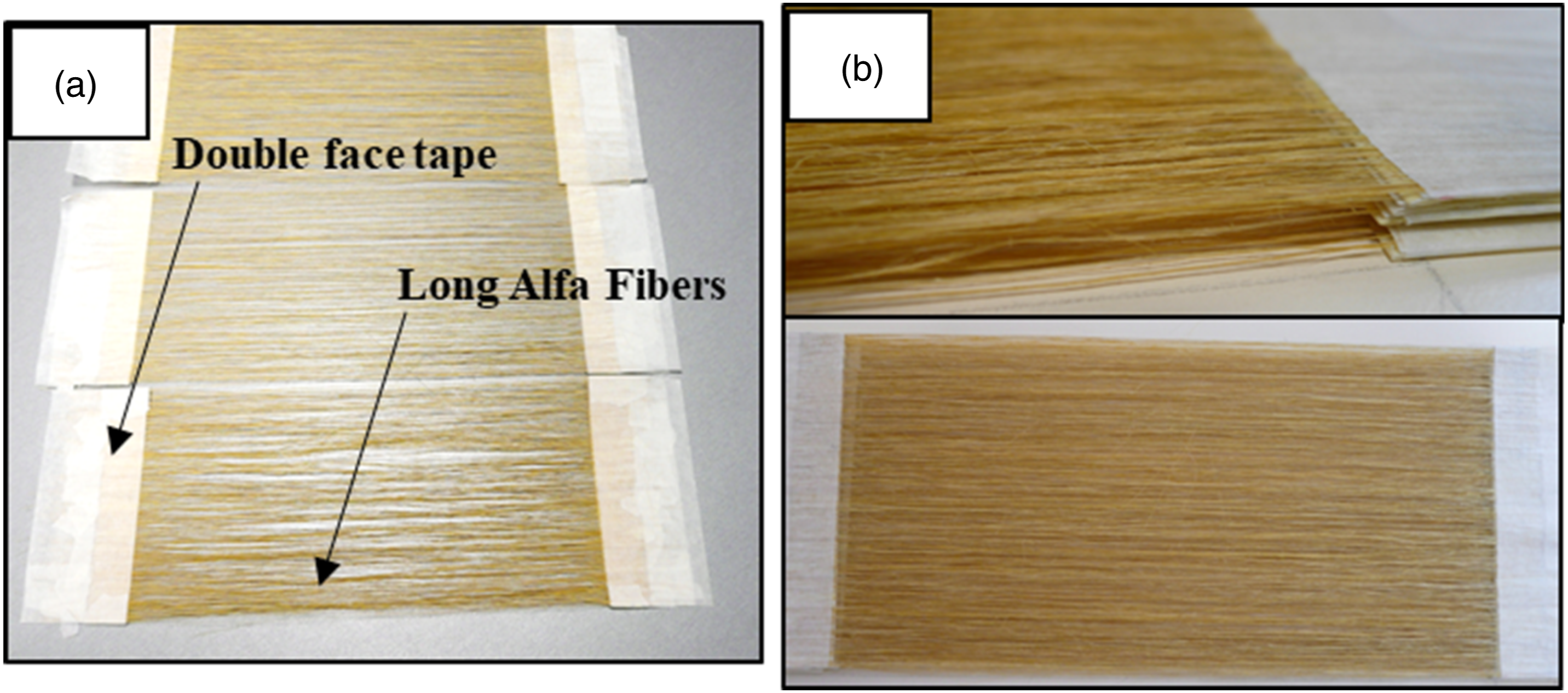
Preparation of the samples
To analyse the effects of the weight fraction (filling ratio) on the mechanical properties of the Polyester/Alfa fibres composite, two plates were made with different weight filling ratio and third specimen is polyester resin. The specimens are prepared and tested according to the standards ISO 527-5. 37
This standard suggests instructions to determine the tensile properties of composites reinforced with unidirectional cloth of fibres.
The test samples are obtained by cutting the moulded composite sheets into the appropriate dimensions using a cutting tool specifically designed for machining carbon fibres composite. It should be noted that the samples must be carefully prepared to ensure that the edges are clean and free from defects that could affect the test results. The final specimens have a length of 250 mm, width of 25 mm and thickness of 2 mm (see Figure 4(a)). Tensile tests: (a) Composite samples (specimens), (b) Specimens installed in tensile machine.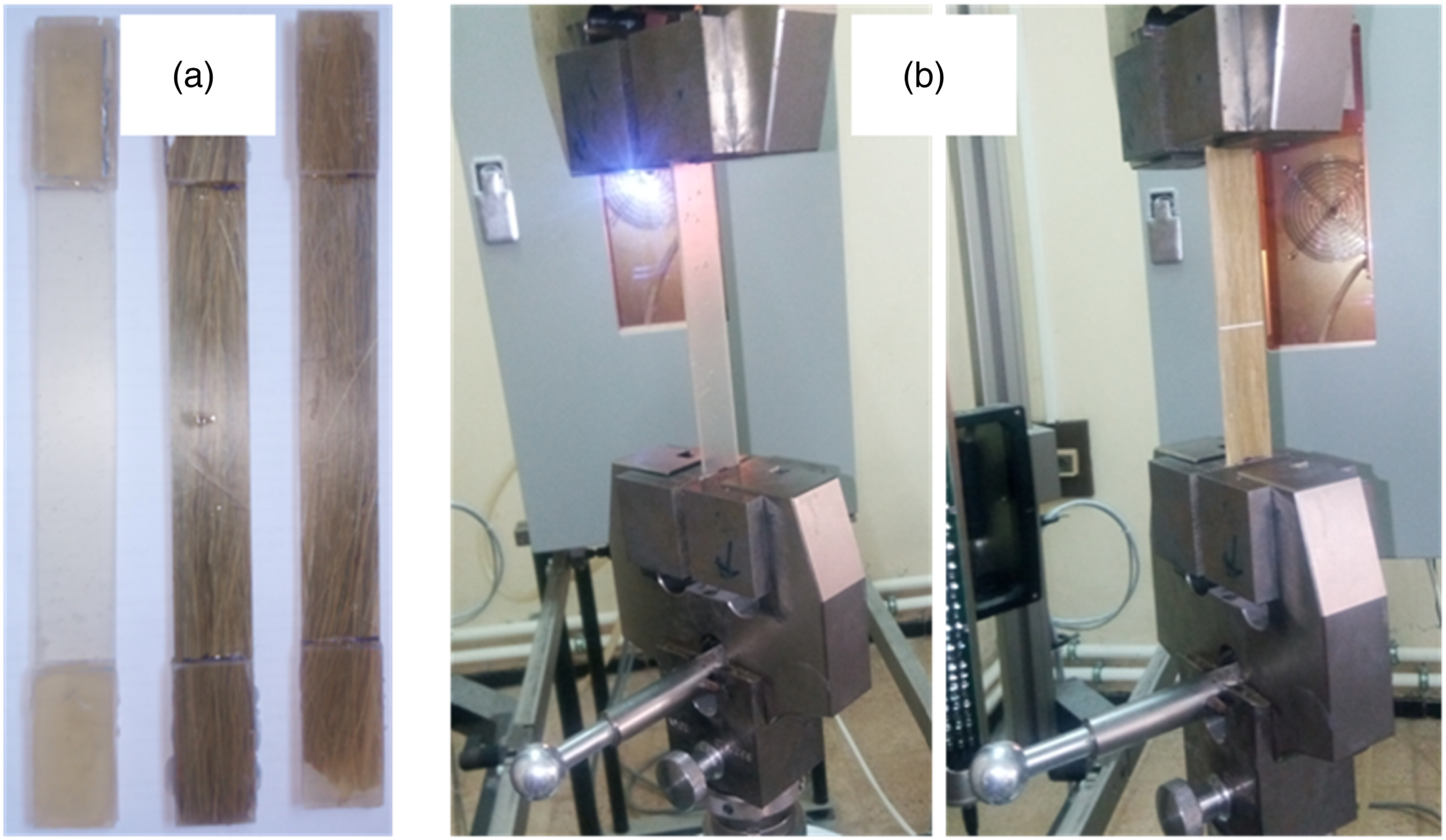
In the present study, six specimens for each weight ratio were tested, ensuring the reliability of the results. The experiments were performed using a 25 kN load capacity tensile machine (Zwick/Roell Z020). The loads were applied with speed of 2 mm/min (see Figure 4(b)).
The Outcomes results are obtained as follow:
Engineering stress, or nominal stress, S, is defined as

L0 is the initial gage length (150 mm).
Where ΔL is the elongation in gage length (L-L 0 ) and L is the final gage length at fracture.
The measure used to describe the ductility of the material is the percent elongation which is
The advantage of dealing with stress versus strain rather than load versus elongation is that the stress-strain curve is virtually independent of specimen dimensions. The young’s modulus is obtained using the following formula

Results and discussion
Properties of the long Alfa fibres
The mechanical properties of individual bundle of fibres were previously presented in our published paper.22,23 These properties were determined following standard test ASTM D3379-75 38 for natural fibres. Multiple tests were conducted for each treatment. The results of the tensile tests indicated that the fibres treated with 10% NaOH exhibited the most favourable properties. 22

Properties of composite
Three different weight fractions of fibres were tested as reinforcements for the composite: 0%, 10%, and 18%. The corresponding stress-strain curves for these fractions are illustrated in Figure 5. Although six specimens were used in the tests, we are presenting only four results for visibility reasons. For the weight fraction of 0%, the results show an uncertainty of approximately 10%, resulting in mean values of 2.011 MPa. When the weight fraction is 10%, the mean value is 5.472 MPa, with a similar uncertainty of about 10%. However, when the weight fraction increases to 18%, the variation in results becomes more pronounced at 20.53%, resulting in an average value of approximately 20.218 MPa. This variation is expected because Alfa fibres have a natural origin, characterized by significant dispersion. The ultimate stress can vary between 25% and 40% within the same batch of extracted fibre bundles. The evolution stress strain curve for different weight fraction Alfa fibres.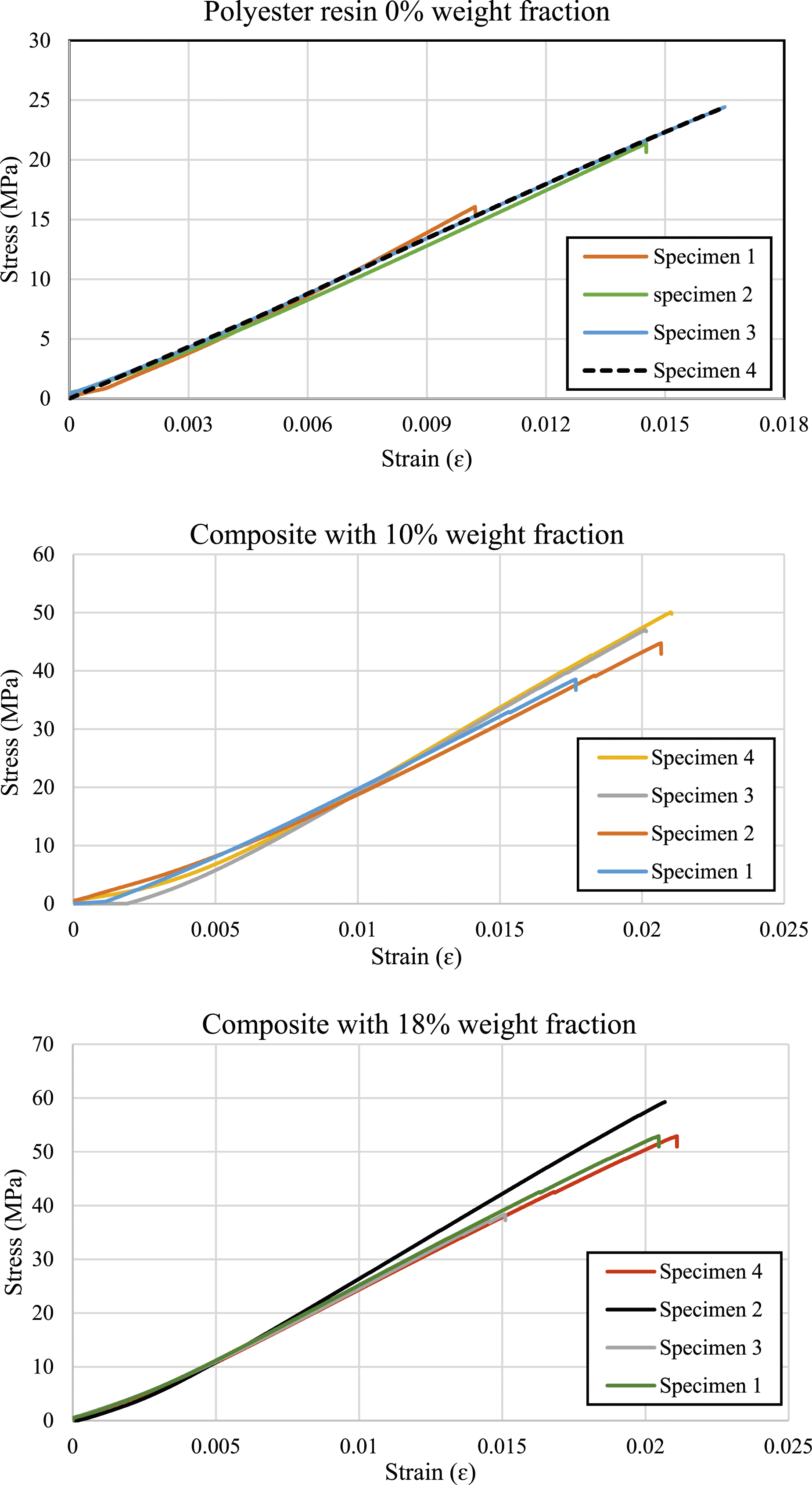
Values of mechanical properties of composite for different weight fraction.

The longitudinal modulus of the composite reinforced C_AF10 and C_AF18 are 2547 MPa and 2726 MPa respectively. The longitudinal modulus of polyester resin is about 1469 MPa. Also, the strain increases slightly from 1.64% to 2.11% as the fibre weight fraction increases from 0% to 18%. It can be noted that the evolution of the composite strain at break with the fibres filling ratio increase with increasing weight fraction, the strain progress from the resin strain to the fibres one since the strain at break of the fibres and the polyester resin are comparable.
To properly compare the obtained bio-composite with composite reinforced with fully synthetic Glass fibres. Tensile tests were performed on specimens of unidirectional composite C_GF18 (see Figure 6(a)). The results show that the composite reinforced with 18% weight fraction present a net increase in ultimate stress by almost two times in comparison with the bio-composite C_AF18 which is 95.168 ± 11.899 MPa. Regarding the Young’s Modulus, the obtained results are similar for both composite with value reached 2726 MPa.In addition, the variation of the results for the composite C_GF18 is noted to be 21.05% which is about 20 MPa as shown in Figure 6(b). (a) Tensile test of polyester/glass fibres, (b) The evolution stress strain curve polyester/glass fibres.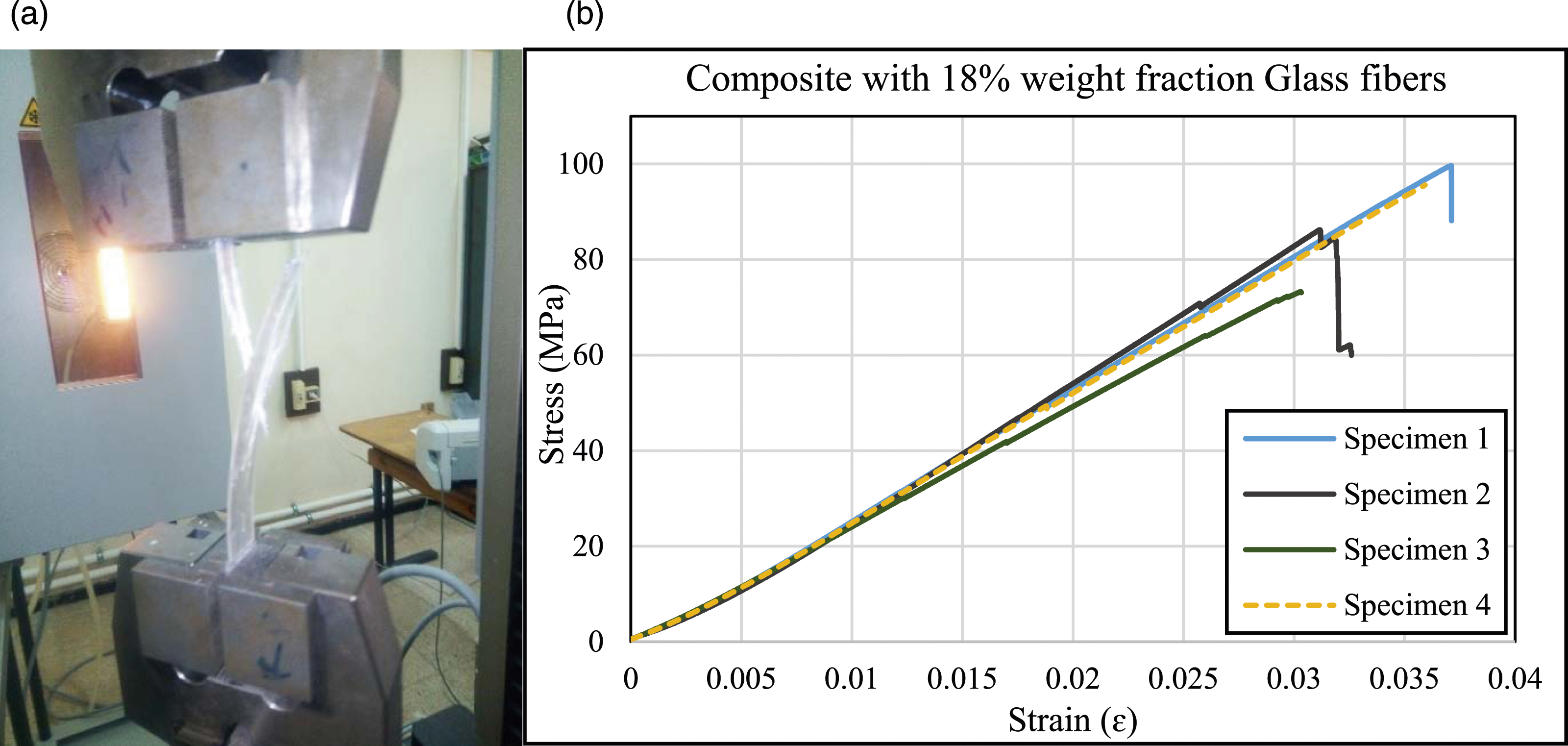
To better visualize the change between different weight fraction Alfa fibres and Glass fibres reinforcing polyester resin, all the average curves of each composite is shown in the Figure 7. The evolution stress strain curve for different weight fraction Alfa fibres/polyester and Alfa fibres/polyester.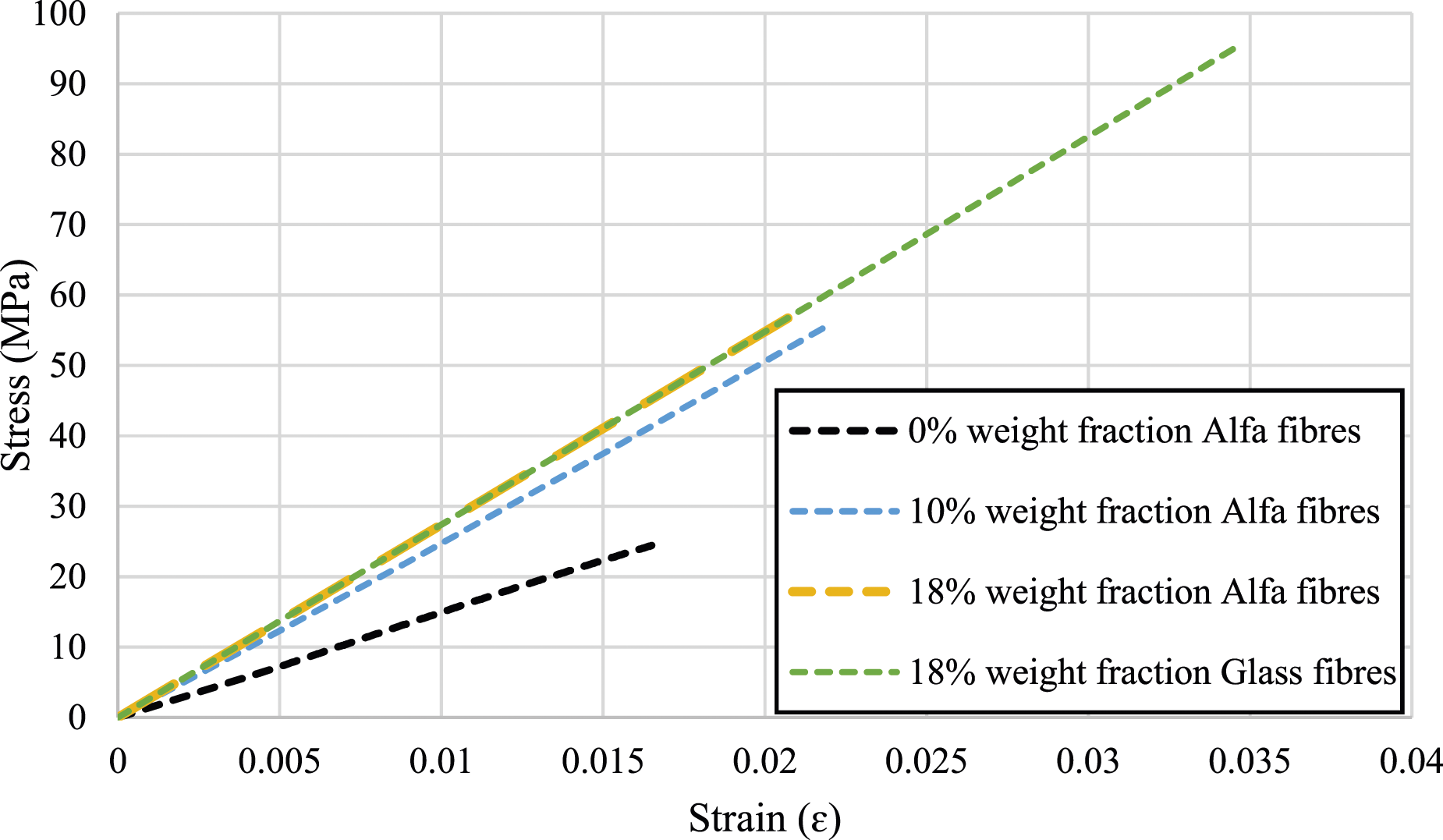
Finite element model description
Average values of mechanical properties for thefibre and the resin.
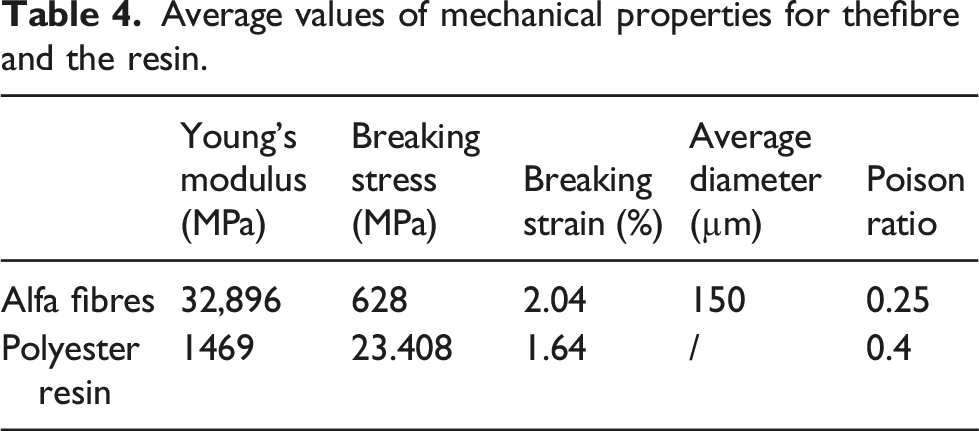
During the assembly of the composite material, we assume an ideal bond between the fibres and the resin, disregarding any defects or imperfections. This simplification allows us to create a robust representation of the composite material's behaviour under tensile loading conditions, enabling a comprehensive analysis of its mechanical response.
To determine the number of fibres in the composite reinforced with a 10% weight fraction, we examine the cross-section and use the same number of fibres in the Finite Element Model (FEM). In the FEM model, we employ the volume averaging method, which involves parameterizing the composite's cross-section by creating partitions. This approach minimizes the number of elements and reduces calculation time, as illustrated in Figure 8. For meshing controls, we utilize hexagonal elements for the element shape and apply the sweep technique and mapped meshing when appropriate within the algorithm. Simulated of the composite plate. (a) 3D Alfa fibres, (b) 3D assembly fibres/resin, (c) Meshed composite part, (d) Displacement result.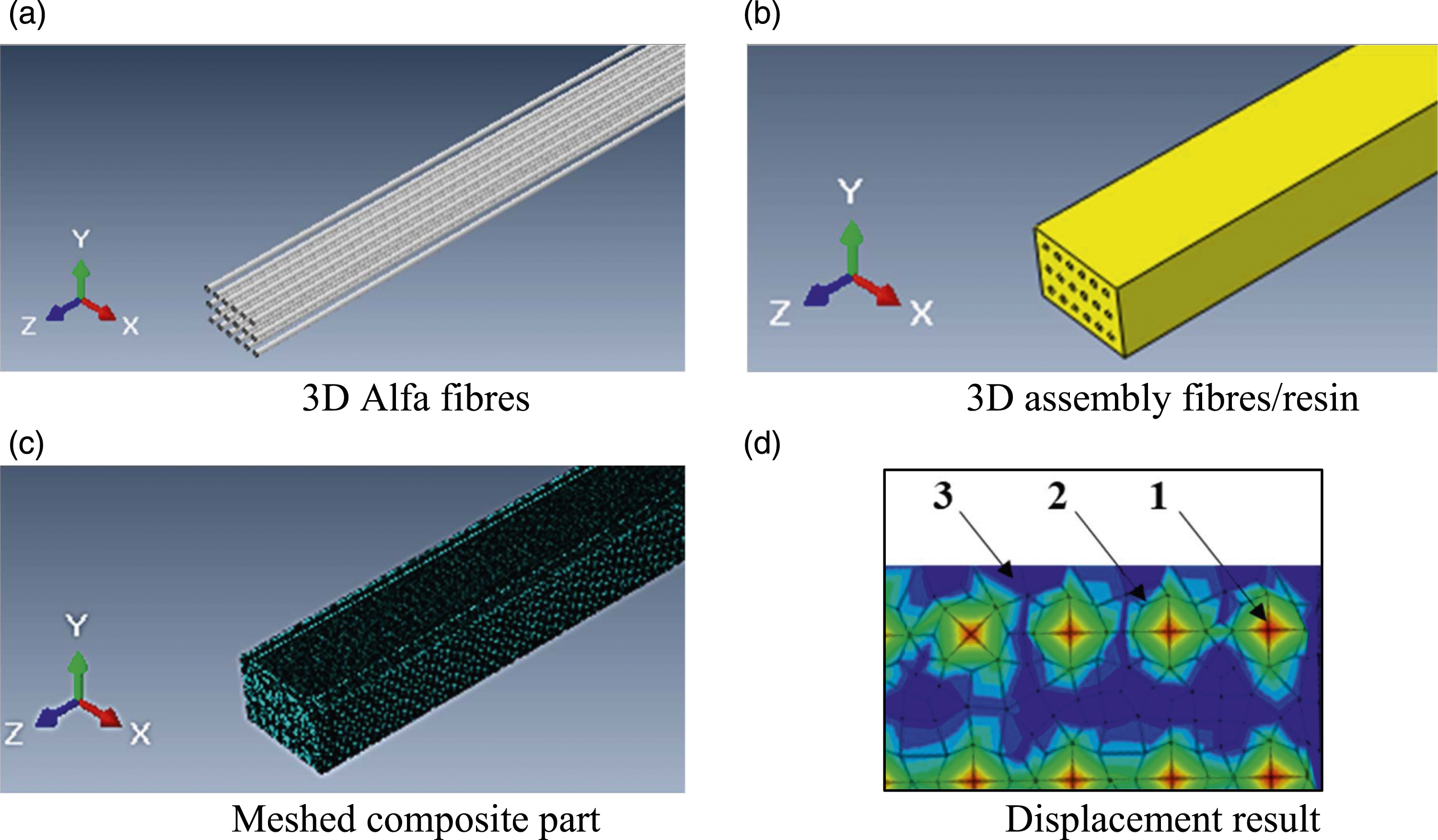
To ensure accurate solutions in the finite element model, it is essential to incorporate appropriate structural boundary conditions. It's worth emphasizing that these boundary conditions must be applied to the nodes. Once the proper boundary conditions and loading have been integrated, the database file is prepared for solving.
The FEM model's results indicate that, in the case of the composite material, the stresses within the fibre region are equivalent to those stresses observed when simulating the fibre in isolation (see Figure 8 d element 1). A similar behaviour was observed in the case of the matrix (see Figure 8 d element 3). Additionally, the elements in the contact section between the fibres and the resin possess composite properties (see Figure 8 d element 2). However, when comparing the experimental results to the FEM model, we created a specific section and extracted the average tensile test properties from the cross-section. These properties were then compared with the experimental results, as depicted in Figure 9. The average stress/strain curve from both the experimental data and the FEM model results demonstrates that the behaviour remains consistent when using the same weight fraction ratio A comparisons between the experimental and numerical results for the Alfa fibres/polyester composite.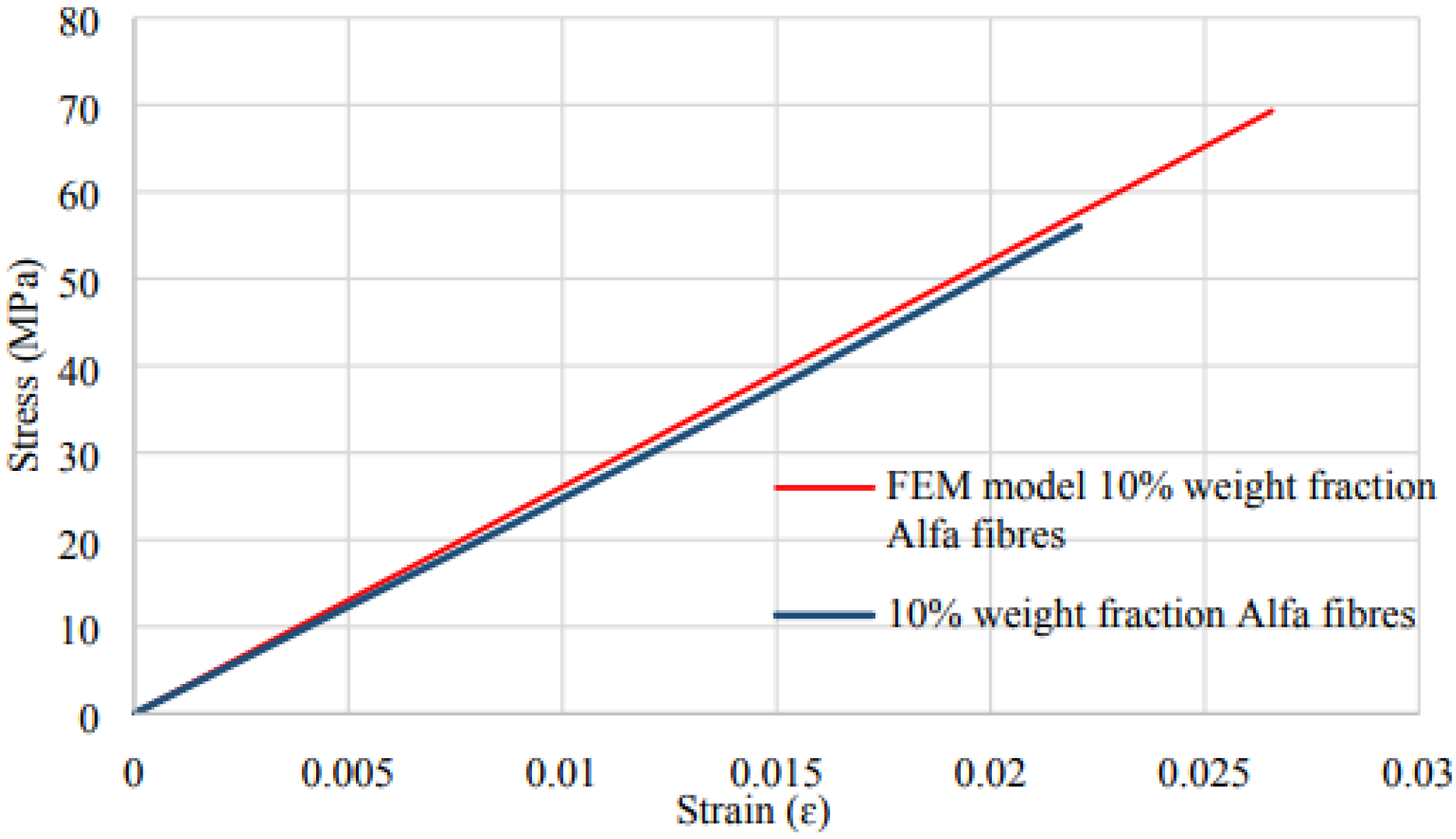
Conclusion
In this study, we introduced a novel approach to produce composite materials reinforced with natural fibres. This new composite consists of unidirectional Alfa fibres plies reinforcing polyester resin at various weight fractions. To simulate the behaviour of this composite material, we employed a Finite Element Model (FEM) based on experimental data obtained from tensile tests conducted on both the fibres and the resin.
These natural fibres show great promise as sustainable alternatives to synthetic fibres in various structural applications. They are eco-friendly, renewable, and contribute to the development of biodegradable composites. The key findings of this study can be summarized as follows: • The fibres extracted using the retting process offer an environmentally friendly approach and exhibit favourable mechanical properties. • Among the tested weight fractions, the composite C_AF18and resin displays the highest tensile strength and Young's modulus, followed closely by the composite C_AF10. • The ultimate stress experiences a slight increase from 23.408 MPa to 49.749 MPa as the volume fraction of fibres increases from 0% to 18%. • Comparing the bio-composite C_AF18to a glass fibre composite, they exhibit similar Young's modulus values. However, the glass fibre composite outperforms the Alfa fibre composite in terms of ultimate stress, with values of 95.168 MPa and 49.749 MPa, respectively. • The results demonstrate that the FEM model exhibits a similar behaviour to the experimental model.
In conclusion, the incorporation of Alfa fibres as reinforcements in composite structures offers a sustainable and environmentally friendly solution. Further research is needed to explore multidirectional fibre-reinforced composites and alternative manufacturing methods such as vacuum and autoclave processes to quantify the adhesion between Alfa fibres and polyester resin.
Footnotes
Acknowledgments
The authors are grateful to the Algerian Ministry of Higher Education and Scientific Research (MHESR) and to BAGHDADI Mohammed from university Djilali liabes Sidi Bel Abbes for providing useful information based on their great experience in mechanical testing.
Declaration of conflicting interests
The author(s) declared no potential conflicts of interest with respect to the research, authorship, and/or publication of this article.
Funding
The author(s) received no financial support for the research, authorship, and/or publication of this article.
Data Availability Statement
The  that support the findings of this study are available from the corresponding author upon reasonable request
39
.
that support the findings of this study are available from the corresponding author upon reasonable request
39
.