




Abstract
This study investigates the viability of implementing multifunctional structural power composites in a four-seater air taxi, the CityAirbus. For a given specific energy of the power source, the cruise endurance can be approximately doubled by using structural power composites as opposed to conventional batteries. Replacing all the eligible composite mass and batteries with structural power composites can reduce the CityAirbus weight by 25%. To achieve the current design performance, the minimum required elastic modulus, strength, specific energy and power for the structural power composite are 54 GPa, 203 MPa, 74 Wh/kg and 376 W/kg, respectively: current state-of-the-art structural power composites are now approaching this level of performance. Hence, structural power composites are considered feasible for adoption in the urban air mobility sector and have the potential to improve endurance and facilitate commercialization. This paper also discusses several key challenges that must be addressed to realize the adoption of structural power composites in future electric air taxis.
Keywords
Introduction and motivation
Structural power composites (SPCs)1-3 are lightweight electrical energy-storing and load-bearing multifunctional materials. SPCs differ from multifunctional structures, such as batteries embedded into composites, 4 in that the constituents in SPCs intrinsically perform multiple functions. Hence SPC technology is more challenging to develop than embedded power sources, but can achieve a higher degree of integration, 5 and hence potentially, greater weight and volume savings through a larger proportion of the material contributing to multiple functions. To realise the promising weight and volume savings offered by SPCs, it is important to identify the required performance levels for different applications, such as aircraft cabins. 6 The study reported here provides an insight into potential synergies and the motivation and route maps for future adoption.
Architectures
The principal devices used for electrical energy storage are batteries and supercapacitors. Batteries have high specific energy Γ* achieved through electrochemical processes, but low specific power P* and cyclic performance. On the other hand, supercapacitors, which use physical charge transfer processes, have modest specific energy but superior specific power and longevity compared to those of batteries. Both structural battery composites (SBCs) and structural supercapacitor composites (SSCs) can have the same laminated architecture (Figure 1), consisting of two electrodes sandwiching an electrically-insulating but ionically-conducting separator. Both devices have adopted aligned and continuous structural fibres (i.e., aerospace carbon fibres) because such fibres offer high stiffness and strength, good electrical conductivity, scalable manufacture, and their surfaces can be functionalised to tailor the performance for their lithium (Li)-ion capacity in SBCs or for SSC applications. The high structural performance distinguishes such SPCs from the large body of work on flexible power sources, which use discontinuous and/or non-aligned nanocarbons as the electrode materials. Both types of SPC contain a structural electrolyte, the nature of which is dictated by the device chemistry. Since the electrode conductivity is lower than that for copper or aluminium, metallic current collectors are often attached to the device, and the whole device is encapsulated in an inert insulator. Although the structural electrodes, and to some extent the structural electrolytes, differ between SBCs and SSCs, the separators, current collection and encapsulation requirements and solutions are almost identical.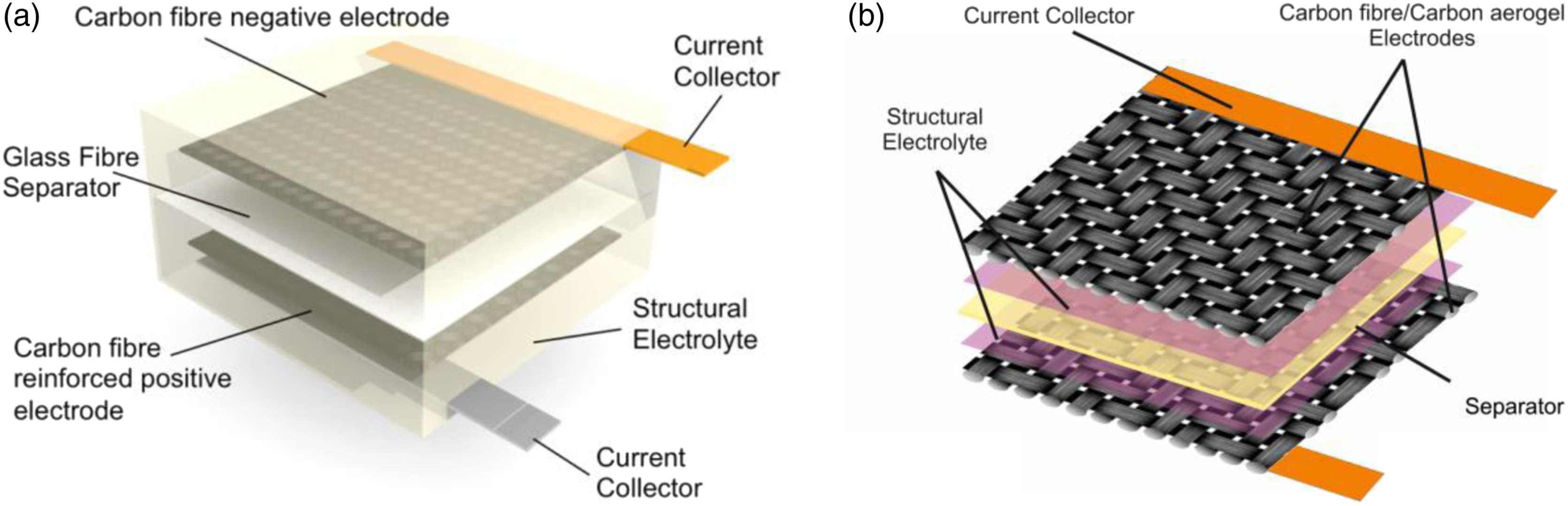
Constituents
For SBCs, two different electrodes are required; the highest energy density systems currently use a lithium intercalation anode paired with an olivine cathode. In the anode, the carbon fibres (CFs) must be able to store ions in the fibre microstructure. Here, Li ions are inserted into the fibre during charge and removed during discharge. PAN-based carbon fibres have excellent electrochemical properties, almost on a par with the capacity of conventional graphite electrodes.1,8,9 On the cathode side, the carbon fibres are used as a reinforcement, current collector and a scaffold for the cathode material: sub-micron particles such as lithium iron phosphate (LFP). The carbon fibres perform multiple functions in both the anode and the cathode leading to a multifunctional benefit.
For SSC electrodes, high surface area is paramount for electrochemical performance. However, pristine CFs have negligible specific surface area (0.21 m2/g 10 ), so research effort has focused on increasing the surface area without degrading the mechanical properties. 11 Chemically activating CFs (32.8 m2/g 10 ) and/or grafting with nanocarbons (45.8 m2/g 10 ) have been explored, but the improvements are limited. Other approaches have included decorating with conductive polymers and/or metal oxides (195.7 m2/g 10 ) or hydroxides, which have given high electrochemical performance and some enhancements in mechanical performance. 10 One approach has been to use carbon aerogel (CAG), the precursor for which is infused through the dry fabric and then pyrolyzed to yield a CAG monolith which supports the CFs. CAG provides a high specific surface area of 121 m2/g 11 (giving high capacitance), fills the matrix space and mechanically supports the fibres. 12 However, CAG is brittle which impacts on the durability and device processability.
The structural electrolyte is critical to the device performance and is one of the most challenging aspects of this technology. 13 The structural electrolyte must permit ion transport to the electrodes, and be mechanically robust and strong: these aspects are usually in conflict. The structural electrolyte also needs to be chemically compatible with the other constituents, processable, scalable and provide a good mechanical bond at the interfaces between these constituents. Epoxies and vinyl esters are the most widely used structural polymer matrices in high performance composites; hence their modification has been investigated as the basis of structural electrolytes. 10 Lithium salts have been added to the polymers to enhance their ion transport, but only provided modest improvements. The addition of ionic liquids and battery electrolytes to the polymers is more promising, providing an interpenetrating network of the structural and ionic transport phases. 13 By controlling the proportions of the two phases, the balance between the mechanical and electrochemical performance can be tailored. However, challenges still remain: the liquid phase can accelerate polymer cross-linking, limiting the processing window. There are also issues with phase control during processing, leading to loss of the optimum microstructure. When the structural electrolyte is processed with the carbon fibres, the phases separate and form a gross heterogenous microstructure rather than a homogenous bi-continuous microstructure.
Regarding the other device constituents (i.e., separators, current collectors and encapsulation), structural power separators have adopted those used in conventional devices, such as porous polymer films and non-woven veils. The separator must conduct ions, act as an electrical insulator and be very thin, robust, tolerant to the processing conditions, and chemically inert. It must provide good mechanical bonding to the electrodes without detriment to the ionic conductivity and mechanical performance. Conventional separators fall short of these requirements, and hence alternatives, such as woven spread tow glass fabrics have been used. These options can be overly thick or prone to distortion, leading to electrical shorting. ‘Separator-free’ devices have been attempted, but the large areas for structural devices and the consolidation pressures required for device manufacture make such a route very challenging. 10 Manufacturing larger areas leads to a greater probability of defects where the electrodes could come into contact and short-circuit the device. Despite the vital role of the separator, there has been little development of new separators for SPCs.
Efficient current collection is vital for device scale-up. 14 The role of the current collector is to minimise the resistive losses and should be chemically compatible with the other constituents and bond to the electrodes. Conventional electrochemical devices are manufactured by depositing the electrode onto a metallic foil current collector that accounts for as much as 25% of the total cell mass. For SPCs, such metal foils are not necessary nor optimal, and alternative current collector architectures which require only partial coverage with metal foil can save significant device mass. 14
Fabrication and properties
Methodologies for fabricating SPCs have drawn on conventional carbon fibre reinforced polymer (CFRP) composite manufacturing routes. The device chemistry has often used thermoset polymers, so methods such as prepregging, liquid resin or film infusion have been used for SSCs, whilst SBCs have been manufactured by hand lay-up inside a glovebox or with liquid resin infusion.8,9 A multicell laminate consisting of three SBC cells in series integrated into a CFRP laminate has been demonstrated (Figure 2(a))
15
with the following multifunctional properties: elastic modulus E = 25 GPa, strength σ = 312 MPa, Γ* = 24 Wh/kg and P* = 9.6 W/kg.
9
In parallel, an electrochemical actuator laminate, akin to an SBC, with E = 100 GPa has been demonstrated.
17
SSCs have experimentally demonstrated the following multifunctional device properties: E = 33 GPa, σ = 110 MPa, Γ* = 1.4 Wh/kg and P* = 1.1 kW/kg.11,18 The mechanical properties were obtained from longitudinal tensile coupon tests on unidirectional SBCs or plain weave SSCs. Multicell SSC demonstrators have been manufactured, including an automotive boot lid
7
(Figure 2(b)) and a fuselage rib that powers a desktop-scale aircraft door to open and close
16
(Figure 2(c)). Hence, SSCs are at technology readiness level (TRL) four, i.e., “component validation in a laboratory environment.”
Design
Methodologies to assess multifunctional performance in various application scenarios 9 and using a new metric called ‘residual specific’ properties have been demonstrated. 19 Extended multifunctional design studies have considered the viability of using SPCs in various applications15,20 and evaluate the corresponding benefits and challenges to widespread use, such as fire resistance, long-term cycling performance and cost. One study focused on SPC aircraft cabin floor panels to power the in-flight entertainment system. 6 Achieving E, Γ* and P* properties of 28 GPa, 144 Wh/kg and 290 W/kg, respectively, can lead to a 34% weight reduction over the original cabin system (equivalent to an annual CO2 reduction of 260 tonnes per aircraft).
Other multifunctional design studies have investigated the feasibility, benefits and challenges of using SPCs for electrification of automotive 21 and regional aircraft 22 to facilitate decarbonisation in these transport sectors. Whilst many of the studies have focused on fixed-wing aircraft and their propulsion systems, there is an emerging urban air mobility market for air taxis classed as electric vertical take-off and landing (eVTOL) aircraft. These eVTOLs are compact and can operate in complex and dense environments but have different propulsion and flying performance to those for fixed-wing aircraft. Thus, the energy and power models lead to different requirements for SPCs, which could influence whether electric air taxis or other types of all-electric aircraft may be adopted earlier.
The study reported here investigates the feasibility and implications of the potential application of SPCs in all-electric air taxis. Using specifications based on a reference air taxi, together with analytical and numerical techniques, this study investigates and models the potential performance improvements associated with the implementation of SPCs. This study will consider the necessary SPC properties to meet the design requirements and the implications on the endurance, weight and payload capacity of the air taxi. The current study only assumes a laminated CFRP architecture and not any specific SPC constituents. The constituents described in the Constituents section may change as the SPCs develop. The purpose of this study is to determine structural and electrochemical performance requirements for the proposed application such that researchers can select the constituents that they deem most suitable to be able to achieve these requirements. Embedded power sources or SBCs or SSCs or combinations of these options could be used, as long as the performance requirements are met.
Methodology
This study applies the methodology developed and demonstrated in previous multifunctional design studies6,20,22 comprising the following steps: 1. Select an all-electric air taxi for detailed investigation; 2. Calculate the energy and power requirements for this air taxi based on a generalised mission; 3. Determine minimum SPC structural requirements based on critical load cases; 4. Audit the air taxi structural weight to compute the mass of composites to be replaced with SPCs; 5. Model two cases (A and B) involving replacement of the composites and batteries with SPCs; 6. Determine the required specific energy and power of the SPC; 7. Compare the effects of implementing future battery and SPC technology (case C).
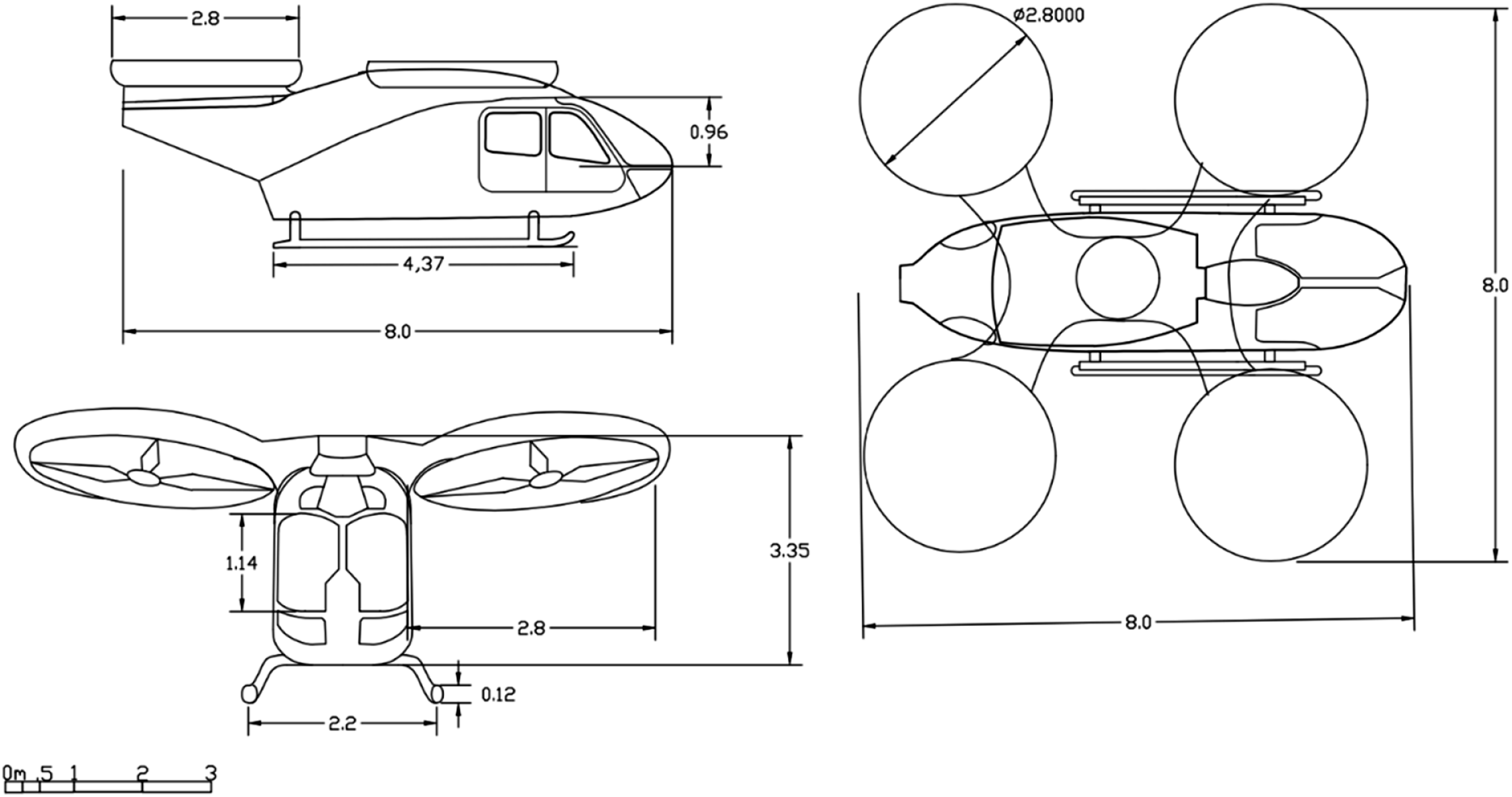
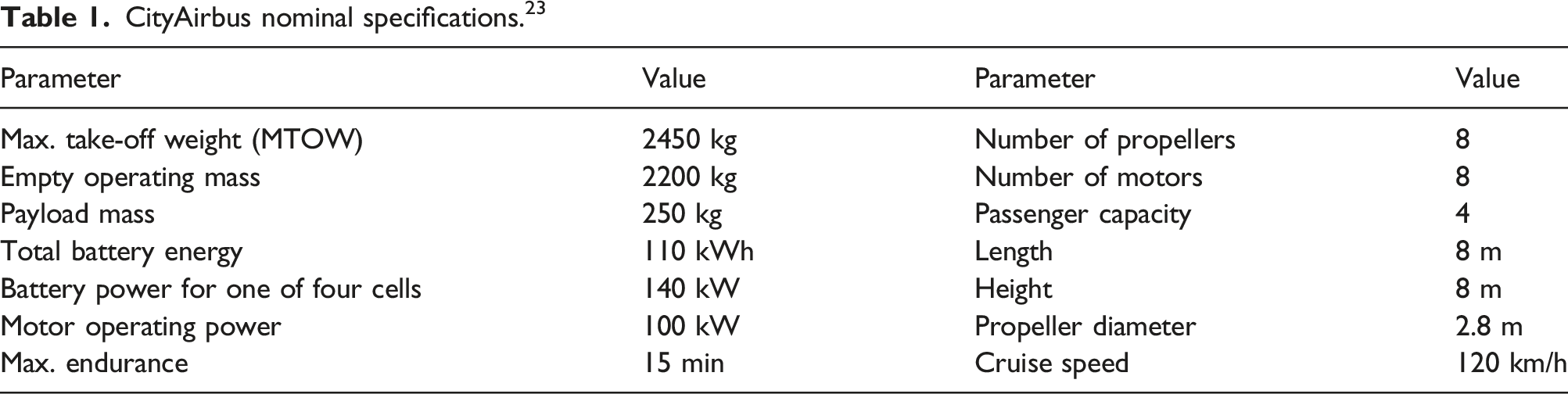
For this study, the CityAirbus (Figure 3) was selected as the reference vehicle because it is an all-electric vehicle, can carry multiple passengers to meet forecasted traffic growth, has undergone full-scale demonstrator flights, has the flexibility to operate in complex urban environments and sufficient data was available to enable structural weight and flight mission performance analyses with reasonable accuracy for conceptual design evaluation. The CityAirbus is a wingless eVTOL aircraft with four large, ducted propulsion units and four battery cells designed in-house by Airbus that were assumed to be Li-ion batteries because this battery type is the prevailing technology in electric vehicles. A mission profile was developed, based upon which the power and energy requirements for each flight segment were computed. The energy requirement is an accumulation of the energy for each flight segment within the nominal 15 min endurance profile (Table 1). The overall power requirement is governed by the flight segment with the maximum power demand: the hover segment. Detailed analyses of the power and energy requirements for each flight segment are provided in ref. 23. To determine the uncertainties in the calculated specific energy and power, Monte Carlo simulations were used to determine the effects of propagation of uncertainties in the energy, power and masses, for which details are provided in ref. 23. Drawings of the CityAirbus air taxi (dimensions in metres).
23
CityAirbus nominal specifications.
23
Analysis cases
Analysis cases.

Case A: Replace eligible mass with full E* SPC, keep baseline total mass
In case A, some or all of the eligible structure and batteries were replaced with 100% E* SPC such that the maximum take-off weight (MTOW) remained 2450 kg. Hence the vehicle power and energy requirements were the same as those for the baseline configuration. The purpose was to determine the required SPC specific properties and whether the battery can be replaced with greater payload.
Case B: Replace all composites and all batteries with SPC, and vary E*
In case B, all the eligible composite mass and batteries were replaced with SPC, such that the MTOW was (2450 - 550) kg = 1900 kg. The MTOW has a significant impact on the power and energy required to carry out the mission profile with the same endurance. To meet the structural requirements with a lower E*, the SPC thickness and hence mass can be increased. For this study, different E* values were considered under loading in bending, because considerable aerostructure design is driven by bending performance. Other material parameters were assumed to remain constant. The relationship between the modulus and the dimensions of the material were established using the assumption of a rectangular plate, and for simplicity, only the thickness was modified. In this analysis, the minimum E* was considered to be 25%, because for lower E*, the take-off weight would exceed the original MTOW and hence negate any benefits. For this 25% E* case, the SPC was assumed to fully replace all the eligible structure and battery mass.
Case C: Comparison between SPCs and batteries
Case C considered the performance with future technologies, in particular the trend of improving Γ* in batteries for electric vehicles. To evaluate the influence of power source type for the CityAirbus, batteries and SPCs were compared by considering the CityAirbus cruise endurance based on a given pack-level Γ* of the power source. Existing batteries have a Γ* >100 Wh/kg, so this was the minimum value considered for the batteries. A pack-level Γ* of 600 Wh/kg was considered as a target that batteries may reach over the next 20 years. 24 Comparatively, state-of-the-art (SOTA) SPCs have a lower Γ* and so the range considered was 10 Wh/kg to 600 Wh/kg.
The following two configurations were considered: a baseline configuration (2450 kg MTOW including 550 kg batteries and 250 kg payload) and a SPC configuration (1900 kg MTOW including 939 kg SPC, no batteries and 250 kg payload). Hover, the most power intensive segment of flight, and cruise endurance were considered as key performance metrics. Details of the equations used for the power and energy calculations for these segments are provided in the Power and energy analysis section and full details of the numerical values used in these equations are provided in ref. 23. The cruise endurance (time in the cruise segment) was a key parameter, since the longer the cruise endurance, the greater the range of the aircraft, which provides operational benefits. The specific energies in the range stated above were multiplied by the power source mass to determine the available energy. This energy was then divided by the cruise power requirement, which depended on the total mass with that power source, to determine the cruise endurance. This endurance provided a common parameter with which to compare the two energy storage technologies but did not account for a full ground-air-ground mission profile.
Power and energy analysis
The hover segment is primarily dependent on rotor disk loading
25
δ, defined as the total aircraft weight W divided by the total area A swept by the eight propellers, 

The cruise segment contributes heavily to the total energy requirement of the mission, as cruise is the segment with the longest duration. The power in the cruise segment involves a force equilibrium where the lift L equals the weight and the thrust equals the drag D,
25


Structural analysis
To determine minimum mechanical performance requirements, a simplified structural analysis was carried out on the CityAirbus by identifying the critical load case only for the structural component which was expected to experience the highest loads, the floor panels. Based upon this load case, minimum mechanical properties were identified for the SPC for this application. However, to ensure a safely-designed eVTOL with SPCs incorporated, all other loading cases and components must also be considered. Small rotorcraft must ensure stability of the aircraft in all loading scenarios during the flight.
26
For fatigue evaluation and damage tolerance, the structures are designed to withstand the worst-case scenario. To determine the minimum required elastic modulus E, the SPC floor panels were assumed to be sandwich panels with an aerospace grade honeycomb core.
27
Lopatin’s method
28
for the buckling of a sandwich panel was used,

In bending, the maximum bending moment was computed as

Results and discussion
Mass breakdown for the main sub-systems of the CityAirbus.
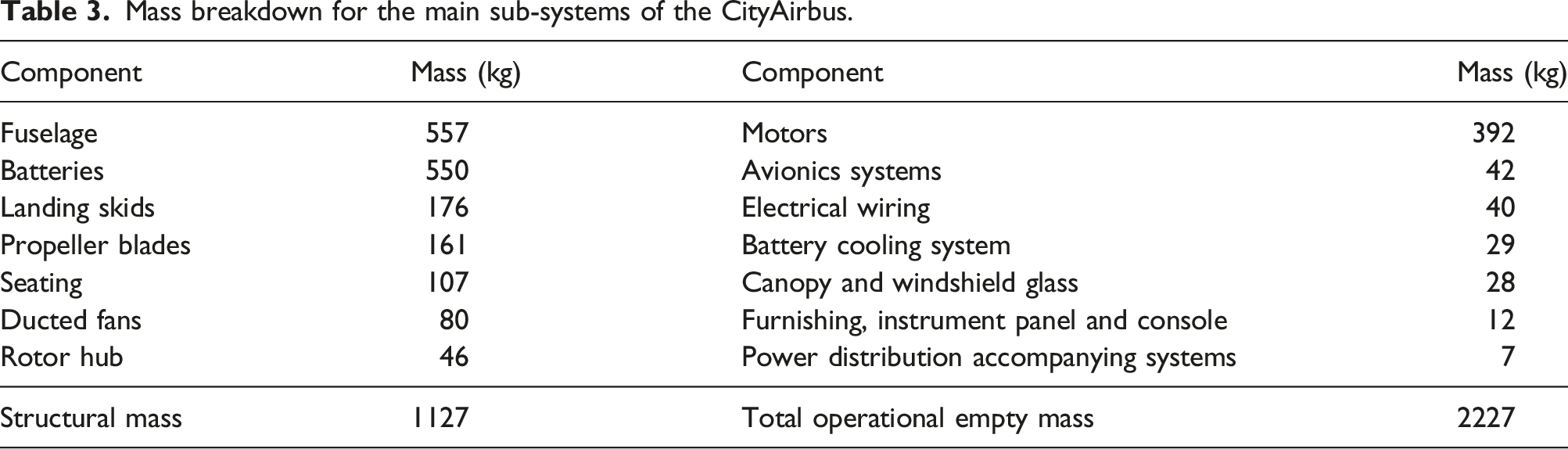
The calculated energy for the baseline mission was derived using the methodology outlined in the Power and energy analysis section applied to every flight segment of the baseline configuration and summing the energies for all of the flight segments. The 68 kWh (±8%) calculated energy for the baseline mission was compared with the nominal 110 kWh of the CityAirbus batteries. 23 The latter would have included additional energy, with an energy reserve factor of 1.62, to allow for a reserve mission, avoid reaching a low state-of-charge which would affect the battery lifetime, and account for loss of capacity over time. The 172 kW (±4%) calculated maximum power was compared with the CityAirbus nominal total battery power of 560 kW (140 kW per cell), 23 suggesting a power reserve factor of 3.26. These calculated electrical requirements were considered reasonable in that the calculated demands were much lower than the available energy and power indicating significant safety factors and redundancy, as expected. These values accounted for the uncertainty in the duration of each segment and the efficiencies of the systems. The flight segments can vary in duration and the total energy calculation depends on these durations. This study assumed nominal or expected durations but included uncertainties to account for potential differences between the assumed and actual durations. The system efficiencies were also inputs into the power and energy calculations and the calculations needed to assume efficiencies (that are provided and justified in detail in ref. 23.) and these efficiencies had uncertainties. The minimum required mechanical properties calculated from the analyses in the Methodology section were E ≥ 54 GPa and σ ≥ 203 MPa. To be conservative, both values included 5% error margins arising from propagation of associated uncertainties in the assumed loads and geometry used as inputs into the calculations.
Case A: Replace eligible mass with 100% E* SPC and keep baseline total mass
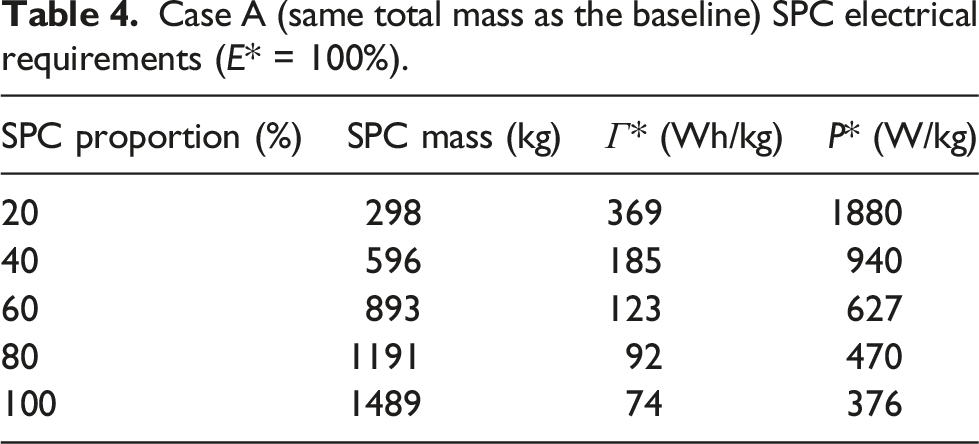
Case A (same total mass as the baseline) SPC electrical requirements (E* = 100%).
Case B: Replace all composites and all batteries with SPC and vary E*
Case B (SPC replaces all eligible mass) requirements, vehicle mass savings (S) and SOTA SPC properties.
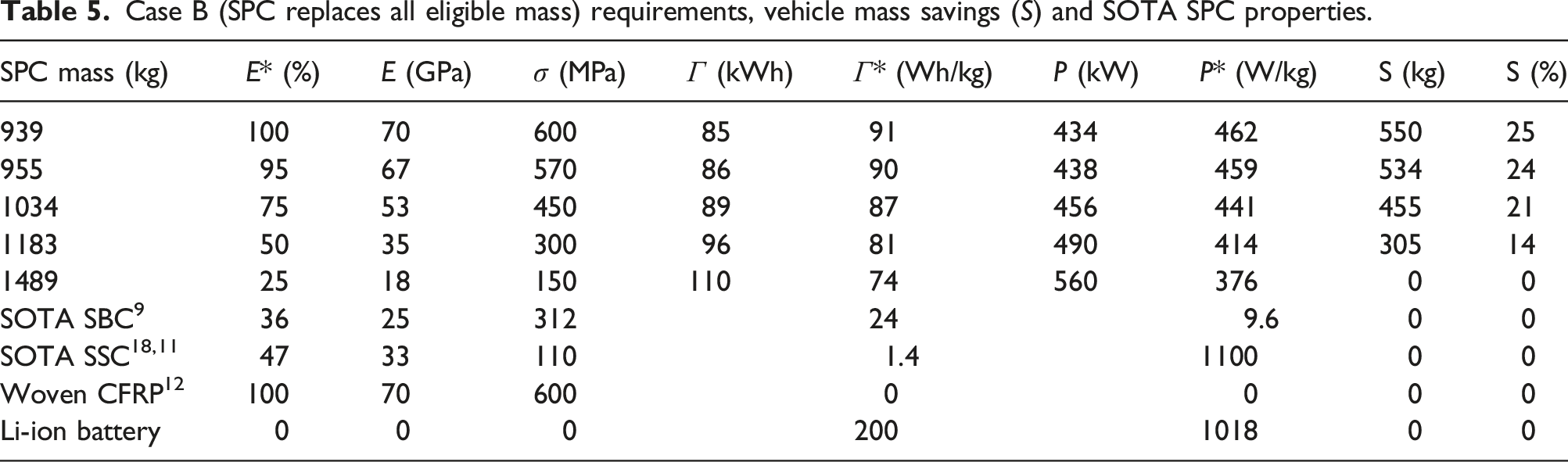
Replacing all composites and batteries with 100% E* SPC requires Γ* > 74 Wh/kg and P* > 376 W/kg, leading to a vehicle weight saving of 25% (Table 5). It is very challenging/unrealistic to achieve 100% E* (no structural degradation). Hence, this study investigated the effect of varying E*. A SPC could be tailored to reach high E* by having a high ratio of epoxy to electrolyte in the structural electrolyte, but the electrochemical performance is likely to reduce. The hypothetical 100% E* case provides an upper bound on the Γ* and P* requirements, because reducing E* increases the required SPC thickness and hence mass, which reduces the required Γ* and P*. Increasing the SPC mass also increases the MTOW and hence the required total energy and maximum power. The reduction in the required Γ* and P* with decreasing E* is because the relative increase in the SPC mass is greater than the relative increase in the MTOW, energy and power requirements.
Case C: Comparison between batteries and SPCs
The cruise endurance increases linearly with increasing Γ* of both conventional Li-ion battery and SPC (Figure 4) and the hover endurance (not shown) has a similar trend. For a given Γ*, the cruise endurance for the SPC design is almost double that for the battery design (Figure 4) because the structure has 1.7 times more mass than the batteries in which to store the energy, together with potential weight savings. A similar trend is expected for other electric aircraft or vehicles if they have a structural mass that is substantially higher than the battery mass, as is the case for the CityAirbus. For higher Γ*, the absolute difference between the endurance gained by using SPC and that from equivalent Γ* batteries becomes greater. These findings support similar studies which have concluded that SPCs can provide large improvements in endurance or range for electric aircraft
5
or electric cars.
21
The major source of the improved range and efficiency is the vehicle weight saving from the removal of the batteries if the structure provides sufficient energy and power. This weight saving means that less energy and power needs to be provided to complete the mission, which further reduces the specific energy and power needed for SPCs compared to those for batteries. Cruise endurance for the CityAirbus powered by batteries or SPCs.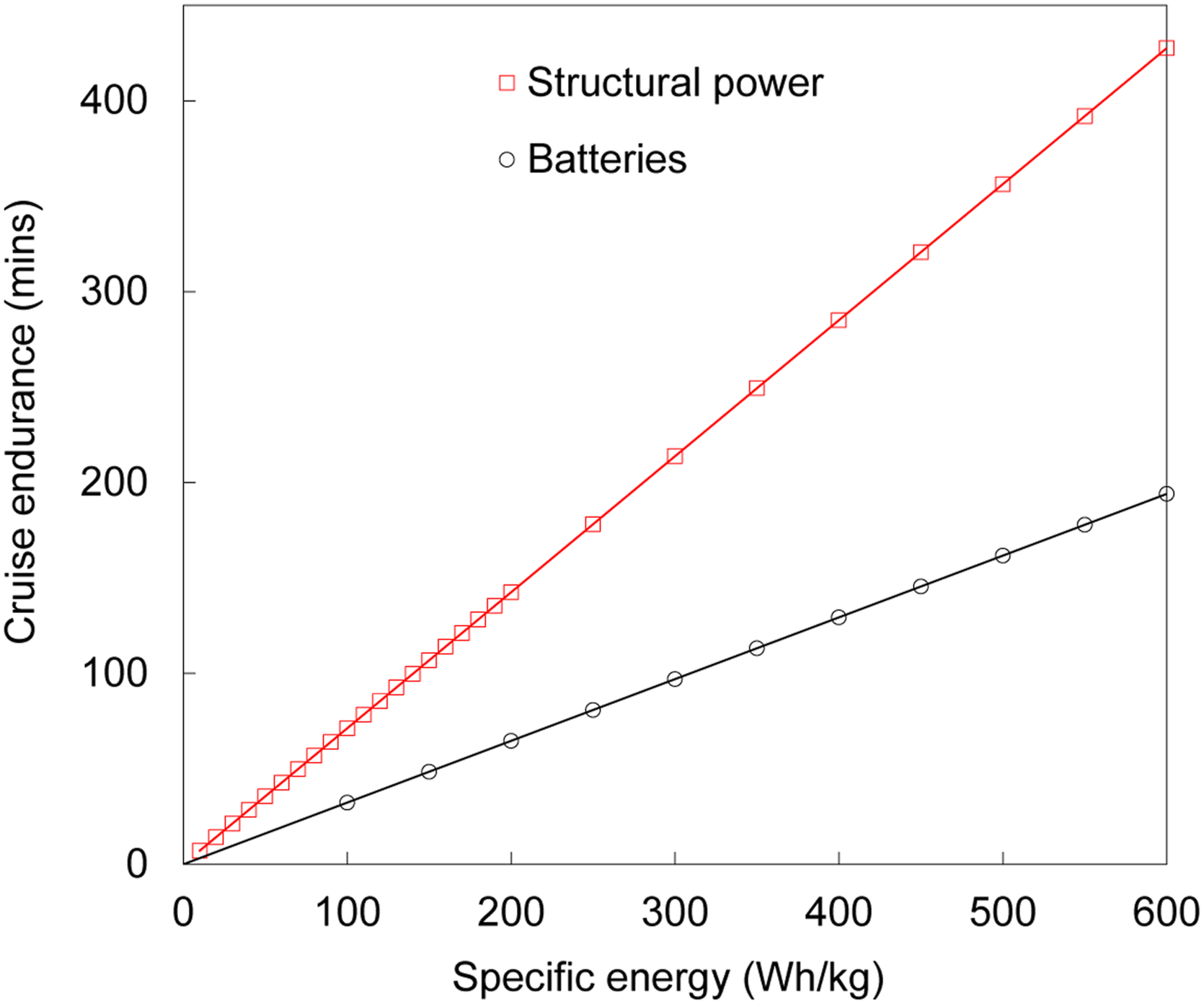
Considering the baseline CityAirbus has a limited endurance, constrained by current battery technology, this analysis defines the required Γ* if the endurance was to be extended. For example, consider a 240 km flight, such as London to Manchester, and assume that the CityAirbus maintains its cruise speed of 120 km/h. Disregarding other flight segments for simplicity, the cruise time is 2 h. To achieve this cruise time, 370 Wh/kg batteries are needed (Figure 4) whereas SPCs require only 170 Wh/kg (54% lower Γ* requirement). The battery configuration requirement is nearly double the nominal 200 Wh/kg pack-level Γ* of the CityAirbus Li-ion batteries. Hence, SPCs can significantly lower the Γ* and P* requirements, which may reduce the likelihood of safety issues, such as thermal runaway leading to fires.
Challenges to address for industrial adoption of SPCs
Some challenges and limitations with SPCs have not yet been fully addressed. The most challenging requirement is to reach both the Γ* and P* requirements (Tables 4 and 5) with a single device type. Recent progress suggests that SBCs will reach the required E and Γ* within the coming years, but it is likely to take longer for SBCs to reach the required P*. More research on efficient separator and structural electrolyte solutions is needed. SBCs hybridised with SSCs for their higher P* may offer a solution to the high power demands in the short term. Since SBCs have common challenges to those of SSCs, the simpler electrochemistry of SSCs can be exploited to address generic issues associated with SPCs, such as scale up, and accelerate their development towards higher technology maturity.
Maintenance of SPCs presents key issues. Where batteries have the capability to be readily replaced by improved batteries at the end of life, SPCs do not have the same ease of replacement. SPCs that become damaged may require replacement, which can lead to significant repair costs. Developing high fatigue life and damage tolerance may be a viable countermeasure. The requirements for fatigue and damage tolerance are also highly driven by crashworthiness requirements. The structural analysis in this study did not address these key aspects due to the lack of data available, such as experimental results regarding impact performance and certification requirements. Crashworthiness design is driven by both the geometry and material, and SPCs must be designed such that they can withstand impact loads to meet stringent regulations for vehicle applications.
Another engineering issue to consider is the resistance of SPCs to adverse environmental conditions to which the CityAirbus or other eVTOLs may be exposed. SPCs may not themselves withstand the environmental and aerodynamic flight conditions; hence external CFRP layers may be required to ensure integrity of the airframe under all conditions. Other safety-critical aspects to consider include flammability, smoke and toxicity in the event of a fire.
Regarding commercial practicality, future research needs to consider the required charging infrastructure and how this can fit into the wider urban transport landscape, such as using existing charging facilities for electric vehicles. Related factors to consider include the placement of the charging ports and the requirements for fast charging, as air taxis are likely to carry out repeated small missions with intermittent charging where possible. A low charge time would enable a high availability rate of the air taxi.
Conclusions
This study theoretically investigates the feasibility and application of structural power composites in the CityAirbus by determining the required structural and electrical properties for various scenarios. Knowledge of the required performance levels can guide future SPC development and provide the motivation and route maps for future adoption of such technologies in an emerging aircraft concept. Baseline mechanical and electrochemical properties of monofunctional structural materials and batteries are E = 70 GPa, σ = 600 MPa, Γ* = 200 Wh/kg and P* = 1018 W/kg. Using SPCs with the same modulus as the baseline structural material and keeping the same overall air taxi weight, the required SPC properties are Γ* > 74 Wh/kg and P* > 376 W/kg, only 37% of those for the baseline configuration batteries because the eligible SPC mass (structure plus battery) is 2.7 times the battery mass. Increasing the SPC mass increases the amount of energy that can be stored and reduces the required Γ* and P*.
Structural battery composites have experimentally demonstrated the following multifunctional device properties: E = 25 GPa, σ = 312 MPa, Γ* = 24 Wh/kg and P* = 9.6 W/kg. 9 Structural supercapacitor composites have experimentally demonstrated the following multifunctional device properties: E = 33 GPa, σ = 110 MPa, Γ* = 1.4 Wh/kg and P* = 1.1 kW/kg.11,18 Providing further improvements continue and future research addresses the challenges for adoption discussed in this paper, SPCs are considered a viable prospect for electric air taxis and offer various design approaches to improve flight mission performance and increase payload. For instance, a 74 Wh/kg, 376 W/kg SPC could allow all the batteries to be replaced with 550 kg extra payload, making the CityAirbus significantly more commercially attractive. The methodology and findings from this study can be applied and extended to other electric air taxis and aerial vehicles such as drones, ideally at the conceptual design stage, to evaluate the requirements, feasibility and potential performance improvements, such as enhanced payloads.
Footnotes
Acknowledgements
This work has been conducted by the combined efforts of Imperial College London (Departments of Aeronautics and Chemistry), Chalmers and KTH Royal Institute of Technology (Departments of Aeronautical and Vehicle Engineering and Chemical Engineering). The Swedish research group Kombatt is acknowledged for its synergism throughout this work. Data supporting this study are included within the article. For the purpose of open access, the author has applied a Creative Commons Attribution (CC BY) licence to any Author Accepted Manuscript version arising.
Declaration of conflicting interests
The author(s) declared no potential conflicts of interest with respect to the research, authorship, and/or publication of this article.
Funding
The authors disclosed receipt of the following financial support for the research, authorship, and/or publication of this article: This work was supported by the EU Clean Sky 2 SORCERER project [grant number 738085]; the EPSRC Future Composites Research Manufacturing Hub [grant number EP/P006701/1]; the EPSRC Beyond Structural project [grant number EP/P007465/1]; the European Office of Aerospace Research and Development [IOE grant number FA9550-17-1-0251]; the Royal Academy of Engineering [Chair in Emerging Technologies]; the Swedish Research Council [grant numbers 2017-03898, 2020-05057]; the strategic innovation program LIGHTer [funding provided by Vinnova, the Swedish Energy Agency and Formas]; the Air Force Office of Scientific Research [grant numbers FA8655-21-1-7038, FA8655-21-1-7039]; and the Swedish Energy Agency [grant number 50508-1].
