




Abstract
Extrinsic toughening, such as fibre bridging, acts behind the crack tip to increase toughness in composite laminates. Computational studies have captured this phenomenon; however, the uniqueness of fit between computational results (which vary based on the interface traction-separation relationship) and experimental results has not been explored in detail. Here, detailed exploration of the parameter space for various traction-separation laws (TSL) using finite elements is presented to investigate the role of fibre bridging. In the absence of extrinsic toughening, a linear softening TSL is sufficient to capture the key R-curve features, the total input fracture energy is of primary importance. Where extrinsic toughening is present, the ratio between intrinsic and extrinsic energy dictates the shape of the crack growth resistance curve (where fracture toughness (energy) increases with increasing crack growth). The influence of fibre bridging length on the crack growth required to reach a plateau in toughness is examined. A strategy for determining key cohesive properties from a double cantilever beam test is presented and applied to experimental results.
Keywords
Introduction
Composite materials composed from stacked layers of continuous fibres embedded within a polymeric matrix provide high specific strength and stiffness properties. As such, composites find increasing use in aircraft structures, automotive components, and wind turbine blades. A direct consequence of motion is a greater susceptibility to impact loads; if the application includes a cyclical element, fatigue life can also be of concern. Both impact and fatigue can result in delamination between the stacked layers of the composite. Both intrinsic and extrinsic toughening mechanisms (which act ahead of the crack tip and behind the crack tip, respectively, as seen in Figure 1(a)) influence the onset and progression of failures.1–3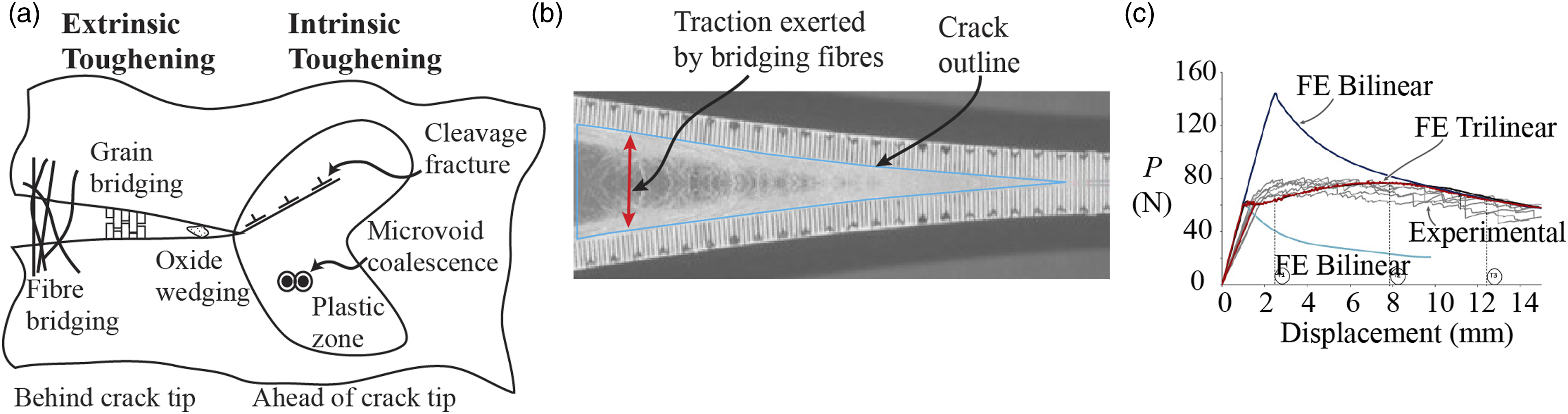
Intrinsic and extrinsic toughening
Intrinsic toughening mechanisms act ahead of the crack tip and extrinsic toughening mechanisms act behind the crack tip (see Figure 1(a)); however, the definition of the crack tip can vary significantly. The terms ‘damage’ and ‘toughening’ can describe the same phenomena depending on the crack tip definition. 4 Sills and Thouless also suggest that a change in cohesive length scale can be used to define the transition from intrinsic to extrinsic toughening. 4
The role of intrinsic toughening mechanisms in traditional engineering materials is well studied, for example, micro-matrix cracking. 5 Other examples of intrinsic mechanisms include: plasticity ahead of a crack tip in steels and other ductile metals,6,7 crack deflection by secondary phases 8 ; crack bifurcations 9 and void coalescence. 10 In composites, the intrinsic toughness is dictated by the resin properties, 11 fibre volume fraction, 12 and the mean fibre diameter. 13
Extrinsic toughening mechanisms act behind the crack tip to increase fracture toughness (Figure 1(a)). Of particular relevance to composite materials is fibre bridging (shown in Figure 1(b)), an extrinsic toughening mechanism whereby fibres from neighbouring plies remain attached to both delaminated layers. This generates a traction across the crack and, hence, raises the energy required to advance the crack front. This effect can act over a large separation, as found in Carbon Fibre Reinforced Polymers (CFRP) composites, 14 or a short separation, as found in biological tissue. 15 Fibre bridging acting over a seemingly short distance still significantly affects the evolution of fracture toughness. In mode I or mixed-mode loading.16–18 Typical experimental results in the presence of fibre bridging, show a less obvious peak in the load-displacement response (Figure 1(c)).; The role fibre bridging plays in crack deflection is difficult to replicate computationally as discussed below.
Fibre bridging is of interest in engineered composite materials14,19 as the additional extrinsic toughening, which may be fully realised under impact loading and subsequent delamination, could be the deciding factor between a destructive brittle failure and a controlled ductile failure. Fibre bridging has been characterised in composites such as CFRP, 20 Glass Fibre Reinforced Polymers (GFRP) 21 and other fibre-rich epoxies. 22 Fibre bridging also occurs in a range of biological and natural materials such as fibrous biological or natural materials (e.g. Liver tissue, 23 adipose tissue, 24 frozen arteries 25 and the cornea 15 and timbers26,27).
Experimental fracture tests with fibre bridging
The effect of fibre bridging is observed experimentally via the monotonic increase in fracture toughness or energy release rate with increasing crack length, shown in Figure 2(c). As an inter-laminate crack propagates in a DCB, the bridging fibres exert tractions on the delaminating surfaces, arresting the crack propagation. The initial value in the crack growth resistance (or R-curves), is set by the energy required for crack initiation. The energy required to advance the crack front increases as the amount of fibre bridging increases. The fracture toughness plateaus once new fibres bridging the interface compensate fibre breakage or fibre pull out at the other end of the crack and a steady-state turnover of fibres occurs. General shape of a traction-separation law. (a) Bilinear curve without fibre bridging present. (b) Trilinear curve with fibre bridging present. In the case of fibre bridging 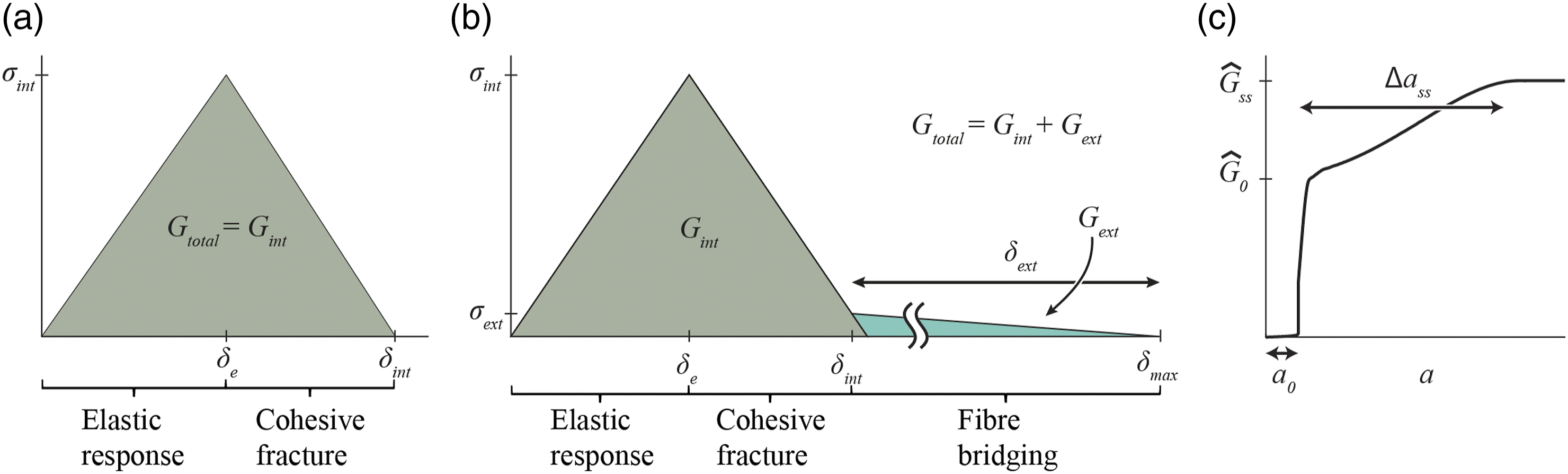
Double cantilever beam (DCB) fracture tests of continuous fibre composites often exhibit fibre bridging. 19 Typically, DCB experiments measure load, load-line displacement, and crack propagation and are used to produce crack growth resistance curves for a given material. DCB tests are most commonly performed in accordance with ASTM standards. 30 Four methods of data analysis are outlined in the standards: beam theory, modified beam theory, the compliance calibration method, and the modified compliance calibration method. The compliance calibration method is used in the present work and also, for example, Davidson and Waas. 31 Compact tension shear type specimens are also used to investigate interlaminar fracture 32 ; however, generating a specimen of sufficient height involves a large number of laminates or compound specimens where the fibre composite is bonded to other materials. Other geometries, such as three-point bend tests can also test the interlaminar properties, although this also requires more complicated specimen fabrication. 33 In the current study, we focus on the DCB test specimen which consists of only the fibre composite.
Fibre bridging is observed experimentally via the monotonic increase in fracture toughness or energy release rate with increasing crack length, the so-called resistance curve (or R-curve), shown in Figure 2(c). Fibre bridging depends on the composite’s constituent materials and specimen geometry.21,29,34 On initiation, the fracture toughness is exclusively determined by the intrinsic mechanisms. However, as the crack front advances, fibre bridging develops in its wake, and the observed fracture toughness increases monotonically as the contribution from bridging increases. The fracture toughness plateaus, reaching a steady state once a steady distribution of bridged fibres is created behind the crack tip. The key features of an R-curve are: the initial value of fracture toughness
Data analysis
Using the compliance calibration method (as described in the ASTM standard), the fracture toughness

Determining cohesive properties
Experimental research on fibre bridging is often coupled with a model of the experimental procedure. In computational models of fibre bridging, it is necessary to formulate the appropriate traction-separation law (TSL), which is also referred to as a cohesive zone model (CZM). The TSL describes the traction exerted between two debonding surfaces at each point on the crack face based on the local separation between the surfaces. The integral of the function is the work done to fracture. Many studies consider the bridged fibres in this manner, i.e. not as discrete fibres in the model geometry; however, there has not been an in-depth systematic exploration of the influence of TSL parameters.
The shape of the TSL (typical examples are shown in Figure 2(a) and (b)) is critical in determining and the load-displacement response and the R-curve that will be produced by the simulation. There are several TSL shapes explored in the literature including trapezoidal, 35 bilinear, 14 trilinear 17 and a continuous function.34,36 It has been found that a bilinear TSL (Figure 2(a)) is only able to capture the initial stages of fibre bridging19,29,31 as shown in blue in Figure 1(c); whereas a trilinear law (Figure 2(b)) is capable of capturing high levels of separation typically found with fibre bridging19,34,37 as shown in red in Figure 1(c). Intrinsic toughening mechanisms are collectively captured in the cohesive fracture zone of the TSL (as shown in Figure 2), which acts over short separations.
Figure 2 shows the general form of the traction-separation laws and establishes the terminology used in the current work (for use with the finite element method). For clarity, all fracture energies pertaining to the traction-separation laws are denoted by


While numerous studies have coupled experimental and computational work,19,31,34,38 there is no simple procedure to select cohesive parameters for a finite element model based on experimental observations. In many studies, the J-integral method 39 is used to determine a TSL for laminates as part of a theoretical analysis40,41 or numerical study. 22 The J-integral method has also been used in ceramic composites 42 and for coatings. 43 In most applications of the J-integral approach, the stresses on the crack surface are assumed to be zero and this is not true in the case of fibre bridging. In a series of works, Sørensen et al.40,44 apply the J-integral method to fibre bridging to determine the cohesive law; but the loading of the specimen is via end moments. 45
Previous studies of crack growth in fibre composites have found that computational results can replicate the results in an experimental procedure with fibre bridging present.19,21,29,31,37,46 However, the effect of the input parameters on the fit between numerical and experimental results has not been explored and documented; the dominant parameters governing the observed phenomena are not described. Although for example, Heidari-Rarani et al. details their justification for a maximum traction
Modelling approach
Finite element model
Finite element models of a typical DCB fracture toughness test geometry, in line with ASTM standards,
30
are created in Abaqus version 6-14 (Dassault Systèmes, Rhode Island, USA, 2014) using 2D plane strain elements to represent the beams and the interfacial behaviour is captured using cohesive elements (shown in Figure 3). The mesh used is highly structured, consisting of square elements and the element size is determined by the height of a laminate arm; such that 25 elements are present along the vertical dimension of the laminate arm. A TSL is used to define behaviour of the cohesive layer. The response of the cohesive element follows the default behaviour, whereby the strain is equivalent to the displacement as a unit thickness is used in the material calculation. Although the height of the cohesive layer does not affect the response, the nodes in the cohesive layer are adjusted so that the layer has geometrically zero thickness in the y-direction.
48
(a) FE model geometry, based on (b) a typical composite test specimen with loading blocks in compliance with ASTM standards.
30
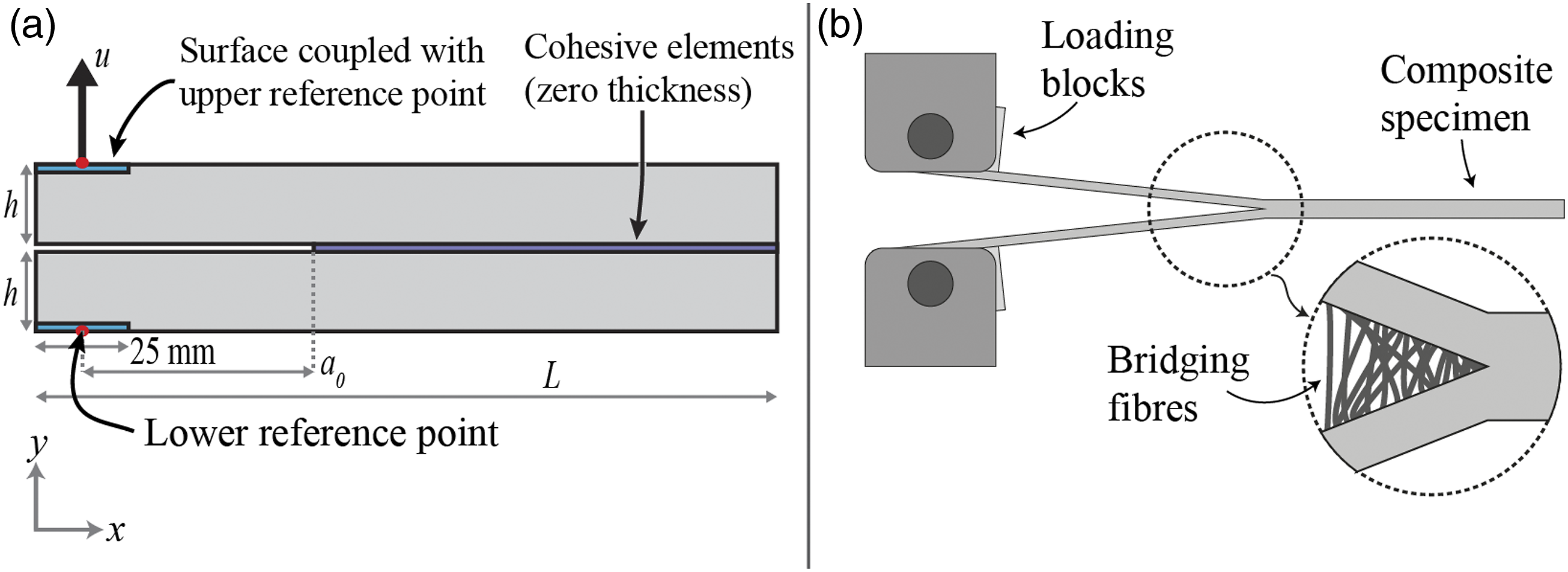
The features of the ASTM standard DCB test are captured in the finite element model: the loading blocks are represented by using the Coupling Constraint method and displacements are applied to the associated reference points (with resulting reaction forces). For simplicity, and in line with previous studies of crack growth in CFRP, 19 the laminate properties used in this model are isotropic linear elastic with Young’s modulus of 170 GPa and Poisson ratio of 0.3 unless otherwise stated. As the transverse behaviour is not relevant to the investigations (as only axial stretching is considered for simplicity), the laminates are modelled as isotropic; however, the methodology can be applied to anisotropic laminates. The isotropic nature of these models allows the results to be applied to other materials with in-plane isotropic properties.
The load-displacement response is measured at the upper reference point, Figure 3(a). The fracture toughness is calculated by the compliance calibration method.
30
Definition of the crack tip can be difficult and somewhat arbitrary when fibre bridging is present. The crack tip can be defined by observation or using the beam compliance. Difficulty arises in experimental observations due to extrinsic toughening mechanisms obstructing the view of the crack tip. In this study, the crack length is defined as the distance from the pre-crack to where the separation of the surfaces is equal to
A TSL is shown in Figure 2 where the traction in a cohesive element
The simulation is solved using a non-linear implicit scheme in Abaqus/Standard. The TSL is implemented in Abaqus by assigning the “traction-separation” section type to the cohesive layer; the initial stiffness is represented by an elastic constant and subsequent tractions are captured using the “damage initiation” and “damage evolution” options. The lower reference point is fixed in all translational degrees of freedom while being free to rotate, and the upper block is displaced vertically upwards. The displacement of this point
Parameter variation details
A systematic variation of the parameters associated with the TSL (governing the material behaviour of the interface) is conducted, along with specimen specific parameter variation. To represent intrinsic toughness only, it is sufficient to describe a TSL using
For intrinsic toughness only, a wide range of TSL parameters
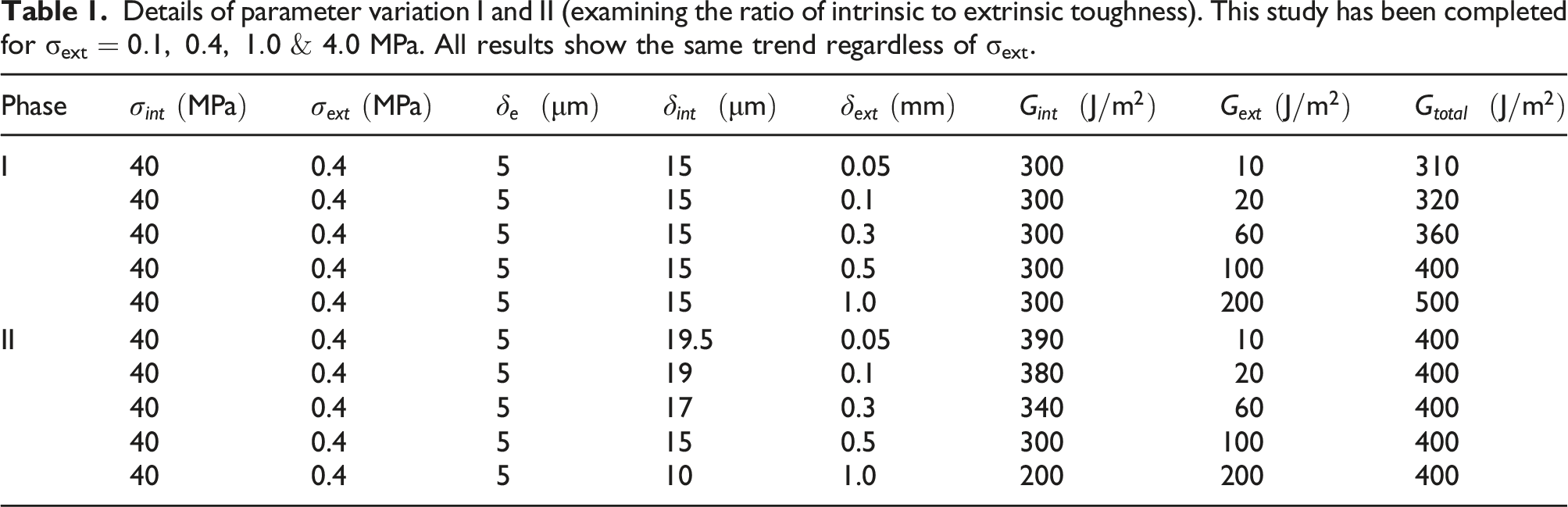
Details of parameter variation I and II (examining the ratio of intrinsic to extrinsic toughness). This study has been completed for
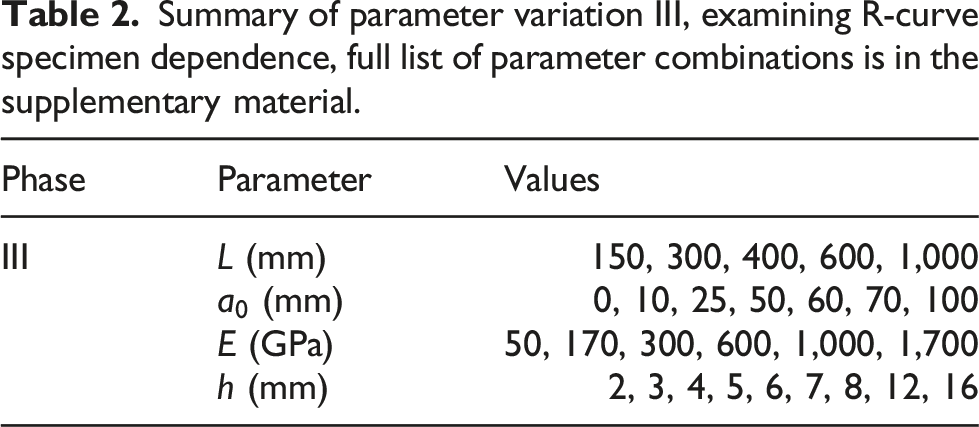
Summary of parameter variation III, examining R-curve specimen dependence, full list of parameter combinations is in the supplementary material.
Values of

The four phases are: I. The intrinsic properties II. The total fracture energy III. The R-curve specimen dependence is examined by varying dimensions and modulus with fixed TSL parameters ( IV. The shape of the extrinsic region is varied by adjusting the extrinsic parameters (
Results
Figure 4 shows the deformed configuration of a DCB simulation with an intrinsic toughness of 300 (a) Deformed shape of DCB specimen with overlaid traction vectors. The dimensions of 2 mm, 1.7 mm and 38 mm show the differing crack length scales over which intrinsic and extrinsic toughening mechanisms act. Applied traction-separation law shown (b) with the measured load-displacement response (c) and resulting R-curve, normalised with input fracture energy 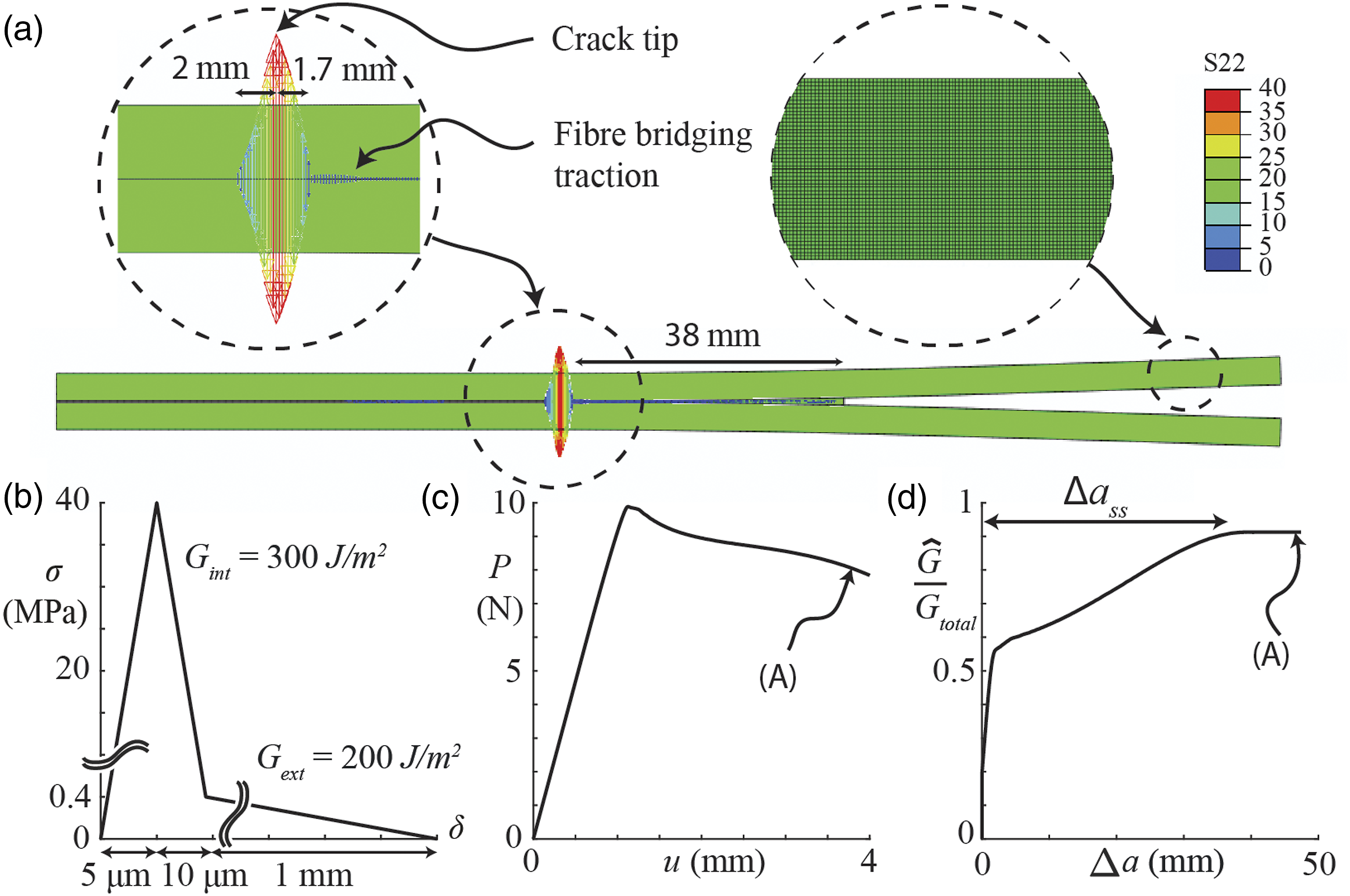
The ratio of extrinsic to intrinsic toughness
The effect of the ratio of intrinsic toughness to extrinsic toughness on the overall R-curve behaviour is summarised in Figure 5 based on the parameters listed above (I and II in Table 1). In the first set of results (Figure 5(a)–(d)), the intrinsic toughness is fixed and the extrinsic varied and, in the second (Figure 5(e)–(h)), the total toughness is fixed and the ratio of intrinsic to extrinsic toughening is varied. In the case of the former (Figure 5(a)–(d)), the following observations are made: (i) the peak load is constant, (ii) the crack growth length to reach the steady-state measured toughness Summarised input parameters and results from phase I (where 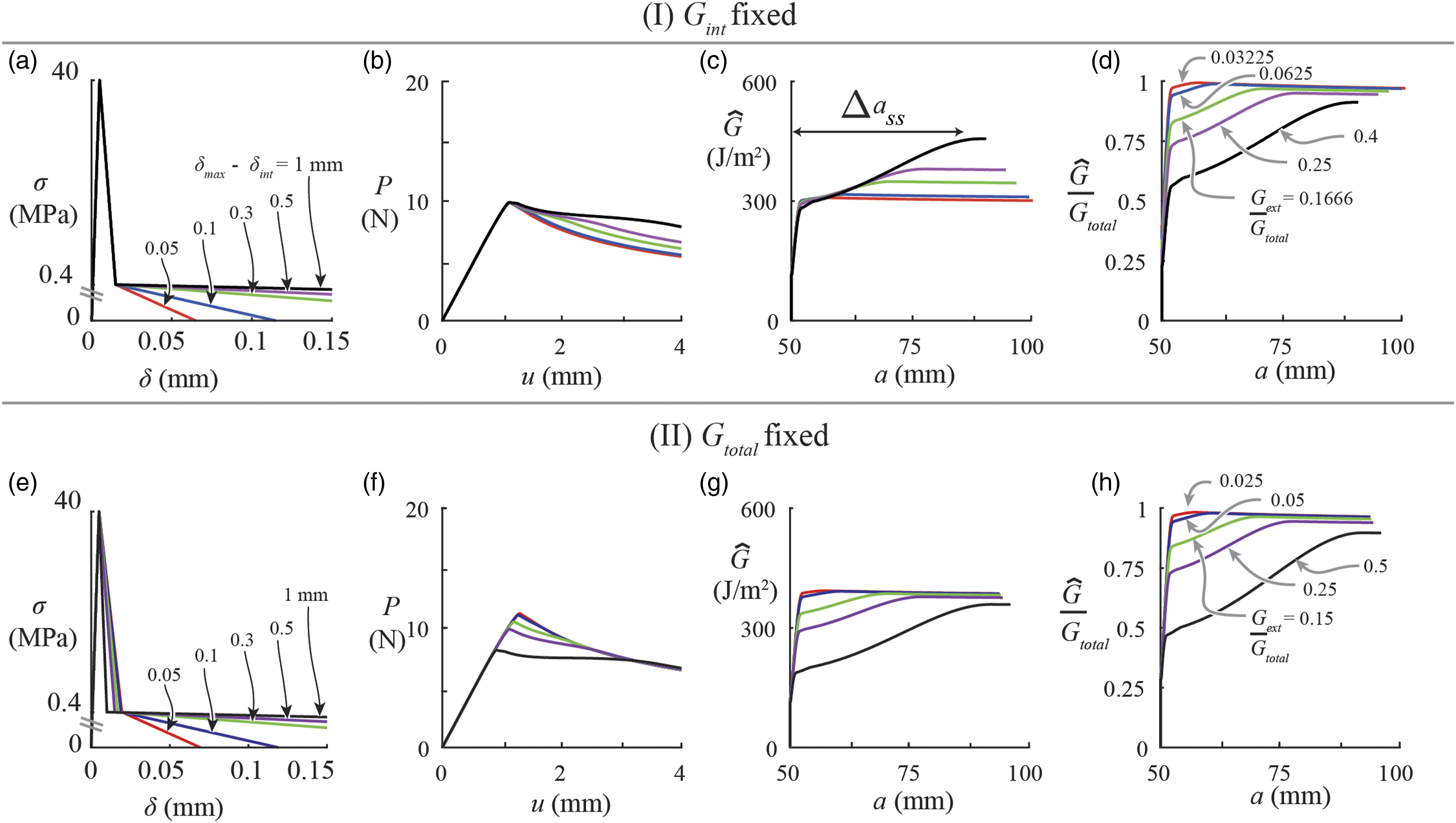
In second set of results (Figure 5(e)–(h)), and similar to the above, we note: (i) the peak load increases with increasing
These results show that the R-curve behaviour is dominated by changes in the extrinsic toughness, as expected; however, in these simulations only
Effect of fracture test properties
In the current section, the effect of test specimen parameters ( Top row: Relationship between steady-state crack growth 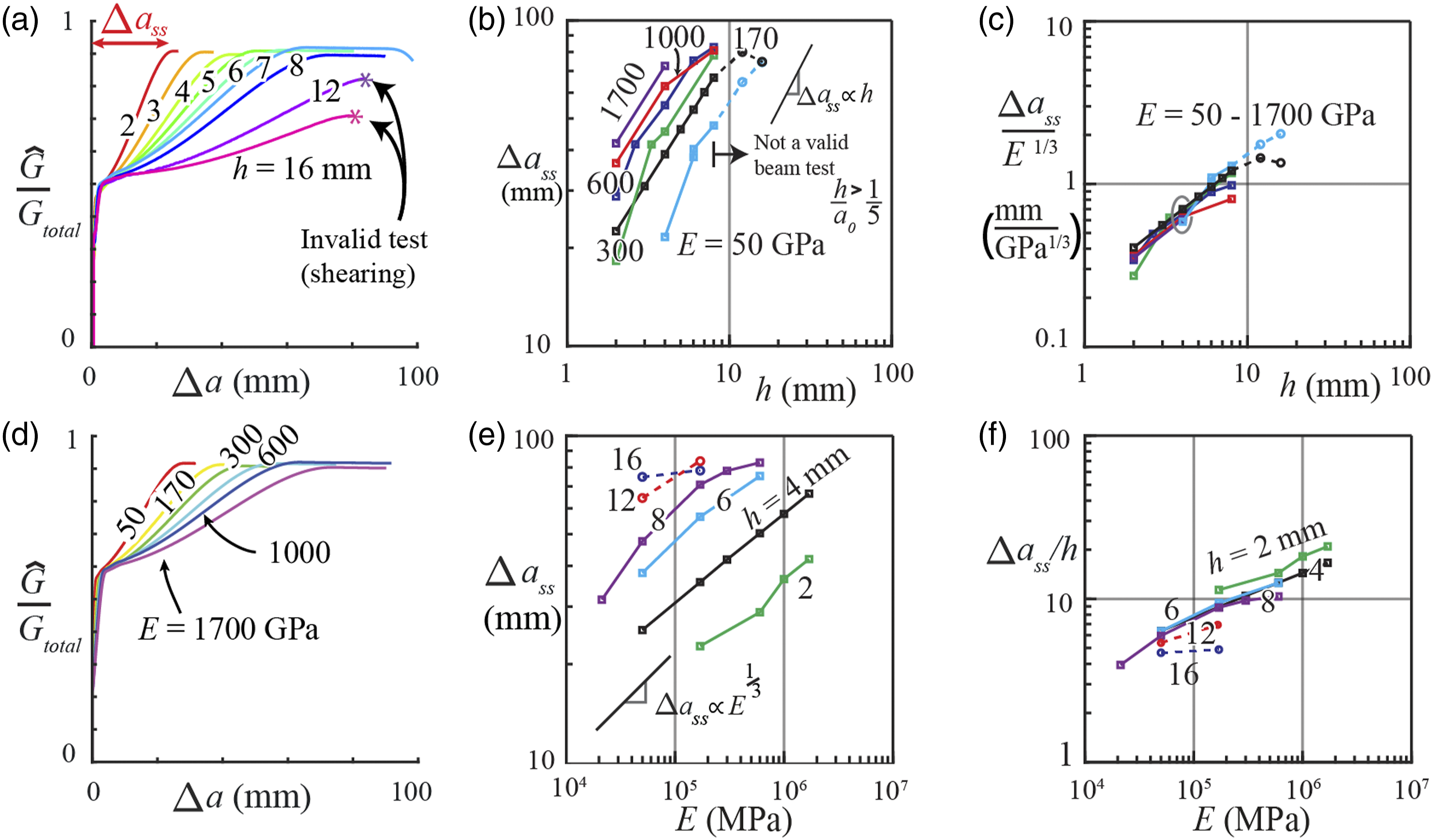
Bridging length and steady-state crack length
Previously, (a) Traction-separation laws with constant 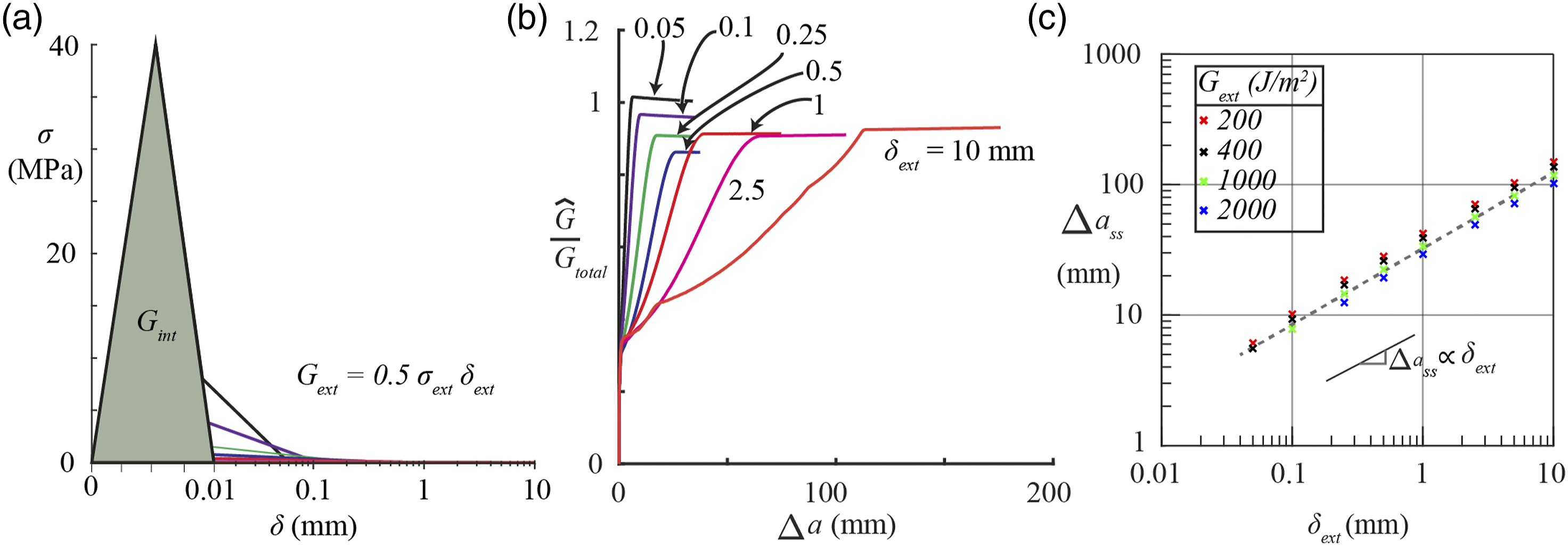
We note in passing that the input fracture energies in the cohesive law (i.e. the total,
Reproduction of experimentally observed behaviour
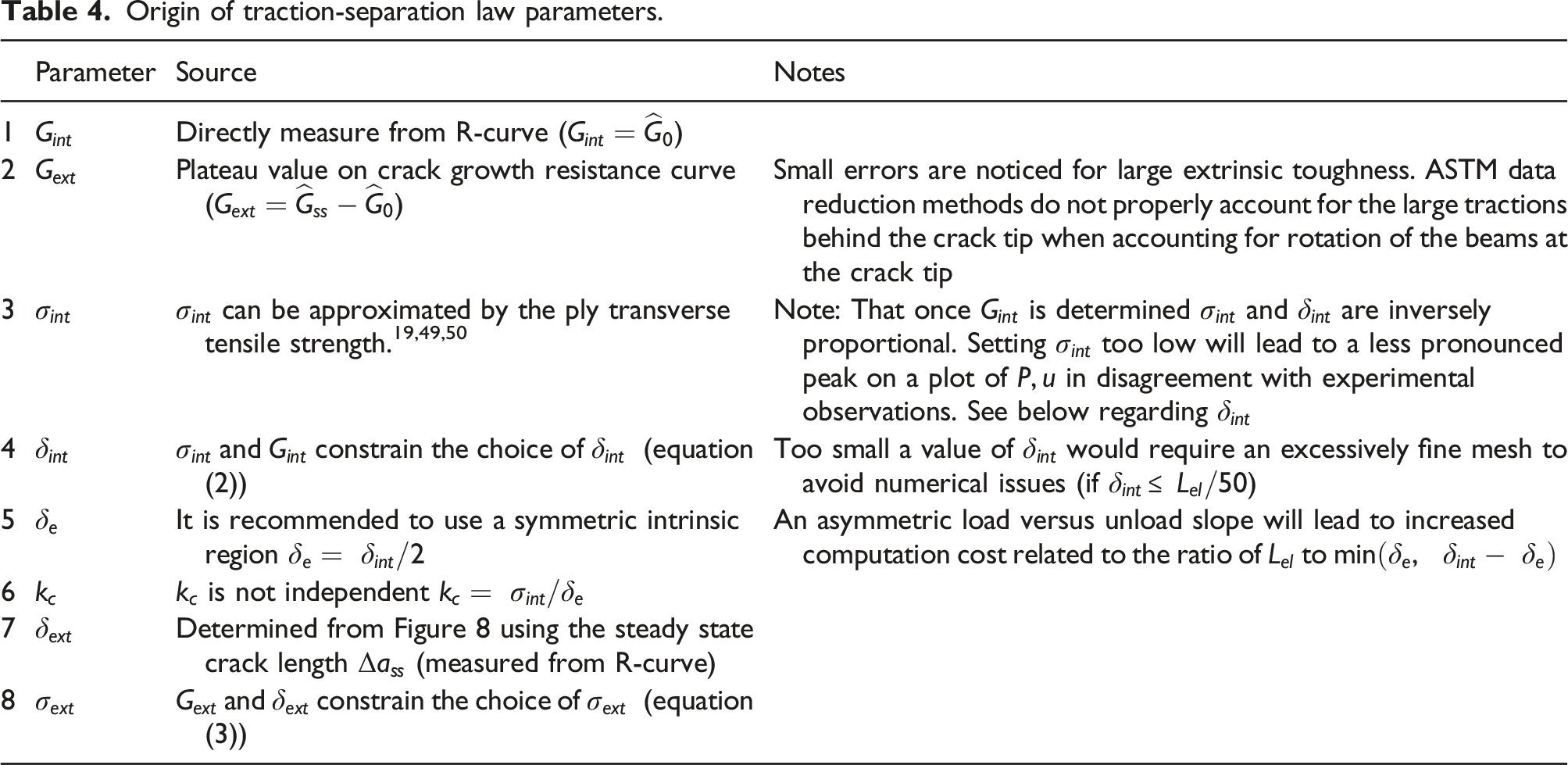
Based on the above results, a strategy for determining traction-separation properties (suitable for use in simulation) from experimental data (such as the example shown in Figure 8(a)) is suggested (Table 4). The quantities needed for Table 4 are also shown in Figure 8(a) and determined from a simplification of the experimental data (i.e. considering only (a) Measurement of Origin of traction-separation law parameters.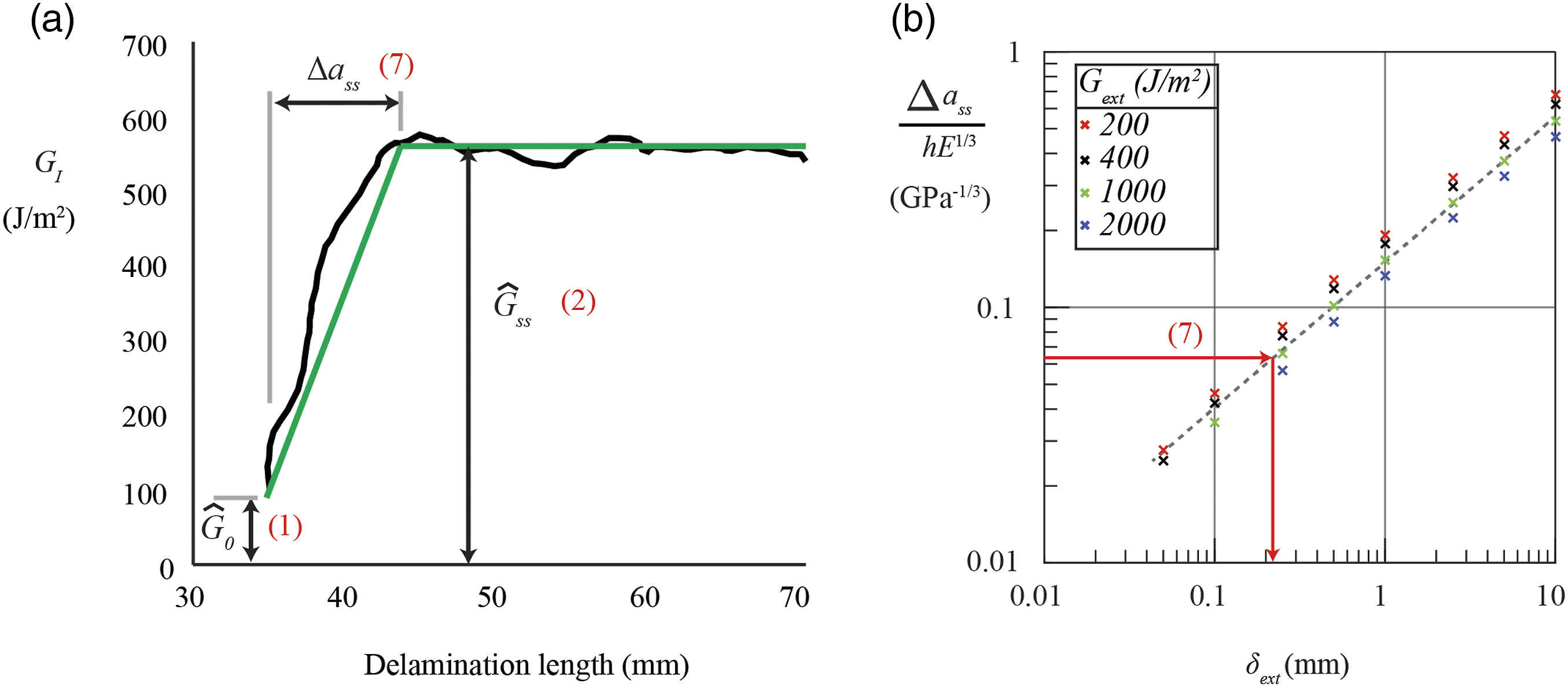
Case studies
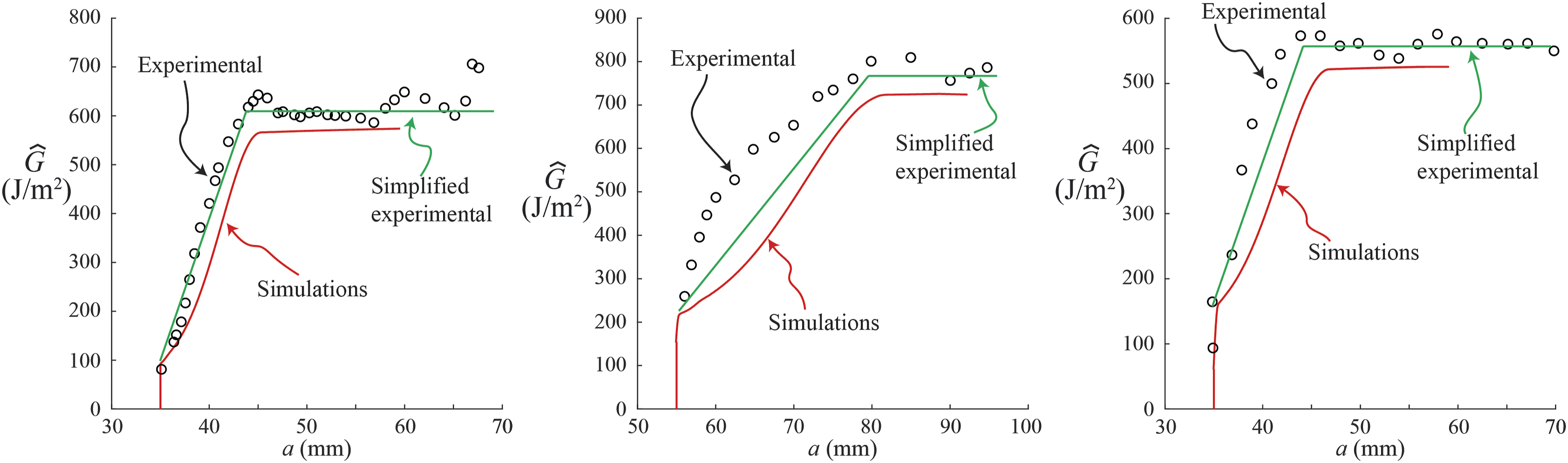
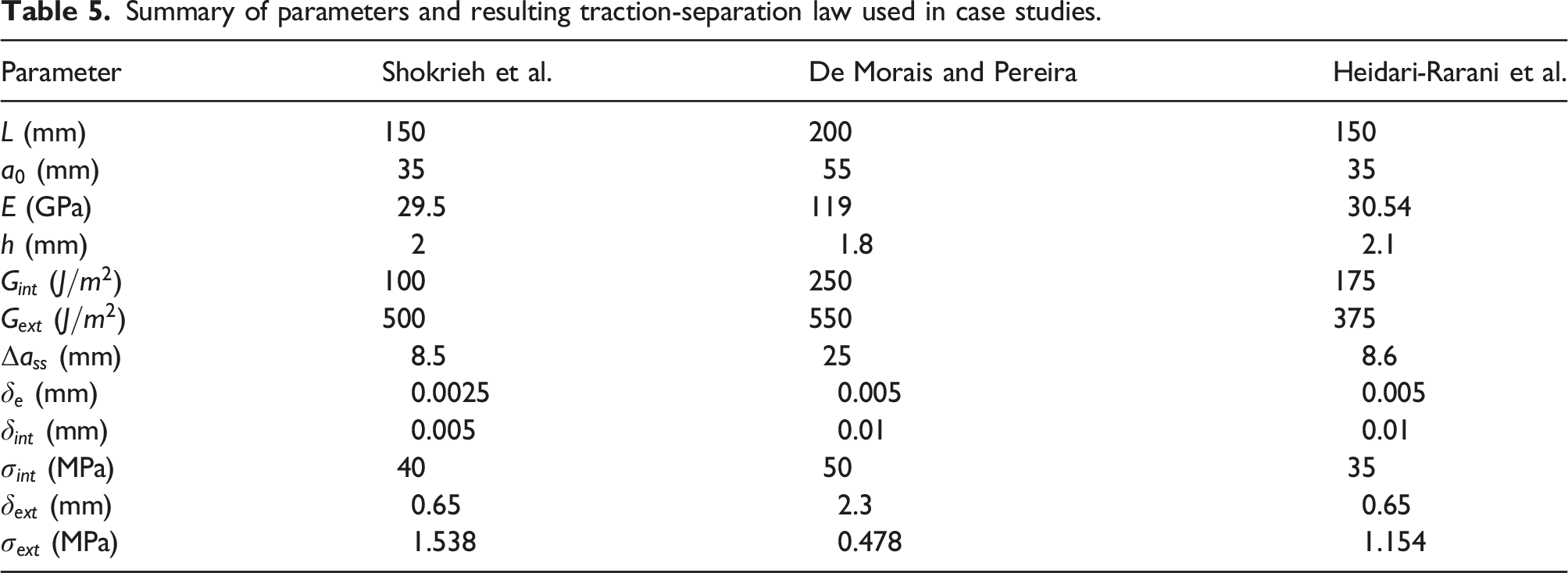
The method outlined above is applied to three experimental data from literature.22,34,38 Figure 9 below shows the experimental data from these studies (black), the simplified experimental data used as model inputs (green) and resulting simulations (red). The TSL used in these simulations is obtained from the simplification of the experimental data using the procedure in Table 4. Case studies comparing experimental data (black symbols) with simulated R-curves (red) using a traction-separation law approximated based on the method described in this study, simplified experimental data shown in green. Left: Shokrieh et al.,
34
Middle: De Morais and Pereira,
38
Right: Heidari-Rarani et al.
22
Summary of parameters and resulting traction-separation law used in case studies.
Concluding remarks
By providing an in-depth exploration of the parameter space associated with a traction-separation law (TSL), the shape of a crack growth resistance curve (R-curve) can be explained in detail. For extrinsic toughening mechanisms such as fibre bridging, the maximum separation at which the bridging tractions act was found to be the key cohesive property to be tuned to capture the main features of an R-curve (i.e. the initial and steady state toughness values and the crack growth required to reach the steady state value). For cohesive behaviour with only intrinsic toughening mechanisms, the cohesive stiffness and maximum traction do not control the behaviour––it is the intrinsic fracture toughness which dictates the behaviour. However, as bridging tractions are substantially less than the maximum intrinsic traction, a trilinear TSL is required to capture bridging behaviour. These observations are used to establish a procedure to robustly identify the input parameters for use in a computational model (i.e. with a traction-separation law).
For cohesive behaviour with extrinsic toughening mechanisms such as fibre bridging, the relationship between the key features of an observed crack growth resistance curve and the input TSL have been robustly explored and key trends are identified. Examination of these trends has shown that the key features on an R-curve (the initial value, the plateau in toughness and the steady-state crack length) can be explained in terms of the interfacial law. The initial value
The method outlined in this paper is on purely mode I cracks; however, in many scenarios, mixed mode loading leads to delamination of plies. Assuming a simple bilinear law for the mode II fracture behaviour, a minimum of four additional parameters would be added to this study (three mode II TSL parameters and a mode mixity term). Including extrinsic toughening via a trilinear law would increase this to five mode II TSL parameters. Performing a similar exploration of the parameter space for mixed mode loading is feasible; however, reducing the data to a similar robust set of guidelines may not be achievable. An experimental validation of pure mode II delamination using the End Notched Flexure test method 52 could be used to determine mode II parameters; however, it is not clear on the level of complexity required to accurately capture mixed mode behaviour reproduction of experimental results has shown that this method of determining a TSL is accurate. These results facilitate improved understanding of crack growth resistance through quick interpretation of experimental data. By replicating the experimental procedures in the processing of the simulations (rather than for example numerical calculating the J-integral), our results are directly relevant to the experimental testing and calibration of models. The input parameters for finite element simulations can be quickly determined and employed in analyses of end-use scenarios and applications, e.g. in composite structures such as wing surfaces or turbine blades. Correctly capturing the effect of such toughening mechanisms is critical for prediction of failure via inter-laminate cracking in large scale composite structures.
Nomenclature
Crack length
Pre-crack length
Crack length to achieve steady-state distribution of fibres
Beam width
Young’s modulus
Total fracture energy
Extrinsic fracture energy
Intrinsic fracture energy
Observed fracture energy
The initial value of fracture toughness on a resistance curve (R-curve)
Plateau value of fracture toughness on a R-curve
Beam thickness (one laminate)
Beam length
Length of one side of an element
Linear regression fitting parameter for compliance calibration method
Load
Load-line displacement
Traction-separation law length for elastic damage
Traction-separation law length for intrinsic behaviour
Traction-separation law length for fibre bridging
Traction-separation law maximum length
Maximum allowable traction
Fibre bridging maximum traction
Transverse ply tensile strength
Footnotes
Acknowledgements
The authors gratefully acknowledge funding, raw materials, and discussion provided by industry partner Hexcel Composites, Duxford, UK and funding provided by the NUI Galway College of Engineering and Informatics Postgraduate Scholarship. The authors acknowledge computational resources provided by the Irish Centre for High-End Computing (ICHEC).
Declaration of conflicting interests
The author(s) declared no potential conflicts of interest with respect to the research, authorship, and/or publication of this article.
Funding
The author(s) received no financial support for the research, authorship, and/or publication of this article.

Examining the intrinsic region of the traction-separation law
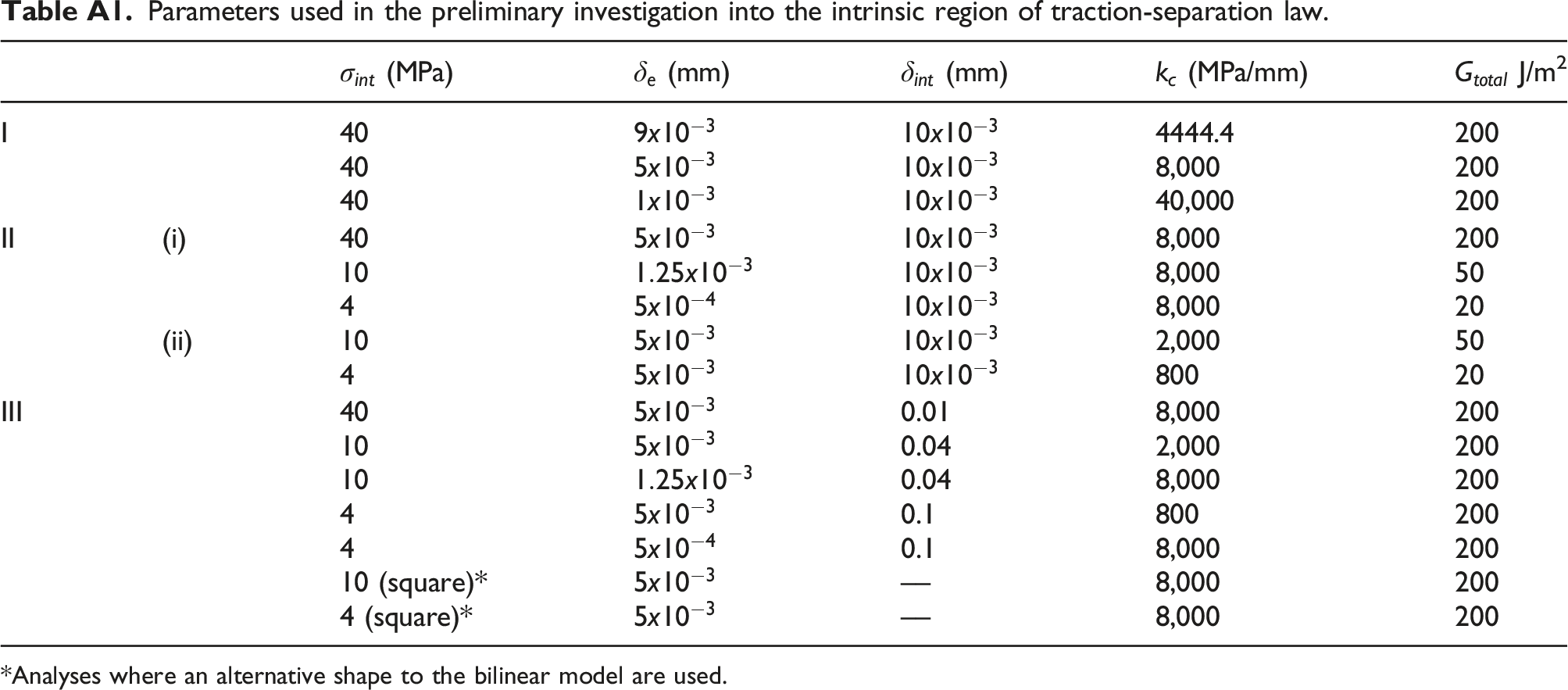
In the simplest case, with no fibre bridging, the traction-separation curve is completely defined by the stiffness I. The stiffness II. The maximum traction i. The stiffness ii. The elastic separation III. The maximum traction Parameters used in the preliminary investigation into the intrinsic region of traction-separation law. *Analyses where an alternative shape to the bilinear model are used. Summarised input parameters and results from the intrinsic study, i.e. no fibre bridging present.
I
40
4444.4
200
40
8,000
200
40
40,000
200
II
(i)
40
8,000
200
10
8,000
50
4
8,000
20
(ii)
10
2,000
50
4
800
20
III
40
0.01
8,000
200
10
0.04
2,000
200
10
0.04
8,000
200
4
0.1
800
200
4
0.1
8,000
200
10 (square)*
––
8,000
200
4 (square)*
––
8,000
200
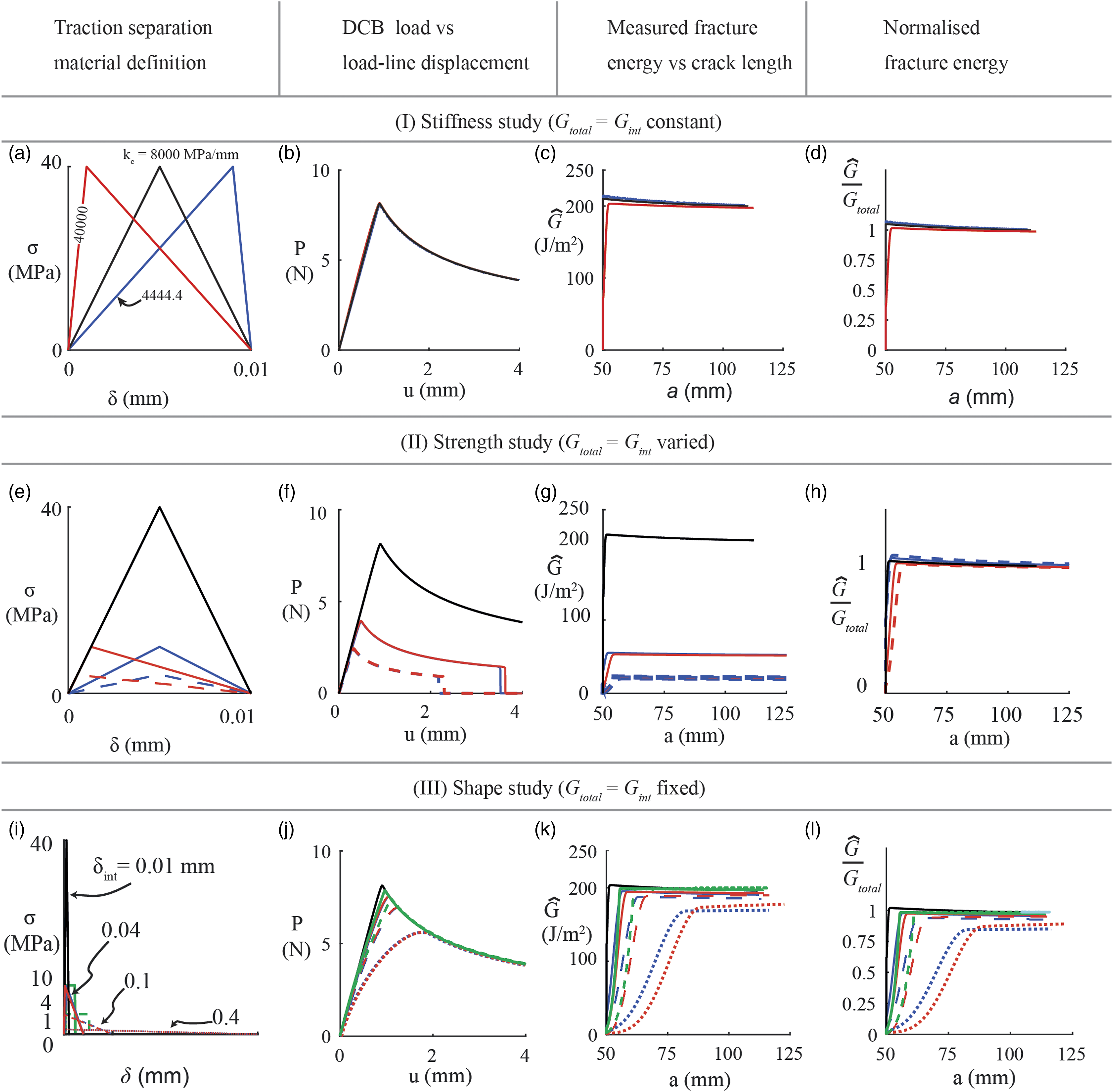
The stiffness study (Figure A1(a)–(d)) shows that the macroscopic behaviour of a DCB (without bridging) is not affected by the value of
In the strength study (Figure A1(e)–(h)), the maximum traction influences the peak value in the P-u plot and the plateau in the R-curve, however once normalised using the total area under the TSL (i.e. the total input fracture energy
Finally, by varying the shape of the TSL (Figure A1(i)–(l)), similar trends were observed; once normalised, the R-curve was the same. In contrast, the TSL with the very large