



Abstract
Polystyrene (PS) composite foams are an intriguing class of materials that are well established for thermal insulation in construction and lightweight recyclable components in automotives. Research has shown the remarkable properties of these foams in terms of thermal and sound insulation and fire retardancy that can be enhanced by incorporating carbon fillers such as graphite, graphene, and biochar. Several methods have been examined by researchers to mix carbon with the polystyrene matrix and prepare PS carbon composite foams, which can broadly be categorized into suspension polymerization, solution mixing and melt blending. These methodologies along with foaming techniques for the expansion of PS using various blowing agents are reviewed. We also review the most relevant research studies in the field of PS carbon composite foams for insulation (thermal and sound) and fire retardancy. Due to its high infrared radiation absorption capacity and hetero nucleating action, expandable graphite and graphene can lead to excellent thermal and sound insulation along with fire retardancy in a PS foam, thus resulting in significant energy savings in a building. Biochar, due to its inherent low thermal conductivity and nucleating action, modifies the foam morphology, leading to enhanced heat and sound absorption and thus is a low-cost renewable carbon alternative that promotes the circular economy.
Keywords
Introduction
Polymer foams are extensively utilized in a wide variety of applications from throwaway coffee cups to state of art components for space technology.
1
Foams are popular due to their low density and their potential to achieve excellent mechanical, thermal and sound absorption properties.2,3 Polymer foams have applications in the construction industry as a substitution of conventional thermal insulating materials such as perlite, vermiculite, asbestos and fibers like mineral, glass and cellulose.4–6. If required, some foams can be reinforced with fibers, glass, ceramic or polymer microspheres.7–9 Figure 1 shows the typical values of some properties of polymeric foams compared to other solids.
10
Due to the exceptional properties provided by the polymer foams such as lightweight, insulation and cost benefits, they are advantageous over metals and ceramics.11,12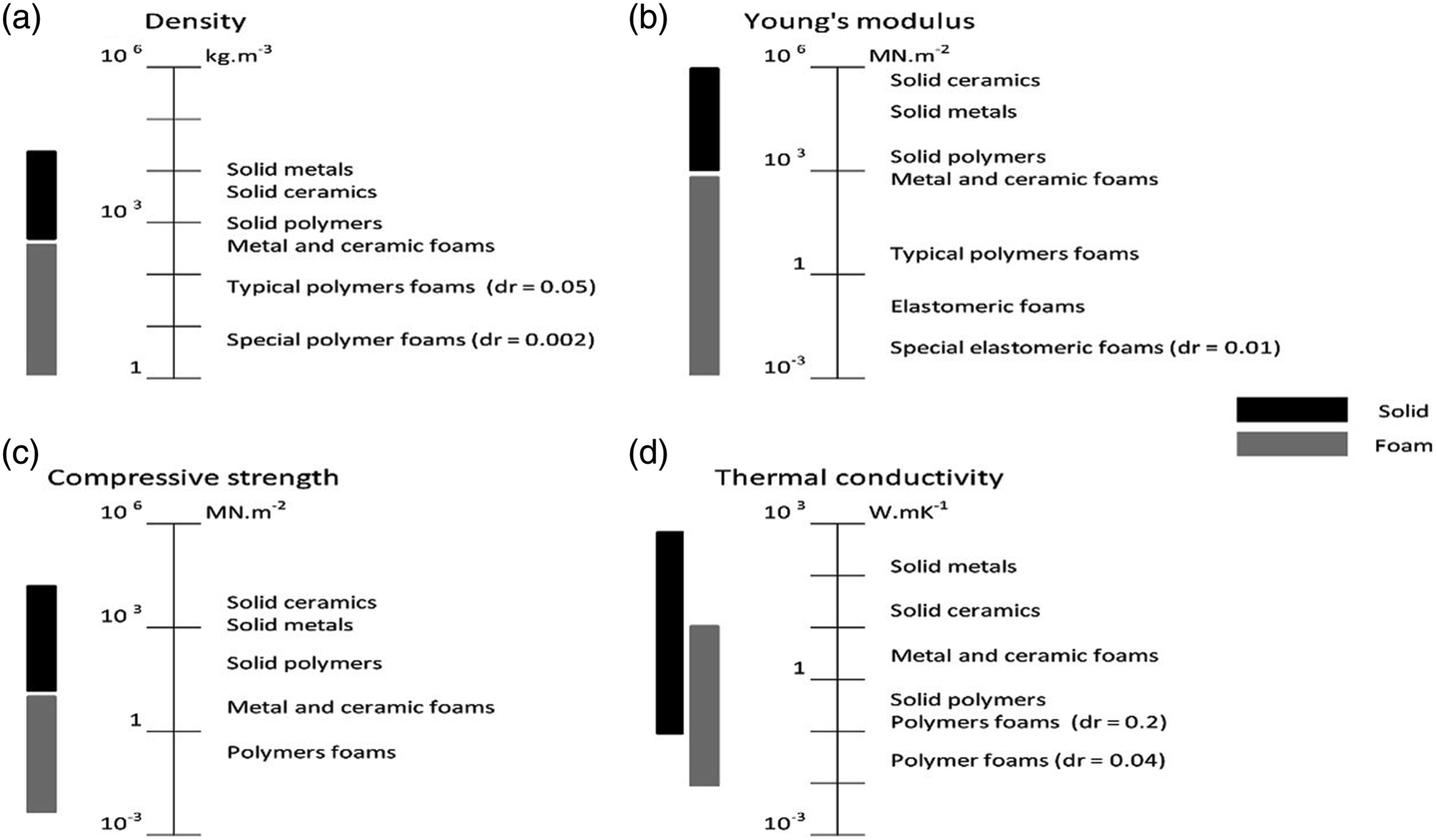
The need for net zero energy housing is rapidly growing, as over 60% of the energy usage is for temperature control in houses due to heat losses through walls and roofs.13,14 Additionally, the Green House Gases (GHG) emitted by a building in its lifetime are equivalent to almost 25% of the global GHG emissions.15–17 Polymer foams contributed to 41% share in 2015 among the thermal insulation products in buildings. 18 Polystyrene (PS) foams play a major role in thermal insulation because of their excellent foaming ability, low price, superior insulation, and mechanical properties.19,20 The global size of the PS market was valued at USD $9.5 billion in 2020 and is expected to grow at a rate of 5% from 2021 to 2028. The market in North America (United States and Canada) is also expected to grow at a rate of 5%. Annualy this growth of the PS market is projected to be boosted by a rising demand for sustainable and lightweight parts with high durability and thermal insulation. Resilient green buildings, which cannot only withstand extreme environmental factors, but offer advantages such as efficient energy usage and reduction in overall operational costs, are expected to propel market growth in North America and Europe. As an example, there are more than 2200 LEED building certified projects in Canada, making Canada the second largest market for LEED projects after the United States. 21
Manufacturing of PS foam
Polystyrene foam is commonly divided into two types based on the type of manufacturing process: Expanded Polystyrene (EPS) and Extruded Polystyrene (XPS). EPS consists of small polystyrene beads made from polystyrene via polymerization22,23 and then saturated with blowing agents such as pentane and isopentane. The expansion process of PS is achieved in two stages. In the pre-expansion stage, PS beads are heated with steam or hot water to temperatures between 80°C and 100°C to create small cell structures. This is followed by the expansion and molding stage in which steam is introduced to the pre-expanded beads in a mold to bind the beads and produce fully expanded polystyrene foam. XPS foam is a rigid foam having a closed cell structure and is manufactured via a continuous extrusion foaming process. 24 The next section discusses the application of EPS in the construction and automotive sectors.
Applications of PS foam in construction and automotive sectors
In the construction industry, the R value is a measure of thermal resistance per unit area indicating the effectiveness of the insulation material; the higher the R value of the material, the higher its insulating ability.25,26 Both EPS and XPS are well-established insulation materials, with R values above 3.7,
27
and are thus frequently used in energy saving applications. Other advantages of EPS and XPS foams in these applications include lightweight, rigidity, high impact resistance and bearing strength, moisture and vapor resistance, longevity, and low maintenance. An example of EPS foam application includes insulated vinyl siding in which the EPS foam is connected to a vinyl exterior layer to create siding with improved insulation, rigidity, and toughness.
28
XPS foam boards consisting of XPS foam sandwiched between two boards, usually wooden sheets, are used for insulating flat roofs, foundation walls, cavity walls, and interior walls and floors. Another application of XPS foam is in insulated concrete forms (ICF), where concrete is sandwiched between PS foam boards to provide higher R values. The applications of EPS and XPS in vacuum insulation panels for buildings have also been recently explored.
29
Figure 2 represents some applications of EPS foam in the construction sector.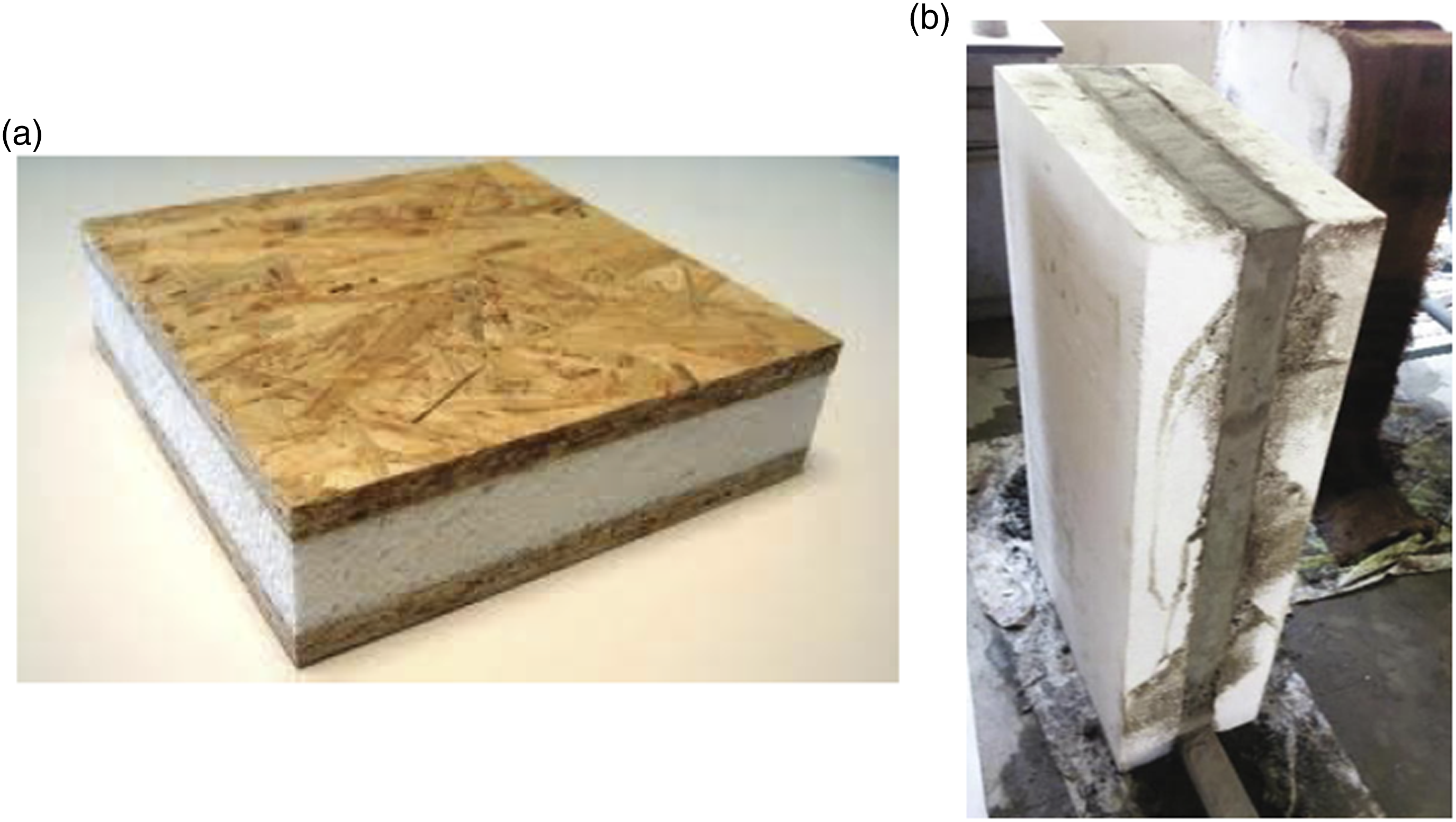
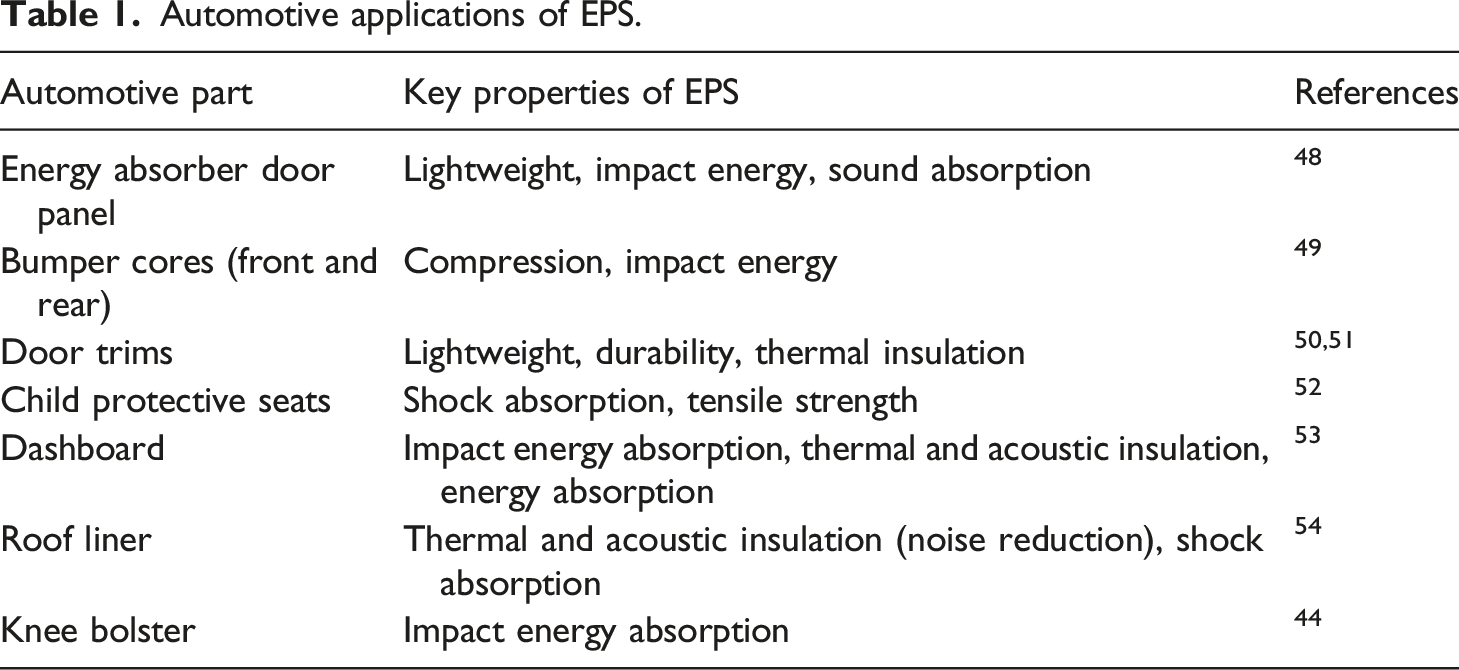
Automotive applications of EPS.
Need and scope of this review
There are many possible advantages for incorporating carbon into polymers. Enhancements include thermal and electrical properties, acoustic properties, fire retardancy, and strength while maintaining a lightweight and flexible material that can be used in many applications. Carbon in the form of graphene oxide (GO),55,56 graphite,57,58 Expandable Graphite (EG), 59 multilayered graphene, 60 carbon nanotubes61,62 and biochar63–65 have been incorporated into polymers to enhance its insulative properties, fire retardancy and mechanical properties.66,67
Sulong et al. 22 reviewed the applications of EPS in the construction field, established its feasibility as an insulator in building design process and highlighted the importance of implementing flame retardant grade EPS to meet fire safety regulations. Another available review on polymer foams dealt with the study of the control of cell density and size using various foaming methods and concluded that the batch foaming process is the most widely used for producing nanocellular foams while the extrusion and injection foaming, despite producing foams with high expansion ratio, needs to be researched more for the creation of nanocellular structures. 68 Reviews by Wu et al. 3 and Kumar et al. 1 focused on various functional applications of thermoplastic polymer foams and emphasized the significance of orientation, dispersion, and nature of various nanoscale reinforcements on the functionality and melt strength of the polymers to obtain a fine cell structure. A review by Antunes and Velasco 69 discussed the use of carbonaceous materials in various polymer foams, focusing primarily on the methods of foam preparation, and electrical properties of the composites; It was concluded that foam density and morphology can affect the required carbon nanoparticle concentration (percolation threshold) for electrical conduction of the composites and noted that synergistic effects of the nanoparticles with different geometries can help reduce the required concentration. The development of new polymer composites on an industrial scale can be made possible through improved carbon particle dispersion throughout the polymer matrix, alongside the establishment of an efficient preparation method for PS carbon foams. Hence, it is crucial to investigate various preparation methods of PS carbon foam proposed by researchers. Literature reviews, however, have not detailed the preparation methods of PS carbon foam and the effects of incorporating carbon into PS foam.
Due to its cost advantages in terms of R-value over a period of time, as well as many publications dedicated to the study of insulative PS foam incorporating carbon particles, polystyrene has been considered for this review. This review article provides a survey of recent literature on PS foams incorporating carbon based fillers. Insulating properties (thermal and sound) and fire retardancy of PS foams with carbon based additives are summarized as well as preparation methods for these PS carbon composite foams.
Preparation methods
Summary of methods of preparing PS/carbon composite foam used by different researchers along with the process followed.
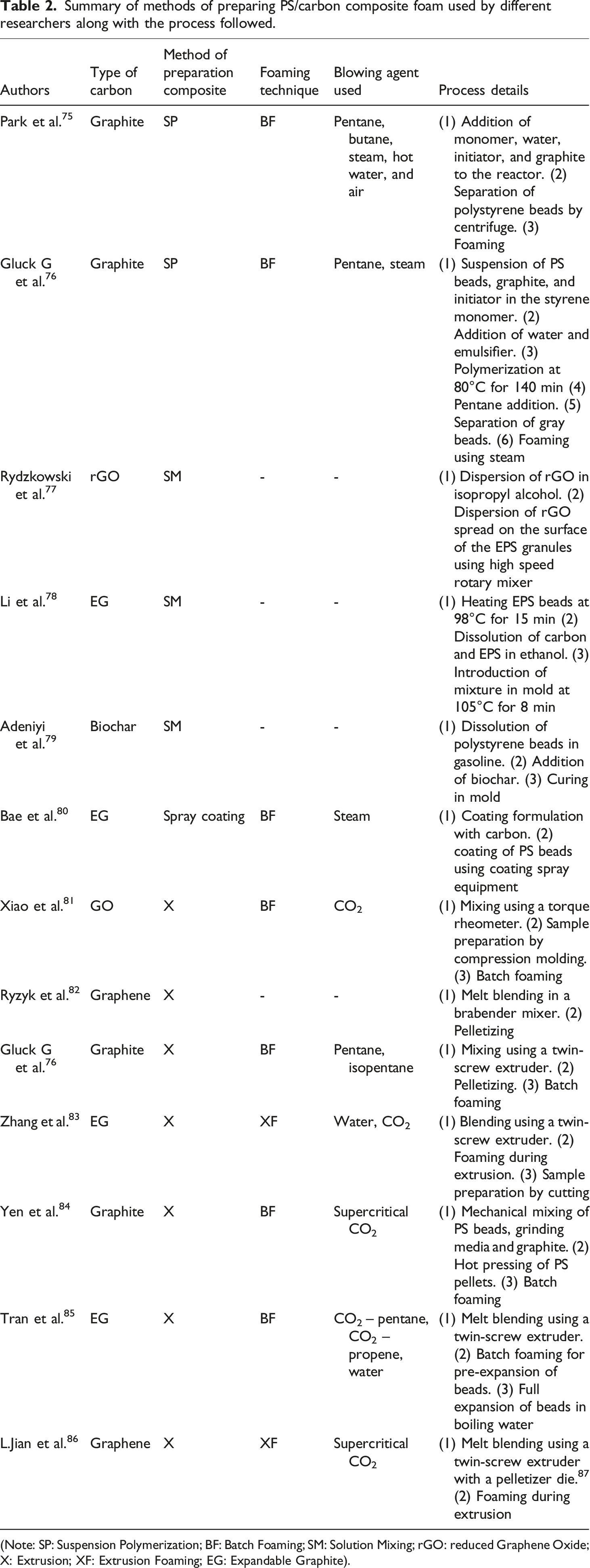
(Note: SP: Suspension Polymerization; BF: Batch Foaming; SM: Solution Mixing; rGO: reduced Graphene Oxide; X: Extrusion; XF: Extrusion Foaming; EG: Expandable Graphite).
Suspension polymerization
Suspension polymerization involves carrying out a polymerization reaction by suspending the monomer in water at 80°C–90°C to obtain the product in the form of beads. Carbon nanoparticles can be introduced into the suspension which help overcome the dispersion challenges. 71 For example, graphite has been suspended in polymerization solutions to create composite PS beads.55,71,75,76,88–93 Foaming of the composites can then be carried out using a batch autoclave method in which a blowing agent is added to the reactor and the composite PS beads are prexpanded by steam, hot water and air to achieve the required density.
One of the major challenges of preparing graphite-polystyrene beads via suspension polymerization is preventing the separation of graphite from the polymerization solution.94,95 Zhao et al. 88 used a homogeneous dissolution reaction system to overcome the instability issue during suspension polymerization process. The agglomeration of graphite was avoided by using styrene monomer as a solvent to dissolve EPS and achieve better dispersion of graphite as the viscosity of the system increased. Some authors92,96 have addressed the agglomeration issue by adding a Polyvinyl Acetate (PVA) solution to the suspension medium, while others 89 have used gelatine powder as a suspension stabilizer, due to interactions between PS main chain with graphite and phenyl ring of PS with styrene monomer. 97 Huang et al. 96 used PS beads to compatibilize EG into PS matrix followed by suspension polymerization. Some studies have added Calcium Trihydroxy Phosphate (CTP) and surfactant solution to the reaction mixture to prevent agglomeration with increasing viscosity of the system.93,98 Wang et al. 99 treated the graphite sheets with supercritical water that led to an increase in the concentration of hydroxyl groups in graphite thus favouring a stable dispersion followed by suspension polymerization.
Another challenge in regards to the addition of graphite in suspension polymerization is to control the particle size distribution of the system.96,98 Zhang et al. 98 studied the instability of the suspension system and related it to the particle size distribution. Instability occured with increasing the particle size of the graphite and was mitigated by adding suspending agent CTP mutiple times throughout the polymeriation. Lopes et al. 100 studied the effect of initiator on the particle size and found that the particle size increased with the graphite content for benzyl peroxide as an initiator, but decreased for a Luperox type initiator.
Suspension polymerization can be used for the preparation of graphite polystyrene beads. Some factors that can help overcome stability issue of the system are selection of the type and concentration of the stabilizing agent as well as initiator and the concentration of graphite in the reaction mixture. Pretreatment of graphite can induce some surface functional groups to help improve its dispersion in the suspension. 101
Solution mixing
The solution mixing technique involves the dispersion of the carbon nanomaterial in a solvent, most often with the help of ultrasonication, followed by evaporating the solvent to obtain the composite. 70 The carbon enhanced solvent can then be deposited onto the surface of polymer granules using a high-speed mixer 77 or through spray coating 80 mixed with pre-foamed PS beads followed by compression molding. 78 A crucial step is to effectively disperse carbon particles in the solvent and avoid reaggregation. Hence, the choice of dispersion medium is important.
Rydzkowski et al. 77 used isopropyl alcohol as a dispersion medium to address the aggregation of graphene and ensure proper wetting of EPS granules. The low polarity of isopropyl alcohol not only allowed dispersion of graphene nanoparticles, but good wetting of the surface of EPS granules by graphene. Li et al. 78 reported the use of ethanol to dissolve expandable graphite and thermoplastic phenolic resin followed by mixing of pre-foamed PS beads in the solution and batch foaming in an autoclave. Other solvents such as gasoline and Tetrahydrofuran (THF) have also been reported to ensure efficient dispersion of carbon particles in the solution to form PS carbon composites. Adeniyi et al. 102 prepared PS/biochar composites by mixing biochar and PS in gasoline followed by curing, while Baek el al. 103 showed a stable dispersion of graphite in THF as a solvent. To avoid one step of functionalization of graphite, Baek et al. prepared styrene graphite nanoplatelets by reducing the size of graphite (in presence of styrene) using a ball mill; it was found that the styrene graphite nanoplatelets showed good chemical affinity towards PS and dispersed well in THF. In a unique attempt to coat EG on PS beads, Bae et al. 80 developed a spray coating technique to produce uniformly coated PS beads.
To achieve stable dispersion of carbon particles in a solution, functionalization of carbon and choice of solvent as a dispersing medium are critical factors. Research has shown that isopropyl alcohol is the best choice for dispersing carbon efficiently followed by ethanol and THF. A drawback, however, of the solution mixing method is an additional step of removal of solvent by evaporation and then the drying of coated PS beads. There are no published studies on the uniformity of coating of graphite on PS beads.
Melt blending
Melt blending involves melting of the polymer followed by incorporating the carbon nanomaterials into the melt to produce the composite. Dispersion into the melt is helped by high shear mixing. Some researchers have used a foaming extruder to produce PS carbon composite foams. Many studies were conducted to find the dispersion of different types and sizes of carbon particles in the polymer matrix.
Xiao et al. 81 prepared Graphene Oxide (GO) by modified hummers method 104 and PS/graphene composites by melt blending in a torque rheometer at 180°C for 15 min. The efficacy of the dispersion of GO in the PS matrix was found to be more dependent on the size of graphene sheets than on the process parameters of melt blending experiments. Foaming was introduced in the composites by a batch microcellular technique. Ryzyk et al. 82 found that the dispersion of graphene nanoplatelets in the PS matrix was good for small concentrations up to 1 wt%. This was studied when a sharp decrease in tensile strength of the PS/graphene composites was observed at a concentration of 5 wt% graphene in PS. In a patented process by BASF, 76 graphite particles are mixed with PS in a twin screw extruder followed by batch foaming to prepare foamed graphite PS composites. Mixing of graphite in the PS matrix in an extruder not only led to its efficient dispersion, but also reduction in the cooling time of extrudate due to nucleating action of graphite. With a similar background, Zhang et al. 83 studied the efficiency of various structures of carbon particles on the extrusion foaming process using CO2 as a blowing agent. The dispersion of graphite, above 0.5 wt%, was improved by introducing water as a co-blowing agent, which helped to increase average cell size, thus producing a stable foam.105,106 To obtain a uniform coating of the carbon on PS, Yen et al. 84 premixed PS pellets and carbon particles in a mechanical grinder prior to extrusion foaming. The reduction in the particle size of PS pellets resulted in 1.2 wt% (30% more) coating of graphite on the surface of PS pellets and improved its dispersion in extrusion. 107 L.Jian et al. 86 used a twin screw extruder to efficiently blend carbon into the PS matrix. They observed that due to the mechanical shearing forces from extrusion, carbon particles were efficiently dispersed around the cell to modify the structure from a closed-cell to open-cell, thus leading to better thermal insulation of the foam.
In summary, extrusion processes are commonly used to efficiently mix carbon particles into the PS matrix with the dispersion dependent on the carbon particle size and concentration. However, despite wide applicability with several advantages of extrusion process, limited research has been reported on the preparation of PS carbon composite foams via extrusion foaming with CO2. Figure 3 summarizes the different methods to prepare PS carbon composite foam. Overview of different techniques to produce PS carbon composite foam (figure created by the authors).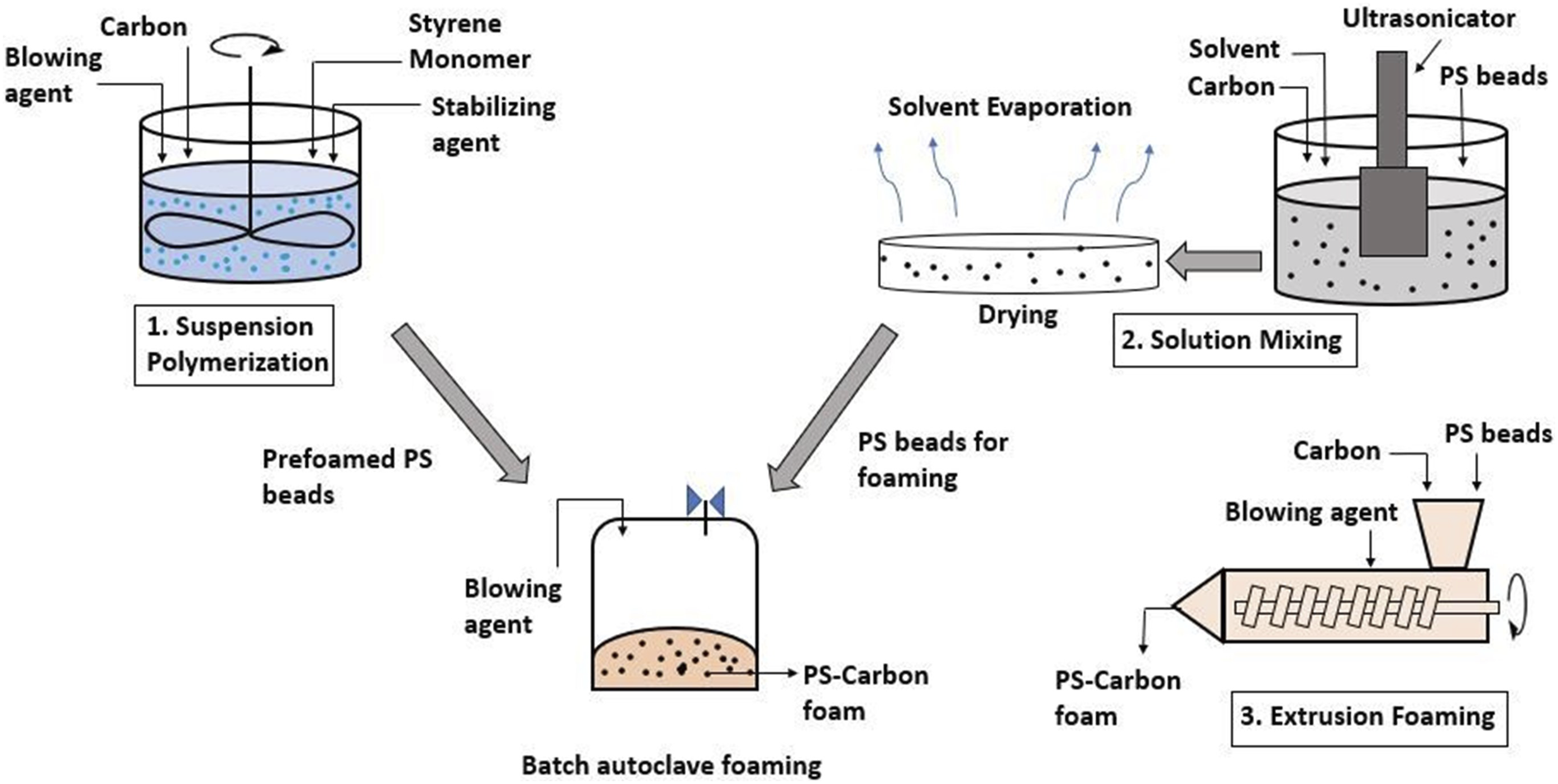
Influence of carbon on the performance of PS-carbon composite foam
Thermal insulation
Polymers with reduced Graphene Oxide (rGO) have construction applications due to their increased large specific surface area of rGO, favorable mechanical strength, and high toughness.55,108–110 Graphene’s ability to enhance exfoliation and absorb infrared heat makes it a promising material to to produce low density insulating foams.83,111,112 On the other hand, graphite reflects and absorbs infrared (IR) radiant energy thus increasing the insulating capacity of the polymer composite.57,58,85 Several authors have also employed functionalized graphene as a heterogeneous foam nucleating agent to produce polymer composite foams.113–116 Despite the excellent abilities of graphene and graphite for radiation heat absorption, limited number of studies have dealt with its effect on the thermal insulation of PS foam.
Long et al. 117 developed a novel structural insulating material using waste expanded PS beads and rGO. Life cycle assessment and building insulating model analyzed the environmental and economic sustainability. This material showed that the thermal conductivity was reduced by 76.4%. This was compared to the thermal conductivities of mortars and concretes with various lightweight aggregates such as pumice, expanded clay, shale and perlite.118–120 This novel composite structural material including rGO balanced compressive strength, thermal conductivity, cost and therefore exhibited a potential to boost waste PS recycling and contribute to sustainable structural cementitious composites for the construction industry. L.Jian et al. 86 compared the effect of various carbon fillers including graphene on the thermal conductivity and specific thermal conductivity 121 of PS carbon composite foams and observed that a loading of 1.5 wt% graphene outperformed the other carbon fillers to achieve a 20% reduction in the thermal conductivity and a 43% reduction in the specific thermal conductivity.
Although many studies have shown that EG improves overall thermal and electrical conductivity of the polymer composites, there are some that indicate thermal conductivity decreases due to its porous structure and radiation absorption behavior. Tran et al.
85
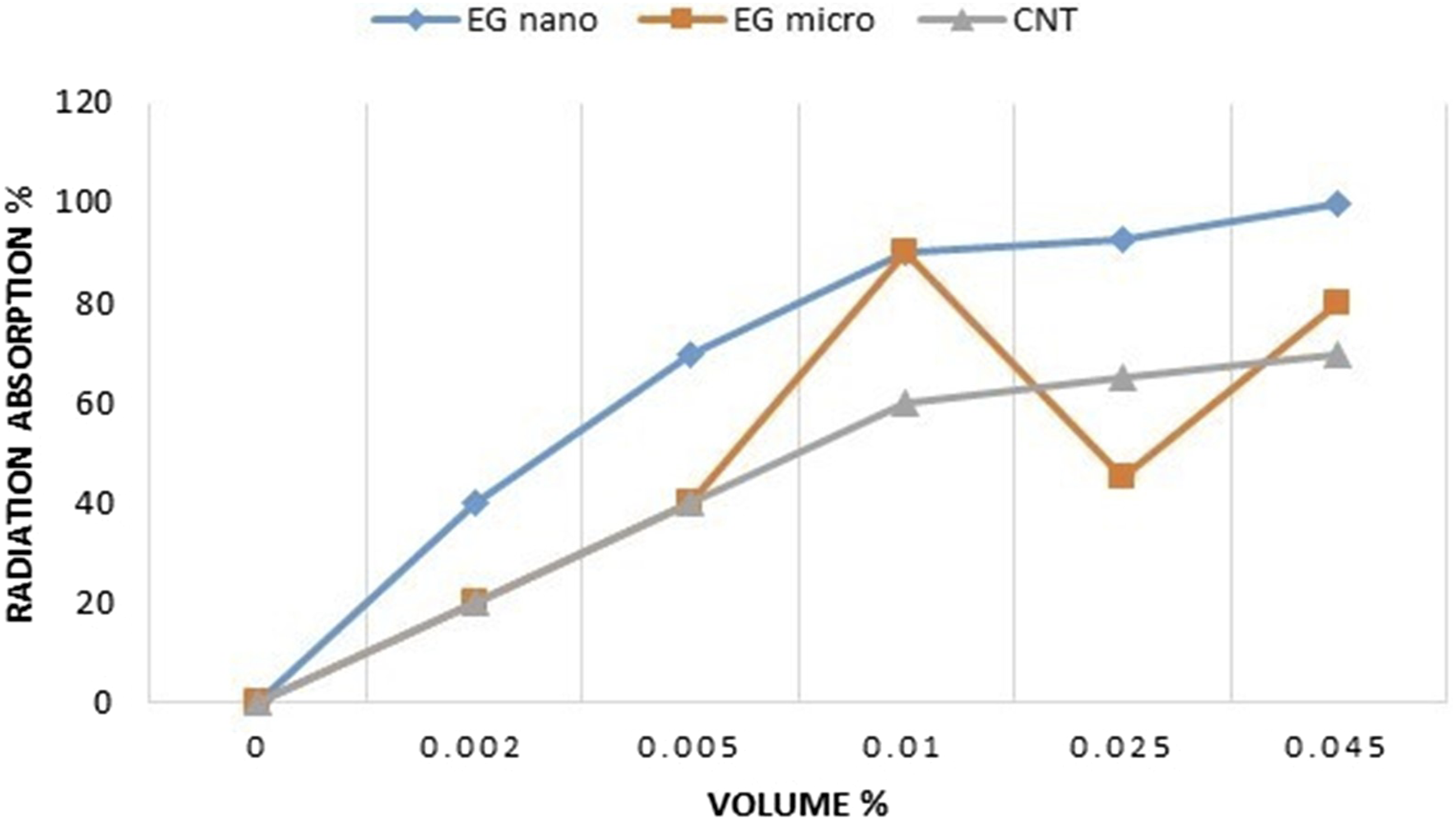
studied the effect of three types of carbon (nano EG, micro EG and CNT) on the heat transfer of PS foams. Thermal models helped to conclude that the heat transfer in PS foam by convection and conduction did not as severely impact thermal conductivity as heat transfer by radiation. With a 0.023 vol% of micro EG in PS, thermal radiation absorption was 84% compared to 92% with nano EG even though the concentration was lower at 0.018 vol% (Figure 4). Due to its higher efficiency of absorbing radiation by nano EG, the thermal conductivity was lowered to 30 mW/m.K as compared to 38 mW/m.K of PS foam. Heat radiation absorption of PS/nano EG, PS/micro EG and PS/CNT (Adapted from
85
).
Biochar as an additive, has the potential to enhance polymer properties like other carbon sources, but at a reduced cost as biochar is a product of pyrolysis. 122 Biochar, because of its low thermal conductivity, porous nature, ecological sustainability, and low cost, offers advantages for building materials.122–124 The low thermal conductivity of biochar, along with its porous structures increase thermal insulation by disrupting the thermal bridging. 63 Adeniyi et al. 79 found that the thermal conductivity of a PS-biochar composite at 10, 20, 30 and 40 wt% of biochar initially decreased and then increased above 30 wt%. The low thermal conductivity of biochar contributed to the decrease in the overall thermal conductivity. Above 30 wt%, the pores of the biochar contribute to thermal bridging and insulation. The combined response of PS/biochar composites to heat was observed with an increase in the heat capacity values as the biochar concentration was increased.125,126 Biochar made from coconut shell was used by L.Jian et al. 86 to improve the thermal insulation of PS carbon composite foam and reported a reduction of 13% in the thermal conductivity, while the specific thermal conductivity did not show the same reduction as the loading was increased from 0 to 1.5 wt%.
Carbon nanotubes can be brought to an excited energy state by absorbing radiation in an electromagnetic field. This radiative energy is then converted into thermal energy after the rapid relaxing from an excited state to a ground state.127,128 Multi-Walled Carbon Nanotubes (MWCNT) exhibit strong absorption of IR radiation, and this is expected to reduce transmission of thermal radiation
62
Also, MWCNT, because of its high aspect ratio, can lead to a nucleating effect which can reduce the cell size of polymer foams.129–131 Thus, thermal conductivity of gas in cells is reduced, contributing to overall enhancement in thermal insulation. Polymer composites with carbon nanotubes therefore have thermal insulation applications in the IR radiation region. Gong et al.
132
reported the heat transfer mechanism of PS/MWCNT composite foam with high expansion ratio and microcellular cell size (5 μm). Models were applied (gas conduction, Glicksmann and Rosseland133–137) to investigate the heat transfer in PS/MWCNT foam composites. As shown in Figure 5(a), the radiative contribution to the thermal conductivity decreased as the concentration of MWCNT increased, while the solid conductive contribution increased, and gas conductive contribution remained approximately constant. Figure 5(b) showed that the total thermal conductivity initially decreased with an increasing MWCNT concentration due to the lower radiative thermal conductivity until 1 wt% and then the solid conductivity significantly increased, enhancing the overall thermal conductivity. Subsequently, bimodal PS foams with large expansion ratios were prepared by adding MWCNT and thermal conductivity was reduced by 22%.
19
L. Jian et al.
86
reported a 17% reduction in the thermal conductivity by CNTs, however the specific thermal conductivity remained almost the same.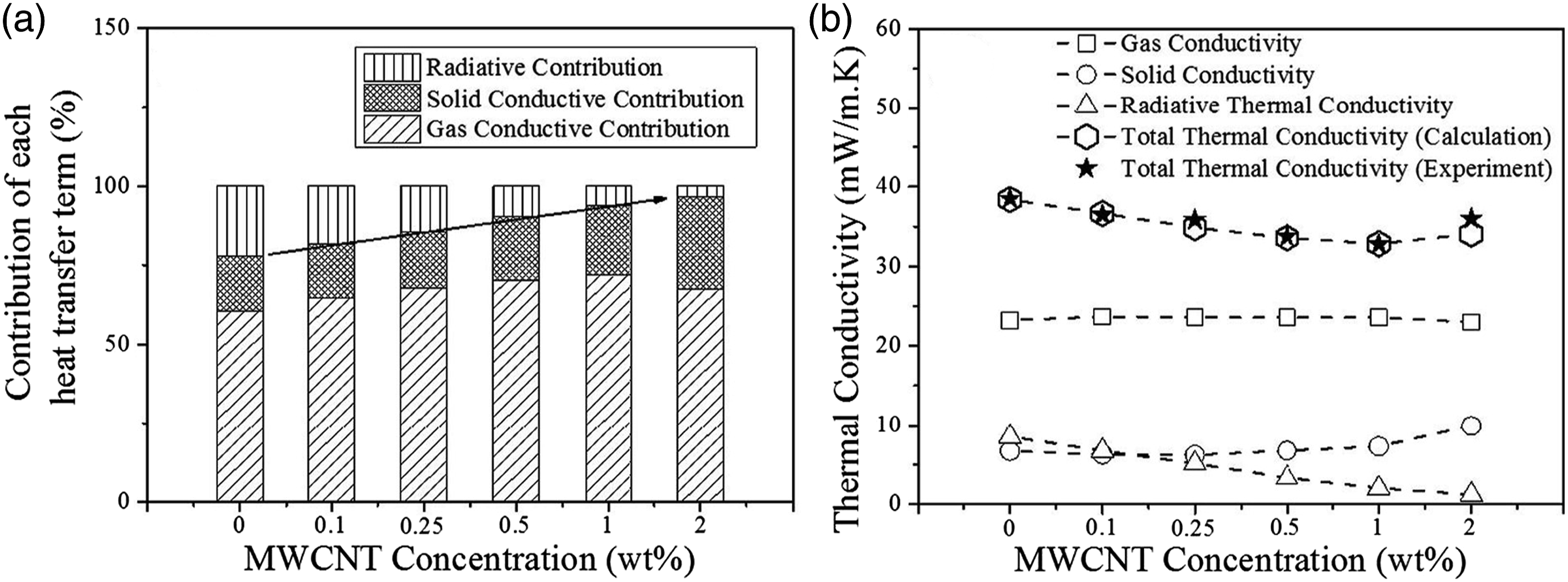
Effect of open and closed-cell content on the thermal insulation of the composite foam
Expanded Polystyrene foam has a fraction of cell content as open cell while XPS is a closed cell rigid insulation. XPS is expected to give better thermal insulation than that of EPS because of gases retained in its closed cell structure. 138 This section discusses the influence of carbon types on the cell morphology (open and closed - cell) and thereby on thermal conductivity of PS composite foam.
L.Jian et al. 86 studied the effect of various carbon fillers such as graphene, CNT and activated carbon on the generation of porous structure during foaming of PS and found that with a loading of 1.5 wt% graphene leads to the rupture of the cells thus changing the foam morphology from closed cell to open cell; the open cell content reached 89% while still maintaining a higher cell density and in turn a better heat barrier effect with a 43% specific thermal conductivity as that of pure PS foam. A similar observation was reported by Almeida et al. 29 where an enlargement in the pore size of EPS with the addition of carbon and inorganic fillers was noticed for the application of Vacuum Insulated Panel (VIP) in buildings. The open pore structure of PS foam with graphite led to a reduction in radiative and solid contribution to thermal conductivity, thus a significant lowering of the overall thermal conductivity despite a higher pore size (4 µm) as compared to EPS with no carbon (pore size of 2 µm). In contrast to the above results, Lu et al. 139 proposed a mechanism for flame retardancy of EPS with EG suggesting that the closed cell porous composite foam can achieve excellent thermal insulation due to the gas with low thermal conductivity filled in the pores thus slowing down the rate of heat transfer. Zhao et al. 140 added carbon nanofibers in the PS foam and noticed that the continuity of the solid phase was critically destroyed by open cell structures of PS composite foam (due to the large aspect ratio of CNF), thus increasing the tortuosity of heat transfer path and reducing the overall thermal conductivity.
Effect of cell morphology on the different modes of heat transfer in the composite foam
To understand the influence of foam morphology on the modes of heat transfer in composite foams, it is necessary to review the different modes of heat transfer in a polymer foam. Heat is transferred due to the temperature difference between two sides of foam and hence heat flows from a wall of the foam at higher temperature to the one at lower temperature due to the 3 basic modes: (1) conduction due to the movement of free electrons in the molecules of the material inside the foam. (2) convection via the exchange of molecules of fluids inside the foam and (3) radiation owing to the transfer of photons. The cell sizes of commercial foams being less than 3 mm, the exchange of heat through air molecules inside cells is not possible and hence convection term is negligible.
141
So, heat can be transferred only through the conduction of gas, solid and the radiative ability of the material of foam. The total thermal conductivity of polymer foam [
Gas thermal conductivity [
]
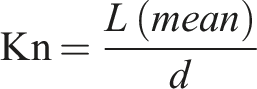
In a small cell, the heat is transferred through the energy transfer between the molecules of gas and the cell walls, here comes the role of Knudsen number (Kn).
133
Gas conductivity in polymer foam [
Graphene113–116 graphite
143
biochar
144
CNTs143,145 have been employed by several authors as a heterogeneous foam nucleating agent. Okolieocha et al.
56
studied the effect of additive concentration on the cell morphology of PS composite foam and reported a cell size was reduced from 400 µm to 115 µm and 65 µm for CNT and graphene, respectively; PS-graphene composite foam was not tested for thermal conductivity. Similarly, L. Jian et al.
86
observed a linear reduction in the cell size of PS foam from 200 µm to 100 µm, 150 µm to 100 µm and 300 µm to 200 µm with an increase of the loading of graphene, CNT, and biochar, respectively, and a reduction in the overall thermal conductivity by 19% for all the carbon types was reported. Figure 6 compares the morphology of PS foams with different carbons by their Scanning Electron Microscopy (SEM) images. It can be seen from the red outline in SEM images that there was a significant reduction in the cell sizes with the incorporation of carbon, foam with graphene (1.5 wt%) exhibiting the lowest cell size and gas thermal conductivity.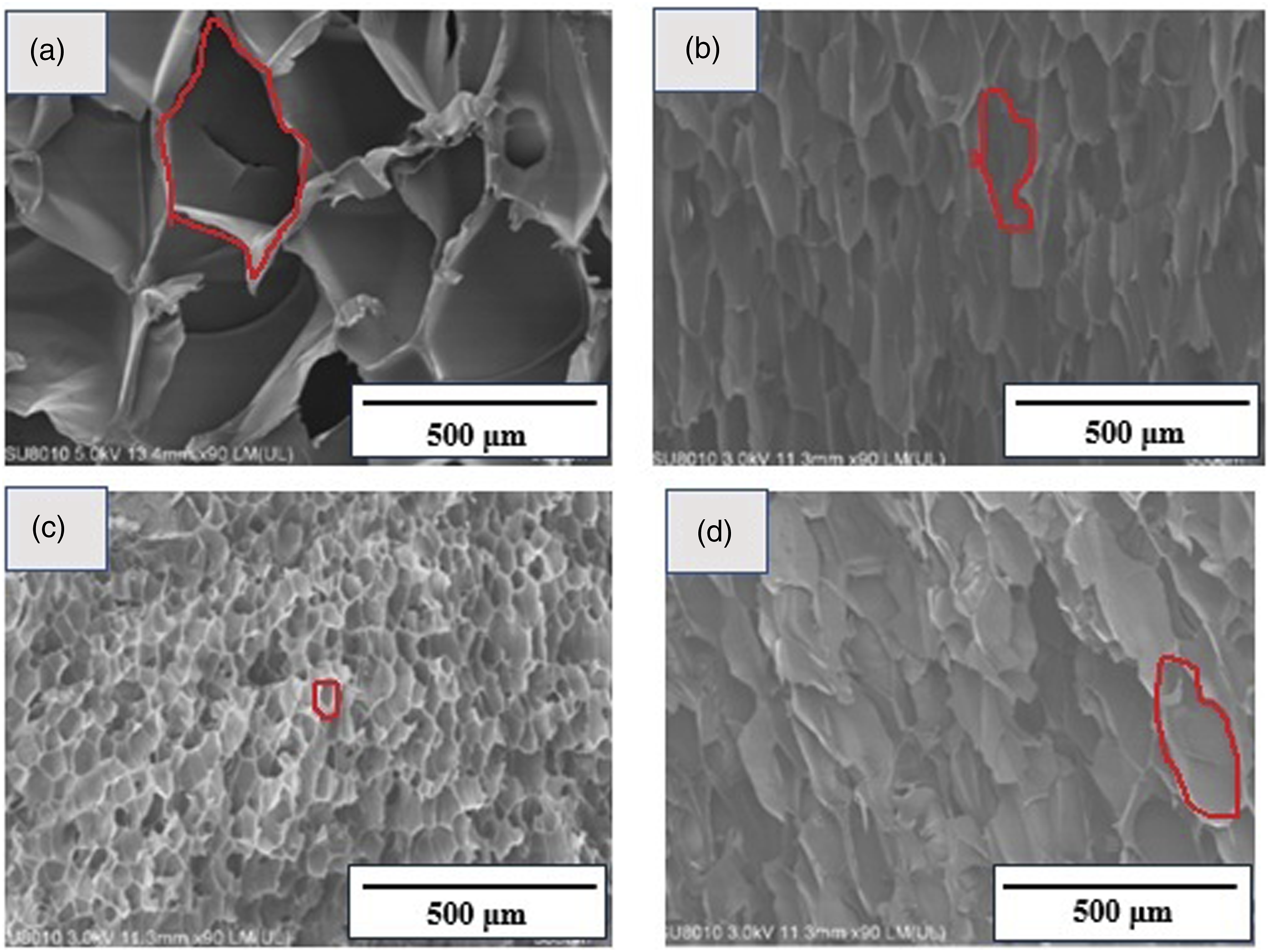
Solid thermal conductivity [
]
According to the Glicksman model, 135 the solid contribution to the overall thermal conductivity is inversely related to the volume fraction of cells and the strut fraction (intersection of cell walls). With a decrease in the cell size, the cell volume fraction should go up, thus lowering the solid thermal conductivity.135,136,141 Zhao et al. 140 studied the impact of carbon nanofibers on the cell morphology of the PS composite foam and found that the cell size decreased by 50% with a 10-fold increase in the cell density at an expansion ratio of 30. The high expansion ratio led to a dramatic decrease in the solid thermal conductivity due to an increase in the void fraction. Gong et al. 19 developed a PS/MWCNT composite foam with bimodal cell morphology and achieved an expansion ratio of 31 due to the presence of primary cell (100 µm) and surrounding small secondary cells (0.1 µm). This led to an increase in the void fraction, which reduced the solid bulk thermal conductivity. In a study to optimize the heat transfer mechanism with the use of regression model for microcellular PS foam, Hasanzadeh et al. 146 observed a slight decrease in the solid thermal conductivity (<10%) with a decrease in cell size from 100 µm to 10 µm while a considerable reduction (30%) in solid thermal conductivity was reported with an increase in the strut fraction from 0 to 0.5.
Radiative thermal conductivity [
]
In a polymer foam without any carbon, the passage of radiation through the cell walls can be significant and contribute around 40% to the total thermal conductivity due to low radiative absorption of the foam. 141 Hence, it is imperative that the radiation should be blocked or absorbed to reduce the overall thermal conductivity. The radiative thermal conductivity is inversely proportional to the Roseland extinction coefficient, the amount of radiation energy that a black body can absorb. The higher the Roseland extinction coefficient, the lower the radiative thermal conductivity.
Therefore, using carbonaceous materials such as graphite, 85 graphene 56 and MWCNTs19,132 is of interest due to its ability to reflect and absorb infrared radiation. Apart from this, due to the nucleating action of carbon in the foam, cell size, that also act as reflecting surfaces, becomes small enough (3–30 µm) so that the backward scattering of IR radiation becomes considerable, thus reducing the rate of heat transfer by radiation. 147 Schellenberg et al. 148 studied the dependance of thermal properties of EPS foam on the cell size, foam density and observed that, with a decrease in cell size to 70 µm, the radiative thermal conductivity decreased due to multiple reflections of IR radiation in the small cells. The bimodal cell morphology developed by Gong et al. 19 in conjunction with the radiation absorption ability of MWCNT led to a decrease in radiative thermal conductivity by 8.5 mW/m.K.
On the other side, there are some studies in which no relation was found between cell morphology and radiative thermal conductivity. Tran et al. 85 and Gong et al. 132 studied the foam morphology in terms of cell size and density and found that the cell morphology almost remained like that of pristine PS foam, so the reduction in thermal conductivity was attributed only to the IR radiation absorption of carbon. Almeida et al. 29 reported an increase in the cell size with the addition of carbon opacifiers such as carbon black, graphite and concluded that the radiative thermal conductivity decreased only due to absorption of IR radiation.
Sound insulation
Biochar derived from biomass by pyrolysis can be a new type of renewable carbon source for developing functional composites with good acoustic properties.149–153 Biochar can form voids and networks of interconnected pores in a polymer system, to create a porous structure to enhance the sound absorption of the material. When sound waves enter connected pores, refraction dissipates the sound waves.64,154
Jian et al.
144
studied pine derived biochar as an alternative option for a lightweight acoustic composite system with tailored foam structure and properties using supercritical CO2. Biochar used here was derived from pinus resinova to control cell structure and morphology.123,155 The effect of concentration (0–0.1 wt%) of biochar on the sound absorption coefficient of PS/biochar composites showed that 0.05 wt% of biochar exhibited stable sound insulation performance with a continuous sound absorption coefficient of 0.4 in the frequency of 3.5–6 kHz (Figure 7). This is a more stable sound absorption coefficient as compared to a variable sound absorption coefficient (0.3–0.8) of pure PS foam. The PS carbon composite foam thus has applications for stable sound absorption over a wide frequency range such as absorbing panels and aircraft acoustic stealth technology. As biochar impacts cell size and density, it can act as a foam nucleating agent. Fei et al.
143
demonstrated sound absorption properties of PS carbon composite foam using supercritical CO2 as a blowing agent by extrusion foaming process. Authors used lignin,156–159 MWCNT and graphite to study the hetero-nucleation and the effect of carbon on the acoustic properties of the foam. With an increase in the filler content, nucleation was promoted, and cell size decreased. Due to the one-dimensional tubular and two-dimensional layered structure, excellent hetero nucleation efficiency was displayed by graphite and MWCNT.160,161 Because of the decrease in cell size and increase in cell density, the sound absorption range of the PS composite foam was shifted to a higher frequency than the pure PS foams. The internal dissipation of sound energy was enhanced, and the foam had applications in narrow acoustic absorption bands.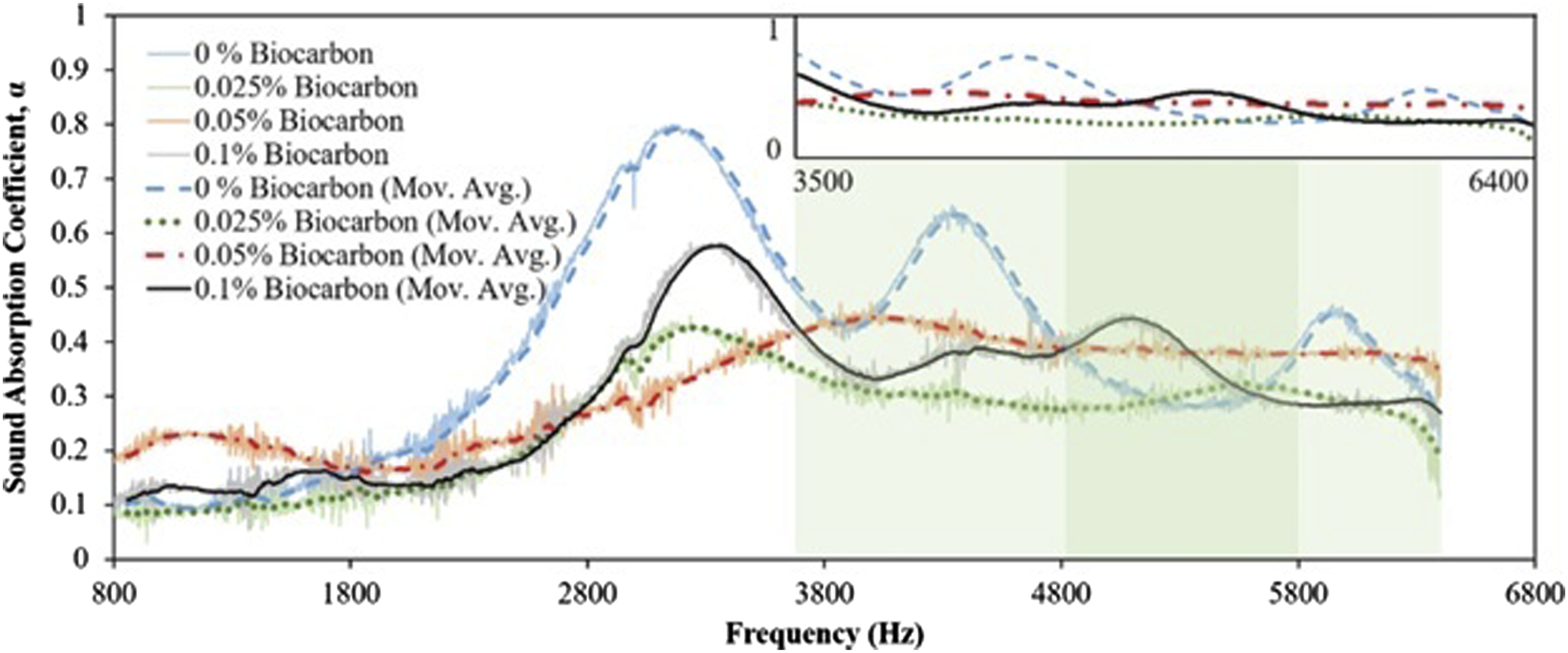
Similarly, Park et al. 75 evaluated PS-graphite (5 wt%) foam composites for low frequency vibroacoustic insulation in buildings. The graphite embedded in PS foam served two purposes: reduction in the dynamic stiffness that can help in insulating components of low frequency impact source and maintenance of the structural strength against the normal floor load.162,163 Two important vibroacoustic aspects for application of PS/graphite foams to the low frequency insulation were investigated. First, the stiffness reduction of the compressed PS foams improved the impact sound absorption efficiency above 60 Hz as compared to uncompressed PS foams. Second, the absorption of sound is disturbed in the lower frequency range (35–60 Hz) as the stiffness decreases but was compensated by the optimal design of insulation materials. These results were in consistent with the study reported by Kim et al., 164 where a non-linear relationship was established between dynamic stiffness and impact sound reduction. Lu et al. 139 designed a formulation with 7.5 wt% EG that exhibited maximum sound absorption coefficient (0.77) at low frequency while the average value of sound absorption coefficient was 0.26 throughout the frequency range (80–6300 Hz). The mechanism proposed by the authors suggests that the large porosity and specific surface area of the closed cell EPS carbon composite foam was beneficial for acoustic wave loss thus giving excellent sound absorption.
Fire retardancy
Expandable Graphite is considered an ideal candidate as a halogen free fire retardant.165,166 The particles of graphite expand hundred times in size with the application of heat and this results in separation of layers and this porous structure can form a composite.
167
Also, graphene is a promising flame retardant due to its benefits, availability in abundance in nature, and efficiency.168,169 Graphene reduces fuel supply to the source of the flames, oxygen transport and thus acts as a heat barrier within plastics. Therefore, graphene improves the thermal stability of polymers by reducing the heat release rate (HRR) of the polymer and prevents fire spread by decreasing burn time.170,171 The synergistic effect of cells in PS foam and graphene is explained by the movement of the layered nanoparticles to the surface of the material during burning, thus forming a more consistent char layer for protection that hinders further polymer combustion (Figure 8).168,172 Apart from giving a high R-value in PS composite foams, it is because of this synergistic effect, that the multilayered graphene and EG are used as halogen free flame retardant in PS foam. Impact of graphene layered particles on the flame retardation improvements of PS foam (figure created by the authors).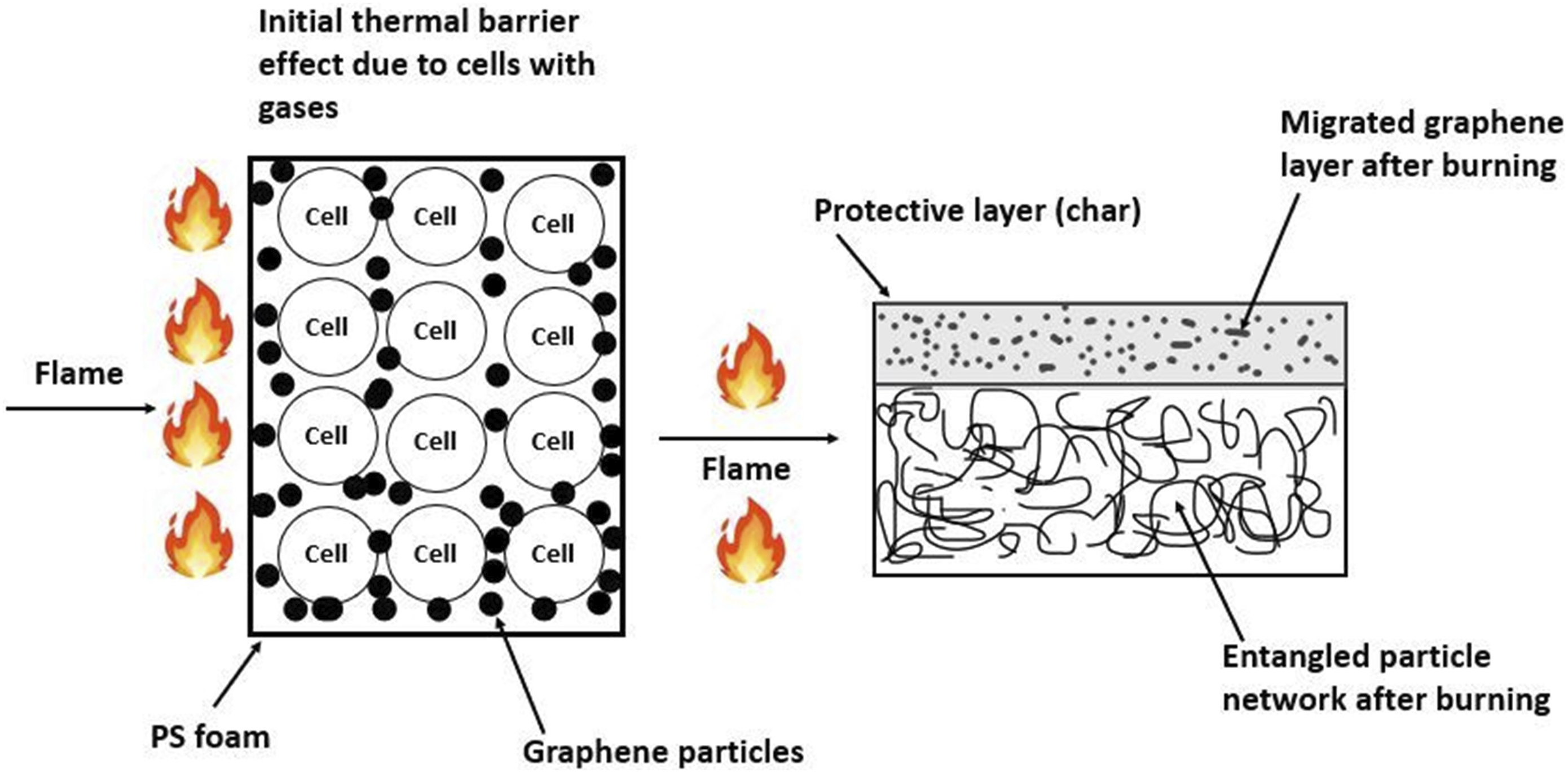
The Heat Release Rate (HRR) is an instantaneous amount of heat generated per surface area and Total Heat Release (THR) is the total heat released during its burning time. These tests are used to analyze the risks associated with initial fire. Bae et al. 80 used flame retardant additives based on EG and added to EPS to improve flame resistance. The lower the value of the peak HRR and THR, the higher the fire resistance of composites. 173 The THR and HRR for 10 min did not exceed 8 MJ/m2 and 200 MJ/m2, respectively, for more than 10 consecutive seconds. Thus, the flame-retardant EPS passed the building material standard of semi-nonflammability. Similarly, Ji et al. 174 used Red Phosphorous (RP) and EG together to understand the significant synergistic effect to improve the flame resistance of EPS foams. Not only did the Limiting Oxygen Index (LOI) of EPS foams with RP and EG increase from 17.6% to 26%, but the ratings of UL-94 burning tests were also upgraded. The synergy between RP and EG was seen by the cone calorimeter test results, where a 73% reduction in peak HRR and 76% reduction in THR were obtained.
Summary of the research studying the thermal, sound insulation and flame retardancy properties of PS/carbon composite foam.
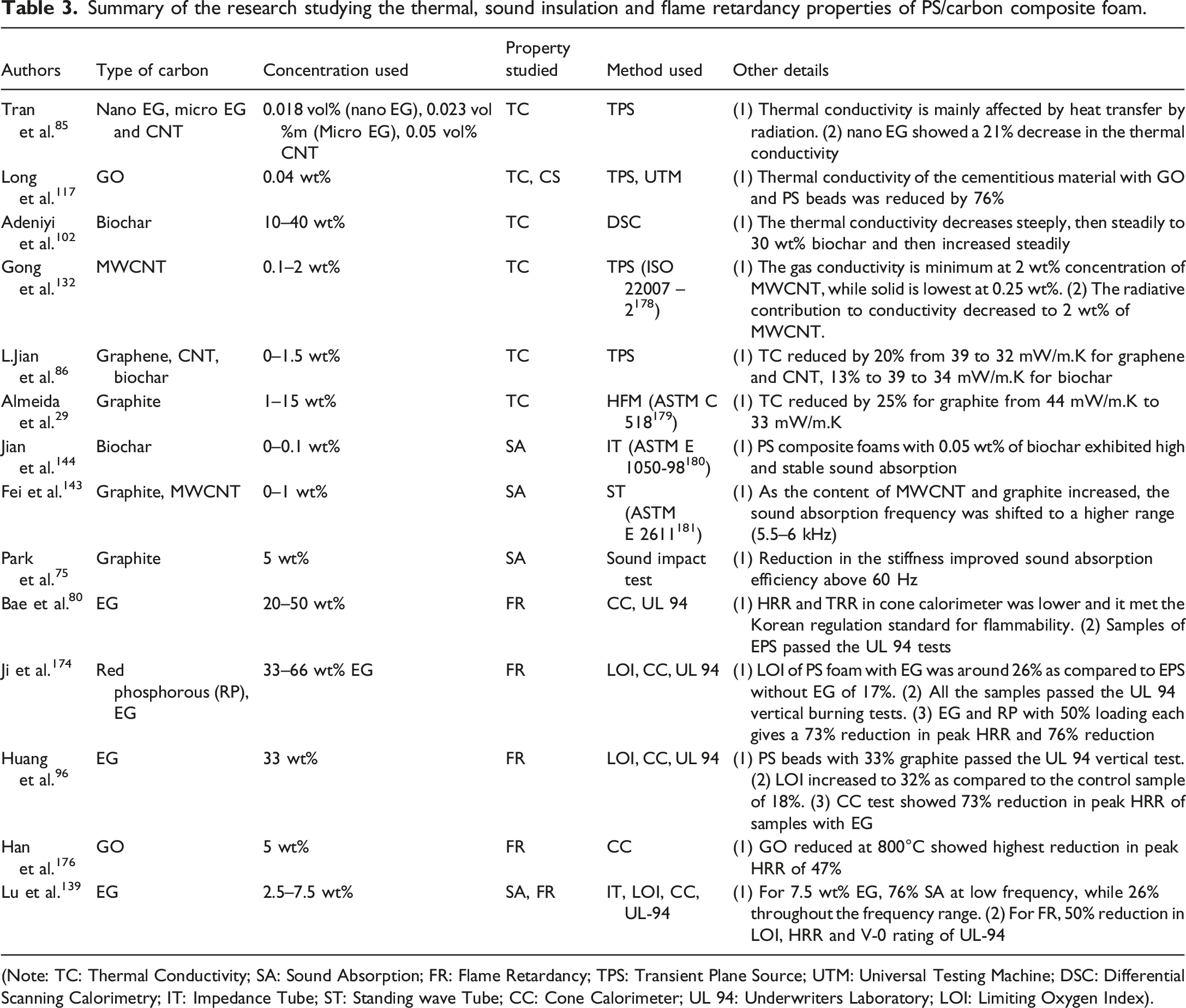
(Note: TC: Thermal Conductivity; SA: Sound Absorption; FR: Flame Retardancy; TPS: Transient Plane Source; UTM: Universal Testing Machine; DSC: Differential Scanning Calorimetry; IT: Impedance Tube; ST: Standing wave Tube; CC: Cone Calorimeter; UL 94: Underwriters Laboratory; LOI: Limiting Oxygen Index).
Conclusions
Polystyrene composite foams are an intriguing class of materials to meet the emerging needs of lightweight recyclable components with enhanced insulation properties. The PS foams are a well established insulating material having applications in the construction and automotive industries. Nanofillers such as carbon-rich renewable biochar, graphite and graphene offer several advantages in polymer foams. Expandable graphite, multilayered graphene and biochar are the materials of increasing interest for automotive and construction applications due to their many features. Flame retardant grade PS foam is imperative to comply with fire safety regulations and addressing the flammability and flame spread on the surface of PS products. PS carbon composite foams are an emerging choice for a sustainable future, not just due to their energy saving applications in building materials and construction, but due to their ability to provide comfort, luxury, and safety in cars. This article established the comparison of foamed composites of polystyrene with different types of carbon on the thermal, sound insulation and fire retardancy properties. The most important achievements of researchers studying the thermal, sound insulation and fire retardancy properties of PS carbon composite foam prepared by different methods are presented. The preparation and foaming methods should also be taken into consideration when producing an industrially viable sustainable PS carbon composite foam.
In summary, the following concluding remarks may be stated regarding the methods of preparation of PS carbon composite foams: (1) For suspension polymerization and solution mixing, the use of a suspension stabilizer and proper choice of an alcohol in the dispersion medium was found to be critical in overcoming the challenge of separation of carbon particles from the polystyrene matrix. The dispersion of carbon was improved in a melt blending process and its effectiveness was found to be dependent on the particle size and loading of the carbon in the polymer. (2) Despite having flammability issues and environmental concerns, pentane is the most common blowing agent for pre-expanding PS beads due to its excellent and long-lasting heat insulation. However, the trend seems to be changing, with some researchers using CO2 and steam for producing fully expanded PS foam. Using CO2 as a blowing agent can potentially help in its sequestration from the environment while providing an excellent insulation performance. (3) For producing fully expanded PS beads, batch foaming processes are used more widely than extrusion foaming for preparation of the composites. The advantages of extrusion foaming with supercritical CO2 are high solubility accompanied by large expansion ratios, lower mechanical stresses and reduced operating temperatures, which could produce efficient PS foam at lower energy costs. Hence, this could be a significant step towards making the process of XPS production more sustainable.
Based on investigations of the effect of carbon on the fire retardancy, thermal and sound insulation performance of the PS composite foam, the most important observations can be summarized as follows: (1) Higher loading of EG (>20 wt%) led to better fire retardancy of the PS foam composites whereas lower loading (<10 wt%) improved thermal and sound insulation. The thermal conductivity of the composites decreased with an increase in the loading of EG until a threshold and then the thermal conductivity increased. The particle size of the EG affected the thermal radiation absorption, with smaller particle sizes of EG yielded composites showing lower thermal conductivities. The fire retardancy performance of the composites with EG indicated that the maximum reduction in peak HRR and a considerable increase in the LOI rating can be achieved by 33 wt% loading of the EG in the composites. (2) Addition of rGO in small loadings (<0.1 wt%) in the composite led to a decrease in the thermal conductivity of the composite foam. However, a higher rGO loading of 5 wt% improved the fire retardation performance of the composites. A much lower loading of graphene as compared to graphite gave similar fire retardancy performance due to the small number of layers of carbon and a 2D structure.
182
MWCNT, due to its high aspect ratio and radiation absorption, led to a decrease in overall thermal conductivity up to 1 wt% of loading. The lower loading of graphene and CNTs (1.5 wt%) reduced the cell size which led to a reduction in thermal conductivity. (3) The open cell porous structure of the foam due to the addition of carbon was found to increase the heat barrier effect thus lowering the thermal conductivity, however more research needs to done to study the effect of closed and open cell on the heat transfer in foam. Studying the contribution of conduction, convection, and radiation for heat transfer in a foam is an excellent way to qualitatively analyze the role of carbon type and loading on the overall thermal conductivity of PS foam. (4) Biochar is a highly sustainable option for capturing carbon and energy saving through its use in PS foam. It can act as a foam nucleating agent, thus enhancing the cell density and consequently better thermal and sound insulation. Some authors have used biochar in lower loadings (0.5–1.5 wt%) while others have used up to 30 wt%, to achieve a lower thermal conductivity. At a loading of 0.05 wt%, it provided a stable sound absorption over a wide frequency range.
Recommendations and outlook
It is the need of the hour to develop high performance insulating PS foam that will give not only energy saving but also provide environmental protection by helping mitigating climate change. While a great number of studies have been carried out to investigate the effect of carbon type on the insulation performance of foam, seldom efforts are made to make the process greener and help carbon sequestration. The following recommendations are presented that can be taken as a future study to produce sustainable PS carbon foam meeting industrial demand. Using supercritical CO2 blowing agent to produce lightweight microcellular foams is not only environment friendly but can offer a better control in cell nucleation by controlling the process parameters.81,183,184 In this regard, more research needs to be conducted on the use of supercritical CO2 to study the exfoliation of the carbon in the polymer matrix. We believe that elucidating the study of compatibility of carbon and polymer matrix could help in understanding its effect on morphology, cell formation and insulation performance. Renewable sources of carbon like biochar can be a low-cost sustainable green alternative for producing PS foams with good thermal and sound insulation. Further, modification of biochar to improve its linkage with the polymer matrix can enhance the insulation performance of the foam, which could be taken up as a future work. Further research on the use of different types of carbon in combination with non-halogenated flame retardants such as phosphorous and nitrogen compounds 185 for enhancing the fire protection of the PS foam has a good scope in future. Developing a low dense, fire-retardant PS foam with excellent thermal insulation and impact absorption is a great challenge for the researchers to solve.
Footnotes
Declaration of conflicting interests
The author(s) declared no potential conflicts of interest with respect to the research, authorship, and/or publication of this article.
Funding
The author(s) received no financial support for the research, authorship, and/or publication of this article.
