




Abstract
Black resilience has been long documented in Black history; yet too few studies discuss the positive narratives of Black experiences. There is too little discussion of positive and protective factors that are present in the Black community to cope with anti-Black racism. In this qualitative research, we aimed to explore and describe effective coping strategies used in response to anti-Black racism to promote both individual and collective well-being in the Black community. Using a strengths-based approach, the objectives of the study were to 1) explore helpful coping strategies used by Black Canadians (N = 22) in response to anti-Black racism; and 2) describe their impact on personal and collective well-being through interviews. Results illustrated that emotional collective coping, active individual coping and africultural coping were helpful for participants in dealing with anti-Black racism. These coping strategies had positive impacts on participants’ personal well-being (e.g., self-efficacy) and collective well-being (e.g., social connection). This research describes the internal strength and collective power that exists in the Black community, especially in the Canadian context. Information from this study reaffirms the presence of Black resilience amidst the face of race-based stressors and orients both practitioners and researchers to understand the protective factors that enhance the lives of Black people.
Plain language summary
There are helpful coping strategies Black people use to respond with experiences of racism. This study aimed to explore and describe the positive coping stratgies Black people use in Ontario, Canada to build resilence against anti-Black racism. One-on-one interviews took place with 22 participants. The results of the interviews showed that participants find emotional collective coping (e.g., social support), active individual coping (e.g., seek advice from others), and africultural coping (e.g., going to church) helpful to deal with experiences of racism. These coping strategies helped participants build confidence in achieving their goals, feel more connected to their culture/community, and have hope for positive changes in society in the future.
Introduction
Everything I can think of—from the music, to the food, to the connections we have with each other through our shared experiences—there’s just nothing else like it, man. Nothing else.
Anti-Black racism refers to racial discrimination and prejudice that is directed toward Black people at various levels including individually (i.e., between people; Gran-Ruaz et al., 2022), structurally (i.e., within institutions; Rakotovao et al., 2024) and culturally (i.e., disregarding Black culture; J. M. Jones, 1997). Recent reports indicate that life in Canada has been equated to living in slavery’s afterlife due to the persistence and prevalence of anti-Black racism across all life domains (Maynard, 2017; Mosley et al., 2021; M. T. Williams et al., 2022). National policies centered on multiculturalism in Canada have minimized open discourse on racism for people of color (e.g., Matheson et al., 2021). These subtle experiences of racial discrimination have negatively impacted the well-being of Black Canadians (Nkrumah, 2022; Ozier et al., 2019). Racism has detrimental effects over one’s life from childhood to adulthood (S. C. T. Jones et al., 2020) and can negatively impact the physical (Kaholokula, 2016), socio-emotional (Edwards, 2006; Quesne, 2024), and cognitive well-being (Ozier et al., 2019) of Black families. Despite active efforts to resist racism, Black people continue to struggle with its adverse effects leading to poor mental health outcomes such as anxiety, depression, or trauma (Darius et al., 2024; Pieterse et al., 2012; T. R. Williams et al., 2022). The ubiquitousness of racism adds a cognitive load to Black people in coping with racism, and self-protecting strategies, such as code-switching, may not be helpful (D. G. Johnson et al., 2022). Although racism has severe consequences on the well-being of Black families (T. N. Brown et al., 2000), there is little discussion of protective factors that are present in the Black community to help members effectively cope with anti-Black racism. We aim to explore and describe adaptive coping strategies used in response to anti-Black racism to promote both individual and collective well-being in the Black community.
Black Resilience
Afrocentric values are centered on collectivism, spirituality, and emotions (Banwo, 2023; Daniels, 2012). In Black culture, there is a shared collectivistic value to promote Black liberation and community well-being (McNeil-Young et al., 2023; Utsey et al., 2000). Historically, this is shown in active collective efforts to dismantle anti-Black racism through political movements in the church, which is the heart of the Black community (S. D. Johnson, 2019), and the mobilization of limited resources to escape deeply entrenched systems of slavery (Mensah, 2002). These coping strategies have allowed Black people not only to survive, but to succeed against all odds by using effective shared coping strategies. The Afrocentric Organizational Model (Schiele, 1990) posits that unlike mainstream organizational theories in Western culture, which are centered on individual success and productivity, Afrocentric values are centered on collectivism and spirituality, with its highest valued placed on interpersonal relations. Thus, the strong desire for interconnectedness has led to the ethics of communal responsibility and group preservation in Black culture (Schiele, 1990). Cultural practices such as racial socialization (Umaña-Taylor & Hill, 2020) have long served as a protective factor against the harmful effects of racial discrimination (D. L. Brown, 2008). The communal knowledge from racial lessons has helped promote racial pride and improve self-esteem, while acting as a buffer to discrimination (Harris-Britt et al., 2007).
Today, the negative impacts of anti-Black racism have led to online actions to cope with and combat inequitable systems. These forms of resilience included viral movements such as the #LivingWhileBlack trend on Twitter due to the shared experience of racial socialization and discrimination in Black lives (A. Williams, 2020); and the #BlackLivesMatter movement initiated in 2016 to end anti-Black racism and racial violence against Black people (Taylor, 2016). Black resilience has been long documented in Black history (Clayton, 2018; J. M. Jones, 2023); yet much of anti-Black racism scholarship is shifted to negative narratives from enacted power dynamics. Thus, the purpose of this research is to focus on strengths and reclaim Black resilience, which was historically been devalued (e.g., Gause, 2021).
To promote psychological resilience against anti-Black racism, various methods have been introduced by researchers to build both individual, and collective capacity to cope with adversities (King et al., 2023). On a personal level, scholars have argued the importance of critical consciousness to recognize and resist anti-Black notions in society (e.g., Mosley et al., 2021). On an organizational level, institutional demands have been placed to reform anti-Black policies and laws (e.g., the CROWN Act; Pitts, 2021). In schools, academic leaders have acted to disrupt anti-Black racism in education to facilitate learning and eliminate barriers (Lopez & Jean-Marie, 2021; Ortega-Williams & Harden, 2022; Sarr et al., 2022). Through participatory action research with Black youth and adults (Fante-Coleman & Jackson-Best, 2020; Livingstone et al., 2014), participant insights were used to inform stakeholders of the barriers and facilitators in Black mental health care. In fact, Black community partners have developed a community practice framework known as the Radical Welcome and Engagement Restoration Model (RWERM) to challenge structural oppression (e.g., racism, cultural violence, exploitation; Young, 1990) and promote community engagement (Batts et al., 2022). Due to the embedded nature of structural racism (e.g., Beagan et al., 2023), community empowerment practices can build a community’s access to decision-making and capacity to contribute to problem-solving through social action (Stoeffler et al., 2020). However, more research is needed to better understand effective coping strategies to help Black people withstand adversity and overcome racial challenges.
Coping
Coping strategies can target the problem (problem-focused coping) or the emotional response (emotion-focused coping) to a situation (J. P. Baker & Berenbaum, 2007). Strategies that involve direct actions to deal with racism are called active coping; strategies that involve indirect or no actions are called passive coping (Harrell, 2000). Black people use a variety of coping strategies to manage and deal with anti-Black racism (Jacob, 2023). General coping strategies used in response to racism include individual coping (i.e., individual efforts) and collective coping (i.e., group efforts; Joseph & Kuo, 2009). Africultural coping refers to coping strategies based on Afrocentric values such as spirituality, collectivism, emotions, and cultural rituals (e.g., prayer; Utsey et al., 2000). This cultural coping style has been helpful for others to cope with and buffer against race-related stress and discrimination (Lewis-Coles & Constantine, 2006; Wagner et al., 2024). This research focused on africultural coping, collective coping, and individual coping strategies to identify helpful tools for Black Canadians to combat anti-Black racism.
Theoretical Framework
Our research is based on a strength-based approach centered on resilience theory (Zimmerman, 2013). Resilience theory examines both individual and family capacity to cope with and adapt to challenges that can negatively impact development (Masten, 2018). This framework was applied to focus on the individual assets (e.g., self-efficacy) and communal resources (e.g., social support) that members in the Black community access to cope with anti-Black racism (Fergus & Zimmerman, 2005). These protective factors can be used to empower Black people and orient researchers to explore the resiliency paradigm that exists in Black communities to promote well-being. Findings from this research can shed light on effective strategies that can build resilience and lead to positive outcomes for Black families despite ongoing racial injustice and discrimination.
Study Aims & Objectives
This study is an expansion of our first study and conference presentation (Knight & Vitoroulis, 2024), which explored unhelpful coping strategies Black Canadians used to deal with anti-Black racism. Whereas this paper focuses on Black resilience and the helpful coping strategies Black Canadians used to resist anti-Black racism. Using a strengths-based, cultural approach, the objectives of the study are to (1) explore helpful coping strategies used by Black Canadians in response to anti-Black racism; and (2) describe their impact on personal and collective well-being. There is limited research which describes the internal strength and collective power of the Black community (Adams, 2022; Tichavakunda, 2021), especially in the Canadian context (M. G. Williams, 2022). Information from this study contributes to positive narratives on the Black experience and reaffirms the presence of Black joy amidst the face of race-based stressors.
Method
Positionality
In the spirit of self-reflexivity, we authors acknowledge our standpoint as educated women. We engaged in reflexivity to carefully examine how our identities and life experiences can influence the research data. Thus, a reflexive thematic analysis approach (Braun & Clarke, 2019) was used to facilitate critical reflection and to acknowledge the role our positionalities play as researchers in data analyses. All interviews were conducted by the first author (SK) who identifies as a Black Canadian woman studying Clinical Psychology at the University of Ottawa. She engaged in reflections after interviews and kept notes to track her reflections throughout the data collection and analytic process. The second author (IV) who supervised the project identifies as a first-generation immigrant woman from Greece and is the director of the Culture, Diversity, and Youth Development Lab at the University of Ottawa. Both authors consulted with academic colleagues to limit bias and worked to ensure data was grounded in participants’ experiences to maintain integrity. All study materials were objectively reviewed and approved by a Research Ethics Board to strengthen the methodological integrity and credibility of findings.
Recruitment and Participants
Study recruitment took place between January 2024 to February 2024. Recruitment emails were sent to prospective participants through Black community organizations initially contacted by the primary author. Participants who expressed interest were followed up for an interview. All participants gave verbal consent to participate prior to interviews. Maximum variation purposive sampling (Patton, 2002) was used to recruit an assorted sample of Black Canadians to explore the various coping strategies used in response to anti-Black racism. Participants aged 16 and older, who speak English, live in Ontario, and self-identify as Black (i.e., African, Carribbean, Black; Mental Health Commission of Canada [MHCC], 2022) were recruited for the study. Participants were recruited as young as 16 years old as this is the age of consent for minimal risk studies in Canada (Health Canada, 2025). Participants were recruited until saturation was reached (Hennink et al., 2017, 2019). The final sample consisted of 22 participants.
Interview Protocol and Procedure
All interviews took place online using an employee Microsoft Teams account with encryption. Interviews were conducted one-on-one with the primary author and verbal consent was obtained prior to data collection. Participants were given the option to use a pseudonym and withdraw from the study at any point of time. Interviews were completed in one session lasting up to 60 min and participants received a $50 honorarium to compensate their time. All interviews were audio recorded, and notes were taken to follow-up on participant responses.
A socio-demographic questionnaire was completed verbally prior to interviews. The interview protocol consisted of five parts: (1) introductions and rapport building, (2) experiences with anti-Black racism, (3) exploration of coping strategies used, (4) reflection on its impact on well-being, and (5) interview wrap-up and closing. The interview protocol was initially developed with 7 participants to inform the interview process, and 15 additional participants were recruited to reach data saturation. All 22 interviews were included in data analyses.
Data Analysis
Interviews were audio-recorded, transcribed, and analyzed using thematic analysis (Braun & Clarke, 2006). Thematic analysis is an accessible and flexible analytical approach that systemically identifies themes from any text-based data (e.g., interviews, focus groups, documents, etc; Braun & Clarke, 2013). Thematic analysis is a versatile method that can be applied to both deductive and inductive coding, and can extract themes that provide deeper insights into participants’ lived experiences (Naeem et al., 2023). Thematic analysis involves several phases including: (1) researcher familiarization with transcripts, (2) generation of initial codes by identifying keywords, (3) extraction of themes by grouping related codes, (4) comparing and contrasting emergent themes, (5) defining and finalizing each theme, and (6) writing-up themes in a summary table with select participant quotes to support the analysis (Braun & Clarke, 2006). Data analysis was completed with support of NVivo 12.
Results
Sample Description
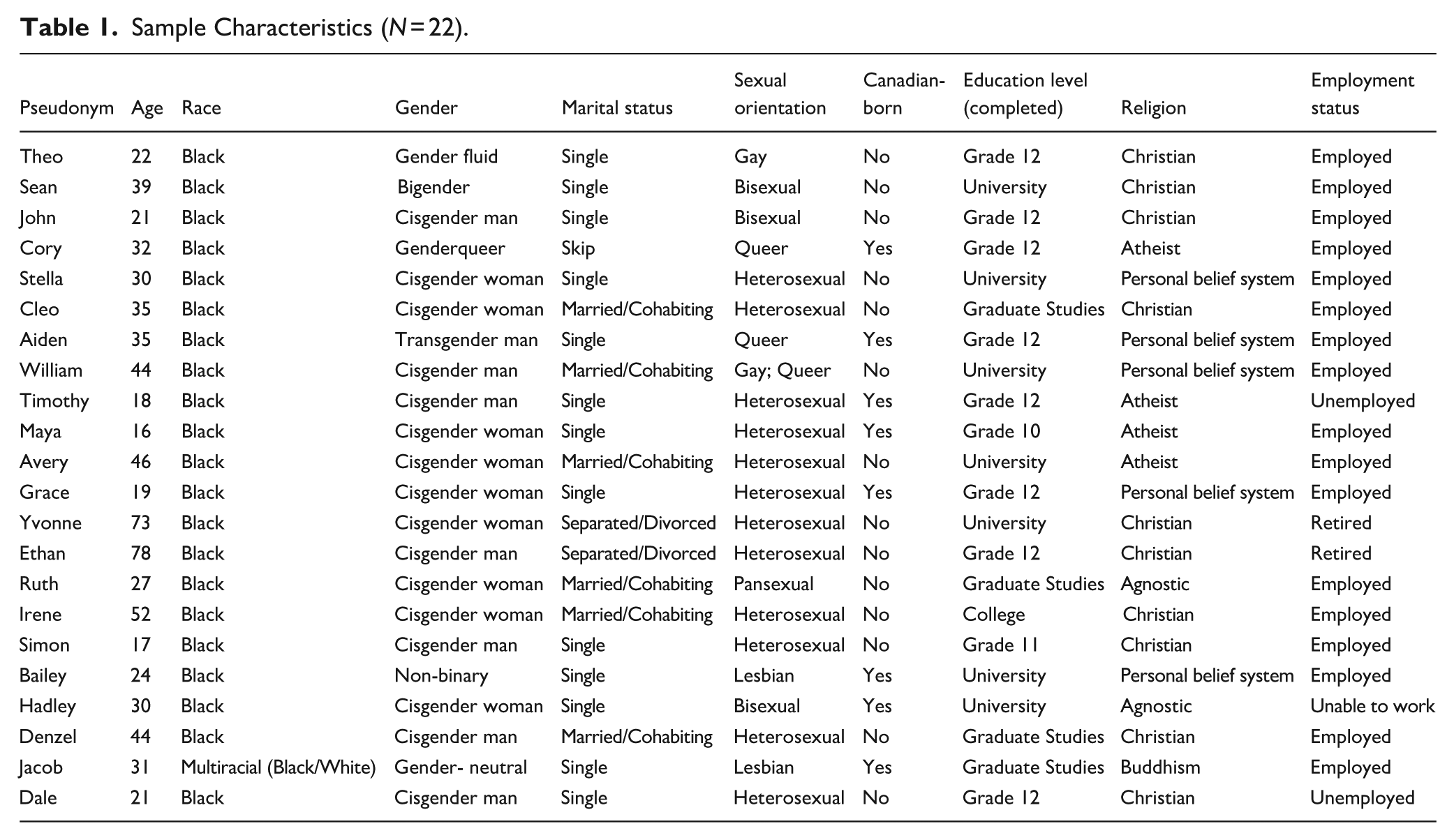
The sample consisted of 22 participants (see Table 1). All but one participant self-identified as Black (i.e., African, Caribbean, Black; MHCC, 2022). The outstanding participant identified as multiracial (Black, White). The mean age was 34.3 years, with a minimum age of 16 and maximum age of 78. Approximately 41% of the sample identified as cisgender women, 32% identified as cisgender men, and 27% identified as gender diverse (e.g., transgender, non-binary, gender queer). More than half of the sample identified as single (59%), heterosexual (54%), and educated at the university or college level (54%). Only 36% of the sample was Canadian-born and 45% identified as Christian. All participants were employed except for five participants who were unemployed (n = 2), retired (n = 2), and unable to work (n = 1).
Sample Characteristics (N = 22).
Emergent Themes
All 22 participants endorsed experiences with anti-Black racism. Results illustrated that three coping styles were helpful for participants in responding to anti-Black racism: (1) emotional collective coping, (2) active individual coping, and (3) africultual coping. These coping strategies had positive impacts on participants personal well-being in terms of self-efficacy and outlook, and collective well-being in terms of social connection. Emergent themes are described below and shown in Figure 1.
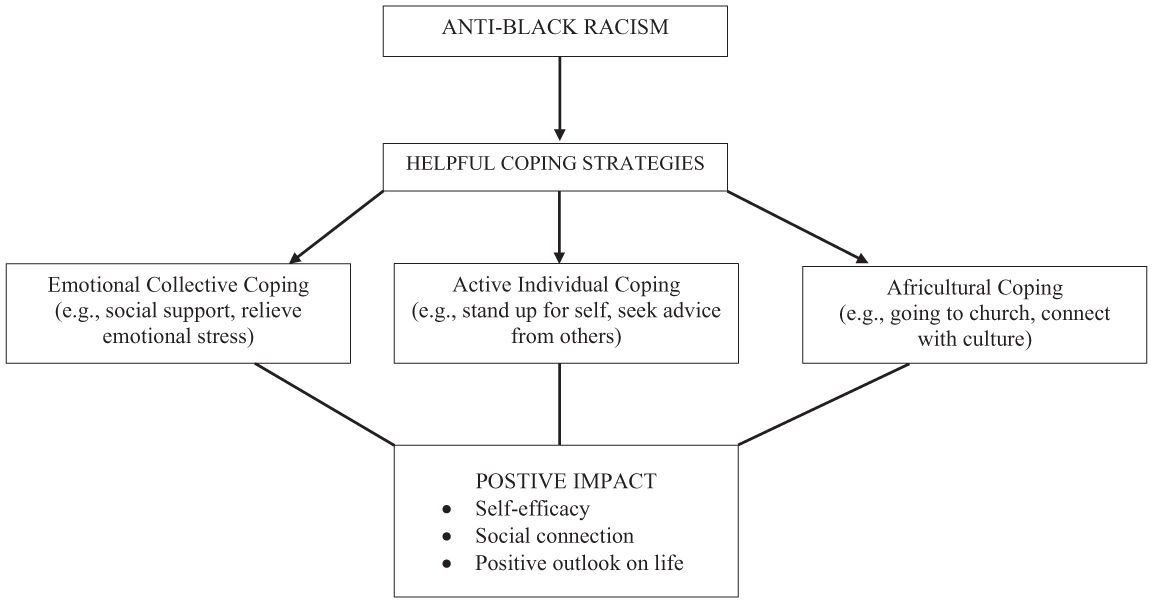
Summary of Themes.
Experiences With Anti-Black Racism
All participants reported experiencing anti-Black racism and discrimination in their life ranging from individual interactions to systemic barriers (N = 22). Many participants reported experiences of verbal insults (e.g., “can I get the N word pass?”) or sustained stereotype threats among non-Black people (n = 15). For example, Timothy reported being stereotyped as dumb while in school: “it’s being seen as someone who is not as smart as someone else. Someone else of another race. It almost comes off as if Black people are not very intelligent, as if we don’t value that much education.” As a Black man, Ethan reported being appraised as a thief or criminal in public spaces: Sometimes when you as a Black person enter certain business spaces in Canada, especially in the supermarket, you are being watched. You are being followed as if you came in there to steal something or some form of shoplifting. Even when you go in the bank, you may stand there and someone who’s maybe white, will hold their purse tighter like you want to steal something from them.
Other participants reported racial inequalities embedded in systems that target and negatively impact Black people (n = 18). For example, Jacob reported frustration with police brutality in the Black community and media influences on the portrayal of Black bodies: It’s always constant negativity and seeing constant images of people being blown up and dying or being shot by police like George Floyd. It’s very mentally draining for sure. Then my job as well, even if it’s not social media, it’s my job to read the news, to be aware, because it’s government politics. So, I have to scan the news to see if there’s anything relevant to stuff I’m working on to incorporate into papers and writing. So, I think the constant negativity from the news and these world events are a lot. It doesn’t help with trying not to think about it all the time.
These systemic barriers were largely felt by participants, especially when considering the lack of acknowledgment of anti-Black racism in Canada: I don’t really see anything uplifting Black people, even reparations. We never even talk about that in Canada at all. There’s no acknowledgement of what Black people went through here. It’s still diverted here to an “American issue” and our experiences of microaggressions is not regarded as real. (Bailey)
Coping
The main three coping styles participants deemed helpful in dealing with anti-Black racism were emotional collective coping (n = 16), active individual coping (n = 14) and africultural coping (n = 10).
Emotional Collective Coping
This coping style refers to a form of coping that involves others providing emotional and social support. More than two-thirds of the participants reported that they found relief in obtaining support from family, friends, and others in their social circle when dealing with racism. Yvonne shares: I have my friends outside that I would share my frustration with. I have my family, so I use them on my down time to hear my frustration [. . .] So, I have my little connections around that provides the mental health part - just somebody to listen to me and to listen to what I’m saying. In most cases, the people who are listening can also connect in some way to what I’m feeling. So, it gives me this feeling like I’m not alone. And just that feeling, knowing that I’m not alone, gives me the added strength to go alone.
Some participants reported how connecting with the Black community allowed them to openly discuss experiences with racial discrimination. Ruth elaborates: Last year I made a huge effort to really force myself to make friends who were Black and to remain consistent in relying and depending on them as a form of support. We were also able to have conversations about being Black and our different experiences.
This communal support has been a source of strength for participants and helped them to embrace who they are: I found more Black community which has been helpful for me to feel less tired in spaces where it’s not predominantly Black people because I feel like I have this right to exist. I’m learning to feel like I have this right to exist more fully and to celebrate my Blackness. Whereas before, I felt like I had to hide myself in ways. (Cory)
Active Individual Coping
This coping style refers to actions an individual takes to address problems or situations related to racism such as standing up for oneself or seeking advice from others. Theo explained that they deal with racial challenges by confronting others and speaking out: It’s up to you to know how to take it. For me it was to start the conversation and communicate with them. I had to have the courage to go and talk to those people. So, that’s what I did after facing all the things that happened to me - from school, or any other institution, or any services that I’m looking for.
Other participants reported that they would actively search for role models or seek the Black representation missing in their life. Stella exclaims how she struggled with belonging and decided to take matters into her own hands by changing her mindset: I remember watching a video on YouTube around that time that said if you don’t see that representation of yourself, find representation that you see that you like. Surround yourself with that representation, and then it might change your mindset about certain things. I think that was the beginning of me being like “OK, maybe I can do this. Maybe I can see myself as beautiful.” And that did really help.
Africultural Coping
This form of coping is focused on strategies that are centered on African culture and spiritual connection. Bailey found cultural connectedness important to help them cope with anti-Black racism: “Something that really helps is having connection to your culture or your heritage. Especially at the time, being biracial.” Participants have openly shared how embracing their culture, rather than hiding it due to anti-Black racism, has helped them cope and gain a sense of self. Avery discussed how she likes to celebrate her African roots, especially in the comfort of her home: I guess in the safety of my home. . .I can be whatever I want. I can wear my hair in the way that I want. I’m not afraid to show my curly crazy hair. I actually feel proud when I can just say I don’t care about what the world thinks. I have a husband that, yes, is white, but he doesn’t like it when I westernize myself. He encourages me to wear bright colors, to wear my curly hair, to cook the food from my ancestors. So home is the only place where I feel I can be myself.
Participants also found comfort through religion and the church community: “It’s that sense of community. It’s that homey feeling, even going to church, singing songs” (Simon). Theo shared how African proverbs were helpful in their daily life: “I got my own little baobab saying and that kind of helped me navigate everything in life.”
Positive Impact
Three positive outcomes were found from engaging in these helpful coping styles among participants including increased self-efficacy (n = 16), social connection (n = 12) and a positive outlook on life (n = 11).
Self-Efficacy
Majority of participants reported how collective coping strategies have helped them obtain confidence in themselves. Simon confirms: It’s helping instill confidence within myself and a lot of teens around my age struggle with that a lot. Because I was able to have the support growing up, I know myself, I know who I am, and I know that no one else will ever be able to tell that to me.
William shared that being around the Black community has helped him have more pride in his identity and fully accept himself: “Moving to Canada has allowed me to connect and create spaces that involve love, mentorship, and really help me understand that my Blackness is enough. That it’s OK to be all the aspects of me.” Avery further elaborates that she is resilient and can persevere because of her ancestors which strengthens her pride in her Black identity: The perseverance, the strength, the resilience from my ancestors, especially as my dad is now one of my ancestors. I’m proud of being a descendant of a country that unfortunately was built on slaves. But if my ancestors hadn’t fought the way they did for their lives. If they hadn’t made the sacrifices they made for us to be where we are, I wouldn’t be here. So, they make me very proud to be Black.
Social Connection
Participants shared how the collective feeling in the Black community has allowed them to see each other in ways others cannot. Irene elaborates on this unspoken bond: “We could read each other across the room and not even say a word. Just look at each other. It’s going to church. It’s celebrating. It’s what we do. We’re just great. I love being Black. It’s a beautiful thing.” Hadley reported how being a part of the Black community has made her feel supported and not alone: If I go anywhere and there’s only one Black person, you know that no matter what, they got your back and you got their back. You’re going to talk to them, they’re going to talk to you. Black people will be friendly with each other, and we’ll support each other. I guess there’s a feeling of how much has been done and how far we have come, but it feels nice to be a part of that.
Jacob further shares how their shared connection with Black people has allowed to them to empathize and socially connect with other marginalized communities: I feel like every day I’m happy and so blessed to have been born Black and have such amazing ancestors that have given me the resilience to survive in these systems, but also the empathy to understand these systems of oppression, and not just pretend that they don’t exist. . . .I’m glad that my Blackness has given me the ability to empathize with people that are marginalized, even for other reasons, and to see the commonality in our struggles and be able to bridge across different cultures and different groups to lift each other up and stand in solidarity.
Outlook
Due to ongoing efforts to address anti-Black racism both individually and collectively, some participants reported feeling optimistic about the future possibility of change. Ethan states: “I may not live to see it, but you will be able to see it, and I fully believe that things will get better.” Cleo reported how advocacy efforts has made her feel hopeful for the future: “there’s lots of opportunities and lots of people and small communities coming together to try and advocate for the entire Black community and fighting for us.” In honor of past and future generations, Denzel was adamant that things would change and held a firm positive outlook on life: “on the accord of those that have come before me, and those that are here with me, and those that would come after me, I know that things will change.”
Discussion
The objectives of the research were to explore helpful coping strategies in response to anti-Black racism and describe its impact on well-being among Black Canadians. Semi-structured interviews were conducted with 22 participants and analyzed using thematic analysis. Results showed that all participants experienced anti-Black racism and the following strategies: emotional collective coping, active individual coping and africultual coping were helpful for participants in coping with anti-Black racism. Emotional collective coping refers to group efforts that lessen the emotional response to a problem or situation such as social support. This coping style was most used across participants and reported as helpful in relieving emotional stress from discrimination. Social support systems serve as a protective factor against racism (Jacob et al., 2023). Research shows that extended support from family, friends, and the church are effective in reducing stress and promoting well-being in the Black community (M. K. Jones et al., 2022; Linnabery et al., 2014; Ramseur et al., 2024).
Results also illustrated that it was helpful for participants to directly address acts of anti-Black through individual means (i.e., active individual coping). This form of coping was advantageous for participants in denouncing acts of racism and reducing the impact of racism on their health: “It builds character. I’m not afraid to speak my mind now and not afraid to stand up for myself” (Maya). Self-advocacy has been shown to empower others, improve self-esteem, and boost self-assertiveness when dealing with disadvantaged circumstances (e.g., Pickett et al., 2012). This active approach allows members in the Black community to reclaim their power and build confidence in social discourses amidst experiences with racism (Karpicz, 2020).
Africultural coping strategies were used by almost half of the participants to adaptively cope with anti-Black racism. These strategies included acts of spiritual and cultural connection such as going to church or thinking about ancestors: “There was always comfort from my sister and I think also my grandparents by connecting with my culture through my grandparents. I was able to feel their love in a certain way” (Cory). This coping style emerged to be helpful for participants to buffer against anti-Black racism and discrimination (Lewis-Coles & Constantine, 2006; Wagner et al., 2024). This finding is consistent with prior literature which shows that africultual coping is helpful in building African resiliency (D. L. Brown, 2008; Utsey et al., 2000).
These three coping strategies had positive impacts on participants personal well-being and collective well-being. Personally, these coping strategies improved participants’ self-efficacy and outlook on life. Participants reported an increased sense of racial pride, self-confidence, and inner resilience by directly addressing discrimination at the individual level and turning to communal support for collective strength. Participants found that the positive outcomes from these strategies helped them to develop a positive outlook on life with hope for change in the future to dismantle racism: “I feel hopeful. I feel with time things will get better because we have people out there fighting for our rights and fighting to seize all this racism and microaggressions” (John).
From these collective actions, participants reported a strong social connection to members in the Black community due to the shared history and experiences. This social connection expanded beyond members in the Black community and created space for some participants to connect with other marginalized groups who also face discrimination and racism in their lives. Collectivism is deeply rooted in Black communities and is a defining value in African culture (Schiele, 1990). Collective efforts in the Black community have led to the mobilization of movements (e.g., Civil Rights Movement in the 1960s; Clayton, 2018), and enabled resistance to anti-Black practices (Davis, 2015). This historical resilience has fueled collective efforts against present-day oppression and further deepened the shared bond between Black people as shown by participants. These acts empower and inspire members in the Black community to achieve and strive for Black liberation from racism (Selvanathan et al., 2023).
Implications
This study details the positive factors that contribute to the resiliency paradigm among Black Canadians in response to anti-Black racism. Findings orient both practitioners and researchers to understand the protective factors that exist in the lives of Black people to enhance individual and collective well-being in the face of adversity. Black families are disproportionately represented in low-income households and face additional challenges attributable to structural racism, intergenerational poverty, and intergenerational trauma (Knight, 2019; Ryabov, 2020). This research points to avenues to further build resilience in Black adolescents and adults to overcome racial adversity and enhance strengths in the Canadian context. Anti-Black racism is prevalent in Canada, yet racism is often perceived as an “American problem” (Austin, 2010; Gillborn, 2018). This research serves as a call for action to address racial inequities that exist within Canadian institutions to improve the health and future for all racialized communities (e.g., Rakotovao et al., 2024).
Limitations
The main limitations identified in this research emerge from the selected sample and interview protocol. Based on the eligibility criteria, the sample was limited to those who live in Ontario, speak English, self-identify as Black, and are aged 16 and older. Participant recruitment was limited to the province of Ontario and select community organizations who agreed to participate in the study. Therefore, study findings provide a partial picture of helpful coping strategies used by Black Canadians and cannot be generalized to all Black people in Canada. Qualitative responses from interviews were also limited to questions based on the interview protocol. Given that this study is connected to another study (e.g., Knight & Vitoroulis, 2024), the type of questions asked were limited due to time constraints with participants and to accommodate both studies. Thus, further questions that explored the resilience in Black people in Ontario, Canada, were not asked and would have benefited the analysis. Considering the diversity of the sample, additional questions about intersectionality and whether aspects of one’s social identity (e.g., religion) help them cope with or navigate experiences with anti-Black racism could have enriched the analysis.
Conclusion
Nonetheless, this study uncovers the protective tools members in the Black community utilize to cope with anti-Blackness in Canada. This research highlights the resilience of Black people who too often are seen through a trauma lens due to engendered abuses of the past (Jarvis, 2008; Sule et al., 2017). One participant exclaims: “We’re very upbeat people, we’re very joyous. We don’t like to mourn all day. Even in poverty, we’re still dancing” (Dale). Using a strengths-based approach, this research sheds light on the perseverance of the Black community and the helpful strategies that are used to cope and fight against centuries of anti-Black racism.
Footnotes
Acknowledgements
This project would not have been possible without the all the participants who agreed to take part and the community organizations that offered their support. Thank you.

Ethical Considerations
This study was approved by the University of Ottawa Office of Research Ethics and Integrity (H-01-24-9679).
Consent to Participate
Informed consent was obtained verbally from all participants prior to data collection.
Author Contributions
Sommer Knight: Conceptualization, Methodology, Formal Analysis, Investigation, Writing—Original Draft Preparation, Funding Acquisition. Irene Vitoroulis: Supervision, Conceptualization, Writing—Reviewing and Editing, Funding Acquisition.
Funding
The authors disclosed receipt of the following financial support for the research, authorship, and/or publication of this article: This study was funded by the Canadian Psychological Association and supported by the Vanier Canada Graduate Scholarship – Social Science and Health Research Council.
Declaration of Conflicting Interests
The authors declared no potential conflicts of interest with respect to the research, authorship, and/or publication of this article.