




Abstract
This article scrutinises the nature of community broadcasting, in terms of ownership and public participation, in Ethiopia, using qualitative and quantitative data. While the qualitative data were collected through interviews, focus group discussions with media managers and journalists in nine community radio stations, and document analysis; the quantitative data were collected through questionnaires from 33 community broadcasting stations. Findings indicate that, despite the efforts of community broadcasting to expand in number and engage diverse audiences in various languages, a significant lack of public involvement in production, financing and running was observed. Also, ownership issues of the community broadcasting blur the lines between it and local/public FM stations and campus radio. Upon an examination of the licencing process, ownership, legal framework, geographical diversity, public participation and the practices of community broadcasting, the author advocates for either redefining community media in the context and practice of Ethiopia or reappropriating it in line with the ideal definition of community radio features. The author also suggests a community-centric model of community broadcasting in Ethiopia to ensure its ideal status and serve the larger public.
Keywords
Introduction
Community radio plays a significant role in fostering political participation and civic engagement, particularly in rural areas of low-income countries. Studies, for instance, in Tanzania, Nigeria and Ghana have shown that community radio programmes increase political interest, efficacy and participation among rural dwellers (Bello and Wilkinson, 2017; Demuyakor, 2023; La’aro et al., 2021). These stations serve as public spheres, empowering marginalised citizens by providing local information and encouraging diverse opinions (Bello and Wilkinson, 2017). In the political sphere, specifically, political talk shows, call-in programmes, news and current affairs segments are particularly effective in promoting political engagement (Demuyakor, 2023; La’aro et al., 2021). Similarly, Semujju (2016) argued that in the case of Uganda, community media is an alternative means of addressing the lack of representation of diverse societal voices. In the case of Malaysia, Tripambudi (2011) highlighted that community media operates on the principle of ‘by, from, and for the community’, aiming to empower local populations and improve their quality of life. In this process, community radio enhances transparency and accountability by facilitating dialogue between citizens and public officials, as well as by covering political developments that directly affect local communities. According to AMARC, Community radio can initiate or accompany social change and carries responsibility to be effective in facilitating civil society development and achieving development objectives and democracy building. The participation of community radio practitioners and stakeholders in social movements was indicated as an important factor in achieving increased social impact. (AMARC, 1994: 15, 2007: 8)
Given its accessibility, affordability and participatory nature, community radio should be recognised and supported as a strategic component of national and international policy frameworks aimed at promoting inclusive development, democratic resilience and lasting peace. Investing in community media infrastructure, legal protections and capacity building will ensure that community radio can continue to serve as a vital voice for the voiceless. While community radio is an essential yet underutilised tool for fostering development, democratic governance and peacebuilding in developing countries, the definition and practice of community media in the context of Ethiopia has not yet been investigated. First, the article presents this introduction to clarify which term/concept is used and why. Then, it defines what community radio is and the concepts used to determine its characteristics. It provides a brief overview of the establishment and expansion of community radio in Ethiopia. Next, the study’s method will be presented. Data presentation, analysis and interpretation will follow. Finally, a conclusion is given.
This article aims to make clear that community broadcasting is used to describe both community radio and television. The author has observed that the concepts ‘community radio’, ‘community broadcasting’ and ‘community media’ have been used interchangeably or differently in various literature. For instance, the Association of Community Broadcasters (AMARC) in 1994 used the term community radio to describe rural radio, cooperative radio, participatory radio, free radio, alternative radio, popular radio and educational radio as community radio that serves certain particular geographical groups of people (AMARC, 1994: 14). Similarly, in their studies, Fraser and Restrepo-Estrada (2001) consistently and predominantly used community radio, describing media owned by and serving a particular community. In its policy document on community media sustainability, however, UNESCO uses community broadcasters to describe community-owned radio and television stations. 1 Differently, Kruger (2022) used both the terms local and community media. In his argument, he stated that using different names based on the context is relevant. Hence, names such as ‘proximity media’, ‘third sector’, ‘independent media’, ‘ethnic’ or ‘minority media’, ‘campus radio’, ‘development radio’ and many others have been used in various countries. This definition tends to relate to community radio as one of the alternative media. For Instance, Carpentier et al. (2003) classified community media as an alternative media to the mainstream by taking the structural and functional issues, such as being small-scale and oriented towards specific communities, possibly disadvantaged groups, respecting their diversity; independent from state and market; horizontally structured, allowing for the facilitation of audience to access and participate within the frame of democratisation and multiplicity; and carriers of non-dominant by a certain group. Whereas, based on the contribution and inherent values of the media, Skjerdal (2012) described community media and the journalism practices in Africa as communal journalism where its journalists are members of and serve a certain community, which has ‘cultural collectivity’.
In assessing how it is defined in the Ethiopian practical and legal contexts, the Ethiopian Media Law (1238/2021) uses community broadcasting, as one form of the media ecosystem, to describe community radio and television that provide service to a specific community. In practical observation, community radio and television are now operational in the Ethiopian media system. Hence, this article utilises community broadcasting as defined in the Ethiopian media law. It is also worth noting that no newspapers curretly serve as community media, owned by and circulated for the community in Ethiopia. Unless otherwise needed, the author would like to use community broadcasting to describe both radio and television services. When referring to ideas from different authors, then, it uses them as described by those authors. This means using the term’ community radio’ does not necessarily exclude television services. You may come across various terms to describe community-owned media, including radio and television.
Concept of community broadcasting
Scholars in the field, associations and international organisations have defined community radio in terms of its establishment and ownership, target audience and the role of communities in content production and management. Accordingly, community radio is defined as a non-profit station which is initiated to serve and benefit specific target groups within certain areas (AMARC, 2024; Carpentier et al., 2003; Fraser and Restrepo-Estrada, 2001; Gordon, 2007). Accordingly, community radio is controlled and owned by communities for their benefit. As defined by AMARC, community radio is a ‘nonprofit’ station that provides a service to the community it serves or broadcasts to, while encouraging active participation from that community. Similarly, Fraser and Restrepo-Estrada (2001) describe it as a non-profit service owned and managed by a particular community, typically through a trust, foundation or association. In their detailed explanation of community radio, they outlined community media in relation to funding, editorial independence, representation of diverse groups, interests, management, ownership and the principle of public participation (Fraser and Restrepo-Estrada, 2001: 15–18). According to these two scholars, a community radio station serves as a platform for identifying and analysing problems, as well as their solutions, allowing for the determination of development inputs that genuinely address local needs.
From the perspective of its function, in 1994, AMARC noted that community radio is a vital tool that can support community development and democratisation processes by enabling communities to voice their own experiences and critically examine issues, processes and policies affecting their lives (AMARC, 1994: 15). It is also important to educate and mobilise communities around development initiatives and strategies that will result in a better life for listeners. In their studies, Fraser and Restrepo-Estrada (2001) broadly presented the main roles of community radio that revolve around ‘reflect and promote local identity, character, and culture; create a diversity of voices and opinions on the air; encourage open dialogue and democratic process; and promote development and social change’. Many subsequent studies on the roles of community broadcasting mainly sustain these ideas.
On the contrary, from practical and theoretical aspects, community broadcasting can be described as serving the community, an alternative to mainstream media, part of society and rhizomes (Carpentier, 2016; Carpentier et al., 2003). Their arguments in bringing these four approaches are mainly to understand community radio as an alternative media. Defining community radio from the perspective of alternative platforms is another point raised by scholars in the field. For instance, Gordon (2007), by considering community radio services, defined it as a third tier of broadcasting alongside public and private radio, targeting specific geographical areas or communities of interest. However, Kruger (2022) argues that community media and alternative media need to use some potential sources, such as commercial, patronage, state, donor and community, which could give a good understanding of the difference between the two in different contexts. He also noted that community media can be explicitly described as an alternative media in a political sense (p. 191).
Scholars in the field articulated that the alternativeness of the community media is associated with their content specificity, distinctiveness, value of the stations and structure (Atton, 2008; Carpentier et al., 2003; Lievrouw, 2011). However, Fraser and Estrada (2001) do not accept community media as an alternative media. This is because they are imprecise in defining their roles and ownership (Fraser and Restrepo-Estrada, 2001: 4). They noted that community media facilitated sustainable national development by focusing on certain communities through the involvement of a constructive dialogue on development activities and experts. In support of their idea, for instance, Tucker (2013) highlights that community media is a democratic tool that encourages public participation and engagement in local affairs.
Generally, community radio can be defined as a non-profit service owned and managed by the community to benefit specific target groups, often giving voice to marginalised populations. It plays a crucial role in community development, especially in rural and underserved areas, by promoting participation, democratising communication and providing equitable access to information. Seen as an alternative medium, community broadcasting breaks mainstream media dominance by focusing on local issues and empowering communities, although its effectiveness depends heavily on community engagement and overcoming regulatory barriers.
One important element that is widely emphasised by scholars is the ownership and contribution of the public in the community media. This article also seeks to argue that, as community radio will play a significant role in fostering development, supporting the democratisation process and promoting social change, the public should be the main owner of community broadcasting, including its content production and management. The public should operate the community broadcasting, participate in content production (including editorial decisions) and fund the stations. Hence, the concepts will be investigated by taking the Ethiopian community media as a case.
In assessing the concept of community broadcasting and attempts to redefine it in the Ethiopian context, the author also considered participatory communication theory. This theory is relevant for discussing how Ethiopian community broadcasters approach content production, editorial decision-making, financial contributions and leadership. For instance, in the theory of participatory communication, Servaes (1999) argues that communities must not merely consume information but also generate and control it. In his concept of empowerment and agency, Servaes (1999) noted that media, in general, and community media, in particular, should be decentralised to produce diverse content in different languages. Regarding leadership and management, proponents of participatory community suggest adopting collective ownership of community media. For example, Fraser and Restrepo-Estrada (2002) stated that media and communication systems should be collectively managed by communities rather than by the state or private elites. Therefore, in defining community broadcasting in Ethiopia, participatory communication theory has served as a foundational backdrop.
Community broadcasting in Ethiopia
Community broadcasting, primarily radio, was first established in Ethiopia two decades ago. In 2006, Korree Community Radio was launched in Korree Wereda, Southern Nations, Nationalities, and Peoples’ Region, with support from the Information and Communication Technology-Assisted Development Project Management Unit (ICTAD). The radio station was initially licenced by the Southern Nations, Nationality Regional Justice Bureau, as the Ethiopian Broadcasting Service proclamation, which grants the authority to register, regulate and monitor community radio to the Ethiopian Broadcasting Authority (now the Ethiopian Media Authority) had not yet been endorsed. This radio station continued to broadcast programmes in ‘Koritee, the Korree language, through formal registration under the Broadcasting Service Proclamation. Following the enactment of the Ethiopian Broadcasting Service Law (Proclamation No. 533/2007), the number of community stations gradually increased two years later. Since 2007, the Ethiopian Brodcasting Authority (EBA) (now, Ethiopian Media Authority-EMA), responsible for registering, monitoring and regulating media in the country, has licenced over 65 community broadcasting stations (radio and television) in the past two decades. Currently, 36 radio and television community broadcasters are operational, while the others nine are in the process of preparation (EMA, 2024). Some have ceased operations due to various reasons. Although community broadcasting was legally initiated in 2007, the study of community media in Ethiopia, specifically, conceptualising it based on its practices, licencing processes and ownership, remains minimal. Research has thus far concentrated on themes such as ‘challenges and prospects of community radio in Ethiopia’ (Abebe, 2010), ‘Community radio support for local development’ (Mohammed, 2018), ‘Practice of community radio in Ethiopia’ (Yemer, 2020), ‘Community radio’ s role in conflict resolution and peacebuilding’ (Moges, 2018), their role in integrated development (Bayable, 2020) and ‘Socio-economic development’ (Sada, 2022). No studies have been found that define community broadcasting in Ethiopia from a conceptual framework based on the practice, licencing processes and ownership features. This article thus aims to scrutinise the legal framework and institutional structure of community media, specifically its ownership patterns, licencing and public participation in the stations. Hence, the article attempts to answer the following:
- What type of community broadcasting has been licenced in Ethiopia?
- How does the licencing and practice of community media in Ethiopia align with internationally accepted standards of the establishment of community broadcasting?
- Specifically, how diverse is the community broadcast in terms of geography, content and type?
- And, how does the public participate in running, contributing content, leading the stations and funding?
Methods of study
This study employed both qualitative and quantitative approaches. The quantitative data were collected from all 33 community radio stations which were in operation in 2022 through a self-administered questionnaire. The main aim of the questionnaire was to collect large data related to language, staff members, content production and other relevant information from the community broadcasters. The data collected from the station managers through questionnaires were processed using SPSS.
The qualitative data consisted of interviews, focus group discussions (FGDs) and document analysis. As shown in Table 1, the study invited key informants, including community broadcasting managers, journalists (both volunteers and permanent staff), technicians, board members and representatives from government/regulatory bodies.
Key informants’ title, total number and their regions.
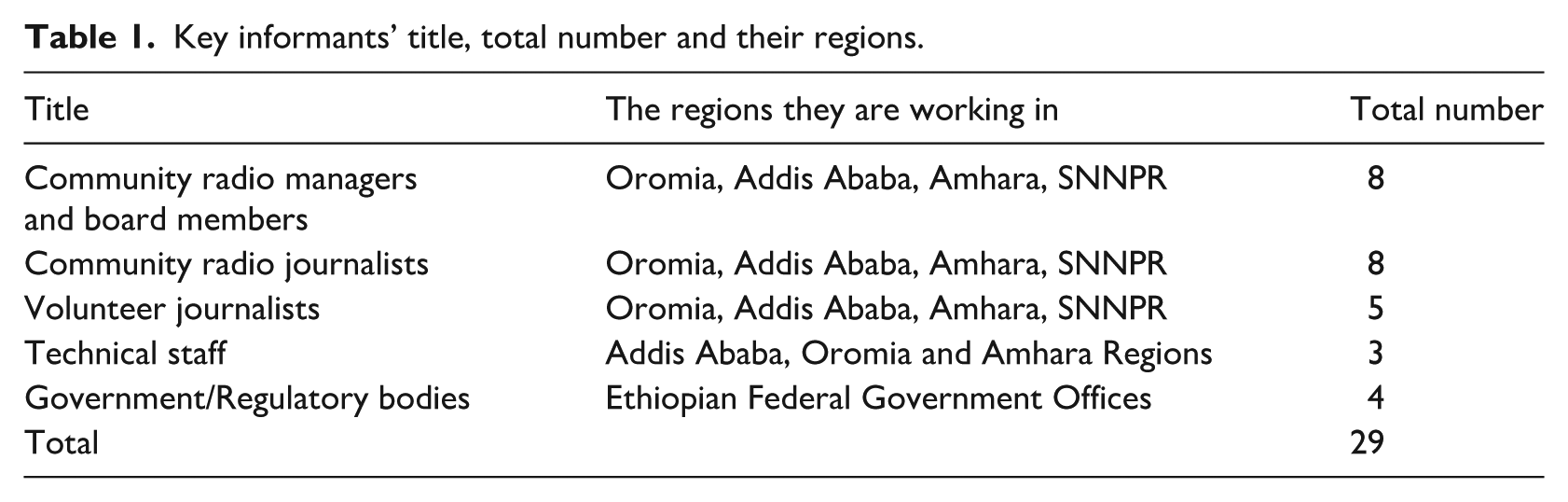
Nine different community radio stations across the country were selected as samples for the qualitative data collection. These included Jimma University Community Radio (JUCR), Adola Redi Community Radio (ARCR), Kombolcha Community Radio (KCR), Debremarkos University Community Radio (DMUCR), Fenoteselam Community Radio (FSCR), Welayeta Community Radio (WeCR), Wagehemra Community Radio (WaCR), Addis Ababa University Community Radio (AAUCR) and Civil Service University Community Radio (CSUCR). These community radio stations were purposefully included in this study to represent a diverse range of stations in terms of ownership, geography and types. The selected journalists (both volunteers and permanent staff members), technicians, radio managers, board members of the selected community radio stations and other stakeholders were interviewed. Three FGDs were conducted with journalists and community media managers. Nearly 30 informants were involved in both the FGDs and interviews. All provided their oral consent to participate in the study and to be quoted if their ideas were found relevant.
The author also assessed legal documents, including media laws, directives, policies and procedures, that focused on community media. These documents were reviewed and interpreted qualitatively.
The author’s personal experience and observation as a self-reflective practitioner were also used as part of the discussion. The author has extensive experience in the media in Ethiopia, having worked closely with community radio stations, visited their facilities, facilitated various training sessions, and developed working documents and guidelines for community media journalists. These experiences and observations are highly relevant to substantiate, strengthen and justify specific data and arguments (Tracy, 2010).
Regarding the data presentation and interpretation, first, the article presents the data on the major findings focusing on major changes in the definition of community broadcasting in the Ethiopian media laws, public participation (in funding, content production, leadership), representation of diverse groups and their interests, independence and ownership type which are presented thematically. Then, it presents the discussion, interpretations and conclusions. The presentations and discussions are geared towards assessing the practice of community media in Ethiopia in line with its internationally accepted standards and concepts of community radio.
Data presentation and findings
Community broadcasting in the Ethiopian media laws
This article focuses on a legal framework that includes the establishment of community radio, three media proclamations and media directives. These proclamations and directives have been used to establish and expand community broadcasting in Ethiopia. By taking these media laws, and directives, the author wants to reflect changes and their implications in the expansion of the community radio, as well as how they define and establish the community media in line with global standards.
The first one is the 2007 Broadcasting Service Law (Proclamation No. 533/2007). The government enacted this Proclamation to allow interested individuals or groups to establish community radio in a structured manner. Subsequently, some community radio stations obtained licences and began operations in various parts of the country, and currently, they have reached 45 (EMA, 2024). At this point, the author has observed numerous changes, one of which is the definition of community radio in the legal documents. In the Broadcasting Service Proclamation (533/2007, A2/11), community radio was defined as: A non-profit radio or television transmission service established by the will and interest of a community and administered and run by the community living in a specific area or who possess a common interest.
It is defined as a form of broadcasting service. However, the recently enacted media law expands the definition of community broadcasting by including some explanatory words. In the Proclamation 1238/2021, A2/14, it defines community broadcasting service as: A non-profit broadcasting service provided for a specific community free of charge via a radio or television station whose ownership and management are representative of the community for which the service is provided; and it encourages members of the community it serves, persons associated with it or those that promote the interests of such communities to participate in the selection and provision of programs.
One can observe the intent of the 2021 media law in incorporating additional elements such as ‘encouragement of the community to participate in financing and content production’. This is to indicate the community’s roles in managing, financing and supporting the community’s broadcasting stations. The proclamation also puts the community’s role in content production and editorial decision-making. In addition, the law defined ‘community’ as ‘people bound by a distinctive identity, by virtue of living in one place or locality, or by common interests and objectives: or a sector of the public bound by a specific, ascertainable common interest’ (Proclamation 1238/2021, Article 2/15). This definition has given licensers (EMA) better opportunities to decide who owns community broadcasting. In the 2007 broadcasting service law, there was no clear definition given to the term ‘community’.
The second change observed in the legal framework is the type of community broadcasters licenced by the authority. In 2008, the former EBA’s directive on community radio licencing granted applications based on two categories: geographic and common interest-based applications (Directive No. 02/2008 of the EBA). The number of applicants was very small. Then, a new directive was prepared in 2012 (Directive 04, 2012) to expand the scope of community media and to include institution-based applications, in addition to community-based ones. The 2012 directive (Directive 04 of 2012) increased the licence type to five. This directive helped to gradually increase the number of community radio stations in the country. In the recent EMA’s (2022) directives, it increased the licencing type of community station, which increased to six, if needed it is open to adding more types of station ownership (Directive 924, 2022, EMA). These are ‘community broadcasting services based on geographical setting’, ‘community broadcasting services for common interest groups’, ‘community broadcasting services at higher education institutions’, ‘community-based broadcasting services at higher education institutions’, ‘community-based broadcasting services at local administration’, ‘special community broadcasting services’ and others that can be determined by the authority at any time needed (EMA, 2022).
In this regard, the EMA has taken positive measures to increase numbers of community brodcasting by expanding the licencing types and reserving parts of the frequency spectrum for community stations. Currently, a relatively large number of communities, some of which are strong, are operated by interested groups in higher education institutes, local and zonal administrations, and industry parks. This indicates that the change in the legal framework regarding the definition of community media has led to changes in licencing processes and an increase in the number of community broadcasters in the country. Community broadcasting stations have shown growth in terms of their number, variety, staff size and coverage.
However, the question is how these types of community stations work in line with the ideal community media features that work for internationally. One may ask how these community radio stations, licenced to own community broadcasting services, are structured and financed, as defined by scholars and AMARC. The answer is not entirely. While there are changes in the definition of community broadcasting in the laws and the directives that support them, these changes are not widely reflected in the nature and features of community broadcasting in the country. Besides, such kinds of ownership can have a positive contribution both to expanding the number of community media and to sustaining them in the market, since institutions finance them, which, in fact, might have different impacts. For instance, it can impact their independency on content production. Besides, it has brought confusion on campus radio, public/local radio/and community radio. It is because the name and their roles tend to give the stations different tasks than those of an ideal community radio. One of the distinctions between the community and the other media (public and commercial) is ownership. According to Fraser and Restrepo-Estrada (2002), and Carpentier et al. (2003), the community of a particular area is responsible for controlling and managing the radio station. This means that all the processes of establishing, structuring, controlling and managing a community radio are carried out by the community itself. However, except for a few, most community media in Ethiopia are not owned or controlled by the community. Most of them are controlled by either higher education institutions, zonal and woreda administrations or industrial centres, which might have a direct impact on editorial decision-making independence. At the same time, it violates the very concept of community media, which states that the stations shall be owned, run and serve the public. This could be further reflected in the following section.
Community participation
As the media law stipulates, and scholars in the field suggest, the community is encouraged to participate in making decisions regarding programme content production, duration, schedules and other engagements. This means that the public should actively participate in content production for the stations. The data collected from the community stations for this study, however, did not show a strong connection between the two. For instance, health, agricultural and educational experts, who are available in large numbers in the local community, are expected to participate in producing content regularly. To take one example from my informants: We usually invite experts from various fields to work with us, and share their experience by producing content. There are many experts in various sectors in the district. However, they are not interested in producing content regularly and presenting it to the audience. I do not know their reasons, but they may not consider community radio as a means to reach their clients. (Key Informant from ARCR)
Most community radio stations share this problem. Except for a few in the higher educational institutions, none of the community radio stations practice this. Neither the stations invite them, nor do the experts approach the stations to provide community services freely. Except for suggesting issues which have public concerns to be covered, both live and pre-recorded, community participation in content production in the stations is found to be weak.
Community broadcasting stations mainly depend on volunteers. However, Ethiopian community broadcasters hold varied views. For example, across all selected stations, some journalists and technicians volunteer their services without pay, a practice that should be encouraged since many community broadcasters lack the funds to employ full-time staff. Data from the stations showed that almost half of the sampled community stations have volunteers to varying extents who are essential in programme production. Most of these stations are located in remote areas, such as FSCR, ARCR, WeCR and JUCR. Conversely, stations within higher education institutions in the capital, like Addis Ababa University, paradoxically struggle to attract volunteers, even though journalism students are expected to gain experience without pay. This issue partly stems from greater job opportunities in urban areas compared with smaller towns, where young people are more likely to volunteer due to fewer employment options. Alternatively, individuals in remote areas may be more willing to dedicate their time, as they have fewer alternative choices than those in larger cities. Overall, community stations prefer to hire many journalists, and they conisdered it as a success. For example, in 2022, a community radio station employed over 40 journalists. Paradoxically, some community media also report complaints about the limited staffing available. Data from this study show that a community radio station is usually staffed by between 6 and 15 members (see Figure 1). The current number of journalists in community media is reasonably adequate, considering the core principles of community media.
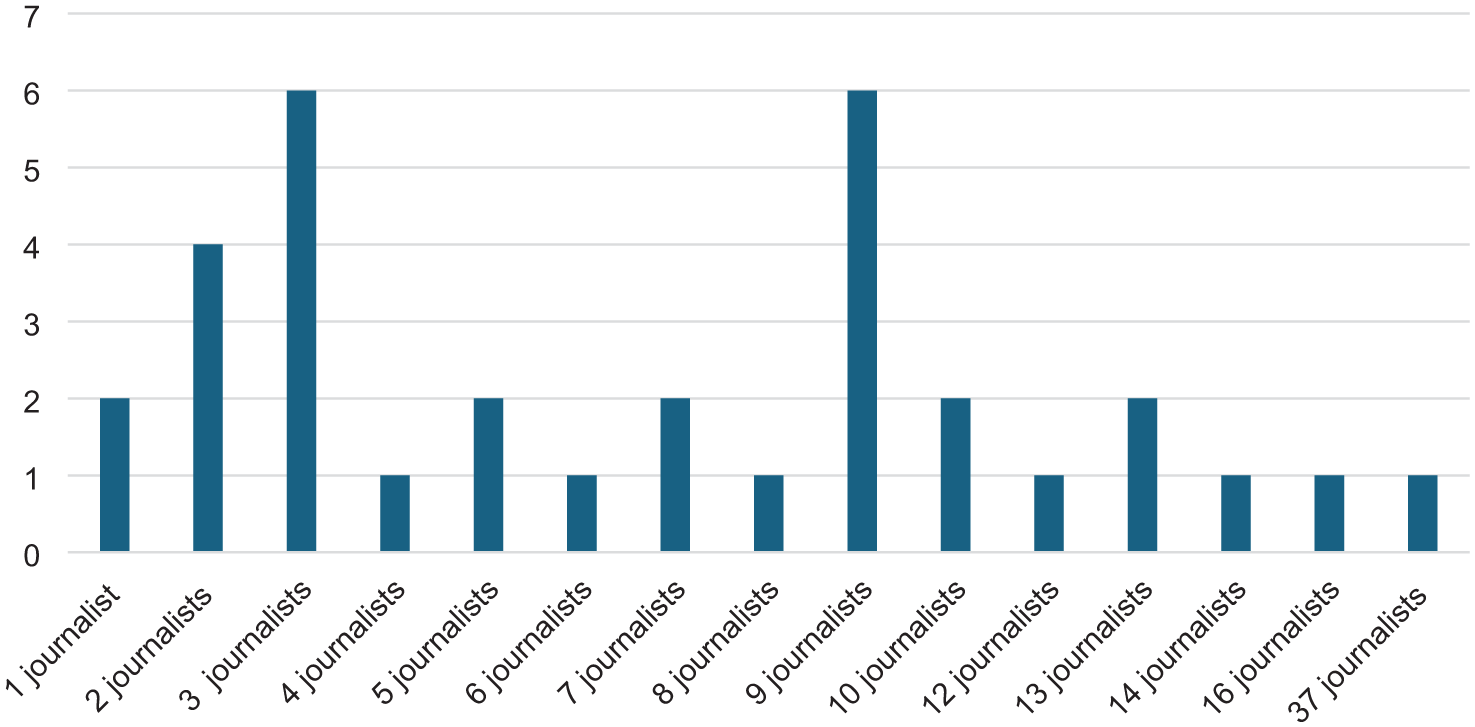
Number of journalists in the community broadcasting.
In addition, the public shall serve as board members for community stations, making key decisions, endorsing guidelines and closely monitoring activities, thereby requiring active involvement and close collaboration with station staff. However, key informants from the community broadcasting expressed mixed views on the board members’ performance. In one case, for instance, ARCR, the board members are highly supportive, well-informed and consistently engaged in assisting the station. By contrast, other stations, such as FSCR, KCR, WeCR and WaCR, face challenges with inactive board members, particularly those from local administrations, who often miss meetings and contribute little due to their other commitments. For instance, an informant from KCR stated that: We believe in the highest contributions of the board members to the betterment of the community radio station. Among the board members, we included various key actors in the community and the Woreda [district] administrations. However, they are not available for their support. They are not attending the community radio’s regular meetings. They are always busy with other commitments in the local administration and pay little attention to the community radio’s activities. Some of them were even appointed in other regions for additional work commitments. This put pressure on the community radio to accomplish its tasks. (Key Informant Interview, KCR)
This means that the majority of community stations are not well-supported by the board members selected from the public and local administrations.
Generally, community broadcasters in Ethiopia were found to be less effective in engaging the public to serve on their boards, produce content and work closely with the stations on a voluntary basis.
Funding
The data collected from the sampled community broadcasting stations indicate that some of them regularly receive financial support from public institutions, rather than from the community. For instance, universities, Zonal and Woreda administrations and industries allocate budgets for the stations’ capital and running costs. Only a couple of community broadcasters, for instance, KCR, allocate their budget from the community’s contributions through different means. Except for a few (community-based stations), almost all get their funds from Woreda and Zonal administrations, universities and industries. This has led to differences in the production capacity of community broadcaster stations. The study found that these stations, which receive funding from the local administration and universities, are relatively strong enough to execute their regular activities. At least, they do not have the stress of searching for finance to pay the salaries of the journalists and managing activities, including maintenance. Also, they have relatively enough number of staff members who are working permanently. Their technical status is comparatively better than that of those who do not get funds from public institutions. For instance, the KCR station has frequently interrupted its transmission due to technical and financial problems. While those operated under the government structure highly benefitted from the annual budget, the others owned by the community do not have a chance to access such public funds, which is the cause of the difference in performance and sustainability among the stations in the country. This does not mean that the community broadcasting stations subsidised by universities and local administration do not fail to broadcast their content regularly. They are also facing myriad problems.
Ideally, it is the community’s responsibility to contribute financially to the stations through various means, thereby sustaining the media and ensuring independence in content production and dissemination (AMARC, 2024; Fraser and Restrepo-Estrada, 2001). When community media apply for a licence, the EMA also orients the applicants, particularly those that are purely community-based, on generating their own finances to cover their costs. It has been observed that various attempts have been made to collect money from the communities. However, most of the stations find it very challenging. One of the informants noted that the economic status of the community, which are frequently asked to contribute to other activities, is tired of contributions: We have reservations about regularly collecting money from the community. Because the community were asked to contribute to various development and political activities, for instance, GERD[Great-Ethiopian-Renaissance-Dam]. We observe that the community has not been stepping up to lend a hand in various ways to support the community radio. Some others who have the capacity also do not understand how the community radio sustains itself. (Key Informant Interview-FCR)
This issue may stem from various factors. For example, community broadcasters often lack creativity in encouraging the community to contribute financially or with resources through different methods. It could also be due to the community media’s failure to promote themselves, despite providing a service to the community. The most significant factor might be the community’s financial situation. Many community radio stations operate in remote areas where incomes are low, and some are affected by war and conflict, which discourages them from asking for regular donations. Regardless of the reasons, while community broadcasters in the country seek funding from public institutions, society or both, many in Ethiopia face severe financial challenges that impact their technical, professional and organisational capacity. As a result, and due to other unforeseen issues, nearly half of the community broadcasters licenced between 2007 and 2022 ceased operations (Moges, 2022).
Representation of different groups and interests in the community
This section outlines key aspects that should be considered in community media to ensure greater representation and meet the diverse interests of the community. The author here wants to focus only on the content, geographical and language diversity, which are the points of departure among the community broadcasting services.
Content diversity
The data showed that almost all selected community media broadly focus on social, economic and political issues. The producers choose various topics from these areas that are highly relevant to the target communities. Some of the widely covered issues include good governance, peace and security, reconciliation and arbitration, reproductive health, youth, agriculture and development, drought, education, art and entertainment, sport and culture. Although each community radio station has somewhat different programme genres, it is fair to say that all of them address these and other related public issues similarly. For example, good governance has become a common topic across most of the selected community media, presented in different formats. All sampled stations have programmes dealing with good governance, the rule of law, theft and other issues through discussion, Q&A, interviews and similar formats. This represents a promising achievement for community media. It can also be argued that there is either a strong demand from audiences or concerned individuals about the lack of good governance and administration relating to water, electricity, fuel and mobile network coverage (IMS, 2019), or that community media operate under a specific strict directive issued by law that prioritises certain issues (Proclamation No. 1238/2021/A59).
Unlike the mainstream media, particularly commercial media, which are often criticised for devoting a significant amount of time to sports and entertainment issues, community media are somewhat less interested in covering sports stories. Except for JUCR, WeCR, AAUCR and CSUCR, the rest of the sampled stations do not have a strong interest in dealing with sports issues, unless they involve local events. Instead, the selected community broadcasters for this study have prioritised interesting issues that might meet their target audiences’ needs.
Geographical diversity
The geographical location of the community broadcasters is another indicator of diversity. Most of them are available in the Oromia, SNNP and Amhara regions. Fewer community media are also stationed in less developed regions of the country. As shown in Figure 2, less developed regions in the country still have fewer community media outlets. People living in these regions, for instance, Afar and Gambela, are generally unable to access diverse information from various media outlets. They have a few community broadcasters in these remote, less developed and information-in-accessible areas. On the contrary, two community broadcasters are in the capital, Addis Ababa, where most public and all commercial media are dominantly operated.
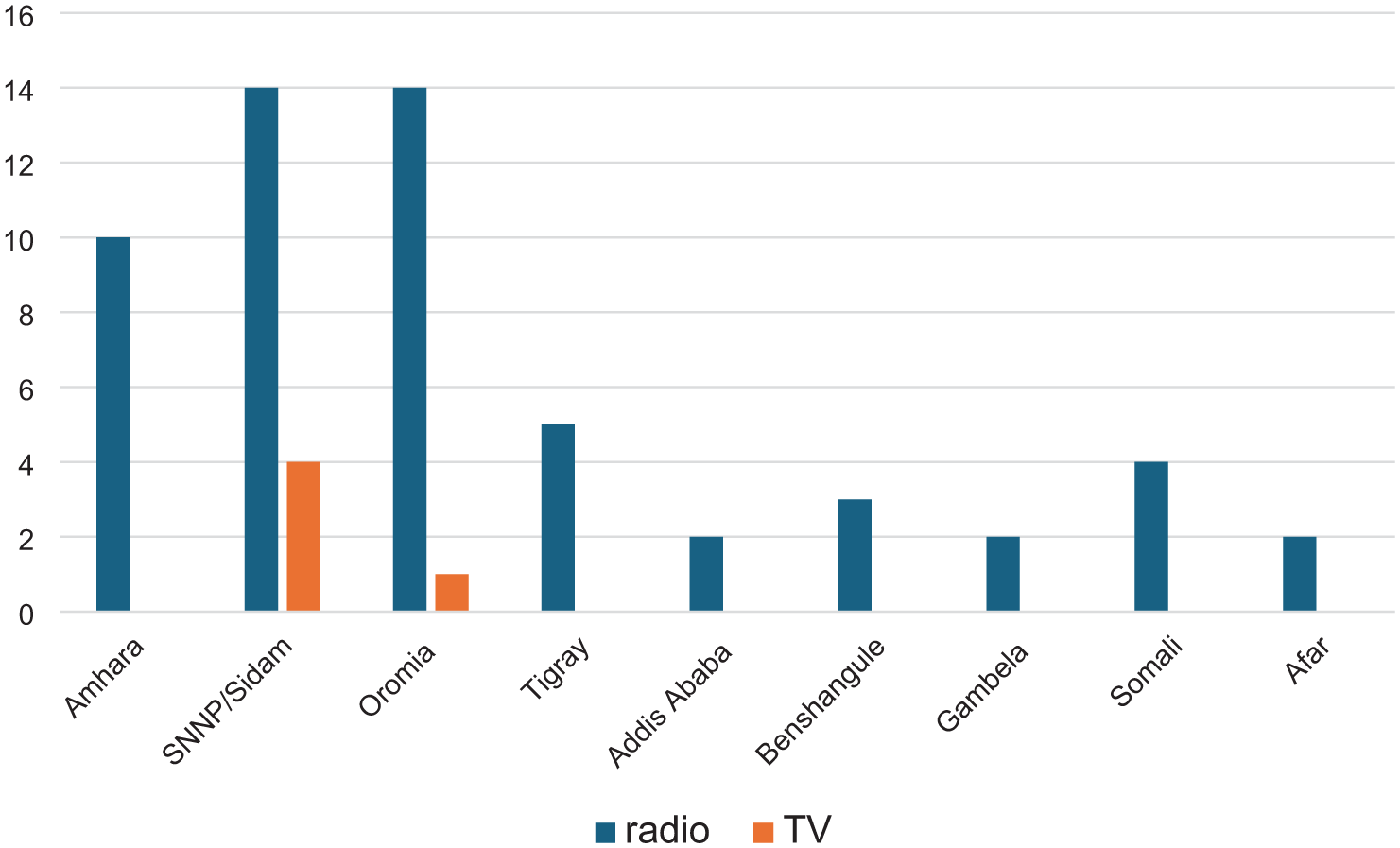
Distribution of community media in Ethiopia.
Language diversity
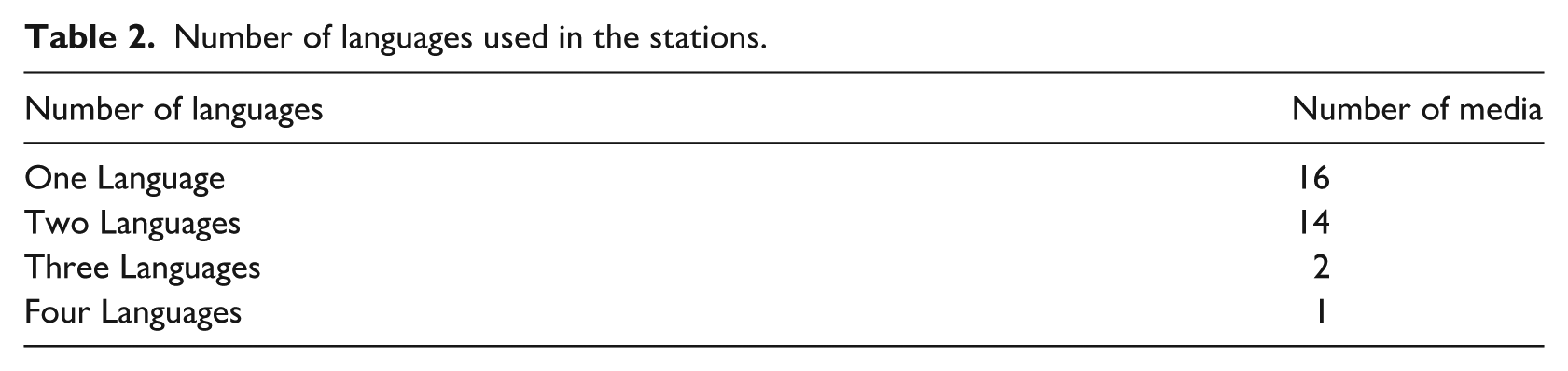
The data indicated that community radio stations use the local language of the target audiences to produce stories. In total, they currently use nearly 30 different languages to produce content. Around 16 of them are still using only one language to disseminate their content (Table 2). The Amharic and Oromiffa languages are dominantly used.
Number of languages used in the stations.
Around five community radio stations are currently using the English language, which is not a local language, and the local communities do not understand it well. According to Proclamation 1238/2021, Article 59 (1), community broadcasters are encouraged to produce programmes in local languages and with local content.
Independence of community broadcasters
The data collected through interviews with stations’ managers confirmed that they were relatively independent from the main stakeholders. They had the confidence to resist pressure and to say ‘no’ to any unnecessary interference from the administration/leadership, as well as other stakeholders. A similar result was also observed in a 2018 study. ‘All the stations interviewed stated that they have hardly faced direct intervention/interference or sanctions from local government, EBA/EMA, university/campus leadership, or other authorities within the community, such as tribal leaders, clan chiefs, religious leaders, etc.’ (IMS, 2019: 26). However, this trend is gradually changing. The empirical evidence collected from sources indicated that they have recently been directly and indirectly influenced by owners, that is, local administration, and universities. Some community broadcasting stations recently received a kind of warning from the local community and university officials. Claiming the stations are owned by them (local administrations and universities), the stories reported in the community radio stations should favour the owners’ interests.
Differently, informants from community broadcasters indicated that they have never experienced influences from donors and other funding organisations in their content production and other decision-making. Instead, for instance, Fojo Media Institute, in addition to facilitating training workshops for working journalists in community broadcasters, has provided technical support for the stations to strengthen community radio’s capacity to produce quality content that boosts social cohesion in the community. Similarly, UNESCO regularly provides support to community radio stations to strengthen their capacity. For instance, in 2020, UNESCO supported the Ethiopian Community Broadcasters Association to develop a 5-year strategic plan.
Discussion and interpretation
This section focuses on how community broadcasters serve their audience, their trend on ownership, diversity, funding and public participation, which are the main features of the ideal community radio.
Community broadcasters have different features that meet their local audience. According to Fraser and Estrada (2001), an effective strategy for the community radio station is to present what cannot be offered by any other radio station; that is, local content with a local flavour. The local radio station must dwell on its strongest reason for existence–local events, issues, concerns, and personalities. (p. 5)
However, community broadcasters in Ethiopia often miss this feature. For example, they create, produce and disseminate content that closely resembles the mainstream channels. In addition, community broadcasters name and design programmes, produce news and report stories in ways that are largely similar to public and commercial media in the country. For instance, they produce news and programmes using various formats. They frequently conduct live interviews with officials, experts and audiences, a practice that has become increasingly common in community broadcasting. This trend likely stems from both the cost-effectiveness and ease of collecting and producing such stories. National and regional media also commonly use this form of production. What the author wants to re-emphasise here, based on the Ethiopian media law, is that community broadcasters are expected to produce only programmes (news is not mentioned in the law). However, many of the community broadcasters are interested in and commit to producing news stories. They proudly described that they are competing with the national and regional media, that is, they are not becoming an alternative to the local community. This indicates that community broadcasters are seemingly losing their main essence of service to the local community with the local flavour.
The diversity and reporting of critical stories are also another concern. While community media stations are trying to include various content in different formats, they have similarities in content selection, approach and production. Finding unique productions among the community broadcasters based on their nature, interest, geography and ownership is difficult. Also, they sometimes follow similar production trends in the mainstream media (public and commercial media). It can thus be concluded that community broadcasting cannot be considered alternative media in the case of Ethiopia. This is because it neither provides content distinct from mainstream media nor does it incorporate unique features characteristic of community media.
While the Ethiopian media law defines community as people bound by a distinctive identity, by living in one place or locality, or by common interests and objectives, it obliges the community broadcasters to produce 70% of local content (Proclamation No. 1238/2021, Article 64/3). This means that stations are permitted to produce up to 30% of non-local content. The author argues that, first, the law allows them to allocate this large portion to national and/or international issues. Second, based on overall observation, journalists tend to favour international stories because they are more engaging, easier to produce or less subject to pressure from local authorities. Therefore, the author suggests that, as community broadcasters, they should be entirely dedicated to local issues relevant to their specific communities. Supporting this perspective, Ashbrook (2024) emphasises that everything in a community station – from presenters to content – should be locally sourced. This highlights a concern that community media in Ethiopia is increasingly failing to serve the communities they are intended to reach fully.
As stated in the media law, the community media have designed programmes and discussed public issues based on the common interests of the respective community (Proclamation No. 1238/2021). Previous studies have also confirmed that community media excel at actively discussing local issues (Bayable, 2020; Yemer, 2020: 15) and play a crucial role in peacebuilding and conflict resolution (Moges, 2018). However, while the inclusion of such diverse content in their programme genres is important, it is also fair to examine how they thoroughly and critically report stories. This is because some scholars, for instance, Mohammed (2018: 201), argue that community media’s productions are not strong enough to include critical data in their stories that can bring about social change. Similarly, IMS (2019) highlighted that the production of content lacks substantiation. This can be largely attributed to the current media context in the country, which does not allow journalists to be critical. Due to this, many community media tend to cover international issues to a greater extent, which is not the primary goal of community broadcasting. This does not mean that they are not covering relevant issues for the public. They are still trying to voice different voices for their local communities (FOJO, 2023; Moges et al., 2022).
The geographical location of community broadcasters is another critical factor to consider. While community media are expected to promote diversity and serve marginalised and remote communities, some stations are located in capital cities or regional towns – areas that already have relatively easy access to various media outlets and information (as shown in Figure 2). Over the past two decades, only 11 licenced community broadcasters have been established in remote and disadvantaged areas. Besides, many of these stations struggle to operate consistently due to various challenges. By contrast, the more robust stations, in terms of capacity and financial resources, are situated in capital cities, regional towns or zonal areas, where public, commercial and digital media are already more accessible. This disparity raises questions about the actual role of these community broadcasting stations and whether they are aligning with their intended goals.
As noted, in a new directive, EMA licences community broadcasters under six different names/categories. Some of the categories may raise concerns, specifically about independence. According to UNESCO (2017), ‘It is essential for community broadcasters to be independent of both governments and private individuals . . . Independence is often achieved by prohibiting public or political ownership of these entities, and by requiring them to be non-profit in nature’ (p. 3). This is related to serving the community with high credibility. The question, then, is how these stations can maintain independence from the influence of local administration and political leadership while being owned by local and regional authorities. One can also ask, how they are different from the public media in the country, which are funded by the government. Currently, public media are owned by regional states/governments. Hence, it is difficult to distinguish clearly between community broadcasters owned by local or regional administrations and public media (FM and regional media) owned by federal and regional governments.
Similarly, universities are highly interested in owning and managing community broadcasting. Community-based brodcasting serves higher education and community broadcasting service at higher education institutionsare relatively strong in terms of structure, capacity and finances. However, one cannot get a clear definition and scope of these community broadcasting, and what makes them different from the local media. It is very confusing whether they are campus, community or local radio. One of the key informants noted that some managers in Ethiopian higher Education Institutions also confuse community media with Public Relations activities. This indicates a need to establish a clear demarcation in terms of defining them and delimiting their scopes, roles and natures among campus, community and local radio, which are owned by higher education, community and the government, respectively. Most of these community stations focus on societal issues beyond the scope of university communities. In addition, since these stations are owned by higher education institutions, funded by the government, they may lose their sense of community and face potential interference from the institutions that finance them.
Community broadcasters in Ethiopia can be considered weak in terms of promoting voluntarism. Most community stations rely on paid staff rather than volunteers, indicating a lack of commitment to fostering one of the core values of community media – voluntary public involvement. These stations do not actively encourage community members to contribute their support voluntarily. Furthermore, public participation in content production, leadership and financing remains minimal. As a fundamental aspect of community broadcasting, the public should be involved in all stages – from the station’s establishment to content dissemination. However, Ethiopian community broadcasting has largely failed to meet this expectation.
Conclusion
In a critical examination of community broadcasting stations’ practices, finances, ownership, public participation in content production, management, leadership and representation of diversity, most have been challenged to fulfil the essential features of community radio. The current community broadcasting typically shares the nature of public media (in terms of finance, funded by local governments, and produced and served by paid staff members), as well as campus radio (owned and controlled by the university). They are also challenged in engaging the public to participate in content production, finance, managing and running the stations. While scholars such as Fraser and Restrepo-Estrada (2001), and Carpentier et al. (2003) as well as AMARC reiterate the feature of community broadcasting that the communities are responsible for controlling and managing the station, except for a few, most of them in Ethiopia are not owned, run and controlled by the community, which might have a direct or an indirect impact on their policy documents and editorial decision-making independence. They might be challenged to deal with the diverse issues critically.
The second nature is that most community broadcasters work in mixed roles, for example, they are campus radio stations, but they also want to deal with issues outside the community. Their licence is, for instance, campus-based community radio. However, their practice is somewhat different and tend more to report public issues outside the university’s community, which could be attributed to the role of other media. Moreover, they are funded by universities, which may exert a heavy influence on the content production that should focus on the local community. The third nature is related to the geographical location. The expansion of the community radio pulls down from the remote to the centre (city). Many community media outlets are becoming city/town oriented. At the same time, community media are expected to be a platform for engagement with marginalised communities in society (Carpentier et al., 2003; Conrad, 2014; Fraser and Restrepo-Estrada, 2001). The Ethiopian community broadcasting services tend to concentrate in the city and big towns, not in the remote and marginalised areas. The first community radio was established 700 km away from Addis Ababa. However, many community media outlets have now been established in cities and towns, providing people with relatively easy access to a wide range of information from both mainstream and social media platforms.
The fourth aspect pertains to community radio’s engagement not only in the production of general news content but also in broadcasting in foreign languages, thereby challenging the main conceptions of community media, which prioritise strictly local content. Moreover, despite existing legal frameworks requiring that at least 70% of programming be locally produced, the author contends that this threshold should be increased. Most significantly, public participation is emphasised across multiple dimensions, including content creation, decision-making, station governance and financial support. These stations maintain a decentralised structure designed to facilitate and encourage community involvement. Nevertheless, they continue to face significant challenges in securing consistent financial contributions from the community, attracting volunteers and fostering sustained local engagement across various operational aspects.
In short, community broadcasting in Ethiopia predominantly goes away from its conception like the media, content production and content diversification, financial sources and ownership, and public participation. Hence, the author suggested that there is a need to reconstruct and redefine community media in the Ethiopian context. Alternatively, community broadcasting in Ethiopia needs to consider meeting the primary essential features of the traditional community radio, both in terms of legal frameworks and practice. The legal framework, institutions supporting community broadcasters and initiators (including the community, local administrators, universities and others) need to understand and adhere to the primary global feature of community media. Given the increasing trends in licencing, ownership and content production within community broadcasting, the author suggests that it is necessary either to reappropriate the definition, classification and practice of Ethiopian community broadcasting to align with the ideal of community-centeredness as participatory theory suggests or to reconsider and revise the definition of community radio in a manner that reflects both current legal frameworks and practical realities. The author further advocates for a community-centric model of community broadcasting in the country to ensure its ideal status, serving a specific locality through content produced by, for, and financially supported by members of that community freely. As suggested in participatory communication theory, for community radio to be truly community-owned, run by and used, it must develop a community-centric model in the country. This requires further investigation by examining specific cases across different periods. Since this article primarily focuses on sampled key informants from the community radio in Ethiopia, it suggests that further study incorporating content analysis and long-term observations would be beneficial to gather broader data.
Footnotes
Funding
The author disclosed receipt of the following financial support for the research, authorship and/or publication of this article: The author received support from the UNESCO Ethiopia office and the Centre for the Advancement of Rights and Democracy (CARD) for data collection, and from OsloMet for publication.
