




Abstract
Muzarabani district of Zimbabwe is plagued by chronic food insecurity, where households resort to various livelihood strategies to cope with economic adversity. This study examines the paradoxical nature of these strategies, as they can have both positive and negative impacts on household food security. The research explores how the context, shocks, assets, institutions, activities and strategies of rural households in Muzarabani interact to shape their well-being and food security. Qualitative methods were employed to uncover the complex interplay of factors that drive households to adopt certain livelihood strategies, which may ultimately undermine their long-term food security. The findings reveal that poor households often engage in environmentally hazardous activities, such as illegal mining, sand poaching and unsustainable farming practices, as a means of securing their livelihoods. However, these strategies come at a cost, as they can deplete natural resources and exacerbate food insecurity. The study highlights the need for policymakers to address the broader socioeconomic and environmental challenges facing rural households in order to promote sustainable livelihoods and enhance food security in the Muzarabani district. In the pursuit of survival, households adopt various livelihood strategies to secure their well-being. Paradoxically, these strategies, designed to enhance resilience, often contribute to the erosion of food security. This paper explores how certain livelihood activities while offering short-term economic relief undermine long-term food availability, access and sustainability.
Introduction
The Southern African region has consistently experienced the effects of various natural and anthropogenic calamities, primarily intensified by changes in the climate system and weather variability (Kapuka and Hlasny, 2021). Occurrence of such disasters is impeding and reversing the advancements achieved in addressing household food security and the overall enhancement of livelihood resilience (Southern African Development Community (SADC), 2022). The report further posits that climate change has increased food insecurity thereby worsening poverty and social inequalities. Furthermore, land degradation in the region continues to decimate productive capacity, against the backdrop of increasing food demand due to increased population pressures. Therefore, it is within the context of these challenges that this study sought to assess the impact of various farm and non-farm livelihood pathways on household – food insecurity in Muzarabani district of Zimbabwe. The pursuit for sustainable livelihoods is a central objective in development efforts worldwide, not least because doing so has the potential to enhance the resilience and well-being of vulnerable population groups. There is a growing awareness that diverse livelihood strategies are important in both households’ well-being and achieving food security. As such, households, whether poor, middle income or rich, often adopt different livelihood strategies in their guest for food security and well-being (Macheka et al., 2020). However, the paradox of survival emerges when certain livelihood pathways and strategies, which are adopted with the noble intention of achieving household food security, inadvertently result in adverse food security impacts (Gowdy and Hubacek, 2000). This paper examines the complex interplay between livelihood pathways and strategies adopted by households, food security and household well-being, drawing insights from an empirical study of rural households in the Muzarabani district, Mashonaland Province in Zimbabwe. Household food security is a multidimensional concept that encompasses not only the availability of food, but also access to and utilisation of food (Connolly-Boutin and Smit, 2015), which is highly dependent on how households plan, allocate and utilise resources at their disposal. Livelihood strategies adopted by households are varied, with different outcomes, and more importantly impacts on the overall household security situation. Some strategies or livelihood pathways may be adopted in response to livelihood constraints and stresses, and may run parallel with popular livelihoods, resulting in competition over scarce resources. In the context of sub-Saharan Africa, where poverty, vulnerability and food insecurity are prevalent, understanding the nuanced relationship between livelihood strategies and food security is crucial for informing effective development interventions Ngwenya et al. (2022). Households living in rural areas of Zimbabwe are particularly vulnerable to the adverse effects of these livelihood strategies, which may either enhance or compromise the food security situation. The majority of rural households are highly dependent on rain-fed agriculture systems for their livelihoods and are, therefore, highly susceptible to the impacts of harsh climatic conditions, such as droughts and erratic rainfall patterns (Chitongo and Ricart Casadevall, 2019).
Problem statement
Formerly considered as the breadbasket of SADC, Zimbabwe is now a country that depends on the importation of maize and other food items. Due to the significant increase in the cost of basic foods, most households face challenges in getting adequate food (Food and Nutrition Council, 2020). Food security situation has ramifications on how poor populations control their assets and sociocultural existence (Ngwenya et al., 2022). The economic and food security situation in Zimbabwe remains precarious. Adverse weather conditions, characterised by unpredictable rainfall patterns and prolonged periods of drought, had a negative effect on the escalation of the humanitarian crisis nationwide. Concurrently, the worsening economic circumstances further intensified the susceptibility to food insecurity of both rural and urban populations, which were already experiencing an upward trend in vulnerability. According to the Human Development Report (United Nations Development Programme (UNDP), 2017), food uncertainty in Zimbabwe is fueled by the complex interaction of poverty, insufficient investment in the farming sector and weak food production systems. These factors are further exacerbated by the critical impact of severe weather developments and climate change. The food insecurity problem is worrisome in Muzarabani district which is one of the worst cases of chronic insecurity in Zimbabwe (Mavhura et al., 2019). Despite the existence of a diversity of on-farm and non-farm food security coping mechanisms, more than 88.4% of families face this problem (ZimVAC, 2023). Furthermore, despite the availability of several livelihood options and Early Warning Systems (EWSs), households remain unable and ill-prepared to alleviate food uncertainty. In Muzarabani, food-insecure households are further affected by a weak small-holding agricultural base. They depend on negative and perilous non-farm survival mechanisms. These strategies encompass the diversification of on-farm and off-farm livelihood techniques and the extensification and intensification of agriculture (Mushore et al., 2021).
Because of the prolonged economic crisis in the country, many households are forced to resort to a range of livelihood strategies (Macheka et al., 2020). Some of these strategies, such as illegal mining of gold, sand, brick moulding and traditional craft making, have had a detrimental impact on the natural environment and, consequently, on household food security. In addition, the most preferred livelihood options at household level are sometimes detrimental and erosive. They range from inevitable compromises such as selling productive assets like cattle, opting for migration, resorting to dry land farming amid climate variability as well as engaging in artisanal mining and production of high-value crops such as cotton. These commonly preferred livelihood strategies often fail to address household food insecurity in Muzarabani district (ZimVAC, 2023). Risky livelihood strategies have led to persistent poverty, limited levels of human growth, maladaptation and the deterioration of environmental services. Furthermore, the implementation of various on-farm and off-farm livelihood activities has been proposed as a strategic approach to be employed by rural households in order to mitigate the challenges of low household income and food insecurity (Chitongo and Ricart Casadevall, 2019; Fikre, 2020; Mukwedeya and Mudhara, 2023). Analysing the connection between food security and livelihoods is crucial for addressing the prevalent issue of food uncertainty (Mutea et al., 2019). While many researches show that the employment of various livelihood strategies on top of agriculture has led to an improvement in the food security situation (see, for example, Chifamba et al., 2021; Rubahar et al., 2020; Scoones et al., 2018), other studies have shown a decline in family food security. This has persisted despite the adoption of other livelihood methods outside of agriculture (Borgerson et al., 2019; Herrera-Cuenca et al., 2022). Furthermore, other studies explored the idea of food security and livelihoods in different contexts. For example, Gillo (2017) explored the concept of food security in the context of climate change awareness and its impact on food production. Chitongo and Munyati investigated the relationship between food security, poverty eradication and livelihood outcomes both before and after the introduction of irrigation facilities.
The study thus looked at the contribution of these livelihood strategies in a broader sense but narrowed down to how some of the strategies adopted ended up leading to further vulnerability of the households to food insecurity. This research further sought to understand the connection between small-scale communal farmer households’ livelihood strategies and their food security situation. Such a relationship is significant in understanding how households’ livelihood choices can either increase a household’s vulnerability or provide a safety net that enhances their food security situation. Livelihood strategies are intrinsically linked to how a household is able to cope with food security challenges, brought by natural and economic factors. The study sought to provide an understanding of households and their livelihoods, linking these two issues around food security. It explored livelihood decisions in the context of both economic and natural challenges, and situated issues of food security or insecurity on these decisions. Both on- and off-farm coping strategies either contribute to food security or they may amplify the risk to food insecurity (Chifamba et al., 2021; Ncube-Phiri et al., 2015; Rubahar et al., 2020; Scoones et al., 2018).
Literature review
Livelihoods
A livelihood comprises the capabilities, assets (including both material and social resources) and activities required for a means of living. A livelihood is sustainable when it can cope with and recover from stress and shocks and maintain or enhance its capabilities and assets both now and in the future, while not undermining the natural resource base (Chambers and Conway, 1991). In addition, a livelihood involves various capacities, including natural, economic and sociocultural assets, as well as activities necessary for sustaining one’s means of subsistence (Scoones, 1998). Moreover, the term ‘livelihood’ encompasses what people do to earn a living, and the resources that allow them to do so, the risks they face in administering their assets as well as the organisational policy context that either facilitates or impedes on their search for a viable or better standard of living (Mutenje et al., 2010).
Livelihood strategies
The term ‘livelihood strategies’ refer to a collection of actions undertaken by households with the aim of attaining desired livelihood outcomes, as described by De Haan Leo (2012). According to Dube et al. (2018), livelihood strategies are capable of being implemented and are specifically developed to get specific livelihood objectives. The livelihood methods seen in this study are contingent upon the availability of livelihood assets, as discussed by Kabonga (2023). Livelihood strategies are activities such as livelihood diversification, and natural resource-based activities, and market-based activities that people choose to engage in to attain their livelihood goals (Ayana et al., 2022; Ellis and Allison, 2004).
Food security
The concept of food security has evolved over the last 30 years, with early emphasis on physical availability of food, ignoring other pillars like accessibility, utilisation and stability. According to Muzerengi and Mapuranga (2017), the concept of food security encompasses the total amount of food available inside a nation, including various sources such as domestic production, imports, food stocks and food aid. Food security can further be described as the state in which individuals have consistent access to an adequate supply of food that is both safe and nutritious, meeting their dietary requirements and allowing for an active and healthy lifestyle. This definition was established during the 1996 World Food Summit (FAO, 1983).
Vulnerability concept
The concept of vulnerability context refers to the external circumstances that individuals navigate through in order to sustain their livelihoods (Scoones, 1998). Various types of shocks including economic, health, natural, conflict-related and climate-related have the potential to directly cause destruction of assets (Mavhura, 2017). According to Scoones (1998), the rural poor face persistent challenges arising from fluctuations in prices, variations in employment prospects and constant changes in food availability. Additional considerations encompass governance and technology advancements. Livelihoods exhibit a multifaceted nature and undergo dynamic transformations, hence encountering diverse forms of risk. The vulnerability context encompasses the various risk variables that impact livelihoods. The concept of vulnerability entails an increased susceptibility to experiencing a rapid, severe or significant decline in one’s standard of living.
The role of transforming structures and processes in shaping livelihoods
The concept of transforming structures and processes encompasses institutions, organisations, laws and regulations that have a profound impact on individuals’ livelihoods (Scoones, 1998). These factors not only influence individuals’ access to different forms of capital, but also dictate the ways in which assets can be exploited. Institutional and policy-making processes function in pre-existing circumstances such as the history of the people, climate change, and other shocks and stressors. The transformation of structures and processes is vital for effectively controlling access, regulating the terms of trade among different kinds of capital and determining the returns from specific livelihood plans. In addition, Kollimar and Gamper provide a definition of structures as the physical entities, such as commercial and public organisations, that are responsible for establishing and executing policies and regulations, providing services, engaging in transactions and carrying out various other activities that have an impact on people’s livelihoods.
The livelihood situation in rural Zimbabwe
When discussing the livelihood and food security situation in Zimbabwe and particularly its rural households, it is worth noting that the agricultural policies implemented during the colonial period had significant ramifications on shaping the rural agro-landscape (Mashizha and Mapuva, 2019). Colonial policies left lasting effects that continued to influence the way rural communities live and the behaviour of families in those areas today (Thebe, 2010). Agricultural production is key to Zimbabwe’s economy and food security has over the years been dependent on it (ZimVAC, 2018). In addition, according to Mukwedeya and Mudhara (2023), approximately 70% of Zimbabweans rely on farming. The economy’s dependence on rain-fed agriculture exacerbates various factors, including climate change, economic instability, inadequate policy creation, fluctuations in agricultural commodity pricing and political instabilities. Gwimbi (2009) suggested that floods and droughts are a common problem that worsened food uncertainty in Zimbabwe.
Zimbabwe’s economic activities are closely connected to the agro-ecological zones, referred to as natural regions. Figure 1 shows the agro-ecological regions in the country. There are five distinct natural regions which range from natural region 1 to natural region 5. These are characterised by a diverse variation of elements such as precipitation trends, soil composition, vegetation types and other relevant variables (Mkodzongi and Lawrence, 2019). The suitability of crop cultivation decreases from northern region 1 to southern region 5. There are several distinct natural regions characterised by varying levels of rainfall. Natural region 1 experiences high levels of rainfall, while natural regions IIA and IIB have moderate rainfall (Mkodzongi and Lawrence, 2019). However, natural region IIB is particularly prone to heavy dry periods throughout summer. Natural region III also has moderate rainfall. On the other hand, natural regions IV and V receive very low and unpredictable amounts of rainfall, and these regions have poor soils (Mkodzongi and Lawrence, 2019). Zimbabwe possesses 24 distinct livelihood zones, which can be effectively classified into eight overarching groups, as visually depicted in Figure 2.
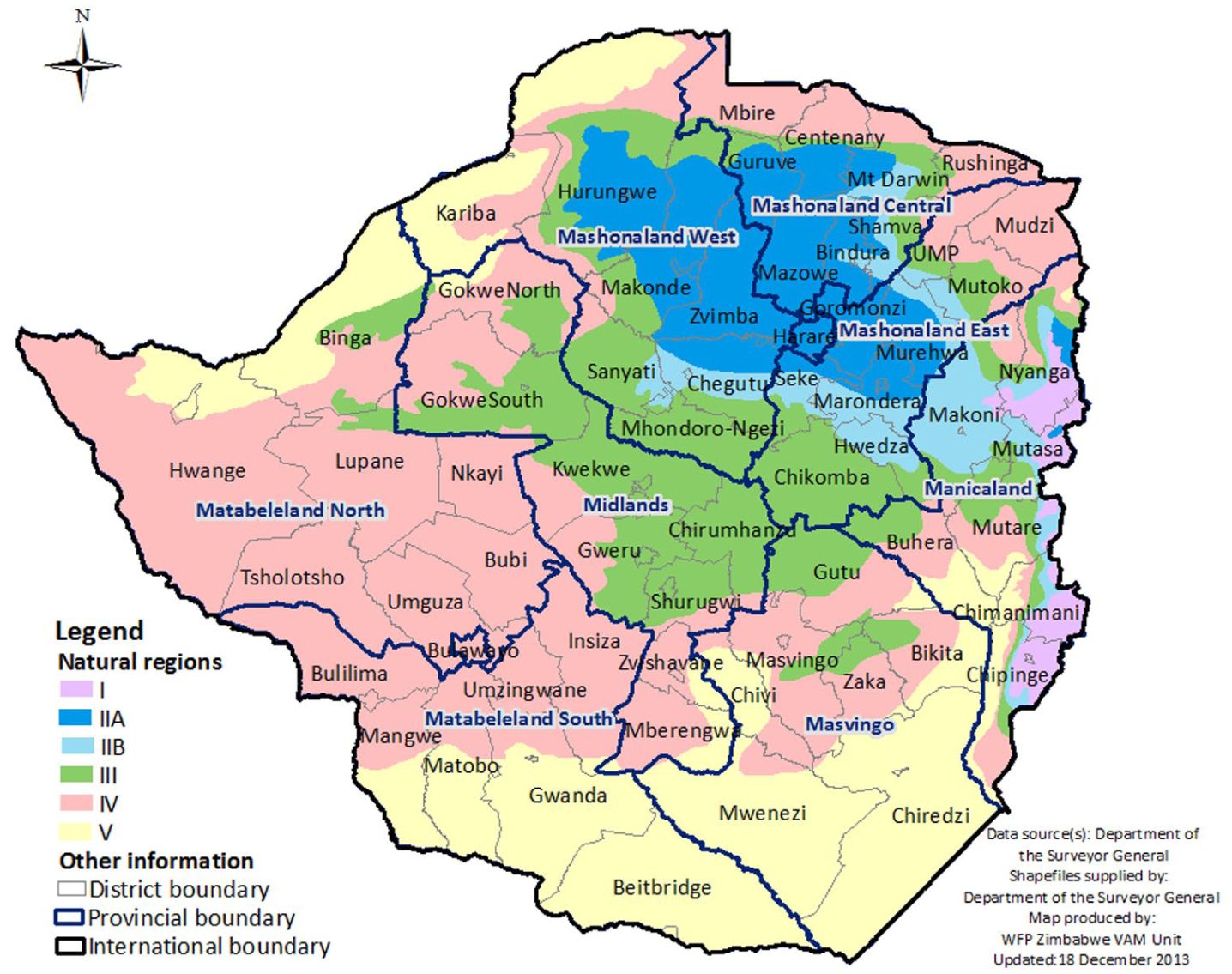
Natural regions of Zimbabwe.
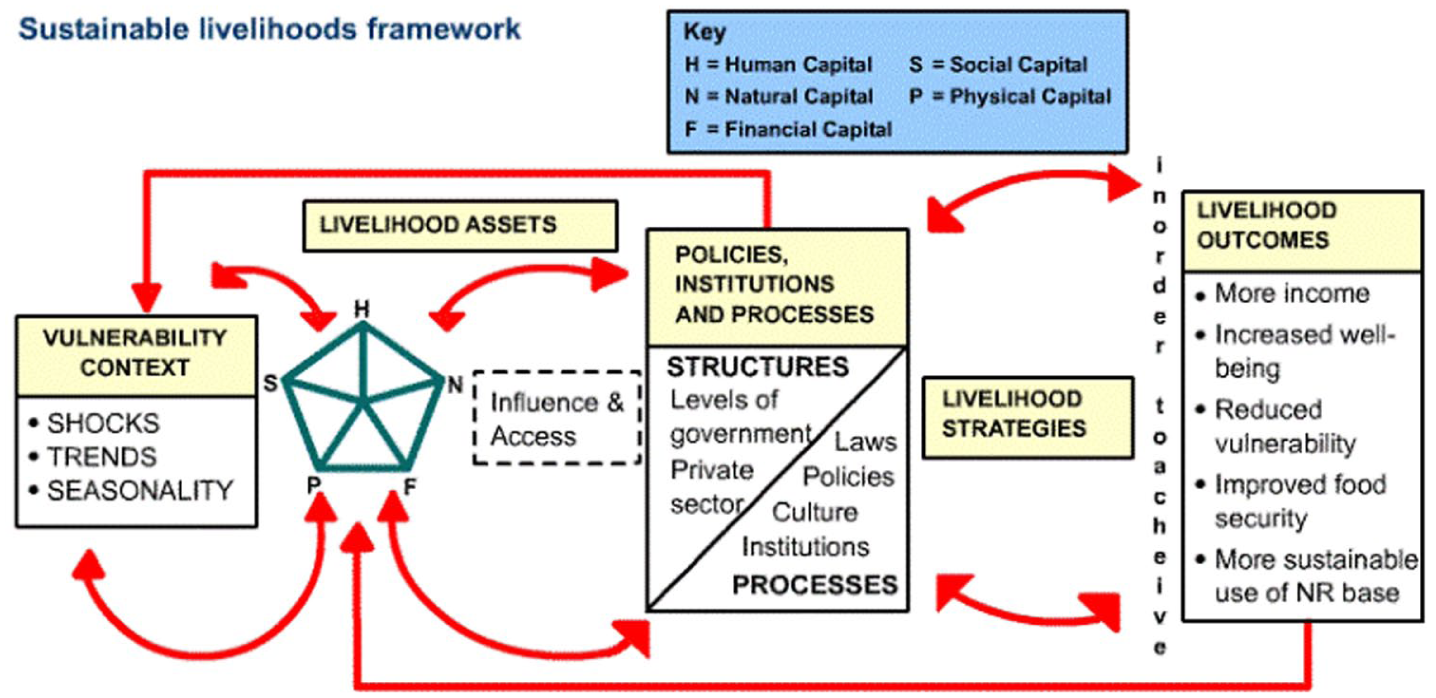
Sustainable livelihood framework (DFID, 1999).
Most coping measures have failed to address household food insecurity in Zimbabwe. According to Scoones et al. (2017), coping mechanisms that have been deployed have primarily been agriculture-based and have been geared at enhancing household members’ access to food. Rural migration, land fragmentation, climate change and inadequate investment in agriculture have all made agriculture-centred coping strategies unsustainable (Chitongo and Ricart Casadevall, 2019). Thus, interventions should concentrate on diversification of coping measures in order to guarantee household resilience.
Due to the current climatic conditions, concern regarding current household coping mechanisms is inconsistent with the prevailing situation in Muzarabani district (Mavhura, 2017). Agro-ecological zone V, where the Muzarabani district is located, renders it susceptible to insufficient and unpredictable rainfall (Mashizha, 2019; Mugambiwa, 2018). According to Muzerengi et al. (2023), the climate is becoming susceptible to severe occurrences like floods, droughts and unpredictable rainfall, and increased temperatures. Due to the rain-dependent nature of crop cultivation in the district, drought risks always exist. Therefore, from a climate related perspective, it is not surprising that the district often encounters droughts, which cause long-term food insecurity. According to Mukwedeya and Mudhara (2023), prolonged dry seasons have typically plagued even the best coping mechanisms in most rural households.
Existing literature on the relationship between livelihood strategies and household food security in rural areas of Zimbabwe is limited. However, several studies have examined the broader impacts of economic and environmental challenges on food security in the country (e.g. Mugambiwa, 2018; Mutami and Chazovachii, 2012; Muzerengi et al., 2023). Past research has highlighted the vulnerability of rural households in Zimbabwe to climate change and environmental degradation, which have exacerbated food insecurity (Bhatasara and Nyamwanza, 2018; Chitongo and Ricart Casadevall, 2019; Giannini et al., 2021; Nyathi, 2024). Other studies have also explored the coping strategies employed by rural communities, such as crop diversification, livestock rearing and reliance on natural resources, to mitigate the effects of these challenges (Chitongo and Ricart Casadevall, 2019; Nyahunda and Tirivangasi, 2019; Nyathi, 2024; Muzorewa and Chitakira, 2021).
Linking livelihood strategies and food security
For a better understanding of the relationship between households’ livelihood pathways or strategies and their food security situation and well-being, the starting point is to examine the circumstances around livelihood pathways and the significance of these strategies. How livelihood decisions are made, the time and place where these livelihoods take place is significant for welfare and food security outcomes. In this study, we explore the two concepts: livelihood strategies and food security.
A livelihood strategy typically consists of activities designed to improve income, access to resources or social safety nets. These may include agricultural production, wage labour, migration, trade or the diversification of income sources. It is a planned approach to livelihood decisions and activities, which is often influenced by certain factors within the individual and environment. These factors may include psychological, physiological (individual) and social and cultural, economic and political and institutional, at the broader level (Walker et al., 2001). A choice of a livelihood strategy is often guided by livelihood capital and positive livelihood outcomes are highly dependent on efficient and effective livelihood strategies (Bhandari, 2013; Chiweshe et al., 2014; Fang et al., 2014; Peng et al., 2021).
Theoretical framework
This study is guided by the sustainable livelihood framework (SLF). Allison asserts that the SLF acknowledges the intricate nature of seasonal and cyclical livelihood strategies. The sustainable livelihood approach (SLA) promotes innovative thinking that surpasses conventional methods. It emancipates development practitioners from conventional approaches, which usually include just identifying issues and finding solutions. Furthermore, it highlights the need to enhance the resilience of livelihoods in the face of adverse trends or sudden shocks, while also enhancing rural development policies and practices. It outlines the key influences on people’s livelihoods as well as their typical interactions (Haidar, 2009). The framework was born out of peasant studies conducted in the 1980s, which focused on the fundamental interest in food security and the emerging interest in sustainability (Scoones, 2009). It is an effective analytical tool that gives an understanding of how people live and maintain their way of life (Scoones, 2009). According to Mazikana (2023), the utilisation of the SLF is on the evaluation of the efficacy of current livelihood efforts aimed at mitigating poverty and addressing issues of food insecurity contributed to the vulnerability of the households.
The SLF identifies five core assets that shape these strategies: human, social, physical, natural and financial capital (Benett, 2010). The SLF provides a useful lens for analysing the complex interactions between various factors that shape household food security (Scoones, 1998). This framework highlights how the interplay of capital assets, access to resources, and institutional and social structures mediate the livelihood strategies pursued by individuals and households. In the context of sub-Saharan Africa, the application of this framework has yielded valuable insights into the vulnerabilities and coping mechanisms of the urban poor, as well as the impacts of environmental and economic shocks on rural livelihoods (Alinovi et al., 2010; Chevo, 2018; Kabonga et al., 2021; Longley and Maxwell, 2003; Mutenje et al., 2010; Scoones, 1998; Ulya et al., 2021).
The SLF emphasise the importance of addressing barriers to accessing assets and activities that align with existing patterns (Carney, 1998). The SLA promotes innovative thinking that surpasses conventional methods. It emancipates development practitioners from conventional approaches, which usually include just identifying issues and finding solutions. Furthermore, it highlights the need to enhance the resilience of livelihoods in the face of adverse trends or sudden shocks, while also enhancing rural development policies and practices. The framework additionally provides a theoretical instrument for critically comprehending the essence of food security policies and their execution within a rural context. The concept of sustainable livelihoods has introduced a way of looking at food security. In addition, the approach also emphasises that the capacity of households such as those in Muzarabani, to engage in diverse livelihood choices, is contingent upon the different types of assets they possess (Scoones, 2009). This entails that the wider the household’s asset base, the higher the chances of the same household to embark on a wide range of livelihood activities. This is attributed to the relationship between livelihood assets and livelihood outcomes. Sustainable livelihoods are achieved when households possess the capacity to effectively manage uncertainties and shocks, enhance the assets upon which they rely, and bequeath resources for the benefit of future generations (Ashley and Carney, 1999; Berchoux et al., 2019). In addition, Mazikana (2023) suggested that the SLF promotes individuals to contemplate the settings and connections associated with development activities in order to enhance the attention on the process. In addition, the SLF highlights the importance of comprehending institutions by analysing the institutional framework and building connections between the micro and macro levels, as well as formal and informal contexts. The phases of the SLF not only influenced the study design, but also structured the arrangement of the inquiry into sub-themes, which in turn led the process of gathering and analysing data. The paradigm prompted the researchers to adopt a comprehensive and dynamic approach in examining the topic being investigated, considering all potential factors that may have influenced the construction of livelihoods in the rural communities of Kapembere and Muringazuva wards and how these livelihood choices either enhance the food security status of the households or alternatively.
Livelihoods capital assets
The livelihoods framework is found on the view that individuals need various resources in order to attain favourable livelihood achievements. The term ‘capital’ is extensively employed in literature to refer to these assets, although not only in the economic context. Instead, assets are more accurately conceptualised as fundamental components for developing one’s living (Scoones, 1998).
The sustainable livelihood strategy seeks to enhance access to livelihood assets among diverse households, recognising the inherent variability in their availability. The aforementioned assets encompass a variation of categories, namely personal, financial, social, physical and natural assets that the farm households in Muzarabani make use of in shaping their livelihoods (Figure 3).
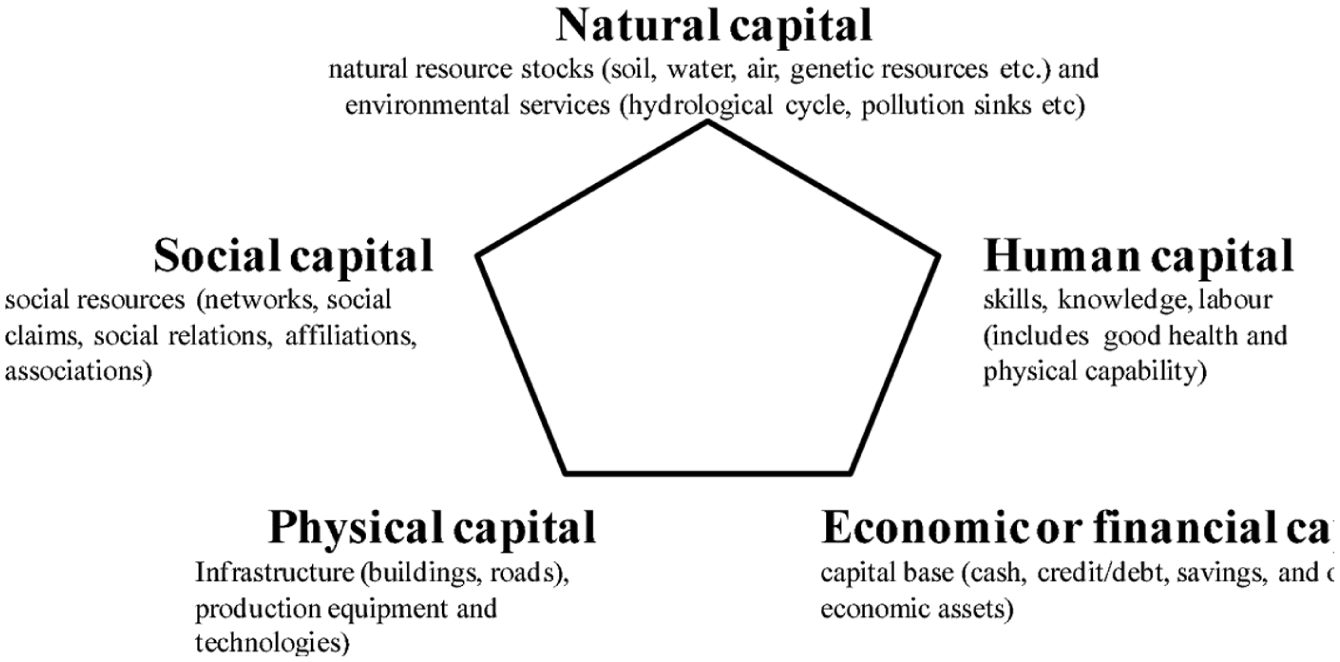
The livelihoods capitals that make up the SLF (DFID, 1999).
Materials and methods
The researcher’s objective of comprehending the role of livelihood choices in enhancing household food security in Muzarabani was pursued within the interpretivist paradigm. This choice of paradigm determined the study’s ontological and epistemological stances, as supported by Grbich and Yin (2016), and guided the conduct of this ethnographic investigation. The interpretivist approach allowed the researcher to gain a better understanding of how households construct, modify and interpret the social reality in which they live.
The study relied on the ethnography methods. According to Brewer, ethnography is a research approach that involves studying individuals within their natural environments or ‘fields’. This method utilised data collection techniques that aimed at capturing the social significance and everyday activities of the participants. The researchers actively participated in the collection of data. It is important to note that the researcher did not impose external meanings on the data. The ethnographic method was employed in order to fully understand the contribution of livelihood strategies to household food security.
The case study area
The study focuses on two wards in lower Muzarabani district, which are Kapembere and Muringazuva. However, these wards must be understood within the broader context of Muzarabani district at large. The district is located in northern Zimbabwe and borders Zambia to the north and Mozambique to the east. Muzarabani Rural District is situated in Mashonaland central province of Zimbabwe and is one of the eight districts. The area encompasses an estimated 2774 square kilometres. According to the Food and Nutrition Council (2022), the district has 29 wards. These wards are demarcated by ward boundaries, which consist of eight communal lands, eight commercial farming wards, three resettlement wards and one urban ward. The overall population of the district is 134,076 (Food and Nutrition Council, 2022). Communal farming is primarily concentrated in the valley areas III, IV, and V (Food and Nutrition Council, 2022). The district encompasses a land area of 2744 square kilometres in the northern region of Zimbabwe, bordered by Mozambique to the north at coordinates 310 05’ E and 160 25. The wards of Kapembere and Muringazuva, which this study is centred on, exhibit a relatively low population density and are predominantly inhabited by rural communities facing economic hardships, characterised by limited access to resources and low levels of literacy.
Study design, data collection and sampling technique
The study employed the qualitative ethnographic research design. According to Creswell (1998), a qualitative research strategy can be described as a systematic exploration of the significance and interpretation that individuals or groups attribute to social or human issues. The study design allowed the researcher to organised data gathering and analysis process in a qualitative manner. In addition, this design facilitated the interpretation and presentation of the research findings in a comprehensive manner.
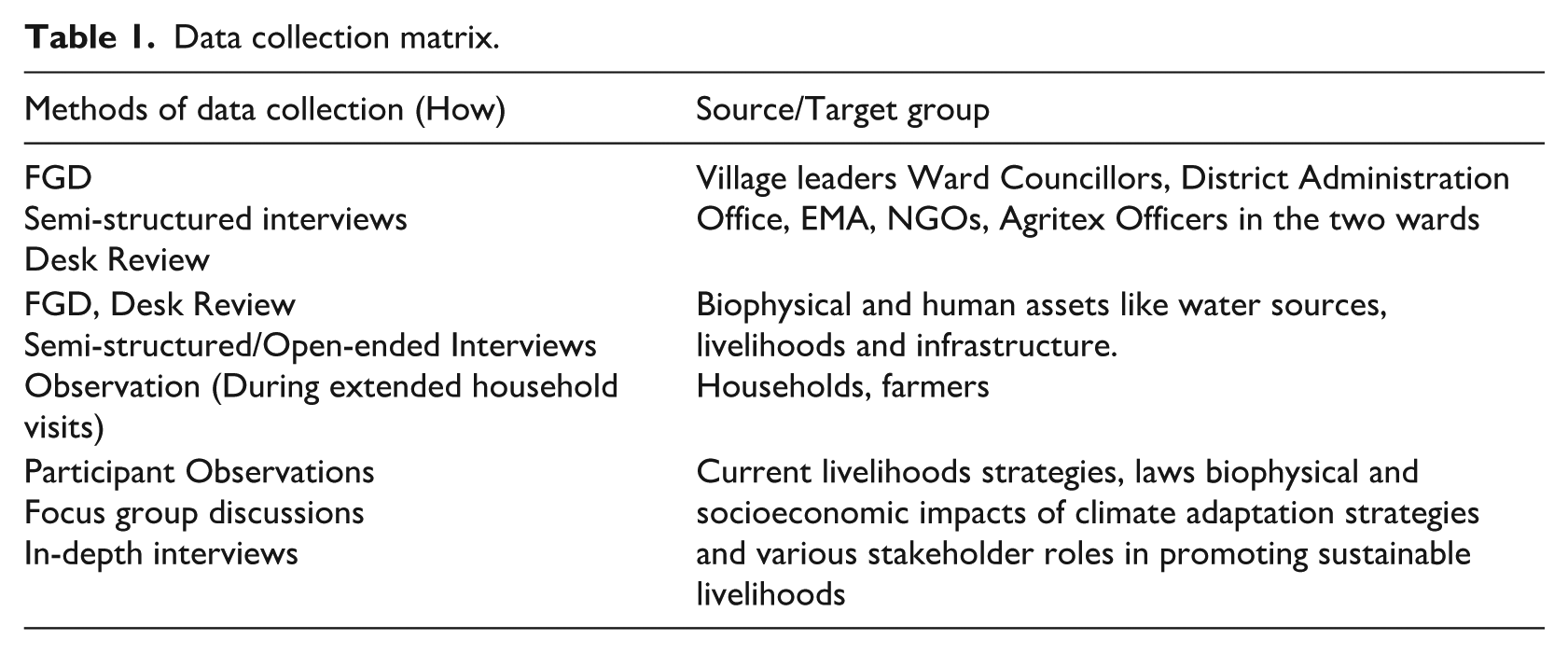
The study mainly used semi-structured interviews and open-ended interviews with key informants and households. The researchers further conducted in-depth interviews with a range of stakeholders as described in the table.
A multi-stage sampling method was used in choosing wards and villages in Kapembere and Muringazuva wards of Muzarabani. This method helped in choosing few geographical areas and this reduced the costs and time needed to gather data for this study. Under this method, purposive sampling technique was utilised to choose two wards in Muzarabani district. These wards were selected on the basis of the agro-ecological conditions prevailing in the respective wards. Out of the two wards, 14 villages were selected (7 villages per ward). Sixty-five household heads were purposively selected from the list of families from each village registers. The data were gathered from a sample of 65 household heads, 10 ward officers and 7 individuals who were drawn from government departments such as the Ministry of Social Welfare, Agriculture and Muzarabani District Council. Thus, a total of 82 participants provided data for this study. Sixty-three of the participants were females, while 29 were males. The household heads extension officers, government and local authority officials participated in several focus group discussions (FGDs) and interviews carried out between November 2021 and August 2022. Table 1 shows the data collection methods matrix used in this study.
Data collection matrix.
Results
The context of livelihoods in Muzarabani
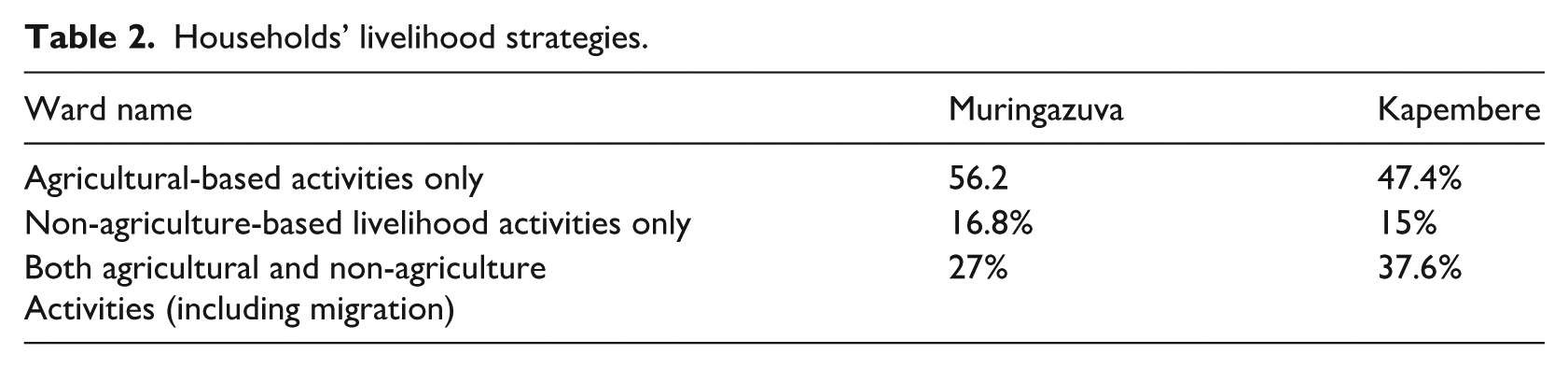
An analysis of livelihood pathways among selected households since independence in 1980 in Muzarabani district reveals an array of strategies and livelihood activities carried in both wards, by individuals and household units, and by males and females. Although all households engaged in agriculture production, which was by far the most popular livelihood activity, the outcomes differed markedly among households. Different combinations of cash crops and food crops distinctively defined the livelihood strategies of households. Besides the practice of agriculture, all households were diversifying their income sources, engaging in multiple livelihood activities, and maintaining strong social links with rural households to access rural resources for urban survival. The livelihood strategies of households are represented in Table 2.
Households’ livelihood strategies.
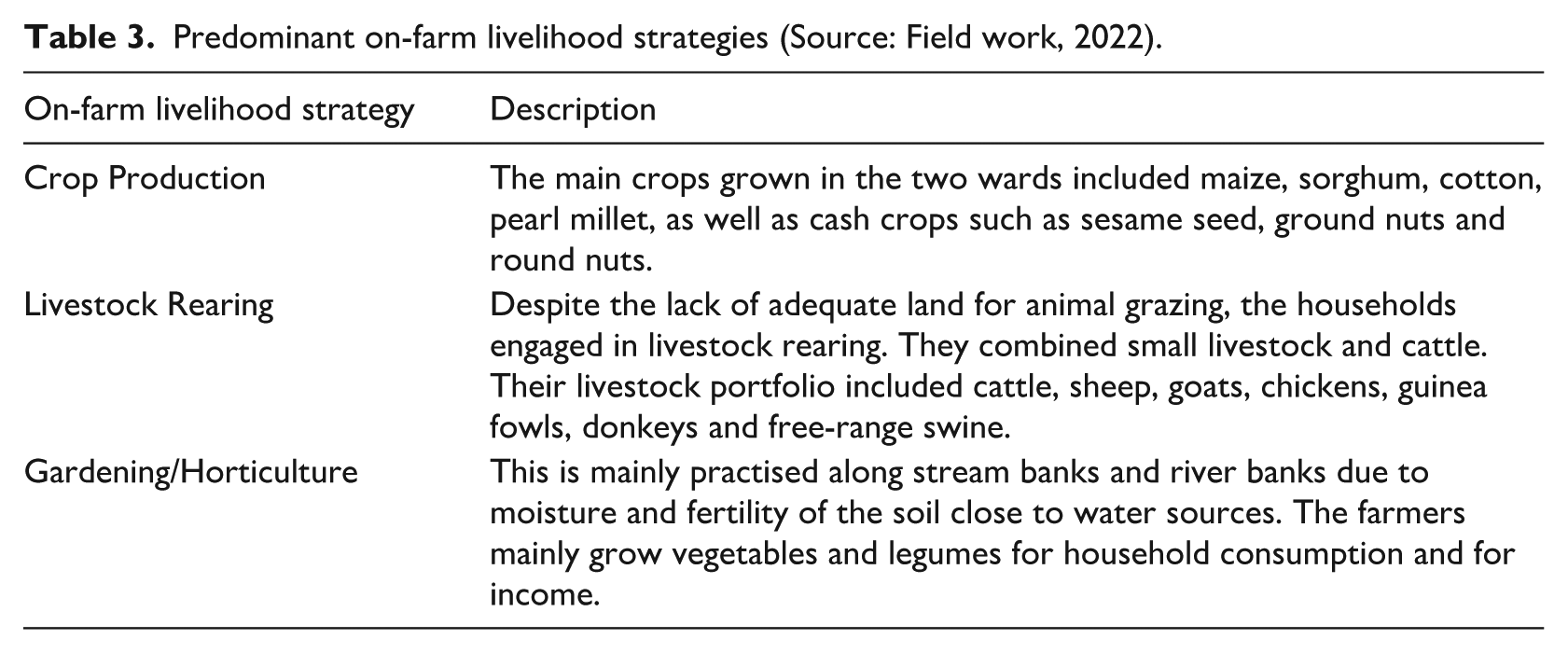
Predominant on-farm livelihood strategies (Source: Field work, 2022).
Predominant off-farm livelihood strategies (Source Field work, 2022).
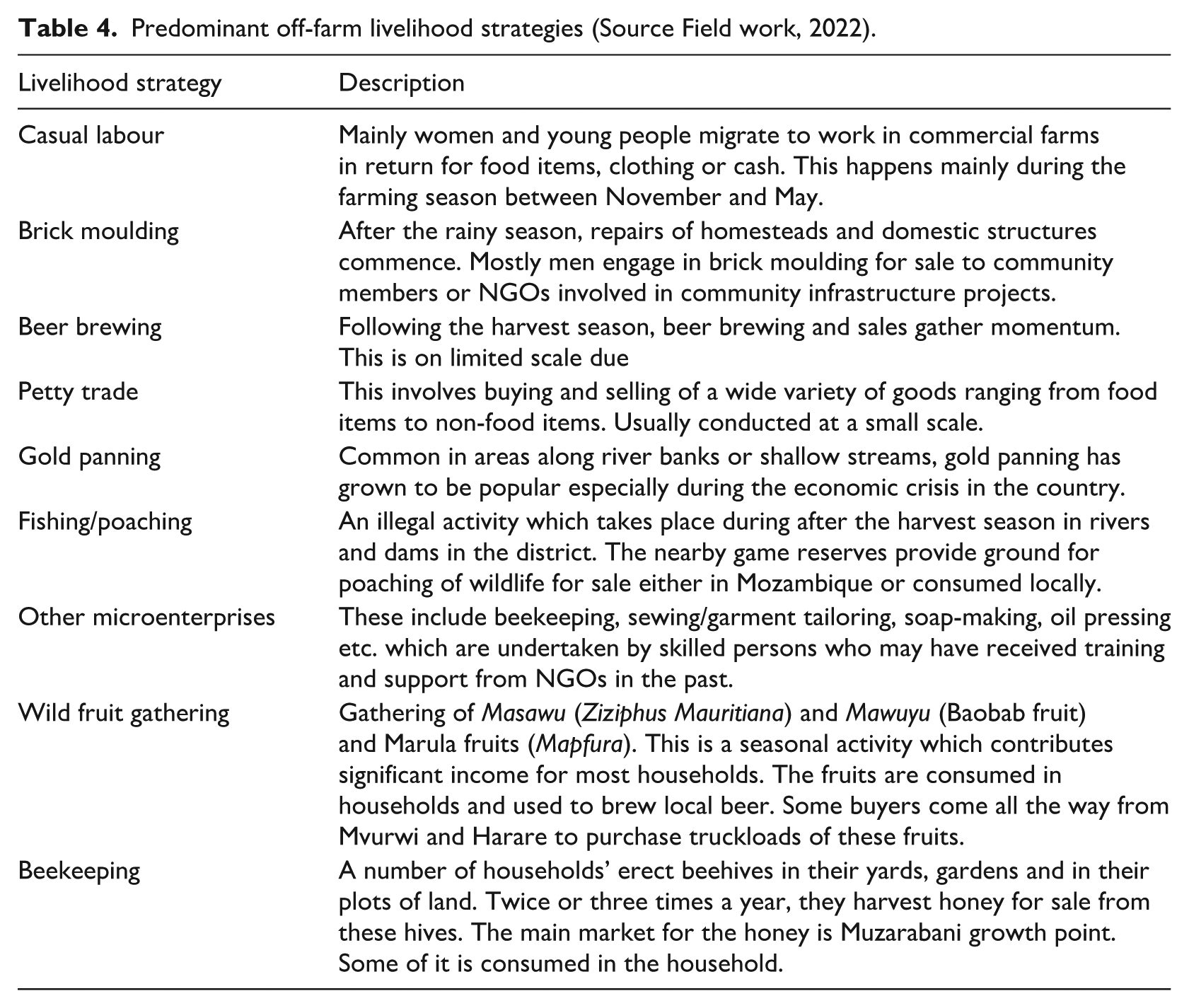
In addition, it is worth noting that the selection of these strategies is contingent upon the resource endowment of the households and the local institutions, including favourable policies that facilitate the employability of such activities (Fikre, 2020; Mushore et al., 2021). Rural households engage in off-farm and non-farm activities to mitigate the various risks and uncertainties linked to agriculture, including soil quality variations, pest infestations, price fluctuations, erratic rainfall, floods, erosion and weather-related incidents (Kassegn and Abdinasir, 2023). Thus, crop production and livestock-rearing strategies were considered as the primary livelihood pathways in the study areas, while the production of crops was key for consumption and income generation.
Access to crop and livestock are also considered as important indicators of social status, with household that were involved in the production of cash crops and owning large herds occupying the upper echelons of society, together with richer labour migrant households. In Zimbabwean rural areas generally, there is a strong relationship between labour migrancy, successful farming and wealth. The findings from this study show that some areas which could be converted into farming lands were reserved for pastures. The shrinking in hectarage had trade-off effects on yields, forcing farmers to use more inputs, and in some cases, it resulted in land abandonment. All these challenges have negative ramifications on household food security.
Households’ on-farm livelihood strategies
Similar to other rural areas in Zimbabwe, the households engaged on agriculture-based livelihoods. According to Chitongo and Ricart Casadevall (2019), agriculture-based livelihood strategies include the many agricultural activities and decisions undertaken by families to support themselves and enhance the economic capital of the household. The majority of households in the study area rely significantly on a combination of agricultural crop production and livestock rearing as their primary means of subsistence. On-farm strategies were differentiated based on asset endowment and opportunities available to households, with some focusing more the production of traditional crops, others with more focus on green gardening and others spreading risks among a variety of agricultural strategies (Figure 4).
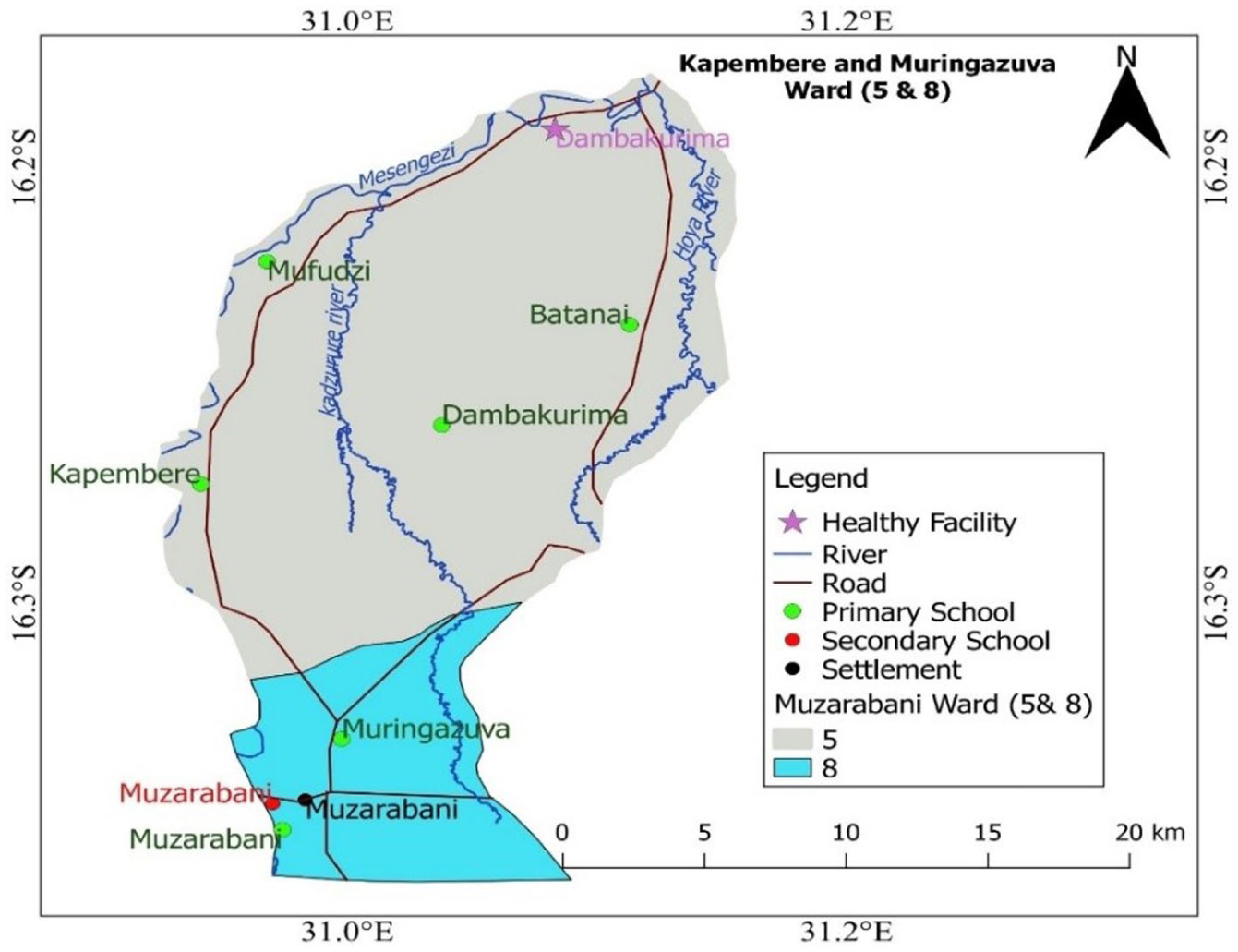
Map of Muzarabani district.
Crop production
In addition, the findings of the study show that the majority of households practice rain-fed agriculture, leaving them vulnerable to climatic changes. Also, considering issues around low productivity, exorbitant prices of inputs and fluctuations in prices for agricultural products, a lot of questions are raised on whether agriculture still remains a viable livelihood activity. The main crops grown in the two wards included maize, sorghum, cotton, pearl millet as well as cash crops such as sesame seed, ground nuts and round nuts. Some of the farmers who participated in FGDs provided diverse justifications for cultivating certain crops. They recognised the need of managing both household’s food requirements and the imperative to earn revenue. Food crops are prioritised to meet daily consumption needs, but the significance of cultivating cash crops to generate income for purchasing agricultural supplies, food items and covering household costs like children’s school tuition was also acknowledged.
It is worth noting that the crops produced, particularly the focus on the production of high-value crops such as maize, cotton and tobacco, and even sunflower, were motivated by the generation of income rather than consumption. However, if households dedicate land to high-value crops, there is little land left for production of consumption crops. This means that food security must be satisfied through purchases after the sale of crops. The risks associated with such a strategy is that food becomes expensive, and crop sales fail to cover food requirements, given that households have to buy mealie meal.
While households still produce pearl millet and sorghum, which are drought-tolerant crops and their production is encouraged by AGRITEX officials, households used to shun away from these crops because of their lack of consumption and market value. However, the results indicate that the production of sorghum has improved of late, with 53.5% and 40.9% of households in Muringazuva and Kapembere indicating that they produce sorghum. This also applies to pearl millet, which was produced by virtually all households. The study showed that the production of the production of smaller grains has improved among households, although the scale is still low. The study noted that the low yields of small grains acted as a major obstacle and challenge for smallholder farmers in the two wards. Chifamba et al. (2021) argued that small grains suffer from a significant obstacle of poor yields per hectare in comparison with maize, leading most farmers to choose maize cultivation regardless of their geographical location.
Another factor contributing to the low production of small grain is the threat from red-billed quail birds, which pose a threat to small grain harvest (Figure 5).
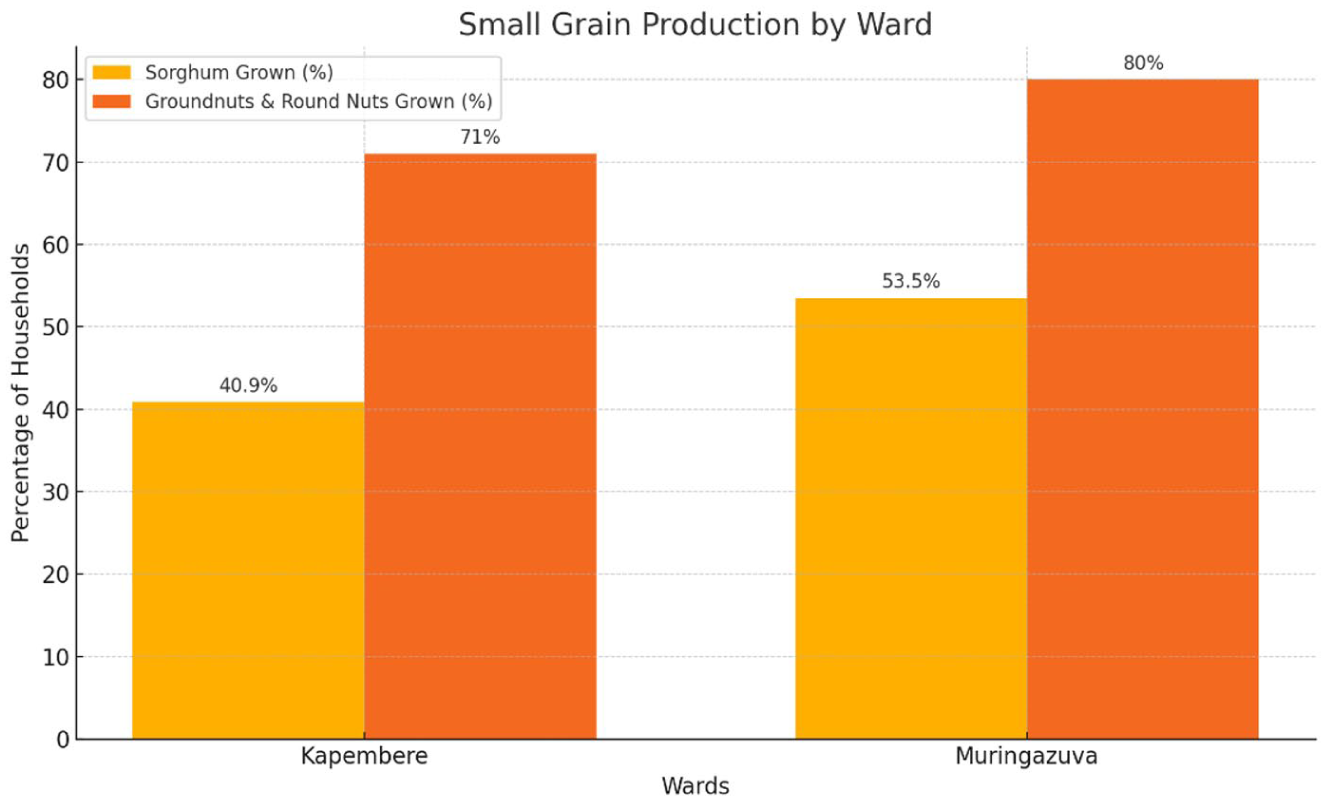
Small grain production by ward.
Besides the production of grain crops, the land is also dedicated to the production of what is traditionally known as female crops. These include groundnuts, round nuts and sugar beans, which are produced mostly by women for both consumption and petty cash. These crops were grown by 71% and 80% of households in Kapembere and Muringazuva, respectively. However, while these crops are attractive because of their value, they often compete for the limited available land with grain crops. The production of cotton is another livelihood activity that has negatively impacted the production of consumption crops, and the food security situation of many households. The study shows that farmers grow cotton as a high-value crop as indicated by 9% and 13.4% of households in Muringazuva and Kapembere, respectively. It was indicated that farmers who produce cotton are provided with inputs by the Government of Zimbabwe and other private actors including Cotton Company of Zimbabwe (COTTCO), Alliance Cotton, Southern Cotton and Zimbabwe Cotton Consortium. Even then, the number of farmers who consistently receive this assistant is small.
Most farmers shun away from this contract farming model to avoid being indebted and trapped into producing cotton for the sponsor. As such, cotton farming is no longer a primary source of income for many households. Declining market prices and income that comes ones a year are the other explanations for avoiding cotton production. In the two wards, cotton production average 0.2 tonnes per hectare, which translates to almost 1 tonne or 4–5 bales per farming household. Growing cotton also exposed households to food insecurity since the returns far out-weigh the benefits; it takes away labour, land and other productive resources from the production of consumption crops, and the income cannot compensate for losses in terms of consumption crops lost.
Horticulture/gardening
Gardening is one of the most prominent livelihood options pursued by women residing in the area under study. Findings from the study show that farmers were starting redirecting their focus towards growing crops on rivers and stream banks due to limited access to water. The stream banks were highly fertility and capable of retaining moisture, thus enabling crop cultivation to be sustained throughout the year in certain instances. This has led approximately 76% of households in Kapembere and 81% in Muringazuva to start engaging in this type of farming which is commonly referred to as ‘Mudzetse farming’ (translated as farming among the frogs) or ‘Matimba’ (digging) basically similar to stream bank cultivation. Gardening was most pursued by women residing in the lower Muzarabani region. Households direct their focus on gardens on land along river banks and streams where there was available water for irrigation. Stream bank cultivation is likely to results in soil erosion which in turn is further likely to cause siltation of water bodies downstream. Also, farm chemicals such as fertilisers, pesticides and herbicides were being washed into water bodies, thus polluting the water. In the long run, this practice is likely going to worsen water challenges in the two wards (Figure 6).
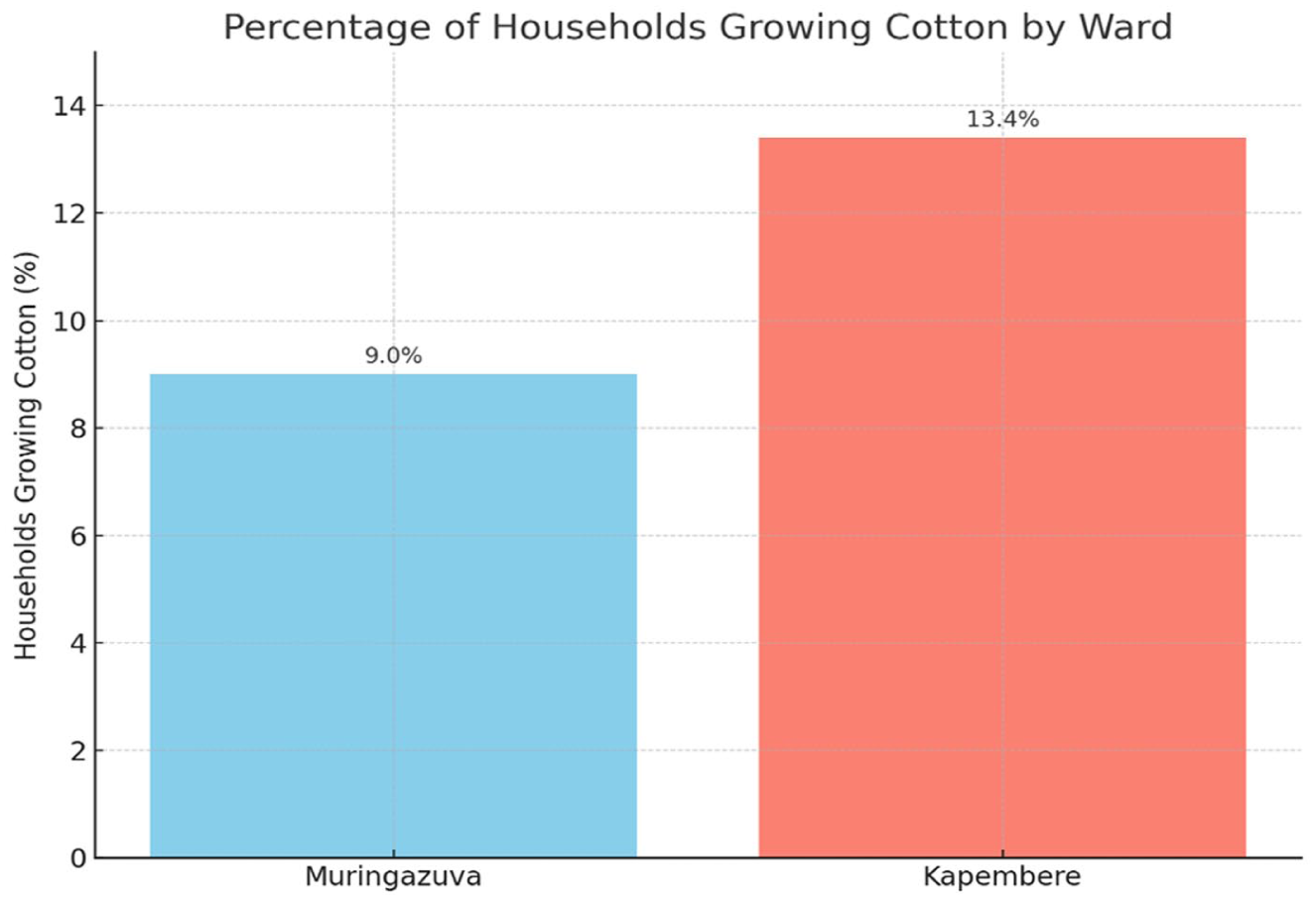
Cotton production in Muringazuva and Kapembere wards.
Livestock production
Livestock production is another on-farm livelihood activity which households in Kapembere and Muringazuva engage in. Despite the lack of adequate land for animal grazing, the households from the two wards engaged in livestock rearing. They combined small livestock and cattle. Their livestock portfolio included cattle, sheep, goats, chickens, guinea fowls, donkeys and free-range swine. The importance of livestock among the rural farmers of Muzarabani cannot be overemphasised. This is similar to the findings of a study by Fereja (2016), who posits that other than crop cultivation in most of the rural communities, livestock is the only asset owned by the poor, although it is highly susceptible to climate variability extremes. In the whole Muzarabani area, the effect of climate change has heightened the susceptibility of livestock to diseases, reinforcing the existing factors that are affecting livestock production systems. Livestock is a significant agricultural practice in most rural communities like Muzarabani and is often regarded as a crucial resource for rural livelihoods and food security. Livestock is a form of savings to rely on in times of drought or during emergencies. In addition, it was highlighted that livestock also has multiple purposes for food security. First, the farmers use their cattle as source of drought power and as a mode of transportation. Participants highlighted that livestock provides food products such as meat, egg and milk. Livestock is also a source of manure for their gardens and fields.
Off-farm livelihood strategies adopted by households
In the context of agricultural challenges, households have increasingly turned to off-farm livelihood strategies to supplement their agricultural activities, and as a guarantee for survival. This has been assisted by the availability of opportunities particularly in the informal economy. The formal sector in Zimbabwe is literally dead, and individuals that irk a living in the formal sector are poorly remunerated, and unable to support families. While labour migration to urban centres used to be attractive and everyone’s aspiration, this has changed, and the kukiyakiya economy now provides survival for households. Self-employment, informal trading or artisanal mining were increasingly becoming popular and were sources of income and wealth accumulation.
Furthermore, the findings of this study indicate that farm households pursue varying off-farm livelihood options that were determined by natural, social, financial, physical and human capitals. In addition, the study also found out that the factors influencing the choice of livelihood pathways and options vary from household to household. This was mainly attributed to the varying assert endowment and available knowledge regarding the livelihoods among the households. One of the participants highlighted that in order to cushion households against food insecurity and poverty; they participated in off-farm livelihood activities.
Foraging
One of the popular activities, particularly among men, was hunting of wild animals. Although hunting was prohibited by the Parks and Wildlife Act, most household considered hunting as a source of food and nutrition. This mostly happens in rural setting, and Chaumbra et al. (2003) identified poaching of game as a major motivation for occupying commercial farm land in Chiredzi District. Some also engaged in fishing, which is not legally prohibited, and mainly took place locally. Diversifying into hunting and fishing is a result of a number of factors including low agriculture yields, quest for dietary diversity as well as the business side of game meat and fish. Over 55% of households were involved in hunting and fishing. Hunting mainly takes place in the Mavuradonha mountain range, which has a habitat for wildlife and natural resources (UNDP, 2019). Besides hunting and fishing, women engage in harvesting of fruits and berries, which they mostly sell for income. The locals have over the years protected several tree species, especially fruit trees such as the Musawu (Ziziphus Mauritiana) tree, which they consider to be sacred trees and no one is allowed to cut down or any other use besides harvesting the fruits when they are ripe (Katanha and Kadziya, 2014). In addition, the Masawu fruit is used to supplement the staple diet (sadza) during the lean season. Most women also used the fruit as ingredients to brew traditional beer, or to prepare beverages and cakes. Masawu fruits were considered an important source of income for some households, who sold them either by the roadside or to bulk traders who purchased the fruits for resell in major cities and towns such as Bindura. Katanha and Kadziya (2014) also noted that a majority of people in Muzarabani rely on Ziziphus Mauritiana, as a food safety net, as they get remarkable amount of money from the sale of Masawu fruits, or alcohol brewed from the same fruits. Chanza (2014) also highlighted that the (Murara/Mugoma) Palm or (Hyphaene petersiana) and (Muuyu) Baobab or (Adansonia digitata) fruits are also used as food especially during drought periods.
Alongside harvesting of fruits and berries, harvesting of honey has become a popular activity among men. The men said they also engage in beekeeping, a practice that is now commercialised and sponsored by non-governmental organisations (NGOs). While some women also participated in these projects, their numbers were low, mainly because of the risks associated with such projects. One of the women explained that the risk, ‘bees are dangerous, they can bite you to death so it is better for men to engage in such an activity’.
Keeping bees as an income project requires technical skill, training and knowledge beehive preparation, set-up, processing and storage of honey, and marketing. Those involved indicated that Muzarabani does not have a lucrative market, which forces the beekeepers to explore markets outside the district. As a result, only a few households were involved (7% in Muringazuva and 12% in Kapembere) and were actively participating in commercial beekeeping. They craft their hives and set them in their yards, fields or along the river banks and deep in the forests. While these activities raised income for households, they could not compensate for income lost from agriculture, and yet they often withdrew labour from agricultural tasks.
Casual wage labour
Depending on the seasons, some household members take up casual employment in farms and for richer households. Casual wage labour (known as Maricho in Shona) is a widely common strategy to cope with insufficient household income and food production in rural households. Regardless of their level of food security, at least 60% of households in Kapembere and 66% in Muringazuva primarily relied on casual labour that were mostly paid in kind during drought years and sometimes in cash. Most resource-poor households gained income through offering themselves and their family members as casual labourers, working on the plots of relatively wealthier households, where they assist with planting, weeding and harvesting. The study also found out that in the two wards, 23% and 31% of households prioritise wage labour as a livelihood strategy every year over growing their own food. When asked about his preferences one of the men involved highlighted that: For me, I have always preferred to go and work in the farms where I am guaranteed money at the end of each week. This is better than waiting for your crops to mature. With the dry spells experienced in Muzarabani, I have seen a lot of people struggle to even grow enough food to feed themselves. So, for me, once I get the money, I buy food and other necessities, such as books for children and vaccines for my goats. Sometimes we are paid in groceries at the farm, it is still fine because I will always have food for me and my family. (Interview, 2022)
There is little room for negotiation of the payment, which was determined by the employer, and in some cases the food rations were not even enough. This poses a further question, not only on the viability of wage labour as a strategy, but also of the sustainability of the practice. This is also because it is a low-return livelihood activity, pursued to ease acute shortage of income and food by the poor households; mostly female-headed households, who lack resources and adequate support, and cannot engage in their own farming, survive on this practice.
Gold panning
Another commonly practised livelihood activity was gold panning, which many told us was happening locally in the two wards or outside the community. Alluvial gold panning was employed by the households to complement farming activities, but engaging in these activities was quickly taking over manpower from farming. This had been facilitated by the fact that did not require complex machinery and massive investment and a ready market for gold in the black market. The panners preferred to sell their gold through unofficial channels because these gold buyers were easily accessible compared to Fidelity Printers (a government parastatal). Male and female participants noted that the black-market buyers offered competitive prices. Most explained that their involvement was motivated by agricultural failure and growing unemployment. However, because of the rich gold deposit in the area and surroundings, going panning has offered a livelihood pathway. Approximately all households with able-bodied males, who were not involved in formal work, were into gold panning. Women also were panning for gold along the Musengezi river. Success in this activity varied greatly among participants, with some indicating that the venture has paid off, and others still waiting for the major break and the gold money. Not many had been fortunate and continue to engage in the practice in hope of making it in the future. As one explained, You can spend month toiling without getting an ounce of gold. It all depends on your lucky. Those who are lucky are now rich and have built themselves better homes and bought assets. Some are, however, stuck here in the hope of making it in future. The problem is that once you start, you cannot stop. This is like gambling. It is addictive. (Interview, 2022)
Thus, from a food security perspective, mining to some extent affects households’ food security as a result of land degradation caused by destructive land practices, which ultimately lead to land loss, and siltation of rivers and other water bodies. In addition, the Ward Councillor also mentioned that some of the mining is encroaching onto agricultural fields, thereby reducing the overall amount of arable land for crop production. In addition, it is worth noting that gold mining is more of a gamble-like activity, where the chances of getting the gold are beyond the miner. This qualifies it as a risky livelihood. For instance, some of the miners indicated that in the last 6 months, they had not made any money through gold panning activities.
Small enterprises
Some men and women said they were operating small enterprises, which was their main livelihood. These enterprises were common in the two wards as individuals scrambled for survival in a harsh economic environment, with 47% of households in the two wards operating these businesses. According to Midgley, microenterprise refers to the establishment of small businesses by individuals living in poverty, which are then provided with assistance by sponsoring entities such as diaspora-based family members, governments and faith-based organisations. Some of these include small tuck-shops that are normally housed in homes, food preparation along the road or centres, small grocery shops selling basic commodities (petty trade) such as mealie meal, rice, cooking oil, sugar and candles, garages involved in welding and repairs, and were traditional blacksmiths who produced several household tools and equipment such as axes, hoe tips, knives and sickles. The study revealed insufficient evidence that proved that the operating microenterprises was an effective strategy for tackling household food insecurity. One participant indicated that sometimes business was so low that they sometimes end up eating into the profit and the stock. She further highlighted that when it was harvesting season, the business would grow slightly. The study also found out that most of these businesses remained small due to lack of adequate capital, lack of access to technology, micro-finance and viable market.
Migration
Remittance incomes were also common, with some households having members who have migrated for employment in urban areas, across the border in Mozambique and South Africa, and even abroad. Others had migrated for employment opportunities in commercial farms around Centenary, Mvurwi and Mazowe areas. As Godrich and Rosalind argued migration plays an important role in the livelihoods of rural households. This has been the main source of livelihoods for the worker-peasantry, particularly in semi-arid regions of Matabeleland (Thebe, 2017, 2018). Only 24% of households in the two study areas had individuals who had migrated to cities, and only 8% indicated that they had members in the diaspora. However, compared to local migrants who mostly sought seasonal employment and returned home during the rainy seasons, the other two forms of migration were often long term, and members were lost to the community for long periods, even though the returns were negligible. This put their households at the risk of food insecurity because their labour was withdrawn from crop production, and yet, the returns from migration could not compensate for the losses. Migration, thus, impacted negatively on the households’ food production as the much-needed labour is lost.
Brick moulding
For most men, brick moulding came out as one of the off-farm livelihood strategies that is employed by the households in Muringazuva and Kapembere wards. This is a labour-intensive activity which requires a lot of strength and during FGDs and open-ended interviews, people west up their brick ovens which they call ‘hovhoni’ in Shona. The whole process from the mixing to the burning of the bricks up to the harvesting takes not less than 3 weeks says one respondent who is also involved in brick moulding. The study found out that they produce farm brick which they sale to those who are building their houses and shops. The demand fluctuates, sometimes it is high and sometimes it is low when there are a lot of people who have set up their ovens. The respondents indicated that the income they attain varies with the period, when the bricks are fewer they sale a thousand bricks for $100, while sometimes the price goes down to $80. The money we get from our bricks we use it to pay school fees for our children, buy extra food and the surplus we add to our tools, says one respondent during an FGD.
Beekeeping
Beekeeping is one of the activities practised by some households in the two wards. The activity is mainly practised by men. However, there are other women who have taken up the activity. The lower number of women who take up the activity is because of the risk associated with beekeeping. In an interview with one respondent, who is a well-known beekeeper in Kapembere ward, it was brought out that beekeeping is a technical skill that requires training and knowledge on how the beehives are prepared, set up and how honey is processed and stored. He went on to highlight that Muzarabani alone does not provide enough market; therefore, there is need to start looking elsewhere for markets. They craft their beehives hives and set them in their yards, fields or along the river banks and deep in the forests. The activity raises considerable income from this activity, which mostly depends on the quantity and quality of the honey.
Discussion
The findings of this study underscore the view that livelihood pathways are complex and multifaceted, encompassing both on-farm and off-farm activities. These findings are similar to Ayana et al., (2022) who posits that livelihood strategies are heterogeneous. These strategies are influenced by environmental conditions, socioeconomic status, cultural norms and access to resources. The study revealed that while some livelihood strategies, including both on-farm and off-farm strategies, enhanced household food security, they might have inadvertently heightened the risk of food insecurity. On-farm activities, such as crop cultivation and livestock rearing, were found to be pivotal for households’ food self-sufficiency. On the same vein, Ayana et al., (2022) highlighted that improved livelihood outcomes, such as reduced poverty, decreased unemployment, improved food security and a stable natural resource base, bolster the accumulation of capital/assets that may be used for effective farming and subsequent natural resource management. Therefore, a household’s well-being is determined by the household’s implementation of viable livelihood strategies. This also entails that sometimes the households’ livelihood choices contribute to household food security, while they also have the capacity to contribute to the vulnerability of households to food insecurity. This is attributed to the relationship between livelihood assets and livelihood outcomes. Therefore, in line with the SLF, it can be highlighted that sustainable livelihoods are achieved when households possess the capacity to effectively manage uncertainties and shocks, enhance the assets upon which they rely and bequeath resources for the benefit of future generations.
Given the multifaceted environment and economic context in Muzarabani household, livelihood choices were informed by various factors. These decisions shape their livelihood strategies which form part of their livelihood portfolios. The discussions of this study are hinged on the livelihood pathways, livelihood choices and livelihood outcomes of the smallholder farmers in Kapembere and Muringazuva wards of Muzarabani district in Zimbabwe. The findings of this study underscore the view that livelihood pathways are complex and multifaceted, encompassing both on-farm and off-farm activities. These findings are similar to Ayana et al., (2022) who posited that livelihood strategies are heterogeneous.
However, the success of these livelihood activities was found to be highly contingent to factors such as climate variability, access to agricultural inputs and market fluctuations. These findings agree with Ahmad and Afzal (2020) who highlighted the role played by external factors in the success of livelihood strategies. The study also found out that households that broadened their on-farm activities tended to be more resilient to shocks and stresses, thereby enhancing their food security. Diversifying or broadening a household’s livelihood portfolio therefore served as a way of risk spreading which in most cases worked well for the farmers under study. In addition, the study highlighted that off-farm activities, including wage labour, small businesses and migration, also played a crucial role in household livelihoods. These activities often provided essential supplementary income that could be used to purchase food and other necessities, thus contributing to food security. However, results from this study have shown that reliance on off-farm income could also expose households to new vulnerabilities, especially when these income sources were unstable or inadequate.
The absence of crucial assets necessary for producing food and revenue has an impact on the selected livelihood strategies in Muzarabani district. ZimVAC (2023) and Chifamba et al. (2021) highlighted the failure of stakeholders to improve families’ ability to maintain and sustain their assets after a food insecurity shock. The use of preferred coping mechanisms resulted in significant financial consequences, which heightened the risk of experiencing a shortage of food within the home in the future. In addition, the study also found out that the factors influencing the choice of livelihood pathways and options vary from household to household. This was mainly attributed to the varying assets endowment and available knowledge regarding the livelihoods among the households. Household that lacked capital tended to engage in livelihoods activities for survival, or to satisfy immediate needs, rather than accumulate for the future. These households did not generate significant assets and survived each day. Due to poverty and urgent demands, many families were unable to accumulate enough money to purchase assets or agricultural inputs for the next season. Some of these off-farm strategies were seasonal, and sometimes depended on the climatic conditions, for example, the picking of wild fruit which is a seasonal activity. Therefore, the study found out that the viability of people’s livelihoods depended not just on particular resource, but also on how they effectively combine their current resources, including assets to shape their livelihood pathways. In addition, the study revealed that households that engaged in both agricultural and non-farm livelihood activities had a higher average number of months of own food stock support for household consumption when compared to those who only engaged in non-farm or agricultural activities alone. This supported the claim made by key informants that cash earned from non-farm activities is crucial for acquiring food during times of food shortage. However, the study findings show that not all the cash is meant for food purchases. Sometimes the earnings are re-invested in other livelihoods, such as petty trade, which results in the household facing loses due to low business and other factors. Consequently, the income from non-farm activities serves two main purposes: covering expenses that arise from selling crops and enabling households to purchase food to address food inadequacy.
Interestingly, this study indicated a new paradigm transition from conventional livelihoods that were less dynamic and inflexible. The rural households under study are gradually shifting their livelihood strategies from exclusive farming to include non-farming occupations. Over 50% of the studied families engaged in broadening their livelihood choices by participating in both off-farm and non-farming activities. This means the rural households gradually moved towards a sustainable livelihood transition phase. Empirical research conducted by Takane and Gono (2017) and Gautam and Andersen (2016) consistently demonstrated that households can improve their income and enhance food security by engaging in non-farm livelihood strategies alongside subsistence farming. This approach helps to overcome capital constraints, mitigate environmental stresses and achieve better overall outcomes. Several families chose to rent out their land in order to generate revenue and get food.
The findings of this study underscore the complex and paradoxical nature of livelihood strategies employed by households in the Muzarabani district of Zimbabwe. On the one hand, the poor households in the district have resorted to a range of environmentally threatening livelihood strategies, such as illegal mining, sand extraction and brick moulding, in an attempt to secure their livelihoods and enhance their food security. However, these strategies have had a detrimental impact on the natural environment, leading to environmental degradation and the depletion of natural resources, which in turn have negatively affected household food security (Macheka et al., 2020). The paradox lies in the tension between short-term survival and long-term food security. Livelihood strategies that focus on immediate economic gains often overlook the broader environmental and socioeconomic systems that sustain food production and access. This short-term focus is driven by necessity, as households under economic stress must prioritise income over future food security. Thus, policy insight resulting from these results point to the need for establishing long-term livelihood pathways which contribute to asset building.
The study was informed by the SLF in several manners. The framework emphasises the importance of integrating data from many sources using an interdisciplinary approach, which also involves utilising different types of data collection and analysis methods. The study thus employed a qualitative approach, guided by the SLF, to gather and analyse data from many sources regarding the livelihood choices and decisions made by rural farm households in the study area, as well as the impact of these choices on their available livelihood possibilities. The utilisation of a unified strategy in the examination of livelihoods yielded a more comprehensive and persuasive study when compared to the limitations of individual methods. According to Serrat (2017), individuals exhibit varying responses to different questions that might be qualitative or quantitative in nature. For instance, certain audiences may require statistical evidence to be persuaded, but others may not find numerical information compelling. These pertain to comprehensive and contextual data obtained through qualitative research methodologies. Therefore, this study focused mainly on qualitative data to provide a narrative based on the perceptions and experiences of the smallholder farmers. The utilisation of triangulation and crosschecks on the outcomes derived from several methodologies has the potential to enhance the level of trust in the overall study.
Conclusion
The cases of Muringazuva and Kapembere in Muzarabani serve as a reminder of the complexity of households’ livelihood decisions in the face of economic and environmental stress. The contradictions inherent in some of these strategies, which in literature are often presented as a magic bullet and are emphasised, which this study sought to highlight, require our attention. As the study has shown, livelihood strategies and decisions that provide immediate economic relief can, over time, be a major burden to households, contributing to the erosion of their food security through reduced food availability, market dependency and environmental degradation. Addressing this paradox requires a shift towards more sustainable, integrated livelihood approaches that prioritises long-term food security alongside economic survival.
The study found out that despite the growing significance of non-farm livelihood strategies, the majority of households still engage in farming as their primary means of livelihood. Given the various factors affecting smallholder agriculture, climate change, environmental degradation, population growth, globalisation and inadequate support from the national government, it is evident that diminishing returns were observed in the two wards. Consequently, the study further established that off-farm livelihoods also played a substantial role towards enhancing food security, reducing poverty and improving household incomes. The complex interconnections between rural non-farm livelihoods and agriculture suggest that the presence of robust rural infrastructure could play a substantial role in promoting rural development in Muzarabani district and in other rural areas of Zimbabwe. This study further provided a comprehensive analysis on the various factors that influence rural farm households’ livelihood choices.
Massive flow of labour away from the communal areas has affected the size of cultivated areas, food production and crop income. Furthermore, migration has undermined traditional agricultural practices and also resulted in land abandonment. The study showed that most of the households in the study area are more vulnerable to food insecurity as a result of the livelihood choices they make and the pathways they follow which include migration, engagement in petty trade, cash crop production and, overall, the overreliance on rain-fed agriculture.
Footnotes
Funding
The authors received no financial support for the research, authorship, and/or publication of this article.
