




Abstract
Embracing a critical retrospective view, this article examines the ideological and actual developments of Garden City concepts in the northern (North-West) and southern (South-East) hemispheres. It elaborates on the transnational histories and contemporary manifestations of the Garden City phenomenon in a variety of urban planning cultures, with a particular emphasis on Asia, Latin America, and sub-Saharan Africa. In an effort to de-Eurocentrize the research literature through a wide extra-European historiographic emphasis, the article broadly characterizes stylistic implementations on a regional basis. It also explores the dissemination of Garden City terminology within the current urban discourse of social and environmental sustainability.
Introduction
The innovative ideas of Ebenezer Howard (1850–1928) regarding the Garden City as a reformist ideology and applicable planning model gained currency throughout the world. In short, Howard advocated social and political reforms aimed at the gradual transformation of the contemporary overpopulated and polluted British industrial towns into decentralized networks of self-sufficient “social cities” or “garden cities” (see Figure 1). The promotion of such garden city developments through satellite communities in relatively close proximity to a central metropolitan area and separated by greenbelts was designed to improve the then deteriorating quality of urban life. This series of small planned cities combined the advantages of a rural environment with carefully zoned residential, industrial, and agricultural land, and strict population limits. Naturally, the transnational dissemination of these ideas produced a considerable variety of manifestations in terms of vision and realization, as they were adapted to multiple planning cultures and regional contexts. It is perhaps easy to dismiss many global examples as experimental, sometimes capricious and distorted realizations of the “real” original idea. On the contrary, understanding the various manifestations of the concept and its numerous applications in practice—especially beyond the northern hemisphere (the global North-West)—can enhance our knowledge of the global histories of urban planning. This extra-European diversity highlights the importance of regional contexts in the diffusion and interpretation of these ideas.
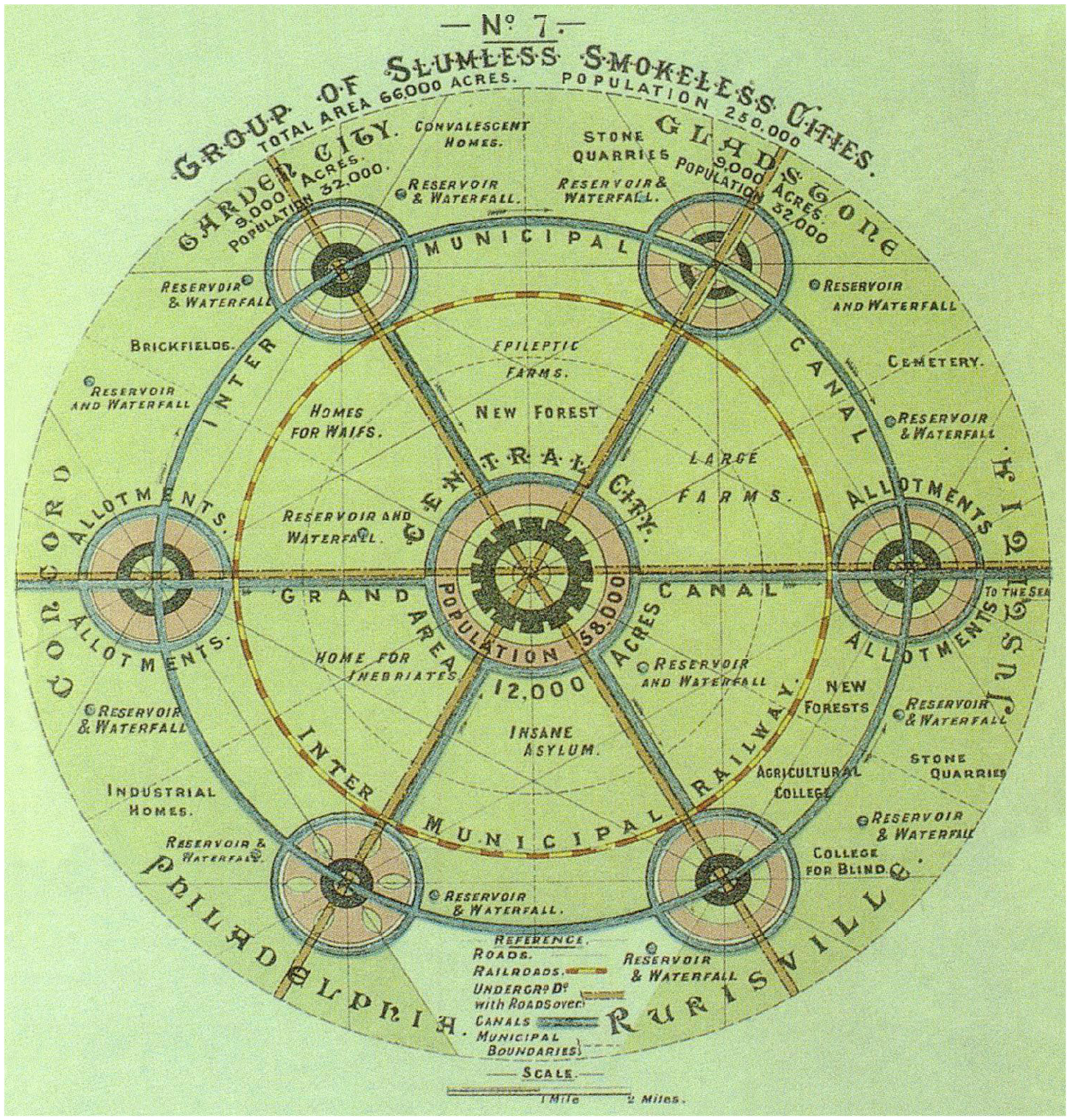
Howard’s garden city diagram (1902) of a self-sufficient complex, ideally housing 58,000 people on a site of 9000 acres. It comprises different types of urban greenspaces, wide boulevards, and residential, industrial, and transportation facilities.
By using a rich corpus of secondary sources about the Garden City phenomenon and combining primary visual and archival sources, this article critically illuminates Garden City developments from a global, transnational perspective. The globalizing perspective is important given that the overwhelming majority of professional-cum-academic literature about the Garden City phenomenon is derived from and deals with the global North-West. Hence, the pursuit of de-Eurocentrization of this literature, through a regional focus on non-Western contexts such as those in Asia, Latin America, and sub-Saharan Africa. Shared continental and regional characteristics will be highlighted in terms of the extent of diversion and adaptation of the original Garden City ideas. The contribution of this article lies in its multi-regional attention and stylistic features of this planning phenomenon, as well as in its special emphasis on sub-Saharan Africa. It focuses mostly on the 20th century (following the publication of Howard’s most renowned book Garden Cities of To-morrow in 1902) while examining the widespread use of the “Garden City” term in the 21st century as well, in the context of urban sustainability. A comparative view between the North-West and the South-East applications of Garden City ideas in the urban sustainability context can shed light on various urban challenges and ways of (mis)handling them.
The aim of the article is therefore to examine the global impact and adaptation of these European Garden City ideas, concepts, and practices in their broadest sense over the past hundred years. The geographical and socio-political expressions of this urban planning phenomenon will be addressed, including how it accommodates contemporary environmental and societal needs within the urban sustainability agenda. These inter-, or rather transnational aspects of the Garden City require a study of frameworks and documentations that extend beyond national and regional borders. That is, on the methodological level, to crisscross a wide range of secondary sources. The article therefore provides a comparative insight by providing a critical overview of a rich variety of site-related secondary sources, and by reflecting on garden city adaptations on a regional basis with an emphasis on Southern countries. It offers special insight on sub-Saharan Africa in this regard through an analysis of a series of secondary sources and by bringing to the fore original data based on the authors’ visits to few selective urban loci, namely, Dakar and Thiès in Senegal, 2022; and Lagos in Nigeria, 2018. Archival sources from these loci were consulted as well, in the form of exemplary documents from the National Archives of Senegal (ANS) and Nigeria National Archives (NNA). In addition, the affinity between the Garden City concept and present-day sustainability concerns is critically examined in this subcontinental context, highlighting uneven relations.
Beyond the introduction and conclusion sections, the following discussion is structured in two main sections. The first section examines the dissemination of Garden City ideas, first in the Northern hemisphere, and then in the Southern hemisphere. While the theoretical inspiration and evolution of the Garden City concept in England and the Western world up to the mid-20th century has been extensively discussed in urban planning literature, we shall only briefly remark on this issue, focusing primarily on key practices and relevant research, with emphasis placed on recent translation of the historical concept into current, urban sustainability concerns. The Southern hemisphere analysis explores the urban experiences of Asian (Far East and the Middle East) and South American cities both historically and currently. The second section features Garden City developments in diverse sub-Saharan African contexts through qualitative research. The “Discussion” section summarizes the findings from the different countries and regions in both textual and visual form.
In terms of historiography, as can be observed throughout the reading of this study and its accompanying extensive list of secondary sources (still far from being comprehensive)—there is no shortage of literature on the Garden City at the time of its formation and crystallization in England and far beyond, or after the Second World War, toward the end of the 20th century or the beginning of the 21st. In fact, the academic and professional engagement with this phenomenon, and its stubborn persistence and relevance (albeit in different, geography-based extents) are almost surprising. However, the vast majority of studies on garden cities focus on case studies and are therefore site-specific. Comparative studies, let alone trans-regional and trans-continental overviews, have been rare in the research literature. Hence the significance of this article.
Setting the stage: the dissemination of Garden City ideas
Since the beginning of the 20th century, the Garden City model has inspired considerable achievements in urban planning at the global level, both conceptually and practically. The term “Garden City,” as coined by Ebenezer Howard (1970 [1902, 1946]), was first explained in the pioneering 1898 publication under the title To-Morrow: A Peaceful Path to Real Reform, and then slightly revised and republished in 1902, under the more familiar title Garden Cities of To-morrow. Subsequently, Howard’s concept of city planning gained popularity and developed in professional, academic, and popular circles. While Howard’s original ideas and accompanied planning experiments gained their greatest momentum in Britain, they were quickly disseminated, tested, and reinterpreted globally over the years. Consequently, these reinterpretations frequently deviated from the original intent, being loosely applied in many global regions.
This article will refrain from delving into the environmental or socioeconomic circumstances in Britain that prompted Howard to conceive the urban reform that underpinned the Garden City model during the Industrial Revolution, the ideological framework of the reform, or the schematic or practical facets of the model (Beevers, 1988; Howard, 1970 [1902, 1946]). The manner in which the somewhat-socialist reform was executed within the British governmental and liberal legal system has also been extensively studied (March, 2004; Meacham, 1999), as has the legacy—still thriving almost a hundred years later—of the first two garden cities established in Britain, Letchworth (1906) and Welwyn (1920) (Lewis, 2015; Parham, 2020). Rather, this article widens the geographic and stylistic scope of the confusion raised by the architectural historian Walter Creese already in the 1960s regarding Garden City developments in Europe. According to him, the ideal of a Garden City, which was so immediately applicable, was especially damaged by the constant semantic scholarly confusion in describing the phenomena of model villages, garden villages, garden suburbs, garden cities, and new cities. Furthermore, argued Creese (1992 [1966]), “When we move from the realm of actual application toward the core of the idea itself, the likelihood of distortion is almost as great” (p. 1).
The potential for distortion might not be surprising as this idea was international from the start, not only in the time of Howard and his contemporaries but also in the time of his successors, Raymond Unwin, Barry Parker, Patrick Geddes, and Frederick Osborne, to name but a few. After all, among their sources of inspiration were the writings of French utopian socialists (Charles Fourier, Henri de Saint-Simon), Austrian and German theorists (Camillo Sitte, Theodore Fritsch), and American reformists (Edward Bellamy), as well as experimental precedents of model villages and towns built by European industrialists during the Industrial Revolution, particularly in Great Britain and France. Furthermore, until the First World War, Garden City associations were established in 11 countries, mainly European, along with the founding of the “International Association for Garden Cities” in London. It is known that this association, for instance, was flooded with requests for information from many countries, from Ottoman Palestine to Russia and Japan, via the Dutch East Indies (Buder, 1990: 139–140; see also Ward, 1992). Transnational expert networks also became involved, such as the International Federation of Housing and Town Planning (IFHTP), founded in 1913 by Howard in London, and the Paris-based Congrès Internationaux d’Architecture Moderne (CIAM), active between 1928 and 1959 (Domhardt, 2012; Geertse, 2015). The dialogue that took place in these institutional platforms tied together national and international aspects of urban planning cultures.
Featuring the global North-West
Despite the diverse range of manifestations, in the global North-West in general, Garden City implementations were dynamic and tended to develop from garden cities or suburbs toward satellite towns. This decentralist approach was particularly apparent in Great Britain. In post-Second World War Britain and the United States, the evolution of the idea was linked to the institutionalization of the “green belt,” a non-built zone of urban green that encircled Howard’s city model, “new cities,” “sustainable cities,” and “participatory urban design” (Hall and Ward, 1998; Hardy, 1991; Parsons and Schuyler, 2002). Urban developments in the United States were mainly realized in suburban residential environments, due to the dominance of private-car use.
Many of the projects reflected the circumstances of residential segregation that characterized—and to a large extent still characterizes—the urbanization there, and focused on white residents (Cross, 2004; Fishman et al., 2013; Lee and Ahn, 2003). Throughout the 20th century, Howard’s legacy was most profoundly understood in Britain, continuing to influence regional urban and environmental developments. This influence is evident in the enhancement of green belts and the organization of housing that promotes social interaction and community life, and his heritage was and continues to be integrated today into the ever-growing discourse about urban sustainability. This integration emphasizes the benefits of the compact city policy (“the 15 minute city”) whose features include proximity to municipal services, accessibility, cultural diversity, varied land uses, functional flexibility, connectivity to transportation within and between communities, human-scale urban design, and digitalization—an aspect Howard could not have foreseen (Khavarian-Garmsir et al., 2023; Parsons and Schuyler, 2002).
In fact, despite the growing focus on urban sustainability today, planning historians and urbanists have devoted scant attention to re-examining the role and depth of the environmental and social approach in the history of the Garden City in English culture, or to linking these ideas to urban sustainability theory. Howard also proposed a health model that relied on the social sustainability of communities and their spatio-physical activities, while incorporating rural elements. As an ethos-creator, Howard’s goal was to enhance the social and health resilience of the working class—although these terms were not in use at the time—thereby contributing to the strengthening of the empire. Some even argue that by aspiring to improve the quality of life for the working class, Howard aimed to develop a spatial strategy for the regeneration of modern biological (human) labor power (Clevenger and Andrews, 2021). Beyond Britain, the most profound understanding of Howard’s ideas and their connection to sustainable social-environmental urbanism in the present appears to have emerged in Western Europe.
In Norway, for example, the potential of secondary and tertiary cities has been recognized as crucial for the revitalization of green areas and the legacy of garden cities from the last century, addressing the contemporary demand from the younger generations for sustainable urbanism. Studying the past can provide a foundation for developing new solutions and green infrastructures during a challenging period of increasing density and climate change (Swensen and Berg, 2020). In a similar spirit, a group of researchers examined the existing layout and infrastructure conditions of Coimbra, Portugal, reimagining it as a classic Garden City. This was done by considering Coimbra’s existing population size, types of employment, and infrastructure. The goal of this creative exercise was to evaluate whether such a hypothetical Garden City layout could enhance the residents’ access to urban facilities. The result demonstrated considerable ameliorations in infrastructural conditions toward a “15-minute city,” including significantly reducing transportation distances and the promotion of walking and cycling (Monteiro et al., 2022). This exercise highlights the continuing relevance of Howardian ideas even after 120 years and prompts a renewed discussion of what constitutes an ideal city layout, and how the current situation can be improved in pursuit of sustainable planning in the face of future challenges.
Featuring the global South-East
In other parts of the world, such as in the global South-East, the term “Garden City” has often taken on a generic-metaphorical meaning, referring almost indiscriminately to any urban development characterized by a generous allocation of gardens and tree-lined avenues. This rather superficial use, prevalent throughout the 20th century, was often promoted by developers who appropriated the label “Garden City” as part of the branding of their built sites. This approach aimed to lure clients of a higher socioeconomic status or a preferred ethnic origin (usually a white population or an indigenous/post-colonial elite in colonial contexts) and to create a prestigious image to assist in their projects’ marketing. At the beginning of this century, regions in the global South-East and especially in East Asia leveraged the sustainability agenda within the governmental urban discourse and other initiatives. Here again, the term Garden City has been used indiscriminately, focusing—in semantic terms only—on aesthetic-“green” elements in the name of environmental sustainability, often at the expense of urban social sustainability. Thus, as we shall see, the distance from Howard’s ideas has increased not only over time but also in terms of meaning and essence.
In Asia, Japan provides an example of this. Despite the introduction of Garden City ideas into the country at the beginning of the 20th century, industrialization only intensified, especially in the 1960s and 1970s after the devastating consequences of the Second World War. However, against the background of the memory of the “sustainable” urbanization dating back to the 7th century, as a sort of collective historical subconsciousness, and the Howardian influence, local reformists initiated a continuous search for an environmental solution, known today as “ecological cities.” The contemporary vision of the sustainable “ecological city” in Japan and the importance of urban renewal connects the needs of the present with the memory and knowledge of traditional approaches characterized by their closeness to nature. As early as 1907, when the Japanese Ministry of the Interior published a pamphlet inspired by Howard’s Garden Cities of To-morrow, it claimed that Japan has always been a nation of “garden villages,” characterized by a rural atmosphere and a predominance of residents engaged in agriculture (Low, 2013: 10).
However, the few garden cities founded on the outskirts of Tokyo were not intended to promote societal considerations or to combine living and working qualities, as envisioned by Howard, but were rather designed to function as Western-style dormitory neighborhoods for white-collar workers. Such initiatives only reinforced Tokyo’s unipolar concentration that continues to challenge governmental initiatives aimed at decentralizing metropolitan growth and revitalizing non-metropolitan regions. Japanese housing policies that promote private ownership in metropolitan areas have further heightened these inequalities, which are transferred to the next generation through parents’ residential status and location (Fukuda et al., 2024; Xu et al., 2024). At the beginning of the 20th century, Japan was much more concerned about densification, condensed urban tissue, and “compact cities,” than it was about the expansion of habitable space. Also, its legal system supporting the “green belt” actually promoted a recreation space for residents to enjoy nature’s bounty; thus, Howard was not interpreted stringently even on this point (Sanada, 2023). An exploration of the relationship between population and urban geography in Japan against the backdrop of Tokyo-dominated “garden city” developments highlights the need for more socially sustainable and equitable population planning strategies.
In Taiwan, the term “Garden City” was often used only to imply picturesque exoticism inspired by images of the English landscape, or even more loosely, to imply any type of vegetation integrated into the urban space. This type of distortion of the original model can be attributed to the partial understanding of the professional community of local planners and architects, and to their limited involvement in the transnational dissemination of this concept. In fact, the physical manifestations of the Garden City model throughout the 20th century in this country ran completely counter to Howard’s conceptions. For instance, one of the plans in western Taiwan from 1957, Jhong-Sing New Village, created a demarcated and prestigious “garden suburb” for civil servants, with an agricultural “green belt” cultivated by farmers who were not residents of that suburb, with the produce being marketed quite a distance away (Wang and Heath, 2010). Today, the use of the term Garden City in Taiwan remains peculiar, with the government’s announcement of the Garden City Initiative (GCI)—a policy that includes the development of several types of urban greenery on vacant land and on building rooftops. The implementation of this policy in the capital city of Taipei and its districts has proven more successful in areas where neighborhoods have lower accessibility to public transportation (Hsiao, 2022). In any case, the meaning of Garden City here is represented solely by an effort to enhance the extent of urban vegetation, with residents’ assistance.
The contemporary interpretation in China continues this associative line of thought, following the government policy aimed at encouraging projects that fall under the category of National Ecological Garden Cities (NEGC). In practice, these are cities with a significant percentage of green space (parks and public gardens) that are particularly accessible to residents. On average, 30% of their residents have a park within half a kilometer away from their homes, and 50% within a kilometer. In these parks, many sports facilities and additional uses have been introduced to such an extent that close to 100% of their overall space is utilized, with open space free from such usages being extremely rare (Tian et al., 2022) (Figure 2(a)). Not only are Howard’s ideas irrelevant within this planning culture, but the nature of these parks stands in stark contrast to the leisurely, “loose” nature of English parks. Perhaps only China’s attempts at promoting “social engineering” of the working-class sector through health initiatives can constitute a common denominator with these urban design conceptions. Compared with China, Singapore has at least been honest with itself since the beginning of this century, by changing its self-marketing terminology from “Garden City” (popular since 1963) to “City within Gardens” (at present). It perceives the landscapes of this city-state as the “gardens of the nation,” enabling the idea of the “garden” to continue to function as the salient metaphor in urban design, mainly through sophisticated projects with an abundance of decorative manipulations and green elements (Velegrinis and Weller, 2007). On a national level, these attempts are pioneering in both theory and practice in landscape architecture. The transition from the strict, somewhat obligatory term “Garden City” toward the more modest term “City in the Garden” reflects this experimentalism.
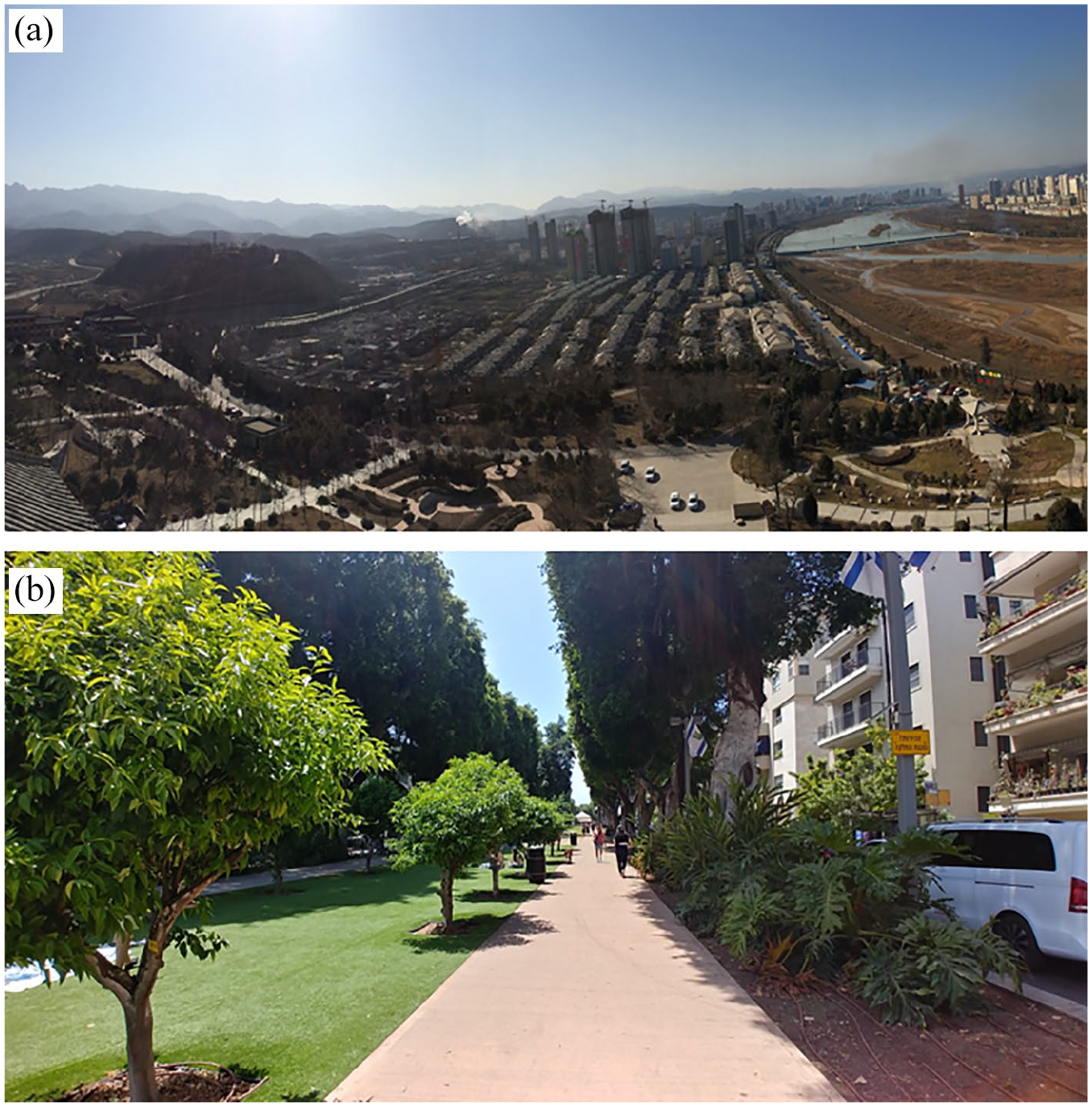
View of the Jintai district of Baoji, western Shaanxi province, China (a). As one of the first NEGCs in China, the city has 28 urban parks arranged in a system that is adjacent to rivers, mountains, and plateaus. Rothschild Boulevard in Tel Aviv, Israel (b) that was among the first four streets in Tel Aviv to be conceived as “garden cities.” Planting began in 1910, aimed at turning the street into the city’s first “Parisian” avenue.
Further south in New Zealand, the Garden City concept was fully understood by only a few planners, and was not effectively realized in the 20th century due to a lack of infrastructural resources and professional expertise. While some suburban settlements labeled themselves as “garden cities,” this designation seems to have primarily benefited the Anglophone developers who marketed the projects rather than accurately reflecting the term (Miller, 2004). In complete contrast, the case of Palestine in another region of Asia, in the late Ottoman period (until 1917), illustrates the ideological fulfillment of the concept. The Garden City rhetoric was introduced into Palestine/Eretz Israel long before the seemingly direct entry channel from Britain itself to this mandated territory overseas (1948–1922). In fact, the idea was disseminated through Zionist activists who immigrated from Germany to the pre-Mandate territory, such as Franz Oppenheimer who translated Howard’s book into German, adding an introduction (Bigon and Katz, 2014; Zaidman and Kark, 2014). The transnational diffusion mainly took the form of garden suburbs (e.g. in Jerusalem, Haifa, and Tiberias), embodying the Zionist model of urban settlement under the umbrella of the Turkish regime. These suburbs served the then cultural and national aspirations of the Jewish sector. The combination of the Howardian ideas of Garden City was therefore an ideological matter, and not merely a morphological one or one aimed only at improving the quality of life. Ahuzat Bayit (i.e. “home estate”) constituted the first garden suburb that was founded in Palestine/Eretz Israel in 1909. It was established in affinity to Old Jaffa, but later formed the beginning of the city of Tel Aviv. In other words, although it was planned as a Jaffa district, it quickly developed into an independent city, thus this appears to be the only garden suburb in the world built under the inspiration of Howard’s ideas that became an independent city (Bigon and Katz, 2016) (see Figure 2(b)).
In Latin America, Howard’s ideas were disseminated through individual planners and their network of international contacts, such as overseas travel and visits by foreign experts. Although Brazil, for instance, did not establish a specific association of garden cities, the Garden City agenda became fashionable and was implemented in alignment with the country’s modernization efforts as an instrument for progress throughout the 20th century. This process was influenced not only by British urban planners and architects but also by practices from France and North America. The planning outlines and guiding principles behind a series of new towns such as Águas de São Pedro, Maringá, and Goiânia, and garden suburbs such as Jardim Shangri-lá in the city of Londrina in the 1960s, and City Ribeiro in São Paulo in the 1970s, illustrate that the adaptation of the Garden City concept in Brazil focused primarily on the incorporation of its formal-physical characteristics. There appears to have been little effort to adapt these urban configurations to Brazil’s diverse socio-cultural realities either in terms of implementing an effective urban reform agenda or addressing prevailing social problems (Piochi Bernardini and Capelozza Mano, 2024; Rego, 2014). Similar to Brazil, an analysis of other urban areas in Latin America that embraced Garden City terminology reveals only a selective use and partial application of the term. The term was mainly employed to emphasize “rural” connotations and imageries within suburban development projects, rather than serving as a model for the promotion of urban planning integrating socio-ecological reform. Such associative and eclectic realizations are evident, for example, in Buenos Aires (El Palomara), Havana (Vedado), Caracas (El Paraíso), Lima (San Isidro, Orrantía), and Mexico City (Romita, Santa María, Condesa, and Colonia Balbuena) (Almandoz, 2004).
Garden City heritage and sub-Saharan Africa
While the planning and design of garden cities and garden suburbs was implemented in Europe and North America throughout most of the 20th century through the private market or public-private partnerships, the development of the model in Africa took on a different character in the corresponding period due to the presence of European colonial rule across much of the continent. At the height of the modern colonial period, that is, between the two world wars and most notably in the 1930s, planning associated with the “Garden City” concept typically manifested as low-density housing initiated by the colonial government for the white minority population and its administrative officials. This suburban lifestyle featured greenery along the streets in these neighborhoods, and the encouragement of private gardens of villas, as well as the introduction of urban parks. These parks effectively created a “green belt” that served as an instrument of segregation by delineating and isolating the European neighborhoods from the extensive informal residential areas that housed the indigenous majority. In other words, the Garden City model has been broadly interpreted in many territories as a means to foster racially and culturally divided urban environments (Bigon and Katz, 2016), a process that reached its peak in South Africa during apartheid (1948–2004).
It is fascinating to observe how variations in European planning cultures in the mother countries were projected onto their respective colonial contexts regarding the implementation of the Garden City model. This “interpretation” process was primarily dominated by Great Britain and France until the era of decolonization, which occurred mostly during the 1960s. As a result of the Berlin Conference for the partition of Africa among European powers (1884–1885), Great Britain and France took control of a significant portion of the colonized territories in Africa; thus, we will focus on them in the following discussion. In the current century, references to the Garden City in the context of urbanism in sub-Saharan Africa can be divided into two main groups, as evident from the increasing focus on questions of social and environmental sustainability. The first group represents a terminological reference to “Garden City” for both old (colonial) or new (post-colonial) luxury neighborhoods that differ from other residential developments in their rationale for establishment (e.g. as a high-tech neighborhood); their physical location (e.g. on an island or peninsula); or their status as fenced and gated communities. The second group is a nostalgic reference to the colonial period or the then European image of the settlement or neighborhood. The aim and context of such reference are usually to emphasize the gap between the area’s past reputation and its current catastrophic state in terms of planning administration, ecological degradation, and sanitary challenges. However, in both groups of references to “Garden City,” the socio-environmental contexts are negative, with the discourse on sustainability serving as a framework to which one should strive, including recommendations for remedial measures.
In terms of the state of research regarding the colonial period, only a few scholars, mainly British and French, have addressed the influence of Garden City concepts on planning in sub-Saharan Africa. These ideas, interpreted in a very eclectic manner to serve the needs of the colonial government, played an almost exclusive role in the design of the urban space. Whether under the Indirect Rule doctrine, predominantly applied in the Anglophone territories, or the doctrine of assimilation, applied in the francophone territories (the association, its successive policy, which featured a similar essence)—Garden City neighborhoods were the preferred form of residence offered by the colonial administrations to house their expatriate populations. The scope of the built projects designated for Africans was minimal and included model villages in Southern Rhodesia (now Zimbabwe); symbolic housing included in the British plan for Lusaka, the capital city of Northern Rhodesia (now Zambia), or designated for other minorities such as the Indian minority in urban South Africa. The common thread in all these “Garden City” planning experiments was that they played a decisive role in creating racial segregation in nearly all parts of the continent. This segregation, being a key component of the contemporary colonial city, led to the labeling of the “colonial city” as a “dual city” in the research literature (Abu-Lughod, 1980; King, 1976, 2016). The post-colonial perspective embedded in this literature often criticizes the “dual city” phenomenon through its intersections with medical and sanitary issues, as many scholars have highlighted the intimate connection between (pseudo-)medical and sanitary measures and segregationist measures in colonial cities in sub-Saharan Africa (e.g. Bell, 1999; Bigon, 2014, 2016; Brown, 1978; Curtin, 1998; Dubow, 1989; Echenberg, 2002; Murunga, 2005; Vaughan, 1991).
Between the late 19th century and the interwar period, known as the “heyday” of modern colonialism and coinciding with the transnational spread of Garden City concepts, urban spatial segregation became mainstream in Africa. This spatial element was both officially institutionalized (as in the British colonies) and informally projected (as in the French colonies), based on (pseudo-)sanitary reasons. The term “sanitation syndrome” was coined by Maynard Swanson (1977) in this context, referring to the portrayal of infectious diseases as a social metaphor by the medical authorities of Cape Town in the first decade of the 20th century. An outbreak of bubonic plague at the time served as a catalyst for residential segregation. While the relationship between colonial sanitary policies and spatial strategies has been extensively studied in recent years beyond Africa, such as in Singapore or India (Charlton-Stevens, 2020; Hosagrahar, 2005; Onimaru, 2022; Yeoh, 1996), the simultaneous role of Garden City ideas in creating fragmented spatial dynamism in Southern cities has been studied only sparingly. In sub-Saharan Africa specifically, this topic remains largely unexplored. Given the scope of the Eurocentric and Anglo-American literature on the Garden City in the North-West, the historiographical imbalance is astounding.
Analysis of the effects of Garden City ideas on colonial planning in Africa is particularly rare in collective volumes or book monographs in English. Prominent scholars such as Zeynep Çelik (1997), Paul Rabinow (1989), and Gwendolyn Wright (1991) have referred only in passing to the subject in monographs focusing on French North Africa. There is also a nascent interest in the history of urban planning at the other end of the continent, in southern Africa (Mabin and Smith, 1997; MacKenzie, 2023). The meager research attention to both North and South Africa, even in relation to the Garden City, can be explained by high colonial priority given to these areas, since they were intended for white settlement. Moreover, on the Anglophone side, references to the Garden City model were made in direct relation to metropolitan planning in Great Britain itself, since similar to the situation in Palestine-Eretz Israel, British planners were sent to operate directly in the colonial territories. In French colonies in North Africa, Garden City influences took a longer transnational route, spreading first from Europe and Britain to France, and only then to the French territories overseas. Along this path, these influences had to adapt to state and regional contexts at least twice (Burlen, 1987; Gaudin, 1992; Guillet, 1995; Rabinow, 1989). The absence of more recent or relevant literature regarding French North Africa since the studies cited in the previous sentence (late 20th century) speaks for itself and clearly illustrates the historiographical lacuna. Once again, it is evident that the societal elements present in metropolitan planning were implemented in the colonies almost exclusively for the privileged white minority. In the rare cases where indigenes were involved in colonial Garden City experiences, their participation was negligible at best (see Figure 3).
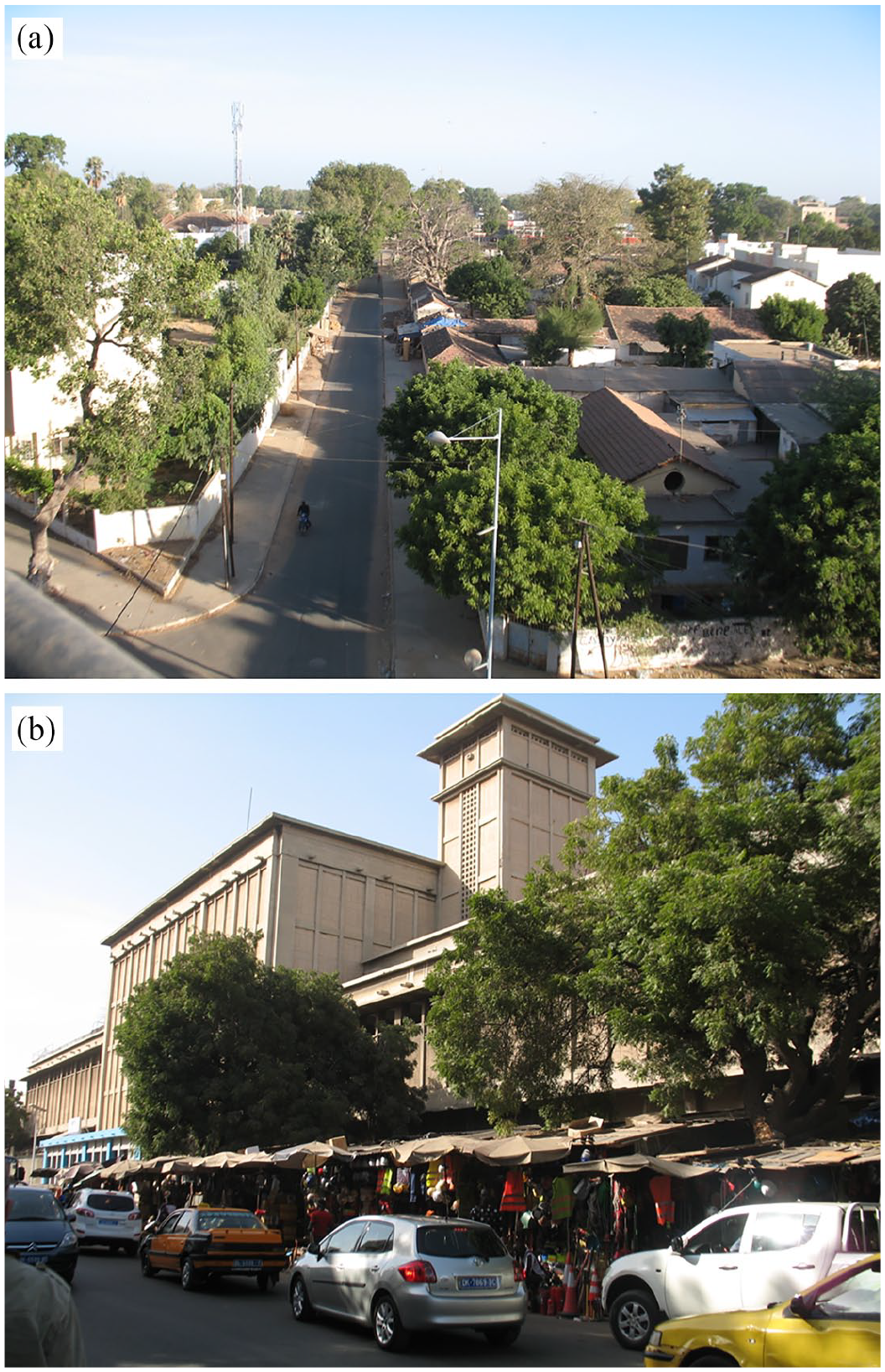
Today’s view on ex-colonial quarters in the “garden cities” of Thiès (a) and Dakar (b), Senegal.
The region of Anglophobe southern Africa, with a more direct channel for the dissemination of Garden City ideas there, has received slightly more attention in the research literature (Collins, 1980; Home, 1997; Mabin and Smith, 1997; MacKenzie, 2023). Among the professionals who shaped the spread of British planning ideas to the colonies located there were Stanley Adshead in Lusaka in 1931, and A. Thompson in Pinelands near Cape Town in 1938. Adshead, a professor of urban planning at the University of London and an enthusiastic student of Ebenezer Howard, was commissioned by the British colonial government to design a new capital city for the Protectorate of Northern Rhodesia. In Lusaka, he promoted the Garden City concept through a system of zoning, with the aim of allowing the authorities to enforce strict control over indigenous labor. As in South Africa, this system was designed to prevent these laborers from permanently settling in the city. Similarly, the British architect Thompson, who had worked with Raymond Unwin in planning Letchworth, the first of the two British garden cities, prepared the plan for Pinelands as early as the 1920s. Pinelands is considered the first Garden City in South Africa, and following its success, additional garden cities were established in the country under the apartheid regime. These cities included separate municipal facilities and strict governmental land-control regulations that benefited the white sector only.
Beyond a number of individual case studies in the north and south of the continent, sub-Saharan tropical Africa has scarcely been studied at all in relation to the Garden City planning legacy. To a large extent, the collection edited by Liora Bigon and Yossi Katz remains pioneering (Bigon and Katz, 2014) but much research is still needed to uncover these legacies. Comparative case studies are particularly rare, whether they focus on the planning culture of one European colonial power or several. Moreover, most of the primary and secondary sources remain unknown, as do the professional networks through which the planning knowledge spread to these territories. Illuminating these sources and analyzing their contents are crucial for a comprehensive understanding of one of the most influential urban planning phenomena of the 20th century at the global level. This goes beyond the bulk of research preoccupied with the Northern hemisphere. In this context, Garden City planning developments in sub-Saharan Africa should not be viewed as a pathological “otherness” when compared with the more familiar planning history of the global North-West, but should rather be conceived as an essential element in understanding the Garden City phenomenon on a world scale. This is evident despite the demonstrated ethnocentrism and Eurocentrism of its physical manifestations on the African continent.
There is a clear need for multi-site qualitative research based on both national archives in African countries and those in Europe, as well as tracing the networks of urban planning knowledge and expertise and the diffusion of planning ideas. Examples include the print media, such as the contemporary daily press and professional journals, as well as exhibition and conference materials. One important example is a set of reports published in 1932 as part of the International Conference on Urbanism in Colonies and Tropical Countries (L’urbanisme aux colonies et dans les pays tropicaux) (Royer, 1932), which accompanied the 1931 “Colonial Exhibition” in Paris (Morton, 2000). This publication was written by European urban planning experts who worked in various colonies, along with contemporary French architects, who dictated the overall framework of the exhibition. These professional reports provide unprecedented insight into the ideas of the period and the key questions that urbanists from France, Portugal, and other imperial powers addressed. The reports also include a representation of British-Mandate Palestine by the architect-planner Richard Kauffmann (1932), who was involved in the Zionist settlement until the end of the British Mandate. His contributions take the form of drawings and conclusions from the planning of the Jewish Jerusalem neighborhoods of Talpiyot and Beit HaKerem and his radial scheme for Nahala, a moshav in northern Israel.
There are many perspectives for analyzing this key 1932 publication, one of which is the multiple regional contexts of “Garden City” realizations. From Algeria to Madagascar, from Senegal to Congo-Brazzaville, and across the territories of France, Belgium, and other nations, virtually every residential development for the European expatriates overseas was labeled a “Garden City” in these reports. For example, the neighborhood designated for whites in Antananarivo (Tananarive), the capital of Madagascar is described as a “satellite garden-suburb” (Weithas, 1932: 112). A similar neighborhood in the city of Thiès in Senegal, east of the capital Dakar, is described as a “real Garden City” (Weithas, 1932: 113) (Figure 3) In Elisabethville (Belgian Congo) this neighborhood is called “a large Garden City with greenery that creates charm” (Schoentjes, 1932: 178) (see Figure 4), while in Beira, Portuguese Mozambique, the neighborhood is characterized as a “desirable Garden City” (de Andrade, 1932: 142). This terminology should not be identified with a direct or ideological application of the British Garden City concept, but rather understood as a fairly successful integration of greenery inside the white sector’s residential neighborhoods. As for Palestine-Eretz Israel, it is also evident that the Garden City concept did not reach the Zionist urban and rural settlement through the anticipated channel of Britain itself, but rather, as noted earlier, it was transferred to this colonized territory during the late Ottoman rule by members of the Zionist movement who immigrated from Germany (Bigon and Katz, 2014).
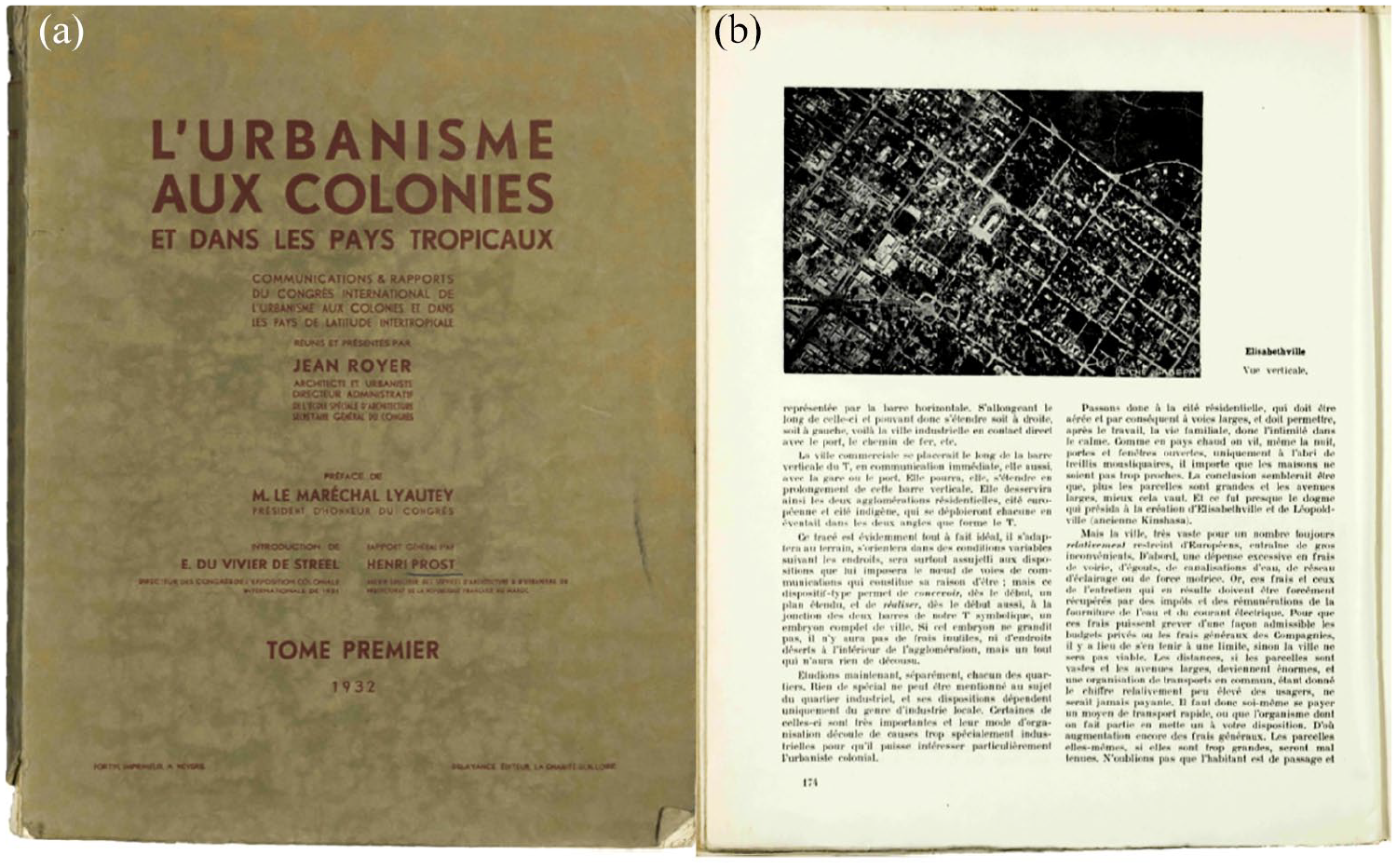
The cover page (a) and an aerial photo of Elisabethville’s “garden city” (b) in Royer’s collection (Schoentjes, 1932: 174).
Familiarity with veteran “classical” planning journals and magazines is essential for understanding the networks of expertise, and the coverage of activity in Africa as covered in these publications has not been systematically studied. For example, much can be learned from even the briefest mention in Town and Country Planning of a new Garden City project near Bulawayo in Southern Rhodesia in the 1930s, which was designated for a specific stratum of the indigenous population. The project is presented as reflecting the colonial government’s concern for their standard of living, although it was intended in practice to promote racial segregation. To avoid the shack-like appearance typical of a South African “township,” the residential units were not arranged orthogonally, and included garden plots close to a nearby river. It was claimed that this was not segregation as the native population could not afford to live in the European neighborhood anyway, and in a paternalistic evolutionist spirit, the transition from thatched huts to “houses” was said to meet the mentality of “the Rhodesian native who is an enthusiastic farmer who loves his vegetable garden” (Logan, 1935: 28).
This reference to European neighborhoods in the main colonial cities of tropical Africa as “garden cities” is a fascinating topic, emerging from relevant files in national archives. From Nairobi to Zanzibar, and from Dakar to Lagos (Bigon, 2012; Coquery-Vidrovitch, 1996), these references are yet to be adequately illuminated. While it is quite clear that “Garden City” in the subcontinent generally referred to neighborhoods immersed in vegetation, with appropriate infrastructure and wide tree-lined streets—but lacking any social ethos—there were still many nuances. In Lagos, for instance, Nigeria’s former capital and a regional port in West Africa, the white neighborhood on the “Marina” was sometimes called a “Garden City,” despite having no master plan or strict residential segregation. The city center, located on a small island, remained ethnically and racially mixed and quite crowded. This was also the case for Ikoyi, on the eastern part of Lagos Island, established in 1927 as a luxury area with palm-lined boulevards, public parks, and green sports fields established by the British administration (see Figure 5), and for Yaba, an inland neighborhood adjacent to Lagos Island, designated for white civil servants and often referred to as a “Garden City” (Nigeria National Archives (NNA), 1927, 1938). Ikoyi and Yaba were founded when, in the words of the archi-administrator Lord Lugard (1968), the colonizer and the colonized became “hopelessly intermixed.”
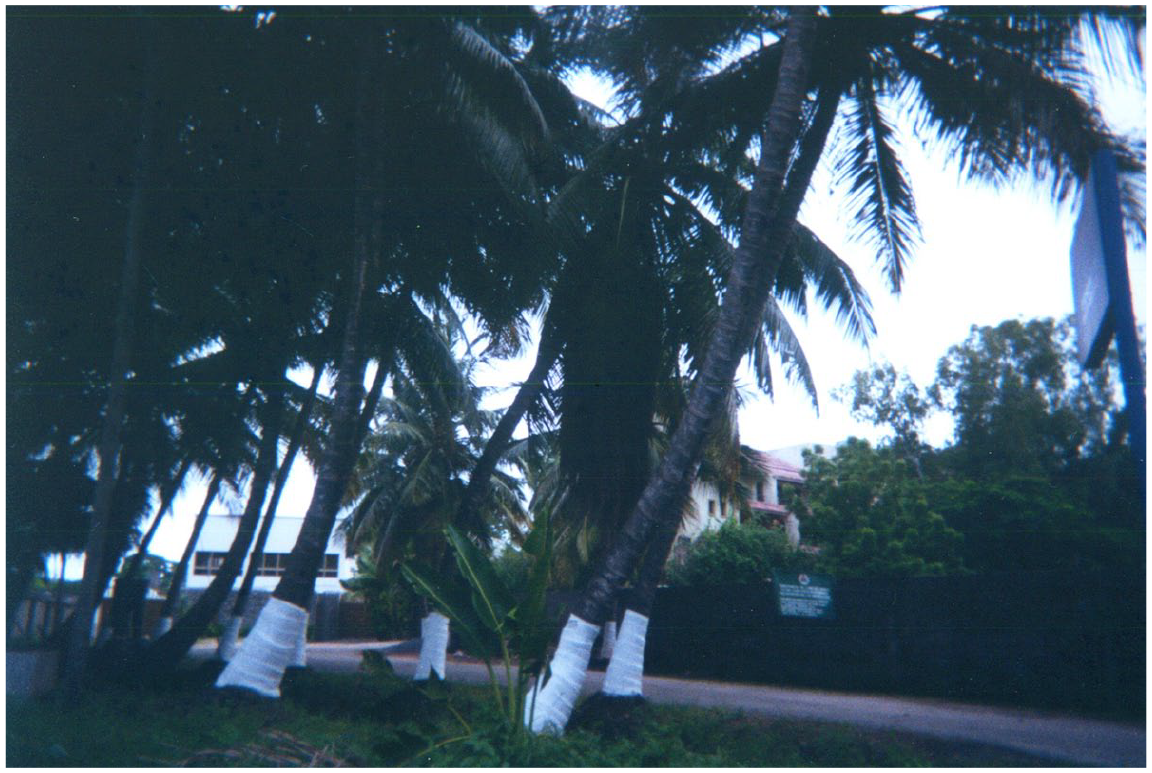
Street avenue in Ikoyi, Lagos, Nigeria. A former prestigious residential quarter designated for British officials.
On the contrary, on the eve of the establishment of the prestigious, vegetation-rich Plateau neighborhood in Dakar, the capital of Senegal (Archives Nationales du Sénégal (ANS), P120, P167), a French official made a similar comment: “Too many native residences surround the European houses” (Faure, 1914: 164). These “undesirable” situations resulted from a rather loose, laissez-faire approach to urban planning in colonial West Africa. This attitude characterized this tropical region, which was never intended for white settlement and was often called the “white man’s grave.” In contrast, in white settlement colonies like South Africa or even Kenya, colonial urban planning was typically stricter and more rigid. Toward the decolonization period in Senegal, in the late 1950s, colonial authorities decided to establish another quarter for its employees in Dakar, immediately northeast of the early 20th-century Plateau. The villas were built on lots with private gardens and organized around squares adjacent to areas reserved for small parks. This neighborhood was called the “Hann Garden City” (Cité jardin de Hann) after the botanic garden “Khan” to its east (Archives Nationales du Sénégal (ANS), 4P 75) (see Figure 6). Once again, “green” toponymic associations played a significant role in shaping the prestigious image for this segregated urban development. Among the still-open questions to be explored are: How were these neighborhoods actually experienced by the urban majority? What was the degree of friction between the variety of colonial agencies within these privileged spaces, and what reasons or events influenced this dynamic? Finally, what corpus of imageries was attached to these spaces in the minds of the colonized societies?
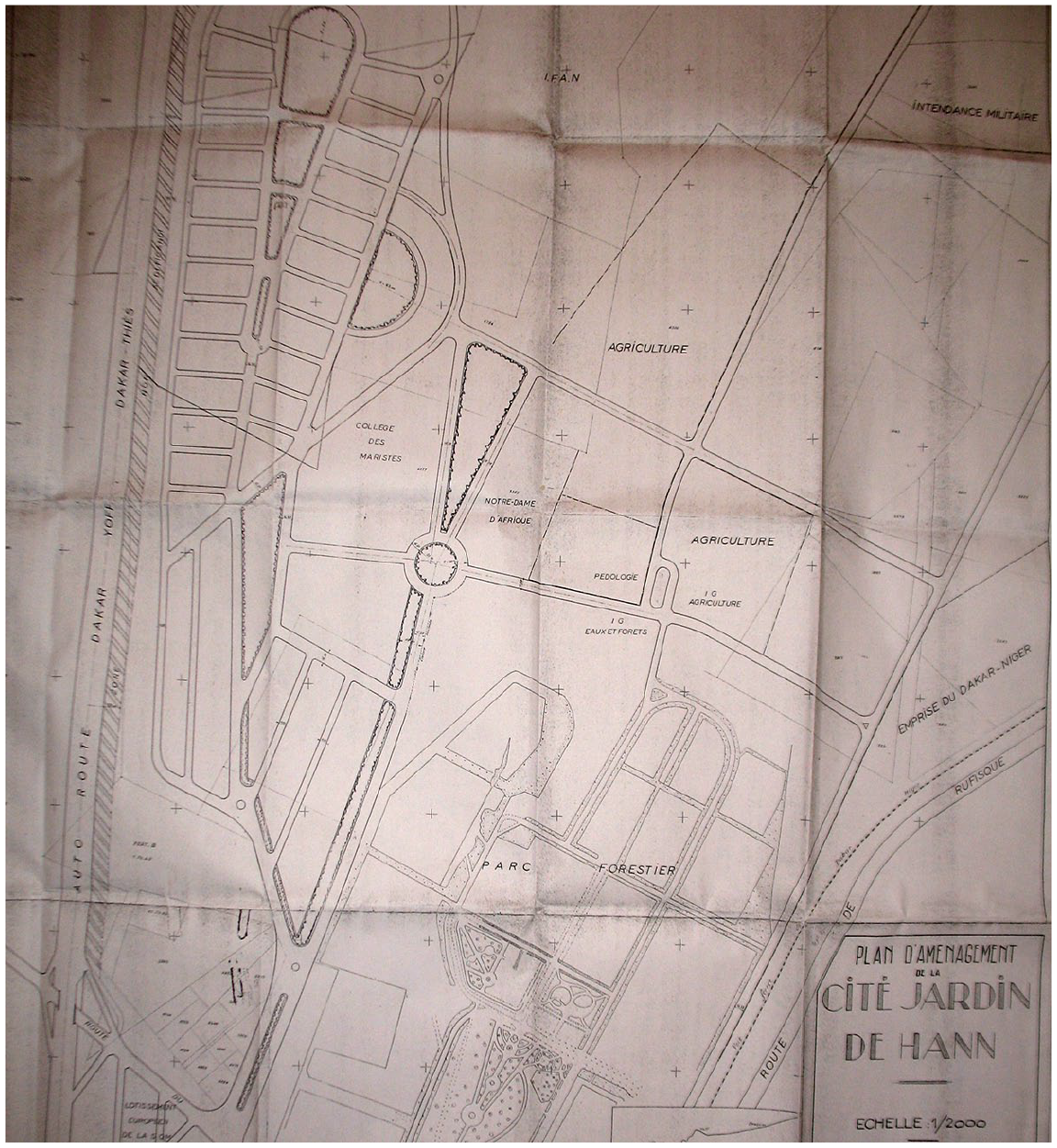
The plan of “Hann Garen City,” a new residential quarter designated for the French officials in Senegal, Dakar, 1957 (courtesy of the National Archives of Senegal).
Today, the focus of the discussion has shifted to African urbanists who combine a variety of theoretical and multidisciplinary frameworks in the pursuit of a policy design that will positively impact the continent’s sustainable urban future, in line with the UN Sustainable Development Goals (SDGs). In light of current challenges, there is a clear attempt to address critical urban development issues, such as accelerated urban growth, widespread housing informality and poverty, infrastructure provision, land management policies, enhancement of local environmental activism, and improvement of ecosystems in the face of climate change (Addaney and Cobbinah, 2022). As a relevant, albeit smaller part of these concerns, there is growing criticism of gated luxury and middle-class neighborhoods, whether old (colonial) or new, that use Garden City terminology in a manner that is anti-social. Given the increasing prevalence of fragmented urban spatialities of this type in the cities of the subcontinent, such as the “Garden City Victoria” neighborhood near downtown Lagos Island (Opoko and Asinobi, 2021), or the high-tech “Konza City” neighborhood in Kenya—we must ask whether these developments are at all sustainable. (K’Akumu, 2023). A closer examination of these projects—the reality that they have created versus their stated goals and their overall development—reveals that they do not offer a sustainable solution to Africa’s urban development needs.
The development challenges in sub-Saharan Africa’s cities are vast and demand creative and innovative approaches to achieve a sustainable future. The continent’s rate of urbanization is among the highest in the world, averaging 1.1% per year, second only to Asia at 1.24% (United Nations Human Settlements Programme (UN-Habitat), 2022). West Africa is notable, with the second fastest urban growth rates on the continent, despite having one of the lowest levels of urbanization in the world. In this context, references to “garden cities” by urbanists often reflect idealization and romanticization of the colonial past along with harsh criticism of the current urban management and environmental and social development. For example, amid the ongoing decline in urban greenspaces across the continent due to unchecked demographic growth, the greenspaces in Lagos alone—a metropolis of 24 million—constitute less than 3% of the city’s area (Du Toit et al., 2018). The Garden City model is often invoked as a nostalgic reference to British colonial rule. Kumasi, Ghana’s second largest city, was reorganized in 1945 according to a master plan proposed by architects Maxwell Fry and Jane Drew, which was inspired by the Garden City concept. The plan featured extensive greenspaces, including urban parks, forested areas, and green belts. However, with today’s significant reduction in urban greenery due to demographic pressures, and its impact on sanitation, air quality, and climate, urbanists are left asking: where is the ‘Garden City’? (Mensah et al., 2020; Narh et al., 2020). Similarly, urbanists in Port Harcourt lament how the port city, once known as the “Garden City of Nigeria” during the colonial period, renowned for its cleanliness and lush vegetation, has become a polluted urban space plagued by street garbage and poor air quality (Oyebode, 2024). This situation highlights the need for circular economic policies, especially regarding household and industrial waste management.
Discussion
Extensive scholarly literature exists on Garden City case studies worldwide, from Ebenezer Howard’s original concept and the first implementations in Britain up to the present. This benefits the historiography because, in the vast majority of cases, the researchers are urbanists from the country under study, and thus intimately familiar with the state-/site-specific planning culture, its socio-political history, national priorities, and private market dynamics. However, comparative research on the Garden City is sorely lacking, both as a global planning phenomenon throughout the 20th century, and in its modern adaptations to the sustainability discourse that has dominated the urban planning agenda since the early 21st century. In our critical review of the many case studies and regional comparisons, we focused not on judging how closely applications matched Howard’s original model—although this question has often been addressed—but rather on understanding urban planning expressions as reflections of broader cultural and socio-political characteristics. This approach highlights how the Howardian model was translated, adapted, and “edited” to fit certain national-regional contexts. Our analysis identifies common patterns in how the idea was translated across continents and summarizes them schematically in a geographical, thematic, and chronological diagram (see Figure 7).
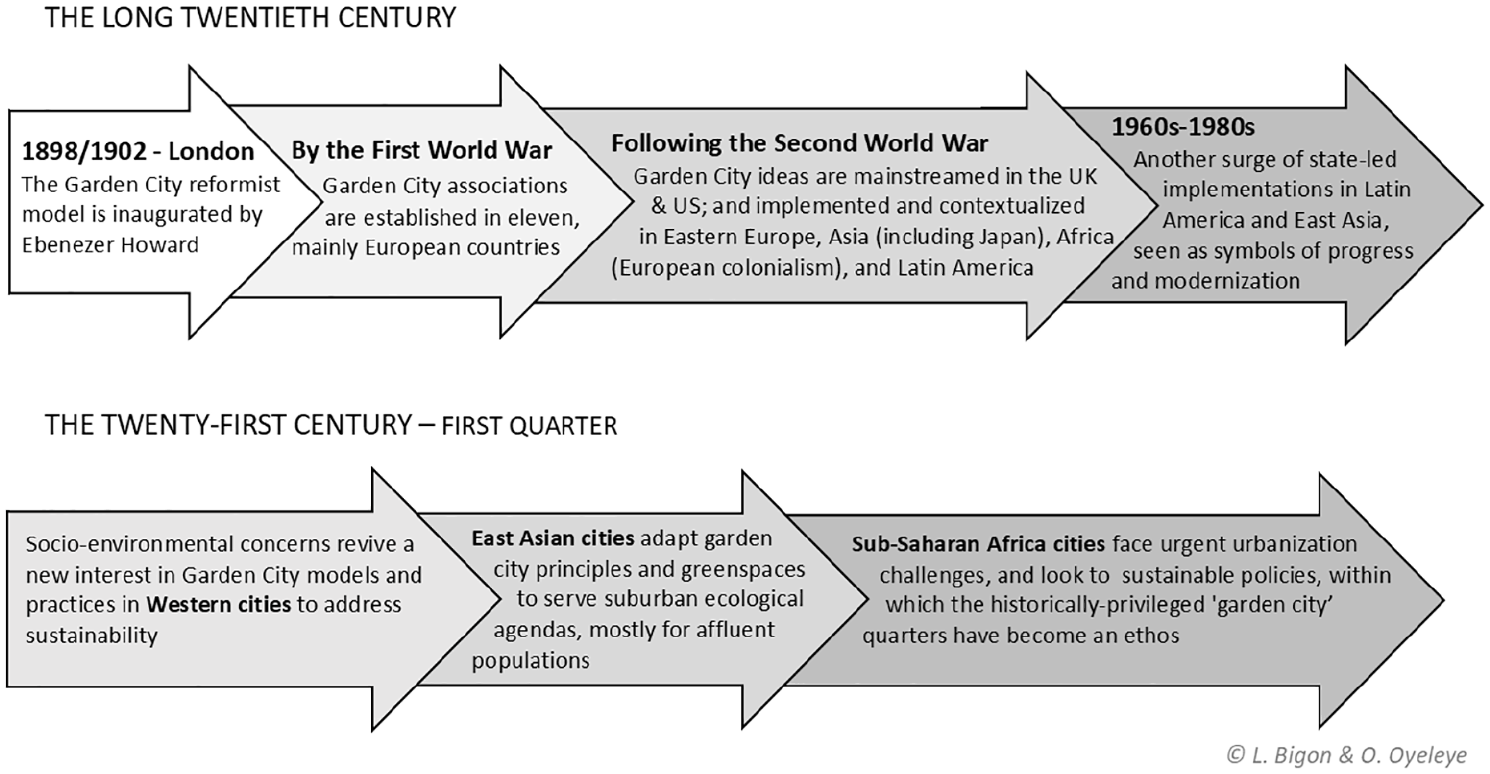
A timeline summarizing the geographies and main orientation of Garden City developments worldwide.
The findings indicate that the nature of implementations differs, ranging from those that closely resemble the original model—primarily in the United Kingdom and the United States (Buder, 1990; Creese, 1992 [1966]; Cross, 2004; Ward, 1992); to partial or loose implementations—primarily in Asia and Latin America (Almandoz, 2004; Fukuda et al., 2024; Low, 2013; Miller, 2004; Tian et al., 2022). Instances where the term “Garden City” was solely employed as a branding label to promote distorted, anti-social segregationist objectives were primarily prevalent in colonial sub-Saharan Africa (Home, 1997; Mabin and Smith, 1997; MacKenzie, 2023). However, a coherent understanding of the regional incarnations of this model and their rich diverse contexts could potentially reconnect North-Western planning cultures with those of the South-East, leading to the advancement of a global Garden City historiography. The incorporation of the urban sustainability agenda into this framework should be perceived as an integral, timely development that has its own potential for interconnectedness. Here again, to a large extent, the historical interpretative tendency of the garden city on a regional basis throughout the 20th century has been projected into the 21st century with considerable continuity and with the integration of sustainability discourse. That is, in terms of suitability to present-day urban needs, the examples closest in spirit to both the original Howardian idea and the SDGs are found in Europe (Monteiro et al., 2022; Nikologianni and Larkham, 2022; Swensen and Berg, 2020); Asian cities show awareness of the sustainability agenda, albeit their use of the garden city vocabulary tends to serve this agenda exclusively with a clear bias toward market needs, sometimes in combination with national development plans (Hsiao, 2022; Wang and Heath, 2010; Xu et al., 2024; Zou, 2023); whereas African cities pay only lip service to both the original historical intention and the challenges of contemporary development from an eco-social sustainability perspective (Narh et al., 2020; Opoko and Asinobi, 2021; Opoku et al., 2024). There, the challenges of 21st-century urbanization will require much more creative and reformist thinking.
Toward a conclusion: Garden City ideas in a transnational perspective
The article provides an overview of the conceptual and actual planning developments of Garden City ideas across broad global regions, with a special focus on non-Western planning legacies in general and sub-Saharan Africa in particular. It is aimed at enhancing the understanding of how the original Howardian model has been adapted in diverse regions beyond the global North-West, as well as the stylistic featuring of these regional developments. The crisscrossing between the series of case studies on a regional basis exemplifies Garden City manifestations as a universal variable on one hand, and the contextual diversity of these manifestations on the other. Therefore, an additional insight into the ever-growing field of global urban history is provided, advancing the de-Eurocentrization of urban planning history. By referencing the 20th and early 21st centuries, the article highlights the power of regional and country-related planning cultures in the dissemination of planning concepts. It also explores the various channels and networks through which Garden City ideas were propagated and implemented outside of the British core, as well as the significance of the socio-political factors in each region.
This study also highlights the ways in which the term “Garden City” was incorporated into the contemporary discourse surrounding eco-social sustainability from a multi-regional perspective, offering new research directions regarding this planning phenomenon, especially in sub-Saharan Africa, with an emphasis on the colonial and post-colonial periods. A wide variety of secondary sources was used, alongside pioneering primary evidence, both archival and visual, relevant to the sub-Saharan Africa context. It is crucial to investigate the history of urban planning cultures in the subcontinent since this history is the least explored in comparison to other world regions with relation to the Garden City phenomenon.
These directions may promote the understanding that incarnations of the original model should not only be perceived as experimental or capricious realizations of metropolitan concepts outside the North-West, but rather as expressions of the flexibility inherent in the dissemination process, and in grounding the ideas and rendering them relevant in a variety of regions. As shown, the multiplicity of situations, agencies, and interests can align with or diverge from the current agenda of eco-social sustainability. Even the hollow contemporary application of the term “Garden City” to promote urban greenery, as prevalent in southeast Asia or Africa, or the authentic application of the term to advance an urban sustainability agenda, primarily in Western Europe, exhibits a dissonance with the original concept.
The main limitations of this study are, methodologically, the use of primary sources and the authors’ original insight on cities and countries in sub-Saharan Africa (in accordance with their area-studies specialization). Analysis of garden city expressions in other regions is based on an examination of secondary sources, albeit in generous extent. A more qualitative and nuanced comparison of the manifestations of this planning phenomenon in the different regions can be achieved through closer cooperation between urban studies experts that directly cover these regions, possibly as a result of a joint consortium.
Footnotes
Declaration of conflicting interests
The author(s) declared no potential conflicts of interest with respect to the research, authorship, and/or publication of this article.
Funding
The author(s) received no financial support for the research, authorship, and/or publication of this article.
