




Abstract
This paper provides a comparative analysis of the divergent outcomes of smart sanctions in Myanmar and Zimbabwe in the 2000s, examining their effectiveness in prompting political change. Smart sanctions, aimed at specific individuals and entities to minimize humanitarian impacts, have become a prominent tool in international relations. Their success, however, hinges on key factors such as the precision in targeting decision-makers, the political structure and stability of the regime, the cohesion of the sanctioning coalition, and the ability of targeted entities to evade the measures. An in-depth analysis of Myanmar’s military junta and Zimbabwe’s authoritarian regime reveals that smart sanctions were more effective in Myanmar, contributing to political reforms, whereas Zimbabwe’s entrenched political control and reliance on alternative international alliances allowed the regime to withstand external pressures. These findings emphasize the critical importance of tailoring sanctions to the specific political and economic context of each regime, along with the need for cohesive international cooperation and stringent enforcement to ensure the effectiveness of smart sanctions.
Introduction
Economic sanctions have long been a tool of statecraft, employed by nations and international organizations to coerce, deter, and punish entities that defy international laws and norms (Lopez and Cortright, 1995). Governments have increasingly turned to economic sanctions to address international disputes, due in large part to the widespread belief that sanctions serve as preferable alternatives to war (Pape, 1997). Over the past few decades, the concept of “smart sanctions” has emerged as a refined approach to this strategy. Unlike broad-based sanctions that can harm entire populations, smart sanctions are designed to target specific individuals, entities, and organizations, thereby minimizing unintended humanitarian consequences (Bull and Tostensen, 2001). However, the efficacy of smart sanctions varies widely (Shagabutdinova and Berejikian, 2007). While some cases demonstrate their ability to induce significant policy changes, others reveal their limitations and unintended consequences (Eriksson, 2010).
Globally, smart sanctions have been applied to a range of countries, including North Korea, Iran, Venezuela, and Russia, among others (Walterskirchen et al., 2022). According to the European Union, more than 30 countries have been subjected to some form of targeted sanctions since the early 2000s (European Union, 2023). The UN Security Council’s sanctions on Iraq following its 1990 invasion of Kuwait marked a turning point in the use of economic sanctions. Initially embraced by antiwar advocates as a less destructive alternative to military intervention, comprehensive sanctions soon revealed their catastrophic impact on Iraq’s economy and infrastructure. The combination of sanctions and the Gulf War bombing campaign devastated the country, causing malnutrition, disease outbreaks, and systemic collapse. As the sanctions dragged on, “sanctions fatigue” set in within the UN, leading many to question their effectiveness, despite their economic toll (Gordon, 2011). In response, targeted sanctions emerged as a refined alternative, aimed at mitigating humanitarian harm while exerting pressure directly on policymakers. These sanctions, ranging from arms embargoes to financial and travel restrictions, were viewed as promising tools for international governance (Early and Schulzke, 2019).
This paper investigates how lessons from early smart sanctions have informed more recent approaches in distinct geopolitical contexts. By examining two divergent case studies—Myanmar’s junta leaders and Zimbabwean officials—this research explores the conditions under which smart sanctions better achieve their intended objectives and the circumstances that contribute to their failure. Myanmar, where sanctions played a role in supporting political reform, contrasts with Zimbabwe, where the regime has largely withstood international pressure. These two cases illustrate both the potential and the limitations of smart sanctions, offering insights that, while based on a small sample, have broader implications.
In examining Myanmar and Zimbabwe, this research not only explores the divergent outcomes of smart sanctions but also considers the broader factors that influence these outcomes. In Myanmar, sanctions imposed by the United States and the European Union (EU) were instrumental in prompting political reform, as they targeted key military leaders and sectors critical to the regime’s control, such as natural gas exports and arms sales. These sanctions, combined with internal and external political pressures, created enough economic and political incentives for the military to implement reforms and release political prisoners, including Aung San Suu Kyi, by 2011.
Conversely, Zimbabwe presents a stark contrast, where sanctions have been less effective in driving political change. Despite targeted sanctions against the regime of Robert Mugabe, including restrictions on high-ranking officials and their access to foreign assets, Zimbabwe has managed to circumvent much of this pressure. This is largely due to its reliance on alternative economic partnerships, particularly with China, as well as the regime’s deep entrenchment of political control and loyalty among key military and business elites. This comparative analysis demonstrates the complex interplay between internal and external political and economic factors. While these two cases offer valuable lessons, they also highlight the need for context-specific strategies when implementing sanctions, suggesting the difficulty in generalizing outcomes across different geopolitical environments.
This paper outlines the relevant literature on economic sanctions, with a particular focus on smart sanctions. Building on existing research, it identifies four critical determinants of their effectiveness: precision in targeting key decision-makers, the political structure and stability of the targeted regime, the cohesion and comprehensiveness of the international sanctioning coalition, and the ability of targeted entities to circumvent the measures. Precision in targeting ensures that sanctions apply direct pressure on policymakers, minimizing collateral damage. The political structure and stability of a regime determine how resilient it is to external pressures; more authoritarian or stable regimes may resist sanctions more effectively than less stable ones. The cohesion and comprehensiveness of the sanctioning coalition are crucial, as international cooperation ensures consistent enforcement and prevents sanctioned entities from finding alternative support. Finally, the ability of targeted entities to circumvent measures points to potential weaknesses in sanctions design, as effective circumvention can severely undermine sanctions.
This study fills a critical gap in the literature by providing a detailed comparative analysis of divergent case studies, thereby advancing the theoretical understanding of economic statecraft. It offers new insights and develops a framework for evaluating the effectiveness of smart sanctions, showing how specific factors shape outcomes. While this analysis is grounded in a limited number of cases, it provides a foundation for future research. Future studies should expand the scope by including a broader range of cases and contexts, testing the robustness of these determinants across diverse geopolitical environments. This further research will refine our understanding of the conditions under which smart sanctions are most effective and offer more comprehensive policy recommendations for their design and implementation.
Theoretical foundations and hypotheses on smart sanctions
Smart sanctions, also known as targeted sanctions, have become a prominent tool in international relations, designed to minimize the collateral damage often associated with comprehensive sanctions (Tsouloufas and Rochat, 2023). These measures specifically target individuals, entities, and organizations deemed responsible for objectionable behavior, such as human rights violations, terrorism, or the proliferation of weapons of mass destruction. The evolution from broad-based to smart sanctions reflects an ongoing effort to enhance the efficacy of sanctions while reducing their humanitarian impact (Craven, 2002).
The effectiveness of smart sanctions has been a subject of considerable debate among scholars and practitioners. Early proponents, such as Cortright and Lopez (2002), argued that smart sanctions could exert significant pressure on targeted regimes without inflicting widespread suffering. They contended that by focusing on the elites responsible for policy decisions, smart sanctions could create internal fissures and incentivize compliance with international demands. However, Drezner (2015) argues that there is no systematic evidence indicating that smart sanctions achieve better policy outcomes in the targeted country compared to traditional sanctions given that they simply do not impose enough costs on the target economy. However, Drezner (2011) suggests that the evolution of smart sanctions has addressed numerous political challenges that were previously caused by comprehensive trade sanctions. Garrett and Weingast (1993) contend that smart sanctions serve as an effective focal point for policy coordination among key stakeholders. The practical outcomes of smart sanctions have been mixed, suggesting the need to identify key factors that condition their effectiveness.
Recent literature has underscored the importance of precision and specificity in targeting individuals and entities responsible for objectionable behaviors. Studies by Smith and Poplin (2022) and Portela and Laer (2022) emphasize the strategic selection of targets based on their role in decision-making processes and their perceived impact on policy outcomes. This targeted approach aims to maximize pressure on key actors while reducing adverse effects on broader populations. Building on this, it is hypothesized that smart sanctions will be more effective when they focus narrowly on individuals who hold critical decision-making power within a regime, as this precision can disrupt internal political dynamics without causing significant collateral damage. This hypothesis suggests that sanctions designed with high levels of specificity are more likely to achieve compliance and prompt policy changes, especially in regimes that rely heavily on a small group of elites for political stability.
H1. Smart sanctions will be more effective when they are narrowly targeted at individuals who hold critical decision-making power within a regime.
The political structure and stability of the targeted regime significantly influence the effectiveness of targeted sanctions (Brooks, 2002). According to selectorate theory, the primary goal of a leader is to retain office (Bueno de Mesquita et al., 2005). The theory posits that political survival depends on a leader’s ability to maintain the support of a winning coalition, a subset of the larger selectorate, which includes everyone with a nominal say in selecting the leader. Leaders in regimes with a small winning coalition tend to provide private goods to secure loyalty, as seen in many authoritarian states. In contrast, leaders in democracies, where the winning coalition is typically larger, must provide public goods to satisfy a broader base of support (Morrow et al., 2008).
The type of goods provided influences the regime’s stability and its susceptibility to sanctions. The effectiveness of targeted sanctions can be understood through the lens of selectorate theory. Regimes with small winning coalitions are more vulnerable to sanctions that disrupt the flow of private goods to key supporters. When sanctions are precisely targeted at the financial and economic interests of these elites, they can undermine the loyalty that sustains the leader’s power (Bueno de Mesquita and Smith, 2010). This dynamic explains why smart sanctions can be effective in regimes with small, elite-based winning coalitions, as they directly threaten the personal welfare of those most critical to the regime’s survival. Building on this, it is hypothesized that smart sanctions will be more effective in regimes with small winning coalitions, as these regimes rely heavily on the distribution of private goods to a small group of elites for their stability. By disrupting the flow of these private goods, sanctions can weaken elite loyalty and destabilize the regime. This hypothesis suggests that smart sanctions are more likely to induce political reform in such contexts, where elite vulnerability is heightened due to their reliance on targeted resources and support.
H2. Smart sanction regimes with small winning coalitions will be more effective in causing political reform, as they disrupt the flow of private goods to key elites, destabilizing the regime’s foundation of support.
Authoritarian regimes with centralized control and robust coercive mechanisms tend to withstand external pressures more effectively. For example, North Korea’s regime has maintained stability and control despite severe international sanctions by tightly controlling information, resources, and dissent (Smith, 2020). The regime’s isolationist policies and its ability to rely on alternative economic partners, such as China, have mitigated the impact of sanctions imposed due to its nuclear weapons program.
In contrast, Serbia’s authoritarian regime under Slobodan Milošević faced increased domestic unrest and international isolation during the Yugoslav Wars in the 1990s. The EU and the United States froze not only the assets of the Serbian government but also those of approximately 800 of Milošević’s closest military, political, and business associates. Targeted multilateral sanctions and incentives empowered the democratic opposition while isolating Milošević and his inner circle, exemplifying the successful application of smart sanctions (Cortright and Lopez, 2002). This demonstrates that when sanctions effectively target the resources of a small winning coalition, they can increase internal pressure on the regime, potentially leading to significant political changes.
From this perspective, it is hypothesized that smart sanctions will be more effective when imposed by a cohesive and comprehensive international coalition. A coalition with unified enforcement mechanisms maximizes the pressure on the targeted regime by ensuring that all members are equally committed to upholding the sanctions, preventing loopholes in their application. The greater the alignment among sanctioning parties—whether in financial restrictions, trade bans, or diplomatic isolation—the more likely the sanctions will succeed in achieving their intended objectives. This hypothesis underscores the idea that strong international unity in both the design and enforcement of sanctions is critical to their overall effectiveness.
H3. Smart sanctions will be more effective when imposed by a cohesive and comprehensive international coalition, as unified enforcement maximizes the pressure on targeted entities by ensuring consistent and robust application of the sanctions.
The ability of targeted entities to circumvent sanctions significantly affects their impact. Entities often employ various tactics, such as using alternative financial systems, engaging in illicit trade, and leveraging international networks, to mitigate the effects of sanctions. North Korea’s use of front companies and covert shipping practices, as documented by Noland (2009), demonstrates the challenges in enforcing smart sanctions. Conversely, the targeted sanctions on specific individuals and entities involved in Iran’s nuclear program were harder to evade, enhancing their effectiveness.
Recent studies by Peksen and Peterson (2016), Huish (2017), Wronka (2022), and Park and Choi (2022) highlight the innovative strategies employed by sanctioned entities to evade restrictions, including the use of cryptocurrency, offshore financial centers, and complex trade networks. Research by Hufbauer and Jung (2021) highlighted that nations with diversified economies and access to alternative trade partners were more likely to withstand the pressure of sanctions. For example, Russia’s economy, supported by extensive natural resources and strategic alliances, demonstrated resilience against Western sanctions imposed after its annexation of Crimea in 2014. Understanding these evasion tactics is crucial for policymakers in designing more robust and adaptive sanction regimes.
From this, it is hypothesized that smart sanctions will be less effective when targeted entities possess robust mechanisms for evasion, such as access to alternative financial systems or diversified international trade networks. These mechanisms allow targeted entities to mitigate or completely avoid the full impact of sanctions, making it difficult for sanctioning coalitions to exert maximum pressure. This hypothesis suggests that sanctions should be designed with enhanced monitoring and enforcement mechanisms to anticipate and counter evasion strategies.
H4. Smart sanctions will be less effective when targeted entities possess robust mechanisms for evasion, such as access to alternative financial systems or diversified international trade networks, as these allow them to mitigate or avoid the full impact of the sanctions.
One of the primary motivations behind the adoption of smart sanctions is to minimize the humanitarian impact associated with broad-based sanctions. Research by Peksen and Drury (2009) highlights the adverse effects of comprehensive sanctions on civilian populations, including increased poverty, health crises, and social unrest. They also observed declines in democracy and human rights scores in target governments. By targeting specific individuals and entities, smart sanctions aim to avoid these widespread consequences.
Studies on the effects of economic coercion in target countries seem to support the humanitarian arguments advocating for smart sanctions. Shagabutdinova and Berejikian (2007) reviewed Hufbauer et al. (1990) sanctions data from before 1990 and discovered that financial sanctions were shorter in duration, thereby reducing the suffering of target populations. Wood (2008) investigated the impact of economic sanctions on state repression using data from 1976 to 2001, finding that comprehensive sanctions tend to increase repression in authoritarian regimes. In addition, Peksen (2009) demonstrated that sanctions result in a deterioration of individuals’ physical integrity rights in target countries, with the decline being more pronounced under comprehensive sanctions compared to targeted sanctions.
These findings imply that, all else being equal, targeted sanctions are a more humane policy tool. However, the impact on humanitarian conditions remains a critical area of inquiry, with scholars such as Weiss (1999), Gordon (2016), Peou (2019), and Debarre (2022) calling for more nuanced assessments of the humanitarian outcomes of smart sanctions. While smart sanctions aim to mitigate humanitarian harm compared to broad-based measures, challenges persist in ensuring that sanctions effectively target elites without exacerbating societal hardships.
The interplay between sanctions and diplomacy is another crucial area of study. Scholars such as Baldwin (1985) and Kirshner (1997) have explored how sanctions can be used as part of a broader strategy to achieve diplomatic objectives. Biersteker et al. (2022) examine the relationship between sanctions and mediation. Their findings suggest that effective sanctions regimes often complement diplomatic efforts, creating a synchronized approach that enhances the overall effectiveness of foreign policy.
Moreover, technological advancements and data analytics have enhanced the capacity to identify and monitor sanction targets effectively. Research by Ahn (2019) discusses the role of big data and artificial intelligence in improving the accuracy and efficiency of smart sanctions implementation. These technological tools facilitate real-time monitoring of financial transactions, travel patterns, and business dealings, thereby enhancing the enforcement and impact of sanctions.
Furthermore, the role of regional dynamics and multilateral cooperation in sanction enforcement has garnered increased attention. Studies by Von Borzyskowskic and Portela (2018) and Hellquist and Palestini (2021) analyze how regional alliances and international partnerships influence the cohesion and comprehensiveness of sanction regimes. For instance, in the case of Venezuela, support from countries such as Russia, Cuba, and China have provided economic and political lifelines (Rendon and Price, 2019), undermining the impact of sanctions imposed by the United States and European Union. Conversely, in the context of North Korea, regional powers like South Korea and Japan have collaborated closely with Western allies to enforce strict sanctions aimed at curbing the regime’s nuclear ambitions (Wertz, 2020). This collaboration has enhanced the comprehensiveness and enforcement of sanctions, despite challenges posed by North Korea’s clandestine economic activities and illicit networks.
The evolving literature on smart sanctions reflects ongoing efforts to refine and optimize their application in contemporary diplomacy and statecraft. By integrating technological advancements, regional dynamics, and humanitarian concerns into policy frameworks, scholars, and policymakers seek to enhance the strategic efficacy of smart sanctions while minimizing their humanitarian footprint. Future research should continue to focus on developing more comprehensive frameworks for evaluating the success of smart sanctions.
Comparative case study methodology
This comparative case study employs a most similar systems design to analyze the impact of smart sanctions on political behavior in Myanmar and Zimbabwe, two countries that faced sanctions due to authoritarian rule, human rights violations, and political instability. While both nations experienced targeted sanctions, they differ in key ways, making this comparison particularly insightful. Myanmar, a Southeast Asian country with close ties to China, was under military rule without elections from 1990 to 2010. In contrast, Zimbabwe, located in southern Africa, maintained strong colonial ties with Western powers and operated as a multi-party system, albeit dominated by the ZANU-PF party under Robert Mugabe. Zimbabwe’s elites were more connected to Western educational and business systems, unlike Myanmar’s military leadership, which relied on regional alliances and isolationist policies. These differences suggest that sanctions might have been more effective in Zimbabwe, given the Western connections of its elites, theoretically making them more vulnerable to smart sanctions.
However, as the Democracy Index data (Figure 1) show, Myanmar experienced greater political liberalization between 2009 and 2015, while Zimbabwe saw little change in democratic governance. The graph reveals a notable rise in Myanmar’s democracy score during this period, reflecting political reforms and liberalization, while Zimbabwe’s score remained stagnant. This counterintuitive result highlights the importance of examining factors beyond just geopolitical ties, including the precision in targeting, the cohesiveness of international coalitions, and regime structures, which ultimately shaped the effectiveness of sanctions in both cases.
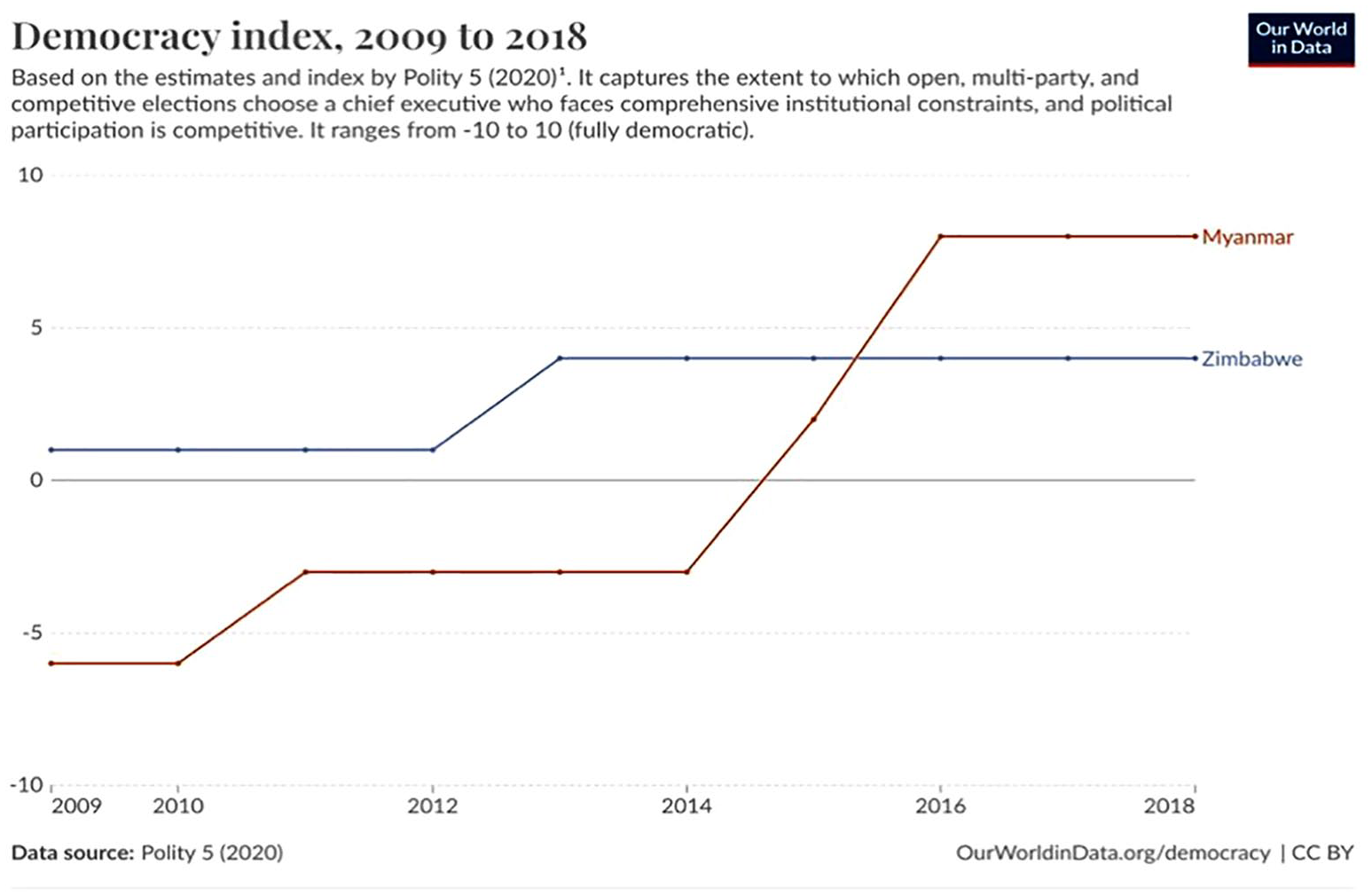
Democracy index of Myanmar and Zimbabwe from 2009 to 2018.
By using a most similar systems design, this study isolates key variables across both cases (Steinmetz, 2019). While Myanmar and Zimbabwe faced similar challenges—authoritarian regimes subject to international sanctions—their divergent outcomes provide a valuable opportunity to explore how regional, political, and economic contexts influence the success or failure of sanctions.
In Myanmar, sanctions targeting military elites contributed to political reforms, as demonstrated by the country’s rise in the Democracy Index between 2010 and 2015, following the lifting of some sanctions and the introduction of liberalizing reforms under President Thein Sein. By contrast, Zimbabwe’s regime proved more resilient, maintaining its authoritarian grip by leveraging regional alliances and internal control mechanisms, despite smart sanctions.
This study explores how smart sanctions affected political behavior, economic conditions, and regime responses in these two countries, focusing on the following four critical factors: (1) the precision of targeting central decision-makers, (2) the political structure and stability of the regime, (3) the cohesion of the international sanctioning coalition, and (4) the ability of targeted entities to evade sanctions. By analyzing these factors, this research offers important insights into the strategic use of smart sanctions in promoting policy changes in different political contexts, providing valuable lessons for policymakers seeking to address violations of international norms, such as human rights abuses.
The case of smart sanctions in Myanmar
Myanmar was subject to international sanctions primarily due to the oppressive actions of its military regime and its resistance to democratic reforms. The imposition of targeted sanctions gained momentum following the violent suppression of nationwide protests in 2007, known as the Saffron Revolution. These protests, led by Buddhist monks and supported by civilians, demanded political freedoms and human rights, prompting a harsh crackdown by the ruling junta known as the State Peace and Development Council (SPDC). The Saffron Revolution and the military’s brutal response attracted global attention, increasing calls for international action against the regime’s repression.
In response to these events, as well as long-standing human rights abuses, Western nations, including the United States and European Union, implemented smart sanctions targeting key military leaders and their networks. These sanctions were specifically aimed at economic elites connected to the regime and those directly responsible for perpetrating violence and suppressing democratic movements. The objectives were twofold: first, to economically pressure the military junta and its supporters into reconsidering their stance on political reforms, and second, to isolate the regime internationally until it demonstrated significant changes in governance and respect for human rights (Bünte and Portela, 2012).
The sanctions imposed on Myanmar included asset freezes, travel bans, and restrictions on financial transactions involving targeted individuals and entities. The sanctions were accompanied by diplomatic efforts to increase Myanmar’s international isolation, with the goal of weakening the economic interests of key regime figures and forcing political liberalization. These smart sanctions represented a shift from broader sanctions that affected entire populations to more targeted measures that aimed to minimize humanitarian impact while exerting maximum pressure on the military elites.
The effectiveness of these smart sanctions in Myanmar is evident in the significant political changes that occurred in the early 2010s. Under the presidency of Thein Sein, a former military general, Myanmar began a process of political liberalization that included the release of over 700 political prisoners, the relaxation of censorship laws, and the establishment of new political and civil rights. In October 2011 and January 2012, major reforms were implemented, such as the formation of the National Human Rights Commission and the passage of legislation allowing labor unions and strikes (Bünte and Portela, 2012). The sanctions played a key role in facilitating these changes by applying direct pressure on the junta’s leadership, cutting them off from international financial markets, and reducing their global legitimacy.
However, two important caveats must be noted. First, while sanctions were instrumental in creating external pressure on the junta, it would be an oversimplification to attribute Myanmar’s political transition solely to these measures. Internal dynamics within the regime, including recognition among military leaders that political reforms were necessary for economic stability and development, were equally critical. Myanmar’s long-standing reliance on China as its primary economic partner also became a concern for the regime, as it sought to reduce this dependency and normalize relations with Western countries. In this context, the sanctions, coupled with internal pressures and the efforts of opposition movements led by the National League for Democracy (NLD), contributed to Myanmar’s political opening, but they were not the sole factor driving these changes (Bünte and Dosch, 2015; Kipgen, 2021).
Second, while Myanmar experienced a period of political liberalization, the 2021 military coup significantly reversed the progress made since 2011. The coup, which ousted the elected government of Aung San Suu Kyi and the NLD, highlighted the fragility of the political reforms. The military justified its seizure of power by claiming widespread electoral fraud in the 2020 elections, although these claims were widely disputed by international observers (Kipgen, 2021). This reversal demonstrates that while smart sanctions were effective in promoting short-term reforms, they were not sufficient to ensure lasting political change.
Despite the 2021 coup, Myanmar’s experience with smart sanctions provides valuable lessons about how targeted economic measures can be leveraged to create openings for political reform. The sanctions played a central role in limiting the regime’s ability to operate globally, which, combined with internal discontent and regional pressures, contributed to the decision to initiate reforms. However, the longevity of these reforms depends on a range of other factors, including internal power struggles, international alliances, and the durability of opposition movements (Bünte and Dosch, 2015).
Ultimately, the case of Myanmar illustrates that smart sanctions, when carefully targeted, can create meaningful political openings by pressuring key regime figures economically and diplomatically. However, their effectiveness is often contingent on a combination of internal and external factors, including the regime’s recognition of the need for reform and its ability to adapt to sanctions. While Myanmar’s transition to political liberalization was partially driven by smart sanctions, the 2021 military coup underscores the limits of such measures in securing long-term political stability. This case highlights the need for a nuanced understanding of sanctions as part of a broader strategy that includes diplomatic engagement and support for internal reform movements.
The case of smart sanctions in Zimbabwe
Zimbabwe has been subjected to targeted sanctions since the early 2000s, primarily in response to severe human rights abuses, political repression, and allegations of election rigging under Robert Mugabe’s presidency. The roots of this crisis can be traced back to Mugabe’s controversial agrarian reform in 2000, during which land was forcibly seized from white farmers. This campaign, designed to shore up support for Mugabe’s Zimbabwe African National Union–Patriotic Front (ZANU-PF) party, was marked by political violence, opposition intimidation, and economic disruption. As the party’s popularity waned, the regime became increasingly authoritarian, resorting to election rigging and repression to maintain control (Portela, 2014).
In response to these actions, Western nations—including the United States and the European Union—imposed smart sanctions designed to target key figures in Mugabe’s regime. The sanctions focused on high-ranking officials, their families, and affiliated businesses. They included travel bans, asset freezes, and financial restrictions, aiming to isolate the elites economically and diplomatically (Compagnon, 2011). In theory, by pressuring the regime’s economic interests and limiting its international reach, these sanctions were meant to prompt internal reform.
However, Zimbabwe’s experience demonstrates the limits of such sanctions. Ironically, the elites whom the sanctions sought to pressure were often the ones who successfully evaded them. Mugabe’s regime skillfully circumvented the restrictions by strengthening its ties with alternative international partners, notably China, South Africa, and other African and Asian nations. These relationships allowed Zimbabwe’s elites to continue their economic activities outside of the Western-controlled financial system, effectively undermining the sanctions’ impact (Grebe, 2010). This ability to sidestep sanctions meant that the intended pressure on the ruling elite was blunted.
Meanwhile, the broader population bore the brunt of the economic fallout. Zimbabwe’s economy, already suffering from mismanagement and hyperinflation, deteriorated further under the weight of sanctions, exacerbating poverty, unemployment, and food shortages. These hardships, though not directly caused by the targeted sanctions, were used by the regime to shift blame to the West, portraying Zimbabwe as a victim of foreign interference. Mugabe capitalized on this narrative, framing the sanctions as a continuation of colonial exploitation, which resonated with many Zimbabweans. As a result, the sanctions not only failed to generate significant internal opposition to the regime but also allowed Mugabe to consolidate power by rallying nationalist sentiment.
In terms of political reform, the impact of sanctions was similarly limited. While there were fewer instances of electoral fraud and violence in the 2013 elections compared to 2008, these changes were driven more by internal political dynamics than by external pressure from sanctions. Mugabe retained control over key institutions—most notably the military and judiciary—and continued to exert authoritarian dominance despite the international isolation. The regime used the sanctions as a tool for domestic propaganda, further insulating itself from internal dissent by blaming the country’s economic woes on Western nations.
Mugabe’s resignation in 2017, after nearly four decades in power, was less a result of international sanctions and more a consequence of internal factionalism within ZANU-PF and pressure from the military. Mugabe’s age and declining health, combined with growing opposition from a faction led by his wife, Grace Mugabe, created conditions for the military to intervene. Mugabe’s ouster and replacement by Emmerson Mnangagwa signaled a shift in leadership, but not in political governance. Despite the change in leadership, Mnangagwa’s government has failed to deliver meaningful political reform. In fact, under his rule, Zimbabwe has experienced further democratic backsliding, with Freedom House’s 2024 report downgrading Zimbabwe from “partly free” in 2017 to “not free” in 2024, reflecting worsening political repression under Mnangagwa’s leadership.
The case of Zimbabwe illustrates the paradox of smart sanctions: while designed to exert targeted pressure on the elite, the regime’s ability to circumvent these efforts left the broader population to suffer the economic consequences. The elites evaded sanctions through international partnerships and domestic control mechanisms, undermining the sanctions’ intended impact. At the same time, the sanctions’ broader economic fallout, felt most acutely by ordinary citizens, only strengthened Mugabe’s grip on power by reinforcing his anti-colonial narrative. This highlights the difficulties of using sanctions as a tool for political reform in contexts where regimes can adapt and maintain access to alternative resources.
Discussion and analysis
In this section, we evaluate the hypotheses developed earlier in the paper by examining two case studies, Myanmar and Zimbabwe, to assess the effectiveness of smart sanctions in achieving political change. The hypotheses proposed that the precision in targeting key decision-makers, the political structure of the regime, the cohesion of the sanctioning coalition, and the ability of the targeted entities to evade sanctions would all significantly influence the success of sanctions. Through a comparative analysis, we can determine how these factors played out in practice, examining the extent to which each hypothesis aligns with the outcomes in Myanmar and Zimbabwe.
By analyzing the implementation of sanctions in these two countries, we can assess how well-targeted sanctions disrupt power structures, undermine the support base of authoritarian regimes, and induce political reform. The case of Myanmar, where sanctions targeted military leaders with high precision, will be contrasted with Zimbabwe, where broader, less precise sanctions were imposed. The findings will help determine whether the hypotheses hold in these real-world examples and what implications this has for future sanctioning strategies.
Precision in targeting central decision-makers
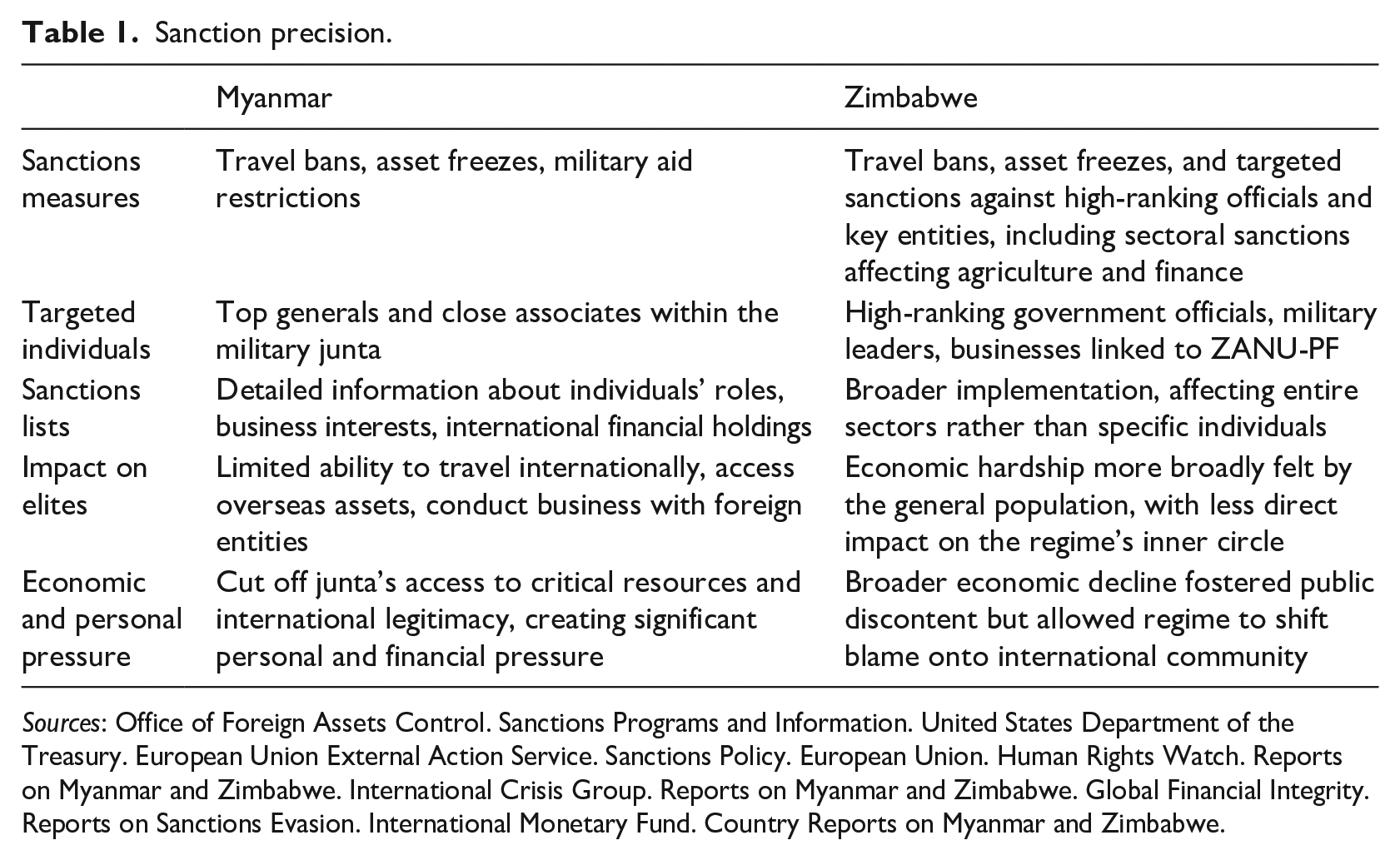
In Myanmar, the precision of smart sanctions was crucial in exerting pressure on the military junta’s leadership and their business networks. Sanctions such as travel bans, asset freezes, and restrictions on military aid were meticulously designed to affect top generals and their close associates directly. For instance, the United States and EU compiled sanctions lists that included detailed information about the individuals’ roles within the junta, their business interests, and their international financial holdings. These measures limited the generals’ ability to travel internationally, accessed their overseas assets, and conducted business with foreign entities.
By targeting the economic lifelines and personal privileges of these key figures, the sanctions effectively cut off the junta’s access to critical resources and international legitimacy. This high level of precision created significant personal and financial pressure on the junta leaders, increasing the internal pressure for political reforms and contributing to a shift in their policies over time. The pressure was so concentrated that it made it difficult for these individuals to continue their activities without facing substantial disruptions and personal consequences.
Contrastingly, the sanctions imposed on Robert Mugabe’s regime in Zimbabwe lacked this level of precision. Although high-ranking government officials, military leaders, and businesses associated with the ruling ZANU-PF party was targeted, the implementation was broader and less focused. The sanctions extended to entire sectors, such as agriculture and finance, which inadvertently affected the general population more than the intended political elites. These broad sanctions contributed to widespread economic hardship, increasing unemployment, and food shortages, which disproportionately affected ordinary citizens rather than the regime’s inner circle.
This broader application of sanctions diluted the pressure on Mugabe and his associates. Instead of creating targeted economic pain for the political elites, the general economic decline fostered public discontent but also allowed the regime to shift blame onto the international community for the country’s woes. The lack of precision meant that the sanctions failed to disrupt the personal and financial networks that sustained Mugabe’s power.
Moreover, the regime exploited the situation by presenting itself as a victim of Western imperialism, thereby rallying nationalist sentiments and consolidating internal support. This narrative, combined with the regime’s control over state media and security forces, further insulated the political elite from the intended effects of the sanctions. The imprecise targeting ultimately weakened the effectiveness of the sanctions and allowed Mugabe’s regime to continue its policies with minimal political reform.
The success of smart sanctions in Myanmar can be at least partially attributed to their precision in targeting the military junta’s key figures, thereby directly affecting their personal and financial interests. In contrast, the broader and less precise sanctions in Zimbabwe failed to exert the same level of targeted pressure on the regime’s inner circle, resulting in less effective outcomes. This comparison, illustrated in Table 1, highlights the importance of precision in the design and implementation of smart sanctions to achieve the desired political objectives.
Sanction precision.
Sources: Office of Foreign Assets Control. Sanctions Programs and Information. United States Department of the Treasury. European Union External Action Service. Sanctions Policy. European Union. Human Rights Watch. Reports on Myanmar and Zimbabwe. International Crisis Group. Reports on Myanmar and Zimbabwe. Global Financial Integrity. Reports on Sanctions Evasion. International Monetary Fund. Country Reports on Myanmar and Zimbabwe.
Political structure and stability of the targeted regime
The political structure and stability of the targeted regime significantly influence the effectiveness of sanctions in pressuring leadership. According to selectorate theory, regimes with a small winning coalition—consisting of elites whose support is essential for the leader’s hold on power—are more vulnerable to targeted sanctions that disrupt the flow of resources to these key supporters. However, authoritarian regimes with centralized power structures may exhibit greater resilience to sanctions by controlling dissent and effectively allocating resources to maintain internal stability. Even so, targeting key elites within such regimes can potentially create internal divisions and pressure for policy changes.
In Myanmar, while the military junta maintained centralized control, the regime faced significant internal divisions, exacerbated by external pressures for reform. However, contrary to some interpretations, the opposition movement, led by Aung San Suu Kyi’s National League for Democracy, was significantly constrained during the period under review. Suu Kyi herself was under house arrest from 1989 to 2010, and her party’s political influence was largely symbolic rather than immediately effective. The regime’s response to internal dissent was often violent, designed to prevent defections and control the population. Therefore, the notion that Myanmar’s opposition was unified and able to influence politics directly should be reconsidered in light of the fact that the junta suppressed significant political competition during this period. Nonetheless, the international community rallied around Suu Kyi’s movement as a symbol of democratic resistance, which, combined with targeted sanctions, amplified external pressure on the regime. The military junta’s reliance on a small, elite ruling group (the winning coalition) made them particularly susceptible to smart sanctions. The disruption of their economic interests through asset freezes and travel bans created tensions within the regime, as it affected the personal and collective interests of these key figures.
In contrast, Zimbabwe presented a more complex situation. While Mugabe’s regime maintained strong internal cohesion for many years, it was not immune to internal divisions. By 2017, Mugabe was ousted in an internal coup orchestrated by his former allies, illustrating that the regime faced significant factionalism. The regime did not operate with complete unity; it held power by balancing various internal factions through a combination of coercion and patronage. Importantly, Zimbabwe had a robust and legitimate opposition, most notably the Movement for Democratic Change (MDC), which actually won the 2008 elections before Mugabe manipulated the results to retain power. Unlike Myanmar’s opposition, Zimbabwe’s MDC had a real political foothold and posed a serious challenge to Mugabe’s rule, which further complicates the assumption that Myanmar’s opposition was better positioned to leverage sanctions.
Despite this, Mugabe’s regime was adept at surviving external pressure, largely due to its ability to diversify international alliances and tap into alternative economic resources through relationships with China, South Africa, and other African states. Furthermore, the regime used nationalist rhetoric to discredit the sanctions, portraying them as neo-colonial attempts to undermine Zimbabwe’s sovereignty, which resonated with a significant portion of the population. The broader sanctions imposed on sectors like agriculture also allowed Mugabe to shift blame for the country’s economic troubles to the West, further consolidating his internal support.
While the opposition in Zimbabwe was more viable than in Myanmar, the sanctions ultimately did little to dismantle Mugabe’s grip on power due to the regime’s ability to maintain key patronage networks and military support. Mugabe effectively controlled the security apparatus, which allowed him to suppress dissent and mitigate the internal pressures that might otherwise have resulted from sanctions. However, the eventual ousting of Mugabe was a result of internal factionalism within the ruling ZANU-PF, rather than the impact of sanctions.
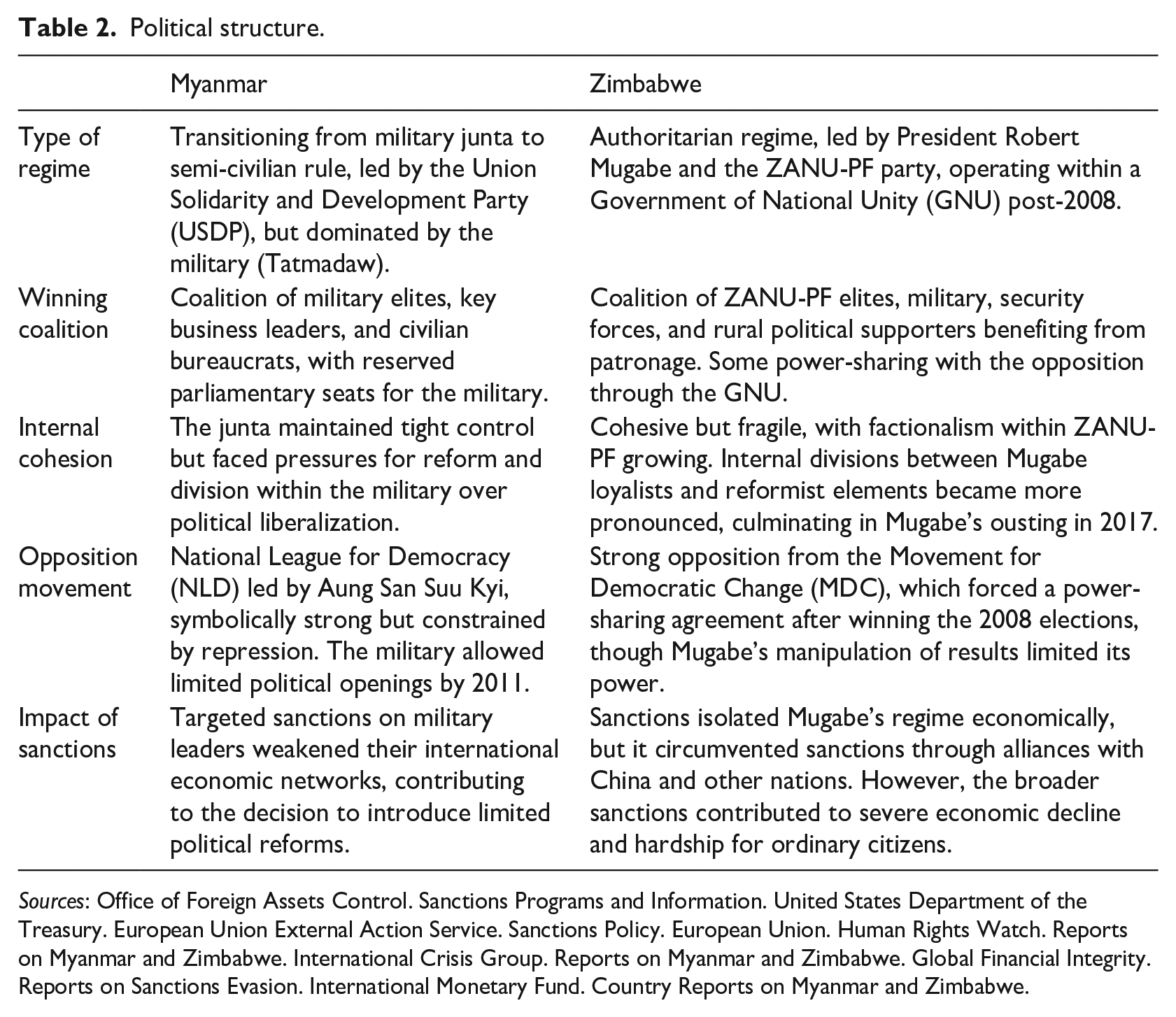
In sum, while both Myanmar and Zimbabwe experienced authoritarian rule under small elite coalitions, their political contexts were quite different, as shown in Table 2. The presence of a strong opposition in Zimbabwe, as well as Mugabe’s eventual removal through an internal coup, contrasts sharply with Myanmar, where the opposition was symbolically powerful but structurally weak. This suggests that sanction effectiveness in either case cannot be attributed solely to the internal unity or fragmentation of the regime. Instead, it highlights the importance of understanding each regime’s adaptability to external pressures, the role of internal opposition, and the ways in which sanctions were perceived and managed within the broader political and economic context.
Political structure.
Sources: Office of Foreign Assets Control. Sanctions Programs and Information. United States Department of the Treasury. European Union External Action Service. Sanctions Policy. European Union. Human Rights Watch. Reports on Myanmar and Zimbabwe. International Crisis Group. Reports on Myanmar and Zimbabwe. Global Financial Integrity. Reports on Sanctions Evasion. International Monetary Fund. Country Reports on Myanmar and Zimbabwe.
Cohesion and comprehensiveness of the international sanctioning coalition
The effectiveness of smart sanctions in Myanmar was significantly enhanced by the cohesion and comprehensiveness of the international sanctioning coalition. Western countries, particularly the United States and EU, worked closely with Association of Southeast Asian Nations (ASEAN) members to coordinate their efforts against the military junta. This unified approach ensured that the sanctions were broad-based and comprehensive, targeting key economic sectors and individuals within the regime. By presenting a united front, the coalition made it difficult for the junta to seek alternative economic and political partnerships, as few countries were willing to undermine the collective effort by engaging with Myanmar’s leadership.
The alignment of policies among the coalition members meant that the sanctions were not only comprehensive but also consistently enforced. This consistency amplified the impact of the sanctions, as the junta found it challenging to circumvent the measures through typical means such as shifting assets to countries not participating in the sanctions regime. In addition, the unified stance increased the legitimacy and moral authority of the sanctions, garnering broader international support and reducing the likelihood of significant economic or diplomatic defection.
Furthermore, ASEAN’s involvement was particularly crucial, given the regional proximity and political influence these countries had over Myanmar. ASEAN’s participation signaled regional disapproval of the junta’s actions, adding to the pressure for political reform. The collective pressure from both Western and regional actors created a multifaceted challenge for the junta, constraining its options and increasing the internal and external costs of maintaining its repressive policies.
In contrast, the international coalition imposing sanctions on Zimbabwe was far less cohesive, which weakened the effectiveness of the measures. Key regional players, such as South Africa and other members of the Southern African Development Community (SADC), often opposed or undermined the sanctions. This regional opposition was driven by a combination of political solidarity, economic interests, and a general aversion to perceived Western interference in African affairs. As a result, Mugabe’s regime was able to exploit these regional divisions to its advantage.
The lack of a unified and comprehensive approach among the international coalition allowed Zimbabwe to seek economic and political lifelines from sympathetic neighboring countries. For example, South Africa’s reluctance to fully support the sanctions provided Zimbabwe with critical economic support through trade and investment, helping to mitigate the economic impact of the measures. In addition, political backing from SADC countries offered Mugabe’s regime a degree of legitimacy and diplomatic cover, which reduced the pressure to comply with international demands for political reform.
The fragmented nature of the international response meant that sanctions were inconsistently applied and enforced, making it easier for the regime to find loopholes and workarounds. The lack of coordination also reduced the overall impact of the sanctions, as targeted entities could shift their activities to less restrictive environments. This inconsistency undermined the potential effectiveness of the sanctions, allowing the regime to continue its policies with minimal adjustments.
Moreover, the regional opposition to the sanctions on Zimbabwe highlighted the broader geopolitical dynamics at play. Many African leaders viewed the sanctions as an extension of Western imperialism, which further galvanized regional support for Mugabe. This perception of external interference strengthened the regime’s narrative of resistance against neo-colonialism, bolstering domestic support, and undermining the international coalition’s efforts.
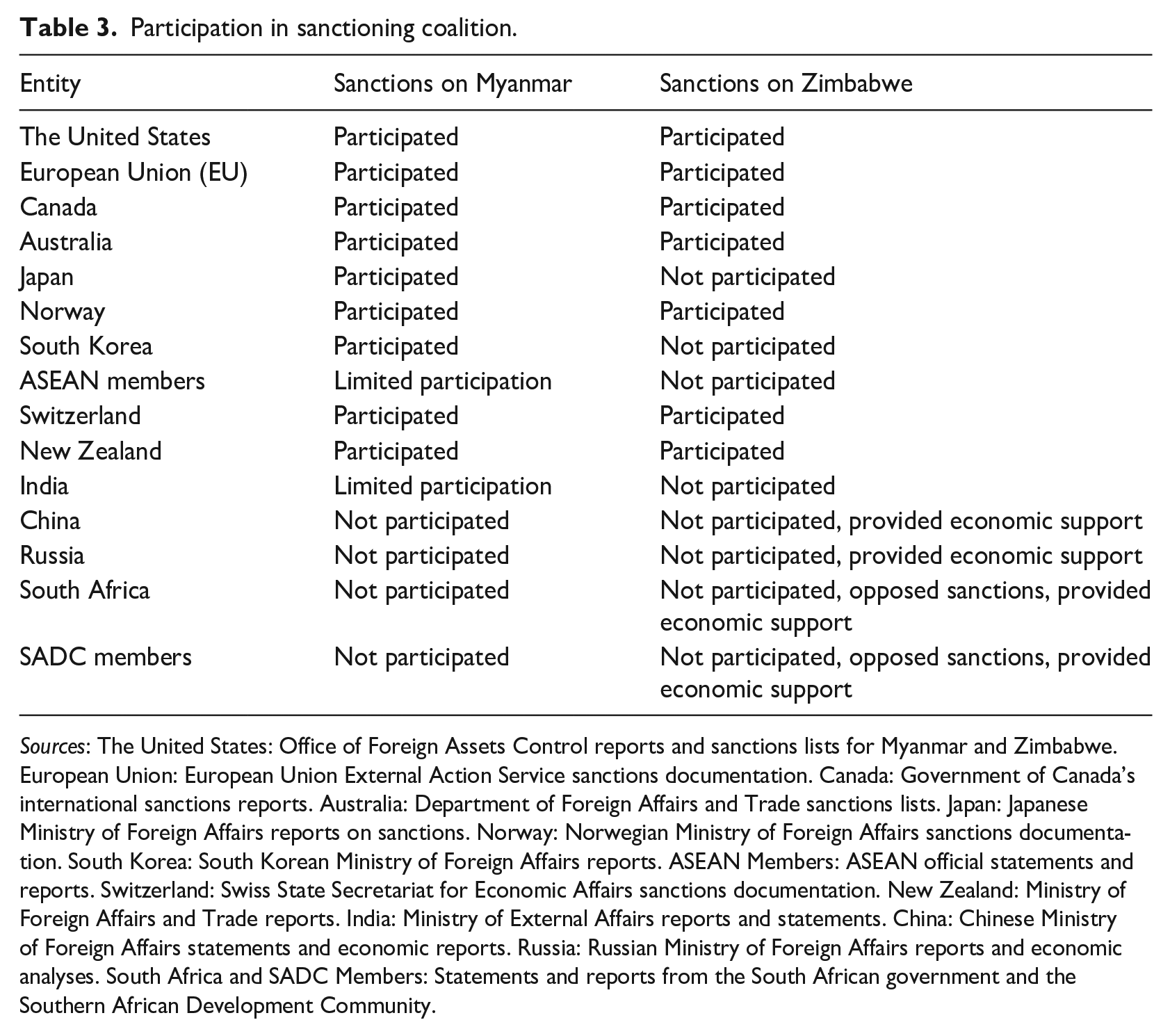
The success of smart sanctions in Myanmar was significantly bolstered by the cohesion and comprehensiveness of the international sanctioning coalition, which presented a united and consistent front. In contrast, the fragmented and inconsistent approach to sanctions on Zimbabwe, coupled with regional opposition, undermined their effectiveness and allowed Mugabe’s regime to sustain itself despite international pressure. This comparison, presented in Table 3, underscores the critical importance of a unified and coordinated international response in enhancing the impact of smart sanctions.
Participation in sanctioning coalition.
Sources: The United States: Office of Foreign Assets Control reports and sanctions lists for Myanmar and Zimbabwe. European Union: European Union External Action Service sanctions documentation. Canada: Government of Canada’s international sanctions reports. Australia: Department of Foreign Affairs and Trade sanctions lists. Japan: Japanese Ministry of Foreign Affairs reports on sanctions. Norway: Norwegian Ministry of Foreign Affairs sanctions documentation. South Korea: South Korean Ministry of Foreign Affairs reports. ASEAN Members: ASEAN official statements and reports. Switzerland: Swiss State Secretariat for Economic Affairs sanctions documentation. New Zealand: Ministry of Foreign Affairs and Trade reports. India: Ministry of External Affairs reports and statements. China: Chinese Ministry of Foreign Affairs statements and economic reports. Russia: Russian Ministry of Foreign Affairs reports and economic analyses. South Africa and SADC Members: Statements and reports from the South African government and the Southern African Development Community.
Ability of targeted entities to circumvent measures
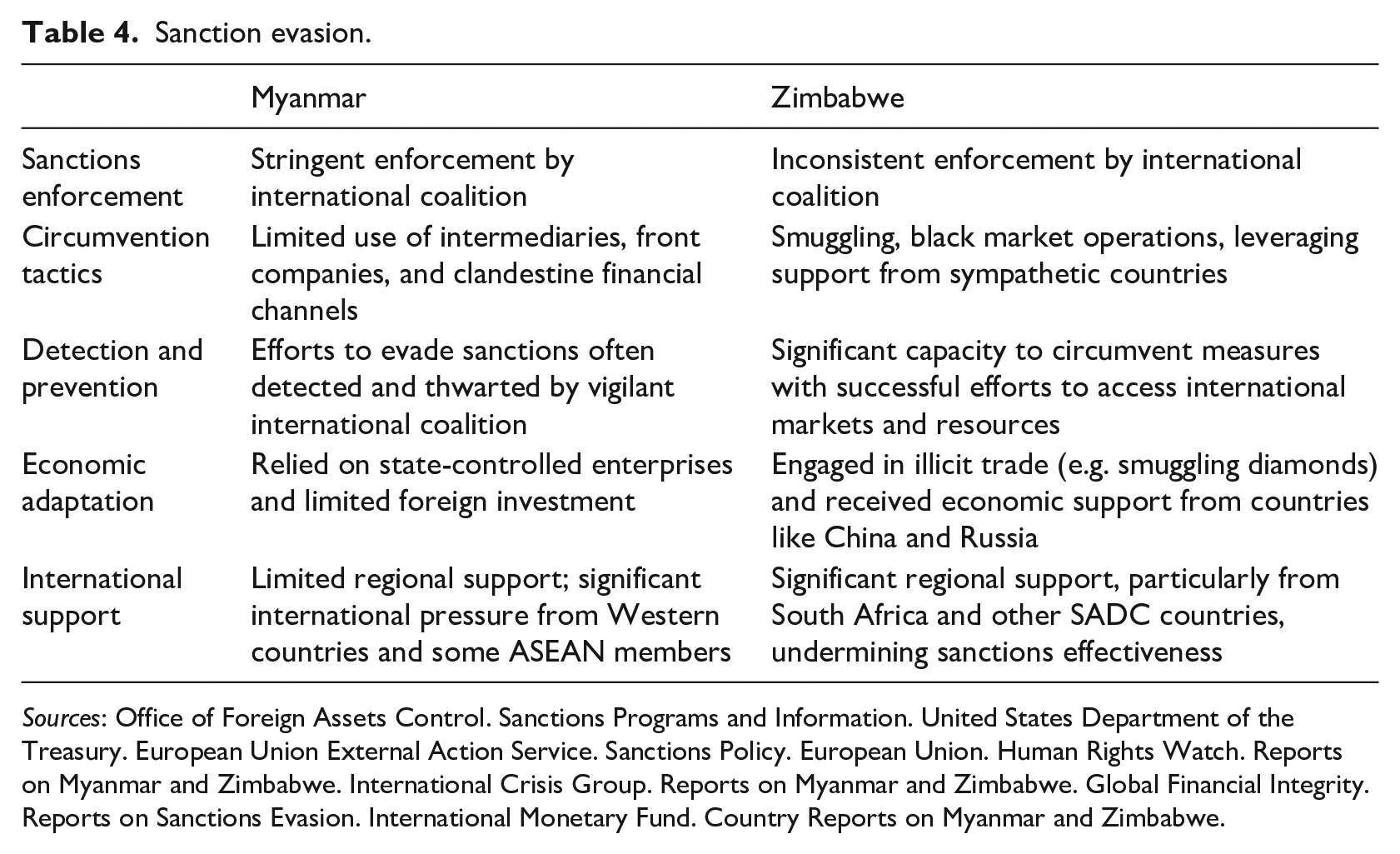
The ability of targeted entities to circumvent sanctions was a critical factor in determining their effectiveness. In Myanmar, the junta had limited means to bypass the comprehensive and coordinated international measures. The sanctions were meticulously designed and implemented by a vigilant international coalition that monitored and enforced compliance. Efforts by the junta to evade sanctions, such as using intermediaries, front companies, or clandestine financial channels, were often detected and thwarted. This high level of scrutiny and enforcement ensured that the sanctions maintained their intended pressure on the regime’s key figures and their networks, thereby cutting off crucial economic and financial lifelines. This effective enforcement played a significant role in pressuring the junta to consider political reforms.
For example, targeted sanctions against specific military leaders included rigorous asset freezes that made it nearly impossible for these individuals to access international banking systems. Moreover, travel bans were enforced through international cooperation, which prevented the junta members from traveling to countries that could offer economic or political refuge. The coordination among sanctioning countries meant that even when the junta attempted to relocate assets or establish new financial links, their efforts were quickly identified and blocked. This consistent and thorough enforcement created a situation where the junta’s options for evading sanctions were severely limited, thereby increasing the pressure for internal political change.
However, Zimbabwe’s regime demonstrated significant capacity to circumvent the imposed measures. Mugabe and his allies engaged in a range of activities to mitigate the impact of sanctions, including smuggling, black market operations, and leveraging support from sympathetic countries. The regime’s ability to adapt and find alternative means of sustaining itself was evident in its successful efforts to access international markets and resources through unofficial channels. This included engaging in illicit trade, such as the smuggling of diamonds and other valuable commodities, which provided a steady stream of revenue despite the sanctions.
Moreover, Zimbabwe fostered relationships with countries opposed to the sanctions, such as China and Russia, which provided economic, political, and military support. These alliances enabled Zimbabwe to bypass Western sanctions and obtain necessary resources and financial assistance. For instance, China invested in Zimbabwean infrastructure and provided loans and aid, which helped to stabilize the economy and reduce the impact of the sanctions. Russia also offered diplomatic backing and economic partnerships that further insulated the regime from international isolation.
The effectiveness of sanctions in Myanmar was enhanced due to the regime’s limited ability to circumvent the comprehensive and coordinated measures, coupled with stringent enforcement by the international coalition. This pressure contributed to significant political reforms. Conversely, Zimbabwe’s regime successfully mitigated the impact of sanctions through a combination of smuggling, black market activities, and fostering relationships with sympathetic countries. This ability to evade sanctions reduced their effectiveness and allowed Mugabe’s regime to sustain itself both economically and politically, diminishing the likelihood of significant political change. This comparison, depicted in Table 4, highlights the importance of robust enforcement and international cooperation in enhancing the effectiveness of smart sanctions.
Sanction evasion.
Sources: Office of Foreign Assets Control. Sanctions Programs and Information. United States Department of the Treasury. European Union External Action Service. Sanctions Policy. European Union. Human Rights Watch. Reports on Myanmar and Zimbabwe. International Crisis Group. Reports on Myanmar and Zimbabwe. Global Financial Integrity. Reports on Sanctions Evasion. International Monetary Fund. Country Reports on Myanmar and Zimbabwe.
Conclusion
This comparative study of Myanmar and Zimbabwe has provided a nuanced understanding of the factors that determine the effectiveness of smart sanctions. By explicitly reflecting on the four hypotheses, we can see how these determinants played out differently in each case.
Hypothesis 1 posited that smart sanctions would be more effective when narrowly targeted at individuals holding critical decision-making power. This was clearly demonstrated in Myanmar, where the sanctions precisely targeted military elites and their financial networks, directly affecting their economic interests and global legitimacy. This precision effectively pressured the regime’s key figures, contributing to political reforms. Conversely, the broader and less focused sanctions in Zimbabwe failed to exert the same level of pressure on Mugabe’s inner circle. The sanctions disproportionately affected the general population, diluting their impact on the regime and allowing Mugabe to shift blame onto external actors.
Hypothesis 2 suggested that smart sanctions would be more effective in regimes with small winning coalitions, as they rely heavily on private goods to maintain loyalty. This hypothesis was confirmed in Myanmar, where the regime’s tight-knit military elites were vulnerable to disruptions in their personal economic networks. The sanctions fractured the loyalty of key figures within the junta, which, combined with internal tensions, contributed to political liberalization. In Zimbabwe, however, the regime’s broader patronage networks and strong nationalist rhetoric helped insulate Mugabe’s coalition from the intended effects of sanctions. The sanctions failed to dismantle Mugabe’s power base, as the regime was able to maintain loyalty through extensive patronage and support from the security forces.
Hypothesis 3 proposed that smart sanctions would be more effective when imposed by a cohesive and comprehensive international coalition. In Myanmar, the unity of Western countries and ASEAN members maximized the pressure on the junta, limiting their ability to evade sanctions or seek alternative economic partnerships. This unified approach played a critical role in the sanctions’ effectiveness. In contrast, the fragmented and inconsistent international response to Zimbabwe, characterized by regional opposition and uneven enforcement, weakened the sanctions. Countries like South Africa and China provided Mugabe with economic and political lifelines, undermining the impact of the sanctions.
Hypothesis 4 argued that smart sanctions would be less effective when targeted entities possess robust mechanisms for evasion. The case of Zimbabwe confirmed this hypothesis, as the regime was able to circumvent sanctions through smuggling, black market activities, and alliances with sympathetic countries like China and Russia. These evasion tactics significantly reduced the sanctions’ effectiveness. In Myanmar, however, the junta faced stricter international enforcement, limiting their ability to circumvent the sanctions, and maintain access to critical resources. This stringent enforcement kept pressure on the regime and contributed to political change.
In sum, this study highlights the importance of designing sanctions with precision, targeting the right political structures, fostering cohesive international cooperation, and enhancing enforcement to prevent evasion. These factors, as demonstrated in the divergent outcomes of Myanmar and Zimbabwe, are crucial for the success of smart sanctions.
Future research should explore how these key determinants vary across different geopolitical contexts, focusing on the role of regional dynamics and evolving political landscapes. Technological advancements and stronger international cooperation could further enhance sanctions’ effectiveness, helping to minimize unintended humanitarian consequences while achieving political objectives. By continuing to refine empirical research and theoretical frameworks, scholars can offer policymakers practical recommendations for implementing more effective and humane smart sanctions, ensuring they remain a powerful tool in modern economic statecraft.
Footnotes
Funding
The author(s) received no financial support for the research, authorship, and/or publication of this article.
