




Abstract
This study seeks to investigate the impact of youth empowerment programmes on the peace process in Zimbabwe. Demographers have revealed that the youth population in Sub-Saharan Africa is growing to become what is termed the youth bulge. This demographic phenomenon combined with elusive formal wage employment in many African countries has often resulted in youth becoming a de-stabilising force. As a solution to youth unemployment and vulnerability, Zimbabwe adopted youth development and empowerment programmes. The efforts have, however, suffered from a myriad of challenges including lack of political will, political interference and marginalisation of the youth in decision making. This is an empirical mixed-methods study that relied on primary and secondary data that was gathered through quantitative and qualitative means. The study presents comprehensive perspectives on how youth empowerment can be a mitigating measure against youth propensity to violence. The study argues that without proper and genuine youth development and empowerment, peace will continue to be elusive in Zimbabwe and the rest of Africa.
Introduction
Africa has the youngest and an increasingly bulging population in the world. Africa’s share of the global population has grown from 9% in 1950 to 14% in 2005 and 17% in 2017 (Hartmann and Biira, 2020). The continent is projected to account for approximately 50% of the global population growth by 2050 making it home to a big chunk of the world’s population (Osei-Appaw and Christian, 2022). The current demographic dynamics reflect that by 2040, Africa will be home to the world’s youngest population, and by 2050, 55% of the continent’s population shall be living in urban areas (Cleland and Machiyama, 2017: 267). These demographic changes will have political ramifications for the continent, therefore, deserve a systematic analysis (Vanhuysse and Goerres, 2012). Since the year 2000, the youth in Africa emerged as a powerful category (Oinas et al., 2018: 2) and this has engendered debates about development, social policies and migration (Abbink, 2005).
The bulging youth population in Africa characteristically presents a mixture of threats and opportunities for the continent. It is widely presumed that in contexts of unemployment and hopelessness, young people are readily driven into participating in violent conflict (Azeng, 2018). Huntington (1996) theorised the youth bulge as a potential source of political instability. Subsequent studies have affirmed Huntington’s theory and have emphasised the dangers inherent in youth bulges (Urdal, 2004, 2006). This position, however, has recently been questioned in the emerging literature on youth demography (Goldstone et al., 2010). An expanding youth population offers a chance for innovation, economic growth and development. In this regard, many studies have shown that young people are an important constituency in the peacebuilding process around the world (Del Felice and Wisler, 2007; Freddy, 2015). There is growing evidence that the youth represent an indispensable constituency for peacebuilding. This comes at a time when the Constitutive Act of the African Union has recognised the youth as important partners to strengthen cohesion among the people (African Union, 2020).
Furthermore, between 2004 and 2007, the African Union Commission’s strategic plan prioritised youth development and empowerment. The Africa Youth Charter (AYC), adopted by the African Union Assembly in 2006, crystallised the recognition of young people in Africa’s development and provided the continental framework focusing among other things, on the active youth participation in development and empowerment (African Union (AU), 2020). Specifically, the role of the youth in promoting peace in Africa is expressed in Article 17 of the AYC. Aligned to this is the United Nations Security Council Resolution (UNSCR) 2250 and the AU Peace and Security Department that inaugurated the Youth for Peace Africa Program in 2018 with the primary objective and responsibility of mainstreaming African youth into peace and security (AU, 2020). The United Nations Security Council Resolution 2250 (SCR 2250) acknowledges the increasing recognition of the youth as agents for peacebuilding (Williams, 2016). This represents a departure from the past conception of the youth as instigators and perpetrators of violence, and a new understanding of youth as vehicles of sustainable change and peace. Importantly, the resolution stresses the importance of the creation of a conducive and inclusive environment for peacebuilding through economic, social and development activities (Williams, 2016).
Background to the study
The population dynamics in Africa presents enormous socio-economic opportunities and challenges alike. According to Hope (2012: 233), the bulging youth population in Africa has emerged as a very important development challenge of this era. The marginalisation and hopelessness among youth is a ticking bomb for the developing world hence engaging the youth for the development of the African region is now imperative (Hope, 2012: 221). Under circumstances of investment in youth programmes bent on unlocking their potential through empowerment packages such as education, skills training and entrepreneurial support, Africa is set to reap the demographic dividend. According to SAIIA (2018), bulging youth demography has a double effect. It provides a large skilled population that can either contribute or invest in their societies. Adversely, the large youth demography could provide the perfect basis for home-grown violence, terrorism and socio-political unrest owing to poor job prospects and educational opportunities (SAIIA, 2018).
Against a backdrop of a rapidly increasing youth population, most Sub-Saharan African countries are ranked among the 40 poorest countries in the world (Valentina, 2016). Among these countries include the Democratic Republic of Congo, Central African Republic, Burundi, Malawi, Liberia, Niger, Guinea, Madagascar, Guinea-Bissau, Uganda, Togo, Ethiopia and Rwanda (Kingdon et al., 2006). Zimbabwe whose economy has faced several headwinds resulting in a decline in growth should be added to this list. In 2018, the World Bank categorised nations with less than US$1025 per capita to be experiencing high unemployment rates of over 40%. This is a cause for concern given the burgeoning youthful population between 15 and 24 years of age in Africa, a figure expected to double by 2050 (Makoni, 2016). These young people are constantly demanding jobs and opportunities in a shrinking macroeconomic environment. This, in turn, is forcing young people to participate in political violence, armed conflict, terrorism and general crime.
The youth in Zimbabwe find themselves since 2000 in a political environment dominated by nationalist discourse that justifies the use of violence to protect the revolution (Mwonzora and Helliker, 2020). The political rhetoric of ‘protecting the country from the perceived enemies’ through meting violence to political opponents has influenced the youth to declare at some point some parts of Mashonaland East Province as opposition no-go areas (Mwonzora and Helliker, 2020). Since 2000, the youth in Zimbabwe have been mobilised to engage in political violence as a way of escaping to be labelled ‘sell out’ by the ruling ZANU-PF party (Oosterom, 2018). This youth involvement in violence is about securing their security and their families.
Zimbabwe is in the grips of a bulging youth population which is plagued by high levels of lack of opportunities, unemployment and poverty. Young people aged 15–35 years are a very visible segment of the population in urban and rural areas of Zimbabwe. The last national census revealed that 75% of the population is below the age of 35 years (ZimStat, 2012). The preliminary census report for 2012 does not give the youth ratio to the national population, nothing has changed much from the 2021 report. If anything, the youth population has remained high. Zimbabwe’s economy since the stock market crash of November 1997 has continued to shrink and has resulted in a major de-industrialisation process. The main casualty of this de-industrialisation is young people who have endured unemployment and poverty. The youth unemployment and the levels of poverty in the country have fluctuated over the years to the current alarming 80% or 90% depending on the source (Hlungwani, 2018). This stands in contrast to very low unemployment rates in developed countries such as Singapore whose unemployment rate is 1.9% (Ministry of Manpower, 2015). Singapore and other Asian countries have managed to keep this unemployment rate low by supporting or empowering their people to have income generating projects (Buwule, 2018).
With the continuous economic decline that Zimbabwe has had to grapple with, many jobs now lie in the informal sector. Many young people in the country have attempted to start small-scale incoming generating projects which have collapsed principally because of the lack of capital and ‘requisite business skills’ (Sekanjako and Kisige, 2017: 33). The International Labour Organization’s (ILO) survey in Zimbabwe concluded that Zimbabwe’s young people are ranked among the poorest in the world and they live in extremely difficult conditions (Maulani and Agwanda, 2020). The survey also puts the country ‘in the 75 to 100 categories, which relates to working youths experiencing extreme poverty’. The ILO research findings also highlight ‘wide disparities between young women and men in the labour market’ and hinted that these must be addressed urgently (Maulani and Agwanda, 2020). In the situation obtainable in Zimbabwe, youth empowerment is very vital to the socio-economic welfare of young people. This rationalises the need to explore the youth empowerment drive as a contributory measure in the building of sustainable peace.
Methodology
The study is a result of a mixed-methods approach that drew a total of 329 youth with an average age of 27 years across four provinces of Harare, Bulawayo, Masvingo and Mashonaland Central to participate in the study by completing the survey questionnaires. The four provinces were chosen purposively on the understanding by the researcher that they will yield the required data. The two provinces of Harare and Bulawayo are metropolitan provinces which largely reflect what happens in other cities across the country. Mashonaland Central and Masvingo provinces are predominantly rural provinces which in the past and continue to witness youth violence. Stratified-purposive sampling was used to recruit the youth for the survey. The population of the youth from the four provinces was classified into strata of gender (male and female) and a random sampling was applied to each stratum. From this, 329 youth were drawn from the youth data bases in the ministry of youth in the four provinces. The gender split was roughly even with 167 (50.8%) males and 161 (48.9%) females, and one not specified. The data from the survey questionnaires were augmented by data from semi-structured interviews which were conducted with 14 participants from the stakeholder ministry of youth, civil society organisations and academics. These were purposively recruited for their expertise in youth affairs and the relevance of the data to the study. Secondary data were retrieved from academic journals, newspapers and magazine articles. Further details were taken from the ministry of youth policy documents, workshop reports and minutes of meetings.
Quantitative data were subjected to excel to generate descriptive statistics. Descriptive statistics reports such as central tendency including the mean, median, mode, variation, percentage and correlation variables were produced. However, the qualitative data were analysed through thematic analysis. Data were sorted, coded and then categorised into themes and tallied accordingly. Because quantitative and qualitative data were used separately to collect data the analysis was done separately as well. The mixed-method approach that was adopted in this study enabled the acquisition of diverse information about the same phenomenon and rectified the deficiencies that might come because of relying on a single method (Majyambere and Hoskins, 2015). The fundamental justification given for mixed methods is the belief that the combination of the two approaches of qualitative and quantitative research provides a better understanding of the problem under investigation than what each approach can achieve on its own (Creswell and Plano-Clark, 2007).
Conceptualising the youth and youth violence
The definition of the concept of the youth is not commonly agreed upon across cultures and communities. It is important therefore from the onset to underscore that there are debates in extant literature regarding the conceptualisation of the youth. In fact, the concept is highly context-specific. For this reason, scholars submit that the ‘key conceptual debate surrounds how the category of “youth” is understood, as several definitions of the term exist, ranging from age bands to social or cultural framings’ (Gupte et al., 2014: 2). It is, therefore, important from the onset, to situate the concept of the youth in the existing debates within the literature. The common conceptualisation of the youth is the one that has been adopted by the United Nations (UN) that defines the youth based on age categorisation (15–24 years). The same categorisation was adopted by the African Youth Charter that categorises its youth from 15 to 35 years. Zimbabwe, through its National Youth Policy, defines youth as anyone between the ages of 15 and 35 years. It is important to point out that academic literature provides a sociological conceptualisation of the youth. For example, some scholars consider youth as the transitioning period of ‘waithood’ from childhood to adulthood (Chigunta et al., 2005; Honwana, 2013). In the sphere of Zimbabwe politics, the concept youth is fluid and subject to discursive constructions. For example, the ZANU-PF youth secretary is Pupurai Togarepi who is 54 years but still considered a youth. In this regard, the concept youth is manipulated in the realm of politics to suit specific interests and agendas.
Scholars who have studied non-western societies such as De Waal (2002) have reiterated that the term youth is a social construct, and its definition should consider several factors like space, society and time. This view is also supported by authors such as Sommers (2001) who postulate that youth is socially constructed and hence its definition differs from one society to the other. They argue that in ancient African societies, adulthood was earned through the amassing of wealth, and all those who could not attain this remained in perpetual childhood despite their age. Ukeje and Iwilade (2012), see youth as an identity that is socially constructed, and they recognise that relations of power and control affect the social notions of youth.
While there are contentious debates about the definition of the youth notion, the youth are not a homogeneous group (Maringira and Gukurume, 2022). Although the definition of the youth by social expectations and responsibilities of adulthood and consider those despite their age have not attained the social expectations of adulthood (Honwana, 2013: 19; Singerman, 2013) is true, some individuals may grow older and remain socially defined as youth which makes the meaning of the term very fluid. So, some people stay in a prolonged period of being regarded as minors despite their advanced age and this results in the migration into adulthood impaired (Maringira and Gukurume, 2022). This is what Singerman (2013) calls the ‘limbo of waithood’ as these youth lack social recognition as adults, yet they are adults in terms of age. In many developing countries, the youth experience this ‘waithood’ as they remain stuck in a position between youthhood and adulthood (Singerman, 2013). However, the pervasiveness of youth violence can be understood from Honwana’s (2013) assertion that many youths in African countries whose economies are fraught with economic underperformance and corruption, violence offers possible ways to survive and come out of the ‘waithood’.
It is important at this point to mention that scholars have noted that such ‘waithood limbo’ which has resulted in the youth to be susceptible to being used as instruments of violence as well as becoming victims of the same violence (Hage, 2009; Honwana, 2013; Maringira and Gukurume, 2022). According to Honwana (2013: 3), the youth in Africa fall under the waithood category which has often made this a potential source of violence. In this regard, Hage (2009: 11) posits that youth-hood is characterised by an ‘imaginary mobility’ that gives the impression that one is going somewhere. Such expectation has made it possible for the youth to engage in actions of violence when they find themselves in a situation which Hage (2009: 1) calls ‘stuckedness’. This often results in the youth either mobilising or being mobilised for violence. This, however, does not mean that the youth who are in a state of stuckedness lose their agency of understanding violence. Sumberg et al. (2020) thus argues that while the youth might be entangled in economic volatile situations, they possess the agency to move beyond their challenges.
Despite the controversy surrounding the definition of the youth notion, there seems to be a consensus that youth is a period of transition from childhood to adulthood; a period which is marked by social, cultural and physical changes among this group (Mutisi, 2012). Owing to the divergent versions of youth definition, this study limits its definition of youth to people of all sexes between 18 and 35 years of age. The study is inclined towards the government of Zimbabwe’s definition of the youth as all people aged between 15 and 35 years. However, the study deliberately focused on young people from 18 to 35 years because this is the age category that participates in youth empowerment programmes in Zimbabwe. The constitution of Zimbabwe regards all people below the age of 18 years as minors, hence, the cut off from 18 years. The adoption of the age definition of the youth category does not undermine the scholarly debate on the social constructivist understanding of the youth category but helps to streamline and nuance the study. So, the youth as understood in this study is any person between 18 and 35 years despite another social or cultural status.
Problematising the youth bulge
The youth bulge in Africa has been extensively researched and the studies are laced with potential challenges that youth in contemporary Africa face (Mecha, 2013). The theory often applied to the expanding youth population in Africa is the youth bulge theory. The phrase ‘youth bulge’ refers to a phenomenon when the population share of the 15- to 24-year-olds is above 20% and that of the 0- to 14-year-olds is higher than 30% of the total population (Schomaker, 2013). Heinsohn (2003) observes that the excess of young adult males within any given youth bulge is the explanation behind most internal civil and social instability, which is civil war, terrorism or genocide. These excess young adult males according to Heinsohn (2003) are susceptible to all forms of violence, which can result from indoctrination by political and various sorts of religious extremists. The youth bulge theory suggests that African societies whose share of youth is above 20% of the total population are more likely to experience violent conflict (Sommers, 2011: 294). This is because younger men face serious socio-economic challenges and are thus more susceptible to engage in acts of violence (Sommers, 2011: 294).
The argument of youth restlessness gained credibility during the 1990s when the youth were involved in insurgencies in Sierra Leone, Nigeria and Liberia (Ukeje and Iwilade, 2012). In recent years, the Arab uprisings are thought to have been initiated and perpetuated by young people who were growing restless amid socio-economic challenges (Al-Momani, 2011; Ezbawy, 2012). Using his concept of youth grievances, Urdal (2004) developed a model to portray the nexus between youth bulges and armed conflict. The model highlights that in circumstances of youth bulges, the youth are most likely to experience unemployment owing to a substantial increase of labour as these youths enter the labour market. Urdal (2004) argues that unemployment which results from youth bulge breeds grievances, especially if the prospects of youth have been enhanced through education. Grievances again arise if the educated youth cannot influence the political system and attain elite status. Figure 1 below illustrates Urdal’s assertions.
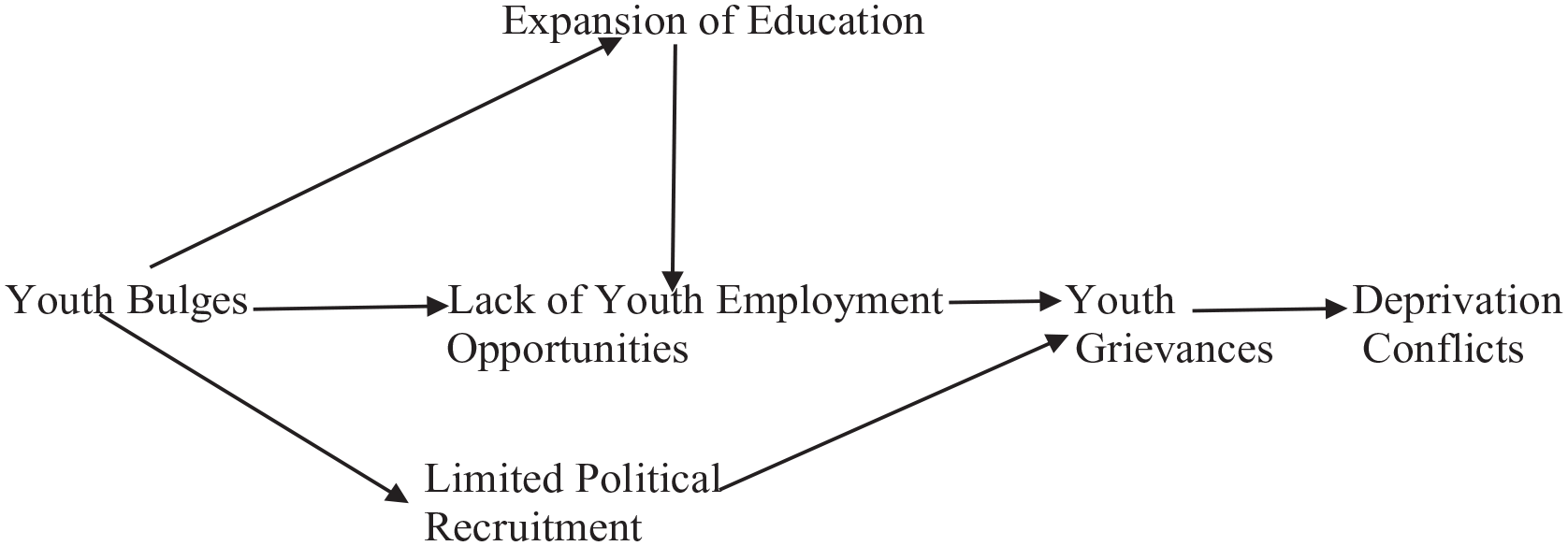
Youth bulges as a source of conflict (adapted from Urdal, 2004).
Most theorists on youth bulge emphasise the incapacity of the labour markets to absorb the bulging youth population as the most important factor for causing grievances among the youth. Urdal (2004) further argues that if young people are to be kept out of employment this is likely to breed dissatisfaction and grievance. This dissatisfaction and grievances result in what Urdal calls deprivation in conflicts. Youth bulges become a threat to peace under conditions of economic downturn and stagnation as those who will be entering the labour market are most likely to find themselves out of employment. Braungart (1984: 16) argues that unemployment undermines and weakens political systems and creates conditions conducive for radicalism, especially by the unattached youth. Collier (2000: 94) believes that young men’s willingness to join a rebellion is influenced by their ability to secure alternative source of income. If young men are subjected to conditions of poverty and unemployment, they go into rebellion as a safety valve.
However, some studies have started to question and oppose the negative perception of youth involvement in conflict. Literature advocating for the youth bulge thesis focus only on the destructive involvement of the youth in conflict. Although many of the quantitative studies on the youth bulge have confirmed a strong correlation between a rising youth population and increased incidence of violence (Cincotta, 2008; Leahy et al., 2007), they have overlooked the positive capacities and the urgency the youth possess to engage actively in peace processes. Sommers (2011) warns against overreliance on correlational data, which though may be valid but sometimes could not provide full explanations and might omit the everyday realities of the youth. He and other scholars also caution against the discourses that describe youth as an undifferentiated mass of security threats (Sommers, 2011: 297). Sommers has demonstrated that many countries with young populations do not experience violent conflict and countries where wars have ended (Angola, Burundi, Liberia, Mozambique, Sierra Leone, Rwanda) still have a youth bulge. Mecha (2013) also argues that the negative perspective about the youth bulge projects African young men as passive and powerless victims of the socio-economic situation.
McEvoy-Levy (2001: 25), argues that the ‘youth bulge script’ has neglected the capacity and potential the youth possess in contributing to peacebuilding activities. Beginning around 2000, serious discussions on the role of young people to the peace process started to emerge. Literature by McEvoy-Levy (2006), Kemper (2005) is part of the earliest attempts to challenge the narrative linking the youth bulge to conflict and provided an alternative narrative of the role of the youth in constructive peace. According to McEnvy-Levy (2006: 301), the youth are so paramount in the peace process, and it is essential to give them ownership of the activities involved. Kemper (2005: 50) submits that the youth need to be involved in the entire duration of the peace programme, from design, implementation to the evaluation of the programmes to make sure that youth concerns and needs are catered for.
Therefore, the apparent large youth cohort in Africa provides the continent with a window of opportunity economically and also on the frontier of peace. Economically, the continent stands to benefit from what has been described in the literature as the demographic dividend. The demographic dividend according to UNFPA (2014) is the potential of economic growth that emanates from shifts in a population’s age structure, particularly when the share of the working-age group (15–64) outweighs that of the non-working-age share of the population (14 and younger, and 65 and older). Drummond et al. (2014) understand the demographic dividend as a product of shifts from a bottom- or top-heavy age structure to one dominated by the working-age adults. When a nation goes through a demographic transition from a high fertility and high mortality to a low fertility and low mortality equilibrium, the size of the working-age population mechanically increases (AU, 2011). Owing to this, a cycle of economic growth develops as the output per capita increases.
Translating the youth bulge into development reality or demographic dividend is not without complications (Bloom et al., 2007; Canning et al., 2015). The foremost challenge to the realisation of the demographic dividend that eventually leads to peace according to Eastwood and Lipton (2012) has been the lack of commitment by the political leadership in creating and pursuing truly transformative agendas, as well as enabling contexts, to maximise the potential and value of an expanding working-age population. While the accelerated economic growth of the demographic dividend remains a possibility for many African nations, the critical political and policy decisions needed to seize and harness it remain largely missing (Izugbara et al., 2018). The realisation of the demographic dividend is so key to the realisation of peace and security in Africa.
Africa’s potential to harness the demographic dividend through pursuing policies that help the region to seize the emerging opportunity of the bulging youth population is fundamental to the realisation of peace in the continent. Of course, the demographic dividend has been rightfully acknowledged and ratified by the African Union as a critical tool for achieving a peaceful and prosperous Africa (Izugbara et al., 2018). Nonetheless, African countries’ efforts for the realisation of the demographic dividend remain largely unarticulated, at best rhetorical (Izugbara et al., 2018). For the youth bulge to become a demographic dividend, structural changes in programmes that cater for the needs of the youth are required. These changes include skills development, education and entrepreneurial training and land policies to give the youth access to the means of production. So critical to harnessing the demographic dividend which is important to peacebuilding is youth empowerment programmes by countries in the African region.
Youth empowerment programmes in Zimbabwe
Zimbabwe’s National Youth policy outlines the government’s vision on the empowerment of young people. The policy affirms that the government acknowledges that the empowerment of young people will enable them to reach their full potential individually or as members of the community. This resulted in an array of projects and programmes that targeted to create employment for the youth. The National Youth Policy emphasises the importance of skills among the youth as a panacea to youth empowerment and development (Kabonga, 2016). To address the skills deficit among the youth, the Zimbabwe government adopted the Integrated Skills Outreach Programme (ISOP) in 2006. This programme was launched with the view of empowering the youth with technical, vocational and entrepreneurial skills to make young people employable through incorporating them into the mainstream economy (Nyika, 2016).
The programme was implemented across the whole spectrum of Zimbabwe with the objective of helping the youths to acquire technical and entrepreneurial skills to initiate sustainable enterprises in their environments and communities. ISOP is the quintessence of the Zimbabwe NYP and was ‘aimed at addressing the challenges of youth unemployment’ (Murinda, 2014: 23). Through the ISOP, the government sought to capacitate and equip the youth with skills which they can use for sustainable livelihoods (Kabonga, 2016). Skills development is a lifelong process and is important for youth employment and sustainable livelihoods. Murinda (2014: 2) argues that the skills developed through ISOP were such that the youth will not be tempted to leave their communities in search of employment in urban areas. In addition, the skills were aimed at exploiting locally available resources and the items or goods produced can be exported for sale to other communities where these materials may not be readily available.
The government, in partnership with the government of Denmark as the major financier, set aside US$6.881 million in 2009 (Maulani and Agwanda, 2020). The programme was organised in phases starting with phase 1 (2010–2011) and phase 2 (2012–2014). It is important to mention that the programme benefitted 6400 youth across the country.
In addition, in 2006, the government of Zimbabwe established a youth development fund with the aim of funding youth entrepreneurship through the provision of loans. To be eligible, the youth were expected to present a feasible business plan to the bank and be between the ages of 18 and 35 years. The loans which were payable over a period of 36 months had an interest of 10% per annum. The government created a fund of US$40 million for the programme. Through this loan facility over US$2.6 million was distributed and in 2015 alone, 3601 loan applications were approved for amounts ranging between US$2000 and US$5000 (Maulani and Agwanda, 2020). The loans were distributed to different sectors of the economy such as agriculture, mining and manufacturing. This was to be a revolving fund whose goal was to fund youth-initiated income-generating projects in the process reducing unemployment and poverty among the youths. The Central African Building Society (CABS) and Commercial Bank of Zimbabwe (CBZ) were mandated with the role of managing the funding facility, carrying out a credit assessment of the projects recommended for funding and keeping a data base of all the funded projects.
In 2013, in the run up to the 2013 general elections, the Zimbabwe government established another fund related to the youth development fund. This fund was called Kurera-Ukondla Youth Fund which was to a large extent monopolised by the ZANU-PF youth to the exclusion of the other youth. The Kurera-Ukondla Youth Fund was established following government’s agreement with Old Mutual with the view of stimulating economic growth and reduce unemployment especially among the youth. There were reports of young people complaining that the conditions to access the funds were too stringent and rigid. The fund was fraught with high default rates to the extent that in May 2014, the Central African Building Society (CABS) discontinued the disbursement of the loans under the Kurera/Ukondla youth fund. Many beneficiaries especially those connected to the ruling ZANU-PF party regarded the loans as freebies from the government and felt no obligation to repay the money. A Parliamentary Portfolio Committee on Youth and Indigenisation found serious irregularities in the programme in 2014. These irregularities included abuse of funds, embezzlement of funds by politicians and a staggering 85% default rate from beneficiaries.
Youth empowerment and peacebuilding
The gist of this study was to establish the nexus between youth empowerment and peacebuilding. Indeed, the study established that there is a close correlation between the development and empowerment of young people and their inclination towards peace. Efforts to build peace by focusing on positive youth development and empowerment in Zimbabwe are evident if one considers the theoretical structures that include policy frameworks and Acts of Parliament as well as youth forums and organisations. However, this is not as obvious in practice as it is in theory. The findings of this study established that more should be done about peacebuilding involving the youth especially focusing on their economic needs. In particular, the economic well-being of the youth is the very key and indispensable to the establishment of peace. The socio-economic empowerment of young people is so crucial to the attainment of durable and positive peace.
Results of this study have revealed a pattern that directs that the issue of peacebuilding through youth development and empowerment needs considerable attention. Peace in any country can only be achieved in totality if the problems that bring youth to violence are properly addressed. Although the contribution of the economic well-being of citizens to participate in violent conflict has been a subject of intense debate in the realm of peace studies, results from this study confirmed how economic empowerment of the youth can result in positive peace in the country. Most of the respondents who participated in this study believed that the economic empowerment of young people translates to peace. Overall, 68% believed that there is a strong correlation between the economic well-being of young people and their orientation towards peace. Figure 2 below gives a summary of how respondents based on gender responded when they were asked about the relationship of economic empowerment with peacebuilding. Sixty-five percentage of the female participants believed that the economic empowerment of young people (through skills transfer and funding of youth self-help projects) is fundamental in the establishment of peace. This was supported by 70% of the male respondents.
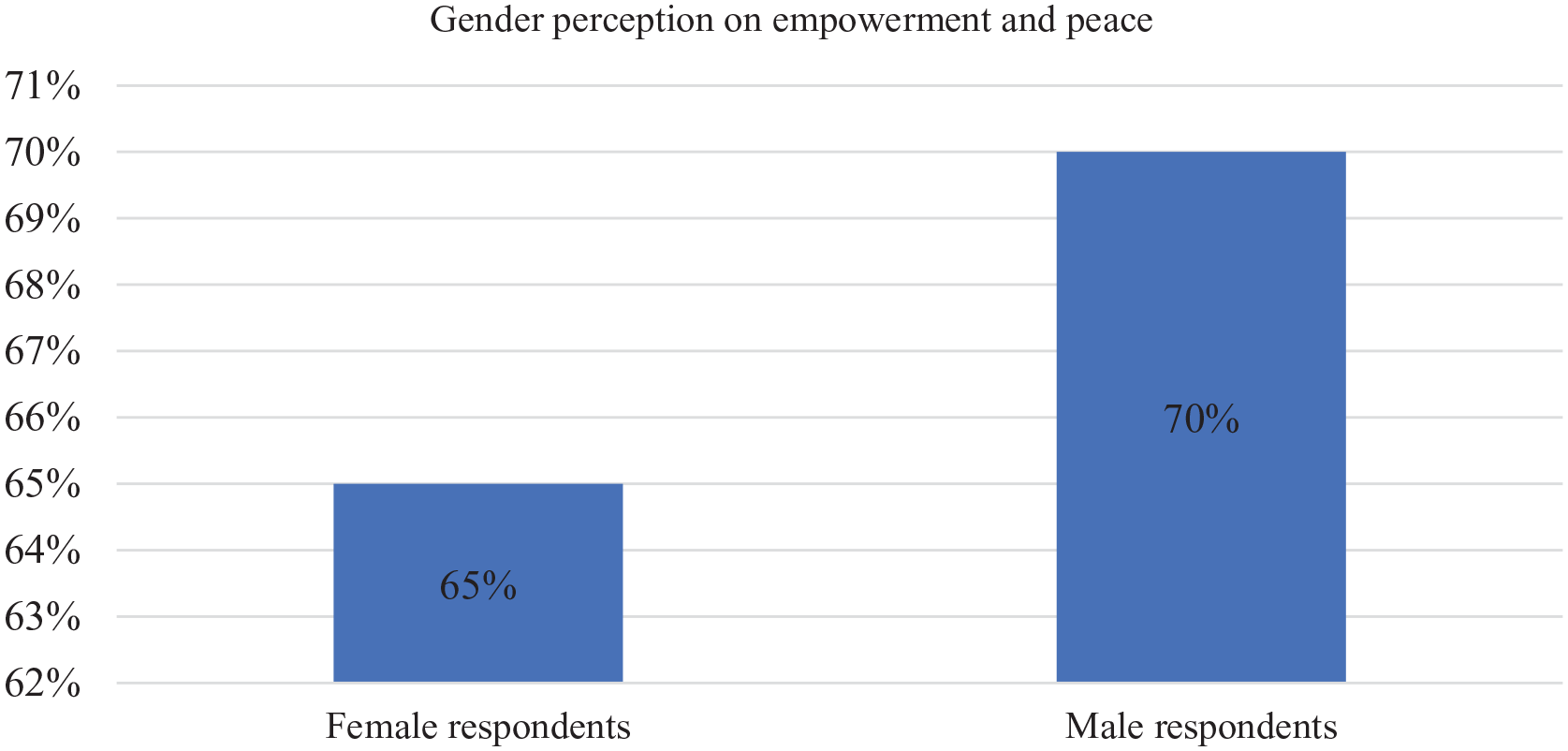
Gender perception on economic empowerment and the peace process.
The relationship between the peace process and the economic well-being of young people was also confirmed by respondents from the in-depth interviews. One respondent who represented the government stakeholder ministry buttressed this point by saying, Zimbabwe is in the grips of a bulging youth demography who find themselves unemployed owing to the macroeconomic environment. A dormant youth population has become very agitated by the prevailing macro-economic environment which offers them limited or zero opportunities. This has resulted in the anti-government protests which we have experienced as a country in which the youth have taken a very active role. The anti-government protests are arguably attributable to the rising unemployment in the country, especially among the youth. The government needs to address this through skills transfer to the youth and supporting them on their business ventures. If this is not addressed, we are most likely to follow the path of the famous Arab springs. (Participant, 2018)
Documents from the ministry of youth showed that the government disbursed funds to the youth to fund their business projects. However, when I enquired if the money was disbursed as loans or grants, the official from the ministry of youth replied, Yes on paper the money is given as loans. But the problem is that is that we do not the legal power to enforce the repayment of the loans. Some of the businesses we funded collapsed and when we made follow-ups there was nothing to talk about.
However, a respondent from the civil society had a different view. They thought that the ‘loans’ were disbursed on the grounds of political expediency. This resulted in the debtors defaulting on reimbursing the funds. The participant argued that the government used the loans as a patronage to secure loyalty of youth to the ruling ZANU-PF party. The years after 2000 were years when the ruling party was losing electoral ground to the opposition. So, according to this participant, the government responded to the deepening economic crisis and growing political dissent from youth who felt marginalised from economic and political processes by coming up with programmes that were pro-youth. This participant viewed the youth empowerment programmes (in this case, the giving of loans to youth) as government-controlled programmes were ZANU-PF instrument of youth mobilisation to consolidate its political hegemony and revive its waning political fortunes.
The study grouped respondents according to their levels of education and sought their perception on the relationship between economic empowerment and the peace process. Figure 3 below illustrates the perception of these respondents. The respondents with some secondary education had the highest percentage perception of 76% and the lowest came from those with tertiary education which stood at 65%.
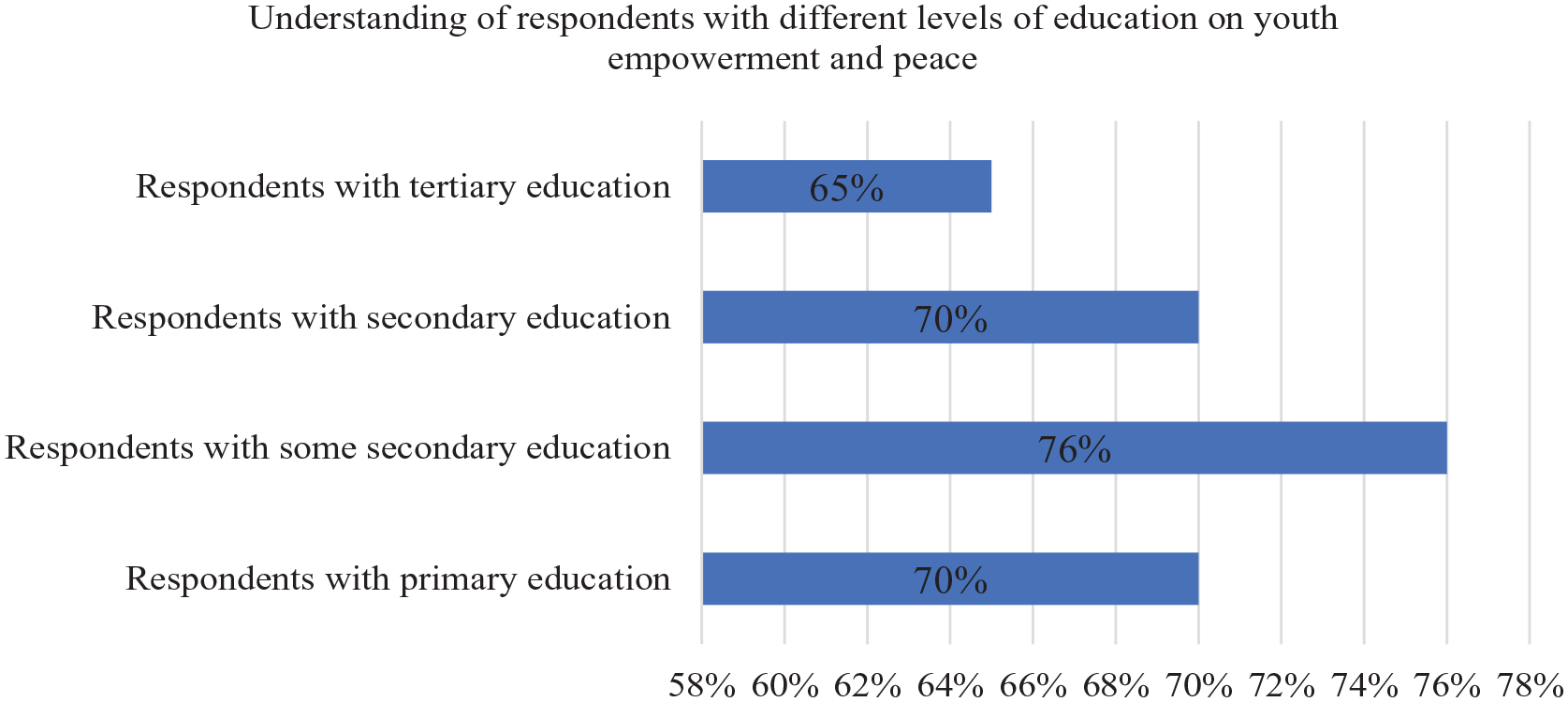
Economic empowerment and the peace process.
The creation of employment opportunities through imparting critical skills was given as the solution to youth violence. Respondents alluded to the idea that equipping the youth with requisite skills makes young people to create their own employment and hence to refrain from violent behaviour as a means for survival. Unemployment among young people results in desperation and vulnerability and prompts them to take risks such as being recruited in insurrection or rebel movements. A participant who represented the civil society organisation posited that I think the solution to solving youth violence is simple: let the government and civil society focus on youth training and acquisition of skills by young people. We are trying our part as civil society organisations to give the youth skills for them to create their own employment. With the current prevailing economic downturn which the country faces, formal employment has become scarce. So, training the youth for them to get employed is not helping the situation. Failure to have these empowered and have their future secured, there is a risk of socio-political instability. This is not farfetched as it has happened with some other countries, and it can happen with us.
The ISOP by the government to address the skills deficit among the youth was a noble idea. This programme was launched with the view of empowering the youth with technical, vocational and entrepreneurial skills to make young people employable through incorporating them into the mainstream economy. Respondents lamented that though the programme was good, it was not enough to benefit multitudes of youth who needed to get the skills. One participant (academic) posited that The youth are the majority if we look at the demographic structure of our country. The 18-35 age group cohort is bulging, and this means more resources should be chanelled towards the empowerment of this group. ISOP benefited only 6400 in its two phases, and this was just a drop in the ocean considering the population of the youth in the country.
The findings on the relationship between economic empowerment and positive peace are in sync with broader research on the relationship between economic inequality and exclusion and political violence. According to Collier (2000), economic growth is the most single influential variable that determines whether the country relapses to war within a few years of a peace settlement and regards unemployment as the likely route through which economic growth can influence violence. Collier (2000) further argues that unemployment as a symptom of lack of economic growth is used as a source of grievance – that is, it provides the motive alongside greed – and the opportunity cost of idle youth to engage in violence and join armed groups is low. His views are echoed by Cincotta et al. (2008), Heinsohn (2003) and Urdal (2004) who view unemployment as a key cause of insurgency or civil war. According to Cramer (2015), ‘unemployment triggers participation in insurgencies, prompts people to join violent gangs, drives people to extremism, and that it is the primary reason behind domestic violence’ (p. 1). Similarly, in relation to crime, young people who are disillusioned by lack of economic opportunities to rescue themselves from the jaws of poverty are more inclined than adults to take part in armed violence, crime, drug trafficking and other extra-legal activities (Ali, 2014).
It is important, however, to recognise that in some contexts where the youth endure extreme levels of exclusion, they are not involved in the acts of violence. These instances, however, do not undo the reality of lack of economic growth and the corresponding levels of violence. Ali (2014) argues that disaffected young people who lack economic opportunities and who could not raise themselves out of poverty are more vulnerable to participation in armed violence, gangs and drug trafficking, and other illicit activities. If economic challenges are critical in driving young people to acts of violence and other activities that undermine the peace process, addressing them is key and a crucial building block to the attainment of peace. Development agencies under the aegis of the United Nations have acceded to the idea that addressing youth socio-economic challenges is key to addressing social unrest that bedevil society. A 2007 UNDP report, Youth of Africa: A threat for peace or force for good?, asserted that violence is often acute in contexts where huge youth demographics are experiencing unstable governments, insecurity and development challenges. This often translates into easy enlistment of young people into armed rebel groups to escape the socio-economic challenges.
Economic growth is very fundamental in the establishment of peace in communities. According to the Portland Trust (2007), economic growth can divert attention away from the grievances that are responsible for causing conflict. Focusing on economic recovery and growth is necessary for it to contribute to peace and stability as this can foster unity between groups in fragile and conflict-affected settings. There is growing evidence that development policies that are aimed at empowering the youth and implemented with the participation of the very youth have a higher chance of achieving a lasting impact and reducing tensions in society. Excluding young people from development and decision-making damages the social fabric, the inclusiveness and responsiveness of institutions, threatens social cohesion and citizen security. The logic of empowering and investing in young people has been increasingly and systematically embedded in the substance of recent global agenda, resolutions and agreements. The agendas include the Sendai Framework for Disaster Risk Reduction, African Union’s Agenda 2063 and the 2030 Agenda. The importance of youth empowerment has gained much relevance with the adoption of the African Union’s Agenda 2063. The Agenda acknowledges the need to empower vulnerable groups including the youth, women and the disabled to make development meaningful and sustainable.
How economic empowerment is linked to peace can further be seen in the way youth unemployment is related to the participation of young people in violent conflict. The correlation between youth unemployment and violence is well documented in the literature and it is exacerbated by the bulging youth population in many African countries. If the emergence of large youth populations is met with a stagnant economy and concomitant unemployment, the incidence of violent conflict rises because of the low opportunity cost for youth to engage in political violence (Bricker and Foley, 2013; Weber, 2013). The Zimbabwe economy has been stagnant or shrinking in the previous two decades and that has left companies closing and capital leaving. Under these circumstances, governments should create robust frameworks for youth economic empowerment, as without it, this will be a recipe for disaster (Ojok and Acol, 2017). The World Bank in 2007 established that poverty is not only a product of violence but is now its primary cause. Ojok and Acol (2017) further argue that the stability of the African democratic dispensation is under threat because there is a very positive correlation between stagnant economic development and the engagement of young people in political violence. The Zimbabwe situation fits well in this description, as witnessed by the restive youth in the country who are grappling with unemployment and poverty in a stagnant economy. The post-election violence in 2018 and the blood drenched fuel increase induced protests in January 2019 were led by a host of young people who vented their frustration on the government.
Challenges to peacebuilding through youth empowerment
Participants in this study pointed out pertinent challenges they face in the process of empowering young people. These challenges were common and almost all respondents referred to them. Chief among them was limited resources which dogged the stakeholder ministry of youth and civil society organisations who work on youth empowerment. The paucity of resources rendered the operating environment for the ministry of youth and youth organisations difficult. Youth empowerment programmes demand massive capital injection whose sources should either be the government or other independent benefactors. With the government of Zimbabwe facing a massive liquidity crunch in recent years, its ministries including the ministry of youth have not been able to receive an adequate budget allocation to meet its fiscal demands. The international isolation which the country has endured in the last two decades has not helped the situation. Funding from multi-lateral and bilateral institutions has been dwindling and civil society organisations that often rely on bilateral funding have suffered financially. The challenge of lack of or underfunding for youth programmes was so apparent in all the research sites visited. Almost all the district offices of the ministry of youth had no vehicle or any means of transport for the ministry staffers. The furniture in the offices were in an advanced state of dilapidation which is an indication of serious underfunding of the ministry. The ministry offices had no computers, printers, access to the Internet and other requisite necessities of office space.
The youth empowerment drive has been highly politicised in Zimbabwe to the extent that the ministry responsible for youth affairs has been viewed by some respondents as a political arm of the governing party. Politics, particularly in the governing ZANU-PF, heavily interfered with the operations of the private sector and youth affairs. The partisan influence and control of the economy by the ruling ZANU-PF government is not new. The partisan allocation of resources such as jobs and other resources has been part of ZANU-PF’s political mobilisation (Kamete, 2017). Results of this study show how the ZANU-PF-led government used youth empowerment as a way of cementing political patronage and garnering political mileage (Gukurume, 2018). Politicisation of youth affairs was emphasised by participants, as the reason for the exclusion of some youth in the empowerment programmes. The study confirmed these findings. By coincidence, the fieldwork was done during an election year (2018) and ZANU-PF had deployed its youth to mobilise for support and youth empowerment was used to lure the youth vote. Politics played a critical role in mediating who was to be included and excluded in the empowerment drive as announcement of youth empowerment programmes were made at political rallies. Some of the participants asserted that ZANU-PF members mediated access to, and ownership of the youth programmes. One participant explained, For one to be accepted into the youth programmes, one has to be ZANU-PF, if you are not then there is nothing for you. They make it a point that only ZANU-PF youth supporters get funding for programmes.
Another participant added, The ZANU-PF party target the indigenisation programme for its youth empowerment and development. As the architects of youth empowerment, the ZANU-PF youth are the primary beneficiaries. Support is given to what they call patriotic youth; MDC [Movement for Democratic Change] youth are described as sell-outs, and they cannot be rewarded.
The narrative given above is part of ZANU-PF’s broader discourse of ‘patriotic history’ (Ranger, 2004). This patriotic history creates a binary of those who are regarded as ‘patriots’ – a glowing term to refer to ZANU-PF supporters – and ‘sell outs’ – euphemism used to characterise the opposition especially the MDC. In this framing, patriots, the ZANU-PF youth, are rewarded by the political ‘big man’ (McCauley, 2012), while those perceived to be sell outs are punished by being excluded from benefits in the youth empowerment drive. The findings of this study confirm to the findings by Gukurume (2018) that there is a deep-seated patrimonialism and patronage politics in the everyday workings of youth empowerment programmes, and in the ways in which young people gain employment.
Respondents from especially academics and civil society pointed out that patronage and political expediency affected the youth empowerment drive in Zimbabwe. From the onset the empowerment initiatives for youth especially the youth fund has always been riddled with challenges of corruption, patronage and embezzlement. While officials from the ministry of youth did acknowledge these challenges, the parliamentary portfolio committee on youth and indegenisation confirmed that the empowerment programmes were fraught with abuse of funds, embezzlement of funds by politicians and patronage which indirectly resulted in defaulting. That the determination of who should get the funding from the youth fund was left to a government ministry opened the doors to patronage. It was alleged that ZANU-PF party interfered with this process, and this undermined the empowerment programmes. Respondents claimed that they had no idea how transparent the process of was selecting beneficiaries. This evidence reinforces that the process was subject to manipulation by politicians for political expediency.
Moreover, results from the youth questionnaire revealed that a minority of the youth confirmed access to youth programmes. The inaccessibility of youth programmes was also confirmed by respondents in the in-depth interviews who argued that political affiliation is used to segregate some young people from the programmes meant for them. Pronouncement of programmes are done at political rallies and political affiliation is given as condition for participation in these programmes. Although this view was contested by respondents from the stakeholder ministry of youth, it was held by the majority respondents. The inaccessibility of programmes to the young people is confirmed by the percentage of young people who are trained in the economic activities they are currently engaged in. The polarised nature of the Zimbabwe political terrain has inadvertently resulted in the polarisation of society as well. This polarisation has resulted in the compartmentalisation or grouping of the youth in the country. That Zimbabwe as a country is divided into either ZANU-PF or MDC now CCC; political parties which are sworn gladiators, is no secret. This has resulted in the division of the youth as well and has not helped the youth empowerment programmes. This was not helped by the politicisation of the youth empowerment programmes by the governing party (ZANU-PF). The government has viewed the youth programmes as meant to reward its supporters to secure votes in elections. Research results have revealed that partisan politics run deep in the formulation and implementation of government programmes and has in the process divided communities.
Conclusion
The case of Zimbabwe illustrates the fact that countries that lack economic, institutional or political resources, or political will to effectively integrate youth into the mainstay of the economy risk social upheavals and instability. Because Zimbabwe lacks the above, it is far removed from the path towards sustainable peace. As the economic pressure intensifies, youth, initially as independent agents, and later as instruments of political factions turn to violence. The youth empowerment programmes that the government has been embarking on have suffered from a myriad of challenges. These programmes have been subjected to political manipulation which in the process has left them diluted and their impact insignificant. The ministry that presides over youth affairs has suffered from perennial underfunding from the government. This has rendered this arm of government that should deal with youth affairs redundant and ineffective. If nothing is done to address the youth problem, the country is likely to be thrown into a scenario of instability as the restless youth begin to agitate for change in the political establishment.
Footnotes
Funding
The author(s) received no financial support for the research, authorship and/or publication of this article.
