




Abstract
Botswana has achieved a lot in education development since the country’s independence in 1966. Public education funding and access increased significantly, literacy rates rose, more schools were constructed and student enrolment rates increased at both primary and secondary schools. However, this paper argues that Botswana’s education system has been declining over the past 10 years, but that is concealed by the use of political spectacle. The data collected from secondary sources were used and subjected to content analysis. The findings show high public education expenditure and access in Botswana, but high failure rates; success narratives and pronouncements without commitment to educational effectiveness and efficiency; massive construction of public schools, but poor teaching–learning conditions; and trivialization of meaningful education reforms. This paper concludes by recommending the introduction of learner-friendly methods of assessment, improving teacher–government relations, the inclusion of stakeholders in education decision-making and the implementation of cost–benefit and cost-effectiveness measures in Botswana’s education.
Introduction
At Botswana’s independence in 1966, education, like most sectors, was undeveloped. There were no public schools and the only schools at the time were the few owned by some indigenous groups and religious organizations. The bachelor’s degree holders were very few. Botswana was also faced with a serious shortage of teachers, and there were few local teacher training institutions. The British colonial government had not invested in education or skills development in the Bechuanaland Protectorate (as Botswana was called before independence). This was not unique to Botswana but was the standard in most colonies and protectorates. Owing to the aforementioned situations, access to education in Botswana was very limited. The children of some traditional leaders and a few privileged wealthy families were the only ones that could afford to attend school. As a result of limited access, many were not able to get exposure to education to appreciate its value and contribution to human development. The major socio-economic activities that the people of Botswana were familiar with at the time were pastoral and arable farming, mostly at subsistence levels, as well as working in South African mines and Rhodesian farms (Morapedi, 2018; Taylor, 1990). Therefore, many families informally groomed their children to succeed them in the non-income generating subsistence farming once they grow old or be migrant labourers in neighbouring countries.
Following independence, Botswana focussed on and developed the education system. Many public schools, at both primary and secondary school levels, were constructed (Statistics Botswana, 2013). Many teachers were trained and some were recruited from other countries, especially Zambia and Zimbabwe, to teach in Botswana’s public schools. By 2014, Botswana’s adult literacy rate had increased significantly. However, Botswana’s public education system has been declining over the past 10 years. The government has conveniently used political spectacles to conceal the education problems. Therefore, this article argues that although Botswana has attained a lot in education development, it has failed to transform the education system. The system is characterized by systemic problems. Political spectacles are used to shift attention away from the prevalent education challenges to project a perception of a stable and successful education system. The conclusion drawn from the findings of this article is that, beneath the projected image of a successful education system, there is inefficiency, ineffectiveness, high failure rates, lack of meaningful reforms and poor teaching–learning conditions, all of which are indicative of a declining education system.
Botswana’s education system
Botswana is a country in Southern Africa, relatively the size of France or the state of Texas in the United States. Botswana has an estimated population of 2.4 million people (World Bank, 2018). In 1967, Botswana enacted the Education Act, and 10 years later, the National Policy on Education (NPE) was adopted following the National Commission on Education (NCE) that was set up by the president (Republic of Botswana, 1977b, 1994). The NCE was, among others, tasked with the responsibility to formulate Botswana’s philosophy of education, setting the goals for the development of education and training, and recommending the best education strategies (Republic of Botswana, 1977a). The commission set a milestone for Botswana’s education system and closed the colonial chapter wherein education was almost inaccessible, except to the privileged few. The ‘education for social harmony’ (kagisano) was adopted as Botswana’s philosophy of education. This philosophy embraced Botswana’s national principles of democracy, development, self-reliance and unity (Mgadla, 2003; Republic of Botswana, 1977b). The overall goal of NPE was to ensure access to education, at least at the primary school level, thus establishing Botswana’s education system on the access model of education that has been retained ever since. In 1981, the National Literacy Policy (NLP) was adopted to further address the problem of adult literacy which was 46% at that time, but increased to 90% by 2014 (Kann and Taylor, 1989; Statistics Botswana, 2016). In 1993, another presidential commission on education was constituted to evaluate education and make recommendations. The commission culminated with the adoption of the Revised National Policy on Education (RNPE) in 1994. The RNPE acknowledged that access to education was still a challenge at the time, and aimed at transforming Botswana’s education system. RNPE recommended the provision of increased access to education, equity in education, improvement of the quality of the education system, and the effective management of Botswana’s education (Republic of Botswana, 1994). Importantly, the RNPE also aligned with the 1991 United Nations Educational Scientific and Cultural Organization (UNESCO)’s education goal of ‘Towards Education for All’ (EFA) (United Nations Educational Scientific Cultural Organization (UNESCO), 1990).
In 1996, Botswana introduced a 20-year national vision known as Vision 2016. Education was one of the vision’s pillars that aimed at Botswana to be ‘an educated and informed nation’ by the year 2016 (Republic of Botswana, 1997). Vision 2016 was succeeded by Vision 2036, which also has education as one of its pillars. In addition, Botswana embraced both the Millennium Development Goals (MDGs) and the Agenda 2030 or Sustainable Development Goals (SDGs), as well as the African Union’s Agenda 2063 – all of which address education development. All the aforementioned efforts by Botswana concerning education development were largely guided by the successive National Development Plans (NDP) that serve as Botswana’s socio-economic development roadmaps from the adoption of the Transitional Plan for Social and Economic Development in 1965 to the current NDP 11 for 2017–2023. All the NDPs emphasized the importance of education. In 2015, the Education and Training Sector Strategic Plan (ETSSP) was introduced to implement some of the recommendations of the 1994 RNPE. The aim of ETSSP is a public education system that is outcomes-based, with multiple pathways for learners (Republic of Botswana, 2015). With ETSSP, Botswana aims to transform the quality of education, and the economy from resource-based to knowledge-based to tap into the fourth industrial revolution. However, there is a lack of political will for the implementation of ETSSP.
Structurally, education in Botswana is the responsibility of the Ministry of Education and Skills Development (MoESD). MoESD is responsible for education policy formulation; curriculum development, delivery and evaluation; development and management of education human resources; specialized support services; registration and control of schools; education statistics and education research (Government of Botswana, 2022). In 2002, the Government of Botswana established the Botswana Examinations Council (BEC) through an Act of Parliament. BEC is a parastatal body responsible for the quality, administration and management of Botswana public primary and secondary school examinations (Government of Botswana, 2002). Basic education in Botswana comprises pre-primary, followed by 7 years of primary school, 3 years of junior secondary and 2 years of senior secondary school. Examinations are administered at Standard (Grade 7), Form 3 (Grade 10) and Form 5 (Grade 12). Progression from primary to junior secondary school is automatic or does not depend on the student’s performance (Central Statistics Office, 1997). To progress from junior to senior secondary school, students are required to pass or obtain a minimum of Grade C or above (Central Statistics Office, 1997; Statistics Botswana, 2013).
The enrolment in both primary and secondary schools in Botswana has increased since the introduction of the NPE in 1977. The net enrolment in primary schools increased from 51% in 1970 to 97.9% in 2014 (Central Statistics Office, 1986; Statistics Botswana, 2019). A relatively similar increase in net enrolment rates was realized at both junior and senior school levels (Statistics Botswana, 2019). Net enrolment for both males and females has been relatively the same in Botswana for the past two decades at both primary and secondary school levels (Statistics Botswana, 2019). Persons with disabilities (PWDs) have also been enrolled and certain public schools are designated to accept PWDs. However, statistics on enrolled PWDs in Botswana schools were not recorded until 2008 (Statistics Botswana, 2019; Suping, 2021).
The transition rates from primary to junior secondary schools in Botswana stood at an average of 96% between 2000 and 2012, before increasing slightly to 98% in 2014 (Statistics Botswana, 2015; World Bank, 2018). Automatic progression is credited for high transition rates from primary to secondary schools. However, the transition from junior to senior secondary schools has remained lower at an average of 60.2% between 2000 and 2015 (Statistics Botswana, 2018b; World Bank, 2018). Some of the reasons accounting for a drop in secondary school transition rates include high failure rates of junior certificate examinations at Form 3 (Grade 10), illness, bullying, expulsion and truancy (Statistics Botswana, 2014, 2018b). The completion rates in Botswana’s primary and secondary schools have fluctuated between 96% and 100% since 2000, and are relatively higher than the average for Sub-Saharan Africa (SSA) (World Bank, 2018). For example, in 2014, Botswana’s completion rate (primary and secondary) was 70%, while that of SSA was 42.5% and the international rate was even lower (UNESCO, 2015; World Bank, 2014). High enrolment rates have seen Botswana increase literacy rates from 40% in 1970 to 88% in 2014 (Statistics Botswana, 2016; World Bank, 2018).
Furthermore, Botswana has also invested in teacher training and development in the past 50 years. The number of primary school teachers increased from 1673 in 1966 to 13,156 in 2003, thus reducing the teacher–student ratios (Central Statistics Office, 1986, 2003; World Bank, 2004). In 1966, the ratio of students per teacher in primary schools was 43, and that dropped to 23 in 2015 (Central Statistics Office, 1986; Statistics Botswana, 2019; World Bank, 2018). In secondary school, the number of teachers increased from 10,620 in 2004 to 15,650 in 2015 (Statistics Botswana, 2018b). The minimum qualification to teach in Botswana public schools is a diploma certificate (Statistics Botswana, 2015).
The concept of political spectacle
This article uses the concept of political spectacle to analyse Botswana’s education system. Political spectacle was used by Edelman (1988) to describe how political figures communicate in ways that best suit them to win the support of the public. That is, a political spectacle serves to persuade the public to support certain political actions and ideologies masqueraded as serving public interests, while in fact, benefitting the political elite (Edelman, 1988; Winton and Evans, 2014). In a political spectacle, the reality is reconstructed in covert ways that purport to protect and promote public interest while it serves political interests and maintains inequities (Edelman, 1988). A political spectacle also signifies power relations determined by the powerful entities to maintain the status quo and influence the public reality with misleading impressions. It anchors on the use of symbolic language or generalizations and does not commit to anything specific (Edelman, 1988). Moreover, political spectacle creates illusions and rejects change (Winton and Evans, 2014). Ideas that are considered to be radical are intercepted and sterilized by the political elite who package and return them to the public as new ideas (Chasse et al., 1969; Debord, 1995 [1967]; Edelman, 1988).
The goal of political spectacle is to mislead, conceal and derail the focus from reality. It also serves to reinforce the old dominant ideas to accrue benefits to the privileged few (Chasse et al., 1969). According to Chasse et al. (1969), political spectacle is used to disconnect the means from the end by creating impressions or perceptions to replace reality. That is, in political spectacle, images and perceptions are created by the powerful to hide the real outcomes to avoid upsetting the status quo. The narratives and rhetoric promise participation or inclusion of other people or their groups, but in reality ‘ . . . the citizens are cast as passive observers of a small group of privileged decision-makers on a metaphorical stage’ (Winton and Evans, 2014: 3). Furthermore, political spectacle casts political actors as leaders and conceals the costs of their decisions (Edelman, 1988).
The concept of political spectacle has not been used in analysing Botswana’s education. However, it has been used elsewhere with respect to education. Winton and Evans (2014) used the concept of political spectacle arguing that the Canadian education system was characterized by political spectacles and it denies the citizens participation at the grassroots level. Smith et al. (2004) used the concept of political spectacle arguing that it is used to conceal the fate of American schools and to deceive the public into thinking that the American education system is doing well. Wright (2005) also used the concept to analyse education reforms at the Arizona state in the United States, contending that the state’s education reforms are an illusion of rationality though they create impressions of meaningful changes in the education system.
Methodological approaches
This article relied on data collected from secondary sources that include journal articles, education reports, education statistics, examinations reports, government policy documents, education laws, books and newspaper reports. The article used qualitative content analysis approach. According to Weber (1990), content analysis includes the evaluation of documents and texts to identify themes that emerge. In line with the techniques of content analysis identified by Merriam (1998), there was reading and re-reading of the documents to identify similarities and differences to develop categories and themes. Subsequent to reading and re-reading, the text was coded, organized into categories and re-organized to identify the relationship between categories and to develop meanings from the statements, as well as to generate themes in accordance with the content analysis techniques as described by Huberman and Miles (1998), Beck (2003) and Wolcott (1994).
Through this methodological approach, the use of political spectacle to conceal the problems that are symptomatic of a declining education system was determined. The themes that emerged from the analysed data are (a) high public education expenditure, access and the prevalent failure rates; (b) success narratives and pronouncements without commitment to educational effectiveness and efficiency; (c) massive construction of public schools and poor teaching–learning conditions of service and (d) trivialization of meaningful education reforms. The aforementioned themes constitute the findings of this paper and are discussed in detail in the following section.
High public education expenditure, access and the prevalent failure rates
The findings of this article show that there is high public expenditure on, and access to education in Botswana, but the failure rates are prevalent. From the early 1980s, the Government of Botswana started giving education a significant share of the national budget. Public expenditure on education as a percentage of the gross domestic product (GDP) was 5.2% in 1985, 6.2% in 1990 and 8.1% in 2000 (United Nations Development Programme (UNDP), 2004a, 2004b; World Bank, 2004). As a percentage of total government expenditure (and not of GDP), education got 17% of the national budget in 1990 and 25.6% in 2002 (UNDP, 2003, 2004b). In 2007, the public expenditure on education stood at 26.5% of the GDP but dropped to 22.8% in 2017 (World Bank, 2019). The increase in Botswana’s public expenditure on education enabled access to education. Statistics Botswana (2014) defines access to education as an increase in total enrolments, age-specific ratio, gross enrolment ratio (GER), net enrolment ratio (NER), net intake rate and gross intake rate. In 1991, Botswana introduced free basic education and automatic progression in response to UNESCO’s ‘EFA’ (UNESCO, 1990). ‘EFA’ recommended increased access to education for children across the world. Automatic progression ensured that all children, irrespective of their performance at primary and junior secondary school levels, were allowed a chance to proceed to the next grade and level without having to pass the preceding one. The incorporation of the EFA recommendations into Botswana’s education system increased access to education as they featured prominently in Botswana’s RNPE of 1994.
Owing to increased education expenditure that enables more access to education, Botswana’s NER in primary schools rose from 51% in 1970 to 92% in 1985, and dropped to 81% in 2003 before rising again to 96.7% in 2010 and then increase to 98.1% in 2012 (Central Statistics Office, 1986; Statistics Botswana, 2013; UNESCO, 2002). Of the students enrolled, 91.7% were in public primary schools by 2014 (Statistics Botswana, 2019). The junior secondary school enrolment rates were also increasing during the same period, standing at 99.3% in 2010, before dropping to 95.7% by 2014 (Statistics Botswana, 2013, 2019). The RNPE further called for the provision of education access to PWDs. As a result, 3413 PWDs were enrolled in 2008, 7305 in 2012, 8570 in 2013 and then 10,810 in 2014 in both public and private primary schools (Statistics Botswana, 2016, 2019). In secondary schools, the enrolment of PWDs was 7501 in 2012 and dropped slightly to 6085 in 2013, before increasing to 8267 in 2014 (Statistics Botswana, 2019). Moreover, access to education increased the adult literacy rate (percentage population age 15 years and above) in Botswana. In 1990, the adult literacy rate was estimated at 68.1% (UNDP, 2003), and increased to 81.2% in 2003, then to 90% by 2014 (Statistics Botswana, 2016; UNESCO, 2002, 2015). By comparison, Botswana’s 2003 adult literacy rate was higher than the average adult literacy rate for SSA, which was 64.9% (World Bank, 2004).
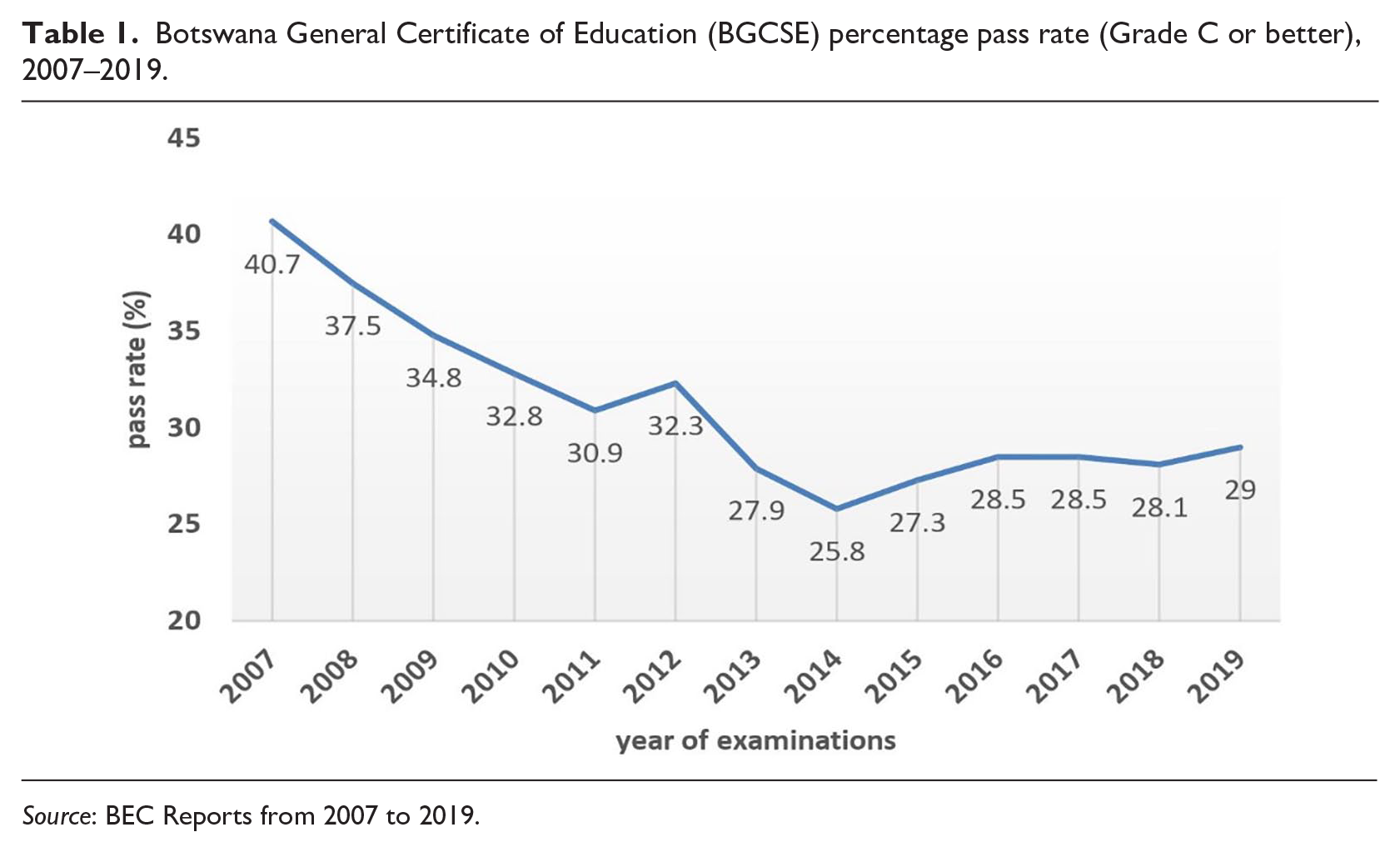
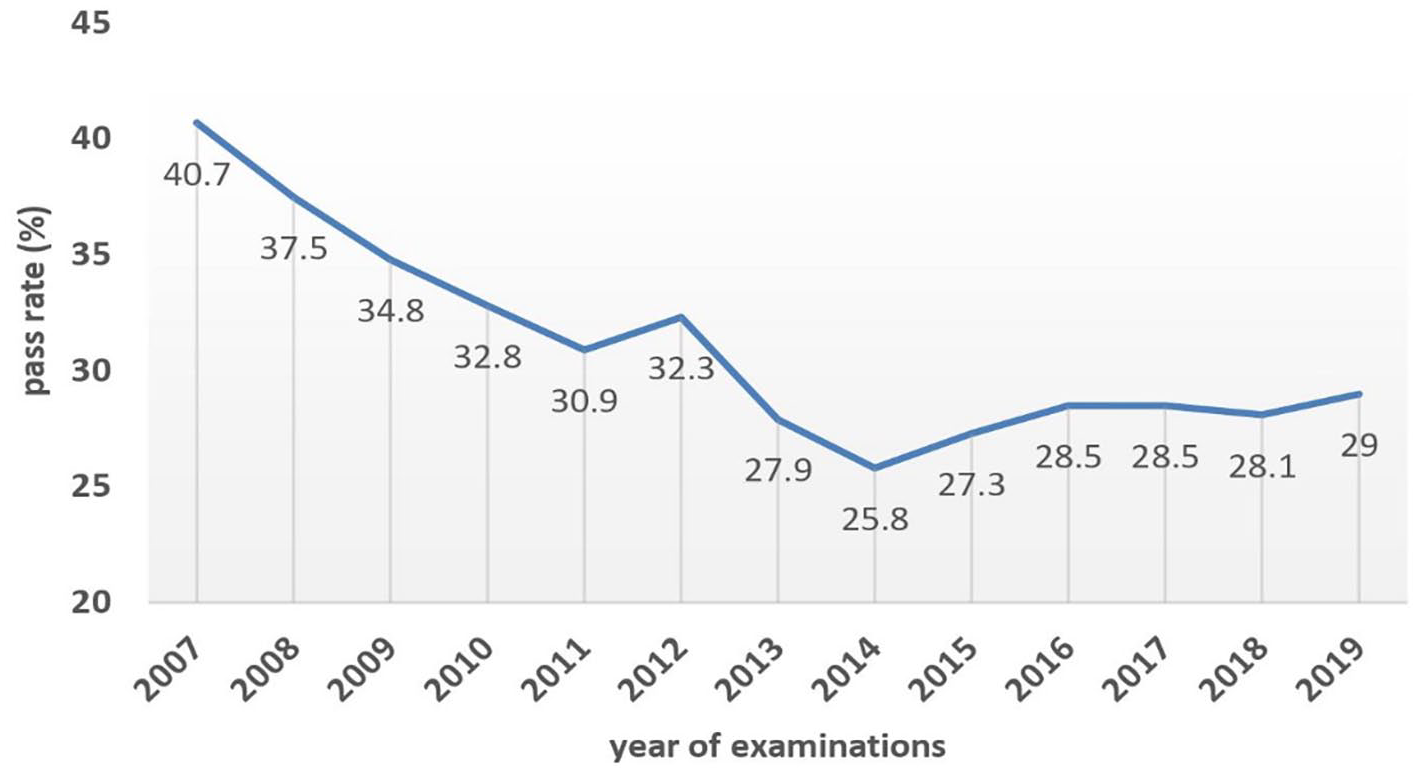
A critical analysis shows that the high public expenditure on education in Botswana, and the resultant increased access to education, the inclusion of PWDs and high literacy rates, is indicative of education development. However, such have served as political spectacle to shift attention away from, and the response to, Botswana’s education problems. According to Edelman (1988), spectacles are intended to create perceptions of success by overemphasizing certain achievements to overshadow prevalent problems. While the high public expenditure on education in Botswana is a great achievement that enabled increased and inclusive access to education, it has overshadowed the systemic problems engrained in Botswana’s education, such as the high failure rates that have persisted over the past 20 years. Most local and international reports, and academic papers on Botswana’s education have focussed on its success based on access and public expenditure. High public education funding and access have concealed certain problems, such as high student failure rates, hence creating impressions of a strong education system. For instance, the pass rate (Grace C or better) at primary schools has remained consistently below 75% for more than a decade since 2008 (BEC, 2011, 2015, 2019). At the junior secondary school level, the pass rate (Grade C or better) remained below 50% between 2008 and 2019 (BEC, 2011, 2015, 2019). At the senior secondary school levels which determine progression to tertiary institutions, the failure rates are extremely high. The Botswana General Certificate of Secondary Education (BGCSE) or Form 5 (Grade 12) pass rate (Grade C or better) has been the most bizarre, dropping from 40.7% in 2007 to 30.9% in 2011, before plummeting to 25.8% in 2014 and maintaining an average of 28.2% for 5 consecutive years beginning 2015, as indicated in Table 1 (BEC, 2011, 2012, 2015, 2019).
Botswana General Certificate of Education (BGCSE) percentage pass rate (Grade C or better), 2007–2019.
Source: BEC Reports from 2007 to 2019.
While the pass rates are not the sole determinants of a good education system, the prevalence of very low pass rates in Botswana is indicative of problems and warrants remedial measures. However, nothing has been done to address the prevailing failure rates especially in senior secondary schools standing at an average of 72% for more than 6 consecutive years. The Government of Botswana has ignored calls to introduce assessment measures that are student-friendly and other reforms that would reduce the failure rates (Makwinja, 2017; Suping, 2021; Tabulawa, 2013). Instead, the government chose to use high public expenditure and increased access as indicators of a successful education system.
Success narratives and pronouncements without commitment to educational effectiveness and efficiency
The findings from the analysed data also show that Botswana’s education system is highly ineffective and inefficient and there is a lack of political will to address the problems. The Government of Botswana focusses on pronouncements such as increasing the education budget and the construction of success narratives, but less on solving education problems. According to Statistics Botswana (2014), education efficiency refers to transition rates between grades and school levels, completion rates, low drop-out rate, low percentage of repeaters and high survival rates. Johnes et al. (2017) define educational efficiency as the production of high education outputs at low costs. Educational efficiency is also defined as ‘marginal improvements that would not have occurred without the inputs of the educational system’ (Lockheed and Hanushek, 1994: 2). Such improvements to educational system include, among others, literacy, numeracy skills and other specific skills (Lockheed and Hanushek, 1994). However, educational effectiveness refers to ‘whether or not a specific set of resources has a positive effect on achievement and . . . how large this effect is’ (Lockheed and Hanushek, 1994: 2). Both educational effectiveness and efficiency have not been the focus with respect to education in Botswana. While a lot of public resources have been spent on education in Botswana, the returns or value of that has not been commensurate. For example, the value of adding more teachers or school buildings is not assessed. The focus is on high enrolment rates, high transition rates from primary school to junior secondary schools, low drop-out rates and a low percentage of repeaters. However, close analysis shows that while the transition rate from primary to junior schools are high at an average of 97% between 2000 and 2015, the transition from junior to senior secondary schools is very low at 52.8% in 2000, 61.6 in 2006, 63.8% in 2012 and 67.3% in 2015 (Statistics Botswana, 2014, 2018b).
Furthermore, extensive literature on Botswana’s education constructs narratives that focus predominantly on the successes, while disregarding the ineffectiveness and inefficiency of the education system. There is no analysis of the cost-effectiveness of Botswana’s increased spending on education. That is, there are no measures in place to guide how funds allocated to the education sector should be used to obtain the greatest educational outputs. For example, there has been a lot of investment on teacher training in Botswana. Consequently, reducing the ratio of students per teacher in primary schools by almost half from 43 students per teacher in 1966, to 23 in 2015 (Central Statistics Office, 1986; Statistics Botswana, 2019). However, teacher time and ability have remained prevalent challenges accounting for 19.9% of problems in Botswana’s primary schools (Statistics Botswana, 2013). The contribution of students or graduates to national development has also not been evaluated. The student completion rates in Botswana are high at more than 90%, but the failure rates are also high at a 10-year average of 70% (Table 1), thus robbing the high school leavers of the opportunity to pursue tertiary education and training. Most narratives have focussed on completion rates, without regard for whether the student qualifies for admission into tertiary institutions.
Ignoring the inefficiency and ineffectiveness of Botswana’s education system, and choosing to construct education success narratives based on enrolment rates and disregarding the pass and transition rates in secondary schools is typical of a political spectacle. According to Edelman (1988), a political spectacle is symbolic language or pronouncements without commitment. The presidents of Botswana have promised better education in their annual state of the nation addresses (SONAs) since 1967, but the education sector has remained ineffective and inefficient to date. The successive Ministers of Finance in Botswana have also emphasized increased funding for public education in their Budget Speeches without regard for the rates of returns to education (Siphambe, 2000). Botswana’s political leadership exclusively constructs and reconstructs problems, and succession of reassurances on education through national vision documents, state-of-the-nation addresses, and budget speeches to win support, while maintaining inequities as is common with political spectacle (Edelman, 1988; Winton and Evans, 2014). While gender equity has been realized in Botswana’s education system, equity has not been realized in the case of other people such as PWDs. The political rhetoric concerning education has been limited to public budgets and SONAs, but not the implementation or outcomes. The national Vision 2036, and the preceding one, Vision 2016, have colourful pillars on education, but no commitment to address the prevalent ineffectiveness and inefficiency of Botswana’s education system. Consistent with a political spectacle, there is a disconnection between the means and the ends (Edelman, 1988; Winton and Evans, 2014) with respect to high public spending on education in Botswana and the lack of effectiveness and efficiency.
Massive construction of public schools and poor teaching conditions of service
The significant public spending on education in Botswana has enabled the massive construction of education facilities (primary, secondary and tertiary schools). In 1966, there were 251 primary schools, 9 secondary schools and 2 primary teacher training colleges in Botswana (Central Statistics Office, 1986). By 1985, the number of schools had increased to 528 primary schools, 65 secondary schools, 4 primary teacher training colleges and 1 university (Central Statistics Office, 1986). At the beginning of 2003, 770 primary schools were operating in Botswana and 695 of them were owned by the government, while 13 were government-aided community schools and 62 privately owned (Central Statistics Office, 2003; UNDP, 2004a). By 2012 the number of public primary schools increased to 753, and that constituted 93% of primary schools in Botswana (Statistics Botswana, 2018a). The number of secondary schools (junior and senior schools) in Botswana also increased during the same period from 65 in 1986 to 283 in 2012 (Central Statistics Office, 1986; Statistics Botswana, 2015). Of the 283 secondary schools, 239 were owned by the government (Statistics Botswana, 2015).
The massive construction of public schools in Botswana has served well as spectacle, to reinforce ideas and illusions that the government is committed to education development. According to Debord (1995 [1967]), a spectacle serves to replace what is real with appearances to reinforce ideas and illusions created by those in power to maintain the status quo. Despite the good public schools, there has been a persistent lack of educational inputs such as textbooks, school furniture and instructional materials in public schools (Statistics Botswana, 2013). The teachers are demoralized and fail to deliver as expected. The teachers’ demand for better conditions of service and availability of teaching supplies are relegated to the periphery of public education priorities in Botswana as is the case with political spectacle. The teachers in public schools have decried poor conditions of service and demanded better remuneration, progression or promotions and housing (Baputaki, 2007; Botswana Sector of Educators Trade Union (BOSETU), 2019; Suping, 2021). Some teachers were dismissed from employment, redeployed to remote areas or victimized in various ways for being vocal about the need to improve teachers’ conditions of service proportional to school’s facilities development (Baputaki, 2008; Suping, 2021). In some instance, more than 40 public school heads were listed for forced retirement for being vocal against corruption, maladministration and mismanagement in the Ministry of Education (Baputaki, 2007). The demands of teachers and their unions often spark tensions. In 2011, the Government of Botswana responded to teachers’ demands and strike by classifying teaching as an ‘essential service’ (Kasale, 2011; Sunday Standard, 2012; Sunday Times, 2011). The Parliament of Botswana subsequently amended the Public Service Act, in contravention of the International Labour Organization’s definition of an essential service (Gasennelwe, 2018; Kodzo and Ntumy, 2015; Motlhabane, 2017).
Trivialization of meaningful education reforms
Finally, the findings of this paper are that the Government of Botswana has monopolized education processes and policy. Education decision-making is highly centralized and major stakeholders such as parents, teachers, teachers’ associations or unions, academics and civil society organizations are marginalized. Several academics have called for education reforms in Botswana (Makwinja, 2017; Tabulawa, 2009). Jotia (2008b) advocated for the inclusion of indigenous knowledge in the school curriculum. Calls to decentralize or democratize Botswana’s education system by increasing the participation of stakeholders in the education policy decision-making process have also been made (Jotia, 2008a). Matsoga (2016) emphasized the need to align teacher education and efficacy with teacher training. Other academic writings focussed on Botswana’s education transformation to ensure global competitiveness (Mokgosi and Jotia, 2013; Suping, 2021). Stakeholders such as civil society and the private sector have been limited to ownership of schools, and not the education policy process. Meaningful education reforms in Botswana have been avoided for the possibility of their far-reaching impact that may lead to political losses. Corrales (1999: 6) observed that education reforms come with uncomfortable effects, such as facing . . . providers of school supplies and textbooks who lose contracts as a result of curriculum reforms; education officials who may accept the embarrassment associated with recognizing failings in the system; and the local elite who confront new local rivals as a result of decentralization.
Therefore, political leaders do all possible to avoid these politically risky reforms that may upset the status quo. According to Edelman (1988) and Winton and Evans (2014), the goal of a political spectacle is to win public support for particular ideologies and actions, to cast political actors as leaders, as well as to conceal the real costs and benefits to maintain the political status quo. The foregoing best describes Botswana’s situation with respect to education. The costs of rejecting meaningful education reforms in Botswana are concealed, in consideration of political benefits and to maintain the status quo.
As is characteristic of political spectacle, the calls to reform Botswana’s education system are trivialized. In some instances, proposed education reforms that are deemed to be radical get ‘sanitized’ or diluted to create impressions of inclusion. Chasse et al. (1969) argued that in a political spectacle, any dissenting idea or view that runs contrary to what the political elite want, gets recuperated or sanitized. That is, ‘such ideas get first trivialized and sterilized, and then they are safely incorporated back within mainstream society, where they can be exploited to add new flavours to old dominant ideas’ (Debord, 1995 [1967]: 10). Such was the case in Botswana in 1981 when Patrick van Rensburg proposed ‘education for production’ as an alternative approach for Botswana’s education system after successfully piloting the same in his Swaneng Hill School in Serowe for 8 years. Van Rensburg’s education for production approach regarded the school as a centre of development intended to blend the theory and practice of education (Van Rensburg, 1981), but was rejected for being radically different from the one prescribed by the NPE of 1977.
Conclusion
High public education spending, increased access to education, high completion rates, massive construction of public schools and trivialization of the education reform proposals serve as a political spectacle to conceal the prevalent challenges that are indicative of Botswana’s declining education system. Critical analysis gives evidence of a declining education system riddled with prevalent problems that include marginalization of major education stakeholders, high failure rates, inefficiency, ineffectiveness, mismanagement, poor government-teacher relations and lack of school supplies. The implications of these problems have long-term and short-term effects. First, the identified challenges imply the possibility of student apathy towards learning resulting from the failure to address the teaching, learning and assessment challenges. Second, there is the likelihood of Botswana losing global competitiveness due to low transition rates to tertiary institutions arising from prevalent failure rates at the senior secondary school level. Third, poverty and inequality are likely to continue increasing as students who fail to progress from junior to senior secondary schools, and from the latter to tertiary institutions find themselves in the streets without employment or any skill to help themselves. Fourth, Botswana’s aspiration to transform from a resource-based economy to a knowledge-based one is likely to remain an illusion if political spectacle continues to be used to conceal and avoid addressing the current education problems.
To effectively address the aforementioned challenges of Botswana’s education system, this article recommends the introduction of learner-friendly methods of assessment as examinations at the exit level seems not the best, given the high failure rates. Improving the teacher conditions of service and their relations with the government is also a necessity for the effective delivery of teaching services. Botswana’s education decision-making and policy processes need to be democratized to ensure the participation of the major stakeholders like teachers, teachers’ associations, parents, civil society organizations and the private sector. Finally, this paper recommends the implementation of cost–benefit and cost-effectiveness measures to address high inefficiency and ineffectiveness in Botswana’s education system. Cost–benefit refers to a measure of education profitability as an investment for the student, their family or the society (Lockheed and Hanushek, 1994).
Footnotes
Funding
The author(s) received no financial support for the research, authorship, and/or publication of this article.
