




Abstract
Reverse migration was the trending issue in several news articles and channels during the pandemic. The authors attempt to investigate migrants’ sensitivity during COVID-19. Reverse migrants are sensitive to crucial aspects that bother them during their reverse migration such as mental stress, social issues, transportation issues, job loss, and income loss. The Government of India launched several initiatives to help the reverse migrants, but it is not reaching the migrant people adequately. Hence, in this article, authors critically analyzed the Indian Government’s commitment to the post-return situation and sensitivity toward the rural reverse migrants.
Introduction
In India, migration is not a new occurrence. Labor migration is the transfer of people from their home state to another state for finding work elsewhere. An estimated 86 million people today work outside of their nation of origin. People have always relocated in search of employment as a reaction to environmental stressors and shocks (Iyer, 2020). Migrant workers, particularly those in more disadvantaged categories, continue to face several issues despite the efforts taken to secure their protection (Iyer, 2020). Overall, the estimated number of international migrants has increased over the past five decades. The total estimated 272 million people were residing in a country other than their countries of birth in 2019. While the number of foreign migrants globally has also increased throughout this period, it is obvious that the vast majority of people continue to reside in the countries in which they were born. India remained to be the greatest country of origin of international migrants (World Migration Report, 2020). Migrant workers need well-defined policies, legislation, and strategies to ensure their safety as well as to maximize the benefits of labor migration for both the source and destination countries as well as for the migrants themselves (Iyer, 2020). The modern capitalist migrant concept and the world of migrants within it are examined. The flow of migrant workers from their points of origin to their final destinations is described, and it is stated that the greatest disaster to hit India’s rural landscape may come because of reverse migration, for which we are not yet ready (Dandekar and Ghai, 2020). The vast image of reversal migration has been dramatically underlined by the penetration of COVID-19. The topic of reverse migration has recently come to the fore in a number of media reports and broadcasts. When a person returns, it is a lengthy process of reintegration and adjustment. Returning migrants may find it difficult to find work because of the reduced income flow from other countries and the resulting uncertainty about where they will be able to settle down. As they return, returning migrants will be subjected to a great deal of social pressure and shame because they are presumed to be carriers of the coronavirus. There are a number of social difficulties that may arise due to the large number of returning migrants coming from rural areas in the middle of the country. The coronavirus pandemic has triggered a massive reverse migration from the “destination” to “source” in large parts of the country. We witness hundreds of thousands of laborers marching back to their villages in order to find some warmth and empathy more than anything else, as the rest is going to be too hard to come by. This article is about migration (Dandekar and Ghai, 2020). The first nationwide COVID lockdown in India was distinguished by the migrant laborers’ arduous travel from the cities they helped develop to their homes in remote regions. In rural and urban areas alike, the pandemic’s impact on labor mobility patterns is severe.
As a result of the COVID-19 pandemic’s exponential growth, a lockdown was imposed as a means of halting its progression. Images of the traumatic migration of these urban India’s informal economy’s marginal and invisible drivers have been shown to us all, and they have all left us feeling unsettled (Dandekar and Ghai, 2020). An estimated 400 million employees in the informal economy are at risk of sinking deeper into poverty during this crisis, according to the International Labor Organization (Dandekar and Ghai, 2020). In India and around the world, COVID-19 is a life-threatening threat to the health and well-being of hundreds of thousands of people. Many people are returning to their own countries after fleeing due to the coronavirus outbreak. As a result of COVID-19-led migration, 14 million people were forced to flee their homes in India during the country’s split (Inamdar and Thusoo, 2020). Every year, a big number of people from various states move to larger cities in search of work that will allow them to support their families. The second-largest mass exodus in its history, behind India’s partition of 1947, is due to COVID-19 (Behera et al., 2021). More than 194 million of India’s 482 million workers are migrant laborers, according to the 2011 Census. The migratory patterns of Indians are quite irregular (Behra et al., 2021). Of India’s out-migration, Uttar Pradesh and Bihar are the most populous states, with the majority of those who have left going to Maharashtra and Delhi as their final destinations (Acharya and Acharya, 2020). Uttar Pradesh is one of India’s poorest states and a major source of the country’s migrant workforce. There are 379,220 people who returned to Uttar Pradesh as of 30 June 2021 (Times of India, 2021). One of the most badly affected segments of society by this pandemic is the migratory workforce. Migrant workers were left without work as a result of the statewide lockdown and attempted to return to their home countries in any way possible (Haan, 2020). In light of the foregoing discussion, this study aims to examine the impact of COVID-19 on reverse migration in Uttar Pradesh. The structure of the paper is as follows: the first section focuses on introduction of the topic; the second section provides an overview of relevant literature; the third section explains the research gap and objectives of this study; the fourth section focuses on methodology; the fifth section focuses on data analysis; and sixth and seventh parts of the paper are concluding the discussion with the necessary policy suggestions.
Literature review
Migration is the most repeated demographic event but also the hardest to measure. Migration is a most common demographic event and often it is politically charged, but in the present event scenario, the catalyst is the COVID-19 pandemic (Khan and Arokkiaraj, 2021). India’s population has doubled in size in the last 40 years, at present the annual growth rate of India’s population is around 1.1%, which is even less than that of China’s annual population growth of 0.6%. In the context of migration, it can be divided into two modes, that is, moves and transitions (Dandekar and Ghai, 2020). Moves can be considered as all the moves over the year, whereas transition is when the address is different at the start and the end of the year. Generally, both are the constant reasons for migration during the COVID-19 pandemic, and the major factor inducing the migration as well as reverse migration are the source and amount of earning during that period of time. The major section of the migrants is the labor migrants, and the migration status varies based on the various demographic factors (Dandekar and Ghai, 2020).
As per Rocha-Gregg and Huttenlocher (2021), when specifically talking about age precise migration rates, as per fertility and mortality, the propensity of a person to migrate varies by age and sex (gender). Hence, it becomes useful to derive age-specific rates of migration especially when population projection is done on the basis of age and sex. As per the study, the peak of migration can be seen in the early adulthood of an individual, and they act accordingly (Mahapatro, 2012). The reason that induced migration pre-pandemic and during could be identified as lack of a degree and its consequences in the home country, such as increasing unemployment and low wage. This scenario will lead to shrinking productivity lands and leading to constant poverty, increasing in heavy expenses, intensifying debt, children education expenses, and deprivation due to political and local discrimination (Irudaya Rajan et al., 2020; Rajan and Bhagat, 2021).
In context with semi-skilled labor migrants, the demographic attributes of the migration can be differentiated, and the factors considered are more vulnerable than the factors considered before, mainly inclined toward political radicalization and religious affirmations (Behera et al., 2021). Therefore, these factors are considerable under the development of demographic elements. During the consideration of the parameters, various authors have contemplated certain reasons as the reason or purpose of the migration (Binod Khadria, 2002). The statistics suggest that 1 in 20 person around the world is a migrant. The prime reason considered for the migration is the lack of employment opportunity available at the origin, and this factor is unavoidable and the underlying events attached are also inevitable and make this parameter a primary and considerable factor (Deshingkar and Akhtar, 2009; Zweig et al., 2021).
Another influencing agenda is the low wage rates at the origin and probably the better job opportunity at the origin. Previous studies suggest that the relationship between the patterns of migration can be evidently identified by comparing the factors of job opportunity both at destination and at the origin, the availability of poor wage rates in less prosperous states, and persistent wage inequality between casual and regular workers (Ekanayake and Amirthalingam, 2021; Rocha-Gregg and Huttenlocher, 2021). For decades, the minimum wage has sparked a fierce debate among politicians and economists. The COVID-19 pandemic has raised the question of pushing the minimum wage rates and has forced the issue up among the labor migrants (Binod Khadria, 2002). It is often believed that the concept of minimum wage rate will destroy the concept of stability of the rural economy and will indirectly induce the theory of migration and make it an important factor for contemplation (Bulgac and Kistel, 2021; Jesline et al., 2021).
Reasons for reverse migration
Certainly, all these factors have a direct impact on the demographic characteristics. In the present paper, certain other factors have also been considered as the sensitive factors that have a direct impact not only on the demographic elements of labor migrants but instead it has an overall impact upon the rate of migration as well as reverse migration (European Commission, 2015). The sensitivity factors considered for the present paper are based on the recent development in the context of the COVID-19 pandemic and the migration pattern of our nation (Rocha-Gregg and Huttenlocher, 2021; Zweig et al., 2016).
Migration is a universal human right and correspondingly migration is inevitable, and this concern is dubious when we think of it from the perspective of COVID-19. The factors considered during the pandemic have influenced the major chunk of the migrated population and explicitly the area of reverse migration (Deshingkar and Akhtar, 2009). The normal phenomenon of lack of food for the large mass of the Indian population has the driving force of converting the ground level force toward the Tier 1 and Tier 2 cities. Along with lack of food, the unavailability of basic necessities such as healthcare services, water facilities, electricity, and poor or no mode of transportation are the other factors. The magnitude of such necessities in an individual’s life has the potential to instigate the thought of migration (Mahapatro, 2012).
The penetration of the COVID-19 pandemic has instigated the process of reverse migration, as ironically these factors are also responsible for the perspective of reverse migration (Khan and Arokkiaraj, 2021). The recent studies during the COVID-19 trend have suggested that people are reverse migrating due to the same issues for which they migrated. The penetration of COVID-19 has unfolded the fact that the process of migration and reverse migration has a direct impact on the mental health of the migrated labor (Ekanayake and Amirthalingam, 2021; Menon and Vadakepat, 2021). Furthermore, studies also encounter the other sensitivity factors like the behavior of the neighbor or society has a prominent role to put up under peer pressure and influence them to prioritize the decision of migration. The constant degradation of the certain problems faced during the pandemic while transferring/traveling during the period of reverse migration has also negatively impacted the livelihoods of many internal migrant workers (Deshingkar and Akhtar, 2009; Mahapatro, 2012).
The daily wagers were the worst sufferers of this lockdown. With the implementation of lockdown, not only have they lost their job but also their livelihood came under threat as their source of income came to a complete standstill (Zweig et al., 2021). During all this period, the migrants were found to be the most vulnerable among the working class, and the ground situation affected people belonging to the migrants expecting their help for relief or benefit from the government (Jesline et al., 2021). In order to alleviate the suffering of migrants, it becomes necessary to investigate the undergoing sensitive index observed for this study. In-depth studies of these sensitive variables will be required in order to explore the psychological impact of the factors considered (Bulgac and Kistel, 2021).
Research gap and objectives
The perusal of the literature on reverse migration and the impact of COVID-19 on migrant laborers suggest that there are very few studies that are related to that field. Thus, there is scarcity in the study related to the impact of COVID-19 on migrant labor employing a composite index of 10 variables. In addition, studies relating to estimation of the Sensitivity Index of migrant workers using primary data collected from Uttar Pradesh and evaluation of government policies are practically lacking in the literature. The present paper tries to fill this gap. Given this background, the objectives of the present paper are as follows: first, to find out the demographic structure of reverse migrants and the reasons for reverse migration; second, to measure the sensitivity of COVID-19 on reverse migrants; third, to evaluate the governmental policies to overcome COVID-19 arrest.
Methodology and data source
A validated questionnaire, conducted on 100 returned migrants to Uttar Pradesh from different states in India during COVID-19 selected by snowball sampling technique, translated into local language Hindi was used for data collection, and the data were analyzed by SPSS® Version 20.0. All the considerations have been taken after the announcement of the lockdown in the COVID-19 period. Statistics about age, religion, category, marital status, schooling/education level, reasons for migration, occupation before migration, occupation after migration, destination state, present employment opportunities, challenges faced during homecoming, and benefits from the government are collected from respondents through the direct personal interview method. Descriptive statistics such as mean, percentage, cumulative frequency, and standard deviation (SD) are used in the present paper.
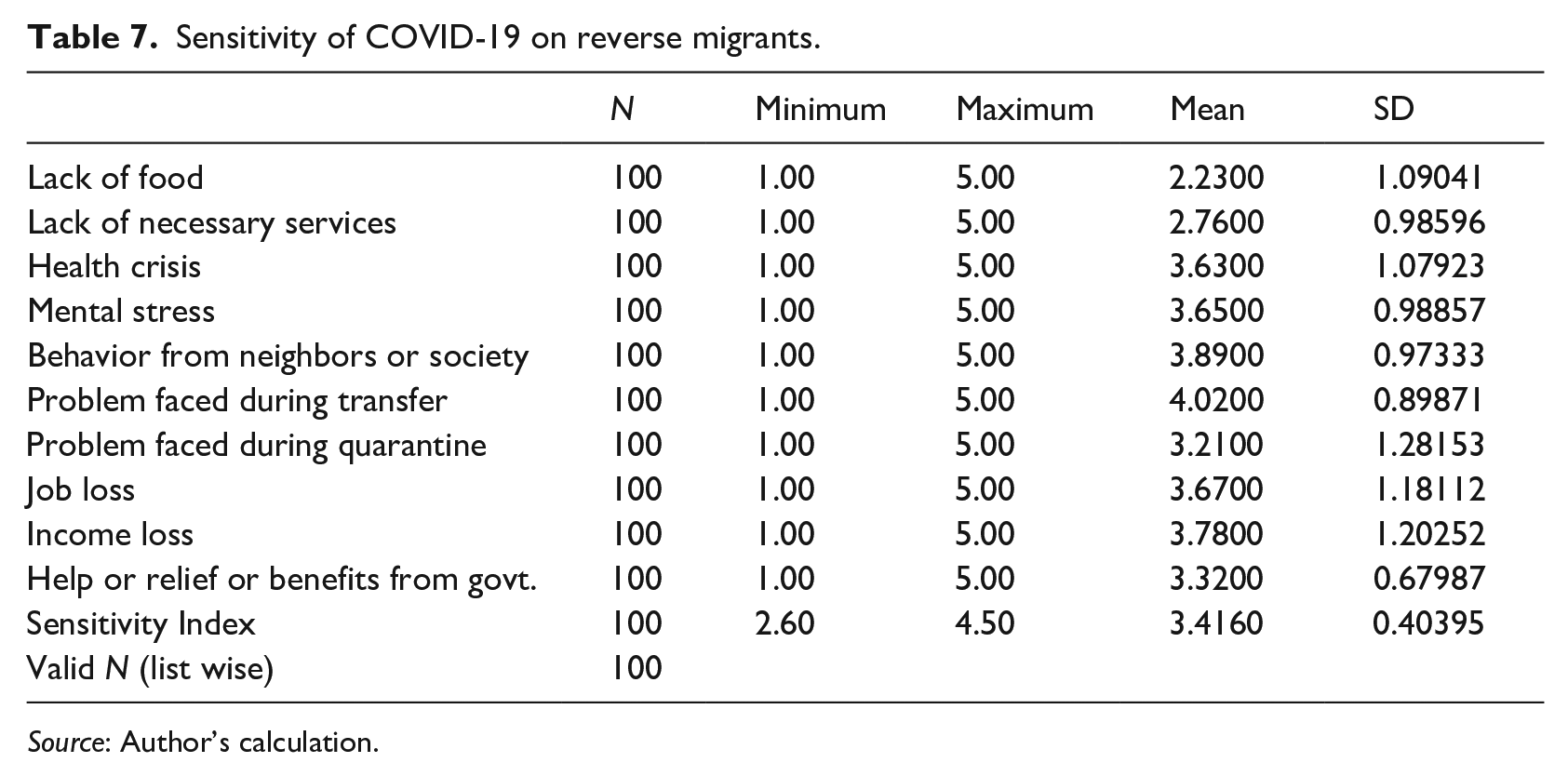
The study has introduced an innovative composite index of 10 variables termed as Sensitivity Index, which is new in the literature to measure the effect of COVID-19 on livelihood of migrants and degree of severity during and after homecoming. The parameters used in the Sensitivity Index, value of the index, and the descriptive statistics of all the parameters are present in Table 7. The index is formed by taking a score of 10 parameters on a rating scale of 1–5. The average score of those 10 parameters is taken as the Sensitivity Index.
Ten components of Sensitivity Index are lack of food, lack of necessary services, health crisis, mental stress, behavior from neighbors or society, problem faced during transfer, problem faced during quarantine, job loss, income loss, and help or relief or benefits from government. The justification of abovementioned parameters is as follows: Food is the necessity of life, without food no one can survive. Therefore, the present paper considers lack of food as a parameter as well as lack of necessary services for a smooth life. For a healthy nation, adequate health facilities are required, but COVID-19 created a health crisis not only in India but also throughout the world. To find out the health severity of migrants, we consider the “Health crises.” The fear of rapid spreading of coronavirus and increasing mortality rate has created psychological complications and increased mental stress, which is captured by “Mental Stress.” Migrants had faced difficulties in reaching home due to the closure of transportation facilities, especially road transportation, and sudden lockdown forced migrants to adopt any means of transportation by which they suffered. After reaching native place, migrants are placed in quarantine centers formed by the local government without minimum facilities in most of the cases, and after quarantine, migrants are refused by neighbors or society to enter home. Increasing number of COVID-19 cases forced the shutdown of major economic activities, which led to job loss and income loss of the migrants. Then, relief or benefits from the government is a way of survival.
Analysis of result
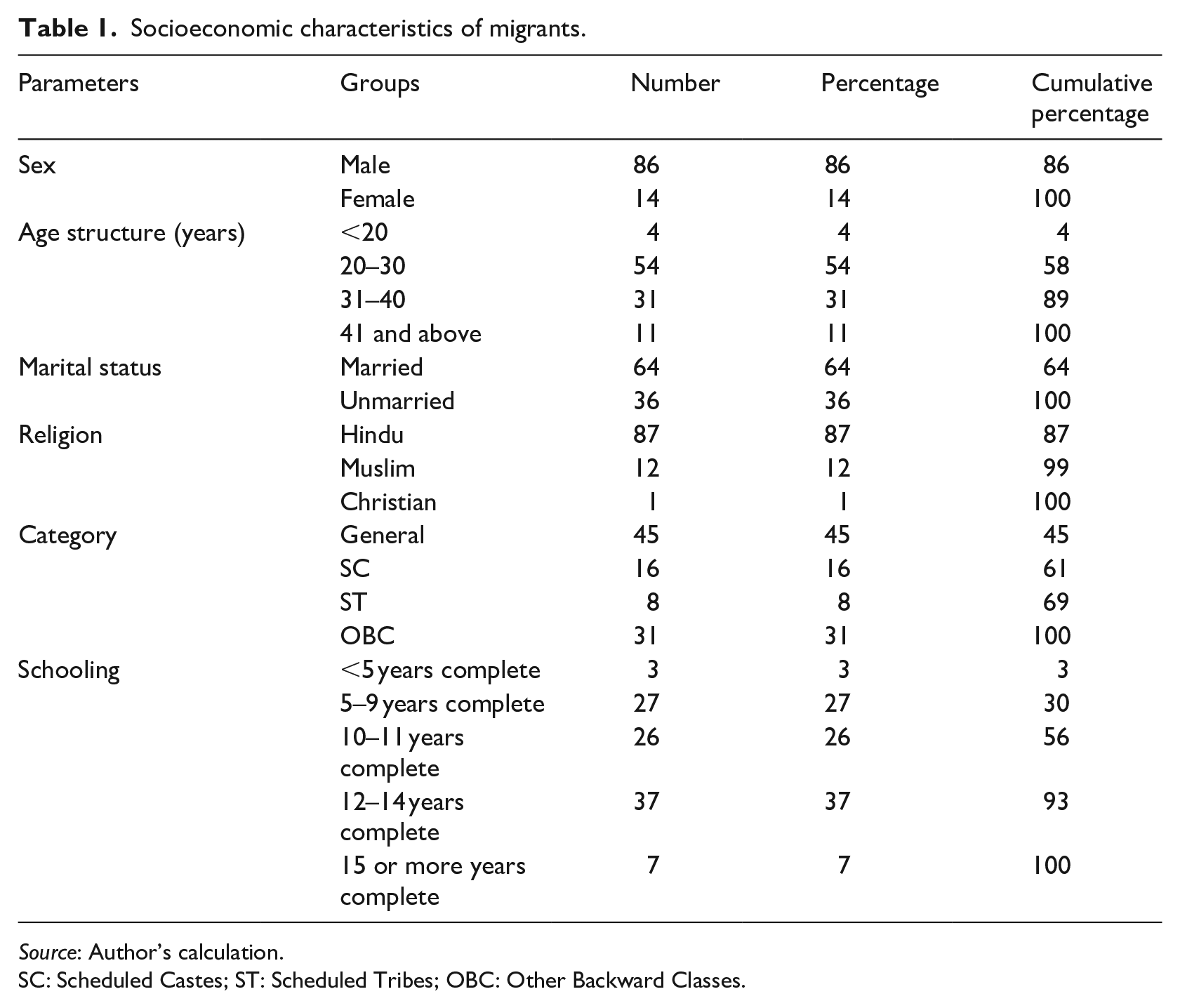
There were 86% male and 14% female participants in the survey. A whopping 54% of those polled were between the ages of 20 and 30 years, with 31% being between the ages of 31 and 40 years. Then, 11% of the population was more than 41 years old, and just 4% of the population was less than 20 years old. There were 64% married respondents and 36% unmarried respondents. The majority of respondents were Hindus, only 12% of those polled identified as Muslims, with the remaining 1% identifying as Christians. In addition, the vast majority of those who took the survey belonged to the general group, whereas 31% were Other Backward Classes (OBC), 16% were Scheduled Castes (SC), and 8% were Scheduled Tribes (ST). As far as education is concerned, the majority of the respondents (37%) studied up to senior secondary, 26% studied up to high school, 7% studied up to undergraduation (UG), and 3% only received primary education (Table 1).
Socioeconomic characteristics of migrants.
Source: Author’s calculation.
SC: Scheduled Castes; ST: Scheduled Tribes; OBC: Other Backward Classes.
In addition to socioeconomic considerations, we also looked at aspects relating to migrants, such as their motivations for migrating, their jobs prior to migrating, their jobs after migrating, and their jobs after reversing migration. However, we have also developed a sensitive index that takes into account the critical issues that migrants faced during the lockdown as they attempted to return to their home states. During our study, we found that the majority of our respondents have reverse migrated mainly from Delhi (33%), Karnataka (12%), Maharashtra (8%), and Rajasthan (8%), Orissa (7%), and Tamil Nadu (7%).
There is no escaping the fact that people migrate from one place to another for a variety of reasons. Opportunities for both skilled and unskilled labor are abound in Delhi. As a result, persons who are underpaid or underemployed in their home countries or those who are yearning for a better life are drawn to Delhi (Ramandeep kaur, 2014). Delhi, however, has the largest percentage of interstate migrants in its total population, a sign of the city’s appeal to those from other states (Hindustan Times, 2018).
After Delhi, Karnataka is the second state where people prefer to migrate. Karnataka is the eighth largest state in India, and according to the census of 2011, the population of Karnataka has increased significantly by more than 15% (Census, 2011). Most of the people in the state of Karnataka have migrated to the state because of its excellent agricultural wage labor. To earn a better living, workers in Karnataka typically relocate to rain fed areas (Bhat and Nagesha, 2018).
Maharashtra is the third most popular destination for migrants after Delhi and Karnataka. There are a large number of migrants heading to Maharashtra. Maharashtra is currently India’s most industrialized state. Maharashtra is renowned as a migration state because of its high concentration of job prospects for migrants. The second argument is that there are more viable means of subsistence in the state. Maharashtra’s 2011 census counted 5.74 million migrants, 27.55 million of whom claimed to have previously lived in Uttar Pradesh and 5.68 million in Bihar (Census, 2011). There were 5.65 million migrants to Uttar Pradesh, a state from which people go all around India in quest of a job (Yadav, 2019). The state of Rajasthan is also included in the influx of migrants. One in every 12 people born in Karnataka chooses to reside in Rajasthan (Edwin, 2019). Also in Rajasthan, people cross state lines in search of work or education, among other reasons (RAJRAS, 2019). Other than that, migrant workers are concentrated in the Indian states of Odisha and Tamil Nadu as well.
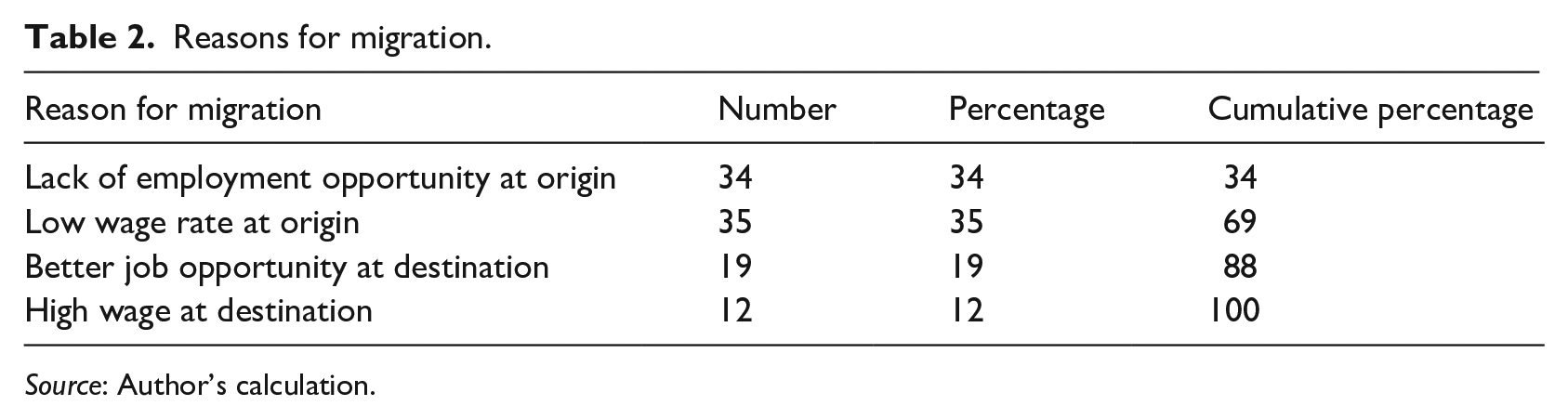
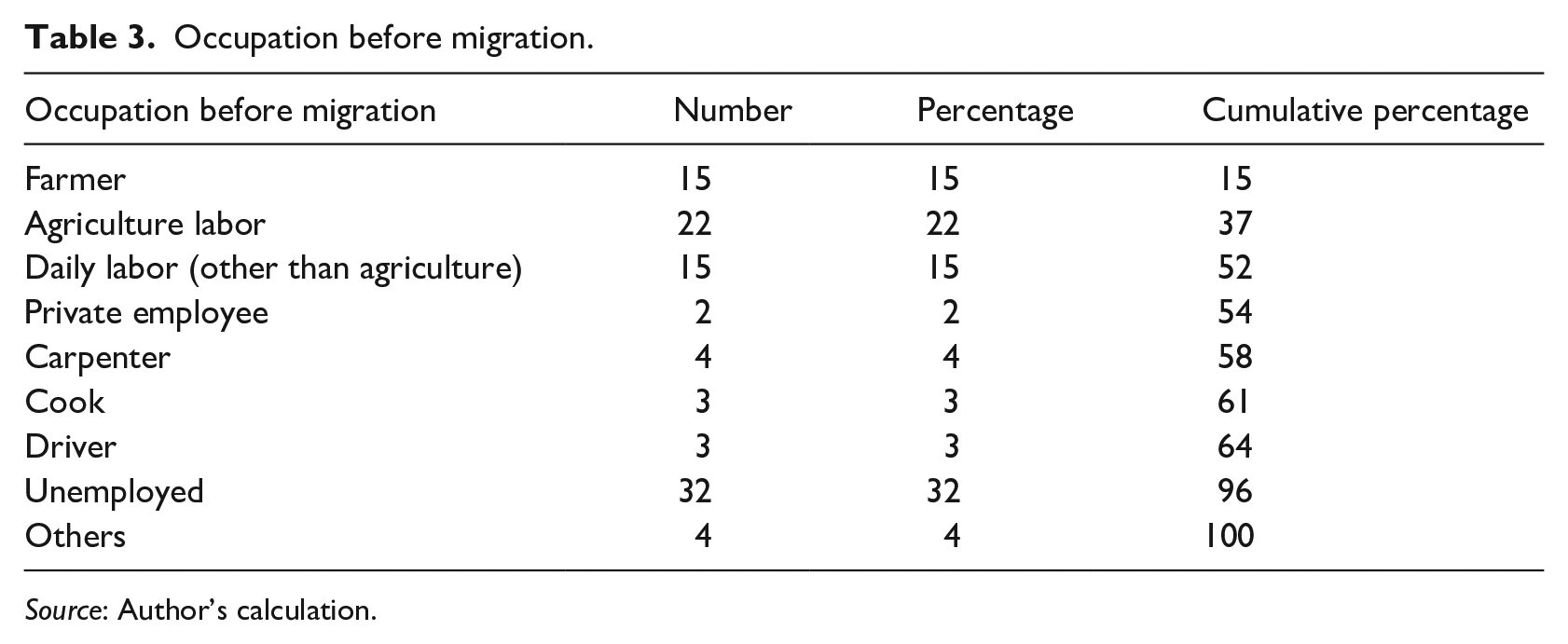
It is crucial to understand migration’s underlying reasons, especially in light of the previous debate. Because of this, we have asked our respondents why they left their native state of Uttar Pradesh and moved to another area of the country in order to conduct this survey. As a result, we identified four primary drivers of human movement: 34% of respondents stated that they left Uttar Pradesh because of a lack of employment opportunities; 35% stated that they have taken the decision to migrate because of a low wage rate; 19% stated that they left because of better job opportunities at their destination; and 12% stated that due to high wage rate, they have migrated from Uttar Pradesh (Table 2). Afterward, we inquired about the respondents’ pre-migration and post-migration occupations to see if there was a difference in the two groups, and we noticed a lot of variation in the middle of the spectrum. Before migration, the respondents have engaged in occupations such as farmer, agriculture laborer, daily labor, cook, driver, a private employee. The most alarming finding, however, is that 32% of those surveyed were unemployed before their relocation. In addition, 22% of those surveyed had worked in agriculture, 15% are farmers or everyday workers, and the remaining are cooks, drivers, or carpenters (Table 3).
Reasons for migration.
Source: Author’s calculation.
Occupation before migration.
Source: Author’s calculation.
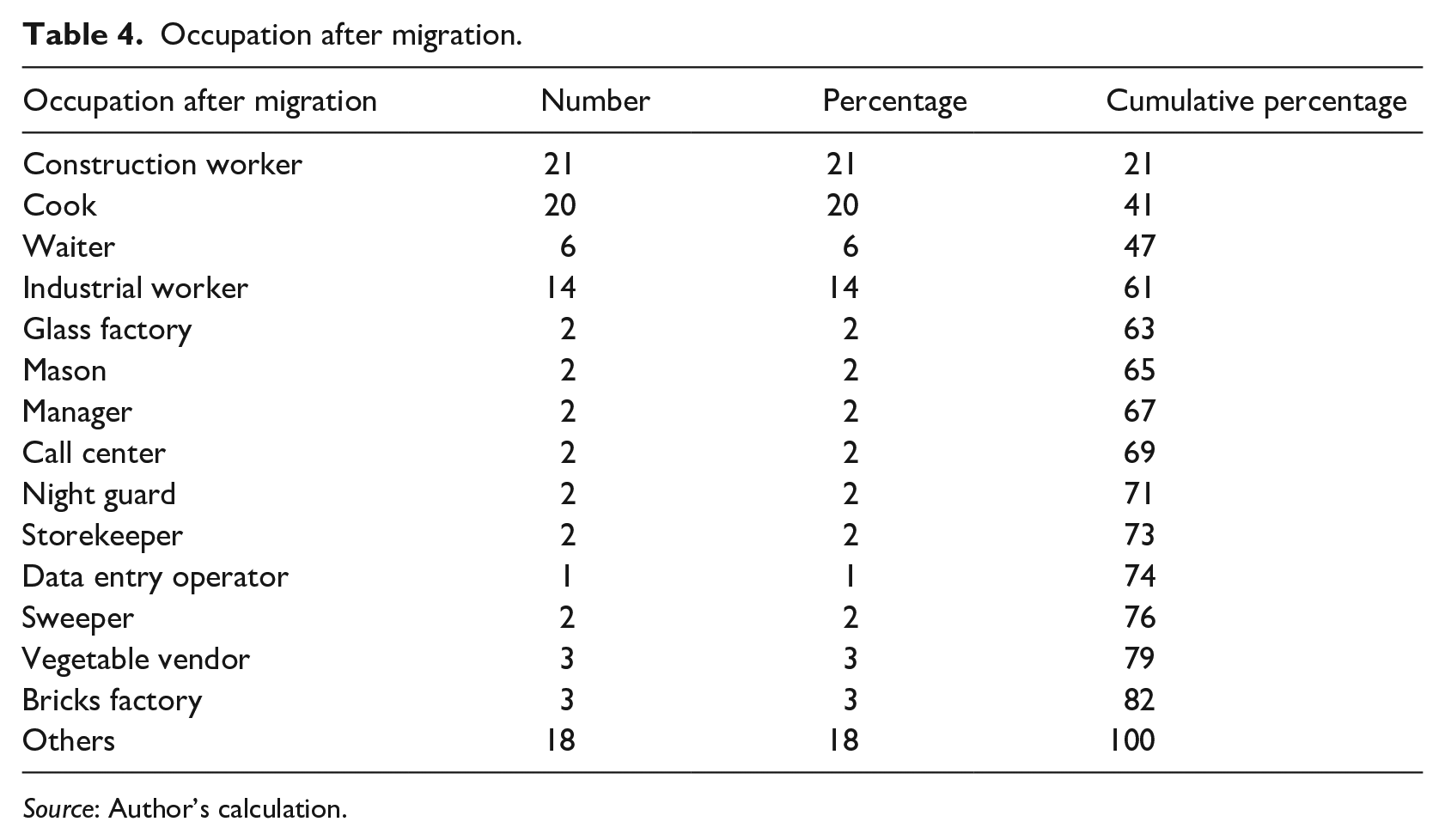
After migration, however, there is no way to avoid a wide range of occupations among migrants. After migration, no one was unemployed, whereas 32% of respondents were unemployed before migration. After migration, the majority of migrants found work in construction, 20% became chefs, 14% became industrial employees, and the remainder worked in glass and brick factories; others began as vegetable vendors, sweepers, night guards, and masonry contractors. These people worked in call centers, as data operators, storekeepers, and managers; others were given the chance to work in call centers (Table 4). By comparing Tables 3 and 4, it becomes clear that migrants’ occupations and employment opportunities varied widely once they arrived at their new location.
Occupation after migration.
Source: Author’s calculation.
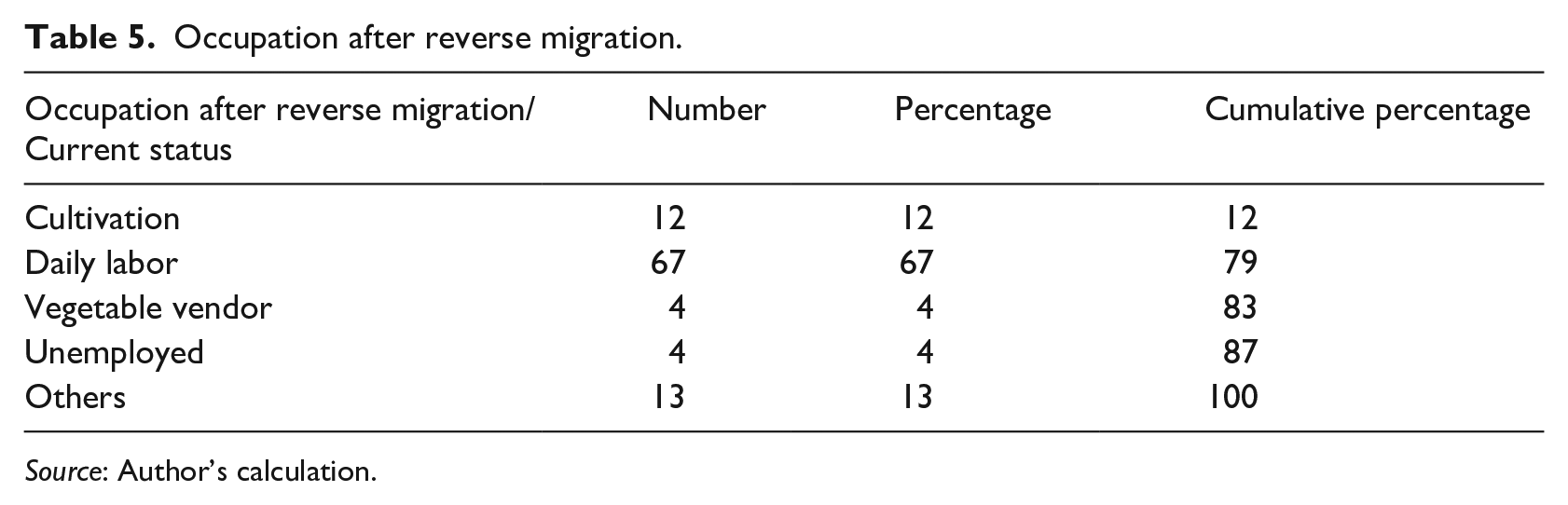
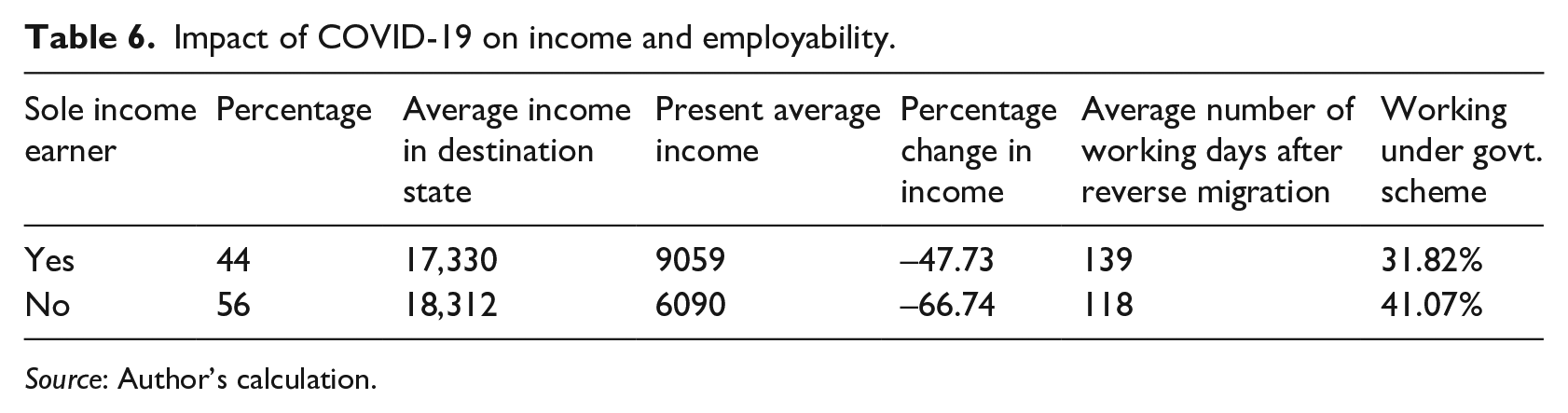
Most of the migrants were satisfied with their jobs and were earning good, but a sudden lockdown due to COVID-19 had a devastating effect on them. They have begun returning to Uttar Pradesh, the state in which they were born. Table 5 shows the devastating effect on the migrants’ occupations once more. There were now few options for employment. In Uttar Pradesh, 76% of respondents work as day laborers, while 12% are farming, 4% are vegetable vendors, and 4% are unemployed. While 13% of reverse migrants have engaged in other activities as their source of earning, the most distressing aspect of reverse migration is that the average number of days spent working is only 127. In addition, 44% of respondents are the sole income earners in their families, while the rest are not the sole earners in their families. For the first group, the average income of solitary wageworkers in the destination state was Rs. 17,330 after their migration; but following reverse migration, their average income dropped by 47.33%. Since they are not sole breadwinners in their families, the average income of those who have relocated was Rs. 18,312 before migration, but it is now Rs. 6090, reduced by 66.74%. As a result, we get a clear picture of the difficult circumstances people find themselves in grave danger. Overall, 31.82% of the sole income earners depend on government programs especially on MGNREGA whereas 41.07% of the second group depend on government schemes, which is contrast in nature because of the less income scope in the government scheme as per the respondents. It is a circumstance that should cause concern. This illustrates that those who are the sole income earners in their families are under tremendous stress, as the members of their families are not working, their average income has decreased dramatically, and they are not under government assistance. The average number of working days after reverse migration is 139 for the sole income earners, but it is 118 for the other group. Otherwise, they may see some solace (Table 6).
Occupation after reverse migration.
Source: Author’s calculation.
Impact of COVID-19 on income and employability.
Source: Author’s calculation.
Reverse migration has clearly caused serious problems for all of the respondents, but their troubles began even before they left the migrated state and returned to Uttar Pradesh. We have created a Sensitivity Index in order to identify the issues (Table 7). The migrants faced a plethora of problems upon their return. The current study is based on 10 parameters that illustrate the severity of the situation that all of the respondents were in. On a scale of 1 to 5, respondents were asked to rate certain parameters or issues. The maximum complexity in this scenario is 5 and the lowest is 1 (Table 7).
Sensitivity of COVID-19 on reverse migrants.
Source: Author’s calculation.
As we can see, the majority of the migrants have experienced a lot of trouble reaching their homes. This is the main difficulty with a mean score of 4.02 and a SD of 0.898. They had walked day and night to reach their state without food and drink. Some of them had lost their lives when they were returning.
The second significant challenge faced by the migrants on their return is the behavior of the society toward them with a mean score of 3.89 and SD is 0.973. During that phase, the people who were returning to their state or native places were seen as covid carriers, which made them annoyed. They need to stay in quarantine for 14 days. Some of them have faced terrible challenges such as shortage of food, water, and basic medicines.
Furthermore, they have suffered from money loss as a result of the loss of their jobs, which will be the third important difficulty that migrants will confront throughout their return journey: 3.78 and 1.20 are the mean and SD, respectively (Table 7). During our study, some of the respondents stated that they had very little money while traveling back home. They had experienced a great deal of trouble as a result of this. The reason for this is that they will require food and drink throughout their return journey. The loss of income as a result of job loss is another big issue that migrants have to deal with. During the most difficult wave of COVID-19, the phrase “job loss” became increasingly popular.
Mental stress has also proved to be one of the major issues for the migrants, with a mean of 3.65 and a SD of 0.98. Because of the shortage of transportation, many were forced to trek back to their houses in their bare feet without access to any other essential materials. Internal migrants returning home with their belongings on their backs and children in tow were trending on social media throughout the world. They were still plagued by the misbehavior of the locals, indifference from family members, and a financial crisis when they returned to their homeland (Srivastava et al., 2021).
In addition, migrants returned home with health problems. Health crisis has become one of the difficulties faced by the reverse migrants (mean = 3.63 and SD = 1.07). Despite having health conditions such as diabetes, thyroid disease, and arthritis in their joints, many of the walkers were in their 50s and 60s. Another factor of the Sensitivity Index in regard to the quarantine with a mean of 3.21 and a SD of 1.28. Most of the respondents have revealed that they have faced a lot of problems during their stay in quarantine. They said that there was a shortage of food and water in the quarantine centers. They were not hygienic as well and were not providing the medicines as well.
Two more elements, in addition to these, are causing significant concern among the survey participants: it is these elements that account for the issue of food scarcity (mean = 2.23 and SD = 2.23) and a lack of essential services (mean = 2.76 and SD = 0.98). The pandemic has had a widespread impact on the whole food system, exposing its inherent fragility in the process. Border closures, trade restrictions, and confinement measures have prevented farmers from accessing markets, as well as agricultural workers from harvesting crops, resulting in the disruption of domestic and international food supply chains, as well as a reduction in access to healthy, safe, and diverse diets for all. The pandemic has decimated employment opportunities and put millions of people’s livelihoods in jeopardy (ILO, 2020). Aside from the food, the service sector had been seriously harmed by COVID-19. The education business, the health sector, public services, and the tourism industry have all suffered the most severe financial consequences as a result of the current coronavirus outbreak (Xiang et al., 2021).
Even in light of this, the respondents assert that they received only a modest amount of aid or subsidies from the government upon their return. In accordance with Table 5, 73% of respondents have received government benefits during their reverse migration. However, there is still the possibility of providing government benefits to those who have reversed their migration.
Finally, using the mean (3.4) and SD (0.403) of the Sensitivity Index, we can calculate the average of all difficulties. The sensitivity score has a high mean and SD, indicating that the difficulties faced by migrants are highly sensitive. That Sensitivity Index is the unique feature of the study.
After the reverse migration, some people were engaged in different economic activities while others remained unemployed for a long time. Table 5 shows the present job situation following a reverse migration. Table 5 depicts that after reverse migration, 4% of the respondents are unemployed and 67% of the respondents are working as daily laborers.
The Government of India launched several initiatives to help the reverse migrants: “The Aatma Nirbhar Abhiyaan” through which they distributed free food grains for migrant workers without ration cards and “Affordable rental housing complexes for migrant workers and urban poor,” which provided Pradhan Mantri Awas Yojana (PRS, 2020) for the welfare of the migrants.
Some of those who returned to their home countries after the reverse migration found work in a variety of industries, while others remained jobless for an extended period of time. Table 5 depicts the current state of employment following a reversal of migration. Table 5 shows that 4% of respondents were unemployed after returning to their home countries. Almost two-thirds of those polled said they were employed as a daily wage laborer. The Indian government launched several programs to assist reversing migrants, such as “The Aatma Nirbhar Abhiyaan,” which provided free food grains to migrant workers without ration cards, and “Affordable rental housing complexes for migrant workers and urban poor,” which provided Pradhan Mantri Awas Yojana (PRS, 2020) for the welfare of migrants. For those who came home after the coronavirus lockdown, the government also developed an employment program with a budget of Rs. 50,000 crores. “Garib Kalyan Rozgar Abhiyaan” would be implemented in 125 days in the 116 districts of six states (Bihar, Madhya Pradesh, Uttar Pradesh, Jharkhand, and Odisha) that got the highest number of migrant laborers. The government also allocates 18.69% more funds under MAGREGS to meet the contingency during the lockdown. Despite this, the Indian government has introduced a number of other programs aimed at helping migrant workers find work and support their families.
In light of the foregoing, it is rational to conclude that after migration, respondents had additional occupational possibilities (Table 4). However, as a result of reverse migration caused by COVID-19, their employment possibilities have considerably decreased (Table 5). In addition, the influence of COVID-19 on income and employment has been evaluated on the basis of a sole income earner. This criterion is very important because 44% of the respondents are the sole income earners in their households. There is no doubt that those respondents who are sole income earners have reaped the benefits of government assistance programs. Overall, 31.82% of the 44% of respondents are employed by the government. Respondents who do not rely on their jobs to make ends meet are particularly concerned. Out of a total sample size of 56%, 41.07% of respondents are employed by the government. A variety of initiatives have been launched by the government to assist reverse migrants. Even so, there is a lot of room for additional reverse migrants to be integrated into government programs. As a result, it does not reach the reverse migrants in their entirety.
Discussion
As the statistical evidence suggests, persons who are underpaid in their home states are drawn to the metro cities providing employment opportunities. The migration has been both inter as well as intrastate irrespective of the locality and proportional to the higher wages of payment. The pattern of migration has been distributed across the different states partially and evenly more inclined toward the northern and the western part of the country. The results show huge alteration between the spectrum of pre- and post-migration, as a quarter of the considered sample migrated, was unemployed, or occupied in the work of farming. The sudden penetration of the COVID-19 pandemic has had devastating effect on them leading to the new outlines of reverse migration. Recently, these high rates of reverse migration have shown vulnerability among the migrants. The government was not prepared to impart the benefits of various schemes and was only able to provide employment for only a partial part of the year.
Being unemployed and not able to migrate for the said period has put the sole earner member of the family in a difficult state. The penetration of COVID-19, loss of job, reverse migration, no income, and unavailability of employment have diverted the impact of the process toward the mental and the financial aspect. The unavailability of proper health care services in the rural areas has created a ruckus of health conditions; overall, lack of essential services, absence of food services, and restrictions on trade have compromised the livelihoods of the people and put things in jeopardy.
Poverty and social insecurity induced by reverse migration have led to the demographic explosion, asymmetric living, health concerns, and job opportunities. The government is expected to behave sensitively by having a pragmatic perspective in order to accommodate the migrants. The government’s commitment to the post-return situation arises after reverse migration by introducing various government policies by both central and state in order to provide livelihood opportunities to both the residents and the reverse migrants. Lack of government attention, preparedness, and improper planning created the situation against migrants.
Conclusion
Taking into consideration what has been said thus far, it should be evident that the present study is distinct due to the usage of the Sensitivity Index. According to the study, 10 significant elements have been identified that contribute to the difficulty experienced by reverse migrants. Apart from that, the study went into detail about the influence of COVID-19 on earnings and employability. This is a novel approach to identify the ground-level status of reverse migrants, and it should be applauded. In order to do so, we have selected the respondents who are the sole providers of income. With this information, we learned that 72% of those who answered the survey questions had benefited from the government’s initiative. In which, 31.82% of the population are solitary income earners, and 41.07% are not lone income earners.
In spite of that, the study draws attention to the sensitivity, adversities, as well as physical and psychological distresses. It is clear from the analysis that most of the problems faced by the migrants were due to the sudden unplanned lockdown. Most of them are susceptible to many economic, physical, and mental illnesses and received barely any medical facility from the government. Those migrants’ average monthly income has declined radically, which is a matter of concern from the standard of living point of view. In addition, they also faced social issues such as discrimination and attacks from their neighbors and society. Along with it, a measurable amount of cash injection is to be made at the time of reverse migration and that can be identified with the help of the availability of the longitudinal data on reintegration. The potential outcome suggests that the government is unable to maintain proper records of the migrants and improper implementation of policies only in order to ensure news headlines, and absence of cash injection into the program/policies have been the responsible factors. The COVID-19 reverse migration was an involuntary and forced situation faced by the migrants.
Policy suggestions
According to the result of the survey, a large number of people in Uttar Pradesh have migrated from the state. The reasons behind the migration are lack of employment opportunities, low wage rates, and better job opportunities. Therefore, for this, we are putting our policy suggestions through our work. The government should pay attention to the difficulties that its citizens are experiencing and work to resolve them. The government should make an effort to boost or expand the number of work possibilities available to its inhabitants. If they are able to find decent employment or income possibilities in their native state, the likelihood of their migrating is reduced. However, simply providing work possibilities is not sufficient. It is also important for the government to ensure that the wage rate is satisfactory. Migration occurs because of a poor wage rate, which is also a contributing factor. This study is applicable for effective policymaking or strengthening the running government policies, to enrich the grassroots level of migrants’ communities.
Limitations of the study
In the current study, the state of Uttar Pradesh was taken into consideration. It is true that Uttar Pradesh is the most populous state in the country. However, this limits the scope of the research to one Indian state while other states have been inadvertently avoided.
Footnotes
Declaration of conflicting interests
The author(s) declared no potential conflicts of interest with respect to the research, authorship, and/or publication of this article.
Funding
The author(s) received no financial support for the research, authorship, and/or publication of this article.
