




Abstract
Organizational values-based interventions are intentional changing processes guided by values. Using a mixed-methods approach, this study analyzed how change initiatives developed in a values-based intervention impact employees’ perceptions of decent work and work motivation. It also explores how the intervention process and context shape employees’ perceptions of the contribution and success of each workplace initiative during a health crisis, in three Portuguese organizations. Quantitative results showed the importance of integrating values such as dignity, solidarity, and social justice into the implemented actions. The qualitative results indicated that employees felt more involved and valued, emphasizing the importance of transparent, inclusive practices, good communication, and greater employee participation. This study highlights practical implications for organizations, especially in crisis contexts, by validating the fundamental human values of the Economy of the Common Good model. People become values-oriented by applying these interventions in their specific organizational contexts, influencing multiple aspects of organizational life.
Introduction
Global challenges such as pandemics and socioeconomic crises increasingly expose organizations to conditions that threaten their survival (Hollands et al., 2023). It is crucial to understand how organizations can continuously adapt and change their practices during turbulent and uncertain contexts (Errida & Lotfi, 2021; Perides & Vasconcellos, 2024). Change is inherently part of the organizational intervention process, and the importance of values in change processes has increased in recent years (Burnes & Jackson, 2011; Klein, 2021).
The literature on the impact of values on change interventions supports the view that successful change is linked to the alignment of values between three factors: the individuals involved in the change, the objectives of the intervention, and the approach to change. This includes the values that underpin the change's content and the process by which it is managed (Burnes & Jackson, 2011). Adopting a values-centered approach to the analysis of organizational change offers several advantages. Firstly, it allows us to examine how changes at different levels (societal, organizational, group, and individual) influence each other (Amis & Janz, 2020). In addition, this approach makes it easier to understand the relationship between organizational elements during change (Battilana & Lee, 2014; Gioia et al., 2013). It also helps to better capture change processes by considering organizations as complex systems of interrelated elements influenced by contradictory values (Passmore & Woodman, 2017). Finally, focusing on values improves our understanding of the leadership capabilities needed for successful change (Burnes et al., 2018; Oreg & Berson, 2019).
Although research points to the crucial role of values in organizational change, much is still to be discovered about their impact, making a values-centered approach necessary for change. Adopting a values-centered approach becomes particularly relevant, considering that the coronavirus disease 2019 (COVID-19) pandemic has forced organizations to transform their business models and adopt practices that have challenged their core values (Klein, 2021). Given this new context, scholars have suggested using more data sources for organizational interventions. This includes in-depth qualitative field investigations and quantitative data with longitudinal designs (Abildgaard et al., 2020). Additionally, the literature recommends adopting innovative approaches that emphasize values (Klein, 2021). The Economy for the Common Good (ECG) is a cooperative model based on human values and emphasizes the contribution to the common good by organizations (Clement et al., 2019; Felber, 2015; Ollé-Espluga et al., 2021; Sanchis-Palacio et al., 2020). This approach is crucial to incorporate values that promote economic and social change alongside resilient approaches to support the transition from crisis to recovery and development (European Economic and Social Committee, EESC, 2015).
Hence, this article aims to advance the current knowledge on organizational values-based interventions by fostering organizations’ contributions to the common good through a mixed-methods multiple case study. Specifically, we conducted values-based interventions in three organizations during a global health crisis. The first study quantitatively provides evidence on whether the intervention actions influenced employee perceptions of decent work and work motivation, while the second study adopts an in-depth qualitative approach to capture a detailed understanding of the workplace initiatives that arose from the intervention process and their impact on the common good. The investigation seeks to answer how actions within an organizational values-based intervention impact the common good, decent work, and work motivation throughout a health crisis. The overarching goal of our investigation translates into two research questions: (1) How did the change initiatives developed in the values-based intervention impact employees’ perceptions of decent work and work motivation throughout a health crisis? (2) How did the intervention process and context shape employees’ perceptions of each workplace initiative's contribution and success over a health crisis?
The specific character of the disease outbreak provides a particularly unique context to investigate the impact of an organizational values-based intervention. The COVID-19 pandemic has presented significant challenges for organizations, requiring appropriate measures and corrective actions to overcome the crises (Helmold, 2022). On the one hand, this resulted in fragmented communication structures, leading to poor communication, demotivation, and resistance among people undergoing change (Boudabbous et al., 2023). On the other hand, human values play a crucial role in promoting behavioral compliance and encouraging pro-social behavior to manage the crisis, highlighting the importance of shared values in promoting collective efforts to contain a health crisis (Wolf et al., 2020). Thus, the study enhances the understanding of the overall effectiveness of organizational values-based interventions, as embedding this intervention research in a volatile environment can reveal a wide range of insights and uncover previously unknown effects. We answer the call to understand how organizations respond when significant turbulence and uncertainty occur in an intervention, mainly when change proposals compete with volatile environments. In addition, it responds to the urgent call for action by all countries (developed and developing) in adopting the 17 Sustainable Development Goals (UN, 2000).
The structure of the article is as follows. We provide a brief overview of existing conceptualizations of organizational values-based interventions. Following this, we outline our methodological approach and then present the quantitative and qualitative studies sequentially. First, the quantitative section offers an overview of how common good change initiatives impact employees’ perceptions of decent work and work motivation. We detail the quantitative research design and present the results. Next, we discuss the qualitative methodology and include employees’ reports on the emerging values-based initiatives. Finally, we discuss the key findings and their relevance for academic and business scholars. We also identify the study's limitations and propose directions for future research.
Organizational Values-Based Interventions
Organizations are social systems through which values are pursued and put into practice. As ideals about what is desirable, values provide a frame of reference for selecting and evaluating behavior within organizations (Bourne & Jenkins, 2013).
Values help determine what is essential and justify behavior and decisions (Rokeach, 1973). Various organizational elements, such as design, identity, culture, and practices, are infused with values, pointing to the critical role values play during organizational change (Klein, 2021).
A broad range of studies have highlighted organizational, group, and individual values as essential elements for the success of change interventions (Schwartz & Davis, 1981; Allaire & Firsirotu, 1984; Mrotek, 2001; Chonko et al., 2002; Bouckenooghe & Devos, 2007; Diefenbach, 2007; Walinga, 2008). Individual values are internalized cognitive frameworks that guide choices and behavior and can be studied at individual and group levels (Oyserman, 2015). In organizations, group values develop through discussions and dialogue among members, thus shaping the organization's culture and identity (Mandal & Sokhi, 2016). Organizational values outline an organization's principles and direct its conduct and decision-making processes (Williams, 2016). These values are essential in defining the organization's identity and are crucial for its success (Quoquab et al., 2014). Societal values influence the interaction between individual and organizational values, with the individualism/collectivism spectrum playing a significant role in this dynamic (Treviño et al., 2020).
The success of a change is related to the alignment of values between the people involved, the objective of the change, and the approach adopted (Burnes & Jackson, 2011). This means that organizations must ensure that the objective of the change aligns with their values and identify the values underlying different approaches to change. Several authors have explicitly linked certain values to specific approaches to change (Kanter et al., 1992; Kirkman & Shapiro, 1997; Beer & Nohria, 2000; van Marrewijk & Werre, 2003). Despite many efforts to classify organizational values (Scott, 2002), two theories have prevailed. The first theory was developed by Rokeach (1973), who created a typology with 18 terminal values and 18 instrumental values, with no interrelationship or developmental sequence between them. The second theory is Graves’ ECLET (1970), which outlines a hierarchy of eight fundamental value systems, illustrating the connections and motivations for transitioning between these systems. Although Graves’ ECLET typology is particularly interesting due to its foundation on a hierarchy of value development and its widespread acceptance among academics and professionals (Burnes & Jackson, 2011; Johnson, 1995), we chose to pursue an innovative approach based on values.
ECG
The ECG is a holistic model that combines various economic models favorable to human dignity and cooperation, emphasizes social responsibility and ethics in and of organizations, and aims to bring citizens closer together and promote economic, social, and environmental sustainability (Felber, 2015; Foti et al., 2017). This rapprochement is facilitated by translating values into practice, promoting greater participation by all in collective life (Isabel, 2015). This model has been increasingly supported by civil society organizations and academics (EESC, 2015).
The ECG proposes a sustainable model focused on the common good and that human values should guide market relations and be recognized as universal, such as human dignity, solidarity, environmental sustainability, social justice, co-determination, and transparency (ECG, 2017; EESC, 2015; Felber, 2015; Isabel, 2015). These values and the various stakeholders (e.g., employees) are the focus of the common good matrix. Combining the different values and stakeholders leads to 20 measurable and easy-to-understand indicators adaptable to each organization. Each indicator describes how each specific value applies to each relevant stakeholder group. The intervention framework was based on the foundation of the ECG values of the common good matrix (see Table 1). This study focused on employees’ common good indicators (C1, C2, C3, and C4).
Common Good Matrix 5.0.
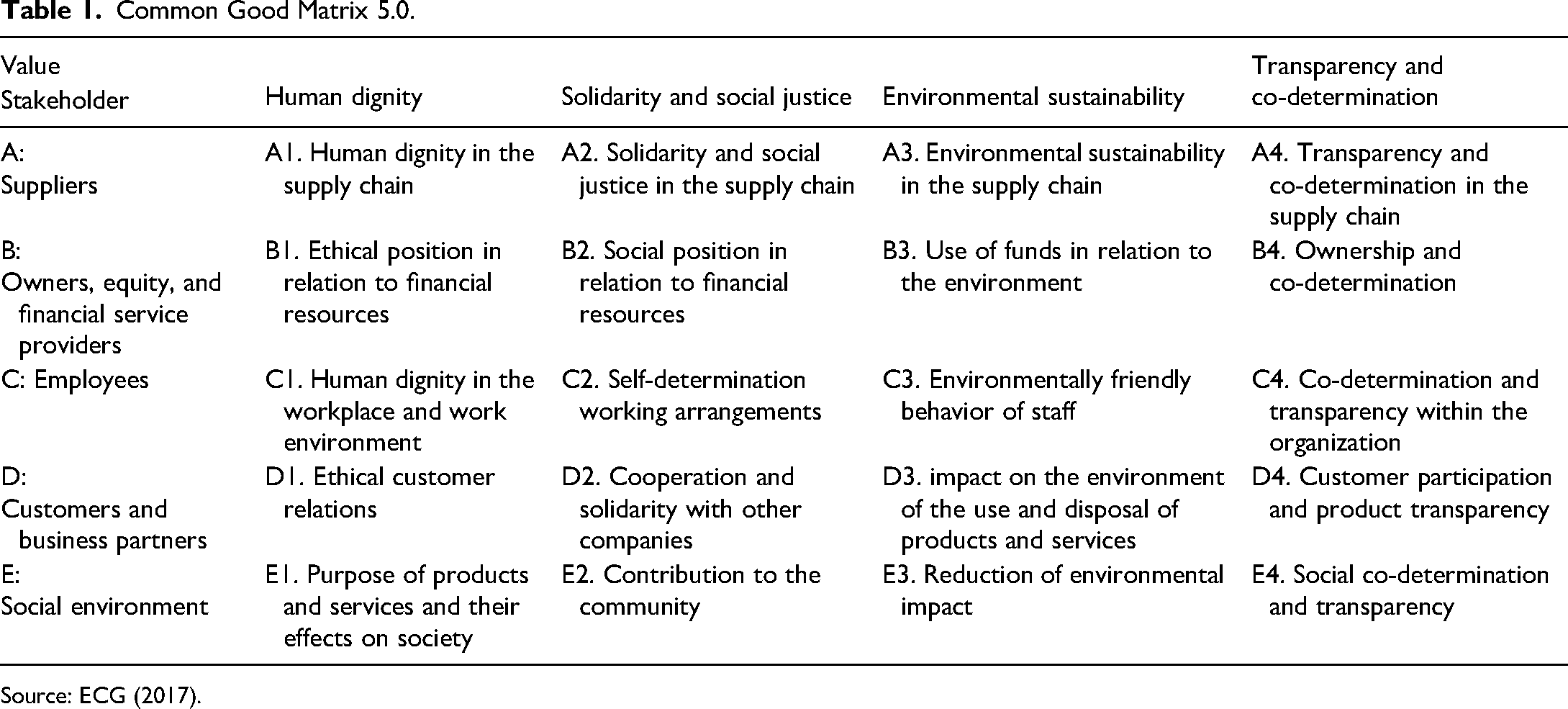
Source: ECG (2017).
The ECG approach contributes to preventing crises and serves as a tool to create a resilient social and economic system adaptable to change. Adopting an innovative approach centered on human values is crucial for promoting behavioral compliance and encouraging pro-social behavior to manage a crisis effectively (Wolf et al., 2020). First, the recommendation to adhere to this approach emerged from the (EESC, 2015), in line with the Europe 2020 Strategy. Second, the ECG positions resilience at the heart of processes that support the transition from crisis to recovery and development (EESC, 2015). Resilience influences civil society's capacity to respond to significant upheavals and manage unexpected tensions and crises. Consequently, the ECG serves as a framework for ethical and sustainable practices for member organizations.
The COVID-19 pandemic has highlighted the necessity of adopting socioeconomic approaches to prioritizing people (Andrijasevic et al., 2021). The pandemic context can negatively impact intervention outcomes, especially when significant turbulence and uncertainty arise and change proposals compete with this factor (Nielsen & Miraglia, 2017). Lockdown and social distancing measures have forced organizations to close or reduce their physical operations, resulting in significant disruptions to internal communication practices (Ndlela & Madsbu, 2022), reduced levels of trust and social cohesion among employees, and increasing feelings of isolation (Brooks et al., 2020; Russo et al., 2021). This led to fragmented communication structures, which in turn caused poor communication, demotivation, and resistance among individuals experiencing change (Boudabbous et al., 2023). Social control theory can examine how these changes influence employee social bonding, emphasizing attachment, involvement, commitment, and beliefs in organizational values (Hollinger, 1986; Hirschi, 1969). Other theories, such as Social Exchange Theory (Blau, 1964), Social Identity Theory (Tajfel & Turner, 1979), and Conservation of Resources (COR) Theory (Hobfoll, 1989), can also assist in understanding these changes.
Decent Work and Work Motivation
In the context of work and business, it is particularly evident how decent work embodies an underlying concept of an inclusive society that experiences well-being while simultaneously emphasizing the existence of a compatible and synergistic social and economic context with the ECG (Pereira et al., 2019). On the one hand, decent work is the only concept that holds the status of being the broad expression of people's aspirations for their professional lives (ILO, 2015) and, on the other hand, it expresses Human Rights in the field of work (dos Santos et al., 2020; Ferraro, Pais, et al., 2018). The proposition of the concept of decent work is aligned with other United Nations initiatives, such as the UN Global Compact (UN, 2000a) and the Millennium Goals (UN, 2000b), being the eighth objective of the United Nations 17 Sustainable Development Goals (ILO, 2015).
The ECG and decent work are two values-centered approaches focused on human values, which consider the social system as a whole (Pereira et al., 2019). Decent work has shown to be an integrative concept (dos Santos et al., 2020) closely related to the common good values. Both models focus on employees, increasing their congruence (Pereira, dos Santos, et al., 2021; Pereira, Zapallà, et al., 2021). Although the literature does not include organizational interventions focused on this model, recent studies have found a wide variety of actions and changes taken by organizations during the implementation of the ECG values (Pereira, dos Santos, et al., 2021; Pereira, Zapallà, et al., 2021). The same studies suggested that such implemented actions improved the decent work dimensions, creating a decent work-friendly context.
As values provide a sense of direction and are viewed as essential predictors and drivers of individuals’ behavior (Bourne & Jenkins, 2013), work motivation is a compelling topic for ECG values-based interventions. Decent work conditions and a motivated workforce are vital to employees’ behavior related to the common good. Therefore, intervention projects aiming to develop ECG values (concerning employees as stakeholders) are much more powerful and relevant when attention is given to the various dimensions of decent work and work motivations. Some studies have evidenced that the more decent work conditions are achieved, the more employees are intrinsically motivated by their jobs (Ferraro, Moreira, et al., 2018; Ferraro et al., 2020).
Employees with high motivation levels were less likely to resist change (Wright et al., 2013). Furthermore, the authors emphasize the importance of employees’ motivation to be an active part of organizational change for a change project to be successful (Errida & Lotfi, 2021). Considering the closeness of work motivation and decent work to ECG values related to the employees as stakeholders, in this study, we used those concepts as criteria to evaluate the actions undertaken by the organizations to pursue the ECG values.
Methodological Approach
We adopted a multi-study, mixed-methods approach, relying on quantitative and qualitative data. Study 1 addresses Research Question 1 to capture how employees’ perceptions of decent work and work motivation evolve over time. Study 2, focusing on Research Question 2, provides an in-depth analysis of workplace initiatives that emerged from the intervention process and their influence on the common good. Overall, the mixed-methods design enables us to thoroughly and deeply explore the complexities of organizational values-based interventions, leveraging the combined strengths of quantitative and qualitative research approaches (Creswell, 2009).
Case Selection
To promote participation in this research project, the researchers held three seminars, in the north and center of Portugal, in cooperation with Portuguese business and professional associations to reach the most significant number of organizational leaders. These seminars aimed to share knowledge regarding the experience of membership and participation of other European organizations in the ECG movement and to invite them to undertake an organizational intervention with the research team. The eligibility criteria defined by the research team for participating were (1) expression of interest; (2) organizational philosophy matching ECG values; (3) availability to allocate resources (e.g., time); (4) availability to allow data collection; (5) interest in developing the intervention targeting the common good indicators; and (6) permission for the publication of results, with anonymity guaranteed. This study reports the change process undertaken by three participant organizations, which were the only ones to fulfill all the eligibility criteria. The three cases allowed us to analyze differences and similarities between the organizations and approach the data both within and across organizations. The participant organizations belonged to the construction sector (OA), manufacturing and selling of handmade chocolates (OB), and the industry of manufacturing plastic packaging (OC).
Intervention Design
The entire intervention lasted for 14 months (from July 2020 to August 2021) and had five substantive phases (1) preparation: setting up the project steps in detail and securing support; (2) screening: diagnosis; (3) action planning: determining the appropriate actions and designing the implementation, defining the support elements; (4) implementation: executing plans and involving competent people, and (5) evaluation: evaluate the impact of the intervention (Nielsen et al., 2010; see details in Table 2).
Intervention Phases in the Three Organizations (Nielsen et al., 2010).
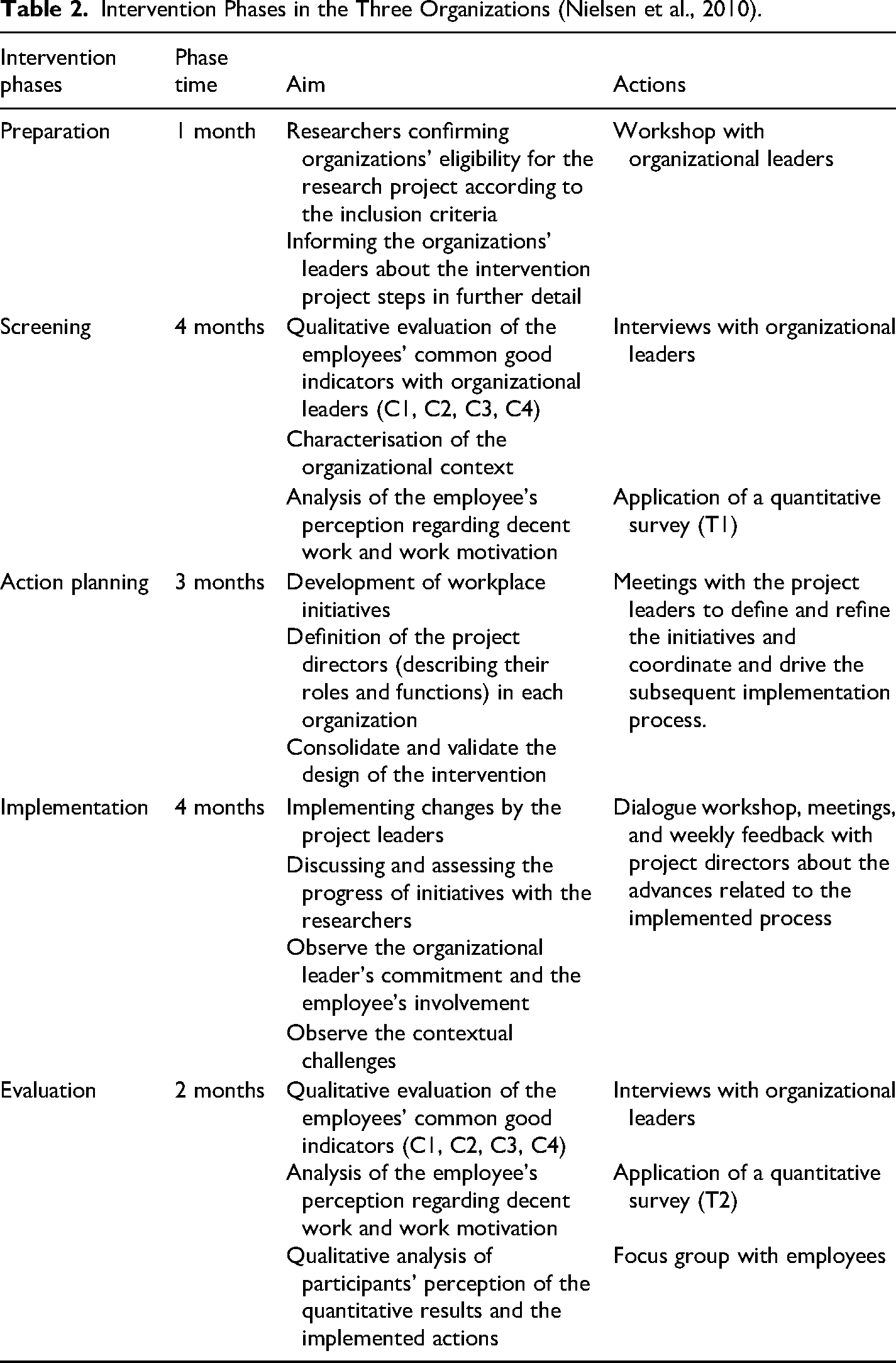
In the preparation phase, the research team conducted one workshop with the leaders in each organization to explain in detail the intervention process and the importance of involving workers. This was followed by a screening phase that included an interview with each of the three organizational leaders concerning the characteristics of the organizational context and the four common good indicators evaluation (C1, C2, C3, and C4). In addition, the first survey (T1) application took place, and the research team had the opportunity to explain the intervention process to the questionnaire participants.
The next phase was dedicated to action planning, which included two meetings to consolidate and validate the design of the intervention with the project leaders. During the development of the action plans, the project leader of OA mentioned that the pandemic restricted the range of specific actions (e.g., salary increases, seniority awards) and social dynamics. OB indicated that the pandemic led to the restructuring of several organizational dynamics that were previously in place (e.g., team-building activities, hiking, and rafting). Finally, OC reported that the pandemic made promoting social activities among employees impossible.
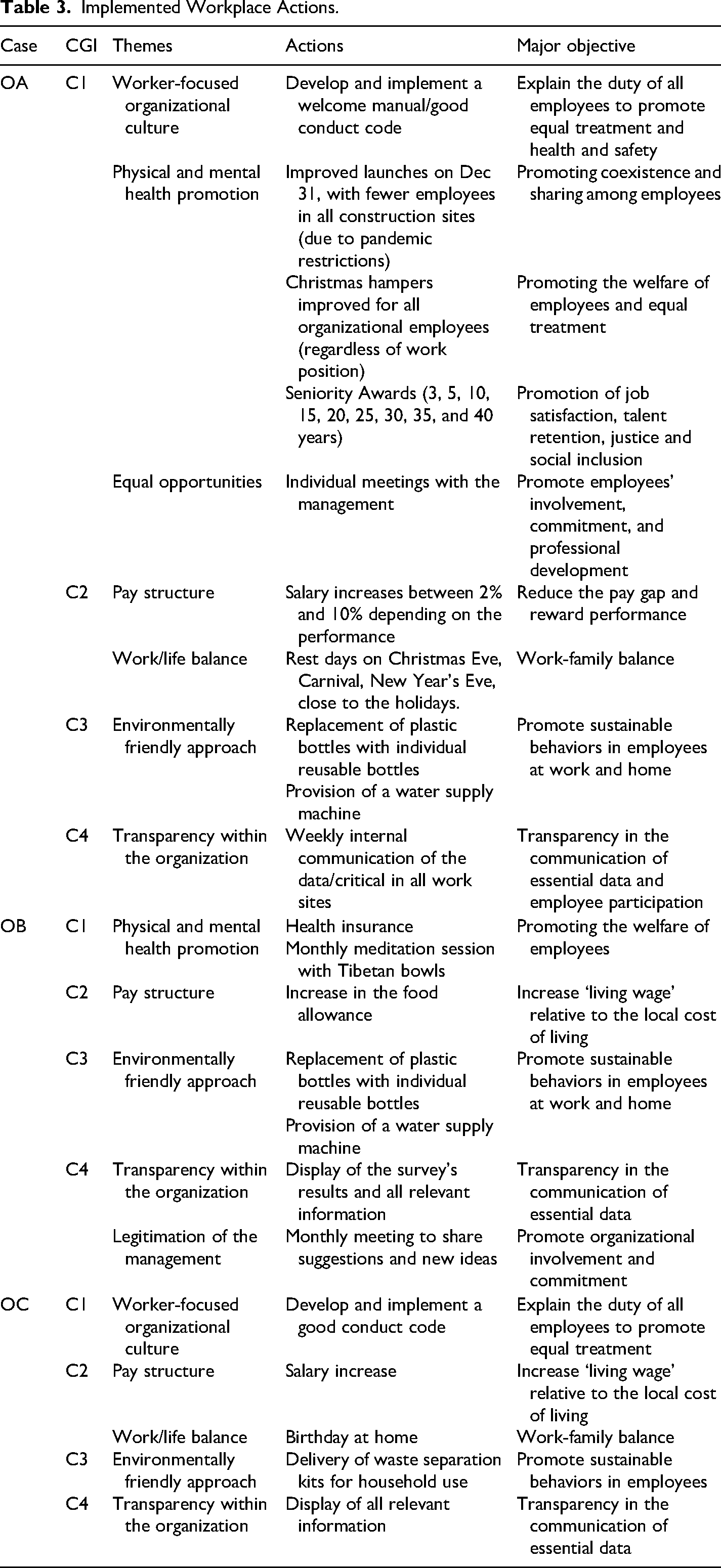
Taking into account the constraints indicated by the organizational leaders and the T1 results analysis (see details in Table 3), each organization developed action plans for each proposed change initiative. This involved the study researchers working closely with the project leaders to define the change initiatives. The actions were based on the workplace initiatives of other European organizations that joined the ECG movement and the project's aim. The researchers monitored and advised each implementation phase and noted the employees’ inputs throughout the implementation.
Implemented Workplace Actions.
The implementation phase started with a dialogue workshop with the project leaders focused on action planning and included a weekly report by email and two progress meetings. This close and continuous monitoring of the intervention progress allowed us to observe the managers’ commitment, the employees’ involvement in the implementation process, and the main contextual challenges. Finally, the evaluation phase included an interview with the three organizational leaders to compile the four indicators of the common good matrix (C1, C2, C3, and C4) with the implemented actions. The qualitative evaluation of the actions implemented was carried out jointly by the research team. After this intervention, the second administration of the set of questionnaires was performed (T2). In addition, the research team conducted a focus group with organizational stakeholders to discuss their interpretation of the quantitative results and the actions that had been implemented.
Study 1: Quantitative Investigation
Methods Study 1
Sample and Data Collection. The three organizations recruited their employees to participate in the survey. The organizations also provided a room exclusively for the data collection period to ensure the employees’ physical distance as determined by health authorities. In addition, the participants were fully informed about the study. As such, before any study-related data collection, they signed the informed consent, which included detailed information about the project's aim, participants’ rights, voluntariness, the anonymity of individual responses, and the roles and obligations of the research team. On this occasion, employees were asked to complete the pre-intervention questionnaire (T1, September–October 2020) after signing the informed consent. The post-intervention questionnaire took place 10 months later (T2, July–August 2021). The survey was administered by an element of the research team (first author). For this study, only participants who responded to both assessment moments were included. Ethical approval was obtained from the Ethics Committee of the hosting research institution.
In OA, 26 employees completed the questionnaires at Time 1 and Time 2 (26 out of 30 employees; response rate = 86.7%). Overall, participants were of male gender (92.3%), aged above 46 years (61.6%), married (61.5%), had a primary school (42.3%), and reported a permanent job contract (50%). Concerning how long they worked in the organization, 73.1% reported 5 years and 46.2% reported the same job position also in the last 5 years. In OB, all seven employees completed the set of questionnaires at both assessment times (response rate = 100%). This case consisted of five women and two men, aged between 18 and 25 years (four employees), mostly single (five employees), who do not have a college degree (four employees), and who reported a permanent employment contract (five employees). Most participants (six employees) worked in the organization and the current job function for under 5 years. In OC, of the 80 employees who completed the questionnaires at Time 1 and Time 2 (80 out of 85 employees; response rate = 94.1%), 68.8% were male, 40% were between 46 and 55 years old, 47.5% were married, 52.5% had a secondary school, 91.3% reported a permanent employment contract, 36.3% had worked in the organization for above 21 years, and 41.3% had worked in the current job position for under 5 years.
Measures of the Dependent Variables. The outcome variables were the seven decent work dimensions of the Decent Work Questionnaire (DWQ; Ferraro, Pais, et al., 2018), described below, and the six work motivation dimensions of the Multidimensional Work Motivation Scale (MWMS; Gagné et al., 2015; dos Santos et al., 2020), also described below. We applied both instruments at two time points, during the screening phase (T1) and the evaluation phase (T2).
DWQ. The DWQ was developed to measure decent work conditions from employees’ perceptions (Ferraro, Pais, et al., 2018). The DWQ is a 31-item questionnaire that provides both a global decent work score and seven subscale scores: (1) Fundamental Principles and Values at Work (6 items); (2) Adequate Working Time and Workload (4 items); (3) Fulfilling and Productive Work (5 items); (4) Meaningful Remuneration for the Exercise of Citizenship (4 items); (5) Social Protection (4 items); (6) Opportunities (4 items); and (7) Health and Safety (4 items). Each item is answered on a 5-point response scale, ranging from 1 = “I do not agree at all” to 5 = “I completely agree.” In this study, the Cronbach αs for each organization were >.70.
MWMS. The MWMS (Gagné et al., 2015; Portuguese version by dos Santos et al., 2020) is a measure that assesses different types of work motivation according to the self-determination theory. This questionnaire consists of 19 items that assess six dimensions: Amotivation (3 items); Extrinsic Social Regulation (3 items); Extrinsic Material Regulation (3 items); Introjected Regulation (4 items); Identified Regulation (3 items); and Intrinsic Motivation (3 items). Response options are on a 7-point Likert-type scale from 1 = “not at all” to 7 = “completely.” In this sample, the Cronbach αs for each organization were >.70.
Data Analyses. Descriptive statistics were used for the sociodemographic and work-related characteristics of the sample. Repeated-measures univariate and multivariate analyses of variance (ANOVA and MANOVA) were used to examine differences in decent work and work motivation scores between Time 1 and Time 2 in OC. In OA and OB, given the sample size, we used the two-related samples test (Wilcoxon) to analyze whether the intervention produced significant differences in decent work and work motivation. Analyses were conducted using IBM SPSS Statistics (Version 25). For all analyses, a p-value < .05 was set as a criterion of statistically significant difference.
Results Study 1
Decent Work and Work Motivation Before and After the Intervention. Table 4 shows mean differences (and standard deviations) over time in the seven dimensions of decent work and total score and the six dimensions of work motivation. At the OA, the results revealed a significant increase in all decent work dimensions (p < .05 and p < .01) as well as in the overall score of decent work (p < .01). Regarding work motivation, a significant increase in the dimension Intrinsic Motivation (p = .003) and a significant decrease in Extrinsic Social Regulation (p = .011) and Extrinsic Material Regulation (p = .001) also occurred. At the OB, the results were not significant in any dimension of decent work and work motivation. In the OC, the results of the repeated-measures MANOVA revealed a significant multivariate effect of time on decent work dimensions (Pillai's Trace = .19, F(7, 73) = 2.44; p = .027, ηp2 = .19). Subsequent univariate tests indicated a significant increase only in the dimension Opportunities (p = .006). There were no significant changes in the dimensions of work motivation.
Dimensions of Decent Work and Work Motivation Before and After Intervention.
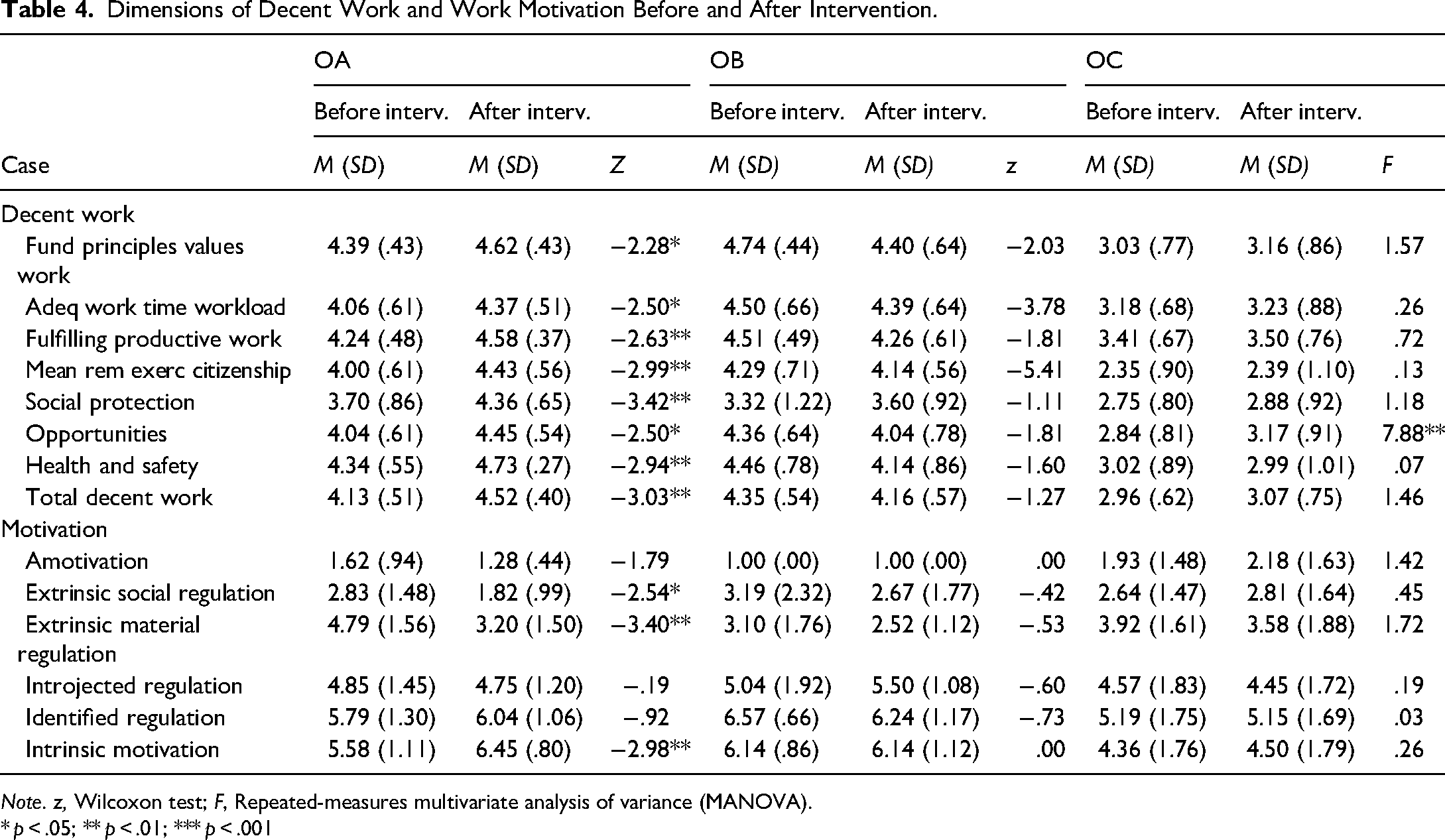
Note. z, Wilcoxon test; F, Repeated-measures multivariate analysis of variance (MANOVA).
* p < .05; ** p < .01; *** p < .001
Study 2: Qualitative Investigation
Methods Study 2
Sample and Data Collection. We conducted two semi-structured interviews with each of the organizational leaders before and after the intervention in each organization. In these interviews, they assessed the organizations’ policies and practices and their impact on employees’ common good indicators (before the intervention) and evaluated the impact of the newly implemented actions on the four common good indicators (after the intervention). The common good matrix was used to perform those evaluations. We also used 18 workshops and meetings conducted before (three in each organization) and during the intervention (three in each organization). After the intervention, we also conducted four focus groups (one in OA, one in OB, and two in OC). The focus group list of questions, developed by the research team, included questions reflecting the employee's perception of the intervention and the corresponding consequences. The main areas covered were: (1) questionnaire results and (2) the contribution of implemented actions.
Considering the total number of employees in OA, the research team and the project leaders decided to conduct one focus group with seven participants representing all the organizational departments. The focus group involved construction workers and directors, managers, and administrative staff. This heterogeneous constitution intended to foster new answers and original ideas. As OB had only seven employees (six workers and one manager), the focus group questions were discussed by all elements of the organization. At OC, to allow an overview of the 85 employees, the research team and the project leaders decided to conduct two focus groups. The first one encompassed production workers, and the second included a manager and administrative staff, each consisting of five participants. The homogeneous participants in each group facilitated communication among members and allowed us to compare the two groups’ different perspectives. The same moderator conducted all the focus groups to enhance consistency despite previously discussing the questions and way of conducting within the research team. All the focus groups (60–90 min) were recorded with the participant's permission. Data from focus groups were coded using QSR NVivo 12. We created nodes corresponding to the main questions and coded the content accordingly.
Measures
The common good matrix was used to perform the evaluation of the employees’ common good indicators, before and after the intervention.
Common Good Matrix. An organization’s activities and their possible impact on the common good are comprehensively described in the matrix under levels of evaluation (ECG, 2017). In an evaluation, levels are allocated following an assessment scale: Baseline, 0; Getting started: 1; Advanced: 2–3; Experienced: 4–6, and Exemplary: 7–10. Each evaluation level score depends on the extent to which criteria are met. In addition, a baseline is given for all indicators, which describes the minimum level required for an ECG-driven organization.
Results Study 2
Considering the four common good indicators related to employees, the OA implemented 10 actions. OB designed and implemented seven actions. The OC designed and implemented four actions (see details in Table 3). Together with the organizational leaders, the researchers carried out the qualitative evaluation of the employees’ common good indicators using the common good matrix (see details in Table 5). In the evaluation, levels were assigned based on the assessment scale (getting started, advanced, experienced, and exemplary). This process included incorporating all pertinent information concerning the indicators and considering them collectively. Each evaluation level received a score based on how well the indicators align with the ECG values within the organization and the degree to which the criteria for each level were fulfilled. The highest impact of the implemented actions occurred in OA, placed in the Experienced level at C1 and C2, and Advanced level at C3 and C4. In OB, the indicator C1 scored in the Experienced level and C2, C3, and C4 in the Advanced level. The OC scored in Advanced level in C1 and Getting Started in C2, C3, and C4.
Level of evaluation of the common good indicators (ECG, 2017).
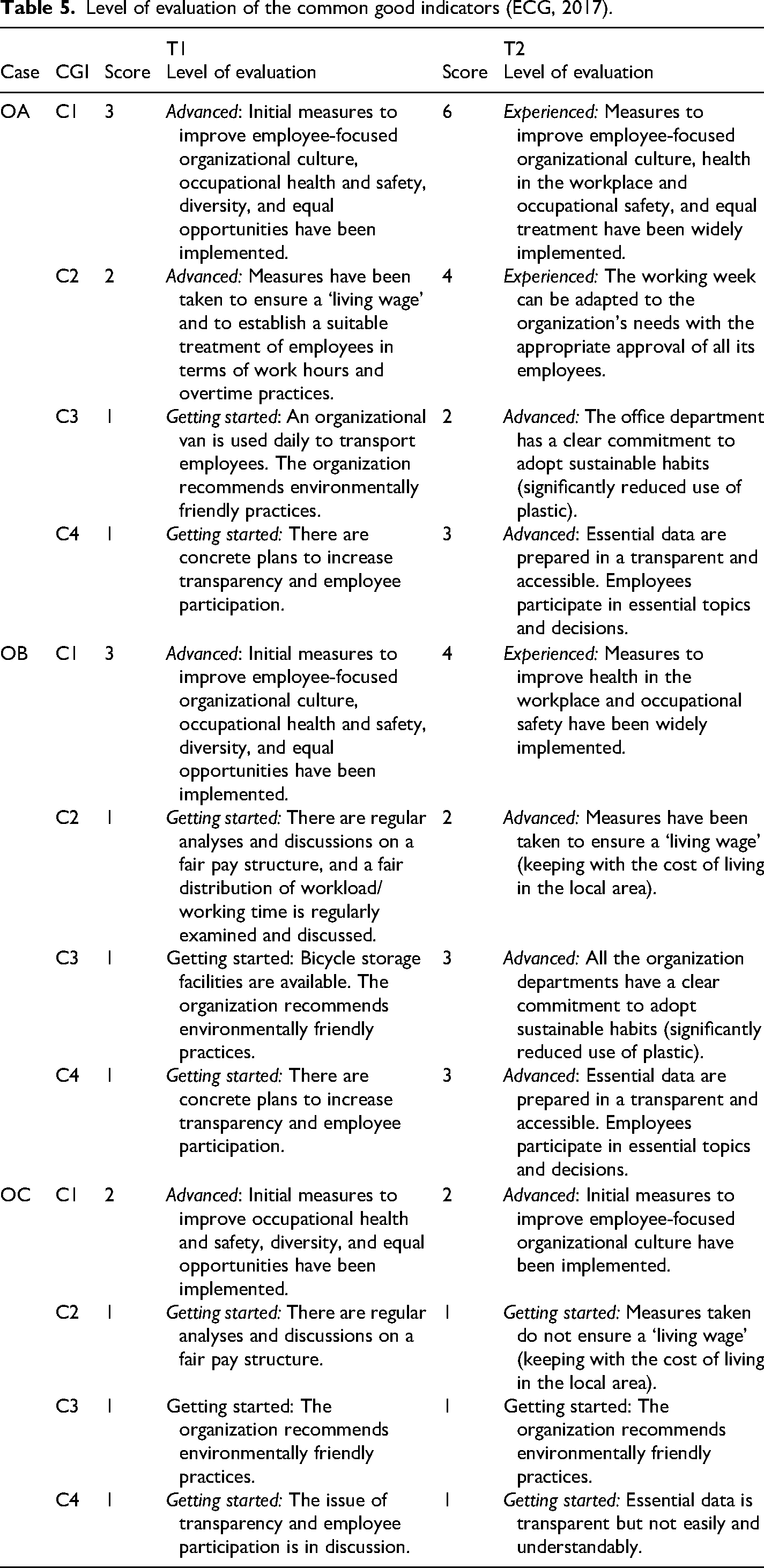
Despite the commitment made by the organizational leaders to complete the weekly reports and attend the two progress meetings, only OA and OB adhered to these requirements. OA and OB produced thorough weekly reports. Additionally, during the two progress meetings, the leaders of OA and OB demonstrated responsibility and ongoing commitment, reporting on the active involvement of employees in the intervention process. In contrast, at OC, reporting occurred only due to the persistent insistence of the research team. The progress of the action implementation and the level of employee involvement needed to be evident. The project leader of OC mentioned that, due to the pandemic's impact on economic activity, the organization was experiencing a consequent decrease in sales volume. As a result, the priority at that time was the organization's financial situation.
Focus Groups
Employees at OA and OB reported being actively engaged and committed to the implementation process and felt that their contributions were recognized. On the other hand, employees at OC mentioned that they were not involved in the implementation process and found the communication regarding the implementation of actions to be clearer.
The results of the focus group demonstrated the employees’ perception of the intervention in three categories. In Table 6, we defined each subcategory and provided an example. The interpretation of the questionnaire results in OA was coded in three subcategories. These subcategories reflected improved working conditions through the organization's increased concern for the employees’ health, safety, and well-being. In OB, the employee's interpretation was coded in one subcategory since they all agreed that the working conditions and motivation were always excellent. The employees' interpretation of the results in OC was coded into three subcategories, at the Focus Group 1. They reflected the employees’ negative view of the organizational context and the remuneration. The employees' perception at Focus Group 2 was also coded into three subcategories and highlighted that the production workers’ dissatisfaction was due to the remuneration gap between generations.
Focus Group Categories.
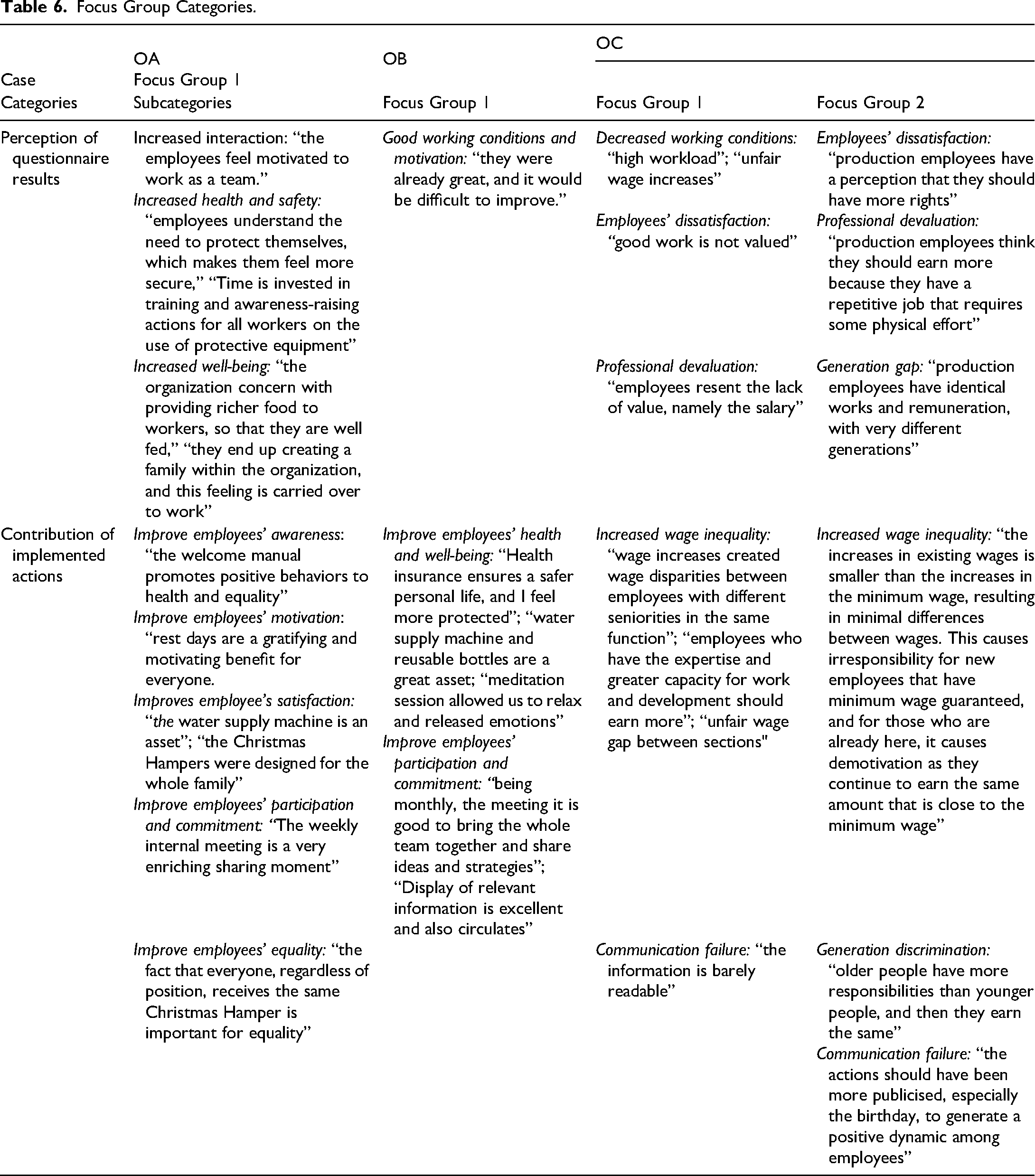
The contribution of the implemented actions in OA was coded in five subcategories. These subcategories reflected the employees’ awareness that the intervention actions resulted in essential improvements to the employees’ working conditions. The employees appreciated the actions implemented, such as the good practice manual, which promoted positive behaviors about health and equality. Introducing seniority awards and a code of conduct was perceived as an effective measure to promote fairness and social inclusion.
In OB, the implemented actions contribution was coded into two subcategories, reflecting the positive effects of the intervention initiatives in the working conditions. The implementation of health insurance and meditation sessions was well received, contributing to employees’ mental health and well-being.
In OC, the two subcategories at Focus Groups 1 and 2 expressed the employees’ dissatisfaction with the implemented actions. The effectiveness of the implemented actions was perceived as fulfilling by the employees at OA and OB. In OC, the results indicated that the salary increase should have considered the workers' specialties and seniority in the job positions (Focus Group 1), and that the actions implemented should have been the target of better communication (Focus Group 2). Employee dissatisfaction was reflected in the perception of unequal pay and a lack of adequate communication. Implementing unequal pay rises generated perceptions of unfairness.
Discussion
Global challenges, such as pandemics and socioeconomic crises, expose organizations to conditions that threaten their survival. Understanding how organizations can adapt and change in turbulent and uncertain contexts is essential (Hollands et al., 2023; Errida & Lotfi, 2021). This study focused on values-based organizational interventions using the ECG model to explore their impact on employees’ perceptions of decent work and work motivation. The study also examined how the process and context of these interventions shaped employees’ perceptions during a global health crisis. The interventions were implemented in three organizations from different sectors, with both quantitative and qualitative analyses performed to address the research questions.
Quantitative Analysis Insights
The results suggest that integrating core values such as dignity, solidarity, and social justice has a significant impact on improving employees’ perceptions of decent work and work motivation across different organizational contexts. In OA, the data showed a significant increase in all dimensions of decent work and overall score. The implemented actions in C1 and C4 are related to decent work through mechanisms for expressing values at work, such as equal treatment, dignity, non-discrimination, social inclusion, participation, and transparency (Pereira, dos Santos, et al., 2021; Pereira, Zapallà, et al., 2021). This observation is consistent with the findings of Amis and Janz (2020), who highlight the importance of shared values in organizational contexts to promote practical change. In addition, it improves the prospects for professional development and promotes positive behavior in workers. The actions in C2 suggest that OA considers the balance between work and family necessary and rewards performance (Pereira, dos Santos, et al., 2021; Pereira, Zapallà, et al., 2021). The implemented actions concerning C3 contribute to the future of new generations by promoting sustainable behaviors in employees at work and home. Actions within the scope of ECG impact decent work mainly by increasing the meaning of work and thus making it more fulfilling and productive (Pereira, dos Santos, et al., 2021). Our findings suggest that values-based interventions to significantly increase all decent work dimensions must focus on actions within the common good indicators. The effectiveness and quality of the implemented actions increased the evaluation level of the employees’ common good indicators.
The study also demonstrated that value congruence between the organization and employees is crucial for the success of change interventions, as seen in the significant improvements in OA. OA showed a significant increase in intrinsic motivation and a decrease in extrinsic social and material regulation. This result can be explained by self-determination theory, which suggests that intrinsic motivation is fostered in environments that promote autonomy, competence, and positive social relationships (Deci & Ryan, 2014). The values-centered approach has facilitated an environment where employees feel more valued and involved, in line with the importance of value congruence between employees and the organization for the success of organizational change, as highlighted by Burnes and Jackson (2011) and Klein (2021). In addition, promoting transparent and inclusive practices aligns with the principles advocated by Felber (2015), who emphasizes the need for ethical and sustainable organizational practices. Furthermore, the initiatives were communicated and implemented with the active involvement of employees, facilitating the acceptance and effectiveness of the changes. This alignment is consistent with theories of organizational change that emphasize the need for alignment between organizational values and change objectives (Burnes et al., 2018; Oreg & Berson, 2019). Thus, adapting the ECG model to its specific context, with clear communication and employee engagement, significantly improved perceptions of decent work and motivation.
In OB, the results showed no significant changes in any dimension of decent work and work motivation. The literature indicates that organizations with good working conditions before the intervention show slight improvement post-intervention (Nielsen et al., 2006). The pre-existing conditions were already satisfactory, and the interventions maintained this positive perception. This reflects the effectiveness of current practices and the organization's ability to sustain a positive working environment during a crisis, as Klein (2021) discussed.
The findings highlight that while the intervention helped maintain a positive working environment, it also demonstrated that adapting interventions to the specific conditions of each organization is critical for meaningful change. In addition, promoting activities that reinforced physical and mental well-being, such as meditation sessions, reduced the opportunities for deviant behavior and increased employees’ involvement in organizational activities. As such, the implemented actions increased the evaluation level of the employees’ common good indicators since they focused on physical and mental health promotion, fair remuneration, environmentally friendly practices, and employee involvement.
In OC, a significant increase was observed only in the ‘Opportunities’ dimension of decent work, with no changes in the motivation dimensions. Employees feel dissatisfied and undervalued, mainly due to the increased generation gap in remunerations, so they focus on alternative jobs to improve remuneration and professional development. The implemented actions did not contribute to the employees’ common good indicators. The lack of effective internal communication and low employee engagement may have exacerbated resistance to change, as noted by Boudabbous et al. (2023).
The results illustrate that the absence of effective communication and perceptions of inequality can severely hinder the success of values-based interventions, emphasizing the importance of fairness and transparency in maintaining employee engagement. In addition, organizational complexity theory highlights that organizations as complex systems require integrated and adaptive approaches to manage change effectively (Passmore & Woodman, 2017). Although OC met the inclusion criteria, a specifically conscious disconnect occurred between the values-based intervention and organizational structure (Boxenbaum & Jonsson, 2017). The OC started the values-based intervention but could not make a fundamental change that is part of the logic of how practices can be effective. Furthermore, the lack of a structured approach and clear communication jeopardized the success of the initiatives, corroborating the importance of clarity and participation in the change process (Treviño et al., 2020).
OC was facing financial constraints due to the impact of the COVID-19 pandemic in the socioeconomic context. The significant turbulence and uncertainty caused by the pandemic context affect intervention, mainly when change proposals compete with these factors. As such, the organization's willingness to focus on and invest energy in the values-based intervention is undermined during the pandemic, as dealing with daily unforeseen and uncertain events acts as competing motives for organizational changes.
The quantitative results can be further explained using several theoretical perspectives:
Social Control Theory (Hollinger, 1986; Hirschi, 1969). This theory suggests that more significant involvement in norm-compliant activities reduces the likelihood of deviant behavior, which may explain the maintenance of pre-existing positive perceptions in OB. Furthermore, the affective and emotional ties between employees and the organization were strengthened through initiatives that promoted dignity, solidarity, and social justice. In OA, practices such as the welcome manual and seniority awards increased employees’ sense of value and belonging, aligning with social control theory's attachment component.
Employees’ commitment to the organization was strengthened through policies and practices that reflected the ECG core values. In OA and OB, adopting practices that promote equality and transparency increased employee commitment to organizational goals, consistent with the social control theory. In OC, the lack of adequate communication, perceptions of injustice, and low employee participation weakened the social bonds of attachment, involvement, commitment, and belief. Belief in the values shared by the organization was a critical factor in accepting and internalizing the changes. Interventions reinforcing ECG's values helped employees internalize these values, promoting norm-compliant behavior and increasing organizational cohesion. Social control theory postulates that strong beliefs in shared norms and values reduce deviant behavior, justifying the positive results observed in OA and OB.
Social Exchange Theory (Blau, 1964). According to this theory, organizational practices focused on improving employee well-being may represent strategic investments by the organization. In response to these practices, employees may feel valued, which increases their intrinsic motivation and commitment to the organization, resulting in more positive perceptions of decent work. Values-based interventions foster a perception of fairness and support and promote reciprocity, where employees show greater loyalty and commitment. Furthermore, by promoting security and well-being, these interventions help reduce uncertainty, strengthen employee confidence, and encourage positive behavior, further improving perceptions of decent work and intrinsic motivation.
In contrast, when employees perceive that they are not being fairly rewarded for their work, the expectation of reciprocity is broken. In OC, the perception of pay inequality suggested to employees that the organization needed to invest in them reasonably, resulting in a lack of reciprocity in terms of motivation and commitment. This negative perception of pay justice undermined the overall impact of the interventions, limiting improvements in perceptions of decent work and motivation.
Social Identity Theory (Tajfel & Turner, 1979). This theory suggests that identification with social groups and organizations can influence behavior and attitudes. When employees identify strongly with the organization, they tend to internalize its values and feel a greater sense of belonging. Initiatives that promoted shared values increased this identification, resulting in more positive perceptions of decent work and greater intrinsic motivation. Group cohesion and a sense of belonging, fundamental to motivation and pro-social behavior, were strengthened by interventions that created a fair and equitable environment. Furthermore, by emphasizing shared values, these interventions reinforced employees’ identification with the organization, increasing their motivation and commitment. Thus, the appreciation and internalization of group values promoted by the interventions proved essential for improving the sense of belonging and organizational performance.
COR (Hobfoll, 1989). According to this theory, gaining resources can reduce stress and increase employee well-being. Interventions that provided new resources and improved existing ones resulted in more positive perceptions of decent work and greater motivation. COR also suggests that protecting existing resources is crucial to avoiding stress. In this sense, interventions focused on the safety and well-being of employees helped protect their emotional and physical resources, contributing to positive perceptions of decent work and motivation during the health crisis. In addition, the accumulation of resources creates a positive cascade effect, increasing resilience and well-being. Thus, effective interventions led to an accumulation of resources that improved perceptions of decent work and intrinsic motivation, especially in OA.
In sum, the results across all three organizations demonstrate that values-based interventions can improve working conditions, increase employee motivation, and contribute to organizational sustainability and resilience, especially when these interventions are well-aligned with the needs and values of both the organization and its employees.
Qualitative Analysis Insights
The qualitative analysis provided deep insights into how the pandemic's intervention process and context shaped employee perceptions in the three organizations. In OA, employees reported a significant increase in interaction, health and safety, and well-being, attributed to successful initiatives such as the good practice manual, seniority awards, and improved launches. These actions were perceived as highly effective in promoting a more cohesive and safe working environment, in line with the principles of Battilana and Lee (2014) and Passmore and Woodman (2017). Promoting a safe and healthy working environment is fundamental for intrinsic motivation and employee commitment (Gagné et al., 2015). In addition, the leadership demonstrated a solid commitment to the intervention, facilitating the active participation of employees and promoting a culture of transparency and equality.
In OB, the actions implemented, such as monthly meditation sessions and increased food allowance, were seen as beneficial to employees’ health and well-being. Employees’ positive response reflects the initiatives’ success in maintaining a positive working environment, even during a crisis. The approach centered on the values of the Economy of the Common Good (ECG), which emphasizes human dignity, solidarity, and social justice, seems to have been well received, corroborating the findings of Felber (2015) and Isabel (2015) on the importance of sustainable and ethical practices. Implementing actions that promote employees’ mental health and well-being is crucial in times of crisis, as highlighted by Brooks et al. (2020) and Russo et al. (2021). Moreover, the organizational culture already valued the health and well-being of employees, and the initiatives implemented reinforced these values, contributing to maintaining a positive working environment.
However, in OC, employees expressed dissatisfaction with the actions implemented, mainly due to the perception of unequal pay and inadequate communication. This dissatisfaction suggests that the intervention failed to align organizational values with employee expectations, a critical factor for successful change, as Treviño et al. (2020) highlighted. The failure to effectively communicate the initiatives contributed to a negative perception of the results, supporting the literature on the importance of transparency and employee participation during change processes (Quoquab et al., 2014; Nielsen & Miraglia, 2017).
The qualitative results can likewise be understood through multiple theoretical perspectives:
Social Control Theory (Hirschi, 1969). According to this theory, during the health crisis, interventions that promoted health and safety practices increased employees’ attachment to the organization, resulting in greater acceptance of the changes. In addition, greater employee involvement in organizational decisions reduced deviant behavior and increased commitment, generating more positive perceptions of the interventions. This strengthened employee commitment to the organization and improved compliance and acceptance of the implemented changes. Finally, by strengthening employees’ belief in organizational values, the interventions promoted compliant behavior and positive acceptance of the changes.
Social Exchange Theory (Blau, 1964). As suggested by this theory, the perception of fairness and support during the crisis reinforced employees’ confidence in the organization's intentions, leading to a positive evaluation of the interventions. However, the lack of clear communication and the perception of unfair pay in OC generated a negative perception, as employees felt their contributions were not valued fairly. In organizations like OA, where employees felt more involved and participative, perceptions of the effectiveness of the initiatives were more positive. In contrast, a lack of involvement in OC resulted in more negative perceptions. Organizations that managed to sustain support practices during the crisis strengthened organizational resilience, resulting in more positive evaluations of the contribution of the interventions.
Social Identity Theory (Tajfel & Turner, 1979). The theory suggests that collective identity is crucial for organizational resilience in times of crisis. Interventions reinforcing this identity and promoting employee well-being increase cohesion and commitment, resulting in more positive perceptions of the initiatives. As observed in OA and OB, the inclusion and active participation of employees strengthens identification with the organization and promotes a positive evaluation of the changes. On the other hand, the perception of injustice in OC weakens employee identification, resulting in negative evaluations of the interventions. Therefore, building a positive identity through shared values and fair practices strengthens employees’ sense of belonging and commitment.
Overall, the findings reinforce the importance of adapting interventions to the specific organizational context and promoting employee well-being, as these factors play a vital role in ensuring the success and resilience of organizations during crises.
Theoretical Implications
This study presents several important theoretical implications for the literature on values-based organizational interventions, especially in crisis contexts. By applying the model to three different organizations, the study empirically validates this model as an effective tool for promoting organizational sustainability and resilience. Felber (2015) and Isabel (2015) argue that the ECG provides a holistic framework that integrates fundamental human values, and this study empirically confirms this proposition by demonstrating how such values can be operationalized in the workplace to improve perceptions of decent work and work motivation.
The evidence provided by the study on the importance of value congruence between the organization and employees reinforces Burnes & Jackson's theory (2011), which states that value alignment is crucial to the success of organizational change. This research extends this theory by showing that, during a crisis, value congruence facilitates acceptance of change and promotes intrinsic motivation among employees. Deci and Ryan's (2000) self-determination theory is corroborated by findings indicating that intrinsic motivation increases in environments that value employees’ dignity and autonomy.
In addition, this study also offers important theoretical implications for social control theory (Hirschi, 1969) by demonstrating that interventions that promote values such as dignity, solidarity, and social justice can strengthen the bonds of attachment, involvement, commitment, and belief between employees and the organization. The application of social control theory in a crisis context, such as the COVID-19 pandemic, demonstrates the relevance and adaptability of the theory in times of adversity.
Pratical Implications
This study offers several significant practical implications for organizations, especially in crisis contexts. Using the ECG model, the research highlights the integration of fundamental human values into organizational practices, which proves crucial for organizational sustainability and resilience.
Firstly, the practical application of the ECG model offers a viable path for organizations seeking to promote sustainability and resilience. ECG practices and values, such as human dignity, solidarity, and social justice, not only improve working conditions and employee motivation but also strengthen the organization's ability to face and overcome crises. Felber (2015) and Isabel (2015) argue that the ECG can be a powerful tool for creating a fairer and more sustainable working environment.
Secondly, the study confirms the importance of the congruence of values between the organization and employees, which is a critical factor for the success of change interventions. Burnes and Jackson (2011) point out that successful organizational change depends on aligning values between all stakeholders. The results obtained in OA, where there was a significant increase in intrinsic motivation and a decrease in extrinsic social and material regulation, demonstrate how a values-centered approach can promote a more satisfying and engaging work environment, supporting Deci and Ryan's (2000) theories of self-determination.
In addition, the study contributes to the literature by showing that decent work practices, such as promoting health and safety at work and offering fair benefits, are essential for maintaining a positive work environment during crises. The actions implemented in OB, such as meditation sessions and increases in allowances, demonstrate that practices aimed at employee well-being can be effective even in times of adversity, corroborating the findings of Brooks et al. (2020) and Russo et al. (2021). Furthermore, interventions that promote health and safety at work, transparency, and active employee participation are crucial to strengthening bonds of attachment and commitment. Organizations should invest in practices that improve employee well-being, especially in times of crisis. Organizations should also ensure that information about changes and interventions is communicated clearly and transparently, facilitating engagement and belief in organizational values. The participation of employees in decision-making processes and the implementation of changes is essential to strengthen their commitment to the organization. Organizations should create opportunities for continuous feedback and active employee participation, promoting an inclusive and collaborative working environment.
Finally, this study highlights the need for an integrated and adaptive approach to managing change in complex organizational contexts. Organizational complexity theory, discussed by Passmore and Woodman (2017), suggests that organizations function as interrelated systems that require holistic approaches to change management. The results in OC, where a lack of communication and inconsistency in management compromised the success of the interventions, reinforce this perspective, highlighting the importance of change strategies that consider the complexity and dynamism of organizations.
Limitations and Future Research
This study has several limitations when interpreting the results and planning future research. Firstly, the sample size is a significant limitation. With only three participating organizations, the generalisability of the results to other organizations and contexts may be limited. Future studies should include a more extensive and diverse sample of organizations to increase the external validity of the findings.
Furthermore, the study's duration was relatively short, with the intervention lasting 14 months. Although this period was sufficient to observe initial changes in employee perceptions, organizational interventions often require a more extended period to show sustainable results. Future research should consider more extended periods to track the effects of values-based interventions over time (Nielsen et al., 2006).
Another limitation is related to the specific context of the COVID-19 pandemic. Although this scenario provided a unique context for the analysis, it also introduced external variables that may have influenced the results, such as the additional stress and changes in working conditions resulting from the pandemic. Future studies should attempt to replicate the interventions in less volatile contexts to see if the findings are consistent (Brooks et al., 2020).
The methodology used also has some limitations. The combination of quantitative and qualitative methods provided a comprehensive overview, but qualitative analysis can be subject to interpretative biases. Mixed methods are recommended, but future studies should strengthen the objectivity of qualitative analyses. In addition, reliance on employee self-reports to measure perceptions of decent work and motivation may introduce response biases. Future research could incorporate additional data collection methods, such as direct observations and performance evaluations, to complement self-reports and provide a more holistic view of the interventions’ impacts.
Another significant area for improvement is the variability in the commitment of the leadership of the participating organizations. While some organizations firmly committed to the intervention, others showed less engagement, which may have affected the results. Future studies should further explore the role of leadership and develop strategies to ensure consistent commitment throughout all phases of the intervention (Oreg & Berson, 2019).
Beyond the limitations identified, this study opens up several directions for future research. Firstly, it would be valuable to investigate how different values-based interventions impact various industry sectors. Research could be expanded to include sectors such as health, education, and technology, which face specific challenges and could benefit from personalized intervention approaches (Burnes et al., 2018).
Additionally, future research could explore the impact of values-based interventions in different organizational cultures and geographical contexts. Organizational culture plays a crucial role in how interventions are received and implemented, and cultural variation can significantly influence outcomes (Treviño et al., 2020). Comparative studies between different countries and cultures could provide valuable insights into the universality and adaptability of the ECG model.
Finally, it would be interesting to explore the role of technology in implementing values-based interventions. With the rise of remote working and digital technologies, future research could investigate how digital tools can be used to facilitate communication, employee engagement, and the implementation of organizational values in virtual work environments (Klein, 2021).
Conclusion
This study used the ECG model to explore the impact of values-based organizational interventions in three organizations during the COVID-19 pandemic. The results indicate that integrating core values such as dignity, solidarity, and social justice can significantly improve employees’ perceptions of decent work and work motivation. Congruence of values between the organization and employees proved essential to the success of change interventions, while clear and transparent communication proved crucial to facilitating these changes. The need to adapt interventions to each organization was highlighted, as was the importance of promoting employee well-being to maintain a positive working environment during crises. Applying the ECG model effectively promoted sustainable and ethical practices and strengthened organizational resilience. In sum, when well implemented, values-based interventions can improve working conditions, increase employee work motivation, and contribute to organizations’ sustainability and resilience in times of adversity.
Footnotes
Acknowledgments
The authors gratefully acknowledge the financial support of “Fundação para a Ciência e Tecnologia” (FCT–Portugal) through the Ph.D. Grant SFRH/BD/130894/2017.
Data Availability Statement
The data that support the findings of this study are available from the corresponding author upon request.
Declaration of Conflicting Interests
The authors declared no potential conflicts of interest with respect to the research, authorship, and/or publication of this article.
Ethics Approvals
On July 12, 2018, the Research Ethics and Deontology Committee of the Faculty of Psychology and Educational Sciences of the University of Coimbra confirmed that this study meets national and international guidelines for research on humans.
Funding
The authors disclosed receipt of the following financial support for the research, authorship, and/or publication of this article: This work was supported by the Fundação para a Ciência e Tecnologia, (grant number SFRH/BD/130894/2017).
