




Abstract
Working alliance theory describes the therapist–client relationship in psychotherapy and has been adapted to study workplace coaching effectiveness. The application of this theory in workplace coaching research has produced mixed results suggesting that additional factors could be at play. In workplace coaching, the organization often pays for and influences the coaching process. The role of the organization in the working alliance between coach and coachee has, however, not been studied sufficiently. his exploratory, hybrid deductive–inductive qualitative study used the Working Alliance Inventory as theoretical lens to examine coachees’ perspectives on the organizational role in the coach–coachee working alliance. The findings indicate that organizations have a direct impact on the bond, task, and goals of the working alliance by facilitating the coaching process, influencing the coaching agenda and contract, and through coach selection. This tentative analysis suggests that measurements of the working alliance should be extended to include these organizational aspects.
Keywords
Introduction
Workplace coaching efficacy has been studied for several years (e.g., De Haan et al., 2010; Grover & Furnham, 2016; Pandolfi, 2020). Successful workplace coaching is evident in outcomes such as enhanced performance, improved people management, better communication skills, and increased productivity (Kombarakaran et al., 2008; Theeboom et al., 2014). In recent years, coaching research focus has systematically shifted to investigate what makes coaching successful by identifying the key aspects for success (De Haan et al., 2020; McKenna & Davis, 2009). This has led to several studies that reference the importance of the coach–coachee relationship as captured by the working alliance theory that covers the bond, goal, and task aspects of the relationship (De Haan et al., 2010, 2016, 2020).
The working alliance theory stems from the field of psychology and more specifically, from psychoanalytic theory, with the earliest ideas being captured in Freud's writings (Horvath et al., 2011). As coaching grows as an academic discipline, researchers often adapt theory from other fields, especially psychology to apply in coaching research and praxis. This direct adaptation may not always be relevant to coaching. The application of working alliance theory in coaching, for example, reveals contradictions such as the lack of agreement on the importance of the agreement on goals (Scoular & Linley, 2006; Smith & Brummel, 2013). Furthermore, De Haan et al. (2016) remarked that, although comprehensive research exists on the working alliance in a psychotherapeutic context, the application to the coach–coachee relationship is a relatively new area of exploration. It appears that working alliance theory has not yet been clearly described in coaching and therefore, a return to a qualitative understanding is imperative.
One aspect that influences coaching success is the multiparty nature of workplace coaching. In a typical workplace coaching context, three key stakeholders constitute a tripartite: the coach; the coachee; and the organizational sponsor (Bozer & Jones, 2018). Each party holds a unique perspective on the crucial ingredients for successful workplace coaching (Pandolfi, 2020). In fact, in their meta-study, Athanasopoulou and Dopson (2018) found that a supportive organizational environment is a key ingredient of successful coaching. In their meta-study, Blackman et al. (2016) created a separate grouping of coaching success factors based on the organizational context. The organization clearly plays a crucial role in coaching success and therefore also possibly in the coach–coachee working alliance.
In addition to this working alliance knowledge gap, the present study also addresses two other typical coaching research limitations: coachee as data source; and positive experience bias. The coachee perspective is often neglected since it is more difficult to collect data from coachees due to accessibility challenges. Blackman et al. (2016) and Carter et al. (2017) noted that the coachee's perspective has been much less researched than that of the coach. De Haan (2019) further noted that considering coachee-related success aspects in coaching is particularly important. Most coaching research focuses on successful coaching outcomes, and research designs implicitly include a bias toward coaches and coachees who had a positive experience of coaching (e.g., De Haan et al., 2010; Grover & Furnham, 2016; Kombarakaran et al., 2008; Pandolfi, 2020). Research depth could therefore be enhanced by also including the perspectives of negative coaching outcomes (Carter et al., 2017), which again is more difficult to obtain. The present study included the positive and negative outcomes experienced by coaches and coachees.
The confluence of these three knowledge gaps, therefore, led to the following research question: How does the organization influence the working alliance between the coach and coachee in workplace coaching? To address this question, the perspectives of coachees who had positive and negative coaching experiences were sought.
An understanding of the organization's role in the working alliance (and by implication coaching success) could help translate the working alliance theory from psychotherapy to the coaching domain more accurately by including aspects that are unique to coaching. This expanded understanding of the working alliance could assist in a more accurate study of coaching dynamics and efficacy.
The Working Alliance in Workplace Coaching
Several definitions of workplace coaching have been adopted in research, with terms such as “executive coaching,” “leadership coaching,” “business coaching,” and “workplace coaching” used interchangeably (Blackman et al., 2016; Eby et al., 2013; Grant, 2012; Passmore & Lai, 2019; Theeboom et al., 2014). In this study, “workplace coaching” is utilized to encompass these terms, broadly defined as an intervention during which an external coach supports an individual, in an organizational context, to reach specific developmental goals (Pandolfi, 2020).
A growing body of research has postulated that the relationship quality between the coach and coachee is a significant predictor of coaching success (e.g., Bluckert, 2005; De Haan et al., 2013; McKenna & Davis, 2009). Relationship quality refers to the strength of the collaborative bond between the coach/therapist and the coachee/client (Baron & Morin, 2009; Bordin, 1979). Bordin (1979) was responsible for naming the construct “the working alliance,” representing a conceptual framework that is adequate for researching the strength of the relationship quality in a therapeutic context. There are several measures of therapeutic relationships. Two frequently used measures for example are the Outcome Rating Scale (ORS) and Session Rating Scale (SRS) developed by Miller and Duncan (Campbell & Hemsley, 2009). The ORS assesses changes in a patient following psychological interventions while the SRS is used by clinicians to help patients identify alliance problem with the therapists, allowing the therapist to make the necessary changes. Both measures use a visual analog format that takes less than one minute to complete (Duncan et al., 2003). Despite their brevity, both the ORS and SRS have high internal consistency and are considered as a pragmatic measure of therapeutic alliance (Campbell & Hemsley, 2009; Murphy et al., 2020).
Back in 1979 when Bordin conceptualizes the working alliance, he proposed that the role of the working alliance is not limited to psychotherapy and could be generalized to any relationship between a person seeking change and a change agent. O’Broin and Palmer (2006) agreed with Bordin (1979) and proposed that the working alliance construct is easily transferable into a coaching context.
In academic literature, the working alliance has been evaluated using different measures. The most frequently used measure is the Working Alliance Inventory (WAI), a questionnaire developed for psychotherapy research by Horvath and Greenberg (1989), derived from Bordin's (1979) original working alliance conceptualization. The use of the WAI measure in coaching research is evident in several studies (e.g., Baron et al., 2011; Berry et al., 2011; De Haan et al., 2016). According to De Haan et al. (2016), permission was sought for adapting the 36-item quantitative instrument, extensively used for measuring the relationship quality between therapist and client and coach–coachee relationships. The coaching-adapted WAI has three subscales, which measure the following:
Goal scale: The level of collaborative agreement between the coach and coachee on the desired outcomes from coaching. Task scale: The level of collaborative agreement between the coach and coachee on the tasks required for the coachee to accomplish his/her coaching goals. Bond scale: The extent to which the coach/coachee respects, trusts or feels confident in the other party.
Example statements from the WAI questionnaire for the coachee, rated on a seven-point scale, are: I am worried about the outcome of these sessions (Goal scale); My coach and I agree about the things I will need to do in coaching to help improve my situation (Task scale); I feel uncomfortable with my coach (Bond scale).
Although other workplace alliance scales have been developed (Graßmann & Schermuly, 2016; Jansen et al., 2004; Maurer, 2009), little is known of how these scales empirically relate to each other (Graßmann et al., 2020). A benefit of using a well-established measurement tool, such as the WAI, in research is achieving comparable results (Baron & Morin, 2009; Baron et al., 2011; De Haan et al., 2013). It is therefore clear that, to compare and relate research findings to previous studies, using the WAI is beneficial. However, using the WAI in coaching research is not without controversy.
Contradiction in Working Alliance Research
Research using the WAI in the coaching context has led to several contradictions. There is no clear consensus on the importance of the overall working alliance measure, its subconstructs (goal, task, and bond), or the correspondence between coach and coachee ratings of the WAI. This points to the fact that perhaps in workplace coaching, the WAI needs enhancement. The study by De Haan et al. (2016), for example, showed a positive correlation between ratings of the working alliance and coaching success for both coach and coachee. Furthermore, the goal and task aspects are significantly stronger predictors of coaching success than the bond aspect. Smith and Brummel (2013) found that the coaching relationship contributed meaningfully to coaching success and that coachees who had set developmental plans (goals and action plans) were more likely to develop competency improvements compared to coachees who had not created developmental plans. These findings are consistent with those of De Haan et al. (2016). Scoular and Linley (2006) found no difference in the level of coaching success between goal-setting and no goal-setting coaching processes, thus contradicting De Haan et al. (2016) and Smith and Brummel (2013). Yet Grant's (2014) findings indicated that the coachee's level of satisfaction with a coach–coachee relationship does not predict coaching success, while a goal-focused coach–coachee relationship was a much stronger predictor of coaching effectiveness.
Gessnitzer and Kauffeld (2015) analyzed the working alliance using videotaped coaching dyad sessions and questionnaires (including the WAI). They concluded that the emotional bond between the coach and coachee did not impact coaching success. Interestingly, they additionally concluded that goals and tasks initiated by the coachee were positive predictors of coaching success, while goals and tasks initiated by the coach were not (Gessnitzer & Kauffeld, 2015). To further emphasize contradictions in WAI studies, a recent study by De Haan et al. (2020) found that the working alliance strength only correlated with coaching success at the beginning of the coaching contract, but did not strongly correlate with successful outcomes after the first coaching session (De Haan et al., 2020).
Some studies have pointed to the potential existence of underlying differences between the coach and coachee ratings. Boyce et al. (2010) found that successful coaching outcomes were not related to matching criteria, but were materially impacted by the coach–coachee relationship, as assessed by both the coach and the coachee. A meta-study by Graßmann et al. (2020) specifically considered the impact of coach versus coachee perspectives. In line with Boyce et al. (2010), their meta-study found no material difference between the coach and coachee perspectives. Baron and Morin (2009) also concluded that the coaching relationship had a significant impact on predicting coaching success, as measured by the coach and coachee ratings of the WAI. An important observation from their study is the significant correlation between the coach and the coachee ratings. In another study, De Haan et al. (2013) found that both coach and coachee ratings of the working alliance were positively correlated with coaching success, but that the coachee rating had a significantly higher correlation (i.e., the coachee rating was a much better predictor of coaching success). In addition, no significant correlation was found between the coach and coachee ratings of the working alliance, contradicting the results from Baron and Morin (2009).
In summary, while the WAI has proven to be useful in predicting workplace coaching success, the numerous contradictions suggest that perhaps not all aspects of workplace coaching are considered in the current WAI translated from psychology. The third party in workplace coaching, the organization, may add to a more realistic assessment of coach–coachee working alliance assessment.
The Role of the Organization in Workplace Coaching
Organization-sponsored coaching can be seen as a form of institutional support and an example of a well-being intervention. One of the intentions of such interventions is to demonstrate to employees that the organization values their contribution and cares about their well-being and development (Panaccio & Vandenberghe, 2009). Two opposing views from the human resource-organizational performance literature, however, highlight the potential for conflict when coaching involves the organization. The “mutual gains” perspective holds that interventions such as coaching have positive outcomes for the individual and the organization (Peccei & Van De Voorde, 2019). This perspective suggests that organizational support signals care and that employees would respond with increased commitment, trust, and job satisfaction (Appelbaum et al., 2000). The opposing “conflicting outcomes” perspective suggests that employee well-being and organizational performance are distinct goals that in some cases are mutually exclusive (Boxall & Macky, 2009): gains in organizational performance are made at the cost of reduced employee well-being (Van de Voorde et al., 2012). This notion of using coaching as a coercive tool is echoed by Shoukry and Cox (2018) who suggest that organizational coaching is sometimes used to exert control. There is however evidence that organizational support contributes to employee well-being, suggesting that if the role of the organization in coaching is well understood and properly managed it could have a positive impact on both the organization and the individual (Panaccio & Vandenberghe, 2009).
If organizations are to play a constructive role in workplace coaching, the nature of organizational relationships specifically needs to be scrutinized. Organizational relationships are complex and multifaceted. There is mounting evidence of the importance of the quality of workplace relationships in individual and organizational well-being and performance (Boyatzis & Rochford, 2020; Dutton and Ragins, 2017). The Positive Organizational Scholarship (POS) movement for example regards positive, high-quality relationships at work as central to individual life satisfaction, development, and personal growth (Dutton & Ragins, 2017; Reis & Gable, 2003). There are also collective benefits to high-quality relationships as organizations witness increased levels of learning and job performance when high-quality relationships are present (Ragins & Dutton, 2017). Organizational relationships have a systemic impact through what is known as a “relational climate” consisting of shared vision, compassion, positive mood, and relational energy (Boyatzis & Rochford, 2020). A positive relational climate may promote high-quality relationships suggesting a link between the general quality of relationship in an organization and the coach–coachee relationship.
Surprisingly, research about the influence of the organization on the coaching process and efficacy is sparse (Boyatzis et al., 2022). The studies that have investigated the organizational role in coaching agree on the significance of this role. The meta-study by Athanasopoulou and Dopson (2018), for example, found that a supportive organizational environment and culture contribute to coaching success. Organizational support for coaching signals the employer's approval and support which help the coachee with making contextual sense of the intervention. Similarly, Baron and Morin (2009) found that organizational support from the leadership level, and an organizational culture that is open to the changes that coaching may evoke in coaches, enhance the relationship between coach and coachee and ultimately the coaching success. Finally, a study by Rekalde et al. (2015) that measured the influence of three groups (coach, coachee, and organization) on coaching success found that “guaranteed confidentiality” by the organization was the most important success factor across all three groups surveyed. Other organizational factors that were deemed important are “support and commitment from management” and “direct support from the coachee's line manager during and after the process.”
It is clear that in workplace coaching, the role of the organization and the quality of the relationships directly and indirectly impact the attitude of the coachee toward the intervention. This inadvertently affects the coachee's engagement with the coaching process, the overall working alliance between coach and coachee and ultimately, the coaching outcome.
Method
The present study did not aim to test existing working alliance theory, but instead employed a qualitative approach, to revisit and interrogate the underlying assumptions of the working alliance and specifically the role of the organization. This qualitative research design provided dense and in-depth descriptions that revealed detailed perspectives (Azungah, 2018) and facilitated a better understanding of coaching as a complex social phenomenon by drawing on the lived experiences of participants (Gephart, 2004; Yauch & Steudel, 2003).
Sample
Purposive sampling was used to identify participants who could provide the richest narratives (Onwuegbuzie & Leech, 2007). The inclusion criteria for participants were: (1) working in a corporate organization of any size; (2) having received at least five workplace coaching sessions (in line with Theeboom et al. (2014)) by an external coach; (3) a maximum two-year time-lapse since coaching concluded; (4) being employed at a middle management level or higher, with teams reporting to him/her; and (5) having at least ten years of work experience. Qualifying participants were asked to rate their coaching experience by answering the question: “Overall, how would you rate your coaching experience on a scale of 0 to 10 (with 0 being sub-optimal and 10 being optimal)?” The reason for this classification was to address the criticism of implicit bias in typical coaching research that only considers the perspectives of positive coaching experiences (Carter et al., 2017). Ratings of 0–4 were classified as negative and 5–10 as positive. In total, six positive and eight negative experience participants took part in the study. This sample size was justified through data saturation whereby no new codes were identified during the analysis of the last positive and negative participants.
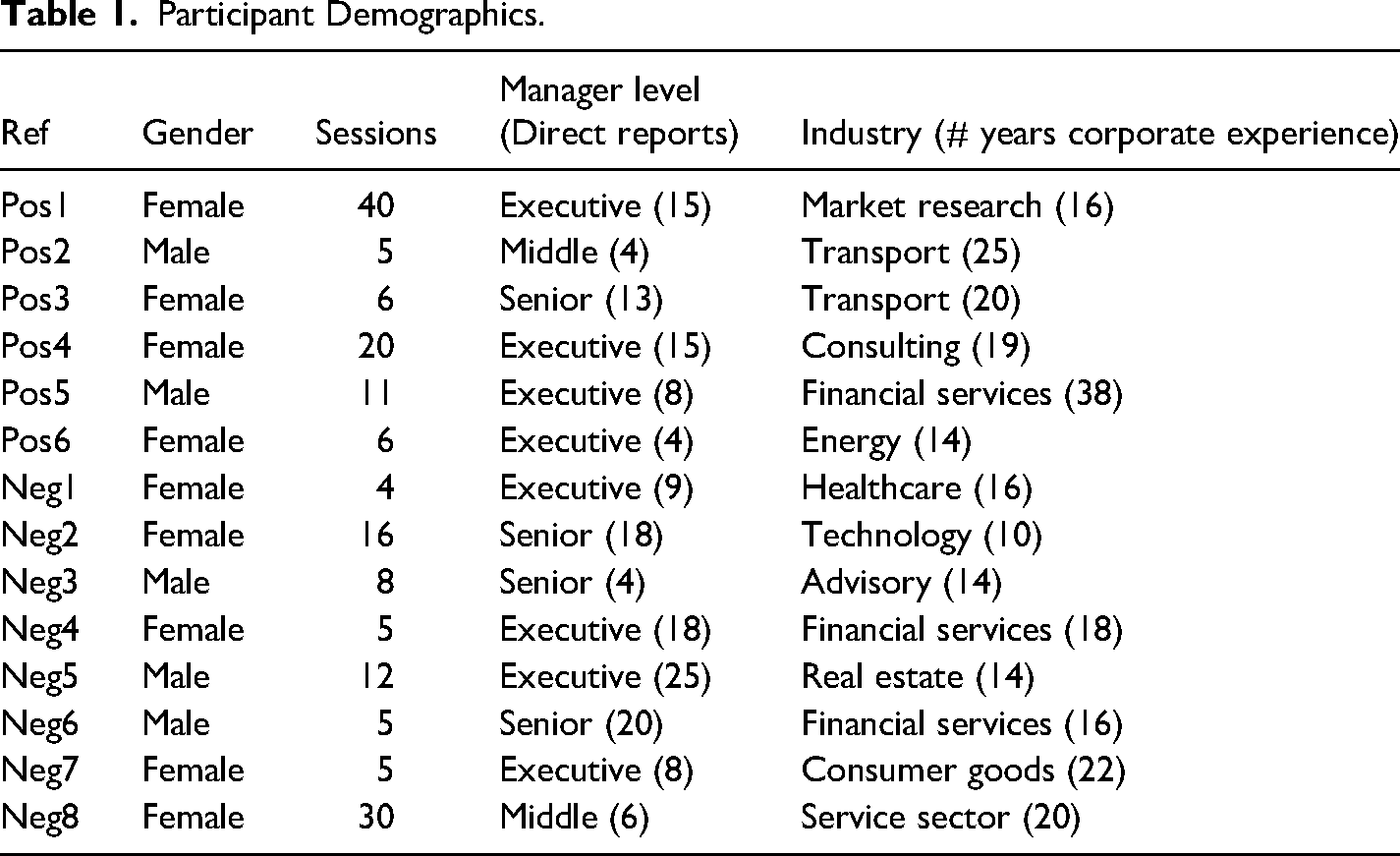
Table 1 summarizes the demographics of the participants. Eight participants were executive managers, four were senior managers and only two were middle managers (Charan et al., 2011). This enriched the study through the levels of perceived wisdom, openness, and elaboration that were noticeable during interviews. Coachees who had a positive coaching experience are denoted as “Pos1 to Pos6,” while those who had negative experiences are denoted as “Neg1 to Neg8.” Ethical clearance for the research study was obtained from the researchers’ institution.
Participant Demographics.
Data Collection
Semistructured virtual interviews of 50–60 min were conducted following an interview guide. The start of the interview contained high-level questions, not linked to working alliance theory, to understand the purpose of the coaching intervention, the coachee's expectations of the intervention and their readiness for coaching. Following the initial questions, tailored questions related to the working alliance constructs (goal, task, and bond; Bordin, 1979) were asked to explore how organizational involvement (or lack thereof) influenced each of these constructs. Probing questions were used throughout and provided the opportunity for clarification and elaboration.
Qualitative research quality assurance was managed by employing guidelines from Elo et al. (2014) and Treharne and Riggs (2014): (1) Two pilot studies were conducted to test the relevance and clarity of the interview questions; (2) Member checking was performed by four participants, with no transcript alterations required; (3) Field notes and memo writing were used to reflect on the process and content of the data; (4) An audit trail capturing data analysis and data reduction was kept; and (5) Process documentation of interview dates, supervisor guidance, and participant follow-ups were kept.
Data Analysis
Transcripts were analyzed using a hybrid deductive-inductive content analysis approach (Bounthavong et al., 2020; Creswell & Creswell, 2017; Fereday & Muir-Cochrane, 2006). Deductive content analysis is used when research about an existing theoretical framework (in this case the working alliance) is incomplete and could benefit from a conceptual extension. In this approach, existing theory or prior research is used to create initial coding categories (Potter & Levine-Donnerstein, 1999). In line with this approach, a theoretical categorization consisting of the working alliance constructs (goal, task, and bond) was used to demarcate sections in the interview text that corresponded broadly with goal, task, or bond. In the second step, the highlighted text areas were analyzed inductively without preconception to identify themes that captured the essence of the narrative (Hsieh & Shannon, 2005). The four themes that emerged (facilitating coaching, coachee agenda, contracting, and coach selection) were then classified into one or more of the three working alliance aspects (goal, task, and bond) by both researchers independently. Where opinions differed, a discussion based on the working alliance theory was used to arrive at an agreement. Following this process helped focus the enquiry on the three dimensions of the working alliance, yet left space for the natural emergence of the role of the organization in the various working alliance dimensions.
Research Findings
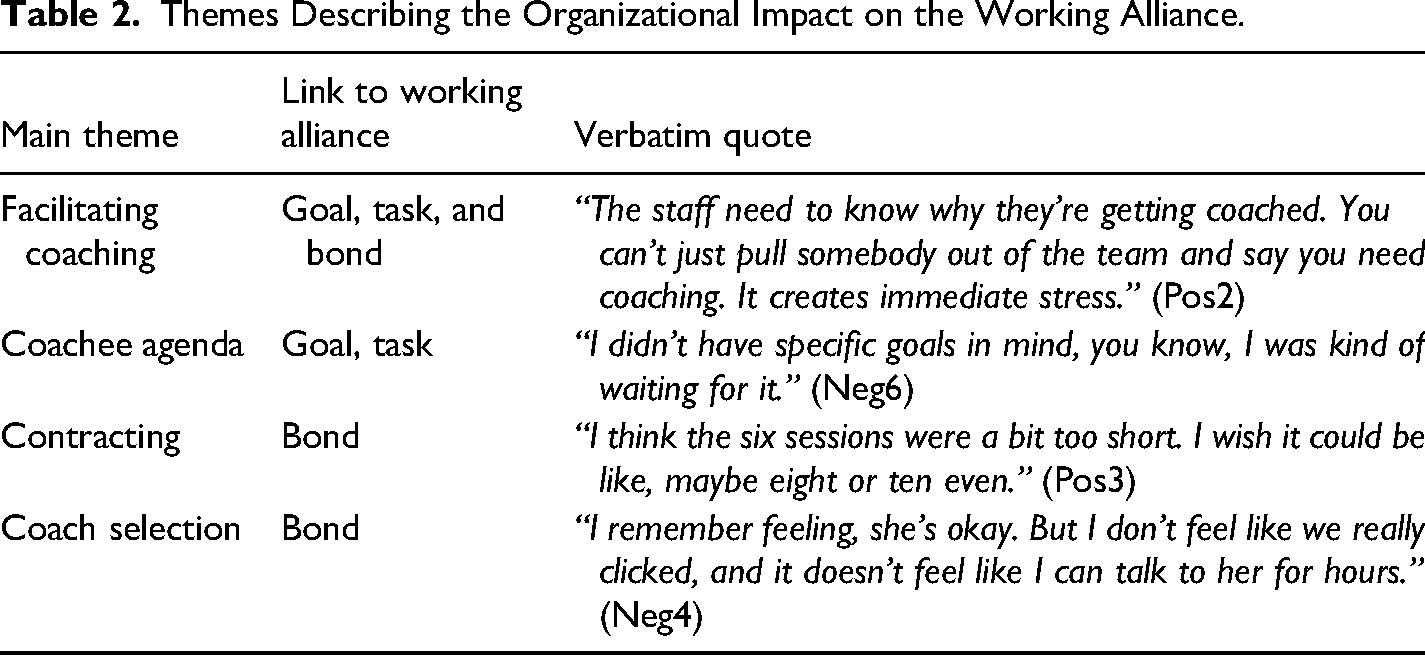
The analysis of six positive and eight negative coaching experiences by coachees revealed that the organization does in fact have a meaningful impact on the functioning of the working alliance as a whole and its constituent constructs (goal, task, and bond). The organizational impact and its relation to the working alliance is summarized in four main themes, presented in Table 2.
Themes Describing the Organizational Impact on the Working Alliance.
Facilitating Coaching
The organization's impact on the functioning of the overall working alliance can be problematic when appropriate and transparent coaching facilitation does not take place. Organizational facilitation is evident in three aspects of the coaching engagement, namely, (1) positioning coaching; (2) providing clarity; and (3) providing organizational support structures.
Positioning coaching
Mandatory or not: For most participants, coaching was not mandatory. This was largely experienced as positive and many participants (Pos2, Pos4, Pos5, Pos6, Pos5, Neg5 Neg7) were motivated by the development opportunities it presented. Neg4 felt proud when selected for this “flagship” program. In contrast, mandatory coaching for Pos3 led to a different preconception. She felt “forced to go through the process” and exclaimed, “At the very outset, I must admit, I was very trepidatious about it, I really thought, you know, this could be the end of my career!”
Even though it ended positively for Pos3, it is important that mandatory coaching, especially when addressing underperformance, is communicated with positive intent, as articulated by Pos2: “The staff need to know why they're getting coached. You can't just pull somebody out of the team and say: ‘You need coaching’. It creates immediate stress on the staff member. Have I been doing things wrong all along? If you say: ‘You do these things exceptionally well, but this area is something we need to focus on and it's going to make your life easier …’ Immediately, you're not coaching someone because they're incompetent, you're coaching someone to give them the ability to move up.” (Pos2)
Providing clarity
The positive impact of a strong working alliance, especially when coaching is offered as a growth opportunity, can be negated by the organization providing limited clarity regarding the purpose of coaching and the outcomes expected. Understanding the purpose of coaching was important for participants. The organization detailed the purpose to Pos2, but not to Neg2: “It was specifically what the coaching was for, how to deal with people's expectations.” (Pos2)
“I didn't feel like there was a clear establishment of what it is that we needed to get out of this.” (Neg2)
Participants relayed the importance of also having clarity on the outcomes expected. Neg8 became frustrated because “They never stipulated any kind of outcome that was necessary.” In contrast, Pos3 had the following experience during her interactions with her coach: “If I required clarity … I would always reconfirm what was expected of me … that I was understanding it in the correct context.” (Pos3)
Organizational support structures
Coaching often competes with work responsibilities in an organizational environment. Providing support by creating time for coaching mitigates competing activities and reduces coachee stress. Pos2 noted that his organization explicitly created time for his coaching. The team was informed that he would not be available during coaching sessions, to ensure that his responsibilities were covered. This allowed him to be entirely focused and present. Neg4 had an entirely different experience: “For me, the biggest stress factor was being very busy at work and making time for these things.” (Neg4)
An initial discussion with coachees, openly debating the need for coaching, clarifying the purpose of outcomes expected from the engagement, and providing support during the engagement seem to be desirable aspects of organizational facilitation.
Coaching Agenda
The findings show that an alignment of the coaching agenda to the coachee's unique development needs was positively experienced and increased the coachee's motivation and ownership to achieve success. The organization expressed no expectations of Pos5, who mentioned: “They did it to help me improve myself.” Pos5 was allowed to set his own goals, while Neg8 became frustrated because of an unclear organizational agenda: “They never stipulated any kind of outcome that was necessary.”
Neg3 disagreed with the development needs his organization specified. They believed that he was technically strong, but needed to work on his people skills and structurally drove the entire coaching engagement. Neg3 believed that he had good people skills, which resulted in limited engagement with his coach during coaching.
Allowing the coachee to set their own agenda was experienced as positive by Pos1 as this allowed her to fully align the coaching to her development need: “To improve … to get where I wanted to go because I was very clear on where I wanted to be.” A flexible organizational agenda was also seen as a positive with Pos4, noting that her coach was “happy to flex it,” within an overarching organizational agenda. However, organizational agenda for coaching: “Every quarter would have a different theme.” (Neg2); and an unclear agenda: “I didn't have specific goals in mind, you know, I was kind of waiting for it.” (Neg6) negatively affected the coaching experience. It seems that in cases where the coachee is not clear on their coaching goals, there is potentially scope for the organization to give direction and could possibly have assisted Neg7 who was frustrated because her coaching did not have a clear agenda.
The findings also revealed that empowering coaches contributes to positive experiences by deploying tasks that instigate positive developments. One technique that facilitated the formation of new coachee insights is reflection. However, the transformative power of reflection can easily be overshadowed by the organization's impact, especially when setting a fixed agenda. Even if the coach incorporates reflection, the engagement could still be experienced as negative, as evident in Neg2's account of her coach's ability to elicit reflection: “She was very professional … she was good at steering the conversation … you know, it always came back to me and what I should be doing and reflecting on.” (Neg2)
The research findings illuminate the intricate interplay between the coachee's needs, the organization's control over the coaching process, and the coach's ability to facilitate goal achievement successfully in an environment that often involves navigating competing agendas.
Contracting
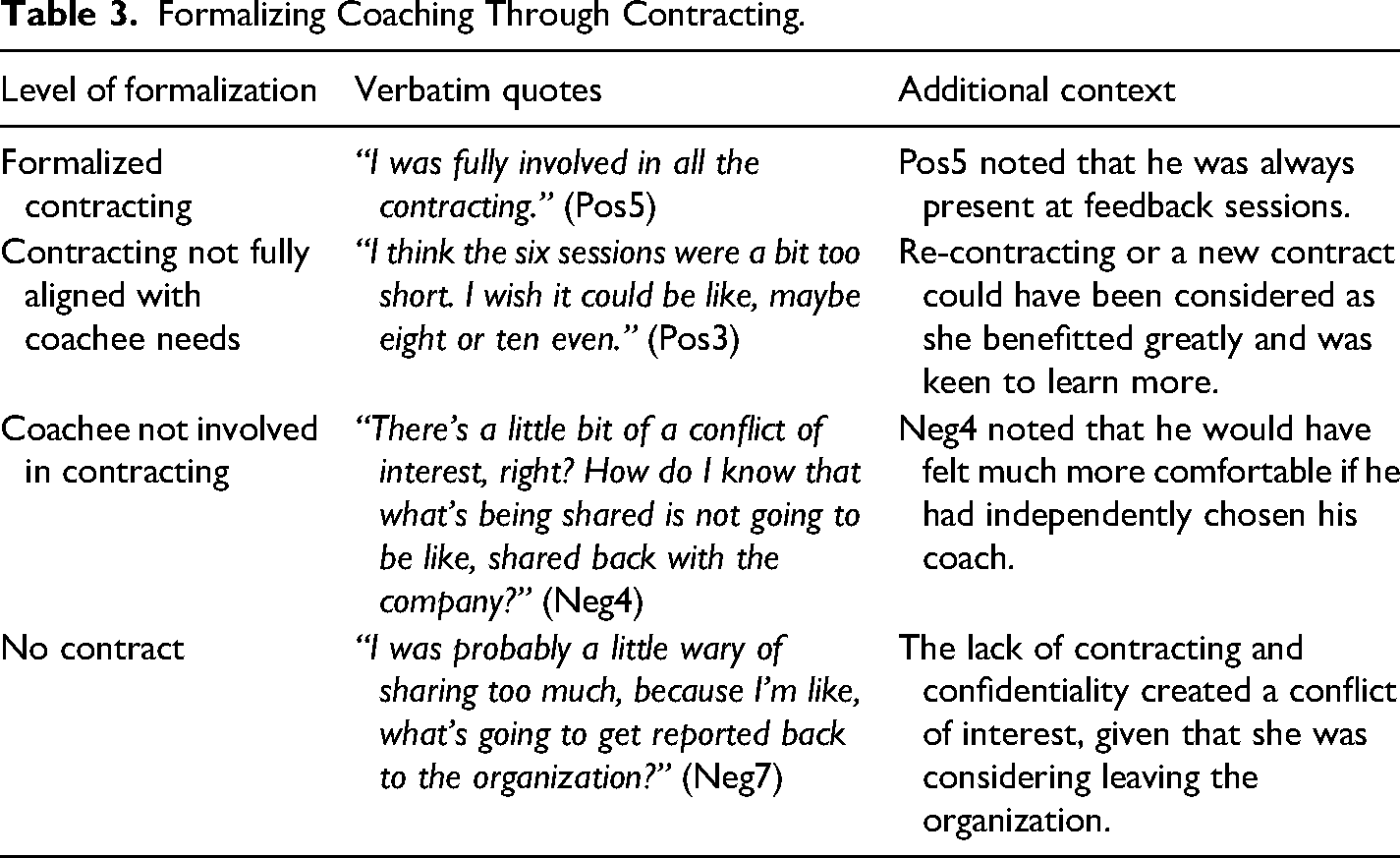
The appropriateness of contracting varied. In Table 3, a range of contracting approaches is provided, from rigorous (formalized) to poor (no-contract). The table provides verbatim quotes and additional context, reflecting the coachee experiences related to contracting.
Formalizing Coaching Through Contracting.
The findings indicate that inappropriate contracting might result in conflicts of interest, which could impact the bond between the coach and coachee negatively, especially in terms of trust and confidentiality, evident in Neg8's account. “I suspect there was chatter about me, between the coach, my boss, and his number two. I'm pretty sure about that.” (Neg8).
Coach Selection
For engagements facilitated by the organization, the lack of any formalized coach selection manifested as a red flag. For some participants (Pos2, Pos3, and Neg2), this had no impact on the engagement. But in several cases, it resulted in barriers to success, most of which directly impacted the bond between the coach and the coachee. Neg3 believes that a good relationship is important and noted that his engagement did not result in any improvements as a result of a bad relationship with his coach. Neg4 commented on the consequences of her having no say in selecting her coach: “I feel like it might have been sort of a mismatch … The type of coach they gave me, she's a bit more serious than I am … Some people loved their coach [appointed as part of the programme] … they were so excited about their sessions, and they couldn't wait for the next one.” (Neg4)
Both Neg5 and Neg8 also had no input in selecting their coach. Instead, their coaches were friends of their immediate superiors, presenting clear conflicts of interest. For Neg8, it impacted the perception of confidentiality, while for Neg5, this had a serious impact on the level of trust in his coach; he did not feel safe sharing his personal vulnerabilities during coaching sessions. Pos4 described the pressure she experienced after joining a new organization and receiving a coach recommendation from her manager: “He came highly recommended by my line manager. ‘I'm [line manager] working with this great coach. I think he will benefit you [coachee]’ … and you're not going to say no to your new boss.” (Pos4)
For Neg7 too, not having agency in coach selection led to distrust: “I was probably a little wary of sharing too much, because I'm like, what's going to get reported back to the organization?” (Neg7)
In summary, it appears that the organization's involvement in how coaches are selected and assigned to coachees is central to the coachee's experience of coaching and consequently, the strength of the working alliance between coach and coachee. Coachees who had a say in selecting their coach appear to have a stronger bond and higher trust in the coach.
Discussion
This qualitative research study asked the question: How does the organization influence the working alliance between the coach and coachee in workplace coaching? The aim of the study was to investigate possible conceptual enhancements to the currently used working alliance measures that are more specific to organizational coaching by looking at the role of the organization in the coach–coachee relationships and ultimate coaching success. Interviews with 14 coachees, eight who had a negative coaching experience and six who had a positive coaching experience revealed four themes that were judged to influence the three aspects of the working alliance. The themes “Facilitating coaching” and “Coachee agenda” were linked to the working alliance constructs of goal and task, while the themes “Contracting” and “Coach selection” were both linked to the bond aspect of the working alliance. From these findings, Figure 1 illustrates the organization's potential impact on the functioning of the working alliance.
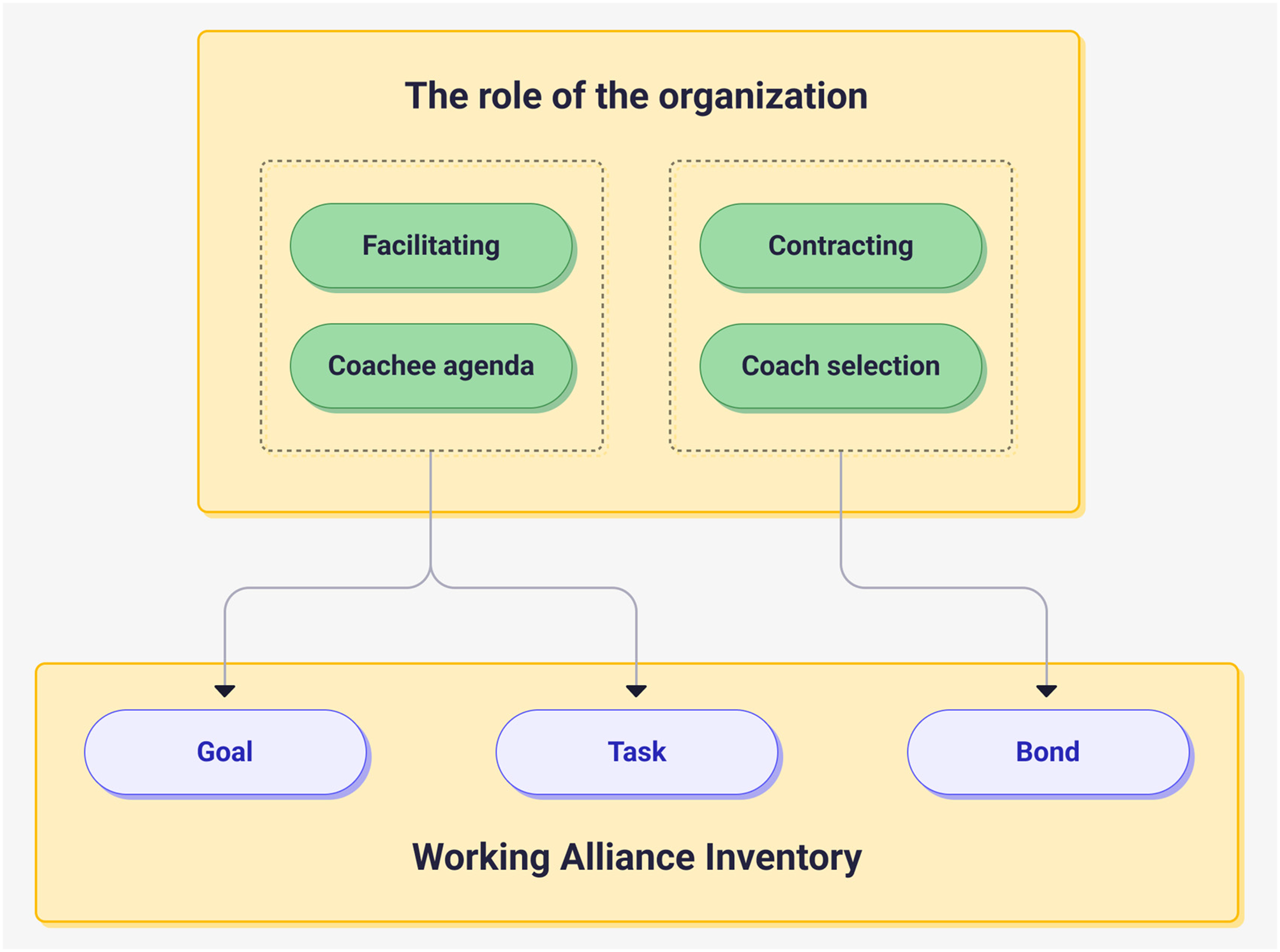
Conceptual summary of the research findings.
“Facilitating coaching” captures the direct and indirect way the organization's facilitation of the coaching engagements has a meaningful impact on the goal and task aspects of the working alliance and consequently the experience of coaching. Positive experiences are typically associated with appropriate organizational facilitation, while inappropriate organizational facilitation can impede the quality of the working alliance. There does indeed seem to be a fine line between eliciting the “mutual gains” and “conflicting outcomes” perspectives (Peccei & Van De Voorde, 2019). The aspects that emerged as important in promoting mutual gains were: (1) the positioning of coaching (goal); (2) clarity regarding the purpose of coaching and the outcomes expected (goal and task); and (3) the level of support during the engagement (task). Findings are in line with those of Smith and Brummel (2013) who highlighted the importance of clear development plans in successful coaching. It has also been shown that the environment created by the organization is an important contributor to coaching success (Athanasopoulou & Dopson, 2018). Specifically, organizational support for coaching indicates to the employee that the organization cares about their growth and development. This was found to improve coaching impact and contribute significantly to coaching success (Athanasopoulou & Dopson, 2018). Clearly, the organization is not an innocent bystander when it comes to creating an environment that is conducive to positive coaching outcomes. Blackman et al. (2016) found that coaching was more effective when organizations provided support to the coachee to engage actively in the program. Blackman et al. (2016) also found that coaching was more effective when senior management showed commitment to the coaching program. When organizations provided an appreciative environment (Maritz, 2013), coaching was more effective.
The theme “Coachee agenda” captures the idea that a coaching agenda aligned to the coachee's needs enables competent coaches to empower coachees through a collaborative agreement on the desired outcomes from coaching and tasks required for coachees to accomplish their coaching goals. A fixed organizational agenda inhibits the positive impact of having an empowering coach in that coachees may not be able to experiment with new behavior. This is in line with findings from the meta-study by Blackman et al. (2016) that the coachee's organization needs to be actively involved in establishing the coaching goals and agreeing on desired outcomes. Blackman et al. (2016) recommended that this can be achieved through change programs aimed at aligning individual and organizational goals. Active experimentation is a crucial part of learning new behavior (Terblanche, 2020), and an organizational culture that prevents coachee experimentation in the workplace could limit the task effectiveness of coaching and the working alliance.
The “Contracting” theme captures the idea that a formalized contracting process ensures confidentiality, avoids conflicts of interest, and promotes the bond between coach and coachee. The complexities of organizational coaching contracting are well known, especially in terms of creating and maintaining alignment between the coach, the coachee, and the sponsoring organization (Van Coller-Peter & Burger, 2019). Unsuccessful engagements suffered from the lack of appropriate feedback interventions (Bozer & Jones, 2018) and an agreement on confidentiality (Rekalde et al., 2015), due to the lack of appropriate contracting, which could negatively influence the bond between the coach and coachee.
The final theme “Coach selection” suggests that the lack of coachee agency in the selection of a coach resulted in several challenges for coachees. Coachee-perceived conflicts of interest when the organization assigns a coach resulted in negative consequences for the bond aspect of the working alliance, for example, a lack of trust and confidentiality. This finding confirmed the importance of a strong working alliance, as seen from the coachee's perspective (De Haan et al., 2016). This finding should not be interpreted as an endorsement of the proclaimed benefits of coach–coachee matching. Several studies have shown that matching “algorithms” or processes do not improve coaching outcomes. Boyce et al. (2010) for example concluded that successful coaching outcomes are not related to matching criteria. De Haan et al. (2016) showed that coachee perceptions of coaching effectiveness were unrelated to personality matching; and Grant (2014) found no evidence for the importance of the coachee's satisfaction with the coach–coachee relationship. In the present study, however, it appears that when the organization takes control of the coach selection process and does not give the coachee any say in the matter, the coachee feels disempowered, even manipulated, leading to a breakdown of the bond between coach and coachee. This finding is supported by research on high-quality relationships signified by mutual trust and a shared vision (Boyatzis & Rochford, 2020).
Considerations for Extending the Working Alliance in Workplace Coaching
This tentative analysis suggests that working alliance theory could benefit from a theoretical extension to include the organizational dimension. The findings point to the organization as a missing link for a complete theoretical conceptualization of the working alliance in a coaching context. In organizational coaching, three stakeholders constitute a tripartite: the coach, the coachee, and the organizational sponsor (Bozer & Jones, 2018). The prominence of negative impacts from the organization confirms a difference in the perspective of each party, complicated by the underrepresentation of the coachee's perspective in research (Blackman et al., 2016; Carter et al., 2017).
It could be argued that the working alliance is not easily transferrable to a coaching context, because the concept of a therapeutic alliance stems from the field of psychology. Given that coaching, as a distinct academic discipline, is not yet fully developed, researchers often adapt theory from existing fields, especially psychology. This points to unique coaching constructs that should be further researched to create comprehensive frameworks applicable to coaching.
In a psychological context, there are typically only two parties, the therapist and the client. The WAI would benefit from an extension, considering all stakeholders in organizational coaching. It is clear from the findings that the organization can easily nullify the importance of the overall working alliance in coaching. In addition, the findings show that the organization has a direct impact on each of the WAI scales, goal, task, and bond.
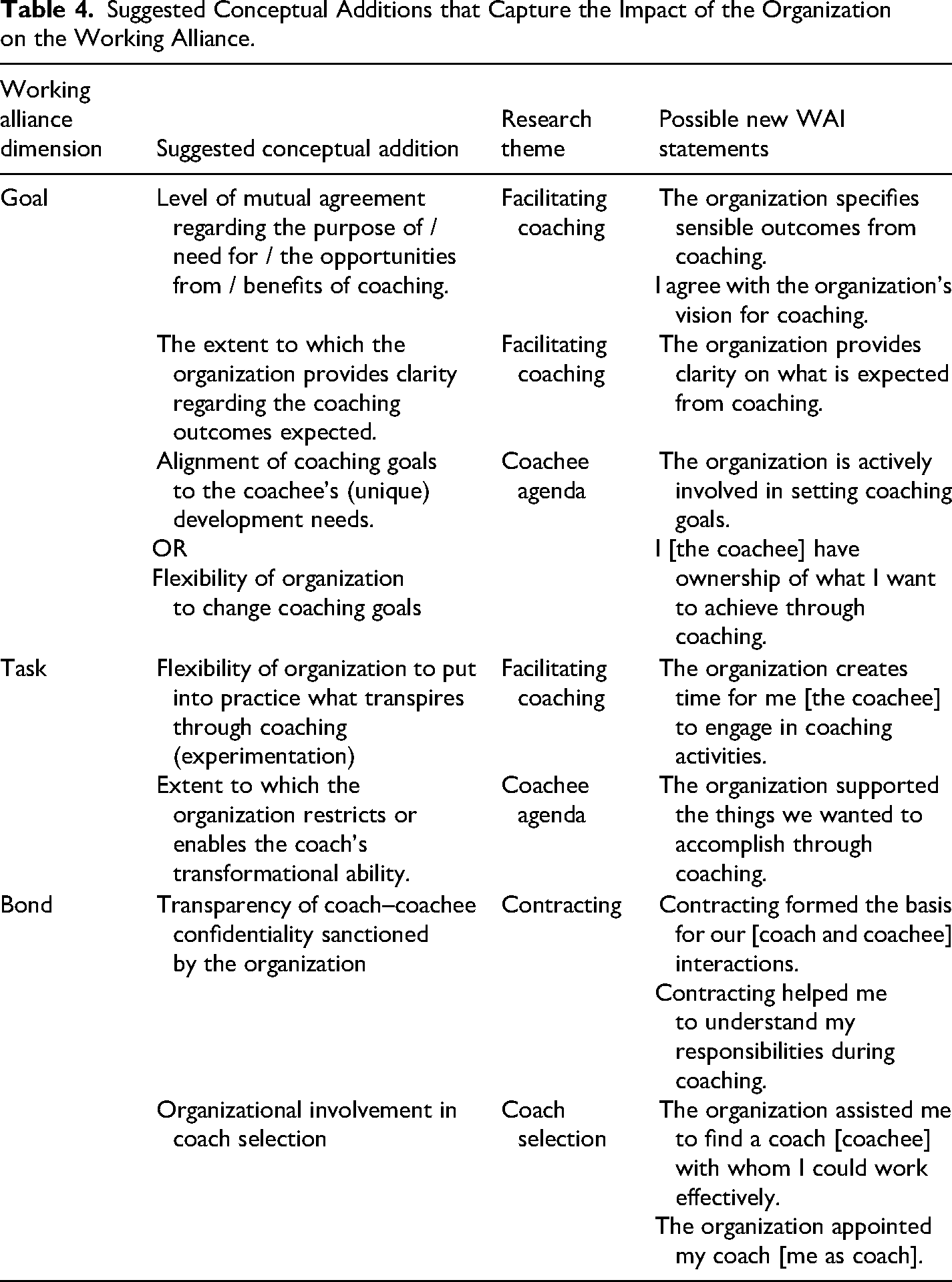
We, therefore, suggest a theoretical extension of the working alliance framework. This could involve extending the constructs of goal, task, and bond, to also include the organizational dimension that measures the impact of the organization's involvement in coaching interventions on the coaching process and the relationship quality between the coach and the coachee. Extending the WAI could enable direct measurement of the extent to which the organization promotes or restricts the functioning of the overall working alliance. Table 4 provides a summary of suggested conceptual additions to the three dimensions of the working alliance to incorporate the role of the organization.
Suggested Conceptual Additions that Capture the Impact of the Organization on the Working Alliance.
Limitations and Recommendations for Future Research
Homogeneity can be enhanced by, for example, targeting a specific management level. However, future studies should ensure that increased homogeneity does not come at the expense of narrative depth or being too context-specific. The scope of the present study was limited by sample variety. Only the voice of the coachee was included, and not that of the coach or the organization. This was done intentionally because of the lack of research featuring coachees’ perspectives. Future research could however benefit from an increased sample variety by including coaches, and organizations. The organizational role should also be investigated in more role-specific detail. There are numerous agents within an organization who could influence the coach–coachee working alliance, including the direct manager of the coachee, the purchasers of coaching services and strategic decision-makers. Each of these roles could potentially influence the coach–coachee working alliance in a different way and these relationship dynamics should be explored further.
Future research should also consider the link between the present study and an existing body of knowledge in coaching that examines specific moments or situations in coaching (see e.g., De Haan et al., 2010, 2013, 2020). How do conflicting interests of the different organizational roles and agendas, for example, influence what happens in a coaching session and how does that influence the working alliance?
Importantly, the present study proposes a theoretical extension of the working alliance framework. Future studies should test a new quantitative measurement tool that includes the organization as a distinct third party, acknowledging its role in the coaching tripartite.
The data analysis methodology used in the present study showed the application of using a hybrid inductive–deductive data analysis approach in qualitative studies to investigate the potential existence of construct ambiguity in quantitative data collection instruments. Future research using this type of research design is recommended, ideally applied to other theories, to test its methodological value.
Conclusion
As coaching matures both as a practice and research discipline, there is a need to move beyond incorporating theories from related disciplines as is. Coaching has reached a stage where aspects that are unique to the coaching context need to be acknowledged and used to craft coaching-specific approaches and solutions. This exploratory study reexamined the working alliance borrowed from psychotherapy in the context of workplace coaching and suggested the addition of the role of the organization in the goal, task, and bond aspects between the coach and coachee. A measure of the coaching relationship and coaching efficacy based on the unique coaching context could help enhance the understanding of the mechanisms of successful coaching.
Footnotes
Authors’ Note
Freddy Kruger – researcher and author. Dr Nicky Terblanche – researcher and author.
Declaration of Conflicting Interests
The author(s) declared no potential conflicts of interest with respect to the research, authorship, and/or publication of this article.
Funding
The author(s) received no financial support for the research, authorship, and/or publication of this article.
