




Abstract
Despite the importance of faculty diversity training for advancing an inclusive society, little research examines whether participation improves inclusion perceptions and belongingness. Integrating training and diversity education literature concepts, this study examines the effectiveness of training targeting microaggressions in six STEM (Science, Technology, Engineering, Mathematics) oriented departments at a research-intensive university. Reactions data collected at the end of face-to-face training suggested that participation generally increased inclusion understanding. Self-assessments on inclusion concepts collected from 45% of participants before and three weeks after training suggest participation increases perceptions of the importance of inclusion, microaggression allyship awareness, inclusive behaviors, and organizational identification. Compared to white men, women and minorities reported a greater increase in satisfaction with their department affiliation. While self-assessment results are exploratory and have limitations, analysis suggests that diversity training may enhance knowledge of microaggressions, allyship, inclusive behaviors, and belongingness perceptions. We provide insights for evaluating and implementing diversity training interventions.
Keywords
Advancing diversity, equity, and inclusion (DEI) among students and faculty is at the forefront of educational organizations, as it is critical for the development of inclusive equal opportunity societies (U.S. DOE, 2016). Diversity refers to the heterogeneity and demographic composition of groups and organizations, while inclusion entails the empowerment and integration of diversity into organizational systems and processes (Roberson, 2006). Equity, a concept that is relatively recently integrated into DEI training, imparts the value of distributing organizational resources based on workforce needs (Dunn, 2020).
Many postsecondary institutions, such as colleges and universities, have focused on diversifying their student bodies, while lagging in their faculty DEI initiatives (Miner et al., 2019). A similar gap has occurred in research focus, with far more DEI research having been conducted on student (e.g., Moors et al., 2022; Ragins & Ehrhardt, 2020) than faculty populations. Yet improving faculty understanding of DEI and their role in promoting an inclusive campus climate is essential to organizational effectiveness (Jayakumar et al., 2009; Llamas et al., 2019).
Most faculty DEI efforts largely target recruitment and hiring initiatives (e.g., Fried et al., 1996) to increase the representation of minorities and women in order to shift organizational demography toward a more diverse workforce (Bracey & McIntosh, 2020; Kaminski & Geisler, 2012). Such actions help to legitimize to stakeholders in the community that the university is taking initial steps toward creating a multicultural organization (Thomas & Ely, 1996). However, diversity strategies that focus mainly on demographic change without concomitant actions to cultivate norms fostering inclusive diversity climates are inadequate change strategies to support the retention and career success of under-represented faculty (Kossek et al., 2003). Increasing numeric representation does not guarantee that historically under-represented faculty members will feel that the organization and its culture cares for their uniqueness or that they will develop a sense of belongingness and identification with their institution. To build an inclusive organization, universities as employers and educators, must focus on increasing awareness of and socialization on the value of strategic organizational transformation (Sheridan et al., 2006) and skills toward enhancing a positive climate for inclusion (Durodoye et al., 2020; Kossek & Zonia, 1993).
Improving faculty knowledge and behaviors on how to nurture an inclusive climate, particularly related to interactions with colleagues, is critical for encouraging positive inclusion experiences at work, which matter for career well-being and retention (Moors et al., 2014) and turnover (Callister, 2006; Cropsey et al., 2008). Yet relatively little research has been conducted to evaluate the effectiveness of training designed to improve faculty self-awareness of knowledge and skills that promote inclusion among peers (Kulik & Roberson, 2008; Ragins & Ehrhardt, 2020). This gap is despite the fact that faculty members can spend long hours working with colleagues—often more time during the work week, than with family and friends (O’Meara et al., 2020). Moreover, most diversity training lacks change-oriented evaluation grounding, which sometimes can limit effectiveness, even exacerbating climate (for reviews, see Apfelbaum et al., 2012; Dobbin & Kalev, 2013; Paluck & Green, 2009).
Diversity, Equity, and Inclusion Training Effectiveness
Given the importance of faculty DEI training for organizational change and its limited study, the goal of this research is to advance understanding of the design, implementation, and evaluation of theoretically-grounded training. Figure 1 provides a model summarizing the proposed relationships related to diversity training effectiveness. Briefly, the framework assumes that faculty participating in DEI training are expected to perceive self-assessed improvements in their knowledge of the importance of DEI to organizational effectiveness, and their understanding of concepts such as microaggressions, bystander and ally awareness, and inclusive behaviors. Microaggressions, defined further below, historically focused on the subtle ways that minorities such as individuals who are people of color may experience biased remarks from their white colleagues (Tulshyan, 2022). An ally refers to someone who takes initiative to counter an observed action that undermines marginalized individuals such as women and minorities, when a bystander or a witness to them (Clemens, 2017; Osler, n. d.). The model assumes that participating in DEI training will improve perceptions of belongingness at the university, especially for women and minorities who may see such initiatives as positive organizational support for their identities.
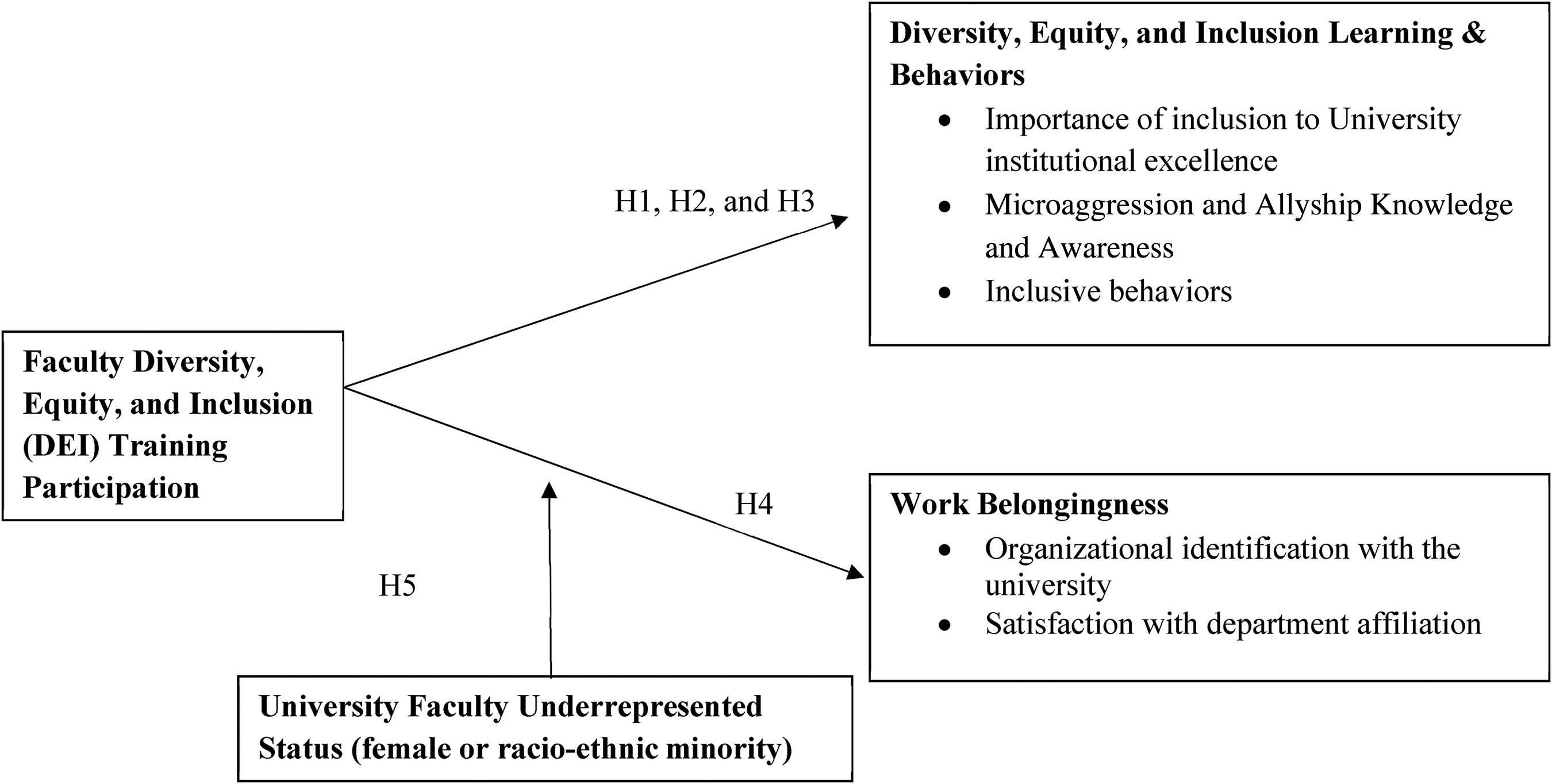
Hypothesized relationships related to faculty DEI training effectiveness: Self-assessed learning, behaviors, & belongingness.
Considering the amount of time, effort, and resources spent on DEI training by universities as well as the importance of inclusion to institutional excellence, it is critical to describe the change applications of such training. These organizational change efforts to foster inclusion and broaden faculty participation often are multilevel and integrate varied interventions that prominently feature interactive training sessions designed to both increase interpersonal skills supporting inclusive attitudes and behaviors and create and/or support awareness of their social and strategic value. Diversity training may include dialogue on community visions that anticipate resistance as productive and relevant to the change process. This training incorporates understandings of the experiences of unique stakeholder groups such as faculty in varied contexts. Training is likely to be effective when conducted in workplace “family groups” (e.g., disciplinary department or functional workgroups with ongoing social relationships), and may utilize different kinds of formative and evaluative assessment in the short- and long-term (e.g., Casad et al., 2021; Durodoye et al., 2020; Haynes-Baratz et al., 2021; Stachl et al., 2021). Such DEI training best practices often implicitly and explicitly integrate relevant core concepts (e.g., marginalization, resistance to change, power) from the change literature. Examining the implementation of DEI faculty training initiatives can provide fresh insights for change management scholars and leaders (Sheridan et al., 2006).
Theory and Literature Review
DEI Training as an Organizational Change Catalyst
Our literature review identified positive factors supporting a collegial diversity and inclusion climate among peers that we incorporated into the training design and evaluation. First, we aimed to raise an understanding and awareness of microaggressions that commonly occur among faculty members. Evidence suggests a high prevalence of microaggressions is related to lower job satisfaction and higher turnover intentions particularly for under-represented members (Barthelemy et al., 2016; Settles et al., 2022). Second, we followed diversity scholars’ advice on the importance of the training design to not only increase inclusion awareness and knowledge, but to have participants practice behavioral skills such as speaking up as allies when bystanders to microaggressions (e.g., Sue, 2010).
Microaggressions
Microaggressions have been identified as a workplace stressor for minority group members (APA, 2017) and are related to hostile campus climates (Harris, 2017; Pittman, 2012; Solórzano et al., 2000). Microaggressions refer to “brief, everyday exchanges that send denigrating messages” directed toward women and members of under-represented minority groups (Sue et al., 2007, p. 273). Growing in popularity, most microaggression training focuses only on increasing knowledge or awareness. A meta-analysis on microaggressions in higher education (Ogunyemi et al., 2020) identified nine intervention/training studies, but all focused only on increasing awareness or knowledge. Increasing microaggression awareness is important but only a first step toward advancing an inclusive climate (Scully & Rowe, 2009). The most effective training interventions not only build knowledge, but also provide behavioral strategies for individuals to challenge microaggressions (Sue, 2017).
Bystanders and Allies
Increasing understanding of the roles of bystanders and allies in fostering an inclusive workplace is critical to advancing an inclusive climate. The development of bystander awareness and allies who act to support colleagues’ inclusion experiences can enhance positive workplace experience for equitable organizations. Bystanders refer to people “who become aware of and/or witness unjust behaviors or practices that are worthy of comment or action” (Sue et al., 2019, p. 133). Thus, anyone who witnesses microaggressions can be bystanders, but individuals may vary in whether they act as allies. Although definitions of who can be an ally can diverge, Sue and colleagues (2019, p. 132) argue that allies refer to “individuals who belong to a dominant social group (e.g., whites, males, heterosexuals)” and who actively take actions to reduce prejudice and promote the rights of the minority groups. The assumption is that by training bystanders to recognize microaggressions and providing them with the tools for intervention, change agents can motivate individuals to exercise allyship (Moors et al., 2022; Radke et al., 2020; Scully & Rowe, 2009). Integrating microaggression and allyship concepts, we developed faculty training designed to increase inclusion awareness and knowledge, along with behavioral strategies.
Faculty as Diversity Trainees and Intervention Targets
A key microaggression training research gap is its under-emphasis on faculty populations’ peer interactions, which is critical for a positive climate. A meta-analysis identifying 20 studies on microaggression experiences in higher education (Ogunyemi et al., 2020), found that most (75%) focused on students; only one fifth included faculty's experiences, and even then, centered on faculty's influence on student outcomes. Another review of nine intervention studies found only one with a faculty target audience for change (White-Davis et al., 2018); its goal was not to improve faculty inclusive interactions with each other, but to develop their diversity teaching skills.
Given limited faculty-focused diversity training research, we designed this study to create training grounded in the diversity concepts reviewed above, advance understanding of the design and implementation of evidence-based DEI training practices, and provide preliminary evidence about its impact on self-assessed, knowledge and behavioral changes and belongingness. Drawing on the training effectiveness literature, we incorporated four well-established evaluation criteria (Kirkpatrick, 1994). The first, reactions, was captured by post-training ratings and comments gathered at the end of training. This immediate affective assessment of trainees’ impressions is where many diversity training evaluations typically end. Yet, Kirkpatrick (1994) recommends assessing effectiveness using three additional criteria: learning, behaviors, and results. Learning is defined as the extent to which trainees acquire intended content knowledge and attitudes. Behaviors are the degree to which trainees use learning when on the job (i.e., practice applications). Results capture related outcomes from the training, such as workplace belongingness.
Hypotheses Development
Self-Assessed Perceptions of Learning Change
When assessing DEI training, it is important to note there are varying perspectives that can be emphasized ranging, for example from the business case or social justice benefits. These views can shape the change target levels assessed (e.g., individual, group, organizational), and the training objectives (e.g., provide knowledge, increase awareness, change behavior; Ferdman & Brody, 1996). Pedagogical structures also can vary by learning modalities (experiential versus individual), duration, and facilitation roles.
Regardless of this variability in training perspectives and modalities, Kalinoski and colleagues’ (2013) meta-analysis suggests that training with focused content yields a larger effect on cognitive-based outcomes (e.g., learning such as increased knowledge and awareness) than broader content. Given these findings, we designed training content to focus on prompting participants to self-assess their understanding of three specific areas aligned with training content: how diversity benefits the university, microaggression and ally awareness, and inclusion behaviors. A common practice in diversity, equity, and inclusion training is to utilize surveys that are focused on awareness and skill development to assess participants’ self-perception of knowledge and attitudes prior to and following engagement in DEI workshops (i.e., Okorie-Awe et al., 2021; O’Leary et al., 2020).
Self-Assessed Perceptions of Inclusive Ally Behavior Change
Diversity training is most effective when there is a good fit among training approaches and outcomes and when the design considers baseline trainee behaviors that may shape outcome improvements. For example, one study on diversity perspective-taking and goal-setting found that outcome success was influenced by individual pre-training levels of empathy (Ragins & Ehrhardt, 2020). Moreover, studies suggest that training that focuses solely on knowledge acquisition without attention to learning how to actually engage in desired behaviors and adapt them when faced with task and relational uncertainty can backfire (Applebaum, 2019). Applebaum (2019) recommends that developing understanding of microaggressions and fostering a willingness to improve capabilities to address them through attention to how, why, and when they occur is beneficial. Effective training on microaggressions should actively engage white faculty in psychologically safe spaces where faculty can acknowledge their fears and uncertainties (Sue et al., 2009), while creating dialogue, agency, and support for specific actions (Sue et al., 2019). We provided participants with examples and scenarios of microaggressions relevant to faculty peer interactions. Our goal was to help participants learn how to identify microaggressions (and discern them from non-micro-aggressions), an approach drawing on discriminant learning principles, the ability to differently respond to varied stimuli, which are derived from classic behavioral theory (Skinner, 1953). We also provided opportunities to discuss the examples and scenarios, role-play situations, and practice engaging in inclusive behaviors with colleagues in small groups.
Self-Assessed Work Belongingness Change
Participation in training has long been linked to improvements in organizational commitment and other positive job attitudes such as increased job satisfaction and lower turnover (Goldstein & Ford, 2002). A Canadian study with a sample of over 11,000 employees found that participating in diversity training was related to increased organizational commitment (Yap et al., 2010). Research shows that employees who are invited to participate in DEI training are likely to view the training as a sign that the employer values them, by wanting to invest resources into their educational development (Tannenbaum et al., 1991). Such investments in enhancing knowledge and behaviors (Alhejji et al., 2016) are likely to have additional positive effects, such as being interpreted as positive organizational support for enhancing faculty career well-being and developing their workforce skills. Indeed, many universities today are requiring faculty to develop diversity statements for promotion and tenure and improve their DEI skills as key performance success factors. Given the large body of research indicating that training participation enhances positive job attitudes such as organizational commitment and satisfaction, and the growing salience of university DEI activities, attending DEI training is likely to improve perceptions of organizational identification and satisfaction with department affiliation, which are two indicators of workplace belongingness (Rahman, 2015).
Moderating Effects of Under-Represented Faculty Status
Evidence suggests that DEI training participation and its impact may vary depending on the faculty's under-representation status. A study of 436 faculty at a large Midwestern university (Demb & Wade, 2012) found that since women and minority faculty were more likely to experience a toxic workplace climate and have differential task demands (e.g., higher service expectations), they may value initiatives to support a diverse and inclusive climate more than their peers (Jayakumar et al., 2009; McKay et al., 2007). Research shows that when employers act to support improving the climate for inclusion, such as investing in DEI training, faculty such as women and minorities, experience improved diversity climate perceptions and job satisfaction (Chrobot-Mason & Aramovich, 2013; Ostroff et al., 2005).
Value congruence theory, the alignment between the individual's value systems and the organization (Edwards & Cable, 2009), also suggests there is a positive relationship between perceptions of a positive diversity climate and organizational commitment (O’Reilly et al., 1991). When diversity training is supported by the institution, it may serve as an indicator to under-represented faculty of the university's increased commitment to creating a climate that reduces discrimination and amplifies inclusion (Wolfson et al., 2011). This, in turn, positively influences faculty's attitudes toward the climate and increases organizational attachment. For these reasons, we hypothesize:
Method
The current study was carried out by a multi-disciplinary team of faculty, researchers, and graduate students called the Faculty Retention and Success through Intergroup Dialogue and Inclusion Alliance (FIDIA) at a large public U.S. university. FIDIA's goal was to bring faculty across campus together to develop, deliver, and scientifically evaluate initiatives that would promote understanding of inequity and intergroup relationships by engaging faculty in their department settings to promote organizational change. Over several years of meetings, dialogue, and review of the microaggression, ally, and inclusion literatures, a FIDIA work group developed a 2-hour diversity workshop style training intervention, entitled: “Be a Better Ally: What We Say and Why it Matters” 1
Diversity Training Intervention Design
The diversity training intervention objectives were: (1) increasing knowledge and awareness of the importance of advancing diversity and inclusion to organizational effectiveness; (2) increasing understanding of microaggressions and their impact on work cultures; and (3) identifying and practicing strategies to use inclusive language and behaviors to intervene when a bystander to microaggressions. The session began with an introduction to these objectives. Next guiding principles were shared with attendees including speaking from one's own experience, listening actively, participating to the fullest of one's ability, and allowing room for reflection. The purpose of setting these explicit principles was to help establish the tone of the training session as a respectful, open, and safe place to reflect on improving climate for faculty. The training was designed to include opportunities for interactions in small peer breakout groups, and in a large training group with all participants and facilitators. Training topics included: (1) the importance of workplace inclusion for institutional excellence; (2) the identification and impact of microaggressions; (3) methods for responding when one commits, observes, or experiences a microaggression; (4) scenarios to practice ally behaviors as microaggression intervention; and (5) personal goal-setting. Exercises were interspersed between brief lecture discussion on the above topics, including a short video on microaggressions with common stereotypes members of this university say (Purdue University Diversity, 2017). For each exercise, participants discussed their responses in small groups, then reported insights to the large training group. The first exercise involved reading short scenarios with statements a faculty member might say to a colleague and identifying them as being as either (1) a microaggression or (2) neutral or (3) inclusion language. An example of one statement examined was: “[A male faculty member commenting to a female faculty member in her office,] Wow! I can't believe you are back so soon after having a baby. That is impressive and you look great!” Each group would discuss whether they agreed if the statement was a microaggression, and if so, participants practiced changing the statement to reflect more inclusive language.
The purpose of discussion of exercises in small groups was for participants to feel safe to share their personal experiences in a more intimate setting as well as to collaborate on ideas before a large group discussion. Then, in the large group, facilitators navigated interpersonal dynamics in the group and addressed resistance and challenges as they arose in a reflective and approachable way. The aim was to foster a learning environment for attendees’ range of competence with this topic. Training exercises were sequenced to first develop knowledge and awareness of microaggressions, then to foster skill development. A second breakout exercise involved several scenarios where faculty microaggressions were committed in a group setting on campus. Participants rotated playing the role of ally and practicing strategies for intervention. These role plays were designed to provide participants with tangible responses to microaggressions and to practice developing their own responses to use in future situations. We also included content on strategies and methods for dismantling bias. At the end of the training, participants set goals related to exhibiting inclusive behaviors that they agreed to self- monitor over several weeks’ post-training. This approach follows training effectiveness principles suggesting the importance of using a design that motivates individuals to transfer training content to the job (Ford & Weissbein, 1997). One growing approach to motivate transfer that is developed in clinical settings and shown to be effective in the workplace is called behavioral self-monitoring, where individuals set goals and self-regulate their progress in meeting them (cf. Olson et al., 2011). Applying this approach, training participants agreed to set goals for engaging in and self-monitoring inclusive behaviors, to receive behavior-tracking reminders for several weeks following training, and to complete the post-training survey.
Recruitment and Sample
The FIDIA team identified a liaison in each college who was responsible for faculty development and inclusion and worked with them to schedule training and recruit participants using a work group-focused method to recruitment, as our goal was to improve faculty members’ climate for inclusion in their local context. Unlike some diversity training that may recruit faculty to enroll from across the university for participation in cross-unit sessions, the current study followed an approach where each training session included participants from a common college or department. In this way, participants could experience the interactive training with peers in a context that likely reflected their own unit intergroup dynamics, the ongoing interactions between two or more social groups. Psychologist Alderfer (2011) has referred to intergroups as “family” organizational groups in his work on organizational diagnosis. This is an important diversity change management training design consideration as research (Kossek & Zonia, 1993) suggests that work units each have their own DEI micro-climates that often link to job, discipline, and demography structure. Structural task (e.g., department) and hierarchical (e.g., faculty rank) group make-up often intersect with gender and racioethnic composition patterns (Alderfer, 1983). For example, particularly in STEM-oriented departments, which is this study's sample, most chairs and senior faculty in departments are white males, and most women and minority faculty are at lower ranks (Hutchins & Kovach, 2019).
Procedure
From fall 2018 through spring 2020, when the university transitioned to online education and telework because of the COVID-19 pandemic, we conducted six training sessions at STEM-oriented departments. Five sessions were with STEM departments (e.g., mechanical engineering, veterinary science); and one management department which has many STEM-oriented disciplines (e.g., computer science, business analytics) and like STEM, its faculty gender representation is generally male-dominated (Kossek & Lee, 2021) with limited representation of faculty of color at historically white educational institutions. Upon registration, trainees received an email with a survey link, which had scales designed to capture self-assessments of inclusion concepts that aligned with training content. Following university human subjects research protection protocols, survey completion was voluntary and identities were kept confidential. The response rate for the 75 participants completing the pre-training survey was 60% (n = 46). Nearly three-fourths (70%, n = 53) completed the training evaluation at the end of the workshop. Nearly half (45% n = 28) of all time 1 survey participants completed the second post-training survey three weeks later. This response rate is similar to other longitudinal assessments with faculty members (e.g., Carnes et al., 2015). Those who completed only one survey were more likely to be men than women. We tested the differences in self-assessment pre-training scores between participants who only completed the first survey and those who completed both, and found no other significant differences.
Respondents were mostly white (60%) and male (66%). Response alternatives for gender included “transgender,” “non-binary/genderqueer,” and “another identity.” All participants identified themselves as either men or women. Over two-fifths (42% or 19/46) were assistant professors; 24% (n = 11) were associates; and 24% (n = 11) full professors. For more sample information, see Supplemental Material on response rates (Appendix 1, Table 1), or breakouts of sample demographics by training session (Appendix 2, Table 2).
Training Evaluation Data and Scales
Training Reactions Data: Trainees and Facilitators
At the end of each session, trainees completed an evaluation form collecting quantitative and qualitative data to assess reactions to the training. The quantitative data included ratings on the following nine items using a five-point Likert scale ranging from favorable (1: strongly disagree) to (5: strongly agree) (alpha = .91). Items included: The workshop activities stimulated my learning. I will be able to use what I learned in the workshop moving forward. The workshop added to my knowledge on faculty inclusion. The activities in the workshop gave me sufficient practice. The activities in the workshop gave me sufficient feedback. The pace of the workshop was appropriate. The workshop facilitators were well-prepared. The workshop facilitators were effective. I would recommend this workshop to others. The qualitative data included four open-ended questions asking about the workshop's strengths and weaknesses, suggestions for improvement, and one or two concepts participants learned. Facilitator training reactions evaluation data was also collected in a short team meeting debrief following the six sessions to reflect staff experiences.
Faculty Self-Assessment of Perceptions of Inclusion Concepts and Belongingness
Participants were invited to complete self-assessments of inclusion knowledge, attitudes and behaviors, during the week preceding the training and three weeks later after setting goals, and having time to apply the concepts on the job. All scales used a 5-point Likert scale (1 = strongly disagree; 5 = strongly agree), where higher scores indicate higher agreement. The use of pre- and post-training self-assessments surveys has been identified as a useful DEI evaluation approach (Harrison-Bernard et al., 2020). However, while repeated self-assessments are useful to capture changes in perceptions of concepts after exposure, they are an imperfect means to assess change beyond self-perceptual change; since participation in training may alter the meaning of the concepts themselves, or have other limitations noted below. The pre- and post-training results supplement the above reactions data.
Diversity and Inclusion Learning
Importance of Inclusion to University Institutional Excellence
This 3-item scale (α = .90) measures the degree to which an individual agrees that inclusion is important for the university's institutional excellence. It was adapted from Kossek and Zonia's (1993) value efforts to promote diversity scale to now focus on inclusion, a concept that was generally less studied during seminal diversity research. Items included: “Increasing perceptions of gender inclusion among Purdue University's faculty is important for enhancing institutional excellence,” “Increasing perceptions of multicultural inclusion among Purdue University's faculty is important for enhancing institutional excellence,” and “I believe that creating an inclusive faculty environment is important for Purdue University's effectiveness.”
Knowledge and Awareness of Microaggression Allyship
This two-item measure (α = .86) assessed the degree to which an individual understands the concept of microaggression allyship. Items included: “Being an ally can involve politely identifying a microaggression when you are a bystander to its occurrence” and “Asking someone to clarify what they mean when they may have exhibited a microaggression can help foster workplace inclusion.”
Inclusive Behaviors
This 6-item scale (α = .93) assessed the degree to which an individual perceived they used inclusive behaviors with colleagues. Items included: “I use language that is gender inclusive when interacting with colleagues,” “I use language that is inclusive of colleagues’ diverse cultural backgrounds,” “I take action to intervene as an ally, if I observe microaggressions occurring at work,” “I use inclusive language when interacting with colleagues,” I speak up to ask for clarification of language if I observe a conversation that might be experienced as a microaggression by a colleague,” and “I feel confident being able to use inclusive or neutral language when interacting with my colleagues.”
Belongingness Perceptions
Organizational Identification with the University
This 4-item scale (α = .84) measures the degree to which an individual identifies with their employing organization. The items adapted from Rahman (2015) included: “I care about the fate of Purdue University,” “I am proud to tell others including friends and relatives that I work for Purdue University,” “I mention Purdue University to my family and friends as a great organization in which to work,” and “I feel a sense of loyalty to Purdue University.”
Satisfaction with Department Affiliation
This 3-item scale (α = .91) measured the degree to which an individual is satisfied with their department affiliation. Adapted from Rahman (2015), the items were: “I feel a sense of happiness when I think about my department at Purdue University,” “My affiliation with my work group at Purdue University gives me satisfaction,” and “I feel a sense of attachment to my work group at Purdue University.”
Results
Our results below are organized into three sections. First, we present quantitative and qualitative trainee reaction results from evaluation effectiveness data collected immediately at the end of the training session, followed by facilitator reflections. Then we present results comparing changes in trainee self-assessments.
Trainee Reaction Results
Overall, evaluation feedback collected immediately at the end of the workshop from the participants indicated generally overall positive reactions to the training.
Quantitative Training Evaluation Feedback Data
On a five-point Likert scale from 1 (disagree) to 5 (agree) with 5 being most favorable, the mean score of the 9 quantitative items assessing training reactions was 4.00 (SD = .69; range = 1.50–5.0). Participants highest mean ratings were on these items: the facilitators being well-prepared (mean = 4.34); being able to use what is learned in the workshop moving forward (mean = 4.25); facilitators were effective (mean = 4.18); would recommend this workshop to others at my university (mean = 4.17); workshop activities stimulated my learning (mean = 4.14): and workshop activities added to my knowledge on faculty inclusion (mean = 4.09). The lowest mean ratings while still closer to favorable than neutral related to items suggesting changes in training design to enable more time to slow the pace (mean = 3.83); get feedback (mean = 3.68), and activities to practice (mean = 3.55).
Qualitative Training Evaluation Data: What Faculty Enjoyed the Most
The training activities that participants enjoyed the most, mentioned 40% (n = 24) of the respondents were peer group discussions. Sample comments included: “Discussions were very useful to hear other people discussing past events. Being vulnerable and honest can be helpful,” and “We do not get a lot of time to discuss topics with other faculty, and this doubles as team building.” The second most mentioned (n = 15) enjoyable training activity noted by 25% of the respondents was role-playing with real-life scenarios. As one participant said, “I loved the real-life examples and scenarios. It helped me to experience possible incidents that I might face.” Another commented: The role-playing during the scenarios exercise had the participants “out of the comfort zone” and “gave good techniques and strategies.” The third most frequently mentioned enjoyable training aspects, pertained to the opportunity to increase inclusion knowledge, and how to address microaggressions (9%, n = 5). Finally, 5% (n = 3) complimented the faculty facilitators’ “willingness, experience, and expertise of the presenters in answering questions and facilitating discussion.”
Qualitative Training Evaluation Data: What Faculty Perceived They Learned
Participants’ open-ended answers to the questions about what they have learned provided face validity that the training achieved a key learning objective: to advance perceptions of awareness and understanding about microaggressions and their impact. Nearly half (45% or 22) of respondents mentioned this theme. Sample comments were: (1) “Some things may be perceived as microaggressions that I would have never thought of;” (2) “Microaggressions can be addressed in a non-attacking, non-threatening manner. It is crucial that I do my part in changing the culture to prevent microaggressions and raise awareness;” (3) “Microaggressions sound “micro” but are “macro” in how people feel after experiencing. You (we) must all set an example for others to see as an example for chang(ing) culture;” and (4)” I learned the value of being careful of others’ feelings.”
Qualitative Training Evaluation Data: Faculty Found Least Useful & Changes Suggested
Most of the participants left the question asking for feedback on “training parts found the least useful,” blank or if they did write comments (n = 5), they were “none” or “N/A.” The only major area for improvement came in the first two training sessions, where five participants stated that they wanted the scenarios to increase clarity and be simplified (n = 3). Based on this feedback, we reduced the number of microaggression examples to discuss to focus on 5 from a list of 20 and added research cites to explain the correct answers in a debrief sheet for the remaining 2/3 of training sessions. We also reduced the pace of the training (n = 6) to provide more time for role-playing (n = 2) and “discussions,” the most favorite aspect of the training (n = 24). We adapted teaching pedagogy between large and small group discussions. Instead of trying to tackle multiple scenarios in a large group, the training included exactly the same scenarios as in sessions one and two but we only gave one scenario to each breakout group. After the breakout sessions, each team reported their discussion to the large group, so that all groups were still exposed to the same training content. This modification allowed for each breakout group to engage more deeply with a single scenario, while presenting a breadth of microaggressions to the large group. In addition, we received feedback to include “tips on how to respond when you are the one offended by the microaggressions.” We then implemented strategies for responding when one experiences, observes, or commits microaggressions. After these revisions, we did not receive any comments on areas to improve. In sum, the core content and objectives were identical across sessions, with the exception of streamlining the training content to cover fewer examples, and more time for discussion in the last four sessions.
Facilitator Reflections: Learning From the Process
While the data above indicate that overall faculty evaluated the training as being effective, facilitators encountered resistance from a handful of participants in a few sessions regarding the validity of the concept of microaggressions. In two different sessions, one or more participants referenced Lilienfeld's (2017) widely-circulated article to support disagreement with the training content. Lilienfeld argued that microaggressions are an under-developed construct and questioned their real-world application. One participant expressed the belief that biases cannot be altered and microaggressions’ psychological and physical effects cannot be measured. In another session, a participant emailed Lilienfeld's (2017) publication to the team of training facilitators, attendees, and the Provost to share his lack of agreement with training concepts.
After sessions, facilitators reflected together on their training experiences as well as observations on how certain sociocultural identities represented in training sessions impacted the discussions, specifically the extent of gender and racial diversity. Most training attendees were white males. One facilitator reflected after one training, There was only one woman, and she was a woman of color. She seemed to engage in an educator role in the training given her personal and professional experiences with these topics, while the majority of the other participants expressed not knowing anything about microaggressions.” In a different training session, another facilitator noted that there was “good gender diversity … The female faculty members showed no hesitation in speaking out about their microaggression experiences. I thought that this gender mixture was by far more preferable to an all-male group. Had the women faculty been reticent in their willingness to speak out, it might have been an altogether different experience.
Similarly, participants tended to discuss certain social identities more than others. There was little discussion around faculty's roles and ranks and intersection with race, for example. The focus seemed to be on gender identity in the examples and the discussions with examples that participants brought up. Specifically, the microaggression statement, “Wow! I can't believe you are back so soon after having a baby. That is impressive, and you look great!” generated much discussion. Frequent comments indicated that nearly all male participants thought this statement was a compliment, whereas female participants who commented did not.
Participation by department leadership also impacted interactions. In one session, the department head disclosed his religious identity, which was not one of the predominant Christian identities in the area, and an identity that other participants did not know about their chair. One facilitator noted that the chair's comment seemed to help facilitate honest disclosures and convey the department head's willingness to engage as well. However, in another department, the department head attended the training but did not engage much and facilitators observed that there was less open interaction. Thus, leader role modeling of interest and participation in the training may affect training interactiveness. Finally, in another session, a facilitator observed that the group members had attended a monthly training led by the head of the department's Diversity and Inclusion Committee, which seemed to signal leadership commitment to advancing diversity climate and faculty socialization to engage in diversity and inclusion conversations.
Secondary Training Self-Assessment Results Collected Several Weeks After Training
Table 1 presents means, standard deviations, and correlations of follow-up data collected three weeks after the initial workshop to assess changes in self-assessments prior to the training. We used paired t-tests of survey scores obtained before and after the training to capture changes in self-assessed improvements in understanding of inclusion concepts, as secondary indicators of the possible effectiveness of the training. These data should be viewed with caution, as slightly less than half (45%) of the sample answered both questionnaires, so the less motivated participants may not have completed the follow-up questionnaire. There also may be social desirability to rate oneself more favorably after exposure to inclusion concepts, a limitation noted in the discussion.
Descriptive Statistics.
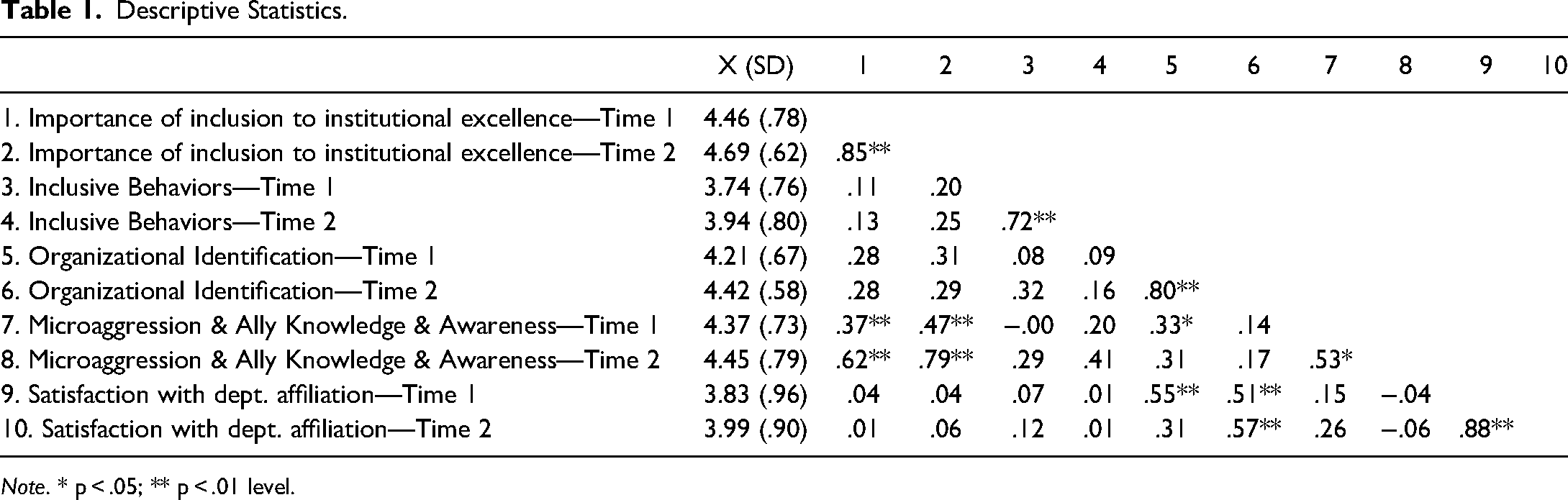
Note. * p < .05; ** p < .01 level.
Comparing the results for the 45% of participants who self-assessed learning before and after training (see Table 2), we found that participation significantly enhanced their learning perceptions (i.e., knowledge and awareness) on the importance of inclusion to university institutional excellence (t = −2.88, p < .01), awareness of microaggressions and how to be an ally when a bystander (t = −3.58, p < .01), and reports of increasing use of inclusive behaviors (t = −2.11, p < .05). Comparing participants’ self-assessed belongingness perceptions, before and after training, results indicated that participation significantly increased perceptions of belongingness for organizational identification (t = −2.88, p < .01), but not for satisfaction with department affiliation. We then explored possible interactive demographic effects of the training on belongingness perceptions. We coded underrepresented faculty status, which was designated as 0 for white male dominant group members and 1 for underrepresented women and minorities group members. Under-represented gender and minority (URM) status was a significant moderator of satisfaction with department affiliation (F (1, 26) = 6.32, p < .05). Analysis of the change in satisfaction with department affiliation between for the 45% of participants who responded both prior to and after the training was conducted was stronger for racial minorities and women than for white men. As Figure 2 shows, white male participants’ scores of satisfaction with department affiliation stayed almost the same, while racial minority and female faculty participants’ scores increased. Under-represented status did not significantly moderate the training effect on organizational identification with university. Although our numbers were small, we cautiously note that the results offered preliminary support for H5. 2
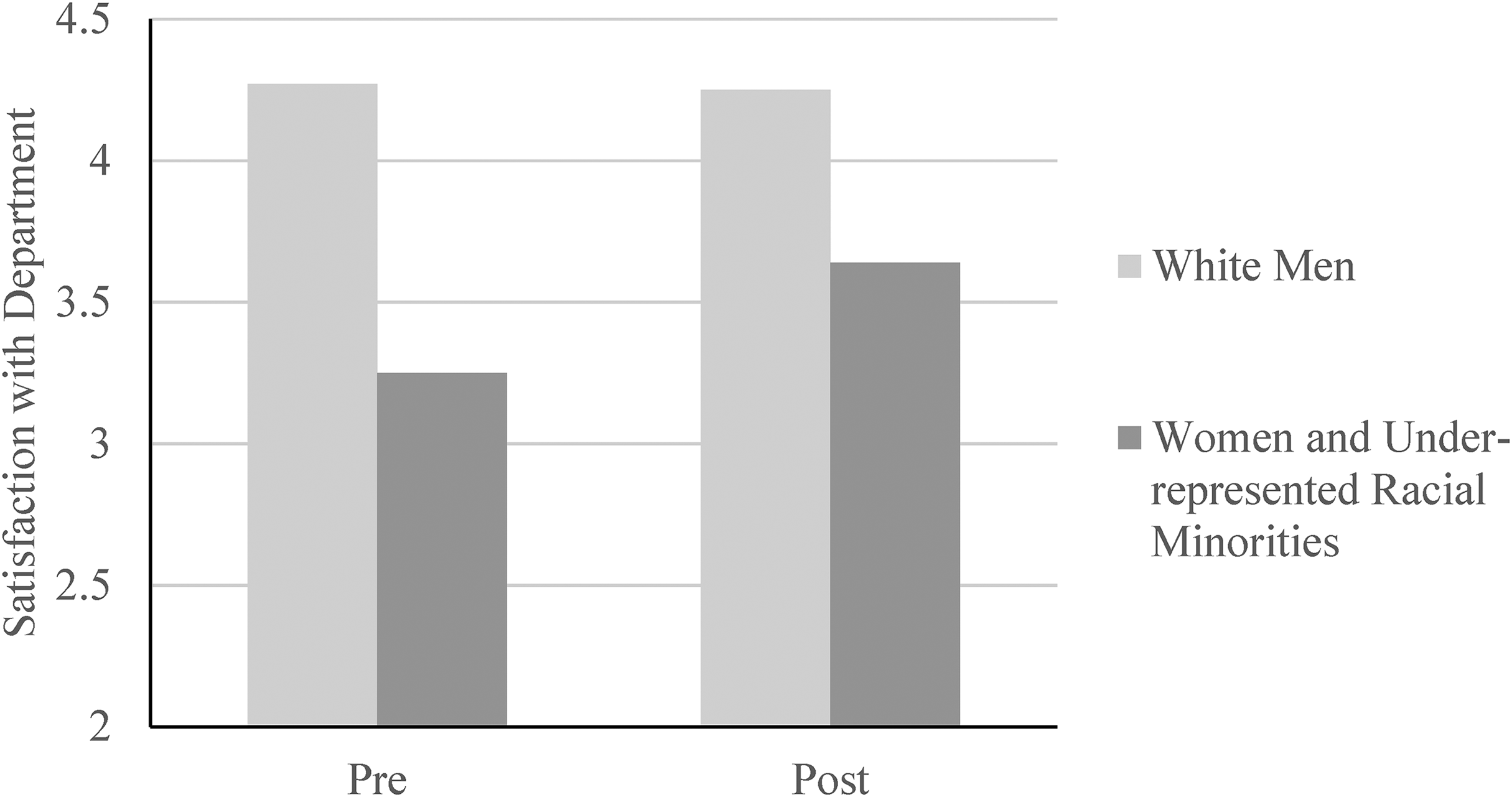
Moderation effects of training participation and faculty under-representation status on satisfaction with department affiliation.
Mean Differences Between Time 1 & 2 Self-Assessment of Learning, Behaviors, & Belongingness for Respondents (45%) With Complete Data.
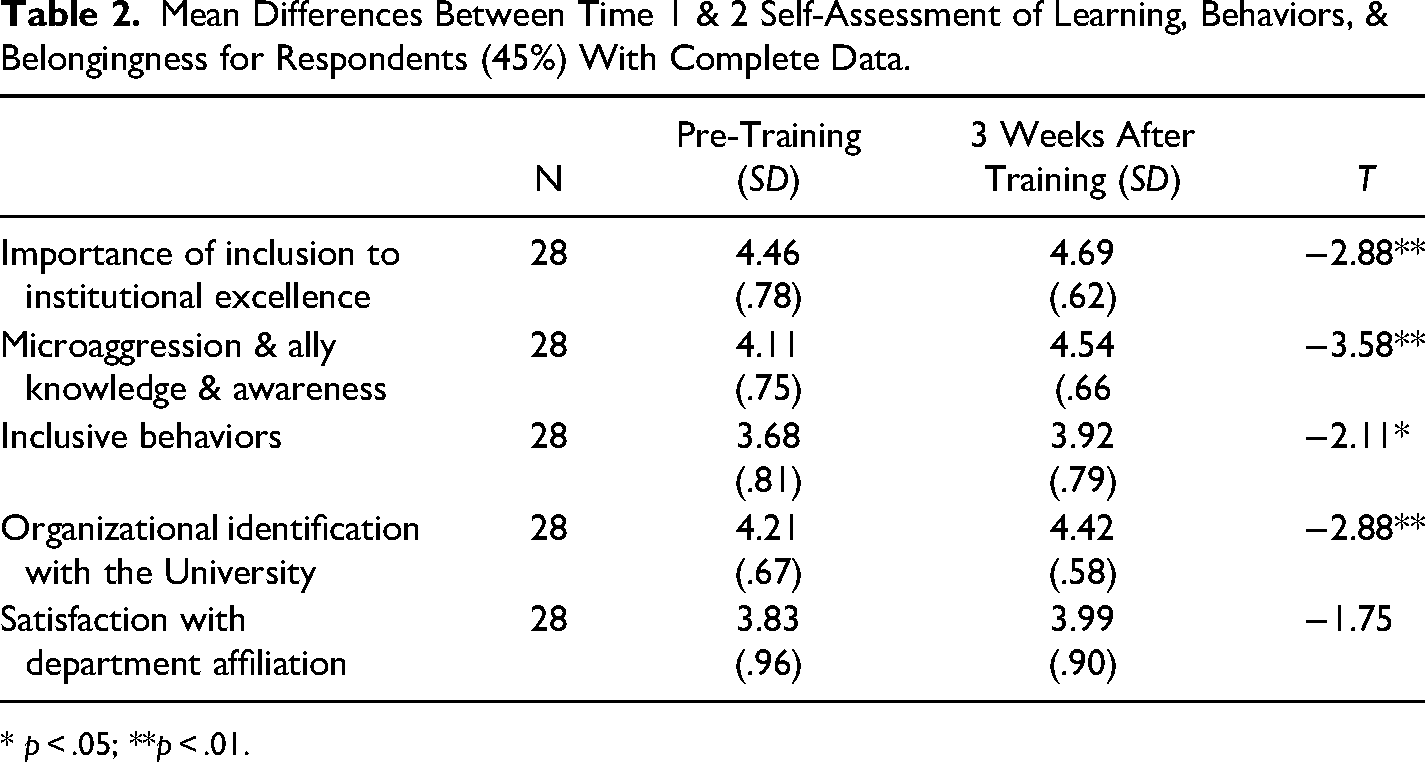
* p < .05; **p < .01.
Discussion
This study adds to understanding of the potential effectiveness of faculty DEI training in several ways. First, it provides a detailed description of the thinking involved in the design, implementation and evaluation of theoretically-grounded DEI training components, which can provide a beginning roadmap to others interested in offering this type of intervention. Second, it provides preliminary evidence of the potential short-term effectiveness of such workshops, via positive trainee reactions collected at the end of the workshop indicating generally positive reactions to training content, and the value of facilitator reflections on training dynamics and acknowledging resistance when it occurs. Third, it offers additional data on possible effectiveness of DEI training via the collection of self-assessments conducted before and after training participation. Our analysis indicates that such training can help develop improved faculty understanding of inclusion concepts underlying the capabilities needed to effectively work with others in an increasingly diverse society. Based on follow-up data from 45% of the trainees who participated in both pre- and post-training self-assessments, the study suggests that this subsample, participants perceived increased understanding of the importance of inclusion to institutional excellence, microaggressions and how to respond to them as an ally when a bystander, use of inclusive behaviors, and improved organizational identification with the university. Under-represented women and racial/ethnic minorities trainees self-assessed improvements in perceived satisfaction with their department affiliation to a greater extent than white male faculty.
We contributed to the DEI training intervention literature in three ways. First, we focused on an under-emphasized but critically important issue and population—inclusiveness among university faculty colleagues in their work context. Ragins and Ehrhardt (2020) note that diversity training is a unique form of training, as participants’ pre-training gendered and racial departmental faculty relational experiences may influence training effectiveness. Our approach of conducting the training in faculty members’ home units considers that the meaning of diversity education is often understood through the lens of one's local work social context, which is an important practical learning to try to incorporate in future training design approaches. Second, we integrated content from the scholarly referred growing DEI literatures of microaggressions, bystander and allyship awareness, inclusion and belongingness to develop a theoretically-based workshop. The focused content and approach can be replicated to improve the inclusive climate in other universities and organizations and enhance future research and practice on evidence-based diversity training implementation. Third, by triangulating training research best practices such collecting detailed data on trainee reactions, facilitator reflections; and pre- and post-training self-assessments, and implementing training methods for fostering engagement and transfer allowed for research-to-practice improvements in content, process, and evaluation.
Implications for Practice
This research offers guidance for designing and implementing DEI training as an organization intervention with practical insights across the five intervention stages we identified (design, recruitment, facilitation, evaluation, continuous improvement), as shown in Table 3. For example, during the initial design stage it is critical to have a team that represents different disciplinary and identity group perspectives on how to deliver organizational change interventions. For the recruitment stage, it may be useful to consider organizing the recruitment and enrollment of trainees to participate interactively in departmental groups to encourage dialogue relevant to “work group families” in their home contexts. It also may be helpful to ensure training groups comprise heterogenous members representing varying sociocultural identities to foster intergroup discussion with the related caveat to ensure there is sufficient representation among minority members. For example, having only one or two persons of color or a single gender minority member in the group, should be avoided. During the third stage, facilitation, we recommend using a team of workshop facilitators who are diverse in social identities and disciplines, mirroring some of the key populations in the organization where the training is delivered. During the evaluation stage, we recommend using a mix of quantitative and qualitative training reactions data and self-assessments that are closely aligned to training content. The fifth stage, involves on-going continuous improvement to update examples as needed based on current diversity societal and campus developments and leadership and member feedback.
Diversity, Equity, and Inclusion (DEI) Training as an Organizational Intervention: Practical Insights Across Stages.
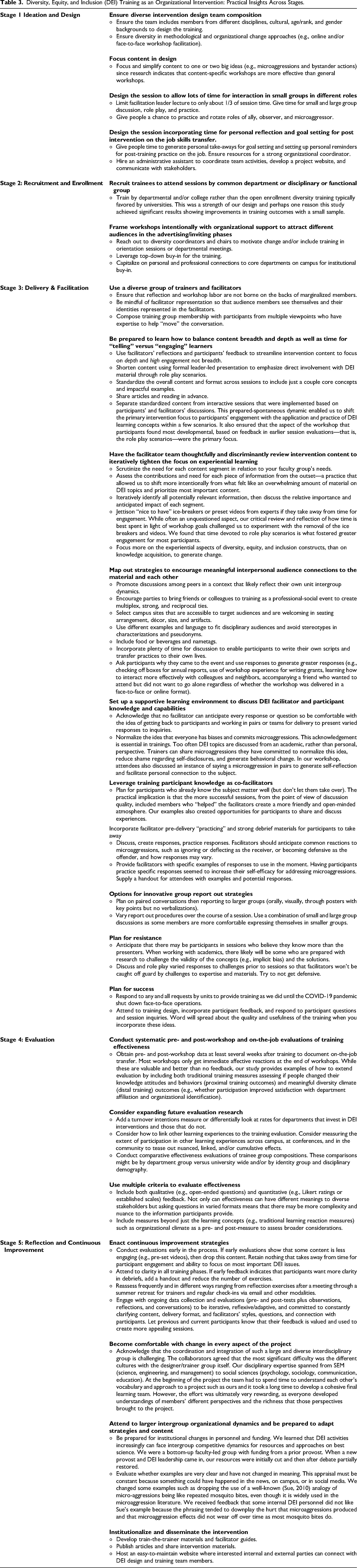
Overall, organizations can benefit from drawing on academics’ practical insights, training materials, and methods to improve the inclusion climate among their members. The general positive reactions from our participants indicate that there is receptiveness and a need for training of this kind. Despite limitations noted below, our study provides preliminary support for the value of adopting DEI training that integrates the following objectives: (1) increasing commitment to and awareness of the importance of DEI principles to the organization; (2) increasing understanding of what microaggressions are; (3) increasing knowledge of what a bystander is and how to put bystander strategies to work in interactions as an ally (i.e., knowing how to speak up when microaggressions and other biased behaviors are observed); and (4) advancing learning on how to set goals, self-monitor, and transfer learning to demonstrate inclusive behaviors.
Implications for Future Research
This study contributes preliminary evidence to advance research on DEI training by providing multiple approaches and measures for the design, content, and evaluation on current inclusion concepts. It also suggests such training may improve belongingness perceptions such as organizational identification across the sample as a whole. Given the limited research on and evaluation of faculty diversity and inclusion training, future research can build on this study in multiple ways. First, the scales developed in this study—most adapted from established measures, demonstrate good reliability and can be tested further and with larger groups of participants and non-participants as a control group to evaluate future initiatives. Confirmatory factor analysis requires a larger sample, than we had and could be conducted. Given the criticisms on the lack of scientific psychometrics in this line of research (e.g., Lilienfeld, 2017, 2020), the current study begins to address these calls for the development of training evaluation measures.
Second, the current study implemented a training designed to be delivered interactively in departmental groups to encourage participation and dialogue by faculty in the same unit. This face-to-face approach may have contributed to our findings on satisfaction with department affiliation. Consistent with value congruence theory (O’Reilly et al., 1991), interacting with faculty members of the same department at a department-supported diversity and inclusion training can signal to faculty women and under-represented minorities that the department is committed to improving the climate for inclusion (Wolfson et al., 2011). Future research should replicate and expand these findings with larger samples and conduct nuanced analysis of within-group gender and racial differences and intersectionality and rank to advance DEI on campuses and across disciplines, as our training was conducted in contexts where women and minorities are largely under-represented.
Third, future DEI research should compare the effectiveness of different training designs groups, modalities, and content. For example, studies might contrast variation in training recruitment design (e.g., open enrollment across a cross-university versus managing intervention entry via support from the department or school head to conduct departmental group training). Studies might also compare the effectiveness of variation in DEI delivery modalities (e.g., face-to-face versus less interactive designs such as on-line training and webinars). Studies are also needed on the differential effects on learning and belongingness of emphasizing and varying different DEI content beyond microaggressions, and inclusive behaviors. This analysis might help advance the identification of the most effective trainee group, delivery designs, and modalities to customized learning for different participants. Or training on DEI might need to be more flexibly adapted to meet changing and increasingly turbulent university environments. For example, online delivery alternatives, could perhaps be useful during academic calendar disruptions, such as the COVID-19 pandemic or reduced campus access during closures necessitated by weather (e.g., snow, hurricanes).
Fourth, future studies should examine the sustainability of the preliminary self-assessed perceptions of changes in knowledge, attitudes, and behaviors we found. In the current study, the post-training survey was conducted three weeks after the training. More evidence is needed on the longer-term effectiveness of the training and for opportune times for refresher or more advanced training. Additional data could be collected from peers or observers to validate trainees’ self-report behavioral data.
Fifth, future research may investigate the training's linkages to other diversity effectiveness indicators such as increasing the attraction and retention of under-represented students and postdocs into the professoriate and faculty in predominantly white male STEM departments or in historically white educational institutions.
Limitations
We’ve identified several limitations with our study design, some of which were influenced by needing to stop data collection during COVID-19, which may limit our ability to draw strong conclusions about the pre- and post-data we collected on the intervention's effectiveness. These include (1) having a small, non-randomized sample of faculty members, (2) possible test-retest effects, (3) attrition of participants over time, and (4) a lack of a control group, which future research could remedy.
First, following human subjects procedures, we were unable to require attendance at workshops across the university departments which resulted in small, non-randomized samples. Moreover, it is likely that the departments in which we implemented the training were not random, since the most receptive units are likely to be more supportive of requests to offer and evaluate DEI training. Future study might randomize departments between universities to prevent contamination in a quasi-experimental design.
Additionally, while department heads strongly encouraged attendance, it is possible there could be participant selection effects such that the faculty who attended the training likely were more interested in improving their DEI awareness and learning than those who did not. However, increased awareness does not mean that trainees would necessarily recognize and know how to respond to or be an ally when microaggressions occurred. Moreover, significant results with small sample sizes and generally reliable scales in the current study suggest that our positive findings are perhaps a conservative test of self-assessed training effectiveness.
Second, it is possible that the differences between the pre- and post-test self-assessment measures before and after the training are impacted by a test-retest effect. For example, intelligence test research has found that prior exposure to cognitive testing measures may significantly influence responses to the same measures in the future (See example Scharfen et al., 2018). However, this effect tends to be more common the sooner the retest occurs; our test administration had approximately three weeks apart. Moreover, the focus of our assessment was self-reflection on awareness and use of inclusion concepts and belongingness perceptions, which are somewhat qualitatively different than repeated measurement of cognitive testing. The design we followed that used self-assessments has been replicated in a number of DEI training evaluation studies. It is a fairly common recommended practice to use pre- and post-surveys to assess participants’ self-perception of knowledge and attitudes prior to and following engagement in workshops to facilitate self-reflection (i.e., Okorie-Awe et al., 2021; O’Leary et al., 2020). Future research could further explore if retest effects using data collected several weeks apart on self-assessment measures are a threat to the validity of data.
Third, we experienced attrition between the survey taken one week prior to the training and the survey taken three weeks following the training. So while we can suggest trends or possible effects resulting from the training, it is important to note that we must limit our findings to the 45% of the participants who attended the training and filled out pre- and post-workshop surveys. Attrition is a common issue in conducting longitudinal research. For instance, health researchers have long noted attrition can range from 30 to 70% over time (see Gustavson et al., 2012). To begin to address this limitation, we reported additional analysis and found that there were no statistically significant differences in pre-training survey scores between those who completed the pre-training survey only and those who completed both.
Lastly, our study did not include a control group. Practically, it may be difficult to prevent contamination of control groups by their having possible exposure to the treatment group's learning experiences in the same university. Regarding the current research, prior to being able to recruit a control group within or external to the university we studied, most universities across the world closed and pivoted unexpectedly to a virtual environment due to the COVID-19 pandemic. We refrained from conducting the training in a remote environment as we felt this would be too different from prior training administration. Additionally, despite a shift back to in-person work two years later, we chose not to recruit a control group as we felt there has been an important shift in DEI work during this time that would make the two groups (pre and post pandemic) distinctly different from one another and thus incomparable. Additionally, since 2020, the George Floyd, Breonna Taylor, Ahmaud Arbery, and many other racially motivated murders have occurred and received increased national and international attention. As such, conversations about DEI have become much more prevalent and has likely left current faculty even more aware of the importance of bystander awareness to support social justice. Future research should conduct cross-organizational analysis of DEI training effectiveness in a quasi-experimental design with randomized training groups; and compare cohort effects over time.
Conclusions
Overall, we provide preliminary evidence that a brief 2-hour interactive training with follow-up after training on goal-setting and self-monitoring activities is positively received by faculty training reactions. DEI training participation also may be related to improvements in faculty's understanding of microaggressions and behaviors supporting inclusion, organizational identification, and likely retention. An important strength of this study is the administration of this training to primarily STEM departments, as these disciplines have been identified as a group in particular need of diversity-related interventions to improve the climate for women and underrepresented minority faculty. Yet our results should be viewed with caution due to the above limitations, but certainly warrant further investigation.
We contribute to DEI literature by recommending evidence-based training content and evaluation. Even Lilienfeld (2020 p. 35), a critic of the microaggressions concept, argues for the advancement of evidence-based training and practices, much like our own. We hope this article will inspire others to conduct such training in their organizations to help modern institutions increase cultural change by implementing educational initiatives to support engaged discussion of inclusion concepts in ways that are scientifically supported and designed to enable all members of society to share perspectives, work, and learn.
Supplemental Material
Supplemental Material
sj-docx-1-jab-10.1177_00218863221132321 - Supplemental material for Implementing Diversity Training Targeting Faculty Microaggressions and Inclusion: Practical Insights and Initial Findings
Supplemental material, sj-docx-1-jab-10.1177_00218863221132321 for Implementing Diversity Training Targeting Faculty Microaggressions and Inclusion: Practical Insights and Initial Findings by Ellen Ernst Kossek, Patrice M. Buzzanell, Brittany J. Wright, Cassondra Batz-Barbarich, Amy C. Moors, Charlene Sullivan, Klod Kokini, Andrew S. Hirsch, Kayla Maxey and Ankita Nikalje in The Journal of Applied Behavioral Science
Footnotes
Authors’ Note
Buzzanell, Wright, Batz-Barbarich, and Moors share second authorship as they contributed equally in unique ways. Brittany J. Wright is now an assistant professor at University of Miami, FL, USA
Declaration of Conflicting Interests
The author(s) declared no potential conflicts of interest with respect to the research, authorship, and/or publication of this article.
Funding
The author(s) disclosed receipt of the following financial support for the research, authorship, and/or publication of this article: We would like to thank Purdue University Office of the Provost for funding this research through the Faculty Retention and Success through Intergroup Dialogue and Inclusion Alliance project; and the Krannert School of Management for funding the support of Kyung Hee Lee who assisted with data collection and early analysis.

Supplemental Material
Supplemental material for this article is available online.
Notes
References
Supplementary Material
Please find the following supplemental material available below.
For Open Access articles published under a Creative Commons License, all supplemental material carries the same license as the article it is associated with.
For non-Open Access articles published, all supplemental material carries a non-exclusive license, and permission requests for re-use of supplemental material or any part of supplemental material shall be sent directly to the copyright owner as specified in the copyright notice associated with the article.
