




Abstract
Foreign acquisitions are perceived as threats to organizational identification. Consequently, they trigger members’ sensemaking on their relationship with the organization. Analyzing these sensemaking processes is fundamental to understanding how members interpret identity-threatening events and which logics and motives underlie their identification. We conducted interviews with 28 members of a German company that had been acquired by a Chinese competitor. The study reveals three phases of sensemaking about identification, namely assessment of uncertainty, evaluation of organizational continuity, and reassessment of the organization’s potential for self-enhancement. Initially, concerns for uncertainty reduction are prevalent. Needs for continuity, distinctiveness, and self-verification dominate continuity evaluation. In the last phase, members seek continuous self-enhancement. They hereby evaluate whether they still share the organization's ideology. Furthermore, they reassess the benefits they receive from the organization. The study constitutes a dynamic extension of identification theory. It uncovers salient identification motives and members’ causal reasoning during different sensemaking phases.
Introduction
Foreign acquisitions constitute a popular means for internationalization and organizational growth (Hassett et al., 2018). Between 1985 and 2019, the number of foreign mergers and acquisitions worldwide rose from less than 500 to almost 14,000 (Imaa, 2019). Consequently, it has become more likely for organizational members to face a foreign acquisition in the course of their working life. Foreign acquisitions represent critical events for members’ relationship with the organization. They are often regarded as multifaceted threats to members’ identification since they put into question central organizational and national attributes of their workplace (Petriglieri, 2011; Piening et al., 2020; Vaara, 2000). According to social identity theory, organizational members derive an important part of their self-concept from their belonging to an organization as well as from the significance and emotions they attach to their organizational membership (Tajfel & Turner, 1986). Foreign acquisitions disrupt members’ identification and make them feel unsettled about their self-concept (Piening et al., 2020; Ravasi & Schultz, 2006). Due to differences with the aims, norms, and values of the acquirer, members of the acquired organization doubt whether the newly merged organization matches their understanding of who they are (Ullrich et al., 2005; van Knippenberg et al., 2002). Acquisitions by foreign organizations seem particularly threatening for members’ identification since they are confronted with unfamiliar beliefs and practices of the acquirer that may conflict with their national culture (Petriglieri, 2011; Vaara, 2000).
Various studies show that acquisitions affect central motives that organizational members pursue through their identification. They threaten the sense of security resulting from members’ belonging to the organization (Elstak et al., 2015; Kim et al., 2013). Moreover, acquisitions often change daily routines, organizational structures, and social bonds within members’ workgroup, and thus impair their desire for continuity (Ullrich et al., 2005; van Dick et al., 2006). Furthermore, acquisitions influence the status of the acquired and can redetermine the self-enhancement that members gain through their identification (Boen et al., 2006; Lipponen et al., 2017). The cross-border context further complicates the achievement of these identification motives given the risk of relocations abroad, possible ideology changes, and status differences between the nationalities of the acquirer and the acquired (Hassett et al., 2018; Teerikangas, 2012; Yildiz & Fey, 2016).
Most existing articles on identification shifts are based on quantitative data and examine mergers and acquisitions in a national context (Giessner, 2011; Lipponen et al., 2017). Previous studies concentrated on selected motives for identification, such as continuity (Ullrich et al., 2005; van Dick et al., 2006), security (Kim et al., 2013) or self enhancement (Boen et al., 2006). However, the interplay between various drivers of identification during acquisitions has received little research interest (Elstak et al., 2015). Likewise, prior literature set an à priori focus on identification with the organization itself (Giessner, 2011; Lipponen et al., 2017; van Knippenberg et al., 2002). Only rarely, other potentially affected targets of identification in the workplace, such as the workgroup or division, were included (Bartels et al., 2006; Bartels et al., 2009). In order to capture the complexity of identification shifts (eg. Ashforth et al., 2008) and understand how organizational members themselves interpret the effect of a foreign acquisition, an in-depth qualitative analysis is required.
In line with prior research (Bednar et al., 2020; Vough, 2012), we understand identification as members’ sensemaking processes regarding their relationship with the organization. In the course of a foreign acquisition, members extract informational cues about their organization from the environment and integrate them in their identification narratives (eg. Bednar et al., 2020; Weick, 1995). The definition of organizational identification as one form of sensemaking allows for the previously lacking encompassing and dynamic view on identification in the wake of a foreign acquisition (Mills et al., 2010; Weick et al., 2005). In an effort to strengthen members’ sense of belonging through targeted sensegiving, leaders need to know the role of specific identification motives and understand the logics underlying their sensemaking. Vough (2012) determined four sensemaking logics which explain members’ identification in everyday working life, namely familiarity, similarity, benefits, and investment. These logics classify “the cognitive rules and heuristics that employees use as they filter and interpret myriad pieces of information about a target to determine their identification with it” (Vough, 2012, p. 793). Yet, the relevance of these logics for particular situations, such as a foreign acquisition, remains to be investigated (Vough, 2012). Aligning communication and personnel measures with members’ motives and the causal reasoning underlying their identification enables managers to improve members’ relationship with the workplace. Ultimately, enhanced identification will translate into positive outcomes, such as increased cooperation and reduced turnover intentions (Kramer, 2006; van Dick et al., 2004). Given the importance of identification for foreign acquisition success (Lipponen et al., 2017), we aim to answer the following research question: Which role do various motives and logics play as members try to make sense of their identification with the organization in the wake of a foreign acquisition?
In order to answer our research question, we conducted interviews with 28 members of a German company that has undergone an acquisition by a Chinese competitor. The interviews revealed three subsequent phases depending on the dominant identification motives; the assessment of uncertainty, the evaluation of organizational continuity, and members’ reassessment of the organization's potential for self-enhancement. We propose that these phases do not only constitute a chronological process, but that identification motives can also be interpreted hierarchically. Moreover, we discuss interaction effects between identifications with diverse targets in the workplace. Our study constitutes a dynamic and situational extension of identification theory by analyzing members’ sensemaking about their identification with the organization in the wake of an unusual event. Furthermore, it enables us to derive helpful managerial implications for phase-specific sensegiving interventions.
Literature Review
Organizational Identification in the Wake of a Foreign Acquisition
Mael and Ashforth (1992, p. 104) define organizational identification as “the perception of oneness with or belongingness to an organization, where the individual defines him or herself in terms of the organization(s) in which he or she is a member”. Apart from the organization itself, a number of other social groups function as a targets for identification in the workplace (Ashforth & Johnson, 2001). The department and one's workgroup represent essential lower-order targets of identification. Department members frequently interact with each other and the values and symbols of their departments are highly salient in their daily working life (Ashforth et al., 2008; Vough, 2012). Foreign acquisitions can cause members to question their identification with the department due to changes in regular tasks and increased collaboration with the acquiring organization (Bartels et al., 2006; Vough, 2012). Moreover, organizations’ national background constitutes an essential higher-order meaning-making system (Ravasi & Schultz, 2006; Vaara, 2000). National identification is expected to play an important role in the wake of foreign acquisitions, as the confrontation with a foreign nationality as a salient outgroup causes members to make sense of the cultural characteristics of their organization, while challenging their feelings of belonging (Vaara, 2000).
Identification with the workplace enables organizational members to satisfy diverse psychological needs (Ashforth et al., 2008). Social identity theory characterizes self-enhancement as the central motive for identification, meaning that individuals identify with particular social groups to think of themselves in a positive light (Swann, 1990; Tajfel & Turner, 1986). In addition to that, identification allows individuals to locate themselves in a context (self-knowledge), feel unique (self-distinctiveness), maintain a sense of wholeness across time (self-continuity), and obtain confirmation of one's self-concept (self-verification) (Ashforth et al., 2008; Ashforth & Johnson, 2001; Vignoles et al., 2006). Moreover, identification is connected to basic human needs, such as needs for security, affiliation, and reduction of uncertainty (Pratt, 1998).
The motives for identification are closely linked to the logics that members apply to make sense of their relationship with the organization. The familiarity logic refers to the connections with other members of the target group and the understanding of daily tasks. It is particularly relevant for identification with the department and relates to members’ search for continuity (Rousseau, 1998). According to the similarity logic, individuals identify with an organization if they share its ideology, comprising its values, mission, and culture (Ashforth & Mael, 1989; Mael & Ashforth, 1992). The benefit logic assumes that identification is based on the prestige as well as social, financial, and material support employees obtain thanks to their organizational membership (Vough, 2012). This logic can be ascribed to members’ desire of evaluating themselves positively (self-enhancement) and feeling special (self-distinctiveness) (Ashforth et al., 2008; Vignoles et al., 2006). Lastly, the investment logic implies that employees develop feelings of affiliation with a target if they have invested time and effort into it (Vough, 2012). As members are continuously renegotiating their relationship with the organization, they are being influenced by sensegivers in their social environment, in particular by leaders (Gioia & Chittipeddi, 1991; Ravasi & Schultz, 2006; Vough, 2012).
Over the last two decades, the evolution of organizational members’ identification in the wake of an acquisition has attracted increasing research attention. Thereby, a number of identity motives have been touched upon. Furthermore, some of the sensemaking logics that Vough (2012) discovered in the daily work context can be discerned in prior literature on identification during acquisitions. Members’ desire for continuity has been discussed as a threatened motive for identification. Several scholars highlight that members who perceive continuity of the pre-merger organization, tend to identify more strongly with the post-merger entity (van Knippenberg et al., 2002; van Leeuwen et al., 2003). A sense of continuity is experienced if members observe a connection between the organization's past and present. Negative consequences of observed discontinuity can be compensated when members have a clear understanding of the goals for the merged organization and the required path (Ullrich et al., 2005). In line with this idea of “projected continuity” (Ullrich et al., 2005, p. 1562), communicating the necessity of an acquisition enables leaders to mitigate the uncertainty connected to changes and improves members’ identification (Giessner, 2011). Lupina-Wegener et al. (2014) underline that it is particularly difficult for high identifiers in the subordinate unit, usually the acquired, to develop a sense of projected continuity. Clear communication and participative decision-making are suggested to enhance the sense of projected continuity of these members and boost their identification (Lupina-Wegener et al., 2014). According to Bartels et al. (2006), the sense of continuity concept has to be divided. The authors solely confirmed the impact of trust, as one component of continuity, on post-merger identification. In principle, even if members regard their pre-merger organization as continuous, their identification can decrease in the direct aftermath of a merger as unclear job prospects conflict with their desire for security (eg. Ullrich et al., 2005).
Apart from the importance of continuity, various authors emphasized the impact of status on organizational identification (Boen et al., 2006; Lipponen et al., 2017). In the merger and acquisition context, the status of a merging organization describes its standing vis-à-vis the other merging party, as well as other organizations in the industry. Status considerations refer to various organizational characteristics, such as skills, culture, and employer attractiveness. If members consider the acquirer's status to be inferior to the status of their pre-merger organization, their self-perception is threatened (Colman & Lunnan, 2011). The positive influence of superior post-merger status, or prestige as it is termed in other studies, on identification is linked to the self-enhancement motive (eg. Elstak et al., 2015) and Vough’s (2012) benefit logic. Several studies have proven a positive effect of perceived external prestige on members’ identification with the post-merger organization (Bartels et al., 2009; Edwards & Edwards, 2013; Elstak et al., 2015). Boen et al. (2006) discovered that post-merger status is positively related to identification among members of the lower-status pre-merger organization, while no relation was proven for members of the higher-status organization. Generally, the scholars could only verify a positive relation between post-merger status and identification for members who had identified weakly with their pre-merger group. Moreover, post-merger identification was found to be influenced by pre-merger identification and the perceived changes in status for members of a high-status pre-merger organization. (Lipponen et al., 2017). In addition to prestige, Edwards and Edwards (2013) investigated the role of another component of Vough's (2012) benefit logic, namely support. The authors showed that improvements of the employment offering package, comprising the organization's compensation and social support of employees, increased post-merger identification.
In spite of the research progress regarding members’ identification in the wake of an acquisition, two evident research gaps remain. To date, the particularities of identification processes during foreign acquisitions have not been investigated thoroughly (eg. Giessner et al., 2012). The great majority of studies examined evolving identification in a domestic context, even though the acquirer's national background seems to influence central identification motives and the logics underlying members’ identification-related sensemaking. Organizational and national cultural differences negatively correlate with socio-cultural integration, including the development of a sense of shared identity among organizational members (Stahl & Voigt, 2008). van Knippenberg and van Leeuwen (2001) regard cultural differences as a threat to continuity, which may be enforced by national stereotypes that members hold and that are reproduced by the media (Vaara, 2000; Vaara & Tienari, 2011). A recent article on a Chinese acquisition in Europe shows that change does not have to hurt members’ identification. The interviewees developed a strong post-merger identification as they considered agility as an essential characteristic of their organization thus interpreting change as their distinctive continuity. The agile organizational identity also helped the Chinese employees cope with their inferior status (Liang et al., 2021). Yet, the scholars assume that an agile organizational identity may exert less impact in the Western context than in China, where the collective strongly influences the construction of one's self-concept. Based on an experimental research design, Yildiz and Fey (2016) demonstrated that members of the acquired unit develop greater commitment to a Swedish than to a Chinese acquirer given the status of both countries. The concept of commitment is partly overlapping with identification. It primarily describes a positive attitude towards the organization without assuming a self-definition of employees via their membership (Ashforth et al., 2008). Further articles that explicitly examine the impact of national status on members’ identification are missing.
Apart from a lacking international perspective, most studies neglect the interplay between multiple motives of identification. Vignoles et al. (2006) emphasized that a complete picture of identity construction in particular contexts, such as during a foreign acquisition, requires the consideration of relationships between various identification motives. Likewise, Vough (2012) underlined the need for research on the situation-specific role of her sensemaking logics. In accordance with these recommendations, Elstak et al. (2015) analyzed interactions between uncertainty reduction and self-enhancement during a merger. The authors discovered that the uncertainty reduction motive, which they measured via members’ agreement with projected continuity, reduced the impact of perceived external prestige on identification with the business unit. The consideration of further identification motives for organizational members requires a comprehensive qualitative study. In addition to demonstrating the role that members themselves attribute to diverse identification motives and sensemaking logics, an open-ended research approach allows revealing the attention paid to different targets of identification.
Method
We used a qualitative case study approach, which included collecting explicit accounts from members of an acquired organization in order to build theory on the evolution of organizational members’ identification in the wake of a foreign acquisition. An accurate analysis of the informants’ sensemaking about identification required learning about the acquired organization in detail (Eisenhardt, 1989). The lead researcher therefore conducted interviews over a period of four and a half months and performed a complementary media analysis concerning the acquisition. Accounts have already been used in previous studies as an effective means to examine sensemaking about organizational identification (Ullrich et al., 2005; Vough, 2012).
Context
The organization we studied is a globally present German automotive supplier (“organization A”) that was taken over by a competitor from China (“organization B”). At the time of the acquisition, organization A had approximately 13,000 full-time employees in almost 20 countries, with approximately 25% of those employed in Germany. The chosen case can be regarded as typical of many acquisitions by Chinese firms in Germany in terms of size (medium-sized company), sector (manufacturing) and integration (light touch integration) (Holtbrügge & Berning, 2018; Liu & Woywode, 2013). The Chinese acquisition was expected to constitute a dual identity threat for the employees of the German organization since they were not only confronted with an unfamiliar organizational identity but with a considerably different national identity, resulting in divergent values and ways of working (Petriglieri, 2011). Moreover, the acquisition of organization A was a particularly interesting case for the analysis, as the media compared it to a prevented hostile takeover of organization A by a third company (“organization C”). Hence, examining the acquisition of organization A allowed us to not only consider the impact of organizational and national attributes of the acquirer, but also the latter's role as a white knight for members’ evolving identification. Furthermore, the acquisition of organization A was expected to put members’ identification into question, as it was followed by the unexpected resignation of the complete management board one month after the tender offer had been accepted. Prior literature indicates that leaders’ identification with the organization and group-oriented behavior are positively related to followers’ identification and presumably increase their openness towards changes in the course of an acquisition (Giessner et al., 2012; van Dick et al., 2007).
Data Collection
Sampling
One-on-one interviews represented the primary method of data collection. The choice of interviewees was purposeful (Lincoln & Guba, 1985). As members of the dominated acquired organization are more likely to feel as if they are working for another company and may perceive the acquisition as a break for their identification (van Knippenberg et al., 2002), we only interviewed members of the acquired organization A. In order to gain a universal and comprehensive understanding of sensemaking processes regarding identification, employees of different tenure and functional areas were interviewed. The choice to include employees of varying tenure is based on existing literature which suggests that identification increases with tenure (Mael & Ashforth, 1992; Vough, 2012). Employees’ functional areas were believed to influence their degree of identification and their reasoning behind it. For instance, production workers were expected to identify particularly strongly with the organization as they are more closely related to the organization's core processes than accountants or IT specialists who have fewer organization-specific tasks. According to Piening et al. (2020), employees’ tenure as well as their role in the organization furthermore affect their sensitivity to identity-threatening events. A human resource manager of organization A contacted the interviewees on behalf of the researchers. Table 1 provides an overview over the characteristics of the interviewees.
Demographic Characteristics of the Interviewees.
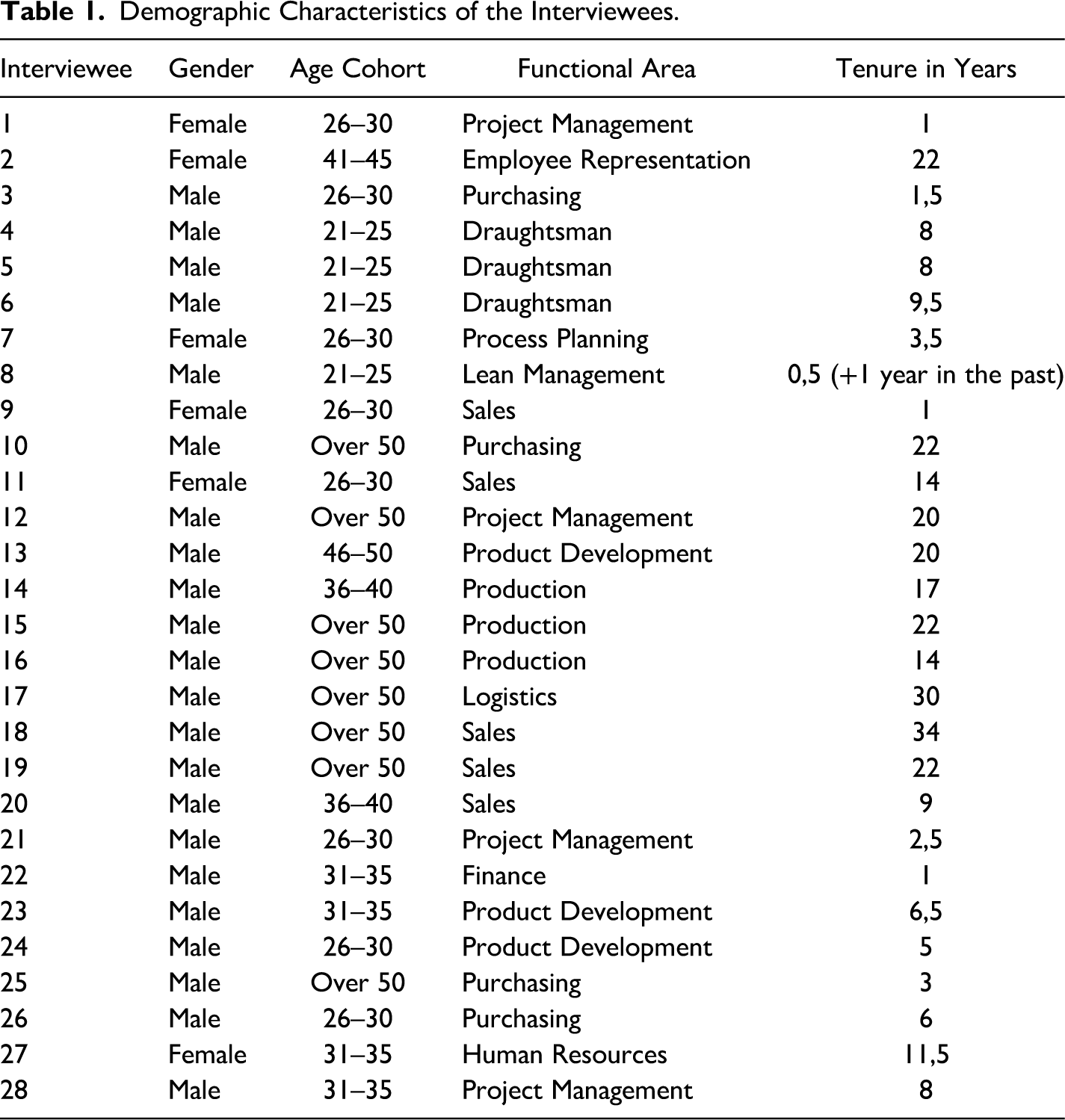
In contrast to previous research (Chreim & Tafaghod, 2012; Vaara, 2000, 2003), we decided to focus on non-managerial employees as well as low and middle managers, excluding top-level executives from the analysis. Unlike top managers, the selected interviewees were barely involved in the decision-making concerning the acquisition, yet they were exposed to the resulting organizational changes. Given our focus on the evolution of organizational members’ identification, it seems sensible to disregard accounts of top managers who have a significant interest in giving sense to the acquisition and fostering employees’ identification (Giessner et al., 2012; Hubbard & Purcell, 2001). Due to their active role in the implementation of the acquisition, top managers tend to promote their personal opinion on the takeover (Vaara, 2003). Their accounts could consequently have distorted the findings due to potential desirability bias. In total, we interviewed 28 employees from organization A. The sample size is believed to be satisfactory since further data collection did not yield further explication of the identified categories. During the last three interviews, no additional arguments emerged in the interviewees’ accounts despite a continuous revision of the interview guide during data collection. The subsequent data analysis supported that theoretical saturation had been reached since no further first order codes could be defined (Glaser & Strauss, 1967).
Interviews
The 28 interviews were conducted within a timeframe of four and a half months starting six weeks after the tender offer of organization B had been accepted. Three months before company B became the majority shareholder, the acquirer had announced the intention to make a voluntary public takeover offer. Since then, the employees had been aware of the possibility of an acquisition in the near future. In order to maintain consistency, the lead author conducted all interviews. The interviews lasted between 30 and 50 min. The majority of the interviews (26) were conducted face-to-face in order to better capture the interviewees’ emotions towards the acquisition. The remaining two interviews were conducted via telephone due to practical reasons. Apart from one English interview, all interviews were administered in German. Relevant parts of the interviews were translated into English in order to facilitate comparison with the English literature and the definition of codes in English. All interviews were semi-structured, allowing for comparability across all interviews while simultaneously enabling the researcher to raise additional questions (Savin-Baden & Howell-Major, 2012). The progressive focusing of the interviews enabled us to direct the data collection towards our research aim and to detect patterns across interviewees, as well as tentative relations among the analyzed concepts (Corley & Gioia, 2004). Figure 1 provides a timeline of the acquisition together with an overview of the distribution of interviews over the data collection period.
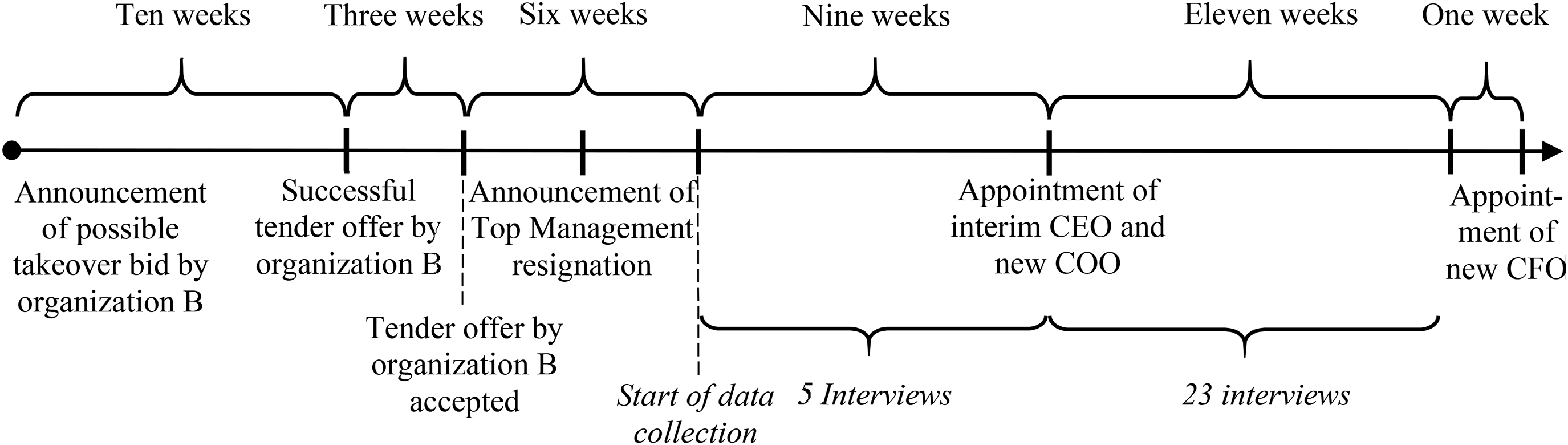
Timeline of the acquisition and the data collection process.
The evolution of interviewees’ identification with the organization and their department was discussed by posing questions about their feelings of belonging, affiliation, and pride. Moreover, we applied an adapted version of the identification measure of Bergami and Bagozzi (2000) to initiate the discussion on interviewees’ identification (Figure 2). Interviewees were asked to explain their indicated degree of identification and their personal understanding of organizational identification. Following these initial questions, they were invited to reflect on the reasons for their identification as well as on the changes experienced over the course of the foreign takeover. As supplement to our analysis, we examined the interviewees’ interpretation of the acquisition. We asked them for their opinion on several provocative headlines about the acquisition, such as “friend or enemy” or “organization A turns Chinese”. Addressing the media coverage of the acquisition during the interviews was vitally important, as media reports may have shaped organizational members’ interpretation of the event (Piening et al., 2020). The clarity of key questions as well as the comprehensibility of the identification measure and the chosen headlines were verified through discussions with two of the interviewees. Both interviewees were personally known by the lead researcher, which made it easier to ask for honest feedback and raise critical questions about the interview content and atmosphere. All interviews were audio recorded and transcribed verbatim. Moreover, notes on the context and the atmosphere of the interviews were taken.
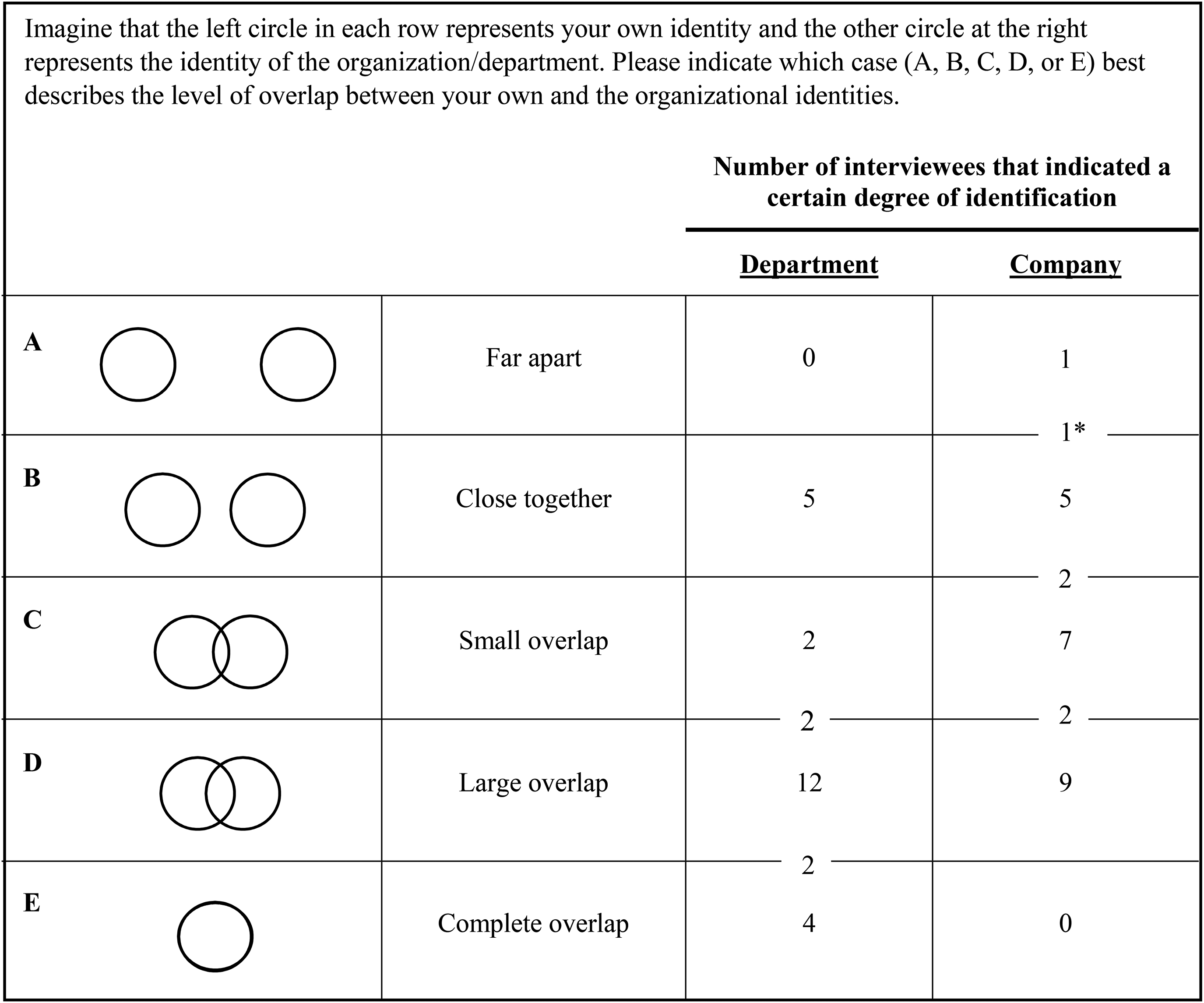
Identification measure. Note. Adapted from Bergami and Bagozzi (2000). * Several interviewees stated that their identification lied in between two of the proposed degrees.
Company Publications and Press Reporting
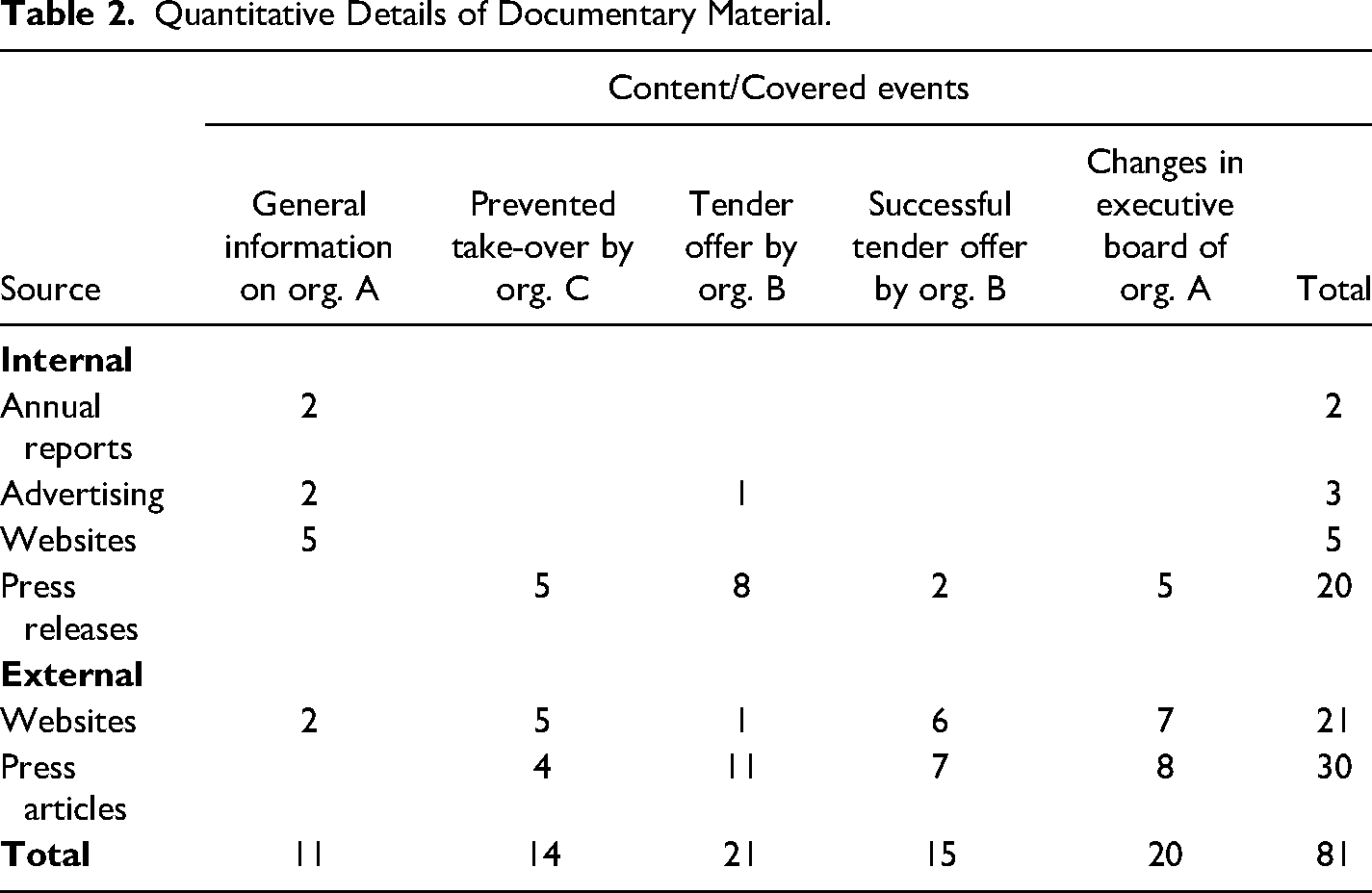
The analysis of company publications and press articles on the foreign acquisition ensured an objective and comprehensive understanding of the event. The documentary material complemented the interviews by clarifying the context of identification shifts described in retrospective narratives of the interviewees (eg. Vaara, 2003). Archival data, such as the mission statement, marketing documents, and annual reports were consulted before the interviews took place in order to deepen the interviewer's knowledge of the history and culture of the organization. Complementary analysis of press reports allowed for a broader understanding of the circumstances of the acquisition. Table 2 provides an overview of the considered documentary material.
Quantitative Details of Documentary Material.
Data Analysis
An iterative data analysis process of moving between data and theory was applied in order to explain what role diverse motives and logics play in members’ sensemaking about identification in the wake of a foreign acquisition (Glaser & Strauss, 1967). Constantly comparing our emerging findings to previous studies in the fields of sensemaking (Weick, 1995; Weick et al., 2005), organizational identification (Ashforth et al., 2008; Tajfel & Turner, 1986), and mergers and acquisitions (Vaara, 2000; van Knippenberg et al., 2002) allowed for a better understanding of the relevance of the findings. Furthermore, the parallel literature analysis served as a critical test of assumed relationships between concepts, such as between the experience of uncertainty and the perceived necessity of the acquisition (Giessner, 2011; Teerikangas, 2012). We began the data analysis by conceptualizing the data line by line in order to detect relevant first order concepts (open coding) (Saldaña, 2012). Whenever possible, we applied the language of the interviewees (in-vivo codes) or tried to capture the meaning of interviewees’ statements as accurately as possible. At the end of the first round of coding, we ensured that the various codes did not contain overlapping themes so as to avoid describing the same phenomenon in different words. Afterwards, we engaged in axial coding by grouping related first order codes into categories. For example, we summarized the first order codes “financial liquidity and available assets”, “ability to survive on the global market”, “growth potential”, and “resistance towards external risks” under the axial code “health of the organization” which constitutes one of the uncertainty determinants regarding the acquired organization (eg. Figure 3). During the study of axial codes, we contrasted the codes between interviewees in order to guarantee that the determined categories were universally applicable. Finally, the emergent second-order categories were distilled into aggregate themes (eg. Gioia et al., 2013). As an example, the two uncertainty determinants “probability of target loss” and “severity of target loss” together formed the “uncertainty assessment regarding personal risk”. The data management software MAXQDA allowed discovering frequently co-occuring codes and facilitated categorizing the data and identifying relationships. For instance, the code “positive company image” was associated with a “high degree of identification”, whereas a “negative image of the acquirer's nationality” was often linked to “feelings of uncertainty”.
Trustworthiness of the Data
In line with renowned scholars in qualitative research (Lincoln & Guba, 1985; Pratt et al., 2020; Welch & Piekkari, 2017), we took several measures to guarantee trustworthiness of the data. First, we carefully managed our data, including interview transcripts, field notes, organization publications, and media coverage using the computer-based qualitative data management program MAXQDA. Second, we conducted peer debriefing by engaging other researchers not involved in the study to reflect on revealed patterns in the data and to critically discuss the research methodology. The opinions of five other department members served as a critical outside perspective and allowed for discourse on our primary conclusions. Lastly, we verified that our interpretation of the data matched the informants’ lived reality by discussing the developed model with ten of the interviewees. These member checks allowed us to improve the plausibility and universal validity of our findings (Welch & Piekkari, 2017). Following the verification of the findings, we slightly modified some terminologies to increase comprehensibility and indicated subordinate relevance of certain factors in the model.
Findings
Phases of Sensemaking About Identification
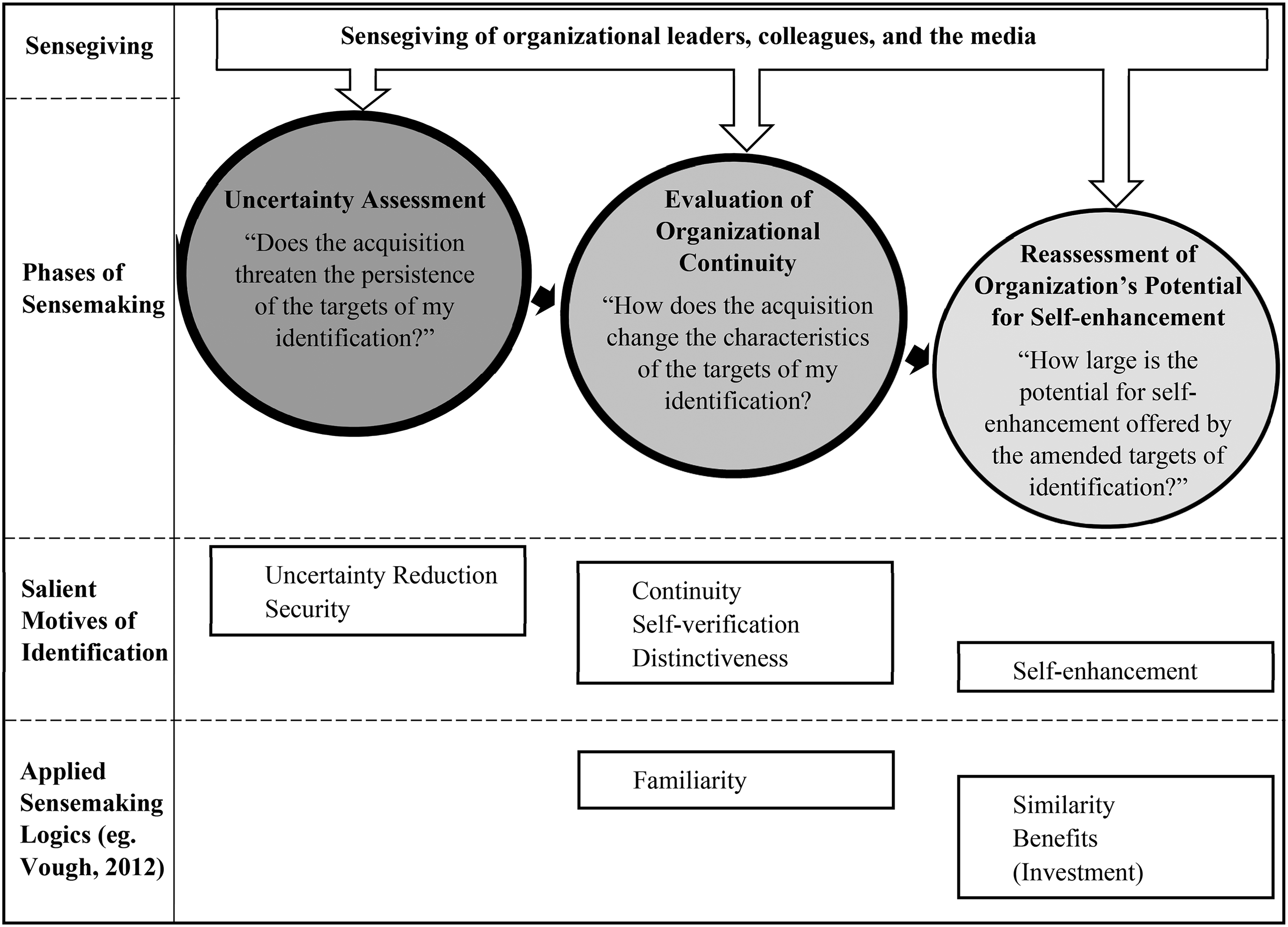
The analysis of the interview data revealed three phases of sensemaking with respect to the dominant identification motives and prominent sensemaking logics, namely the assessment of uncertainty (Figure 3), the evaluation of organizational continuity (Figure 4), and members’ reassessment of the organization's potential for self-enhancement (Figure 5). The great majority of interviewees underlined that the assessment of uncertainty constituted their first reaction to the announcement of the acquisition. Moreover, the most prominent character of this phase became apparent due to the large proportion of statements regarding uncertainty in the interviewees’ accounts and the resulting accumulation of a large number of uncertainty-related codes. After describing the uncertainty surrounding the persistence of the targets of identification, the interviewees elaborated on observed and potential changes the acquisition entails for the organization. The continuity evaluation phase has a transitional character since members need to reevaluate the characteristics of the targets of identification in order to reflect on the consistency of their relationship with the latter. Most interviewees then outlined how discontinuity of the characteristics affects the organization's potential to provide them with self-enhancement. This form of reasoning supports the assumed chronology of the phases.
In the following analysis, members’ sensemaking processes will be outlined in detail focusing on the salient motives for identification during each phase and the causal reasoning underlying identification. Figure 6 illustrates the three phases, together with the salient motives and logics, and the main questions members intend to answer in their sensemaking about identification.
Assessment of Uncertainty
As a first reaction to the foreign acquisition, organizational members tend to assess the uncertainty the acquisition poses to the persistence of the organization's location and their individual position. One interviewee highlighted that the term “acquisition” generally has a negative connotation, which explains why even the first announcement of it triggers emotional reactions (eg. Vaara, 2000). During the initial phase of sensemaking, members evaluate if they could possibly lose the organization or their department as targets of identification: “In the very beginning, one is afraid for his/her job. … Will the company eventually be smashed … will single company divisions be sold? So first, I think that one reacts relatively selfishly and only thinks of one's own job security.” “I identify with organization A as such …. It does not really matter to me whether it is international or not. I take organization A as organization A, as my bread and butter.”
The uncertainty assessment covers three domains: the acquired organization, the acquirer, and one's personal risk. The determinants of uncertainty for those three domains are represented together with exemplary quotes from the interviews in Figure 3.
When reflecting on the acquired organization, interviewees first evaluated whether the acquisition was necessary or useful (eg. Bartels et al., 2006; Teerikangas, 2012). Perceived necessity made the acquisition appear less threatening for the continued existence of the organization as target of identification. Interviewees closely linked the necessity of the acquisition to the health of their organization, which comprises its financial liquidity and available assets, the ability to survive on the market, and its growth potential (eg. Figure 3). Moreover, interviewees related the health of organization A to its ability to resist external risks, which the acquisition could prevent or mitigate. Most of the interviewees considered the prevented hostile take-over by organization C in this context. The menacing destruction of organization A through this ‘common enemy’ constituted such a major hazard to the organization's persistence that the takeover by organization B was perceived as the lesser evil: “Organization C would have been the worse option for the whole company, … drastically said, to the continued existence of organization A” “We were all at the annual general meeting, there were thousands of people and all of them opposed company C.”
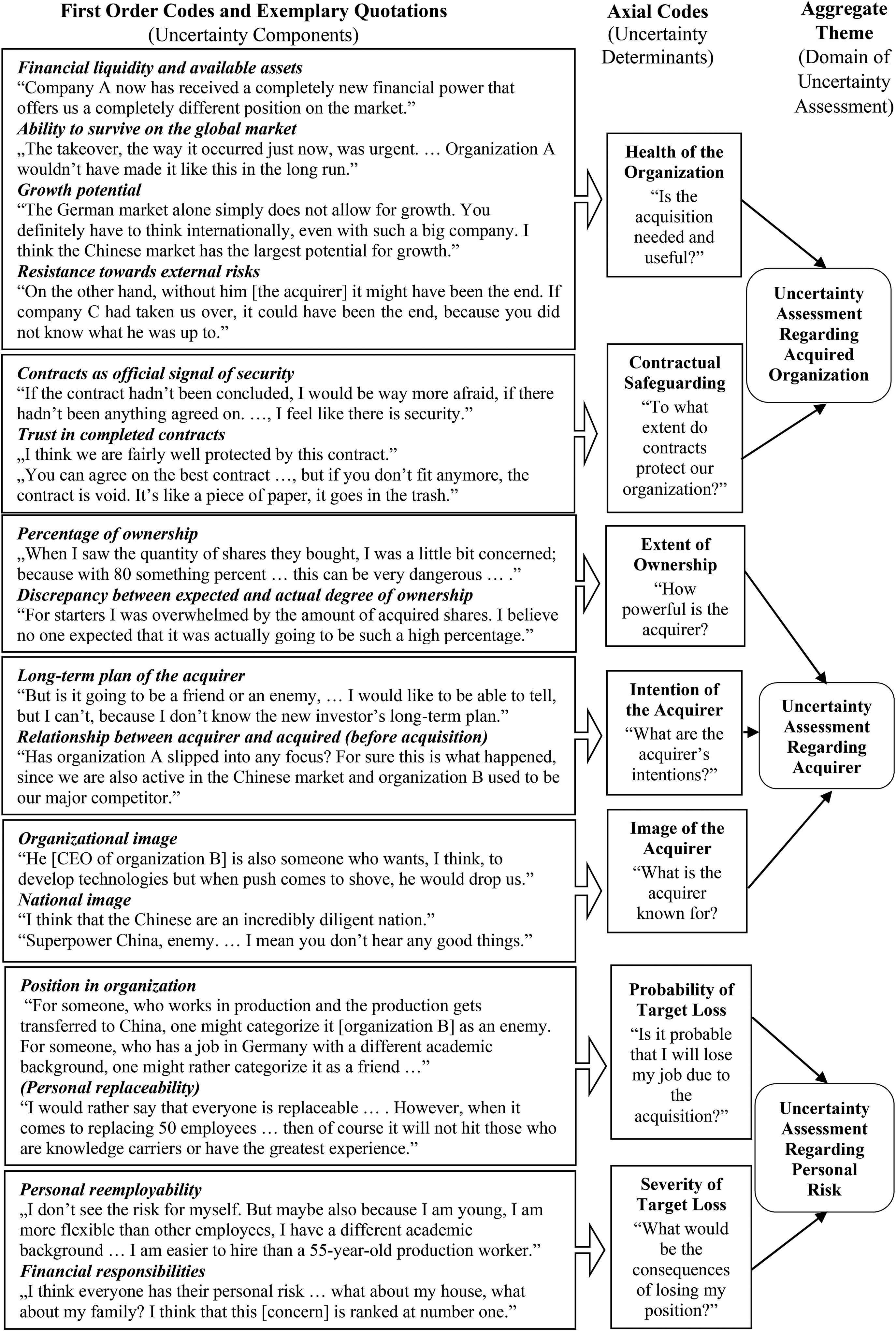
Assessment of uncertainty.
Several interviewees expressed relief and gratitude towards the acquirer. Yet, many were also skeptical due to the overly positive presentation of the acquirer by their top management.
The uncertainty assessment regarding the acquired organization also included the evaluation of existing contracts, regulating the persistence of the organization's location and safeguarding jobs. Even though completed contracts constitute an official signal of security, the assessment of their validity is highly subjective. Whereas some of the interviewees fully trusted the agreements, others suspected loopholes or possible contract breaches (eg. Figure 3).
In contrast, the analysis of the acquirer includes one objective criterion, namely the acquirer's degree of ownership. The percentage of shares that the acquiring organization obtains determines the influence that can be exerted over the persistence of the acquired organization and the characteristics of the latter. Many interviewees pointed out that the perceived uncertainty surrounding the organization as their target of identification grew with the number of acquired shares. The acquisition appeared particularly threatening for many interviewees since the final proportion of acquired shares was significantly larger than expected.
The acquirer's assumed intentions constitute another fundamental component of the uncertainty assessment. The majority of interviewees underlined that it is indispensable to understand what the acquirer aims to do in the long run in order to assess uncertainty. The past and current relations between the two organizations play a major role for the evaluation of the acquirer's intentions. For instance, several interviewees were concerned because the two organizations used to be main competitors. The findings support that a competitive historical relationship of the involved organizations results in low organizational attractiveness of the acquirer, ultimately leading to a perception of the acquisition as a threat (Teerikangas, 2012).
Particularly if concrete first-hand experiences are missing, the image of the acquirer constitutes another essential point of reference. First, members refer to organizational characteristics of the acquirer, which they derive for instance from media reports or comments by colleagues and leaders who act as sensegivers (eg. Gioia and Chittipeddi, 1991; Maitlis and Christianson, 2014): “I have already heard from colleagues who dealt with organization B … in other companies. They said that organization B is focused on making money.”
Besides the organizational image, stereotypes regarding the acquirer's nationality play a role. In order to make sense of the acquirer's nationality, many interviewees referred to their knowledge of previous acquisitions by Chinese investors in Germany. The interviews illustrate that individuals can perceive the same nationality very differently depending on their personal experiences and prejudices (eg. Figure 3). Negative stereotypes inter alia referred to an excessive striving for power and product counterfeiting, whereas positive stereotypes were related to long-term orientation and a great willingness to learn. Positive descriptions of the Chinese culture were mainly made by interviewees who had collaborated with Chinese colleagues. By contrast, negative descriptions seemed more abstract and impersonal. The comparable number of positive and negative statements about China shows that cultural distance to the acquirer may not be perceived as threatening, as suggested in prior studies (Björkman et al., 2007; Teerikangas, 2012). In conflict with existing studies that point out the importance of the acquirer's nationality (Ahammad & Glaister, 2011; Teerikangas, 2012), many interviewees emphasized that the organization's national background played only a subordinate role. Instead, the sensemaking of most interviewees focused on the acquirer's intentions: “The question always is what they are planning on doing with you in the background. But whether it is a German or a Chinese organization technically doesn’t matter.” “I think that organization B will partly break down organization A. Well, not all divisions will be affected, but the ones that we used to compete for.”
Besides their department affiliation, some members expect their job security to depend on personal characteristics that make them irreplaceable. Several interviewees referred to specific knowledge or individual willingness to learn as indispensable factors. However, the member checks revealed that one's personal replaceability only plays a minor role as only a small group of longtime employees and privileged experts could be protected through a redundancy plan.
Apart from reflecting on the probability of a job loss, members of the acquired organization question what losing their position would mean for them. The more members are convinced they could easily find a comparable position in another organization and hence a new target for identification, the less they are intimidated by a potential job loss. Consequently, younger interviewees tended to be more optimistic regarding their future. Strong academic and professional backgrounds were also believed to be relevant individual strengths enhancing employability in the event of a layoff.
Finally, organizational members reflect on their financial responsibilities and attempt to judge the extent to which they are economically dependent on their position in the organization. Single earners supporting a family would be hit harder by a potential job loss than employees who do not bear the same financial responsibility.
In principle, the perceived uncertainty across all three domains, namely the acquired organization, the acquirer, and one's personal risk, increases significantly if individuals feel uninformed about the acquisition and its consequences. A lack of information triggers rumors, which have a strong disquieting effect. As rumors often focus on negative and partly inaccurate information, they can generate anxiety, dissatisfaction, and a loss of trust among organizational members (eg. Schweiger and Denisi, 1991). Therefore, many interviewees highlighted the need for timely and adequate communication measures, which fill the void and reduce uncertainty.
The uncertainty assessment ends when members are reassured that they will not lose the organization as target of identification. Moreover, interviewees’ assessment of personal risk revealed that uncertainty concerns lose importance if members expect job switching to be relatively easy.
Evaluation of Organizational Continuity
While security considerations dominate during the first phase of sensemaking, continuity is the prevailing motive of identification during the second phase. There is some enduring controversy in research whether members’ sense of organizational identification is dynamic or deeply rooted and stable (Ashforth et al., 2008, Bednar et al., 2020). In line with Rousseau (1998, p. 227) we assume that “sameness is not a required feature of identity; rather, what is required is a sense of continuity.” Hence, targets of identification do not have to stay the same to ensure ongoing identification. On the contrary, identification is constantly emerging and can comprise turning points, momentary shifts, or even drastic changes (Ashforth et al., 2008). As individuals rewrite their identification narratives, it however seems essentials for them to perceive a connection to the past. In line with Vough’s (2012) familiarity logic, interviewees questioned their identification if they no longer fully understood how to define the targets of identification: “When the Chinese came, there were obviously a lot of questions. What will happen to us, what will happen to the company? Do we stay organization A, are we now called organization B?” “If, […] the entire structure of organization B was imposed on us within a very short period of time, I would probably have an identification problem because it would no longer be the company as it was known before. One would probably always compare.”
Aside from changes in organizational culture, the interviewees evaluated changes in national values provoked through confrontation with the acquirer's unfamiliar national background: “We of course do not know the Chinese mentality. We also do not know what kind of ideas they have to expand globally … We Germans are different with regards to that.”
In their continuity evaluation, interviewees primarily emphasized the contrast between the German and Chinese mentalities offering plenty of room for changes. Yet, they did not specify the particular Chinese values that would amend organization A in the long run.
Furthermore, members assess changes in personnel, both with regards to unknown employees of the acquiring organization as well as new board members. Already two months after the acceptance of the tender offer, various interviewees described an increasing number of Chinese employees at the headquarters. Yet, the interviewees highlighted that they did not feel connected to the workforce of the acquirer as they had no personal contact and regarded the latter as strangers. This finding is in line with Rouzies and Colman (2012), who demonstrated that social interactions with the acquirer represent a prerequisite for members’ identification.
With respect to the changes on the executive board, several interviewees predicted far-reaching strategic consequences potentially affecting their identification with the organization: “There are a lot of changes in the top of the pyramid. … The way of managing the company is directly linked to the people in the top of the pyramid. Hence, the way these people are doing things can of course change. Once the objectives of the company are not matching my own objectives any longer … identification can decrease.”
The interviews revealed that members of the acquired organization do not only find it necessary to comprehend the current state of the organization from an internal perspective, but they also evaluate whether outsiders perceive changes in the market position of the organization. The market position is assessed with respect to changes in the relationship with the acquirer and the acquired organization's unique branding. Both components are visible to customers and shape the organization's image on the market. The consideration of external images in interviewees’ continuity evaluation points to the assumed desire for consistency and coherence between organization-internal identity claims and external images (Piening et al., 2020). Discrepancies between the image provided to customers and members’ internal beliefs make them question whether they truly still understand “who they are as an organization”.
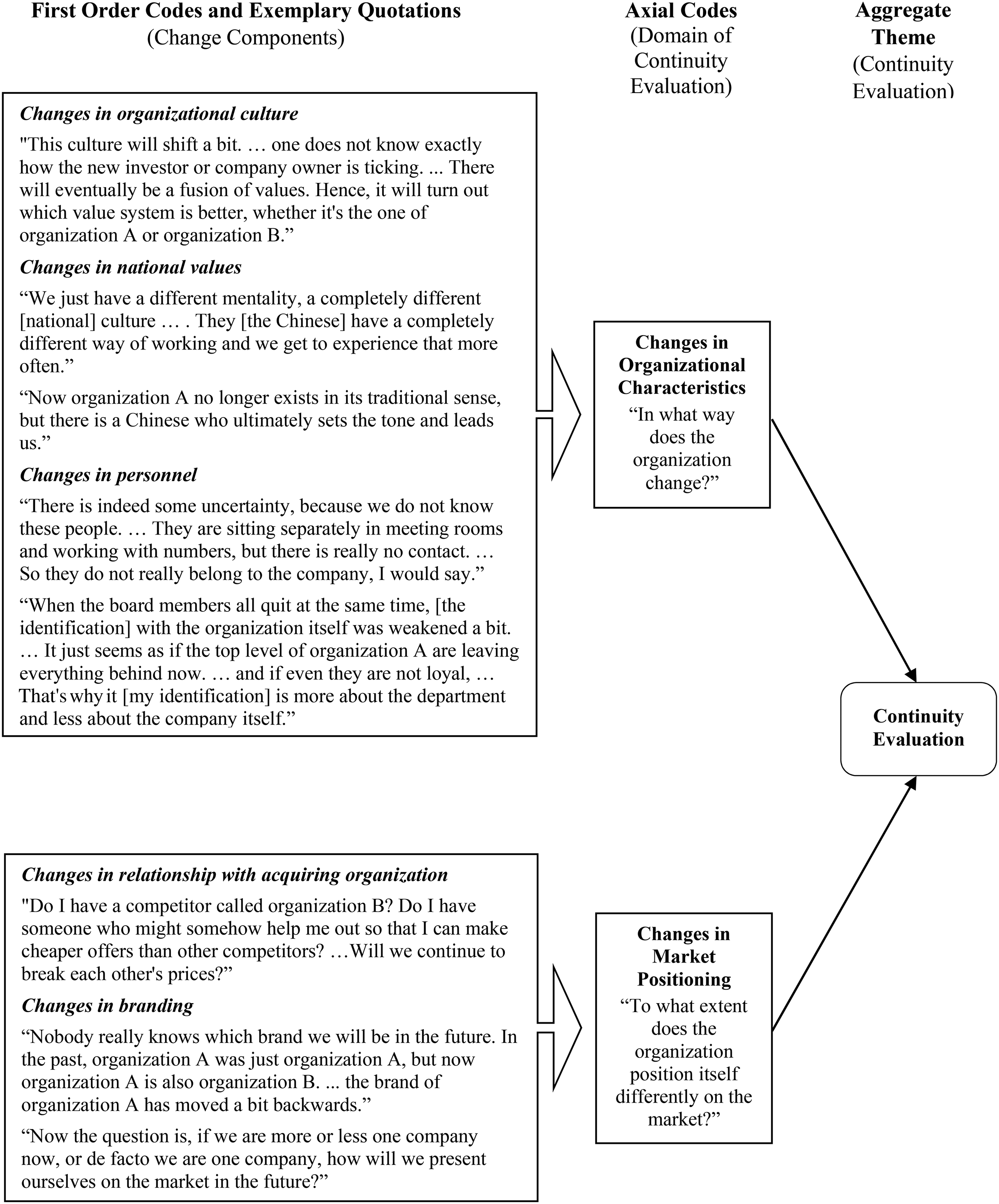
Evaluation of organizational continuity.
In principle, we conclude that changes are particularly critical for identification when they concern the defining characteristics of the organization. Once an organization's core values are challenged, the acquisition not only affects members’ sense of continuity, but also their sense of distinctiveness (Chreim, 2007). One interviewee, for instance, emphasized that he worried about potential relocations, since the local production constituted a hallmark of organization A and differentiated it from competitors. The acquisition might in that sense change a characteristic perceived as special by that interviewee, which might ultimately weaken his identification. The interviewee refers to local production as a “hallmark” which highlights the visibility and importance of this defining quality for outsiders. Consequently, modifying this critical characteristic of the organization could have a negative effect on the external image, which would further reinforce identity ambiguity (eg. Ravasi and Schultz, 2006).
Overall, interviewees’ continuity evaluation did not only refer to observed changes regarding their daily tasks and environment. In line with the idea of projected continuity (eg. Ullrich et al., 2005), it also included sensemaking about potential changes and the path required to implement them. Visibly current or predicted discontinuity of the targets makes members realize that their personal relationship with the organization may change. However, confirmation of one's self-concept (self-verification) is of immense value and its can be experienced through a consistent relationship with a social group (Swann, 1990). Finally, members conclude change evaluation when they have regained a sense of familiarity with the targets of identification through observation and interpretation of the changes.
Reassessment of Organization's Potential for Self-Enhancement
After evaluating the extent of observed and expected changes, interviewees reassessed the organization's potential to enhance their self-esteem (Ashforth et al., 2008). Data analysis revealed that questions of knowing and understanding the targets (familiarity) were displaced largely through concerns about the similarity and benefit logic. The investment logic played a subordinate role in the third phase of sensemaking (Vough, 2012).
Members’ identification in the aftermath of a foreign acquisition depends on their continuous perception of similarities between their own values and those of the organization. Since members need to maintain a positive self-concept (Tajfel & Turner, 1986), they refer to similarities concerning values they regard as desirable. Most of the interviewees pointed out shared values that they ascribed to higher-order targets of identification, in particular industry and region. Many of them highlighted that they identified with the organization, as they shared the work ethic and spirit of the automotive industry. However, identification with industry values plays a negligible role for members’ sensemaking of foreign acquisitions since acquisitions normally do not affect the organization's industry affiliation.
Interviewees also emphasized that they identified with organization A because they felt a strong attachment to the region and they believed the organization reflected the local mentality. Particularly interviewees who grew up in the region explained that their attachment was not purely rational, but had a strong emotional component. As long as appreciated local values and a regional spirit were maintained, the acquisition did not influence this element of similarity: Reassessment of organization's potential for self-enhancement.
Notes. * Only one interviewee referred to the support component of the benefit logic.
** Comparatively few interviewees applied the investment logic in their sensemaking. Phases of sensemaking about identification in the wake of a foreign acquisition. “What I think is cool, in comparison to other companies that I have seen, is the regional focus and the mentality of people here. … Many are from the region, have a similar mindset, and speak in a similar way. We all know how to deal with each other.”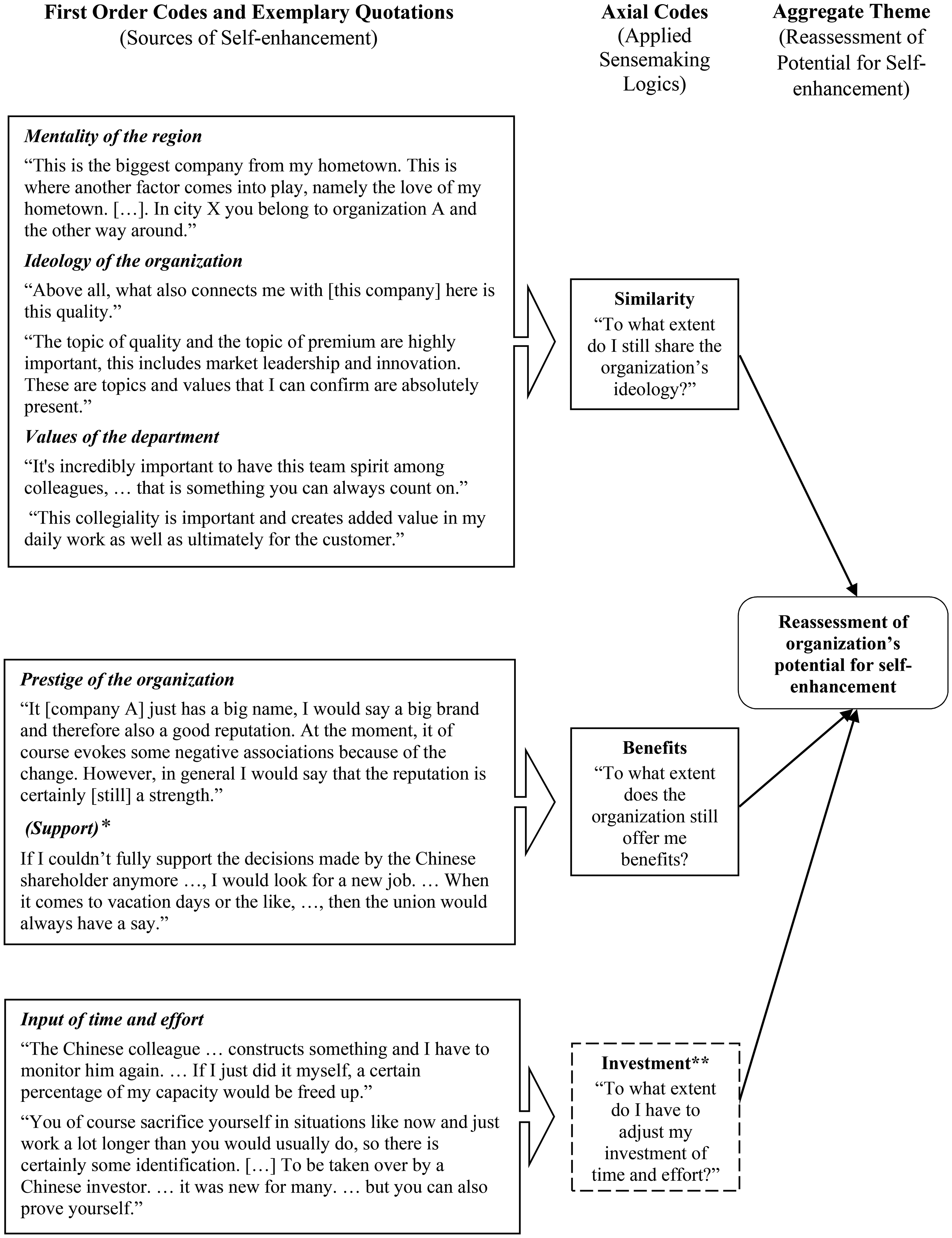
On the department level, the majority of interviewees characterized team cohesion and solidarity as crucial shared values. Moreover, they highly valued appreciation and trust in their abilities by their colleagues and superiors. Several interviewees underlined that the acquisition would not affect their identification as long as these central values remained untouched: “The company is defined by the people I directly collaborate with. It does not really matter to me who the board members are, what the leadership is like, and what the shares of the company are … the immediate work environment is more important.”
Moreover, members examine whether they enjoy similar or improved benefits thanks to their relationship with the organizational targets. Their sensemaking hereby focuses on the acquisition's effect on prestige. Several interviewees highlighted that organization A was very prestigious thanks to the high quality of its products. Following the acquisition, actual degradation or a subjective decline of quality could, thus, not only affect members’ perception of similarity with the organization, but also the organization's prestige, and consequently the benefits for organizational members: “In Europe, our company already has a name. … We also have a good position in the European market, which is not the case for organization B, whose brand name, as far as I know, does not hold so much value, because the quality of some orders suffered.”
The support dimension of the benefit logic seems to hardly matter in members’ sensemaking of the acquisition. One interviewee explained that losing benefits, such as the reduction of overtime and number of holidays, would affect her identification with the organization. However, the influence labor unions have on the working conditions in Germany reassured the interviewee that no significant changes on social benefits were to be expected. The minor role of the support logic indicates that members’ sensemaking in the wake of an identity-threatening acquisition goes beyond pure social-exchange considerations (eg. Blau, 1964) and focuses on members’ positive self-definition through their organizational membership.
Accordingly, the investment logic also has little relevance in members’ sensemaking. Only few interviewees described an adjustment of their invested time and efforts. In line with Vough (2012), some interviewees pointed out that obliging them to invest substantially more working hours would decrease their identification. However, union agreements and the power of employee representation minimize the probability of such contractual changes. A few interviewees mentioned that the acquisition increased their workload. A coerced increase in effort is perceived negatively if members regard the change as a setback, for instance, if tasks are duplicated or corrections are required. Nevertheless, the interviews showed that an increase in effort can also be perceived positively if members regard the novel tasks as rewarding. In principle, challenging tasks allow members to prove themselves leading to feelings of pride and enhanced self-esteem (eg. Figure 5).
Discussion
Theoretical Contributions
The present study contributes to existing literature in several ways. The qualitative research design allowed us to trace the evolution of organizational identification among non-senior employees in the wake of a foreign acquisition. It thereby enabled us to determine dominant motives and logics during different phases of organizational members’ sensemaking about identification. Based on the findings, we clarify that the discovered order of identification motives cannot only be understood temporally, but also hierarchically. Our analysis of members’ identification was not limited to one particular target of identification, which enables us to elucidate interaction effects between diverse targets in the workplace.
Hierarchy of Identification Motives in the Wake of Identity-Threatening Events
Existing research points out that organizational identification is driven by various motives (Ashforth et al., 2008; Vignoles et al., 2006). Social identity theory commonly characterizes self-enhancement as the fundamental motive for identification (Ashforth et al., 2008; Bergami & Bagozzi, 2000; Tajfel & Turner, 1986). In contrast to that, advocates of self-verification and self-affirmation theory believe that confirming one's self-view can be an even stronger motive for identification, as it allows individuals to perceive their world as controllable (Steele, 1988; Swann, 1990). Further motives for identification, such as self-knowledge or self-distinctiveness, have usually been discussed in addition to the central motive of self-enhancement (Ashforth et al., 2008; Vignoles et al., 2006). However, identity-threatening events require us to question the generally assumed hierarchy of identification motives. As such, unusual events challenge established patterns of meaning and produce different cues for members’ sensemaking about identification (eg. Weick 1995, Weick et al., 2005). Ambiguous events also trigger strong emotions (Vaara, 2000) which redirect members’ attention and may shift the focus of their sensemaking on particular motives of identification (Maitlis et al., 2013).
Indeed, our findings reveal a different order of identification motives in the wake of identity-threatening events. This order is not purely temporal, but has a significantly hierarchical character. More precisely, the respective subsequent phase of sensemaking about identification is deferred if members do not consider the prominent motives of the current phase as being satisfied. When confronted with identity-threatening events, members worry primarily about their targets’ continued existence. Uncertainty reduction and security account for members’ central concerns since a potential loss of the targets of identification would entail losing all advantages of organizational membership. None of the sensemaking logics by Vough (2012) applies to the uncertainty assessment, as members do not reflect on the nature of their relationship with the organization, but on a possible break of their connection with diverse targets of identification in the workplace. The initial focus of members on uncertainty may be enforced by the cross-border context. In spite of the friendly character of the examined takeover, members worried about the continued existence of their organization given the strong association of foreign acquisitions, particularly by Chinese acquirers in Europe, with outsourcing (Fang & Chimenson, 2017). The findings indicate that members are more likely to be caught in the uncertainty assessment phase, the more probable losing their position seems, due to cost or efficiency reasons. Not until they feel assured about the targets’ persistence will they be able to direct their attention towards changes regarding their targets’ characteristics. In their search for continuity and preservation of the targets’ distinctiveness (van Knippenberg et al., 2002; van Leeuwen et al., 2003), organizational members assess change skeptically at first, even if it could potentially benefit the targets. This finding illustrates that in the wake of an identity-threatening event, experiencing consistency (self-verification) is at least temporally more important than having a positive self-perception (self-enhancement) (Ashforth et al., 2008; Swann, 1990). Despite observed and predicted changes, members need to regain a sense of familiarity, before they start reflecting on the potential for self-enhancement offered by the amended targets of identification. The final focus on self-enhancement occurs once members consider their targets of identification to be relatively stable again.
Interactions Between Multiple Identifications
According to previous research, organizational members’ identifications with multiple targets tend to interact strongly. Sluss and Ashforth (2008) explained that identification with one target may converge with another due to behavioral, cognitive, and affective mechanisms. Several authors confirmed positive correlations between multiple identifications in the organizational context (Bartels et al., 2007; Vough, 2012). Unlike the aforementioned studies that examine interactions between identifications in everyday working life, our research clarifies how multiple identifications interact in the wake of unusual events. Such a situational perspective is needed in order to comprehend the extent to which an event is perceived as a threat for various targets of identification. In addition, a situational perspective enables us to discover how sensemaking regarding one target may influence members’ identification with another.
Given the nested structure of identification targets in the workplace (Ashforth et al., 2008; Ashforth & Johnson, 2001), some changes on the higher-order organizational level automatically trickle down to lower-order targets, such as the department. This is evident, when events, such as relocations in the aftermath of an acquisition, jeopardize the existence of the entire organization. In such a situation, members’ uncertainty assessment will not be limited to the organization as a whole since the event equally threatens all subordinate-order targets of identification. Moreover, differences between the targets may blur in members’ continuity evaluation when organizational characteristics change extensively. For instance, comprehensive ideology changes that are initiated on the organizational level will also affect the values and culture of the department (Ashforth et al., 2011) and ultimately shape members’ perception of familiarity, as well as similarity with both targets (Vough, 2012).
However, ambiguous events are not necessarily perceived as a threat for identification if they do not affect the target that members feel most attached to. This can be true for both lower-order targets, such as the department, and higher-order organization-independent targets, such as industry, region, or nation. Generally, individuals tend to identify more strongly with lower-order targets due to closer proximity and familiarity (Ashforth et al., 2008; Riketta & van Dick, 2005; van Knippenberg & van Schie, 2000). In addition, our findings confirm that some organizational members combine identifications and do not differentiate between multiple targets (Ashforth et al., 2008; Crisp & Hewstone, 2006). Hence, these members will not question their identification with the whole organization if an event does not change the lower-order targets they feel more connected to. This conclusion is in line with Bartels et al.'s (2006) study, which verified a positive relationship between pre-merger workgroup identification and post-merger organizational identification in cases where minimal changes on the workgroup level are observed. In principle, identification shapes individuals’ attention which explains why the target that members identify with most strongly dominates their sensemaking of ambiguous events (Steigenberger & Mirc, 2020).
Our findings illustrate that some members equate organizational identification to identification with higher-order targets, such as industry or region. Thus, the consideration of an unusual event as a threat will be contingent on its impact on these higher-order targets. Ambiguous events that threaten the identity of an organization leave some higher-order targets of identification unaffected. For instance, a member's identification with the industry will not be affected by a foreign acquisition.
In contrast, members’ national identification can play a significant role in their continuity evaluation and the reassessment of the organization's potential for self-enhancement. For example, a foreign acquisition may affect the prestige attributed to the organization's nationality (Matarazzo et al., 2018), which may particularly influence the benefit assessment of members who are proud of the organization's country of origin. Furthermore, members with a pronounced national identification might fear losing their sense of familiarity and similarity due to changes in shared country-specific values (Vough, 2012).
Managerial Implications
The analysis of members’ sensemaking processes in the wake of identity-threatening events enables us to derive managerial implications for beneficial, phase-specific sensegiving interventions. As defined by Gioia and Chittipeddi (1991, p. 442), sensegiving is “the process of attempting to influence the sensemaking and meaning construction of others toward a preferred redefinition of organizational reality”. We expect the impact of sensegiving to be greater, the more it is tailored to the dominant motives and causal reasoning during each phase of members’ sensemaking.
Given the significant importance of security concerns in the wake of ambiguous events, leaders are advised to provide credible employment guarantees. In their role as sensegivers (Gioia & Chittipeddi, 1991), leaders should communicate such agreements systematically. It seems essential to address potential fears at an early stage, as members’ uncertainty assessment begins as early as the first announcement of unusual events (Teerikangas, 2012; Vaara, 2000). Hence, targeted and supportive sensegiving is required long before members can actually judge the personal implications an event entails. Leaders need to counteract worries of their subordinates through transparent communication before negative media coverage (Risberg et al., 2003) or harmful rumors (Schweiger & Denisi, 1991) fill the void of information and distance members from their targets of identification (Piening et al., 2020). With regards to content, sensegiving emphasizing why the acquisition was needed and how it benefits the organization will have a positive impact on the uncertainty assessment (Bartels et al., 2006; Teerikangas, 2012).
Once leaders have eased members’ feelings of uncertainty, their sensegiving should address members’ principal reluctance towards changes. One possibility to overcome members’ skepticism would be to point out shared values that remain untouched following the acquisition in order to preserve members’ feelings of affinity (Pratt, 1998). Moreover, highlighting how unique organizational characteristics are maintained allows leaders to satisfy members’ need for self-distinctiveness (Brewer, 1991). Lastly, leaders can guarantee projected continuity by clarifying which aims the organization strives for in the long term and how these aims will be achieved (Ullrich et al., 2005).
Finally, sensegiving should respond to organizational members’ need for self-enhancement (Ashforth et al., 2008). Given the prominence of the similarity logic in members’ sensemaking, stressing novel attractive values of the organization that members tend to aspire towards helps to increase their identification through emulation (Pratt, 1998). Furthermore, leaders are advised to reinvest in the prestige of the organization in order to positively affect members’ benefit assessment and ensure long-term identification (Bartels et al., 2007; Vough, 2012).
Our findings reveal that successful sensegiving does not only need to consider the hierarchy of identification motives, but must also align with the targets organizational members identify with most strongly. In case of a significant national identification, cross-cultural training could be offered to the workforce to prevent prejudices in regards to the acquirer's nationality. Cross-cultural training is a useful tool to overcome cultural distance, as it demands trainees to reflect on their own culture and question stereotypes regarding the acquirer's culture. Such training allows for the alleviation of fears towards cultural otherness and will have a positive effect on members’ uncertainty assessment. In conjunction with this, cross-cultural training enables members to identify complementary values of both cultures and will alleviate their continuity evaluation (Brannen & Peterson, 2009; Landis et al., 2003).
If members identify predominantly with the organization itself, we recommend prestige building through communication campaigns that improve visibility of the corporate brand (Smidts et al., 2001). These campaigns should promote attractive values of the organization since the benefit and similarity logic play a central role when members reflect on their relationship with the amended organization (Vough, 2012).
In contrast, team-building measures seem beneficial if members identify primarily with their department. As such, team-building is expected to enhance personal relationships with other organization members which affect identification positively (Salas et al., 2004; Vough, 2012). We recommend team-building initiatives, which illustrate persistent team cohesion despite an unusual event in order to influence members’ continuity evaluation positively. The use of team-building can make members more familiar with each other and strengthen common values in order to further increase their identification (Salas et al., 2004; Vough, 2012).
Boundary Conditions
Several boundary conditions must be taken into account when examining the transferability of the findings. The determined sequence of the phases of sensemaking seems to largely apply to other kinds of ambiguous events. In principle, organizational identification provides individuals with a comforting sense of order in their social world. Identifying with their organization not only allows them to differentiate from out-groups, but to also decrease ambiguities by providing deeper meanings (Weick, 1995). In the wake of unusual events, security concerns will inevitably dominate members’ sensemaking since losing the organization as target of identification would drive them into an unsettling vacuum of meaning. The more realistic losing their targets of identification may seem, the more prominent the uncertainty reduction motive will be in members’ sensemaking. Foreign acquisitions and possible relocations are not the only identity-threatening events that provoke fears of a target loss among organizational members. Among others, we expect disruptive industry changes, new competitors, and corporate scandals to equally put uncertainty reduction motives at the start of members’ sensemaking. The subsequent continuity evaluation phase also has a universal transitional nature because members need to examine the new characteristics of their organization to be able to judge to what extent their membership improves their self-esteem.
While the hierarchy of identification motives generally determines the sequence of the sensemaking phases, it does not necessarily predict their length. Instead, the length of the sensemaking phases may be contingent on the personality of organizational members. For instance, members with a low tolerance for ambiguity and a high need for security were found to deny uncertainty regarding their future employment (Greenhalgh & Jick, 1989). In line with our findings, we expect these members to strive for security before they are cognitively capable of evaluating organizational continuity. However, the uncertainty assessment phase should be shorter, as these members seem less likely to search for uncertainty-related cues. In addition to personality, the length of the sensemaking phases also depends on the available environmental cues. For instance, we believe that employment guarantees can function as official signals of security, which shorten the uncertainty assessment phase. By contrast, the continuity evaluation naturally takes longer, as long-standing organizational structures cannot be changed overnight.
The relevance of the diverse targets of identification for members’ sensemaking is also case-specific. Regional attachment occupied a central position in interviewees’ identification with the organization. Nevertheless, we assume that regional identification may not always influence members’ sensemaking of identity-threatening events. It presumably played such a fundamental role due to the rural character of the location and the deep roots of the organization in the region. The observed equation of industrial and organizational identification in the sensemaking of some interviewees can, in turn, be attributed to the prestige of the automotive industry in Germany (GTAI, 2020). Such a combination of organizational and industrial identification in members’ sensemaking seems less probable for organizations in more controversial sectors, such as weapons, gambling, or tobacco (Oh et al., 2017). Lastly, the subordinate role that nationality played in interviewees’ sensemaking can be ascribed to the extensive experience of the organization in China, reaching from cooperation with Chinese business partners to several subsidiaries in the country. This assumption is in accordance with Teerikangas (2012) who proposes that international exposure causes organizational members to regard foreign acquisitions rather as an opportunity than a threat. More generally, experiences with similar ambiguous events in the past will shape members’ sensemaking processes in the future (Mills et al., 2010; Weick, 1995).
Methodological Limitations and Future Research
Bergami and Bagozzi’s (2000) identification measure was used to assess interviewees’ current degree of identification. However, researchers need to critically analyze the degrees of identification tested through this measure, as the interviewees interpreted the scale very differently. One interviewee, for example, displayed extraordinary identification with both investigated targets, describing them as an “anchor” in life thanks to long tenure and friendships with colleagues. This interviewee chose B as representative degree of departmental identification. A second interviewee indicated the same degree of identification, even though the latter admitted to only staying in the organization due to approaching retirement. Additional questions regarding the reasons of interviewees’ feelings of affiliation and pride towards the targets allowed us to gain a comprehensive understanding of their identification. Further clarifying which logics of identification should be examined will enable scholars to obtain more comparable results when applying the scale of Bergami and Bagozzi (2000) in the future.
Finally, scholars are invited to test and concretize the discovered sensemaking phases. At the time of the interviews, a small number of informants had apparently not yet reached the final phase of sensemaking, but still focused on uncertainty-related concerns or the evaluation of continuity. In these cases, the analysis included both interviewees’ retrospective accounts and their prospective sensemaking regarding their future relationship with the organization (Bednar et al., 2020). Future research should specify how personal characteristics influence the length of the sensemaking phases. Additionally, future studies might explore how diverse forms of sensegiving satisfy the salient identification motives and accelerate the respective sensemaking phases. A longitudinal design involving several interviews with each informant over time will allow concretizing catalysts and endpoints of each assumed phase.
Footnotes
Declaration of Conflicting Interests
The author(s) declared no potential conflicts of interest with respect to the research, authorship, and/or publication of this article.
Funding
The author(s) received no financial support for the research, authorship and/or publication of this article.
