




Abstract
This study is the first to provide evidence of an extensive Nigerian social work literature. It is significant as it unsettles and refutes the prevailing narrative of an absence of African, specifically Nigerian, social work literature to inform the development of a culturally relevant curriculum. A scoping review was conducted to identify Nigerian social work literature that yielded 308 papers. Health emerged as the most established area of research (n = 70), followed by ageing (n = 44) and child welfare (n = 42). The findings have global relevance for social work educators seeking to decolonise the knowledge underpinning social work education and practice.
Introduction
This article reports on a study that set out to identify literature published in local and international journals that can inform the development of a culturally relevant curriculum (CRC) in Nigeria and be relevant to social work education across Africa and the Global North. The study was contextualised within prevailing narratives of the dearth of indigenous and local knowledge and the continued dominance of Western theory and models in social work education in Nigeria (Amadasun and Gray, 2023; Levy et al., 2022; Chukwu et al., 2022b; Ugiagbe, 2015). Theoretically, indigenisation, decolonisation and cultural relevance have been used to frame the study. Indigenisation in the context of curricula, involves the inclusion of knowledge to fit local practice contexts, while, from an African perspective, decolonisation is an ongoing process of dismantling all vestiges of colonialism and white supremacy by reclaiming African ways of knowing and being through a process of Africanisation (Gray et al., 2013; Harms Smith and Nathane, 2018). Both are a call to action for social work to dismantle oppression, push back against knowledge hierarchies, value lived experiences, prioritise cultural knowledge, further decolonial praxis and amplify African voices. One way of doing this is through the design of a culturally relevant social work curriculum based on local knowledge and scholarship. To this end, a scoping review was conducted focused on the following research questions:
What Nigerian literature is there to inform the development of a CRC for use in Nigeria and the Global South and Global North?
What does this literature tells us about social work education and practice in Nigeria?
The National Universities Commission (NUC) in Nigeria, the accrediting body, requires a programme review every 5 years that includes reporting inter alia on progress on indigenising university curricula. Consequently, social work programmes across Nigeria’s universities have been working to create curricula with indigenous content relevant to Nigerian society. Progress has been slow due to the perceived absence of indigenous literature. The volume of literature identified in this study (308 papers) is significant in establishing a foundation that can now enable the development of indigenised and decolonised social work curriculum in Nigeria and across Africa, as well as more broadly across the Global South and Global North.
Background
Historically, formal social work in Nigeria came with a push from the United Nations to introduce the profession to non-Western regions. British colonialism introduced social work to Nigeria, as it did in other African countries, in its thrust to train employees in its fledgling social administration. The British legacy left social work services underpinned by knowledge and practice models imported from Britain (Gray and Amadasun, 2023; Irele, 2019; Mbah et al., 2017). Against this backdrop, the purpose of the research was to compile material for a CRC from a scoping review of literature published on Nigerian social work.
Formal, university-based social work education in Nigeria is a relatively recent phenomenon beginning in 1976, while in most other African countries, it developed between 1945 and 1960 tied largely to the development of social welfare based on colonial models (Gray et al., 2014). Nigeria’s minimalist system of social provision hampered the development of professional social work, while the lack of a well-developed service infrastructure reflected dominant perceptions of social work as a charity endeavour established during the missionary era when concerns related mostly to errant youth and children. Today, however, there is a lack of social work presence in several key areas, once the domain of colonial social welfare, including adult corrections, juvenile justice and child protection (Atilola et al., 2017, 2019; Holmes et al., 2012; Osayi, 2013; Sa’ad, 2008; Yekini and Salisu, 2013).
There are social work portfolios in two Federal Ministries: Humanitarian Affairs, Disaster Management and Social Development (FMHADMSD), which situates the social work role in emergency responses to disasters and assistance to children, trafficked individuals, migrants, refugees, displaced people and victims of torture and violence. Women Affairs and Social Development (FMWASD) cements social work’s role in furthering women’s interests and social development. However, Akintayo (2021) found that ‘vacillating social development policy’ (p. 13) has not helped social work’s cause. He noted that, since 1970, ‘successive Nigerian governments have demonstrated ignorance of the dignifying roles of the social work profession in sustaining both individual and collective well-being in societies, particularly in family and child welfare, as practiced in all developed countries of the world’ (p. 12). Hence, the government passed legislation to legitimise the profession only at the end of 2022 (Gray and Amadasun, 2023; Levy and Okoye, 2023).
Within academia, the dominance of imported models has presented challenges to Nigerian social work academics attempting to indigenise the curriculum, not least instituting a unified process of curriculum development and review and achieving agreement on course composition and content (Nnama-Okechukwu and McLaughlin, 2021). This is due to, inter alia, regional diversities, the ongoing dominance of sociology and the preponderance of educators without a social work qualification or practice experience in many universities. Despite a burgeoning literature on African and Nigerian social work, educators tend to draw on international literature and fail to develop concrete practice examples for use in teaching (Onalu and Okoye, 2022). This article provides the first comprehensive evidence of literature on Nigerian social work and discusses established areas of Nigerian scholarship and social work research in this body of work.
Method
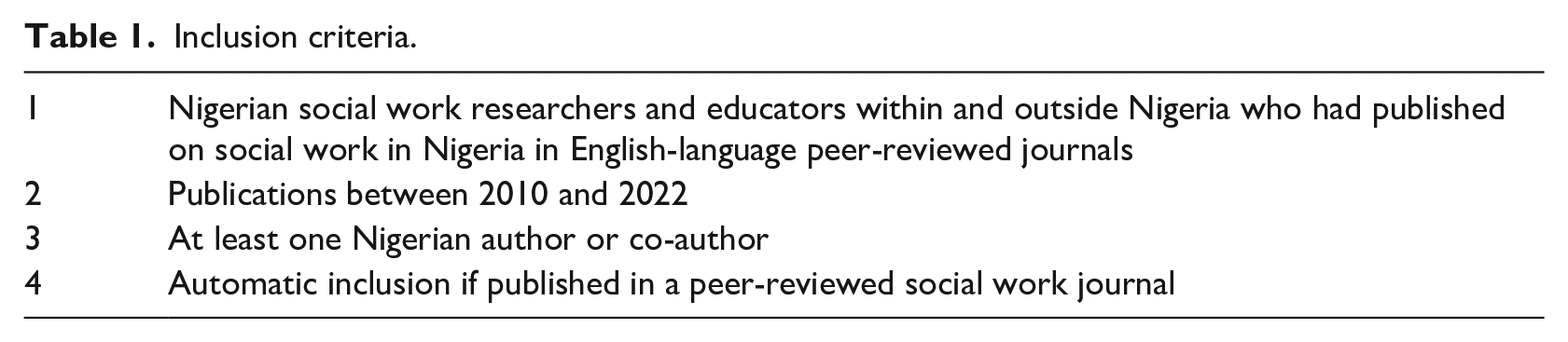
A scoping review was conducted to identify social work literature published by Nigerian social work academics in peer-reviewed social work and non-social work journals and to provide accessible evidence of scholarship to inform a CRC. The review identified 308 papers in international, African and Nigerian journals on or related to social work in Nigeria. A systematic and iterative approach was used for the scoping review to identify and synthesise the Nigerian social work literature to map its extent, range and nature, and determine possible knowledge gaps (Mak and Thomas, 2022). Although usually not limited to peer-reviewed literature, the scoping review used in this study confined the search to peer-reviewed journals that validated the quality and rigour of the publications. In keeping with the research objectives, the inclusion criteria are listed in Table 1.
Inclusion criteria.
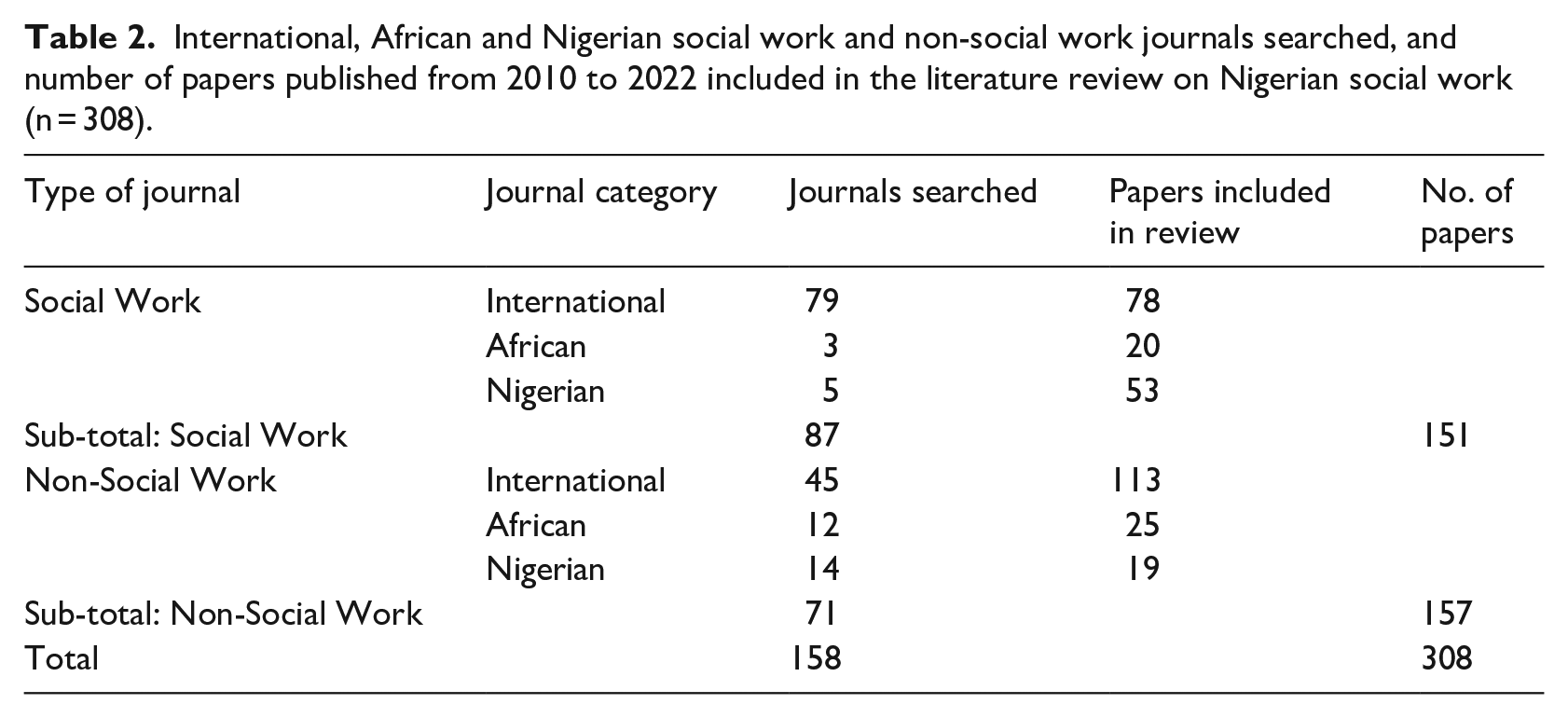
Using the search terms ‘social work’ and ‘Nigeria’, an initial search of EBSCO databases located 223 papers, including 13 highly relevant papers by Nigerian academics in non-Nigerian universities. The researchers identified an additional 85 papers in African and Nigerian journals not in EBSCO’s database. They included journals only available in hard copy, found through the online research profiles of Nigerian academics; online platforms (ResearchGate); journal website (African Journal of Social Work https://africasocialwork.net/); and direct contact with authors and journal editors. A member of the editorial board of the Nigerian Journal of Social Work and the Journal of Nigerian Social Work Educators provided access to all published articles in these journals during the period of the scoping review (2010–2022). In total, the search located papers in 158 journals. The researchers validated the inclusion of the papers in these journals, categorised into two broad groups: social work journals – international, African and Nigerian (n = 151) – and non-social work journals – international, African and Nigerian (n = 157) (Table 2).
International, African and Nigerian social work and non-social work journals searched, and number of papers published from 2010 to 2022 included in the literature review on Nigerian social work (n = 308).
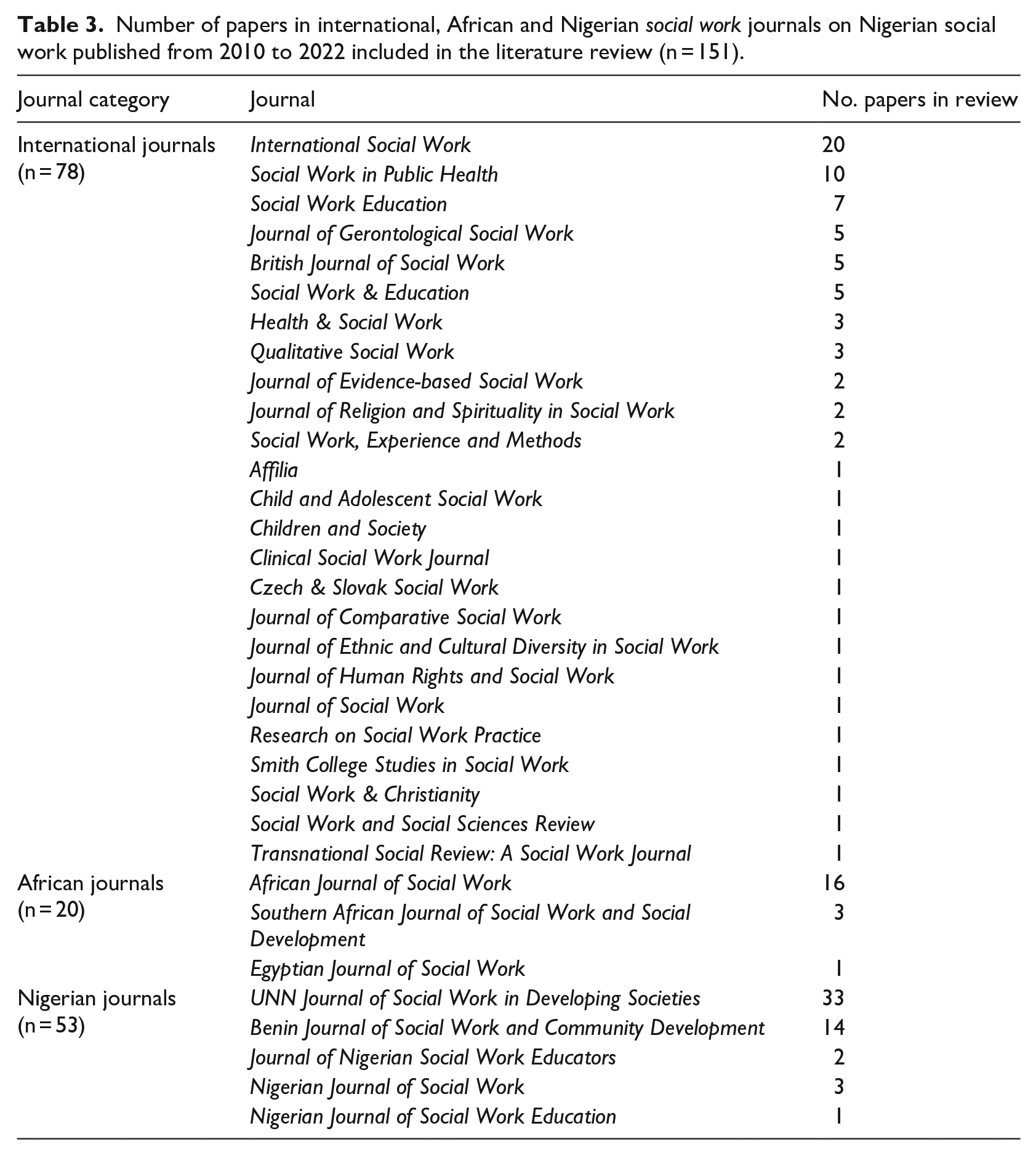
In the social work journals, the review located 78 papers in 79 international social work journals, 20 in 3 African social work journals and 53 in 5 Nigerian social work journals. To double-check that they had captured all available sources, the researchers searched each Scopus-ranked journal individually for papers on Nigeria. There were no further findings (Table 3).
Number of papers in international, African and Nigerian social work journals on Nigerian social work published from 2010 to 2022 included in the literature review (n = 151).
In the non-social work journals, the researchers located 113 papers in 45 international journals on a wide range of topics, including 7 journals in the field of ageing, 4 in health and 3 relating to child welfare. In African non-social work journals, they identified 25 papers in 12 journals, including African Population Studies and Gender and Behaviour. Finally, they found 19 papers in 14 non-social work Nigerian journals, published mostly by universities (Table 2).
The researchers used a number of approaches to source the literature for this scoping review, as they encountered challenges in accessing the full range of Nigerian social work literature they had located. The purpose of this study was to bring all this literature together and make it accessible to Nigerian academics, students and the wider global social work community. Thus, this study is the first to conduct a systematic search and compile a comprehensive database of Nigerian social work literature (Culturally Relevant Curriculum Project (CRCP), 2023).
Findings
The researchers found a substantial body of literature published by Nigerian social work academics showing a wide range of research covering locally and culturally relevant issues. This included papers on policy, poverty and social development. All the 308 papers are available for viewing on the project website (CRCP, 2023). Figure 1 shows the growth in the literature during the period of the literature review, 2010–2022, from only 10 papers published in 2010 to a peak of 78 in 2020.
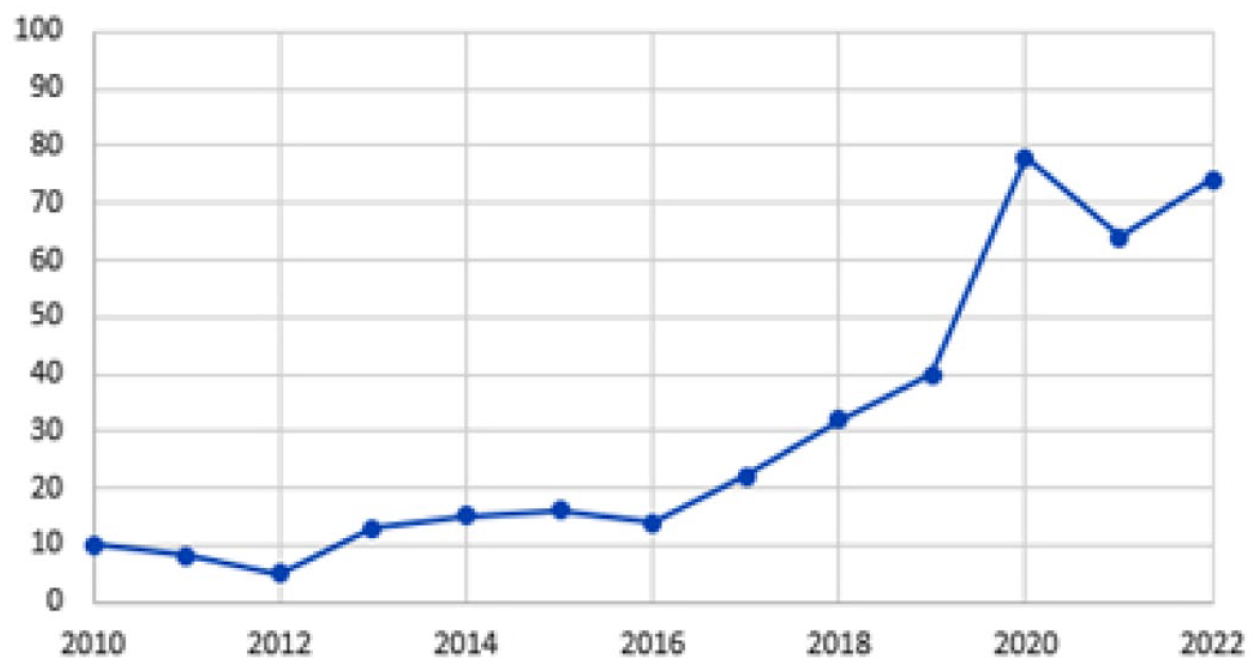
Growth in Nigerian social work papers published in peer-reviewed journals between 2010 and 2022.
Of the 308 papers included in the review, 179 reported on empirical studies, 122 were theoretical or descriptive and 7 were literature reviews. Among the empirical papers, 107 used a qualitative research design, with small, targeted local samples, relying mainly on in-depth participant and key-informant interviews and focus groups for data collection; 58 papers employed a quantitative research design, drawing largely on a cross-sectional survey research approach collecting data from respondents at a single point in time; and 14 papers used mixed-methods. Of the seven literature reviews, only six had a clear description of the review methodology. The literature reviews covered the integration of faith and spirituality in social work education (Adedoyin et al., 2021), ethnocultural diversity in social work (Akintayo et al., 2017) and four covered trafficking and migration: drivers and interventions to prevent sex work migration in Nigeria’s Edo state (Agwu et al., 2020), infant trafficking and baby factories (Makinde, 2016), the debilitating experiences of those forced to return, and the social networks and support for older people in refugee situations (Ekoh et al., 2022a).
Analysis of the literature sought to identify common themes and issues. The researchers organised the papers into 15 categories, under headings depending on the frequency of papers published in each category (Table 4). These categories were as follows:
Distribution and frequency of papers in international, African and Nigerian journals on Nigerian social work (n = 308) published from 2010 to 2022 grouped according to themes and categorised from least to most published.
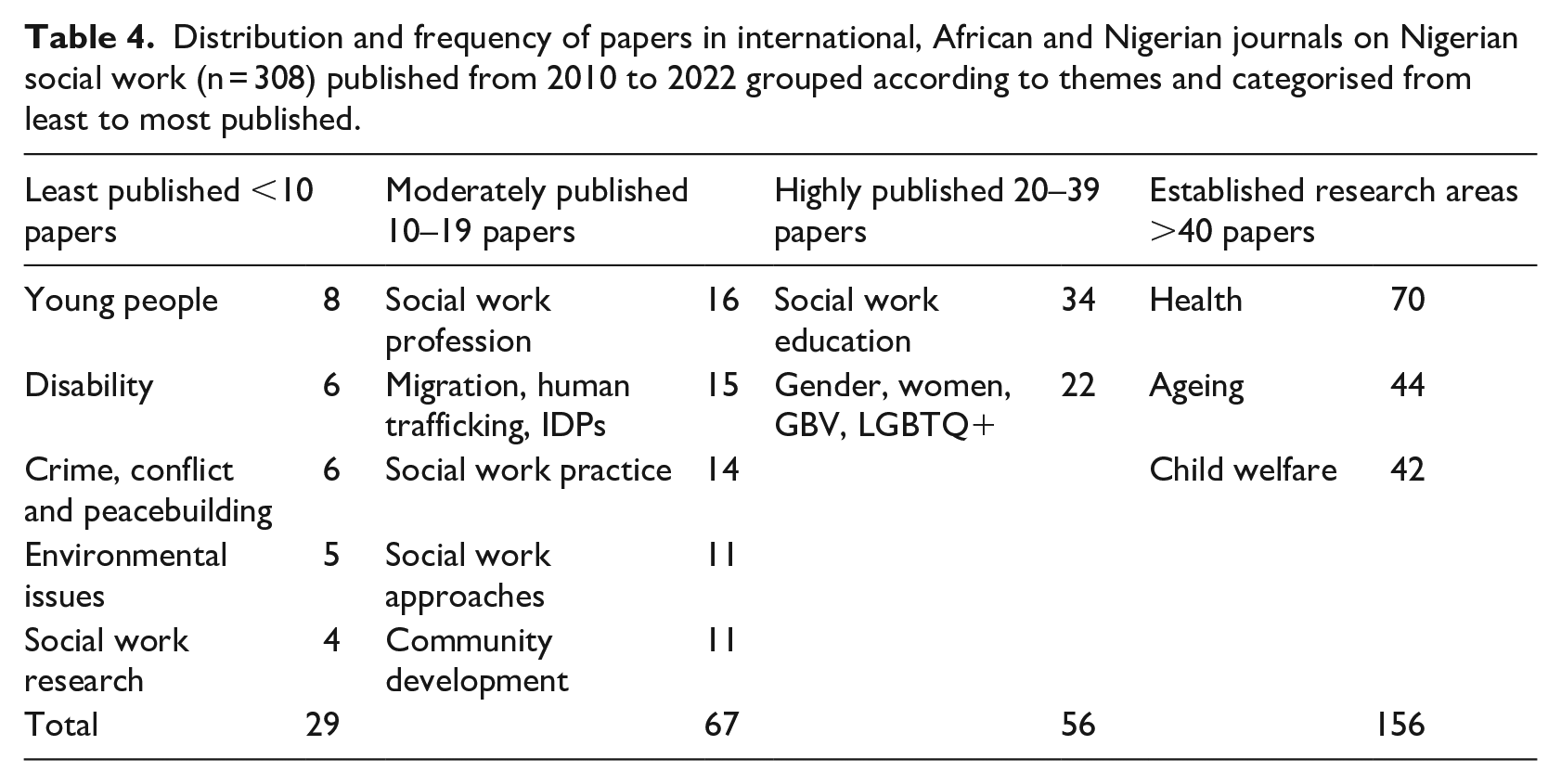
Least published (<10 papers): Young people; disability, crime, conflict and peacebuilding; environmental issues; and social work research.
Moderately published (10–19 papers): Social work profession; migration, human trafficking and internally displaced persons (IDPs); social work practice; social work approaches; and community development.
Highly published (20–39 papers): Social work education and gender, women, gender-based violence (GBV), LGBTQ+.
Established research areas (>40 papers): Health; ageing; and child welfare.
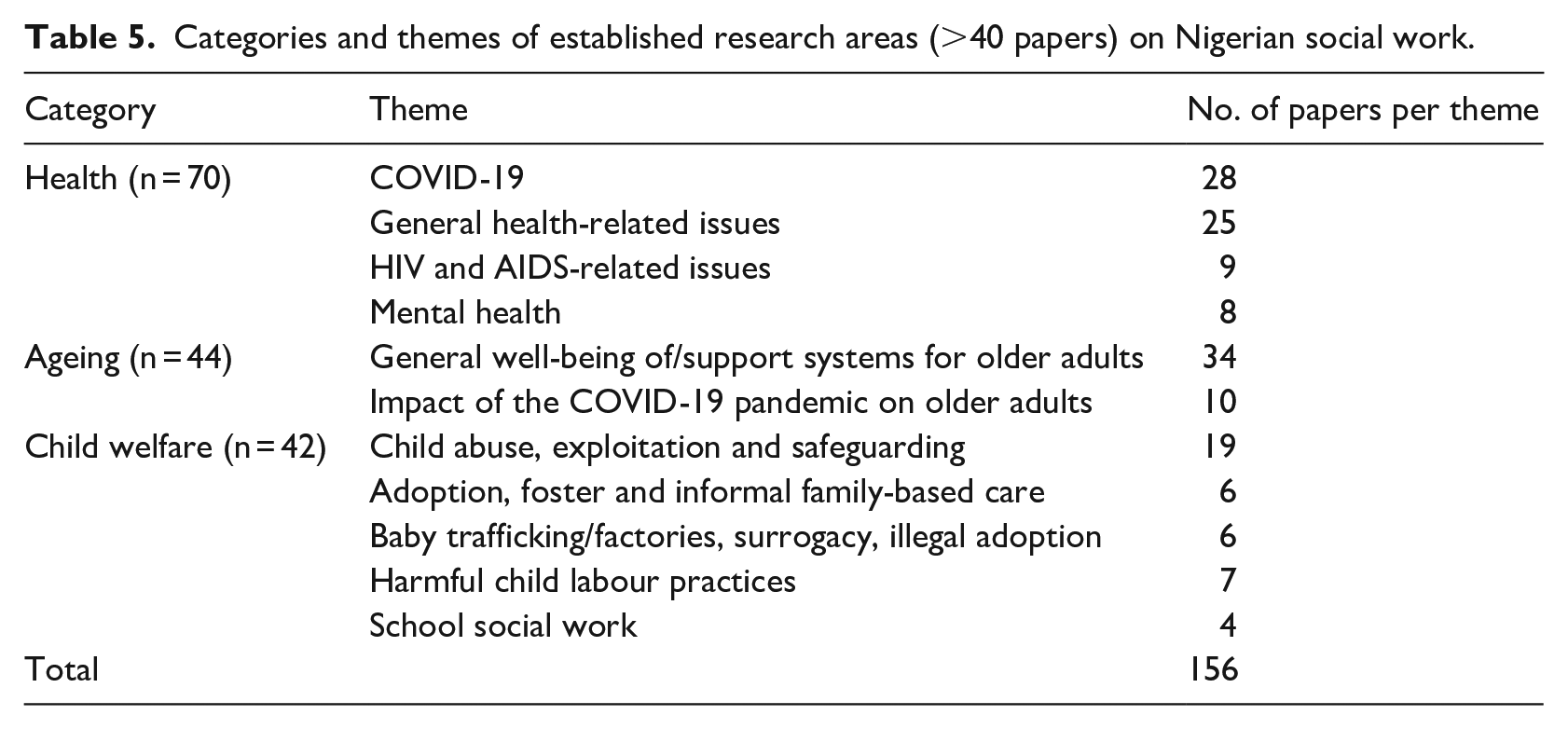
This article presents a discussion on the most established areas of research, which included health (n = 70), ageing (n = 44) and child welfare (n = 42), yielding 156 papers, 51% of all the papers included in the review. Table 5 shows the themes for each of the categories and the most established areas of research discussed below.
Categories and themes of established research areas (>40 papers) on Nigerian social work.
Health-related issues and social work practice in healthcare settings (n = 70 papers)
There were 70 papers (23% of all papers included in the review) that covered a wide range of health-related topics, with a common thread of the absence of, and necessity for, social workers in the response to, and situations surrounding, the COVID-19 pandemic (n = 28). There were an additional eight papers on COVID-19 and its impact on older people included in the ageing theme (CRCP, 2023). This was an anomaly since social work played a minor role in responding to the pandemic in Nigeria.
The papers on general health-related issues (n = 25) included primary healthcare, cancer, reproductive health and social work’s role in the primary, secondary and tertiary healthcare systems. Social workers mostly worked in secondary hospital settings, where they provided psychosocial assessment and support, crisis and grief counselling and a range of services to help patients and their families cope with the short and long-term consequences of illness. Some papers also explored the historical development of healthcare services and theorised social constraints limiting access to high-quality healthcare, especially for women. These included a lack of role clarity, staff shortages, inadequate facilities, insufficient resources, unfavourable organisational structure, conflict in multidisciplinary teams, low pay, crises within the profession and a lack of medical social workers (Abdulgafar and Oloruntoba, 2022; Adewunmi et al., 2020; Okoye and Agwu, 2019; Veta, 2023). Their patient-centred approach led to patients often naming social workers as their next of kin during hospitalisation, where they acted as cultural brokers. In this role, they provided information on culture to facilitate communication between members of multidisciplinary health teams, although there was generally an underutilisation of medical social work services. This was mainly due to medical professionals’ domineering attitudes towards, and non-recognition and lack of awareness of, the social work role (Abdulgafar and Oloruntoba, 2022), while others found that social workers endured prejudice, discrimination and structural conflict (Adewunmi et al., 2020). In the absence of sufficient medical social work services, Chukwu et al. (2022a) drew attention to the unappreciated role of unpaid, informal caregivers (n = 24) looking after family members in unwholesome hospital conditions. Ojua et al. (2013) highlighted cultural practices and their impact and health implications, covering positive practices among women, including breastfeeding, nutritional diets, sexual abstinence and hygienic households. Negative cultural practices included female circumcision, denial of meat, the threat of witchcraft and early marriage practices, especially in Northern Nigeria, where female circumcision caused vesical-vaginal fistula (Emma-Echiegu et al., 2014). Ojua et al. (2013) noted cultural prohibitions regarding sex education for young people exacerbated the spread of HIV and AIDS and sexually transmitted diseases, as did harmful marriage practices, such as early marriage, lack of contraception and circumcision, while stigma and discrimination affected access to care. They drew attention to housing design and water-storage practices, as well as misdiagnosis due to cultural beliefs that accelerated the spread of malaria. Untrained village birth attendants exacerbated maternal and child mortality, as did protein-restricted diets, and excessive salt intake increasing heart problems. Along with Okoye and Agwu (2019), Ojua et al. (2013) highlighted social workers’ role in community health education and sustainable development.
The papers highlighting HIV and AIDS-related issues (n = 9) emphasised its prevalence, having affected 3.2 million Nigerians, with the most severe impact on women. Prevalence was higher in the North Central and South regions, especially in Benue and Cross Rivers. Recent estimates have indicated a decline to approximately 1.9 million HIV-positive Nigerians. Given their position in HIV counselling and testing, both critical strategies for HIV prevention and management, along with anti-retroviral therapy (ART), within the dominant medical model, there was little attention to sociocultural factors and the impact of gender and economic status on HIV-related discrimination in the health sector (Nwanna, 2010, 2011). Stigma and discrimination led to exclusionary workplace practices (Nwanna and Atsenuwa, 2014) and restricted access to ART and treatment adherence (Okoye et al, 2015; Onalu et al., 2020, 2021a, 2021b). Iyiani et al. (2010) noted that the main providers of HIV and AIDS prevention programmes in Nigeria, international non-government organisations (NGOs) and their client NGOs, used a predominantly Western medical model. Their investigation of the lived realities of people most ‘at risk’ in the poor community of Ajegunle in Lagos State revealed strong feelings of powerlessness over sociocultural and political conditions affecting them.
The papers on mental health (n = 8) discussed the social stigma and stereotypes attached to mental illness that often led to the abuse of people living with mental illness (Chukwu and Onyeneho, 2015). Social workers worked mostly in health and mental health facilities, where they played a limited role, due to a lack of awareness and recognition of their abilities and functions. Mostly, they provided rehabilitative counselling and psychosocial support (Archibong et al., 2018; Fowowe et al., 2020; Omorogiuwa, 2017b). Several authors reported that cultural beliefs about mental illness as a spiritual curse or the workings of witchcraft predominated. Perceived stigma affected help-seeking behaviours, resulting in traditional healing as the first treatment preference (Ezeokoli et al., 2020; Jidong et al., 2021; Ojua et al., 2013). Consulting native doctors or traditional healers and engaging in spiritual and prayer camps only served to entrench such beliefs.
Generally, the papers on health-related issues were focused on what social workers can do. There was no paper that assessed the quality or efficacy of the services social workers are currently rendering in healthcare in Nigeria. This is probably related to medical social work services being relatively new in Nigeria.
Ageing, older people and gerontological social work (n = 44)
Forty-four papers (14%) addressed issues of relevance to ageing and aged care. Focusing on the unique experience of older people in Nigeria, these papers covered older people’s well-being, end-of-life issues and available care and support (n = 34). They emphasised changing social attitudes towards ageing and older adults that had led to an increase in exploitation, abandonment, abuse, neglect, depression, loneliness and social isolation. Contributory factors included rapid urbanisation, the expansion of neoliberal capitalism, rising poverty, absence of formal support and dissolution of long-established informal care networks and family-based care. Given the lack of state protection and service provision, there was an overwhelming need for family and community support programmes, with special attention to undervalued family caregivers in need of financial support (Okoye, 2013).
Uche (2020) attributed the absence of a formal aged-care system to neoliberal privatisation and structural adjustment; this resulted in the struggle to meet the demands of a rapidly expanding ageing population, despite the sterling efforts of faith-and community-based philanthropic NGOs. Adegbite et al.’s (2020) survey of older adults (n = 80) in three assisted living facilities in Lagos State found a strong correlation between institutional support and positive well-being, high self-esteem, increased social interaction and improved mental health. Despite the value of institutional support, pastoral care and social work services, for the most part, older people were relying on informal family and community-based care (Okoye, 2013). This was even harder to come by for older people fleeing conflict situations and seeking refuge in internal displacement camps (Ejikeme et al., 2014; Ekoh et al., 2021a, 2022a, 2022b).
Focusing on death and bereavement, Obeten and Isokon (2020) highlighted social workers’ role in lobbying for policy change to combat ageism and declining informal support. Other areas of social work practice covered included end-of-life planning, grief counselling and community-based rehabilitation (Agbawodikeizu et al., 2019a, 2019b; Obeten and Isokon, 2020; Omorogiuwa, 2016; Oyinlola, 2016). Important here was information access (Oyinlola and Folaranmi, 2016), physical activity and a healthy lifestyle (Ebimgbo et al., 2018; Olaleye and Ageh, 2017). Cultural issues addressed included widowhood (Anugwom, 2011), the need for culture-based support (Ebimgbo et al., 2019), changing family roles (Ekoh et al., 2021b), acknowledgement of gender differences (Ebimgbo et al., 2021) and cultural understandings of dementia (Ekoh et al., 2020).
Ten papers examined COVID-19 in older adults, highlighting problems of social isolation arising from containment measures that proved more detrimental than the virus. These studies consistently found that social measures were as important as halting the spread of the virus.
A central theme that appears to run through the papers on ageing is the lack of formal services, policies and support for older adults in Nigeria. This suggests the need for formal advocacy for older adults as a major area of concern for social work in Nigeria.
Child welfare (n = 42)
Forty-two papers (13%) addressed child welfare issues. The papers on child abuse, defilement (rape), neglect and exploitation (n = 19) highlighted the violation of children’s rights with legislation ineffective in protecting and reducing risk for vulnerable children (Adebusuyi, 2018; Anazonwu, 2019; Ayangunna, 2010; Ehigie and Omorogiuwa, 2022). Several papers highlighted religious and cultural factors exacerbating abuse, including early marriage, female genital mutilation, witchcraft and Almajiri, through which children were entrusted to Islamic teachers – mallams (Anazonwu, 2019; Ede and Kalu, 2018; Iorfa et al., 2022; Secker, 2013; Uzuegbu, 2010). Sociocultural factors exacerbating these issues included the preference for large families and male children, which led to the withholding of education and other opportunities for advancement for girls frequently forced into early marriage. Thus, social workers were caught in a web of sociocultural systems and cultural values that nullified the highly enabling Child Rights Act (2003). This literature called for structural change, including policy implementation and enforcement and the active involvement of social workers in matters pertaining to children’s welfare (Nwanna and Ogunniran, 2019, 2020; Uranta and Ogbanga, 2017).
Six papers highlighted foster and alternative informal family-based care and adoption. Others concerned young people leaving care (Adeboye et al., 2017), the cultural alienation of children in institutional care and need for family, community-based alternatives (Nnama-Okechukwu and Okoye, 2019; Nnama-Okechukwu et al., 2020), problematic adoption investigations (Onayemi and Aderinto, 2019) and child trafficking and illegal surrogate parenting practices (Okoli and Udechukwu, 2019).
Six papers concerned baby trafficking, baby factories, surrogacy and illicit adoption. Baby factories, also referred to as ‘baby farms’ for ‘baby harvesting’ or ‘child and infant trafficking’, were modern, criminal organisations supporting the exploitation of young women carrying unplanned babies (Enakele, 2017; Okoli and Udechukwu, 2019). These papers noted the sexual grooming of young women recruited by, and the denial of the rights of children born in, ‘baby factories’ with short- and long-term forms of abuse possible. They suggested factors contributing to the baby factory phenomenon, including poverty, high infertility rates and the expense of domestic and international adoptions, and emphasised the need for programmes that targeted these underlying causes to end infant trafficking.
Several scholars focused on child labour and the exploitation of children engaged in street trading that frequently involved detrimental and hazardous activities disruptive to children’s healthy development (CRCP, 2023). An estimated 12.5 million or 1 in 4 Nigerian children were involved in child labour, with about 43% engaged in dangerous activities, such as quarrying granite and artisan mining, labouring in construction and scavenging or collecting debris and decaying toxic materials from dump sites (Omorogiuwa, 2017a, 2020). Writers in this area consistently stressed government and NGO responsibility to do more to protect exploited children. A further four papers concerned school social work, including its efficacy in reducing disruptive behaviour (Folaranmi, 2014a), empowering girls (Folaranmi, 2014b), as a way out of trafficking (Ayangunna, 2016 [2015]), and its challenges for social work education (Nwanna, 2011).
Although the papers in this section focused on social problems confronting children in Nigeria, there was a dearth of papers on children’s health, which is a critical issue in Nigeria today. Research is needed on this important topic to inform policies and improvements to health services for children.
Discussion and conclusion
This study’s aims were to challenge the prevailing narrative that there is an absence of indigenous African literature to inform social work curricula. With a focus on Nigeria, this study has found an abundance of literature on Nigerian social work (308 papers) and has thus addressed the following research questions:
What Nigerian literature is there to inform the development of a CRC for use in Nigeria and the Global South and Global North? The study found a rich and varied growing local literature as a beginning step towards the development of a CRC.
What does this literature tells us about social work education and practice in Nigeria? The scoping review has revealed important information relating to social work practice in Nigeria by identifying key areas of research covering health, ageing and child welfare, along with lacunae in areas that have received less research attention, such as disability, crime and conflict and eco-social work.
The literature provides a deeper understanding of what social workers are doing within specific practice contexts and the models that are being used. For example, in child welfare, it showed a lack of social work presence in historically significant areas, such as juvenile justice, child trafficking and child protection. This was shown to be related to the poor social service infrastructure, ineffectiveness of legislation in protecting and reducing risk for vulnerable children and young people and failure of policy to provide clarity on the role of social workers in crucial areas such as adoption and foster care (Adeboye et al., 2017; Adebusuyi, 2018; Akintayo, 2021; Anazonwu, 2019; Ayangunna, 2010; Ehigie and Omorogiuwa, 2022; Nnama-Okechukwu et al., 2020). The dual responsibility for child welfare matters between the federal ministry (FMWSAD) and state governments for the deployment of professional workers in local social welfare departments, hospitals and institutions exacerbated the situation. Consequently, Nigeria’s child welfare system is failing the well-being of children not only because of an inefficient public service infrastructure and lack of implementable policies but also due to the absence of innovative child protection measures, vocal child rights advocates and family and community partnerships (Gray and Amadasun, 2023; Nwanna and Ogunniran, 2019, 2020).
Implications of the findings for social work curricula in Nigeria and internationally
This scoping review provides a foundation for Nigerian educators to redress the imbalance of local/indigenous and Western literature and develop a culturally relevant social work curriculum. Nevertheless, the review has highlighted some of the ethical dilemmas arising when social work values conflict with local cultural beliefs and practices (Ekoh et al., 2020; George and Ekoh, 2020; Ugiagbe, 2015) and, as such, demonstrates some of the complexities of cultural relevance as more than merely learning about cultural practices and beliefs. For example, George and Ekoh (2020) examined issues relating to sexuality in lesbian, gay and bisexual communities in light of the Nigerian legislation that has criminalised homosexual ‘lifestyles’ and sustained a homophobic sociopolitical climate. They showed how national policies and cultural and ethnoreligious beliefs influenced social workers’ perceptions of practice with homosexual clients and the challenges of working with this community in Nigeria. However, one of the greatest challenges for cultural relevance was how to draw the best from international scholarship, while developing locally relevant practice models (Author, 2014; Butterfield and Abye, 2012). Rather than dismissing Western knowledge out of hand, Ugiagbe (2015: 797) called for ‘selective assimilation’ to accord with local cultural practices.
Significantly, the variety and depth of scholarship uncovered in this study could benefit educators not only in Nigeria but across Africa and in the Global North grappling with issues of indigenisation, decolonisation and cultural relevance. It is lamentable, therefore, that much of this work will not reach social workers in the Global North. This is due to, inter alia, the pressure to demonstrate international social work knowledge from international social work journals. This detracts from papers focused on local practice issues and service contexts, and possibly accounts for the relatively limited scholarly contributions from African academics and researchers to international social work scholarship (Hodge and Kibirige, 2022). Furthermore, Schmid and Morgensthern (2024) found that social work journals rebranded these alternate disciplinary knowledge(s) as international perspectives. This imbalanced South–North global knowledge flow and Western bias in most teaching and related materials are hampering efforts at cultural relevance (Butterfield and Abye, 2012; Hodge et al., 2020; Hodge and Kibirige, 2022; Morgenshtern et al., 2023; Roche and Flynn, 2020). In short, professional imperialism remains a challenge to international research and scholarship reflecting unique local cultures that is unlikely to change until there is a greater two-way global flow of social work knowledge (Levy et al., 2022, 2024).
In the meantime, this study has shown that Nigerian social work academics and researchers are contributing to knowledge production in an iterative way, capturing and building on prior scholarship to ground culturally relevant courses to better prepare Nigerian students for local practice contexts. The next step in this research process involves measuring the impact of this growing literature on social work educators’ endeavours to institute a CRC in Nigeria.
In conclusion, as the first study to provide evidence of the substantial amount of literature on Nigerian social work (the scoping review identified 308 papers), the study is significant as it unsettles and refutes the prevailing narrative of an absence of African, specifically Nigerian, social work literature to inform culturally relevant curricula. However, questions remain on how this knowledge can be integrated into curricula to inform and influence future social work. Given international social work’s global push for inclusiveness, this question is of interest to social work educators in Africa and across the globe who seek to decolonise the knowledge underpinning social work education and practice. Studies such as this thus have relevance for social workers worldwide.
Footnotes
Declaration of conflicting interests
The author(s) declared the following potential conflicts of interest with respect to the research, authorship and/or publication of this article: The authors disclosed receipt of financial support for the research from the International Association of Schools of Social Work [IP22-09].
Funding
The author(s) disclosed receipt of the following financial support for the research, authorship and/or publication of this article: The authors thank the International Association of Schools of Social Work (IASSW) for funding this research through their International Projects funding, Reference: Education IP22-09.
