




Abstract
Frontline social workers work in difficult circumstances with clients who face significant trauma and distress. The increasing turnover of social workers is a matter of concern. This quantitative research explores psychological distress, work–family conflict and family life satisfaction in a sample of 104 social workers in North-West England. The findings revealed significant correlations among the variables. It was seen that family life satisfaction partially mediated the effects of depression on the manifestation of work-to-family conflict. Social work organisations need to introduce measures to enhance work–life balance, reduce psychological distress and promote the well-being of social work practitioners.
Keywords
Introduction
Social work is a challenging profession that involves working with service users who face trauma, distress and difficult life circumstances. Vicarious exposure of frontline practitioners to these adverse life events can potentially impact their mental health and well-being. This can have adverse consequences for the professional, including low self-esteem, emotional numbing, cynicism and a loss of confidence (VanDeusen and Way, 2006) and manifest in negative outcomes across several life domains, including their work and family. Furthermore, studies also indicate that the lived experiences of social workers themselves may include traumatic experiences such as mental ill-health or substance misuse issues either before or during their careers (Straussner et al., 2018).
Studies from different countries (e.g. Australia and New Zealand (Alston et al., 2021); Canada (Alaggia et al., 2024); China (Jia et al., 2020); India (Stanley and Sebastine, 2023); Norway (Nilsen et al., 2023); United States (Prasad et al., 2021)) suggest high levels of burnout, mental health issues and poor quality of life in social workers. The situation in the United Kingdom is much the same. Eight out of ten social workers in the United Kingdom suffer from stress at work, with two-thirds saying that their mental health suffers because of their job (Social Workers Union, 2022). Increased workload, staff shortages, having to work beyond contractual hours and the lack of work–life balance were among the most widespread and deeply felt concerns of social work staff in the post-Covid era (UNISON, 2022). Social workers also face other stressors such as bureaucratic rigidity, a lack of work support, role ambiguity and conflict (Kim and Stoner, 2008; Koeske et al., 1993; Tetrick et al., 2000). Social workers’ quality of work life continued to decline, and burnout rates increased for social workers in the United Kingdom following the end of Covid lockdown measures, according to a recent study (Gillen et al., 2022).
The social work profession carries a substantial risk of adverse mental outcomes, such as generating psychological distress (Geirdal et al., 2022; Kagan and Itzick, 2017). Psychological distress is an unpleasant emotional state of a psychological or social nature that affects the individual’s ability to cope with a specific set of circumstances (Sellick and Edwardson, 2007). It is the emotional burden that is often experienced in common mental states such as anxiety and depression (Goodwin et al., 2013), and these two mental states have been considered in this study. Psychological distress is reported to be high among social workers (Grant et al., 2014; Griffiths et al., 2017; Kagan and Itzick, 2019; Sánchez-Moreno et al., 2015) and may also manifest as emotional suffering accompanied by anxiety, depression, feelings of vulnerability, panic, isolation, fear and grief (Ohayashi and Yamada, 2012). Themes that emerged from recent studies of social workers include feeling unprotected, underappreciated, undervalued and overburdened (Lewinson et al., 2023; Murphy, 2023).
The shift to the ‘work-from-home’ option during Covid has become a fixture in varied forms in the post-Covid scenario as well, in the form of remote or hybrid/blended work options for many professions, including social work. This has spawned a renewed interest in the notion of ‘work–life balance’, and a range of synonymous terminologies such as ‘work–family life conflict’, ‘work–home life conflict’ and ‘work–home interference’ have been put forth. In this article, we will use the term ‘work–family conflict’ (WFC) based on our choice of instrument to assess how (and if) demands and expectations across work and family life conflict, and interfere with one another. WFC refers to inter-role conflict in which role pressures from the work and family domains are mutually incompatible in some respects (Fabienne et al., 2011). This inter-role conflict can flow in two directions: the work role can interfere with family life (work-to-family conflict (WTF)) demands, and vice versa (family-to-work conflict (FTW); Frone, 2003). It is known that work–family conflict is a potential source of stress that negatively affects the well-being and behaviour of workers (Geurts et al., 2003). The role theory holds that this role stress experienced owing to conflicting demands may result in adverse outcomes (Kim and Mor Barak, 2015; Li et al., 2022).
Work–life balance and fewer work–home conflicts are positively associated with family life satisfaction (FLS; Orellana et al., 2021; Schnettler et al., 2021; Viñas-Bardolet et al., 2020). FLS refers to a conscious cognitive process of subjective evaluation regarding one’s overall family life in which the criteria for the judgement are up to the individual (Zabriskie and Ward, 2013). It involves a comparison of perceived family life circumstances with one’s standards and expectations (Pavot and Diener, 2003). FLS is a stronger contributor to one’s overall life satisfaction than satisfaction in other life domains (Moss and Willoughby, 2018; Orellana et al., 2023; Schnettler et al., 2018; Viñas-Bardolet et al., 2020). Satisfaction with family life has been related to a variety of other family wellness variables, including higher family cohesion, adaptability, communication and overall family functioning (Poff et al., 2010).
The Work–Home Resources (W-HR) model considers demands and resources from the work and home domains as being responsible for conflict, as well as enrichment in both domains (ten Brummelhuis and Bakker, 2012). The contextual demand of work–life balance generates stress, and both personal and environmental resources are needed to mitigate this (Haar, 2013). Personal resources connect the demands and resources in one domain with the outcomes in another. Gains in resources, such as skills, social support and self-esteem, explain why experiences in one domain may improve the quality of life in another (Greenhaus and Powell, 2006; Wayne et al., 2007). The model postulates that in resource-based situations, personal resources will be gained and result in positive family outcomes, whereas demanding experiences would deplete personal resources, resulting in negative family outcomes (He et al., 2023). Work–home conflict results when demands in one domain deplete personal resources, resulting in diminished outcomes in the other (ten Brummelhuis and Bakker, 2012). Higher levels of job demand are associated with higher levels of psychological distress and poorer quality of life in healthcare workers, social workers and teachers (Geirdal et al., 2019).
Against this background, the following research questions were formulated for this study:
What is the extent to which psychological distress, work–home conflict and FLS are experienced by social workers?
What is the nature of the relationship between these variables?
Which of these factors significantly explains the manifestation of FLS in the study respondents?
What role, if any, does FLS play in the relationship between psychological distress and WTF and FTW conflicts?
Methodology
Study design
This quantitative study used a cross-sectional design and correlational analysis. Data were collected using survey methodology.
Instruments of data collection
A socio-demographic data sheet was used to collect basic background particulars of the respondents.
The Satisfaction with Family Life Scale (Zabriskie and Ward, 2013) was used to assess satisfaction with family life and was designed to assess an individual’s global judgement of family satisfaction. It is a brief five-item, 7-point Likert-type scale with responses ranging from ‘strongly disagree’ to ‘strongly agree’. Scores are calculated by summing all items and producing a satisfaction with family life score with a range of 5–35 (e.g. if I could live my family life over, I would change almost nothing). The Cronbach’s alpha for the instrument in the current study was .90, which indicates ‘excellent’ scale reliability (George and Mallery, 2003).
The Depression, Anxiety and Stress Scale-21 Items (DASS-21; Lovibond and Lovibond, 1995) is a set of three self-report scales designed to measure the emotional states of depression, anxiety and stress. Each of the three DASS-21 scales contains seven items. The depression scale assesses dysphoria, hopelessness, devaluation of life, self-deprecation, lack of interest/involvement, anhedonia and inertia. The anxiety scale assesses autonomic arousal, skeletal muscle effects, situational anxiety and subjective experience of anxious affect. Only the depression and anxiety sub-scales have been used in the current study as measures of psychological distress. The 14 items are answered on a four-point Likert-type scale, for which respondents are required to indicate the extent to which each statement applies to them (e.g. I was close to panic). The Cronbach’s alpha in this study was .91 for the depression scale and .84 for the anxiety scale, indicating ‘excellent’ and ‘good’ scale reliability (George and Mallery, 2003).
The Work and Family Conflict Scale (Haslam et al., 2015) was used to assess the extent to which work, and family life demands conflict with one another. The 10-item instrument assesses bi-directional conflict in terms of WTF conflict and FTW conflict. The 10-item Likert-type scale requires respondents to indicate whether they ‘very strongly disagree’ to ‘very strongly agree’ to various scale items (e.g. My work prevents me from spending sufficient quality time with my family). The Cronbach’s alpha for this scale in this study was .90 and represents ‘excellent’ scale reliability (George and Mallery, 2003).
Sample and data collection
A total of 104 respondents who were qualified social workers working in organisations in both the statutory and non-statutory sectors were recruited as respondents for the study. They hail from the North-West region of England, covering the administrative counties of Cheshire, Cumbria, Greater Manchester, Lancashire and Merseyside. Participants were recruited through survey flyers circulated via various professional networks, such as the Cheshire and Merseyside Teaching Partnership (CMSWTP), the Social Work England database, the British Association of Social Workers and the Association of Child Protection Professionals.
Ethical considerations
Participation in the survey was voluntary, and access to the survey was provided after signing informed consent sheets on the first page of the survey. The surveys were administered via the JISC online platform, and the anonymity of respondents was maintained as they did not furnish any identifiable information about themselves. The study received ethics clearance from the Social Science Ethics Review Committee of Edge Hill University.
Data analyses
Data were analysed using SPSS (Statistical Package for the Social Sciences; version 29). Results were generated using both simple and advanced statistical procedures, such as t-tests, correlations and F-tests. AMOS (Ver. 23) was used for mediation analysis and the depiction of variables in the path diagram.
Results
Respondents’ profile
Of the 104 respondents who responded to the online survey, the majority were women (92%). Their age ranged from 24 to 63 years, and most of them (38%) were in the 31- to 40-year age group. The majority identified as white Caucasian and lived with their spouse or partner and children (43%). While some of them lived by themselves (13%), the number of inhabitants living with them ranged from 1 to 6 people; 48 percent of the respondents had childcare responsibilities.
The total number of years that they had been at work ranged from 1 to 7 years (Mean = 2.78 years) and the duration of being in their current post was from 1 to 5 years (Mean = 1.36 years). In terms of their practice area, the majority worked with children and families (50%), and the others with adults (35.6%) and in the field of mental health (14.4%).
Profile of respondents on key variables
To generate a profile of the respondents, the mean score of each of the key variables was used to categorise respondents into ‘low’ and ‘high’ groups (Table 1). Except for FLS, the majority were categorised as being ‘low’ on the other variables of the study.
Mean scores, range and classification of social workers (N = 104) on Anxiety, Depression, WTF, FTW and FLS obtained from online survey data collected between April and August 2023.
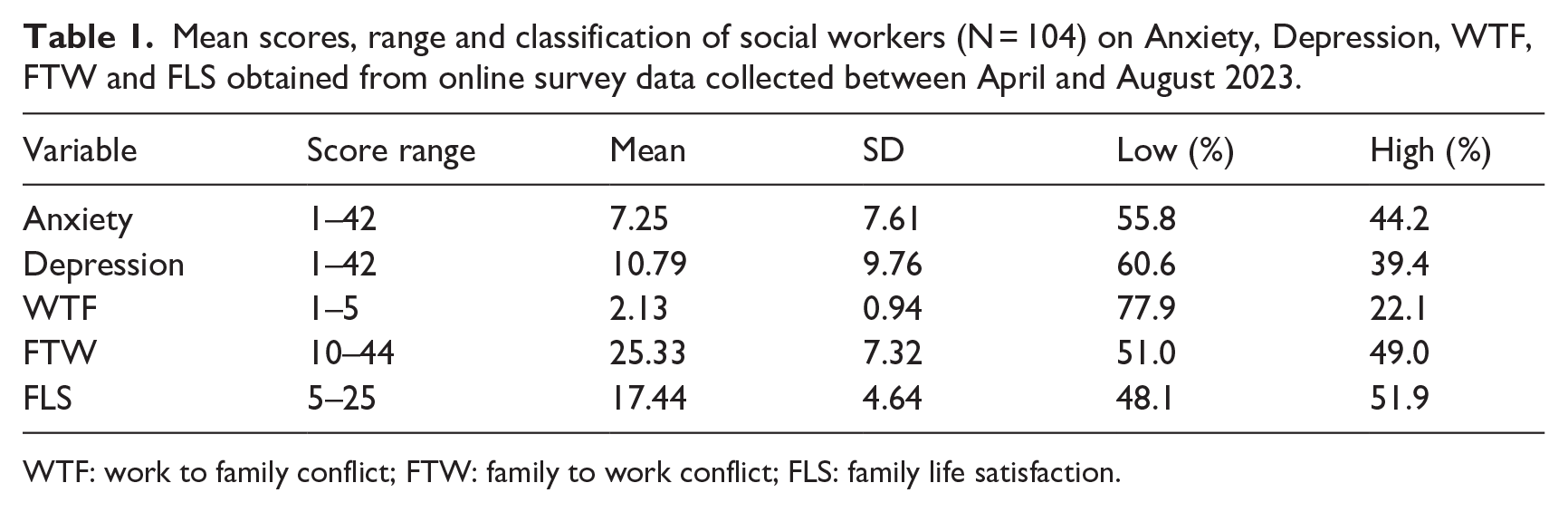
WTF: work to family conflict; FTW: family to work conflict; FLS: family life satisfaction.
Between-group comparisons
We then compared those with (n = 54) and without (n = 50) childcare responsibilities. t-tests were again used for this comparison. Statistically significant differences were obtained for both anxiety (t = 2.28; df = 102; p < .05) and depression (t = 1.95; df = 102; p < .05) scores. Higher mean scores were seen for those with childcare responsibilities for both anxiety (M = 8.86) and depression (M = 12.56). In this comparison, there were no statistically significant differences seen on the other three variables (FTW, WTF and FLS).
The next comparison was based on the age of the respondents. They were categorised into five groups (21–30 years, 31–40, 41–50, 51–60 and 61+ years). A one-way analysis of variance (ANOVA) was then conducted for this comparison. It was seen that there was a statistically significant difference based on the age group to which the respondents belonged and their anxiety (F (4, 99) = 3.24, p = .015) and depression (F (4, 99) = 3.15, p = .018) scores. Post hoc comparisons using the Tukey HSD indicated that participants aged 21–30 years had significantly higher anxiety scores (M = 11.60, SD = 9.129) than those aged 31–40 (M = 5.25, SD = 5.372), with a mean difference of 6.35 (p = .008). Similarly, the depression scores for participants aged 21–30 (M = 16.40, SD = 11.662) were significantly higher compared with those aged 31–40 (M = 8.40, SD = 7.821), with a mean difference of 8.00 (p = .010). No significant differences were seen on the other key variables (FLS, WTF and FTW).
The next ANOVA compared respondents based on the living status of the respondents (people with whom they lived). Four groups were created for this comparison: (living by self, living with parents, living with spouse/partner, and living with spouse/partner and children). Statistically significant differences were seen in relation to their depression (F (3, 100) = 3.91, p = .011) as well as FLS scores (F (3, 100) = 4.32, p = .007) but not on the other key variables. Specifically, participants living by themselves had higher depression scores (M = 16.71, SD = 13.533) than those living with a spouse/partner and children (M = 8.17, SD = 7.493), as well as lower FLS scores (M = 14.79, SD = 2.751) than those living with a spouse/partner and children (M = 18.83, SD = 4.497).
The final ANOVA compared respondents based on their practice setting (work sector). They were re-classified into three groups: Children and families (n = 52), Adult social work (n = 37) and Mental health (n = 15). Statistically significant differences were seen between the three groups in terms of their FTW conflict score (F (2,101) = 3.89, p = .024) and their total conflict score (F (2,101) = 3.21, p = .035).
Correlations among key variables
Table 2 shows that FLS enters into highly significant negative relationships with all the other key variables of the study. It is also seen that except for the relationship between anxiety and WTF, all the other relationships between the other variables are highly significant statistically and of a positive nature.
Intercorrelation matrix depicting Pearson’s correlation coefficients between Anxiety, Depression, WTF, FTW, Total Conflict and FLS for social workers (N = 104) based on instruments administered via the online survey between April and August 2023.
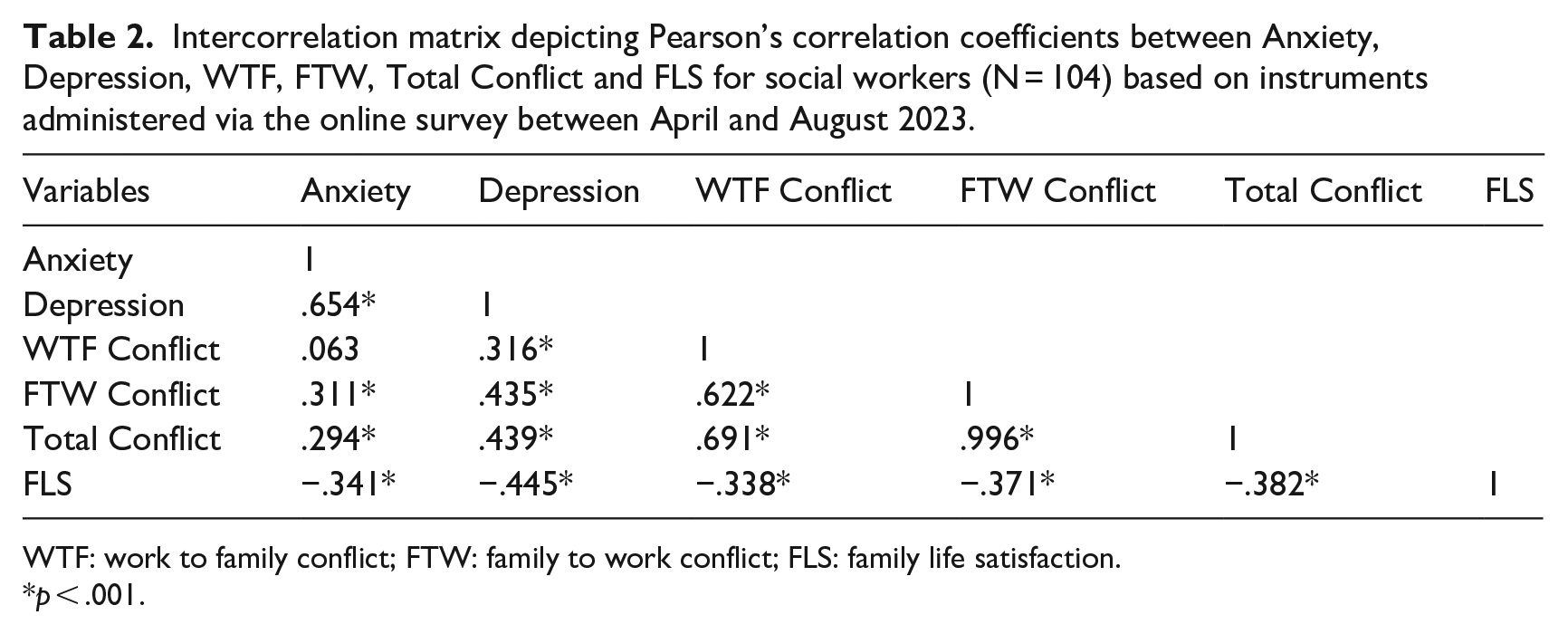
WTF: work to family conflict; FTW: family to work conflict; FLS: family life satisfaction.
p < .001.
FLS as a mediating variable in the relationship between psychological distress and FTW and WTF conflict
A multiple mediation model was generated by treating anxiety and depression (psychological distress) as independent variables, and both FTW and WTF conflict as dependent (outcome) variables. FLS was introduced as the mediator variable in this model. Figure 1 depicts the model, and the direction of the arrows shows the direct effect from one variable to the other. The numbers near the straight arrows are the unstandardised path coefficients (regression weights), which show the direct effect of one variable on the other. The p values near these coefficients indicate that they are statistically significant. The indirect effects of both anxiety and depression influence the outcome variables by passing through the mediator (FLS).
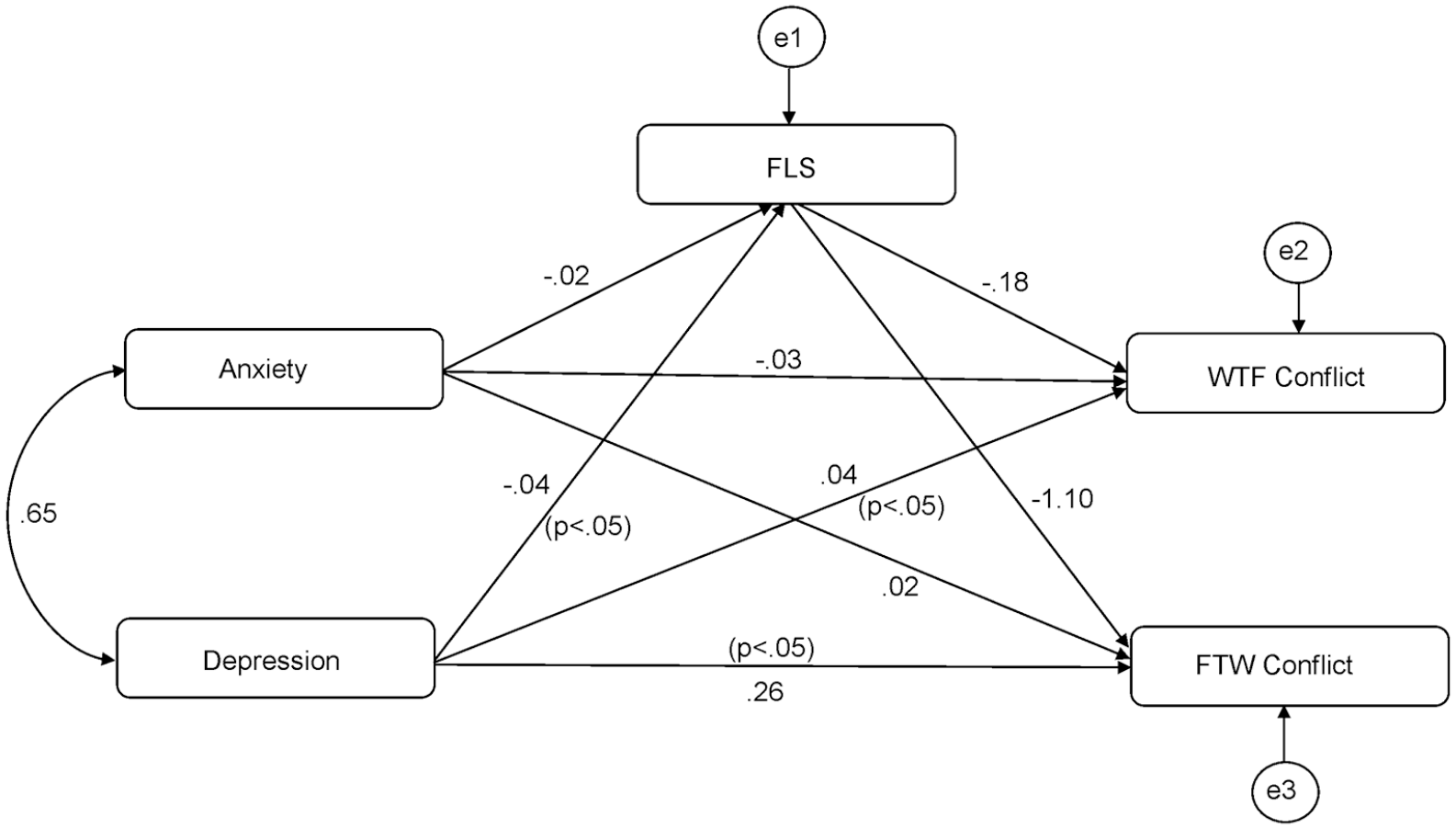
Path diagram depicting the direct effects of anxiety and depression on WTF and FTW and indirect effects through the mediating variable (FLS) in the social workers (N = 104). Data were collected through standardised instruments administered between April and August 2023.
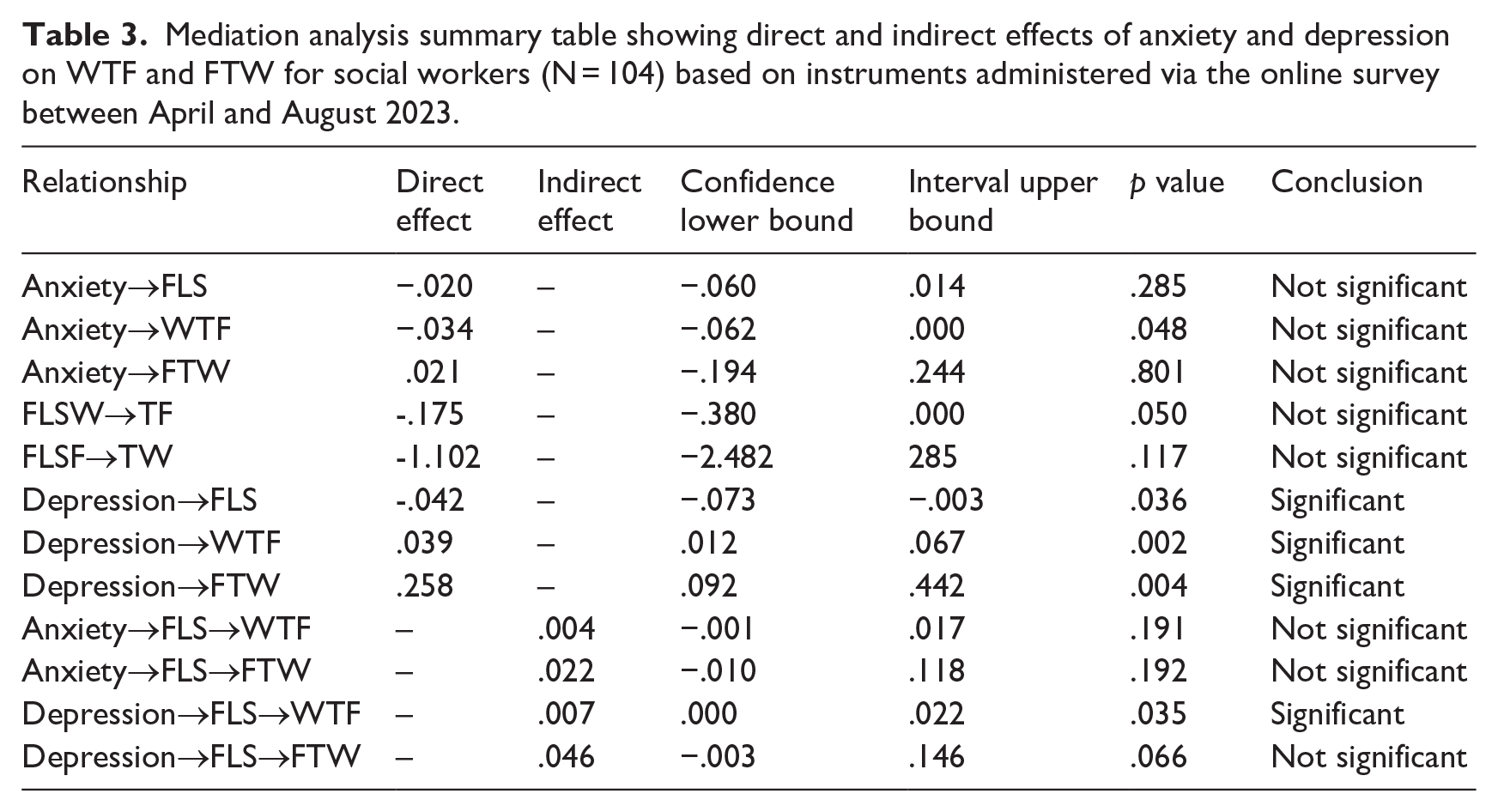
Figure 1 and Table 3 show that both the direct and indirect effects (via the mediator, FLS) of anxiety on WTF are not significant. However, depression has both a significant direct and indirect effect on WTF. As both these effects are significant, this indicates the partial mediating role being played by FLS. It is also to be noted that depression has a significant direct effect on FTW, however, its indirect effect via the mediator is not statistically significant (Table 3).
Mediation analysis summary table showing direct and indirect effects of anxiety and depression on WTF and FTW for social workers (N = 104) based on instruments administered via the online survey between April and August 2023.
Discussion
The results underscore the prevalence of psychological distress in terms of anxiety and depression among a high percentage of the social workers in our sample, though the levels were low in the majority. A study from Northern Ireland also reports that the majority of the social workers in their sample manifested mild to moderate levels of anxiety and depression (Maddock, 2024). Studies from other countries that have reported depression in social workers include Alaggia et al., (2024, Canada); Siebert (2004, USA); Stanley et al., (2021, India); and Jia et al., (2020, China). Together with the current study, all of these studies highlight the emotionally taxing nature of the social work profession.
Those with childcare responsibilities in the current study experienced higher levels of psychological distress, consistent with prior research indicating that simultaneously meeting professional demands and family commitments can be challenging and stressful (Alsabti, 2022; Kalliath et al., 2020). Differences were also identified in levels of psychological distress based on living status and the age group to which the respondents belonged. Specifically, these findings suggest that younger social workers are experiencing higher levels of psychological distress, which could be due to a variety of factors such as the challenges of starting a new career, less developed professional support networks or coping strategies (Bae et al., 2019; Jia and Fu, 2022; Stanley and Buvaneswari, 2022). Moreover, there appears to be a significant difference in depression scores for those living alone compared with those living with a spouse/partner and children, with those living alone reporting higher levels of depression. This indicates the impact of social support or loneliness on psychological well-being, as individuals living with family may benefit from companionship and support (Kalliath et al., 2019; Stanley and Sebastine, 2023) and thereby experience lower levels of depression.
The results also indicated that both forms of work–family conflict were present to a considerable extent. These findings resonate with the complex demands of the profession, where the boundaries between work and personal life are often blurred, leading to conflicts in both directions (Olaniyan et al., 2022). The findings revealed variations in these conflicts based on the practice settings of the social workers, with workers in the ‘Mental Health Social Work’ sector experiencing more FTW conflict, and those in ‘Children and Families’ experiencing greater WFC. Child protection social work is characterised by high demands in terms of meeting the needs of service users, the limited resources available for interventions, and the sense of conflict and anxiety between the moral and legal responsibility towards each family and the factors beyond their control experienced by many social workers in this setting (Wilberforce et al., 2014).
WFC is associated with turnover intention (Bae et al., 2019), underscoring the practical implications of these conflicts for social work as a profession. In the United Kingdom, social workers’ turnover, particularly in children’s social work, has become a pressing concern, with this sector witnessing the highest level of attrition and the most sizable number of vacancies recorded in the past 5 years (Ravalier, 2023). Addressing these challenges necessitates sector-specific interventions that consider the unique stressors within children’s services and mental health settings, aiming to mitigate WFC and thereby support the retention of social workers, which is paramount for the delivery of consistent care to vulnerable groups (Ravalier et al., 2021), including children and adults facing mental health challenges.
Furthermore, the study revealed varying degrees of FLS among participants. While most participants reported high satisfaction levels, indicating a balance between their professional and personal lives, almost half of the respondents were categorised as low in terms of FLS, reflecting the challenges and stresses of their work. Differences were seen in FLS scores dependent on living status, with respondents living by themselves reporting lower FLS compared with those living with others, again indicating the importance of familial support for social workers’ psychological well-being (Kalliath et al., 2020; Stanley and Sebastine, 2023), specifically depression.
Regarding our second research question, which probed the relationship between psychological distress, work–home conflict and FLS, results indicate that the two components of psychological distress assessed in this study show varied relationships with WFC and FLS. Past research has also identified WTF and FTW as having different associations with social workers’ psychological outcomes, indicating that the two dimensions of work–family conflict are different constructs with unique antecedents (Rhee et al., 2020). Specifically, depression and anxiety were both negatively associated with FTW and total conflict, with depression demonstrating a stronger relationship compared with anxiety. These findings are hence consistent with previous research associating WFC with negative psychological outcomes such as burnout (Alsabti, 2022; Jia and Fu, 2022), reduced overall well-being (Lizano, 2022; Ravalier, 2023), job dissatisfaction (Lizano, 2022; Rhee et al., 2020) and turnover intention (Rhee et al., 2020). Depression was also negatively correlated with WTF, whereas the relationship between anxiety and WTF conflict was nonsignificant. This is consistent with the finding that social workers with childcare responsibilities reported higher levels of psychological distress, suggesting that the additional stressors associated with childcare may exacerbate the psychological distress that contributes to WFC (Murphy, 2023).
Addressing the research question concerning the factors that explain the manifestation of FLS among the respondents, the data showed that both dimensions of psychological distress and WFC were significantly, negatively associated with FLS, with depression yielding the strongest relationship. Furthermore, regarding the role of FLS in the relationship between psychological distress and WFC, our analysis indicates a mediating role in the relationship between depression and WFC. This indicates that higher FLS can buffer the detrimental effects of psychological distress on WFC. A similar study from China (Jia et al., 2020) reports that WFC partially mediates the negative effects of role ambiguity and conflict on social workers’ life satisfaction. These findings suggest that interventions that seek to enhance FLS could help social workers deal better with WFC.
Implications for social work
The findings of this research have several important implications for human resource practices within the social work sector. As shown by Kalliath et al. (2019), work–family enrichment (WFE) and family–work enrichment (FWE) are conducive to job well-being and job satisfaction among social workers. Social work organisations should, therefore, consider strategies that bolster these enrichments. This could involve both formal structures, such as flexible work arrangements that accommodate family needs, and the provision of informal supports, such as strengthening peer networks, team-building activities and encouraging leisure activities. A study from Sweden shows that reducing working hours for social workers lowered their emotional exhaustion and situational reactivity by allowing for more free-time recovery opportunities and decreasing exposure to work stress (Barck-Holst et al., 2021).
Maintaining functional relationships and effective communication with superiors and colleagues influences the work performance of social workers and enhances their feelings of self-efficacy (Solomonidou and Katsounari, 2022). McFadden et al. (2023) emphasise the role of compassionate understanding by employers and co-workers, regular team communication and supportive services within the workplace as keys to improving work-related quality of life and reducing professional pressures. This is consistent with the results of the present study, which shows that a strong sense of FLS mediates the relationship between psychological distress and WFC. Ensuring that employees have access to support from colleagues and the wider organisation in addition to their families can help organisations improve FLS. Mechanisms such as induction training, team-building activities, employee away days and other such activities can help build and strengthen workplace relationships.
It is important to deal with WFC as it is associated with increased burnout and a higher tendency to leave the organisation (Tanacoody et al., 2009). The sector-specific differences in WFC identified in this study suggest the need for interventions tailored to the unique demands of different social work sectors. For example, in children’s social work, where the attrition rate is notably high, targeted measures to support those with childcare responsibilities and address the stressors for younger social workers could be integral to reducing turnover.
In general, organisational policies that enhance work–life balance such as flexible working, reduction of work hours, additional days off, organising events for employees and their families besides the provision of mentoring support and the availability of spaces for relaxation may help counteract some of the deleterious impacts of work-related stress. Interventions should aim to create a working environment that acknowledges the stresses inherent in the profession and actively works to mitigate them.
Limitations
The study was conducted in the north-west region of England and is not representative of the population of social workers in the United Kingdom; as such, the findings may not be generalisable to other practice contexts in the United Kingdom or elsewhere.
Data were collected in the second half of 2023. We are unable to assess whether changes in the nature of work in the pre-and post-Covid phases have in any way influenced the variables of this study.
The correlational and cross-sectional design of the study does not permit making cause and effect interpretations concerning the variables studied and does not capture the change in these variables as a result of changing work or family related dynamics over time.
While we acknowledge the significant role played by exposure to trauma in relation to stress levels and burnout in social workers as established by some studies, these variables have not been considered here.
Several other factors could potentially influence the manifestation of the variables included in this study. For example, factors such as work support, supervision, the provision of welfare measures and social support can buffer the impact of psychological distress and minimise WFC. However, these have not been factored into the current study.
Conclusion
Despite these limitations, the study provides good insight into the relationships among the variables studied in the context of the experience of social work practitioners. It points to the importance of ushering in measures to alleviate psychological distress, minimise WFC and enhance FLS. After all, the well-being of social workers is a crucial factor that will, in the long run, determine the well-being of the people they seek to serve.
Suggestions for further research
Areas for future exploration include the role played by work-related variables such as management style, mentorship and supervision, relationships at work and organisational culture in influencing psychological distress. Family life variables such as the availability of social support, family cohesiveness and family life adjustment may help understand how these factors influence the relationship between work–life issues and FLS. Further studies that focus on the exposure to trauma within their own life as well as during interaction with service users could also provide a better understanding of stress levels and burnout in social workers.
Footnotes
Declaration of conflicting interests
The author(s) declared no potential conflicts of interest with respect to the research, authorship and/or publication of this article.
Funding
The author(s) disclosed receipt of the following financial support for the research, authorship and/or publication of this article: This research was supported by the Wellcome Trust through the British Academy/Leverhulme Small Research Grants Scheme (SRG2223\230728).
