




Abstract
This research analyses the characteristics of a sample of social work reports issued at a social care centre in Spain. The research involved three assumptions: (1) drafting reports is a demanding task; (2) social workers are poorly trained in report writing; and (3) procedures for drafting reports are inadequate. The research involved two phases: (1) social workers (N = 8) were interviewed; (2) the content and writing style of 250 reports were analysed. The results show that the social work reports analysed stand out for their relevance. However, they need to be more systematic, concise and reliable.
Introduction
Since the 1990s, the field of social care has experienced an increase in bureaucratic procedures, linked to the rise of managerialism, typical of the neoliberal economic context, where results and evaluation indicators have become particularly important (Fernández and Jiménez, 2006: 19).
Of all the tasks performed by social workers, writing is perhaps the most time-consuming. As Rai (2014: 4, based on Holmes et al., 2009; O’Rourke, 2010) has pointed out, ‘writing takes up more than half of social workers’ time’.
In their daily practice, social workers use writing to codify, analyse, interpret and transmit the information they receive from clients, as well as to share assessments, make recommendations and even use it as a tool for intervention and therapeutic supervision (Rai, 2014: 4; Timms, 1972: 23).
Social workers write a wide variety of documents, including case records, basic assessments, placement information, observation records, court statements or reports (Rai, 2014: 111).
Even to write the simplest document, social workers must draw on a wide range of academic and professional skills. These include, among others, selecting information and conveying it clearly and unambiguously (McDonald et al., 2015: 371).
Together with case recording, reports are the main tool used by social workers to describe the situation of service-users, providing evidence of their needs and supporting proposed actions (Fernández and Jiménez, 2006: 22; Giribuela and Nieto, 2010: 17; Rai, 2014: 112; Roose et al., 2009). In this sense, Rai (2014) defines the report as ‘a structured piece of factual writing that is written for a specific purpose and usually offers some sort of recommendation’ (p. 166).
According to this definition, reports would fulfil two fundamental objectives (Colom, 2005: 123; McDonald et al., 2015; Munuera, 2012: 153):
To describe social situations through reflective observations – refining, ordering and interpreting critical information about cases for assessment and effective intervention.
To convey an understanding of the client’s situation to other practitioners, services or institutions. This knowledge enables social workers to collaborate, coordinate and network and also to obtain or lobby for resources.
However, meeting these two objectives (especially the second one) may involve ethical dilemmas for social workers, related to the duty to inform third parties and respect for confidentiality (Ballesteros et al., 2012; Banks, 1997; Munhoz and De Souza, 2017). Social workers are responsible for defining the purpose of the report, selecting its information and choosing its receivers carefully (Rai, 2014: 133). As Clapton (2018: 5) states, they need to be aware that the use of language can ‘shape meanings and actions’ and that a report can bring about change in the lives of the people to whom it refers (Heffernan, 2006; McDonald et al., 2015: 360).
These ethical dilemmas are related to the conception of the report as a document that can have an impact on the life of the person to whom it refers. As Giribuela and Nieto (2010) point out, social workers ‘report for something, and that something must be clearly stated in the body of the report’ (p. 20). If this is not the case, the purpose for which it was written may not be achieved, which could mean the failure of the intervention. This is one of the reasons why having a set of useful writing tools for writing reports can improve the social worker’s intervention, helping to promote the best interests of the service user in the context of available resources (McDonald et al., 2015: 363–364; Rai, 2014: 133).
Social organisations are increasingly demanding succinct, effective, objective and reliable reports (Kim et al., 2021; Munro and Hardie, 2019; Sharpe et al., 2011 in Nelson and Weatherald, 2014). However, the social work literature does not explain how to achieve this (Roscoe, 2014). Professional writing is a new research topic in social work and is less valued than other forms of communication such as oral skills (Masocha, 2017; Healy and Mulholland, 2007 in Nelson and Weatherald, 2014). Thus, according to Giribuela and Nieto (2010: 7), ‘we write reports, but we do not write about reports’, and the professional literature on writing social work reports is clearly insufficient (Fernández and Jiménez, 2006: 17; Rai and Lillis, 2013: 353). Reports belong to a discursive genre with descriptive and evaluative functions. Through reports, social workers construct evidence-based arguments that, in general, should offer evaluative judgements about people and their situations (Rai, 2014: 167).
To fulfil this role, the following skills are desirable: ability to select information appropriately, ability to use evidence, ability to write concisely and ability to analyse and interpret information (McDonald et al., 2015; Rai, 2014; Timms, 1972). Ultimately, it is about the social worker being able to write effective reports.
In 1967, the philosopher of language Paul Grice gave his famous lecture ‘Logic and Conversation’ (included in Studies in the Way of Words, 1975) in which he reflected on how the effect of speakers’ behaviour should be to render communication optimal. For him, optimal communication (where the receiver interprets exactly what the sender wants to express) can only be achieved if the communicative act fulfils four maxims or pragmatic conditions, known as Grice’s maxims (Grice, 1975, in Escandell, 2020: 81; Reyes, 2021: 39). Grice’s maxims are as follows: Manner (clarity), Quantity (conciseness), Relation (relevance) and Quality (reliability).
Thus, to carry out this research, we start from the theoretical basis of correctness of language offered by Grice (1975), linking his four maxims with the recommendations on writing and style identified in the professional literature on social work.
Therefore, the main objective was to analyse the content and writing style of the reports written by social workers in a Social Care Centre (SCC). The specific objectives were: to learn about the experiences of social workers in report writing; to analyse what criteria of linguistic, grammatical and stylistic usage should be observed in social report writing; to analyse a sample of reports, taking into account criteria of clarity, conciseness, relevance and reliability; and to identify factors that facilitate report writing and improve the quality of reports.
Method
The data were collected in an SCC located in Madrid (Spain). This SCC is part of the Spanish network of primary SCCs of councils, which are the gateway to social coverage for citizens. The SCCs prevent and treat social exclusion situations through interdisciplinary interventions. They offer guidance and advice to citizens, assess their needs and determine the benefits and services to which they can have access. The attention offered aims to contribute to the social welfare of all citizens, without making distinctions by groups or specific needs. If appropriate, the person is referred from primary care to the second level of care, the specialised social services.
The SCC under investigation serves a population of approximately 35,000 people (INE, 2022). The profile of the people attended to is very varied, since primary care has a multipurpose nature and channels all kinds of requests and needs, within its competencies and framework of action. It offers three types of services:
Technical assistance: a free service for all people registered in the municipality, aimed at meeting the needs raised by citizens. This care is provided by an interdisciplinary team divided into the following areas: Social Work Unit, Social Education, Intercultural Mediation, Family, Children and Adolescents Service, Family Guidance and Mediation Service, and Legal Advice.
Economic benefits: of a periodic or one-off nature, which are processed by the Social Work Unit.
Material resources: aimed at resolving a specific need, following a technical assessment (Home Help Service, Telecare and Social Catering). They are also processed by the Social Work Unit.
The research was carried out in the Social Work Unit of this SCC and consisted of two stages. The first involved semi-structured interviews with social workers from the Social Work Unit at the SCC. The second entailed the evaluation of a sample of reports written by social workers from the SCC. These two stages are described below, following the same structure: participants or units of analysis, instruments and procedure.
Interviews with social workers
Participants
All social workers belonging to the Social Work Unit at the SCC participated in the research: eight women with an average age of 43.25 years (SD = 27.13 years) and an average professional experience of 16.5 years (SD = 10.58 years).
The functions of the social workers in this Unit are as follows: basic assessment of social situations, information and orientation towards the appropriate means to respond to the needs raised, management of the relevant resources and aid to favour the social welfare of individuals, families, or groups.
Instruments
Semi-structured interviews were conducted following a script covering subjects derived from the research objectives and fundamental assumptions. The subject areas were defined as follows: opinion about reports based on a pre-defined structure; confidentiality, transparency and client access to the content of reports; perception of the task of selecting and ordering information to include in reports; perception of the task of report writing and any needs or difficulties in terms of their structure and narrative style; and perception and use of specific software applications employed to support recording and reporting.
Procedure
Interviews were conducted by the first author on an individual basis and lasted approximately 45 minutes. Before starting, participants were given a short questionnaire to collect data about their professional profile. To ensure confidentiality, each participant returned the questionnaire in a sealed envelope. They also signed an informed consent form regarding their participation in the research.
Content analysis of a sample of reports
Units of analysis
A sample of 250 reports, written by the centre’s eight social workers.
Procedure
The fieldwork was carried out between January and June 2016. The sample reports covered the whole of 2015.
In 2015, according to the SCC Annual Report, 2154 social files were opened (291) or updated (1863). Social workers recorded 593 activities under the category ‘Reports’ in the specific software they use. Once duplications were subtracted, a total sample of 405 social files could contain reports.
The entire content of these 405 social files was reviewed and a total of 250 reports were identified, written by the social workers between 1985 and 2015. As a criterion for inclusion, it was determined that the document should be specifically called ‘Social Report’, to ensure that it had been prepared by a social worker. In Spain, social reports can only be drafted and signed by the social worker, while other documents (information notes, livelihood assessment report, emergency technical assessment report, referral form or evidence report, etc.) can also be drafted by other professionals, such as social educators or psychologists (Consejo General del Trabajo Social, 2015).
The remaining 250 reports were classified according to the following:
(a) Date of issue;
(b) Required content to be considered a social report;
(c) Writing style.
Instrument for classifying the reports
In 1985, Spain’s General Council of Social Work (Consejo General de Colegios Oficiales de Diplomados en Trabajo Social y Asistentes Sociales, 1985) established the structure and minimum content of the reports to be signed by social workers. This criterion was modified in 2005 by the publication of the Green Book of Social Work, written by Dolors Colom Masfret (2005), also published by Spain’s General Council of Social Work. This book established a new series of variables for the writing of reports, still in force today.
Since the difference in criteria between the two manuals is substantial (the first of them only includes 7 criteria, while the second reference includes a total of 20), two templates were designed:
Supplementary Table S1: Template for reports issued between 1985 and 2005 that contains the variables established by Spain’s General Council of Social Work in 1985.
Supplementary Table S2: Template for reports issued between 2005 and 2015 that contains the variables established in the Green Book of Social Work (Colom, 2005).
Instrument to analyse reports’ writing style
After reviewing the literature in social work, it was noted that references to writing techniques or skills often do not offer comprehensive or organised criteria, which undoubtedly makes their application difficult.
For this reason, we turned to other disciplines, such as linguistics, with the aim of trying to identify and classify the most important variables about writing style. From among the existing theories, Grice’s theory (1975) was selected for two main reasons:
It establishes which behaviours are conducive to optimal communication and its premises are valid for both oral and written communication.
It is assumed that the person issuing the message behaves under the assumption that the interlocutor will comply with the principle of cooperation and collaborate in the fulfilment of the purpose of the communicative exchange (Reyes, 2021: 40), which is especially relevant in the production of reports by social workers.
The content and writing style of the 250 reports were evaluated using a template based on the four pragmatic criteria known as Grice’s maxims (1975, in Escandell, 2020: 81). These maxims are as follows: Manner (clarity), Quantity (conciseness), Relation (relevance) and Quality (reliability).
These maxims were compared with the writing style indicators found in the specialised social work literature. Indicators with the highest prevalence and greatest agreement were selected and categorised as follows:
Clarity: Implies the use of clear language with precise expressions and simple sentences (Grice, 1975). The vocabulary is specific to professional social work and is not ambiguous (Colom, 2005: 126; Fernández and Jiménez, 2006: 122; Giribuela and Nieto, 2010: 21; Rai, 2014: 168–170). Clarity indicators are as follows: commonly used vocabulary; functional vocabulary (Giribuela and Nieto, 2010: 85, 86); no spelling mistakes; relevant but understandable professional terms; clear structure with meaningful paragraphs and simple sentences (Fernández and Jiménez, 2006: 127; Giribuela and Nieto, 2010: 100).
Conciseness: Effective use of terms conveying the most meaning in the fewest words and avoiding repetition of similar terms (Grice, 1975). Conciseness indicators are as follows: non-repetition; reformulation as technique for clarification (Yufera, 2014: 147); few disconnected fragments (Giribuela and Nieto, 2010: 100); concreteness in descriptions and explanations (Fernández and Jiménez, 2006: 123); use of expressions and terms with substantial semantic content; no vagueness; no clichés or stereotyped expressions (Fernández and Jiménez, 2006: 122; Giribuela and Nieto, 2010: 21; McDonald et al., 2015: 368, 369; Rai, 2014: 169; Yufera, 2014: 147).
Reliability: The truthfulness of the information, which depends on its reliability (Grice, 1975). Using only data without attempting to imply, misrepresent or omit information, and referencing the sources that support it (Escartín et al., 1997: 128; Fernández and Jiménez, 2006: 123; Giribuela and Nieto, 2010: 21; McDonald et al., 2015; Munro and Hardie, 2019). Reliability indicators are as follows: using the correct person in the verb (Giribuela and Nieto, 2010: 10); referencing sources explicitly (Giribuela and Nieto, 2010: 90–92); providing different versions of a scenario when different people are involved (Fernández and Jiménez, 2006: 125); assessing only what is relevant to the report’s purpose; avoiding stereotypes, clichés and prejudices (Rai, 2014: 169).
Relevance: ‘Only say things that are relevant to the conversation’ (Grice, 1975). A report should be relevant to achieve its intended objective. All necessary information should be provided, but there should be no more than is needed to understand the report (Fernández and Jiménez, 2006: 123; Giribuela and Nieto, 2010: 22; Munro and Hardie, 2019; Rai, 2014: 168). Relevance indicators are as follows: information is relevant to the report’s subject, with few anecdotes.
These indicators were included in Supplementary Table S3, designed for this purpose, which is included as supplementary material.
The evaluation was carried out by two persons:
Reviewer 1: the first author of the article in her capacity as a social worker who reviewed the entire reports sample.
Reviewer 2: a Spanish language teacher who reviewed 10 percent of the total sample of reports, randomly selected at intervals.
To calculate the degree of agreement between reviewers, it was decided to use Cohen’s kappa coefficient, which takes into account the probability of agreement due to chance. Table 1 shows the coefficient for each of the indicators. As can be seen, all are high and none is less than 0.30, which implies a correct degree of agreement. The mean of the coefficients was 0.65, which can be considered a strong or substantial degree of agreement and a general indicator of the validity of the instrument (Landis and Koch, 1977).
Inter-rater agreement for each of the style correctness indicators measured by Cohen’s kappa obtained from a 10 percent sample of the total 233a reports (n = 23).
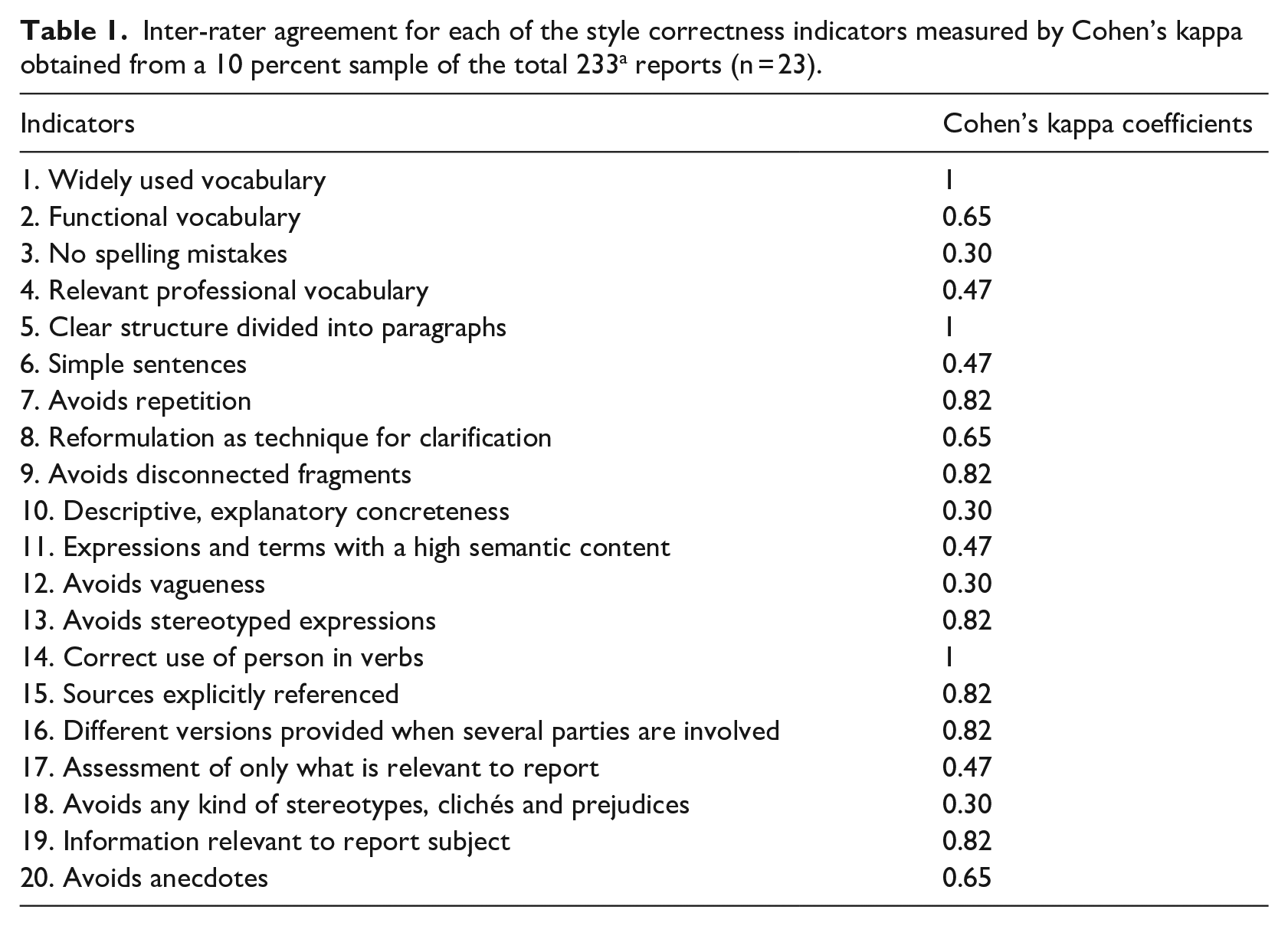
Each report was scored for each indicator using a three-item scale (fully consolidated, consolidated and unconsolidated) and Yes/No responses.
Several indicators were established for each variable. One point was awarded for each indicator.
The results make it possible to assess whether the presence of the variable analysed is not well consolidated, sufficient (consolidated) or insufficient (not consolidated).
Supplementary Table S4, prepared for this purpose, is included as supplementary material.
Results and discussion
Below are presented the results obtained after applying each of the techniques mentioned (semi-structured interviews with the social workers; content of the social reports that make up the sample; and analysis of the writing style of these social reports).
Interview results
The content of the interviews was analysed by the authors. First, the interviews were transcribed, and the information was sorted according to the subject areas. Second, the responses were grouped according to their similarity. The following are the highlights of the main topics discussed during the interviews with social workers:
Reports with pre-defined structure
Social workers reported that reports with a pre-defined structure, such as ‘Social Report to assess the dependency’ (Spain), based on an electronic template predetermined by the public administration, do not adequately capture the complexity of their cases. They do not consider standardised reports to be reports, but rather ‘social work questionnaires’.
The following are some of their views in this regard:
Social Worker 1: ‘Now it is fashionable to bring out a template for every situation. These reports are easier to do and they make the task quicker, but I don’t like them. They leave out our assessment while forcing us to fill in ancillary data such as the means of transport used by the person. What use is this information for applying for a place in a residential centre?’
Social Worker 3: ‘They are simple forms that can be filled in by any professional, you don′t need to be a social worker to fill them in’.
Social worker 4: ‘They are forms, they don’t explain, they don’t provide context, they only label (the person). And this is dangerous, because these categories are absorbed by other resources and the person is stigmatised’.
Confidentiality, transparency and social services users’ access to reports
All social workers interviewed stated that they consider it important to disclose to users the purpose of the report, before sending it, but they do not consider it necessary to explain to them that they have the right to ask for a hard copy under current regulations (Organic Law 3/2018, on Personal Data Protection and the Guarantee of Digital Rights and Law 1/2003, on Social Services in the Madrid Region).
The argument is that sensitive information may have a greater impact on the person when read in print in the report than when it is conveyed verbally to them. It is not about withholding information, they say, but about being able to qualify, justify or soften it in a conversation with the person. This idea is in line with O’Rourke (2010: 139), who alludes to the discomfort social workers may feel when writing openly about sensitive issues knowing that they will be read by the client.
Selecting and ordering information
All the social workers interviewed agreed that one of the greatest difficulties when writing a report is locating, selecting and ordering the information to be included, mainly because the data are scattered throughout the case record. The case record is opened when the person first attends the community social services centre and includes the social history, a document where all the person’s data are collected and where all the actions carried out are recorded chronologically. To write the report, the social worker must review the information contained in the file and in the social history.
Due to lack of time, participant social workers explain that this information is often disorganised. They propose as a solution structuring the information in subject areas (housing, economic, health data).
Report writing, structure and narrative style
All the interviewees considered reports their most important professional social work tool and, at the same time, one to which little attention is paid. They said that the two main obstacles to report writing were lack of time and difficulty concentrating. The SCC prioritises direct assistance to clients to the detriment of other activities, such as management and record-keeping. For this reason, interviewees said that they would like to be able to take time out of their working day to properly record information on cases, to facilitate the subsequent task of report writing.
The following are some of their views in this regard:
Social Worker 5: ‘I find it hard to give direct attention to concentrate on writing a report. I feel that there are urgent situations that I am not attending to. If a person comes to the centre without an appointment, I try to attend to them, even if I have to interrupt or postpone what I was doing. But these interruptions are constant . . . There are also the political pressures . . . they call you on the phone and ask you to do this or that core assessment, that it is urgent . . . it can take me several days to finish a report’.
Social Worker 8: ‘Court reports are the most difficult to do. It can take up to 12 hours. Putting so much data in writing, in an objective and orderly way and without value judgements is difficult . . . At the centre I can’t do it, the interruptions are constant (people to attend to, other colleagues, phone calls, emails). I often do this type of report at home, outside my working hours’.
All the social workers interviewed agree that it has become common for other government agencies to routinely request social reports, indiscriminately and without considering the purpose for which they are issued, but only with the aim of supporting their own actions. This has two effects: it increases the workload, and, through ignorance, there is a tendency to undervalue a highly complex instrument such as the social report because it is similar in importance to the core assessment, when the purposes of both documents are different (the report should include, in addition to the assessment, the recommendation or proposal for intervention).
The interviewees said that using more technical language produces more accurate reports, unifies criteria and gives a scientific character to their work. However, it makes it more difficult for service-users to understand the reports. So, practitioners considered it important to use wording that both other professionals and service-users can understand. They also noted that university training on report writing is sufficient but very theoretical. Specific practical training in this area could be helpful. This perception is in line with the findings of Rai (2014: 3), who in they research found that little importance is attached to professional writing during learning practices in social work.
Analysis of the sample of reports
Date and type
Of the 250 reports, 51 were dated between 1985 and 2005, and 199 between 2005 and 2015. It seems that the number of reports had increased by 390 percent over the last 10 years due to the growing demand for social care (Comunidad de Madrid, 2008; Lima, 2014) and because of a larger number of requests for reports by institutions, government, and other organisations (Fernández and Jiménez, 2006).
Reports that make up the sample are of a wide variety of types: reports to request a referral to a residential centre, reports to request the granting of a benefit or even court reports.
Specifically, 125 of the 250 reports analysed are related to the granting of benefits (26.8%) or with the allocation of resources (33.2%), while 39 reports (15.6%) are assessment reports, related to parenting assessments for child protection.
Minimum content of a ‘social report’
Reports dated before 2005
Personal information is included in 100 percent of these reports. Similarly, the person or family subject of the intervention is clearly identified in all reports. Information on ‘Socio-economic status’ (86.3%) and ‘Family unit characteristics’ (82.3%) is present in most of the 51 reports dated between 1985 and 2005.
Information on ‘Interpretation and assessment of the situation’ was found in 80.4 percent of these reports. Core assessment refers to the professional opinion issued after studying the situation, which must incorporate an analysis and interpretation of the information (Del Caño et al., 2012). However, in some reports, the content of this assessment is insufficient, including only standard phrases, such as ‘In view of the above . . .’, followed by a proposal for action. In these cases, core assessment in indeed present and has been considered in the percentage of results, but its truth also lacks content and does not fulfil its intended purpose.
Since most of the reports are related to obtaining benefits and payments, it is understandable that they contain information about the family unit and its socio-economic situation. Other sections such as ‘Social and neighbourhood relations’ only appear in 5.88 percent of the 51 reports dated before 2005.
‘Household health information’ is only found in 52.95 percent of the reports, under this or another name, while ‘Social environment characteristics’ appears in just 45.09 percent. According to Del Caño et al. (2012), this may be because the report’s objectives determine the variables found in the body of the report. In this regard, it is important to recall that in Spain, according to the General Council of Social Work (Consejo General de Colegios Oficiales de Diplomados en Trabajo Social y Asistentes Sociales, 1985), all social reports issued before 2005 were required to include this information, regardless of the purpose for which they were issued. The results, however, highlight the possible gap between institutional or theoretical indications and professional practice.
Reports dated after 2005
Among the 199 reports issued between 2005 and 2015, the most frequent content was ‘Personal information’ (99.49%, 198 of 199 reports). Along the same lines, all but one of the reports have explicit client/family unit information.
As mentioned above, currently in Spain, the Green Book on Social Work (Colom, 2005) establishes the minimum content valid for any report issued by a social worker, regardless of the type, agency or purpose of the document.
The Green Book requires a report to include a total of 20 variables. However, none of the 199 reports analysed fully complied with this requirement. Most reports contain between 14 and 16 of the variables. This leads one to wonder whether the list of variables required by the Green Book (Colom, 2005) is too exhaustive, especially considering that one of the main ethical dilemmas faced by professionals, according to the study by Ballesteros et al. (2012), is the appropriateness of sharing or disclosing information to other professionals. In turn, the data again seem to suggest a possible gap between theory and professional practice, as it seems difficult to reach a consensus on the content of the report in a profession such as social work, which is characterised by working in plural contexts and whose intervention varies depending on the group of users and the agency.
The analysis of this set of 199 reports shows that some of the variables were often present in the document body rather than under the heading or subheading recommended by the Green Book. These contents appeared under other headings, mixed in with the rest of the text. This happened especially with other interrelated criteria alluding to the family unit’s financial situation: ‘Employment status’ (69.84%), ‘Socio-economic status’ (68.84%) and ‘Housing characteristics’ (56.28%).
The dimensions ‘Issued by’ and ‘Date of issue’ were found in 97.98 percent of the documents reviewed (195 of 199). ‘Issuing institution’ was present in 97.48 percent of the reports and ‘Receiving institution’ in 84.92 percent.
Following Del Caño et al. (2012) and Rai (2014), it can be argued that these percentages are significant because including an issue date helps emphasise that the report has an expiry date, has been prepared for a specific moment in the client’s life and cannot be extrapolated to other purposes or times. In addition, the fact that the social worker and the institution issuing the report are identified in a large number of the reports helps create a group identity and gives a more professional appearance.
‘Core assessment’ (81.40%) and ‘Technical recommendation’ (70.85%) criteria were found extensively. However, interpretation of the information was missing since most reports simply summarise information about the service-users’ life histories.
In the section of variables with less representation in the social reports analysed, the following groups were found:
‘Demand made by the person’: data that only appear in 35.67 percent of the social reports reviewed.
‘Relationships’: variable present in 28.64 percent of the documents analysed.
‘Positive aspects of the person/family and environment’: only specified in 12.06 percent of the social reports collected.
‘Subjective perception of the person about his or her situation’: these data appear in 10.05 percent of the documents reviewed.
These four variables refer to the person’s perception of his or her situation, their empowerment and the strengths and resources that he or she can mobilise to change it. These are data that allude to the proactive capacity of the user rather than considering him or her as a mere passive agent who is a beneficiary of resources and benefits. However, their low representation in the sample of 199 social reports analysed suggests that these dimensions are not yet taken into account by professionals, or that they are not considered worthy of mention when drafting a social report, a circumstance that should be corrected in order to focus attention on users’ empowerment and not on their shortcomings or needs, as stated by Fernández and Jiménez (2006), Del Caño et al. (2012) and Rai (2014).
Writing style of a sample reports
Of all the reports, 17 did not have sufficient content to be analysed. These 17 reports were linked to a standardised report template for accessing the benefits provided under Law 39/2006 on the Promotion of Personal Autonomy and Care for Dependent Persons.
As shown below, the remaining 233 reports showed better indicators for clarity, relevance and reliability than conciseness, a criterion that was repeatedly violated.
Clarity: ‘Achieved’ in 127 reports (54.50%) and ‘well achieved’ in 54 (23.17%). Thus, 77.68 percent of the reports had explanations of whose clarity was acceptable or good.
Relevance: 59.22 percent of the reports were classified as ‘well achieved’ (138 of 233) and 27.46 percent (64 of 233) as ‘achieved’. This gives 86.68 percent of the reports that were relevant.
Reliability: 52.78 percent of the reports were classified as ‘not achieved’ (123 of 233). However, this figure was partly balanced by the reports classified as ‘achieved’ or ‘well achieved’, with an overall result of 47.22 percent of social work reports with reliable content.
Conciseness: This maxim was found to be ‘not achieved’ in 69.52 percent (162 of 233) of the reports. This is a remarkably high figure compared to the 18.88 percent of the total (44 of 233) whose conciseness was ‘acceptable’ and the 11.58 percent (27 of 233) for which it was ‘good’.
Table 2 and Figure 1 show a breakdown of the data.
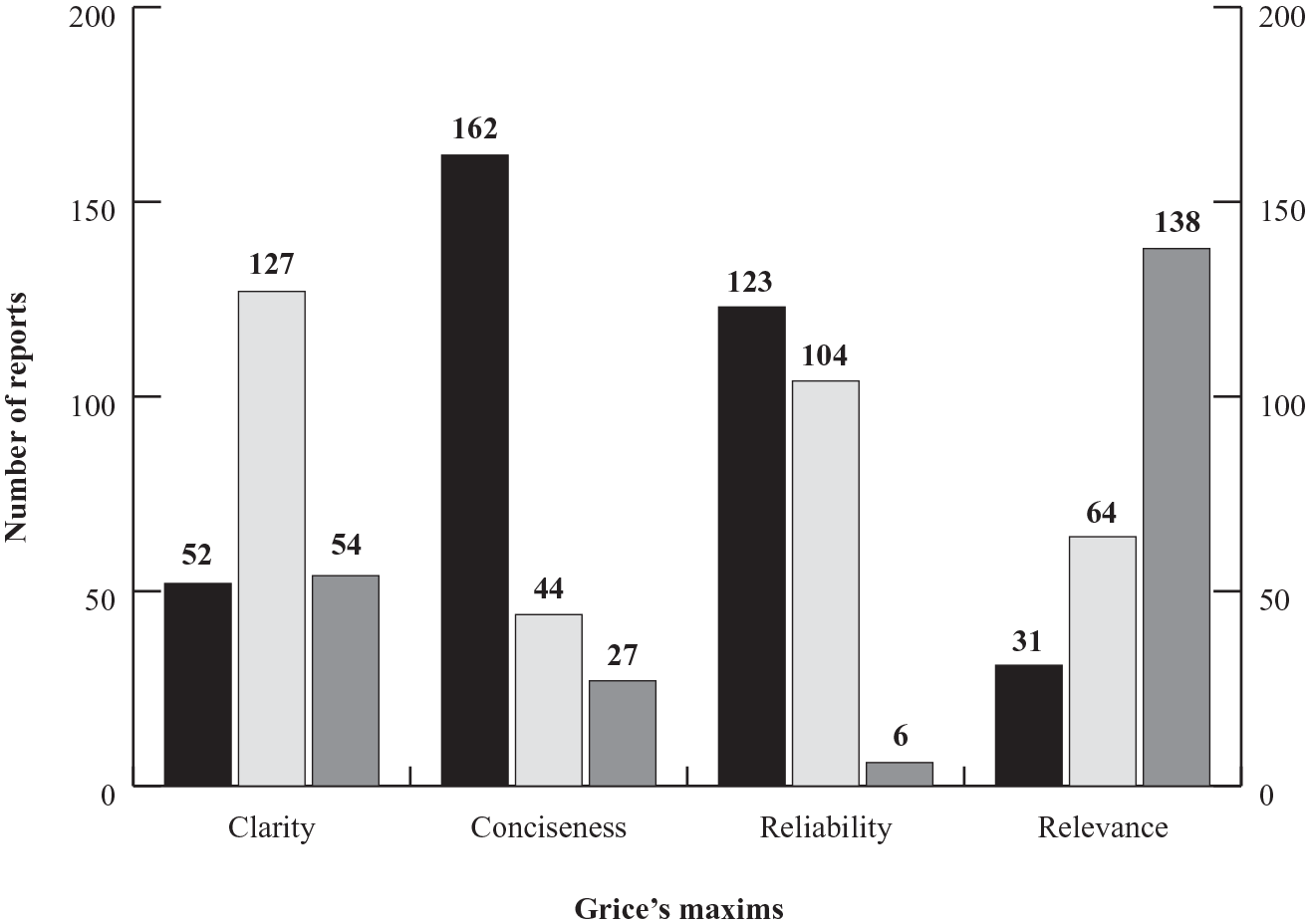
Number of reports with score not achieved (black), achieved (dark grey) or well achieved (grey) on each of Grice’s maxims (n = 233).
Number and relative frequency of reports according to the degree to which they have reached each of Grice’s 4 maxims (n = 233).
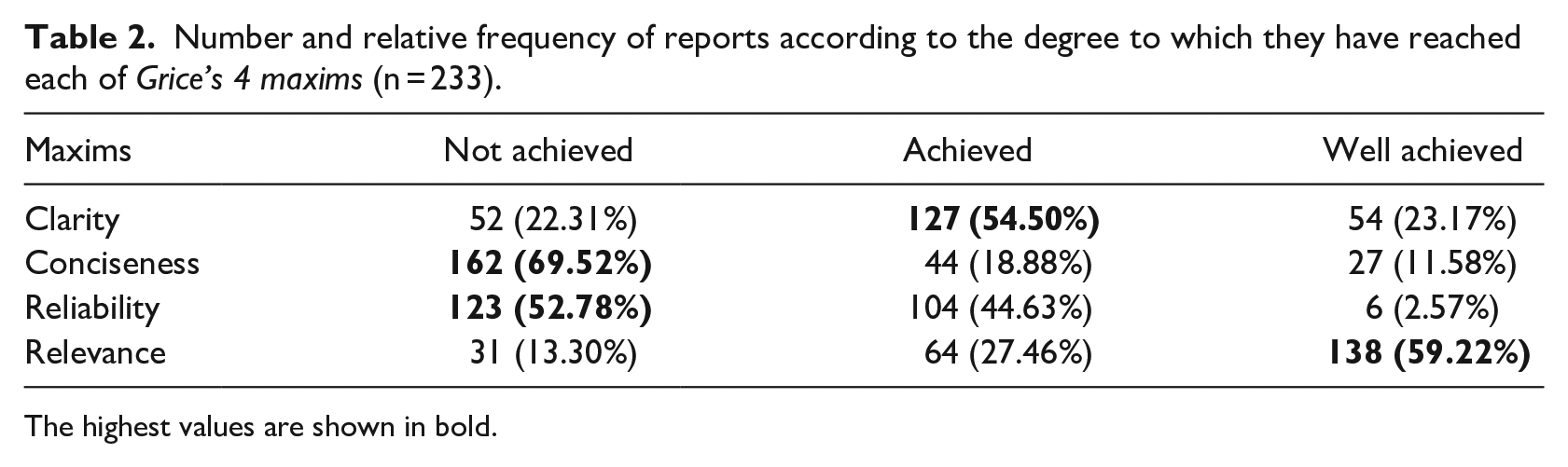
The highest values are shown in bold.
Indicators of clarity
The ‘Widely used vocabulary’ indicator was found in 98.28 percent (229 of 233) of the reports. So, most of the texts were written with widely used vocabulary, typical of standard educated usage, without jargon or obscure vocabulary.
This, together with a ‘Clear structure divided into paragraphs’ (82.83%), ‘No spelling mistakes’ (68.66%) and ‘Simple sentences’ (45.49%), indicates that most of the reports achieve the clarity maxim.
The 31.34 percent (73 of 233) with spelling mistakes seems a relatively high figure considering that social workers must have a university degree. However, it should be taken into account that these spelling mistakes also include any inappropriate use of commas or other punctuation marks and accents, which somewhat mitigates the result.
‘Relevant professional vocabulary’ was used correctly in 41.20 percent of the reports (96 of 233), while ‘Functional vocabulary’ was only found in 21.45 percent (50 of 233).
Figure 2 shows a breakdown of the data.
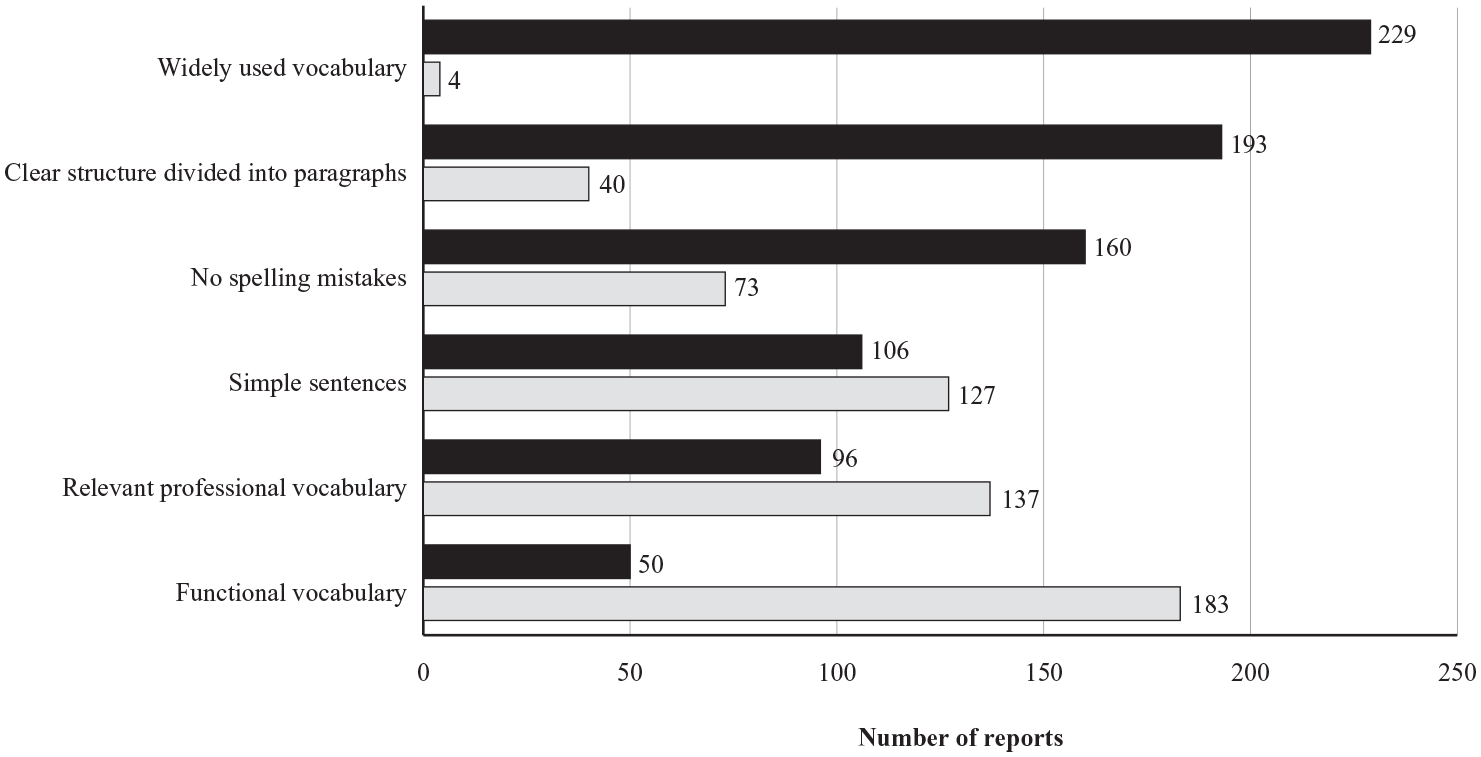
Number of reports that meet (black) and do not meet (grey) each of the identified indicators within the Clarity maxim (n = 233).
Indicators of conciseness
In the analysis of this maxim, the result for the ‘Expressions and terms with a high semantic content’ indicator stands out. It was not found in 83.27 percent of the reports (194 of 233). Groups of three or more words were used to explain something that could be synthesised in a single term, making it difficult to be concise. One possible explanation may be offered by Rai (2014), who mentions that ‘people have very different understandings and expectations about what “clarity” and “conciseness” are’ (p. 169).
Of all the reports, 77.69 percent (181 of 233) were considered vague and imprecise and were full of ancillary clarifications that made them difficult to read. Some 63.52 percent of the reports (148 of 233 documents) included ‘Stereotyped expressions’, with an implicit risk of perpetuating prejudices and clichés. The ‘Avoids repetition’ indicator was found in 62.23 percent of the reports (145 of 233), which means that the narrative was not repetitive. However, 59.66 percent of the documents reviewed (139 of 233 reports) lacked ‘Descriptive, explanatory concreteness’. This means that the essence of the discourse was lost in circumlocutions and overuse of the passive voice.
‘Avoids disconnected fragments’ was found in 59.22 percent (138 of 233) of the reports, which improved the conciseness of the overall text.
Finally, only 24.46 percent of the reports (57 of 233) used ‘Reformulation as technique for clarification’ correctly. This outweighs the greater recapitulation of arguments, leading to reiteration and increasing the percentage for this indicator.
Figure 3 shows a breakdown of the data.
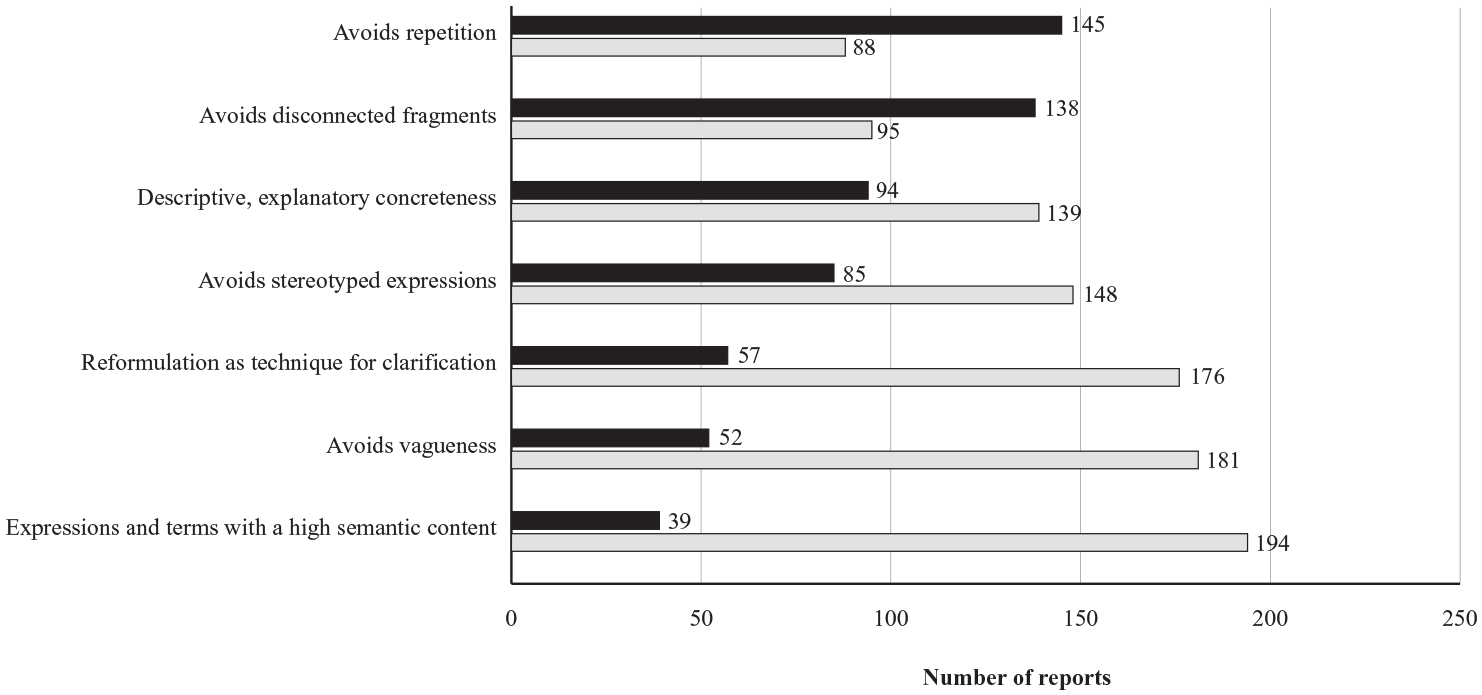
Number of reports that meet (black) and do not meet (grey) each of the identified indicators within the Conciseness maxim (n = 233).
Indicators of reliability
In this category, the most relevant result was that 96.56 percent of the reports comply with the ‘Correct use of person in verbs’ (225 of 233).
The ‘Assessment of only what is relevant to report’ and ‘Avoids any kind of stereotypes, clichés and prejudices’ indicators were met by 51.93 and 53.21 percent of the reports. This implies that 46.79 percent of the documents did contain stereotypes, clichés, or prejudices, which seems a very large proportion given that this compromises the reliability of the reports.
In addition, only 9.01 percent of the reports (21 of 233) cited the sources from which the information had been obtained. Only 15.02 percent included different versions when several actors were involved (35 of 233 reports), and this gives an indication of the low credibility and rigour of the documents analysed (Del Caño et al., 2012; Rai, 2014: 168).
Figure 4 shows a breakdown of the data.
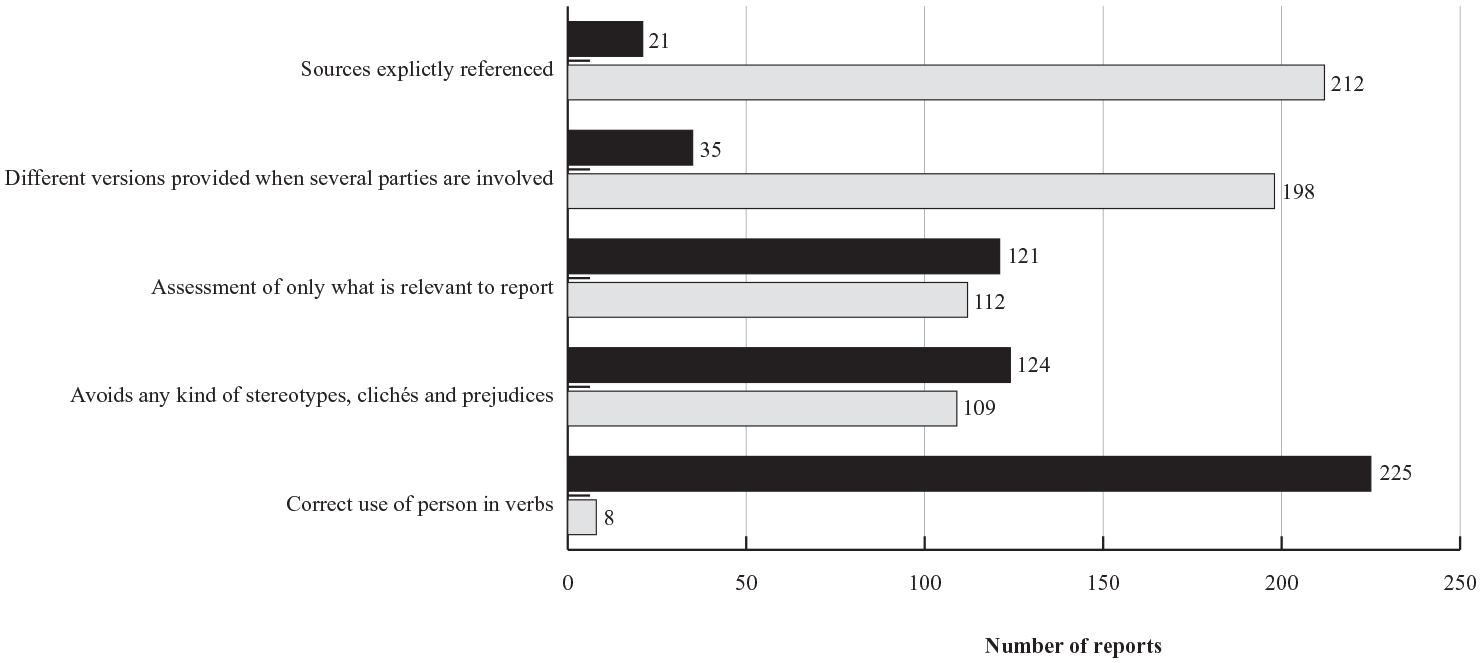
Number of reports that meet (black) and do not meet (grey) each of the identified indicators within the Reliability maxim (n = 233).
Indicators for relevance
Finally, it is notable that 59.22 percent of the reports contained information relevant to the report’s purpose (138 of 233). This result is similar to that obtained in the survey by Del Caño et al. (2012). They concluded that only 57.89 percent of the reports contained relevant language and information.
A positive figure is that 84.54 percent of the reports reviewed (197 of 233) did not contain anecdotes or superfluous information, making them relevant and appropriate to the report’s purpose.
Figure 5 shows a breakdown of the data.
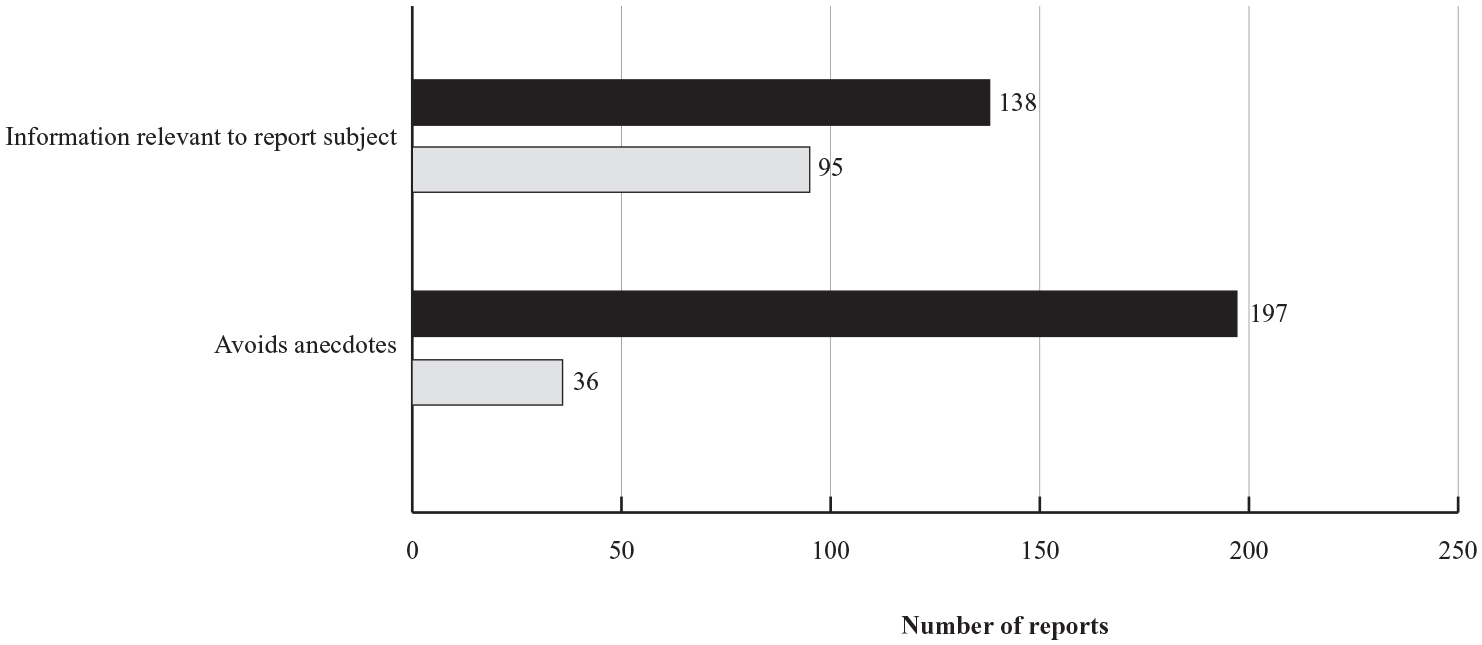
Number of reports that meet (black) and do not meet (grey) each of the identified indicators within the Relevance maxim (n = 233).
Conclusion
Before moving to the conclusions, it is important to note that the results of our study are limited to their specific context (Spanish) and to social workers like those who kindly participated in the research.
The interviews with the social workers at the SCC and the analysis of the sample of 250 reports showed two fundamental and similar results:
There is no single standard report that meets the needs expressed by social workers and the demands of agencies and institutions, including all the variables that the Green Book of Social Work (Colom, 2005) suggests that it must contain to be considered a true or proper ‘social work report’.
To improve the effectiveness of reports, social work professionals should write more reliable and concisely.
The analysis of 250 reports produced a remarkable result: none met the minimum criteria to be considered a proper report. This was true when looking both at those criteria recommended by the Manual of the General Council of Social Work (Consejo General de Colegios Oficiales de Diplomados en Trabajo Social y Asistentes Sociales, 1985) and those suggested in the Green Book (Colom, 2005). Although both manuals underline that there are circumstances under which reports do not need to fulfil the criteria for all the variables, in general, reports should fulfil them all.
The academy advocates an open model for reports, one which can be adapted to suit each case and includes variables strictly related to each report’s purpose (Del Caño et al., 2012; Fernández and Jiménez, 2006; Hernández, 2003; Munuera, 2012; Rai, 2014).
However, some of those interviewed suggested that there is a need for a new professional instrument that, while less exhaustive than reports, could be helpful for dealing with requests for specific information. This would not simply be a report with fewer variables issued under a different name. Instead, it would involve designing a new instrument meeting the information needs of government departments, organisations and other bodies without jeopardising or degrading the standard report.
It is important to note that our analysis of how reports fulfil the maxims proposed by Grice in 1975 (in Escandell, 2020) shows that reports are notable for their clarity and relevance. However, their writing style needs substantial improvement regarding conciseness and reliability to increase their effectiveness as professional communication tools.
Concise writing is essential for reports to achieve their purposes and ensure that their recipients can understand them. Reports must contain all the information needed to get the message across but no more (McDonald et al., 2015; Rai, 2014; Roose et al., 2009).
The specialist literature concurs that a concise writing style helps to improve the perception of reports as a social work tool because it provides rigour and protects information confidentiality while maintaining professional ethical standards (Ballesteros et al., 2012; Del Caño et al., 2012; Heffernan, 2006; Munro and Hardie, 2019; Roose et al., 2009: 328).
However, as well as being concise, reports must be reliable. Reliability is based on truthful and impartial information. This is essential to ensure that reports comply with the ethical precepts in the Social Work Code of Ethics (McDonald et al., 2015: 365; Munro and Hardie, 2019; Roose et al., 2009).
Sometimes the report written by the social worker will include a recommendation or a conclusion about the person’s life; namely, it will be a document with a persuasive character. However, persuasive does not mean manipulative. To ensure that this persuasive writing remains within professional ethics, it has to fulfil two main qualities: to be truthful and to include the voice of all relevant people represented, even when they express their disagreement with the social worker’s opinion (McDonald et al., 2015; Rai, 2021). This idea coincides with Del Caño et al. (2012), Giribuela and Nieto (2010: 62, 89) and Munuera (2012), among others, who describe the need to incorporate a new variable in the reports: the reference to how the information has been obtained and the sources. An unbiased report should include all points of view and a mention of the source of the opinion. Excluding this information may lead to ignoring the power imbalance between the professional and the person who is likely to be impacted by the recommendations contained in the report itself (Rai, 2021).
This criterion would be valid for any report written in any context or field within social work because it also aims to comply with the precepts of the International Federation of Social Work (IFSW, 2018): social work is a profession that promotes the empowerment of people and their participation in all aspects of the decisions that affect their lives. In short, it is about writing client-centred reports from a well-argued and proven professional point of view.
Despite the efforts to systematise and unify criteria around specific social work instruments (McDonald et al., 2015: 365; Giribuela and Nieto, 2010: 108), more work is needed to ensure that reports stand out for their rigour and professionalism.
Supplemental Material
sj-pdf-1-isw-10.1177_00208728221112728 – Supplemental material for Writing reports in social work: Characteristics, correctness and style
Supplemental material, sj-pdf-1-isw-10.1177_00208728221112728 for Writing reports in social work: Characteristics, correctness and style by Mayte Cortés García, Silvia Patricia Cury and Andrés Arias Astray in International Social Work
Footnotes
Declaration of conflicting interests
The authors declared no potential conflicts of interest with respect to the research, authorship and/or publication of this article.
Funding
The authors received no financial support for the research, authorship and/or publication of this article.

Supplemental material
Supplemental material for this article is available online.
Author biographies
References
Supplementary Material
Please find the following supplemental material available below.
For Open Access articles published under a Creative Commons License, all supplemental material carries the same license as the article it is associated with.
For non-Open Access articles published, all supplemental material carries a non-exclusive license, and permission requests for re-use of supplemental material or any part of supplemental material shall be sent directly to the copyright owner as specified in the copyright notice associated with the article.
