




Abstract
Empowerment is an often used concept and the work of Paulo Freire has helped to define the application and outcomes of approaches. The researchers visited Kibera in Nairobi, Kenya, during periods of political activity which had previously resulted in violence. Community members identified strategies employed in an attempt to curtail heightened risk. These factors were analysed to evaluate whether empowerment, as espoused by Freire, was still relevant in community development work. Empowerment strategies were multi-faceted and highlighted that they had created new issues for the community to address, suggesting strategy and outcomes need to be strong considerations in future work.
Introduction
In the 1960s, the seminal text, Pedagogy of the Oppressed was published and brought critical pedagogy into focus (Freire, 1970). Alongside this, the birth of social work and the global rise of charitable organisations saw efforts to empower individuals, families and communities, many attributing their efforts to the underpinning ethos of the Freirean ideology. Now, over 50 years later, this article investigates whether the Freirean ideology still has relevance for social work when working under the banner of empowerment.
To do this, the researchers visited the informal settlement of Kibera in Nairobi, Kenya, at a time of heightened political activity which, in previous years, had brought increased risk of violence. Various initiatives were employed to address these risks with the overall intention of empowering those within the community. This article will begin by looking at the work of Freire and theoretical concepts of empowerment, before introducing Kibera. Using a case study approach, identified themes will be presented, before concluding by appraising Freirean empowerment within the informal settlement.
Literature review
The concept of empowerment can be nebulous and is often used as a buzzword to capture the aims of projects with a purpose of initiating positive change (Gibson, 2018; Laverack and Wallerstein, 2001; Zimmerman, 1990). For social work, vague goals are unhelpful and instead we should appreciate grounded approaches which encapsulate social work knowledge, values and skills to make empowerment operational, arriving at a framework to inform practice (Lee and Hudson in Turner, 2017; Turner and Maschi, 2015).
Empowerment is a concept often used as a strategy to address lack of control over destiny and can result in the transformation of socio-political climates, which is achieved through the acquisition of new capacities, competencies and resources (Biegel, 1984; Rappaport et al., 1992; Wallerstein, 2006). In line with the multi-level concept, Mohajer and Earnest (2009) identified four different types of empowerment, these being psychological, individual, process/outcome focussed and social/political, with a recognition that there can always be a layered mix of all types. Rissel (1994) recognises that the outcomes of community empowerment can impact on individuals in terms of raised levels of psychological empowerment, and have wider ramifications in terms of political action, redistribution of resources and the positive impact of decisions.
A Freirean lens
In order for the oppressed to be able to wage the struggle for their liberation, they must perceive the reality of oppression not as a closed world from which there is no exit, but as a limiting situation which they can transform. (Freire, 1970: 49)
Freire’s (1970) pedagogical approach stemmed from knowledge generation and the subsequent power derived from the exploration of what was learned, resulting in cultural or social action. Freirean pedagogy moved away from the traditional educational approach of filling up the empty vessel (the student) with knowledge and believed that education was a process where facilitator and student were co-creators of knowledge (Gibson, 2018). Through this equalisation of power, Freire (2000) believed that students gained an equilibrium between theory and practice so that informed action could be implemented. This approach could then be reflected upon and considered in light of the impact on all levels, from individual, through community, to societal impacts, a process Freire termed praxis, described as ‘an ongoing interaction between reflection and the actions that people take to promote individual and community change’ (Wallerstein et al., 2005: 221). Through the process of engaging in critical debate and exploring subjective and objective reality, a Freirean approach can underpin a transition from dependence to interdependence (Black and Rose, 2002).
Conscientisation is intertwined with empowerment and focusses on developing consciousness and greater understanding of the individual’s place in the world. Facilitators must be empathetic to the world view of the participants while raising consciousness through problematising so that a discussion can be had, normally within a group setting (Freire, 1973). The aim is to initiate cultural action, the end result being a shared sense of knowledge and a new awareness of the world which can be enacted upon (Freire, 1970).
Conscientisation and praxis result from quality facilitation which is an element of the process that requires some careful consideration. Toomey (2011) warns that the people who are subject to actions from organisations who aim to empower are the ones who must live with the consequences of any intervention. External organisations have the ability to remove themselves from the community, but the members of the community are not afforded the same privilege – thus, any action to empower must fully consider implications of actions. There is a risk that the power balance between the facilitator and community members can be disempowering as facilitators are ‘gifting’ resources, and therefore may create feelings of guilt and gratitude among the populace.
When considering the different types of facilitators, Toomey (2011) recognises the role of Providers who give aid and resources to communities, but also identifies the role of Catalysts wherein individuals, organisations and communities work together for a common purpose, helping build capacity within the community to identify and solve problems, emphasising self-reliance and autonomous action (Datta, 2007). The spreading of messages through artistic pursuits is also highlighted as a role within community empowerment, the title of Advocates being attributed, whereas the role of Liberators aim to provide education for the masses, political activism, and solidarity. Recognising the importance of how community empowerment is approached by facilitating agencies, Toomey (2011) highlights that change can be more effective if it comes from within the community.
Participant experience is also something that needs to be considered in terms of engagement and outcomes. Mohajer and Earnest (2009) identified five factors which were recurring in evaluations and descriptions of Freirean-based empowerment programmes, as well as in his writings:
There should be clear vision of goals, agreed by all stakeholders, rather than just a general approach which hopes to ‘empower’;
Groups should be identified in terms of their ability to problematise and create dialogue to develop critical consciousness;
Programmes should have elements of skill development or enhancement;
Programmes should include content on culture, beliefs and values;
There should be a focus on community involvement.
For community empowerment to be effective, there has to be a move from consciousness to praxis wherein there is a recognition of disempowerment, raised awareness to influence how oppression is understood, and then economic, social and/or political action to bring about change. Throughout these stages there is critical thinking which stems from reflection of actions designed to challenge social conditions (Freire, 1970; Kieffer, 1984; Swift and Levin, 1987; Wallerstein, 1992).
A Freirean framework can be arrived at wherein community initiatives which aim to empower should evidence dialogue between participants and facilitators, praxis leading to informed action, conscientisation underpinning efficacy, and recognition that the experience of participants needs to inform approaches (Smith, 2002). For social work practice, appreciation of the Freirean approach recognises value in assisting service users to gain an awareness of how they relate to the wider society, and consequently, how they might work to address issues themselves. To do this, it is suggested that any framework which aims to analyse or implement empowerment strategies under a Freirean ideology needs to consider the process of conscientisation, the element of praxis, the facilitation (alongside participant experience), and the outcomes in terms of how power is addressed. These approaches within social work do not necessarily seek to reverse power structures, they aim to assist individuals to understand challenges, appreciate ways in which they can be addressed, and seek means (internal, collective and external) to work towards change (Cox and Pawar, 2006).
Introducing Kibera
The informal settlement of Kibera is positioned on the outskirts of Nairobi and has a well-established reputation epitomised by Fihlani’s (2015) description as ‘the Kenyan slum infamous for its overcrowding, poverty and lack of sanitation’. The 2019 Kenya Population and Housing Census provided a population figure for Kibera as 185,777, but local residents are of the opinion that the number is nearer 2.6 million.
Kibera is strongly associated with electoral violence, being one of the prominent sites during the violence that followed the heavily contested 2007 Presidential elections when across Kenya approximately 1300 people are believed to have been killed, with around 600,000 people displaced (Njogu, 2011; Schuberth, 2018). Violence had also occurred during preceding elections leading to fears that a tightly fought Presidential race in 2017 would result in inter-ethnic conflict. The elections were heavily contested between the incumbent President Uhuru Kenyatta and the opposition leader Raila Odinga. The first election result in August, which went in favour of Kenyatta, was subject to successful legal challenge by the opposition. Because of electoral irregularities, fresh elections were arranged for October. Odinga, citing that procedural flaws remained in place, then withdrew from the re-scheduled contest and Kenyatta went on to being elected with an overwhelming majority of votes. Tensions continued and were further heightened when Odinga was sworn in as ‘People’s President’ at an oppositional coalition ceremony in January 2018. With concerns growing about where the tensions could lead, in March, there was an unexpected meeting and well publicised handshake between the two main protagonists. Following this event, relations between government and opposition improved. Throughout this period, despite numerous violent clashes between opposition supporters and the police, relative peace was reported between different ethnic groups across Kenya generally and in Kibera in particular. The timing of the project coincided with the ‘People’s President’ being sworn in and the handshake between the two main protagonists.
Previous research focussing on Kibera has highlighted the impact of politics on the population (De Smedt, 2009; Osborn, 2008), the impact of infrastructure (Desgroppes and Taupin, 2011; Mutisya and Yarime, 2011) and social problems experienced by the population (Gallaher et al., 2013; Schouten and Mathenge, 2010). There has been some attention given to looking at the strengths within the population with a focus on community resilience (Vertigans and Gibson, 2019) and ways to empower the community (Hagen, 2011). However, little focus has been placed on how empowerment theories can, and are, being applied by members of the community, thus moving from viewing the population as victims, to agents of change. The researchers wanted to gather experiences from key members of the Kibera community and ascertain whether empowerment theories were underpinning change.
Methodology
Data for this project were collected in stages as per a case study strategy (Yin, 2013). A case study attempts to isolate a particular phenomenon to analyse it, and therefore often employs a number of methods to do this. For this project, the first of these methods was photovoice (Wang and Burris, 1997). The method asks participants to capture images which are then discussed and analysed by all participants and the researchers to look for common issues and meanings. Photovoice is built on feminist and Freirean principles and is a technique which can be used to question oppression and inequality, taking a pedagogical approach to address issues of power, with an aim to empower through the process (Gibson, 2018; Wang, 1999). This methodology was used with two different groups. In 2017, fieldwork involved 18 participants over a 1-month period which highlighted how resilience influenced the ways in which the community dealt with issues (Vertigans and Gibson, 2019). The second project was carried out in 2018 involving 40 participants and built upon the preceding research. This fieldwork was carried out towards the end of the elongated election and post period of heightened political activities. In the fieldwork, participants were asked to capture images that helped to explain why this period had been largely peaceful. Purposive sampling was used throughout the project and the researchers worked alongside community leaders and volunteers from Kibera to recruit participants and to translate for those who chose to speak in local dialects.
Following on from the photovoice projects, Freirean concepts were used as a framework for the research and analysis to look at the four areas of praxis, conscientisation, addressing power and facilitation/participant experience. Identified themes formed the basis for semi-structured interviews, so that the researchers could explore these with other members of the Kibera community, again using the same sampling process. These were conducted over 1 week and involved 30 participants. The results from all projects were then thematically analysed and are presented within the results. All the participants have been anonymised with only the gender of the respondent identified.
Results
Six key themes were identified: distrust of political processes; the role of media/social media; value of education; community role models; art and culture; and non-governmental organisations (NGOs). These themes are presented and discussed herein.
Distrust of political processes
Within the photographs produced for the photovoice exercise, a number of images focussed on election themes and appeared to underpin the Freirean processes of conscientisation and praxis. Electoral issues appeared to permeate the lives and actions of individuals with memories of violence stemming from the 2007 elections remaining prevalent, and these recollections shaped current attitudes towards politics and politicians.
The image seen in Figure 1 captured the stencilled images of politicians that were dotted around the informal settlement of Kibera, suggesting political allegiances. The dominance of images relating to politics was further explored in the interviews and what emerged was a strong sense of mistrust with regards to politicians and their messages: The enemy of Kenya is politics – Female participant Don’t bleed so they can lead – Male participant
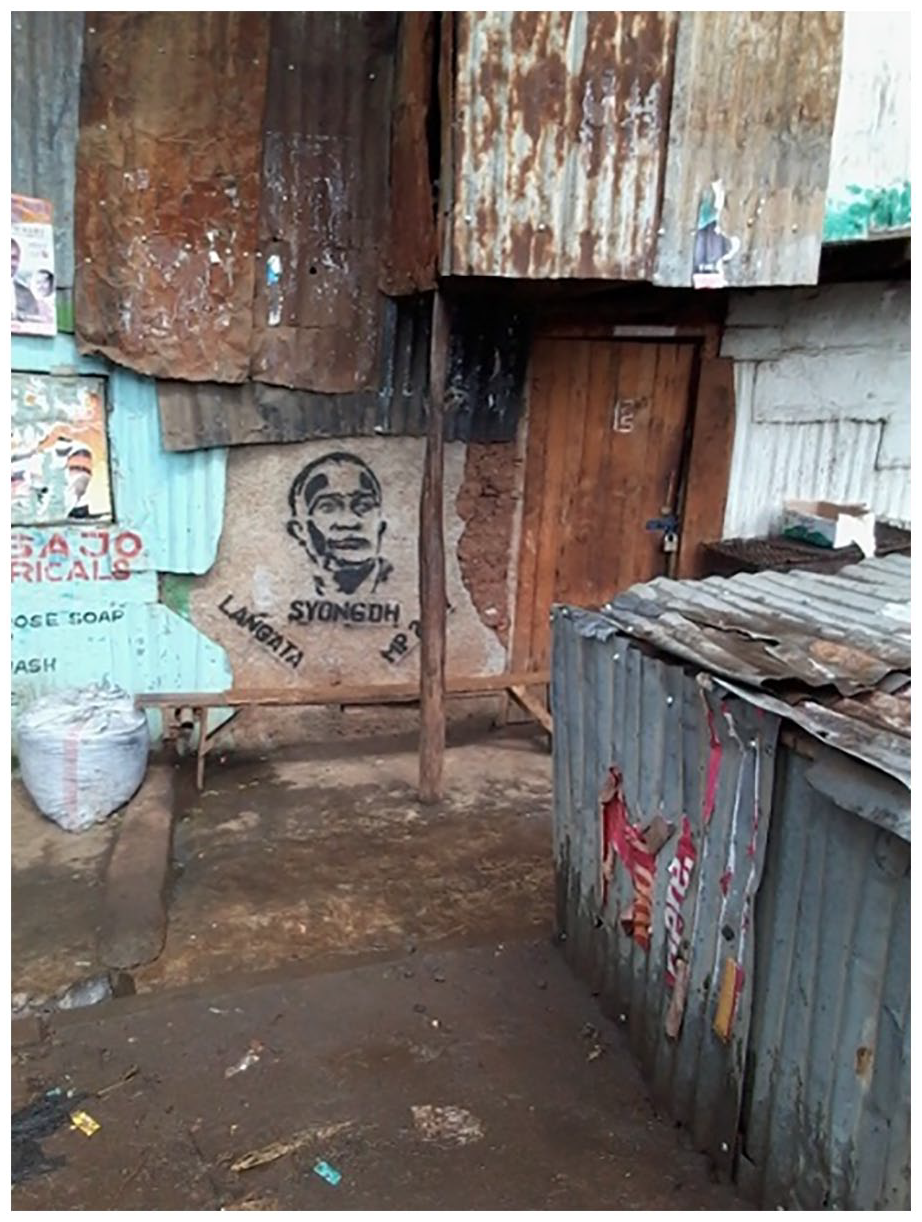
Photovoice project – political stencil on corrugated iron walls – May 2017.
The interviews gave further opportunity to explore this mistrust and many participants described memories of the community’s relationship with politics and politicians in 2007 where significant numbers of male youths had been encouraged to fight in the name of politics, many being paid for their actions: They were totally idle and they were being paid to harass people by the big politicians, they pay people to harass people here – Female participant
This tactic contributed to further ethnic divisions, and areas of Kibera that were populated by a multitude of politically opposing groups saw soaring violence in 2007/2008. Since then, the message of mistrust appears to have been communicated and, as a result, there was an increasing sense that the agenda of the politicians was being questioned: They realised that these politicians use us when they want to get their own jobs but after that they go away – Male participant
The ‘politician’ was viewed as an outsider by many, someone who had no real ties to the community and someone who only wanted votes, then had no interest in the lives of individuals in Kibera after the election. This divide added to the feelings of suspicion and mistrust: We, as Kenyans, we should have peace and love each other because the politics is something that comes and goes and you will not eat politics. We will vote for our leaders and they will be enjoying eating at home and you yourself you will be struggling to get something. So you don’t need to depend much on people, you should work hard, yes, it’s good to vote to whom you want but don’t depend on them too much – Female participant
The fact that ethnic allegiances had contributed so much to the violence of 2007/2008 did not go unnoticed by the participants, and there was discussion within the interviews about the geography of Kibera, ethnic dominance within specific areas, and which areas were viewed as ‘more problematic’ because of the political ethnic allegiances. These differences were highlighted by some of the participants who still viewed these divisions as potentially problematic: The Kikuyu tribe has controlled the economy for a long time, while in Kenya there are more, there are over 40 tribes, I think there are 42, 43 tribes rather, there is no way one tribe can control the economy, the other tribes also want to have a say in the running of the economy – Male participant
However, there was also reflection about how this could shape the future: I asked a question what kind of legacy are we leaving to the next generation or what are we doing in terms of . . . changing the norms in the society cause some of us we’ve grown up in this kind of bad leadership where you are separated and divided because of tribal and ethnic groups and stuff but what are we doing? What are we passing to the next generation or what can we do differently to be able to change this narrative? – Female participant
A considerable factor in the reduced levels of violence was linked to reflections on the past and how things could be changed to avoid such bloodshed again. One of the most common tactics identified was ensuring that people were kept occupied: So the best thing was, make them busy, organise seminars, organise workshops, get them into some activities which they can do just for them to pass their time and forget about destruction because you know the devil’s mind is the devil’s workshop – Female participant
Given that the risk of idleness was linked to being targeted by politicians to instigate trouble, the act of ‘keeping people busy’ was a deliberate strategy to reduce this risk.
The role of media/social media
The theme of conscientisation continued as the participants reflected on the ways in which the media played a different role in the 2017/2018 elections, compared with 2007. The photovoice images did capture photographs that represented the role of the media, mainly in how they conveyed messages.
In the picture seen in Figure 2, the image was used to highlight sensationalism as the extent of the violence in 2017/2018 was minimal in comparison with 2007/2008, yet where there were small pockets of trouble, the media were there to capture it. With reference to the Freirean technique of co-creating knowledge through dialogue, the researchers shared with the participants how these images were relayed in the United Kingdom and how it was reported that Nairobi was on the brink of violent repercussions from the elections, thus exploring perceptions about media portrayal on a local level compared with the international level. The reality was that such violence was isolated to a small area of Kibera and largely consisted of confrontations between local people and police and not inter-ethnic attacks. The participants reported that within Nairobi there appeared to be a responsible approach to broadcasting from the media companies, suggesting they were more selective and considerate in what was televised because of the potential reactions. This was also noted in other areas of the media and social media: Having advertisements on television asking people to maintain peace . . . the media houses as well, the people, radio presenters would really advocate for that. Also, individuals took it on social media to make sure that they preach the message of peace using hash tags – Male participant
These factors appeared to contribute to the ways in which the community members dealt with political uncertainty, largely through management of potential risks, and targeted messages of peace which were broadcast through a number of sources. As a result, people felt they had information which they lacked previously: Things were different this time because the youth and maybe the general public had clear information on what was going on, this was televised, they were on billboards and their circulars going around informing people that elections is going around the corner . . . so you need to be prepared mentally, physically, emotionally so that you may make a rightful decision on the ballot. So things were different because the information was properly laid down on the ground – Male participant
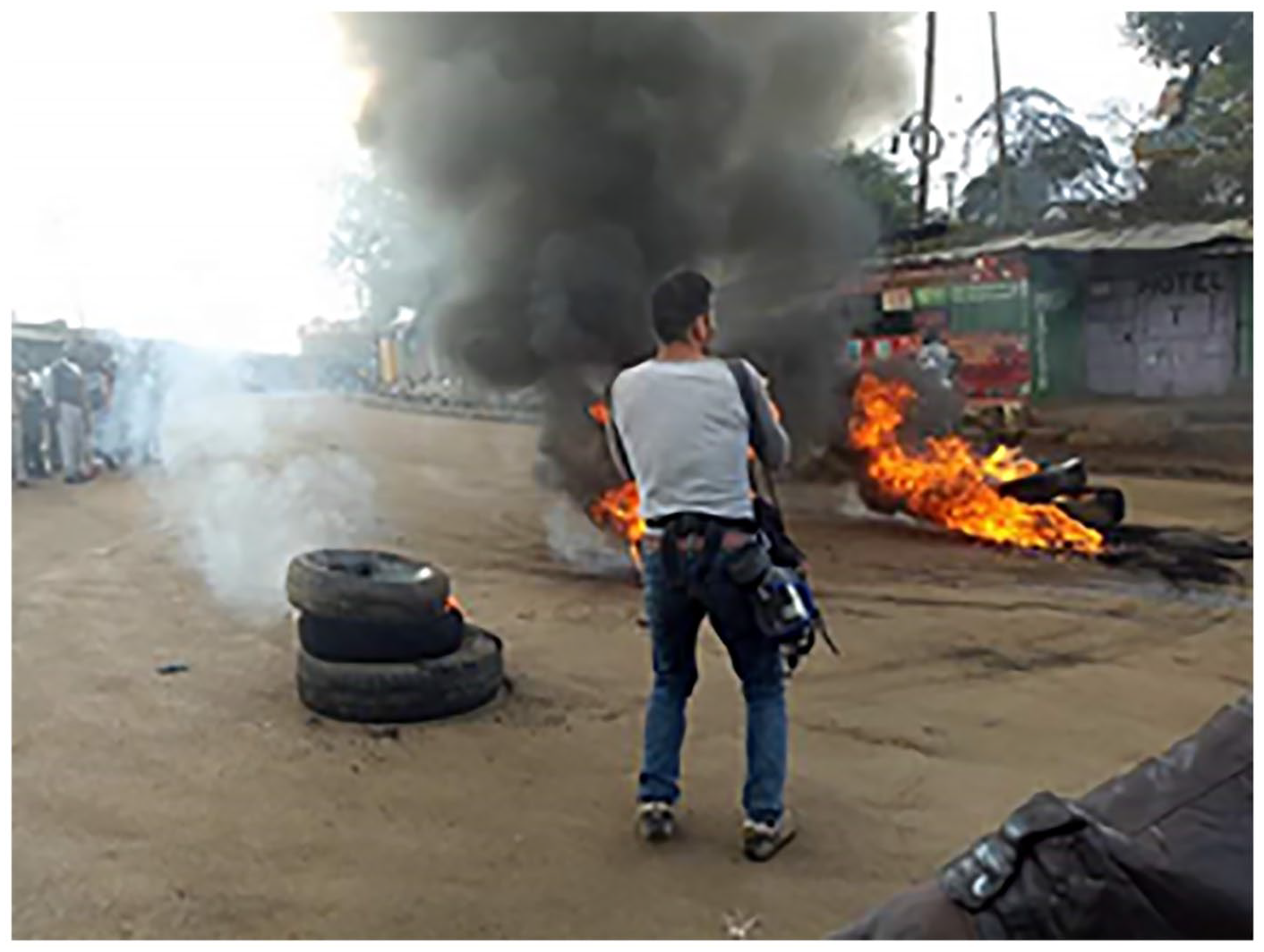
Photovoice project – international media crew filming violence in Kibera behind burning tyres – January 2018.
Value of education
Conscientisation was linked to the tactic of keeping the community busy, using this as an opportunity to inform, and the importance of education was highlighted in the photographs and interviews: Because there is unemployment, there is lack of education a lot of people are not educated, there is also tribalism because we are many like here in Kibera we have like twelve or twenty ethnic groups, so you see relating to each other becomes a problem – Female participant
Images from the photovoice project often captured education sessions see Figure 3, and these were seen as positive factors.
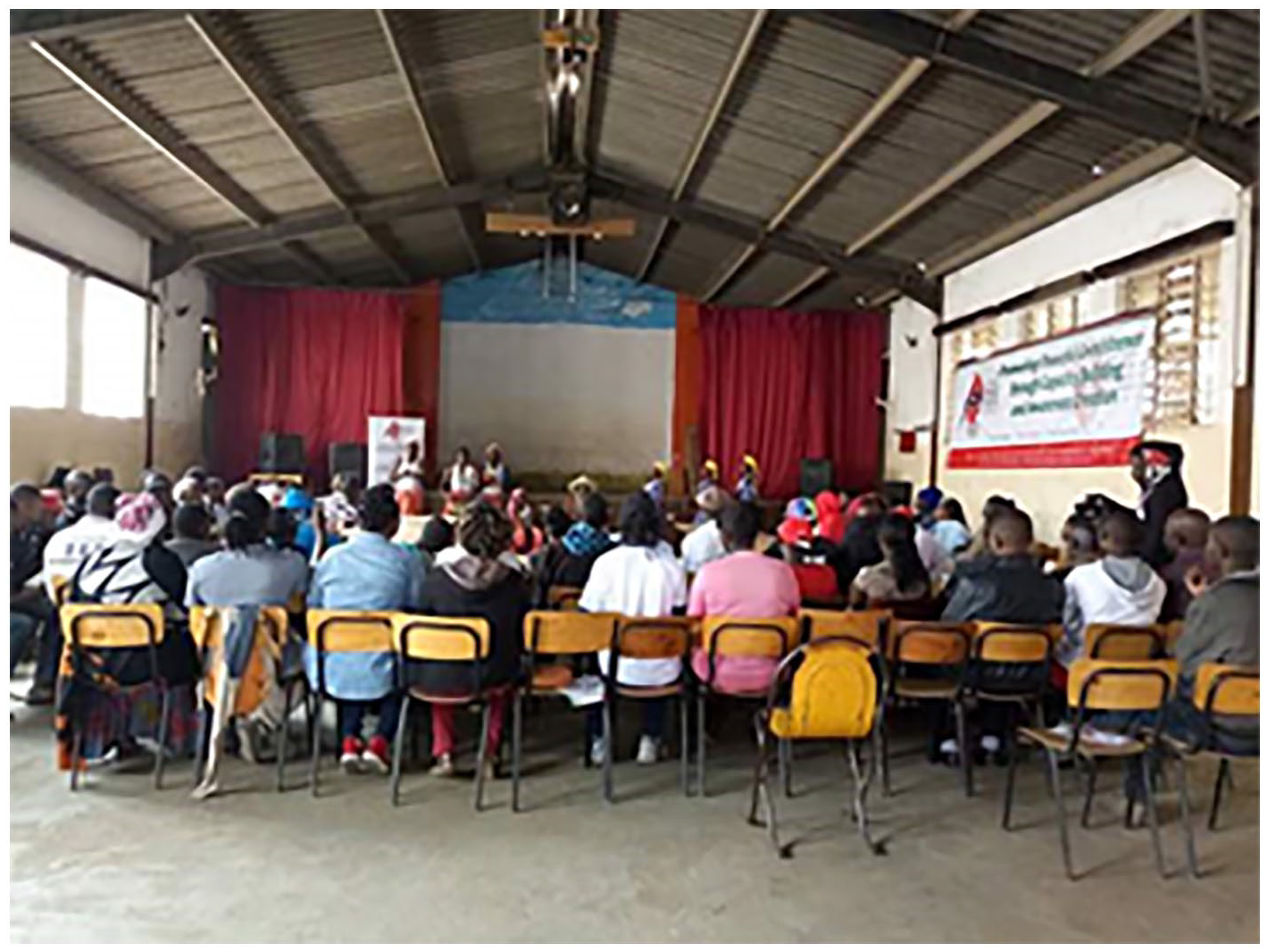
Photovoice project – an education workshop showing a crowd facing a stage as a presentation takes place – May 2017.
Education was very closely linked to the concept of empowerment, and when describing the impact of education within the interviews, the two were often discussed together: There are also schools, so we have also been empowered – Female participant After the post-election violence a lot of empowerment came through, like for example people were being taught in the seminars, we had a lot of work shops, we had a lot of forums where people were being called to be enlightened, so it was really the impact of living together – Male participant
The result of empowerment through education was viewed as being far reaching by one participant who went on to describe the larger socio-economic impacts of the widening access to information: [Through] education, most of them now are empowered, they know what they want in life and through that knowledge, will make them . . . reason more. Also there are many developments that has been done in the places, roads have been built, houses, good houses, toilets, yeah that made them not to be that bad and because they can see there is development – Female participant
Community role models
Although there was a conscious effort to bring about change in Kibera and to raise awareness of the risks and consequences of political violence, participants explained that there was a hierarchy in each smaller community that had to be respected and addressed which linked to the two areas of praxis and facilitation. In one interview, a female participant explained this hierarchy: As youths we have community leaders. Here in Kibera you can’t just wake up one day and say ‘You know what, I want to start this thing and the whole community should follow me’. So we have something we call protocol and that channel from our community leaders in Swahili we call them Wazee wa Kijiji . . . they helped us so much – Female participant
Another participant described working with ‘opinion shapers’, outlining a targeted approach to the dissemination of peace messages across the community. This involved focussing on community leaders, but it also involved learning from those community leaders who had successfully addressed the threats of tribal and political violence in the past.
The church was also instrumental in relaying the peace messages and this was noted by a number of participants in the interviews and the photovoice project (see Figure 4):
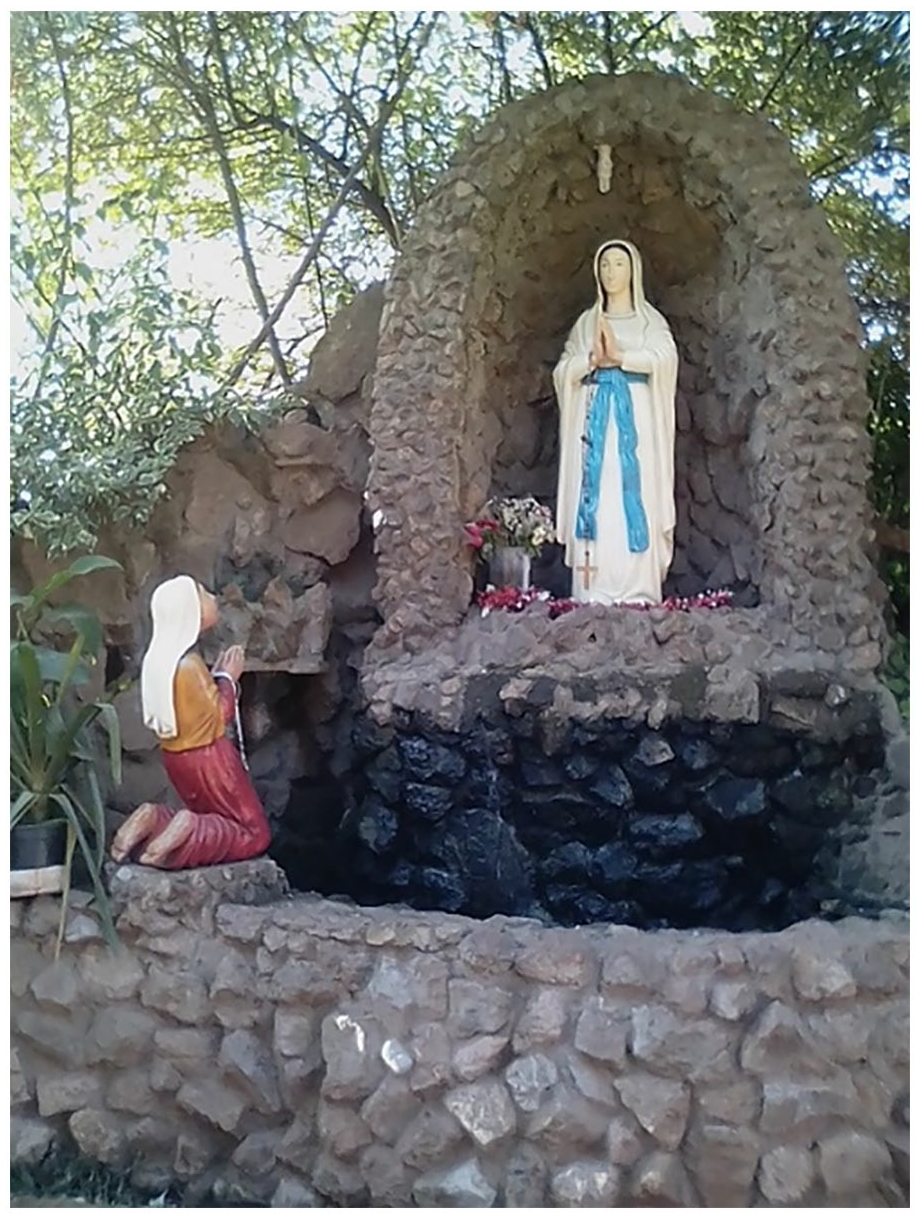
Photovoice project – religious symbols – January 2018.
It was viewed as a tool to bring people together and to use worship forums to reinforce peace messages: It was a sign of people coming together just to pray, and one of the agenda[s] was to pray for the country – Female participant Churches also participated a lot . . . because every Sunday when everybody goes for worship, they tried to remind them about peace – Male participant
However, other participants highlighted that sometimes the political standpoint of religious leaders could influence congregations, with one female respondent suggesting that there should be a ‘clear definition’ between the two roles.
The targeting of messages went beyond community leaders and there appeared to be a conscious effort to involve the female population within Kibera to spread the message of peace. The photovoice projects highlighted gender differences in the community and participants suggested that recent work from NGOs and CBOs had done a great deal to empower women (see, e.g. Figure 5), not least because women had been targeted during the violence in 2007/2008. Yet, participants from both genders, during the 2017 fieldwork, had expressed views that women’s relative empowerment had a detrimental effect on the male population in taking away opportunities from them which was contributing to greater male idleness, drugs, alcohol and criminal activities (Vertigans and Gibson, 2019).
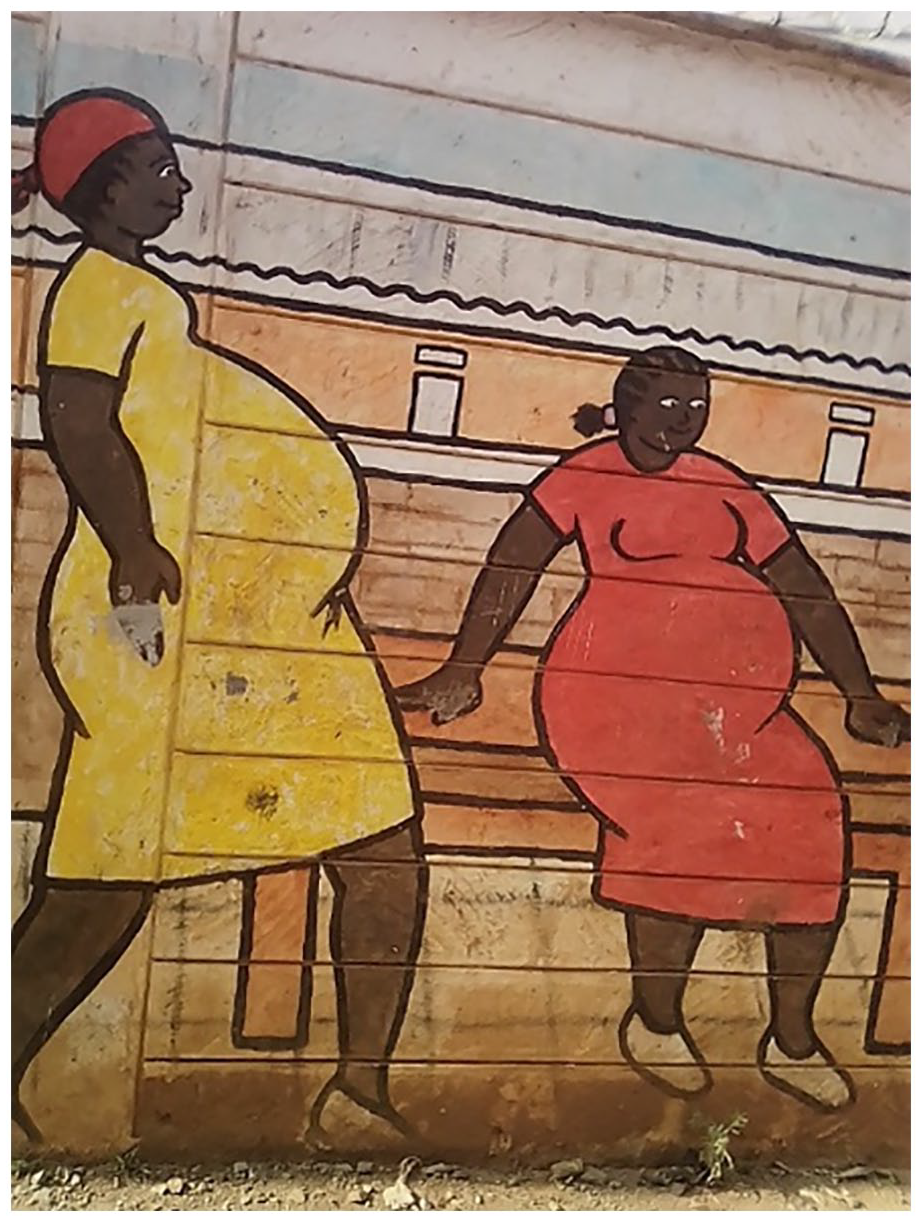
Photovoice project – mural depicting pregnant women outside a resource centre – January 2018.
In the interviews, the gender divide was evident in some of the statements: Most women or ladies in Kenya don’t really focus on election or politics. It’s only men who are very focused on following the politics very well – Male participant You know, a woman can go through a lot that a man cannot – Female participant
Despite these views, one male participant described how messages were targeted towards the female population of Kibera because they were greater in number than males, they talk to each other when they meet in other groups and forums, and they take the message back to the family homes: So these women, basically we were using them so much to cool down the temper – Male participant
Art and culture
All of the participants in the photovoice project identified the importance and impact of art and culture in relaying messages of peace, and also in affirming identity which transcended ethnic divides, appearing to support the concept of conscientisation. There appeared to be pride in coming from Kibera that enhanced identity, and a number of images captured the vibrancy of artistic expression within the area (Figure 6):
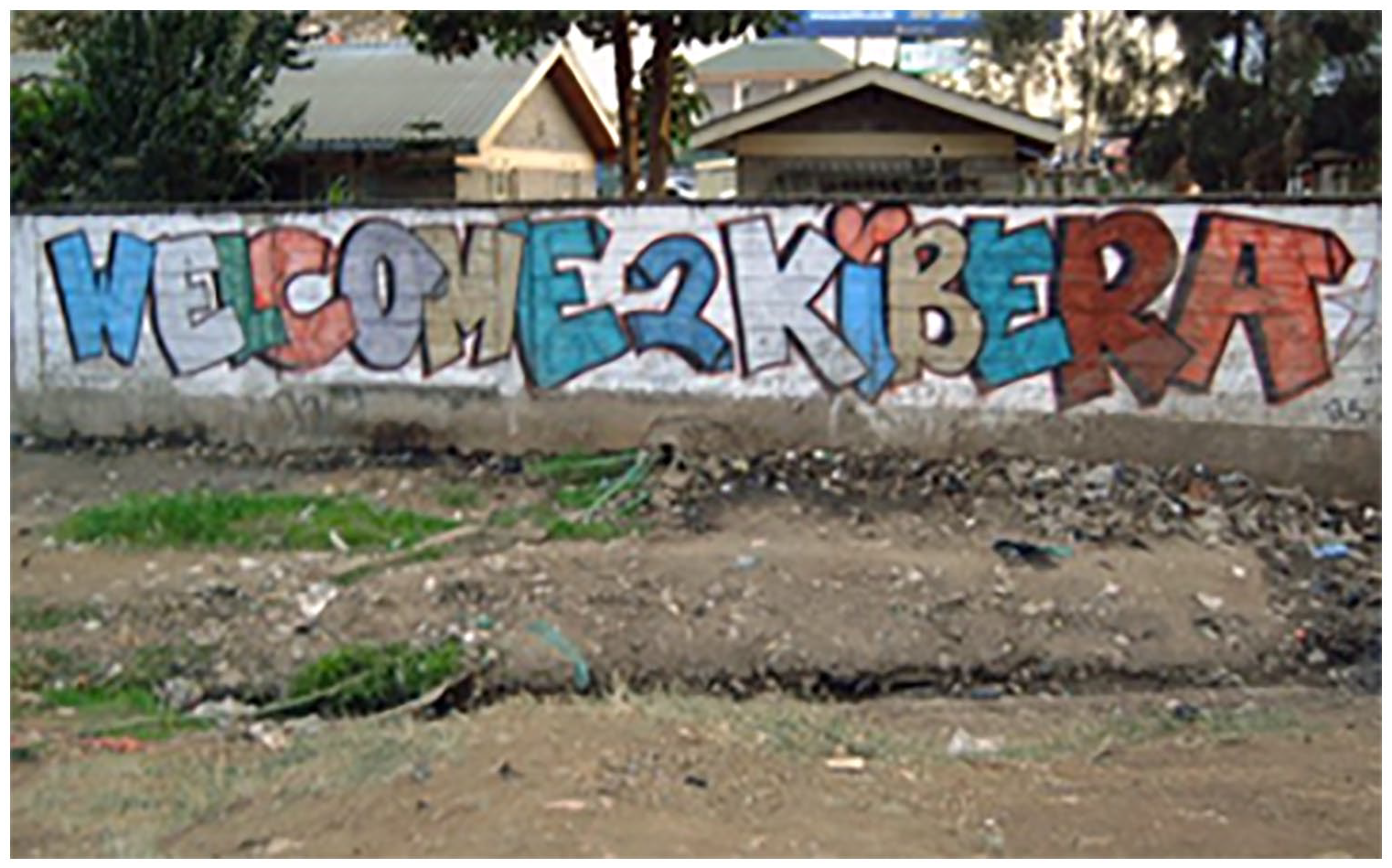
Photovoice project – mural on external wall reading Welcome 2 Kibera – May 2017.
The interviews also explored how art and culture were used to relay the peace messages through music, theatre and art: Like the music, musicians could sing about peace, the message they were relaying was about peace . . . the message from the music was teaching you to forget about the past and the importance of togetherness – Female participant We also used theatre to come up with things that would help people to understand that there is no need of fighting. We came up with drama, practicing and going out to the community, to the field, where here is an event we would go there and play the role and we would show them how to stop the fight – Male participant
The majority of interviewees also talked about the significance of Solo 7, a graffiti artist from Kibera who prolifically stencilled the community with messages of peace. Because his artwork was so prevalent, added to the fact that he was a resident of Kibera, this appeared to assert feelings of pride in the interview subjects and escalated Solo 7 to the status of a local celebrity.
Non-governmental organisations
Looking at the concept of facilitation, the role of NGOs was a divisive issue for the participants. The number of NGOs in Kibera is not known, with participants estimating the figure to be as great as 17,000, and their involvement was met with mixed responses. For some, the work of NGOs in building peace was a dominant factor in addressing the risk of violence: The non-governmental organisations played a very huge part in ensuring that there was peace after the elections – Male participant
This participant went on to identify specific international NGOs who targeted actions to certain sections of the population (an Irish NGO working with women who had experienced physical abuse, and another working with youths). Yet there were also negative perceptions of NGOs and some participants viewed them as opportunities for outsiders to make money: When the NGOs want to help people in Kibera they come with other people who don’t live in Kibera they start a very small project. They engage us as the community health volunteers . . . take us and use us and pay us a monthly stipend of 2000 shillings. After that they want us to go to the ground and collect information, mobilise and create awareness, refer and everything, but the thing is they don’t know how we live. They don’t feel our pain. And those who are there at the offices employ others, and we who are in the ground, they don’t see us. They are employed while we are given stipend. They are not fair at all – Female participant Sadly, there is a lot of organisations in Kibera, and sadly most of them are just self-enriched organisations, where they take advantage of the situation to mobilise resources and don’t see the impact of where the resources are going – Male participant
While opinion was divided, there was a sense that external funding had helped to improve the situation in Kibera, and when managed well, there were opportunities for local NGOs to learn from larger, international NGOs with a view to become more self-sufficient: So if they can come with these good messages they partner with the local NGOs . . . (to provide) education on the importance of peace . . . from personal level, household level, community, even nationally . . . peace starts from where [you] see yourself in your house . . . if you can maintain it at the community level it goes . . . national and even worldwide – Male participant
The essence of the discussion around NGOs arrived at the viewpoint that to address issues within Kibera, you had to first understand the issues, and these were best understood by those who lived in Kibera: You can’t bring outsiders to solve other people’s problems, you see probably our problems can be solved by us because we know each other, we know each and every corner . . . change has to come from within – Male participant
Discussion
The results support findings from other research, namely, the importance of a multi-layered approach to empowerment within the community where strategies followed a period of reflection and consideration of the issues (Boateng, 2020); and the value of participation to understand the action of politicians (Nikku and Rafique, 2019) – within Kibera, conscientisation appeared to show there was respect for democracy, but a strong sense of abandonment and a feeling of being used for political gains. This was set against the history and backdrop of ethnic politics and the geography of Kibera which saw particular groups dominating certain areas while living alongside other ethnicities. This awareness then informed the next stage of praxis where consideration had to be given to the nature of the message to be relayed, who the message needed to reach, and how it was to be conveyed. Once this was clear, a multi-layered approach to empowerment appeared to have been initiated.
Within the exploration of praxis and conscientisation, important factors were identified on this path towards empowerment. Education was highly valued in the community and appeared to have clear goals, targeted messages, incorporated knowledge and skills development, and were focussed on widening access and participation; alongside this, community role models were instrumental in forming groups and targeting populations. Art and culture helped engage others through spreading and disseminating peace messages; awareness of political issues was prevalent and evidenced conscientisation and praxis across Kibera; and NGOs with clear goals were well received within the community. In terms of problematisation and conscientisation, reflective questions which considered history, responsibility and solutions were a strong focus with all groups in an effort to understand the situation rather than to apportion blame.
The role of facilitators was important and it is difficult to trace the facilitation of empowerment in Kibera back to one source. There appears to have been a concerted effort to ensure peace – NGOs, religious leaders, the media, community leaders, youth workers and artists included. From Toomey’s (2011) identification of facilitator roles, there are examples emerging from Kibera: participants described Providers, particularly NGOs, bringing in essential materials to the community; there were examples of Catalysts, particularly where NGOs and community leaders worked to target groups (particularly females), facilitating change through information and education; the work of Solo 7 and others are examples of the Advocate spreading propaganda and art including community murals, an element of cultural identity that Wallerstein et al. (2005) also highlighted as an important factor in community empowerment; while Liberators embraced Freirean approaches to enable change through education.
In terms of outcomes and addressing power, strategies utilised in Kibera appear to have resulted in change and development, but this also had the potential to come into conflict with empowerment ideologies (Jönsson, 2010). Some of the participants discussed female empowerment, an issue which previous research suggests impacts on community dynamics (Windsong, 2019). The interviews highlighted mixed feelings towards NGOs which resulted in some organisations being viewed as oppressors. There was a strong sense that change had to come from within, using the knowledge and skills of the community which reinforces Freirean ideology, and that outcomes which were difficult to quantify or evidence may lead to poor perception of agencies within Kibera, as well as politicians out with Kibera. It was noted that education results in wider changes within the environment and society, bringing better infrastructure, improved housing, and efficient sanitation. This has the potential to change the way people live in Kibera, impacting on the community and unity – the difference between neighbourhoods becomes greater and the divide between communities becomes more obvious. Therefore, although education was highly prized in the community, perhaps there needs to be further emphasis on the element of reflection and critical consciousness so that the impact of strategic development can be understood, planned, and addressed, highlighting the need for the circular process of reflection–action–reaction–reflection.
It is important to acknowledge that the outcome of empowerment should also include psychological and individual empowerment (Mohajer and Earnest, 2009). Change will inevitably bring new challenges, but through community empowerment, members should also have enhanced self-efficacy and self-mastery and feel able to address issues – as one female participant stated in her exploration of politics, ‘so you don’t need to depend much on people, you should work hard, yes, it’s good to vote to whom you want but don’t depend on them too much’.
Conclusion
For international social work practice, the concept of empowerment is as relevant today as it was when Freire first penned his seminal text, particularly around issues of poverty, race, and oppression (Turner and Maschi, 2015), and from these results it appears that Freirean pedagogy still underpins empowerment strategies. Appreciation must be given to the limitation that the concept of empowerment is difficult to measure, and social workers who aim to empower need to understand that the impact is not immediate. Changes that occur may have long-lasting implications, and these should be considered in any project, suggesting that as well as asking about reflection and action, empowerment projects also need to consider the reactions which arise from change and engage in strategic planning. Notably, in Kibera, the changes arising from the emancipation of the female population create new dynamics within the community, while education potentially leads to a betterment of the environment as infrastructure improves. If social and gender divides increase, these changes have the potential to unsettle the current ideology of a strong, albeit patriarchal community which endeavours to ensure that neighbours look out for one another. However, change should not negate action – social workers looking to empower must pay close consideration to dynamics within the community, including an awareness of existing programmes and strategies, community influencers, and be prepared to learn from participants as programmes progress. As conscientisation moves towards praxis, there needs to be close reflection in action, and on action, to look at how empowerment can continue to evolve without disempowering others who are not directly involved in the process. Finally, it should be noted that although there are indicators of Freirean underpinned empowerment strategies, many are still recipients of services from NGOs and politicians; if change truly comes from within, then perhaps the goal of future strategies is to find the next generation of political leaders from within the community.
Footnotes
Funding
The author(s) received no financial support for the research, authorship, and/or publication of this article.
