




Abstract
Public appointments (PAs) are tools with the potential to transform and legitimize institutions. They can promote governance based on integrity and fairness yet may be subject to patronage due to high discretion vested in appointing authorities. The literature on this topic in Latin America is limited, with little focus on the subnational level. Democratic theories assessing appointment effects on legitimacy and trust in public institutions are lacking. Recent research has deepened the effect of organizational arrangements (OAs) as key procedural mechanisms to constrain discretion. However, their measurement remains unresolved. This study develops an instrument to measure the quality of OAs in PAs called the Evaluation System of Organizational Arrangements, aiming to understand the influence of OAs on the perceived outcome of 24 subnational PAs in Mexico. A documentary review of official documentation and cross-case analysis showed that the inexistence or low quality of OAs increases PAs’ discretionality, affecting governance perception and leading to patronage or hybrid outcomes. Local stakeholder engagement and digital innovation were the most relevant factors influencing perceived outcomes, followed by transparency and independent scrutiny. The analysis of perceived outcomes allowed us to characterize governance, hybrid and patronage appointments. These findings open new research pathways on the specific conditions that enable governance PAs.
Introduction
This exploratory research study aims to understand how organizational arrangements (OAs) enable public appointment (PAs) processes as a tool for good governance − namely, the perception of overall legitimacy, integrity and fairness − instead of patronage in Mexico.
Broadly speaking, PAs refer to the ‘capacity of elected politicians to appoint people in public or semi-public organizations’ (Sancino et al., 2018). PAs are one way to enter the civil service, and their main distinction lies in the fact that the rationale and motivation to appoint are delegated to the discretion of public authority. PAs are tools with multiple functions: they bring together bureaucracy and the governmental agenda; allow communication and interaction between sectors; accelerate public innovation; and can also be a tool for political control (Flinders, 2009; Flinders et al., 2012; Wood and Waterman, 1991).
Public appointments have not been sufficiently studied and have mostly been approached in terms of patronage. This fact has led to a limited view of appointments as a go-to tool for political parties and politicians to appoint based merely on their private interests or agendas, harming public management and impacting the capacities of institutions (Gallo and Lewis, 2012). Recent discussions have focused on observing the potential of PAs as tools for good governance (Cocciasecca et al., 2021; Flinders and Matthews, 2010; Sancino et al., 2018). This approach recognizes the capacity of PAs to shape the agenda of institutions, understanding the complex web of interests around a position, and the factors increasing the legitimacy and capacities of institutions. In this line of research, there is an unexplored potential to contribute to the understanding of public integrity and innovation of ‘PAs dynamics’ (Lopes and Vieira, 2023).
This study addresses three concerns raised by Cocciasecca et al. (2021) in their literature review. First, it responds to the absence of democratic theories studying the topic, specifically, legitimacy and trust in public institutions. Second, the research focuses on subnational PAs, and third, it addresses the underrepresentation of research on this topic in Latin America. This research fills these gaps by using the analytical framework of Oas − first developed by Sancino et al. (2018) − to observe the processes of PAs in Mexican States and their role in bringing legitimacy to the appointee beyond the mere claim of legality.
Theoretical backdrop: appointments, OAs and the Mexican case
Today's institutions have grown into specialized bodies in response to the social challenges and demands of the population. Institutions favour the devolution, disaggregation and specialization of single-purpose organizational units (Cejudo and Michel, 2017; Flinders and Matthews, 2010). They require the presence of qualified and competent personnel in matters that occupy the government, and the means to select these people are critical to guarantee legitimacy and institutional capacities.
Public officials can be selected through three main mechanisms: (a) democratic elections; (b) professional career services; and (c) PAs. This study focuses on public officials selected through the third mechanism. A broad definition of PA refers to them as a tool ‘through which public organizations are directed and controlled’ (Cocciasecca et al., 2021). This tool responds to the ‘capacity of elected politicians to appoint people in public or semi-public organizations’ (Sancino et al., 2018).
Appointed officials have been a growing trend in public organizations and semi-public agencies in response to new public management (NPM) and new public governance. Despite this trend, Cocciasecca et al. (2021) showed that PA lacks sufficient academic attention. Latin America and Africa are underrepresented. However, recent efforts to study patronage and the increasing politicization of public administration demonstrate the topic's high relevance (Panizza et al., 2023). Moreover, most studies so far have preferred case study analysis, review pieces and descriptive surveys, focusing on national or central government appointments.
While some studies in the field have examined appointments with a governance approach to understand the process and its role in ensuring public interest (Cocciasecca et al., 2021; Flinders and Matthews, 2010; Krause et al., 2006; Lopes and Vieira, 2023), the vast majority of the literature focuses on patronage and ‘spoils systems’ (Goldston, 1977; Kopecký et al., 2016; Meyer- Sahling, 2006; van Thiel, 2012; Wood and Waterman, 1991).
It has been argued that the predominance of patronage studies is result of a ‘combination of lazy thinking, unconscious theorizing and a reluctance to undertake detailed empirical research’ (Flinders et al., 2012: 513). In turn, the conceptualization of the topic has become sloppy leading to a misinterpretation of patronage and PAs as synonymous (Flinders, 2009)
The current literature views PA as a governance tool (Flinders and Matthews, 2010; Flinders et al., 2011, 2012; Toral, 2024). For example, Flinders and Matthews (2010) called for certain ‘safeguards’ to ensure merit, transparency and competitiveness in a process with necessary political calculations and bounded rationality for administrative and cross sectoral coordination. In exploring governance PA, scholars examined the ‘scope enjoyed by ministers in terms of the extent of their appointment powers’ (Flinders, 2009: 550) in PA from the United Kingdom. While ministers may exercise patronage powers for the public interest, the lack of transparency often leads to suspicion of system exploitation for personal goals.
Efforts to differentiate PAs from patronage appointments have opened an intriguing path of study, focusing on mechanisms of PA to constrain the political discretion of appointing authorities (Amado, 2001; Panizza et al., 2023; Sancino et al., 2018). Most importantly, I argue that the observance of PAs as a process − beyond its politicized nature − enables the analysis of this tool as a public policy ‘by the decomposition into its components, but also the design and synthesis of new alternatives’ (Quade, 1982: 4).
The study of PA as a process requires us to understand the inherent ‘reach’ that appointing authorities possess. By reach we understand the ‘freedom enjoyed by ministers when making an appointment’ (Flinders, 2009) or in other words, the discretionary authority ‘to exercise as it thinks fit’ (Chand, 1949). A pure form of reach or ‘discretionary authority’ is associated with a patronage-based system because it eliminates accountability due to the absolute lack of procedural standards.
This study examines ‘constrained reach’ using the analytical framework of OAs proposed by Sancino et al. (2018). This framework recognizes the power and legality of the appointing authority and, in turn, establishes a series of OAs that aim to influence the legitimacy of public appointments as a good governance tool, that is ‘the perception of the overall integrity and fairness of the process of public appointment among the main actors’ (Sancino et al., 2018: 796).
The framework proposes six OAs to study: transparency; media and public awareness; job description and educational/professional requirements; independent scrutiny; local councillors; and local stakeholders. Despite the innovative analytical framework, the description and level of detail provided for observing OAs are limited, making it difficult to extrapolate the evaluation to other contexts. Therefore, this study developed a detailed framework for the analysis and measurement of OAs in PAs (see the ‘Research method’ sub-section).
I incorporate an OA called digital innovation, motivated by the growing relevance of government digitalization and its role in controlling corruption and improving participation (Basel Institute on Governance, 2017; Kahn et al., 2018; Shim and Eom, 2008).
Public appointments in Mexico
The origins of patronage in Mexico date back to the last century's partisan hegemony and its bureaucratic clientelism (Dussauge Laguna and Casas Benítez, 2023). By the late 1970s, Grindle (1977) conceptualized clientelist practices in Mexico's bureaucracy highlighting the role of ‘sexenio’, ‘palanca’ and ‘confianza’ 1 as institutional mechanisms for forming government and professional networks. These mechanisms shaped the political mobility and public career of politicians and officials, with a ‘widely shared understanding of how career mobility can be achieved most effectively within the political system’ (Grindle, 1977: 39).
In the 1980s and the 1990s, this traditional model faced a paradigm change due to the NPM and democratic advances. Since then, Mexico has sought to consolidate its administrative and institutional systems, although corruption has remained a problem throughout the political and institutional systems (Arellano Gault, 2018; Nieto Morales, 2020; Pardo, 2023).
New public management is based on the principles of effectiveness and efficiency, with a government performance orientation. NPM brought the need for professional civil servants, and the emergence of autonomous bodies and agencies introducing a new layer of complexity in coordination tasks (Pardo, 2010). In response, academic interest in analysing technocracy increased (Ai Camp, 1983, 1996; Ai Camp et al., 1991; De Sheinbaum, 1983). With the NPM, the ‘technocrat’ profile emerged, creating changes in ‘the patterns of political recruitment, alterations in the socialization of political leaders, greater importance of professional careers to advance within the political system and, very significantly, adjustments in the stability of the State’ (Ai Camp, 1983: 579). Despite professional expertise becoming a criterion for technocratic recruitment, the political power was maintained by the elite through networks linked to socioeconomic and political affinities, origins and university group affiliations.
Mexico has been unable to break the vicious cycle of patrimonialism (Arellano-Gault, 2013). Despite reforms since 2000 − after the country's first political alternation − the normalization of ‘palancas’ has consolidated within Mexican culture, creating a ‘debt’ scheme expecting unconditional loyalty to those in power. Thus, ‘palancas’ are a favour exchange mechanism, a social trap intimately linked to corruption allowing involved parties ‘an open path to contubernia and collusions that can be extremely productive and efficient in enriching themselves and expanding their power’ (Arellano-Gault and Trejo Alonso, 2021: 77).
The Professional Career Service (PCS) was established in 2003. However, more than two decades later, the Mexican case has been catalogued as a failure in Latin American countries (Pardo, 2023). Héctor Ruiz-López points out that the PCS has done little ‘to guarantee job stability and to democratize and make transparent the recruitment, selection, entry, training and professionalization, promotion or advancement, and, if necessary, separation from office’ (Ruiz-López, 2023: 534).
The professionalization of Mexican PA, although limited, has focused on positions obtained through the PCS. The same applies to the country's academic literature, which predominantly address this issue from the perspective of patronage at a national level (Aguiar Aguilar, 2023; Dussauge-Laguna and Casas, 2023; Ibarra Cárdenas, 2024; Olvera, 2022).
According to Observatorio Ciudadano de Designaciones Públicas, over 1200 positions are appointed at the subnational level and 123 at the federal level. PAs gained relevance after the National Anti-Corruption System was created in 2016, with an increasing demand for merit-based PAs (Gómez-Álvarez et al., 2024). The National Anti-corruption Policy (PNA) recognized these positions’ importance and addressed their legitimacy (see Estrada Rodríguez et al., 2022; Monsiváis Carrillo, 2019; Monsiváis-Carrillo, 2020).
The PNA established guiding principles to combat arbitrariness and power abuse and improve public management and government−society contact points. The Interdisciplinary Accountability Program argues that institutional seizing weakens capacities and diverts public objectives towards private interests. Thus, addressing this issue ‘constitutes the backbone of any strategy to combat corruption’ (Interdisciplinary Accountability Program, 2018: 7).
The Citizen Observatory of Public Appointments and ‘Perfiles Idoneos Ya’ have demanded citizen monitoring and involvement to ensure impartial PA processes with a gender perspective and cultural relevance. Despite growing public interest in PAs, Pardo warns about power concentration and reduced government counterweights in former President López Obrador's (2018−2024) administration, noting that ‘the proposed transformation is not including public administrations and teams of officials trained in government experience, and with technical capabilities, but in personal loyalty and political empathy’ (Pardo, 2020: 162).
Research method
This research is framed within public management and governance studies using the analytical framework of Sancino et al. (2018). The research question is as follows: How do OAs influence the perception of discretion in PAs at Mexico's subnational level?
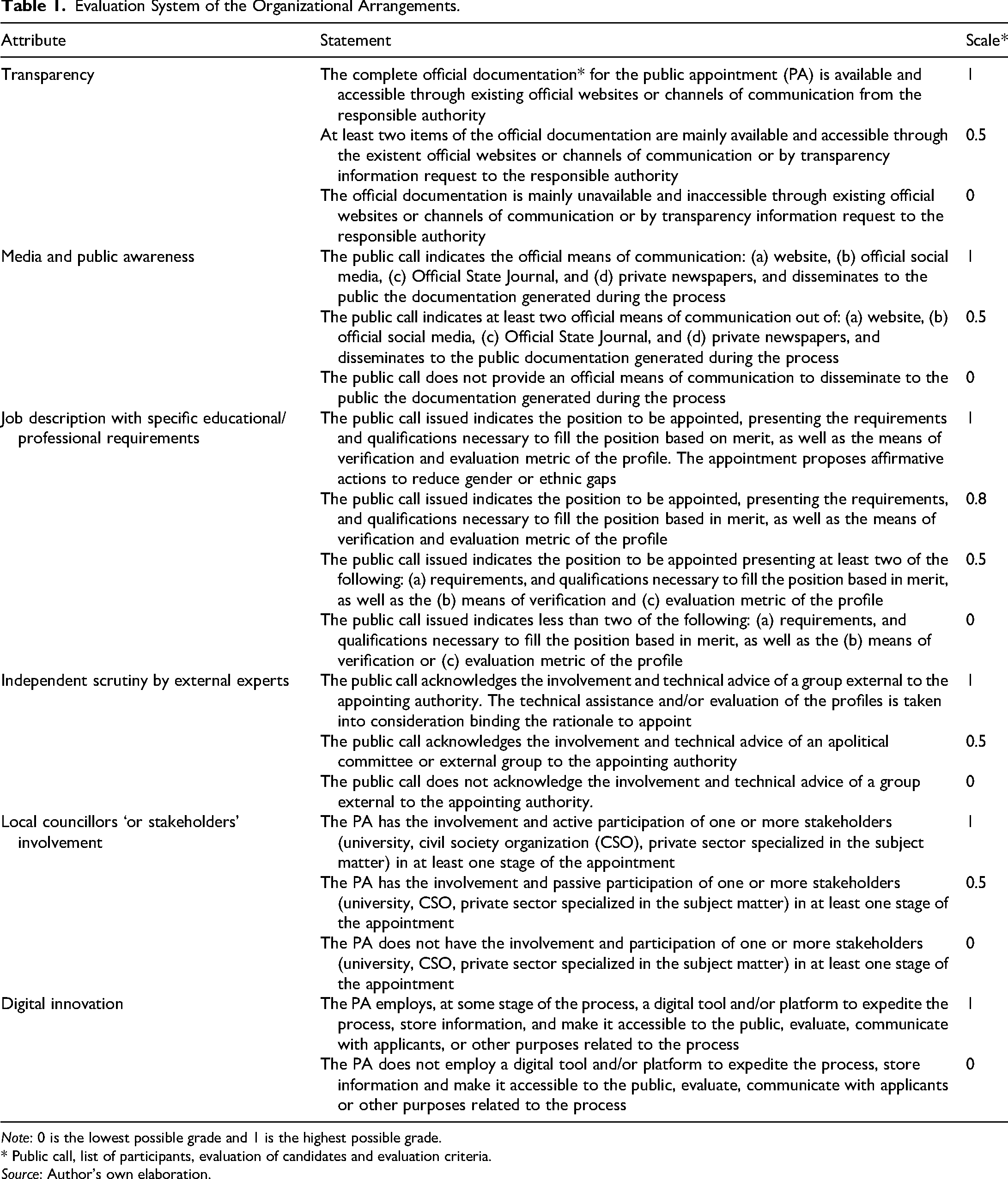
The hypothesis, based on previous work and the findings of Sancino et al. (2018), states that OAs’ existence and quality reduce the level of discretion in PAs, enhancing the perception of governance: the integrity; impartiality; and fairness of the process. To test this, I conducted documentary research and cross-case comparative analysis of 24 PAs at the subnational level, assessing OAs using the Evaluation System of the Organizational Arrangements (ESOA) (see Table 1).
Evaluation System of the Organizational Arrangements.
Note: 0 is the lowest possible grade and 1 is the highest possible grade.
* Public call, list of participants, evaluation of candidates and evaluation criteria.
Source: Author's own elaboration.
This study was conducted between December 2023 and July 2024. Figure 1 outlines the case selection process, documentary collection and analysis stages. PA cases and their perceived outcomes (governance, patronage and hybrid) were selected through purposive sampling survey of practitioners and policy experts from ‘Perfiles Idóneos Ya’, an independent network of civil society organizations that has served as external evaluators of national and subnational public appointments since 2020. They identified 27 cases according to their respective perceived outcomes, that is, the overall legitimacy, integrity and fairness, considering factors such as procedural integrity, transparency and stakeholder participation.
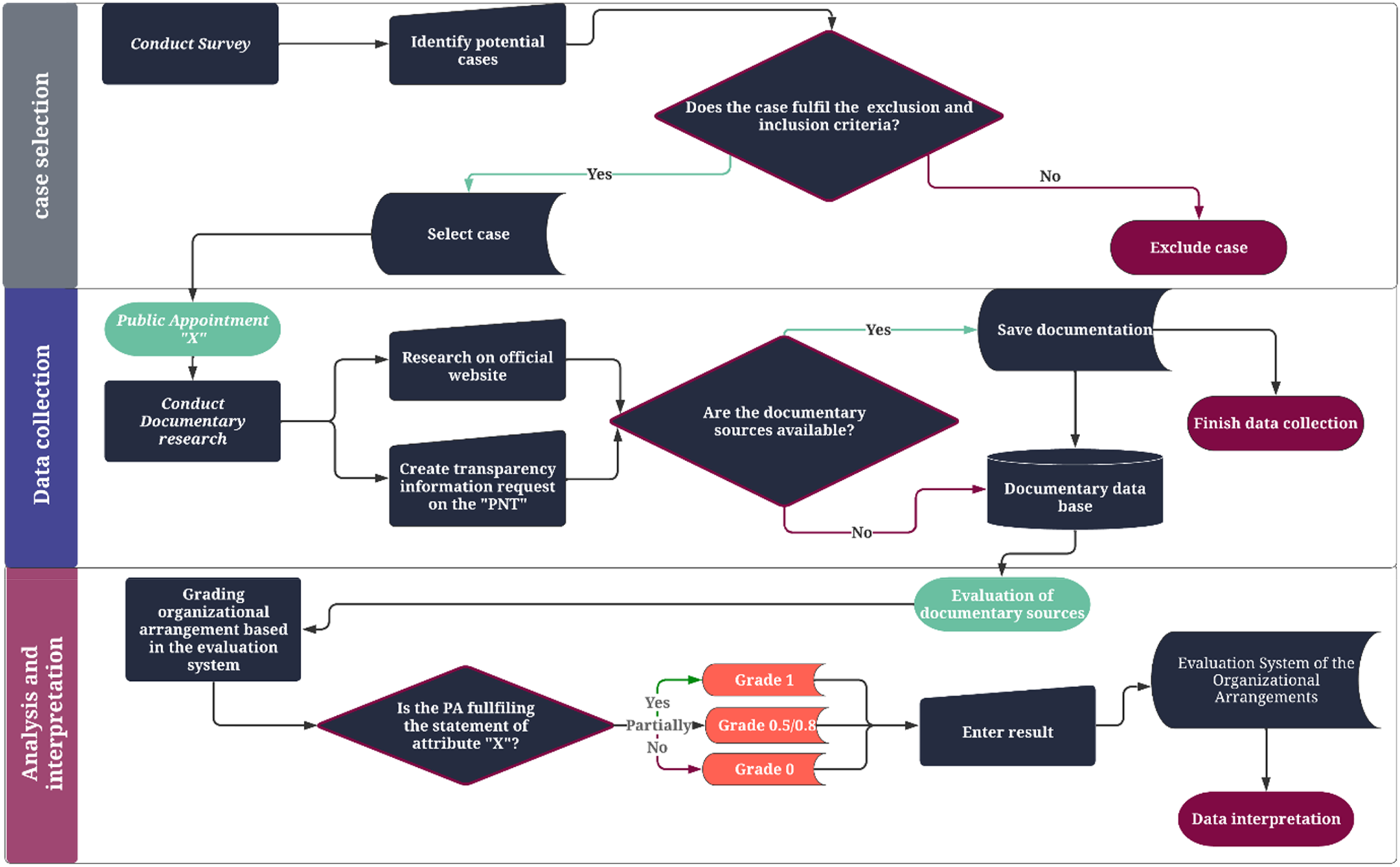
Research flow chart.
The survey used the inclusion and exclusion criteria shown in Figure 2 to create an effective pool of cases that focused on the study's purpose. Twenty-four cases were selected for further documentary research. These PA processes account for a total of 64 top-level positions in key institutions that integrate state anti-corruption systems from Coahuila (6), Jalisco (5), Chiapas (4), Baja California (3), Sinaloa (2), Oaxaca (2) and Yucatán (2).
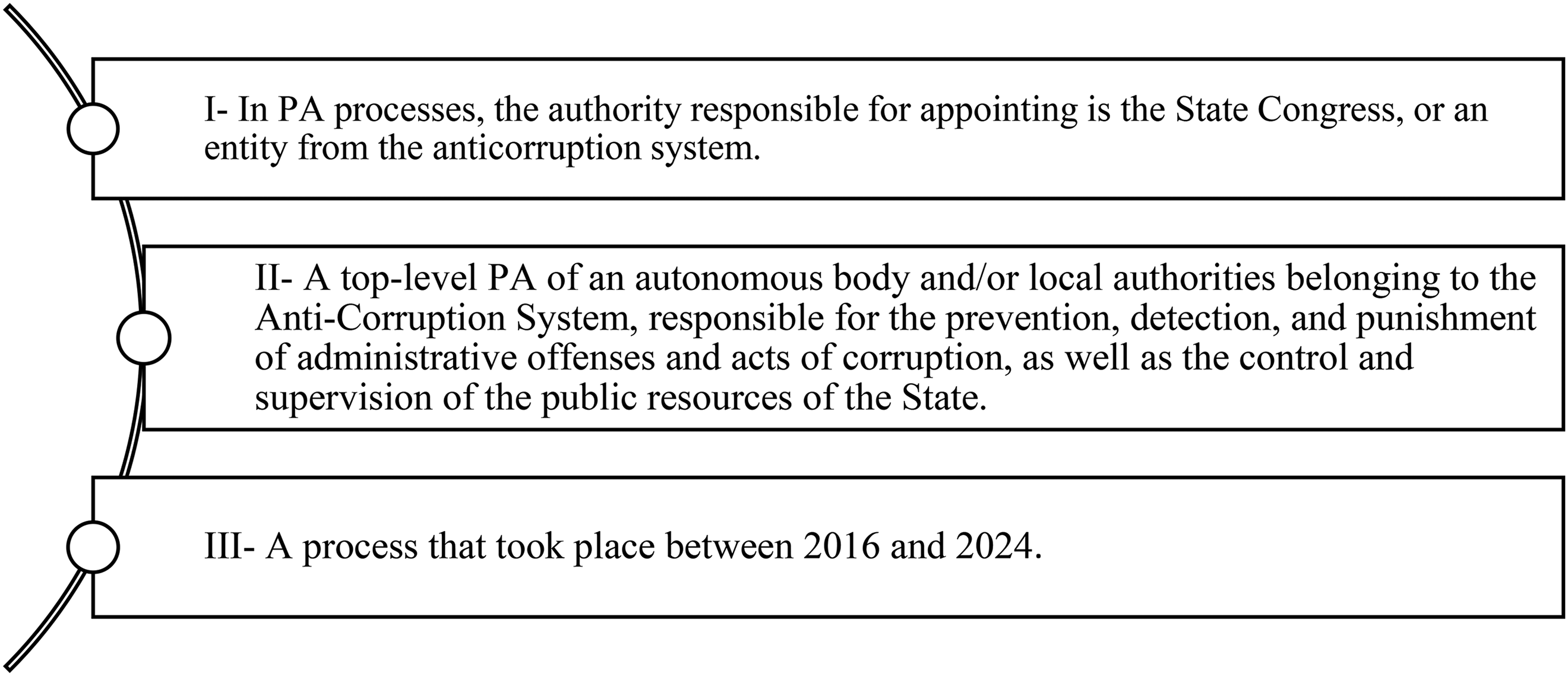
Survey inclusion and exclusion criteria.
Four documentary sources evaluated the OAs of each PA: (a) public calls; (b) lists of candidates; (c) applicant criteria of evaluation; and (d) results and evaluations. These sources ensure fairness and legitimacy in PAs. They set a baseline to compare PAs, enabling identification, monitoring and accountability of OAs. The compilation of documentary sources was exhaustive and designed for citizen replicability. Documentation retrieval had two stages: (a) systematic examination of the official public authority websites, as this documentation should be public by law; and complementarily, the absence of documentation was addressed in step (b), a transparency request for information through the National Transparency Platform (PNT) 2 . The PNT is a public platform managed by the National Transparency Institute of Mexico. The data collection resulted in a database of 46 files retrieved from the selected cases. Not all documentation was available. In these cases, the absence of documentary sources was evaluated using the ESOA.
The third stage evaluated the PAs based on documentary sources for each case. The result of this stage is a consolidated ESOA that evaluates the existence and quality of OAs in PAs (see Table 1). For their measurement, I developed a scale parameter system from 0 to 1 that measures specific attributes based on the analytical framework of Sancino et al. (2018). The scale is linked to specific statements that describe the existence and quality of an OA, in contrast to their ‘pure type’ or ‘ideal type’. The logic behind structuring ideal types is to create a unitary frame of reference from which reality can be compared as a limiting concept (Gómez Mantilla, 1988).
This sequencing − starting with perceived outcome classification and followed by documentary assessment − was designed to test the capacity of the ESOA framework to explain the perceptions of practitioners and policy experts using procedural evidence.
Comparing cases: perceived outcomes and OAs’ analysis
The 24 cases exhibited high variability in terms of the actors involved, quality and completeness of the OAs. This can be explained by the ambiguity surrounding appointment processes in Mexico and the limited regulations and standards that define the baselines of transparency, impartiality and merit.
Figure 3 shows the ESOA results divided by perceived outcome: red dots indicate patronage PA; yellow hybrid PA; and green governance PA. It shows the average score by perceived outcome and the upper and lower quartiles. We observe that the analysis of OAs can explain the perceived outcome of PAs, indicating a positive influence between OAs and a governance-perceived outcome. This finding aligns with conclusions within the specialized literature on public appointments (Alex et al., 2007; Flinders, 2009; Meyer- Sahling, 2006), specifically the analytical framework of Sancino et al. (2018).
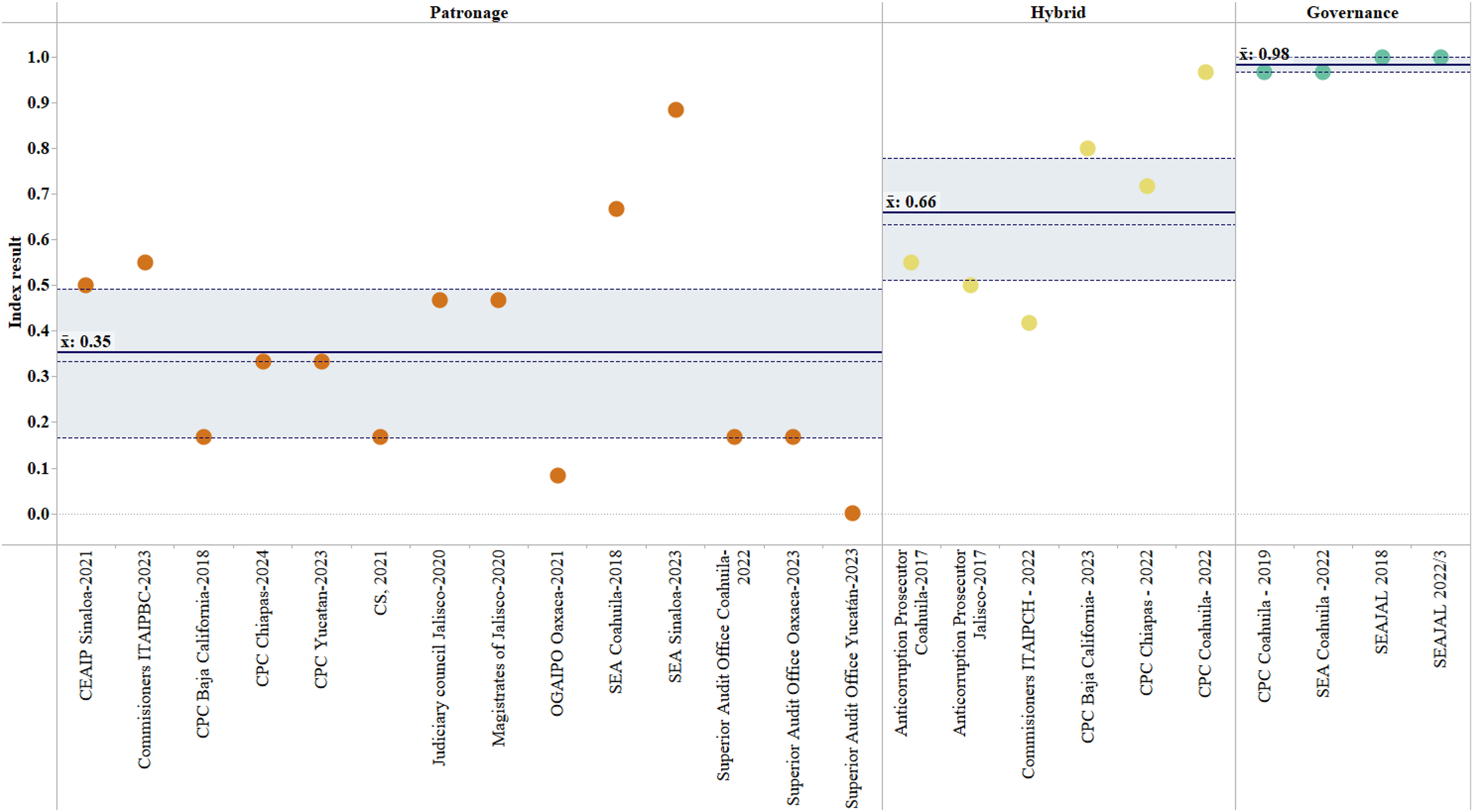
Evaluation system of the organizational arrangements results by type of perceived outcome.
A PA with a perceived outcome of governance showed a strong level of consistency, with an average of 0.98/1. In contrast, patronage PAs have an average score of 0.35/1, and 75% of the cases are under the 0.5 score threshold. Interestingly, there were three outliers for which the perceived outcome did not respond to their type. The high scores of these outliers could be explained by the nature of the ex-post documentary evaluation method but would require further investigation to define with clarity the reasons for perceiving these cases as patronage despite the quality of their OAs.
As for hybrid PA, there were four PAs inside the quartiles from 0.51 to 0.80, with an average score of 0.66 out of 1. The other two other PAs perceived as hybrid are outside the parentheses, suggesting their condition as outliers belonging to scores like those corresponding to patronage (1) and governance (1) PA.
Figure 4 shows the breakdown of the results for each OA and the average (x̄) of each attribute evaluated according to the perceived outcome. The involvement of stakeholders and the use of digital tools played a differentiating role between cases perceived as patronage and governance. Subsequently, the presence of an independent scrutiny group and transparency of the documentation on the appointment also influenced the perception of the outcome, but to a lesser extent.
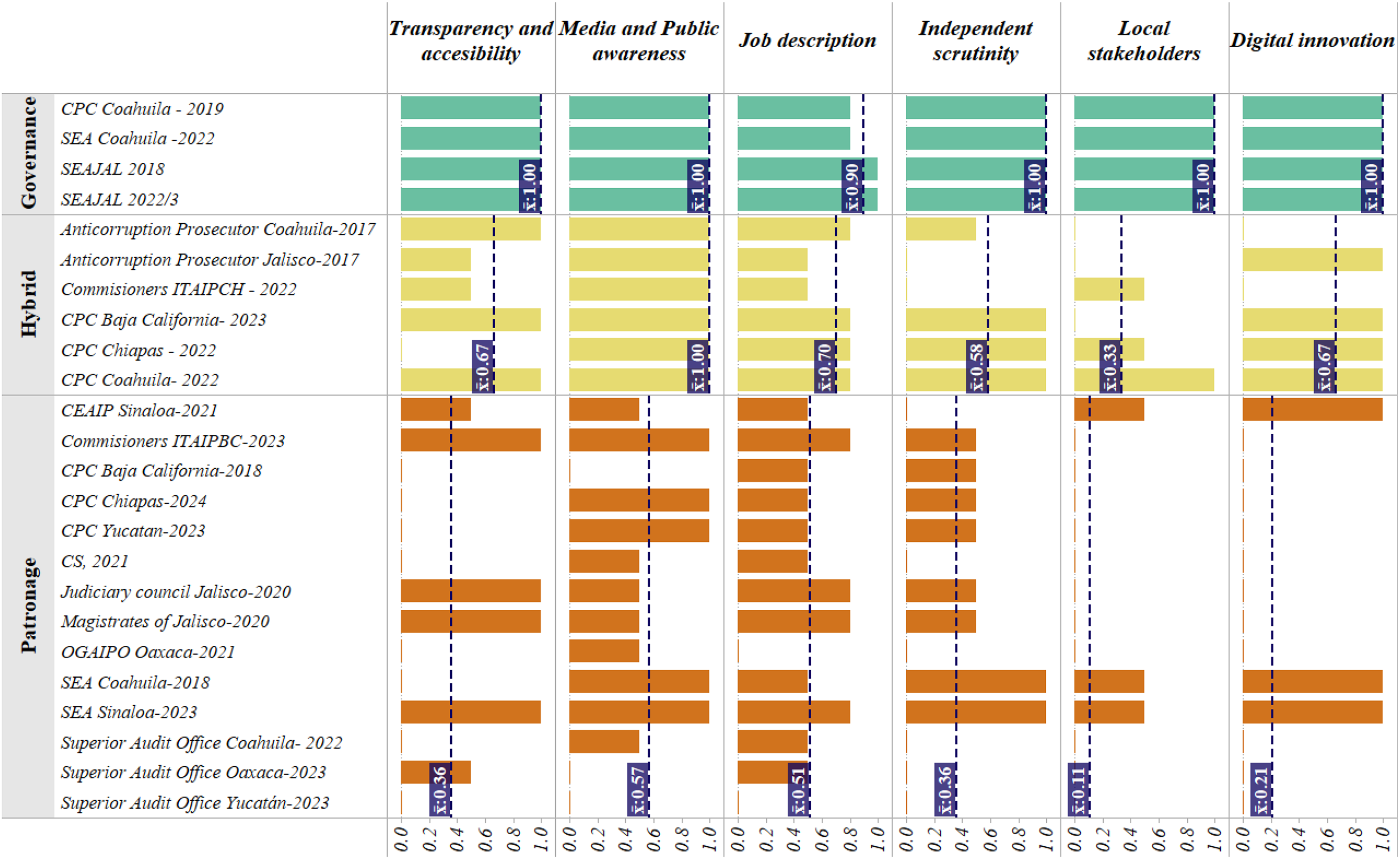
Evaluation system of the organizational arrangements results by organizational arrangement and perceived outcome.
Furthermore, while the existence of media awareness and job description is relevant, they do not define the perception of the outcome and could, to a lesser or greater extent, influence whether the appointment is perceived as hybrid, depending on the quality of other OAs.
Governance PAs have an x̄ result of 1/1 when observing the attributes ‘transparency and accessibility’ and ‘media and public awareness.’ These cases demonstrate their complementary nature. Accessibility to documentary sources permits (but does not guarantee) the diffusion of content related to appointments. The existence of specialized webpages for PA played a crucial role in governance PA because they guaranteed the accessibility and dissemination of information on a single platform that concentrated the most relevant documentation on the process.
As for the hybrid PAs, it is interesting to observe that their ‘media and public awareness’ was high, despite the lower x̄ of ‘transparency and accessibility’ of official documentation (x̄ of 0.67). In all hybrid cases, the public call was available. A list of participants was available for 66% of the cases, and an accessible evaluation method was available for half of the cases.
Patronage PA had low average transparency and accessibility of documentation, with an x̄ score of 0.36. The public calls of the 14 appointments were accessible; nevertheless, this source is the minimum necessary documentation to analyse the process, and it is not sufficient to guarantee transparency.
In most patronage appointments, evaluation criteria were available; nevertheless, in 71% of the cases, candidate evaluation results were not public. This reflects the low level of reliability of the evaluations of the candidates for the position.
The description of the job in PAs perceived as governance clearly stated the requirements and qualifications necessary to fill the position based on merit, along with verification means and evaluation metrics of the profile (usually evaluated by an external scrutiny body). Cases from Jalisco moved a step forward, proposing affirmative actions to reduce gender inequalities by adding a clause requiring priority for the best-qualified women with respect to the total number of candidates.
According to the literature, having a clear description of qualifications, professional requirements, and metrics to evaluate them is a key step in recognizing the principle of merit (Sancino et al., 2018). In this sense, we can presume that governance appointments guaranteed the merit of their appointees. Nevertheless, the analysis of merit could be further explored by analysing the evaluation methods.
The hybrid PAs have an x̄ score of 0.70 in ‘job description’. The high score of hybrid PAs on this attribute explains the assurance and fairness of the processes leading to their perceived outcome category, despite omissions in other OAs.
Patronage PAs have an x̄ score of 0.51 in ‘job description', that is 0.39 points lower than governance appointments. This score implies that most of these PAs were conducted with adherence to educational and professional requirements to assess their competence for the position.
The OAs of ‘independent scrutiny’ and ‘local stakeholder involvement’ play a fundamental role to reduce the allegations of corruption in the process by providing an impartial view of the applicant’s profile (Agere, 2000). Therefore, the evaluation of these attributes in the study cases provides a unique view of the common practices and differences among perceived outcomes.
All governance PAs counted with an independent scrutiny and involvement of local stakeholders such as universities, civil society organizations, and/or the local Social Participation Committee (CPC). These appointment processes have the peculiarity of being appointed by the governing body of the state anti-corruption system's previous evaluation and shortlisting by the CPC. This allows stronger control and monitoring of the process. These findings strengthen the argument and evidence presented by Polonca and Gregor (2013) in their analysis of professional standards and political discretion in high-level appointments from Slovenia, in which they observed that a two-phase system of standardized and professional evaluation prior to political discretion over the best-qualified profiles allows for a better compliance and performance system.
The active involvement and participation of local stakeholders in perceived governance PA creates trust in the process. In a few cases, local stakeholders were involved in the interview process and attended the evaluation stage.
Hybrid PAs show lower average scores of 0.58 and 0.33 for independent scrutiny and local stakeholder involvement, respectively. This factor might explain the perception of civil organizations that categorized these appointments as hybrid. As for patronage PAs, the participation of local stakeholders such as universities, civil organizations, or interested citizens was relegated; only in three of the 14 cases was there some sort of participation in at least one stage of the process.
The results showed that all governance appointments implemented a customized website for the PA, where they made documentation and news related to the process available. Moreover, platforms such as YouTube and Facebook were used to transmit live sessions of interviews and deliberation processes.
In Coahuila, the evaluation committee used online forms to register applicants and submit their documentation (CV, certificate proof). This new application method represents a paradigm shift from the usual registration process, in which all documentation is delivered in a person and paper format.
Hybrid PAs also showed high digital innovation, with an average score of 0.67. Four cases received the maximum score owing to their innovation, using a website customized for the PA, Google Drive as cloud storage available for public consultation, and digital forms for the registration and uploading of applicants’ documentation.
Patronage PAs have a low score in general. In 78% of the cases, there was no sign of digital innovation. This is still a common practice in the PAs studied. More than half of the appointments did not implement digital tools to improve the process efficiency and transparency. In this sense, there remains a potential window of opportunity to explore the benefits it could provide to guarantee transparency and increase the efficiency of PAs, such as the diffusion of information, reception of applications, communication with applicants and third actors, and evaluation of profiles.
Final remarks
This study aimed to develop a tool to measure the existence and quality of OAs in PAs to understand how they influence the perception of subnational PAs in Mexico. To do so, I used the previous work of Sancino et al. (2018) to frame the research design and theoretical categories of perceived outcomes in PAs and construct the ESOA.
The ESOA evaluated the following attributes of 24 PAs in Mexico through a documentary review: (a) transparency; (b) media and public awareness; (c) job description and education/professional requirements; (d) independent scrutiny; (e) local councillors or stakeholders’ involvement; and (f) digital innovation.
The ESOA results conclude that OAs have a positive influence on the perceived outcome of a PA, indicating that the existence of one or more OAs supposes a condition to: (a) ensure integrity and fairness; (b) increase legitimacy; and (c) restrain the potential risks of discretion in PAs.
The results show that the involvement of local stakeholders and digital innovation play crucial roles in positively influencing the perception of PA governance. The second level of relevance is transparency and independent scrutiny of the process. Interestingly, job description and media and public awareness were only relevant to a certain extent, mostly being decisive between a patronage or hybrid perceived outcome of the PA.
These findings show a strong correspondence with the results presented by Sancino et al. (2018) and provide more evidence for the debate on OAs, especially regarding the addition of digital innovation as a relevant element to consider when intending to reduce discretion while increasing the legitimacy and fairness of the PA process.
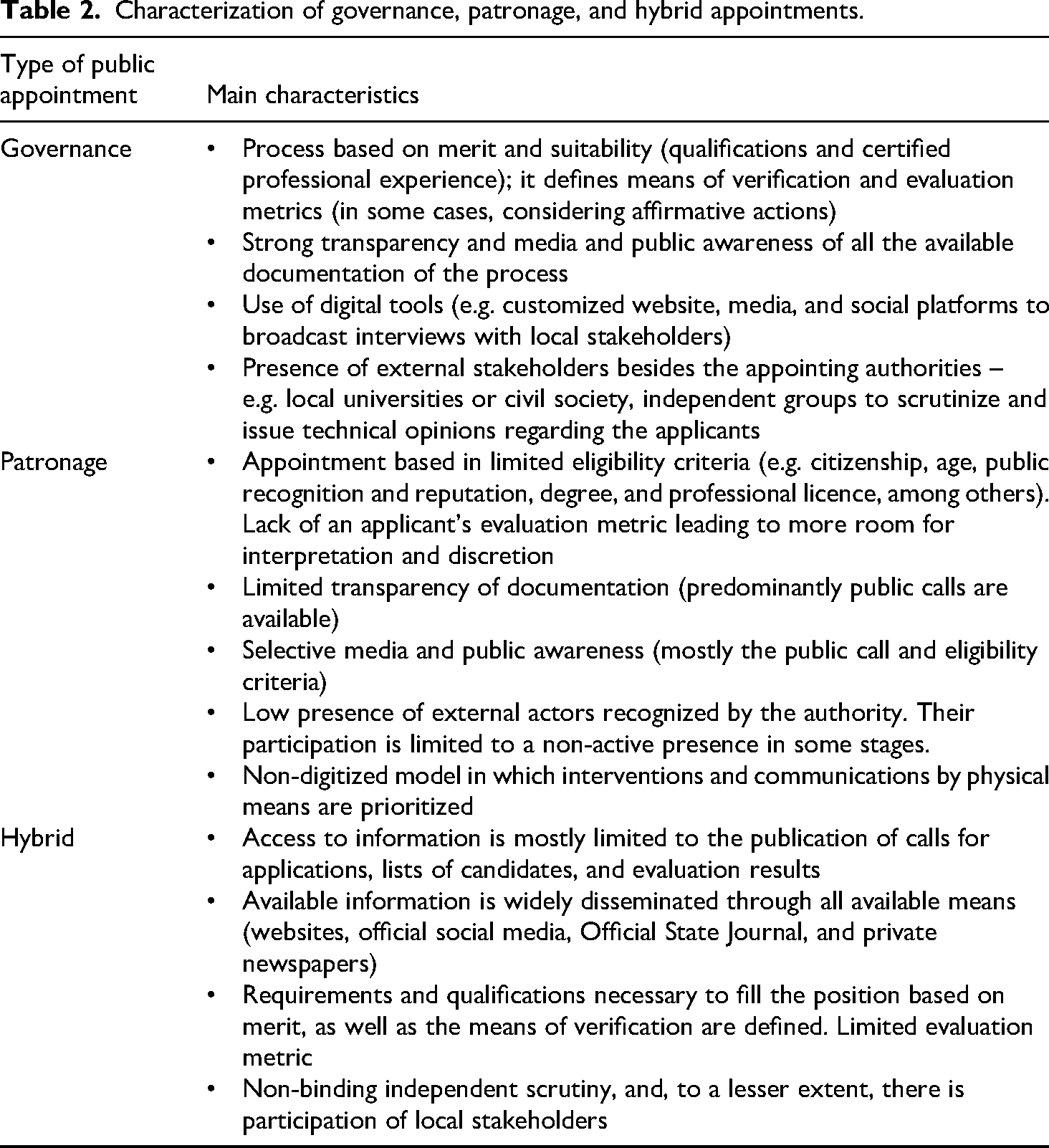
The ESOA results allowed us to create a cross-case comparison that clearly states the characteristics of each outcome in PA (See Table 2).
Characterization of governance, patronage, and hybrid appointments.
The correspondence of the results to the perceived PA outcomes proved that the ESOA is a valuable tool for evaluating the existence and quality of OAs through a standardized process of data collection and documentary assessment of official documentation. Therefore, the ESOA is considered replicable and can be used in future studies of PAs.
The conclusions of this research and the utilization of this measurement tool could be further enhanced by considering the following elements: (a) measuring the OAs during the appointment and assessing the final result by an ex-post evaluation, specifically for the attributes of transparency, job description, local stakeholders and independent scrutiny; and (b) including a weighting method for the OAs based on the technical opinions of specialists in the field. This would allow researchers to measure the margin of discretion enjoyed by the appointing authorities during and after an appointment more accurately.
Further research should explore the characteristics of each OA and their design and implementation in detail. There are interesting successful cases for investigating each OA individually (e.g., the technical evaluation methodology of Comité de Participación Social Jalisco and digital tools in PAs from Coahuila). Furthermore, special emphasis should be placed on understanding the roles of local stakeholder participation and independent scrutiny groups for each OA. A focused case study of these experiences could draw interesting conclusions for policy innovation with the potential to be replicated.
In terms of theoretical implications for the field, the findings lead to an in-depth conceptualization of perceived outcomes based on comparative evidence, considering the previous contribution made by Flinders et al. (2009, 2012). This analysis could be scaled up to a qualitative comparative analysis in which a broader systematic comparison of the sufficient and necessary conditions for the integrity, fairness and impartiality of PAs is conducted, with the intention of developing a theoretical model for understanding the pathways that enable PAs as a tool for good governance.
Footnotes

Funding
The author received no financial support for the research, authorship, and/or publication of this article.
Declaration of conflicting interests
The author declared no potential conflicts of interest with respect to the research, authorship, and/or publication of this article.