




Abstract
Many public sector organizations set up innovation laboratories in response to the pressure to tackle societal problems and the high expectations placed on them to innovate public services. Our understanding of the public sector innovation laboratories’ role in enhancing the innovation capacity of administrations is still limited. It is challenging to assess or compare the impact of innovation laboratories because of how they operate and what they do. This paper closes this research gap by offering a typology that organizes the diverse nature of innovation labs and makes it possible to compare various lab settings. The proposed typology gives possible relevant factors to increase the innovation capacity of public organizations. The findings are based on a literature review of primarily explorative papers and case studies, which made it possible to identify the relevant criteria. The proposed typology covers three dimensions: (1) value (intended innovation impact of the labs); (2) governance (role of government and financing model); and (3) network (stakeholders in the collaborative arrangements). Comparing European countries and regions with regards to the repartition of labs shows that Nordic and British countries tend to have broader scope than continental European countries.
Points for practitioners
Public sector innovation (PSI) labs can help to approach innovation collaboratively across organizational boundaries. It is, however, necessary in this context to find the setup that best addresses an organization's needs or strategic ambitions. The proposed typology is based on criteria relevant for designing PSI labs. Being able to distinguish the different labs helps practitioners to choose models that fit their purposes and learn from existing labs.
Keywords
Introduction
Today, the term public sector innovation (PSI) lab is used in the literature to describe cross-governmental organizations that collaborate with internal and external stakeholders on specific topics, often complex in nature, within specific public service areas or policies (Gryszkiewicz et al., 2016; McGann et al., 2019). Public sector innovation labs are used to identify issues, generate new ideas and test new solutions or optimize existing processes, and experiment with innovative methods that are often new to public sector organizations. Thus, PSI labs are gaining importance in public sector innovation, public governance, and policymaking (Bason and Schneider, 2014; Junginger, 2014; Lewis, 2020; McGann et al., 2018; Tonurist et al., 2017; Whicher, 2021; Williamson, 2015).
Regardless of the increased attention in research, and ambitions in the labs’ practice, there is currently no definition of a PSI lab that prevails in the scientific literature. Existing definitions include not much more than a description of the lab's activities and characteristics. The most cited definition is by Schuurman and Tõnurist (2017), who describe innovation labs as “islands of experimentation where the public sector can test and scale out public service innovations” and as “relatively small, cross-governmental organizational structures” that “usually lack the capabilities and authority to significantly influence upscaling of the new solutions or processes” (Tõnurist et al., 2017: 1462).
This lack of an established definition and the heterogeneity of existing PSI labs makes it very difficult to analyze them systematically (McGann et al., 2017). Labeling an initiative as a “lab” does not necessarily mean that an adequate collaborative innovation setting with a functioning network of stakeholders, clear scope, dedicated resources, similar activities, and leadership support is behind it. Furthermore, PSI labs have different names with slightly different implications, including “government innovation labs” (in Anglo-Saxon contexts, they are also referred to as “i-teams”), “policy labs”, “living labs”, “design (or co-design) labs”, or “public innovation spaces” (Bason and Schneider, 2014: 34; Junginger, 2014: 117; Williamson, 2015: 251). In this paper, a PSI lab is defined as a facility or organization established by a government agency to explore and develop new ideas, technologies, and approaches to improve the delivery of public services in collaboration with different internal and external partners.
Different organizational setups, activities, leadership arrangements, and applied innovation methods influence the innovation outcome as much as the building of innovation capacity (Lewis et al., 2018; Voorberg et al., 2015). The presence of very different lab types also leads to blurred boundaries between PSI labs and other innovation formats such as innovation boxes or design thinking approaches that focus on the process, FabLabs that focus on testing and implementation or internal iTeams that often act as catalysts for change. Furthermore, the concept of a PSI lab has an “indeterminate quality” (McGann et al., 2018). Since standard criteria are missing it is also difficult to compare labs, learn from them, or evaluate their impact (Gryszkiewicz et al., 2016).
Without clear criteria to distinguish different types of PSI labs, it is very difficult to choose an appropriate design for a new lab or to boost the innovation capacity of the public sector organization(s) involved. As a result, it is difficult to grasp the phenomenon and deduce best practices regarding PSI labs for the community of public sector innovators and policymakers. This study addresses this research gap with the following research question: What are the criteria for building up a typology of PSI labs that theoretically make sense and help distinguish various lab types in practical contexts?
While studies exist that have systematically reviewed related aspects of the PSI lab phenomenon, such as collaborative innovation (Lopes and Farias, 2022; Sørensen and Torfing, 2012), living labs (Hossain et al., 2019; Schuurman et al., 2015), or the role of government in innovation (Jugend et al., 2020), there have been only a few attempts to structure the heterogeneous forms of appearance of PSI labs (Hossain et al., 2019; McGann et al., 2018; Tõnurist et al., 2017).
A literature-based and empirically grounded typology of PSI labs can help to move beyond single case studies and allows more comparative research designs. Thus, the typology allows different types of labs to be distinguished and compared systematically and their impact on the innovation capacity of public sector organizations to be better evaluated. This article proposes a typology of PSI labs that is based on the existing scientific literature and tested against the current forms of PSI labs in Europe. The scope had to be narrowed down to keep data collection feasible. However, the authors are well aware that interesting developments in the field of PSI labs are also taking place in other regions of the world. Testing the typology with labs from other parts of the world would be an interesting extension of the current research.
This article is structured as follows: the phenomenon of PSI labs is described briefly and relevant aspects for the purpose of a better understanding of the phenomenon are highlighted. After introducing the methodological approach of typology building, characteristics and types of innovation labs that have already been described in the scientific literature are categorized to facilitate their integration into the new typology and provide a comprehensive overview. Finally, the proposed typology of PSI labs is tested by mapping currently running PSI labs in Europe.
The lab phenomenon in the public sector
Public sector innovation is defined as the development and implementation of a novel idea by or for a public sector organization to create or improve public value within an ecosystem (Chen et al., 2020). Public sector innovation theories refer to distinct phases of the innovation process, such as idea generation, selection, testing, scaling up, and diffusion (Meijer, 2014). Public sector innovation labs are mostly used during an early stage in the innovation process (Fuller and Lochard, 2016; McGann et al., 2018; Tõnurist et al., 2017).
Public sector innovation labs are an example of the trend to cooperate within boundary-spanning network structures—going across organizational and sector boundaries, which has become good practice in public administration (Crosby et al., 2017; Lopes and Farias, 2022). Cross-sectoral and cross-organizational collaboration—involving different departments and internal stakeholders and external partners from other sectors—along the ideation and development cycles is often referred to as co-design or co-creation (Bekkers et al., 2010; Bekkers and Tummers, 2018; Lewis et al., 2018; McGann et al., 2018) or boundary-spanning management (Lee et al., 2014).
Many PSI labs are designed to create a place where new governance and management approaches, such as evidence-based policy making, user-led methods such as design-thinking or prototyping, can be tried out independently of the prevailing, traditionally hierarchical organizational design of bureaucracies (McGann et al., 2018). Public sector innovation labs often promote a design mindset and tools, especially participatory design approaches and design for organizational learning. Furthermore, the emphasis that PSI labs put on cross-sectoral collaboration is seen as a promising way to deal with wicked problems that have a high degree of ambiguity and are of cross-sectoral relevance (Christensen et al., 2015; Head, 2019).
Other scholars point to a mix of roles and methods. For example, PSI lab teams are described as “change agents within the public sector that operate with a large autonomy in setting their targets and working methods” (Tõnurist et al., 2015: 21). Public sector innovation labs typically involve citizens, businesses and academia to co-design, prototype or showcase new solutions to services, processes or policies in an experiment-oriented approach (McGann et al., 2018) that draws on methods and skills that seem to be lacking or are really missing in the public sector at the time the labs are created (Bason et al., 2012).
All these various considerations about PSI labs show that the concept is widely discussed in the scientific literature. These studies, however, are mostly exploratory concept studies or single case studies. They are valuable because they show the different facets and the diverse potential of PSI labs. However, it is also apparent that PSI labs have become somewhat similar to so called “magic concepts” (Pollitt and Hupe, 2011). When talking about government, Pollitt and Hupe (2011) describe “magic concepts” as highly abstract, perceived very positively, and expected to solve previous problems and dilemmas in various domains. Looking at the attributes and expectations associated with PSI labs, it is evident that they are seen as a solution to numerous public sector problems: according to scientists and practitioners, they enable innovation practices to be embedded in public administration, to collaborate across organizational boundaries, to cope with highly complex problems, and generally as a concept to create more public value. However, this also shows the problem that this article addresses; to put it bluntly, PSI labs represent everything and nothing. There is a need for greater containment and delineation of PSI labs so that, on the one hand, they are not used for purposes for which they are not appropriate (Pollitt and Hupe, 2011) and, on the other, the impact of PSI labs on innovation capacity of public sector organizations can be better studied empirically.
Methodological approach
This article is based on a four-step research process (Figure 1). While typology building is based on the literature review, testing involved researching publicly available data on currently existing PSI labs in Europe and mapping them according to the proposed typology.
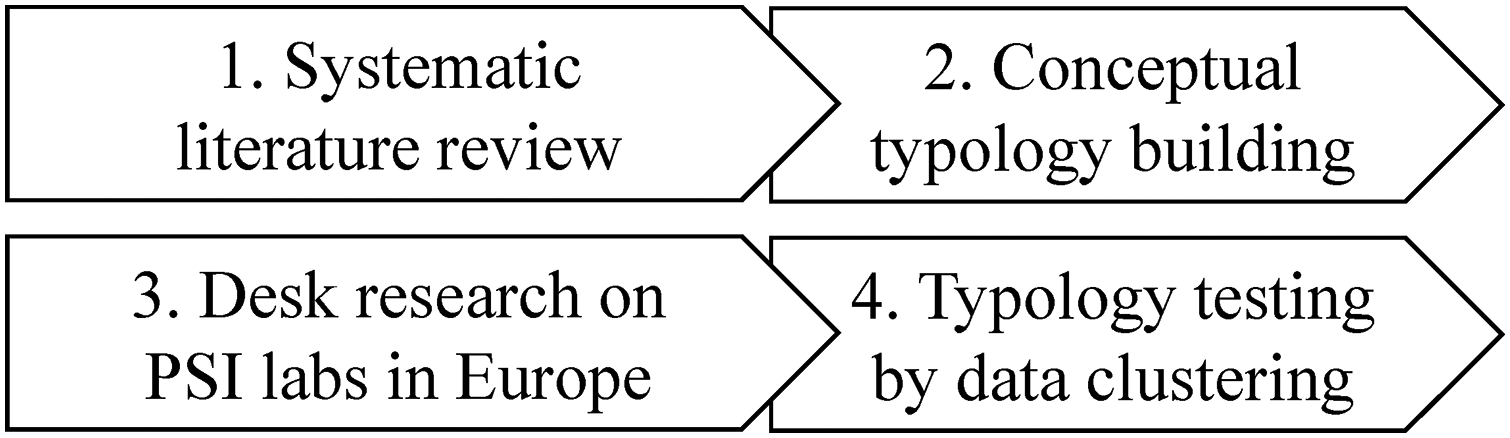
The four steps of the research process.
A literature review is a suitable method for establishing the criteria to define and confine PSI labs as it allows the current state of research on this relatively new topic in Public Administration to be built on. Our literature review was conducted based on articles found in the Web of Science database on public administration and management for the period 2012–2022 in the fields of Public Administration, Urban Studies, Business, Economics, Social and Political Sciences and Management (Web of Science Categories). The search was conducted by scanning abstracts for the terms “public sector innovation lab”, “PSI lab”, “government innovation lab”, and “living lab”, resulting in 68 articles. An additional 13 sources were found with the snowball method, most of them in the field of design or in innovation journals (see the Online Appendix). Out of the overall number of N = 81, over 82% (N = 67) of the articles discussed living labs.
The screened articles do not address the issues of clustering or typologize PSI labs as their main aim but rather describe them in an explorative manner or point to related aspects that can be observed in labs. This, however, has served to find relevant dimensions and underlying criteria of a typology of PSI labs. These criteria are for example innovation purpose (Cole, 2021), design aspects (Lewis et al., 2020; McGann et al., 2018), tools and instruments (Dell’Era and Landoni, 2014; Schuurman and Tõnurist, 2017), the stakeholders involved or aspects of user-involvement and participation (Habibipour et al., 2018).
Typology building is a widely, often implicitly, used method that makes it possible to grasp and describe a phenomenon conceptually. It groups observations according to their attributes in multiple variables. Typologies play an important role in describing empirical observations, and their importance is often overlooked. A typology is a “conceptual classification” (Bailey, 1994), and its cells represent theoretically grounded type concepts rather than empirical cases (Paré et al., 2015). Typologies usually operate in a deductive manner based on qualitative classification, while taxonomies empirically use cluster analysis and other statistical methods. Typologies are multidimensional and conceptual, which seems to be suitable for classifying the currently diverse and fast evolving forms of appearance of PSI labs.
A good typology not only elaborates an exhaustive set of types but also shows the relevant set of criteria on which the types are based. In our case, the relevant articles from the literature review were taken as the basis for building a theoretically grounded typology, combining the criteria found in prior research. After establishing the three dimensions of our typology for PSI labs and after gathering data from PSI labs in Europe, we proceeded to assess the feasibility of allocating individual labs to these dimensions.
Data on empirical cases were gathered by means of extensive desk research using different sources, including an online internet search on publicly available data on existing labs, scientific reports, and business reports. The data obtained neither was selected randomly nor is it representative, but can be described as a convenience sample, based on the accessibility of information to the researchers. The desk search was conducted through Google search and mostly resulted in direct links to specific labs’ websites and a few reports and articles (e.g. case studies of labs). In addition, the Directory of Government Innovation Labs 1 (apolitical, 2022) and the European Network of Living Labs were consulted. Focusing on continental Europe and the Nordic countries, over 100 labs were found (see the Online Appendix). By filtering some of them as there was no involvement of a public sector organization, 78 labs remained that qualified as PSI labs according to the definition. These were clustered according to the three dimensions of the proposed typology presented in the following section. The data were first screened for the criteria and five could be found. They were then clustered into three dimensions of the proposed typology, which resulted in eight types of PSI labs. This mapping served as a test for the typology as it assessed how well the data can be described by theses eight types.
Building a typology of PSI labs
Several publications have developed and shared possible categorizations/characterizations of PSI labs. Our literature review resulted in 81 articles that covered PSI labs in the last 10 years. However, only three articles were found to directly address the issue of “clustering” of the phenomenon of labs in the public sector or aspects of innovation in the public sector (Chen et al., 2020; Leminen and Westerlund, 2017; McGann et al., 2018) and no article covered “typology” or “classification”. Others have chosen more explorative, but nonetheless valuable approaches (Criado et al., 2020; Tonurist et al., 2017; Vries et al., 2016). Our literature search resulted in three dimensions that cover the relevant criteria. The typology thus covers the value dimension with the two criteria target group and innovation type, the governance dimension with the two criteria role of government and financing model, and the network dimension with the criteria of the partners involved in collaborative innovation. In the following, the dimensions and criteria are described in detail:
Value dimension—what is the scope of a PSI lab?
The value dimension consists of two criteria, target group and type of innovation. The target groups can be internal within the public administration and external users (Tõnurist et al., 2017). While external target groups focus more on acquiring data and ideas through crowdsourcing and external feedback from experimentation, internally oriented labs often try to increase efficiency, develop an organizational culture, or foster organizational learning. The definition of the target groups also determines where PSI labs aim to create value.
The scope can furthermore be introduced via the type of innovation that forms the second criterion in this dimension. There are types of innovation that have a narrow scope on the organization, its processes, services, and products that are closely link to the administrative mandate and targeted to employees, citizens or institutions. Other innovation types are aimed at a broader scope, such as governance, policy, or whole systems such as education or healthcare with multiple stakeholders. These often address complex or wicked problems and require cross-sectoral collaboration. Based on a systemic literature review, Vries et al. (2016) defined four types of public sector innovation: process innovation, product or service innovation, governance innovation, and conceptual innovation. These are described in Table 1.
Value dimension.
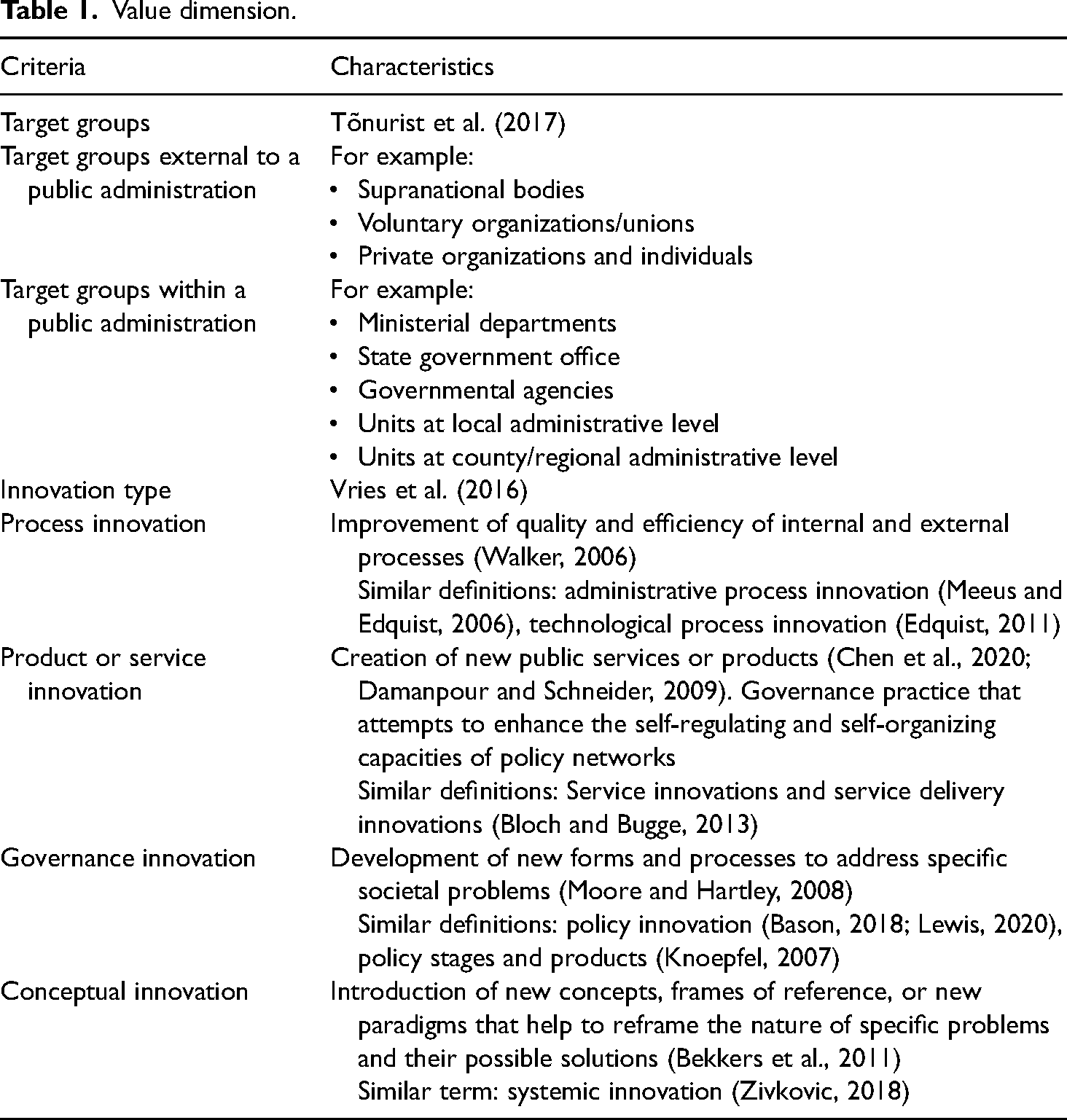
To include policy labs, additional innovation types such as democratic (Bason, 2018), mission-oriented (Mazzucato, 2018), and institutional (Bekkers et al., 2011) could be considered as well. To this end, policy labs are included under governance and conceptual innovation. These labs are often used to address the four typical policy stages and products: agenda setting, programming, implementation, and evaluation (Knoepfel, 2007).
Governance dimension—How are governance arrangements set up and managed?
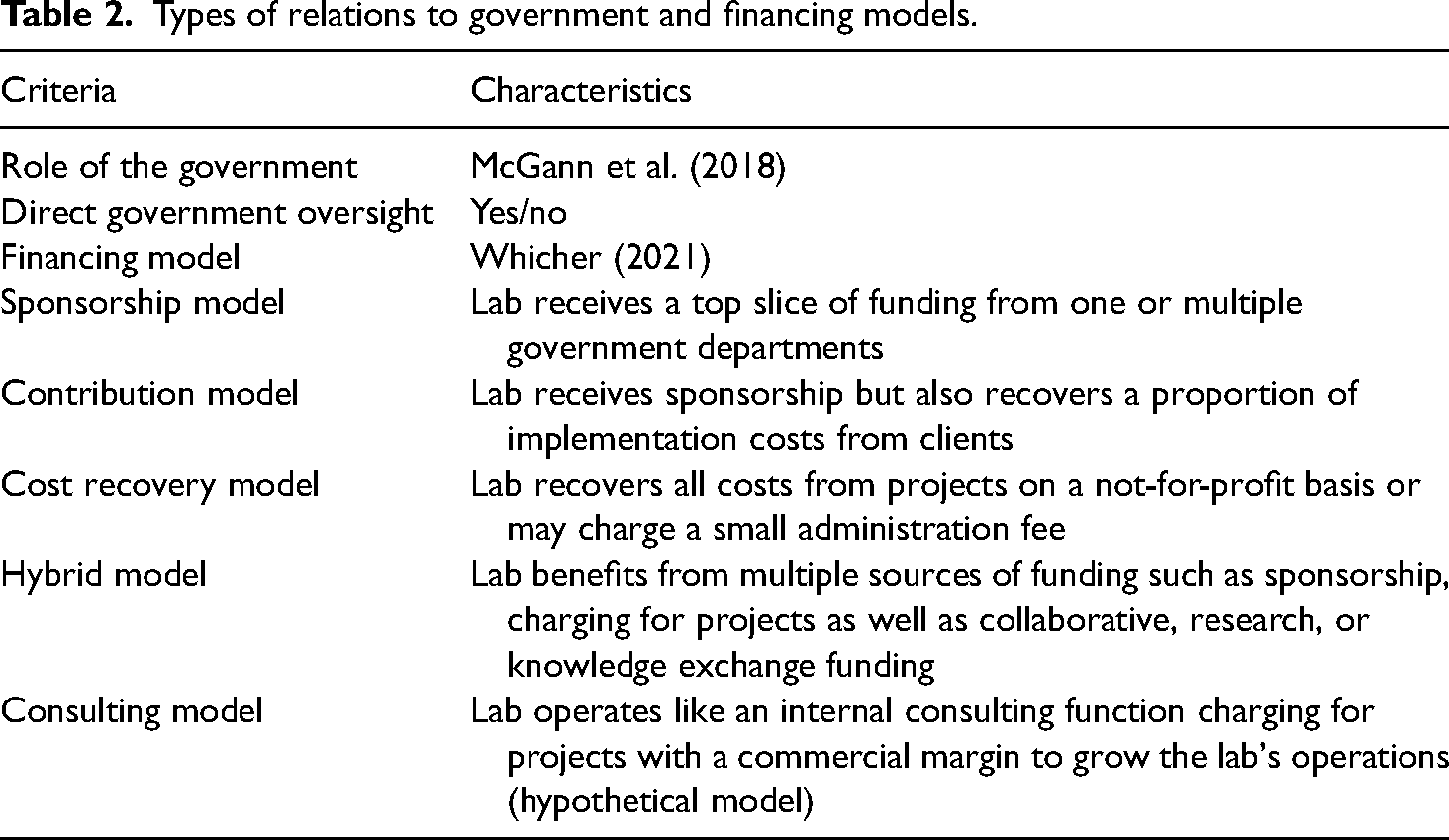
McGann et al. (2018) differentiate between PSI labs by looking at their relationship to the government in terms of oversight and funding. The research focused on two aspects of PSI labs’ relations to governments, the extent to which they are funded by government and whether they are subject to direct oversight by government. In their classification, “direct government oversight” always included partial or whole funding by government (McGann et al., 2018: 259). A recent study on regional, national, and supranational PSI labs in the UK found distinct financing models that can, however, change over time as a lab evolves (Whicher, 2021) (see Table 2).
Types of relations to government and financing models.
Network dimension—Who is involved in the collaborative network arrangements?
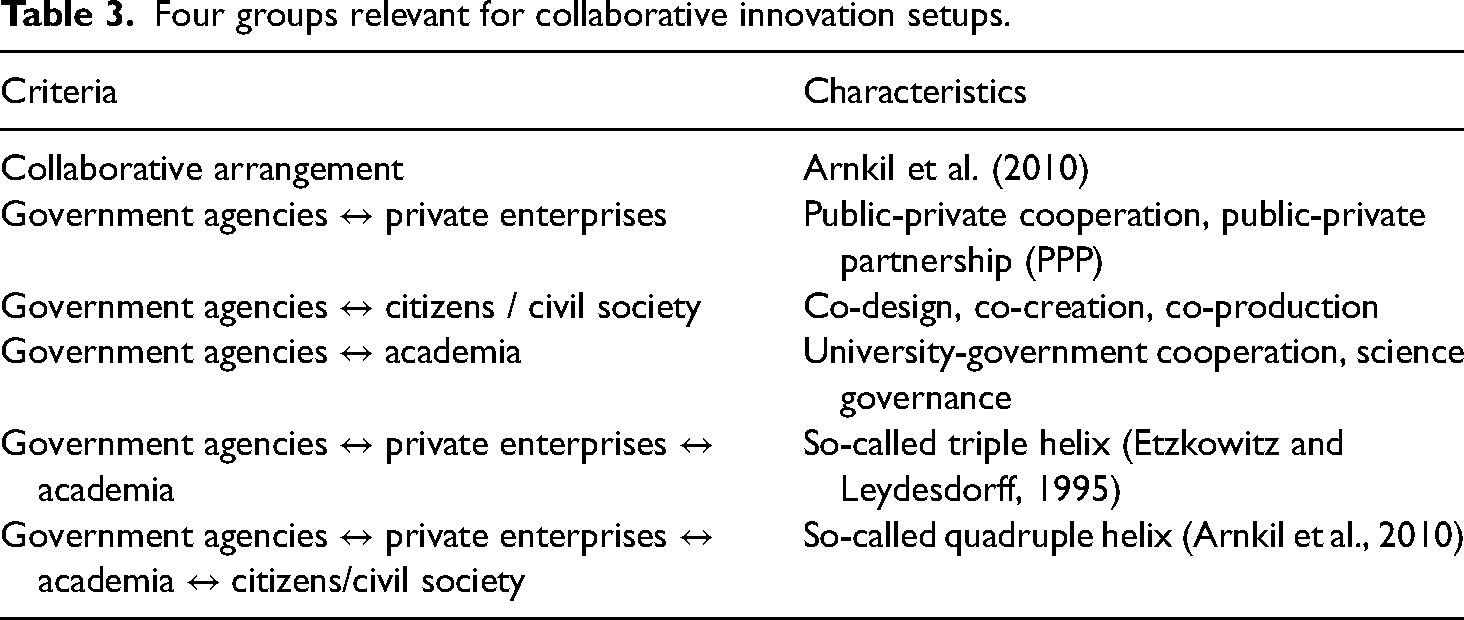
Public sector innovation labs combine approaches of open innovation (Chesbrough, 2003) and collaborative innovation (Bommert, 2010; Sørensen and Torfing, 2012). In the open innovation literature, scholars distinguish triple-helix settings involving university, industry, and government (Etzkowitz and Leydesdorff, 1995) and quadruple-helix settings involving university, industry, government, and citizens (Arnkil et al., 2010).
Cross-sectoral collaboration with different stakeholders is at the core of most PSI labs. Therefore, it is worth taking a closer look at the relevant actors that contribute to a lab's collaboration processes. In the literature, a distinction is often made between four groups of players: government agencies, private enterprises, academia, and citizens/civil society. The criteria of these groupings are outlined in Table 3.
Four groups relevant for collaborative innovation setups.
The literature research resulted in two other dimensions that did not, however, prove to be helpful to describe the types of labs in a distinct way. One dimension was based on the methods applied in the labs. The experience of practitioners (Nesta, 2018; OECD, 2017) shows that PSI labs tend to mix methods and pursue “collaborative innovation […] through pastiche” (Fulgencio, 2012: 201) and methods do not, therefore, serve as distinctive criteria. Another dimension that also was excluded is the reasons for creating a PSI lab. The proposed typology concentrates on the functioning and organizational setup of labs and their impact rather than their origin.
To serve as a basis for classification and typology building, we created dichotomous variables 2 within each dimension, taking together the criteria that covered the same or similar concepts. This process has the advantage of simplification when a variable has many characteristics. Furthermore, the results of the analyses can be more interpretable when categories are well defined and easy to understand. The disadvantage of dichotomization is a loss of information which can decrease the statistical power of data. As the typology serves to make crisper distinctions and build types of labs for further comparison, this disadvantage is not a problem for our purpose.
The three categories are shown in Table 4 and explained in further detail below.
Proposed dimensions for developing a typology of public sector innovation (PSI) labs.
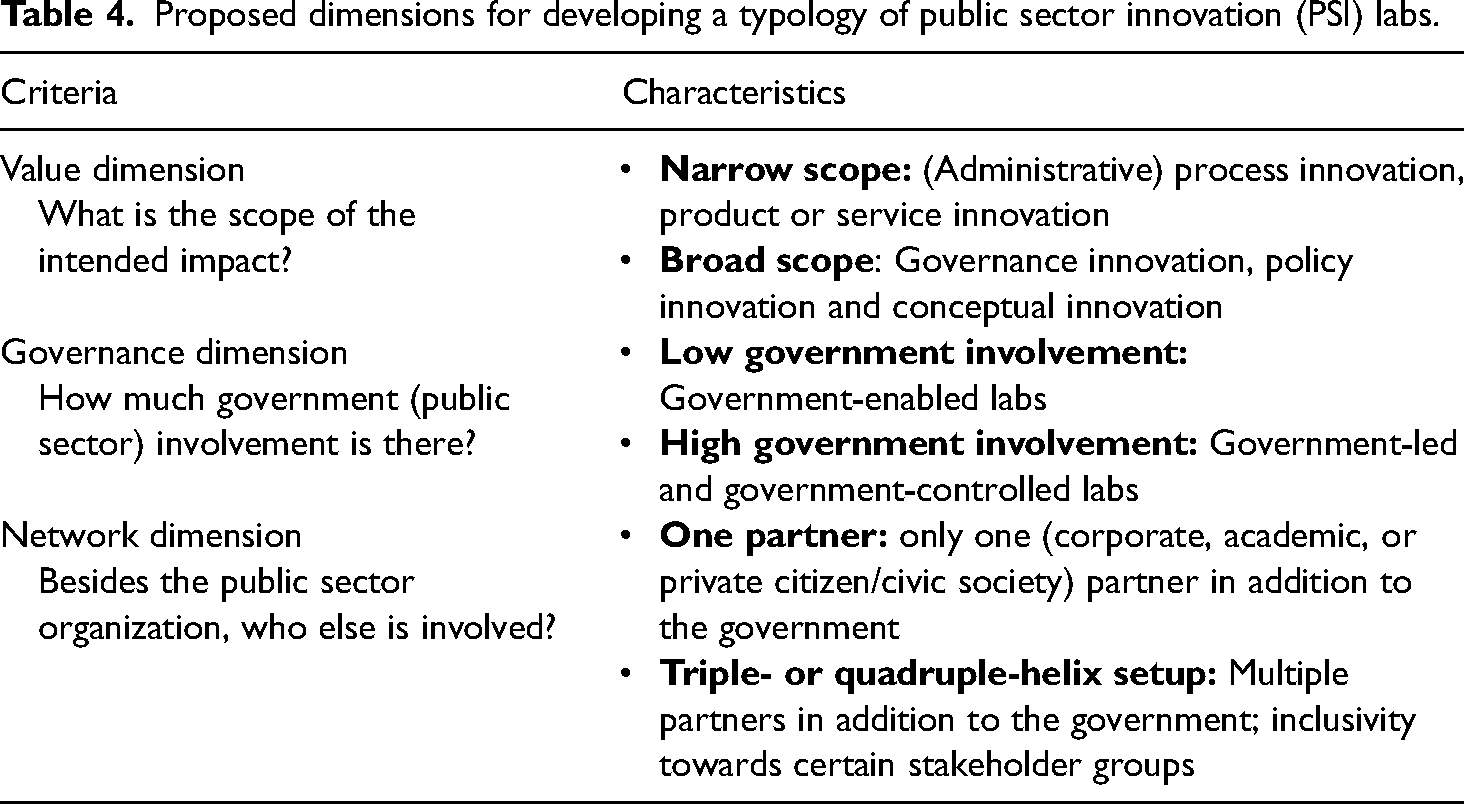
The value dimension points to the lab's intended impact and scope. It allows the PSI lab's scope (narrow or broad) to be described and includes the type of innovations as described by Vries et al. (2016) but also integrating related definitions found in the literature (cf. Table 1). These criteria are relatively easy to assess, as most labs state a value proposition, mission, and target groups in their publicly available presentations.
The governance dimension indicates how much direct involvement the government or public administration has in the PSI lab. This also includes the funding as classified by McGann et al. (2018). It focuses on the organizational structure, funding, and control mechanisms. For a PSI lab to qualify, and in line with our definition of PSI labs introduced in Chapter 2, we posit that a minimum of involvement by a public sector (mainly governmental) organization is required. This definition excludes arrangements that address fields of public interest without the involvement of, or even in competition with, the government or public administration in general. According to the classification of McGann et al. (2018), this excludes independently run labs that neither receive direct government funding nor are subject to any government oversight of their operations.
Finally, the network dimension shows the involvement of stakeholders from a collaborative and open innovation perspective. It indicates the number of different types of partners involved in a lab and how inclusive it is concerning certain stakeholder groups.
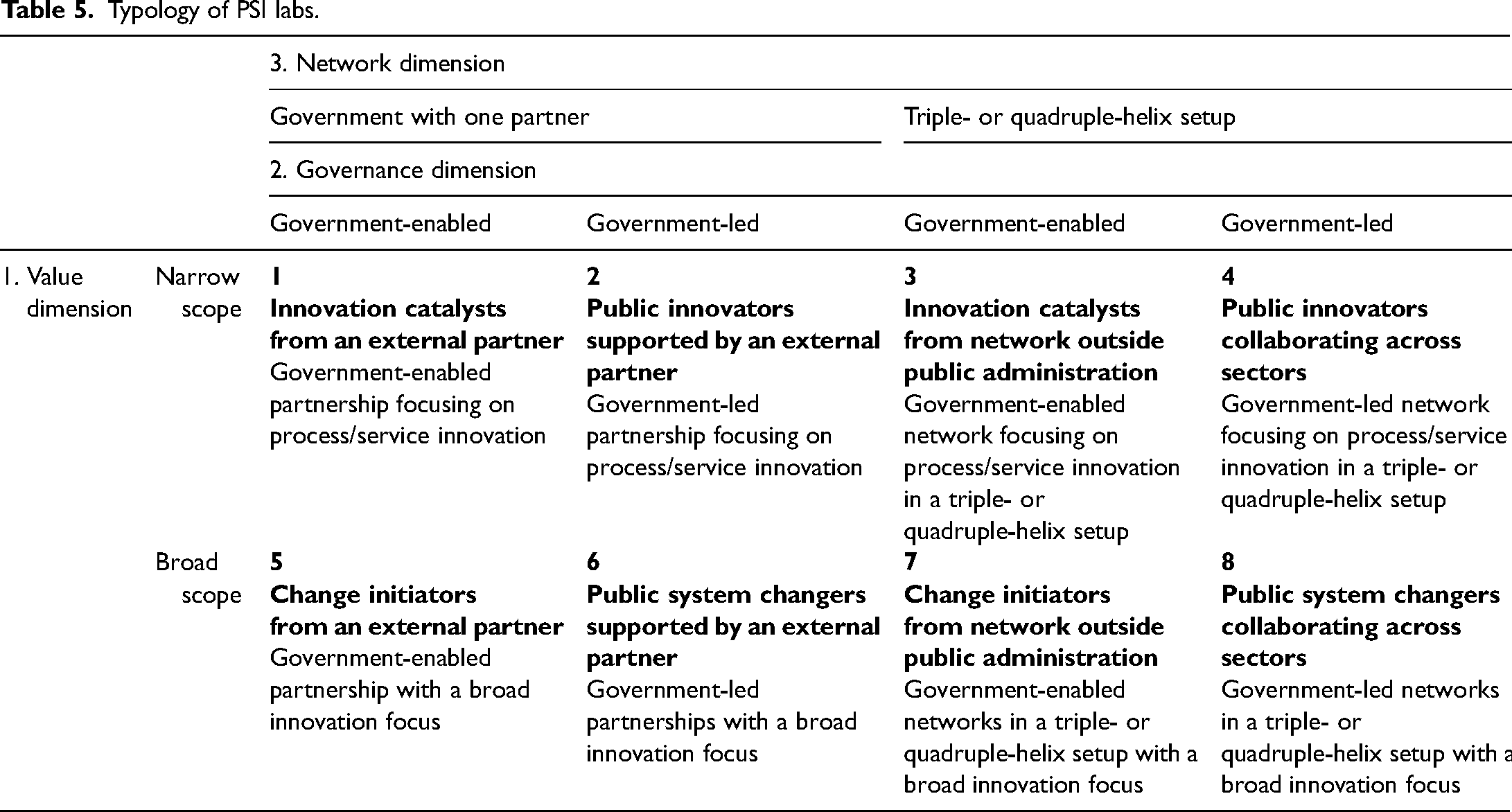
Based on the dimensions described above, we ended up with eight subcategories, which together form the typology (see Table 5) to be tested against data collected from PSI labs in Europe.
Typology of PSI labs.
Testing the typology against the empirical data on PSI labs
A typology is a classification or system of categorizing things according to their characteristics. The proposed typology is based on the existing research on PSI labs and related theoretical thinking on public sector innovation. To be able to test the typology, the data on the researched PSI labs in Europe (N = 78) were categorized according to the three dimensions and the five criteria. It was possible to allocate each of the cases of PSI labs to the eight types, even though there were types that were more frequent. The coding was carried out by two coders. The intercoder reliability was 0.90.
We included PSI labs operating at the local, regional, or national levels from our desk search in March–May 2022. All phases of innovation were considered, thus also living labs focusing more on testing and implementation were included.
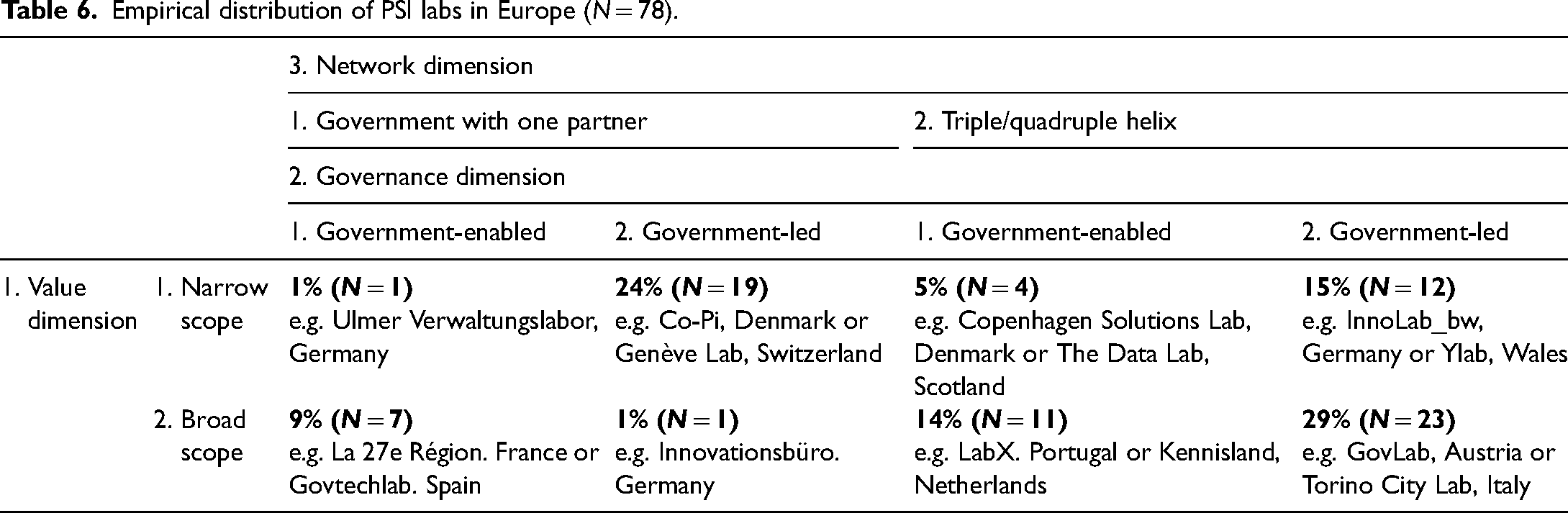
Table 6 shows the empirical occurrence of the eight types of PSI labs. It additionally provides examples of labs for each type (a full map of the examined PSI labs is provided in the Online Appendix).
Empirical distribution of PSI labs in Europe (N = 78).
Discussion and conclusion
Most cases of labs (29%) could be attributed to the type of “Public system changers collaborating across sectors”, which have both a broad innovation scope on the value dimension and are following a triple or quadruple helix setup. Interestingly, the labs that are second most often seen are the “Public innovators supported by an external partner”, thus concentrating on rather internal service or process innovations.
Furthermore, for most of the examined PSI labs, governments tend to have a substantial role as the majority of labs (over 70%) are government led. Whereas labs with a rather narrow, internal scope are managed with one partner from one additional sector, labs with a broader scope tend to require triple- or quadruple-helix settings. It seems, therefore, that a broad scope tends to involve a network with representatives from all sectors. Triple- or quadruple-helix setups prevail in 60% of the researched cases. It can be assumed, therefore, that the format of a PSI lab lends itself to the advancement of collaborative innovation and labs serve as a platform for cross-collaboration.
Collaboration seems to be a better strategy for innovating in the public sector than strategies that seek isolation or competition (Lopes and Farias, 2022). Public sector innovation labs are also meant to help deal with organizational ambidexterity (Palm and Lilja, 2017) and operate between the classic dichotomy of exploration and exploitation (March, 1991).
For a comparison of regions and countries, we refer to Bonoli’s country categories (Bonoli, 1997) that are described in the Online Appendix. The examined PSI labs in “Nordic” countries (N = 9) are most inclusive when it comes to stakeholder involvement, which means that they operate in triple or quadruple helix (78% of all cases). At the same time, the majority (67%) also have a broad scope in the value dimension, addressing wider societal issues. For countries in “Continental” Europe, it is more common for the public sector organization to work with one external partner only (41%). Also here, it seems to be connected to a narrower scope on internal service or process innovation (39%). This relation does not hold true for “British” countries (N = 10). There, two-thirds of the PSI labs have a narrow scope and two-thirds of the cases work with a network of three or more partners. This can be explained by the fact that many of the “British” and “Continental” PSI labs are of the type of “Public Innovators” and many are dealing with service improvements driven by digitization and new technology. It is often this “fuzzy front end” of the digital transformation (Berghaus, 2018) that requires better understanding of the needs of users and the possible solutions.
At the same time, it is the advancement of information technology that facilitates communication and collaboration among actors and sectors. In combination with complexity of contemporary, wicked problems, cross-sectoral collaboration and external orientation are becoming more and more important (Geuijen et al., 2017).
To date, different methods for categorization and characterization of labs can be found in the scientific literature on PSI labs. The proposed typology put forth here links various methods in a methodical and original way and can help with comparison studies in the future. A theoretically grounded typology of PSI labs is proposed based on existing categorizations and descriptions of the lab phenomenon. All the eight types were examined empirically, and the desk search and coding along the three dimensions enabled us to design a plausible map and structure the current forms of appearance of labs.
The new typology contributes to the understanding of PSI labs by structuring empirical observations and allowing further study of their impact. A possible research question could further examine whether PSI labs have an influence on the innovation capacity of public administration in the development and delivery of public services. Our typology supports the operationalization of the independent variable in this context. Furthermore, the proposed typology could help researchers move beyond single case studies toward a more comparative research design. Therefore, it potentially facilitates further research by reducing complexity, identifying similarities and differences, thus making it possible to compare different types of PSI labs. It provides a more holistic perspective compared with existing classifications of PSI. With the three dimensions (value, governance and network), the core criteria of PSI lab are brought into focus and the typology remains enough simple and easy to handle. However, by applying the proposed typology to other research designs to study PSI labs, it will be possible to test it further and improve on it.
Simplification also has some disadvantages. Radically reducing the three dimensions to a binary scale creates some ambiguity, and decisions are needed as to which category a certain PSI lab belongs to. Also, the value of the typology will have to be proved by conducting comparative research. The dimensions we have chosen focus on organizational factors, stakeholders, and innovation characteristics, whereas the various methods applied were excluded from the typology. Existing publications show that the heterogeneity of methods is further growing (Nesta, 2018).
To further learn how PSI labs can add most value to an innovative public administration, it is, however, important that public sector organizations remain involved to some extent. This focus makes it possible to distinguish the many labs that have developed outside the public sector but address issues that clearly belong to the public sector.
Footnotes
Acknowledgements
The authors would like to thank Professor Yves Emery from the Institut de hautes études en administration publique IDHEAP Lausanne, for his feedback on the concept of this paper and Dr Achim Lang from the Institute for Public Management at ZHAW School of Management and Law Winterthur for his review of the draft manuscript.
Declaration of conflicting interests
The authors declared no potential conflicts of interest with respect to the research, authorship, and/or publication of this article.
Funding
The authors received no financial support for the research, authorship, and/or publication of this article.
