



Abstract
Very few studies have focused on organizational learning within a team as a key success factor for international development projects. In particular, the relationship between organizational learning capacity, organizational efficacy, and project success has received little attention. This is the objective of this case study. It explores this relationship based on 23 semi-structured interviews with project coordinators, team members, and beneficiaries of two projects financed by the West African Development Bank (WADB) in Benin and Senegal. The results show that the social process of developing organizational learning capacity within a project team is a crucial issue for organizational efficacy and project success.
Points for practitioners
Within a team, establishing a framework for developing organizational learning capacity, characterized by autonomy, experimentation, and interaction with stakeholders, is a key project success factor. Flexible and adaptive approaches may foster organizational learning and help explore, through action, new project capacities. Such approaches may help increase the odds of project success in terms of international development and, thus, create value for stakeholders including beneficiaries.
Keywords
Introduction
Given the importance of projects in international development (ID) efforts, project management (PM) plays a central role. However, despite some encouraging results, overall project performance remains somewhat unsatisfactory in terms of beneficiary expectations (Bandé et al., 2024; Ika, 2005, 2012). Practitioners and researchers would therefore benefit from learning more about project failures and successes, and the role played by PM processes. However, despite significant investment over the last few decades, very little research has focused on the implementation of ID projects (Ika, 2015; Ika et al., 2020; Picciotto, 2020).
In particular, research shows that organizational learning capacity (OLC) within a team can make the difference between the failure and success of projects in a given organization's portfolio (Chronéer and Backlund, 2015; Clements, 2020). However, few studies have examined intra-project learning and OLC as key success factors (KSFs). The contribution of Mbengue and Sané (2013) is an exception in that it identifies an empirical relationship between OLC and proficiency in PM processes. However, this research does not shed light on how the development of OLC within a project team improves its success.
Hence, our research question: How can the development of OLC within ID project teams impact their success, especially when these projects are financed by the same technical and financial partner (TFP) and carried out in different countries? Indeed, as the first author of this article observed in the field in Africa, one question recurs among practitioners: Why is it that, in the portfolio of a TFP, of projects with the same ID objective and carried out in several countries at the same time, some have been successful while others have had mixed results, despite having benefited from the same design approaches?
This article is structured in three parts. The first explores OLC as a KSF for ID projects and proposes a conceptual framework. The second describes the two case-study projects and outlines the methodological framework. The third highlights the results and contributions of the empirical study.
Literature review and conceptual framework
ID projects and their success
ID projects are mainly distinguished by the relative intangibility of their objectives and the socio-political complexity that characterizes the contexts in which they are carried out (Ika et al., 2020). They ultimately seek to improve the living conditions of beneficiaries and to this end mobilize heterogeneous stakeholders with divergent or even conflicting expectations (Bandé et al., 2024).
In PM, there is a common distinction between “project management success” and “project success.” Indeed, while PM success captures efficiency, the art of “doing things right,” and assesses compliance with time, cost and quality constraints, project success measures effectiveness, the art of “doing the right things,” and evaluates the effects of the deliverable and, in particular, the value it creates for stakeholders (Ika and Pinto, 2022). A distinction is also made in ID between PM success (efficiency/time; efficiency/cost; and effectiveness/achievement of objectives) and project success (relevance/country; relevance/beneficiaries; impact; and sustainability) (Bandé et al., 2024; Ika, 2015).
Other authors, however, refer to the complementary but little-used concept of organizational efficacy (Zidane and Olsson, 2017). For example, the experience of the UK's Department for International Development (DFID) shows that project success depends on both organizational efficacy (quality of processes, deliverables, intermediate results, and operational effectiveness) and effectiveness in terms of international development (impact of the project) (Ika et al., 2010). From the perspective of the organization delivering the project, PM success is therefore a component of organizational efficacy (see Figure 1).
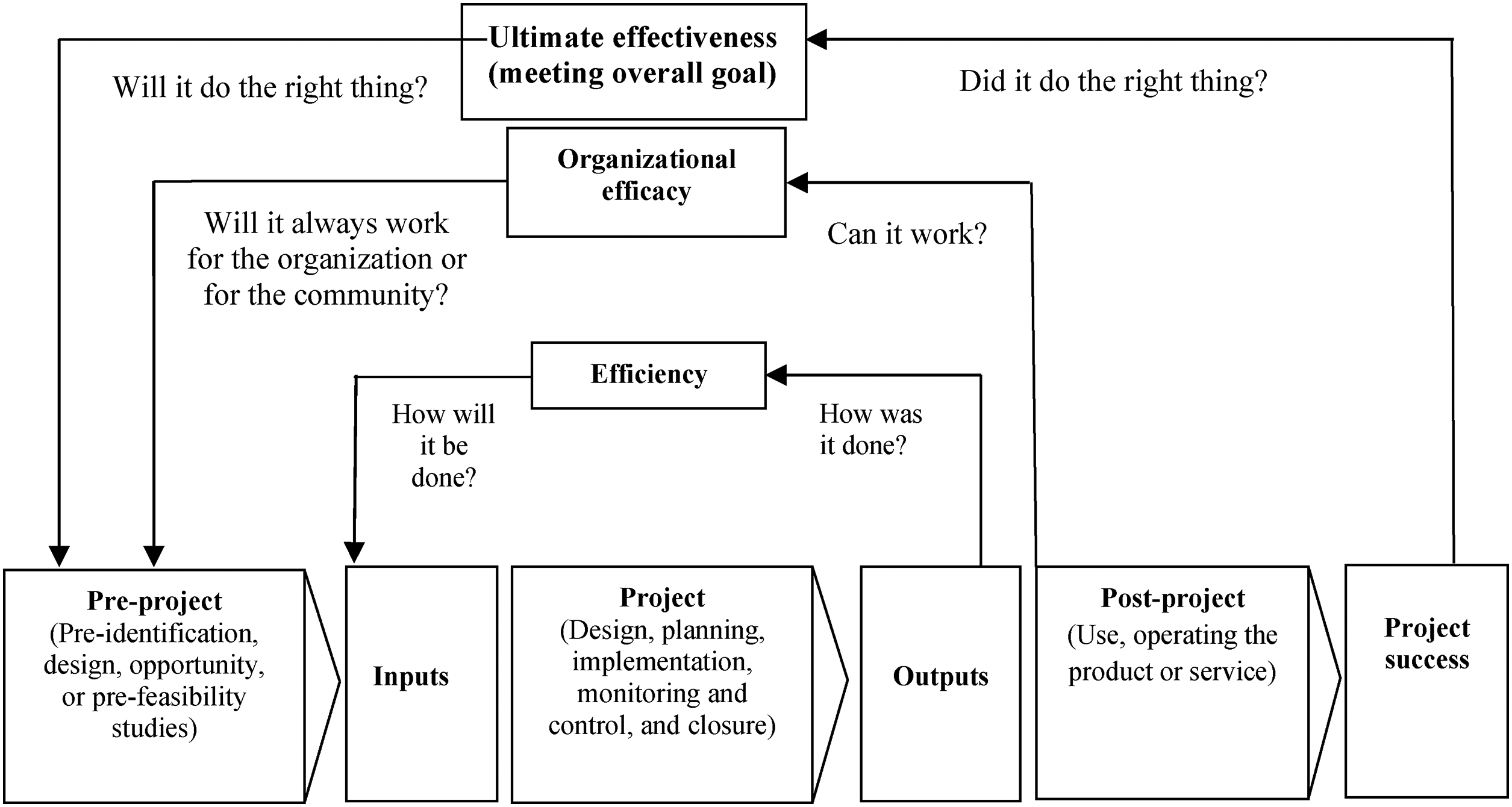
Measuring project success: efficiency, organizational efficacy, and ultimate effectiveness.
OLC: a key factor in project success
Very few studies in PM have focused on OLC as a KSF (Chronéer and Backlund, 2015). However, the tasks carried out by an organization operating in project mode can be repetitive, because the players involved know what to do, why, and by whom (e.g., planning, calls for tender, monitoring). However, they may be unique. Thus, the need to explore new capacities becomes paramount in the context of labial or novel situations (Ahern et al., 2015). Hence the concept of “project capacity” which refers to the organizational knowledge, experience, and skills acquired through organizational learning (OL), which enable a project to deliver success (Davies and Brady, 2016).
In their questionnaire survey of 41 ID project teams in Senegal, Mbengue and Sané (2013) examined OLC as a KSF. OL is, according to Argyris and Schön (1978), a social process of interaction between the members of an organization, or a cognitive process by which they detect deviations in results, explore new knowledge, and take corrective action by modifying their theories of action. Notably, Mbengue and Sané (2013) identified six aspects of OLC (autonomy, experimentation, dialogue, risk taking, interaction with stakeholders, and participation in decision-making) that are deemed favorable to OL. Their definitions are as follows.
The autonomy of the project team refers to the idea that it has a degree of freedom from the TFPs and the national supervisory body to organize itself and ensure the smooth running of the project. Experimentation emphasizes the application of new ideas, changes in working methods and the production of new knowledge through action. Dialogue can be summed up as the social relations within a project team made up of individuals with different perspectives who are required to build a common vision to solve a problem. Risk taking is linked to error tolerance as an essential condition for success. Interaction with stakeholders refers to the team's actions to win over stakeholders and thus overcome the difficulties inherent in implementing the project. Participation focuses on decision-making that encourages motivation and information sharing.
Mbengue and Sané (2013) conclude that an organizational context characterized by autonomy and interaction with project stakeholders can foster OL, as only these two aspects of OLC have been shown to be significant for proficiency in PM processes. However, their study does not shed any light on how the development of OLC within a team contributes to organizational efficacy and project success.
OLC development and its contribution to project success
In ID, apart from the study by Mbengue and Sané (2013), no studies have explored the relationship between OLC and project success. In PM, there are two dominant conceptions of learning: one, according to Argyris and Schön (1978), which refers to the interaction between actors in an organization to acquire and produce new knowledge, and the other, according to Schön (1991), which emphasizes a “reflective practitioner” model from a dialectical perspective in which practitioners, faced with a problematic situation, reflect with a critical eye that leads them, if necessary, to question their customary practices.
In this article, we have adopted Schön's (1991) notion because it envisions OL as a social process and enables “the actuality of projects” to be captured by focusing on how practitioners actually consider things to develop new management knowledge during a project (Cicmil et al., 2006). We therefore proposed the project as a network of interacting actors and PM as a reflective practice within a social context. The Soft Systems Methodology (SSM) developed by Checkland is in the same vein and captures both the “soft” and “hard” aspects of PM (Winter and Checkland, 2003). It should be pointed out that SSM is like an OL or social learning mechanism that fosters the meaning-making process, which is akin to a system of interactions between different actors who collectively use the operation to individually understand and build a collective understanding of a situation. In short, developing OLC within a project team can encourage reflective practices, meaning-making, and the development of new knowledge (project capacities) to ensure organizational efficacy and project success (see Figure 2).
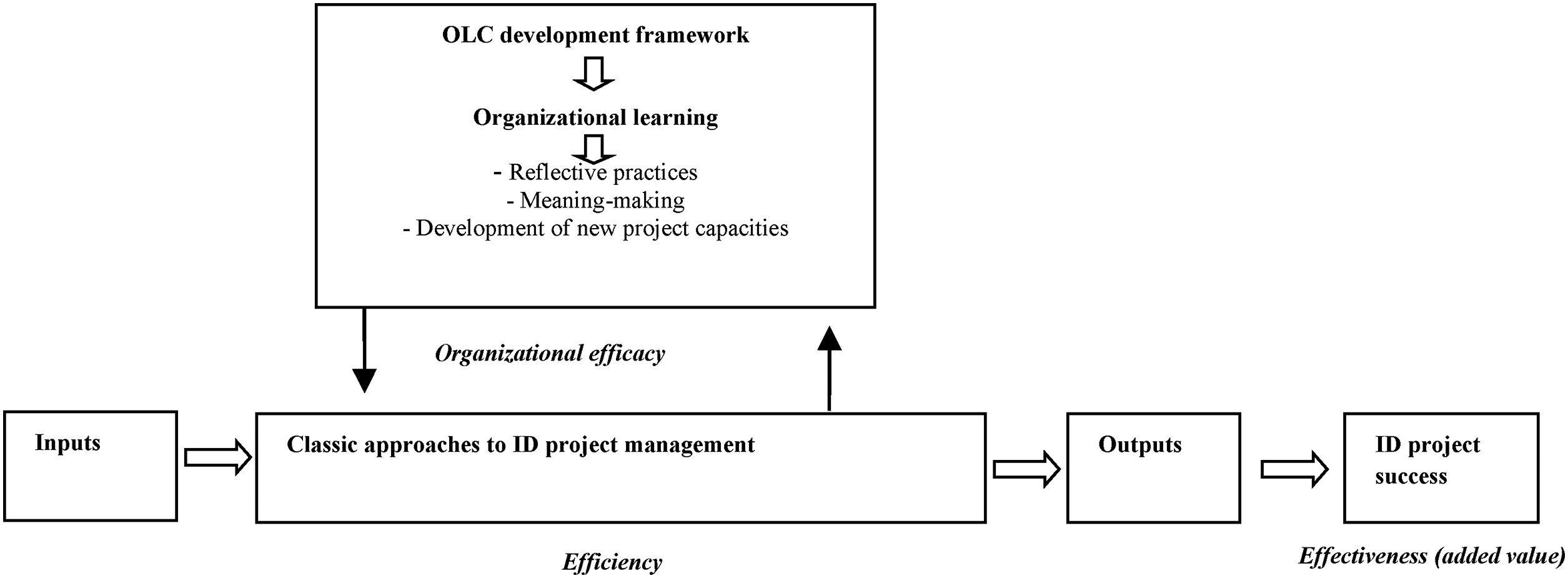
A conceptual framework for developing organizational learning capacity within an international development project team.
Description of case study and research methodology
The conceptual framework we propose above (Figure 2) is intended to provide a better understanding of how OLC development takes place within a team, and to highlight its influence on organizational efficacy and ID project success. This objective justifies the use of an exploratory case study. As we mentioned earlier, in a TFP's portfolio, some of the projects carried out in several countries are more successful than others. Yin's (2003) replication principle was therefore adopted to select the two cases. We thus selected a case considered to be a success in one country and a case considered to have had mixed results in another. The idea is to avoid any selection bias that would involve only selecting projects considered to be proven successes (Ika and Donnelly, 2017). OL can, of course, also take place even in projects with mixed results (Duffield and Whitty, 2015). However, more successful projects are, in principle, more likely to have benefited from a context conducive to the development of new knowledge than less successful ones (Davies and Brady, 2016).
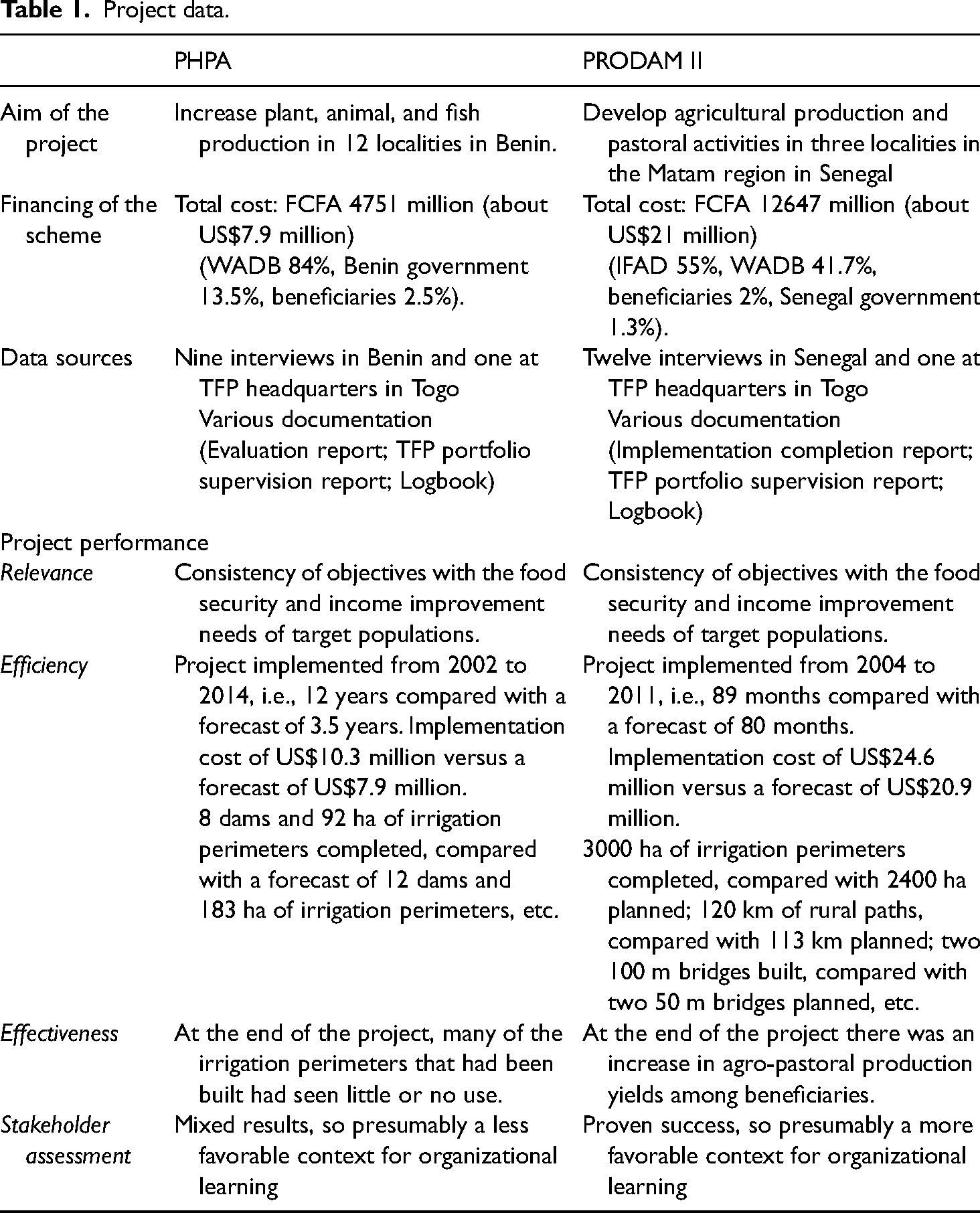
Four additional selection criteria were used: having the same intervention objectives, being financed by the same TFP, having an autonomous team, and having already been completed. Given our familiarity with projects financed by TFPs, we approached the AfDB, but only received a favorable opinion from the WADB (or BOAD in French). For the sake of contrast, we identified two projects in the WADB portfolio: the Matam Agricultural Development Project (PRODAM II for “projet de développement agricole de Matam” II) in Senegal, which represents the case study in which OLC is more favorable to success, and the Pastoral and Agricultural Hydraulics Project (PHPA) in Benin, which serves as the case study in which OLC is less favorable to success. Table 1 provides a brief comparison of the results of the two case projects.
Project data.
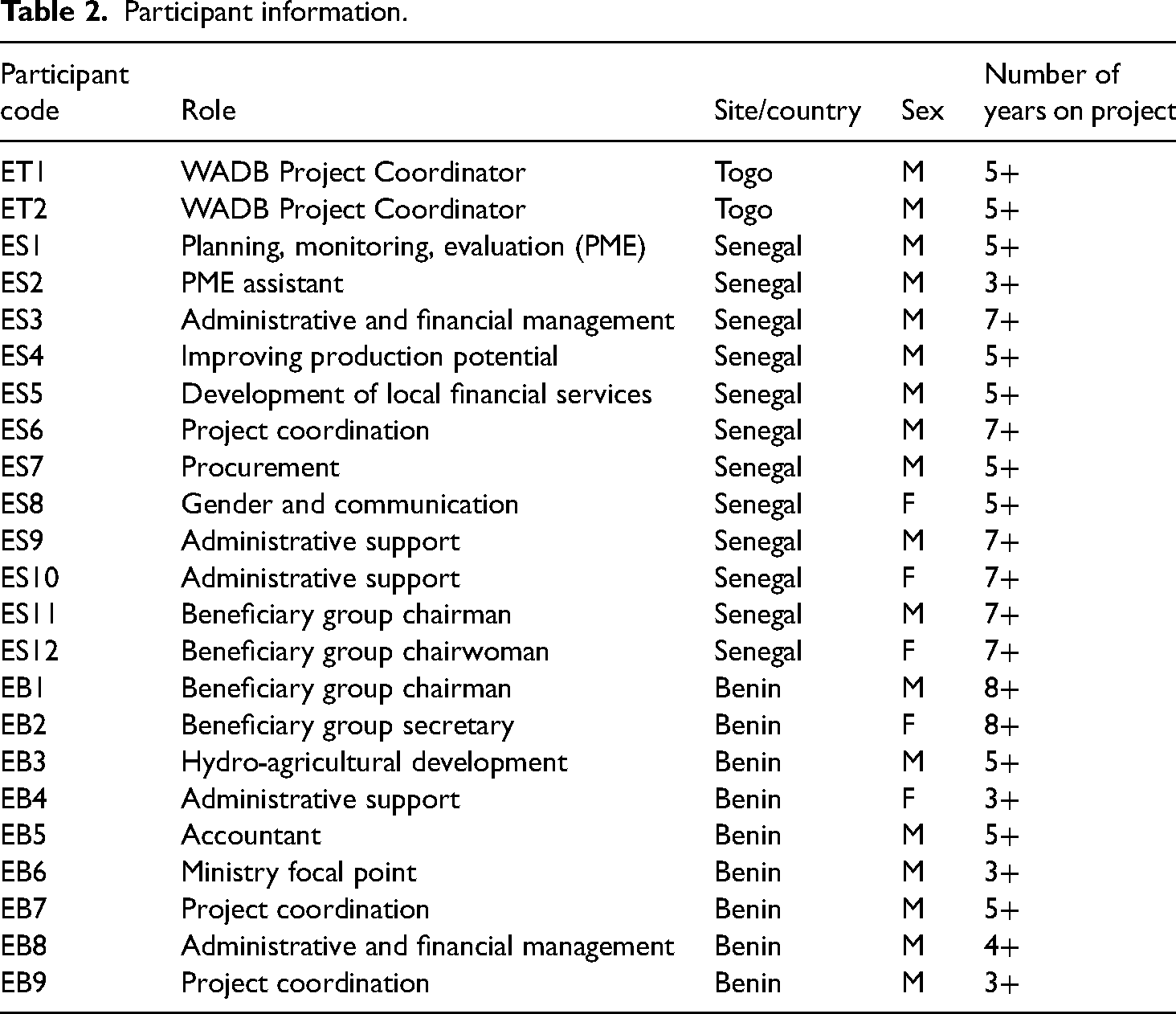
For each case study, we interviewed around 12 people per team, including a project coordinator from the TFP, a focal point from the ministry supervising the project, and two beneficiaries.
Unlike the sites in Benin and Senegal, where the works are physically carried out, Togo is the headquarters of the main TFP for both projects. Data were therefore collected in three countries from September to October 2015, 1 year after the end of PHPA and 3 years after the end of PRODAM II. Most members of the PRODAM II team were still on site as part of the project's follow-up and extension phase. In the case of the PHPA project in Benin, part of the project team remained in place to preserve the gains made and follow up on unfinished infrastructure at the end of the project. The rest of the team included officials from the supervising ministry who were assigned to new functions. In all, 23 players took part in the study and were each interviewed for 30–90 min (Table 2).
Participant information.
Our interview guide was based on the six aspects of OLC identified by Mbengue and Sané (2013), which we used as elicitation themes to explore the “lived experience” of the actors involved in the projects (Prévost and Roy, 2015). For example, the guide includes the following questions and instructions for participants to illustrate their answers with examples from their own experience.
In resolving the problems you encounter during project implementation, does your team devote sufficient time to discussions between its members (and with the project's TFP, the supervisory ministry, the beneficiaries)? Are your team members encouraged to propose new approaches? Do you feel that the project's TFP and supervisory ministry give you significant autonomy in implementing your project?
As listed in Table 1, data were collected from two main sources: interviews and project documentation. For instance, during a 3-month stay at WADB headquarters in Togo, internal documents such as periodic supervision reports on the portfolio of projects carried out in Benin and Senegal were collated. The documentation also includes the principal researcher's logbook, in which notes are recorded, including the opinions of four external WADB employees with a good knowledge of the two projects, and of a dozen beneficiaries encountered by chance during our field visits to Benin and Senegal. It should be noted that these employees and beneficiaries did not take part in the interviews. This enabled us to triangulate data sources.
An interview report was drawn up for each participant. This was followed by a preliminary analysis to input the data in the NVIVO software and a cross-sectional analysis to extract the concepts underlying the data. The preliminary analysis involved selecting units of meaning that describe the favorable (or unfavorable) context in which each project team developed (or failed to develop) new knowledge through action. The cross-sectional analysis compared the two cases using the corpus drawn from the database created with the NVIVO software. This level of analysis embodies the process of abstracting meaning (Prévost and Roy, 2015).
Presentation of results
An analysis of the interviews and documentation shows that the same design procedures were used in both projects. Comparative analyses of their implementation, in terms of autonomy, experimentation, and interaction with stakeholders, revealed distinctive managerial practices that contributed to organizational efficacy and project success. However, an analysis of dialogue, risk taking, and participation did not give rise to any particular managerial practices. The most significant research results are presented in the following.
Organizational context characterized by autonomy of the project team
Several PHPA respondents in Benin pointed out that the project team did not enjoy full autonomy. The following observations are noteworthy: In the PHPA document, it is clearly stated that the project team must have administrative and financial autonomy. However, in reality, the main unit managing the project only dealt with the financing from the WADB. There is another organization in Cotonou that managed the Benin funding, which is included each year in the State's general budget. (EB8) The project team was not given full autonomy to manage all project activities. Activities were monitored at two levels: by the Project Monitoring and Coordination Unit, the PMCU, and by the Ministry. (EB9)
This lack of autonomy was characterized by the instability of the PMCU manager role. For example, in 2007, more than 6 months after the PMCU manager left to take up a new position in the Ministry, a new manager had still not been appointed. As the project documentation states, “In reality, the PMCU was administratively and financially independent only in relation to the management of WADB resources” (MERPMEDER, 2014). Given the long delay in carrying out the works, “from 2008 onwards, the personnel for the Project were fully paid for from the national budget, including six contract employees who were transferred to the civil service in 2012” (BOAD/WADB, 2012; MERPMEDER, 2014).
PRODAM II, on the other hand, had a single project manager and enjoyed a level of autonomy that enabled the team to carry out the project effectively. Two participants (ES4, ES8) mentioned the example of the strategy initially chosen to implement the literacy component, but whose deployment in phase 1 of the project did not deliver the expected effects. It was reformulated to emphasize the involvement of the beneficiary populations in selecting the strategy, and the translation, into the local language, of the various training modules on agricultural and livestock production techniques. This enabled the beneficiaries of the irrigated perimeters to quickly master cultivation techniques and the livestock farmers to master a number of diagnostic and treatment techniques for common animal diseases.
Furthermore, all the participants interviewed highlighted the slowness of public procurement processes as a factor limiting project performance, the improvement of which was not necessarily within the purview of the project team, but the national structures. One participant (SE7) pointed out that his team had found a provision in the new public procurement code that allows ministries to delegate PM to structures under their supervision in Senegal. On this basis, the team obtained a delegation of contracting authority from the supervisory ministry. Following this granting of autonomy, the project team took the initiative of contacting the decentralized structure of the National Public Procurement Department and asked them to come to Matam to give us training on the new code, with case studies specific to our needs. This learning process has led to an enhancement of procurement capacity at project level. (SE7)
For the same participant: As the contracting authority autonomy was delegated to the project team and measures were taken to ensure it, they enabled more than 22 contracts out of a total of 28 to be awarded in the first year of the project. A feat that accelerated the acquisition of goods and services, the completion of the infrastructure planned for the project, and the success of the project. (SE7)
These assessments of the impact of autonomy on project success by respondents are corroborated in the PRODAM II implementation completion report in which the transfer of delegated contracting authority and the stability of the project team are identified as KSFs for PRODAM II (BOAD/WADB, 2013).
Organizational context characterized by experimentation within the project team
Our understanding of the experiences of PHPA respondents shows that few innovative PM solutions were developed to overcome the various problematic situations that marked the project's implementation. Two participants put it this way: The difficulties encountered by the PHPA at the outset consist of the choice of inappropriate sites, the poor technical evaluation of the dams to be built, and the failure of the contractors recruited. Which is why there was a need to experiment with a different way of doing things, but we don't often have free rein to follow through on our ideas, even as the person in charge of project management. (EB9) For any new initiative relating to implementation of the project, a note has to be sent and a favorable opinion awaited from the supervisory authority. (EB5)
Instability within the PHPA's PMCU posed enormous problems. As another participant pointed out: For the periods during which the project manager position was vacant, the temporary workers had little legitimacy to take new initiatives to implement the project. They only handle administrative activities. (EB3)
The resignation of the head of capacity building in August 2011 did not help either. This was because the project team was no longer able to ensure synergy with agricultural developments without a specialist who could contribute to experimenting with a new mode of action (BOAD/WADB, 2012).
However, the PRODAM II project team remained stable. The accounts of six participants (ES1, ES2, ES4, ES5, ES6, and ES8) described social processes that enabled them to come up with innovative solutions. According to them, all members had the freedom to point out any problem situations likely to limit the expected results. A document is then prepared to describe the situation and the initial approaches to solutions proposed. When the relevance of a proposed new initiative is established, guidance is given for further exploration and formulation. The new strategy is then submitted to the TFP for validation before being implemented, if necessary. One participant highlighted: experimenting with market garden perimeters irrigated by the drip system in the Dieri zone, which enabled the production of off-season crops with high yields for watermelon (50 tons/ha), okra (12 tons/ha), cabbage (15 tons/ha), etc. It can be said that the successful introduction of this technical innovation gave the project great visibility. (ES4)
The PRODAM II implementation completion report also shows that these innovations during the project contributed to achieving the objective of food security, with surplus production helping to solve other social problems (BOAD/WADB, 2013).
Organizational context characterized by interaction between the project team and other stakeholders
The accounts of three PHPA participants (ET2, EB8, and EB9) reveal some difficulties in the interactions between stakeholders, which reduced the efficiency of the project. One participant mentioned the situation of a dam that broke when 95% complete: We're not sure when they carried out the studies for the dam. But when they started building the dam, many of us doubted that it would hold, because we grew up here and we know the force of the water flowing from the mountains towards the dam. (EB1)
Another participant said: The project team lacked the resources to carry out certain monitoring activities in the field. Meanwhile, the project had a balance of FCFA 84.74 million not drawn down from the WADB loan. It was only during the completion mission carried out by WADB that the project coordinator pointed out that if there had been discussions with the Bank about these problems, some of them could have been resolved with the balance. (ET2)
The PHPA evaluation report corroborates this unused balance despite the existence of certain outstanding activities in the project (MERPMEDER, 2014).
However, several PRODAM II respondents (ES6, ES1, and ES7) stressed the importance of consultation with key stakeholders outside formal interaction frameworks. As one of them recounts: It was during construction of the rural paths that we asked for the inclusion of a path that was not initially included, but which we feel is very important for opening up one of the project's localities. After consultations with financial partners, the project team ended up creating the path for us to everyone's satisfaction. (ES11)
According to another participant: The success of PRODAM II lies largely in the experience of the project manager and his team members in using informal interactions with stakeholders. For example, when they have a problem, instead of sending a file directly to WADB via the formal procedure, they first call the project coordinator at the Bank to get his or her advice. (ET1)
The PRODAM II implementation completion report corroborates these observations: “The effective participation of all stakeholders in the design and implementation of the project played an important role in improving its performance. The direct beneficiaries of the project were the focus of all interventions” (BOAD/WADB, 2013).
Discussion and proposed model
Let us start by recalling that Mbengue and Sané's (2013) research led to the finding that autonomy and interaction with stakeholders are the two aspects of OLC that are significantly associated with OL practices conducive to successful PM. The results of our qualitative study confirm their findings and make further contributions. Indeed, they reveal three important aspects of OLC (autonomy, experimentation, and interaction with stakeholders). In addition, they show how OL can manifest itself through three types of managerial practices (reflective practices, meaning-making, development of new knowledge through action) that improve organizational efficacy and project success. In this sense, our study, which explores the development of OLC within a project team and its relationship to organizational efficacy and project success, contributes to the advancement of knowledge on PM in ID.
More specifically, our examination of the theme of autonomy highlights a particular social learning process that characterized the PRODAM II team and facilitated effective implementation of the project. This involves a reflective practice that has fostered the development of new contextual knowledge through action. As for the theme of experimentation, it emerged that a particular OL process was expressed within the PRODAM II team and continually motivated members to identify any problem situations and to build a collective understanding of it together (meaning-making practice) with a view to giving rise to innovative solutions over the course of the project (Davies and Brady, 2016). This social learning process mirrors the reflective practitioner process of Schön (1991) and makes this team an innovative temporary organization, as it enables it to implement innovative OL (Meddeb, 2014). As the literature shows, such innovations during implementation are important for the success of ID projects (Ika et al., 2020).
With regard to the theme of interaction with stakeholders, it appears that outside formal interaction frameworks, the PRODAM II team had a social learning framework that enabled them not only to interact and negotiate with key stakeholders (Bandé et al., 2024) but also to create meaning in problematic situations in order to develop, through action, new capacities for a project and make it a success (see Ika et al. (2010) on the perspective of project coordinators and Ika (2015) on the perspective of project supervisors regarding ID project success). This OL process is similar to the view of Winter and Checkland (2003) on PM, according to which the project is part of both “hard” systems thinking, characterized by formalized procedures for managing the project (the classic project approach) and “soft” systems thinking, characterized by social OL processes that are activated during the implementation of the project to explore innovative solutions. Collectively, these research findings are in line with work that promotes the importance of experimentation, adaptation, and innovation in projects in order to create value for stakeholders including beneficiaries, given the high levels of complexity and uncertainty that characterize ID projects (Bandé et al., 2024; Clements, 2020; Ika et al., 2020; Picciotto, 2020).
The overlaying of these different systems of human activity described at the end of our research has enabled us to propose a model (see Figure 3). The lower part of the model represents the classic PM approach in ID. According to this approach, it is necessary to define objectives and apply planning tools and techniques to deliver the project within the cost, time, and quality constraints (Ika et al., 2010; Munro and Ika, 2020). This classic approach is essentially rooted in “hard” systems thinking. However, the actual context in which projects are implemented is rarely so linear and stable. Indeed, ID project teams are confronted with a profusion of incidents and problematic situations during project implementation. Thus, successful projects require new approaches and, in particular, the mobilization of “soft systems thinking” in a way that complements the classic approach and therefore emphasizes, for example, social learning or OL (Ika et al., 2020; Winter and Checkland, 2003).
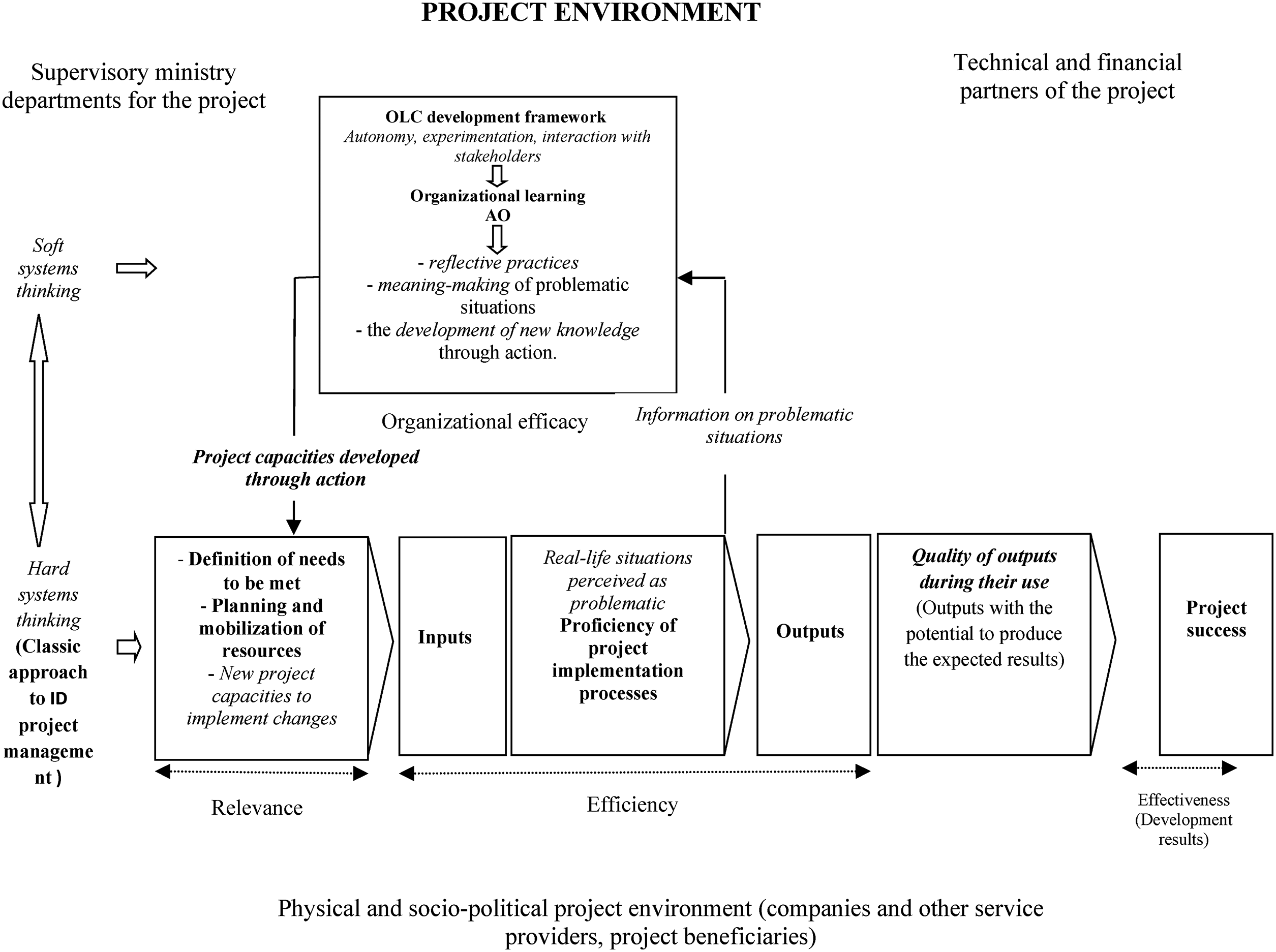
Emerging model of organizational learning capacity development for organizational efficacy and international development project success.
The results of our study show that this complementarity between the classic ID PM approach and the development of OLC within a project team is a crucial issue for the organizational efficacy and ID project success (Ika et al., 2020). The upper part of our model shows how it could manifest itself: when a project manager succeeds in creating an organizational context within his or her team that is characterized by autonomy, experimentation, and interaction with stakeholders (OLC development framework), this fosters OL, which is expressed as a social process of interaction between project team members that motivates them to take the initiative and re-examine, where necessary, their conventional approaches and strategies for implementing the project (reflective practices). This process also leads them to build collective understandings of the problematic situations they face (meaning-making). This makes it possible to develop though action new project capacities (new contextual knowledge) to ensure organizational efficacy and the creation of outputs with the potential to produce the development results expected by beneficiaries (project success).
Conclusion
Based on a case study of two ID projects carried out in two West African countries (Benin and Senegal), this article explores the development of OLC within a project team and its relationship to organizational efficacy and project success. From a theoretical point of view, the results of this research reveal the importance in a project team of an organizational context characterized by autonomy, experimentation, and interaction with stakeholders (Bandé et al., 2024; Mbengue and Sané, 2013). The model identified in our research shows in concrete terms how the development of OLC within the project team is indeed a factor in the organizational efficacy and ID project success. Our study thus contributes to the advancement of knowledge in ID PM.
From a practical point of view, this model presents an integrated approach to ID PM that is in line with a vision of complementarity and, thus, establishes a bridge between a classic PM approach based on deliberate strategies and an alternative approach based on emergent strategies (Ika et al., 2020) that encourage, in particular, OL in the course of the project for the exploration of new project capacities through action. In short, the research findings suggest that flexible and adaptive approaches to implementing ID projects can help increase their chances of success in terms of development and thus create value for stakeholders, particularly beneficiaries (Ika et al., 2020; Picciotto, 2020).
The study is not without its limitations. The small number of cases and countries should be noted. One avenue for future research would be to empirically test the proposed model and measure the contribution of OL to organizational efficacy and project success.
Footnotes
Acknowledgements
We would like to thank the interviewees for their great inputs. Without their collaboration, this research would not have been possible.
Declaration of conflicting interests
The authors declared no potential conflicts of interest with respect to the research, authorship, and/or publication of this article.
Funding
The authors received no financial support for the research, authorship, and/or publication of this article.
