




Abstract
Local governments increasingly create and use corporate forms of organization to provide public services. While there is growing evidence on the factors influencing such corporatization, less is known about what leads some local governments to bring corporatized services back in-house. This paper investigates financial, socioeconomic, political and organizational drivers of reverse corporatization among 62 Arms-Length Management Organizations (ALMOs), wholly owned nonprofit organizations created by local governments in England to provide social housing services. Survival analysis for the period 2003–2019 suggests that reverse corporatization is more likely to occur in left-wing local governments and in those with more financial reserves, but is less likely if ALMOs have operated for a longer time and have a large board of directors.
Points for practitioners
Understanding of the drivers of reverse corporatization can help local politicians and public managers improve their decisions about the appropriate mode of delivery for local public services. This paper highlights that good fiscal health may be essential for efforts to bring corporatized service back in-house, but that well-established municipal corporations may be better left to continue operating. It is also important for policymakers to recognize the role that political ideology (and socioeconomic circumstances) can play in shaping a commitment to reversing corporatization.
Introduction
Local governments in countries across the world are creating and operating municipally owned corporations to deliver public services that were previously provided in-house (van Genugten et al., 2023). This process of corporatization has begun to receive increased attention from public administration researchers interested in alternative modes of public service delivery and their implications for democratic governance (Klausen and Winsvold, 2021). Nevertheless, there are important lacunae in our understanding of the dynamics of corporatization. In particular, little is known about the reasons why some corporatized services are subsequently brought back in-house, even though concerns about the sustainability of corporatization as an alternative mode of service delivery are widespread.
To date, research addressing a shift away from service provision by municipal corporations has largely focused on whether some form of reversal of corporatization has occurred. Using a cross-sectional logistic regression model at the local government level, Camoes and Rodrigues (2021) find that Portuguese municipalities experiencing financial pressure are more likely to terminate municipal corporations. Applying survival analysis, Andrews (2022) and Andrews and Hodgkinson (2022) find that organizational characteristics also matter for the dissolution of wholly and partly owned municipal corporations in England. Among the few studies of whether corporatized services have been returned to their former in-house status, Gradus et al.'s (2021) descriptive analysis of service delivery mode changes identifies a small number of cases of reverse corporatization within Dutch municipalities, while Rackwitz's (2023) machine learning-based comparison of German and English municipal corporations indicates that macro-system pressures are a major driver of service reintegration. Although this research casts some light on the termination of corporatized public services, it has yet to capture the full range of drivers that lie behind the specific decision that some local governments make to change from corporatized to in-house service provision.
Drawing on insights from principal agent and institutional theories, this paper seeks to better understand reverse corporatization by examining financial, socioeconomic, political and organizational factors influencing the decision to return corporatized social housing to in-house provision in English local governments. To do so, a survival model is developed that incorporates relevant local government level and organization level variables across a 17-year period. Survival models are increasingly used to analyse public service delivery changes (Lim, 2021) and are especially appropriate for longitudinal analyses seeking to identify the risk of such significant events occurring (Box-Steffensmeier and Jones, 2004).
Whereas the literature on corporatization suggests that local governments may favour corporatization during periods of fiscal stress to remove costly burdens from their balance sheets (Tavares and Camoes 2007), reverse corporatization may be more likely when governments are in a strong fiscal position and therefore feel able to take on new commitments. Challenging socioeconomic circumstances may also prompt governments to innovate and corporatize public services (Andrews et al., 2020) and therefore make it correspondingly less likely that those services will be returned in-house. While local governments controlled by right-wing political parties may corporatize public services in a bid to make them more efficient (Alonso et al., 2022), those controlled by left-wing parties may prefer to regain control over arms-length organizations to expand service provision to under-served groups (Eckersley et al., 2023). Finally, the literature on organizational dissolution points towards the liability of newness and the value of inter-organizational linkages for survival (Hager et al., 2004; Singh et al., 1986), factors that seem likely to influence the likelihood that the service provided by municipal corporations will be returned in-house.
To analyse the drivers of reverse corporatization, this study investigates the Arms-Length Management Organizations (ALMOs) that provided up to a quarter of the social housing in England between 2003 and 2019. ALMOs are municipally owned corporations set up to manage, repair, improve and maintain the social housing stock owned by local governments under the terms of a management agreement. In 2001, the UK national government legislated to enable local governments to establish ALMOs with the goal of improving the quality of social housing. By transferring the management of housing away from the direct control of local politicians, it was assumed that services could be made more responsive to tenants’ needs and wider market forces (Pawson, 2006). To support responsiveness, ALMOs are overseen by a board of directors, which includes local politicians nominated by the parent government, as well as tenant representatives and independent members.
The paper will now briefly set out relevant literature on corporatization and its reversal, focusing in particular on municipal corporations. Drawing on ideas from principal-agent and institutional theory, it will then develop hypotheses on the relationships between fiscal health, socioeconomic complexity, political ideology, organizational legitimacy and reverse corporatization. Thereafter, the research context and methods employed will be described, before the statistical results are presented. Finally, conclusions are drawn regarding the theoretical and practical implications of the study.
Theory and hypotheses
The creation of companies to provide local public services has a long history (see Skelcher, 2017). In recent times, many countries have seen a dramatic increase in company creation that has gone beyond the isomorphic pressures associated with New Public Management (van Genugten et al., 2023). In particular, the corporatization of local public services is often guided by a desire to ‘replace politics by professionalism’ (Bourdeaux, 2008).
From a principal-agent perspective, local politicians are agents who act on behalf of the citizens they represent, who, in turn, are the principals in a chain of democratic accountability characterized by asymmetric information on the management and performance of public services (van Thiel, 2016). Since politicians have an electoral incentive to meddle in the management of public services, this information asymmetry can give rise to dysfunctions. Policymakers can seek to avert the moral hazard associated with democratic public management by giving public managers more freedom from political control (Horn, 1995). Public managers are trained to embrace an ethos of public service and are expected to create public value in their daily work, thereby generating public trust in their decisions (Moore, 1995). By increasing the distance between the managers responsible for operational decisions and the politicians responsible for the strategic goals for local public services, it may therefore be possible to strengthen accountability (Klausen and Winsvold, 2021).
The idea that public managers are more responsible and trustworthy agents of the citizenry than elected politicians remains a contested one (Železnik and Fink-Hafner, 2023). Indeed, a common critique of municipal corporations is that the information asymmetries that arise between principals and agents within a corporatized service delivery system are even greater than for in-house politically controlled service provision (Voorn et al., 2017). Decoupling of public services from direct political control may create a democratic deficit by placing service delivery decisions even farther away from the representatives of citizens’ demands (Koppell, 2003). Reverse corporatization of public services may therefore become appealing for local governments no longer experiencing the financial, socioeconomic and political pressures that lead to corporatization in the first place. However, the perceived legitimacy of corporatized services may make it more difficult to return them in-house. To explore these ideas further, hypotheses about determinants of reverse corporatization are now developed, drawing on theory and evidence on the dynamics of corporatization.
Fiscal health
Local governments may choose to corporatize services when confronted with fiscal pressures, regarding it as a preferable alternative to privatization and outsourcing because they can retain a degree of control over the corporations they create (Tavares and Camoes, 2007). Debates about reversing the corporatization of a service therefore also seem likely to be influenced by concerns about the financial health of a local government. For instance, the evidence on reverse privatization and remunicipalization highlights that the financial situation of local governments can play a role in the decision to bring services back in-house. Contracting-in appears to be more prevalent when governments are in a strong financial position and, therefore, potentially willing and able to spend more on public services (Voorn, 2021; Warner and Hefetz, 2012; though see Hefetz and Warner, 2004). Hence, good financial health could be an important determinant of a commitment to bring corporatized services back in-house. In particular, a high level of reserves may be required to ensure that local governments are able to cover any of the transition costs associated with the reorganization of municipal corporations (see Romano et al., 2023). For that reason:
Hypothesis 1: Good fiscal health is positively related to reverse corporatization
Socioeconomic complexity
The literature on the dynamics of corporatization suggests that it is more prevalent when governments confront a complex external environment (see Alonso et al., 2022; Andrews et al., 2020; Tavares and Camões, 2010). Since reverse corporatization seems likely to occur in circumstances that are the opposite of those associated with the decision to corporatize public services, a high level of socioeconomic complexity may make local governments reluctant to bring corporatized services back in-house. For local public service providers, the geographical concentration of the clients that they serve and the severity of their needs are key indicators of socioeconomic complexity. In such areas, greater effort is required to achieve good performance than in a more simple task environment (O’Toole and Meier, 2015). Although the socioeconomic complexity confronted by local governments is typically less volatile than the fiscal health of those organizations, during the 2010s the population of England underwent considerable growth in both scale and diversity, and, for a period, economic deprivation (Institute for Fiscal Studies, 2017). Local governments providing social housing services to more concentrated or deprived populations may therefore be less willing to once again shoulder challenging service responsibilities that they had successfully delegated to a corporate arms-length entity in the past, leading to:
Hypothesis 2: Socioeconomic complexity is negatively related to reverse corporatization
Political ideology
The local political context is also likely to influence reverse corporatization. The citizen-candidate model of political competition highlights that a ruling party's ideological commitments have an important impact on a local government's policy choices (Osborne and Slivinski, 1996). In theory, right-wing parties seek to enhance public service efficiency by cutting costs and are therefore more ideologically opposed to traditional in-house service provision. By contrast, left-wing parties favour state provision of public services to ensure that services are distributed fairly to disadvantaged social groups (Osborne and Slivinski, 1996). For that reason, corporatization tends to be associated with right-wing rather than left-wing governments (Tavares and Camoes, 2010), especially as their pro-business orientation means that right-wing parties are more committed to the creation of profit-making entities that potentially further the interests of capitalism (Häusermann et al., 2013).
In England, ALMOs were originally promoted as a vehicle for providing housing services by the left-wing Labour national government in 2001, making them popular among Labour-controlled local governments. The Conservative–Liberal Democrat national government of 2010 removed the funding and support for ALMOs made available by the previous Labour administration, potentially leading Labour-controlled local governments to prefer in-house provision again, as in the more general corporatization case. In fact, nearly all of the observed ALMO closures occurred when the Labour Party no longer controlled the national government. Given these dynamics in the politics of corporatization in the English social housing sector and the on-going salience of ideological and partisan pressures within local politics in England (Eckersley et al., 2023), the repatriation of public services into the control of local governments from arms-length organizations seems more likely to occur in left-wing governments. Hence:
Hypothesis 3: Left-wing party control is positively related to reverse corporatization
Organizational legitimacy
Organizational age
The perceived legitimacy of organizations is an important determinant of their longevity (Singh and Lumsden, 1990). At the same time, organizations that survive for a longer period benefit from a virtuous circle through which survival itself strengthens legitimacy, principally because more-established organizations are better able to identify and secure additional resources from external sources (Aldrich and Auster, 1986). Within the organizational survival literature this process is encapsulated in the argument that younger organizations suffer from a ‘liability of newness’ that means they are ‘more likely to close than older organizations’ (Hager et al., 2004: 160). Such vulnerability is largely attributed to the difficulties associated with establishing new systems and structures, and the time it takes to build connections with clients, customers and other external stakeholders who can help to fill resource gaps and knowledge deficits (Singh and Lumsden, 1990). The resource deficiencies that newly corporatized public services may experience when seeking to establish themselves as legitimate service providers could therefore render them more vulnerable to early closure or dissolution (Voorn et al., 2017). For older more-established municipal corporations where the business case for corporatization has been proven, local governments may find it more difficult to make a case for bringing services back in-house. Therefore,
Hypothesis 4: Organizational age has a negative relationship with reverse corporatization
Board size
The organizational sociology literature emphasizes how stronger inter-organizational linkages can enable organizations to build legitimacy among key stakeholders (Hager et al., 2004) and thereby help to reduce critical resource dependencies (Pfeffer and Salancik, 1978). Importantly, the composition of the management board (or board of directors) can play a vital role in building the relationships organizations need to achieve both these goals (Walker and McCarthy, 2010). The number of directors on the board captures the potential strength of those relationships, because as board size increases so too will the social network and legitimacy of the organization (Baum and Oliver, 1991). This dynamic seems especially likely to apply to municipal corporations, since public service organizations have to address the interests of multiple stakeholders (Boyne, 2003) and those stakeholder groups are often represented on the boards of corporatized services (van Genugten et al., 2023). Given that municipal corporations with larger boards are more embedded in networks of institutional support, they are likely to possess a local legitimacy that makes it more difficult for local governments to effect a change in the way in which they are operated. Consequently,
Hypothesis 5: Board size has a negative relationship with reverse corporatization
Data and methods
The study sample includes all the ALMOs providing social housing services that were created by English local governments during 2003–19, except for a small number that could not be attributed to a single government due to reorganizations that took place in 2009. In England, responsibility for social housing is assigned to single-tier London boroughs, metropolitan districts and unitary authorities that operate in urban areas, and the district councils operating in the two-tier rural local government system.
During the study period, approximately 2.5% of all local government service expenditure in England (around £2–3 billion) was spent annually on providing housing benefits to disadvantaged citizens. Local governments managing their own housing stock either in-house or through an ALMO, spent around a further £6–8 billion annually on services, such as property maintenance, house building, tenancy allocations and lettings, rent collection, debt counselling, grounds maintenance and community safety initiatives. For single-tier stock-owning governments, social housing represented the third-largest area of annual service expenditure, after education and social care. For lower-tier stock-owning district councils, social housing is the largest single area of expenditure.
All local governments in the UK owned substantial stocks of social housing until the Conservative national governments of the 1980s established tenants’ right-to-buy their public-owned homes and permitted local governments to transfer their housing stock to private and nonprofit organizations. Stock transfer was extended by the ‘new’ Labour governments of the 2000s to rejuvenate deteriorating public housing in inner-city areas. Within this setting, corporatization through transfer to ALMOs was encouraged to assuage ‘local authority and tenant concerns around accountability, control and privatisation’ (Pawson, 2006: 776).
To establish an ALMO, local governments apply to central government for permission to set one up. During the 2000s, extra funding was made available to incentivize local governments to create ALMOs that was not made available to those keeping services in-house (Cole and Powell, 2010). ALMOs were expected to be legally separate, wholly owned, nonprofit-making municipal corporations – Type 3 arms-length bodies – ‘private law-based organizations established by or on behalf of local government(s)’ (van Genugten et al., 2020: 6). Nevertheless, to uphold public accountability, ALMOs were also required to configure their boards of directors on the ‘three-thirds’ principle of ‘one-third tenants, no more than one-third local authority nominees, and at least one-third independent members’ (Office of Deputy Prime Minister, 2004, para 12.18).
To identify local governments in which ALMOs were created to provide social housing, a two-step search process was implemented. First, the articles of incorporation for the National Federation of ALMOs that was published in 2008 was scrutinized. Second, the webpages of the National Federation were searched to identify any ALMOs that had been established from 2009 onwards. This search procedure revealed the creation of 71 ALMOs at some point during the whole study period (2003–2019). Although the National Federation of ALMOs is not required to publish information about ALMOs' creation, the federation was incorporated with all extant ALMOs in 2008 and has represented all of those created thereafter. Hence, federation membership information is a reasonably reliable guide to the number of ALMOs in existence.
To construct an ALMO–local government level dataset for the purposes of the study, financial and political data for stock-owning local governments was supplemented with information on the board composition of each ALMO, transposed by hand from electronic versions of the annual reports for each ALMO downloaded from the beta service of UK Companies House.
Dependent variable
The dependent variable for the analysis presented here is the hazard rate for an ALMO’s housing stock being returned to the parent local government in a given year. This represents the likelihood that this particular event will happen to the ALMO within a given local government at a particular time. The hazard of an ALMO's stock being returned to the parent local government is thus a function of the length of time in years until the liquidation of that ALMO's assets. ALMOs surviving the study period without having their housing stock returned to direct local government ownership are assigned a value of 1 on a status variable. ALMOs that are subsequently closed received a 0 from the year in which the housing stock they managed is repatriated to the parent local government.
Time-varying independent variables
To investigate the potential significance of financial drivers of reverse corporatization, a measure of fiscal health, operationalized as the unallocated reserves relative to revenue expenditure per annum in parent governments, was included in the statistical model. This variable is a key indicator of a local government's ‘ability to meet financial and service obligations’ (Jacob and Hendrick, 2013: 11). High levels of reserves may enable local governments to experiment with alternative service delivery models and to commit significant resources to making large-scale change happen (De Widt, 2021).
Two measures are used to gauge socioeconomic complexity. First, the average ward score on the Index of Multiple Deprivation score for each area served by an ALMO. Higher social needs and lower co-production capacity confront public services operating in deprived areas, making it more costly and difficult to meet service demands (Romero et al., 2010). Second, population density figures measured as the number of people per square kilometre capture the geographic concentration of the population served by local governments. Densely populated areas have more complex social needs, which can increase the costs of providing public services (Ladd, 1992). During the study period, deprivation and population density varied across and within local areas, meaning that inclusion of these variables in the survival analysis captures the effect of socioeconomic complexity on the instantaneous hazard of reverse corporatization for a given year (Fisher and Lin, 1999).
To evaluate the influence of political ideology on reverse corporatization, a dichotomous variable, taking a value of 1 if the main left-wing party in the UK, the Labour Party, controls the local government and 0 otherwise, is added to the statistical model. Local governments led by the Labour Party may be more likely to bring social housing services back in-house than those controlled by the main centrist and right-wing parties in the UK, the Liberal Democrats and the Conservative Party.
To capture the potential effects of organizational legitimacy, two variables are employed. First, the age of ALMOs, measured as the number of years since the financial year in which they were established. Empirical studies suggest long-established organizations are less likely to be dissolved than newer ones (see Hager et al., 2004; Singh and Lumsden, 1990). This measure can be included in the survival model because there is a staggered pattern of ALMO start-ups, i.e. not all of the ALMOs were established when the study begins in 2003. Late (or delayed) entry into the survival model is the reason why a Cox regression has been applied. Importantly, the Cox model makes no assumptions about the baseline hazard function so it can accommodate delayed entry of subjects and time-varying covariates, including the age of subjects (Commenges et al., 1998). Second, board size measured as the number of directors on each ALMO board per annum. Involvement of a wider range of actors in the strategic direction of social services organizations can enhance their legitimacy amongst key stakeholder groups and thereby expand the institutional sources of support for their survival (Singh et al., 1986).
Time-varying control variables
The size of each ALMO was measured as the total units of social housing stock that they managed. Organizational dissolution research suggests that larger organizations are more likely to survive than their smaller counterparts (Singh and Lumsden, 1990). However, it is possible local governments prefer to bring large ALMOs back in-house as they may be perceived to be ‘too big to fail’, especially in a context of resource scarcity as was the case from 2010 onwards (Cole and Powell, 2010). The quantity of service need is captured by calculating the number of people on the waiting list for social housing per 1000 capita in each of the local governments owning ALMOs. A long housing waiting list may prompt a local government to reintegrate services to gain greater control over the situation and prevent ‘contract failure’ (Clifton et al., 2021).
Time-invariant control variables
Different types of local government responsible for social housing may confront distinctive circumstances when deciding whether or not to reverse the corporatization of social housing. Dichotomous variables are created coded 1 for each of the three types of single-tier government in England (London boroughs, metropolitan boroughs and unitary authorities) and 0 for the lower-tier district councils, which are treated as the reference category.
Univariate and bivariate analysis
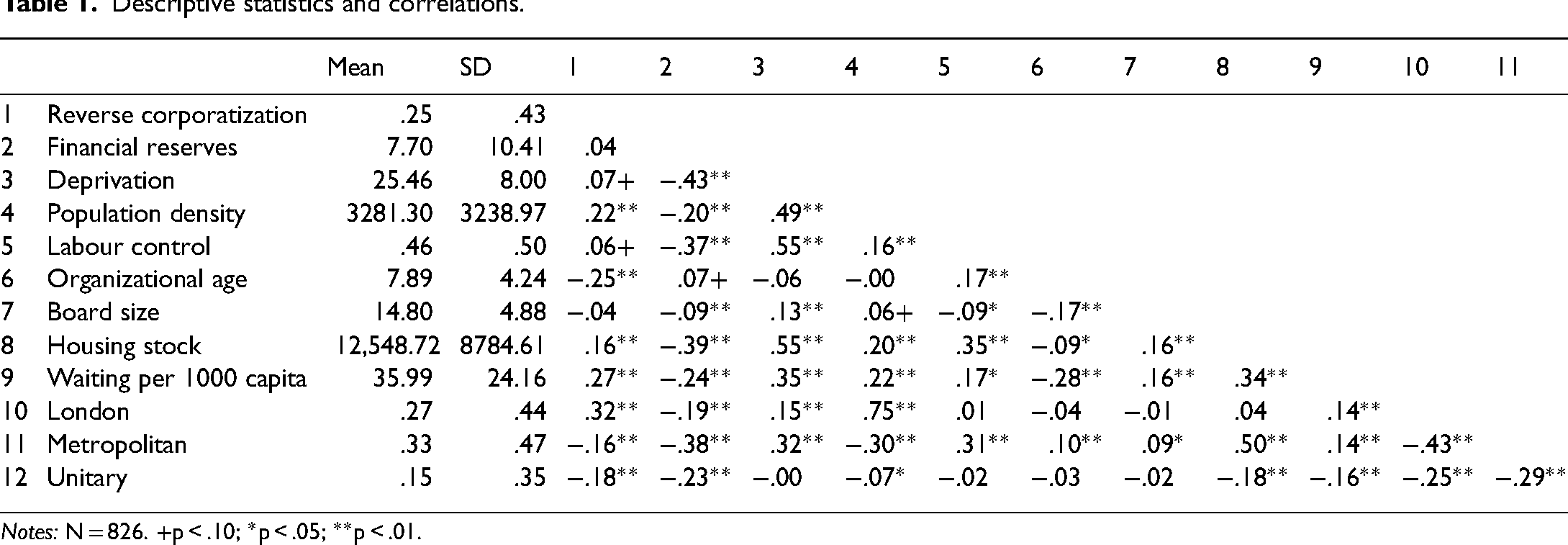
Descriptive statistics and correlations for the variables used in the analysis are presented in Table 1. The table highlights that local governments operating an ALMO during the study period had, on average, comparatively low reserve levels (nearly 7%). They confronted medium levels of socioeconomic deprivation (25% – about half of the maximum level), and population density (3281 people per square kilometre – the maximum is around 15,000, with the average being around 400). These governments were mostly metropolitan boroughs in the north of England, with London boroughs and district councils also operating more ALMOs than the unitary authorities serving smaller cities. Almost half of the local governments operating ALMOs were controlled by the Labour Party. ALMOs managed, on average, more than 13,000 properties, for around seven and a half years, typically with a waiting list of about 35 people per 1000 of the local population, and were overseen by a board of directors with nearly 16 directors in place per annum.
Descriptive statistics and correlations.
Notes: N = 826. +p < .10; *p < .05; **p < .01.
The correlations between some of the explanatory variables and reverse corporatization indicate that there may be several important determinants of the decision to bring social housing services back in-house. Nevertheless, it is necessary to apply a multivariate model to firmly establish the presence of direct statistical relationships between the variables of interest.
Survival analysis
Kaplan-Meier estimates of the hazard rate for the ALMOs included in the study are shown in Figure 1. The figure illustrates that around a third of local governments operating ALMOs (20) chose to repatriate the services provided by ALMOs during the 17-year study period. Importantly, the rate of reverse corporatization appears to have accelerated after 2010, when the Labour national government left office and the new Conservative–Liberal Democrat government withdrew the financial incentives made available to encourage local governments to establish and operate ALMOs. The magnitude of this development provides prima facie corroboration of the impact of system-wide pressures towards reverse corporatization found in Rackwitz's (2023) study of service reintegration. The multivariate survival analysis reported next explores the drivers of reverse corporatization in more depth.
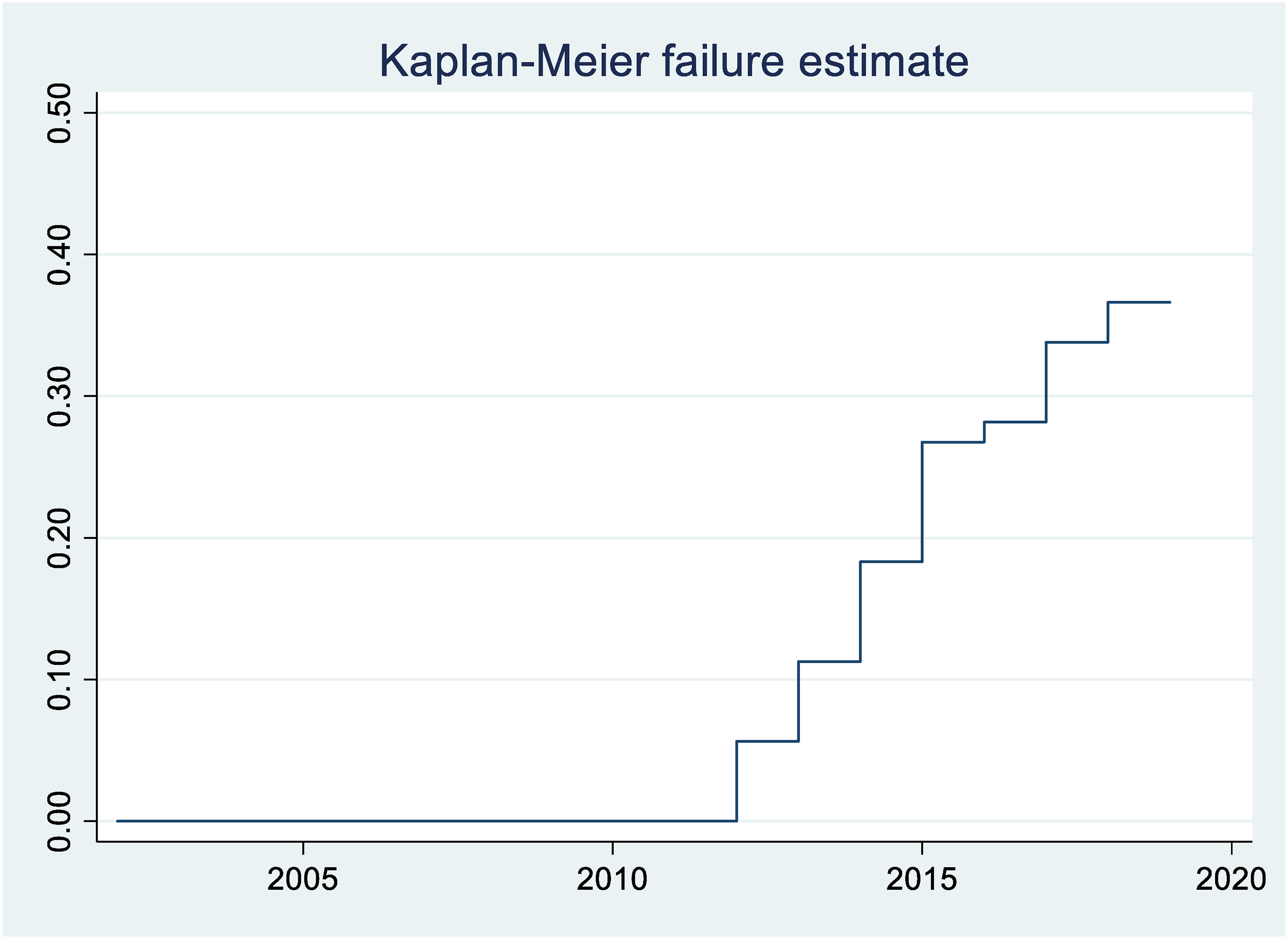
Hazard rate for reverse corporatization.
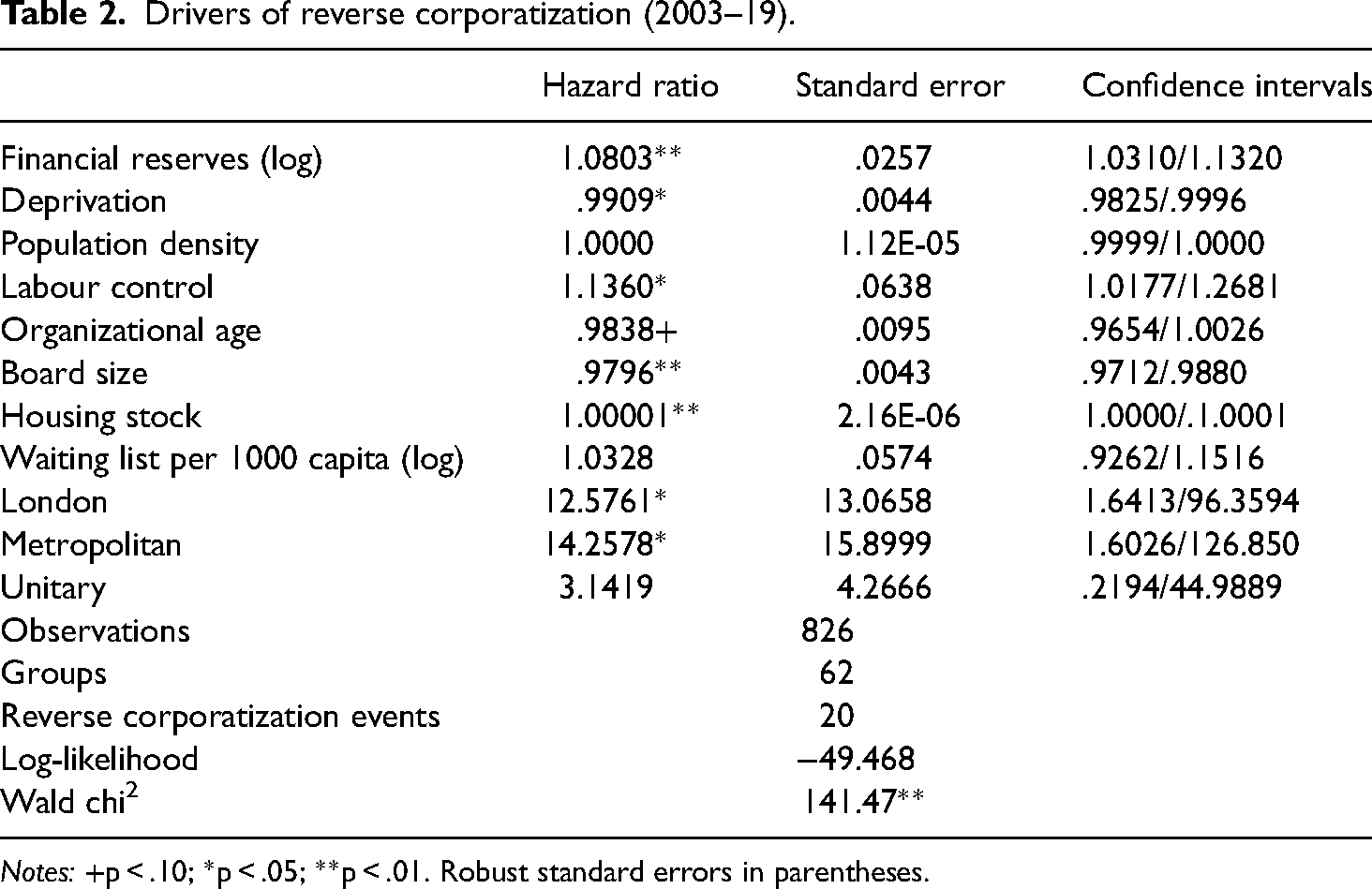
Table 2 presents Cox proportional hazard estimates for the likelihood of reverse corporatization. The global test of the proportional-hazards assumption indicates that for this model the assumption cannot be rejected (chi2 = 11.23, p = .424). The individual variance inflation factor is below 3 (average = 1.88) for the explanatory variables, so multicollinearity does not seem problematic.
Drivers of reverse corporatization (2003–19).
Notes: +p < .10; *p < .05; **p < .01. Robust standard errors in parentheses.
The statistical results suggest that fiscal health has a positive relationship with reverse corporatization. The hazard ratio for the level of financial reserves available to ALMO-owning local governments is greater than 1 and is statistically significant, thereby confirming our first hypothesis, though contrasting with Camoes and Rodrigues’ (2021) finding that Portuguese municipalities in poor fiscal condition tend to terminate municipal corporations. Substantive interpretation of the hazard ratio for ALMO survival suggests that for every log unit increase in financial reserves (i.e. notionally about 2.72 for a natural log), the likelihood of reverse corporatization increases by about eight percentage points. Turning to the socioeconomic factors that potentially explain reverse corporatization, the hazard ratio for deprivation is less than 1 and is statistically significant, suggesting that ALMOs operating in socioeconomically disadvantaged areas are less likely to be returned in-house than those in more prosperous areas. Substantive interpretation of the deprivation hazard ratio suggests that for every increase of 1% in socioeconomic deprivation, the likelihood of reverse corporatization decreases by about one percentage point. The hazard ratio for population density is 1 and not statistically significant, so, overall, the estimates offer qualified support for the second hypothesis regarding socioeconomic complexity and the non-reversal of corporatization.
The hazard ratio for Labour Party control is more than 1 and is statistically significant, suggesting that the social housing services provided by ALMOs are more likely to be brought back in-house by local governments controlled by the UK's main left-wing political party. Substantive interpretation of the Labour Party hazard ratio indicates that ALMOs operated by left-wing local governments were about 14% more likely to be brought back in-house than those operated by other governments. Figure 2 presents Nelson-Aelon failure estimates for ALMOs operated by Labour-controlled and non-Labour-controlled local governments, which highlight the much higher rate at which social housing provided by ALMOs was brought back in-house by Labour-controlled local governments.
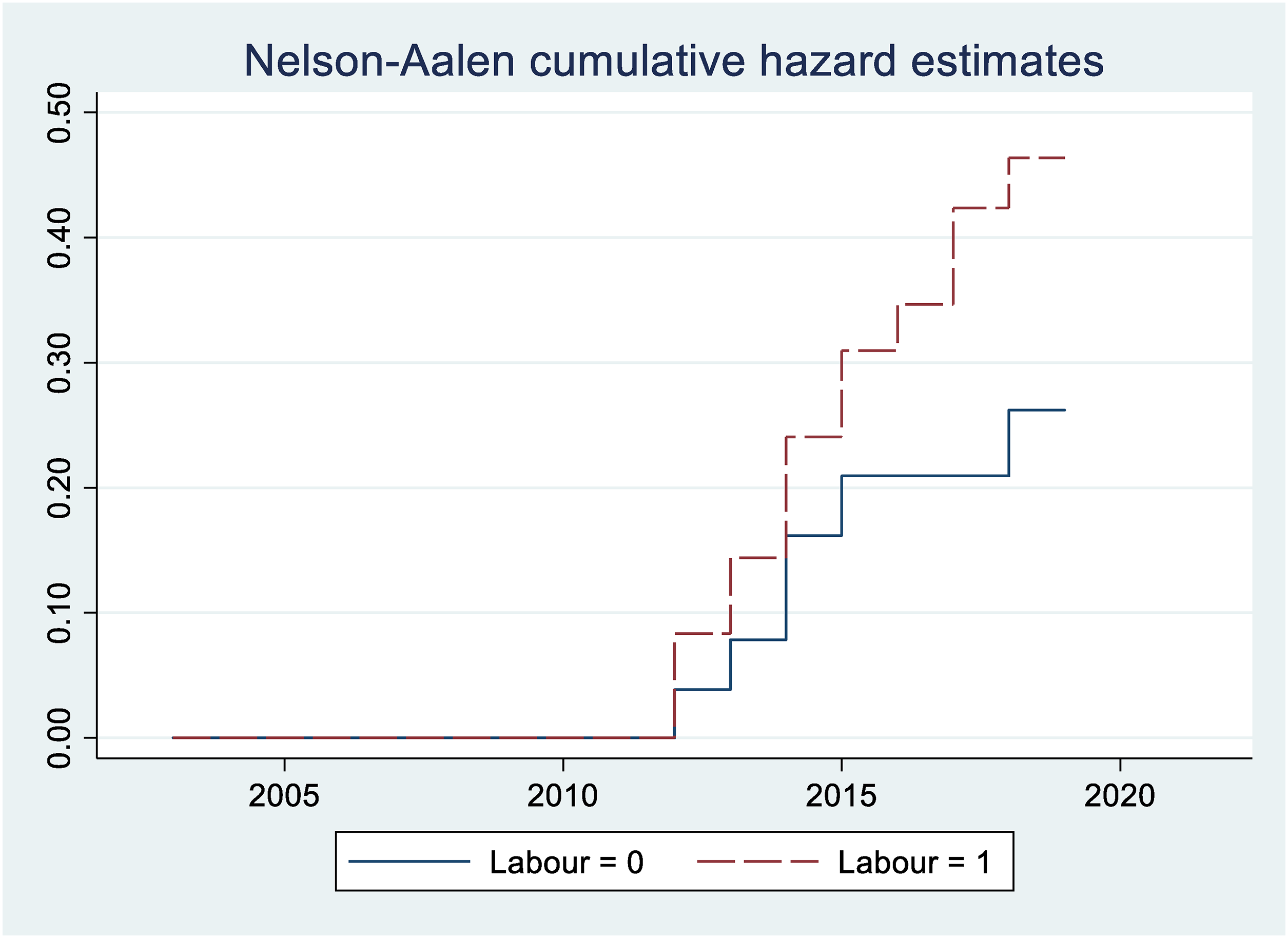
Hazard rates for reverse corporatization in left and right-wing local governments.
The results provide support for the fourth hypothesis regarding the importance of organizational legitimacy as a constraint on the reversal of corporatization. First, organizational age appears to have a negative relationship with bringing social housing services back in-house: the hazard ratio for age is below 1 and is statistically significant. Hence, we observe straightforward evidence of the liability of newness that comports with the organizational mortality literature (see Singh and Lumsden, 1990) and some related studies dealing with municipal corporations (e.g. Rackwitz, 2023, though see Andrews, 2022). Substantive interpretation of the hazard ratio in this case indicates that for every year an ALMO continues to operate, it is about 2% less likely to have its services returned to the parent local government. Second, the hazard ratio for the board size variable is also negative and statistically significant. Substantively speaking, the size of this ratio implies that the addition of one more director is associated with about a 2% decrease in the likelihood of reverse corporatization. Put differently, if there were a one standard deviation (4.88) increase in the number of directors, then an ALMO would be about 10% more likely to continue providing social housing services. The importance of this variable as a barrier to reverse corporatization among ALMOs mirrors previous evidence of the salience of board characteristics for the survival of corporatized public organizations (e.g. Andrews, 2022; Andrews and Hodgkinson, 2022).
Turning to the results for the control variables shown in Table 2, it appears that organization size is positively related to reverse corporatization. The hazard ratio for housing stock is positive and statistically significant, though very small. By contrast, the hazard ratio for the measure of quantity of service need (waiting list per 1000 capita) is positive but not statistically significant. Nevertheless, there appear to be interesting variations in the mortality rate associated with the type of local government operating an ALMO. In particular, reverse corporatization is more likely to occur in London local governments and large metropolitan governments in the north of England than in other types of local government.
Discussion
This study indicates that there may be several factors behind the decision to reverse the corporatization of local public services. In particular, fiscal health and left-wing political control appear to increase the likelihood that corporatized services will be brought back in-house, while organizational legitimacy seems to be the main factor insulating such services from reintegration. These findings have important theoretical and practical implications.
The results provide support for long-standing arguments about the principal–agent relationships, ideological influences and institutional pressures that lie behind local public service delivery choices (see Horn, 1995; Koppell, 2003; van Genugten et al., 2020). Importantly, among those English local governments that have not privatized their social housing, it can be seen that the pendulum of public sector reform has swung during the past two decades from one in which arms-length provision by municipal corporations was popular to another in which in-house provision is increasingly being favoured. In the case of housing, this development has been influenced by the changing support available from UK central government for corporatization. However, the significance of fiscal health and left-wing political control as predictors of reverse corporatization suggests that local governments’ decision to return social housing in-house is nevertheless shaped by the economic and political transaction costs associated with changing service delivery models (Tavares and Camões, 2007). These findings therefore have great relevance for the growing body of research analysing the dynamics of corporatization at the local level and also offer useful insights for the emerging literature on remunicipalization regarding the circumstances in which local governments may be best able to reassert control over public services.
In addition to highlighting the factors that may facilitate reverse corporatization, the analysis suggests that the legitimacy of municipal corporations may hold the key to preventing parent local governments from removing services from arms-length supervision. Numerous studies underline the importance of legitimacy for organizational survival in the public sector (see Kuipers et al., 2018), but research has seldom addressed the fate of municipal corporations that could potentially be reintegrated by their parent governments. The findings presented here indicate that factors that are beyond the control of policymakers, such as organizational longevity, may be important influences on local corporatization decisions, but that controllable factors relating to the design of corporatized public services, such as board composition, can also be consequential. Other indicators of legitimacy relating to the performance and accountability of public services, such as citizen satisfaction and management control, may play a role as well (Kuhlmann and Wayenberg, 2016). Although, on this occasion, longitudinal data on managerial practices and citizens’ perceptions of social housing performance is not available for all ALMOs in England, quantitative research tackling these issues would cast further valuable light on the mechanisms that may prevent reverse corporatization occurring. Likewise, qualitative case studies exploring the decision-making processes within parent local governments would be extremely useful.
In terms of practical implications, the findings can help local government practitioners and policymakers to determine whether or not it may be appropriate to bring corporatized services back in-house. For example, if local governments are in poor fiscal health or are controlled by political parties with a weaker commitment to state-backed public services, then it may be preferable to preserve the status quo of corporatized provision. Likewise, it may be easier to reverse corporatize municipal corporations if they have not been operating for a long period of time or if they have a small board of directors with whom it is easier to secure agreement on the rationale for, and subsequent process of, organizational dissolution. These considerations would, of course, be added to those regarding the management and performance of municipal corporations and whether they were successfully meeting the objectives that were set for them. In particular, evaluation of the financial and managerial capacity available for resuming in-house provision of a corporatized service would be essential.
Research building on the limitations of this study could better illuminate the dynamics of the decision making around reverse corporatization in several ways. First, this study focuses on one local public service that experienced widespread corporatization as a result of an unusual commitment to the policy at the national level, so it is important to explore whether the results observed here differ in other time periods and organizational settings. Cross-country research suggests that changes in national and local socioeconomic circumstances and political priorities, as well as technical concerns about the quality of the management and governance of municipal corporations, can lead to the return of corporatized services to full municipal control (van Genugten et al., 2023). Comparative studies explicitly seeking to identify points of commonality and difference in the determinants of reverse corporatization across and within different countries and local public services would therefore help pinpoint the generalizability of the findings reported here.
Second, research comparing the financial and non-financial performance of different public services before and after reverse corporatization would provide invaluable evidence that could help policymakers identify the most promising circumstances in which to bring corporatized services back in-house or commit to their continuation. Studies that then aimed to understand what financial, socioeconomic, political and organizational factors seem to affect the success and failure of reverse corporatization would provide much-needed evidence on the effectiveness of alternative local service delivery choices.
Footnotes
Declaration of conflicting interests
The author declared no potential conflicts of interest with respect to the research, authorship, and/or publication of this article.
Funding
The author received no financial support for the research, authorship, and/or publication of this article.
