




Abstract
The emergence of information and communication technologies (ICTs) has put emphasis on the open government approach (OG), provoking a cultural change in both the citizenry (demanding new ways of collaborating with public administration and more openness in government), and in the public administrations (adapting their structures and processes to support civic participation). This article analyzes both the strategies followed by local governments in implementing OG initiatives and the level of alignment of the objectives included in the municipal OG strategies with those settled by the regional government to which they belong. Empirical research on the OG objectives included in the strategic planning of large-size Andalusian municipalities has been performed. Findings reveal that most local governments are implementing a push strategy based only on more openness in government (mainly owing to normative requirements). Additionally, the objectives included in both the economic and governance dimensions are those included in the OG initiatives in municipalities, although each one has a particular way of adopting digital and OG strategies consistent with their municipal priorities and circumstances.
Points for practitioners
This study brings a novel insight to public managers and politicians concerning OG initiative adoption. It highlights both the limitations of current OG initiatives developed by public administration and the importance of citizens’ involvement in them in order to acquire trust in government. The current economic situation favors and increases mistrust in the citizen, who feels great disappointment in governments and political leaders. This could be minimized with the creation of spaces for municipal collaboration, where public managers and politicians may capture the voice of citizens directly and the strategic alignment in the OG strategies for efficiently reaching economic and social outcomes for the citizenry. Also, OG implementation experiences should be shared, so that more reticent local governments could be made aware of the potential.
Introduction
Owing to financial crises, the poor management of health pandemics (Covid-19) and the need for governments to open up to a more global scenario (Rodríguez Bolívar et al., 2019), citizens feel ignored and misunderstood and, consequently, disappointed with public administrations (Oblak Črnič, 2017). So, they are exerting greater pressure on government transparency and accountability and are calling for the need to collaborate and participate in public decision-making processes (Government of Spain, 2020). As a result, supported by information and communication technologies (ICTs), governments around the world are turning cities into smart ecosystems, undertaking a large number of smart initiatives (Guenduez et al., 2018). Although some studies indicate that these initiatives could cover a greater number of dimensions (Neirotti et al., 2014), most of the studies (see e.g. Ariza-Álvarez et al., 2021; Batty et al., 2012; Caragliu et al., 2011; Colldahl et al., 2013; European Parliament, 2014) defined and assessed the Smart City according to the six main smart dimensions or pillars defined by Giffinger et al. (2007).
Among these dimensions, smart governance is key for making city governments more transparent and accountable, engaging city residents in the strategic decision-making process, and enabling better public sector management by integrating the other initiatives implemented in the additional five smart dimensions (Ariza-Álvarez et al., 2021), creating public value (OECD, 2020). Under this framework, ICT-based tools, such as the implementation of open government (OG) initiatives, has allowed city governments to incorporate principles, policies or actions of transparency, accountability, citizen participation and public service co-creation, aimed at achieving higher levels of public value creation (Gao et al., 2021).
While the idea of OG may not be new, according to Pereira et al. (2018) the impact of OG on collaborative governance as one of the main elements of smart city governance should be better explored. Indeed, the emergence of ICTs has put the emphasis on this approach, which forces a cultural change on both the citizenry (demanding their collaboration and relationship with public administrations) and on the public administrations (adapting their structures and processes to a greater openness to the public). This new culture entails government transparency, accessibility of citizens to public services and information, and the responsiveness of government to new ideas, demands and needs (OECD, 2014).
Countries are therefore increasingly acknowledging the role of OG reforms as catalysts for public governance, democracy and inclusive growth (OG partnership: https://www.opengovpartnership.org/), especially at the regional and local government levels owing to its proximity to citizenry (Council of Europe, 2018; Zuiderwijk et al., 2019). Nonetheless, OG initiatives have been usually implemented differently across countries owing to their institutional context (Grimmelikhuijsen et al., 2013). Also, at different levels of public administration, prior research has indicated that government agencies have joined to the open innovation strategies with little knowledge of these strategies (Chan, 2013), which has given place to differences in the open innovation strategies implemented in government agencies. Based on this issue, the following research question is derived: do local OG initiatives present the same level of development and type of strategy in a particular institutional scheme?
On the other hand, in recent years, in response to urban challenges caused by increasing urban population growth and the need for fast-track recovery from previous weather and health disasters that occurred in the cities, city governments are deploying ICTs at an increasing rate to become city smart. Nonetheless, each government manages its initiatives and resources differently to face these social challenges and transform its city into a smart city (Nesti, 2018). Hence, we find different approaches when undertaking initiatives (Deslatte and Stokan, 2020), such as the way in which these smart initiatives are planned, managed and implemented (Rodríguez Bolívar et al., 2020).
As noted previously, partially derived from the complex and fuzzy definition of the smart city concept (Ramaprasad et al., 2017), prior research has often used the Giffinger et al. (2007) approach to the smart city framework, characterizing six smart city dimensions (economy, governance, mobility, environment, people and living). As noted by Fernandez-Anez et al. (2018), smart initiatives work around different stakeholders’ requirements, which can be different according to the major urban challenges and trends. Therefore, the second research question of this paper is: are all OG initiatives driven to the same smart dimensions with the need to build smarter cities?
To answer these two previous research questions, this research is focused on Spain. In Spain, the OG initiatives have stepped from the central government to local governments in a hierarchical way, implementing different action plans to move from bureaucratic and centralized governance models (Rodríguez Bolívar et al., 2015) to other more open, participative and collaborative ones. Nonetheless, it has also entailed technical difficulties and insufficient attention to integrated OG initiatives for achieving public goals (Government of Spain, 2020). In this regard, although strategic alignment (SA) is associated with the achievement of high strategic performance (Ghonim et al., 2020), the OG strategic plans have been very diverse and have not always been guided by a holistic perspective (Rodríguez Bolívar et al., 2020) either within the municipality or in its relationship with the regional government on which they depend.
In fact, public management research on the strategy-stategy fit is scarce (Plantinga et al., 2020) and SA in the public sector is a neglected area of research (Jacobsen and Johnsen, 2020). Evidence on OG initiatives and SA in the public sector can therefore make an important contribution to the literature on strategic management in smart cities. It can also give public managers empirical foundations for designing OG initiatives strategically aligned with superior objectives. Therefore, the final research question in this paper is: are local OG initiatives vertically aligned with the objectives of the regional government to which they financially depend on?
To answer this question, this article considers the vertical strategic alignment (VSA) between OG initiatives and higher-level strategies, defined as the consistency of local OG strategies with regional socioeconomic objectives. This article analyzes both the strategies implemented by local governments in designing OG initiatives and the level of vertical alignment of the objectives included into the municipal OG strategies with those settled by the regional government to which they belong, with the aim of analyzing the different efforts made and the need for focusing these efforts on shared objectives to be more effective and efficient.
To carry out the analysis proposed by the research questions posed in this article, this study focuses on the OG objectives included in the strategic planning of Andalusian municipalities with a large population (over 50,000 inhabitants) and its comparison with those included in the Andalusian regional government (ARG) (socio-economic objectives settled in the Law 2/2007, Reform of the Statute of Autonomy for Andalusia) as a first approach to the object of study.
SA and strategies of OG initiatives
SA in different levels of public administrations
In response to urban growth and new challenges derived from this issue, cities are deploying ICTs at an increasing rate to become smart. Under this framework, SA or ‘‘fit’’ is a notion that is deemed crucial in understanding how cities respond to environmental pressures (Chi et al., 2020) and can translate their deployment of ICTs into actual increases in performance (Bergeron et al., 2004), defined in this article in terms of the creation of public value (Moore, 1995).
The SA is a central theme on strategic management literature (Galbraith and Nathanson, 1978), which aims to put into coherence the strategy of an organization and its internal and external functioning. This way, SA does not only involve the idea of achieving a degree of compatibility among a range of organizational elements (horizontal SA (HSA)), but also among different levels in the organizational hierarchy or even among different levels of organizations (VSA), which ensures the achievement of the strategic priorities pursued (Ghonim et al., 2020). Whereas the first type of SA is mainly based on the contingency theory, the second one could be supported by the principal–agent theory.
Contingency theory is based on the need of organizations to fit their organizational characteristics to the changing external environment (Donaldson, 2001). The underlying idea is that organizations whose strategy and structure are aligned should be less vulnerable to external change and internal inefficiencies (Bergeron et al., 2004). Under this theory, the mission, objectives and plans of organization should be integrated and synchronized with organization strategies (Chi et al., 2020). Nonetheless, regarding OG strategies, although many cities have deployed projects or actions concerning OG to improve delivery of public services, the way they have been adopted and the level of HSA reached varies. Some cities have failed on HSA and have focused their efforts on different projects individually, mainly owing to the difficulty of policymakers and strategy practitioners in defining their organization's choice of strategic position, as recent research has pointed out in Norwegian local governments (Jacobsen and Johnsen, 2020). Others, by contrast, have a whole vision of the provision of their operations working on a full HSA accomplishment, under the belief that the use of fragmented and independent efforts, on this matter, may give rise to chaotic market transactions (Rodríguez Bolívar et al., 2020). Therefore, they have included the OG initiatives into a global strategic planning of the city, taking advantage of synergies and scales of other initiatives.
On the other hand, the principal–agent theory is widely used to explore relationships between leaders and members within organizations and across organizations (Rasmussen, 2007). This theory could be also applied here for two concepts – goal conflict and information asymmetry (Andrews et al., 2012) – which are the greater hindrance to achieving common behavior on intended strategy; hence, they are the main causes of the failure of strategy implementation (Alcaide Muñoz et al., 2018; Bowman and Ambrosini, 1997), especially on centralized decision making and environmental uncertainty environments (Andrews et al., 2012). This theory takes more special relevance in the case of countries with federal structures because high-level public administrations (the principal – state or regional governments) establish budgets, intergovernmental transfers and strategic actions to be achieved in their ruled area, which must be implemented in the strategic plans of low-level organizations (the agents – regional or local governments). This relation is based on the funding resources that the principal grants to the agents, mainly for specific purposes. Besides, it may be the case that governments at different levels are ruled by different political parties with different objectives to achieve, so a conflict of interest may arise on this level in the establishment of strategic objectives. It may also happen that once grants have been assigned for objectives included into the strategies established by higher-level governments, information about the strategic plan, its evolution, development, and so forth, in lower-level governments is not available or not detailed. In our research, it is expected that regional government objectives should work as priorities for local governments to implement OG initiatives owing to the financial resources received for that purpose.
Despite previous comments, managers usually act independently when implementing strategies based on their own assessments of operating circumstances (Noble, 1999). This way, cities have implemented their own smart strategies embedded in a strategic planning process in which a large set of urban aspects are involved. Therefore, it seems interesting to analyze whether local OG strategies are aligned with the objectives of high-level public administrations, especially if a high volume of their funding resources comes from the higher-level public administrations.
Thus, considering the theories posed previously and the research gap identified in prior research regarding SA, this article performs empirical research for identifying VSA of local OG initiatives with the regional government socio-economic objectives as well as the possibility of this alignment according to the different smart dimensions defined by Giffinger et al. (2007).
Development levels and strategies identified in OG initiatives
At the local government level, ICTs provide municipalities with a great opportunity not only to be transparent, and to capture information and opinions from citizens in an innovative way, but also to enhance citizen engagement in the co-creation of solutions to face social problems. Using OG initiatives, local governments ensure the equity of access to all citizens in the formulation of public policies and the improvement of effectiveness by taking advantage of the knowledge and resources of citizens in strategic planning processes (Moreno-Carmona et al., 2020).
However, the ways in which OG initiatives have been approached by different local governments have been very diverse (Lee and Kwak, 2012). OG initiatives range from those primarily on cataloguing and offline broadcasting information to the public (initial conditions) and those using open data platforms and Big Data to publish online relevant data to the public (data transparency), to others focusing on increasing open participation (first step) or open collaboration (second step), or those using ubiquitous computing applications and emerging technologies to achieve universal public engagement (ubiquitous engagement). This brings to light different levels of development and different positions regarding their understanding of OG initiatives (Lee and Kwak, 2012). In fact, this different perception and implementation of OG initiatives allows us to identify three different patterns of OG strategies that characterize how local governments are defining their relationship with citizens (see Figure 1). 1
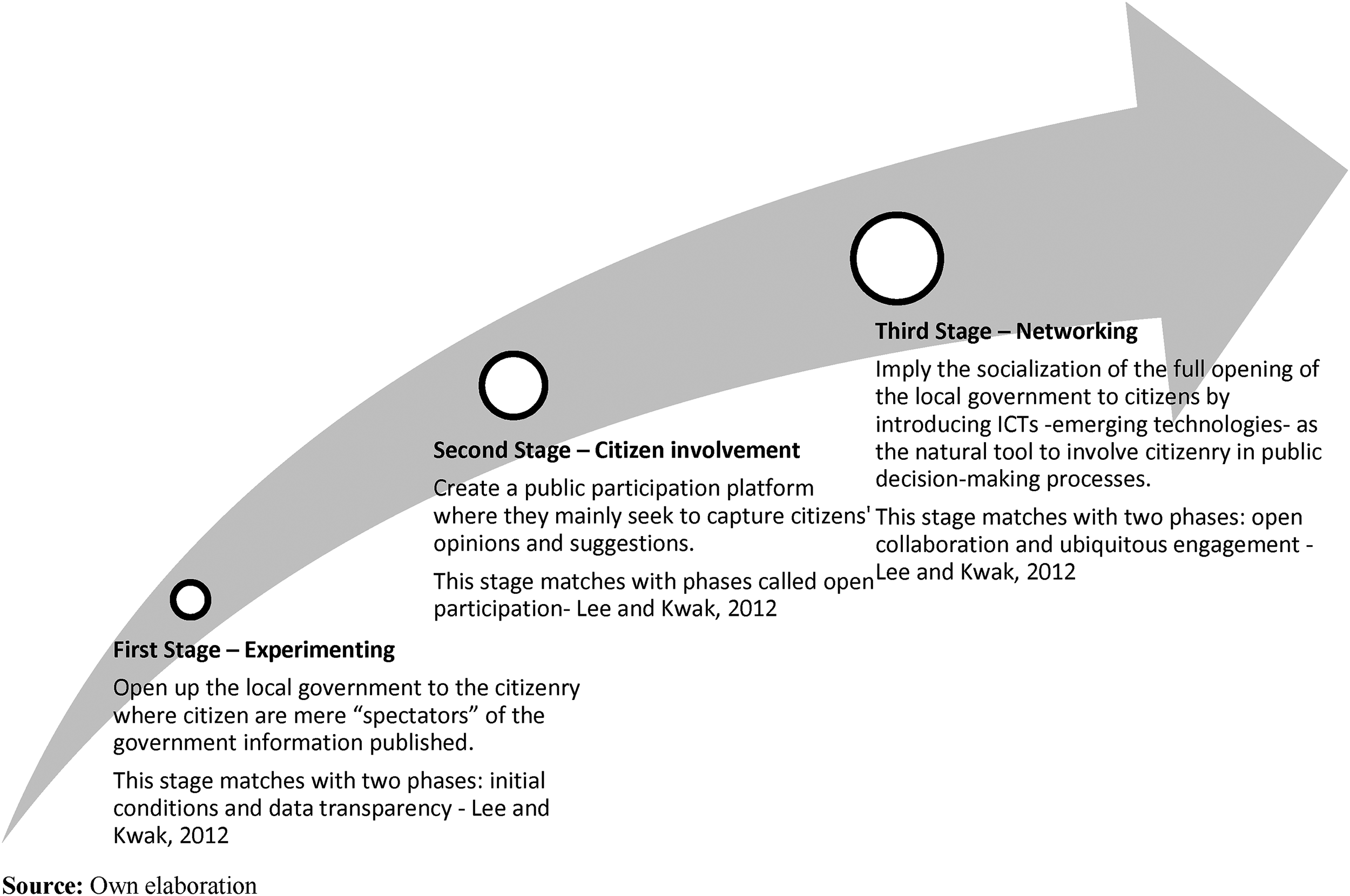
Patterns of OG Initiatives
This OG strategy represents a first stage on the experimentation by the local government in its relationship with citizens, where it is only limited to complying with current regulatory frameworks and “experimenting” with information transparency (information practice (OECD, 2016) or initial conditions and data transparency (Lee and Kwak, 2012)). Therefore, the objective of this strategy is simply to put the regulatory norms to work on accountability issues and it represents a first phase to open up the local government to the citizenry where citizens are mere “spectators” of the government information published (passive role of citizens). This model forms the backbone of OG reforms (Lee and Kwak, 2012; OECD, 2016), but it does not provide the intellectual capital needed to drive smart city development (Leydesdorff and Deakin, 2011). This first stage is named as a “experimentation” and the strategy followed by local governments could be named a “push strategy”, like that previously catalogued in the field of social media (Mergel, 2013), since it allows us to lay the foundations for implementing a real model of public participation and collaboration.
In the second stage, local governments are aware that compliance with the legislation on issues of information transparency creating a transparency portal is not enough to interact with citizens in a natural conversation style, with the aim of gathering their opinions and suggestions on public affairs. In addition, local governments also recognize that ICTs should be the best channel to put this goal into action (using social media and Big Data). Therefore, in parallel with the information transparency portal, these local governments create a public participation platform where they mainly seek to capture citizens’ opinions and suggestions (consultation practice (OECD, 2016) or open participation (Lee and Kwak, 2012). Nonetheless, citizens are not highly motivated to participate insofar as their opinions and suggestions may, or may not, be heard by local governments that keep the power and the leading role to take public decisions. Therefore, the channels opened by the local government fulfill the function of accountability and of “sounding out” public opinion by obtaining valuable information from citizens, but not allowing them a real means of participation and collaboration in public decision-making.
This strategy is named “engagement” or “citizen involvement” and it is a “pull” or “attraction” strategy implemented by the local government with the aim of beginning a two-way relationship with the citizenry. This stage implements a first step moving to interaction with the citizenry, as the local government is not limited to being transparent, but also captures the opinions of citizens regarding the policies implemented or to be implemented in the municipality.
Finally, the third stage could be named as “institutionalization” as the local governments create an OG platform that gathers all the necessary elements for effective citizen participation and collaboration (engagement practice (OECD, 2016) or open collaboration and ubiquitous engagement (Lee and Kwak, 2012)). This third stage implies the socialization of the full opening of the local government to citizens by introducing ICTs – emerging technologies – as the natural tool to involve citizenry in public decision-making processes. At this stage, the local government recognizes the importance of information transparency as a fundamental pillar for creating public opinion, and the open participation and collaboration of citizens are encouraged through electronic means, allowing citizens themselves to interact with each other. Moreover, local government makes transparent how the different public policies for facing a particular social challenge are suggested and voted for by the rest of the citizens on an online continuous basis, finally leading to the making of concrete and effective public policies. Under this paradigm, a conversational democracy is implemented and the OG strategy is named “networking” or “mingling”, since citizens are fully integrated into the decision-making processes of the municipality. Citizens are co-producers of government policies and play an active role in public decisions.
These previously mentioned OG strategies are especially relevant when the strategic planning of the municipalities is analyzed, because it allows the strategic view for the municipality to be elucidated, as well as the future model of the city to be created for the citizens who live there. In this case, the existence of OG initiatives that favor the effective participation of citizens in its development is essential. Therefore, the empirical research in this article is focused on the OG strategies and the development of strategic plans in Andalusian municipalities with a large population and their alignment or integration with the socio-economic objectives settled by the ARG.
Data and method
Spanish governments have already been immersed in introducing ICTs to achieve a more open and participative administration (Alcaide Muñoz et al., 2016). Also, these new challenges have led them to push fast-track smart initiatives to face them. One of the main smart initiatives implemented in Spain is the adherence of the Spanish government to the OG Partnership movement since 2011 (OECD, 2014). In fact, Spain is one of the European countries with the greatest number of smart initiatives developed (Alcaide Muñoz and Rodríguez Bolívar, 2019). So, it is interesting to pay attention to the development of OG initiatives in Spain.
This study focuses on local government policies regarding their highest impact on citizens in their day-to-day life. On the one hand, local governments are the main providers of public services (Law 7/1985, Regulation of Bases of Local Regimes) and, on the other hand, they have the highest levels of indebtedness in the Spanish Public Sector, suffering large cutbacks (Rodríguez Bolívar, 2018). In particular, as a first approach to this analysis, our study focuses on the Andalusian local governments (ALGs) with a population of over 50,000 inhabitants, since it is the largest (87,268 km2) and most populated (8,464,411 inhabitants) autonomous region in Spain according to the Spanish National Institute of Statistics in 2020. 2 In addition, the regional government has funded these local governments with over €189m coming from the participation of local governments in the taxes of the regional government for the 2021 fiscal year, which is a great volume of funding resources for their activities. 3
As noted previously, this research analyzes the alignment of local OG strategies with the achievement of the basic objectives of the Andalusian Autonomous Region, established in the Organic Law 2/2007. To achieve this aim, the data collection was carried out into two stages. First, the authors identified the ALGs with more than 50,000 inhabitants using the official database of the Spanish National Institute of Statistics. In total, 29 ALGs were identified, which represent 50.82% of the Andalusian population.
Once ALGs were identified, an inductive analysis was developed, as outlined in Figure 2. Each strategic plan was analyzed in detail to get insights into whether the ALGs formulate specific strategic plans or, on the contrary, their OG initiatives are included in a holistic and integrated strategic planning process. Afterwards, the authors conducted a comprehensive analysis to identify specific objectives and strategic action lines based on the development of OG and, in turn, to link them to socio-economic objectives set out in article 10 of Organic Law 2/2007. To do this, the authors employed NVivo software, where one project was created for each municipality under study and included one node for each objective previously mentioned. For instance, one node was “stable and quality employment”, referred to in the first objective of Organic Law 2/2007. In this sense, each project could comprise different resources (documents) depending on the number of strategic plans developed by municipalities. Each strategic plan was deeply explored and keywords concerning Organic Law 2/2007 objectives were established to categorize action plans into them. So, a plan may be listed in more than one of these objectives since it may have multiple objectives.
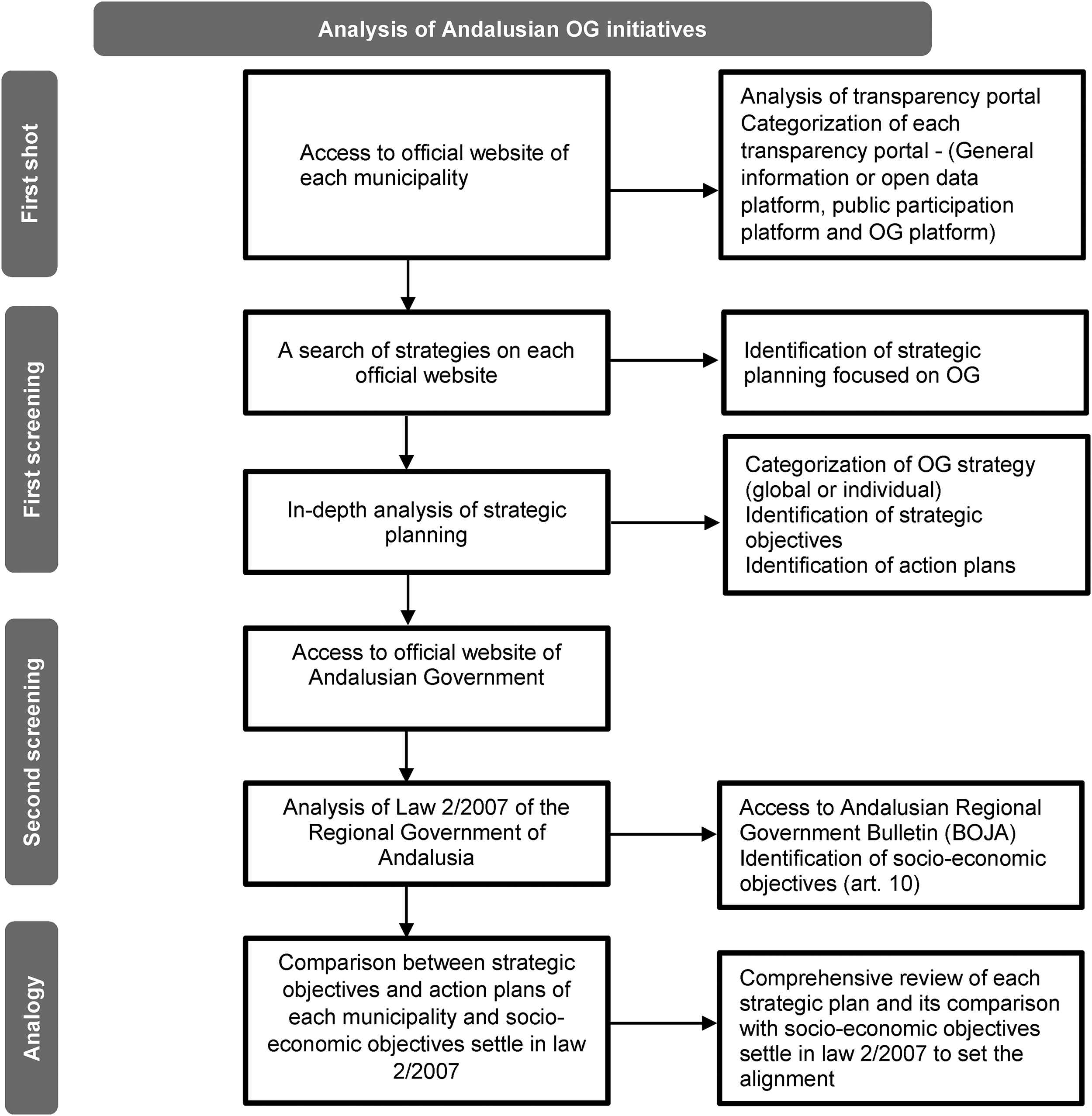
Flow of analysis on the strategic alignment of OG initiatives
In this way, we were able to identify how many plans and strategic lines were related to one of the objectives established in the Organic Law 2/2007. In addition, we proceeded to undertake a descriptive quantitative analysis, for which we proceeded as follows: when there is a strategic line relationship aligned with an objective of the law a 1 score was assigned, else 0. In other words, if an ALG includes in its OG strategic plans lines of action related to the objectives established in the Law, this municipality has a 1 score (then we sum the ones). Thus, the alignment percentages, standard deviations and medians were calculated. For example, objective 19 regarding citizens’ participation was included in the strategic plan of the majority of sample ALG (68.97% – Table 4), showing a median of 1, which indicates that this objective is considered as an action plan in OG initiatives in ALG. Also, a plan may be listed in more than one of these objectives since it may have multiple objectives, hence the percentages should not be 100%.
Furthermore, the authors linked all OG strategies to the different smart dimensions defined by Giffinger et al. (2007) as the result of the European research project sponsored by Asset One Immo-bilienentwicklungs AG. This cataloguing of the smart dimensions is generally accepted by both scholars and practitioners, and it has been applied as the foundation of Smart Cities categorization and development in multiple international and European studies and projects (Ariza-Álvarez et al., 2021; Batty et al., 2012; Caragliu et al., 2011; Colldahl et al., 2013; European Parliament, 2014). Thus, we assign each objective in each smart dimension based on the definition of both the objective and the smart dimension provided by Giffinger et al. (2007). For example, as smart governance comprises aspects of political participation and services for citizens as well as the functioning of the administration, objective 19 about citizens’ participation is included in this dimension.
Finally, when differences among authors’ analyses were found, they were debated and put into a common basis to reach a consensus. With these analyses, the authors gained insights regarding the initiatives undertaken by local governments and their alignment with the achievement of the socio-economic objectives settled by the ARG, and more specifically, which are the most driven by such initiatives, analyzing a total of 283 initiatives.
Results
To begin with, the objectives included in the Organic Law 2/2007 (Table 1) 4 have been classified into the six Giffinger (2007) Smart Cities dimensions observing that the objectives settled in this Law are those mainly included in the social dimension, followed by the objectives included in the economic, cultural and governance dimensions. The objectives of the environmental and mobility dimensions, although they are considered, are not highly relevant among the objectives considered within the normative of ARG.
The results allow us to classify local governments into three groups based on the type of OG strategy developed (Table 2). The first one is characterized by only promoting government transparency (push strategy) using a specific website (transparency portal or open data portal). It represents over 76% of Andalusian municipalities that have over 50,000 inhabitants. The second one includes those local governments that own specific websites aimed at both information transparency and citizen participation but in a separate way (engagement strategy). It represents 10.34% of the Andalusian municipalities under study. Finally, the last one consists of those local governments that own specific OG platforms (networking strategy), which represent 13.79% of Andalusian municipalities with a population over 50,000 inhabitants.
Moreover, local governments running a push strategy (only disseminating information on their websites) show a high level of alignment with the ARG in the objectives included in the smart economy and governance dimensions in their digital strategies (25.76% and 19.70% – Table 2). This trend is also clearly shown in local governments running an engagement strategy (27.78% and 55.56%). In both municipalities (those running a push and an engagement strategy), it seems that there is a certain consensus as to how ICTs have the potential to favor transparency and communication with citizens by offering low dispersion (0.58 in both cases). But this consensus is not so evident when it is referred to how ICTs and the framework of the OG can favor the achievement of economic objectives by showing a high dispersion (1.22 and 1.15).
Furthermore, local governments running an integrated strategy – networking or mingling strategy – offer an OG platform that allows citizens to be involved in public decision-making processes, and their strategic visions are wider considering a broader range of objectives (Table 2) that can be achieved through the organizational structures implemented with the OG initiatives. Similarly, we can see that there is consensus about how the OG initiatives imply the socialization of the full openness of the local government to the citizens in decision-making process through the introduction of ICTs (33.33% and without dispersion 0.00). However, as in the previous cases, the economic objectives – although considered by the municipalities (37.50%) – show a high dispersion (0.96).
On the other hand, the local governments have formulated one or more strategies in which OG areas are promoted. Some of them show OG as a simple axis in a global strategy, which is linked to the other axles; however, others have formulated an individual strategy focused on OG or in one/some of its areas. Even, two of them have developed global strategies with an OG axis and, once, an individual one on OG. Each strategy comprises a different number of action plans on OG. In this sense, Table 3 shows that local governments with global strategies or global and individual strategies mainly pursue the development of e-administration (43.82% and 50%, respectively). The second most promoted area is transparency (29.21% and 26.7%), being the participation and collaboration/co-creation of the less developed areas.
Nevertheless, local governments with an individual strategy on OG put their efforts into the promotion of transparency (45%) and participation (31%), being the e-administration and collaboration/co-creation (18.33% and 5%, respectively) of the less promoted areas. Perhaps they invested in e-administration in the past and are now focused on reinforcing the others.
As for the alignment of the objectives included in the strategic plans of the ALG with the socio-economic objectives considered in the aforementioned Law (Table 4), the results reveal that the main objectives are those related to the use of natural resources and economic activities of Andalusia aimed at improving the quality of life of citizens, with a fairer redistribution of wealth and income (58.62%), favoring industrial and technological development that enhances the growth of the region (58.62%) and the citizen involvement in public affairs for the sake of an advanced and participatory social democracy (68.97%). Although they are the most considered objectives, there are many differences among municipalities in implementing these objectives into their OG strategic initiatives (standard deviation 0.471–0.501).
In addition, it is striking that only 20.69% of the large-size Andalusian municipalities consider, among their strategic objectives, the incorporation of the Andalusian people into the knowledge society, although the dispersion is high among municipalities (0.41). Similarly, the ALGs do not consider the modernization, planning and comprehensive development of the rural environment within the framework of an agrarian reform policy, favoring growth, full employment, the development of agrarian structures and the correction of territorial imbalances, promoting the competitiveness of agriculture at the European and international level (6.90% and low dispersion 0.26 – Table 4). Therefore, although a few scholars have emphasized the advantages and opportunities offered by ICTs in the innovation of public organizations and the formulation of public policies (Moreno-Carmona et al., 2020), most ALGs do not allow citizens to collaborate in the co-creation of solutions to face social problems.
Regarding the level of alignment of objectives pursued by OG strategies in municipalities and those settled by the regional government analyzed by each one of the smart dimensions (Table 5), it can be observed that the objectives included in the smart economy and governance dimensions are the most considered by the municipal governments in their strategic OG initiatives (28.74% and 24.14%). Nonetheless, data show high dispersion (6.95 and 11.27), which means the non-existence of consensus on the economic objectives to be considered in OG initiatives by the Andalusian local governments, missing the opportunity of the potential for innovation, change, development and collaboration brought by both the ICTs and the OG initiatives.
Finally, the results indicate a higher consensus about the lesser consideration of the objectives regarding mobility, living and social issues in the OG initiatives (10.34%, 10.92% and 9.85%). It may be possible that they think the advantages offered by ICTs and the implementation of the OG structures do not allow them to address these issues, hence they tend not to include these objectives in their OG strategies and initiatives. These results are consistent with the related literature where local policymakers have their own view concerning the way in which OG strategies are adopted. In other words, they act individually, regardless of the source of funding (De Waal et al., 2019).
Conclusions
Findings show that there are three different stages in the development of OG initiatives. Most local governments only show a transparency portal that does not offer citizens the opportunity to be engaged in public decision-making (Table 2). Others have created a participation platform as a first step for citizen involvement in decision-making. Nonetheless, this second group of local governments does not fully engage citizens in the decision-making process, because the power in decisions is kept by the local government. Finally, a small number of local governments have come to clearly establish spaces where public participation and collaboration are effective, creating OG platforms (see Table 3).
On the hand, the socio-economic objectives defined by the ARG in its regulation are usually related to social, economic and culture areas, followed by the objectives in the governance dimension – whereas others, like those related to the environmental and mobility dimensions, are almost non-existent (Table 5). This result could be linked to the political goal of strengthening the economic growth of Andalusia, ignoring other objectives usually existent in more economically developed areas. Indeed, results could be context dependent. Future research should therefore analyze other different regions or countries, on a comparative basis, with the aim of identifying patterns in the main objectives pursued.
As for the SA, the analysis indicates that there is not a high level of alignment between regional objectives and those settled in the OG initiatives (Table 4). In fact, except for environmental protection, innovation and citizen participation, the OG initiatives are not linked to the other Andalusian objectives. Concretely, our findings indicate that the main objectives included into the OG strategic planning processes in municipalities are those related to the use of natural resources and economic activities of Andalusia aimed at improving the quality of life of citizens. However, our findings show that there is no consensus on the consideration of the same objectives across the ALGs. The principal–agent model is thus not well-settled in VSA, irrespective of the funding of local governments provided by the regional government. Each local government has a particular vision of both adopting digital and OG strategies and the required objectives to achieve them (Table 3). Future research should enlarge our research analyzing political attributes of local governments to identify trends in their strategic OG objectives.
Furthermore, findings reveal that ALGs do not take advantage of the potential of ICTs and OG initiatives to improve social, cultural, mobility and environmental issues (Table 5). They are not concerned with promoting the innovation and the formulation of public policies with the collaboration of citizens in the co-creation of the solutions to face social problems. Similarly, although the economic and governance objectives are the most considered and developed in the digital strategies of the Andalusian municipalities (24.14% and 28.74%, respectively), there is not a standardized vision among the local governments, which could be due to the different level of OG development that each municipality has reached (stand. dev. 11.27 and 6.95, respectively). This finding confirms the different stages of OG development model presented by Lee and Kwak (2012).
In fact, we have checked that there are similarities when the local governments are grouped according to the strategy adopted and the level of OG development achieved. In the case of municipalities with the lowest levels of development – push and engagement strategies – there is a tendency to focus their efforts on achieving the governance and economic objectives, although there is not a normalized behavior. By contrast, local governments running a networking strategy consider a broader range of objectives (Table 2). In brief, they are more aware of the potential of OG adoption, offering an OG platform that allows citizen engagement in public decision-making processes; this evidence is coherent with a previous study (Wilson, 2020). They assume that OG initiatives imply the socialization of the full openness of the local government to the citizens in the decision-making process through the implementation of ICTs.
Nonetheless, the success of the OG initiative relies on citizens’ willingness to interact with the institution and provide input on the given task. In doing so, citizens will acquire greater confidence in the government (Moreno-Carmona et al., 2020). Therefore, future research could advance knowledge about capacities and citizens’ willingness to collaborate with the public administration in the co-creation of solutions for facing societal challenges. This research could also be focused on drivers and stakeholders’ profile to identify trends in citizen collaboration with public entities.
In conclusion, findings indicate that Andalusian municipalities have a long path to travel in the development and implementation of OG strategies and initiatives, as a great bulk of them are at a very early stage (push and engagement strategies). Additionally, public administrations should be aware of the need for SA among OG strategies and for strategic objectives to be achieved both in horizontal (contingency theory) and vertical ways (principal–agent theory). Else, we take the risk of being inefficient in pursing objectives and creating public value (Ghonim et al., 2020; Moore, 1995). Furthermore, public managers and politicians should be aware that the current economic situation, with a politically polarized society, favors and increases mistrust in the citizens, who feel great disappointment in governments and political leaders (Oblak Črnič, 2017). Hence, there is hard work ahead in making public managers and politicians aware of the adoption and implementation of OG initiatives to promote participative management models. To achieve this aim, perhaps it would be necessary to create spaces for municipal collaboration, such as citizen laboratories, where in addition to having the perspective of citizens, the most advanced municipalities could share their experiences in the implementation of these initiatives, so that more reticent local governments could be made aware of the potential.
Supplemental Material
sj-docx-1-ras-10.1177_00208523221086125 - Supplemental material for Strategic alignment of open government initiatives in Andalusia
Supplemental material, sj-docx-1-ras-10.1177_00208523221086125 for Strategic alignment of open government initiatives in Andalusia by Cristina Alcaide Muñoz, Laura Alcaide Muñoz, and Manuel Pedro Rodríguez Bolívar in International Review of Administrative Sciences
Footnotes
Declaration of conflicting interests
The authors declared no potential conflicts of interest with respect to the research, authorship, and/or publication of this article.
Funding
The authors disclosed receipt of the following financial support for the research, authorship, and/or publication of this article: This research was funded by financial support from the Centre of Andalusian Studies (PR137/19), Ministry of Science, Innovation and Universities (RTI2018-095344-A100) and Regional Government of Andalusia, Spain (research project numbers P20_00314 and B-SEJ-556-UGR20).

Notes
References
Supplementary Material
Please find the following supplemental material available below.
For Open Access articles published under a Creative Commons License, all supplemental material carries the same license as the article it is associated with.
For non-Open Access articles published, all supplemental material carries a non-exclusive license, and permission requests for re-use of supplemental material or any part of supplemental material shall be sent directly to the copyright owner as specified in the copyright notice associated with the article.
