




Abstract
Advanced technology is not only transforming the public sector in general but is also increasingly transmuting the criminal justice system. Smart applications are designed to predict crimes, automate legal proceedings, and predict recidivism. We argue that such use of intelligent technology to optimize police work, criminal justice, and law enforcement is ultimately serving to establish a “smart criminal justice.” However, not every use of technology is intelligent or “smart,” per se. Based on a literature analysis, we explore the meaning of “smartness” from a descriptive and normative perspective, in order to develop a catalog of decisive criteria. We identify the use of technology as a basic prerequisite, and efficiency, effectiveness, and participation as normative criteria for any smart initiative in the public sector. Considering the specifics of the criminal justice system, these criteria can be expanded by claims related to legality, equality, and transparency. In sum, this article presents and discusses guidelines for assessing the usefulness and legitimacy of technical innovations in the criminal justice system. The catalog developed here will facilitate practitioners and policy-makers in determining when the use of technology in criminal justice is actually smart, and more importantly, when it is not.
Points for practitioners
Advanced technology is increasingly being used in the public sector in general and the criminal justice system in particular, bringing opportunities as well as substantial risk. The use of technology has to adhere to normative principles to be considered as “smart criminal justice.” This article presents a list of normative criteria that can be used in practice to assess whether technology in criminal justice is used smartly. Practitioners are encouraged to use this catalog as a guide for procurement, implementation, and evaluation processes.
Introduction
The increased use of advanced technology in the field of criminal justice is observable worldwide. This is shown by discussions regarding predictive policing (Benbouzid, 2019; Van Brakel, 2021), recidivism risk assessment applications (Chohlas-Wood, 2020; Slobogin, 2021) and other algorithm-based systems that support criminal investigations (Rezende, 2020; Završnik, 2020). The number of studies in criminological literature dealing with statistical and empirical issues related to applications based on advanced technology is growing both rapidly and consistently (Kounadi et al., 2020; Taylor and Ratcliffe, 2020). This development is derived from a more general trend pursuing innovation in the public sector through the use of intelligent technology. Public sector initiatives based on innovations such as artificial intelligence, big data analytics, and sensor systems are labeled as “smart government” (Anthopoulos, 2017). Smartness has become a desirable characteristic of governments in general (Gil-Garcia et al., 2016) and is beginning to affect the criminal justice system, establishing a new paradigm of smart criminal justice. However, the use of intelligent technology in the public sector in general and the criminal justice system in particular can be “smart,” but it does not necessarily have to be. This argument is supported by a recent study from Switzerland, which showed that in practice, policy-makers and users reflect little on the backgrounds and effects of the algorithms being deployed (Simmler et al., 2020). The study revealed that they often do not feel accountable for understanding the exact functioning of the applications used. An independent and scientific evaluation is furthermore rarely requested, reflecting an uncritical trust in the manufacturers of these tools. Supporting this empirical research, the literature indicates that the use of algorithms in the criminal justice system comes with substantial risk, particularly with regard to processing personal data, the lack of algorithm transparency, discriminatory consequences, and reduced accountability (Bennett Moses and Chan, 2016; Peeters and Schuilenburg, 2021; Perego, 2020). In view of the potentially drastic decisions that are made with the help of smart applications in criminal justice, it is urgently necessary to discuss the normative requirements for their use. A principle-based normative approach is therefore required to ensure the legitimate use of algorithms (Widlak et al., 2021). There is, however, a lack of a catalog of criteria that can be used from both public management and legal perspectives when applications are acquired by and implemented in the criminal justice system.
Following that, the purpose of this paper is to take the findings from smart government research and further develop them into a principle-oriented conceptualization of smart criminal justice that takes into account the legal and administrative requirements that accompany this area of technology deployment. The focus is on the following question: what requirements must the deployment of an algorithmic system fulfill in the sensitive area of criminal justice so that we can speak of a smart criminal justice? In order to answer this question, we conduct a literature review of existing smart government research to examine what normative demands are placed on smart government. We then analyze how the situation in the area of criminal justice differs from that of the general public sector and, based on the results of the literature review, derive a list of normative requirements for smart initiatives in this field. In so doing, we contribute to the critical discourse urging a responsible, accountable and principle-based approach to technology (Widlak et al., 2021; Williams, 2020). Technology-based solutions should be consistently evaluated on the basis of systematic collections of normative criteria, both during procurement and in the course of application. Only then we can truly speak of “smartness.”
Methodology
To conceptualize the requirements of smartness in the public sector, we conducted a systematic literature review. We executed extensive searches for the terms “smart government”, “digital government”, “smartness in the public sector” and “smart city” in the EBSCO metasearch and on Google Scholar. The research was restricted by time span (2010–2020), type of publication (peer reviewed or scientific books issued by established publishers) and language (English). The analysis was limited to contributions that explicitly address the definition of “smart government” and the characterization of this concept. The literature analysis was at first dedicated to exploring the basic descriptive components that constitute smart government. Second, the analysis researched the normative components that are associated with smart initiatives. To extract these normative requirements, 10 contributions considered to be the most influential and fundamental were examined. The results of this analysis then served as a basis for elaborating normative requirements for smartness in the criminal justice system, including further literature specifically dedicated to the challenges of this field.
Smart government
Governments all over the globe are increasingly confronted with initiatives dedicated to utilizing the potential of emerging technologies, mainly in the sense of government services for citizens (Lember et al., 2018). For instance, many governments have adopted so-called chatbots as virtual assistants to answer citizens’ questions (Androutsopoulou et al., 2019). Some cities have installed smart sensors in street lamps to collect weather data and air quality, in order to evaluate public health risks (Tang and Tat-Kei Ho, 2019). In administrative sciences, initiatives of this kind are labeled under the umbrella term “smart government” (Anthopoulos, 2017; Gil-Garcia et al., 2016; Mellouli et al., 2014). The term has become an integral part of international public management research. However, a review of the leading literature has revealed that there is no consensus on how to define smart government. There are various approaches that to some extent overlap, but at the same time, exhibit different foci (Breier et al., 2017).
Smart government has been described as a “creative mix of emergent technologies and innovation in the public sector” (Gil-Garcia et al., 2014: 1). Therefore, technology is key to smart government (Mellouli et al., 2014; Von Lucke, 2015). Anthopoulos (2017) highlights the three basic components: data (both big data and open data), emerging technologies (e.g. sensors, blockchain) and innovation. Focusing on the relevance of data, Schedler et al. (2019: 5) describe smart government as a “new generation of concepts for the application of information technologies in the public sector that collect, connect, and analyze huge volumes and variety of data.” In addition to technology, various components of smart government are mentioned in the literature, such as technology savviness, integration, innovation, evidence-based decision-making, citizen-centricity, sustainability, creativity, effectiveness, efficiency, equality, entrepreneurship, citizen engagement, openness and resiliency (Gil-Garcia et al., 2016).
Use of technology as a basic requirement
The literature analysis reveals that different approaches to the definition of smart government exist. However, there seems to be a consensus regarding the prerequisite of using modern information and communication technologies based on algorithms (Breier et al., 2017; Guenduez et al., 2017). Such modern information and communication technologies can be classified as intelligent technology based on algorithmic decision-making, processing huge volumes and a wide variety of data. Following the assumption that smart government can on the one hand be characterized by the use of advanced (i.e. intelligent) technology making use of the latest technological innovations, and on the other by a more or less concretely formulated normative attribute of smartness, two components of smart government can be identified. The first descriptive component can be formulated in terms of a basic requirement, as follows: smart government requires the use of technology based on algorithmic decision-making and the collection, analysis, and processing of big data. This first component is the foundation of every smart government and is descriptive; it only states that intelligent technology must be involved in some way. In the second step, however, this descriptive understanding must be expanded by defining when the use of technology is actually smart. The second component inherently contains a value-loaded evaluation, and thus is normative.
Smartness: normative criteria
The use of intelligent technology is necessary but not sufficient to ensure smartness in the public sector. Therefore, an appraisal of this deployment of technology is needed to determine when it is actually smart. Normative criteria are required because the use of advanced technology can also lead to discriminatory effects and other disadvantages, and is not legitimate per se. If only the descriptive component defined above is considered, even a harmful or stupid use of technology would count as smart government. Accordingly, there is a need to develop criteria for use in evaluating whether smart government really deserves its label. For this purpose, interpretations of the concept found in the most fundamental contributions are analyzed with regards to the goals with which smart government initiatives are associated.
As the literature review shows, different criteria for smartness have been identified and some commonalities can be identified. As noted above, Gil-Garcia et al. (2016) name 14 goals pursued by smart government. For Schedler et al. (2019), no administration could be considered smart without the guarantee of transparency, collaboration and participation. Gil-Garcia et al. (2016) argue that participation also serves to integrate knowledge and available information. Nam and Pardo (2014) focus on the promotion of effectiveness, efficiency, transparency and collaboration. Anthopoulos (2017) follows this understanding to a considerable extent, and identifies innovation, openness, citizen engagement and accountability as significant. According to Von Lucke (2015), smart government should contribute to the efficient and effective performance of public tasks, and this must be achieved in a sustainable manner. The author argues that the transformation into smart government represents a far-reaching change that requires creativity (Von Lucke, 2015). Scholl and Scholl (2014) stress the importance of openness, participation and collaboration in every administrative process, and regard resilience (i.e. the ability to withstand the unexpected) as essential. Eventually, individual and social wellbeing should be pursued (Scholl and Scholl, 2014). According to Mellouli et al. (2014), the use of new technologies should improve citizens’ quality of life and their commitment to interacting with the administration. For Harsh and Ichalkaranje (2015: 9), “the power of data” is in the foreground, whereby collaboration and citizens’ engagement, as well as openness and transparency, are to be ensured in the context of “open government.” Finally, Jiménez et al. (2014) argue that collaboration and interoperability within the public sector are indispensable for a smart society capable of contributing to increasing efficiency, effectiveness, transparency and citizen-centricity.
According to the literature, the following criteria can be identified (see Table 1) upon which governmental action in the digital age must be based in order to be considered smart: effectiveness (seven nominations), efficiency (seven nominations), participation (seven nominations), collaboration (six nominations), openness (six nominations), innovation and entrepreneurship (four nominations), transparency (four nominations), citizen-centeredness (three nominations), creativity (three nominations), welfare (two nominations), resilience (two nominations), integration (one nomination), evidence-based (one nomination), responsibility (one nomination) and equality (one nomination).
Criteria of smart government—results of the literature review.
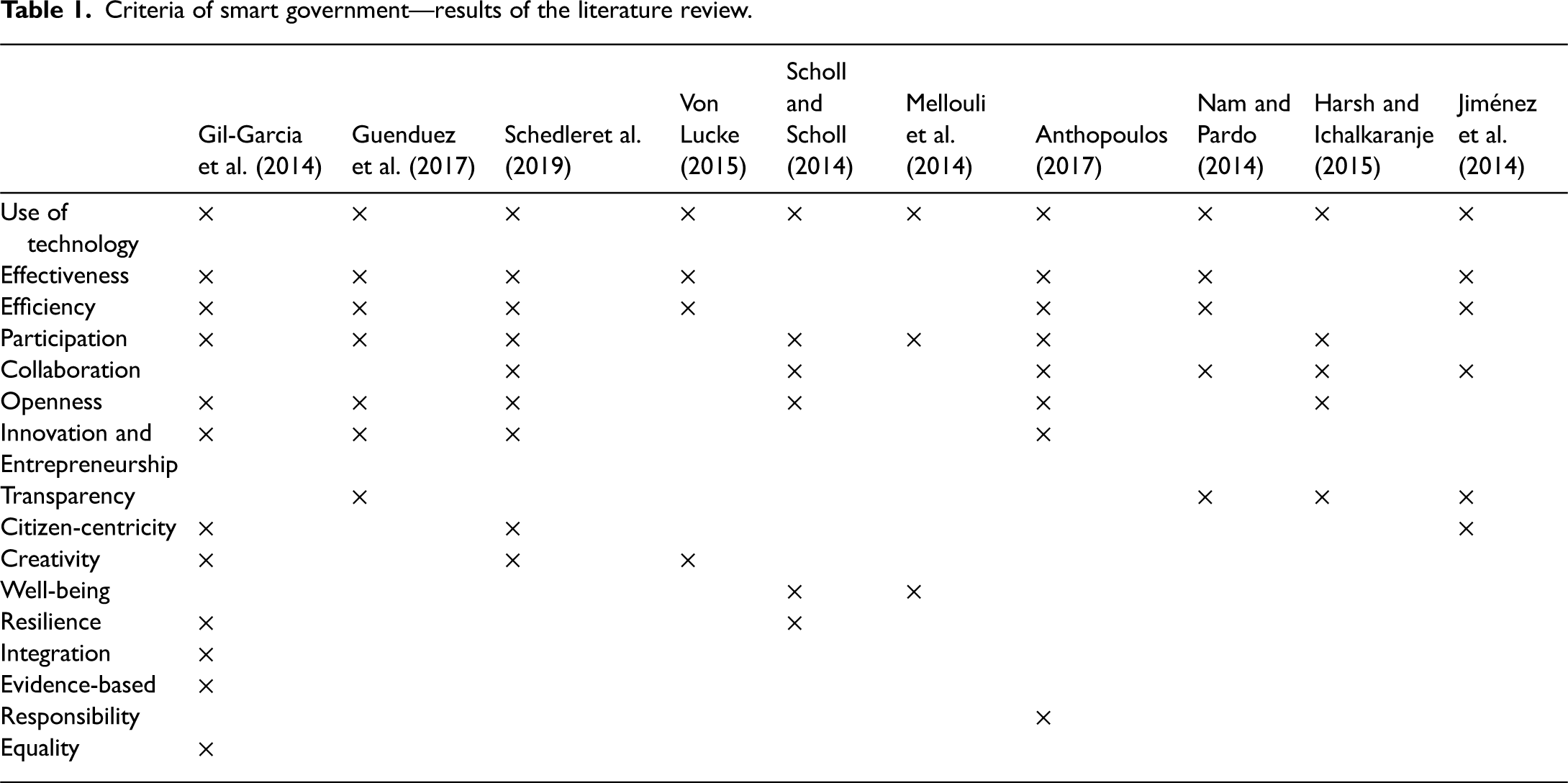
Besides the use of technology as a basic requirement, effectiveness, efficiency and participation are the most frequently mentioned criteria and can therefore be considered central to a smart government. Additionally, the literature on smart government is dominated by a service perspective, rather than a perspective on the coercive functions of the state. In our view, this is a key difference from the field of justice, where the focus is not on service, but rather on investigating and prosecuting crime, punishing criminals and even preventing deviance in the first place, and thus on potentially drastic restrictions of individual liberties through state measures. These actions require special legitimacy and, based on that legitimacy, unique care in the implementation of measures such as smart initiatives.
Smart criminal justice
The criminal justice system can functionally be divided into three parts: police work (including preventive as well as security and prosecution tasks), a narrow conception of criminal justice (i.e. legal work including prosecution and other court processes) and successive law enforcement tasks (such as execution of penalties and administration of correctional services). These subareas deal with the execution of governmental tasks in the application of public law, and therefore are to be attributed to the government. This allows for a discussion of the influence that the use of advanced technology has and should have on the criminal justice system, along the lines of smart government. In essence, smart criminal justice is a subcategory of smart government.
Intelligent technology is increasingly made use of in the criminal justice system. Technology-based predictive policing is already deployed in many areas in an effort to prevent offenses (Perry et al., 2013; Simmler et al., 2020). Police departments in the US largely rely on predictive policing applications like PredPol or Hunchlab to predict when and where crime is likely to occur (Benbouzid, 2019). Other algorithm-based tools like the Correctional Open Management Profiling for Alternative Sanctions (COMPAS) software have caused a sensation in criminal proceedings. COMPAS is used by US courts to assess potential recidivism risk, and has had a considerable influence on sentencing and the execution of sanctions (Addu Appiah et al., 2017).
These few examples already allow for the assumption that digitization is finding its way into the criminal justice system, and there is good reason to believe that this trend will intensify. There are ample opportunities for the further use of technology. It would be possible to (partially) automate penalty orders, especially in the area of petty crime. Such a system would automatically generate the personal data of the offender and description of the facts, based on the police files. The system would then draft the order itself and, if necessary, propose the concrete penalty. As criminal law requires that the individual fault be adequately taken into account in the sentencing process, a certain degree of discretion is always required when setting limits on automation in this area. Nevertheless, further digitization of criminal proceedings is likely.
Potential for smart criminal justice also exists in other areas. The allocation of places of detention could be automated to the point of no human intervention, based on the verdict and other personal variables. Even a humanoid robot that strolls the streets, checking parking spaces and issuing fines seems possible, unless the parking spaces themselves are already equipped with appropriate sensors that automatically register parking offenders. In the sense of the factors identified as essential to smart government, advanced data management and the promotion of technology-supported participation of those involved have potential in the criminal justice system. In policework, modern forms of datamining and automated face recognition systems are often used in criminal investigations (Brinkhoff, 2017; Rezende, 2020).
As this (certainly not exhaustive) list of ideas shows, the use of advanced technology in criminal justice has begun to propagate, and its development will continue to progress. Thus, smart government is gaining increasing relevance, making it appropriate to address the phenomenon of smart criminal justice both conceptually and by formulating concrete claims regarding initiatives in this field.
Like smart government, smart criminal justice is characterized by two components: a basic descriptive requirement and normative demands. Based on the definition of smart government, smart criminal justice can be defined from a descriptive perspective as the use of technology in the criminal justice system based on algorithmic decision-making and the collection, analysis and processing of big data. In the sense of this definition, criminal justice encompasses policework in the areas of security, prevention and criminal prosecution, the work of criminal judicial authorities (i.e. public prosecutors’ offices and the criminal courts), and ultimately, law enforcement (in the execution of imposed sanctions).
Smartness in the criminal justice system: normative criteria
The use of modern technology is not sufficient in and of itself to delineate public administration as smart. This applies equally to the criminal justice system. As for smart government in general, normative criteria need to be established and concretized to allow for an evaluation of when the use of technology in criminal justice is actually smart. Based on the results of the literature review conducted before, effectiveness, efficiency and participation were identified as central normative criteria for smart government. These broad criteria can serve as a foundation and will be further specified below. To meet the particular requirements of smartness in criminal justice, they must be supplemented by the criteria of legality, equality and transparency that are indispensable with regards to the use of technology in criminal justice and the peculiarities of the legal system.
Effectiveness
Effectiveness has consistently been considered indispensable when assessing smartness in public governance. This holds equally true for the criminal justice system. Effectiveness means that designated goals are achieved (Mandl et al., 2008). To assess effectiveness, aspired goals must be defined. In general, public administration providing services for citizens seeks to fulfil the tasks assigned to the administration as well as possible. In contrast, some governmental tasks and prosecution and police work in the criminal justice system in particular must sometimes be enforced by serious encroachment on the fundamental rights and freedoms of private individuals. As a consequence, a description of the desired effects of criminal justice is more complex. The most fundamental goal of any criminal proceeding is finding substantive truth and enforcing substantive law (Summers, 1999). In criminal law, this task is assigned exclusively to the state, and execution of this monopoly right is only permissible within legal limits. The enforcement of criminal law particularly implies that a sanction must be imposed in the case of culpably committed wrongs. The function of criminal law lies in providing punishment to compensate for past harm, preventing recidivism and discouraging the general public from committing future crimes (Simmler, 2020). The police also strive for general crime prevention. If these goals are achieved in the best possible way, the criminal justice system is effective.
In predictive policing, effectiveness is usually linked with a significant crime reduction or correct forecasts of criminal behavior (Meijer and Wessels, 2019). However, empirical results reviewing the effectiveness of predictive tools are not always convincing. In Chicago, a program has come into use that aims to identify a strategic list of people estimated to be at high risk of gun violence. An evaluation of this program found that subjects on the list are not more likely to become a victim of a homicide or shooting (Saunders et al., 2016).
Effectiveness, and with that, the quality of algorithm-based tools depends not only on the statistical and technological methods (and thus the capacity of the technical system), but also on the skills of the user. In short, smart tools must be operated smartly. Smart criminal justice applications require users to be willing and able to understand how the applications work and to (critically) assess the results as decision support. The effective use of such innovative elements places increased demands on human–machine interaction, which may lead to a new way of working in the administration of justice (Kattel et al., 2020). Users must be systematically empowered to use the new applications in a meaningful way. Therefore, in a holistic sense, effectiveness is crucial to smartness. This includes the effectiveness of the technology and the technology's scientific foundations, as well as of the implementation of the human–machine interplay.
Eventually, if the use of algorithm-based tools does not significantly contribute to the prevention of crime or if it does not facilitate the prosecution or enforcement of sanctions, the deployment of such tools hardly satisfies the demand for effectiveness. The baseline to assess the effectiveness of the tools should always be compared with a situation where the relevant task is completely executed by humans (or not executed at all). Assessing effectiveness requires both a clear definition of goals before implementing technology and a critical evaluation after doing so.
Efficiency
Efficiency claims an ideal relationship between the use of resources and services provided; it is measured by the relationship between input and output (Nam and Pardo, 2014). Efficiency is therefore characterized by minimizing the use of resources while maximizing the output. An efficient criminal justice system fulfils the state's demand for punishment and the goals of policework and the criminal authorities outlined above using as few resources as possible. Indicators of efficiency in criminal prosecution include the cost of a proceeding, the number of completed procedures and those procedures’ average duration (European Commission, 2018). If an algorithm takes over the preparation of a penalty order and personnel resources are saved as a result, this can manifest as efficient law enforcement.
However, the use of technology does not necessarily ensure efficiency. In the case of predictive policing software, a question can be raised as to whether its use is always efficient. If patrols are sent out too often to a certain geographical area because of the (usually expensive) software, or if dangerous situations are systematically overestimated, this requires more personnel resources and increases cost (cf. Benbouzid, 2019). Only if this actually prevents crime to a relevant extent will the output of the technology be proportionate to its cost. In sum, efficiency can be measured by the difference in output of a scenario with an algorithm-based system executing tasks compared with an alternative scenario where the same tasks remain executed by humans. The deployment of an algorithm is efficient if it achieves a better allocation of input resources and produces the same or better output regarding the prevention, prosecution or enforcement of crimes.
Participation
Participation can be understood as the involvement of the population in public sector processes (Mellouli et al., 2014). In this sense, participation ensures that citizens are integrated into the decision-making process, providing additional legitimacy to administrative action. Within the criterion of participation, a distinction must be made between active and passive participation. Active participation can, for example, be represented by the electronic collection of statements. Conversely, passive participation is not based on any conscious activity, but rather on the data automatically generated by the use of smart objects such as smartphones (Guenduez et al., 2017).
At first glance, as a normative goal, participation may appear to be alien to the criminal justice system. However, active and passive participation can be crucial in this field. In criminal prosecution, the cooperation of the public with the authorities can improve and accelerate investigations (e.g. if the population provides the police with information and clues in real time). Not only is the active involvement of the population important, but so is the contribution of individuals using the algorithmic tools. A recent study found that many police officers have a deep awareness of the limitations of predictive policing, resulting in a rather skeptical attitude toward innovative policing technology (Sandhu and Fussey, 2020). It is therefore important to ensure that the users are not just passively accepting predictions, but actively engaging with the advanced technology. To achieve this, it is necessary to provide users with the skills required to understand and interpret algorithm-based technology and its results. Finally, participation is an important issue in criminal proceedings themselves. Here, the actors involved (e.g. defendants, attorneys) have to cooperate with the authorities. (Intelligent) technology such as real-time video conferencing can be used to enhance such participation.
As opposed to active participation, passive participation focuses on data collection. For example, in predictive policing as it relates to dangerous individuals, more and more personal profiles are being stored in police databases (Simmler et al., 2020). Such data collection contains personal data and raises privacy and data protection concerns. If profiles in police databases are enriched with passively generated personal data (e.g. locations, browser activities), this can represent an infringement of constitutional rights. Nevertheless, the use of such data, including IP addresses or GPS data, can help to fight crime.
As outlined, participation can serve the criminal justice system in various ways and promote involvement of the relevant actors in both prevention and prosecution. Technology deployment can be considered smart if active, voluntary participation is encouraged or if passive participation is used wisely. However, it is also required that legal and ethical limits be taken into account, especially regarding data protection.
Legality
The quality of criminal justice authorities’ work cannot be measured by customer satisfaction. Rather, these authorities are primarily committed to the enforcement of procedural and substantive criminal law, which can result in restrictions of fundamental rights and liberties (e.g. through coercive measures or surveillance). Therefore, criminal law enforcement is exercised in a centralized manner within narrow, legally defined limits. A particularly strict principle of legality characterizes the criminal law of Western legal orders, stating that every punishment, as well as every infringement of individual rights by police and law enforcement authorities, must have a legal foundation (Murphy, 2009). Hence, the requirement of legality should be regarded as a further evaluation criterion of smartness in criminal justice. Not only does legality represent the indispensable basic prerequisite for every state action, but it is also of particular fundamental importance in the area of criminal justice.
In the context of smart prosecution, the principle of legality is to be understood not merely as a fundamental requirement of the rule of law, but also as an obligation to legally legitimize through a democratic and public debate the technological innovations employed in this demanding field. Thus, before a new smart criminal justice project or related application is implemented, it is necessary to deal with the legal foundations and overall legitimacy of this innovation. Simple digitization of existing processes can often be implemented within the existing legal framework. Such mere digitization of judicial processes are usually subsumed under the term “e-justice” (Sandoval-Almazan and Gil-Garcia, 2020). Conversely, the use of more sophisticated, intelligent technology raises questions as to whether this use is sufficiently covered by existing law. Prosecution based on big data systems can create a problem regarding the right to a fair trial, e.g. if potentially exculpatory evidence created by big data cannot fully be provided to the defense owing to data protection regulation. Thus, such innovative systems require a sufficient legal foundation to guarantee their legality (Ferguson, 2019).
As a further example, a legal basis for the processing of personal profiles of potentially dangerous persons has to be democratically discussed and enacted. For the implementation of smart applications to which decision-making is delegated in the context of sentencing, suitable legal foundations would equally be necessary to meet the requirements of the claim of legality. In sum, to be considered smart, the use of technology must be based on adequate legal foundations and serve the enforcement of criminal law, as well as the rule of law in general.
Transparency
To ensure the legitimacy of government actions, they must be comprehensible. Consequently, transparency has proven to be especially important in smart government literature (see Table 1). Nam and Pardo (2014) convincingly conceptualize transparency as a criterion with two dimensions: internal transparency within the respective organizational units of the administration and external transparency with regards to stakeholders outside of the administration. Administrative action must be comprehensible at all times, the decision-making criteria must adhere to certain specifications and it must be possible to hold the actors accountable in the event of misconduct. In the case of the US, problems with regards to transparency arose in connection with the above-mentioned tool COMPAS. This algorithmic system was developed by a private company that refused to disclose the exact functioning of the algorithm, invoking trade secrecy. This refusal led to an appeal to the US Supreme Court, which declined to hear the case (Addu Appiah et al., 2017).
In any case, it is essential for internal and external stakeholders that processes remain traceable when complex technology is deployed. Transparency does not require that every stakeholder understands all technological specifications. Rather, it ensures that the main features of the decision-making process are understandable and accessible for (legal) review. Transparency can be achieved by access to the data and methods used for creating the tools as well as disclosure of relevant information to defendants (PAI, 2020). Transparency maintains procedural fairness and serves the principles anchored in constitutional and criminal procedural law (Schafer, 2013). The importance of transparency finds further support in the right to a fair trial, which encompasses the obligation of the state to give reasons for a decision (Christen et al., 2020). If, for example, a sentencing was to be carried out by an algorithm whose concrete mode of operation resembled a black box, it would not be possible to verify the variables upon which the sentencing was based, or how they were weighted. Such intransparency would deprive the convicted persons of the basis upon which they might lodge an appeal. Transparency allows for a general understanding of decisions based on advanced technology. If a process is comprehensible, it can be evaluated legally and, if necessary, scientifically. Thus, adequate transparency is a significant condition of smart criminal justice.
Smart criminal justice applications must be made available for review and criticism. Transparency for both users and the public ensures accountability with regards to whether and how algorithms are used (Završnik, 2020). This claim must therefore be formulated as another normative criterion of smart criminal justice.
Equality
Closely linked to the claim of transparency is that of equality, which is introduced here as a third specific criterion. Gil-Garica et al. (2016) describe equality as an essential component of smart government; social exclusion should be reduced and social justice promoted. At the core of this claim are the state's obligation to treat all citizens equally and the principle of non-discrimination. This requires that all persons be treated equally, allowing differences in treatment only based on objective and reasonable justification. Supposedly smart projects that have discriminatory effects violate this right and cannot constitute smart solutions. Algorithmic systems based on big data analysis are especially at risk of discrimination and bias, as promoted by so-called feedback loops (Kim, 2017).
Face recognition algorithms for instance are capable of high classification accuracy, but the accuracy can vary across different demographic groups, with the lowest verification accuracy for young black females (El Khiyari and Wechsler, 2016). If people with distinct demographic factors, e.g. ethnicity, are subject to less accuracy and this in turn results in higher false positive rates in policing, this constitutes unjustified discrimination. The use of technology can only be smart if such risks are met proactively. Equality thus not only claims prevention of discrimination, but also requires active promotion of equality. This can be achieved by developing discrimination-aware classification methods to ensure that classification is not based on sensitive attributes such as ethnicity that are not suitable for justifying different treatments (Calders and Verwer, 2010).
Synthesis
This paper addressed the question of what requirements must be met by advanced technology in the sensitive area of criminal justice in order to ensure that the state is acting legitimately and, therefore, smartly. Two disciplinary perspectives on the concept of smart criminal justice can be adopted: an administrative (public management) view focusing primarily on organizational processes and the service concept, and a legal view that must do justice to the potential severity of the state's encroachment on the fundamental rights of those affected.
We have shown that descriptively speaking, smart government requires the use of technology based on algorithmic decision-making and the collection, analysis and processing of big data. Consequently, smart criminal justice—as a subcategory of smart government—is also based on such use of technology. However, as further analysis has revealed, the mere use of technology is not sufficient to meet the demands of smartness. Smart government is additionally characterized by various normative criteria that determine whether the use of technology is actually smart. Effectiveness, efficiency and participation are the most important of these criteria. These three general criteria should be extended with regards to the use of technology in the criminal justice system by the specific criteria of legality, equality and transparency. In summary, seven criteria provide a framework for assessing the use of technology in criminal justice (see Figure 1). Accordingly, smart criminal justice is smart if the use of technology is effective and efficient, promotes citizen participation, is based on appropriate legal foundations, treats everyone equally, discriminates against no one and is comprehensible and transparent.
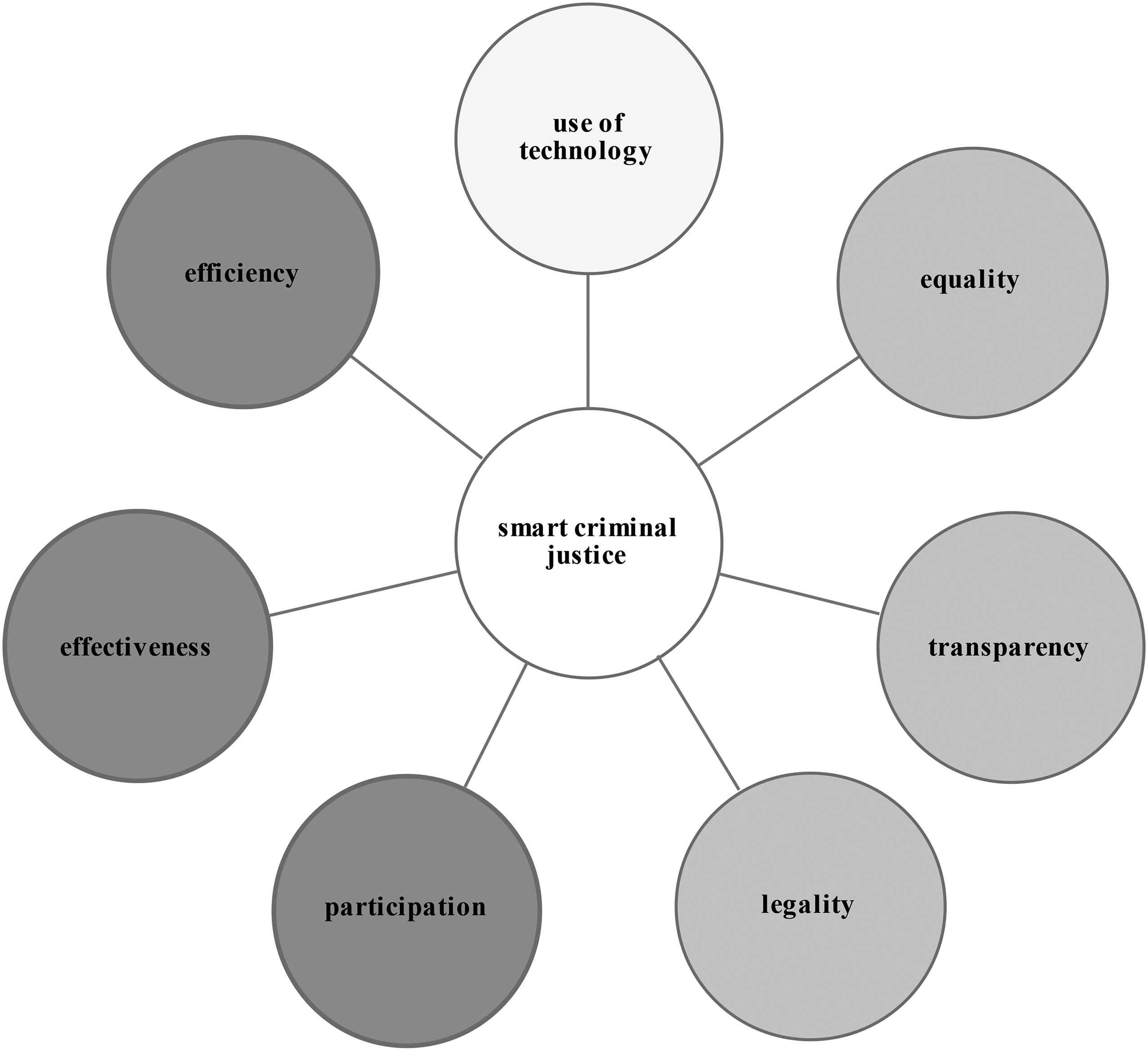
Criteria for smart criminal justice.
Conclusion
As we have shown, across the globe, governments are slowly modernizing their criminal justice systems by implementing algorithmic tools. Yet before such implementation takes place, governments should take into account any legal and practical consequences that might be derived from the application of new instruments based on advanced technology. In this regard, a principle-based approach to the use of algorithms has to be ensured. The purpose of this paper was to establish normative requirements for governmental use of algorithms in the criminal justice system. We identified effectiveness, efficiency and participation as basic criteria for smart government initiatives. Owing to the peculiarities of the criminal justice system, these criteria have been expanded to include legality, equality and transparency.
Although our approach is based on a systematic literature review, our research is subject to limitations. First, the framework of criteria does not represent an exhaustive list. Depending on the applicable practical context, additional criteria may be of importance. Second, specific legal systems may demand special requirements that are not directly reflected in the framework. Still, the developed framework allows the discussion about the use of algorithm-based systems in criminal justice systems to be guided and structured.
Our research revealed that to ensure an effective use of advanced technology in criminal justice (meaning to achieve the designated goals), it is crucial to consciously address the role of police officers, investigating judges and court psychiatrists as users of such algorithm-based applications. It is striking that the role of these actors directly carrying out legal acts with the use of advanced technology has barely been addressed in the literature or researched empirically. To properly implement smart initiatives along the lines of the above-developed criteria, aware users are essential. True smartness will only be achievable when smart technology is combined with smart people who understand exactly what they are doing and how to use the technology smartly. Such actual smartness begins with a procurement and implementation process that takes normative claims seriously.
Building on the approach developed here, administrative science is invited to further refine the normative criteria imposed on technology use, and to elaborate adequate ways to (institutionally) ensure them in practice. Above all, future research is held to explore how a principle-based approach can be effectively applied during the process of acquiring, implementing and using intelligent technology. Most importantly, the deployment of algorithms has to be principle based and smartness has to be appreciated as a normative claim. The framework presented here can help to guide further research and is equally meant to encourage policy-makers to reflect on the use of algorithms in the criminal justice system.
Footnotes
Declaration of conflicting interests
The authors declared no potential conflicts of interest with respect to the research, authorship, and/or publication of this article.
Funding
The authors received no financial support for the research, authorship and/or publication of this article.
